138. Tag Draws with Jaden Bales -
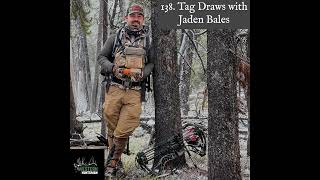
Jaden Bales, communications lead at Wyoming Wildlife Federation, talks tag-draw strategy, point-building, and how to talk about hunting to people who don't hunt. He also discusses the organization's advocacy work and a program called Camo at the Capitol that gets hunters involved in policy.
Chapters
Alright, guys, another week, another episode. Here we go.
There exists a threat from anti hunting groups to politicians trying to give our land away and we won't stand for it. Those vast western landscapes provide the space for our wildlife to thrive and a place for hunters and anglers to fuel the fire that sparks their soul. In this show, we share our love of hunting, fishing and conservation. Here we provide the foundation to meet these threats through passion and the grit of the American outdoorsman. Welcome to the Western Huntsman podcast.
Ladies and gentlemen, welcome to this episode of the Western Huntsman podcast. This is your host, Jim Huntsman, coming at you from the Broken Tan Studio right here in Clark Fork, Idaho. Man, that is a mouthful sometimes. So guys, this week I am bringing on somebody. In fact, this is the first time I've talked to him. And I always like these because I feel like we get a lot of good information out of episodes like this when it's, you know, just a new introduction and we're introduced by my buddy Scott Reekers over at Eastman's Hunting Journals. And we're going to talk all sorts of things from conservation issues to, to getting tags, maybe, you know, we'll talk about point systems and the like from somebody who actually knows what they're talking about. Because a few of you have messaged me and you're like, well, let's talk about, you know, how to get tags. I'm the wrong guy to ask for that, but I did offer the episode and so we'll, we're going to touch on that in this episode because it's a, there's a lot to it and there's tons of information out there to help you, so. Including the Eastman's tag hub, by the way, I'm gonna throw that out there. Jaden Bales, how's it going, brother?
It's going really good. Thanks for having me on. And man, thanks for some of the podcasts you've been doing lately. I tell you what, like, you have mentioned that you would ruffle some feathers and I think that those podcasts where you're having deep discussions and asking hard questions are important. So thanks for doing that. I think you're doing a good job.
Oh, thanks, man. Yeah, it's, it's interesting. It's interesting with that because, you know, it, honestly, it doesn't matter what you talk about in the hunting space, dude, you're going to ruffle feathers no matter what. Yeah. You know what I mean? And so I, and I do worry sometimes people are taking the premise of the message wrong. Like we're like, for me personally, like, I'm not, I'm not coming after the concept of is hunting conservation. I'm questioning how we're presenting that to the general public and meaning the general non hunting public. That's more my shtick with that concept. And Chris Rowe is, he's got his, you know, side of it and he's very well studied on the topic guy, same thing. And the nice thing is those guys are able to kind of carry the torch because they're a lot smarter than I am. But it's a good time. I don't know. It's a good time. It definitely ruffled feathers like you said.
Well, I think it's good, man. Because when we look at the future of hunting and how we're gonna make a difference, somehow I don't think you can do it without making sure that you have 90% or I guess 80% of the population on board with it, you know. Oh yeah, you guys talked about how, okay, you've got like 10% of the world is like hardcore anti hunting. 10% of the world are hunters like us. But then you have the 80% in the middle. And gosh, the way that we talk about how we do what we do and what we do when it comes to hunting, it just makes a big difference, especially when we're not. Especially when you're not just, you know, around the campfire with your, with your buddies or whatever. So, yeah, that's something I think about a lot.
I think that's my. Thus far, my. One of my biggest takeaways is we just have to remember, especially like on social media, when we're, when we're representing hunting, we're not sitting around the campfire with our other hunting buddies. And we've just got to kind of keep that in mind, you know, thus far is, is. I don't know. I think that's a good takeaway.
Yeah, man. And the other thing is too, like, we now are reaching folks that we would, we wouldn't have reached 20 years ago because of how we communicate online. You know, I learned this the hard way. When I was in college, I posted up, I posted up this grip and grin of a black bear that I had just killed with my brother. And it wasn't like a big uproar or anything, but I went to school at the University of Oregon where not everyone had seen a dead bear, let alone thought that they could be hunted. So I had some pretty interesting conversations following that. And it was kind of eye opening. I was like, oh, Shoot, like, the rest of the world doesn't live this way, so. Yeah, yeah, it's something we always got to keep in mind.
Yeah, there's. It's the disparity between the two Americas, I call it. Like, I always think of things like, goofy thing. This is how my mind works. Like, what if a bear hunter was going to Berkeley? You know what I mean? And just like the. I don't know. I don't know. They wouldn't even work. I just can't even see it working. But anyway. But before we go down all those rabbit trails, let's give the audience a kind of a. Like an idea of who you are. Like, I told you, man, I've known. I know who you are from listening to you on Cody's podcast, a Rich Outdoors. And that's about the extent of what I know about you. And so let's start there, man. Give us a snapshot.
All right. So I grew up in northeast Oregon outside of a small farm town called Ingler. And I grew up on a farm, and my family still has a place out there. And then I went off to college. I could talk about University of Oregon. Met a girl, and she wanted to go to grad school. So we sat down and jointly chose that she go to Wyoming. So her and I moved out here and. And then that didn't end up working. So I am no longer with that gal, but I sure stayed in Wyoming.
Did she stay in Wyoming, too?
I don't know. I haven't talked to her for a while, a few years. So, yeah, no, that's been. So that's how I got here to Wyoming, is I followed that gal. And then I just wanted to stay so bad. When I had the opportunity to take on this job with the Wyoming Wildlife Federation, I jumped at it. I live in Lander now. Been here three years in Lander, was in Laramie for two years before that, and I guess a year and a half before that. And so, yeah, this state's really just caught my attention, you know, it's really just taken me in, at least from how many opportunities there are with hunting and fishing. And then I just. I really like the folks that live in this area. So it's been. It's been really good.
I was going to ask, like, what is the draw to Wyoming? Because I have a draw to Wyoming as well. But I'm curious, like, what yours is and what. What makes it a better place for you to live versus versus where you came from.
So where I came from is actually really similar to Wyoming, real, real conservative, you know, farming, ranching town, there's logging and, you know, about 10,000 people in the town. And that's basically what it looks like and what it feels like here. I think the biggest difference is there's definitely live and let live kind of mentality here in Wyoming. And not to mention the fact that the entire state, it doesn't have a huge metropolitan area that kind of controls the politics. So you end up with a. You end up with a more even spread and a more even representation of kind of how people want to be living in this like, rural lifestyle that we all love. Right?
Yeah.
So it just, it just really fits well with kind of how I like to live my life. And also it just like, it can't be understated that for residents there's some really dang good hunting opportunities here. And for non residents, obviously it's limited because there's not all the over the counter opportunity and stuff like that. But still, it just is a place that I really appreciate and I appreciate kind of the old ways that they're still holding on to in a lot of ways.
Yeah, no, I do too, man. The Forever west state has got that where it's almost like you're. Well, I'll put it to you this way. I was telling you before we started recording, I lived down in Salt Lake, and Salt Lake is a pretty conservative area for the most part.
But yeah, especially for a big city.
Yeah, but it's, it's, it is losing that. It is like, it's kind of losing that grip. And so it was interesting for the day job that I had, I had to go to Wyoming all the time. I was, I spent a lot of time in Wyoming under the guise that I was working really hard, but really I was barely working and fishing really hard. But so, you know, there's that part of it. But it was interesting. It was like when you cross that Wyoming line, it was like stepping back into what America was, if that makes sense. And not like Utah's not like that. Because Utah, if you come from Sacramento to Salt Lake City, you're. You're stepping back into what? America. That, that American feeling that used to be, that. That doesn't seem present in some of those big metro areas anymore. So. And I'm. Mainly what I'm doing is I'm advocating for folks in California that are considering leaving California going to Wyoming instead of Idaho, because how much better it is there. Is that, is that fair? Yeah.
Hard? No. So, you know, there's like, there's A, this is something that I think about a lot because like you, you pointed out early on, like, what's the difference between where you live now versus where I, where I came from? And I think one of the things is that I don't see this. I'd like to not see this place change too awful much, you know, and whenever someone kind of moves someplace, they move there for a myriad of reasons, but oftentimes someone will move there and see that they need to change it and try to improve it. And I don't know that that's always the direction that these places need to go. I think about that in both senses of like California moving out and you know, wanting maybe their. The political realm to be a certain way or even on the inverse of that, trying to develop it out and you know, maybe have, you know, fewer wild spaces because they're trying to make sure that the economy is a certain way. I think that there's a lot of balance you got to run with all these conversations. It's not a. Anytime you're trying to change the place from what it is, makes me nervous.
Yeah. Oh, absolutely, Absolutely. And I think you nailed it, man. I was making a joke. And that's mostly that joke is for my buddies like Chris McKelvey and Mike Bozarth. You know, they're, they're California guys that are now Idahoans and we're proud to have them. But I do still like to kid around about it because there is that side of it where I think that I always look at it like this because I don't know, I don't know how we even got on this topic, dude. But like, if I lived in California, I would get the hell out of there as fast as I could.
Right?
So I don't blame, I don't blame them. And, but there is that sense of there. We've had a huge influx of out of staters move into the state of Idaho and the more you have come to your state, the more of that population. There's a percentage of them that want to change things and, and like take it to a place that is similar to what they left. And it's like they don't even know the destruction that brings with it. They just think it's better because that's how, that's what they've always known. They don't understand that maybe not having those things is what makes life so good in places like Idaho and Wyoming and Montana.
Yeah, yeah, I totally agree.
Anyway, enough, enough with that. The, the moral of the story is California, Wyoming is. I mean, the housing costs are a lot more advantageous and the hunting's better, the fishing's better.
I could guarantee you're not going to make it rich though, in. I mean, that's one of the things my mom is, She's a professor and she teaches nursing and she keeps sending me these different jobs, communication jobs. She's like, look how much money you can make. And I was like, yeah, yeah, yeah, mom, stop. You know, we don't have.
Yeah.
In Oregon. Yeah. I keep going like, no way. Like, I'm sorry, you can't trade the outdoor experiences for any amount of money. But I will say it's a good thing that we get to kill some things because groceries are pretty expensive.
No kidding, man. They're super high right now. Like, we don't, I don't know what we were. I was in the grocery store with my wife the other day and we don't buy eggs. We have chickens, you know, and so.
Same here.
Yeah, so same kind of thing. But I just, for some reason I was, I was grabbing milk or something. She's like, get the milk. And I always grabbed the wrong one. So I had to go back and get the right one that she wanted. And it's right next to the eggs. And I looked at the prices, it was like five bucks. It was like 4:98 for two dozen eggs.
If I, Yeah, I might be misquoting.
That, but it was somewhere around there and I was blown away. I'm like, man, I can't believe I'm in the wrong business. Maybe I need to get more chickens and start selling to the grocery stores or something.
Well, I, I don't, I don't disagree with you, man. But yeah, no, it's, that is a drawback though. I just, I, you know, we always have these conversations where like, you know, you can move out there. It's. It's so great. And then I'm like, also, make sure you have a game plan here for how you're going to make a living, because that's what keeps. That's what's kept Wyoming such a low population state all along. It's not easy to make a living out here.
Yeah, yeah, for sure. Yeah. Less than a. There's barely over a half a million people in the state of Wyoming. I think it's the least populated state in the, in the country, isn't it?
Yes. Yeah.
Yeah. So that, that says a lot. There's less people there than I believe in Alaska, and it's a much smaller state. So Cool spot, man. I'm. I'm kind of jealous you're in. Lander, tell us a little bit about what you do for Wyoming Wildlife Federation.
All right, so I am the communications guy. So basically I take all of our different programs and make sure that I send out email, social media, manage our website and buy ads or like, you know, set up press releases, that kind of thing. For all the different programs that we run, we basically have four things that we do. We do advocacy, which means we've got a full time person down at the legislature. Her name is Jess Johnson. I'll disclose she's also my significant other, but she's. She just left for the whole legislative session, which is eight weeks in Cheyenne. We've. We've got. So that's advocacy. We've got a habitat program with a guy named Sam Lockwood who basically makes. Comes up with habitat projects throughout the year. We fund them and then also put people on the ground to replace fences or put in beaver dam analogs like fake beaver dams and stuff like that. We've got a kids education program which is relatively new, but we've got a bunch of kids camps that are recent that just teaching kids about the outdoor world and how to, how to be really good outdoors people, you know, by both teaching them, you know, the leave no trace stuff, but then also some, some entry level stuff with fishing and hunting. And then lastly, we've got a pole policy position. That is we just had some turnover because we upgraded our policy person to our executive director. So. But the policy person is basically looks at how we manage public land, how we manage wildlife policy and make sure that the hunters and anglers have a voice at the table. So we're talking about like wildlife crossings, how the BLM manages land and how the national forest manages land, that kind of stuff.
How does that break down in terms of like, I'm curious, in the state of Wyoming, when it comes to like legislative issues, do hunters and anglers have a pretty strong voice in Wyoming? Because I imagine they do, but maybe I'm off base.
Oh man, it is. I think it's one of the things that keeps us so effective is that, you know, Wyoming really has a large portion of the residents who hunt and fish. Right? Most of our legislators hunt and fish. Like there's a huge portion of them that get it from where we're coming from. The important thing too is to remember, like, because we have such small population, like votes are decided by a couple hundred oftentimes at these local levels. So these senators and representatives they listen to individual, you know, constituents and they listen to them very well. You can just go have a coffee or a beer with them. We did like a legislative overview last week and just we do these kind of adult education things at the bar here. And we had one of the local senators just show up just because he was, you know, we're talking about the legislature. He's like, my gosh, I want to be there. And, you know, that kind of relationship with the local centers and representatives is freaking sweet. It helps really make a difference, especially when someone shows up and talks to them in person and doesn't just yell at them from a screen or via email, you know.
Yeah, yeah, yeah. How long you been with them wildlife? Er, I keep getting tongue tied because I told you I'm on the board of Idaho Wildlife Federation, so I keep wanting to say that, but Wyoming Wildlife Federation, how long you been with them?
Well, so I moved to. When I moved to Laramie, I immediately got involved with WWF as a volunteer and as an ambassador. So that was. That was coming on five years ago now. And so that's how I kind of just got tapped on the shoulder to ask if I wanted to take this job because I was already really involved as a volunteer. So this is, you know, this is my third year as a staff member, but fifth year involved with these, these guys in this work. So that was kind of. I just, you know, from a friend of a friend, I. I like to big game hunt. That's definitely what I spend my most. Most of my time doing. But I do consider myself and kind of an overall outdoorsman and these guys. The Wild Wildlife Federation works on the gambit of issues from. From fishing to small game to, you know, waterfowl and. And also big game. The big game is the sexy stuff, though.
Yeah, yeah. Any. Anything that, like Wyoming residents listening to this need to know about this year's legislative session.
Yeah, we can go a couple different directions with that if you want. There's some interesting bills that are coming up. But the number one thing that we do at Wyoming Wildlife Federation is try to just like, more than trying to influence it ourselves. We're trying to make sure that the Wyoming residents have all the tools they need to go and make an impact, however, which way they want to advocate. Right. So we have this yearly event called Camo at the Capitol where we bring in hunters from around the state as long as the roads are open and.
Yeah.
And everyone gets to the Capitol.
Wyoming too.
Oh, yeah, that's February 2nd this year. So we're Going to have people come down to the Capitol on February 2nd, and they get a little bit of a training on how this whole lobbying and how talking to your legislators work. And then we. And then the second half of the day, we go to the Capitol and people call out their senators and representatives and talk to them, ask them to vote different ways. So if a resident's listening and they can get down to that thing, that is huge. Otherwise, you know, follow along with us. And seeing what bills pop up that we share about is another good way.
By the way, those of you listening in Idaho, we have. We do the same thing, camo at the Capitol down in Boise. I don't remember the date it's coming up. I'll have to look. Jump on. Jump on Idaho Wildlife Federation, the website or the Instagram page or whatever, and you'll find it.
Yeah, these. The Idaho Wildlife Federation. You and I talked a little bit beforehand offline, but those guys are doing an awesome job. And it's cool to see. Not all wildlife federations have to agree on what they talk about or how they do it, but I will say, like, the Idaho Wildlife Federation and Wyoming Wildlife Federation, I think do a lot of the same things and are doing pretty similar. Similar work in both places.
So. And tell us a little bit about your. I don't want to call it obsession, your passion for searching for tags and building points and your knowledge base in that kind of arena.
So I grew up in. I told you, I grew up in Imblue. And if someone looks at the map, that is right up in the northeast corner where there were the big three elk hunts, the big three Rocky Mountain elk hunt units in Oregon. So from an early age, it was always like, okay, like, how when am I going to draw one of these archery elk tags? You know, And. And then as I got a little older, I couldn't draw the rifle tag every year to hunt in the Mount Emily unit. So that year, you know, it was about time. I was a junior senior in high school. Junior year, I think, is when I drew that last tag. And then I couldn't draw my senior. So then I was like, all right, well, screw this. I'm gonna pick up a bow and then start figuring this thing out so I can go hunt as much as possible. Well, little did I know the bow hunting would be really addicting.
So.
But. But that whole process ended up just leading me into figuring out how, what it looks like for us, the states. And. And then that year that I moved to Wyoming, I was, like, trying to make Sure, I could get a, get some hunting in and I was a non resident so I got to learn the non resident Wyoming system. And I like, I got a pronghorn on a second choice tag as a non resident the year I moved here and I was like, holy cow. There's. You can play the, you can play the game and, and really find some interesting opportunities across the list, I think.
Yeah, yeah, for sure. Let's talk about that for a minute because I think that that's what. I don't know, I don't know if I want to say we've been lacking. That's really not the focus of this show. But you know, I do. Here's a great example. We do the School of September series which by the way, tell Cody I need to get him on for School of September, man. He's a good ass elk hunter. I need him on.
Okay. I'm sure he would do it. He loves it, man. And yeah, him and I were just texting all night last night about this stuff trying to figure out. And this ties back into your conversation. It ties back into we were sitting there scheming because you know, we're looking at, we've got a handful of points in Colorado, he's got enough points in Arizona to maybe go hunting soon. And like, you know, it's all just trying to find the ways to make the most of your time we have on this God's green earth to go hunt as much as possible.
What's, what's like your overall strategy with getting tags in terms of, you know, a lot of people, they, they, they do a lot of point building for states or units that require like two or three points and then they have like a long game for, you know, something like Arizona unit. What is a unit nine or something in Arizona? You know, they have two or three of those going on. Do you have like an overall strategy? Are you trying to build the most points everywhere or are you focused on like specific areas?
I think he who has the most points is ultimately the loser. I don't think that in today's day and age, like if you're sitting on points in a bunch of different states, I think you're, you should re address your strategy here. The idea of having a point is to go hunting, not to accumulate points. Right? So I just, I think we got, especially in the early days of the point structures, we got really tangled up in the fact that these points were going to get me some XYZ hunt or unit or some opportunity that was supposed to be superior than all the rest. And I think that that has really, for a multitude of reasons, that that has really hindered us in the long run. But you know, I really, I don't, I work for a nonprofit man. I don't have like an endless budget to put towards hunting. Yeah, I actually have, I have a thousand bucks that I use to apply in different states. And so I've gotten four different state rotation. You know, three of them are short term states and then one is a long term state. And I'm also more of a deer guy. So they're also shifted towards states with different deer opportunities. I think if I was more of an elk guy, maybe Arizona would be higher on my list. But for instance, I don't apply in Arizona just because I don't have the funds to just tack it on. And it's such a long game that didn't fall into my strategy. So, yeah, I think it depends also where you live. If going to be a 20 hour drive for me to go hunt, this is an opportunity hunt in Arizona, you know, like, I'd rather not do that. But if you lived in, if you live in west Texas, like, there's no reason not to be. Especially, you know, New Mexico and Arizona should be on your radar. So if you live down there. Yeah.
Well, let me ask you this, like, if. Do you have. What, what would be. Let's start at a very elementary level here, because I want to.
Yeah, let's do it.
You know, my, my, my hesitation with some of this part of this discussion, Jaden, is, is like I don't want to get on the bad side of certain people living in certain states because we're like advocating for that unit or that state or. And we're not going to talk specific units here. But you know, I'm not, I don't want, I don't want people to have negative blowback, but I do want people to be educated enough to know. And the people that might give me blowback need to understand, like people are coming to your state to hunt no matter what. So it doesn't matter what I say. I, it's not like, you know, I'm helping them or you're helping them. So I guess that's my hesitation. I don't know. I did an episode like a year ago. Like I said the smallest little thing about a particular state that nobody would even identify and I got like 10 nasty emails over anyway, so we're gonna avoid like, you know, very specific things. But can you give listeners that, let's say there's there's people listening that don't know jack about going out of state to hunt. You know, they're just getting into this. Maybe they're, maybe they're new hunters or they're just. They've always been happy hunting their. Their own state, but they want to start dipping their toes into the points game and tag draw game game and all that kind of stuff and you know, get their feet wet somewhere else. Do you have a recommendation on like what three states they should focus on for a short game? And when I say short game within the next five years or less, I.
Actually think that, that like you're hitting on something that's really important. Everyone who gets kind of upset about people putting a state or unit on blast or whatever, like, it's because people are assuming that that is the place that someone's going to look at and be like, that's for me, I'm going to go there. And for people looking for places to go, I think you've got it backwards. You need to start with like the species you're looking for, like what kind of terrain you want and what's closest to your home. Like where can you go more frequently. Right. So we just, we put too much, like we drive past. I'm so guilty of this. We drive past places that we can be hunting all the time just because we heard of some, you know, some grass is greener remark in this place or another. I'm actually guilty of it. Like within my home state of Wyoming is. I used to go the last few years, I used to spend a bunch of time in western Wyoming driving four hours to go into this to go mule deer hunting. Well, the biggest deer I've ever killed was actually when I shot nine miles from my house. Like because I actually scouted hard and was able to look over a bunch of deer, pattern him and then kill them on the opening day of rifle season. It was like so that similar thing.
Drive six hours when there's a big one, 10 minutes.
Yeah, exactly, man. So I think that that is where we need to start is like, what's the species? Like, what are people wanting out of it and how far is it from their home? Like someone from Texas is going to get a different answer than someone from Wisconsin, you know?
Yeah, that's a good point, man. I didn't, I didn't really think about that. I think that a lot of people. The one of the downfalls is you have some states that are like over the counter and you know, those are, those are go to's for every year, which are Colorado. Well, I'm talking, I'm talking elk. So maybe it's different for mule deer, but you have, you know, those go to over the counter states. And I think a lot of people like in the Midwest and back east, they, they, they miss out on some really good hunting because they're so focused on this over the counter thing. And, and I think that that's, that's like a sense of pride too. Oh, I, you know, got this deer, I got this elk on an over the counter tag. Yeah. You know, and I get it, but you're missing out on a lot of hunting and you're driving past a lot of, a lot of really good hunting. I want to go back to one thing you kind of brought up there and. Well, actually I brought it up. You kind of reiterated the folks that are getting bent out of shape about units and putting states on blast or whatever. You got to remember something, man. This shit is not a secret. Like, it's, this is, it's not in the year 2023. This stuff is not a secret. Now there might be a drainage in one particular unit that you know well and that is a secret and that is well protected. Like, I have one of those spots, I have an elk spot that I will, I don't even tell family members about this spot and I'm going to keep it that way. But, but it's, it's the thing that, where I got a bunch of nasty emails was over fly fishing on a, on a very good river in the state of Utah. And let me explain that too. Like folks, there's only like three good rivers in the state of Utah to fly fish. It's not a fucking secret. And so pardon my. I cuss a lot. Jayden, you cool, you cool with that, man?
Oh yeah. Okay.
You're not blushing?
No.
Okay. This stuff is not a secret. And that's, I think my point is, is nobody wants to. I hate, I hate using the term. You know, we don't want your honeyhole because that's what everybody says on social media, but nobody's doing that. It's, it's. And is these units that are really good are well known. Like everybody knows about them. So anyway, I just wanted to throw that out there so people can not be so sensitive about it.
Well, the other thing is, is like I think people don't have the confidence that if their spot gets blown out that they can go find a new spot either. It drives me freaking nuts because you know what? Like I have, I'M having a hard time. This deer I killed this year was a really nice deer for this area. And I'm actually like, okay with kind of telling people because they're over here, like, you know, driving roads and being like, all we saw were does this year, yada, yada. And I was like, look, man, there, there were 12 bucks in this drainage that I saw six people drive by on their razors. Like, this isn't, you know, like, like, we need to be better hunters, too. So. And the other thing is, if you're not willing to go try something that isn't put on blast, you're not going to find those honey holes. You know what I'm saying? It's like if someone says, this is a good example, the Gunnison Basin in Colorado right now is, is known as a big deer area. It's like it just is. And certainly there are big deer there, but there are also big deer in other places in Colorado. And if you are only tied to try to get one of those tags in the Gunnison Basin, a third or fourth season tag, you're going to be sitting and waiting and not doing much hunting. And I think that this is a whole hypothesis I have here. It goes for bucks and it goes for bulls, but if you want a buck of a lifetime, you better have a lifetime of hunting bucks in your pocket before you get one, because otherwise I'm not going to be sitting here on my deathbed thinking about that one hunt I had one time. And that goes back to this whole conversation about these areas that get blown out and these areas that get put on blast. It's like, I think, you know, we, we got to be willing to do the work ourselves and find these areas ourselves so that you're not just riding the coattails of people before you.
Yeah, I think that there is a lot to be said for that exact point in, in a sense that, like, there's a certain laziness that comes from people that are. Are stuck on like, one particular little area. Like, if, if elk live in an entire unit, let's say the entire unit is elk habitat, you should be a good enough hunter to go in there and locate elk. Same thing with mule deer. If you know there are deer on the landscape, you should be a good enough hunter to figure out where those deer are going to be. Man, I like mule deer hunting. It's almost time, too. I look forward to mule deer hunting every single, single year. It's what I grew up on. That is not to say that I'm great at it but now there's some really good resources available and my favorite one is over at Eastman's Hunting Journals where they have the mule deer course. This course has all sorts of digital information for you to go through as an E course. It's got the basic safety training and preparation, choosing a hunt, making a hunt plan, gear scouting, glassing field judging, rifle hunting, bow hunting, hunt strategy, harvest, the experience, all of it is right there in one spot for you to access and learn from some of the best like Dan Picar and Brian Barney. So up your mule deer hunting game by going to taghub.eastmans.com courses forward/online mule deer course. You know what, just look up Eastman's Hunter and journals and you'll find it's super easy. Let them know I sent you. You won't regret it. It's not about a geographical location. It's, it's not about protecting one specific spot. And yes, I know that units do get blown out and people do show up. I've, I've had a, an area that I love to hunt for mule deer up here, kind of in north central Idaho. I found this spot by doing the hard work, the scouting. I found it prior to things like go hunt and Onx and all these things that we enjoy now. I found it by just putting boots on the ground. And it has since I don't hunt there anymore. It did very well for me for a long time, but I don't hunt deer there anymore because it's been discovered or whatever. And so there's a lot of other hunters there, but I don't hunt very far from there either. And I still do pretty good, you know what I mean? And that's, that's the key is, is being, being a good enough hunter to be able to know just the behavioral and natural habitat kind of scenarios in cases in which you will find these animals. Because it doesn't change that much. It really doesn't change. It changes a lot. Like the way that elk go through like a 24 hour cycle or even a three day cycle during the rut in the high desert of southern Utah or somewhere in Arizona. Might be different than the way a 24 hour cycle. When I say cycle, you know, what are they doing at night, what are they doing in the morning, what are they doing midday, what are they doing in the afternoon? That kind of cycle that's going to be different than a, you know, an elk at 5,000ft elevation somewhere in the Idaho panhandle. Right. So I get that. But understanding all those nuances about these specific animals. If you're going to be a hunter, you need to be a prolific enough educator of your own sport and your own craft to know how to find these animals. Regardless of how busy one particular drainage gets, or one dirt road gets, or one unit gets, there's always more country. Anyway. I'll go. I'll. I'll stop going off on that tangent, man.
No, no, I. I've been thinking about this a lot, especially because of how, you know, social media forums and stuff are just. They're just a garbage dumpster fire these days, it feels like, because people are caught up on this notion that this exact thing that we're talking about. So yeah, I think it's important though, too, is like, man, if you haven't put in the work to hone the craft, I think you're missing out on a big part of this, man. The craft is where the fun part's at.
And I don't get that, man. That's like half the fun for me. I don't. I don't get that. I love. I love going into a new area and identifying where I think there is going to be wild game and I'm successful at locating them. Like, it's for, to me that it turns that into a successful hunt for me, whether I notch a tag or not. Because that's the other. That's the other part of it. That's the other half of it. That's a lot of fun for me. But that initial part, the discovery process, is part of the hunt, and it's a lot of fun if you take advantage of it.
Absolutely. Yep. Yep. Couldn't have said it better myself.
So where were we, man? I took us down a another rabbit trail.
Okay, so the reason why we got there was because you were asking me what three states.
Oh, that's right.
Yeah. What three states do you think people should start applying or should apply in? And that's where I went off my big long diatribe of like, look, there's. People aren't considering enough variables once they get started here. Good example is Nevada. Here's something to think about. Nevada has some. There is a lot of archery deer opportunity in Nevada. If you don't want to go bake your nuts off on August 10th every year. And archery, hunt deer, you shouldn't be considering hunting in Nevada.
More from Jaden


Bulls, Bears And Bows With Jaden Bales | Eastmans' Life of A Bowhunter Podcast #30