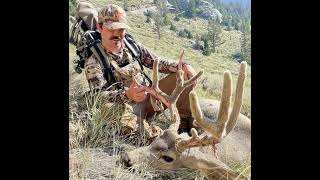
Jaden Bales, Wyoming Wildlife Federation Fireside Chat with David Merrill Episode 99
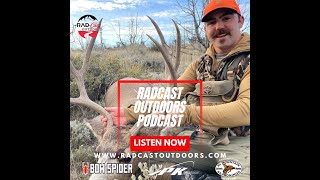
A Radcast Outdoors episode (YouTube/podcast) featuring host David Merrill interviewing Jaden Bales of the Wyoming Wildlife Federation. The conversation covers Jaden’s outdoors background, his role in communications for the Federation, the organization’s history (since 1937), on-the-ground and legislative programs (education camps, habitat projects, conservation license plate, legal roadkill collection), and broader perspectives on wildlife management and hunting’s role in conservation. Episode also includes sponsor mentions (PK Lures, Bow Spider, High Mountain Seasonings) and informal studio banter.
Chapters
This episode of Radcast Outdoors is brought to you by PK Lures, Bow Spider and High Mountain Seasonings.
Fish on. Hey. Radcast is on. Hunting, fishing, and everything in between. This is Radcast Outdoors.
Here are David Merrill and Patrick.
Ed.
Hello, everybody out there in radio land. It's good to be back. We're in the studio. You'll have to excuse Patrick. He's on a work errand at the moment. But we will miss him dearly. Hi, Patrick. See you later. No. So I'm not flying solo in the studio. You don't have to sit here and listen to me all day. But before that, I want to just thank our sponsors for sponsoring this podcast. We. We couldn't do it without PK Lures, High Mountain Seasoning and Bow Spiders. So thank you to those guys. Your support really does mean a lot to us. And if you're out there listening, go support those. Those companies, they. They do a lot for us. So without any further ado, I have Jaden Bales in the studio and we are going to introduce him. He's got a business degree out of University of Oregon, so he's an Oregon boy like me, and he works for the Wyoming Wildlife Federation. So welcome on the show.
Thank you for having me, man. Just while I'm thinking about it, I wanted to acknowledge that I am skipping out on my jerky making duties. They've been sitting in high mountain seasonings for the last 24 hours and I was supposed to do that this evening. Then you asked me if I wanted to come over and I was gasser.
So you'll just have to burn the midnight oil and get. Get that jerky on the smoker.
I know it, man. So, yeah, that's. We're making some. Some snacks for this hunting season and that K off like in just a couple days. So it's here already.
Sheep season started today. If you. If you are in the know.
Oh, man, that's. That blows my mind. I can't believe it's here already. It's at every off season, I keep going, like, man, it doesn't get here fast enough. And then right about middle of July, all of a sudden, like, time warp starts and like all of a sudden it just boom, hits you and I'm like, I'm not ready.
So on that charcuterie with high mountain seasonings, have you tried other brands before?
Yeah, I've tried a. Just a variety of, like, cheap stuff or whatever. And I just like how it's kind of a unique seasoning in a Lot of ways, like, it just has really stronger flavors and I just keep going back to it.
So that's, it's a, you know, it's the go to around here for sure. We were just in Alaska and we did a few videos and podcasts and those will be out soon. But we filled up my dad's smoker, which holds 26 sockeye salmon. Oh. And by far, we tried four different brine recipes. Two High Mountain, one my own and one of my dad's. And the gourmet fish brine from High Mountain Seasoning was head and shoulders above, like, family tradition smoked fish recipes, so.
Okay, well, I'm gonna have to tell the in laws this.
We.
We usually smoke some trout out of the lakes here in the, in the winter, and maybe that'll be his Christmas gift. I gotta be careful, though. I don't want him to tell him, like, his brine suck. But this.
No, no. And I mean, we're talking. I lived there, right? And I smoked a lot of fish. And people, a lot of people are like, man, this is good. But we pulled them out, taste tested side by side. You know, brine the same amount of time smoked in the same smoker from the same filet, right? It's. Yeah, it's the same fish and it is better. So thank you, High Mountain Seasonings for putting on such a great product. But. Well, let's jump right into it. Wyoming Wildlife Federation. What is it? Why does it exist and why do you work there?
All right, man. So I think the first thing that I'm going to do is talk about why I'm there, because it's a lot easier to make that connection. Working backwards. I grew up hunting and fishing, doing all the outdoors things that all of us rural folks like to do or grew up doing with our families. And when I moved to Wyoming, I was like, man, I want to be involved with an organization that works on issues that are important to me in the whole spectrum, right? Like, if it's off season, I'm either duck hunting or ice fishing in the winter, right. In the spring, I'm. I'm either fishing the runoff or I'm out spring bear hunting, and then in the fall, obviously doing all these ugly ungulate hunting and stuff. So basically I was like, where can I get involved in conservation issues? That covers the gambit of things I do in Wyoming. And that was the Wyoming Wildlife Federation. So I started volunteering, like, a couple years ago. And, and then when a job position came open, I wanted to take that and move to Lander, I was in Laramie before, so I was just like, yeah, Lander's probably a little bit less windy than Laramie. So that's how I ended up here. And in the federation itself, man, it's been around since 1937, so since a lot of the major non profits started cropping up for hunting and angling. So it's been around working on policy, habitat, wildlife issues since then.
Wow. And so I mean if it's a, if it's a wildlife issue, they're going to be in the know and they're going to be helping out in some facet. And is that mostly just legislative or are there on the ground like volunteer projects as well?
So, so my job here is the communications guy. So I take information that all of our people on the ground are doing and try to disseminate it to folks. But we have programs that include legislative work. So Jess Johnson, she's down in Cheyenne working with legislature legislators all session long. But then we also have this guy, his name's Sam Lockwood, he's down in Green river and he's organizing habitat projects that people can go volunteer at and like put boots on the ground. So we kind of span the breadth also like we have education director who has been putting on camps just these last couple years. We had camps in Jackson, Lander and Riverton this year for kids and doing kids education. So like I said, we kind of have a lot of, a lot of spokes to this wheel with different people doing different parts working within wildlife habitat conservation issues and education.
Wow. That's. Yeah, I mean that's a fingers in a lot of pots. So since you've been there, has there been any big bills that you've helped work on or projects?
You know so when I was a volunteer there were a bunch of bills that were pretty substantial. One of those that people will see around the state now is the license plate, the conservation plate. So Jess in particular led up was part of that whole coalition of people trying to get the wildlife conservation plate passed. And that's the, the big mule deer buck that's on everyone's vehicles who buys it. And a portion of that or all that sale after the first year goes towards wildlife crossings every year. And that was a really good one that I like. And then this is last year actually it would be be two years ago now. Jess. And this is when I was first a full on staff member. Jess led up this effort to get roadkill collection legal. And that's kind of been a fun one that, that we've actually used. Now this gal hit a deer out in front of our house and it was 12 degrees outside and we went and picked up this mule deer dough and then helped this gal process it after she smoked it with her car. So there's, there's been some cool like especially roadway related bills in legislature that have been fun to work on these last few years.
Awesome. Awesome. Well, I'm glad that they're out there. I mean, I've been reading a book and we had a guest on books called Bringing Back the Lions.
Okay.
And there's some really cool similarities between the North American wildlife conservation model and what they're implementing in Africa and some of the changes. And so if you get time and I mean, it's an, it's an older podcast. I'm not going to go in depth about it, but I'm about 3/4 away through the book called Bringing Back the Lions and it's, it's opened my eyes to a few things. It's very cool. I mean, it's cool. And one of the things I'll, I'll give you a teaser on is just the symbiotic relationship between wildlife managers, the actual hunters, and then the local people, right? And those three groups have to get along in symbiosis, right? They have to. I mean, take an elephant, for example. If an elephant is coming in every night and raiding a farmer's 2 acre cornfield that they're literally irrigating by hand and tilling by hand, that's their livelihood and their winter food. They're, they're very quickly going to hire a poacher to come kill that elephant who's going to remove the ivory and ship it to Asia. Because if the local people aren't going to turn the poacher in because they're tired of the elephant, right? That elephant has no value to the local people other than, hey, we're going to not have our corn destroyed. And so there's this dichotomy of one animal has to die for 99 to live. Right? And this is. You and I are hunters. We understand this. But it's very blatantly put out in the book that if the anti poaching team can get through to the local population that, hey, we're going to basically supplement whatever the elephant destroyed, we're gonna replace. So don't go killing the elephant. Leave the elephant alone. And then we're gonna hire a professional hunter to come in and harvest one nuisance elephant. Or we're going to track, relocate, collar, move, Whatever, they're going to use some wildlife management tool to remedy this situation. Right. But the bigger picture is the elephant gets to live and have habitat to live in. And I mean, after being in Africa, elephant are destructive. I mean right now Kruger national park looks like a nuclear war zone because I don't know the exact number, but they're, they're like 4x density on the elephants. They should be. And a herd of 40 elephants goes through and breaks every tree in their way down, eats a few leaves off of it and goes and snaps the next tree down. That's just what elephants do. So I mean it's got to be imbalance, right? But that, that piece and that in the book, they, they do a much better job than I can of, of articulating this argument. But it's, it's as simple as winning the hearts and minds of the villagers to not hire the poacher. Having an anti poaching team that's going out and actually reprimanding and having a government that will prosecute a poacher. Right. And then having hunting concessions or ground set aside like a national park where these animals can roam freely and not get on roadways and in farmers crops. And so there's all these multiple facets that go together to create a. But if you can get the balance correctly, right, then the wildlife flourish and the local people start saying, no, you're not going to shoot our elephant because that's what brings our hunter in. And my brother works on the game concession that helps skin and, and butcher the elephant. And so part of it in Mozambique specifically, when they first restarted after this big civil war, these hunting concessions, they guaranteed like £50amonth of meat per family.
Wow.
Right. So you go over, you pay $10,000 trophy fee to kill animal X, Right. And you're killing one out of a hundred because the biologist has said, yeah, we. And you're taking the oldest species that's no longer contributing to the gene pool anyways. Right. So there's a lot of good I can sit there and justify my. The p. The, the hunters approach telling blue in the face, but boots on the ground. Where the, where the rubber meets the road is that meat makes it to that villager. That villager feeds his family and is no longer motivated to walk out his back door in the middle of night and put a snare or a trap out that kills indiscriminately. But he doesn't care. He's gonna, he needs meat. He wants to eat food. And you know, so once you've satisfied all those needs and can get the government to back the wildlife. You know, here we, we don't have these issues as big. Right. We do have a few guys that like to go drink beer and drive around middle night with spotlight and shoot stuff. And you do that in front of me, I'm calling the game warden and the anti poaching team. The game warden shows up and starts running license plates and all of a sudden somebody gets their truck impounded and they go to jail. And you know, I, I don't affiliate or associate with those people, so. Right.
Well, and it's, it's. I'm so glad you brought that up because it's like finding that symbiosis between the local community, the hunters and like the government or the other agencies is just huge. You look at like on the east side of the state right now where you have a little bit of a rift between some landowners and you have a little bit of a rift between the hunters because the landowners feel like they're getting their grass eaten out of house and home when there's three times as many elk in the unit than that they expected or wanted to be there with the objective. And then hunters are like, well, you know, there's not enough elkin that are accessible on the public grounds that we can hunt. Like, you know, we need to work on this access issue. And I think like you're saying it just comes down to people being able to work together on these things to find a wildlife management solution that makes sense for everybody because most of the time it probably isn't going to make sense for 100% of the people. But if you can find common ground and get to some good solutions, like you said in, in the case of the.
More from Jaden


Bulls, Bears And Bows With Jaden Bales | Eastmans' Life of A Bowhunter Podcast #30