Jay Yang dropped out of college at 19 and landed a job at Acquisition.com by pitching with a deck and running test trials. He shares how he ghostwrote, built an agency, and helped execute Alex Hormozi's record-setting book launch using frameworks like consume-collect-create and the TAG method.
Chapters
If I had to boil down a successful launch of really anything, it would be—
They were sitting down with Jay Yang, the social media strategist for Alex Hormozi and Acquisition.com, and one of the minds behind that book launch you may have heard of. I heard they sold a few books and broke a few records. For those of you who are curious what my next book is, it's already done. Reports say the book launch generated more than $75 million in day one sales and moved over a million copies.
We treat content like a professional. Like, if you're an NBA player, what do they do? They track metrics. They track the number of shots you take, the number of shots you make.
Obviously, you heard about the book launch, you know what they achieved, but this is the strategy behind it, the approach to content and business that led to that kind of success being possible in the first place.
Alex has been working on the book for over 2 years, so I think that broke my frame on, like, playing in long games, you know. Like, he's been working on these 3-book series for the past 6 years, and so most people operate operate in days, he operates in decades.
Jay shares a ton of content advice directly from acquisition.com and Alex Hormozi, and as well as the approach to life and business that makes all of these things possible. Jay is only 19 years old, but he is incredibly wise for someone his age, and he's also a content genius. Throughout the whole episode, he drops a ton of awesome wisdom, but the most impressive thing is how simple and obvious everything he says sounds. That's only possible if you're truly an expert at what you're talking about, and Jay is absolutely an expert when it comes to content, and he's used the skills that he's acquired to open doors for himself that many people dream of, and he's opened at 19. So let's get right into it and hear from Jay. All right, we're going right now. Jay, how are you, man?
Doing awesome, Ben. Appreciate you having me on.
Of course, man. Of course. It's been, it's been a pretty slow few months for you, man. I don't know if I think you should definitely be doing some more stuff. So let's, let's go through it all, man. I want to start with your story, get to know you a lot more, and we'll talk about Alex later. But I want to know more about you. So tell me the whole, like, your whole spiel. Where did you start? Because you're still pretty damn young, man. How old are you to start with?
I'm 19.
You're 19. Okay, that's fucking awesome, man. Okay, so you're 19. You dropped out of college. Can you give me that whole story?
Yeah, I'll do a quick backstory because I know. Yeah, please. I don't need to go super deep, but I started creating content 5 years ago and I've been obsessed with this topic of What does it take to inspire someone? Like, how do you actually change behavior? And so, um, that's the question that I've been obsessed with for the past 5 years, mainly through written word. Um, I just like the challenge of like, you don't have any facial expressions or nonverbal gestures. It's just straight up text on white background. How do you influence and change someone's behavior? Um, and that's led me to do some, some pretty interesting things, work with some interesting people. Using that skill. And so I dropped out of college 4 months ago to work full-time with acquisition.com. And before that, worked with a few other people. So it's been, it's been quite a ride.
So what was it in particular that drew you to shifting behavior and why written word? Is that because it was the most difficult way of doing it that you found?
I first became interested in it because I saw how much of a difference it made in my life. Um, before the 5 years, I was just an average kid, you know, playing video games 5 hours a day. But I started listening to some motivational videos, some motivational speakers, and I, I felt the difference it made in my approach to life, and it fundamentally changed the trajectory of my life. And so I thought, what better way than to figure out how I can do the same to impact and inspire as many people as possible.
Yeah, no, and I had the same sort of experience. I wasn't as early on the game as you were, so that's awesome to see that you found that so quickly. But first, what game were you playing back when you were playing video games?
Dude, I was, I was an iPad kid, so I was playing Minecraft. Yeah, there was another game, probably a niche game that not many people know, it was called MooMoo.io.
Okay, I've never heard of it.
Yeah, it was a Yeah, those kind of games.
So, so how do you go from playing Minecraft and, and MooMoo to finding this like motivational stuff? Like how does that transition take place?
Yeah, honestly it, it, it took place because one day I had a realization. I was like, I should probably be doing something better with my life. And so that's pretty young to have that realization though, man.
That's pretty young. You're like, what do you mean do something with your life? You would've been what? 14?
Yeah, 14, 15. Yeah.
That's amazing. Okay, so I'm assuming there's got to be some connection to the, like, your household and your parents because I saw on your Twitter that you wrote them a— was it a memo before you dropped out? What was it specifically you created for them before you dropped out of school?
Okay. Yeah. I mean, this is skipping to about 5, 6 months ago. I wrote a memo to them explaining why I should drop out of college and what the second-order consequences, the perceived second-order consequences, obviously you'll never know, but the variables that were in play to show them that it was a good decision for the goals I had out of my life. And so, yeah.
How'd they take that?
They took it really well. Better than I thought. I think, you know, if, if another kid in college is watching this, and you're like, oh, I should just write a memo, and my parents will love it. It's like, I have been doing things since freshman year in high school. And so they've always known that I've had slightly different goals and behaviors than most other college kids. So it's, it's a track record of proof. This wasn't the first conversation I had with them about taking a different form of education. And so that's, that's the recommendation I'd say is like, it's, it's not as simple as just making a sudden announcement and your parents just have to get over it. Like it's been a slow trickle.
That's what I think the biggest misconception is for people who've never done something on their own is that they think it's just like a switch that gets flipped and then like they're, they're different, right? I think it's the small consistent actions that you do over and over again. And I know Hormozi has a similar quote to that where like confidence isn't built from yelling affirmations in the mirror. It's from doing things that give you undeniable proof of that, that you can do the thing. I'm butchering the quote, but you get what I mean. So what were those small things? What were those things that you were doing when you were a freshman in high school? What were the first hustles?
Yeah, the first thing I started was a music promotion YouTube channel. Okay. And so I would promote underground artists' songs to help them get exposure on YouTube, help them grow. I did that all summer before freshman year of high school. And, you know, page didn't really go anywhere, but it was my introduction to content creation because even though I didn't get a ton of views, I did see like, oh, I can get 100 views or 200 views. That's 200 people from my bedroom, you know? I was like, wow, that's powerful. So from there, I continued on what I like to call my portfolio failures. So the music promotion YouTube channel, I started Instagram motivational theme pages. I even tried to start a clothing brand. Like I started a newsletter. I did all these things like, you know, throwing stuff at the wall, trying to see what sticks. And so that was the first part of my career.
Dude, that's amazing. I have an incredibly similar story and path where I started a YouTube channel after I had started Instagram theme pages. I was lucky where when I started on Instagram, I made a whole agency around theme pages because it was so easy to grow back in like 2014. It was a joke. And also they had all these bots that you could use where Instagram didn't crack down on them. So we could spin up accounts and grow them incredibly quickly. And then I also started a YouTube channel. I originally started my channel doing fitness vlogs and, uh, no one, no one watched those. And then through doing that, just like you, I learned, okay, this is how people like to watch things. This is how they decide what to give their time to. And I think that's the most important thing for anyone listening to this, that to, to underline what Jay just said there is that it's people on the other side of the screen. And when you realize that, it really can make you assign more importance to each thing that you're doing, each bit of content you're creating. When you think about the person who will eventually be watching it, naturally you're gonna come to it providing a lot more value cuz you realize it's an exchange. I think when most people step into content creation, they do so very selfishly. They're like, what can this give me? And they don't realize it's an exchange platform. You gotta give equitable exchange to get what you want back. And obviously you learn that through through these pages. So for the motivational pages, were those successful or how did those go?
I had one that took off and then another that did decently, but for the most part it wasn't, uh, wasn't anything crazy that I could, uh, build a business off of.
Okay. And how were you monetizing those? Just shoutouts and stuff?
Yeah, shoutouts. And then I sold it at the end.
Nice. Okay, cool. And then what's the evolution past that? Did you start making your own kind of content?
Yeah, I started, I got on Twitter, I got on Instagram for my personal brand. I started that newsletter where I just shared what I was doing, what I was learning. And, you know, slowly I got to understand like, okay, if I write a certain way, I get more people interested. So let's write in a way that is outward focused. Like, how do I capture attention? And then I started learning about copywriting. I was like, oh, so copywriting is just the process of taking information from one brain and getting it to another. Like how can we do more of that? How can we be really good at that? And so I got obsessed with copywriting, read all the books, you know, watched YouTube videos, took courses and like that became my life for probably a good 2.5 years. I mean, I'm still really obsessed with copywriting, but I was, I would do, and this is a great exercise for anyone interested in learning how to write online, it's called copywork. So what you do is you read something you really like and then you handwrite it out word for word, letter for letter. And what happens is your mind subconsciously kind of picks up on the rhythm, the tone, the musicality of writing. And so I did that every single day for 2 months. Now that changed everything.
That those kind of reps, they really do change things. And why copywriting's so important. I saw the same thing that you did when I was first creating content. That's why I shifted my agency primarily to YouTube because I saw that was where copywriting had the highest degree of leverage because of the click part, right? And kind of like Twitter as well, where it's the, the written matters so much. There's not the visual things until they click. Right? Uh, and so I just thought that was quite profound. And what a lot of people get wrong again with social is that it's a game of tiny percentage points. And so people always think that they can write a title just as well as I can. And, and I'm like, okay, sure, go for it. But they don't realize these are big data machines. The tiniest bit of difference means you're gonna get almost all of the results because they're a for-profit machine, right? And so a lot of people forget about this. It's like Google or Twitter or whatever, they're a for-profit business. And so if they think that your post is even 0.1% better, they're gonna show almost everyone your post because that's a better bet, right? And so when you start thinking about that, you start thinking, okay, wow, these tiny little words and the order in which I put them in, they really, really matter. What was the like light bulb moment for you where you feel like it clicked and you started writing content that actually captured attention?
I don't think there was a one lightbulb moment on like, now I'm a fundamentally different person. I think it was more over time, reps after reps, seeing other people's things and analyzing them, deconstructing them, reverse engineering them, um, and just over time picking up on more, more things.
How often were you posting on, on Twitter?
Oh, when I started, 10, 20 times a day.
I'm— wow. Damn, that's awesome.
Yeah. I mean, it was— I knew that volume negates luck, as Hormozy says, and I was like, I'm, I'm gonna get really good at this. So I— yeah.
Damn. Okay. So what would be your tips for people if you— I know this is such a hard thing to do, but if you could give like 5 to 10 tips for someone who is trying to become a better online copywriter, do you have any sort of frameworks or, or tips that you'd give?
Okay. So if we're starting from zero, I would say follow the 3 C's, which is consume, collect, create. So step 1, if you want to get really good at, let's say, Twitter or X, you have to consume Twitter and X content. Like, it's just fundamentally you have to understand and absorb the world around you. So get on X, scroll, pay attention to what captures your attention. So why did this tweet stop my attention? Was it the sentence? Was it the hook? Was the way— was it The way it's structured, was it maybe the profile picture? Just like study everything, collect all of those tweets that stood out to you and then analyze the patterns between them. So, oh, these two posts stood out to me and they have the same hook. Interesting. Let's pay attention to that. And then step 3 is create. Now that you have these patterns, how can you copy and create that into your content? Maybe I use this, you know, same hook, different topic, different hook, same topic, right? I just, becomes a game of remixing, and you start to pattern match from there. So that's step 1. Step 2, I would say, is— I would say it's punch, slide, linger. Every piece of content, whether it's as short as a tweet or as long as a YouTube video, has those 3 fundamental things. Is you need to punch punch the reader in the face, capture their attention, stop the scroll. And then step 2 is slide. You want each sentence, word, or video to kind of be like a slippery slide. People just stay engaged throughout that. And you can open loops, rehook, all those things. And then step 3 is linger. You want what you say in the video or in the tweet to occupy, occupy mental real estate in the viewer's minds. And so if you can do those 3 things, I would say you have a pretty good piece of content that people want to keep continuing to consume from you.
Totally. Yeah. The first one that you shared there, every person I've ever met who's good at content, they learned that way. And it's everyone who isn't good at content yet, they always think like, that's such a waste of time. There aren't patterns. And you're only saying that because you haven't consumed enough to realize that it's Like information can only hit you to the level in which you're at, right? Otherwise it goes over your head or it doesn't seem very significant until you've put in the reps. I also think there's a big thing in terms of investing the time to associate the importance to the nuance and to the small details and how much that actually moves the needle, because you will always find these patterns. And once you learn how to spot the patterns, then you realize how many more there are and it can just open up the floodgates and you start finding little things that work all the time. And then you can even start to develop your own ideas from a better place because you actually know, okay, I'm, I'm stacking upon things I know work, the fundamentals, and then this is highly likely to work. And I'm sure you have it working with Hermosi or yourself. When an idea comes to you because of your layered knowledge, you know before you make it, it's gonna work. And that's an incredibly freeing feeling. And you really can't just jump there. You have to put in the reps and, and put in the time, which obviously you did when you were making your own content on, on IG, let's say. What were you talking about? Just your day-to-day growth and what you were learning? Share me through that stuff.
The first evolution of the page was inspirational quotes. So, I mean, my very first post was, uh, it's a great day to have a great day or something like today's a beautiful day, like something super cliché.
It's a great place to start though.
Yeah. Um, you know, the page evolved. I did, uh, it was called Project 50. It's kind of like 75 Hard, but For wusses, you know, I did Project 50. Um, I did visual designs. I started doing motivational stuff again. I started posting about copywriting as I was learning it. Uh, then started talking about online business as I was learning it. And then now I talk about, again, inspirational motivational stuff, um, for people getting into self-improvement. So it's definitely been an evolution.
Real quickly, if you're enjoying the episode, please consider subscribing. Each week I bring on amazing people to help give you the tools and resources to thrive in a world That no one prepared you for. We cover all the topics shaping our life, like social media, AI, crypto, and go directly to the source to help you navigate your life and build whatever life it is that you want. And the best way that I can attract the people that you want to hear and ask the questions that you want asked is if this show grows. And the best way you can help me do that is by clicking the subscribe button, which should be right down there. It's completely free to you and it would mean the world to me. So thank you in advance for doing so. Let's get back to the episode. That's so awesome. And I think a lot of people don't start social because they feel like they don't have the one thing to talk about. But your experience is the whole blueprint. You talk about enough things until you have things to talk about. Right. And I took the exact same approach. A lot of people, they want to be a sniper when they've never shot a gun before. It's like you need to take the shotgun approach, figure out things, learn different things. I did the same thing with my YouTube channel. I talked about everything under the sun that I vaguely knew about until something stuck. And then I'm like, okay, clearly the people are responding when I talk about these things. I'm going to do a lot more of it. So When you're doing all this stuff, you're obviously proving that you're really entrepreneurial. You're learning a shitload. Why even go to school in the first place? Like, why did you decide to go to college?
Yeah, there was a few variables. I would say number one, I had, I had three options coming out of high school. So I was working with Noah Kagan at the time. I was working part-time at a startup at the time, and I also had college. So it was like those 3 options. Okay. The startup offered me a full-time role. Noah wanted me to work full-time, and I also had college. So I was juggling 3 different things and trying to determine which path was the right path. And so there was a lot of sleepless nights debating about that, which obviously good problem to have. Um, I decided to go to college for 2 reasons. Number 1, it's, you can't knock it until you try it. And so I'd say I'd rather have gone and realized it wasn't for me or realize it was for me than have never gone at all and always wondered what if I did or what if I didn't. Um, so that was number 1, just like from my own mental headspace. Number 2, I think a lot of people talk about skipping college because they want to get ahead. And my only pushback would be, get ahead to what? I think so many of us over-index on financial success or career success at the expense of other areas of our life. And I realized even if I skipped college and continued to work, I would still have to wait for everyone to catch up in a sense. So that's why I decided to go to college. I wanted to experience it. I wanted to meet other people my age. Um, and I definitely don't regret going at all.
This, I have so many different ways I wanna take this cuz for, I keep reminding myself in my brain that you're 19 and it's almost like hard to believe that you think and operate like that is, I know you're listening to this motivational stuff and all of those things, but it's one thing to listen to motivational stuff cuz I, I've even employed people that are around your age and they consume that stuff. But they can't think for themselves, if that makes sense. Like, how did you develop the confidence in yourself to fully say, like, this is not only what I'm going to do, here's why I'm doing it? I find that's one of the things that young people especially struggle with the most.
I mean, I talk about it in my book, which is having a North Star. I think so many people work hard but on the wrong things because they don't know what they're aiming for.. And so for every young person I talk to, I try and like help them get really clear on like, what's the goal here? Like, what, what are you optimizing for? Because once you know what you're going for, you can then reverse engineer the steps to get there. And then it just becomes more of like a math and accountability game more than anything else. And so that's— That's insane. That's been my entire past 5 years is like, what's the goal? Like, what's the intention here? How can I be intentional about like what gets me closer to that goal?
So it becomes so clear when you do figure that out. It's just so many people, they don't even ask that question and they think that, I don't know if it's no answer will, will be enough or it, it's like a clever way of procrastination essentially where you don't outline the goal. So that way maybe it's a, it's a way of guaranteeing you don't fail because if you never set a destination, you can't not arrive because you, you didn't set a path. So I think that that's part of it, but. Kudos to you. It's amazing for setting that and having the balls to actually go and do it. 'Cause that's 95% of the game. It's just figuring out where do I want to go? Because the steps, especially with social media and, and AI, the, the information's there. You just have to figure out where you want to go to outline the path. So you said you were, before you went into college, you were working with Noah Kagan and the startup. What were you doing for Noah and, and what was the startup?
Yeah, I started working with Noah my junior year of high school. And it started really small. I was doing Instagram captions for him and I would like text it to him like, hey, is this approved? And so like little stuff like that. Eventually the role grew and I helped him launch his book Million Dollar Weekend. I bought that book somewhere back then. Awesome. Love it. Ask now, not how, right?
Yes, that's it, man. And then for the startup, what were you doing there?
For the startup, it was called Startup Archive. It was like a— how would I describe it? We were curating the world's greatest founders' advice. And so one of my tasks was to watch these 3-hour lectures of like Paul Graham, Sam Altman, like Elon Musk, Balaji, like all these tech guys, and then note down anything that we could turn into short-form clips and then clip those and then post them on social. So I was in charge of the Instagram, Twitter.
Amazing. And obviously that's where you developed your content-specific knowledge, which I wanna get into in a little bit, but I still wanna grasp more, more of the overall story so everyone understands the, the how you got to, to, to the what. So for, for Noah, obviously you're, you're working at two pretty high-profile things at such a young age. How did you get in connection with these people?
Two things I would say. Number one, do the work upfront. So for a lot of these roles, Instead of asking, how can I help? Or I'll work for free. I did the work upfront. I said, I created a pitch deck for Noah. It was 19 slides. Here's your social media. Here's another business person's social media. Like, this is what you could be doing better. Here's where you're at. Here's where you could be. Like, you're doing this on this platform. Great. You're not doing this on this platform. Here's what we could do about it. And then on top of that, I created 9 pieces of ready-to-be-published content for free. And I said, All you have to do is press post. And I said, if you like it, like, let's work together. If not, no harm, no foul. And what that did is it showed them two things. Number one, that I could do the job. And number two, that I really, really wanted it because not many people would do that work up front. And so that's the fastest way to show somebody your hunger and also your competence.
Totally, man. There's, I couldn't agree more. And there's like this box around people who feel like they're not where they want to go and they don't realize that it's effort and output away from almost always happening. Whenever people reach out to me that wanna work with us or anything, if they show that, it's almost impossible to say no because that, but that's where people go wrong. It's a lot of people, they heard Gary Vee say, oh, like offer to work for free. And so they'll just send a lot of messages saying, I'm offering to work for free. If you're trying to work for someone who is genuinely really valuable and hard to be around, they don't have the time to just make up a job for you. Like you have to actually figure out what that job is and then go show the competence in that. Just like, just like you did, obviously. And if, if you're listening to this right now, there's two people here saying the exact same thing. And it's so true. Anybody who listens to this who, who wants something, if you just go do what Jay did, the person's gonna have no choice than to reply. Even if it's not the first person, you may have to do this like 5 or 10 times, but you will, you will get it. Like it will eventually happen if you get good. And the more that you do this, the better that you're gonna get at it too. So obviously that, did that work the first time? Was it the first person that you did it with?
No, that was the second time. Before that, my sophomore year of high school, I interned at Beehive, the newsletter platform. Yeah. And I did the same approach. I cold emailed Tyler, the CEO, and I sent him, I think it was like a 7 or 9 slide pitch deck. Me and my pitch decks, right? But I sent him a pitch deck with, here are 3 projects I could do for you. Here's why they would do well. And yeah, here's how I do it. And yeah.
That's awesome, dude. Yeah, it really, when you show, you know what you're doing, you're also telling the person that you're going to be of value. It's not gonna be a hindrance. It's not gonna slow them down. And people who wanna move, they wanna move quickly. And so I know that I've, I've not hired people because I believe they could have done the job, but I didn't think the time in teaching them was worth it. Right. And so it, it's gonna, you really gotta show that you're, you're something different. And if you want to get a job, especially as people are complaining that there's fewer and fewer opportunities out there. I would argue that like the floor is maybe higher than it was before, but it's never been easier to get up above the floor if you are just willing to do the work. Right? So there's a lot of people out there that are complaining. I got people even in my own life that are in fields that are getting more difficult by the day due to automation and AI. And every time that they're complaining about a job, they've not done this stuff. Like I've never met someone who's looking for an opportunity who's done that. Like literally never, like no one. So if you're listening to this and you're struggling to get the job you want, do the shit that Jay was doing. So you learned that stuff working with Noah. You're really good at pitch decks. Take me to the, the process towards working with acquisition.com.
Yeah. I mean, before we do that, I just want to double-click onto this because I think it's super important.
Go for it.
For those who want an opportunity, there's kind of two lenses that I would take this. Number 1, a great question to ask yourself is, how can I make this a no-brainer for the other person? Because what a lot of times happens is like, if you say, I'll work for you for free, it puts the burden on them to figure out who you are and how you can help. So, always ask yourself, how can I make this a no-brainer? The second lens I'd say is the TAG method. And this was coined by Charlie Hoenn, who was Tim Ferriss's director of special projects. Step 1 is target. Who do you want to reach out to? I would say 2 things about that. Number 1, pick someone who's 1 or 2 steps ahead of you, not someone who's like Elon or Beyoncé and they have people full-time whose full-time jobs are to say no to people. Like, pick someone who can directly help you with your journey. I'd also say because that's the case, they're more able to help you because they remember what it's like to be where you're at, right? Elon doesn't remember what it's like to be starting from zero., but someone who's 1 to 2 steps ahead of you probably is. Within that, I would also say when you pick your target, also identify what you want out of this role or with this person, right? Uh, pick your goal. What's your intention here? Uh, step 2 is do the audit. And so you could make a pitch deck or a Google Slides presentation. You could create a website mockup. You could record or edit a video for somebody. Um, do the audit and do your homework and research on that person. What's their goals? What do they want? And how can you align your interests with their interests? Step 3 is gift. Give it away for free. Like don't ask for money. Don't edit a video and say, hey, can I send it for you? You know, just a $60 test project. It's like, just give it away for free. Worst case, you built your skill. Best case, you work with them. And so those are the two lenses I recommend to people when they wanna work.
100%, man. Yeah, it's crazy how much, how many doors that can open. And I think to get there, you've gotta think more about other people. And the more that you start thinking about other people, the more things will come to you and the more doors get opened. And one thing I've noticed a lot whenever I speak to people is that empathy seems to be at an all-time low. And so if you can develop the skill of getting into the mind of someone else and even doing the thinking for them, I always run through the exercise in my head. If I ever want something from someone professionally, whatever I think about, okay, so what would get in the way of them giving me that thing? I do the thinking before it's even been done. And then I, I stop that from happening. And that literally is the ultimate cheat code in life is when you can think for other people. And then you think about, okay, well, what would they probably say? Okay. They might be, they might have this constraint. And they'll say, okay. Oh no, don't worry. I've already thought of that. Cause it also shows that you really have gotten into their brain. And if I know that people can understand my problems, it's just like social media. I think Hermosi might've even said this, that the winner is the person who can ever illustrate that they understand the person's problems the best. Uh, again, I'm probably butchering the specific language, but if you can illustrate that. One-to-one, it's gonna work. And if you can illustrate that in content, it's gonna work every single time. So I, I'm glad that you stopped me and underlined that, that, that's huge. So then that's how you got the original opportunities and then the acquisition.com opportunity was what made you ultimately drop outta school. Uh, what was, what was that role and how did you apply to that and how'd you get it?
Yeah, so I joined acquisition.com through a referral, so a friend of a friend. And, um, the way I would explain this to somebody is the 4 types of luck. So luck number 1 is blind luck. These are things that you can't control— where you're born, who your parents are, um, you know, your physical attributes. That's like outside of your control. The second type of luck is luck from motion, luck from hustle. You go out there, you hustle, you make things happen, you bump particles into each other. And stuff starts to happen. That would be an example, like reaching out to Noah, reaching out to Beehive, that would be an example of luck from motion. Going out and making it happen through just effort and hustle.
It's beg you to subscribe Ben again back. I don't wanna come back, but you didn't click the subscribe button, so here I am again. The more this show grows, the less I have to do this stuff, so please help your boy out, click the subscribe button. Thank you for doing so. I love you. Let's get back to it.
The third type of luck would be luck from awareness. So your past experiences and skills help you spot opportunities that other people don't spot. Um, and so an example of that would be I started my ghostwriting agency after I worked with Noah because I spotted that there were so many of these other ghostwriters, but, um, no one was really serving these founders who wanted valuable content, not just viral content. And so that's kind of the lens I split it up into., so that's luck from awareness. And then that fourth type of luck is luck from uniqueness, which is now you've built up yourself into someone who's valuable, has skill set, a unique skill set that when an opportunity occurs, people find you or they reach out to you because you have that skill set. And so Naval talks about this idea of like, let's say there's a lost treasure, you know, deep down in the ocean and people discover it. Well, they need like a really specialized diver to go get that treasure. And so they reach out to you because you're that special diver. And so with this Acquisition.com role, they were looking for somebody to help with short-form content. So a social media strategist. And so then a friend of a friend reached out and connected us.
So when you're applying to this role, what was it that made them pull the trigger? Or when you're saying that you're game for it, what sold them on you? Did you make another pitch deck? Did they look at your content? What was it, if they've communicated that with you, that made them go with you?
I actually never asked what, what pulled the trigger, so I'll have to ask that. That's a good question.
Okay, I'll get you on again. Yeah, go for it.
Yeah. If I were to guess, it would be 3 things. Number 1, I did create a pitch deck. So me and my pitch decks, right? I created a pitch deck of like, if I were your Instagram, your head Instagram strategist, what would I do? What would I change? And so I listed, I think it was like 9 suggestions or 9 different like things we could change with examples. I think the second thing would be my existing track record. So I worked with BI, I've worked with Noah, I scaled a gross rating agency. Like I've been in the content space for 5 years. And so yes, I'm 19, but I also have half a decade of experience in content.
That's insane. That's awesome.
I think the third thing was we started on a paid test trial. And so they got to see my skill set and the results we got together as a test. And I think that's a great way for any agency or business owner trying to look like if they should hire somebody. Like I started with Noah on a test trial. I start most of the contractors I use on test trials. Like I think that's just a great way. Like what Noah used to tell me is like, how can we test before we invest? So can we start on a free trial with a tool or with a teammate or, or with a project? Can, how do we, how do we validate before we invest a bunch of time, energy, and resources into it?
So when you're doing these test projects for Hormozy or Noah, what, what does that, what does that look like? Is it like a certain amount of content, certain amount of time?
Yeah. I mean, it's just a, it's pretty much like you're on the team. We're gonna give you one. Micro project out of a macro project. So for example, one of the test projects was I was to research, um, a famous person and put together a research doc for a YouTube video that we're gonna do. And that doc had to be detailed, had to have a certain amount of things. And then if I did well, then it showed that I could do it. If not, yeah, if I did well, they got more. If not, see ya.
I love that. It's, it's a lot like what, uh, Bezos says about like a two-way door where it's, it's, it's easy to get out if, if you go in. Um, so you don't have to have this big, the big stakes around it. I think a lot of people don't get where they want to go because they make the stakes bigger than they need to be. So then, then, then emotions also get involved because when you hire someone and then you have to fire them, it's a completely different experience. As someone who has, has both hired and fired people myself, I've made that mistake. So I, I think that adopting the, the testing Philosophy is definitely the way to go. So how did the— how did this testing period go with Hermosi? How'd the first project go?
It went super well. Um, they loved it. I loved it. You know, I, at the time I was in college and I was also running my ghostwriting agency. I was doing really well. And so like, I was like, do I want to take this role? Do I continue doing what I'm doing? Um, but I think it was that test trial where I was working with the team where I was like, wow, these guys are gangsters. Like, these guys are awesome. And these are the type of people that I want to surround myself with. So I think the test trial was great for both ends. You know, it was kind of like a feeler for both of us. I think it went really well.
They're one of the only— their whole team are the only people that I see that approach content how I personally think it should be approached, where they appreciate the level of nuance that goes into success across different platforms and and really being hyper-specific to winning at each place they're even trying to play. What can you— what have you learned that you didn't know before from being around that many gangsters, as you said it?
I would say two things really stood out to me, or stand out to me, about how we approach content. Number one is brand is about associations. And so We're very careful with who we collab with or who we do podcasts with or how we are perceived on social media because we should be. Like, you only have one reputation and if, you know, trust is earned in drops and lost in buckets. And so like, once it's gone, like it's very, very hard to make up for it. And so we're just very careful about the associations that people make with our brand. Number 2, I'd say, is data-driven growth. And this is something that I worked with Noah on and that he kind of unlocked that for me. But I think it got reinforced here. Acquisition is, you know, we're a content team and so we treat content like a professional. And so what do professionals do? Like if you're an NBA player, what do they do? They track metrics, they track the number of shots you take, the number of shots you make, you know, your heart rate, like all these like different things that most normal basketball players won't even think of. They'll just show up in an empty gym, shoot around, call it a day, right? And so I think it's the professional's approach that, uh, that really stood out to me.
100%. Yeah, and it's obviously every podcast I've ever listened to where Hermosi talks about content, he echoes that and he underlines the importance of it. So obviously a ton of that went into making the record-breaking book launch the success that it was. Can you walk me through that whole project. How long did you guys work on that? How did that, how was that whole experience? I'm, I'm almost, I think I saw you on the, the private jet or whatever going to the event. I think I saw you, you guys prepping for that. That was awesome. So tell me, tell me about the whole book launch thing.
Yeah, I mean, it was definitely a huge marathon, marathon slash sprint for the entire team. So I, I, I do want to give huge kudos to everyone, like This was not a one-person thing.
Like, no, no, no, obviously, of course.
Um, Alex has been working on the book for over 2 years, and so I think that broke my frame on like playing in long games, you know. Like, he's been working on these 3-book series for the past 6 years, and so that's insane. Like, most people operate in days, he operates in decades, and I think Like, it's— that's a quippy soundbite to say, but if you actually do that, like, it's such a hard thing to do, but also one of the fastest ways to get ahead is to operate in decades. So that's number one. I'd say, you know, I've been part of several book launches now, including my own, and I think if I had to boil down a successful launch of really anything, it would be intention. I think the most successful launches that I'm aware of, the people who are a part of it spend a disproportionate amount of time on the preparation for that launch. And so for example, Noah Kagan spent 18 months before his book was released prepping for the marketing of it, going on podcasts, prepping the emails, putting together a launch team, like, like writing the emails, doing the social media posts, testing the concepts, validating things like 18 months before a book is launched. Like, it takes most people 18 years to— or 18 months to write a book. Like, he just spent 18 months on the marketing itself. Like, that's the amount of preparation that most people don't think about. For the Money Models launch, I think I would say 3 things were key, and I was actually jamming on it with another teammate. I would say number 1 is brand. I think the fact that Alex has given away so much over the years, like, it's cliché, but he has so much goodwill. And so when he does make an ask, it's like you're not really selling, you're just offering an opportunity to go deeper in the relationship with Alex. And so that was number one. Number two would be the team. I think, you know, Alex wanted to launch the book a year ago, but we just didn't have the team for it. And this was before I was a part of the team. But I can confidently say like this launch would not have been possible without the people around it. And so like a lot of people talk about process and checklists and SOPs, but if you have A+ talent who can think on the fly, who can spot problems before they become problems, like, right, wisdom is prevention, you make the launch so much easier. And then I would say third is make an offer so good that other people feel stupid saying no, as Alex would say. The offers was like, the offer was incredible. Like it was stupid not to do it. I mean, if you have the, you don't have the money, no worries. But like if you did have the means and your goal was to grow your business, like what are you doing? You know? And so those three things I'd say in my opinion played a Big role in the launch.
Yeah. Obviously it worked, broke the records, all that stuff. I bought 15 copies. I bought the 15 copy deal. So I have a ton of books coming my way. And it was exactly that where, and, and, and Hermosi, and like Alex says all this stuff too, right? When you make your free content better than most stuff people hide behind a paywall, naturally they're wondering how good is this stuff gonna be that, that I'm paying for, right? So it just makes sense. And the level of time and detail that went into these books. You can feel it when you read it. And I think what Alex nailed so well there with his book, and I'm excited to read your book too. I'm going to order it after this so I can dive into it. I'm sure you did the same sort of thing, but when, when most people have this belief that books are full of fluff and wasted time and pages, Alex has had none of that. And I think that also went a very long way where the two books before were very actionable, very specific. You could tell that he had spent the years on it to pull out what was needed versus what wasn't. And obviously he had extra material that he put into that extra book that he mentioned at the end of it there. But yeah, just, you, you can feel it and you can't fake it. And I think a lot of people try to fake their way to like guru status and it becomes really easy. You don't have to be a guru when you're just obsessed with doing the thing, which obviously all of you guys are, which the question that I had off of that is, is there a common trait that you notice amongst all of the team at acquisition.com? Like, if I challenged you with that question, could you think of one thing you guys all have in common?
Competitive greatness. Okay, I think we're—
Define that for me.
We're all in the— we all want to do our best. And so when you have a team of people who won't stop at just okay, but genuinely want to do the— like, when we play pickleball, like it gets competitive, like, because that's who we are when we—
Yeah, you wanna win.
Like we're competitive. When, you know, I was helping on the sales support team, like we all wanted to make the most dials and make the most sales. Like we, we, like, we stayed all night, like, like we were 17 hours straight of just dialing because that's who we are. And I think like there's other attributes, but number one is like, we're just competitive and great.
And if you're like Jay Yang, it's so important to get around people like that because If you're not around people like that, people see you as a weirdo and people will pull you down. They try to say like, calm down. I had that my whole life. A lot of my friends growing up, great people, awesome, not like me. And so I was viewed as the crazy kid doing too much. Calm down, slow down. Why are you so competitive? I can't tell you how many times I heard all that crap. And that's fine if you want the life that comes with it. But if you want to do great things like what you guys are doing at acquisition.com and what Jay's doing at fucking 19, like I still can't get over that where you've written a book, work for all these people doing all this stuff. It's just because you love the process and you, and you wanna win regardless of what it is. When you become obsessed with winning, you really don't stop because you, you, when you become obsessed with winning, you just do the things required to win. And so even when you lose, you don't see it as a loss. You see it as an opportunity to acquire more information or more experience, and then you move forward and you get better. It's difficult to, to communicate that to people, but if you feel like you have that in you, as soon as humanly possible, get in an environment where there's so much more of that. When you— so when you were a kid, I'm assuming most of your friends weren't like this, were they? Like, was there other people in your school that were listening to motivational stuff at 14?
I would say they were competitive, but in different domains. I think like a lot of people were obsessed with video games or with the sports, basketball, soccer, baseball. I just started becoming obsessed with a more old man domain of writing and business, right? So. Yeah, just different, different domains.
I love that you went down the writing route because I do think that when you learn writing, it opens up every other form of content because I, I feel like it teaches you how to speak for consumption. It, it teaches you how to be very deliberate and intentional with every bit of thing that you're doing. And, and I, I, I don't think there's a better skill to learn than that, even though everyone's saying, oh, AI's gonna take over writing and all of this stuff. If someone was to learn writing today, and I know that you said that you gave the formula that you go through to, to learn, where do you think the best place is to source writing inspiration? Like, do you still think it's Twitter? Do you think it's blogs? Do you think it's newsletters?
If I were just starting out, I would read books. Books. Essaie.
Okay.
Sorry, go ahead.
No, you're good. Go ahead.
I think books, like it follows the Lindy effect, which is the longer something has been around, the more likely it'll stay around. And so like if you want wisdom and you want to understand the craft of writing, like go to where the source is, like all the tweets and stuff, it's just people reading books, talking about it. So just read the book.
Um, so yeah, that is true. I found that when I was creating content as well. That all of the best content was stuff that I pulled from a book because that degree of separation, it's just enough friction where most of the people who aren't serious, they won't do it. And life is just like a funnel. And when you get lower, like you can force your way to the lower end of the funnel by just doing stuff that's harder, right? If you just, like you said, the best information is gonna be where the least amount of people are, are gonna spend the time to actually put in the reps to, to get it and to understand it. So, I totally advocate that. I think reading is a massive thing. Do you have any books that come to mind that have been the most impactful on your journey? If I had to hit you with, uh, your top 5 books, is that possible for you? I know you're a big reader, so that might be hard, but do your best.
Yeah. I would say in no particular order, we'll just go from top off the top of my head.
Yeah.
Um, Number one for writing, the Boron Letters helped me a lot. Yeah. In school you were taught to like, don't use me or you, like write in the third person or whatever, write in 5 paragraph chunks. And like that just totally broke my frame because it was a legendary copywriter went to prison writing letters to his son. And like, he's like, dear Bond, today we're going to talk about blah, blah, blah. And why are we talking about this, you may ask? Well, because we're going to do this. But first we need to talk about this. It's like, it's a very playful style of writing, very conversational. And that unlocked my frame because I thought writing had to be boring. I thought it had to be academic. So that'd be one. I think Millionaire Fastlane also broke my frame. It's like this idea of like, oh, if you put $1,000 in the S&P and you save for 60 years, then you'll be a millionaire, but then you'll be 85 and you can't do anything with it. So it's like it broke my frame of like try to make money early on in your life, not because you want money or because it's, you know, you're going to be evil, but because money is a tool for a better life. And so it makes sense to try and make it early. So that was one or two. I would say reading Kobe Bryant's biography, I think it's called Showboat. That was great because it allowed me, it gave me permission to lean into obsession. Um, you know, Kobe was obviously a very obsessed person and I think in society we're, you know, as you were saying, we're kind of shunned for wanting more, for being ambitious. And I think it gave me permission to be like, it's okay to be slightly different. Like if you have different goals and you have to take different actions, so by definition you'll be different than most people and that's okay. I'd say we'll stop there. I think those are 3 books that are good for everybody.
3 is great. No, I definitely agree with that. And I think getting— opening up that door for yourself of, uh, I haven't read Kobe's book, but different things gave me that same kind of freedom to pursue the fact that I just was the way that I was. And there's nothing inherently wrong with that. It's just, it is. And the sooner that you embrace the way that you are, the more that synchronicities start happening, the more that open doors start opening, the more opportunities you get, the more the right people stick around, and the more the wrong people leave. So just, it just makes things a lot more clear. I wanna get back to content in particular, cuz obviously that's one of your zone of genius. And so many people are doing content and a lot of people are even doing content because of Hormozy. Like I think he really ushered in a new wave of, of creators. In fact, that people were even calling it like the Hormozy subtitles and whatnot. Like he's really has, has changed the whole approach to content for people who are business focused. And I know why, why he did it and he's talked about that at length, but where do you think most people go wrong and where are their blind spots? Because I deal with people every single day where they tell me about they're, they're making content and they're telling me about their goals and they're like, this is a good piece of content. Like, why isn't it getting views? What do you see typically when people ask you those kinds of questions?
I would say two things. Most people don't know why. Like, if I'm the consumer and you make a piece of content, let's say you think it's really good, but let's say it's not. Why is there a fundamental difference between our perspectives, it would be one, the value of that piece of content isn't great and we could define value. And then two, you don't have proof that what you're saying works, which makes me have those two questions. Why am I listening and why you? Um, if we chunk up value to like, what is the definition of value? To me, in a piece of content, value is simply you give more than I got for paying attention to it, right? I'm paying attention. I'm paying my time to consume this. And so let's say you start a YouTube video with, what's up guys, it's your boy Jay Yang. You know, yesterday I was doing blah, blah, blah, blah, blah, blah. And today we're gonna do this. And then I'm gonna talk about this and you're gonna get this. Like you just wasted my time. The time to value has been now too long. I'm clicking off. Whereas if you started with, you know, maybe the title was 10 Brutally Honest Truths for Young Men. You start the video, today we're going to talk about 10 Brutally Honest Truths for Young Men. You know, I'm 19 and I've done X, Y, and Z, and today I'm going to tell you 10 truths. That is very clear. You— what's the promise? What's the proof? And now it's super clear why you should continue listening. And I think that's what most people miss, is they either talk about something that they really shouldn't be talking about, or they don't know what they're talking about. It's murky.
It's the same sort of thing that you went through to get the opportunities that you wanted. You did the thinking for people, right? If you're struggling with your content and you're listening to this, have you thought really and honestly about your audience? Most of the time when I see people, it's, it's like clearly they haven't asked the question, would you watch this? And so many times I, when I, when I watch people's content, I'm like, dude, You wouldn't watch this and you're wondering why people won't like, like, come on here. And I was, I had the same sort of things. And I think that why it's great that you've been doing content for so long and I've been doing content for so long is that you can go back and look at our old content and see that it sucked. Right? Like you can see that, like, it wasn't good. You could see that we weren't giving an equitable exchange for what we wanted. And so then that had to change for that to happen. And what I, the thing that I love that you said was that We can define value. And I knew what you, you meant by that is that it can come in so many different ways, shapes, and forms, but it, but it needs to come in some way. Right? I think that's where a lot of people get, get lost is they'll hear me or you say, oh, is your content valuable? There's not one definition for valuable. It can come in so many different ways. That's why attractive women grow, right? Cause that's value to some people. That's why funny people can grow. Figuring out what your value is and doubling down on that's one of the most important things. And Jay, you made a really good point there where you'd said that if you're trying to provide value you can't actually give, that's gonna come through really, really quickly. And I think that Hormozi is a great example of the opposite. He had done so much more than even what he was saying. And I love the frame that he always gave was, I'm not saying to do this, I'm saying what worked for me. And you can really only do that if you've done it. So like, we're definitely a recurring theme here because None of this stuff is actually that complicated. Would you agree?
Yeah. I mean, it's, uh, it's two things. Are you the type of person that you would follow? And then what the heck do I mean? If you can nail those two questions, I think your content will be miles ahead of everyone else.
Yeah. And I, another thing that I love to do, go through it is for, especially this is for short form especially, but I always try to remove as much as possible while maintaining the point. Right. I think a lot of times people leave in way too much where they could have gotten the same sort of value for 20% of the clip. And just like you said, the, the, the ratio is off from value, uh, towards the time that they're paying for it. And that's one very easy way where if you listen to this, I think a lot of people can get more value onto their content is just by cutting it down and saving people some time. So obviously you, you've worked, you've been around Alex and Leila. Is there something specifically with your time with Alex? I guess better way of saying is, what's the biggest takeaway that you've taken from working with Alex directly?
I think the biggest thing is the power of focus, which, whoa, whoa, whoa, it's kind of cliché. And he talks about all the time, but like, I was in a film session and here we were talking about focus and we were like, how do you actually like focus? Because, you know, that's hard to do. He's like, anytime I have an idea, I write it down in a notes app and then I put it away. I don't think about it. And then I'll come back a week later and I'll revisit it. And 90% of the time I realize it's a bad idea. So that eliminates a lot of distractions. If it's still interesting, he'll look at it, he'll put it away, and he'll come back to it again later. And he said on this, he calls it his big ideas list. On this big ideas list, in the past 18 months, he's only executed on 3 of those. And I think that's just one of the greatest demonstrations of focus because like a lot of people say, oh, you gotta focus and focus means saying no. And like all these things, but like one of the sad parts about life is you can only do a few things really well. And so once you have one of those things, it becomes so painful to continue saying no to increasingly shiny opportunities. And I think the bigger you get, the harder it is to say no, which makes it even more important. And I think from the past 18 months, to see the amount of progress he's made and the amount of progress I've made, it's become abundantly clear that once you have your North Star and you reverse engineer the steps, anything that isn't those steps is a distraction. And if people can internalize that, you get so much further ahead.
So focus isn't about just saying no in general, it's about having something only worth saying yes to that just blocks out all the noise. It makes everything else obvious that you shouldn't do that. I think a lot of people did, but a lot of people fall into the trap of not doing anything because they don't have that clarity. How, how can someone who's not gotten to where you are or where Alex is start from zero and figuring out what's worth focusing on?
Yeah, I mean, the way I like to explain it is like, if you have a North Star, even if you're looking through a telescope, it's still kind of like kind of vague. You don't, you don't know the exact, like, the specific details. And so it's like, it's more like pick a direction and start moving, because clarity comes from action, not the other way around. And so if you have a general sense of where you should go, start moving. And, you know, as the, as Rumi the poet says, like, as you walk the way, the way appears. And so, like, If you don't have any idea, it's like pick a direction and go experiment with things, try things, fail, learn what you like, learn what you don't like, and it'll slowly iterate from there. Um, that's probably what I'd say.
So for Alex, Alex is one side of the business and he's obviously the one that we see more publicly typically, but Leila is such an important component and such a complementary piece to acquisition.com and and, and Alex. And I actually, I love seeing her content because I think that I struggle the most in the areas where she is so fantastic. Like, like I would say that I'm, I am, I'm closer to the Alex side, nowhere near as good at the things that he does. But from Layla, what, what's the biggest lesson that you've taken away from her?
I would say feedback is a gift. I think a lot of CEOs talk about how they prioritize their people. Or how they're people first or a family, but I think Layla actually demonstrates that. And so in, you know, after every quarter, she'll put out a survey, a full team survey asking for feedback on the company's doing, she could do better. And then she actually addresses every single one of those pieces of feedback.
Wow.
And our company's, you know, about 100 people. Like that is a lot of time. It's probably like a week or two of, of just feedback, you know, and implementation. And, you know, most CEOs won't— aren't willing to do that, aren't willing— like, they'll either maybe do half of that or— and then not take any feedback and just kind of let it sit there. But like, she addresses every single one of those pieces, even if it's like, hey, we want Fairlife instead of these protein shakes. Like, yeah, small things like that. It's like, because she cares. And I think when people realize that feedback is not a call out, it's a call up, Um, I think a lot of people, uh, be better off.
That's, that's remarkable. That shows obviously that she does care and you can't fake that. And I think it also shows a lot of confidence. I, I think most people don't ask for feedback because they don't have the confidence to take it. So I think that, that also opens up a massive unlock for, for you if you can get to that place. And where, where in your life, where in your business, where in your content are you not asking for feedback? I think a lot of people could find their own content problems or the solutions to them. From just asking for honest feedback. And if they haven't, it's because they know they're not going to get good feedback, but bad feedback is typically the fastest route towards better performance. So that's awesome to hear. Do they both work as hard as it seems like from the outside?
Yes.
Yeah. Okay. That's awesome. Yeah. Cause obviously every post you hear, he's like, all I do is I work and I work out. And so you would, you would say that is factual.
Yes.
That, that's awesome. Do you ever work out with Alex?
I have not yet. Um, he has worked out less because of the launch craziness.
Of course.
But, uh, maybe someday, someday soon.
So for the launch, obviously you were a big part of that and so much work went into it. What I wanna speak to is just, I wanna get some more content game for people, uh, for who are watching this. You guys test like crazy. You guys film so many different variations for different things and, and you're constantly testing. How, what does your testing process look like? How do you validate that a test is working or it's not? Can you share any, any of those details?
I'll say two tests that I think are pretty low lift that people can try now. Number one is treat Twitter like an idea playground. So Alex, tweets and, uh, some do better, some don't do well. And then we take the better ones and then we distribute it everywhere else. And I think that simple, like it sounds so simple, but it, but common sense isn't always common practice. And, um, like doing that will help your content do better. Number 2 is if it's a reel, testing it on trial reels.
Yeah. Huge.
Huge.
Yeah.
Test trial reels with different hooks and different visual hooks and text hooks and verbal hooks. All 3 of those hooks. And then ones that do better, post that one. The ones that don't, don't do that.
Can we break down the anatomy of a well-structured piece of content? Because I think you and I are, are at the level of aptitude where I, you can say a word and I know the exact context that you're referring to it. And I can picture it in my mind and I could think about how it would work in my flow. But I think a lot of people, they get so fixated on these words. They, they get lost in that. They, they become a trap. I know hook is one of the biggest one where people, I, I, people think the hooks are the solution to all of their problems. Can you break down different parts of a, a well-structured post and, and how you see it?
Yeah. I mean, I said punch, slide, linger earlier today. Alex says hook, retain, reward.
Okay.
Fundamentally, you need something that stops people's attention. And so if you're really interested in getting good at content, I would pay attention. I would study psychology, what actually captures people's attention. What I said is we have verbal hook, text hook, visual hook. Verbal hook would be Business owners. It's a call out. Like if I said your name in a loud party, it's a cocktail. It's the cocktail party effect. If I said Ben, like you pay attention. So Alex Alpha says business owners, cause that's who he's talking to. That's a verbal hook. You have text hook, which is simply the caption. And so adding just like this, almost a summary of what the video is about on the reel will significantly help that boost in performance. Cause if you're scrolling someone's feed. You don't know what the video's about. So having the hook there is like, oh, this video's about business, or this video's about marketing, whatever. You actually know what the topic's about. And then visual hook, big things, colorful things, moving things, like, you know, things we got, you know, watch a baby crawling across the floor. Like what captures its attention? Loud noises, moving things and big things, bright things, right? And so just adding that.
Oh yeah. Yeah. I think people overcomplicate hooks a lot. I think that was a great way that you broke it down. Really, it's about using the tools that you have at your disposal to get the outcome that you want. And really, an effective hook is one that works. And so you have a few different tools at your disposal. Why not use them the best that you can? And it really comes down to understanding who you want to watch this video. The deeper that level of understanding is, the more concentrated the message is going to be, the harder it's going to hit, the more people are going to stay, the better the data will be, the farther the video will go. That, that's pretty well it in a nutshell. That's how I always think about it. I try to reverse engineer it. And obviously Jay and your whole team is doing the exact same thing. So I wanna hear more about your book, man. So tell me why write a book? I don't, you don't hear too many 19-year-olds writing books. Tell me about that whole thing. How long did it take you? And then what effort did you put into the launch for that?
Yeah, so the book is called You Can Just Do Things. And the reason I wrote it is because if I'm being completely honest, it's, I couldn't not write it. You know, I, every night before bed, it was the first thing I was thinking about. Like, consumed every, all of my non-working hours were spent on that book. Um, and so I didn't know what it meant to write a book. I've read books. I just like, the process of writing a book seemed so mysterious and vague. And so rather than trying to write a book, I just decided to start writing. And so I started open a blank Google Doc and I just jotted down notes, random thoughts. Quotes, stories, things that, you know, as I was growing up, like things that captured my attention. And eventually that turned into the rough outline of the book and then turned into the manuscript and turned into the actual book. And we can dive into the writing process of the actual book if you want.
I would love to.
Yeah, it took about a year and a half in total. And then I spent, I only spent 2 months on the launch and it was intentional because I was graduating college or not full.
Okay.
I was not graduating college. I was about to drop out of college. So I was gonna leave college and I wanted a lot of my peers who didn't know how to create opportunities without waiting for permission. They didn't know about the permissionless approach. I wanted them to read the book. So I wanted to get it out before we all left and I moved across the country. So, um, that's why. There was like a kind of a deadline for me. In hindsight, if I had more time, I would've spent, you know, as Noah did, much more time on the marketing. But for the timing reasons, went out in April. And yeah, it's been, it's been great so far. I think I've so many awesome, like I get DMs and like comments from people like, oh, I tried this method and like it changed my life. Like I got an internship here and it was like, it's a, it's a very rewarding feeling.
And so where can people find the book? It's on, it's on Amazon, correct?
Yeah, it's on Amazon.
Is there anything that you wish you included in that book that you didn't?
That's a good question. I'll, I'll say this. So when I first started writing the book, it was structured in 3 parts: creating the opportunity, what do you do once you have the opportunity, and then exiting the opportunity, I realized that that was, that was tackling too many problems at once. And just like in a piece of content, like you want to solve one specific problem. And so You Can Just Do Things is about creating that opportunity. How do you land an internship or how do you, you know, get on a basketball team or how do you work with your favorite entrepreneurs or companies? It was like about that idea. And then a teaser, book 2 is about now that you have this opportunity, Well, how do you maximize it? How do you make the most of it? How do you stand out when everyone else is so good?
And so that's what you're working on now. Have you started writing that? Yeah. Amazing. How far into that are we?
I've got the outline. Um, and I've got, say, 65% of the material, uh, like the stories and the, uh, the note cards. I, I have a note card system. I like anything like quotes or stories. I'll jot it down on a note card and then So yeah, I'm about 65% of the way with that one, just the structure.
Cool. I've always wanted to write a book. I've always put it off because it is a very intimidating thing because I don't know, for me, I always, I've started a book in my notes probably a dozen times over the course of my life and I just never know where to start and end and I struggle with the elimination start part of it of should I include this, should I not? How did you make those decisions when you were working on yours?
Yeah, I mean, the, the approach I used was get it out before you optimize it. And so I just, any thought, get it out. And the, I, I think I had like 250 pages of material and then I was like, well, I wanted to write a short book because people my age don't really read it. So I was like, let me, let me make like 100, you know, I think the book ended up being. 148 pages. Don't quote me on that, but I definitely want it to be a shorter read, like quick, like get what you need and go actually take action. Like I don't want you to sit through a 500-page book. Like there's no—
just—
Totally.
So yeah, 100%. So you should definitely pick that up if you're watching this. I'll link it down below. A few more things before I let you go on, on content in particular. Where do you feel is some of the most underappreciated opportunities on social right now? Like where do you think not enough people are spending the time that's warranted on?
Like platforms?
Platforms. I, I obviously we talked about trial reels, but anything like from a strategy perspective, feature perspective, those kinds of things.
I mean, I can name platforms, but like if you're watching this from a year from now, like it's not really gonna matter. Like trial reels may not even be a thing. So I think like fundamentally Study what works, test and invest, and then double down on what works. Like, it— that is the fundamentals of organic social content.
100%. But people really struggle with, okay, so how do I study? Could you break down how you would study if you were going in to help someone?
Yeah, consume, collect, create. Scroll, pay attention to what pays— pay attention to what captures your attention, and then look at what of what actually captured your attention. Like when you're scrolling Instagram or TikTok or Twitter or YouTube, it's like something stood out to you. Why did you—
Yes.
Why did your thumb stop? Like what was it? And if you pay attention to that enough times, you start to see a pattern and then you learn things. Yeah. I mean, it's like all the time if you're, if you wanna be a good basketball player and you watch other basketball players, like naturally you're like, you resonate with one basketball player over another. It's like, okay, well why? And then it's like, well maybe it's the way he plays. Okay. Can I play like that? It's like, oh, he does this move. Okay. He does this footwork. Okay. It's like, then you just kind of, that's how you learn. Do it. It's mimicry.
Totally. Yeah. I always, people are always so mystified by that, but it, it is that simple. And it's something that I did so early on and I, I don't, I never really stopped doing it. I consider myself a student of content before I am a consumer of content. And I'm even like that when other people are consuming, when my, say my girlfriend's around me and she picks a video, she gets so mad. I'll ask her like 40 questions as to why, and then I break down, okay, so what's the relationship that you have with these people? Like, why do you feel so invested? Like, what, what about them made you feel like this was worth their time? And the craziest stuff is that every time I've done that, as much as people are frustrated by it in the moment, it always leads to crazy revelations as to how impressionable people are and how impactful content can be. I'm always blown away because with my girlfriend, we did it for one of her favorite vloggers that she'd been watching for a long time. And I got to the end of it and I was like, You do realize you shaped your entire life around this girl and her family, right? And she's like, what do you mean? And then I run through the list. I was like, that's the kind of power that you have here when you get good at this stuff. And so as long as you're doing the right things and trying to positively impact people, the stuff that Jay is talking about here is, is so worth learning. But you got, but the most important thing is to shift from being a consumer to a student. And it does take that conscious choice cuz there's, these platforms are so damn good. You can get sucked into a lull. Of consumption. So if you don't have some sort of buffer, for me it's got to use my Notes app all the time where whenever I get that, okay, I'll write it out. But having something where you can take thought or discovery and, and actually put it towards something is really, really helpful. I also built, uh, YouTube's my main platform, so I would always do like look boards for titles and thumbnails, like inspiration. I would, I would copy and paste the picture, put it on a look board. Uh, people do that for copy. There's a guy who, who wrote the book Copywriting Something. What's his name again? I'll, I'll link it in the show notes, but he has this, this whole database of just good copy and you can go access it anytime. I think that's a really good tool is just creating a lookbook of yourself, of the things that you wanna do. But that's it, man. I, I think the, the thing that I've loved the most about this conversation, Jay, apart from the fact that your story is super, super inspiring, is that You're so matter of fact about this stuff because it is, it is that simple. If you figure out what you wanna do, that North Star that you've mentioned a bunch of times is the most important part. So figuring that out is gonna solve most of your problems. So what, for what you got right now, obviously the North Star is, is growing your brand, growing acquisition. What, what's, have you thought about what's next? I know, I'm sure you're thinking day by day, but let's, let's say like a year from now, what does success look like to you?
A year from now, success to me looks like I am the type of person capable of mass value creation, both in content and in business. Okay.
I like that. Where do you feel is your most underdeveloped areas in both of those?
I think in content it is speaking in front of a camera, DTC, and also editing.
Hmm.
In business, I think I've been, pretty narrowly focused on online business stuff, obviously for the past 5 years. So learning about all the other types of businesses, brick and mortar, SaaS, all this other stuff, I think those are the areas. Yeah.
Love it, man. Okay. Well, I don't have too much left here. Where's the best place for people to follow you, to connect with you and your story and everything you're working on?
Yeah, I'm @jayyanginspires on pretty much every social platform. And the best way to read my stuff is You Can Just Do Things on Amazon.
Love that. That'll be linked. Everything that Jay's mentioned will be in the description box of this if you're on YouTube, the show notes if you're on Spotify or Apple Podcasts. Jay, I appreciate you, man. I'm super excited to see everything that you do. I'll be keeping an eye on everything you're doing, acquisition and all your stuff. And, and I'm excited to read your second book after I read your first. We'll have to get you back on when that one launches so we can Talk about how to maximize the opportunity.
Awesome. Well, I appreciate you having me on, Ben. This was awesome.
Of course, man. We'll run it back again soon. Appreciate you.
More from Jay

Why He Took a 50% Pay Cut to Work With the Best | Jay Yang, writer | The Quest with Diksha


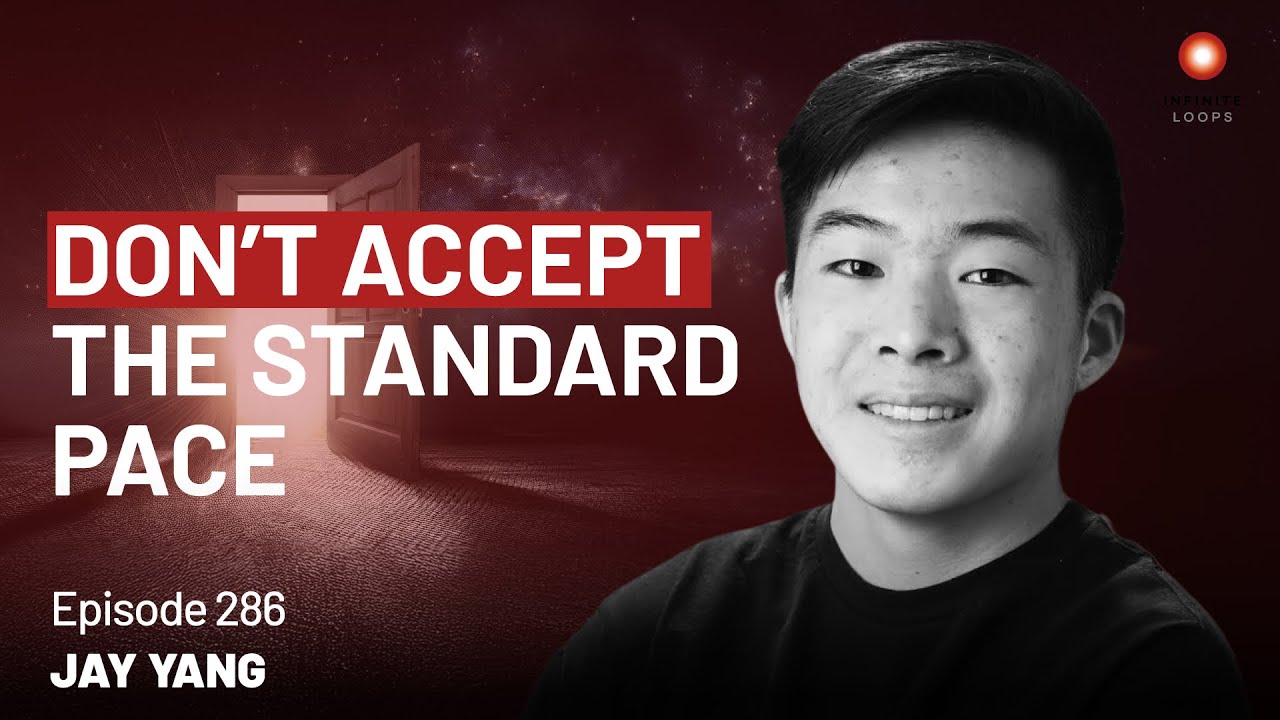


No Permission, No Problem, Six Figures at 19 | Jay Yang - Author & Hormozi’s Secret Weapon


