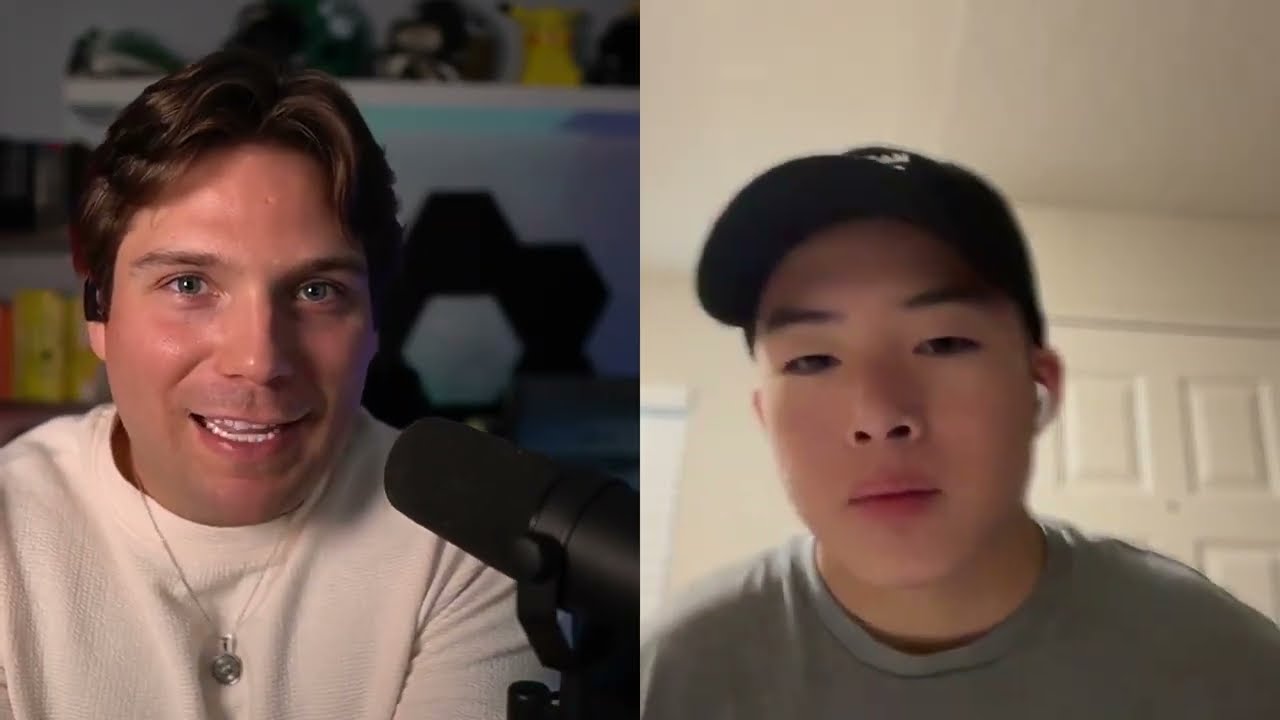
The 'Permissionless Work' Method That Changed Everything with Jay Yang

Jay Yang built 250,000 Instagram followers by doing work nobody asked him to do. He breaks down his North Star framework, the 4 types of luck, and the 3 C's method: consume, collect, create. Practical for athletes and creators ditching conventional career paths.
Chapters
All right everybody, welcome back to another episode of The Postgame Podcast, episode number 83 here. The Postgame Podcast is a podcast where I'm sitting down with former athletes, talking to them about life after sports, what they're up to in business, entrepreneurship, and much more. My guest today is the author of You Can Just Do Things and the social media strategist for Alex and Leila Hormozi. He has built up an audience of over 250,000 followers on Instagram, much more across other platforms as well, really by just consistently showing up and embracing what he calls the permissionless approach. His name is Jay Yang. So Jay, awesome having you on here, just hearing your unique approach to a lot of things. I think it's awesome personally, and hopefully people out there listening think it's awesome as well because you share a ton of great stuff. A few things Jay talks about are how to identify your North Star and reverse engineering the skills that you need to get there. He talks about a default path, really how there's nothing wrong with it, but just how he realized early on that it wasn't for him and that the default path isn't your only option. So he shares his thoughts around that. He also talks about 4 types of luck. He explains what each of those are and how you can attract opportunities to come to you. And then his 3 C's method, few things that have shaped his career and open up doors to some incredible opportunities. Really early on, Jay's still a young dude and has a long way to go, but he has done some incredible stuff to this point. Jay, thanks again, man. I think this is awesome and think that anybody who's really interested in kind of a non-traditional path or maybe just rethinking their current opportunities, current path, this could be a good one for them to listen into. Thanks again for tuning in. Really appreciate it and hope you enjoy this conversation with Jay Yang. Awesome. Jay Yang, how are you, man? Thanks for coming on. I'm honored to have you on here, dude. I'm a follower or just a fan of your work and followed you for a little bit and I think if you're listening in right now, this, you could definitely apply a lot of these things to your own life, your own approach. So, so yeah, man, thanks for coming on here.
Appreciate you having me on, Joe. It's a pleasure.
Yes, sir. Yes, sir. Why don't we start? We can start here. Just a few, I think it was last week actually, you just crossed 250,000 followers on Instagram. Is that accurate? On Instagram?
Correct. Yep.
And you had talked about, I think you tweeted this like 5 years and 1,470 posts later. Pretty good. Pretty good body of work.
Yeah.
What do you, what do you, yeah. Just that consistency, man. Like what, what are your, what are your thoughts on that when, when I mention that to you now?
It's funny cuz after I hit 250,000 followers, I had a lot of like high school friends reach out and congratulate me. Um, which was really awesome, but at the same time, they weren't congratulating me at the start of the journey. And, and so I'm a big proponent of doing so many reps, it's impossible to fail. Um, and, and yeah, I've, I've posted multiple times a day for the last 5 years since I was before freshman year of high school. Um, and if you, I actually, I've deleted probably like 3 posts, um, and 'cause they have typos and the rest are just like, you can scroll to the bottom and see how the page has evolved. Um, and so it's like the, the thing, people only see the highlight reel and they don't see the, the mountain of work that came before that. Yeah.
No, definitely, man. What is, what is that number? Like, yeah, 'cause I know followers is, is kind of a vanity metric at times. Does that number, like, is that number significant to you, or is it more so just the consistency of like building up this following, if that makes sense?
Like, yeah, no, I'm of, I'm, I'm of two minds on that. I think number one, I, I do think that followers matter in the sense that when you follow someone, that is a measure of intent that you want to see more content from them. And so I, I view that as a positive. 250,000 people have clicked follow and said either, you know, viewed a piece of content and said, I want to see another one. And that's, that's to me means that I've impacted them in some positive way. And so that means a lot to me. At the same time, I like to say I, I, I write reminders to self. And so whether 250,000 people see it or just my mom and my brother, I'm, I'm okay with that because I am the first reader that reads that piece of content. And so oftentimes it's the content and the reminders that I need myself.
Yeah. So it's almost like a journal that you're keeping, but just in public and it's opened up so many different, so many different doors and opportunities. You, I tagged you a couple weeks ago and it was, um, a guy that I had on the podcast, Dom Bullard. And he mentioned You Can Just Do Things. And I, I had known, I, you know, I knew your work, but that really just made me dive back into it, I think. And then I went on to read the book and it's just like, it's very practical, I guess. And we were talking about this before we started recording that the traditional route is go to college, get good grades, get a good job, etc., etc., etc. You kind of reversed all that and flipped it, flipped it on its head. So what, like, why do you think, why do you think that is the case? I don't know, like, what made you start going down that path and just kind of how has that evolved at this point?
Yeah, I first came across the concept of the permissionless approach from Jack Butcher. Um, it was— he had a course, it was like a $1 course, and it was called The Permissionless Apprentice. And it was kind of about how to apprentice under people you look up to and, you know, doing some of the work up front so that you, you're impossible to ignore. And I mean, ever since I was little, I've always been kind of a people watcher. I observe Um, and when I looked ahead at the people who were ahead of me, I realized that I didn't want their life. They didn't seem very happy or fulfilled. They seemed like they had to do things at a certain time because someone else told them to. And I realized that if I just followed the default path, that I would end up with the default outcome. And so it's like, if you want if you want non-average outcomes, you have to take non-average actions. And so from then on, I became obsessed with like, how do I speed up and accelerate my career? How do I skip steps that aren't necessary? How do I take different actions from the rest of my peers? And not to say that the default path is bad, but I think I can speak for both myself and some of the audience who are more ambitious. The default path is not the only option. And once you realize that, I think the entire world just opens up.
Yeah, because you, so you went to, you went to college, you did go to college, official college dropout, right? And that's, that's what you, you say, but you went to college for a year and you were like, okay. I'm good. I think I kind of, I just didn't, I wanted to experience this. I didn't want to miss, have that kind of FOMO of not having been there. But like, what do you think it would have been like if you stayed? Like, you ever think about that? Or was that not even a question? It's like, all right, I'm ready to go, go do something else. Ready to go start working on something else.
I do think about that a lot. But I would say that behind every decision, fundamentally, regret is baked into it. And so it's like you will feel FOMO if you don't understand what your North Star goal is, which is why I'm such a big proponent of having a North Star. Because once you have a North Star, it makes a lot of decisions clear. It helps you remove distractions. And it also helps you make decisions and make sacrifices in accordance to those goals. And so it's like, if I know what my North Star is, does going to college and staying in college help me get there faster, or does it help me get there slower or not there at all? And so for me, that decision was pretty obvious. I could either continue to build things online and work with entrepreneurs in the trenches today, or I could learn theory in a classroom on material that was made 5 years ago. And so the obvious— the choice to me was pretty obvious. Yeah. Yeah.
So then what, what is your North Star?
So my North Star is a play off of Naval's quote, which is a fit body, a calm mind, a house full of love, meaningful work, and enough wealth to not have to worry about it. And those are very— those are 5 very broad and kind of amorphous things, but that's intentional. I, I think I view them as infinite pursuits that won't ever 100% be attained, but I can strive to be a little bit better at each of them. And so for me, in this, you know, young stage of my life, I believe it's important to over-index on the financial side of my 5 types of wealth because it'll pay dividends down further down the line. And so I'm okay making sacrifices on some of the other areas so that I can then achieve the financial outcome that I want.
Yeah, it makes sense, man. So, so you— so we were talking about you've gone on this The permissionless work concept, like just doing a project for somebody, that makes it sound not as important as it is, but like you're doing basically a job for somebody without even knowing that it's going to work. You're just like, all right, hey, I'm going to do this. It's kind of, when you think about it and you say it out loud, it's like, all right, that's kind of nuts, but you need to go to the extreme sometimes to get extreme outcomes. So How did you think about who you wanted to do this permissionless work for? And maybe a better question is like, who do you want to work for? Like, what types of people are you trying to surround yourself with?
Yeah, that's a great question. I don't think people should do permissionless work for anyone and everyone. I think it makes sense when it's intentional. And so again, that goes back to the North Star. If you know what you're after, then you can reverse engineer the steps, the skills, the character traits and beliefs you need to adopt in order to get there. And so for me, 4 years ago, I didn't know anything about how to work. I thought I knew, I thought I was working hard, but I didn't actually know what working hard meant. And as a result, I had a portfolio of failures, is what I like to call it. I had a lot of failed projects that went nowhere because I just wasn't working on the right things. And so I had a conversation with my mom and she said, hey, why don't you try and work for your favorite company? Maybe you'll learn how to build a company. And so at that time, my favorite company was Beehive, a newsletter platform. I had been running my newsletter, writing, sharing my weekly learnings every day or every week on that platform. So I cold emailed the CEO and I pitched him 3 projects I could work with over the summer. I said, hey, I could do this, I could do this, I could do this, and here's what that would look like. And I put together, I think it was like 7 or 9 slides on Google Slides, and I sent it over to them. Tyler loved one of them, and I interned at Beehive, and I learned a lot about what does it mean to work at a fast-growing startup, what does it mean to ship product pretty much every week, and that fundamentally changed the directory of my career.. And I did that 2 more times since then, trying to stack the skills that I believed would most contribute to getting to that North Star. Mm-hmm.
So then how do you— because you, you're, you're very entrepreneurial, clearly, like you like to, you like to think for yourself, you like to build things yourself. What's the balance between working for somebody? And then we talked about this a little bit before you're recording, but working for somebody, gathering all these skills, and then like, what's the tipping point where you're like, all right, I've got enough to where I can go do something on my own?
Yeah, I, I honestly, I don't view it as working for someone. I view it as working with someone. And so small change in vocabulary, but a very different way of approaching how you do work. And so like, I like to tell people, you either learn, you're either learning or you're earning, ideally both. If it's neither, then you shouldn't be working with them. And so once you find that learning is declining and earning isn't growing, then it may be the right time to either work with someone else or work for yourself. So I have a running learning doc from every person, company I've ever worked with. It's just this long Google Doc. It's like, you know, 200 pages or something. And I have a clearly set defined thing. If I don't add to that learning doc at least once in a week, then I know my learning has declined and it's not, it's time to do something else. And so I've been really intentional with like, what is my breaking point? Cause if you don't clearly define that, it can be easy to then get stagnant and, and, and become complacent with the environment you're at.
That's pretty interesting.
Yeah.
You keep a running doc. Yeah. That's, she's got a lot of consistency, man. There's just a lot of different things that, yeah, you're doing to track. To get to that North Star that you're talking about. So, man, that's really cool. How does it impact like relationships, right? Because you're so driven with your work. Or is that a focus point for you too? Like friends, family? I mean, I'm sure it is. Like your family is important to you. You picked up and moved.
Yeah.
Gotta be a tough balance, I'm sure.
There's definitely been trade-offs.
Yeah, the trade-offs. Yeah.
Moving across the country means I get to spend less time with my parents who are getting older. My, I have a twin brother and we've pretty much grown up every single day seeing each other. Like we've never gone more than 24 hours without seeing each other. And even when we went to college, we went to the same college. And so we were like right next to each other. You know, we eat meals together. And so this is kind of the first season in my life where I'm not near my family or my brother, who I'm very close with. And so, yeah, it's definitely difficult, but I see it not as a permanent thing, but again, as a season of life. And I think when more people take that approach of it's not about work-life balance, it's about work-life harmony. And sometimes you're in a season of sowing and sometimes you're in a season of reaping and sometimes it's okay to make that trade-off.
Yeah, that's a good perspective right there. So, cool, man. So, now you're working with Alex Hormozi's team, which he's blown up over the years, right? I mean, just with his work that he's doing now with acquisition.com and he's probably the biggest influencer, right? Just would you categorize him that? Is he an influencer or what would you What'd you say about that?
I categorize him as an entrepreneur who makes content.
Yep. So that was another permissionless work, or you were doing more permissionless work to get to the point where you're working for him, right? So how did, how did that story unfold and how did you end up moving to Vegas?
Yeah, I like to tell people, I mean, there's, you know, the 4 types of luck from, um, I believe it's James P. Carson, but it's like the first type of luck is, you know, obviously blind luck where you grow up, who your parents are, kind of your IQ in a sense. And so a lot of that is like you can't really control that. The second type of luck is hustle luck, which is luck from motion. You take so many actions, you bump particles, you meet people, you do things, you create things, you write online, and you kind of make things happen. That's kind of the gist of the first book. Uh, the third book, the third type of luck is luck by attraction, or luck by, luck by spotting unique opportunities. So it's like you develop this skill set and this knowledge, almost this taste where you're able to spot different opportunities. And so that's kind of where I started a ghostwriting agency, because I saw a gap in the market. There's a lot of these huge agencies, but they don't really understand the social platforms. And there's a lot of these really tiny solopreneur people who don't really do a great job. And so if I can sit somewhere in the middle, I could build a business. And then the fourth type of luck is luck from attraction, which is you have built a skill set, a unique knowledge and taste where now people are coming to you with opportunities. And I think there's an analogy that Naval uses, which is let's say there's a treasure deep down in the ocean that they need a they need a diver to go find, and you're like the best number one top diver specialized in hunting for treasures down in the ocean. And so they call you. And so I got the internship with Beehive and my role with Noel Kagan through luck from motion. This role with Hormozi, it was luck from attraction where people I knew in my network knew people on Hormozy's content team and they connected us because they were looking for somebody. And so it was less permissionless work and more a result of permissionless work from, from years before.
Okay. All right. So you, you got the ball rolling on all these things and then it, yet doors start opening up for you. What, what's it like working under him? I mean, He's, yeah, he's, I was hearing, I was listening to like Sam Parr and Sean Pory and they were talking about something about him, how like behind the scenes he's actually like got a good, I don't mean to say that on the surface it doesn't seem like that, but he's got a good sense of humor and he's kind of like a funny guy, jokes around a little bit. What, yeah, what's it, what's it been like working with him? I should say, not for him.
Yeah, I mean, I've been a longtime consumer of his content from before this, probably last 4 years. And so it was definitely interesting, like the first few days to meeting him, getting to know the team and being like, wow, this is what it's like behind the scenes of like, you know, all the content and all the stuff he does behind the scenes. I would say both Alex and the entire team, they are relentless in work, but relaxed in life.. And I really love that dichotomy where they're focused, they're intense. When they work, they work, like, let's get this thing done. And then when we're lifting or we're just hanging out playing pickleball, it's, it's relaxed. We can make jokes, we can have fun. Um, there's not this, you know, overly sense of like masculinity all the time. And so, um, yeah, in his videos, Alex tends to be talk more aggressively because he's talking to his younger self. And so a lot of times it's like he's trying to tell his younger self not to make those same mistakes that he made. And so on camera he may seem more serious than he is in, in real life.
Gotcha. Okay. Yeah, that, that's interesting. You also don't, he doesn't skip the gym much either. I, I don't think just based on hit what you see on, what you see online. But so Jay, we were also talking a little bit about like what you've done to get to the point that you've gotten to, but then you were like, all right, what would I tell myself? What were some things that I would do over? I'm sure I'd love to get your thoughts on that because it seems like you've built up and you have, dude, you've built up in this awesome thing. There's 250,000 followers on Instagram. You've got this crazy body of work. But if there's a couple of things that you might have done differently along the way, would love to hear those too.
That's a great question. I would say tactically, there's not a move that I would have done differently, but psychologically, I think I wish I didn't make things so serious that didn't have to be so serious. I think it's like, if I took the same actions, I would have gotten probably a similar result. But if I just asked myself, what would this look like if it was fun? Or what would the less stressed version of this look like? I think I would've been overall, I think, more positive about my journey. 'Cause it's, it's been, it's been honestly a journey out of, out of stress. It's kind of like running away from something more than running towards something. Um, I think even as a kid, I just had this sense of inadequacy, and I just hate not being good. And so even like as a kid when I was growing up playing basketball, I sucked at, you know, ball, like dribbling, and I was like last person on the bench. And so I would go down in the basement and I would dribble. I'd put a plastic bag around ball and I would dribble for hours until I you know, till my hands were all like scabby, uh, just because I just hated sucking, to be honest. And so a lot of just my career has been like, I want to eventually get to that sense of I'm now running towards something, not running away from something.
Love that, man. Love it. Well, I think you are running towards something. Yeah, you're, you've got this. Yeah, you, you're doing a great job, man, for, for what it's worth. Um, I, and we'll go, you know, a few more minutes here because I know you're busy. So the, what I want to ask you, yes. So I wanted to ask you about maybe just like tactically/practically speaking, growing, like growing that following. I know there's the consistency and it comes down to like consistently adding value to people and whether that's, It's just, it's funny how you see people build these huge followings because like some people do it with comedy content, some people do it with inspirational content. Like, so everybody kind of has this niche, but if there's something that comes to mind for you of like, if somebody's just starting out and wants to start putting out that content, like what should they keep top of mind if they want to grow? Like maybe if that's not their main priority, but if they want to reach as many people, maybe, like, what are some things that they can do?
It would depend on what you mean by grow, because like, if you want to reach the most amount of people possible, it would make sense to be an entertainer versus an educator and to make TikToks where you're dancing or do comedy. So I think it depends on like, what does the— what is the ideal outcome of the growth? Like, growth for what, what kind of metric or outcome.
It's true. I guess I'm thinking growth. I'm thinking the metric that we talked about earlier, like Jay Yang has now has 250,000 followers, but yeah, I, that goes back to the North Star, right? I mean, I, I think that's kind of what, yeah, like what's, what's your goal? What, what's the goal, man? So what about—
I mean, we can assume, we can assume that people want to grow an education brand to inspire people or impact them or motivate them. If that were the case and they were starting from complete zero, I like to tell people to use the 3 C's method, which is consume, collect, and then create. So consume is if you are consuming, you know, TikToks of people dancing and you want to create inspirational or educational content, then there's a fundamental misalignment in the inputs and the outputs. And so it's like, if you want to think different thoughts, you have to consume different content. And so that's the first step, is like, if you want to be the next Jay Yang or whatever, then you have to consume more Jay Yang type content, right? And so it's like, if you want to make business content, you have to read business books and consume business podcasts, maybe start a business. So you're, you're your mind is wrapped into that world, into that echo chamber, in a sense. Yep.
Yep.
Step 2 would be collect, which is, as you're consuming this content, what stops and holds your attention? If you're scrolling Instagram, what makes your thumb stop? And then really analyze why. Was it the hook? Was it the way he was speaking? Was it the topic? Was it that it was a question? Like, why did it resonate with you? And so you kind of create this swipe file or this folder of content that resonated with you. Maybe that's podcasts, YouTube videos, tweets, whatever. And then you analyze, like, from those, what are the patterns between all of these types of content that resonated? And then step 3 is create. Now that you know what resonates with you, you have the pattern, now you can kind of duplicate this but in your own style. And so, um, That's what I'd recommend for people starting just from scratch. Change your inputs to change your outputs. Pay attention to what captures your attention and then create.
It's awesome, man. That's awesome. So, well, Jay, I appreciate you, man. I'll just ask you one more thing. So this podcast, like, you were— you played basketball. Um, you still a basketball fan? Like, who's, who's the team you root for?
I don't really watch NBA that much, but I occasionally get some runs in here and there.
Okay, still play some pickup hoops. Love it. Like, I started this because I played college baseball, and I get— it's really a platform for kind of current athletes, former athletes, whatever, kind of figuring out career, man, figuring out what they want to do for forever. So if you have any thoughts maybe for that specifically, like and I know it's kind of— it's just one tiny sliver of it, but like an athlete and hanging that up and then going into maybe it is permissionless work or it goes— again, it goes back to what you want out of all of it, but I'd just be curious to get your thoughts around that or like any advice for an athlete hanging up and going into that next phase.
Yeah. I mean, I think what's cool about the permissionless approach is it transcends industries and categories. It doesn't matter if you're an athlete or an entrepreneur, like, you can use it. And so step 1 would be like identifying what you want, what's your North Star. And if you don't know what that is, then that becomes your mission to figure out what it is. And so that may mean experimenting with things, trying things. Maybe it's like take a painting class, you know, try and write a book, or, you know, try different things because you won't know until you try it. And so it's like, you can't— clarity doesn't come before action, clarity comes from action. And so that would be step 1. Step 2 is once you know what you want, then everything becomes really easy because you just reverse engineer what are the steps it takes to then get that outcome. And so it's like, if you are a basketball player and you retire and you want to become an assistant coach, obviously you have an innate advantage because you played basketball and you have connections. But let's say you had none of those, how would you break into that role? Well, you wouldn't email the coach and say, hey, how can I be an assistant coach? You would email them with permissionless work. You would break down a competitor's offensive plays. And, and, you know, record a video on how to stop them defensively, and then you'd send it to the head coach, right? Or you would send them a video of you playing and then talk about what was going on in your mind as you were making certain plays. It's the, the question you have to ask yourself is, how can I make this a no-brainer for the other person? And the best way to do that is to do the work up front. The reason it is, is because it shows two things. Number one, it shows that you want that opportunity because you've done the work up front. Not many people are willing to do that. Number 2, it shows that you can actually do the job, or you can handle the opportunity, because you are literally showing your thinking. And so for people who are like, oh, that's free work, or you're being taken advantage of, or, you know, what if they say no? Even if they say no, you are building you. Like, you are the product. Maybe you don't— maybe you send that video to a coach, he says no. Well, you can send that same video to another coach Or by making that video, you actually like learn a different way to think about the game, and then you make a new video and you send that, and then he says yes. And so, uh, I don't view rejections as permanent roadblocks. I just view them as redirections to different paths.
It's great, man. Yeah, just the— I just, I love how it's, it's like I said, yeah, it's very— it's not the conventional way of thinking. Like it's, you, you're thinking differently to get these different outcomes and, and it's awesome, man. Yeah. And, and I think even because I work in a sales job right now, like I think the permissionless approach, it, it doesn't have to be to put together a, a full like pre, you know, presentation for the Beehive CEO. It could even be if there's a prospect out there that you're like, okay, let me just totally research this guy's whole, practice. Let me, let me do all these things. So it doesn't have to be this grand thing, but inside your own world as well, I think it can be applied. So yeah, man. All right, Jay. Well, cool, man. Best of luck with the, yeah, the launch and everything this weekend. That's gonna be very cool. Just appreciate your time and making some time for this. So where can folks find you? I know you're pretty accessible, but what's the best way if What's the best way if somebody wanted to take a permissionless approach to get to Jay Yang? What's that way?
Well, if they want to take the permissionless approach, I'd say you can find me. All right.
Mic drop on that one. Fair enough. Good place to end. Thank you.
More from Jay

Why He Took a 50% Pay Cut to Work With the Best | Jay Yang, writer | The Quest with Diksha



No Permission, No Problem, Six Figures at 19 | Jay Yang - Author & Hormozi’s Secret Weapon