Age of Craftivism: Meet Jayna Zweiman, Pussyhat Project Founder

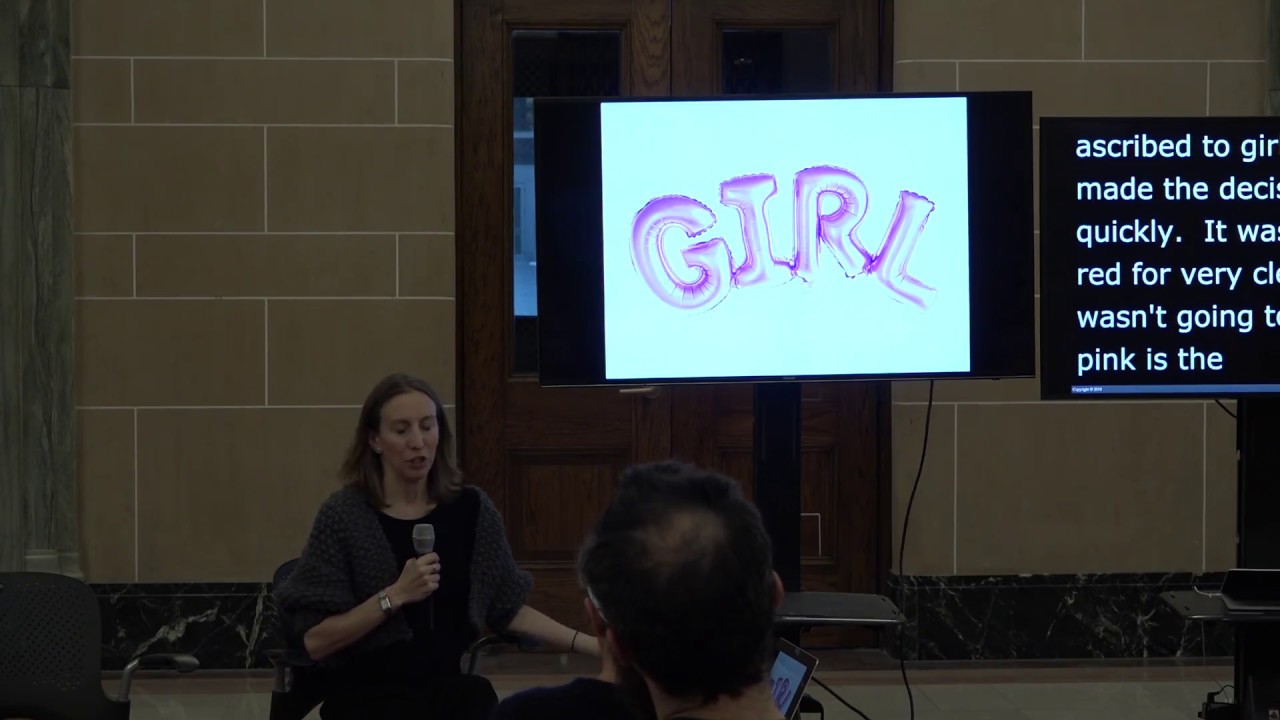
The YouTube recording captures a live talk and Q&A at the Arlington Center for the Arts featuring Jayna Zweiman, co‑creator of the Pussyhat Project, and moderator Naomi Greenfield. The event opens with Linda Shoemaker introducing the Arlington Center’s role as a cultural district and its recent craftivist initiatives, such as the massive “We the People” exhibit and local knitting brigades. Naomi introduces Jayna, who recounts the origin of the Pussyhat Project in May 2016 after the 2016 election, describing how a personal injury, a Groupon crochet class, and a collaboration with Krista Su, Kat Corbett, and illustrator Aurora Lady led to a rapid six‑day launch of a pink hat pattern. Jayna explains how the project quickly went viral, driven by personal stories (pregnancy, chemo, work constraints) and a decentralized distribution network of yarn stores, volunteers, and a family in Reston, Virginia that processed 15,000 hats. The conversation explores inclusion challenges, noting that while the movement began with predominantly white participants, efforts such as the Welcome Blanket project aim to broaden racial, gender, and immigrant representation. Jayna discusses the emotional impact of individual stories, including a mortician’s request for a cremation in a hat, and reflects on her own growth from a shy, microphone‑phobic architect to a public speaker. She outlines future plans: a three‑pronged nonprofit structure offering grants, a design incubator, and an informational platform for women’s‑rights activists, as well as the Welcome Blanket initiative that reimagines the U.S.–Mexico border as a 2,000‑mile yarn blanket welcoming refugees. Audience members raise questions about diversity, accessibility for non‑marchers, and how to involve other craft communities (quilters, knitters). Jayna emphasizes the therapeutic nature of crafting, its role as a meditative activist practice, and the importance of giving hats to foster community support. The event concludes with thanks and encouragement for continued craft‑driven activism.
Chapters
Welcome to our event tonight. My name is Linda Shoemaker.
I am—
how does this sound? Can you hear me? Any adjustments you recommend now before we get started? Okay, good. So, welcome.
We are—
did I say who I am?
No.
I started. So, my name is Linda Shoemaker. I'm the executive director of the Arlington Center for the Arts.
Yeah!
Thank you.
That means a lot.
Thank you.
We are so excited to have Jayna with us here tonight, and all of you, right? Thank you. But before we introduce Jayna and Naomi, who will be doing the Q&A tonight, I wanted to take a couple of minutes to do 2 things. One is to introduce Arlington to Jayna a little bit, so you can have a sense of who it is you're talking to in the room here tonight, and also to talk about why it felt really important and exciting for the Arlington Center for the Arts to do this program here tonight. Arlington is, I would say, on fire with creativity and the spirit of this craftivist movement, this craftivist phenomenon. Last year in January, there's a place across the street called Laura's Sewing School. Do people know about Laura's? They made and distributed 2,600 pink pussy hats for people to wear to the various marches and to represent last year. And then following all of the marches last January, a citizen of Arlington came to the Arlington Center for the Arts. Ellen Kushner, are you here? She really wanted to be here. Ellen said, you know, people in Arlington made so many amazing signs, hats, posters, banners. We can't let that all just go away. We need people to see that. We need those things to live on. So she proposed and we executed a gallery exhibit of all of that stuff in an exhibit called We the People and brought all of that into the gallery. And for us at the Arlington Center for the Arts, I want to tell you, it was the biggest show we've ever had. It had more submissions and more people than any show we ever had. The artwork was hung literally from floor to ceiling and hanging from the rafters. So people in this town have embraced this idea, and the Arlington Center for the Arts is— the Arlington Center for the Arts comes from a place, from a mission of transforming lives and building community through the arts. And I think what you've done and what you represent and what you've inspired just sits right at the heart of that mission. So we're really excited to have you here tonight. And I just want to mention a couple of other things that are going on in this town so that we can all kind of have a sense of where this fits in our community life. This is a town that has embraced the idea of the arts arts as a mechanism of community building, the arts as a mechanism of individual and collective uplift, you know? And I would particularly call out the efforts of the Arlington Public Art Group and the installations that they have done up and down the Arlington— the Minuteman Bike Path this year with the— there was an installation called The Rhetoric of Opposites, where simple screen-printed words were on the bike path path saying, us and them, black and white, insider, outsider, that kind of thing. So as you move down the bike path, you really have an opportunity to contemplate this rhetoric of opposites. And then more recently, there was a 57-member knitting brigade. Are there any of you here in the room tonight? Raise your hand, knitting brigade people. So there were 57 of them. who created knitted and crocheted sleeves that are still up, right, on the trees along the bike path. Absolutely fantastic, surprising, delightful exhibition by regular people. The thing that I love about this idea of this kind of craftivist movement is that regular people can participate. Coming from a place of the Community Arts Center in Arlington, people will often say to me, well, That's great, but I'm not an artist. I don't have any talent. That's not for me. But I really believe passionately and fervently that the creative is in all of us, and opportunities like this really give us a chance to bring that out for everyone. That it's not just the domain of the talented and the trained, but it's really for all of us. So I think that's about what I wanted to say. The other thing on sort of the meta town-wide level Arlington has just been recognized by the Massachusetts Cultural Council with a designation as a cultural district, meaning that we as a community have a concentration of exciting and vibrant enough arts and cultural activity to be recognized by the state. So congratulations to all of us for that. And then just Yes. And just speaking to you as the director of the Arlington Center for the Arts, I also have to say I am so proud and so grateful that this community has done so much to save the Arlington Center for the Arts. So for those of you who don't know, we lost our building last year. We had to move out of the building last year. We're in the process of building and fundraising for a new home. In the back of the room are the materials and the plans. You can see what it's going to be. There's fundraising materials if you're interested in learning about how to support the project. But this community has come together from town officials, elected officials, the town manager, the town planning department, and then everyday individual citizens like you and me, kids and seniors and elders and artists and everybody who really believes we need an Arlington in a place dedicated for the arts, for a community arts center. So we believe we're going to be breaking ground on that project in the next couple of weeks.
Yay!
And hope—
yeah!
And are projecting a spring-summer opening of the new Arlington Center for the Arts. So if you don't know about that, please check out the info at the back of the room. So I think I said everything that I wanted to say. And I'm really, really delighted now to turn it over to Naomi Greenfield, who will introduce Jayna to you. And thank you all so much again for being here tonight.
Great.
Well, thank you everyone for coming out. I'm just going to give a brief introduction of how we ended up here, and then we're going to Start our conversation and make sure we leave plenty of time for you to ask questions to Jayna. So Jayna and I have known each other since we were 6 years old. But through the magic of Facebook, we, you know, hadn't seen each other for 20 years until we just had dinner before this evening. And I had followed, you know, as you often do in Facebook, you sort of see what people are doing and are remotely connected to them. So I had seen shortly after the election Jayna posting a little bit about this pussy hat project, but didn't know much about it. And then all of a sudden, as it started bubbling up and becoming more viral, and I started hearing the stories about pink yarn shortages all over the country, I all of a sudden, you know, made the connection, like, is that your thing that people are going so crazy about? And then for me, I guess the most powerful moment was the morning of the Women's March when I sort of woke up still in kind of a fog of despair and started walking down the bike path towards Alewife. And just in Arlington alone, saw throngs of people with these hats and had the sort of the first moment after the election where I felt like there was a community of people who also felt that same despair, but were ready to, you know, take action and do something. So that was very meaningful to me. And then, you know, so I just asked Jayna to come home for a little bit, and now she's here. So I'm really, really excited to welcome Jayna Zweiman, the creator of the Pussyhat Project, right here to Arlington.
Thank you.
So I think the number one question that people sort of would want to ask, or that I would want to ask, is sort of take us back to the beginning of how this became an idea and the origin story for us.
So I'm a little— everyone can hear me okay?
Okay.
I'm still kind of getting used to being on microphones, so please excuse me. For me, it kind of started back even, like, in May of 2016. And I've been recovering from an accident for a bunch of years, since 2013, and roped in a friend, Krista Su, who I'm co-creator and co-founder, she's co-creator and co-founder. Roped her in with a Groupon to learn how to crochet at a place called The Little Knittery in Atwater Village, which has now moved to a different neighborhood of Los Angeles. And what I found there, which was so incredible, was this incredible sense of community. And I'm originally from Newton, Massachusetts, and Los Angeles is that much bigger. And it was this incredible place where you could be with different people of different ages. They did different stuff, different opinions, very heavily women-based. My background's in architecture, which is often not woman-based, and it was really just special. So, I think everyone remembers the summer of 2016 and going into election year. We're all here tonight. And I was looking for a way in. So, Krista was doing some canvassing, and I was just still kind of looking for a way in. And the election happened. We know what happened. And right after that, the Women's March was announced. And Krista was gonna go. She's like, I'm there. And I knew I couldn't go because of my injuries. I couldn't be in large crowds. And I was absolutely devastated, like full-on, like, how is this gonna work? And she wanted to make a hat, and I really wanted to make a project where anyone, no matter who they were, could get involved. And so we teamed up with our knitting instructor, Kat Corbett, who owns Little Knittery, and she created the incredible diagram of the hat, and the illustrator Aurora Lady, and launched it within 6 days. So it was very, very fast.
Great.
Is that good for length?
Yeah.
Okay.
And so when you launched it, you sort of like posted it online and began sharing it, Sort of like, you know, sometimes there's no real understanding of how things go viral or whatever, but sort of at what point did you realize that it had sort of had a life of its own?
Well, I think one of the most exciting things is I was fielding a lot of the emails, and I was getting emails from people across the country who would say things like, I'm gonna be 9 months pregnant at the march and I can't go. Like, my unborn child needs this. Thank you. So that was like one, and there are a lot of people with a lot of I'm going in for chemo, all these types of stories, or I have to work, which was actually a huge one. There were so many people who did one-woman pussy hat marches. And I think when we think about inclusion, we think about all the reasons why you might not go to a march. It might be a health reason, but you might have to work, or you might have to take care of someone else, or, There are so many, but those are sort of the top ones that I can think of. But I think that those are really, really big reasons. So sort of thinking about that and hearing that coming back again and again, particularly older people who are like, I can't do this, or, you know, I can't bring my kid with me, so I'm gonna do this. It was really just amazing. So that part was big. And then we had yarn— Like, the yarn shortages were a really big story. Because, like, in my little world, like, my little world was, like, pink, like, everywhere. So it's really easy to, like, not see it. And then I started hearing from people I hadn't heard from, which was kind of bizarre. And then I got to start seeing, you know, sort of that journey that people took to D.C. And you started seeing all those photos of people at the airport already ready. to go. And so it was just this great feeling, because we had this idea of a million hats. And so you can't just hand out a million hats in D.C. Like, that's never logistically going to work, like, ever. So this idea of bringing it yourself, giving it to a friend, giving it to a local yarn store that then was this amazing community hub, just like the one that we had, or to this wonderful family in Reston, Virginia, that processed 15,000 and, like, put them all into little bags. Like, just amazing. Like, the sort of love and sort of care that people were giving, sort of all those little bits, like, just kind of kept growing and growing and growing. And then you got to see it that morning, and that was just bananas. It was fantastic.
Yeah, I don't think many people know about that, and maybe you can talk a little bit more about that. Sort of the original idea was that you would have a I guess a smaller group of people who would make them and distribute them to DC. And then I guess the pattern— like, had you posted the pattern before then? Or— and then it's sort of— because I think when it really took off was when people could take ownership over it and produce them themselves.
Yeah.
So what we launched with is we have like a 4-sided manifesto with why pink? Why are we using these words? What is this about? With the 2 ideas of, to create a strong visual statement, and also to create a way for people who couldn't be at the march, a way to be visibly present. And we also included templates for a note, so that you could include what women's rights issue is particularly important to you, probably at the moment that you give the hat away, because there are a lot of issues. We all know this. And so, from that, there was a process of, Bring it yourself on your head, make one for a friend, you know, send it along, bring it to a local yarn store. And we had reached out to local yarn stores across the country. I think we had like 175 different yarn stores doing knit-alongs and creating their own donation process and, you know, figuring out how to get their hats to D.C. So they took care of that part. And then sort of the last resort, was this family in Reston, Virginia. So, the McKnights. They were amazing. And then people from Reston, Virginia would write us and say, this is right around the corner. Can I just stop in and help? And so there are people in Reston, Virginia who had taken this on as this huge project. And one of the parents was telling me that one of the neighbors she thinks is probably a Trump supporter, but she came because she's a neighbor and was helping out, and that's what you do. Which is great. This is what you do. And she was reading through all the notes, and the notes are the best part. And she just started to cry, because a lot of them are like, Planned Parenthood saved my life, was a very strong one. Or, I really care about girls and education. And so this woman was going through them, and she just started to cry and said, I get it. So it's just that— It's amazing. And I think this was a great opportunity to really connect, like, person to person, and sort of being in that sort of sorting. Like, I loved it, the little knittery reading all these notes and giving them out. It was beautiful. But being able to read those and sort of see them and see the care that people put into making them, like, it's really powerful.
Yeah, I know a number of people brought some of their— well, people are wearing their hats and brought their things that they made. And just in my family, my mother-in-law made hats also, wasn't able to march, but made hats for all of us. And it was a way to feel sort of connected to people who weren't able to march, but really were a part of it. Was there any point when it got so big and you had sort of started so small where it was difficult for you to sort of manage all the publicity or where it sort of, you know, like I feel like it in some, you know, it sort of took on a life of its own and sort of how did that make you feel or, you know, did you want any more control over it or?
Well, so part of what we gave out was the pattern itself, and I was trying to figure out how to give people the autonomy to sort of take charge themselves. So it was this like kind of trying to figure out the balance of a light touch for something that just could really grow. My background's in architecture, so this idea of systems architecture and how do you design a system that you don't have to have full control over in total ways. something that I've been thinking a lot about, and sort of community development I've been thinking a lot about. So, like, in my mind, like, I designed for a million hats, but that's not the reality of, like, what it is of, like, a million hats and, like, all the people involved. And, like, I— it gets kind of overwhelming because there's so many people who are involved. But there were so So many people who helped and took charge and just went with it that, like, that's the part that's amazing. It's just sort of like the community took it on. So in that way, it was manageable. And the more press that we got, the more we could share this idea of inclusion, of women's rights, how this was pro-women, how important this was. So it was much more of like an honor than like a—
Great.
Yeah, no, it feels like a great model of community organizing that we've seen happen, bubble up in a lot of different ways, where it's sort of like, I feel like now people are writing a lot of postcards, so the next level is like, well, I'm gonna invite my friends over to write postcards, or I'm gonna open it up to a larger community in the same kind of way. The solitude of knitting your own hat versus versus having a Laura's Sewing Shop where you come and do a hat event and stuff.
It's for introverts and extroverts.
Yes, that's great. That's another inclusion level that we have there. I'm sure you've heard a ton of stories of people and their pussy hats and how they made them or marched with them, and I was wondering if you could just share some of your favorites.
My favorite is this mortician wrote me, and—
Really?
I know, it starts off really badly. So she wrote me and she said, you know, this woman came in with her mother who had passed, and they went together to look at the mother, and she died of, you know, she was 89 years old, lived a full life, and they started giggling 'cause she chose to die in her pussy hat. And her absolute last wish was to be cremated in her pussy hat as— I mean, as sort of like a last sort of take that patriarchy. I know we have a mixed crowd, but it was phrased in a little bit of a different way, and sort of thinking sort of like when we talk about A Million Hats, like, this is like one instance of basically 3 women together sharing something that wouldn't have happened in that way had this type of project not existed. Like, this could have gone very, very differently had like a pussy hat not been involved. And I think that that's like so much the power of this project. It's not the stuff of like, oh, the sea of pink hats is just Phenomenal, but sort of all these personal connections that people are making is just so incredibly moving, which I get a little taste here and there of what's happening, but those to me are just what really get me.
That's really nice. When we were just talking yesterday a little bit about it, we both talked about the idea of being sort of an accidental activist. And how you sort of came upon this thing that you made that— and then you become part of the activist movement or the craftivist movement. I can understand that a lot, thinking about just how different my life has been in the past year since the election. I'm wondering how you think about this whole past year and the experience of, you know, in this new role?
I came to this project sort of in this kind of like from isolation, and my world has basically like exploded in the most wonderful way. So in that respect, it's really just incredible. It's like, it's a total honor. It's so fun. Really, like, it's an absolute joy, and it's— I feel like it's a real responsibility to really try to keep, like, thinking about what more can be done. So sort of like, what— like, how does this become more inclusive? Like, how does this, like, contribute to actually more lasting change? And so in that way, there are a lot of things that keep me up at night, but it's— To me, it's a total—
it's a One of the things that I also was thinking about a lot with this is that, you know, just thinking about the role of crafting in an activist movement. And also, you know, I described a lot of the crafting that I did post-election as like stress crafting, where like if I was trying to look for a way to spend some time that was not reading the news on my phone, that I would be like, I'm gonna make a lot of scarves, or I'm gonna make a lot of tiny crochet animals and stuff. And so I sometimes think about the pussy hats as like people, you know, stressing out, crafting out their stress a little bit. So is that a thing that you've thought about at all?
Absolutely. They're There's been scientific studies that knitting is akin to meditation. I'm sort of like, the repetitive pattern— it's a nice way to sort of concentrate and kind of be outside. And there are different kinds of knitting, like the super challenging kind, which for me, many of them are super challenging kinds. But it's that sort of sense of kind of being able to process. And I think also like the Little Knittery was such a great place for conversation because you could listen a lot. Like, when you're in a knitting circle or a sewing group, you're not necessarily having this like one-on-one conversation back and forth. You can really just kind of start digesting what's happening, and I think, I think we needed a lot of time to digest, and sometimes alone and sometimes together, and this was a really good project to be able to do that.
That's great. There's a podcast that I listen to that That, um, that 2 of the hosts, whenever they're greeting each other, they always ask each other how they're doing, you know, how are you doing in Trump-adjusted terms? And I think that's a great expression because sometimes I felt like in the past year you'd ask someone how you're doing and someone would be like, well, you know, like it's what's going on. So I guess I also wanted to ask you how you were doing in Trump-adjusted Okay.
I think I feel much more of a need to be politically active, and sort of the approach of Pussyhat is very much about giving the opportunity for people to express themselves, so sort of figuring out how these notes work together. sort of how people can work together. And I think that those are more like long-range things. And I think just sort of like with the Women's March, it wasn't designed to be anti an administration per se. It was very much about being pro-women. And I think I just always keep coming back to like, what are the big issues? It's not just one administration. We know we have so many problems in our society that are much bigger than just one election. And so how do we work at those in a much more long-range view? So I think my adjustment has gone to actually a much longer range versus shorter, because I often feel like I'm stuck on a reality TV show that I can't turn off, or watching one that you can't change the channel. And so this is— thinking about projects in this way has been really kind of helpful. It's sort of like, why do we care so much? not just one person or one administration. So, yeah, we have so much potential. So, it's trying to figure out how to tap into it.
When you sort of saw, you know, on, I guess, the morning of the march, you know, or you were at home, or you were, tell us about, actually, I guess, the morning of the march.
I was actually, so Los Angeles had 750,000 people, which, It's mind-boggling. And I watched it from a window above the main square, so I got that experience of sort of being able to like kind of be there and kind of go back and also watch all the news channels at the same time. So I had a great time.
It was amazing.
And I got to go down once or twice, and people were so packed together that like I hid behind a column and kind of threw hats out. I really just, you know, could pass them over. And it was so— how many people went to a march? I mean, so— it's just so, so great. Like, when you think about all these people coming together on a specific day, like, it's hard enough to kind of get together with friends. Like, this is like— This is so big. So I don't remember exactly what we were talking about, but the march was phenomenal, and it was awesome, and it was just Just, you know, to see all the signs and all the passion, and, you know, I kind of have this view of, like, positivity, but there was, like, people had things to say, and they were saying them, and that was awesome.
And you, you got a chance to speak at the march in LA this past weekend, right? How was that, that experience for you?
It was invigorating and humbling. I had a huge fear of public speaking. I was terrified of speaking before this project. And so this has been a big growth year for me. Like, this is kind of looking back on myself 2 years ago, like, there is no way I'd be sitting in this spot.
Didn't you once win some award in elementary school for most likely to—
I was most likely to need a microphone because I was so quiet. So I think this is really testament to the fact I think that everyone has skills. Every person has their skills, and then some people have to build certain skills. I have to talk into a microphone. But I think that that's sort of one of the beauties of looking at this. Pussyhat Project isn't just about one way to be involved. You can be a marcher, you cannot be a marcher, you can be a connector. I had friends who were calling people and shuttling hats around. They did neither, because they couldn't do either. That was just not in their ability. And so, yeah, it's just phenomenal. So yes, you might notice that I'm a little bit soft-spoken.
You're doing great.
Yeah, but you can still— but there's still a lot to say. And I think sort of the cross between social media and people getting together, I think there are just a lot more people talking. And I think that that's so important too. Politics is now not off the table. It's very much the table conversation.
Definitely. So I know— so we're like a year later. People still have their hats. I know there was some concern. I remember around springtime of last year when there were some marches and people were like, well, it's gonna be too warm to wear a hat. So it's nice that it's sort of winter again and everyone everyone gets to bring out their hats. And so I know you've been thinking a little bit about sort of the next phase of the Pussyhat Project, and can you share a little bit about that?
Yeah, so with Pussyhat Project, we started off as sort of this moment, sort of the shift towards a movement. So sort of thinking about how do you grow that, what can happen, and so we're thinking about sort of like a 3-pronged type of charitable organization. One is giving grants and scholarships for ideas like this, like project-based, that can make change, particularly for people who might not otherwise have access to be able to do that. So it's like, how do you create more access? So not necessarily based on someone who like has a certain education level or lives in a particular place, but like has an idea. Another part of it is a design incubator for projects like Pussyhat, perhaps what comes out of the grant structure, and another project which I've been doing called Welcome Blanket, which we can talk about. And then an educational informational platform, so women's rights supporters can get in touch with each other and also find out information. So I find out about things like 3 hours after they happened. I don't know about everyone else. But sort of knowing what marches are are happening, or what policies are happening, and just being able to share that information. And there's— we know there's so many issues within women's rights that it's really hard to kind of know, or find out information, and sort of trying to create that type of hub to be able to do that. So that's sort of the overall dream. So, yeah.
Yeah, and I definitely wanted to make some time for you to talk about the Welcome Blanket. I'm sure maybe many of you will follow Jayna on Instagram after this, but she's been working on a new project since— I don't know, when did it start?
It started in June.
In June, yeah. So it's called the Welcome Blanket, and I'll let you get a chance to talk about that because it's another really phenomenal project.
Thanks.
So sort of in thinking after Pussyhat and after the first march, I was thinking a lot about, like, how do things kind of extend, and how do you have things not happen just at a specific event, but how does it become something? So the Welcome Blanket Project takes the 2,000-mile-long proposed border wall between Mexico and the US and reimagines it, instead of 2,000 miles of exclusion, as 2,000 miles of inclusion. So that's 2,000 miles of yarn to make individual welcome blankets for new refugees I love your enthusiasm. It's amazing. And so with those blankets, we're asking makers to include notes about their family's immigration, migration, or relocation history, and also some words of welcome for whoever will receive it. So when someone receives this blanket. They get the symbol from someone— we've had people from outside the United States— but someone who just wants to say welcome, like, thank you for being here. It opened at the Smart Museum of Art at University of Chicago. We went through, like, our first cycle. They still have 400 boxes to go through. We made it, but, like, we ran out of time in that spot, but we're working on making it into an American tradition. So they're kind of micro gallery spaces that are about to open up, and we're looking for other places that can host us. And in sort of the spirit of things, we had volunteers coming in on Saturdays and opening boxes and entering notes.
Boxes of the blankets.
Boxes of blankets and packages. Thank you. And it was just amazing to watch it build, and just so powerful to read all these stories and see all this work, and just see all this support for new people coming to the United States, and how many people would put in this time and effort and creativity to make a blanket. Like, a blanket takes a lot of time to make. So, and you're making it for someone new who you don't know. And I think that that just shows so much care and love and concern. And it's very, very dear to my heart.
Yeah.
And I'll say that I think one of the inspiring things for me. And, you know, seeing about your projects and experiencing them is just, you know, in a time when a lot of times we feel like we're surrounded by a lot of negativity, like, you found this great way to, like, bring a lot of art and joy and positive energy with this, you know, activist stance. So it's really heartwarming and inspiring.
Thank you.
I think motivating to remember that there are people who are, you know, doing good things for people out there. And we actually have a welcome blanket for you from Arlington that I'd like to show you. And it was also put together from— with great help from the Arlington Knitting Brigade. That's so cool. And friends of Arlington and lots of people contributed a square. And I have great, great thanks to Sharon Grossman, who I dumped all the squares on and asked her to put together by Wednesday. And this inscription panel here says, Welcome to America. This blanket was made with love in every stitch by the people of and friends of Arlington, Massachusetts. We hope it will keep you warm and always make you feel welcome. So I want to— I could ask more questions of Jayna, but I want to share her with all of you too. So I wanted to open it up for For anyone who has any questions for— how should we— Linda, should I give away my microphone to anyone? Yeah?
Oh, you have 2.
Okay. All right, here we go.
Great.
Okay. So who'd like to start? Start over here and work our way back.
Thank you.
Okay. I just wanted to ask you— Oh, all right. My name is Maureen Lacey, and I teach in Arlington. And I'm wondering if there are any plans for making a movie. I mean, it would be so inspirational to journey with you on this. Oh, well, thank you. There have been some people who've— we've done interviews for documentaries. I don't believe— I mean, if there are any movie makers out there, I don't think there's anything official in terms of a movie, but perhaps there should be.
I think we've got a question here.
Hi, I was at your talk on Saturday.
I remember you.
Yeah.
In a really nice way.
I'm Suzanne Watzman, and I'm from Cambridge, but we gathered some of our forces to come here tonight. So I have to say that the community that it's created is really exciting to me. When I see somebody with a pink hat, there's always a mutual smile and a connection. And I want to see that go further. I think the blanket idea is one that I've begun to discuss at my synagogue. But the other question in this came up on Saturday is it's mostly white faces here. And how are you— not you— in theory, how do— no, in actuality, how do we all include more colors?
I think that's a really Excellent question. And we met at the Fuller Art Museum, and you had a really great question then too. But in terms of inclusion, what I found is with Welcome Blanket, there is more of a spectrum of different backgrounds, which you can definitely see within the notes as well as where people come from and their families. And I think it's reaching out. And I think personally, I've been reaching out to a lot of different people and groups and having those conversations, which aren't always comfortable to have. It's a lot of listening to what people are saying and being really sensitive to sort of what criticisms are coming by. It's like very easy to shut down when one hears criticism, but sort of thinking, okay, where is this coming from? What do we do with this? And I think it's standing up for people whether or not they're in the room as well. And I think, you know, we know sort of from the history of housing politics that there's a lot of reasons why different neighborhoods also look very differently as well. So it's like looking at those larger systems too. And there's so much work to be done and sort of I don't think there's necessarily like a clear checklist. But in general, I think it's always treating people with dignity and respect. And if things seem confusing, like taking— asking the tough questions in the nicest way possible and listening. I don't know if that answers your question, but—
Yeah, I think it's a hard one, and I struggle with it. just thinking about it all the time and every time I go to an event. An interesting question came up yesterday by a woman who's somebody I've known for years. And she, when I urged people at this particular group to come tonight, she was very adamant about, she was not included. And she's gay and she said She said that also transsexuals and all that whole alphabet soup, which I can't name all at once, at least as she said, she felt not included. And I said, well, it was for all women. Anyway, that's a group that sometimes is not black or white or brown or pink, it's another group. And I just said, it's for all women. But I felt at a loss at that moment.
I would say the Pussyhat Project was designed for everyone. And I think that's the design intent. And then sometimes perceptions are different than what you intended. And I think that it's really paying attention to those pieces. And I think sort of kind of to answer the earlier part is also going to places where you might not feel as comfortable and you might not look like everyone else who's in the room and really paying attention to how that feels too. Because I think once you take yourself out of your own, like one's own context, and this is for me, so I don't know about for you, but I feel like I always learn a lot from not being like necessarily having the same experience as everyone. in many ways who are around me.
Hello.
I'll just stand up so I can actually see you. Hi. Not to push the knitters against the quilters, but I am a quilter. And my temple was actually considering an event. I'm a social action person and a crafty person, and we're trying to figure out a project. And I love Your blanket project. We actually had talked about it. So how do we get stepped into that? We had talked about with Syrian refugees. I make so many quilts lately. My sisterhood wants to learn, so we're gonna do something very similar to that. So I think that's great. Can we be part of it, the quilters?
Yes, absolutely. Everyone is welcome in Welcome Blanket. It's like in the title. I think, you know, sort of thinking about inclusion, it stems so much from, like, how do we make this more welcoming? So I think— so knitters, quilters, sewers, weavers, like, come up with something else we've never seen before. It doesn't matter. It's great. And then the— this beautiful blanket is a variation of Cat Coyle's Come Together Blanket. She was the one who designed the fantastic pussy hat. And the idea behind it is that there's 16 squares, different people can make them, any color you want, go for it. Lots of people are like, I don't want to do that. That's fine. The main design— like, the main design guideline is to make something you would like to receive. And some gorgeous stuff just comes out of that, and some very meaningful things too. So right now we're figuring out our next location, and we're working Also with distributing the blankets through refugee resettlement groups across the country. So make the blankets. We'll figure it out. Like, let's be in touch, and we're figuring out the network.
What's the size?
What's that? We asked for basically around 40 inches square. I know that quilters often like to make things that are larger, but, but that's cool, if that's cool with you. There have been people who've been very upset about how small that is. So if things get a little bit different, it's— that's okay too. But we're going pretty much for 40 by 40, a really good lap blanket size. Could be good for kids. You know, I'd love to have one in my house. So it's sort of the same thing, sort of that size. So go for it. Our website's welcomeblanket.org. On all social media, we're Welcome Blanket. Nobody took it.
That's great.
Which is great, and it's not a word that isn't allowed on different sites, so social media, which made it also really great too. And we're figuring— we're trying to figure out sort of how to create networks sort of that are more local, so, you know, from community groups, you know, potentially from like the Boston area, how do we hook them up with the right, you know, sort of a group that's close by, so that then maybe in the future people can be working together beyond the symbolic gesture and gorgeous gift, and sort of pull that more towards the future. So this is, this is, yeah, this is kind of like the work, the work.
Hi.
I in no way want to give 45 any credit for what you've done, But would this have happened without the pussy-grabbing tape incident, or would there have been another version of it? I think if the election had happened differently, I don't know if other people feel this way too, but I think I would have been just sort of much calmer and been like, all right, that part's taken care of. I'm going to keep working within the design profession and working on community type of stuff. So I think what we see a lot of times sort of like within the arts is pushing up against something that really generates a lot of reaction emotion. So I think if the election had been different, I think it would have been a very different project.
Yes.
Hi.
I just wanted to say on the diversity issue, I was very impressed. I went to Cambridge this time, and I was very impressed that almost all the speakers except for a few big names at first were marginalized peoples, including Puerto Rican refugees and the LGBT community and incarcerated women, and very moving, you know, You know, it was very striking. And the people there were mostly white, as usual, but they mentioned and they publicized a lot of different events that are happening with regard to these issues and poverty and refugees. And I think we need to work a little harder to support those. There's a big meeting about poverty in Dorchester in May, for example. And if you go to rally on the web, you can find out where different rallies are happening. go out of our comfort zone and go to Dorchester or wherever there are things happening. Bread and Roses, I think, unionized people, you know, and go out to look at the— because all of these issues that affect us so profoundly affect marginalized people so much more. So I would just encourage people to think of that. Thank you.
I think you answered the earlier question better than I did. Thank you so much.
Well, I think it was very striking in Cambridge. And I think the other question I wanted to say is on the women's issues. I've been a feminist since the '60s, and I've never seen anything like this. And I was in Washington for the first, the main one, and Gloria Steinem was there. She's even older than I am. And she said she's never seen anything like this. So he, as much as we hate him, He has stimulated feminism, full-throated feminism, from all walks of life, all ages, all types of people, like I've never seen in my life. And that is just thrilling to me. So, and thank you so much for what you've done.
Thank you.
Hi. I just really wanted to thank you.
Thank you.
I was also at the D.C. march, and I knit— I've sent hats to 5 different countries, and I've made like 30 hats for people. But I was there with my mom, who is almost 80 and lives in a gated community in Arizona, and who was always sort of quietly frustrated, and she would help out migrant laborers quietly. And she got on the plane and put on the pink pussy hat and had a picture of her mom on her back, and my son was there, and to have generations of people with your hats. And we ended up on BBC 4, and they interviewed us, and they interviewed my mom, and she said all these amazing things of what you said, of it's finally time to step up. It's not— you know, we have to speak out. It's the first time she'd ever been to something like this. And then they interviewed me, and I said, I'm a teacher, and I have to show my students what the right thing to do. And then they put the microphone in my now 15-year-old son's hands.
Oh, my God.
And I'm sure, you know, why are you here? And I'm sure he was going to say, you know, my mom made me come. And being the good Cambridge kid that he is, he said, well, because gender is all a spectrum, and we all fall in different places, and we have to stand up for everybody. This is a kid that doesn't speak, and in a microphone to an international reporter. And that wouldn't have happened if it weren't for these silly hats. But the best part of the story is, so they did stories on all these hats, and my mom took the one, the first one I'd made, and it was a little too big, and it was a little too baggy. And the last thing she said to the reporter who asked, how does it feel to have on this hat? And she said, well, it kind of feels like I have underpants on my head. And guess what made it into the international news?
So thank you for that.
Thank you.
Hi, I'm also a woman architect from Carlisle, Massachusetts. No, actually I'm from Britain, but from Carlisle, Massachusetts now. We've just— in the— it's this year. I mean, this is completely different stuff, but it comes down to activism and crafting and bringing— how you can bring a community together. Can you say that again?
We can't hear you.
Can you hear me now?
Yes.
I have to do the microphone thing too. It's 100 years this year since the first ever Armistice Day. And in the UK and around Commonwealth countries, women have been crafting poppies and putting them out in their own local areas around the war memorials. And it stemmed from an exhibition that was actually held in the Tower of London, and they were actually using ceramic poppies, and they slowly filled the moat of the Tower of London with red poppies. And— but people took that gem of an idea and translated it into crafting and doing it in local communities. And I actually just got approval to do it in my town here in Carlisle for Armistice Day, or Veterans Day as you call it here, which actually falls on a Sunday, which actually means it's Remembrance Sunday around the world. So it's the first time, I think, for a long time it actually ends up being on the same day, and it's 100 years. And if you've ever looked at your family's history, what you will see is not only were there— all the men died, but the women didn't get married because there was no one to marry. So apart from the flu and everything else that killed people off, it was dramatic. But that's another thing that people can do is you don't have to— and you can bring it in and it doesn't become just a female thing then. So you're actually creating the whole community can do. And again, it can be done with felting, with quilting. We've had all these conversations in one day. I only got approval yesterday. But so I think this is another thing that people can do that is something else that's not just about 45.
Thank you.
My name is Anne Mann. I'm from Belmont. And I want to thank you so much for this because it got to be right before the march, and I didn't have a hat. So I put a post on Facebook, and I said, oh my God, $25— because I figured my best friend would make it for me, who was a knitter, but she'd given hers all away. I said, $25 for anyone who will make me a hat. I met with 25 people in 24 hours, and I made the greatest friends because I was meeting people that were just like me. And then I didn't know if people were going to have them at the march, so I had them in the backpack when I went to the march. And so many people had them. And then I realized I had to pee, and I ran into McDonald's. And there were 3 black men that were sitting at a table. And so I sat down with them, kind of because I was hungry and the line was too long, and started to eat their French fries. And I said, boys, what do you think of the Women's March? And they said— Our mothers are women. We are totally behind this. We are into the Women's March. It's not just women. This is males that come from mothers that we love, that take care and nurture us. So then I gave them 3 hats and made them come out. And then my husband is on my cell phone. He says, the 4 of you are on the news, Ann. So we were on, walking out of McDonald's with these boys in their hats. And then I still had the hats left over. And because I had put the ask out, when I got home from the march, there were several hats on my porch. So then I started giving them to homeless people, right? Because they're so visible, and it was getting cold, and it was snowing outside. So you give them— and I still have my guy at Harvard Square that's right outside of the Border Cafe who still wears his pussy hat. So guys, the reason that you might not have people wearing them is just because because you haven't given them one yet. And if you share and you open yourself up, there's all sorts of people that we can reach. It's just they don't know that we've got our hand extended until we actually do it. So thank you so much. I love that.
You're so welcome. Yeah, I think like one of the most beautiful things is actually giving them out. Like, it feels like when people talk about community service and they're like, oh, you know, it feels better to give, it so feels better to give them out. It feels so wonderful. And I met so many people at the march who'd be wearing them and just say, someone just came up to me and gave this to me, and I feel supported. And it didn't matter what they looked like. It was the sense that if someone gives something to you out of kindness, it's still kindness. And no one tells a feminist what to wear. You don't have to wear it. You don't have to accept it. But this idea and this gesture of just giving, I think, is really powerful. So thank you for giving out hats to all.
Great. Well, I just wanted to give one more big round of applause and thank you to Jayna for coming here.
So nice.
And a special thank you to Linda and Michael and Sarah and everyone from ECA who made this possible. So, so fun and so great. And I wanted to thank all of you, everyone who brought stuff for our pop-up exhibit. And also I wanted Jayna to see a sea of pink hats and you all delivered. So that was great. And so we have a few minutes afterwards, we'll have a reception. And I thought it might be fun if everyone who has a hat Comes up and we can take a picture with Jayna right up here. Does that sound good? So thanks so much for coming.
More from Jayna
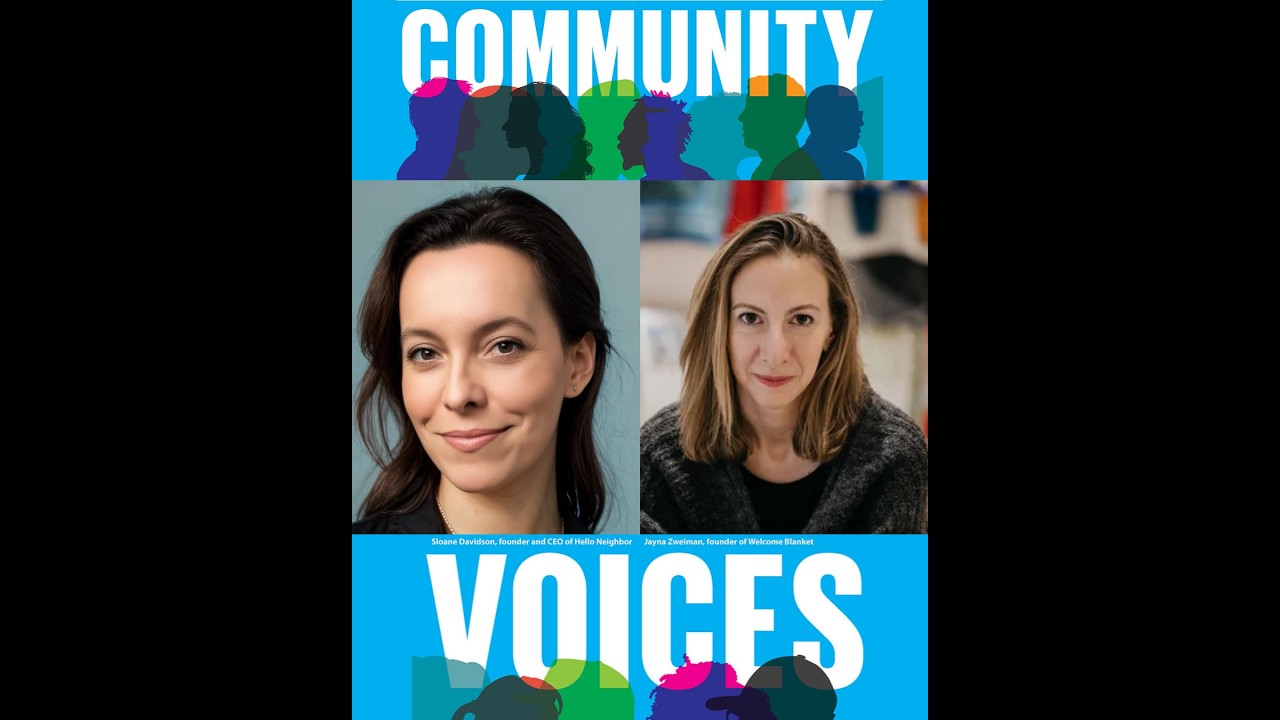
Community Voices: Sloane Davidson, CEO Hello Neighbor and Jayna Zweiman, Founder Welcome Blanket
Founder Friday: Jayna Zweiman ‘01, co-founder of the Pussyhat Project and the Welcome Blanket
Jayna Zweiman, co-creator of the Pussy Hat Project and creator of Welcome Blanket talks to us