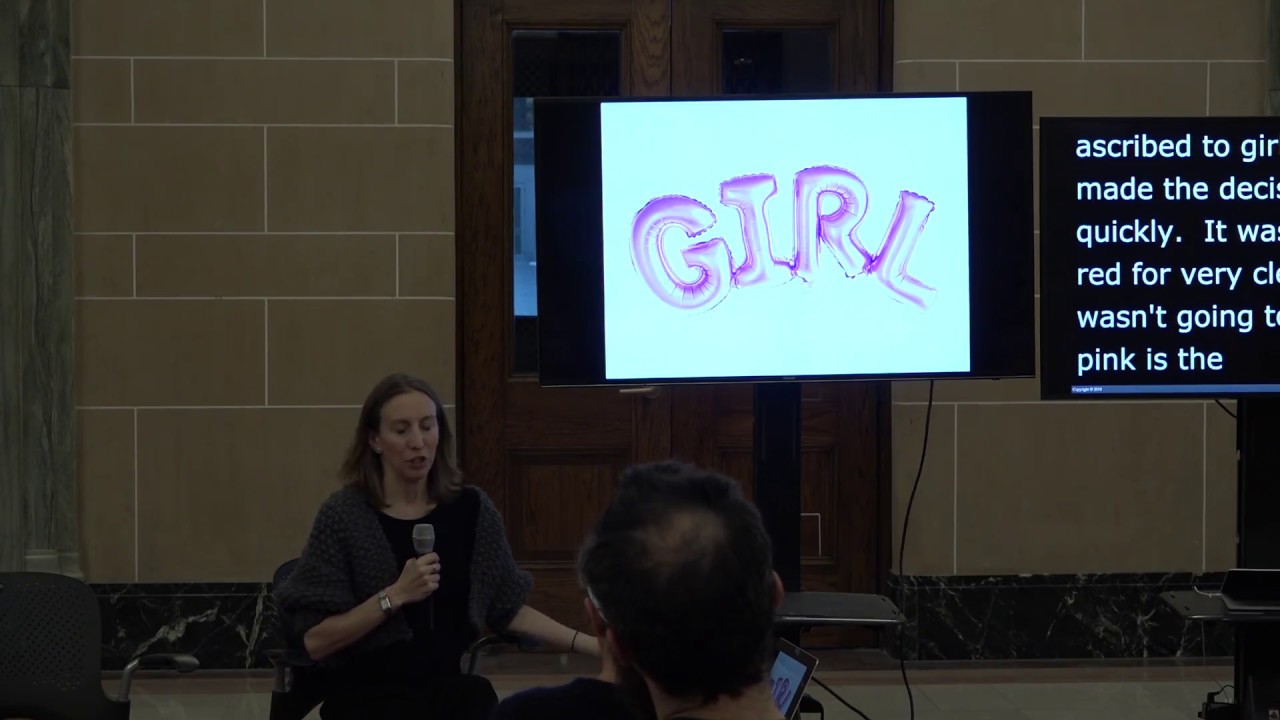
Jayna Zweiman, Welcome Blanket
In this Long Thread Podcast episode, host Anne Merrow interviews Jayna Zweiman, founder of the Welcome Blanket project, a craft‑based charitable initiative that invites anyone to create a 40" × 40" handmade blanket with a personal note about immigration, migration, or relocation. Launched in 2017 after Zweiman’s involvement in the Pussyhat Project and inspired by her own family’s immigrant history and a background in architecture, the project aims to foster neighbor‑to‑neighbor welcome for refugees and newcomers. Participants range from ages 4 to 104, using any fiber medium, and are encouraged to make the blanket "hurt to give" because of the love invested. Over 8,000 blankets have been made and displayed in museums, airports (including two shows at LAX), libraries, and other public spaces, often accompanied by programming such as music, craft‑alongs, and immigration history talks. Distribution partners like Miri’s List deliver blankets directly to refugee families, while museum exhibitions catalog and showcase the works. The episode details practical participation steps (templates, submission locations, size rationale), the emotional impact reported by recipients (feelings of a hug, connection, healing), and the broader philosophical goals: using craft to create a non‑political platform for dialogue, to build an American tradition of welcoming, and to nurture community healing. Future plans include a QuiltCon exhibition in 2027, expanding digital connections, and encouraging ongoing annual cycles of blanket‑making.
Chapters
Welcome to the Long Thread Podcast about spinning, stitching, and weaving by hand. The podcast is presented by Long Thread Media, publishers of Spin-Off, Handwoven, Piecework, and Little Looms magazines. Find us online at longthreadmedia.com. Treenway Silks is where weavers, spinners, knitters, and stitchers find the silk they love. Select from the largest variety of silk spinning fibers, silk yarn, and silk threads and ribbons at TrinwaySilks.com. You'll discover a rainbow of colors thoughtfully hand-dyed in Colorado. Love natural? Trinway's array of wild silks provide choices beyond white. If you love silk, you'll love Trinway Silks, where superior quality and customer service are guaranteed. Calling all fiber lovers! Here's your invitation to indulge your holiday wishes. Long Thread Media's Great Holiday Giveaway 2026. From October 9th through November 13th, enter for your chance to win a prize from one of our partners featuring tempting fiber gifts for weavers, spinners, knitters, and needleworkers. There's more than $1,400 in prizes, and you'll have 5 chances to put your name in the hat. Visit handwovenmagazine.com/giveaway for details, and be sure to check the rules and eligibility requirements at the bottom of the page. Go on, put your name in. Good luck. I'm your host, Long Thread Media co-founder, Anne Merrow. Jayna Zweiman is the founder of Welcome Blanket, a charitable craft project that received the 2026 Golden Scissors Award for Social Impact. So Jayna, thank you so much for being with me.
Thank you so much for having me. I really appreciate it.
So you are the founder of Welcome Blanket. Can you tell me a little bit about what that's about?
Yeah, so Welcome Blanket, I started back in 2017, and it's really looking at who we are and the world that we can craft together. So people across the country are invited to make blankets and include stories important to their families about immigration, migration, or relocation. We show them together at cultural institutions like museums, airports, libraries, and afterwards we work with refugee organizations to gift these heirlooms or potential heirlooms. And so far over 8,000 have been made and gifted.
Wow, 8,000.
Yeah,
yeah,
yeah. Crafters are incredibly generous.
Well, and love to make things for people. I think, you know, sometimes crafters are looking for opportunities to make and give.
Yeah, I think that this is one of those opportunities where people really can get into it or they can use it as a, I'd really love to learn You know, this sort of stitch and try it in this way, or I'd love to learn how to knit or weave, and this seems like a great project to try. And it's really wonderful because we have people, you know, from ages 4 to 104, which is just incredible, the amount of experience. Wow. Yeah, experience and sort of novice, you know, noviceness of it all. And so it allows, you know, it allows people to try something new, be a little bit brave, um, and also Some people have made, you know, like 50 blankets as well. And it's really become something that's part of what they do and what they, you know, sort of how they think of their day or their month and what they're doing with it. It's, it's really incredible. There's supposed to be space for everyone to find an entry point into it.
But at the same time, you're not necessarily just looking at, oh, here's this old thing, I'm going to give it away. I think one of the things that You said when I first met you was it should be something that hurts a little to give it away because you love it that much.
Mm-hmm. Yeah. The, the design guidelines, uh, that we ask for are 40 inches by 40 inches, any medium. It should be easy to care for and it should hurt to give away because you love it so much. And so the way that I think about this is this is really about neighbor giving to neighbor. Would you be proud to give this to your neighbor who moved down the street? You know, is it. Is it, you know, is it something that, that you've put some of your heart into? And when I open the boxes, when they come to the studio and people send them in, you can literally feel it oozing out of the box. Like, you can see how carefully they've been folded. You can see the note on top. You know, you can see that it says, like, you know, don't use those scissors. Be careful when you open this. And you can just almost feel like this love oozing out of them. And it's so special. And this really— Is something that I wanted to set up so that people could continue to do it. So I tend to be a person where it takes me a very long time to finish something, and it can take a very long time to let go of something also, you know, because it hurts a little. I know people who've kept their, their blankets around their home for— one woman mentioned how she had kept 5 blankets for 3 years because she just couldn't, like, figure out yet how to let them go. And when I received them, I could tell it was so special and so beautiful. And so it's just It's this way of us being in community and using the skills that we have and the creativity that we have to really share the love. And I feel like you can see it at the exhibitions as you walk through them. I think you can feel them when you open them in the studio. I've gotten a lot of feedback that people who receive them can really feel that love. And for a lot of people who receive them, They've left almost everything behind in their former chapters. And so it's very kind of rare to have something new and handmade. And you can feel someone else's hand in it. And I think crafters should know, have an extra reminder that that's just so special. And the people who are receiving them feel really— it feels like a hug is a lot of kind of what I've heard. And how wonderful is it if you move to a new place and you're starting something that's you know, an entirely new experience, to just have a little bit of extra welcome.
And that's what— hence the name, the Welcome Blanket.
Exactly, exactly. And when I— I was raised by my parents and around grandparents who all came from different countries. And my grandfather used to tell this story about coming by ship, you know, across the Atlantic and He didn't talk about the ship, but he did talk about the morning where he looked out and saw the Statue of Liberty through the fog. And he'd always kind of look up and you'd see his face, like the corners of his mouth kind of turn up with kind of this awe of he had arrived. And this was decades later. And in thinking about us in the 21st century, people aren't coming by boat. They're coming through airports or by car. Right. And so how do we, how do we create a way for someone to feel a sense of welcome when they come here, and a way of inviting them into our communities, and a way to make everything just a little bit more comfortable so that adjusting and really becoming part of the community is just a little bit easier?
So is that personal connection what made you decide that the object of this crafting exercise would be for refugees?
Well, so I started Welcome Blanket on the heels of Pussyhat Project, the pink hats from the Women's March. I'm co-creator of that. And I really saw the generosity of crafters and I saw how powerful it is when people come together and they make together. And I was thinking about how, you know, in 2017, 16, 17, you know, sort of how divided we were. I mean, it's kind of amazing we've become even more divided, but how divided we were. But what was the thing that felt so American that we could all kind of like come together and rally around? And, you know, so much of our American story and so many of our stories is as immigrants. We all come from somewhere. Even, you know, Native Americans have been displaced from different parts of their land within the larger part of this country. And How, how can we just come together on something? And the refugee program was a bipartisan program that started, continued to have bipartisan support, and is really about how do we start again? How can we do that? How can we make this easier for other people? And so it was a way of starting to talk about, you know, the larger issues of immigration, which are You know, incredibly complex and deserve space and time and a lot more humanity when we talk about them. And in 2016, there was, you know, you could feel more xenophobia and more, you know, more fear and more dehumanization. And I thought it was so important that within sort of how I think about the United States and the values that I consider this country is working towards, and it was in the Declaration of Independence, that we all do want We all want to live decent lives in community. I think we share that, and I think this was a way in. And it's really beautiful because when people kind of are working on this project, we have all different sorts of people from all different places and different backgrounds and different migration stories. And it really shows the beauty of our plurality, the— You know, the complexity of who we are, and people really find common ground and they really listen to each other. And I find that, you know, people, whether they're people who are participating who came just a few years ago or people whose families, you know, came on the Mayflower, there is this common ground and this wanting to listen to each other and wanting to learn about each other that really changes the tone of the conversation. around immigration to one about people. You know, like, how do we talk about this as people? And it makes sense because we're using our hands, like literally ourselves as people are making something. And it's, it's a really special experience to witness people who might have known each other for a while but had never had those conversations before. But they seem so important to sort of how they see themselves in the world. And it's a way of us getting to know each other better. That was a really long answer. Sorry. Like, and then there's this and this and this and this and this. Um, yeah. It's important.
There's a lot to say.
There's so much to say. This is, you know, this is a project that's not really bullet points. It's more like paragraphs. You know, it's really like who we are, you know, where we want to go, how we want to treat each other. And this is a way that people have a platform to connect with one another, to say, you know, care about one another in a way that maybe is a little bit harder if there's not a platform to do that. And it's a really great way for people to connect. And I think we all could use a little bit more connection.
I think that getting more to an individual-to-individual level and away from more of an ideological level and how we meet each other. And so I think it's interesting that, you know, you, you mentioned that people put in a note and that's part of it. It's not just make a blanket and say, here are the care instructions. It's also sending off your words also to people whom you may never meet. So that, Mm-hmm. that's sort of a connection that really, maybe I won't ever meet the person who, who receives my blanket, but I get to think about what I would say, what I will say.
Yes. And I want to share with anyone listening who says, you know, I don't know what my story is, because sometimes that comes up, right? Because all of our families have been here for different amounts of time. People have talked about it, you know, their family stories in different ways. And so when I talk about the project or present it, I like to show different images of notes on blankets because it's just really great. When talking about it to, you know, remember this blanket or that blanket. And so I was preparing a slide deck and I was working with this college student and she's first gen. And I thought, you know, I wonder which one she'd like to pick. So I asked her, I was like, okay, which, which one do you want? You know, what, what really resonates with you? And I was thinking it might've been one that was like her family story. But she said the total opposite. She said, I love the ones where people say, I don't know what my history is, but I want to welcome you. And I asked her why. And she said, because they really get it. And they really care. And I think it's so special that I feel like that response is so special because it's true. It's Any sort of story, whether it's that it's been lost to time, or you made a large move somewhere, and you know what it's like to start in a new place, they all matter. All of our stories together, each of us by participating in this project, we all have a voice within the project. And it's an opportunity to use our voices. To share ourselves, to become more connected to others. And yeah, I just want to encourage anyone, regardless of the story that they might want to share, not share, is the writing, you know, how it should be or not be. We all stress about different things. It's all wonderful. It's all wonderful. And if you work on it with other people, it's always wonderful to see a bunch of notes show up too. It's really kind of amazing where you see the little mosaic of— How that might look with another mosaic. And it's really whatever you wanna share. And I, I like, and I, I think about this also is, you know, if you go like to an antique shop or an estate sale and there's a postcard and the postcard's clearly old, but then you flip it over and it's like, Maury, Venice Beach is fabulous in 1917. And it takes it to a whole other level. Right? Like, it's just— it really, like, kind of puts you there. So I think when someone receives it, it comes clearly from a person. There's clearly something there. You know, they want to welcome you. So you know that this was like— yours is one of a kind, but it's one of thousands. You know, like, you're part of this web of welcome. And it's— It's really an opportunity, as you said, you will most likely never meet the person who received it, but they have a connection with you. And if you want, you can always put your email on the back of the note or something like that so someone can reach out to you and the opportunity is there. I think in the long run, I'd love to make this more of a web where people can connect over time. That's in the future with a lot of technology, but which is where I'd really, really love to be able to go. But really it's a neighbor reaching out to a neighbor and it feels so, it feels just so good to, to receive something from someone and it feels so good to give something. It's really a beautiful two-way street.
We're talking about the recipient and the crafter, but there is sort of a a life in between, that the blankets go on a journey in between. Can you tell me a little bit about, you know, what, how, where they make their way and who sees them?
Sure. So one of the kind of parts of this project that I think separates it from other ones is that there's this public display. So we have a rotation of national hosts, which have been museums that will collect them and catalog them and display them. And then also have programming around it. So there's been programming with people who have been immigration historians talking about, you know, sort of the history of immigration in our country. There have been musicians who have shared music from the countries that they've come from. There are people who lead craft-alongs. You know, there's a really wide range of what you can do in this space, and it's really warm, abundant, and cozy. So it changes a lot of these conversations that are really— talking about immigration is not the easiest thing to talk about, and people sharing their stories can be very tender. And so it creates this environment and atmosphere and place to be able to share. And I love it because it takes one person's care And it amplifies it so much even more when it's shown with all these different works that are all so different from one another. And you can see them, and you can see the artistry, you can see the abundance, you can see the color, you can learn so much about kind of like individual people. And you can also read the notes and see— you can read people's stories. And something that I noticed, particularly with our first show, we had— We started with an empty gallery and just filled it over time. And it just got like more and more and more and more and more and more and more. And the docents really loved this because they got to move things around and figure out, you know, sort of how do we fill this space? Yeah. You know, they're very involved in it. And we had all of the notes in these binders and people could come and sit down and read these binders. And usually within 3 to 5 minutes, people just started crying because it's one story after another, after another, after another. And it's— it runs— it's stories that maybe we personally relate to, or ones that, like, we can't believe even happened. And we see these all together, and we see how people come from all different sorts of backgrounds and still— have spent hours and hours and hours pouring themselves into work that will be showed. And it's there, but it's going somewhere else. And I think it really shows a beautiful generosity of the people within the community, which is fully open to give a part of themselves, and how gorgeous and beautiful that is.
So we've been talking a bit about the process and the philosophy, but Kind of getting down to the nitty gritty, like if I wanted to be part of this, what do I need to do?
Okay. That is an excellent question. If someone wants to participate, uh, the first thing is to think about is the blanket. So this is what we ask for: 40 inches by 40 inches, any medium. It should be easy to care for and it should hurt to give away because you love it so much. And then we ask that you include a note important to your family. about immigration, migration, or relocation with words of welcome. And on our website, which is welcomeblanket.org, we have templates of notes that you can print out and fill out if that's the way you'd like to do it. We have the guidelines, and then also we have where to send it. So depending on when you're listening to this, there are multiple places you can send it depending on what's happening within the project. So right now I'm collecting at our studio space, which is up on the website. And then also we have a refugee organization partner who can receive them and gift them directly. So if you think, okay, I don't wanna wait for a show to happen, I just want it to go to someone directly. Our current partner is Miri's List, and they can receive it and give it. So there's no show involved in that one. That's just direct. And if you send it to me at the studio, I've kind of figured out how to show them either at a museum or a popup or, you know, how to document it and sort of how— Even if maybe there will be a digital show, but there's a show element to it. So depending on sort of what your motivation is in the project, there's always those places. And then also we work with museums where there'll be a deadline that will come up and it'll be clear on the website of where to send it. And then when that deadline is over, sometimes people still send them there and they end up coming to me at the studio. So it's, it's, um, every, every, uh, institution that's ever been involved in the project has always made sure that your work is safe. So if it comes after the deadline and, you know, after a show, they, they figure out how to get it to me so that then it can be— so it can be shown or, you know, very safely taken care of. So yes, this is beautiful work and it's so loved and respected.
Why 40 by 40? Just outta curiosity.
That's an excellent question. So before I launched the project, I talked with multiple refugee agencies about sort of, would this be helpful? How might you use this? Like, what size might be helpful? And so depending on the group that's receiving it, they use it in different ways. So some of them appear in someone's apartment for the first time. So someone might do a house setup. In other situations, they get put into welcome boxes with things like toothbrushes, the very, very practical items. And then they get this beautiful, squishy, handmade item on top. So it's the personal with the incredibly, incredibly— Brass tacks. Practical. And so, and some of them get put in backpacks so that people receive them before they get on a bus ride to go somewhere. So it gives that ability to move from place, kind of use it in different ways. We try to keep it consistent. So if it's used at, say, like a Welcome picnic, you know, everyone who might be part of the picnic receives something somewhat the same size, you know, because everything's handmade, but it's, you know, but it, but it's similar. And then I started this from the knitting side of things. And so making a 40 by 40 blanket is really nice because it's a really nice lap blanket. Maybe you can put it on the wall. Maybe you can use it for a child, but it's really multipurpose. So it's a, it's a really long answer for, for why, but it's for those. reasons. And then we asked for 40 by 40 for display because in cataloging it and displaying it, it really creates a synthesis of that too. So it's both practical and the visual practical of things. That said, if things don't quite work out to the dimensions you were going for, we're all human and I have never made anything the exact size ever in my life. Right. So, um, love is not perfect. Um, and so, so, uh, you know, really try to keep it to around the 40 by 40 as best as you can.
Wow. So, and as we're talking, you're getting ready for a quilt-specific event.
Yes. So this is, so normally when we show is not medium specific, but we were invited by the Modern Quilting Guild to be part of QuiltCon in 2027, which is going to be in Atlanta at the end of February. And they asked for specifically within the medium of quilt, which makes sense given that we're, we're, we're going to QuiltCon. And so we're going to have a small exhibition and a booth as well. So it's really a wonderful opportunity if you've been thinking about making a quilt and you think, oh, 40 by 40, this I can do. This is a really great opportunity and I'm asking for work to come by November 15th. So I have some time to kind of figure out where things are gonna go and document them and make sure I have all the, all the pieces ready for, for February, ready to go. And yeah, I, I think that that's a really, really great opportunity. And then the way that we've gotten connections with museums and the San Francisco Airport, it's always been because someone who loves this project thinks, oh, it should be here. I'm going to go talk to the person who makes the decisions of what should be in this place. And so this project, Welcome Blanket, exists because of each and every person who participates in it. So if there's a listener who really feels like this should be in a certain spot or place and you want to reach out to someone there, or you are someone at that place, come reach out, come talk to me. Let's make a connection and figure it out because that's, that's how this grows is really from community and people using the skills that they have and connections that they have to make this grow.
I have actually made a welcome blanket. You and I met at H&H, the craft trade show. And at first I thought, well, I couldn't possibly find the time To sit down and knit a blanket. And then I realized that our, our Farm and Fiber Knits Winter 2026 issue had a blanket pattern from Sandy Rosner that's, it's designed around a, it's a, it's a quilt. It's a traditional quilt motif, but it's knitted rail fence made out of mitered squares. And I was actually really happy that it was 40 by 40 because the, the, the original design for the blanket is much more of a, of an adult. C. You know, maybe not quite a bed quilt, but, but when it came time to either make 25 squares or 48 squares, I was really happy that it was 25 squares.
Yes.
Yes. But you know, it's, we used, we used an American wool from, from Brown Sheep Company in Nebraska and put it together and it's going to be in the magazine. We have photos. Um, but then I'll send it along.
Oh my gosh. It's so cool.
Yeah.
Can I, can I ask you, can I ask you a question? So when you were making it, you had decided at the beginning, you know, when you picked up your needles that this was going to be a welcome blanket. Was the process the same? Was it a little bit different? Like knowing that you were making it for this purpose, like, did it change the experience at all?
Well, um, I mean, I found myself thinking quite a bit about— so my family is, at least on one side, is one of the, you know, Mayflower families. But then my husband is an immigrant. He came from India a little over 20 years ago. And, you know, he's fortunate in that he wasn't a refugee, but he still had that very much coming to a place he wasn't familiar with. Mm-hmm. Sometimes felt welcome, sometimes didn't quite feel as welcome. And in 2019, you know, he had a citizenship ceremony, and the Daughters of the American Revolution consistently go to naturalization ceremonies and have that kind of long, long history welcome. So I was definitely thinking about those things as well. So that, you know, that The discrepancy, the dichotomy between these 2 experiences. But also, I think I often make things and I don't necessarily know where they're going, particularly if they have a deadline. If they're for me, they don't really have a deadline. But knowing where something is going to go and knowing that it would have to be— I had to weave in the ends well because to make sure that they wouldn't, you know, pop out for somebody I wouldn't know who would, who would be using it. And I didn't want it to have to need repair or anything like that. So yeah, thinking about it having a destination and, you know, having it be something that I would be proud of. Yeah, that was, that was kind of a warm experience, but also, you know, thinking about putting your best, best foot forward, but doing your best work. And I think that's part of it too, is that you want it to be not only the best of what I can do, but the best of who we are. Which sounds very lofty. It's like that. I should not claim that this is the best of who we are. But, you know, trying to be part of that.
I think that's beautiful. And I think that really gets to the heart of the project, right? Like, it's hard to be lofty as like, a single person doing a thing. But when we do it together, and we're like, you know, all contributing, I think it does become loftier, and it raises each of us to be a little— I don't know exactly how to say it, but it's really fun to hope together. And it's really great to work together. And I love what you said about to do your best and to show the best of who we are. Yeah. I think you got right to the heart of things. This is a project that I hope to become an American tradition because I think it really does show the best of who we are and it gives us space to do that. You know, like it takes a long time to make a blanket and it takes a long time to make a 40 by 40 blanket, right? And that kind of—
Yeah.
Time and patience. and kind of, even if you weren't thinking about it at every stitch, but like thinking about where this might go and showing that little extra care. Like, I think, I think that it really, it really does speak to the best of us. And I think in this day and age, I think we really do want to show more of the best of us. Like, I think we crave it. And it feels, it feels so good collectively. to, to share in something like that.
You know, even on a very local level, a generation or so ago, it was much more common. Maybe folks do this in some parts of the world, but not so much where I live. People don't necessarily, like, make cookies or a welcome meal for a new neighbor. And so the— that sort of, you know, welcome to the neighborhood, welcome to the country experience It's something that I think is worth remembering that we're not all just, I'm gonna go to work and see my friends and have my little, my prescribed life where my bubble.
Yeah, yeah, I think so. And I think it's, I think, you know, there are a lot of like nostalgic TV shows where we see people doing things like that. And I think that feeling of like, wait, why don't we do that? And really a lot of it is individually, like we can be the people who make the casserole and bring it over. Like that's something we can all do, We have to remember to, you know, we have to remember to do that. This is Welcome Blanket in many ways is a system of caring and neighborliness. And so it's set up, you know, it's there, the design guidelines, there's a place to send it. We're ready for you when you're ready. You know, like however you, you know, if you want to do it with friends, if you want this to be a solo endeavor, all of that is great. And so this is an opportunity to Be a welcomer. And it feels so great to be a welcomer. And it really, I think, also goes back to that kind of really positive nostalgia of Americana, of going barn raising together.
Yeah.
Those kind of community things. Everybody has to pitch in. Quilting bees, the importance of women's craft circles within American history. Like, we've been doing things like that in our country for centuries. So this really kind of taps into that in a way that you can be starting as, you know, an expert knitter, you know, testing out a pattern to someone who's never picked up needles before. And everyone belongs in this place, you know, in the same way that with barn raising, like, if you just are able to push a little bit, like, everybody is, everybody is needed. And I think that's part of crafting. Our culture. You know, this is how we craft a better world is we do it together. We do it on our own in the moments in between, and we have intention behind it. And I welcome anyone who's interested in the project to— can check out our Instagram, which is Welcome Blanket. We keep it very positive. Welcomeblanket.org. We have monthly open craft-along in case anybody is looking to connect over Zoom with another set of people. That's so cool. You can be working on a welcome blanket or something else. It's really how do we bring ourselves together to make this a more empathetic, warm, supportive culture? And I think it takes each one of us to be doing the things we can do when we can do them to work towards that. And it's a lot easier when we do it as, as a choice and collectively. And starting with welcoming people is a really great
So you mentioned that you started in 2017. Now in 2026, you have systems in place, you have processes and projects. How did you go from, I want to keep the momentum of a craft-based community effort to where you are now? Like what, what were sort of the steps along the way? How did you get from there to here?
So this is, this is a little bit more background, but, uh, I, I trained as an architect. And so I think a lot in systems and how things work and how they go together and sort of the embodied energy of everything involved and kind of how, how things connect with one another to build something that's never existed. Like, that's kind of how I think about architecture. And what drew me to architecture was how do you make places and spaces where people mix in the truest sense of the word? How do you create civic intimacy? And in 2013, I had a life-altering head and neck injury. And it's— I love how I say that and everything drops and it's like, oh my gosh. Oh my gosh, let's Let's get into it. But needless to say, my entire life changed from being like, I'm going to open up my architecture practice. I just got married. We should have a baby. You know when everything's going right and your plans just get so big and you're like, let's go? Those moments, it's not often, but they're just moments in time. And then a rod fell on the back of my head and everything changed. Wow. And so between 2013 and '16, for Pussyhat, besides just so much recovery and recuperation, it was like, how do I practice architecture, which I love? How do I do this? And I felt incredibly isolated. I went to graduate school with brilliant people who were doing super cool things. And I wanted to do super cool things too. I wanted to play with my blocks also. Yeah. I was just trying to figure out, like, you know, if I can't remember 4 numbers in a row, you can't be making things out of steel and glass and remembering what's where. Like, it's just, you know, not, it's not feasible. And so in thinking about when the 2016 election happened and sort of how people could mix in the truest sense of the word and how could people be making things together, so much of the crux of Pussyhat Project is from my personal side, designing architecture in a way I was able to design it. And it wasn't glass and steel or wood. It was, you know, thousands of people with yarn and needles and, you know, a design detail of a hat and how that could all come together is something that, you know, really is like a barn raising, you know, really is community design. These 2 projects I designed from kind of like the overarching architecture of it. And then with Welcome Blanket, you know, I was like, oh my gosh, wow, wow, Pussyhat really did work out. You know, like there's this vision of the sea of pink and it really happened. Like there's so many things that, you know, you put out ideas and they don't happen. This one really happened. And so it was like, okay, how do we leverage this? Yeah. energy and how do we make this something that can last for or be designed for longer than a moment? How can we design something that's meant to be more durational? And I called up the one curator I knew, which sounds really funny. It was Allie Gass, who had been over at Stanford. And I was like, okay, I have this idea. And she said, well, that's so funny. I'm going over to the Smart Museum of University of Chicago. Let's do it. And it was like in this one conversation where I was just calling for advice, being like, I have this idea. There are these notes. There are these blankets. It's this overall idea, which I might back up a little bit, is there was this talk of a wall back in 2016 between Mexico and the United States. And as an architect, I was like, that is really hard to build. And that's a lot of material. And that's cross— you know, like, just logistically, like, that is a huge, huge endeavor. That's a long distance. How long is that distance? And it was about 2,000 miles. And I thought, oh, wow, huh, what else could you do with 2,000 miles? So Welcome Blanket started as thinking about 2,000 miles of yarn that could be, you know, crocheted or knit into individual welcome blankets that could welcome people to the country versus keeping them out. Like, how do you take a length that's meant for exclusion as one for inclusion? And what would that look like? What would that mean? And that's where, that's where kind of the idea around Welcome Blanket got more and more solid. And it included the note and sort of us, you know, doing this together and sort of thinking about, like, why would you pick a certain number or whatnot? It was really thinking about the lines that separate us. What if those lines were things that connected us instead? And, like, how can we think about those lines? And Ally Gass was wonderful and had the great idea of starting with just an empty— An empty gallery, and we just watched it fill. And it was so exciting, like week to week, you know, it's over in Chicago, I'm seeing photos and just seeing how things like moved around and how map where, where docents were pinning where things were from. And there were these college kids who were unpacking them and photographing them in the space. And it was just so active and full. And when I was there, I saw this little girl. Oh, my gosh. walk up to one of the blankets and wrap herself in it, which was, you know, pretty, pretty bold. And she goes, I never want to leave this place. Aw. And just to create a place where, like, a little girl felt like she could walk into a museum and belong in it and didn't want to leave it just felt so— such one of those goals that you always hope to see happen actually happen in front of you. And it was just It was just so beautiful. And so we thought about it as that distance, but we went past that distance. And then really— It was a line to kind of give a goal and kind of work towards something. But really, what were we building? And I think what I really want to build is an American tradition. I really want someone who's working on it now in this day and age 30 years from now, when, you know, there are other issues that are coming up, you know, xenophobia waxes and wanes, to be like, you know what? Like, I— back when I was, you know, 13 years old in my art class, I went home and talked to my parents about my family's immigration story. And I learned this story that I hadn't heard before. And now when I look at people coming into the country, they're actually a lot like my great-grandparents. Yeah. They're really not that different. And being able to keep bringing the conversation, who we are as a country, how do we treat the people who are most recently here with the same kind of dignity and respect we hope our grandparents should have received if they didn't receive it, or did receive if they did receive it? Like, how do we craft that country together? And so this feels like a long— like this is a long-term project. This is supposed to keep going.
Yeah.
Um, so it's, it's very, it's very different from Pussyhat in that this is meant to become a part of who, who we are. And maybe this is something we do yearly. Maybe, maybe like, maybe you make a blanket once a year that's a test pattern, that's a 40 by 40, because it's just a practice, you know? It's like, this is just, you know, this is welcome blanket time. This is time to make the casseroles. And I think that that's really— I think that's something that's so beautiful about this project. I think our country has a history of thinking about ourselves as a country of immigrants, and yet we don't have the processes and traditions in place to make it as easy a transition as it could be for people coming here. And I think it's really important to flex our, you know, whether it's our family memory muscle or empathy muscle, or just recognize, you know, recognizing we're, we're all people in this country trying to do the best we can and kind of look around and see how we can make life a little bit easier for someone. You know, just kind of, just a little. And this is an opportunity to do that. It's one step towards things. And it's an opportunity where people who care about what's happening in this day and age, particularly around how people who are recently arrived are treated, it gives them an opportunity to do something positive. And also because it takes so long to make a blanket, it also gives the opportunity to talk about the project you're working on and why it matters. Yeah. And I think it gives that space to have those conversations and elevate people's voices. One person I know really likes to make them in public because people ask what she's making. And she shares because she wants to talk about these things. But it's really hard to get into conversations around— it's really hard to get into different kinds of conversations. And so it's an entrée into being able to have conversations And listen to other people. And I find that— Yes. Yeah. And I find that when people might feel differently than I do personally about immigration issues, I find that when I ask them about their family's history, there's often a softening. And it doesn't mean that we come to, like, the same conclusion, but what it does is it creates this opportunity to have the space to talk. And I don't think— we're hundreds of millions of people. We're not supposed to all agree on anything. That's true. But we should be able to have conversations rooted in humanity. And we can come to different conclusions, but we have to be having those conversations if we're going to move forward together. Yeah. And I really hope that this can be used as a tool to be able to have those kinds of conversations. It's a 501, so it's, you know, we're really about welcoming people to our communities, and that's the basis of this project.
I think that we also have the same hope that having an opportunity to talk to each other is really our only opportunity to heal. And so that if we create a place where you don't lead with your affiliation, that maybe we can find the things we do agree on.
You put it so well. And I— Welcome Blanket also comes out of talking with people in my extended family who are all across the political spectrum. And it's figuring out how to find common ground. And I think in— this might sound a little bit funny, but I feel as if I'm really interested in leaving this world a little bit better than how I found it. And I think that that in a lot of ways is trying to figure out how to make platforms for participation, like how to design for that. In many ways, Welcome Blanket is not specifically for one specific political party or anything like that. It's really about talking about using our hands, our hearts, and our histories to craft a better country. And we do that by coming together and talking with humanity, like really taking the conversation down to that. And I think in watching kind of how people reacted to Pussyhat, it was just very kind of interesting to me how, you know, sometimes it raised some very good discussions and conversations. But like, how can you take something with— that's made with so much care and create more and more conversations about care? Right. Like, how can you elevate that piece of it? And so Welcome Blanket is part of that, is like, how do you elevate that? How do you make that? And, you know, I really learned the power of the knit circle in my post-concussion time of trying to figure out, you know, how to heal. And I've continued to see how in craft circles, how the circles themselves create those spaces for response. You know, like, they're slow. You talk. I mean, you're very good at interviewing, so you're really good at the pause. But, like, kind of, you know? But, like, being in that kind of space where you're working on something, like, I think, you know, I really feel like, you know, that in so much is the heart of Pussyhat. That's so much the heart of Welcome Blanket. People coming together, doing things with their hands, making things out of material that is out of a raw, raw-ish material, and making, contributing, sharing, responding. There's a lot of listening. And I really think that in this day and age, listening and responding It's just so critical and important. And I don't think that that's a political thing. I think that that's a where-we-are thing. And politics has got a really bad rap. And so I think just even just leaving those words behind and just getting to the heart of it. And the heart of it is that we're all people and we all come from some kind of family situation. Yeah. And it's really hard to be new somewhere. Like, these are all true. This doesn't— this doesn't, you know, these are like human issues. And so I think when you get down to those granular levels, it's easier. It becomes easier and easier to connect with one another. And I think it's exciting to be talking with people who feel differently than me about about things. It makes my world bigger. I learn more. It's not an echo chamber. And I love that the craft world has that opportunity because love of craft doesn't, as I think as we know, doesn't overlap in a perfect way with one kind of way of seeing things. Right. And so I think it's an opportunity to reach out to people and try to find common ground. And how do we make the world better for everyone? How do we do that? You know? And so I think craft is this incredible tool. And I'm so, I'm so grateful that I went to my local yarn store and discovered it, you know, as part of a healing process. Because I think it's, I think it's a way that we can help kind of heal ourselves in so many different ways and help make things better.
I love that on it. It's a, it's a literal and metaphorical and a small and large kind of healing that's Well, Jayna, thank you so much for, for telling me all about your project. And I'm so excited to mail off my blanket in a couple months. And, and I'm excited to see the exhibits next time I go around.
Oh my gosh, I'm so excited. So right now we actually have 2 shows up at LAX Airport in Los Angeles. So if anyone's flying through LAX, there are 2 shows. One is in the Terminal 7-8 connector, which is United, and it's behind TSA. So if you're flying through, if you're flying out, you're flying in, you can definitely see that. And then the other one, which is fully open to the public, is the Terminal 4 baggage claim, which is American, and it's on the lower level, and it has a really beautiful Dusty pinkish wall. So you can see it from the street. And it's really actually really wonderful to watch people who are stressed out about not getting their bags, like, looking at these and kind of, you know, kind of calming down and seeing what they are. It's really, really beautiful. And it's so— it's just amazing to see faces who weren't going to be looking at art that day, you know, turning and being captivated and stopping and looking. And it's just— textiles have this amazing way, particularly handmade work, of reaching people because we all know what that squish feels like, even if it's behind plexiglass. You know, it's something you can understand, and it's really beautiful.
I say it all the time, textiles make us
They make us human. They really, really do. Yeah. And I want to thank you so much for this opportunity. It's been so lovely to talk with you. Thank you so much for, for letting me, letting me talk about this project.
Thank you. It's my pleasure. Thanks to our sponsors for supporting the podcast. Thank you for listening to the Long Thread podcast. If you've enjoyed this episode, please rate the show. And leave us a comment on Apple Podcasts or your favorite podcast platform. Thanks again.
More from Jayna
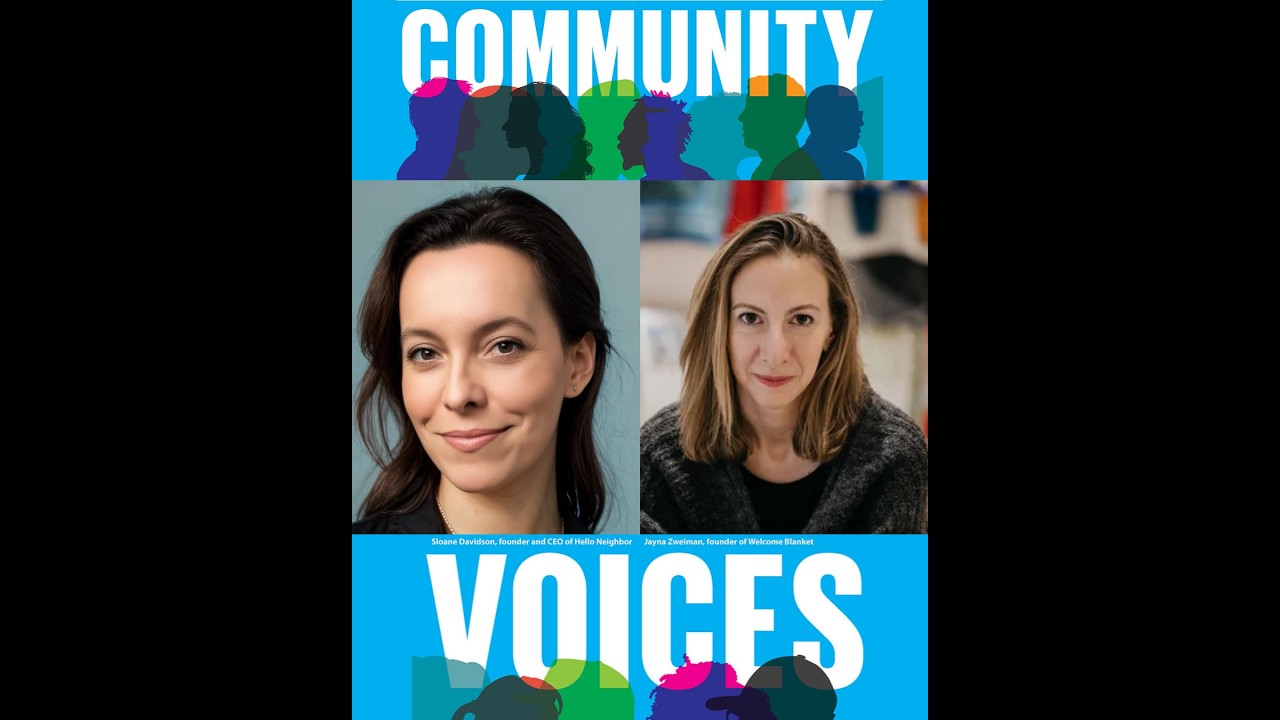
Community Voices: Sloane Davidson, CEO Hello Neighbor and Jayna Zweiman, Founder Welcome Blanket
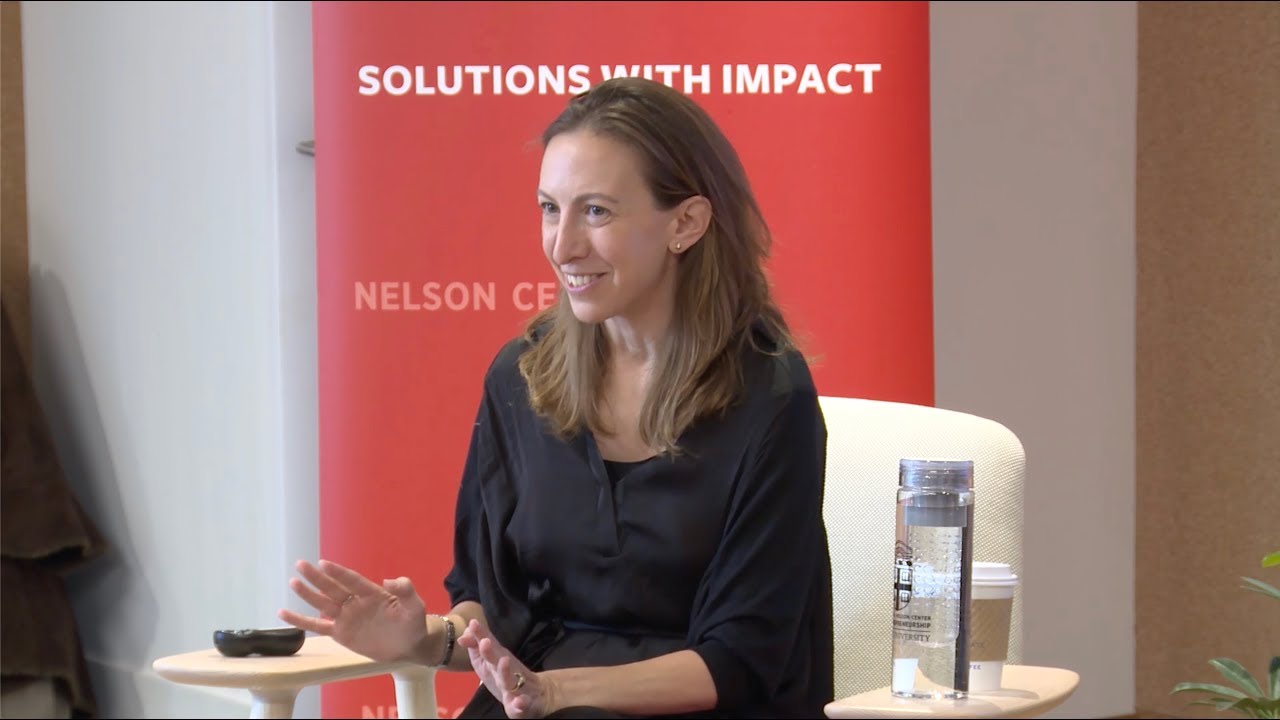
Founder Friday: Jayna Zweiman ‘01, co-founder of the Pussyhat Project and the Welcome Blanket
Jayna Zweiman, co-creator of the Pussy Hat Project and creator of Welcome Blanket talks to us