Jayna Zweiman, co-founder of The Pussyhat Project
In this public talk, multidisciplinary designer Jayna Zweiman discusses two of her flagship craftivist initiatives—the Pussyhat Project and the Welcome Blanket—explaining how they emerged from her architectural training, personal recovery, and a desire to create participatory, political design. She outlines the rapid development and massive scale of the Pussyhat Project (aiming for a million pink hats for the 2017 Women’s March), its distribution network through local yarn stores, Ravelry, and community note‑sharing, and its symbolic resonance as a visual, trans‑generational feminist signifier. She then introduces the Welcome Blanket, a 2,000‑mile yarn reinterpretation of the U.S.–Mexico border wall that produces individual blankets for refugees, detailing its design guidelines, partnership with the University of Chicago, refugee resettlement agencies, and museum exhibitions, and its ongoing phase‑2 expansion. Throughout, Zweiman reflects on the role of craft as a form of architecture, the creation of safe, trans‑generational spaces through knitting circles, the importance of intersectionality, and the ways the projects foster dialogue across political spectra. She addresses critiques, pushback, and the documentation of both supportive and hostile reactions, emphasizing the projects’ capacity to build networks, bridge communities, and generate lasting social impact beyond the physical objects.
Chapters
Is it on? Hello? Whoa, yes, okay. So I want to welcome everyone this late afternoon, and I'd like to first begin by paying respect to and thanking the Haudenosaunee Confederacy on whose land we occupy. There is still much we need to learn from their ability to live peaceably together amongst differences of tribal identities geographies, and customs. So I'd like to now introduce our speaker, and we're very thrilled to have her here today, Jayna Zweiman. She's going to be talking to us today about her creative practice. She is a multidisciplinary artist and designer. Her independent practice combines architecture, art, craft, and new media to focus on experiences that overlap physical, virtual, and conceptual spaces. Zweiman received her AB from Brown University in visual arts and economics and her master's in architecture from Harvard University's Graduate School of Design. She lives and works in LA. Perhaps best known as the co-curator and co-founder of the Pussyhat Project, an international network and movement of women's rights supporters, she has become a leading advocate of using design innovation to enact social change. The Pussyhat Project became a worldwide phenomenon at the 2017 Women's March across the world, and one of the largest crowdsourced art advocacy projects ever to happen. She's also the creator and founder of the Welcome Blanket, a reconceptualization of the 2,000-mile length of the proposed border wall as 2,000-mile length of yarn to make individual welcome blankets for new immigrants coming to the United States. It was only just last year when I was writing a catalog entry for the Frau Architekt exhibition publication that I made the connection that Jayna was one of the co-organizers of the 13.3% exhibition at Woodbury University's architecture program. As their call for participation stated, 13.3% was an exasperated reply to those who say there are no women making architecture. It was a phenomenal exhibition, and in many ways, I think, in the spirit of the work that you're continuing to do. I see many links in that way. Her work so clearly demonstrates how someone trained as an architect can have far-ranging impact both within and beyond the discipline, engaging critical contemporary political and cultural issues where design is the critical interface. Please help me welcome her here today.
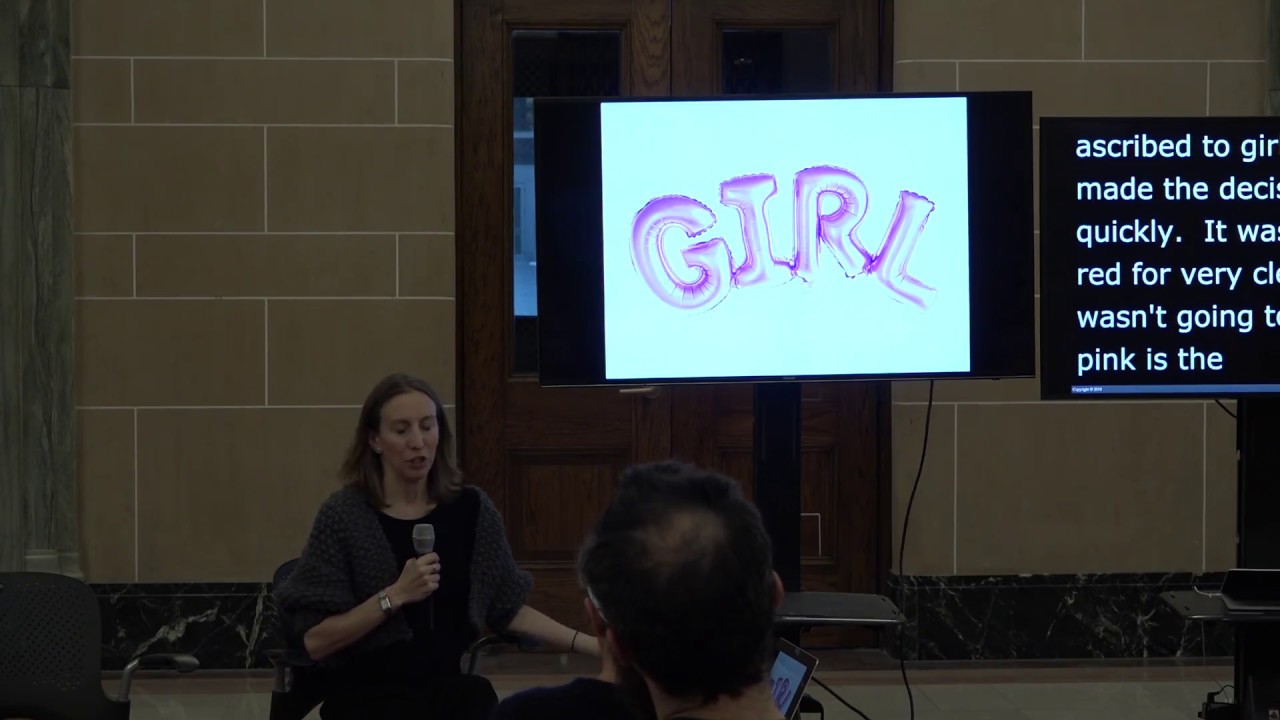
Is this okay? I'm going to blast it. Is this good? Okay. All right. Thank you, Lori, so much for inviting me here, and thank you to all the students who I got to meet with earlier today. My name is Jayna Zweiman, and I'm going to be talking today mostly about Pussyhat Project and Welcome Blanket, 2 projects that I've been working on for the past year and a half. But I'm going to show you a little bit of background of where some of these projects come from. And I think I tend to talk more than I tend to lecture, so if you get really excited with a question, just chime in. And So I just want to say it's an honor to be here, and so much of these projects are to me very much architecture. So you might see them as fashion design, you might see them as activism, craftivism, but they're also in their core about networks, about bringing people together and changing spaces and how we live. So this was from my first project outside of graduate school. I joined a startup called Playmogo, which is very much like Pokémon Go, but it was 2008 and 2009. So very, very early on. And it was— I was brought in as a game designer to figure out how to move people through the city. And it was about bringing, you know, people to do flash mobs together and then to go buy stuff. Ultimately, it was a startup like Groupon, like Pokémon Go, for people to move and do things together. After that, a project that I think is really pertinent is a lot of times you'll do competitions that don't necessarily go anywhere. This was called Exchange, and it was for the Venice Biennale. And the idea was— has anyone been to the Venice Biennale? Yes. Okay, so a couple of people. I've never been to the Venice Biennale because one, because of scheduling, two, because of finances, and a whole host of other reasons. So this was a way about creating for people who were at the Biennale to understand different parts of architecture throughout the United States, and people throughout the United States to be part of the Biennale. So it was 4-channel video of different icons and beautiful pieces of architecture where people could have discussions on site and have them sent as 4-channel to the Biennale itself. This is a shot from 13.3% is an Exasperated Reply to Those Who Say There Are No Women Making Architecture. It's from Woodbury University back in 2010. It's based off of a feminist show from the 1970s, sort of the same name, that There Are No Women Making Conceptual Art. The idea was that anyone could participate. Answer 13.3 questions and whatever they could fit in a manila envelope would be displayed. So we had a huge range of really personal stories and hopes and dreams, mostly from women architects. And it was just fantastic and really intimate. And it was one of the few shows that I've been to where people are really reading and really looking and seeing that depth. So that'll show up later as well. Okay, so this is the blank period. I had a really rough accident in 2013 where I just stopped working. I was hit in the head and had to just regroup from a head injury. So 2016 and Pussyhat was my first project back. There's this huge time of really kind of understanding isolation and not being able to do stuff. And the political landscape completely changed, and I started to reframe things as kintsugi, which— has anyone seen this work before? It's a Japanese tradition of when something's broken, you repair it with gold, and it becomes something more beautiful than what you started with. And so that became basically my metaphor of I'm coming back. I don't know how long it's going to take, but it's going to happen. So my first project back— or wait, we're not ready for that one yet. I forgot the order of those slides. So the political climate completely changed, as you remember, in 2016. And during that time also, I was recuperating and was interested in learning something new. So I learned how to crochet. I got a group on, which is very much like my first project of real and virtual spaces. And went to the little knittery with a friend to learn how to crochet, and discovered this community of knitters. And knitters are in themselves an incredible community, and it's really positive. It's really supportive. And I think I said this this morning, is that you can be the absolute worst person in the room, and you can still belong, just by the nature of the fact that you showed up. And I think that that's an incredible way of thinking about community, an incredible way of thinking about having your ideas heard and sharing. And I've learned more mostly from this group of women who kind of come in and come out, sort of this like lodge where we keep working on our own thing and keep helping each other. Usually I'm more helped than I'm helping others, but that's kind of the glory of it too. So 2016, November 8th happened, and the first place I went with my co-creator and co-founder was the Little Knittery. We wanted to speak with our friends about what had happened, this incredible group of women who were much younger to much, much older than we are, and just to process. So the march was announced, and at the same time— and I wasn't able to go because I wasn't able to be in large crowds, and my friend Krista was going to go, and she wanted to do something larger than herself. So her first idea was, I could just— I could strip naked and do some sort of performance. Which this is Spencer Tunick from Chile in 2002. And right after college, I was— I have friends in that crowd. And it was this incredible, incredible photograph and installation that showed up on the news everywhere. We are post-dictatorship. We are way more liberal than we thought we were. We all got together and got naked. It was awesome. It was in the news for about a month straight. So the idea of that was possible, but one, we were in a knit shop, and two, it's D.C. and it's really cold. So she had the idea that maybe it would be better to make a hat. So we started thinking about kind of— this is another project. It's the Gates, Jeanne-Claude and Christo. Christo and Jeanne-Claude. And just sort of thinking about A D.C. winter, and you can do a lot with a little bit of color. And then also, this is the NAMES Project of the AIDS quilt, and it's the first public project I was ever even aware of. I was a little kid. It was in the middle of the AIDS crisis, and this was one, craftivism, but also this incredible way of understanding that this affected people, and HIV affected people. people. This was also the same place as where the march was supposed to be as well. So it's understanding that site as a field condition. So kind of putting it together, at the base, that's the March on Washington where Martin Luther King had his I Have a Dream speech. Thinking about that as a sea of pink of pixelated individuals coming together. This was sort of the first diagram. Done really, really quickly. And then next to it, sort of what happened, which is kind of amazing when what you plan actually transpires. So that's what it looked like. And then to just go back a little bit about craftivism. Craftivism has been a very— it's existed in our history. throughout the world, but American history. On the top, it's supposed to be a cartoon of spinning bees during revolutionary times, where women got together and they talked about politics, and it was the only place they could talk about politics, because everyone thought a bunch of women getting together, nothing was going to happen. So there was a lot of planning that was happening at these spinning bees. At the bottom, that's a painting of an interpretation of Betsy Ross, and the people that she made the first American flag with, also a craftivist project. Then a suffragette in the top right corner who published herself working on a craft project to look less intimidating post-suffrage, which I think is pretty amazing. Just within our culture, historically, it goes way back. And then I've been asked about caps before. And so the Phrygian cap is used in Rome to show freed slavery. So it's showing freedom and liberty that got appropriated for different uses. And the Gandhi cap that we've seen since the early 1900s to show unity and peacefulness. as well and was used during the Indian independence. Those 2 we weren't necessarily aware of when we came up with the pussy hat, but just to put it in context. So, and then this is from 2006. It's a person I'm forgetting, last name Jorgensen, and this is to protest the Iraq War and Denmark's involvement. So here we are at Pussyhat Project. So all that, you know, we're thinking, here's a hat, and here are all these things that have, you know, we have this sort of like toolkit, but what, here's this vision of what this can be. And we did it in support of the Women's March as something that was very positive and a platform for participation for people to get involved. This is why we chose pink. Pink. It's the color ascribed to girls, and we made the decision really quickly. It wasn't going to be red for very clear reasons. It wasn't going to be blue, and pink is the color for— that's given to girls before they're even born. Okay. So part of what we disseminated was information about the two— the goals that we had, how it worked, and we had two main goals. One was to create a strong visual image on the Washington Mall. And the second one was to create a way for people who couldn't participate to be able to participate. So as someone who wasn't able to participate, I recognized the fact that there are people because of financial reasons, medical reasons, scheduling reasons, that they wouldn't be able to be there, but you could represent yourself in HAT. So when you saw all those pixelated images of people, it's not just the people who you DC, so people who are also at home and not at the front lines. It extended the march to something much longer and also created these nodes of political organizing of people who got together for the first time to talk about politics. The other part was the pattern. I don't know if anyone reads patterns, but most people don't. On the side, we have a little bit of an architectural diagram of you have a rectangle folded on its side, you stitch it, and then you put it on your head. That's all there is to it. And I think that that was one of the ways that, you know, within architecture and a design decision is like, how do you describe what the detail is? And the detail is the hat. Below is our distribution system. So there are different ways that we got to DC. And we were going for a million hats from the beginning. We had just a couple of people. So how do you actually do that? So the first one was to— you make a hat, you go to D.C. Or you make a hat, you give it to a friend going to D.C. And then we linked up with 175 local yarn stores across the country that were like our local yarn stores. And they became distribution sites where they would take the hats from people, and then we all know someone who was going to D.C., and they'd figure out how to get it there. After that, we had this incredible family in Reston, Virginia, who took the rest of them. So they sorted 15,000 hats, put them in Ziplocs, and, like, made sure that they all got in. So the whole town of Reston, Virginia, or many people were writing me to say, like, this is my neighbor. Can I stop by and help? And one of the most— and so that was this incredible piece of it. And then another thing about scale is we gave a template to share from the person who made it to the person who was going to wear it. women's rights issue was important to them. And this was an incredible way to actually connect and have your voice heard by someone you knew was gonna hear it. So, like, with this gift, we had people giving so many different kinds of notes about things that they cared about. We got a lot that came into Little Nuri about— often it was Planned Parenthood saved my life, was actually the one that came in the most. And the parents in Reston, Virginia said that they had a neighbor who was had been a Trump supporter, but also a lovely neighbor as well. And so she was helping sort through hats, and she just started to cry because she had started reading all of these notes about why this was so important. And she stopped and said, I get it. I understand. And I think the power of the note, plus the power of this gift, is incredible. And it's amazing that it's something that you make with your hands, that you give, that can create something that can convince So that's the distribution system. And here's another diagram of the hat. So super, super simple. And then what I love about this hat is that there isn't just one way to make it. So this is just one woman on Facebook who's phenomenal with all of her hats and notes. And it's become a challenge for a lot of people to, like, learn new things, figure out new ways to do it. And they all look slightly different, which I love. This is our local knittery beforehand, and it was great because all these new people came in. People would come in dropping hats off, coming to pick them up. These girls were just learning how to do it for the first time, and they sat there until they were done, which is really impressive. And then we got a lot of questions of how to get involved, and we had a lot of knit-curious people, so we figured out different ways that people could be involved. A lot of it was spreading the word. So a lot of people who weren't going to knit and weren't going to march could actually be the link between people, so they could also get involved, and they could also talk about politics and what was happening. And then these are just some of the notes. And yeah. I don't know how— I've read these a bunch of times. So there'd be a huge range between like full letters of what people would be writing to each other to just like, yeah, I care about women. Like, women are great. So you'd have that huge smattering of how personal people wanted to get. And it was really interesting to me how much was going in between people who didn't even know each other. And that's another one. And they often said how to take care of their hats because it was really thoughtful. People were really thoughtful about vegan acrylic hats as well. Those came through a bunch. And then— So the way we disseminated it was through our local yarn stores. So we signed them up to see if they wanted to host pussyhat knitting circles or give discounts. And then through social media, we used Ravelry, which is like Facebook for knitters. Someone on Ravelry put this together of all the different hats of people after the march to demonstrate how strong Pussyhat Project was. That's amazing. I just think this is really awesome. So this is from Ravelry. It's a pretty intense place. Facebook, Instagram, a little bit of Twitter as well. And then the other thing that we did is we had local yarn stores and people putting groups together to tell local media. So we had both the social virtual side coming down, but then we also had all this excitement from people sharing their story in the traditional ways. So, So we had a lot of people who have never been on Instagram, have never been on Twitter. Like, my mom knew about this. So we had it from all fronts. And then this is the basement in Reston, Virginia, with just bags and bags and bags and bags, and people just coming to help. And this is the kind of kindness which I've gotten to be witness to, which has been really different, I think, than for a lot of people in 2016. 17 and 18. That's the other part of our group. And then there was a yarn shortage. So my background is in economics, so in a way it's my metric of knowing that a lot of hats were being made beforehand, which is amazing. This is from the night before the march. This woman came in looking for a pussy hat before she flew to D.C., and someone had just dropped one off, and there were so many that were going back and forth. We were like, oh, someone just dropped it off. You should go if you want to thank her. And so she ran out, came back in in total tears, and she said, I actually feel supported. And we all just started bawling, because that's really what it was about. We saw pussy hats on a lot of different statues. I'm from Boston, so Make Way for Ducklings was my personal favorite. And then this is the image that transpired. And then a little bit closer in by scale. And closer. And closer. So it's a symbol where everyone is in— they're in charge of their own signifier. They're in charge of what it looks like, where they got it from, how they wear it, how they thank someone, which I think is pretty amazing. amazing. I watched from Los Angeles, so I was right above Pershing Square, so I got to watch TV at the same time as watching outside, which was incredible. And then right after, it really solidified as a symbol. And what I love about these 2 covers is that they're both very much DIY as well. So Lupita made this hat, and the woman who's from Mexico, and the woman who wore it works at Time Magazine, and she took this photograph. And so there's this whole story between them. And then a woman who's up in Maine created that drawing and sent it to The New Yorker, and they loved it and just put it on the COVID And now she— it's— now she gets published much more so than she used to, but she was a great artist before. And then another view of like that pixelated image. And I think something that's really important is that by using this color pink, By having something that was this play on words, this was the day after the inauguration, and they were never used as images to express how large the inauguration was. So I think if the pussy hat was not there, I think that might have been a different story. And then sometimes people wrote notes back, which I really, really love. And we've seen in pop culture come through. Saturday Night Live is on the right, and a Marvel comic is on the left. I haven't seen it yet, but I think it should be good. And then we've been put into permanent collections. So this is at the Victoria and Albert Museum from the rapid response, which is pretty awesome. And then we see them in just the craziest places. Babies. puppies and cats are really popular. But then also we've seen judges on duty who've been legally okay to wear them wearing them as well, which is pretty awesome. This is from International Women's Day in Swiss Parliament. And they're really serious about it. And then for International Women's Day last year and this year, which is Thursday, we had a virtual march where you say where you're from and what you're for and you share it. So the idea was, you know, you could be from anywhere and you can be seen. So we have women who made them out of kimonos in Japan. We have someone from a local yarn store from Knitty City. It's just super awesome. OK. So this— there's 2 pieces of blowback. One is that not all pussies are pink and not all women have pussies. And I might not have said this, but the reason why we chose pussy Hat is the name, was the cat ears. So when you put it on, these little cat ears pop out, and it's a somewhat used pattern for children from before, and it's also a play on words, pussycat, pussy hat, and then the Donald Trump— the Donald Trump hot mic instance that you can do whatever you want. You can grab them by the pussy. And this was a way of saying, no, you can't. It's not okay. So from that, I started a second craftivist project that I had been thinking about before, and the timing was correct, and there were all these learnings from Pussycat Project. So it's called Welcome Blanket, and it takes the 2,000-mile border wall between Mexico and the U.S. and reimagines that as 2,000 miles of inclusionary distance to make individual welcome blankets for new refugees and other immigrants coming to the United States. So this was a way of really looking at design and how people can take control over their own design that they make. And the design guidelines— so this is— these are the quotes of where they came from. But the design guidelines were really to open things up and really think about how we all come from stories from the United States. of immigration, migration, and relocation. And my grandparents all passed through the Statue of Liberty and always talked about it as this moment of relief and symbolism that they had come to the United States. And when I watched the airport demonstrations, there is no symbol. So when you come into an airport like LAX, there's no one to There's someone who stamps your passport, and there's no, like, entrance. So it was thinking about how do you create a way of welcoming the people who are newly here? So same sort of idea. This is— you don't have to read all this, but super simple pattern of squares, so 16 squares that you could put together however you wanted, and we very quickly opened up the design guideline to be whatever you would want to receive. Great. This was the initial one that was made. And just variations on patterns, what you can do with those 16 squares. We had a little template for people to play around with. And it was, again, something you could do very much on your own or you could do it in a group. That's from Politicon when Pussyhat Project and Welcome Blanket were all together in a very public knitting circle. And these were some of the first ones that came in, which are pretty beautiful. And this was at the Smart Museum of the University of Chicago. We opened in July with a completely empty gallery, and then we built it up. And the goal was to reach 3,000 blankets, and we're at 3,200, and it's really great. Thank you. So this is an example of what the basement looked like at the Smart Museum. This was getting ready in September, and it's me and a woman who I've worked with, Liz Long, on both the Siha Project and Welcome Blanket, Dorian from the Smart Museum, and then we had all these volunteers who would come in and just take photographs and catalog. We have an online catalog which you can see on welcomeblanket.org. So you can actually see all the blankets and understand what's come in, which is something from Pussyhat that we weren't able to do. We weren't able to count because it was so fluid in that way. And then this is people volunteering to put in the notes so we can understand what was said. Jacqueline, a docent who really took on how these were going to be displayed. Then we had a closing performance where performance artists were really moved by the notes that had come in. They performed 25 of them and performed their own immigration, migration, and relocation stories. You can just see how intensely filled it became. Then on the right is someone from my local yarn store who just finished hers. This is sort of a symbol of the fact that It keeps going. And then some of the notes that came in, and I think what's really exciting about Welcome Blanket is that people knew from the get-go that these were going to be published notes, and people really share at different levels of what has, you know, where they come from. Some people didn't know. Some people used it as an opportunity to find out about their background, and these stories are really mixed. Like, some of them are tragic and, They make you cry, and then others make you cry because they're so joyful. And then we had different— this was in the exhibit where you could leave notes if you wanted to when you came in to visit. This is a group of refugee resettlement agencies where we talked about how they're actually going to distributed, because we plugged into these systems that already existed. So we had the local yarn stores that existed, and then created these spaces with refugee resettlement groups so we could connect them. And then, because it was a museum, they had to be frozen because of bugs. So the museum started off with something this large, and ended up with something this large. He's in a social justice class and got credit for it. That's amazing. And then on the left is getting the blankets ready for redistribution. And on the right is sort of like a satellite. It's the Lab School at University of Chicago, and they've created their own Welcome Blanket exhibition where they've taken a piece of it, kind of like a yeast starter, and have also made their own, which is this one. So through self-portraits, which is really great. And the one before is— I love this because it takes technology and creativity and craft, and apparently if you check it into an RFID scanner, it says, all you need is love. So I thought that was really great. So those are, those are the 2 projects that I've been working on, and yeah, are there any questions? So, I have a question.
I'll get a microphone. Hi, thank you. And thank you very much for these awesome projects that you're doing. It's pretty amazing to see how, you know, just something as simple as wanting change and wanting awareness and bringing that to To this kind of level is remarkable. I'm wondering what if, if by chance, because I think that like, I want to believe that maybe like the march and that had some impact on what has happened over this last year with the, with Me Too and Time's Up. So I'm wondering, are you going to talk to the Parkland students? I— Or should you try to reach out to them? I mean, I'm just wondering, like, what's also in store for them? I could imagine that they need that kind of, you know, I mean, they're doing an amazing, amazing job on their own, but I'm just, you know, I'm curious with the march coming that that would be an opportunity for them to bring everybody collectively together. Not that we aren't all doing that, but I think there could be something to that. Yeah.
I think the Parkland students have been incredible. I've— they really blew me away, and their ability to both express what they're feeling in the midst of incredible trauma and really mobilizing people has just been phenomenal. And I think, I think it's really great for kind of all different groups of people to be in touch with each other. So things happen behind the scenes. But I think they're, I think they're doing really great. And sometimes, sometimes there's a symbol with something, and sometimes it comes out in a different way. And I think they are also the symbol of the gun safety movement in a way that, like, Emma Gonzalez's face is all over my Instagram, and I would recognize her anywhere. And so I feel like, There are different ways in which things get brought forward, but yeah, it's a good tricky question, and super— March 24th is super quick as well. So a lot of these things happen super quickly. Between launching Pussyhat Project in March, we had 60 days, which is just, to me, just phenomenal that all of that could happen in 60 days. But Welcome Blanket is a much longer kind of process. So sort of figuring out different things and different processes, how long they actually take. But I think craft is a really great way of expressing one's opinion. But I think it's also good to make sure that the project is very clear and tight and ready to go as well. Hi.
Wait, wait, wait. I know, I know.
Why, is it being taped? Oh, well, yeah, sorry. There are 2 things about the hat project that I just really love. Laurie and I went to Washington together. And first of all, that it represented thousands of hours of women's work. And it's just, it's hard, it's hard, to get past that. I mean, I think that's one thing that was just extraordinary to see. But the other thing was that the new president could never use the footage from the 600,000 people who were in Washington because half of them had those pink hats on. And you'd have to do this extraordinary Photoshopping. You know, and it was, it became a palpable and also mobile symbol. I mean, I went to, in our little airport, which you probably flew into, I went to— CNY Solidarity put together, you know, one of these demonstrations in 18 hours. And there were probably 1,500 people there. And if anybody was wearing anything that was symbolic of anything, it was the pink hat. Mm-hmm. And I think that it really has taken on— it's not just that it's taken on a life of its own, but it's become a very powerful symbol of the resistance that an awful lot of people feel. And I think that that's really to your credit.
Thank you. It's amazing. It's amazing because you have this image of sort of all of these people, but it's sort of the individual interactions that just become so, just so It's so intense, and it's so personal. And I think sort of like the AIDS quilt, it's like you really understand the politics are so incredibly personal, and all those hand hours of just stitching.
But it also reminds me, there's a wonderful video that I use in class of Judy Chicago creating The Dinner Project. And one of the women in it who— she was Southern. She had a Southern accent. She was probably in her 60s. and had started china painting because she had been in a car accident, and her doctor said to her, it would be a good thing for you to do because, you know, it'll get you using your hands, sort of like occupational therapy. And she became one of the main china painters, right? Yeah. In the 39 plates. So, I mean, again, it's taking what have been, these trivialized art forms, craft forms, and making them into something that's far more profound. And I think it falls within that history. Thank you.
Other?
I got to ask lots of questions earlier about intersectionality and inclusivity within the design process of these projects and how to represent the communities that you're working to represent. I'm going to ask a slightly different question that we didn't get to cover today, which was that some believe that these projects created a type of unification across communities and and that through physical and digital spaces, they became safe spaces, which is a term that is used a lot today, which I personally have problems with, 'cause I don't really think that any space is safe, and I think it really depends on the context and who's saying it's safe and who feels safe. But I was wondering how you define safe space, if you agree with those statements. What type of space, I guess, that you envisioned the Pussyhat Project would create? You knew that it was for the march, and would you call that a safe space? So
I'm not exactly sure of all the pieces, what makes safe space in 2018 is like a term, but in terms of the kind of space we were trying to create, one, transgenerational. Which I think is really important within the women's movement. We were talking a little bit earlier about second, like, second wave and third wave feminism, and how important it is to really bring people together and on board, because the more people we have unified, the more we're going to accomplish together. So I think in that way, it's really important, and it's really wonderful to see, like, granddaughters making hats for their grandmoms, and vice versa. Like, it's not just in one direction. This really incredible way. And a lot of women who are sort of like the mothers in this, who skipped in second-wave feminism of sort of craft, not all, but like my mom technically learned how to knit, but it skipped like one generation, you know, from my grandmother down to me. And so to see that, I think, is really an incredible unification. Also, to learn how to make these, to be in a place of teaching, learning, And support, I think, is really special. And I think that really is a symbol of the knitting circle traditionally. And so, in thinking about it that way, it's trying to create these opportunities for conversation about politics in the realm of the knitting circle. And so, what I mean by that is you can hang out in a knitting circle for hours and not say anything and just digest, or you can talk a lot. And I think in politics, when we talk about politics, we're all so, like, quick to react, and say things, and forward things on, and get really upset. But in a knitting circle, you're sitting there, and you digest it. And you're sitting there with people that you know wholeheartedly are doing something, you know, with their hands, and you're in the same place. And I think that that's really special. So, that could be a safe space for someone. Maybe it feels a little unsafe for a little bit. I'm not sure, and sometimes it can be a little uncomfortable, but I think for us to move forward politically, we actually have to talk to each other. And knitting also brings together a lot of people across ages and across political spectrum as well. And I know people who are more conservative who've made pussy hats, people who didn't, but they made welcome blankets. Like, part of welcome blanket was like, okay, how do we keep getting that 53%? percent in. And I specifically wanted the blankets to first go towards refugees, one, because there was actually a network of resettlement, so you actually know where refugees are. And then the second is because so many conversations with people who are more conservative than myself get on board about immigration first with refugees. And the reason why is because that excuse of we don't know who they are Is not true. Like, we know exactly who's coming in, much more so than we know about anyone who's probably sitting in this room who might not have come in with refugee status. So we've been able to bring in more people to talk about these issues, and I think that that's something that knitting can do that you can't necessarily just do on Facebook when you, like, pass something over or when you talk within your circles. And we are becoming much more siloed, and I can see it based on, like— The articles that I see being presented to me. And then I'll go onto my husband's Facebook, and he skydives, so he knows a lot of, like, more conservative people, and it's really, really different. Like, I like visiting both of them to see what they're like. And I think knitting is kind of the cross between the two of those, because it's a shared activity that in its nature is just a craft, and then it becomes more of craftivism based on how you use it. Another question.
Yeah. It's another separate question. I was just thinking about what your— I was wondering what your experiences had been at GSD and if the kind of craftivism aspects of your work now had begun in some ways before you'd graduated and had faced the accident, and what the reactions were from your architectural professors is because we talked earlier also about the critiques that Jerry and I often get about our work is not going to change the world. So getting that critique constantly. So were you also faced with that critique? And how did this begin?
So I went to the GSD, which isn't the most warm and fuzzy place on the planet, but an incredible education. I have amazing— I've had amazing professors and incredible friends from it, so— but definitely not very warm and fuzzy. And I had gotten a fellowship to go to Haystack Mountain School of Art. It's the Larrabee Barnes Fellowship because he designed it. And so I applied to learn sculptural knitting with Katherine Coby, who's this incredible, incredible sculptress. And so I went there. So that's when I first learned knitting, and it was to understand coding within knitting and the zeros and the ones and how to communicate and how could we make facades that communicate based on this digitized concept with craft. So that sparked my interest in thinking about knitting as building and how that could all go together. I was really interested in this idea that the line becomes a surface. then becomes an object. Like, it's just this— it's kind of mind-blowing, um, and to watch something take form and take shape. So, um, so that was there kind of from the get-go, and it kind of comes in and kind of comes out from like different projects that I've done before. Um, and so crochet was a way of kind of going back to that, but not— it was like the same but different with zero cleanup. Like, I used to do oil painting for fun, and I don't know if anyone oil paints, but it takes forever to clean up, and it was just way too frustrating. So I was like, I want to put something in a bag and deal with it later. So the part of that was there. I wasn't doing craftivism work. It was much more like spatial and sculptural and things like that. But I had David Adjaye as a studio professor, and I think one of the most important studios was he had us go into Boston and figure out our own brief. And I had lived in Boston before the GSD. And I went to a part of close to my old neighborhood that I had just never been to before. I just didn't even know it was there. And it was the first African-American housing development specifically made for African-Americans from the 1930s. And spent about a week there just kind of on the ground talking with people and going to church. hanging out at the grocery store, like the mini-mart, and got to know people there. And I think that was the first time that I really realized as a designer I could be an agent for change. It was like someone didn't have to hand me the brief. And I know that whenever we get our briefs, we kind of turn them into our own briefs. But it was like, you can create your own brief from scratch. And I think that just kind of blew everything open in a way that I didn't realize architecture could do. do. So that was really fantastic. So in a way, the GSD kind of set me up for being able to do work like this. I have a question.
We had talked earlier about the Welcome Blanket project. And I'm curious, because you don't really talk— or you haven't talked publicly about all of the different networks and systems that you've begun to be engaged with that— I mean, from a design perspective, it's thinking more holistically and strategically about how this particular object starts to create and open doors far beyond the object itself. And actually, there's some— I mean, it may— I don't know if you'd consider it policy, but there's implementations, there's communities, there's ways that this starts to bridge between lots of different actors in this. And so I'm curious, because I know, I mean, thinking about my own work, some of these things you can't anticipate, and that it's through the act of doing it other things open up and other possibilities emerge. So I'm curious, at what point do you start to then begin to pursue that more expansive engagement that emanates from the object, but at some point the object is not the priority anymore, and it's the connections and the networks that this object has enabled connection with. I don't know if you can speak to that. Sure. Just hearing you one-on-one talk about the way this has had these many different lives and will continue to, like it's nowhere near over, I think is really important to understand the agency of design, but not design necessarily that's always an object, but It's a series of relationships.
Thank you, because I think it was in the outline, but I completely skipped over it, so that's great. So with Pussyhat Project, a lot of it was figuring out how to connect all these knitting communities together, and in many ways they were connected because of Ravelry that exists, but they became so much more connected because of that, and this way of connecting one person to another, like, through a note. And some people are still friends with each other, which I think is amazing. And I've been connected with new people. I got re— I reconnected with a cousin I hadn't seen in like 20 years based on this project, and I've heard a lot of that actually happening. So in that way, there's sort of— Pussyhat was like that sort of is a kind of community, that kind of way that that worked. With Welcome Blanket, I really wanted it to be in a place which had duration and there could be conversations, and so University of Chicago is phenomenal for that. And then from there, wanted them to go to refugee resettlement agencies so that there could be this connection ultimately. So we finished phase 1, or we're about to do distribution for phase 1, but phase 2 is thinking about different places throughout the country. So there's a museum in Atlanta that might be picking it up, so we want to connect this museum in Atlanta with refugee resettlement within Atlanta, so that then there's this connection between an institution, knitters who can be from anywhere, because we will always take knitting from anywhere, and also this community of people who are new. So with an ultimate idea and a design of you have these refugee resettlement agencies scattered throughout the country, and a lot of them are either part of federally funded pieces, or they kind of are these rogue grassroots operations that people have started. Yeah. So figuring out how to connect them, but then also, like, how to connect people who care, who are like, sit down and knit something for like 20 hours, to actually be connected with new neighbors who've come to the United States. Because a lot of what I've learned from people who've come in as refugees is that you're kind of isolated, and there's a whole process of how people come in, and sometimes, like, it takes a while to adjust. And that's completely understandable. And so if you had a community of people who really do want to welcome you, and you can feel that from the beginning, how much better would this all be? And we don't have to just depend on 3 months of federally funded help. It's like actually creating community. So it's a way of creating these different network spaces, which I think ultimately, like, the pussyhat's an artifact of that, and the welcome of like it's an artifact of that, but it's so much more. It's like how people are actually connecting with each other. So thanks for asking.
Yes. So I will also chime in and say thank you, because I'm totally fascinated with this, and
I love coming to talks like this. These are the talks that I want to bring my daughter to so that she can see how people who operate in our professional profession go beyond simply the production of a building or the production of a monument or production of whatever. I want to bring it back to space because I think the conversation about networks is totally fascinating, but I also think there is the event and there's the moment when you see tens of thousands or hundreds of thousands of people and it produces an image and it produces an image in public space. For me, I also see that moment as part of the history of nonviolence, the act of occupying a public space, of challenging institutions. And I do think that one of the natures of politics is also the reaction that one creates. And nonviolence always had that intent of producing not just a spatial image, but a reaction when it came up against institutions, when it came up against political forces, which is to cause those political forces to experience some kind of transformation, usually through the instrument of shame, that the refusal to be violent, the refusal to be angry, but instead to come together and stand together and to refuse to bow, to refuse to give in to an injustice, to a system. So, to that end, there were a couple of moments when you did start to suggest that there was pushback, there was criticism. I'm wondering if you've documented those, because I think that could also be an incredible registration, not only of the power and effect of the project, but also of its capacity to generate not just discourse and collective— a collective movement, but also to engage the other side, sometimes in good conversation, and sometimes in that sort of negative reaction that it must generate in certain moments, which I think is part of, again, part of the project and part of its power. Does that make sense?
Yeah, I don't know exactly what the question is, but I love everything
you're saying. I guess the question is, I'm wondering if there's as much documentation or if you've started to document the negative reaction to it, which is the registration of the power of the project to create that effect of Shame, which sometimes manifests in that sort of response, that reaction, the snicker from the other side, the anger.
We definitely have gotten some snickers, no doubt. What's kind of interesting is that the interpretation of it as being a representation of women's genitalia is something that's been a very far left and a very far right thing, which I think is really interesting. It seems like the only thing they can agree agree on, like, just sort of, like, in general, which I'm like, oh, maybe that's a good thing. But it's a different— but for very different reasons. So I think it's— there's definitely kind of, like, documentation of it. I'm not sure if people have necessarily, like, shifted their opinions because they've, like, seen the Pussyhat Project, and they're like, wow. But it is— It is really interesting to see how people react from— who are quite conservative, but actually the ones that I really like are ones where I've— like, I spoke with women who— I was in Texas speaking with people from Waco who are very much, very much Trump supporters, and I was wearing my pussy hat. I didn't tell her it was called, but she's like, oh, I love your hat, what's it for? And I was like, women's rights. And she's like, women should have rights. And I was like, absolutely. And so it's like, you know, this is, this is a platform for participation, and it's like meant, you know, my, my political leanings, I mean, I'm making these projects, like, it's pretty clear, but there's space for her to join, and I kind of love that there's space for her to join. I'm supposed to make her husband one in camo, which I don't, it's like kind of a little bit on the bottom of the list, but like, I love that he's like, those are cool, I want one in camo. That's cool. He didn't necessarily know it was a pussyhat project yet, because it was right before, but that's cool. So I think that those are a lot more interesting, and I think the conversations that can open up are more interesting than the snickers, because I think the snickers are just kind of like out there. I think from more— sort of from the more intersectional feminist side, I think those are much more interesting kind of comments, and sort of thinking about how the movement can work together. Yeah. To all, you know, what does unity look like when everyone has so much difference? And I think those are really interesting issues of like how to bring people together. So I think, I think more about that, but it is kind of funny to see right-wing cranky pants stuff, which is kind of cool. And you know that there is like, it has been seen. So yeah, it's cool to see it on Saturday night. It's really amazing.
Yeah. Any other questions?
No? You want— I know you have to come along. Okay. All right. Well, thank you so much. Thank you so much.
More from Jayna
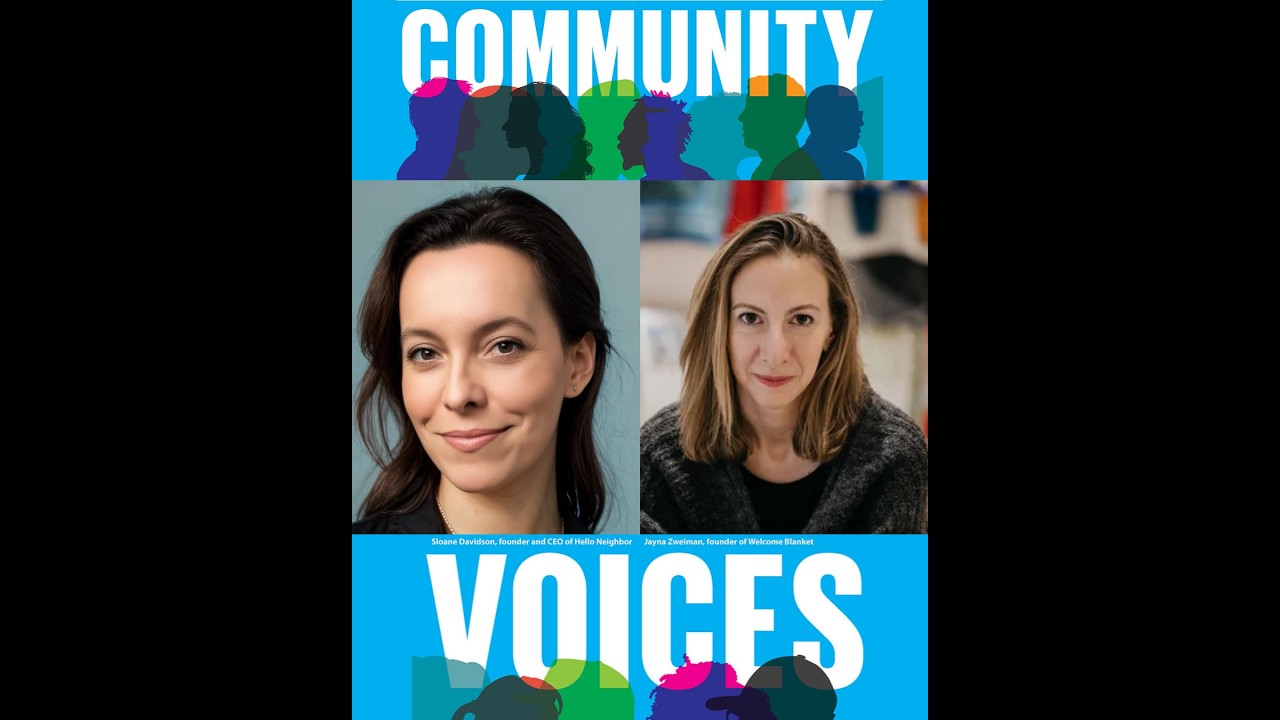
Community Voices: Sloane Davidson, CEO Hello Neighbor and Jayna Zweiman, Founder Welcome Blanket
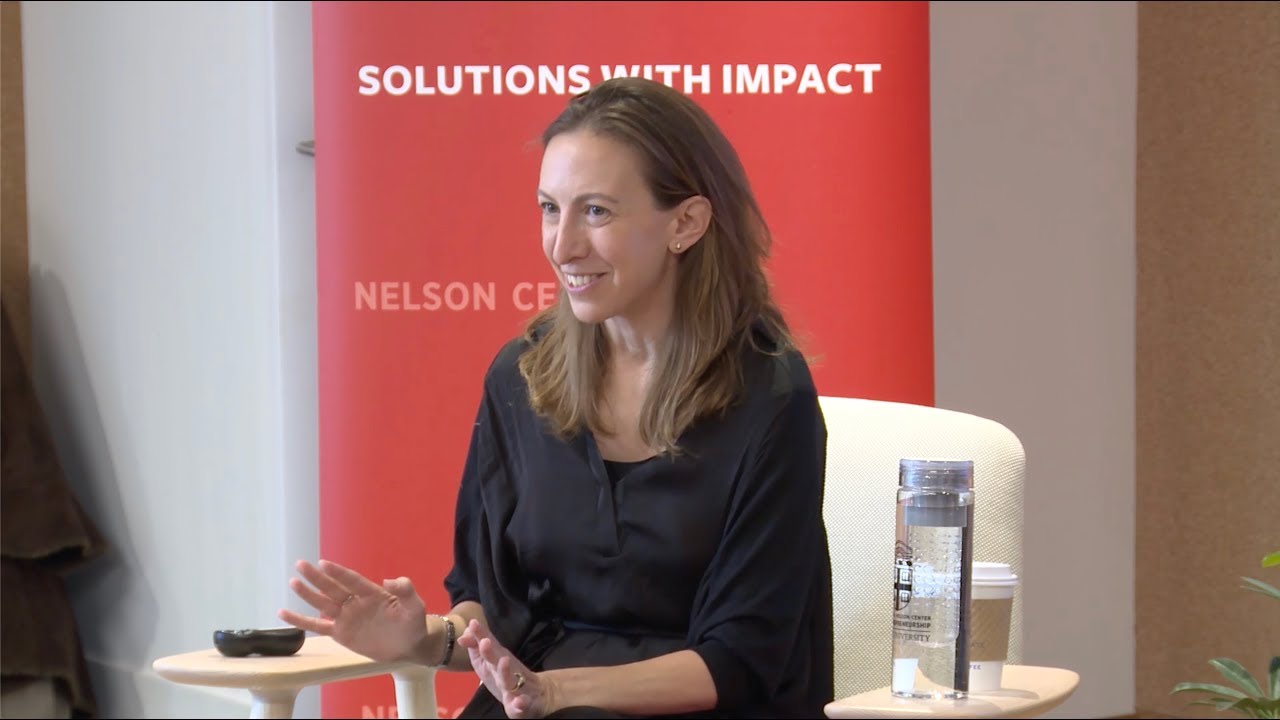
Founder Friday: Jayna Zweiman ‘01, co-founder of the Pussyhat Project and the Welcome Blanket
Jayna Zweiman, co-creator of the Pussy Hat Project and creator of Welcome Blanket talks to us

