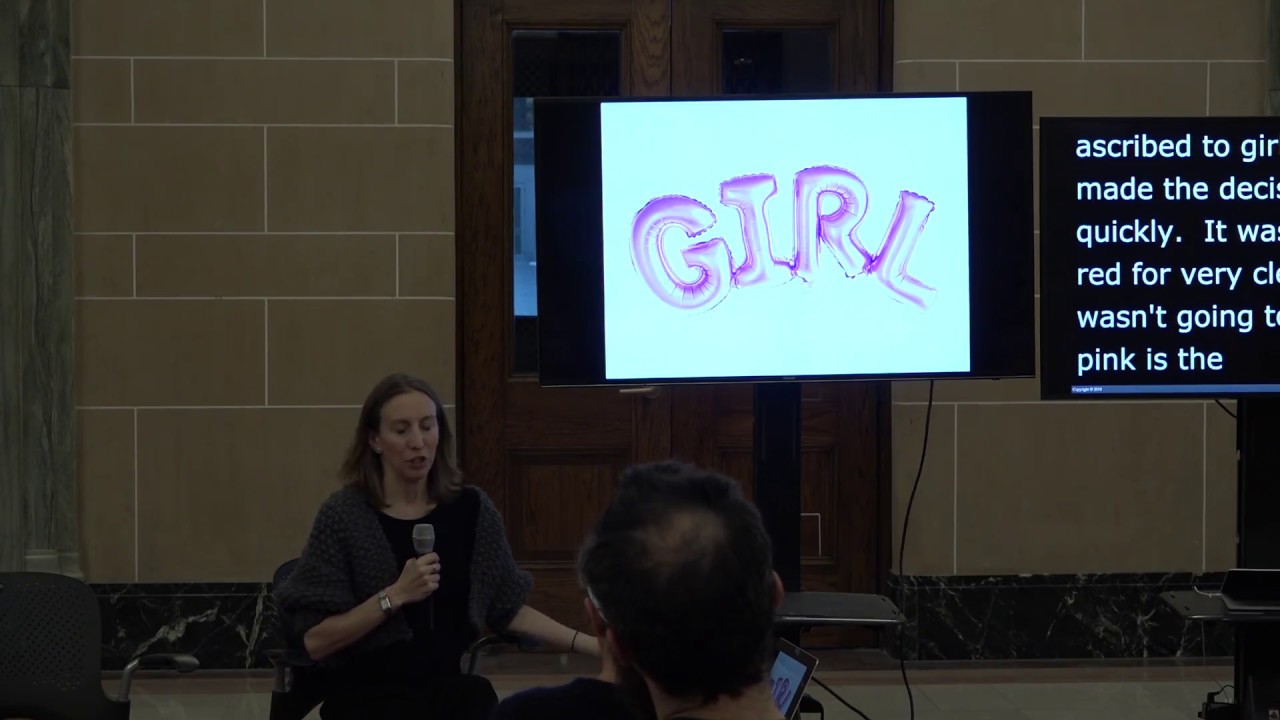
Jayna Zweiman, Artist Talk 03.22.17

In this Brown University artist talk, Jayna Zweiman recounts her unconventional career path—from double majors in economics and visual art at Brown, through a master’s in architecture at Harvard, to stints in management consulting, game design, and public‑space research—culminating in the creation of the Pussyhat Project. She describes how a concussion forced a period of recovery that inspired a low‑cleanup, community‑based knitting initiative. The talk details the project's origins in a Los Angeles knitting circle, its design of an inexpensive, easily reproducible pink hat, and a decentralized distribution network that leveraged 175 local yarn stores, drop‑off sites, and online platforms to achieve global visibility. Zweiman addresses criticism regarding the hat’s name and inclusivity, explains the symbolic power of the hat in feminist protest, and highlights its adoption by major media, museums, and virtual marches. The presentation concludes with advice for students: embrace interdisciplinary work, view failure as a learning tool, and let personal frustrations fuel socially engaged art.
Chapters
Good afternoon, everybody. Thank you so much for coming. I'm Wendy Edwards, and I'm chair of the Visual Art Department. And on behalf of the Visual Art Department and the Brown Arts Initiative, I'd like to welcome Jayna Zweiman back to Brown. Yoo-hoo! Yoo-hoo! So about 5 years ago, I bumped into Jayna on Beverly Boulevard, right outside the restaurant Milk, which is the best place in LA to get milkshakes. And, you know, we reconnected, and it was so sweet to see her. And she had finished her master's at Harvard, and so I hadn't seen her in a long, long time. And so she gave me her new card and told me about her life in Los Angeles. She left Brown having gotten her degree in both economics and visual art and went on to Harvard to get her master's in architecture. And so we became friends on Facebook, I guess, sometime in the past few years. And I started seeing something in relation to the Pussyhat Project. And Jayna's name was coming up. And I went, wait a minute. This is Jayna, our Jayna from Brown. This is such a fabulous project. So I knew right away that we needed to bring her back to Brown and embrace her. and celebrate this phenomenal project that she developed and co-founded. So the best brand new news is that the Victoria and Albert Museum just purchased a piece. They've added a pussy hat to their collection. So I thought that was pretty spectacular. So anyway, Please help me welcome Jayna.
Thank you. Hey. All right. I'm going to move to the side. So first of all, I want to thank Wendy so much for having me back. It's such a pleasure to be here, and it's been so wonderful meeting with students over the past Going up to the 5th floor is one of my favorite places in the world. So seeing how much people are really appreciating it and using it and making really wonderful, interesting work has really been a pleasure. So I prepared a whole bunch of stuff for you guys. And I kind of, from being here, I figured I'd just talk to you for a while. About how Pussyhat came to be. So in a lot of situations, you think something just appears out of nowhere, and Pussyhat really came starting from Brown. So I'm going to show you guys some work that I've done at Brown, tell you a little bit about my path, and then we'll talk about Pussyhat. So everyone's ready to go? Yeah. Okay, awesome. All right, so Here we go, Pussyhat. So this is one of my first installations. It was in the Bell Gallery, and it's called A Nesting Place, and it used to be up in the studio, and then I got to get it into a show and reinstall it, and it was really exciting because in the studio itself it actually became a nesting place for people, some people, and then other people felt extraordinarily uncomfortable within it as well. I worked with found objects for fabric, paintings I made, paintings I found. And we can talk about all of these more in depth, but I figure I'll show you a whole bunch of stuff, and if you want to talk more about it, that's great. This was my senior show. It's called Queen Field. It was right out there in the lobby, and it really was the first time I used yarn. I was really interested in issues about the body, color field painting, and this idea of a sort of feminine women's material and the imperfection of all the measurements that I was making. This is from 2001. Here's a detail, sort of looking at the fleshiness of the paint and the canvas, and all the yarn was attached with canvas tacks. This was my final show, and after that I had gotten a job to be a management consultant. So as a last hurrah, sort of in the art world, I took an environmental installation class in Pont-Aven, France. So that was my first study model, and those represent this. So it's a series of— it's a dirt road in Pont-Aven, and at the bottom there's a medieval church And I was really interested in creating a space using just single lines. And I used the same materials. I used the yarn and the canvas tacks as well. And investigating it not necessarily in a space like a nesting place where it's a diorama or out there in the lobby where you pass through, but actually out in the world itself. And for my final crit, there was a bulldozer that almost took it all down, but I got the shot, so I'm happy it's there. OK. So from there, I then became— I had this job as a management consultant. And then I got deferred for a year and thought the whole world was over. But I took some checks to— they gave us checks for deferment. And I went down to South America and learned Spanish and learned how to get a job teaching English. And then I became a management consultant. So I've talked to some people about what are you gonna do after Brown, and sort of this idea of a path. And I think one of the really important things to remember is that even if you think you have a path, it's probably not the path that you think you have. And the work that you're doing now is really important work that's gonna inform the things that you do in the future. So if you remember nothing else from what I say, please just remember that part. So I became a management consultant, and I had some great clients, And I had some not so great clients. And one of them in particular, I was working on something for him at 2 in the morning and thought he didn't care about the people who he was supposed to be providing pharmaceuticals for. And if I was gonna work for someone at 2 in the morning, I would want it to be something— doing something that I love. And if it was a bad client, I'd want it to be a space, because what I loved was making spaces. And if I were to make a space and I made a space in a really intelligent way, it could outlast the person who it was for, and I could use it to subvert it. So from there, at 2 in the morning, I decided I had to go to architecture school. And so this is a project from architecture school. This is a plan for a space that's a park. It's based in Boston, and I used to live in Boston before graduate school. a place that was about 8 blocks away, which was the first African American housing complex, which as you can imagine is probably a tricky place given that it was made specifically with racist intentions back in the '30s. So it was on the left and then to the right there was a bus stop. And in between there was actually a park that was made that was that was quite nice in plan, but it was a really good place for turf wars and for dealing crack. So I had spent about a week going around talking with people in the neighborhood and learning about what they cared about, and from there came up with a brief, which is sort of what the plan is for the project, and the project itself. My professor at the time was David Adjaye, who's the architect for the Smithsonian African American Museum, and he has this wonderful way of making social inclusion part of his project and really thinking about the spaces and being inclusive. So it's a combination of outdoor spaces, laundry because there was no laundry in the complex itself, quiet places, and also a cafe because there was a food desert. So here's a A more typical way of looking at it. And it's a diagram of how to change a space into a safer, more inclusive kind of environment and provide the types of things that people don't necessarily ask for. So asking for laundry isn't necessarily something that was happening there, or getting a grocery store where you could get good food. So, from there, it kind of circled back again. I saw something on a bulletin board, sort of like on the second floor, and there was a fellowship for Haystack Mountain School of Crafts, which is something that you don't necessarily do out of the GSD, and I took a sculptural knitting class. So, here's an example. I wasn't necessarily— this came after, but it was the first time I'd ever been in a knitting circle. And kind of understood that space. And I was really interested in looking at knitting as a way of using a line, like from before, and turning it into a surface. This is called Hop and Pop, and it's a mile knit. It's the height at which a skydiver pulls his chute, and I was really wondering what that space was like. So conceptually, using yarn as a way of understanding space and distance and being able to communicate information. So this is my thesis. It's called Exposure, and it's a pool and bath complex in Boston as well. And it is about creating public intimacy and a haptic phenomenological type of architecture. So these are just some images. It was about light wells and water wells and what it feels like to be in these spaces and interact in these spaces. So on dry land, if you're different heights, you look different. But in the deep end, everyone's the same height, which was kind of my rallying cry for this project. So it's about democratized leisure, public intimacy, and creating new kinds of public spaces. So out of graduate school, I didn't become an architect per se. I got a job as a game designer at an urban mobile scavenger hunt, which was a lot like Pokémon Go, before Pokémon Go, but not at all. So, I had convinced the CEO that I wanted to propose moving people through a city. So, if you were gonna try to get people into retail establishments to buy something, they should actually be experiencing something that's worthwhile and fun. So a combination of flash mobs, community service, seeing new things in your city you wouldn't normally see, going to different places. So this was 2008 and 2009, which wasn't the best time for investment. So we had started off with investors, and then we lost investors. And we closed shop. So it really got me interested in thinking about this relationship between your smartphone and social media and the world at large, and how you move through cities. And I've really carried that forward. It also made me think a lot about infrastructure and doing things cheaply as well. So this is a project called Exchange. And this is another example of a project that didn't actually happen. So this is— I was thinking when putting this together of different ideas that you have that seem like really good ideas, but just based on timing and how things work, They don't necessarily come to fruition, but ideas from that continue through. So this was a proposal for the Venice Biennale for architecture, and the idea was that there are all these sites around the United States that are incredibly interesting, and there are a lot of people in the United States who can't go to the Venice Biennale. Has anyone here been to Venice for a Biennale? I have. Wendy. And my new friend. So a very small number, and it has a lot to do with accessibility. So the idea was to have 4-channel cameras, so around the United States there could be these conversations that could then be projected to Venice, and from Venice they could be projected back. So it's this way of creating connection across spaces using technology. This is a show called 13.3% is an exasperated reply to those who say there are no women making architecture. It's based on a Lucy Lippard show, C.7500, with the same framework. She wanted to test the idea back in the '70s that there are no women making conceptual art. So she had everyone put conceptual art, women conceptual artists put conceptual art in a manila envelope and send it in. So I worked on this project with a colleague from the GSD. So you might be working with your classmates one day too, which is pretty wonderful. And we made 13.3 questions and asked people to send in an entry about what 13.3% meant to them and displayed it. And this was sort of the first time of crowdsourcing and putting together text as a way of creating conversation. It was a really meaty show. And then this project I worked on with a different colleague from the GSD. It's called Imaging Detroit. It's in and about Detroit, and it was a pop-up agora and film festival. It was 36 hours. I think we had 40 different conversationalists or discourse jockeys and 3 disc jockeys and a library and a symposium, And the neighbors actually started mowing around the sign that had been up there for a month, which was really wonderful to be welcomed by the neighborhood. Okay. So that's basically my work up to that point. And then what I want to share with you, particularly because people have been really open with me up in your studios, is that sometimes things happen when you kind of least expect it. So I've been doing all this work. You see all these projects. I cut out all these projects. Really excited. I had just gotten married. And I went into a store with my husband and I got knocked in the head by a 12-foot rod when I was facing the other direction. So the universe sucker punched me, full stop. And that was 3 and a half years ago. So I've been recovering from a concussion and all the things that go with that. And I'm sure in this room people have— Their own things that they're recovering from, whatever they may be. But this one really threw me for a doozy. So I basically learned everything all over again. And so I had 2 ways of thinking about this. My mom always starts crying when I talk about it. And I don't tend to talk about it very much. I tend to sort of say, oh, I can't be in crowds. It's hard for me and my symptoms. But there are a lot of things about Pussyhat Project that come out of those. So that's why I'm talking about it. So there are 2 ways that I got through this. One is sort of an object idea and another one is a process. So the object was kintsugi, which is this process in the Japanese tea ceremony of looking at the things that are broken and then repairing them with gold. So even if you're broken— I always get a little choked up— even if you're broken, you can make something really beautiful. beautiful out of it. So whenever I felt really sad or down, I'd think, okay, I'm just the cup. I'm just the cup. It'll be okay. And I also really like this image too. And then the other one was thinking about sort of a narrative sequence. And every time when you think of a story and you think of the hero's story, thinking about how a hero goes along and then drops down and they're down here for a really, really long time and then they come up again and Rise like a phoenix. And so when things were really difficult, I'd just say, okay, I'm just like, I can be the hero of the story. I'm just down here. I'm just gonna come back up. So after, I'm still on the mend, and I think I can finally talk about it because I really truly believe that I am. I didn't expect to be talking about it this much, but I think, you know, as a woman architect is hard enough, but being a woman architect with a a head injury is kind of a game changer. And so I feel like I can only really talk about it now is because I created this project, Pussyhat Project. And so if I can do that with recovery, then there's no reason why I can't do anything else. And for me, it actually showed me that having a form of disability doesn't necessarily mean that you can't make art. It can actually inform your art. And I think I sort of understood that before, but I think the process of going through this has really shown me that it is something that really is material to be able to reach out. So, we'll move on. All right, so here we are. We're moving on with the narrative. So, we're gonna talk about Pussyhat Project. And so part of the reason why it started was actually because of a plan to recover from part of recovery plan. So I wanted to learn something new that had no cleanup. So when you're cleaning your brushes, I think you probably know how frustrating that is. So I had no energy to do— I had no energy for that. So I roped in a friend of mine, Krista, with a Groupon to learn how to crochet at this place called the Little Knittery. And that's where this all started. And it brought back all these different things like going to haystacks And being in a knitting circle for the first time, and that sense of community. So, within Los Angeles, it's hard to find a place that's quiet. I'm not very good with sound. And where people are just all together, but you don't necessarily have to be doing something. You're doing stuff separately, but together. So, you can be the worst person in the room, and that's just fine. And so, we started going in May, and I was really frustrated with with the election cycle and my ability to participate. I left out at the very beginning, 'cause I just sat down here and started talking, is that I worked in politics for Clinton doing events and high donor stuff and working at the National Economic Council at the White House. Like, I was kind of interested in the high concept stuff and I couldn't go door to door and I couldn't deal with making phone calls. So, the election happened. And out of that devastation, about 2 days later, Krista and I went to the Little Knittery and we were talking about the Women's March, which was immediately up in social media. And Krista's a very strong go-getter, and she was going to the Women's March, and I deeply, deeply wanted to be participating. And so we were talking about things she could do and also ways to participate. So... So she had discussed maybe stripping naked and doing some sort of performance piece, and then settled on a hat because it's cold. Very practically, it's cold. And if one person can knit a hat, then a lot of people can knit a hat. And I was thinking about these other things, the Gates by Christo and Jeanne-Claude, the AIDS Quilt project. Do you guys know the NAMES Project? So back in the '80s when HIV was a really new concept for a lot of people, as a child I saw that and understood what HIV meant before I knew anyone who had ever suffered from it, and it was extraordinarily personal. And then in the bottom left is actually from Chile. Spencer Tunick was there when I was there at the same time, and it was post-dictatorial. Chile, and the news covered this like crazy. And the reason why is that it was— people were starting to feel like they were free. And the reaction from this was, Chileans are really liberal. They'll go out and get naked. This is a really big deal. And the response was really amazing. And I really saw how public art could really have an effect. So, and then at the bottom is a civil rights march. And then thinking about, well, if everyone could potentially wear hats, we could create a visibility for this march that could be really powerful. It could be a sea of pink. Okay, so I'm not gonna take you through all of this, but there— I promise. But there's a PDF that we made, and I just wanted to show you pieces of it so that you can see, so that it's what we disseminated. So this is part of the project that we made. So we thought of the project in 2 ways. One is to create a strong visual impact at the Women's March, and the other was to create a way for people who couldn't march, no matter what it was, health reasons, financial reasons, scheduling reasons, to be able to be visible and support the marchers. And then out of that, underlying it, is creating community for future political participation. Okay, so we included a pattern that was Free. And on the left-hand side, I don't know if any of you actually read knitting patterns. I don't. I do, but I don't. But the idea that there's a diagram on the other side and that the hat itself is a diagram for participation. So it's just a rectangle folded on its side, sewn from the creases down. It's a rectangle, you put it on your head, and then the corners pop out. And so it doesn't matter what yarn you're really using. It doesn't matter You know, if you do your knits and purls in the right order, you can make something out of this. And I think that's really wonderful. The pattern itself was made to be both distinctive— so it's not a bunch of beanies— it was made to be as inexpensive as possible. It's the most common yarn to find, so you can spend a ton of money on it or a dollar on it, or even— 50 cents. 50 cents of half a skein of yarn. And that's what some variations can look like. So this one woman made all of these different hats. And one of the beautiful things of this project is that as you see this sea of pink hats, it's a sea of variation. So it's an individual within the collective. So instead of going to buy a hat somewhere, these are hats made by people that are gifts to other people representing themselves. So these are some people learning how to knit. And there are different ways to do it. So it's really about this time in the hand that you're thinking of making it. This woman ran out of yarn, so she started making them out of fleece. And then this was the process. So it wasn't just, hey everyone, make a hat. It was thinking about how do we get all these hats on marchers? So, being a really, really small team, we wanted hats on marchers' heads way before the march, or as quickly as we could. So, there are ways to do this. One, if you knit a hat, you can bring it with you to a march. You can give it to a marcher. You can share it with— you can find a marcher through social media, or you can drop it off at a drop site, which was a local yarn store. And if I interject, we had 175 local yarn stores that we got on board to do this. this. Or you could send it to Reston, Virginia, which was this site, this family's basement, who were friends of people in our knitting circle at the Little Knittery, who were incredible. We also included that we asked people to include with their hats a note. And this was an opportunity for people who wouldn't be marching to connect with marchers. So you could say what women's rights issue mattered to you. And you— I'll just— I'll just read it. flip through 2 of them, and what you'd want to share with someone. And one of the most incredible things is someone came up to me the other day and she said, I'm a survivor of sexual assault. I don't really talk about this very much, and I decided I had to go to the march. And I happened to get this hat from a woman in Canada who shared that she also was a survivor of sexual assault, and that was the issue she cared about. And she said as she marched, she felt like she actually had support from people who were around her. And there have been a lot of stories like that. And people have different senses of humor and how much they actually want to write or not write as well. And people have dealt a lot with different stories and different pieces within women's rights. And then there was a shortage of yarn. Which was really incredible. And coming from economics, that's kind of one of the things I really wanted to have happen. I grew up in a family where you kind of do the technical kind of things, which kind of explains why I became a management consultant and probably why I went to Harvard for architecture school. And I kind of thought my dad would be so proud if I affected the economic system of yarn. And I did. So that was great. And then this is the family— this is the rest of the Virginia family's basement. It's a really nice basement. And then those are the hats that are stacked. So we had a process of going through them and saying where they're from. And they were just a fantastic bunch. And people just came from the neighborhood to go and volunteer. They'd just show up at the door. And we started seeing pussy hats at different protests before the Women's March. This was in The Guardian, so it was that feeling of, oh my goodness, it's This is really out there. This is great. And this is at the Little Knittery. And we have Friday night sewing circles, and the press started coming, too. But people are learning and just all together going at it. And then one of the wonderful things is, so, a knitter can drop off at a drop site, a local knittery, but it also brings people into these local knitteries who've never knit before and don't knit. I was thinking about these little knitteries as community hubs. So this one was really fantastic. It was about a day— it was a day before the march, and there was this back and forth of people dropping off hats and picking up hats, and you might have to sit around for a hat. So she came in right after this woman left who had dropped off hats, and we said, you know, if you want to thank her, please do. And this woman came in completely crying, and she said, I've been feeling so alone and so sad, and this is— That's so beautiful. the best thing that's happened, and just started bawling, which is really wonderful. So these are more hats and notes, and then that's what happened. Which is really crazy, and on big screen it's even crazier. So this is a little bit closer, a little bit closer up, and I really like how his is sort of like a pussy hat, but not a pussy hat, and I think that I actually didn't see that until it got blown up so big. But just sort of the originality of people and thinking about this is something that people are creating. They're doing it themselves. And after having social media and the news be so depressing and divisive, this was a way for people to come together and still be themselves. So these are different images of people involved. I really love this one and the idea of like the individual in the field. And then people wrote notes back as well, which I think is really wonderful and creates this cycle of connection back and forth. And I think it's connection that we've all been wanting. And then it started being used. I think these are amazing. It takes on such a different sense of meaning when it ends up on a statue, which is already symbolic. So the symbol of it being It's really a feminist act to do, to kind of take charge and be an individual and stand up for what you want and what you believe in. And it's really a symbol, the pussy hat's really a symbol of support and solidarity for women's rights and political resistance. And then this happened, which was really pretty magical. To sort of see it as a symbol on something that I've always considered a symbol itself. And what someone— I just love this one. And I think what's really cool about this too is that because we had such a strong visibility and such a clear image, it can't be used for other reasons. So it can't be someone else's march. We ended up on The New Yorker, and this was actually a woman who submitted it to The New Yorker, and they really loved it and put it on their cover. And we've been on Saturday Night Live a couple times too. And then people have taken really different approaches. Baby hats on one, and then this judge wore this in Texas. Sort of like the seriousness and the cuteness together, I think, is really powerful in this sort of sense of humor. humor is something that's very smart. And then, so, did anyone know about the Women's March on March 8th? Okay, so International Women's Day was March 8th, and all these things were happening all over the world. And as there might be a little bit of fatigue in the room of everything is happening at the same time, what we did is we had the Pussyhat Global Virtual March, where you'd wear your hat, hold up a sign of where you're from and where you're for, and where you're from and what you're for, and you could share it with people around the world. So it didn't really necessarily matter where you were, but it was a way of testing sort of how social media can bring people together. So on the left was sort of the idea, and different people had submitted some drawings in preparation, and then what we saw on the other side. And so the pussy has really gone global. This is Swiss Parliament. On International Women's Day. So, this is amazing. And just thinking that there's this thing that's gone out into the world, and it's really gained a lot of traction and meaning. And this was in Scottish Parliament, standing up for women's rights. This is a Scottish politician who was told she shouldn't be wearing props. And then this is someone from Mexico who's a friend of mine. So I just really love that she Photoshopped her hat in because she didn't have one. So people are making up ways of participating whether or not they had a physical hat. And then we've seen things like this where someone mentioned, see the first exclamation point? It looks really, really pink. In San Francisco. And then I feel like I've left out a bunch of stuff, but the way we disseminated this information was through our website, Ravelry, which is like Facebook for knitters, Facebook, Twitter, and Instagram, and through various blogs. So on the left is from Ravelry, and a really excited person put together all these people wearing pussy hats in the logo of the Women's March, which I think is just phenomenal. And the woman on the right got a pussy hat tattoo. And one of my favorite stories is a mortician wrote us, and she said, I was preparing a woman who was 89 years old and died of natural causes, but her last effigy to the patriarchy was to die in her pussy hat and be cremated in her pussy hat. So I just kind of well with this emotion when she told me. And I guess the daughter of this woman and the mortician had this great laugh together and connected. And just the idea of Creating connection through art is really beautiful. And this is an artist, Abira Ali, who helped us out in thinking about different ways of what your poster might say for Pussyhat Global. So we're back at the Washington march to remember that big event. And then this is the Victoria and Albert rapid response show. This is actually my hat, which is even stranger, and it was a hat that I gave Through a friend to someone in Los Angeles who marched in D.C. So it was really wonderful to connect with someone who I'd never talked to before and really have her march for me. So I can't march, and so this was my way of participating. And this is one of the things that we gave out to people to sort of think about if they were doing different things, how they could actually be involved. It's up on our website. And thinking that everyone can do a lot in this project, whether or not they're knitting or marching or sewing or crocheting, and that everyone can participate. And I think that that's a really important thing within activism, is finding your way to be able to participate. And this was me. I was up in Los Angeles looking over and watching the TV at the same time. And that's it. Thank you. Thank you. Yeah, so I'm happy to answer any questions anyone might have. I'll try to field them.
Thank you very much. That was so interesting. I was— we were actually just wondering, what gave you the confidence to keep it like a personal— so you mentioned that each person was going to knit one and send it to another person, but obviously you had this goal that you wanted sort of the maximum amount of people to have these hats as possible. What gave you the confidence to do that on an individual basis rather than sort of turn to a company to get them kind of mass-produced?
Well, I think we had a lot of discussions about scale. Scale. So I like to think big, so a million seemed— why not go for a million? If you don't ask for it, you'll never reach it. But thinking about the fact that these connections were really powerful to start with, that if the scale was much smaller, it would still have power within itself. So we didn't know how many had been made. We thought there might be 100,000 that were out there. And I think we haven't made official estimates, but But I think it's pretty clear by the visuals that it was much, much more. So I think sometimes with confidence, you just have to go and do it. And if you fail, you fail. It's much better to try and fail than to just not speak up. And I think in this political climate, I think it's really important that people stand up for the things that they're worried about or upset about and really follow those through.
Thank you.
Sure. We can run mics. Wow. What's next?
Who is next somewhere?
So we're thinking about how Pussyhat Project can be about Well, we got through International Women's Day, and we're really thinking about strategically how to deal with kind of the fatigue that's out there, or potential fatigue, and thinking about it as kind of an education and instigation kind of initiative. So if you have a pussy hat, hold on to it. And keep making them too. Thank
you. Hi. I've heard a lot of criticism from, mainly from trans women, in regards to the pussy hats, and that they exclude women who don't necessarily have vaginas. Mm-hmm. How do you justify The pussy hats in that sense.
Well, the name— well, I think it's really important to listen to what people have to say in terms of criticism before I kind of say anything else. The word pussy hat comes from the shape of the hat. So Kat Coyle was the one who designed the pattern, and when we asked her what it was called, she paused and said, pussy power hat. Pussycat, pussy hat. So that was where part of the name was from, and the other part was from the hot mic Donald Trump grab 'em by the pussy fiasco. And I think when thinking about that comment, to grab anyone by their genitalia without consent is not right. It's not okay. It doesn't matter what kind of genitalia, how you might identify. It's just not okay. In terms of the word pussy, that's where it comes from. And the word pussy also is a derogatory word for the feminine. So it doesn't matter if you're a cisgender heterosexual male or a trans female or where you fall along the gender spectrum, in general in our society, feminine qualities are not considered as good as masculine qualities in general. And this is really a way of grabbing that word back. But I think it's also important to pay attention that trans women are women. And we're not— the word pussy is offensive To a lot of people, not just the transgender, trans women community as well. Does that kind of answer your question? That is tight. Yeah, I think it's really tricky, and I think the word is really tricky. And I think for myself as well, I feel like it's very important to listen to that criticism too. I've heard a lot of questions about the word pussy from cisgender women as well. So it's an uncomfortable word, and it causes a lot of conversations. And I think bringing up those conversations are important. And I think it brings up also— I think it's also been a way for people to— To talk about it. Consider that criticism as well. And I think it's important for people to be paying more attention to the transgender community. I have one question, and then we will have a reception.
Is there anything else in terms of advice to give the students here today? So you left 15 years ago.
Yeah, it's amazing. Yeah. I'd say that what— I'd say that the work you're doing now is really going to inform the stuff that you do later. So really explore and take advantage of it, full stop. And I think these questions of failure and perfection, Pussyhat Project isn't— nothing's perfect. And I think these questions of could you do it if you thought that maybe you'd fail? If you always worry you might fail or it's not perfect, you're not gonna do anything. So it's better to try and be, really think about making art. It's not just making art in your studio, but the idea that you're It's part of everything that you do. It's like the people— I wrote down a quote which maybe I should read to you, but it's about the people that you love, how you vote, how you live your life. And I think if you go out into the world, and you're already in the world, but continue your time after Brown, really kind of being the person that you think you really want to be at your core, it'll help guide you towards the types of Projects and ideas and experiences that might be beneficial. And then the other thing is you don't really know what an opportunity is. I have to say that I've had a lot of fits and starts and jumps back and forth, and they've all informed a lot of how I see the world and how I move through it. And even the ones that are really horrible. really have informed the way that I think about, kind of think about how to be. A lot of this project is based on the fact that I felt so isolated that I couldn't participate. So what this really did was make a way for so many people who couldn't be at this march to be able to participate. And I think that that I think that that really enlivened people. You don't realize how many people are kind of going through the same things that you're going through, and the things that frustrate you probably frustrate other people. And so, yeah, I encourage you to just follow those things that inspire you and bother you and keep working.
Well, thank you so much, Jayna. Please join us in the lobby outside for a reception, and we can have more continued conversation. Great, thank you.
More from Jayna
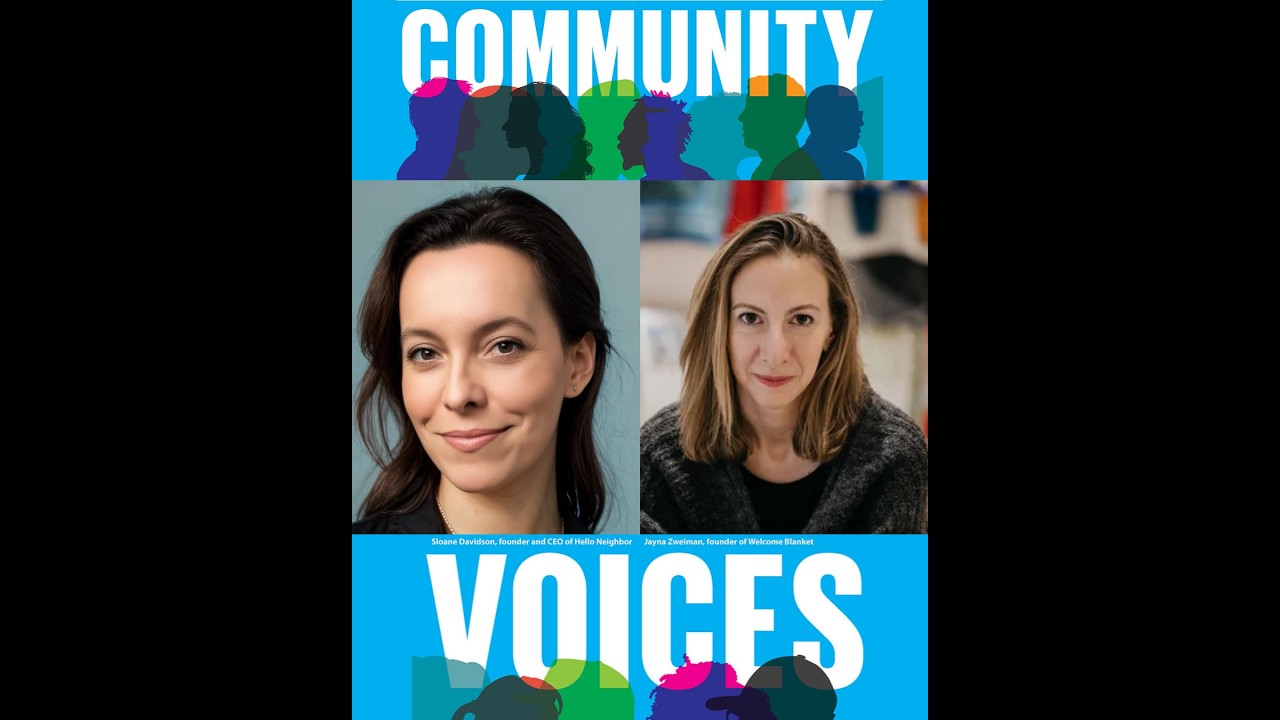
Community Voices: Sloane Davidson, CEO Hello Neighbor and Jayna Zweiman, Founder Welcome Blanket
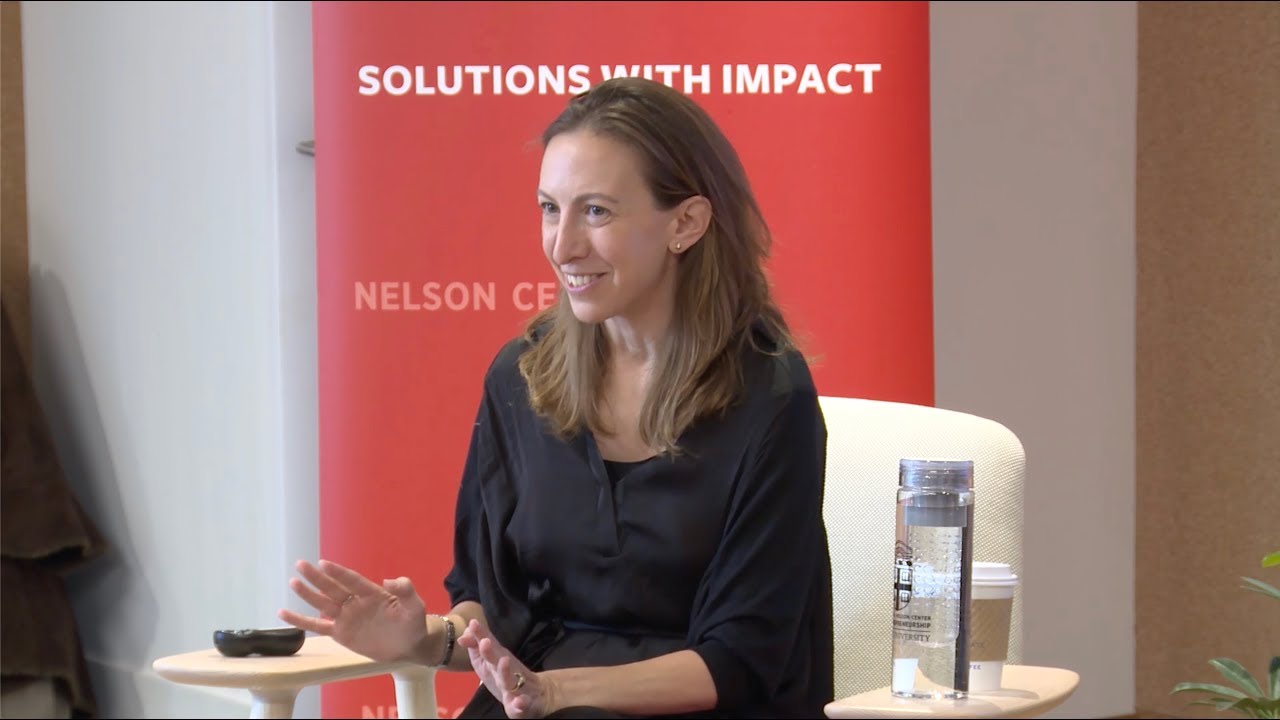
Founder Friday: Jayna Zweiman ‘01, co-founder of the Pussyhat Project and the Welcome Blanket
Jayna Zweiman, co-creator of the Pussy Hat Project and creator of Welcome Blanket talks to us