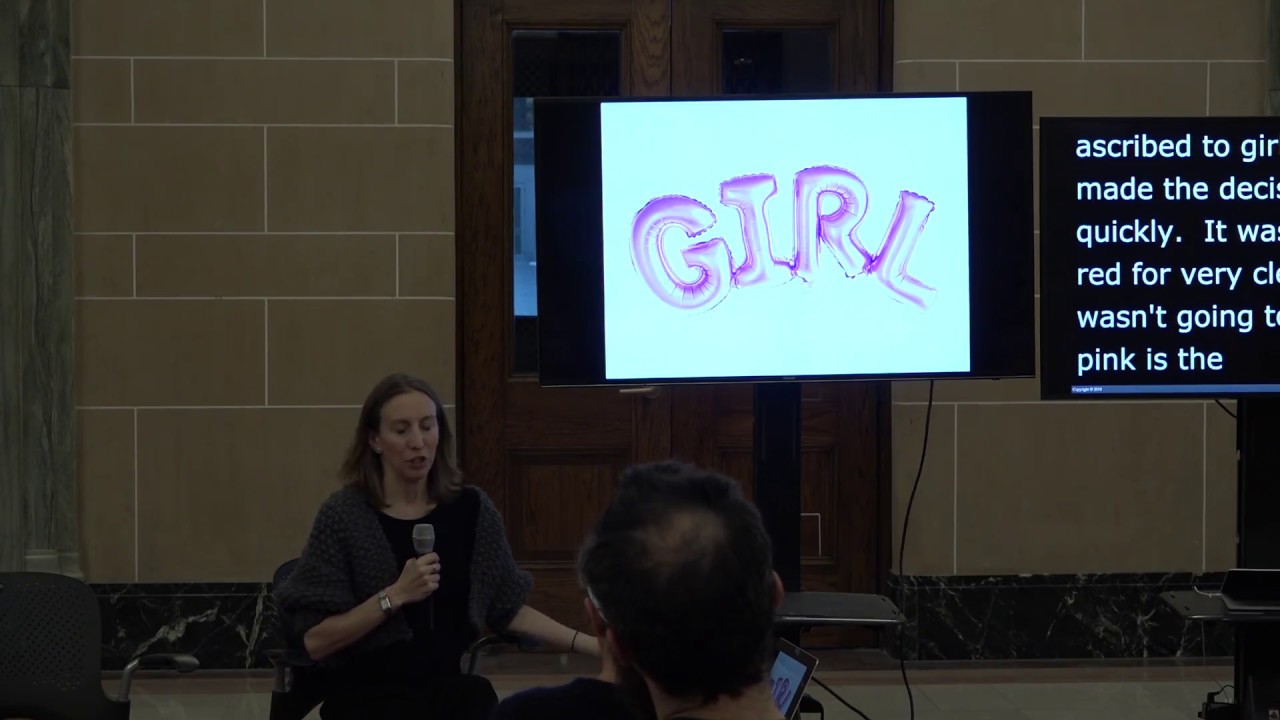
Founder Friday: Jayna Zweiman ‘01, co-founder of the Pussyhat Project and the Welcome Blanket
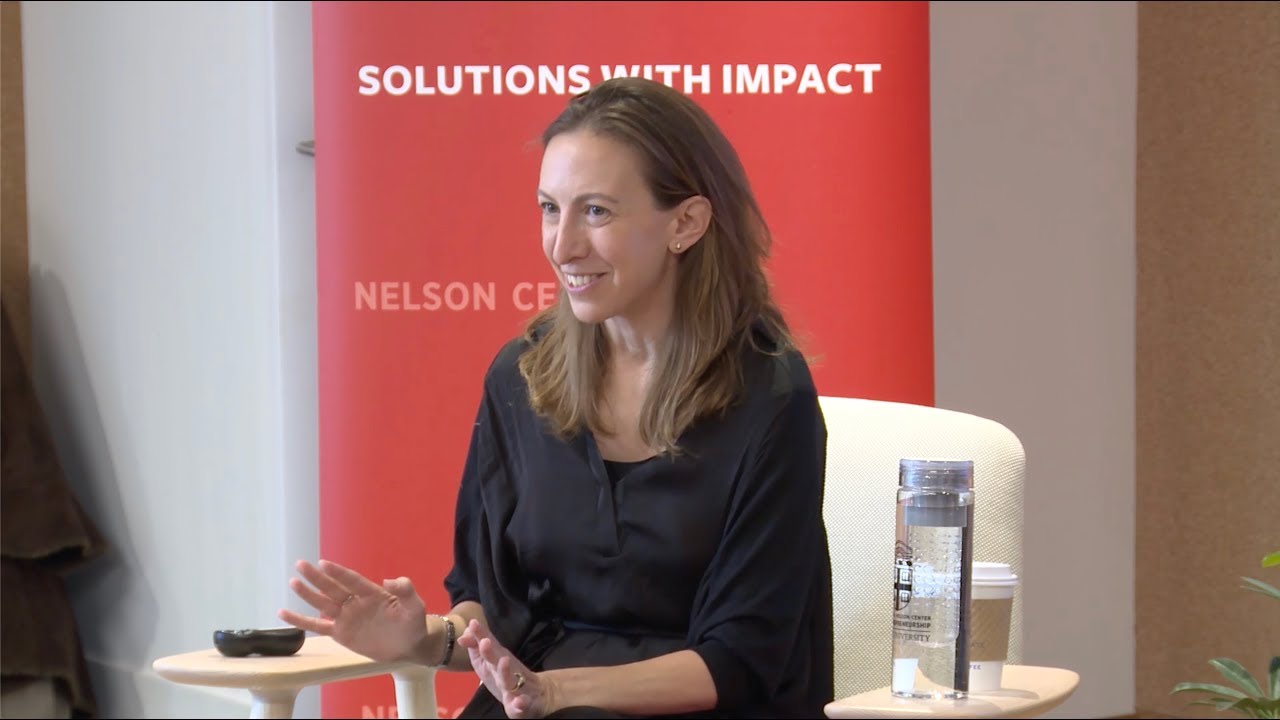
In a recorded Founder Friday session at Brown’s Nelson Center for Entrepreneurship, host Danny Warshyay interviews alumna Jayna Zweiman, co‑founder of the Pussyhat Project and the Welcome Blanket initiative. Jayna recounts her interdisciplinary Brown background in visual arts, economics, and pre‑med, and how a severe accident in 2013 redirected her toward activist craft. She describes how the Pussyhat Project emerged after the 2016 Women’s March as a low‑cost, high‑visibility response to political events, detailing the problem identification, design of a simple pink knit hat, and a distributed production model that leveraged 175 local yarn stores, personal networks, and a “note‑exchange” system to enable participation for those unable to attend the march. Building on that model, she launched the Welcome Blanket project, a 2,000‑mile‑long yarn blanket for refugees, with customizable patterns, storytelling notes, and partnerships with museums and refugee resettlement agencies. Throughout, Jayna frames her work through the entrepreneurial methodology taught at the Nelson Center: finding unmet needs, crafting a value proposition, and scaling impact, emphasizing how scarcity (her injury, limited resources) can spark creative abundance. The conversation also covers volunteer recruitment (matching tasks to passions, gratitude, flexible structures), managing risk and fear of failure (bootstrapping, “ideas competition” mindset), the concept of “slow activism” via knitting, and audience questions about university involvement, volunteer empowerment, and the nature of social entrepreneurship at Brown. The session ends with reflections on how Brown’s interdisciplinary culture nurtures such purpose‑driven ventures.
Chapters
Good afternoon, everyone. Good afternoon. I'm Danny Warshay. I'm the Executive Director of the Nelson Center for Entrepreneurship. Really happy to welcome all of you here today. I always ask the same question at any of our events, and you'll hear why. And I love asking it, especially on Family Weekend, which is, for how many of you is this your first Nelson Center event? Raise your hand. That's— what's good about that is even when it's not Family Weekend, lots of people raise their hand. And what I love about that especially is that we are attracting on and on and on new people from across the university, from every department, every discipline, every organization. And even well beyond the university, we have lots of people from the broader community in Rhode Island, and many of our events are livestreamed. And so there's people from all over the world who are tuning in to hear the kinds of events that we're putting on here at the Nelson Center. So really appreciate all of you being here today. And I'll just tell you a little bit about the Nelson Center, 'cause maybe for some of you this is new, not only your first time here. We're in charge of everything there is to do about entrepreneurship at Brown, which is a heavy mission. We're certainly not inventing entrepreneurship at Brown, but we are championing it, stewarding it, organizing it in a coherent way through this center. This physical center is brand new. And so some of you— I know there's some alumni here who may remember this, as one did, as Store 24 back in the day. And I think you'll agree that it's Changed a little bit since we've been embarking on building this building. If you have time, I encourage you to check out the other floors of this center because they are different from this floor, and they are designed to accommodate and support and empower student venture teams. And so you'll see all sorts of venture spaces on the 3rd and 4th floors that have a really interesting design. All the walls move to accommodate and configure in different ways student needs from one minute to the next. All the furniture moves. These walls move. And so it's based on the adage I always share with my students in entrepreneurship, which is don't pour the concrete in the sidewalks until you see the bare patches on the lawn. Because you just— we don't know from one minute to the next, how our students are going to use our space. And I don't want to be the one to determine that. I'd like, just like everything at Brown, for the students to be empowered to do that themselves. This room accommodates classroom teaching. The 5th course in our certificate program is taught in this room on Tuesdays and Thursdays. It also accommodates lots of co-curricular activities, workshops, speakers, events. And then as I say, lots of the spaces upstairs are focused on the third element in our mission, which is venture support. Not only motivating students to learn about entrepreneurship, and the way we define that here, and I think is really appropriate for having Jayna here today, is a structured process for problem solving. And so the third element of what we provide is empowering students to do entrepreneurship, and you'll see evidence of that with student ventures that are housed upstairs. I hear the— and I feel the heat kicking in so much I'm a little worried that it's going to overheat. I'm a full-service executive director. I will make sure everybody's comfortable. And so welcome. If you're interested in learning more about the Entrepreneurship Center, our website is entrepreneurshipcenter.harvard.edu. Brown.edu. You're welcome to sign up for our newsletters that come out roughly every couple weeks. And as I say, even if you're from Istanbul or Korea or Philadelphia or Madison, Wisconsin, or Durham, North Carolina, or San Francisco or Los Angeles, I think it's an opportunity still for you to keep track of what we're doing. And you're welcome to participate even remotely. So I'm really excited to have Jayna with us today. And I think what we're going to do, the format will be very informal. We'll have a conversation a little bit about Jayna's background, what she's done as an entrepreneur. And I'd like to open this up for as many questions as we can accommodate as well and make this interactive. It's kind of the nature of everything we do at the Nelson Center. So Jayna, thank you so much for— Thank you.
Thank you so much for having me. I can hear myself on a mic too.
Yes. So we'll try to dampen the mic perhaps a little bit. I thought I might start— such a beautiful day outside. I always like to say, if you've never been here in Providence, then I'll tell you that the weather is always like this. You know different because you are class of '01. And I thought I might ask you to think back What might now seem like just yesterday, or I don't know, maybe a lot of years. What was it like for you at Brown? You have such an interesting story about what you studied, very Brown story, very interdisciplinary. Maybe just think back to your time at Brown and what was that like for you? What kind of experience did you have at Brown?
So I'm very much quintessential Brown. I was a visual arts and economics major, and I did all of my pre-med but physics. Which I ended up taking later to go to architecture school. Oh, you did? So I was often up in the studio over in List. And— oh, that's better. I was in the studio over in List a lot. And I loved my unit. I was always on Thayer Street. And coming back here, it feels so warm and fuzzy. I can't even tell you. And I took part in a class yesterday. And it was just so wonderful to be around so many people who are engaged, and excited, and doing things, and asking questions. And it's just wonderful to be back. So thanks for having me.
Well, we're thrilled that you are here. And so much of your story as your background when you were here at Brown, and so much of your story of what you've done since, I think is emblematic of the way we think about entrepreneurship here. As I mentioned, we think about entrepreneurship— I've been teaching entrepreneurship here for 14 years, and the way we conceive it is much broader than what you might find in other really great places. We don't have a business school, and that's an advantage for us because we're not focused too heavily on a specific outcome or a specific type of entrepreneurship. The way we've described how your focus fits into some of our themes is it relates to one of the 7 themes that are embedded in Brown's strategic plan, Building on Distinction, cultivating creative expression. And we, for this year at the Nelson Center, are highlighting each of those themes in a number of our programs. So this program, for example, is called Founder Friday, and it's a Friday, so, and you're a founder, so we thought it's a good fit. And we thought especially given what you've done to be an entrepreneur in this kind of world, it's a good fit. So I thought I might start with the first Substantial venture you started, which was the Pussyhat Project. You have one. I have one.
I brought one as a display.
And one of the themes— and you gave me permission to ask you about this— that we often talk about, at least in my teaching, is the benefits of scarce resources. Even relates to the fact that we don't have a business school. I just described it's a benefit that we don't have a business school. Because its constraint enables us to think perhaps more creatively, more innovatively. You had an accident, which was a really, of course, unfortunate event. You wouldn't wish it on anybody. Of
course.
But it enabled you to think through that constraint at a time when you were looking to be an activist, at a time when lots of people were looking to do protesting and to have their voices heard. If it's OK to start there, I wonder if you could tell us a little bit about what that was like when you were trying to do something that you didn't feel initially able to do, and how that eventually led you creatively to think through this kind of a project.
Sure. So my background is in art, visual arts, economics. I had a not-direct career path. And we talked about this the other day, about how we could have a whole talk about my career path. But I'll give you a very short version. I was a management consultant. I then went to architecture school. I worked on Clinton's second campaign and inauguration. I worked at a mobile urban scavenger hunt startup, where I talked my way into being the game designer of how to bring people together. I was curating exhibitions about women in architecture. I was working as an architect, as well. And that's up to 2013. And I had just gotten married. I went shopping with my husband to buy curtain fabric, because I decided I would make them all, and a rod fell on my head. So, between 2013— Yes. Exactly. Which is sort of the short version. And my mom— my mom will tell you a much longer version. And I see your eyes. And it was awful. And the recovery process has been very, very long. So, between 2013 and Pussyhat Project, I didn't work. And so, I just gave you all these different things that I had done. I was always moving. I was— I went through architecture school, if anyone knows what that means. Like, I stayed up late at night with everyone else and kept going. And so, I was watching everything that was happening. And I had worked a little bit in politics, as well. And I couldn't participate in the ways that I wanted to. And I was really, really frustrated. And then the election happened. I think everyone remembers November 8th, 2016. And I was— I was devastated. And the next day, I was still devastated. And then— and I might back up a little bit— a healing modality for me was learning how to crochet. And I discovered The Little Knittery in this community in Los Angeles. And it was really special for me in terms of getting to know other people, having a quiet space and a space to listen. So it's kind of funny that I'm talking to all of you. I'm like, usually I just sit and listen. And understanding that I could belong to a place And be the worst person at something in a room and still belong. And it was really special. And so, November 10th, I called up my knitting crochet partner, and we went to Little Knittery to talk about what happened, because I wanted to hear from people who were way older than I was, way younger than I was, and just get together and know what's happening. And the march had been announced, and my co-founder, Krista Sa, was going to the march, definitely going to the march. Mm-hmm. And I couldn't go. There was no way I could cross the country, be in a large group of people. —was not where I was. And I was really pissed off, like pissed off, angry, felt like I couldn't be included. And I was just trying to think of a way in. And I've been doing so many projects over the years, and here was this thing where I've been watching— I watched Black Lives Matter like grow, like while I was in bed. And I was just thinking, this is nuts. So, Krista wanted to do something at the march. She was going. I think she probably even had her ticket. Just, that's part of her personality. And she was like, maybe I should do a performance. Maybe, like, you know, like a group of us could, like, strip naked. That would be really impactful. And before everyone laughs, it actually could be really, really impactful. Like, it's been done, and it's been amazing. But it's also D.C. in wintertime, so you really have to commit to that. And she's from L.A., and so that idea is also very foreign. And we were in a knit shop, and she's like, maybe I could make a hat. And I was thinking, like, yeah, you can make a hat. And she's like, maybe people could send them in. And I'm thinking, well, how do I feel if I'm just sending something somewhere? Like, do I— how does that work? Like, how do you create that sense of everyone can be part of it? So we let it sit for really like a second. And she decided, yes, we're gonna make a hat. Like, this is gonna happen. Our knitting instructor and the owner of Little Knittery, Cat Coyle, made the pattern. And I recognized that there was a way in which people could actually, like, participate and make it not just about a march, but to extend it, like, using ideas of architecture and space. Like, it's not just the march, it's all the time and space leading up to the march. It's all the people making it leading up to the march. So we had a 2-part mission. One was to create this big visual impact. So if you've seen the AIDS quilt, that was the first public art project I had ever seen, and I understood how important It was that there were all these people who were dealing with HIV and AIDS, and you could do something like that. And it's in the same exact spot. And I had worked on inaugurations. Like, this is totally possible. And from an architecture background and the idea of you can make something out of nothing, there was an entire distribution pattern of how to do it. So should I take you through a couple slides? Sure. I just started talking, and here we go. So this is what it looked like. OK, how many people were there? That's amazing. OK, how many people made a pussy hat? Awesome. Awesome. How many people's moms made a pussy hat, or sisters, or cousins, or know someone who did? Yeah. OK, in 59 days, this project happened, from launch to happening. So that was the beginning diagram of the side of what would that actually look like. And on the top left was the March on Washington. And it was sort of like, if you took something like the March of Washington into present day, what could you do that would be different? Like, things aren't black and white anymore. It's very much about color. And this is the diagram of the pussyhat— rectangle, fold it on its side, put it on your head. There you go. And it was made so that I could do it, like, literally. I was like, OK, we can pass this one. This is great. And we created a distribution pattern. One is whoever made one could include a note, if they wanted to, with contact information, So that you could give it to someone, and they could reach back to you, if you didn't actually know them. And so, like, friendships became— happened out of this. And you could express yourself. So you didn't have to go to the march to be heard and present. And you would— whenever I see those pictures of people, I know it's not just that many millions of people; it's all the other millions of people who participated, whether it was they made a hat— They took someone somewhere. They took care of kids while someone else went and marched. It's like, it's not just the people who show up. It's all the people behind the scenes.
And based on what you— I
get excited.
As you should, as all of we are. Yeah. Based on what you shared with us about your own experience and your own recovery, which made it impossible for you to be at the march, you could empathize with those millions of others who also weren't at the march, but had a vehicle through which to contribute. So you were back home. You couldn't be there. You envisioned contributing in all sorts of expansive ways, and that rippled through the model that enabled many other people to participate even if they couldn't be there in person.
Absolutely. It didn't matter if you couldn't participate because of medical reasons, because you were taking care of someone, because you had to work, because you had to go to a wedding. There are thousands of reasons why, even if you care about something, you don't have the financial means to fly across the country and You know, figure that out. There's so many reasons why people can't participate, and this was a way of creating a sense of agency and making it inclusive for people to be able to participate in it. And so part of sort of an underlying idea was that this idea of the model of the local yarn store is that everyone should know that they can be part of something where you can just sit and talk. And it's a perfect model for Political discussion, where you get to listen and think and do. So our distribution pattern was that you could— our process was that you could take people— you could take your own and make an extra one, bring it with you. You could give it to a friend going. And then we partnered with 175 local yarn stores across the country and made it super simple to participate. We're like, here are 5 things you can do. Do you want to be on our website? Okay. So they had great advertising. They had people coming in. People knew where to find them. We knew it was inclusive space for this project. And then we had a family in Reston, Virginia who became our distribution headquarters for DC, who we met through our knitting group. So they— If
we rewind a little bit. Yeah. I remember we had this insight together the other day when we were getting acquainted on the phone. And I admit I am biased. I see the world through the process that we teach at the Nelson Center. As I mentioned, the way we think about entrepreneurship is as a structured process for problem solving. That's how we teach entrepreneurship. It's much more expansive than a tech startup. Nothing wrong with tech startups, but this is a predominantly liberal arts environment where we're learning skills that are useful across every discipline and no matter what field you go into. So I'm biased, but I think you resonated to my description of our process. Mm-hmm. Whose elements are informed, first of all, by this, again, unfortunate incident about feeling initially maybe burdened by the constraint, but then maybe liberated and enabling you to think more broadly than you would have. I don't wish the initial impetus on anybody, but you turned a scarcity into an abundance by being able to think through, oh, what could I do now? that's different and more expansive than what I might have thought otherwise. And then the 3 steps we talked about and reviewed, and some of my students here I see, they could probably recite these in their sleep. Find and validate an unmet need, which is the first step. Basically, if it's a problem-solving methodology, what's the problem you're going to solve? And you, I think, felt it deeply in your bones like millions of other people based on a political event that you wanted to respond to. There was a need to express your voice, but You had a way to do that that was limited by your own circumstance. The second is develop what we call a value proposition. We talked about that a little bit too, which is a small-scale first stage at the solution. And given how quickly you scaled, that was a limited kind of value proposition, but you iterated a little bit. You thought about this, you thought about a few other things. And then you're such a great example of the third step, Which we always try to teach our students, which is develop a big impact, scalable model that has impact in the millions, or depending on the problem you're solving, maybe billions. And so I just wanted to review again, does that sound like it resonates with you, even if it's not consciously what you were thinking of at the time?
It completely resonates. It didn't necessarily have that same language, and we talked about this with architecture, sort of from limited— From my own limitations comes inspiration. So when you look at so many buildings, they're a certain way, usually because of zoning requirements or because of cost. And someone had to come up with a really good way to figure something out. And that's usually what makes it sing. So if you have all the resources, like all the space, you usually don't come up with something as meaningful and fantastic.
I loved hearing that, by the way, because I always love hearing Our methodology echoed back in different vocabulary. Exactly. In fact, yesterday I taught a class in the RISD architecture school, and as I told you, I shared your insight with them, and they of course really understood that way better than I did. And then we all together understood how architecture, pussy hat, welcome blanket all resonate to the same general sequence of entrepreneurial process.
Exactly. It's figuring out how to make something out of nothing. Right. And I think when we were talking about the second part of sort of trying things at scale, Pussy had happened very, very fast. But I had been working on projects for a really long time. So even though this looks like some overnight boom, which in many ways it was, there had been years of testing different things, like the note from one person to another, like how can you use text in an exhibition, and how can that be meaningful to the people participating? I'd worked on that before. We talked about my short-lived time in consulting and about distribution patterns and how do you bring things coming into new pharma to the right doctors to use and how do you think about those problems. So all these little pieces had been tinkered with for years. So this happened, but it wasn't like all of a sudden, boom, we had this whole project and we had never thought about any of these issues. So
maybe you could transition, and then at some point soon we'll get to some questions, to the Welcome Blanket.
Sure.
And maybe think about that same process. What was the problem you're looking to solve? Was there an initial attempt to do it on a small scale that was iterative, maybe not perfect in the beginning? And then where does it stand now as you look to have impact at a bigger scale?
Sure. So as a sort of follow-up project to Pussyhat, And so here are a lot of really awesome pictures of pussy hats. There are a lot of hats. Oh my gosh, there's no more yarn. This is amazing. There's a visual understanding of what things look like. Some guy, because of scarcity, made a pussy hat out of something else. It's on his cell phone. We don't know why. There are wonderful stories behind these, and each one is very personal to the people who made them, which is really incredible. And so much of this project is everyone's person coming out and communicating with each other. And there is no one pussy hat, which I think is just beautiful, because everyone's in charge of their own. They're in charge of their own signifier. Swiss Parliament made it, which— I love this picture. It's just— and he's so serious. Yeah. So, so serious. Never expected something like this to happen, but the diagram of what that looks like, that's what I was, like, up at 2:00 in the morning hoping to see. It's become part of museum collections. It's a tattoo on someone's arm. And so, with this, like, excitement, with this community that's building, with the way that people have really been looking at how making something with your hands can have a serious meaning, is a follow-up project called Welcome Blanket. So, Welcome Blanket reimagines the distance of the proposed border wall, the 2,000 miles. As something totally different, 2,000 miles of yarn to make individual welcome blankets for new refugees coming to the United States. And with each one, the maker or makers are invited to include a story about their family's immigration, migration, or relocation story, because we all have one of some sort. And they're very diverse, and they're incredible to see. And so out of Pussyhat, what— Sort of the one general blowback that tended to happen was— and it's a mixed crowd, but the younger folks in the crowd probably have talked about this— not all pussies are pink, and not all women have pussies. And so, both true, 100% true. We designed the pussy hat to have cat ears. We had a manifesto explaining why we made our choices. But you're not always in charge of the narrative of what's happened, and you can't— change how people react to your project. So in thinking about the idea of a single color and people finding it limiting, and this is really about everyone's diversity and everyone coming together, there is no one distinct pattern. This is from the Statue of Liberty and Donald Trump's candidacy speech. I think we're all pretty familiar with these. And this is the original pattern, which is 16 squares that can be rearranged in any way you want. And you don't even have to do one. The design guidelines are 40 by 40 inches, easy to care for, and it should hurt to give it away. And so here are just some permutations of what that would look like. And here's what some of the welcome blankets look like. Mm-hmm. And so we've far exceeded the 2,000 miles, but we're still going. And I think about this as sort of a counterpoint to Pussyhat Project. Pussyhat Project was meant for, like, a single moment to just go boom. Welcome Blanket, I think of as a new American tradition. And how do we lay the groundwork for a more diverse, more pluralistic community and society? And I think as we make these things and think about these things together, we lay the groundwork for that to happen. So, I want like a 3rd grader who made one, down there in the left-hand corner— I want them, 50 years from now, where a wave of xenophobia comes back, to remember That he or she made a welcome blanket for someone, and they come from a story, and it's really all about people. So, it's the opportunity of really talking about immigration and the complexities around immigration as something that's about people. It's not just policy. And these are some of the— this is one note. And so, each note also includes words of welcome. And the first show was at the Smart Museum of Art at University of Chicago, which was amazing. And I partnered with them and have worked with MoDA, Museum of Design in Atlanta, Fuller Craft. And we're trying to figure out how to create a network. So how do we make this sustainable? So we had a test case in Brookline, Massachusetts, very close to here. And so someone put together— Hadassah Margolis, who's the COO and my best friend since age 5, put together a group of 200 people who've worked on them, and they made 80 blankets, and we had a 4-day immigration arts festival, which was wonderful, and it was really great to bring the whole community together. Here's some packages. And we started with an empty space, which is terrifying, and then this happened over time. It was the coolest place to be. And these are volunteers who have been— who did all the cataloging, documenting, packing. And the woman with the child on her lap started off with pussyhat. She made, I think, one every day. And she came every weekend with her kid. And she has a podcast called Two Broads Talking Politics. And now she's head of content for something called DemCast. So it was like starting with pussyhat, she just got excited. And she realized her agency and used that agency to keep going. And here are some more examples. We get press for stuff, which is amazing. And this is an example of a blanket in a new immigrant's home. So we've partnered with over 30 refugee resettlement agencies. So instead of just an exhibition of we care, it's that we really care. We're sharing our stories. And I think that's really important. And then they go to people as symbolic and practical symbols of welcome, gifts of welcome, and people can use them as they wish. It can be on their coffee table, they can use it as blankets, they can hang them on the walls, they can give them to other people. It's up to them. And it's really just incredible to see how, you know, what can happen in one person's home can go to this public space and then go back to a private space where someone can hold and touch that type of We have an online gallery, so when someone receives theirs, they can see that thousands of other people care that they're here. And this is just the second version. And people take road trips to bring their blankets, so it's pretty phenomenal. And that's the project as it is right now. So we're working on building up our network. We're looking for new hosts, so if anyone knows any large institutions that want to take this project on, Please talk to me. And yeah.
What does that mean to be a host?
Oh, so to be a host, you're someone who'll— you are a place or a person who'll receive blankets. So you saw what was in the basement of that museum. So you have to have a space where you can receive them and a place where you can organize volunteers to process them and catalog them and also be able to exhibit them and then package them up and get them to A refugee resettlement agency. So they can be local, they can be far. The Smart had a much larger budget, so they could cover some of the shipping for even people sending to the museum by need, and they could send all over the country. But other, other places can't do that, so they often work with local refugee resettlement agencies, which is fantastic, because then you create those, those really great connections between, like, New York— an organization of new immigrants and also arts institutions. So it can be an arts institution, but it has— or some other kind of place. But yeah, it's, it's pretty open and flexible. So it's figuring out what that model is. So I'm open to input on that as well.
So maybe we'll pause and see if there's comments, questions from all of our guests. And we can start and then see where it meanders. And we have a couple of other topics that we could Discuss if necessary. Should I use— should they use this mic?
Yes. Hi. Thank you so much for everything that you do and have done. My question for you is 2 parts. The first part is, how do you find and recruit volunteers to work on your projects?
And the second part is, how do you then empower those volunteers to mobilize and really stay with the cause and get work done?
Yeah.
Thank you.
Yeah. Thank you. We got really lucky in that at the very beginning, people just called us, which is just amazing. And so, some of our most amazing volunteers we've had just called us and would say, hey, I'm a photographer. I'm trying to get back into the job market after being a mom. You know, can I do this? And so, we had this amazing photographer in D.C. who really organized things, like She was photographer plus everything else. And there's someone who did PR for us because she's like, I want to try PR, can I do it? And we're like, sure, that sounds great. And so I think the way that I like to approach it is asking people to do the things that they love to do. So when people love what they're doing, they want to do it. And also being incredibly grateful and very flexible, which means that sometimes things don't move as quickly as you want them to. And so part of that also for Welcome Blanket, working with like a host institution, like Chicago is very far away. I live in Los Angeles. So they're— they know what they're doing. They have their space. Like, they don't want me organizing volunteers just, you know, over text. Like, they've got it. So trying to find partners who believe in the project and giving them the space to sort of figure out with them what works best for them. So when people volunteer, you want to— you have to figure out a way to make it worth their time. I'm clearly very appreciative. So that part's good, but also understanding that sometimes people have to do other things besides that, and trying to find people is— it's challenging to find really good people doing stuff. So you just try to figure out a place for everyone, and I think these projects are meant to have a place for everyone. And people have, in terms of people who've made things, knit. I don't know if anyone knows of Ravelry, but Ravelry is this incredible, like, Facebook for knitters. And knitters, crocheters, quilters, weavers are people who like to share and often are people who like to make and give. And so it fits really well within that sort of type of maker. So yeah. That's great. Thank you. OK.
Let's see if I can run around and pass the mic. Yes. Just tell us who you are and where you're from.
So my name is Manolo. I'm from San Francisco. I'm excited to be here and excited to hear about entrepreneurship that's not an app. So I'm really, really happy. So I guess my question, and going back a little bit at how you were looking at the framework of this, is like there's a— I'm going to retell it, but like a gap in the market is typically how you would look at a problem to solve. And in this case, I think the creativity that you have is just spectacular because then you saw opportunities that came from that and people could come together. But I'm curious through that process, and I think it's shared in multiple entrepreneurship, is there's this moment of like, what happens if it doesn't work? Mm-hmm. Right? And I'm just curious if you could just walk us through that point because I love the slides, and I was looking at it online, and I see it clearly has. But just that moment of weakness, if you could just— because it usually happens early on. Oh, yeah. How did you feel about that, and how did you get over it?
I think— well, I think there were— if it failed, I wouldn't be here. And I love being here. This is wonderful. But I didn't know that this was a possibility. If it failed, no one would have known about it. So we did it on a shoestring, which is— I highly recommend in general. And this was really a good way for me to think through processes. And I don't know how familiar people in this group are about architecture, but there are often competitions and ideas competitions. I really thought about this as like an ideas competition. And you often try, and you almost never win. Like, I don't know if I've ever won a competition for ideas, like, where someone judges me. Like, I don't think that's actually ever happened. I kind of love this project because there was no judge. It was just trying, and each person could judge for themselves if they wanted to participate. A few weeks before, I think I was waking up at 2:00 in the morning terrified that no one was going to do it. Like, I get nervous that it's not going to work. And when I mentioned the empty gallery space for Welcome Blanket, I was like, It's empty. It'll be okay. It'll be okay. And it wasn't until I was FaceTiming with someone at the museum, and he's like, let me take you downstairs. And I was like, okay, okay, we can at least cover a couple of the walls. Like, it'll, it'll be okay. So yeah, I'm always quite nervous it won't work. Absolutely. But I think, I think bootstrapping it at the beginning is a really good way of— it was my time that I put in. But it wasn't a lot of other resources.
A knitter.
Yes, I'm a knitter. And I just wanted to make a comment, maybe another aspect of the project that I think is so powerful. We have the slow movement going on in a lot of ways— slow fashion, slow eating, slow looking. This is slow activism in a way. And I like that. As a knitter, and I think there are probably a lot of other people who do handwork here, it's such a meditative and really thought-provoking process. So the fact that you have all of these people engaged in this— I mean, some people knit real fast. I don't, but—
Me neither.
I think we're probably at the same skill level, but it's just such a meditative process, not only bringing people together to knit, but also as you're knitting, you're thinking about why you're doing it and what you're doing. And I think that's a really powerful thing for individuals.
Yeah, thank you. It's so true because so many people at the beginning, sort of when you were asking about failure, people started emailing and there were people who said, you know, I have this medical condition, I can't plan to be there, this is amazing. Because I can still be part of it. And a lot of people said, you know, making these has taken me out of my depression. I didn't know what to do, and I have something to do with my hands. And it's been— I don't know how good the science is on it, but in some science reports that have shown up in the news is that knitting is akin to meditation. So you're meditating and making something for someone else at the same time. And there's something very wonderful about about that sense of giving when it feels like a lot of things have been taken away. And it's all on the basis of women's rights are human rights, which is a pretty easy platform to get behind. And then you tailor it to what you really want to say yourself. So it— and you have that time to think about it too. Right. Like, I love that while you're sitting and doing something, you know, there are hours thinking about like, who's going to wear it? Why am I making this? How do I care about this? And you get to think, which is really cool. And even though it went viral, it also went viral because of local news, and people were like, people in church basements were making them, you know, for the Women's March, and, you know, a local news place would think it was pretty great that like there were really elderly church ladies who were making these, who were not on Instagram. Like, it moved in such a way because you could hold it, And you could see it, and you could touch it, and you could be part of something. And the only barrier to entry was choosing to become a part of it.
Hi, I'm Guillermo from Durham, North Carolina. Thank you for your presentation and for your activities. I wonder if you see a way to get universities more involved with what you do, from the undergraduate for staff and faculty like me. I was kind of disappointed that only one hand was raised or two before. I didn't raise mine. So I wonder if you see a way of getting this power, 18 to 22 in particular, involved with such wonderful projects.
I think there is. And I think it's finding sort of the right people within the communities who are right where they are to— spearhead it. So if you want to be the spearheader of Welcome Blanket, it's you. We'll talk. So I think part of it is figuring out how fast to grow in different ways. I had a baby in the midst of all of this. So I know there are a lot of parents in the room. So this is kind of amazing. You're like, oh my God. So it's figuring out how fast to work at things and how, you know, how to sort of stick to your knitting sometimes. Sometimes to like push for it. But I think that there is a lot of networking opportunities. And I, you know, anyone can knit. Like, it's not gender specific. It— you don't even have to be a knitter. You can like sit with someone, make them food while they, you know, become part of it. Spread the word. Like, you can be crafty, craft curious, craftiverse. Like, there's space. There's space for everyone to be a part of this. And you can share stories. Like, everyone can share a note. So if a friend of yours is making one, you can all get together and write welcome notes. How great is it to get like 16 people to put these notes together for you? But if you'd like to talk about how to do it here, I'd love to talk to you about it.
We have time for probably one more official question, and we're happy to be here for longer, but I'm also sensitive to some students' need to get to a 1 o'clock class. Bell might ring. 12:50. You may pause. It's not an encouragement to depart, but if you have to, we understand. And then we'll probably stick around and maybe just move people up a little further toward the front to discuss things formally. And I think you'll be welcome to just chat offline for a little bit. But any other questions? Yes, there's one.
Yes, my name is Rajiv. I come from California. So I had a couple of successful exit as an entrepreneur, but not as fulfilling as this for sure. And obviously there's the unique brand of creativity, it's just stunning. And then I'm also thinking of Brown, you know, encourages— does it encourage certain type of entrepreneurship? Like, this seems more like a social entrepreneurship. I've done mostly for-profit stuff. My daughter is a freshman student and she wanted to join because it sounds like everything Brown does seems more empathetic and like the impact part of it. Right? I mean, you think of this 2 ways of investing. There's the Gates, who was very ruthless. I used to work for him. He was the most horrible guy. And then now he's a saint.
This is being recorded.
But the fact is, there is the other kind of thing where you kind of grow up on these values and then grow up where you care about the world on day minus one sort of a thing. Yeah. I mean, it's a general question, both, I guess, to Danny and you. I was just because you kind of grew up in— like, both of you are alumni of Brown, and you're also kind of running this. I was just wondering how it's impacted you, and how does my daughter, who's a little more left-brained, get to be this creative awesomeness?
So I think the— I mean, for me, the reason why I started doing— I was a resident counselor and resident counselor coordinator when I was here. So, I love— I'm an introvert, but I love people. And sort of through the recovery of my accident, I wanted a way in, and I wanted to do work that really mattered to me, because I couldn't sit at a desk for 10 hours a day. I just couldn't. Like, it wasn't happening. So, what could I do sort of with this true— like, true gratefulness to have all the things that I had? And sort of how can I how can I live a life with what I have? And I'm very lucky. Like I'm incredibly lucky, and I have a wonderful family, and I can take on these projects, which is really quite a privilege. What can I do? And like what I kind of have a second life, which is incredible. And so I've worked for for-profit companies. I've had Wonderful clients. I've had horrible clients. I've had wonderful bosses. I've had horrible bosses. But these are— this feels most like an expression of myself more than anything else that I've done. And I think that's why it's resonating, because I'm fully— I'm fully in it, like 100%. And so I don't know your daughter, but she should do what is so fully in her heart that it keeps her up at 2:00 in the morning. And of course there'll be shit work to do a lot, right? I get to use the word pussy here, so I guess I can use that one too. Yeah. But to follow that and keep the curiosity, because it never tends to be exactly what you think it is. I mean, this will probably lead to something else. I don't know what it's going to become, even if I have some— like a framework in my head. Life throws so many curveballs. So I guess set herself up for the curveballs.
I think one of the reasons we were so excited to have Jayna speak today is because she's so emblematic of the kind of Brown student who comes to Brown in the first place, just like your daughter, I'm sure, and spends time in this wonderful place that can enable people, empower people, permit people to discover that purpose, that passion, Without having too many restrictions or requirements that are dictating what they should do. And I think our center is designed to be a reflection of that same ethos, so that we're really privileged— and I see many of them here— to have students who come to us already primed, because they self-select to come to a place like Brown, to discover something that they have true passion for. And they may not know it. They probably don't know it when they first arrive here as a first-year student. And part of our job is to arm them with the tools to do the first step in our process, find and validate an unmet need. They do that in the class that I teach and in other classes that are taught here. We certainly do that here at the Nelson Center. We don't expect that you even know the word entrepreneurship when you walk through the Van Wickle gates. And so there's all sorts of introductory kinds of activities to that process that we provide here through student-led groups, through our-led groups. And then if you're so inspired, we provide you other resources to continue through that process, to latch on to an unmet need, to fail at something perhaps, which is something that most entering Brown students have never done. And that's a really important skill for life in general. And as you heard, for entrepreneurship. We like to instill the adage, fail fast, fail cheap. And we— As cheap as possible. Yeah, and that was why I picked up on that. And then what's often hard for Brown students, any student who's 18 to 22, is to envision how you can have big impact. So you'll see our tagline here says, solutions with impact. And that's why when you've created something that is touching the lives of millions of of people and maybe more, and then ripples perhaps for generations. In our class yesterday, you told a very moving story about your own family's trajectory. And so sometimes that's hard to say that you should be thinking about an impact of your venture no matter what you label it. We tend not to have labels, what's social, what's not. It's all under the same rubric of entrepreneurship, which is this structured process for problem solving. Do it in a way that's going to affect millions and maybe billions of lives because the world is fraught with all sorts of real significant challenges, some of which are embedded in those 7 themes that we said we're trying to echo through our programming. And whether it's global warming or healthcare challenges, there's all sorts of really meaty, very significant problems. Whether you're a left-brained person like your daughter, you say, or who knows, maybe she'll surprise Yeah. And think she's left-brained, but also has a right brain. I'm sure she has both. And so we want to be a center that teaches people that, and then also empowers them to pursue those kinds of things in all the kinds of programming we do. So maybe that's a good place to pause. I'll thank you all and remind you that you can learn more about us at entrepreneurship.brown.edu. We'll stick around a little bit and talk informally. Enjoy the rest of your weekend.
That was really fun.
More from Jayna
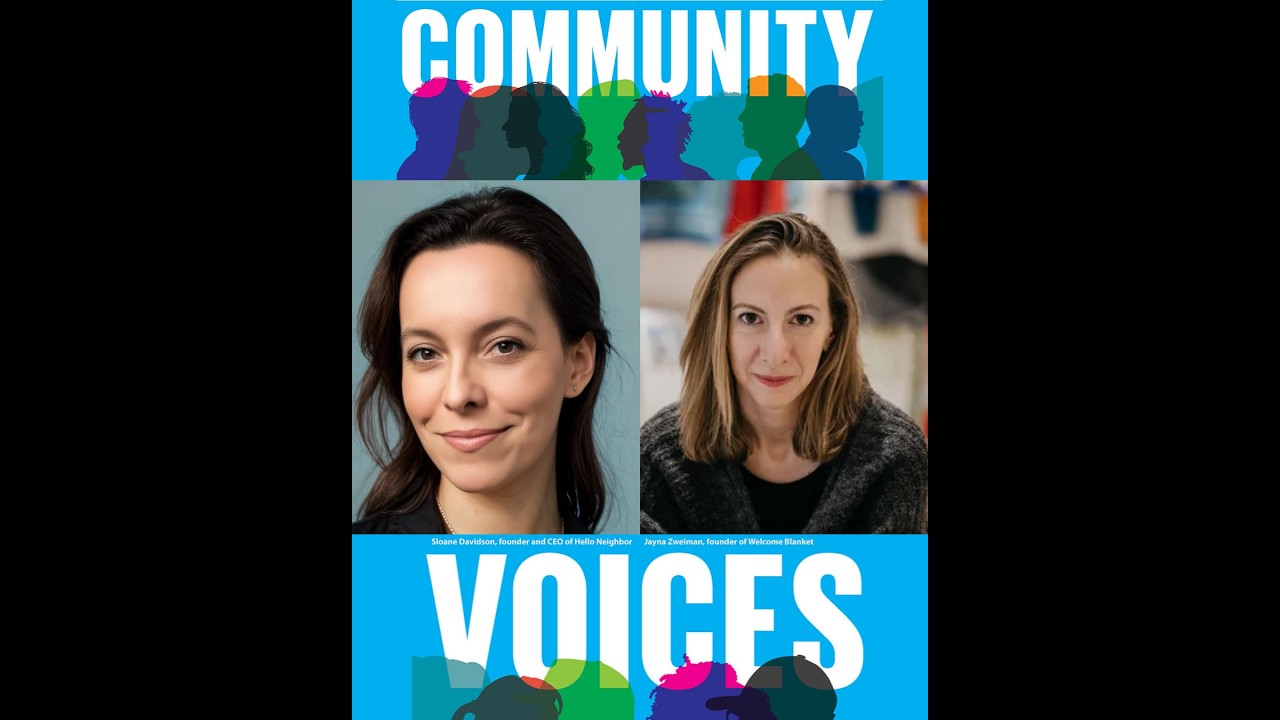
Community Voices: Sloane Davidson, CEO Hello Neighbor and Jayna Zweiman, Founder Welcome Blanket
Jayna Zweiman, co-creator of the Pussy Hat Project and creator of Welcome Blanket talks to us