Bonus Masterclass Ft Jason Fladlien
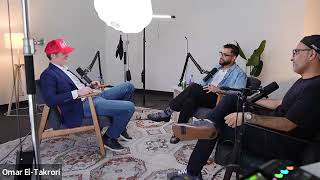
Jason Fladlien breaks down high-ticket webinar psychology: how to stack offers, place price strategically, and turn objections into commitments. He debunks the myth that some buyers are purely emotional or logical, arguing any qualified prospect can be persuaded with the right frame. Real examples include 8-figure launches and scripts for niche creators.
Chapters
over $10 million with a signature presentation.
Oh, for sure. Yeah. You combine it.
Yeah. So that's pretty cool. But the guest I have on today is someone who's made a quarter of a billion dollars with the use of a web class, masterclass, signature presentation, introductory event. And I believe every business owner today should have this asset That's a repeatable asset you could use to print money. Jason Bladlin, welcome to the department.
My pleasure. Happy to be here.
Just full transparency. This is his fourth podcast, but he's going to— but the last shall be the first.
The best.
Oh yeah, let's go.
So you really are like— I know it's so funny because if you know, you know, that's who I— when I think about you, you know, you're a GOAT in the space. And, uh, could you start off by saying why you've given your life to sharing, uh, the, the information you share about having a perfect webinar?
Yeah, it's a weird story in some ways. So I was a rapper ever since I could remember ever hearing rap. I was like 7 years old. I was like, man, this stuff is cool, I want to do this. So So I started performing and rapping in front of small crowds at schools, middle school dances, high school football games. I was just born to be in front of an audience and perform. So I tried that as a business model. It didn't go very well. Right. And I'm like, man, this sucks. Cause I'm 24. I'm broke. Failure in any way, shape, or form in business. Can't get it going for my music. But I fell in love with the psychology of why people decide to purchase or not purchase in my particular case. And I was more comfortable on a stage than in the crowd. And I have this desire to teach and train that's innate in me. My father was a teacher and was a really good high school teacher, so I had that modeled for me. And, and I had another thing going for me. It's called luck.
Mm-hmm.
I just so happened to be at the right time in the right place when webinars became a technology that was feasible that you could use. And I was one of the first people that could dedicate my life to getting good at it. Because the guys before me that were successful, they were using teleseminars. So they tried to square peg that round hole. And then the guys before them were platform sellers on stages. So they try to square peg that round hole. I had the benefit of no previous experience. So when webinars came out, I'm like, I have no model, I have no bias, I have a blank slate. Let me screw it up until I run out of ways to fail and then success will be inevitable.
So good. When did you do your first webinar?
Uh, probably 2022. Yeah, 2022.
Okay.
It was like 2000 something. Oh, but yeah, they— I remember, um, even then it was a lot not played out.
A lot of people—
not a lot of people were doing them. And most, most importantly, even today as we have this conversation, like, more people are not doing this. It is not— we're still early.
Oh no.
Yeah.
Like, when was your first webinar?
2008.
2008.
Yeah. Let's go.
Yeah, let's go. But some— a story that comes to mind is Daniel Priestley, business coach. I love Daniel Priestley, he'll say like a band will take the same show.
Yeah.
And do it all over the country, all over the world. And to the people coming, it's brand new to them. And the reason why I don't think this is, this is not a played out concept. This is not an overused, overrated concept. I actually think it's highly underrated.
True.
And if you, if you unlock your version of a signature presentation or perfect webinar, the way it can create predictable revenue in your business is unlike any other mechanism I can think of. And, and the benefit, you know, the book you wrote was One to Many, which that phrase in and of itself is in and of itself is an unlock to operating in business. Everything you do in business should be one to many. And so could we just go right into kind of your framework on— and I have, I have some like we're going to have some Q&A at the end of this conversation, but But I also want to just like the naming the webinar, getting people to show up, like how much they should teach, overteaching versus under-teaching versus all that stuff. I want to just jump right into it.
And I think some of these people are actually doing Zoom already. Like prior to us doing webinars, we were doing Zoom calls for sure. We just have to like, this will be so valuable for people because now they're just structuring it in your format.
Yeah. It's before we get into the weeds, I would just like to sell people on the idea of why webinars are so powerful if I could. Um, webinars will quit working, guys, when value becomes valueless. So as long as people value things in a market, which will be forever, then a webinar is a vehicle to deliver that value in. And in many instances, it's the best vehicle to deliver value in. So I love webinars and I want everybody else to love them as much as me, because the worst thing that can happen with a good webinar is people just get more value. Than the time they invest in it. And maybe they buy something, maybe they don't buy something. I don't care. If I can't make you better when the webinar's over with, okay, what am I doing? Yeah. If I can make you better and you say, whoa, I've never had an experience like that in 90 minutes, this person transformed me from here to here. How's that not going to serve me long-term?
Yeah.
So the webinar is an efficient way to communicate value to a mass market and then at the end of it, also sell something. Normally you only sell something or you only provide value. You can now do both in the most efficient way possible. But the most important thing about a webinar is I'm going to dedicate the best 90 minutes possible on this subject that I could give to another human being if I'm trying to transform them into a better version of themselves. And that's what I think of when I think of webinar. It's like Martin Luther King's I Have a Dream speech. For your product, what is your I Have a Dream speech? For your product, what is your I Have a Dream speech? And if I pull 100 businesses off the streets in Las Vegas and say, show me your I Have a Dream speech for your product, they can't show me anything. How does that serve anyone? So forget all of the, like, tens of millions of dollars, or when I consulted with, you know, Hormozy and they did what they did and all this other kind of stuff. And I—
but they didn't have you sign an NDA. I'm just kidding.
He should have at this point. He should have at this point. He does with everybody now.
Yeah.
No, he probably learned from me, you know, cuz people started to say that's Flap the webinar, whatever. But I consulted with Zoom and I consult with companies and it's, uh, it's crazy how few businesses truly understand the power that webinars can pull out. It's been so good.
I, as someone who helps entrepreneurs build brands and their, get their YouTube channels up, I would say there is no faster accelerator of trust.
Yeah.
Even more than a long-form piece of content on YouTube.
Yep.
Than a 90-minute presentation.
100%.
And it's just the context of what you create when somebody's gleaming that value and even just the back and forth. And it's not just one directional. You say 90 minutes. Why you, why, what is it about 90 minutes?
So, you know, how do you make a baby? It takes 9 months. You say, well, let me get 9 women pregnant and I'll have a baby in a month, right? It doesn't work that way. So, In general, for very important things that people want changed in their lives, the most efficient possible timeframe you can do it in is 90 minutes. And isn't that a miracle? That is awesome. If you think about it, people are like, oh my God, 90 minutes. That takes forever. Let me put out a little tweet. Maybe that'll do it. Unfortunately, that won't do it. Uh, so it's a miracle that it takes less than a year to completely change a market. You can do it in 90 minutes. So to me, it's like, that is fast, but it requires some groundwork in place in order for that transformation to occur. So in general, it across every market, here's the psychological foundation of change in the market. Now, whether you use this for webinars, video sales letters, use it for written sales letters, challenges, doesn't matter. Here's generally the psychology of the market at large. Um, they have a pain that they're experiencing that they wish they didn't have, and they're willing to put time, energy, and money into solving that pain to the right person. But if you can't first start with where they're at in pain, then you will lose them before you take them to the gain. And so a big part of the webinar, at the beginning of it, is being— rapporting with the pain that they have. Like, you have to let them know, I understand your pains and I get the challenges that you're facing right now, and I have to communicate to you so you can trust me that I know what to do with your pain by first acknowledging the pain that you're in. So that takes time, um, and technique. But even let's assume you have the technique. If somebody has a serious amount of pain, you can't just say, here's your pain piece, now let's move on to the game. You gotta start with where they're at and you gotta spend some time with it. Uh, and so the frame ideally is, I see your pain, I know it's affecting you, and I'm not going to allow it to stop you from becoming who you want to become. If you can pull that, awesome.
And that's the first part of a webinar.
Yeah. I mean, there's technically the hook that goes in front of the paint, right?
What's the hook, bro?
So the hook—
give it away, bro. We want the game.
I can give the game. I'll give the game liberally. Yeah. Yeah. The game is being given today.
Yeah.
So he might rap it.
I think he might. You do not want me to do that, right? Like, uh, but, uh, the, the hook is essentially setting the stage. So if you really want to get somebody leaning in and investing in what you're about to do, you gotta set it up. And so you want somebody feeling when they first come into a webinar that says, I've never experienced anything like this in my life. This time will be different. I have nothing to connect it to in my past history. Cuz here's how human beings really limit themselves. They say, well, something like this I've experienced before and it didn't solve my problem, so therefore this won't solve my problem either. So I don't want to give 'em that frame of reference. I want to disconnect their excuse from anything that it can connect to. Wow. Because now we can start with a blank slate, right? So when I'm sitting down with the hook, I'm thinking, what can I do in order to decouple their limiting belief from the reality of who they are as an individual? And so that's kind of the ideation of the hook, and generally it will show up in a form. One of my favorite techniques and how I do this is I start with a pop quiz. So I say, I got 5 true or false questions to you, and the answers depend on whether you're gonna succeed with X, Y, and Z or not. Are you ready? Let's play a game. Question number 1, true or false. And immediately I start hitting at some sort of excuse or objection or limitation or issue or thing that they think is true that isn't true. And I bring it up in front of them. Right. So let's take, uh, what you're doing. Dude, literally.
So just context at the time of capturing this podcast, Neil has probably one of the biggest web events of his life. What, next week?
Next week.
Yeah.
One week from today.
One week from today. And at the, at the time right now, how many people are signed up?
Over 4,000.
Let's go.
So this is why I invited Neil, because you can get free game.
So what is— what are you offering essentially? I know you're offering a ticket to your live event, right?
But the— yeah, the theme of the event is Escape the Middle. In my industry, which is real estate and mortgage, there's this average section which is being crushed right now. The people who are doing things a little bit different are getting rewarded like never before, and average people are getting squeezed out because of distribution and AI.
And so I want to let people know, like, what's possible.
If you could just do a few things different.
True.
But then also I wanna let them know that this is a real threat. Like people are mm-hmm. Getting squeezed out.
Yeah. So question number 1, true or false? AI is squeezing you out.
Yeah.
The answer is unfortunately true. Some people are gonna get squeezed to death. Some people aren't though. What do you think's gonna be the difference between those that survive and thrive and those that die? You're gonna find out by the end of this webinar. Question number 2, another banger. Question number 3, another banger. Question number 4, Another banger. And then they say, oh my God, this guy is setting the stakes very quickly. He's coming out swinging. Something's gonna happen.
Yeah, that's good.
This is different than anything I've ever experienced before.
I love the way you did that too, because it doesn't rely on somebody being a great speaker.
Mm.
Because a lot of times you're nervous in the beginning, especially if someone's doing this for the first time. Even me, like if I see 5,000 on the screen, I'm like, oh crap. You know? Yeah. You get a little, you get a little butterflies. So like this would just be a way to cut through all the noise and get straight into it.
True.
Okay. Can you speak to the person that won't have 5,000 on their web class?
Yeah.
And maybe they have 1 or 3 or 5 people on their web class.
I had 17 on the first webinar that I ever did. Right. And here's where it's even more embarrassing. I sent an email to my list, 2008, and I said, hey, listen, I see this thing called webinars. I think it has potential. So I'm gonna run an experiment. The next product that I create is gonna be live on a webinar. I'm gonna create a product right in front of you. If you show up live, I will give you the product for free. If you don't, you'll have to buy it later. I'm thinking, man, they're gonna run to this webinar, right? 17 souls show up to this thing. I do the webinar. It's 2.5 hours of pure amazing training. I get 5 testimonials from it of people saying how good it is. Recording crashes. I can't ship the product. I have to do it again. 4 hours later, I recorded it the next day to give it to them. And that was my foray into the webinar game. Mm-hmm. So I wasn't selling a product. I was trying to give away a product that other people would have to buy. And that's how I started. So here's the thing about humans. This is why we use brain. Like, this is my theme moving forward is I think success is more of not doing stupid things than it is doing genius things.
Mm-hmm.
And so fire. It's, uh, a lot of people think if I do a webinar, one of two things will happen. I'll either hit this huge home run and make all this money that all these big gurus talk about. Like this webinar did this and this one did this. And they throw out all these outlandish numbers that the average person can't even relate to. So they hope for the best case scenario, even though it's unlikely. And then they think worst case scenario, I'm gonna do this webinar and it's gonna be a complete utter miserable failure. People will hate me by the time we're gonna be done. I will stumble, I will fail. It's gonna be terrible, right? Unlikely. The most likely outcome of the first webinar you ever do is nobody will even know you exist.
Yeah.
That's just the most probable outcome that's gonna happen, but you will get a rep in place.
Yeah.
You will now be able to see things in a way you couldn't see it before cuz you have an experience you haven't previously experienced before. And then you'll say, okay, it wasn't that bad and it wasn't that good. But if it wasn't that bad and I know it can get better, then I will naturally do something to make it better.
Yeah.
So I think most people starting off is forget about selling a product, forget about using a lot of technique. Now, if you have an existing business, you have really good assets, you have existing customers. Go for it. But if you don't have any of that stuff yet, just serve somebody until they beg you to take their money.
That's good.
That's what you should do. And the webinar will accomplish that even if you're not selling anything.
Well, one thing you should back up, I think, and this is kind of the genius of the whole process you teach, is like one of the biggest concerns from people is like, will anybody show up?
Yeah.
Do they even care about what I'm teaching? Even if you're not selling, if you're just teaching something.
Yep.
And so I think, you know, to get more people to show up, or in your case, to make it Bulletproof, like, how do you get people there? And I guess the first thing would be like, what are you teaching? Like, what are you naming this thing? Because I've seen so many people name the thing and it's like the process, not the outcome.
True.
And it becomes very boring. And like, why would I want to, like, if I wouldn't want to sign up, how is anyone else going to sign up? Yeah.
I mean, the advanced thing is we got to come up with a compelling, interesting name that will attract people to it. But if you're just starting off, you're saying, listen, I would love to create the best experience you've ever had. For 1 hour of training, hands-on. If I were to create such a training, what would it be? And if I were to commit to do that, will you commit to showing up? And if you have to personally DM everybody, if you have to personally reach out to people, if you have to say, listen, like, I will do whatever it takes to get you to attend this webinar, that's where you should start. Because if you get 20 people on a webinar and you can sell 3 of them a $2,000 product, you just made $6,000.
Yep.
In 60 minutes. I mean, even in 2026, that's a little bit of money, right? Like, this is the attitude that you gotta think of. You gotta go small to go big. You gotta be the acorn before you can become the oak tree, right? Yeah. So again, like, we overcomplicate it. We go into the karate dojo, we say, who's the guy with the black belt? Let me fight him.
Right?
You gotta start with a 10-year-old girl that just started yesterday. You gotta beat her ass first. So then you work your way up, right? So start in markets. Where even being bad can get a good result and start with service and figure out a way to have the least moving parts to get in front of an audience where the worst thing that happens is they said, thank you for trying to help me. It just didn't give me what I wanted right now.
Good.
That's where we start, right?
My early journey doing webinars was, I think I did 2 or 3 of them and I had a pretty good brand and I knew what I was good at teaching. Yeah. And I was, I had no problem serving a room. I think I got close to 400 or 500 people on organically to one of my first webinars and then had like a $3K offer at the end and zero people bought.
And what happened?
The emotional rollercoaster. It just got me thinking. I started asking friends in the space like, what did I do wrong? They said, send me your webinar. And the biggest thing they said was, bro, you're overteaching. And I thought overteaching was overdelivering. And I found that they're two different things.
They are two different things.
Yeah.
Yeah. So here's the cool thing. Chris Rock has this saying, it's like the guy who's trying to change his tire, his flat tire, is the one that people are gonna pull over and help him change it. But the guy standing next to the flat tire waiting for somebody to do it for him, nobody stops for him. So the guy that's gonna get the most help fixing a webinar that didn't hit the mark is the guy who tried on his own to create a webinar to hit the mark. And you experienced this, right? Yep. And again, oh my God, this terrible thing you did. You gave people too much information. Oh my God, they should arrest you for that.
Right?
Like, how dare you attempt to overdeliver, right? Like that never gets you in a bad situation other than the emotional cost that it had for you, which wasn't that bad. It was like, damn, I screwed up. I can either quit, I can cry about it, or I can find a way to get better. And most people will find a way to get better. And if they don't, good. This ain't the business for them.
That is the tuition to having one that crushes. Is having one that flops, right?
Yeah.
I have 3 children. I would rather have them fail like this immediately than to wait 12 months and get it right.
Mm-hmm.
Fail tomorrow, get it wrong, win next month. Never fail, get it right in 12 months. I want all my kids to fail and have the same experience that you have, cuz that will get them the result that they want quicker and it will allow them also to habituate that failure is a function of success.
Yep. I love the fact that you're saying that even when you fail, it's a win.
Yes.
So everybody who's watching, listening, like that, there's no losing with this. Like you're gonna get the rep, you're gonna get the experience, you'll get the tweaks that need to be made. You always say this, like the people in the group who get the most tweaks are the ones who are doing things.
Yeah.
It's hard to like theoretically do a webinar. You have to actually do one.
And I actually do believe you can perfect it, but you can't perfect it in the first half a dozen or a couple dozen. It really, I mean, it's a constant, especially even as like the economy shifts and things like that. You're dealing with it.
You're not qualified to be successful with it yet, because if I gave the average person 1,000 customers to serve, they would screw it up. So you shouldn't want that level of success yet unless you're qualified to handle it. So it's much better to win on a small level and do incredibly well than it is to try to win on a big level and bite off more than you can chew. And so it is God's way of keeping you on the right track of success by not giving you more than you can handle.
Yeah.
Now if you try to fight that, maybe you can win. You'll probably overwhelm yourself and not even begin, which is good. It is a good behavior for you not to try to bite off more than you can chew, but we have to right-size it. And that's what's most important.
Yeah.
Do you have a framework on what you advise your clients on, on how to name their webinar before, like how to package it before they start marketing it?
100%. So here's the challenge is people will only see the biggest webinars. Typically they'll see the webinars I do with like Iman Gadzhi, where we put in, you know, a million people through the funnel and I'm pitching 80,000 people on a, on a close for 3 hours trying to close them on a live YouTube stream. And it's insane, right? Like they see that and it's aspirational and it's amazing and it shows you what's possible. They see Hormozi doing the $105 million book launch. You know, we did the $57 million launch with The Plan a couple years before that. They see all of those. And they're like, oh, okay, that's what a webinar is. That is the edge case of edge case. That is something that has taken 8 months and a team and $1 million plus in ad spend in order to accomplish.
And what's your fee? My fee? To help at that level?
Yeah, it's $50,000 a day.
Sweet.
Yeah. Or if I'm pitching virtually, $10,000 an hour. Right. Which for you will be a great investment. But we'll get to that, right? Yeah, we'll get to that soon. And then I consult for $5,000 an hour. Dude, so good. Yeah. So And we can explain that model a little.
Well, I say that because when people watch free content like this, sometimes they don't know how to place the value. And the value is $50,000.
Yeah.
$5,000 for this hour we're having together.
Definitely. Like when I do Iman's now, the deal, the rate is $50,000 a day. And if it's me flying to Dubai that day, that's $50,000. So time is, you know, touchdown to touch up on the wheels, touchdown from one to the other. But, um, they see that and they want to model that from a naming. Yeah. That's not what most people should do. The number one most attractive way you can position a webinar is it should be information that can't be found anywhere else. So it has to be scarce in nature. And this is more important than ever because they'll want to YouTube it, they'll want to podcast it, they'll want to go in, they'll want to find it on Facebook or Instagram or a Twitter thread about the thing. And you want to create a webinar that's so uniquely positioned and scarce to anybody outside of that market and only calling to people inside of that market and this will increase your show rate automatically and it will increase the commercial appeal to your webinar. What is the one specific thing we can offer that the market doesn't have that the market wants, and how do we position it in a way so they understand that they can get it from us? That's what you want to do for a webinar. And you won't get a lot of people to that webinar because of how nichey you should position it, but you will get buyers to that webinar. I have a client that, they teach people how to start a animal balloon business.
There you go.
Folding and making weird—
I want to know all the weird businesses that are profitable because of a webinar.
And they run that webinar every week. And that's scarce information that's not easily available, that only people that are very, very passionate about a specific thing will show up to. And that's, that's where you want to start. Yeah.
Can you give me a title of one that just comes to mind that like, this was a really good one?
So, uh, there's so many of them. It's, it's difficult. Like we did a webinar on webinars recently and which is not a great idea by the way. Right? Like the moment you're doing a thing on a thing, right? It's like an art class on art classes. They're too, they're too busy critiquing your brushstrokes and they aren't learning the techniques. Right? Uh, but we had an angle on it. Like I had, I AI'd out every step of my webinar process and I said, if you come to this webinar, I will give you all the steps. So there was a reason nobody had seen Jason Fladland ever reveal his AI, step-by-step prompts. I never shared them before. So that was super hot. So people came because this was a new thing that they had never seen before. So that's a good name for a webinar. Then we positioned it. We had a webinar for a client that I work with in the Amazon wholesaling space. And when the tariffs hit and there was disruption and there was anarchy and there was craziness, We had a webinar that we specifically focused on how the disruption was affecting things. So it was like a snow globe was shaken up and page one results for certain Amazon products were completely different than they were before. New opportunity existed where it previously didn't exist. Come to this webinar and we'll show you how to take advantage of this new opportunity. So the thing we try to reach for the most is something disruptive that's occurring in the market, or if we find something that's very unique. So like with, with Iman, even it's AI plus digital products in a challenge format. You know, a challenge is just a series of webinars basically, but same kind of concept. Two things that haven't existed before come together and that's attractive and you should show up to it. Now, again, for most people, you should find the very most important part of your topic that people who are serious about wanting to know more information on that can't find that information anywhere else. That be— that should be your bait to the webinar. There's a statistic that's true in almost every market. 7% of the market will spend 70% of its money. So you want to create a webinar that attracts that 7%. And generally speaking, even if you don't know what you're doing, a webinar will attract that 7% because the best buyers are the ones that are the most informed. And the ones that are most informed are the ones that are the most serious about collecting knowledge on the subject proactively.
Yeah.
You don't have to convince them to come to a webinar. They're trying to convince you to do a webinar because they can't have too much information that will empower them to make a decision on what they should do.
Really good. Do you have a base conversion rate that's like good?
No. Yeah, I mean, everybody wants the easy answer, right? Because the number one question I get is, what time of day should I do my webinars? And I'm like, yesterday is the time of day you should do your webinars, right? And conversion rate is very deceptive in terms of a performance metric. Uh, so we basically say this campaign should generate this much revenue, and if it doesn't, then by the time it's run through, we screwed it up or we had the wrong hypothesis. Okay. If it generates more than that, fantastic. Well, we get a baseline and then we say, how do we improve and optimize this? Because if I'm selling like a, a $5,000 product and my ad cost to get 'em on there is very low, uh, then we don't need a high conversion rate to do well. But if I'm selling a $300 product and it's on an evergreen webinar, then we need a high conversion rate to make it make sense. And again, what does the backend look like? Who knows? Uh, there's too many metrics, so we have to just measure it based upon what can we expect for the effort we're going to put into this for an acceptable ROI to be when the campaign's over with.
Good.
And then we try to, we try to benchmark it and then we try to beat it. Cool.
Okay, so you— I'm going to bring you back to like before we interrupted you, we went in this awesome rabbit trail. But you said, thank you, before we went into like, yeah, throw a mini quiz just so we can like really open them up.
Then we go into the pain.
Then we go into acknowledge their pain.
Yeah.
And then what's the next step?
Then we go into the game, right? So we start in hell and we end in heaven. So it's like, this is the challenges you're facing right now. These are the obstacles that are in your way. This is the reality that's preventing you from getting what you want. We're gonna lay it out bare. We're gonna deal with it on the webinar. If you can get past these obstacles, then here is what your future could look like. Here's how it can be amazing in this way. Here's what you can do. Now do that you couldn't do before. Here is the things that you've only dared to dream about. Here's what they could actually look like when they become a reality to you. So now we show them, we give them, we, we save them from despair and we offer them hope.
Would you offer right there, if you have it, for like people that are doing this, like case studies, uh, if you have like a program or member, like, let me show you what's possible and getting into— these people are doing this and they're getting results like never before. Here, number— look at this case, look at this case, So it's basically getting them excited about what you're about to teach. Is that what I'm getting?
Yeah. And we like using case studies. There's just gotta be the right timing and pacing to it. So in the introduction, we typically rapid fire them off.
Mm-hmm.
We just, we lay 'em out. Bang, bang, bang, bang, bang, bang.
Because I've only used case studies at the time of the offer.
Yeah.
This is the first time I'm hearing somebody—
Oh my God.
You should drop a few in the, in the beginning.
Yeah.
Like that's a really good insight.
I mean, we, we put like a a few slides of people with our little award and be like, you know, this is kind of what we've been doing. But I, I don't really make it like—
I think it's like you will sometimes show what's possible like at a higher level. Yeah. Look at these people who are notable figures. Look at what they're doing.
Yeah.
You know, and then it like, oh wow, I see that person.
I, I do a little bit of an advanced technique on this. You guys can totally model this for sure. I start in the pain and then I'll say it doesn't matter if I show you people like Sean who accomplished this and Terry who accomplished this and Jenna who accomplished this or Steve or Tim or blah, blah, blah. It doesn't matter if I show you this, if we first can't get past the pain. So I'm dropping case studies at the pain section.
That's fire.
And I'm using that as leverage saying like, I could show you a million success stories, but if you can't at least acknowledge the fact that we can move past these limitations that you've placed on yourself, yeah, then it won't matter if I show you these success stories.
I think like people who skip this step, um, is like they're, they're not set up to win now. So like, if, if you didn't even know about this, you're doing the whole thing and you're wondering, hey, nobody bought, nobody like— they weren't pre-framed. Yeah, framed or pre-framed.
No, they weren't. And this is the theory that helped me develop this technique. And then it's been proven is I had this theory that if somebody has a yeah, but dot, dot, dot in their head, then anything I put in their head, they'll kick it out. So if I show them, hey, AI is going to be the future of real estate, they say, yeah, but AI is going to take our jobs. I have not landed with my point because you have something that will interfere with my point landing. So I'm like, let me clear the calculator. Let me remove the, uh, buts before I even offer anything to you. So that was the theory.
So would you say like, um, I know some of you are thinking this and then yeah, here's the truth, like, and then tell them about that.
So that's a good technique for most people, right?
It's the advanced technique.
The advanced technique, right? Yeah.
Yeah.
Yeah. So there's, I, I. Uh, I don't, it, so you have to say it again cuz I've never used it in the way you just described in like 15 years, but it's good technique. So say what you just said again.
So I said basic AF. I said, look, I know some of you are thinking this.
Yeah.
Well, the truth is, and I break that.
Yeah, yeah, yeah, yeah. So I know some of you are thinking this, but the truth is I don't want to convince anybody of anything, right? There's persuasion and then there's convincing. I want to persuade people. And so the way you persuade something, somebody is getting them to convince themselves, right? So I know you're thinking this, but that just invalidated the word, but just invalidated everything they say. So when I say, listen, unless you can get past these issues, then it doesn't matter if X, Y, and Z. So I, I'm, I'm doing the same technique you're saying. Yeah. But I'm doing it in an advanced way. I'm creating what's called a double bind in communication. I'm saying, listen, hey, I don't know how fast you're gonna succeed with this. It could be a day, it could be a month, it could be your next life. Right? I'm not sure exactly when. Things are gonna click for you. That's different than saying you will succeed. That's different than saying, will you or won't you succeed?
Energy.
Yeah. So I'm, I'm trying to always find the deepest level of communication on how to frame something to get the least resistance to it. So in the intro, I don't want to convince them of anything other than the fact that be open-minded to the possibility that maybe your life can change. Yeah. That's the only sell I'm trying to make in the introduction. I'm not asking you to believe everything that I say. I'm asking you to be open-minded to the possibility that maybe you're wrong about your limitations.
Yeah.
And I just need that little crack in the door to put my foot in to open that son of a bitch up and start making some real change.
Yeah.
So we are undermining their limiting beliefs right there in the introduction.
Dang.
Yeah.
That's, uh, that's the nuance that you never think of, but it's like, hey, little things, the game of inches. Yeah, it really is at the top.
It is for sure. Yeah.
At scale, when you have a lot of people at scale, it is.
And this is why I charge $50K a day, right? But it's like at the beginning, this is just— this is showing off compared to what you need to do at the beginning.
I mean, I'll just say straight up, based on what I know webinars can do for you, like that price is a great price.
I am better than people free, but we'll get into offer here in a little bit.
Yeah.
In the webinars. Yeah.
When do you seed the idea that you have something And yeah, I think you've talked about asking for permission.
Yeah.
If you do— if I do my job, do I have your permission to let you know?
Yeah.
Uh, I'm a little bit more aggressive than that, right? So a lot of people— I've taught the technique and a lot of people are nice about it. I'm not like— these are limit— these are— I'm fighting the thieves that rob them of the best versions of themselves. So I don't play around with it. I go straight for the jugular. So I do I put very close up front the fact that I'm making an offer.
Yeah.
Just like I bring up their problems up front. And so essentially I go very aggressive. I say, I have two agendas on this webinar today. My first is to give you the best insights you've ever had when it comes to X, Y, and Z. And my second agenda is to sell you something. However, if this isn't the thing that is the best thing for you to buy, then I do not want you to buy the offer that I'm gonna make at the end. In addition to that, I'm gonna show you how to do this in a way where you don't have to pay me a single penny. And if all you wanna do is to invest time and your own energy, I will give you the path to do that. But if it makes more sense for you to pay me than the cost it will be to do it on your own, then I will give you an option for that as well. But either way, my promise is the challenge you face when it comes to X today will no longer exist by the time we're done. Does that sound good? And they're like, let's go, bro. Immediately people are like, man, I wanna give that guy money.
Yeah.
No, I wanna be the right fit for him. Right. I don't wanna do it on my own. See, people understand the cost of what you sell, but they don't understand the cost of not buying it.
Opportunity cost.
And for the right buyer, not buying it is more expensive than buying it. But because not buying it is an invisible thing and price is a visible thing, they don't weigh the two properly. So I set the frame in the introduction to get them to consider that doing it on your own for free is also a cost. And for the right buyer, it is never cheaper. To do it on your own. It is never cheaper. And for the wrong buyer, I don't want your money because there's never going to be a worse customer that I can serve. So we got to figure that out, right?
Even in Omar, in my case, sometimes we're selling a community or a group. Yeah, in an event case, you're selling that. And so yes, you could do it alone, but like a lot of the things we talk about, like the isolation tax that everyone's paying by themselves, you know.
So, um, ignorant isolation, you could do everything I'm teaching today on your own.
Yeah. And so I think that's a cool way of putting it of like, dude, I'm going to give you the game right now and you can just take the ball and run with it.
Yeah. There's 3 costs that everybody pays. There's money, there's time, and there's energy. The cheapest cost is money, right? The second most expensive cost is time. So if I can substitute money for time, that's a good exchange. The most expensive cost is energy. So if I do spreadsheets, guys, kill me now, right? Like I could do 5 minutes of that stuff and then I will pay you money to get me out of there, right? But if I'm doing what we're doing right here, dropping game, 4 hours is like this. The energy levels are different. So when people are doing it alone, that is expensive energy. When you're doing it and you're scared, that's expensive energy. If you carry the stress around with you and you have nowhere to go with it, that will cost you more than time or money will ever cost you. And so what we have to make them aware of is what is the combination of time, money, and energy that you're willing to invest and does it make more sense for you to invest it elsewhere, nowhere, on your own, or with us? And then we just got to make the offer so damn good that it's the least expensive, expensive option. Yeah.
So good. Okay, so we hit the intro, we open them up, let them know that we're going to sell them something.
Yeah.
And then let's— now we're talking about the body of the webinar itself. When you say 90 minutes, Are you like— you're not saying teach for all 90?
No.
At some point you pitch and then you sit.
Yeah.
Okay, cool.
But as far as the content itself goes, content will be 45 to 60 minutes. Introduction will be 5 to 15 minutes. Transition will be 3 to 5 minutes. Formal portion of the close will be about 15 minutes. And then we do the informal portion, which is my favorite part of the webinar.
Yeah.
Yeah.
I have a question for you that came up with Daniel Priestley. So Daniel Priestley was teaching us a concept on webinars and he was like, why do all of you wait till the end to pitch? There's people who have, if you're someone who has a personal brand and been putting out stuff, there might be buyers who are ready to do something right now.
Yeah.
And he's saying to drop a soft pitch or some sort of quick thing in the beginning because obviously as we know, attendance can be lower.
Yeah.
90 minutes in than in the beginning. What is your thoughts on that?
That's a really good question.
So I love Daniel to death, right? And his podcast game is some of the best that I've ever seen. His frameworks are amazing. Webinars are probably not the area of expertise to the degree of expertise that I have. It's same thing with Grant Cardone, because Grant Cardone was like, you should pitch in the first 5 minutes. I'm like, bro, if you go head to head with me and we have enough, uh, tests, like, so to smooth out the variance, I will show you that probably not the best move to make. Right. Um, to me, it's a function of targeting. If I have buyers that can buy right away that don't need a webinar, I'm not going to send them to a webinar. I'm going to send them elsewhere. I should have marketing that caters to that segment segment of the market, and I shouldn't try to blend them in with the segment of the market that needs the webinar, right?
That's good.
So if there's— could be some efficiency considerations to this as well. There is truth though, and there's the most important thing is he's absolutely correct in you can sell far sooner than you think you can. And so many people think it needs more warm-up than it does. So I like to set the frame early that I am going to sell you something. I also, even in the emails or the invitation to it, make a big deal of, I got this awesome product that I'm going to offer to you at the end. So people are comfortable with it. But if we go to a movie and I tell you the ending in the first 5 minutes, yeah. Does that help?
No suspense.
No suspense. Right. So we are, we are mismanaging a resource that is so incredibly effective from a persuasion standpoint by losing the suspense.
Well, I think the point you make, which is super important for everyone to understand is like the warm buyers will still appreciate you running through a process that sells cold buyers.
Yeah.
Like if your process— and I think this is the problem with most people, including myself for many years— I only had a process to close warm people.
Yeah.
So I thought I was really good at my job. Really, I'm just an order taker at that point because those people are already ready to buy and pay you. So I think like your process is like, hey, it's going to get the guy who's lukewarm, it's going to get the cold guy, and the warm guy is going to appreciate it as That's what we try to strive for.
I have this theory called 10-80-10. 10% of the people in the market that you can reach will buy immediately. It's not because you're good. It's because they're desperate. Guy drowning needs a life raft. You throw him one. He says, well, it's not my favorite color. I'd rather die. Never happens. Right? Guy dying of thirst says, thank you for the water. I don't care if it's LaCroix. I don't care if it's Fiji. I don't care if it's in a boot. I will drink it and I will ask for seconds. So 10% of the market. Of the market will buy. You just have to reach them. It's hard to reach them, but if you can, they will buy. 10% of the market will never buy. You could say, here's $100, it's yours free. They'll say, but you have to pay taxes on that, so don't give it to me. Right? Like you couldn't give them the miracle. They would find a way to complain about it. So like, we don't care about them. Some of them will get mixed into the marketing as they do. Right? So some of the people that will buy no matter what, and some of the people that will never buy get mixed in the market. What really sets the difference, though, are the 80% that could go either way. They will buy under certain circumstances and they will not buy under other circumstances. And so the webinar is best equipped to deal with that 80% of the market. They could buy or they couldn't buy, and that's who we generally will design it for. And so that's what you have to calibrate. But the 10% that are hot buyers, especially with the technology we have today, they shouldn't even come to the webinar. We should be able to close them in the DMs before they even show up on the webinar. They might register for the webinar. We can—
would that be like, would that be like, hey, I wanna let you know we're doing this. And, uh, by the way, if you already know you want this, so you can go here right now before we even do the thing.
Not quite that easy, but when you're creating the marketing that I'm creating, we're talking about this awesome, amazing product and they DM you like, bro, what's the product? Just let me know. I'm like, dude, I've heard this before. If I give you the link, you're gonna ghost me. You ain't gonna buy shit. Right? No, no, no, no. I'm definitely gonna buy. All right. If I make an exception to you, will you promise me I won't regret it? Okay. Yeah, yeah, yeah. I will. And then I, you know, the team codes a special link just for them, puts their name on it, puts a countdown timer and says, this is only Omar's chance to buy for the next 12 hours to prove if he's actually a legit buyer or if he's just blowing smoke. Right.
Yeah. Cause I've seen, we've all had that happen.
Yeah.
Somebody was gung-ho, but they weren't framed. And then you give 'em the link and they ghost. Yeah.
Buyers are liars. Right. So all these people will tell you they buy and then you ask for the credit card and all of a sudden they have amnesia, you know? So it's like, You got to play the game.
Honestly, I remember Daniel was telling me because, you know, he got in Myron's world and was like, oh, they're like, the challenge model is interesting.
Love the challenge.
But he felt like the challenge model should be a sweep-up thing in a business as opposed to an open, like, front-door thing. And I think that's just a perspective because in his mind, you're attempting to sell people all every day, you know, in the back end, whether it's DMs or cold calls or whatever. And that when, when you throw the event of a challenge, that that's an opportunity for people who maybe had a conversation at one point, they can come in the doors or what have you, or even webinar.
That works too, right? Like I look at all these things as tools in the toolbox.
Yeah, right.
Oh, in certain instances a hammer makes sense. In other instances a drill makes sense. In other instances you need both a hammer and a drill to make it work. And so a challenge has so many applications. I can show you so many ways to make money with it. Webinar, same thing. But we generally try to shrink things down into the model in which we see the world and then make it fit. Right?
Yeah.
When you get into like teaching part, like after you're like, okay, done the thing, you, you're getting now into the framework that you've brought them here to deliver. Um, is there selling? Like, I think that high-level strategy is like, are you actually seeding in there the outcomes and different things? Like what's the high-level strategy besides just teaching the framework, which is what everybody's doing? Yeah.
So high, high-level strategy is I wanna make the result so small that people feel it's impossible not to get it. So I got to find the smallest, biggest promise that I can make.
That's, that's great.
And this is very difficult. People don't get this and it's, it's— there's nuance to it. But I'll give you an example. The first webinar I ever really printed money with, and it ran for 16 years evergreen with little change to it. I'd update the product every couple of years, was a thing called Product E-Class. I taught people back in 2008 how to make money with digital products. Okay. This was the paradigm of the webinar, cuz every webinar has to have a paradigm. You're shifting them from an old belief to a new belief. So the old belief is information products are hard, they're difficult, they take forever. I have to be good at marketing them. I have to be good at selling them, get traffic to them. So even though all my heroes make money with digital products and I want to be like them, I can't be like them. So my paradigm shift was, and this is how I created my first set of digital products, was One problem, one solution, one sitting. I'm only gonna solve a problem, not two problems, not three problems, a single problem. I'm only gonna solve it one way. So I'm only gonna give you one specific step-by-step process to solve it. And I'm only gonna create the product in one sitting. So if the product takes more than 2 hours for me to write, I ain't doing it. This is what changed the game for me, cuz I tried to create info products for a year and I failed miserably until I got so desperate that I came, I came up with this for myself. So then I taught it on a webinar. I said, here's the process of creating one-sitting problems. And I told people, sell it incredibly cheap. Make these impulsive purchased products. Mine are $4, $6, $7, $9. Like sell a super cheap product that is purely instant gratification on how to do something very quickly and be very narrow in scope on the problem that you solve. Now at the time, similar to today, everybody's promising make a million dollars, sell all of these products, one funnel away. Away, blah, blah, blah. You know, it's like get rich overnight, like not tonight, but 6 years from now or something like that. That's the fine print. You know, I was like, dude, sell a $4 product. And that crushed as a webinar because we are showing them something that is exciting enough for them to invest time, money, and energy into, but is also small enough so they can actually see themselves succeeding with it.
Yeah.
And so the The challenge is if the promise is too small, nobody cares. If the promise is too big, nobody believes it. I tend to err on a smaller promise and a sooner timeframe. And those are the webinars that typically do the best.
Does the promise need to be relative to the offer price?
Correct. Yep. So like that was a $500 product. So for a higher ticket item, we would change the price, but you can fulfill on deliverables because you have more margin. Like, God, I had this offer once and it was on the Amazon space, and I had a guy that was making $200,000 a month selling on Amazon gross. I don't know what his net was, but screenshot, he moved $200,000 of product month in and month out on Amazon. The guy wanted to be a coach. Don't know why, but he did, right? He wanted to coach all my successful students or any of my students on Amazon. So in the marketing, I could say, hey, listen, when you sign up, you're going to get 3 coaching sessions with my coach. His name was Mattson and his brother Morgan. They run this business together. Mattson or Morgan are going to do coaching sessions with you. Okay. I'm paying these guys per coaching session because I'm selling a $3,500 product. I have a lot of margin to pay for coaching for my clients. So now I can make a bigger promise because I have better fulfillment, because I have more margin to invest in my customers. And so when you have a higher ticket product, it blows my mind, by the way, because guys will put a high ticket price out there and sell it and not reinvest any of it in the customers. That's short-term thinking. Yeah. So you should invest more so you can make a bigger promise, but you can make a bigger promise because you can deliver more. Like, this is, I tell my clients this all the time. There are world-class experts out there in many industries that are gold medalists, world champions, first and only of their kind to do whatever they do. And if you ask them what they bill per hour, It's $100. And if you say, bro, I will pay you $100 every time you talk to one of my customers, they'll say, God bless you, thank you, can I have another? Right? And if we get 5 of those experts and we roll them up together, my, my hard cost is $500 and I could be selling a $10,000 coaching program.
Yeah.
Yeah. So it's, uh, you don't have to be—
the takeaway is you don't need to be person to fulfill everything.
You need to figure out how to give 10 times more value for the same price as your competitors do. That's what you need to figure out. Not an easy thing to solve for. So let's take Mattson and Morgan, right? I'm paying these guys per session, but here's where it gets good. I don't give every customer every session, so I promise 3 coaching sessions. The first one's on us. So you come with 5 product ideas, they will evaluate which, which one they think has the best merit, and then you go and source that product. Then you don't get to talk to them again until the product's live.
Okay.
This does two things. Thing number one, it makes my clients more likely to be successful. I want successful clients. The easiest pitch in the world is a successful product, right? The easiest way, the best sales letter you can ever have is a really good product that does what it says, right? So I want as many winners as I possibly can, but I'm incentivizing them to win. So if you want to be lazy, you don't get this perk. Work, but I'm motivating you with the carrot to go out there and get it. Okay? So I want everybody to fulfill on it, but markets don't always fulfill on things, right? So I can promise 3 coaching sessions to everybody, but I really only have to pay for 1 or 2 coaching sessions per client because the ones that aren't going to do it, which is not my problem, it's their problem, and I'm trying to help them as much as I can. But either life interrupts or they're not ready yet. Doesn't matter what. I can now offer $3,000 of value that only costs me a couple hundred dollars to fulfill. So my cost goes down, my value goes up, and this is one of many strategies we can employ to offer 10 times the value for the same price as our competitors.
Yeah, that's good.
That's what we're trying to do. Yeah. If you master that, screw webinars, right? So when Alex Hormozi wrote the $100 Million Offers book, Eddie, you know, I'm the most quoted dude in that book, right? You could. Receipts are there, right? Um, he took a lot of what I, I taught in, in offers and from other people too. I'm not gonna claim any credit. He, he sent me a text saying, you know, my course was the best one on offers he's ever seen. I have the text message, right? Uh, and he was smart cuz he took what I taught at a local level in webinars, which is very nichey, and he pulled it out. He broadened it and made it more applicable to a wide model and added to it. As one should do, which I'm, I'm so happy that he's putting that out there and it's came back to me in so many different ways. So I'm super pleased with it. But the idea is if you master what I just described in offers, webinar, schmebinar, you did, it doesn't matter, right? What we're doing is trying to give the best value to the market. I also like the webinars, the vehicle to distribute it.
Yeah.
But we have the offer first before we create the webinar.
Yeah. I was talking with Neil about this yesterday or the day before that. Like the art and science of offer creation is understanding the offer from your point of view. And then, and then the offer on the perceived point of view from the consumer, you know? All right. Bringing it back to the web class because I want people to get the game. So where can you quickly talk about the difference between overteaching and shifting beliefs?
Yeah. They're correlated, but they're not causal. I can think of this. Here's a, here's a mind exercise. Have you ever completely shifted a belief without learning anything?
No.
I would suggest that you have, right? Yeah.
Okay.
So if you go to a Tony Robbins event and the culmination of the whole event is a ceremony that they do, do you know what the ceremony is I'm talking about?
They walk stone.
Yeah, they walk on hot coals, right? Nobody's teaching them a damn thing. They're saying, you start here, you walk over there, right? Now the science behind it is like, anybody can walk over hot coals. First of all, they're ash, and so it looks more impressive, but the ash protects you from being burnt, right? The second thing is when you're moving your feet up and down, the transference of the pressure of the heat makes it so you can't get burnt, right? So if you know the magic trick, not particularly compelling or impressive, but it doesn't need to be. It's transformative from an experiential standpoint. Somebody starts here, they look at something that seems scary, even though it's actually not. They look at something that makes 'em feel powerful if they can do it, even though it's not really that big of a deal, but because it feels like it, it becomes transformative. And even billionaire Oprah. Feels stronger walking across hot coals. So if you can change people's beliefs without teaching them, that is the preferred method right now. It is the, the least possible method on average, but that's immediately what I go to.
Okay.
So when we build software, oftentimes this is the case. Watch me push this button and have this thing happen. Would you like this magic button? Yes. Here's how much it costs. How does it work? I don't know how it works. Like, how does electricity work? So I don't know, but if I can flip the light switch, I don't need to know how electricity works so I can have light in my house. Right? So the number one thing we solve for is what's the least amount of information required to create the transformation? And is it even required? So we even question if it's necessary and sometimes it isn't, usually it is. And so then we say, what are the most important things that need the less least amount of explanation to create the transformation.
So I'm thinking like from the— my— I'm just thinking from the consumer's point of view.
Yeah, yeah.
We just made a promise.
Yeah.
You will leave this call.
Yes.
With this thing and you'll be able to do this thing. And so, yep, my— I've had the same problem as Omar in, in past where I've overtaught.
Yeah.
Because I thought it was what the people wanted and then I just overwhelmed them, you know.
Yeah.
Then I pulled back and it's been great, but I still feel this need to give them the tactical playbooks and the things and the frameworks and, and, and the website that you need to go to, to do X, Y, Z, you know?
Yeah. I mean, so you've already created a frame where I'm gonna come and teach you all this stuff. So my webinars don't necessarily frame where you come and I'm gonna teach you all this stuff. I, I say, I'm gonna show you by the time that we're done, all of these problems will no longer be a problem anymore. Right? So that may be teaching, that may not be teaching, but let's just assume we promise them something that we're gonna teach them. Right? So let's go to back to my first webinar. One problem, one solution, one setting. I am teaching them, but it is so narrow in focus of what I'm teaching them that it's impossible to overteach it. So the problem that you guys are facing and everybody's facing is they want to teach the whole system. I want to zoom in on the most important part of the system and teach the whole part of that. So when I pitch, I zoom out and say, this is how this relates to everything.
You just need to pick one thing.
You need to pick the most meaningful thing that is as specific as possible that you can totally create a transformative experience in. I'm not joking when I say by the time this this webinar is over, I will give you the single greatest insight you've ever had when it comes to X, Y, and Z. And the easiest way to do that is the same way you can win money at poker. We're in Vegas, right? Two ways to win money in poker. Way number one, get really good at poker. Way number two, find tables with really bad poker players who bet a lot of money and don't know what they're doing. So I'm like, if I make my scope so small that I'm the only one that teaches this, it is guaranteed that whatever I teach will be the best experience ever in the history.
It's also less overwhelming as You can't screw it up, right?
So it's like if we put the bumpers on, then you can't cut yourself in the process, right? And so we want to narrow the scope as much as we possibly can, and then we can teach our hearts out because it's impossible to overteach a thing that is very narrow in scope.
Fire.
Yeah.
Okay. So then we taught our one thing or three things or five things.
Yeah.
Shifting beliefs and then transitioning. You said take, you know, close to 3 minutes to transition into the offer.
Yeah.
What does that transition look like?
So people remember typically the first thing they hear and the last thing they hear, and very little in between. Yeah. They remember how they felt hearing what they heard, but they don't consciously recall it. So if I said, name, you know, 12 insights you've gotten from this podcast so far, people would start blanking on about 3 or 4, right? There's been fire here, if I could so humbly say, right? I agree. But it would be hard to consciously recall it until you went back, listened to it, wrote notes, referenced notes. So we want to bring consciousness back to the value we provided on the webinar. So what I do in that situation is saying, so far on this webinar we've covered— and then I go back and find every fire thing I've ever did in the webinar up to that point. So, so far we've discussed this and I showed you that, and now you learned this isn't a problem and you saw this opportunity here. And wasn't it cool when this happened and this happened and this happened and this happened? And then the consumer goes into a state of gratitude. Oh my God, this was an unbelievable experience. Now they feel, they have felt it before, but it, I bring it back to the consciousness. So I put them in that state of consciousness before we go into the pitch. Putting 'em in a state of gratitude is one of the most effective ways to sell somebody. Right. So they say, oh my God, you remind them of the value. I remind them of how incredible this presentation was in a way that's so undeniable. But they only can be in awe of the amazing things that have occurred over the last 60 minutes. Yeah, yeah, love that. That's what we do. So that's the first part of the transition. Yeah. Second part of the transition is we get them into a yes state of mind. So we can say things like, and wasn't our time worth it together today? And didn't you learn things that you didn't know before? And are you now more excited about the future when it comes to X, Y, and Z than you were possibly before? Can you see how things can be different now? So we ask them yes-based questions so they can get into the state of acceptance. As opposed to the state of resistance. Uh, and the more specific you make that, the better. I'm just giving very generic ones. Yeah. And then I will go into a, what we call the two choices close. Uh, and you can watch Alex's pitches for the book launch. He uses this exact close. All these guys who've studied me use it cuz it's such an easy close to use. You could say, now we're facing two options. Option number one, I can leave you to do it on your own. You could try it on your own with your own time, effort, energy. And if that was your only option, it would be a worthy one to pursue. But what if there was another option? What if we could go at this together? What if I could employ all of my resources strategy on your behalf? And what if I could take an active process in your outcome? What if I could take responsibility for your success? Wouldn't you want to know what that option was? Well, it's with great pleasure that I introduce to you insert product name here, right? Uh, so this is the transition. Yeah. Yeah. And I designed this, guys, because the number one problem I seen with people selling on a webinar was they couldn't feel comfortable transitioning from teaching to selling.
Yep.
So this is more for you as a presenter than it is for your audience.
I have a, I have a question on this transition cuz I tried something recently and I had a really high close rate.
Yeah.
But I can't put my finger on why it happened. It was in a live room and it was similar to a webinar cuz I had about an hour to teach and then I went into a close. So right before I was doing this transition and I, I did something similar where, you know, you have two options. One is you can continue and I hope you take something I taught you today and I hope you I should, because most people don't. But I said, the reality is, here's the stats on what I've seen.
Yeah.
Most people don't do this. This is why I created this workshop. This is why I created this program. Yeah. And then I went through like why I created it and why it's been helping. Yeah.
There's, and that's solid. There's this thing of most people when they sell, they, they, they misuse a technique or they don't even use a technique that's really powerful. If I put you into a state of discomfort and offer you a way out of it, you're more likely to accept it. Right. So this is called a bind. So when most people go into a pitch, they want to put you in only a state of positivity and only a state of excitement and only in a state of hope because they think if I put positive emotions into you, then it will extend to the offer, right? Uh, my advanced techniques, and this is a bind. The bind is you can do it alone in a cold, dark, miserable existence, or we can do it together in a blissful state of being, right? So your bind is, do I want to be miserable or do I want to be successful? Right? My more advanced techniques are like, here's one I use. I remind them of all the success people. Um, so I say, so far on this webinar, we've covered XYZ, 1, 2, and 3. And don't you agree that now? Yes, yes, yes, yes, yes, yes. And couldn't you go out there and maybe achieve amazing things like Jay did and Tom did and Sarah did and Tony did? So I'm running them back to the testimonials and I'm like, doubtful. If we end this webinar right now, I know you better than you know yourself. You're a stubborn little booger. Who will easily and quickly default back to old habits, which aren't serving you. So damn it, I'm not going to let that happen. Right? So I put 'em in that state of discomfort again by acknowledging the reality and then giving 'em an out for that. Right? Another variation on a technique is I show all these success stories and say, I say, seeing them should upset you because they have something you don't have yet, which is access to the resources that I have in this program. So I put 'em in a state state of anger and frustration because people will do more out of anger than they ever will do outta love. People will burn down kingdoms outta anger and people won't do anything when they're in love cuz they're too in love to do anything. Right? So we utilize the state of anger. Every state is useful under the right conditions.
Great.
And every state is harmful under the wrong conditions.
Do you believe that most buyers are emotional buyers and they're, or, and do you talk about the logical buyer, the emotional buyer?
It's a false dichotomy, right? And I'm not above using false dichotomies. The two choices is a false dichotomy. You have like 170,000 choices, right? Which is the number of choices you have at Starbucks when you order a drink in the morning. So, uh, you could do nothing. You could, you could spend it on a cheaper alternative, right? Like there's a lot of options in between doing it together and doing it on your own. Right. Uh, so there are usefulness in dichotomies, but almost all dichotomies are false. There is no winning or losing. There's shades of winning and there's shades of losing. There's no success or failure, right? There's shades of success and there's shades of failing and there's failing in success and there's success in failing, right? So we simplify the world to better understand it. And sometimes the maps are useful and sometimes they're incomplete. So I don't believe there's such thing as emotional buyers or logical buyers. I believe that there are buyers that if you give them the right perspective and they're qualified, they will say yes. And if you do not give them that perspective, then they will say no. No. So I utilize as many perspectives as I possibly can to get as many people to buy as I possibly can who should buy. And so I don't limit my map to a simple dichotomy of emotional versus logical buyers.
Yeah, that's really good. What do you think about like offer stacking?
Love it.
Okay. Yeah. Creating the value one piece at a time, then dropping the offer.
Yeah.
And then do you have any best practices on like what the link should be? Should it just be a simple checkout page or should there be some reinforcement? Endorsements of testimonials, like—
Yeah, it depends, right? Yeah. So offer stacks are great. I do something very unique that most people don't do, is I put the first few stacks in the offer and then I put the price, and then I put more after the price is revealed. So most people will give the whole stack and then end on price. Problem with that is you put the focus on price.
Dang.
I give a couple pieces, make them think that that's the whole pie, I drop the price and now the price is upfront and then I go to value. So we end on value.
So good.
I make people think that they know what the whole offer is when they only know 10% of it.
Dude, I remember Alex doing that like 2 years ago on his leads one. Yeah. It was like, it just wouldn't stop.
Yeah.
But wait, there's more.
Yeah. Yeah. And, and people can't appreciate the value of something until they can compare it to the price they have to pay for it. So if you you only give them that option after you've revealed everything, then the real decisions start there and you have no leverage.
Yeah.
If I can show them a couple pieces, reveal the price, and then they say, man, I don't know, what about this? Okay, maybe. Now what about this? Eh, yeah, okay, maybe. What about— okay, now I gotta buy, right? We have more leverage if we put the price at the very beginning, maybe 2 minutes into the pitch, versus going through 15 minutes of stuff and then drop the price at the end.
I think this is like a big shift for people because I remember this happened to me on his last sale. He— his last pitch, he did AI. Yeah, it was Alex AI was offered. That was one of the reasons why I bought his offer. But he didn't give it in the first pitch. Yeah, he did the whole pitch, then he sold the thing and then he goes, he rolled it out, I think like maybe 2 sections later. Yeah, that's when I bought.
Yeah.
Kind of crazy.
I— most of my clients can't do this. They have a psychological discomfort with selling a product and asking for the money before revealing a majority of the product. Here's the problem that gets in the way. They feel as soon as people see the link, when they drop it and they don't buy, they leave. And there's some truth to that. Okay. But it's not the deeper truth. I, I've challenged every client on this. None of these had the guts to do this yet. I said, dude, do this, drop the link and make your offer a dollar and watch the attrition rate. Rate, people will still leave at almost the same percentage as they will no matter what the price is, because some people need a sense of completion in order to exit. They weren't gonna buy anyway, but they don't know when to leave a webinar. And there's a clear demarcation point when the link is dropped and the price is revealed, then that's an appropriate time for me to exit stage right. You know, Google used to have this thing where if you were on position 10 of page 1, you had a higher click-through rate than if you were on position 9 or position 8 or position 7, because people had to confront, do I click on a link or do I click on the next page?
So your pushback is those buyers are leaving anyway, or those people are leaving anyway.
People— some people just need a reason to exit, and a price is a reason to exit.
Not losing the real buyers.
You are not losing the real buyers, but you're basing your numbers on the incomplete truth because You know, retention rate is an easy number to measure, but intent is a hard number to measure. And I'm like, prove it. I'll prove it to you. Make the price a dollar and you'll still see a high initial exit rate. Sure. But that total sense, that doesn't mean that you lost actual buyers.
Yeah.
Here's the state of buying. The average buyer will say no for the first 26 times you ask them for a high-ticket sell. It takes 26 nos to get a yes on average, right? So why don't I get 26 of those out of the way as fast as possible so we can get to the 27th one, right? It's like the kids, right? If you have to throw 10 fits before you clean your room, then you clean your room. Then we'll just figure out how to get those 10 fits out of your system. And eventually you'll learn throwing a fit doesn't stop you from getting your room cleaned, right? So with buyers, it's like, if you have to be resistant to me so you can feel empowered to make the purchasing decision and it's on your terms, then I'll give it to you on your terms, right? And in most buyers, it's not like that. Most buyers have to come to the psychological conclusion that it doesn't serve me to play small.
Yeah.
And they will generally not do that the first time confronted with the bigger version of who they are, because bigger is different. It's scarier than staying the same, even if the same isn't good. And so you have to sit with them and help them through that process so they can come to grips with and sober up to the reality that I have to commit to something. And it's unlikely for a majority of the market that the first time you drop that link and the first time you reveal that price, that they're psychologically capable of committing to a bigger version of themselves in the future. You need to sit with them. Right. So good.
Hey, if you're on the live audience, which by the way, if you're watching on the edited version right now or listening, you should jump into my community because you can hop and ask a $5,000 question. So turn on your cameras if you have a question, if your hand's raised. I do want to get to the point where you said something about why it's really 90 minutes. There's like you said, there's something after you drop the offer.
Yeah.
So we'll drop the offer, go to the price, stack the bonuses. You know, if we have a guarantee, we'll drop the guarantee. If there's scarcity involved, they know the scarcity. We intertwine that throughout. Right. But the real selling occurs when the slides are over with. You have your last slide. Here's the whole stack. Here's where you go to sign up for it. And then it's, well, I got all these people and most of them still haven't said yes yet.
Do they just sit on the call and they just look at you?
Yeah.
Yeah.
And then we figure out if they should say yes or not. And then that can turn into an hour, 2 hours, 3 hours.
Yeah.
4 hours.
That's what my, my friend David— you might know David Simmons. You probably had a few run-ins on him.
Yeah, I do. Don't. Yeah. Yeah.
But he calls that sitting in the sale. I like when he told me that. That because I used to just chuck the deuces.
Yeah.
All right, y'all, see ya, you know, on the challenge.
Bye.
And there was literally hundreds of people just sitting on their calls. Now, now I will sit in the sale.
Yeah.
Answer questions. I'll even pick on people. Hey, what do you think? And they'll be, you know, I'm just— I was thinking about, like, I pick up my kid that time. But great, we record the calls.
Yeah.
Okay, well, if that's the case, done. Boom. Or The last thing, very, very last thing I do is I put up a slide, I put up music, and then I, and then I leave the call, stop the recording. But like, it's— people are just— and then it just little buys just every few minutes. So crazy.
When you don't have a lot of people on the webinar, you can't do this, unfortunately.
For sure.
But when you have numbers like what you're going to put up, the biggest leverage you have to really grow it is sitting with them and working them through it. To determine if they should buy or not. Yeah, that's going to be your biggest leverage because the input of effort is small. Your cost is already sunk. You've already paid for them to be there. You've already put the effort in place. And so spending a little bit more time with them, there's no downside to that other than a little bit of your time.
We spent like an extra 2 hours last time. Yeah, I think we stayed for another 2. So it was 4 hours total, but there were still hundreds of people left.
Yeah.
And they were asking questions.
Yeah. You should have probably stayed longer.
Yeah, probably could have. But I think the question, but what happened and I would love your advice on this is the question started getting into super tactical.
Yeah. Always.
It wasn't anything about the offer or anything anymore.
No, it always happens.
That's why I do the thing.
Yeah. Yeah. So you have to manage the crowd, right? Or the crowd will manage you. So you have to help them ask the right questions that will serve them the best. Yeah. Good. This is, This is hard stuff, guys, right? This is why I get paid the big bucks. Because when I was working with Iman, uh, the first time we did it, like, I came in at the 11th hour. They had most of the stuff already set up. I looked at their, their, their presentation and I'm like, guys, this is too long. The pacing is off. The timing isn't quite right. Uh, but we did the best we could given the timeframe. I helped those guys get it kind of right. Um, but I knew it wasn't quite right. So we go live, there's a YouTube chat. It's anybody in the world can see it. People lose 10 IQ points when they're on YouTube chat, right? They become dumber. Automatically, uh, and Iman drops the pitch, he drops the link, and everybody's angry. By the way, people still were buying. Your buyers generally don't say anything. They silently purchase because they're too busy living their life, uh, and they're super successful. So there's your 10%, right? And a lot of the noisier ones will never buy, but they want to be heard. So we'll give them that value, right? Uh, but there's the 80% that go in between. So I go into this audience and, you know, Iman has this nice little place in Dubai. It's like 3 or 4 stories high. The top is the studio. I'm at the bottom monitoring the chat. It's time for me to go up. So I said, okay boys, time to go face the mob. I climb 4 sets of stairs. I sit in front of the audience and I say, listen, before we go any further, you and I gotta have a conversation cuz I gotta reset the frame. And I say, uh, there was a study done many years ago that Stanford did where they took 2 kids and they put marshmallows in front of 'em and they said to them, listen, you can eat the 1 marshmallow now, or if you wait 15 minutes, we're gonna give you 2 marshmallows. Marshmallows, and they measured these kids in life when they became adults. And the kids that ate the marshmallow right away, they were not that successful in life. And the kids that could delay gratification by a measly 15 minutes became very successful later on in life. And then they wondered, could we teach this to kids? So they went back to kids who ate the marshmallow right away. They taught them how to delay gratification, and then they measured them in life, and they became as successful as the kids who could do it naturally.
Mm-hmm.
So I've already set a frame for them to think about their behavior, cuz their behavior to me wasn't acceptable cuz it didn't serve them properly. But I didn't tell them that. I set a frame so they could understand that. And then I asked them the question. It was similar to what I said earlier here. Um, I set it up first of all, I go, I want the answer to everything immediately. Right away. But my question to you is this: think of your favorite movie. If you just jumped to the last 5 minutes of it, would it still be your favorite movie? And then they're like, oh. And I said, so let's get to the heart of it. What do you really need to know in order for you to determine if this makes sense for you to not, uh, to do it or not? And then I just took the frame back from the audience, right? If you are a leader, you have to demonstrate leadership by showing that you can be in control. And so when people say to me, like, they start getting into the tactical things— one of the many ways You could do this as like, let me tell you a story about 5-cent question versus $100 bill questions, right? Here's a 5-cent question for you. And the answer to whether you're asking the right question or not is, will it really make a difference at the end of the day? So these are things that in our program we can totally get into, but really, if you need to know the answer to this, to decide to invest or not, is this a nickel and dime question or is this a $100 bill question?
And, uh, I almost got a little frustrated with it where I was doing the whole thing and then we got to the questions and then guy raises his hand.
Yeah.
And he goes, hey, so like, what time of day should I post?
Yeah. And I was like, you say yesterday.
What about this whole— I said, hey bro, you should post when people are awake.
Yeah.
You know, like, there's probably more nuance and we could get into the analytics. That's going to cover later once you have numbers. But at this point, how many times are you post— and he wasn't posting at all.
Yeah.
Then I was like, okay, well then we just need to get started.
Did he buy?
I don't remember.
Yeah. So it's like, there's so many way— so So here's, here's the 10, and again, at first, this is, I'm giving black belt stuff here, right? So this is advanced just to frame this, but initially upfront, uh, just hang out with your people and just be like the frame, just set the frame like this. Listen, we gotta determine if you should buy this thing or not, because if you're not the right person, I don't want you to buy. But if you're the right person and you don't buy, that won't serve you and that won't serve me. So let's just have a conversation and bring up everything that you could possibly think of that could get in the way of whether you wanna buy or not. And I will answer you as truthfully as I possibly can't. And if I miss anything, kindly let me know and we can continue to have this conversation because I'm dedicated to helping you make the best decision for you. And I'm only available until the end of this webinar. So either use me or don't use me. But since I'm here, let's see if we can make the most of it. So just set that frame initially, everybody listening, and then you can have some good conversations. But over time you'll notice patterns. And one of the patterns that I notice is when people ask questions like that, I ask myself, what's the real question that they're asking? Asking, right? So when the guy says, what was the question again?
What time of day or what days should I be posting per week?
What do you think he really wants to know when he asks that question?
Uh, he wants to know— he's, he's not doing the thing. Yeah, he's, he's, he's convincing himself that if I knew this one thing, there's a perfect way of doing something, there's a trick, there's a silver bullet that would make this easier. Yeah, the real question is like, why aren't you posting at all?
Yeah, exactly. What he, what he wants is success. He wants to know, hey listen, if I can post at this time of day, will that be the difference between whether I succeed or if succeed, right? He wants a convenient little answer like that. And the truth is, it doesn't really matter if this guy posts at any time of day. In and of itself, it won't be sufficient for his success. Would you agree with that?
Right.
Yeah. So I could say, listen, I could tell you what time of day to post, and if I told you to post at 3:38 AM in the morning, would you do it? I would love to know what that guy says, right? Like, and this is a real conversation. This isn't technique. This is why I like a, a webinar that goes back and forth. Yeah. Now I have ADHD, so I'll sit 6 open loops on 6 questions and wait for the responses, have a a team member track it and I'll be closing them in different orders and answering them as they go along. I said, and, and as you type that answer, I notice, you know, so we can open, but that's going on.
You did that, you did that at the beginning of the conversation.
I do that everywhere.
Yeah.
Yeah. So we want to create multiple threads at the same time, but this is super advanced shit. But when, what I would say just to close this loop, right? Close Neil's loop. So, so, so Neil, what I would say to the guy, I'd say, say to him what I said earlier. He said, what's the best time to When did you post that post? Yesterday.
Yep.
And I look him right in the eye and let him process and understand that, and hopefully he'll come to the own conclusion. What, what's, what I, what am I really saying with that answer to him?
That you need to take action.
Like, dude, you've been doing nothing and it hasn't served you, right? The time of day doesn't matter. Doing the thing matters. That's what I'm communicating to him. Now I'm breaking tension with him. I'm making it fun. When, uh, when you can— if somebody's having a high tension state and you can break them out of that, then you can do more with them.
You're more comfortable doing it. I actually walked it back. So I did that, and then I'm like, and dude, no, no fault in your question. I'm sure many other people are thinking that. Yeah. The real thing is that— and I just kind of reframed it.
Yeah, I, yeah, I wouldn't, I wouldn't walk it back. Yeah, hold the frame. So I would say yesterday, and I'd look him right in the eye, and I wouldn't say anything more. And I let it— if it was an uncomfortable pause, I would be comfortable in the uncomfortable pause, right?
Good.
And then I'd let him come to the conclusion on his own. And when he hears it, I could say, listen, dude, uh, if you were to commit to posting in the exact way, shape, and form that I taught you, and do the other things, because posting alone is not enough, and you were able to commit to that, and I could give you everything I could, would that make the difference between you signing up today or not? So now we're churning the question into action in a way that we can get to the conclusion. Because 9 times out of 10, when people ask a question like that, they are not thinking about buying at all.
Right.
And you can say, well, and you could say, okay, so this isn't really important, right? What would be a thing that you would need to know in order to never buy from me again or to buy from me right now? Like, what is truly the thing that matters the most for you? And then he'll either tell you or he won't, but it doesn't matter because as you're talking to him, 3 other people sitting next to him are hearing it better than if you were talking to them directly. Because hearing it secondhand, you're more receptive to it than hearing it directly. So they start thinking, damn, man, I've been delaying posting too long and man, maybe I should do something about it. And you're still answering the bigger problem. It's not if this guy posts or not, it's probably not going to make the difference. And I think that's—
you talk a lot about demonstrating your coaching.
Yeah. Yeah.
People, the actual buyers are now seeing Omar at work when he's sitting in the sale for 2, 3 hours.
That's the best part of it, right? This is why I tell clients, it's like like regardless of the technique you use, you demonstrate you're willing to sit with your audience longer than your competitors. And what does that show? It shows you care more than your competitors. And when push comes to shove, people will buy from people they care about more than people that have better solutions for them. Fire. And so we, we lose the opportunity to serve our audience if we leave early. And that doesn't sit right with me, right? So even if the technique isn't strong, It will still work in and of itself. And the longer we sit with them, the better we get at the technique.
How long did you sit on that, Iman Gadzhi?
2 to 3 hours a day for 5 days. So 15, 20 hours of closing. Not bad. Yeah.
What was the result of that webinar?
We did 2 different 8-figure launches last year within 3 months of each other. Yeah.
Baller.
Yeah. That's a lot of money.
That's cool.
Yeah.
Shout out to Iman.
Hell yeah.
Iman Gadzhi.
He's a beast. All right.
We got a few questions from the inner circle. I do want to preface, have your camera on and it's my question is, and then ask your question. How much time do you have?
I don't know. Adam, when's our flight back?
Go ask the question. Who's up? Let's go, Justin. Appreciate you for all these gems you've been dropping here. My question is, is as somebody who is starting and hasn't done a webinar yet and you're targeting W-2 employees and the differences between running a challenge, 3-day, 5-day, or 90-minute webinar for 1 day, what would you think would be the best approach of action for targeting those people who work the 9 to 5?
Yeah, so just to preference everything, right? This is the doctor giving a hot take analysis without seeing the x-ray or doing a differential spending time with the patient, right? So I'll speak in general terms, but generally speaking, first of all, do a webinar, not a challenge. A challenge is multiple times more complicated than a webinar. And make the webinar something that you could most easily deliver on and then pick the time in the day that you think will work best for you. And then if you're wrong, we adjust it, right? I find an interesting thing to occur in consumer-based markets Even though they work full-time jobs, it's amazing how many of them still can show up to a webinar. Like, you know, the statistic that people in an 8-hour job generally only work 2 hours a day, right? Like, I don't know.
I do. I've been doing mine at 10 a.m. Pacific Standard Time, and I think it's good because the thing I sell, which is a challenge, is who here liked the last, like, 92 hours we just spent together? Imagine 5 times this.
That's a great— that's a great close. So again, the answer comes to let's eliminate the time that we wonder if we're right or wrong to as little as possible, because even if we're wrong, we get more insight than trying to figure it out by thinking about it. Yeah.
Good for consumers. I have seen like 7 o'clock, you know, like I do the home buyer ones.
100%.
7 PM Pacific, you know, on our time zone, whatever.
Sometimes there's a time difference that is important, but oftentimes I haven't seen it.
I was kind of curious why Hermosi chose Saturday. Saturday, you know, because business people, like you said, would have shown up on a Thursday. So Saturday, I think, would be a risk.
In general, there are optimal times that you can pick, but this is the example I give, uh, it's a little bit crude, right? But if, uh, you're a single guy and the hottest model that you know says, hey, listen, I'm gonna be in this hotel room at this time fully naked, come and join me, you wouldn't care if it was Sunday, Monday, Tuesday, Wednesday, or September. You would be All right, clear the schedule, I will be there.
He could do whatever he wants.
So when you have an offer and hype around it like Alex has, you could do it on the moon and people would show up to it. Yeah.
Okay, very good. Next one, who we got? Cedric.
Hey, hey, how y'all doing?
Yo.
All right, good to see y'all on this call. Um, question for you, so for the people who want to present a webinar without essentially over-teaching, um, so for instance, me, I run a webinar where I am, let's just say the headline is, hey, I'll teach you how to make money in real estate without cold calling, right? And I teach people ads, um, without showing ads. What would you say is kind of like a way to teach around that without it being like, well, well, how do you do it.
Yeah, it's a— I think you have too broad of an offer. I would only be teaching that if I was one of the biggest names in real estate and I had this massive amount of proof and probably some personal branding that goes into it. I think you have to chunk it down further, like, I'm going to teach you how to do this specific style of real estate with this specific approach that's never been seen before. And then that will be the most attractive way that you can bring people to the webinar.
Are. Can you speak to the— the first thing that came to mind is the specificity of what you just said. Would, would that make somebody— doesn't even know that's a thing.
Yeah, there's a lot of appeal just to that. And that's attractive.
That's an appealing thing and it's an attractive thing, not a deterrent.
It differentiates you because people are more drawn to unique things than they are to common things. Okay. And so people have heard make money in real estate without Or like creative financing that's like cold calling without cold calling. It's been done to death, right? Like they've seen it before. Uh, but it, but it's, if we can cut the market up more specifically to a unique approach that you do, uh, or we can make it sound unique, even if it's not, we can have framework, we name a framework for it. Right. And so that's what we want to, we want to seek to, to do. And it's funny, cuz if you get successful at that, then everybody will copy you and it will become normalized and then you'll have to innovate again. Well, welcome to business. This is the game we play. Yeah. So, so cut it up for further. That's—
I love that because, uh, specialists get paid.
Yeah.
Generalists continue to just suffer.
100%. And as you get more well-known, then you can go more broad, uh, because then you have more proof. So like, if you, if you're like, do real estate, and I've done deals with this guy, this guy, this guy, and we have this proof, this proof, this proof, and these many success stories, then people will be like, even though this is a broad offer that I've heard a whole bunch, you are proof is more compelling than anybody I've ever heard. But you got to be a big deal to get to that point. So instead, it's better to go more narrow. Yeah.
What about the, uh, I know you guys are gonna jump to the next question, but, um, just really quick on proof, because you said you talked about show proof. There's been a lot of pushback, and I see a lot of the info people.
Yeah.
And people just like me and Omar who are doing this. Are you allowed to show case studies of proof without it being a compliance issue?
Uh, I am not a lawyer, and I don't play one on podcasts, right? So So in general, depending upon the risk tolerance that you have, when you talk through legal, you can determine how much you want to push the speed limit or not.
Right.
Philosophically, I've personally moved to using only my proof and then caveating the shit out of it. Right. So I was on— this is the best disclaimer I've ever done in my life. I was on stage not too long ago at an event and I was showing my results and I said, you will never get results anywhere close to mine. You will not even sniff the panties of my results. This is what I I said on stage in front of an audience, right? I said, I am just giving you game and technique. You can do whatever you want with it. I'm just allowing you to be aware of where it came from by bringing the receipts to it. But this is for you to learn technique from the best source possible. This has nothing to do with whatever result you may or may not get with it.
That's how Hormones is doing a lot of like, nothing is guaranteed, you will not achieve these results, then you move on to the next.
I take it even further though. I'm like, you will never in a million years even come close to these results, right? Yeah, yeah.
Dude, their YouTube videos now have disclaimers.
Yeah, I think because of this, they're concerned about it, right? A lot of people are concerned.
I mean, the bigger you get, the more your ass hangs out. So like, it's problematic.
On lock, bro.
Thank you. The whole time. It's crazy. Hey, Adam, when do we have to get out of here by? All right, so what time should— do you think we should leave?
Yeah. Let's do 2 more questions.
Yeah. Yeah.
Next person. Art, who's the next person?
Lisa.
What's up, Lisa?
Hello. Thank you so much, Jason, for being so generous with your time and knowledge today. My question is, if I have a webinar that's focusing on helping actors with the 5 costly career mistakes they make, which is first believing it's too late to start, not knowing what making your acting sucks, waiting till you're perfect, not really knowing your type and you're waiting for someone else to build your career, what questions would you have me, um, say at the beginning of the webinar?
Hmm.
That's a good one. Uh, gimme the first, uh, line by line. What was the first one? Sure. Um, believing it's too late to start. Okay. Let's just stop right there. Yeah. Believing it's too late to start. So if I were doing a hook on this one, I'd be like, true or false. If you're under the age, if you're over the age of 30, you are dead on arrival and you will never have any career in And the answer to that is false. Uh, and then you can, you could say, in fact, there's reasons why that if you start later, there are hidden advantages that you maybe never even considered before. And we'll talk about this on the webinar. And then what was question 2? Question 2, not knowing what makes your acting suck. Not knowing what makes your acting suck. Uh, question number 2, right? Uh, let me think. This one didn't come to me as quickly as possible. Not knowing that your acting sucks. Right? Uh, question number 2, you have an accurate assessment of your acting abilities and you know what you need to work on. And the answer to that is false. I've worked with X number of actors and I will tell you, 9 outta 10 of them, they have no idea in the areas in which they lack. And the problem with that is you can't fix it. The interesting thing is a lot of these fixes are really easy once they're pointed out to you and you can accept them as areas to improve upon. Later on in this webinar, I will give you the 6 key areas is in which people overestimate their abilities and as a result their career is dead on arrival. Uh, maybe something like that. I, I just freestyling them. Thank you.
Just know where it's coming from. I think that's the biggest principle to pull out of that all.
Yeah. Yeah. So, and, and those are, I'm giving you a technique, right? You, the words are not important. Like you're, you're seeing what I'm doing, right? Yeah. Like I gotta find the angle to, to open it up in a way and I'm open looping them and I'm getting them to consider that maybe the belief they believe right now isn't one that serves them. It's just that's what the technique is.
Which I think is so important because something that I categorize selling and teaching people who like that skill, the skill of teaching and selling at the same time, it's kind of like taxes. Like when I was learning taxes and wealth preservation, it's like a never-ending journey. And then like one day it clicks.
Yeah.
And then now when I'm seeing someone on stage, I I can, I could, I know what they're doing even though it's not what they're doing, you know, if that makes sense.
Makes total sense, right? Yeah.
And I think it's made me such a good learner to learn sales. It made me a good learner because like now what I'm able to use information as, and even just, I know you go on podcasts with many webinar principles on the podcast.
Yeah.
You say things that you would say in a webinar and And it's because the thing you're doing is more, more than what you're saying. And I think that's what I want people to grab from that principle. Yeah.
I mean, if you could take anything is you don't have to have the same attitude I have, but notice how my attitude shines through, right? I have this overwhelming confidence in my belief that if I get you, I get you, right? Like I am so over-prepared to serve my audience. That it is a default belief of mine that if I can reach you, I will change you. And so therefore, from that belief system, the words show up, the attitude comes in place, the commitment to learn from my mistakes happens as a byproduct of that. So if you take nothing else, take my presence and figure out how do you be the most authentic version of you when you communicate with your audience.
Yeah, it's beautiful. Let's get one more question. Who we got, Art? Evan, my question is, and then we'll get Jason out of here.
What's up, Evan?
Got it. Hit that unmute right there.
The tension rises.
I know.
Hey, what's up, guys?
Hey.
Okay. So I basically am a 15-year working at a church doing church media. Media. My offer is church media consultant specializing in video. Um, that's not the offer, but that's kind of what I do. And so I immediately reach out to pastors to, um, yeah, fix their church media. So small to medium-sized church.
That's awesome. Hey, real quick, just, just go, my question is, and then we'll, we'll get your question, and then he'll unpack context later.
Great. Um, yeah, my question is, I'm trying to reach out to pastors. They're the one that I don't have, um, the money. Um, and so I know I should probably create a webinar. Um, but also I create content for a living. I work at a church currently as well. Um, and I would rather kind of direct message them, but still I want to do a webinar. What would you do in my case to reach out to pastors in this specific niche?
Yeah, I would just not try to sell anything or even think about doing a webinar yet until I have crystal clarity on if this offer is viable to this market or not. So I would go to pastors and say, listen, I want to create the ultimate solution for XYZ, whatever it is. I don't know exactly what that looks like, but I need to know and understand if there's anything I could ever create that would serve you, what would it look like? Can we sit down for 25 minutes? And I want to know every problem you face, every challenge you have, anything that if a magic wand was waved would make your life so categorically better that you would be the happiest person on earth. And then you actually list. Listen. You don't try to sell them, or you don't try to do anything. You talk to 30 or 40 or 50 of these pastors, and then you'll get a good idea of the pain that they're having and if they're willing to pay money to solve it.
So, so I have done that before. I basically know what they're doing. They're basically pastors that know how to communicate, but they don't have any video presence. So I did it with a church in Louisiana. I helped out a pastor. I trained his one guy that didn't know any video. He paid me $9K to do that for 3 months. And so I know that I can do it. And so this was like a specialty in video, how to do video, everything to do with ads to promos.
Yeah, that's awesome.
I think something that comes to mind is there are, I think there's something to say about when you've exhausted, I think that's what you're talking about is like exhaust even a few more clients because the ability to speak one-to-many is a skill acquired after you've done a ton of one-on-one.
Yeah, that certainly helps. But like the, the market, I have the sneaking suspicion that you're in a market where we're trying to squeeze blood out of a stone, right? Like I think it might be difficult for you to scale this market for the offer that you have. I wouldn't do it with webinars for a service-based offer of that ticket to that market, but I would love to sit there with that market and have that conversation because often what will happen is they'll say, well, I don't really need the problem with that. X, but Y is a big problem for me. And I'll be like, dang, this thing is 10 times easier to fill, fulfill, 10 times easier to sell. And they're basically begging me. If they start saying, God, I would pay you money right now. If you have this solution, please make the solution. I'll be your first customer. Then we have a winner. But if we talk to 20 or 30 or 40 of them, they'll be like, that would be nice. Right. We probably don't have a winner. So it's a tough market though. And it's a market that I would want have deep, deep understanding of exactly what their pains are.
It's crazy because like, that's, that's one reason I don't help church, honestly, because when you find the video person, they have to get permission from a high, you know, and then there's all kinds of issues involved in it.
Not to say that it's impossible, but yeah, it's a, it's a tougher market than most to get traction in for sure.
Something Alex Hormozi did last week or two weeks ago was he gave you the verbiage to, to tell the friend if they're logical, smart, emotional, or whatever kind of buyer that you would identify them as, give them this. And then they would most likely, you know, I think something like that is just really like 4 different ones.
He's like, if they like this, send them this text.
Yeah.
You're someone who thinks this way, send them this. And he literally told people in the community how to sell the thing to others. And then he paid you an affiliate.
Yeah.
I mean, made your membership free. It was like genius.
We generally, I don't want to go into markets unless I can find people buying a substitute. That is half as good as mine. If they're already spending money on something that sucks, that's a market I want to be in. But if I'm in a market where they're not actively trying to spend money to solve the problem, it's a market that makes me very nervous to play in.
That's really good.
Yeah. So like in that, that's a particular market where you probably get into them and be like, well, we spend all this money over here and we feel like it's wasted. And you're like, if I could solve that problem for you, would that be okay? Yeah, that would be totally okay. So then you can figure figure it out.
What you just said too is there are so many opportunities today of like the thing that they would be begging for. Yeah, AI, uh, this thing, ads, all these different things. Like you think that it's saturated, it's absolutely not saturated at all.
Yeah, if you sit down with especially businesses and saying, what do you spend money on that you feel is a complete waste of money, right? That's a golden question because like, hey, they're already spending money, so they've proven that they've done it. They're, they're not satisfied with it. And if I could say, listen, if I could have you spend half the money with me and get twice the result, is this a no or is this a yes answer? And they'll be like, dude, please. And then if you get in there and serve them, then you can come to them with a wild idea after that. You could say, listen, I think this would also help. And they're like, okay, because last time I paid you money, something really good happened. So if I pay you money again, I'm more open to trying things that I didn't do before. So yeah, that's generally how we solve for that.
That's good.
I think we gotta hit the road.
Yeah, dude, I appreciate you. Where can people find you? We'll link it up in the chat. Give me an affiliate link. Maybe it doesn't have to be. I'm just messing.
Yeah, we're trying to grow Instagram. I'm super excited. We're finally doing social, so hit me up there. If you're a client who wants to work with me, DM me on there. We, we can do some work possibly. And One to Many is the book you mentioned it earlier on Amazon. I break down in even more detail than I did on this call today exactly how to run a webinar.
So good. Okay, you made a— last thing— you made a lot of money, I guess, before even social media became a thing.
Yeah.
What is your brain doing right now while you've seen— you're seeing a lot of CEOs and people who have made great money now build and establish a personal brand?
Yeah, I am noticing that the future for me to have impact is on social, and so I am changing my whole business model to make that happen. Yeah, so I see the writing on the wall, guys, and I'm— it doesn't matter how good I was yesterday. If I don't adapt with the times, I'm nothing, bro.
Grateful for you. Thank you for doing this. I'm glad you get to go home now.
Appreciate you. I appreciate you guys too. Thank you.
Hey, thank you guys for hopping on the call. Over 140 people, that's awesome. All right, you guys will see this drop, and you probably won't watch it because you
More from Justin










How Women Are Taking Back Control of Their Sourdough Bread (And Saving Hundreds).
