Millionaire Personal Brand 2
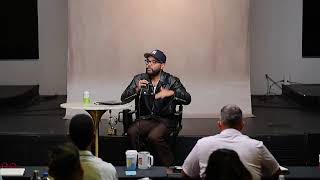
Omar teaches entrepreneurs to build high-ticket personal brands through one-to-many selling. He identifies five mistakes that block growth: oversaturation beliefs, not knowing why content fails, waiting for perfection, misunderstanding your audience, and lacking a conversion system. He shares tactics for content, pricing, and converting 20% of challenge participants into clients.
Chapters
I say you don't get one, you raise one. I know an art was like 10. Um, and if you can have somebody build with you that you can travel with, that could be in rooms that you trust to be around to hear a conversation. Um, the expedition that would take place in your business will be unreal. Uh, one of the fastest growing personal brands in business right now is Dan Martell. I'm actually interviewing him on Friday morning. Um, Dan Martell has a shredder. His name is Sam, and Dan has known Sam his whole life. And so there, the level of intimacy and speed that can take place, um, it's hard to— you can't, you can't manufacture it, right? Um, it's funny, funny story. Um, Dan came to my last studio to interview with Neil, and Neil had a podcast, and, um, he was telling Neil— so Neil has his video guy there, and then Art's there helping with the setup and stuff because it's at my studio. He's like, yeah dude, you know, I just bought Sam a, a GT3 911, his dream car. And like Pablo and Art look at each other I was like, bro, you better get to work. Just so funny. Like, not saying he felt entitled in the moment, but Pablo was entitled in the moment. And he was like, bro, you're a contractor, chill. No, that's just like funny. Anyway, let me get a couple of takeaways, other known as ahas. Just literally raise your hand.
Sorry, I shared with a couple of people that, um, the taking your brilliance and your 3 hours and not doing that, and taking very specific words and creating feeling to elicit somebody who's interested in working with you.
It's good. Let's go, clap it up. Let me get another one.
I would say I got, um, two things I got out of it was get in the room and get started.
What— and for you, what do you feel like getting started is?
Uh, getting started was taking action. You said it once when you, uh, met with Dio. See the lifestyle things that they're doing and how it just kind of prepares you to want to do better. How you were recording, what it was like, putting them on the internet to inspire. And then also putting yourself in uncomfortable situations, going to Myron Golden's event, like you said, by yourself, investing where most people would have said no. So just like forcing yourself to get started when you're not even knowing the path yet.
It's great. And even just something about that, it's like, it's always the, the few Like, why, why, why don't we know more millionaires in our life? Or why don't we know more people who just operate differently? Like, when I say operate differently, I mean just think big, invest big, believe big. Well, it's because when opportunities like that present themselves, it always is a smaller group. And that's just— and, and that's just where the, the, the amateur majority will always be there. And so just be, be committed to mastery. If you, if you ever go down a path of learning, the goal of learning isn't to acquire more information. The goal of learning is mastery. And mastery defined is, um, and specifically defined by Myron is the ability to execute a task without the use of conscious resources. So you don't have to think about tying your shoe and carrying a conversation. Uh, you don't have to think about, um, writing something down and listening to a podcast. Like, there's— you're able to do two things. And, and, and there is— there's a skill set that you're, you're, you know, maybe it's like a number one skill set. But for me, uh, one of those things was selling. Selling one-to-many is a skill. And what I realized is because I was so obsessed with learning this skill and ability to speak to multiple people at one time and collectively get a response. I realized I hit mastery when I— it would just happen. And then I would, I would do a web class and 300 people will show up and 50 people would buy a challenge ticket. I just said one thing to 300 people. Um, some of my friends here from my church, I shot a video that wasn't edited. And it was a straight-through edit. What you guys don't realize is that was a mastery ask. I talked about the cost of my investment. I said I've invested like $300,000 in the last 2 years. So you're like, dang, $300,000. And I've made like almost $2 million. Dang, that's the end. So that's what you have to do. And guys, I'm just inviting you in if you want to come in for So that's called price juxtaposing. When you just start seeing a big, big number and then you say a smaller number, people are like, oh, that's a deal. It's like, I guess you could say it that way. But even talking through what I believe in you, like I was saying, I believe if you're getting this video, there's something in you and I believe what I know could help you. Art was there when I met, when I just put bullet points on it, on a, uh, like my phone notes, and then I just boom. I mean, I, I could actually, I'll, we'll send that video to everybody and I want you guys to pick apart, oh, he's doing it here, oh, he's doing it here. Because when it comes to selling, selling, and I know some of you guys are really good at selling in here, um, when it comes to selling, you realize it's happening If you know sales, you realize it's happening. Not in the sense that it's pushy. Like obviously when you go to the mall and some dude's like, let me clean your shoes. And you're like, bro, I'm straight. He's like, come on, let me clean your shoes. And he's like, dog, they're fine. I just bought them yesterday. Obviously he's pushing sales on you. But Friday, Friday, my friend Neil's throwing an event. There's going to be 1,000 people there. And prior to Neil coming up and teaching and giving his offer, I'm going to go up there for 15 minutes and I'm going to sell without selling. So what people don't realize is that, like, you can actually move someone. It's called, it's called leveraging human nature. If you understand how humans function, how humans think, how humans process, the more you can actually influence human nature. Because I, I like to say you can either use human nature to your advantage, but there's no middle ground. If you don't use human nature to your advantage, human nature will work towards your disadvantage. I need to believe this when I preach. Humans have a tendency to disqualify themselves, so I need to have moments in my sermon that encourage and qualify you, uh, um, environment that like when I raise my voice and when the piano is going behind me The environment— God created an environment when he created the world, and things happened in the environment he created. Like, you can create environments where people just take action. That's why, like, I mean, if you just— that's why, that's why I highly dislike the people on the Strip who say repent or you're going to hell, because they're not considering the environment. Now, do I believe personally that if you don't put your faith in Jesus, that you not gonna go to heaven. I believe that based on the scriptures personally, but Jesus never forced it. He understood the context. And so this is something when it comes to sales, you need to always, and I want you to write this down, reverse engineer the environment when somebody hears the price. You have to reverse engineer. I like to call it like consider the vehicle when somebody hears the price.
Could you say that again, please?
Reverse engineer the environment. And you could put my— you could put like an asterisk, mind frame somebody is in when you tell somebody your offer or your price. Yes, yes, yes. Um, yeah, so here, um, maybe it's okay. Let me, let me, I will dumb that down. Here we go. Where you give your offer is more important than your offer.
You mean in the presentation? Where?
I mean, yeah, where the environment— you can put vehicle, vehicle and environment. You can put the word vacuum, right? So I'm sorry, I'm just going to just let you guys in on something, right? Neil did all his heavy lifting to get 1,000 people in a room. If Neil went on social media 6 months ago and said, hey, join my program for $15,000 on stories, No one's going to buy it, but there will be 100 people who buy Neil's program and it will be because they are in the environment when it was presented. And I'm going to talk about one-to-many selling because events is one way to do that. That's why a lot of people, when I, when I was raised in church, when I was— and I'm still being raised in the church, but like, you know what I mean? When I was first in church, I found that the goal for churches was the event. Like, that was like, we're gonna put all our energy, and, and, and the goal is that the event happened. Then I got into business, and I said, what are we doing? The goal of the event is to get people to take the next step. So my brother, who's in ministry, puts on this free event for young couples. 100 people come to Vegas. My brother specifically told me, he's like, bro, top 3 ministry moment in 10 years of ministry. Powerful. What was the offer? He's like, what do you mean, what was the offer? I was like, what was the next step, bro? You just preached at them for 48 hours and let them go? Yeah, dude, I felt uncomfortable. I want sell people something. Oh, so, so you think now that you opened up a can of worms for them, you just sent them to go figure out themselves. This is what offers are, opportunities. So when you get people in a room, we don't sell people because we want to make money. We sell them because now we've created a problem in their minds that some don't want to solve all by themselves. So in many cases, in all cases, in my opinion, presenting an opportunity or an offer, when you get people in a room virtually or in person, sell something. And, and this is something Myron showed me. You sell something that sells something that sells something that sells something. And this happens because when you provide a solution, simply by you providing that solution, it opens up another problem. Who here has an iPhone? Who here has an Android? In the arms of the angel. No, I'm just kidding. Oh no. Okay. So when we bought our iPhone, Okay, I'll say this. Would you buy AirPods before you bought an iPhone? Would you buy a case for your phone before you bought an iPhone? Would you buy a portable charger brick before you— no. These were all problems that created because we bought something. But Apple is really good at just saying, okay, now when they buy the, the, uh, the AirPods, they're going to want headphones. And I want to get the headphones. They're going to want to swap out the headphones because they're going to sweat in it. It's like they just keep selling you stuff based on problems they created, but you have to experience. So every time I— because there are people who are really good at getting people gathered in a room and in a space. And then just lob it out there. I mean, literally, it's okay. Where was I going with this though?
Reverse the engineer.
Oh yeah, the environment. Yeah, so, so this, like, this business model, which I think is just the future and it's the now, um, is that you can create environments, architected— you can architect environments where people learn about what it is you sell or offer. And now don't always think like anything super deep. Now, like one environment is YouTube, right? When I make a YouTube video, we uploaded one today. Um, it was a long John that it was 2 hours. Um, but let me just, let me just, uh, let me look this up real quick. So I'm pulling up my YouTube analytics. Okay. Um, good stuff. I want to show you guys this. This is tight, actually, dude. The best— my favorite thing with Amazon is like, man, that'd be really cool if there was like an invention and I just put in the search bar and then like they have it. I was like, wireless HDMI transmitter to 2 HDMI receivers, turn up. So this is like, yeah, Prime. Uh, okay. So hopefully with this 100-inch TV, this is so not helpful. Yeah, phones don't do that, bro. Oh, no, it's still not going to do it. Oh, shout out to Art. Cover it up for Art. Let's go. So this is what I mean by one-to-many. That in the last 48 hours, 19,000 people have hung out with me, and my average watch time is about 20-25 minutes. So what's 25 times 19,000? Here's what I'll do. What's 25 times 19,000? 475,000. What is 475,000 converted into years? You like to convert from ChatGPT? I mean, if you guys are smarter than ChatGPT.
Right.
No, it's not. No, it's not.
475,000 hours.
475,000 hours. I guess you could say divided by 365.
No, divided by 60.
Divided by 24. Okay.
Bro, I know that, bro.
It's not that crap, dude. I literally do this. There you go.
54 years.
54 years. 54 years. In the last 48 hours, people have spent 54 years on my brand. My God, my question is, why aren't you uploading to YouTube? I like to say you're not wasting time by not uploading long-form videos, you're losing it. And I mean, and if you believe in stewardship here, that like what you're given, you have a responsibility to multiply it. When you know that, when you get access to this information and this insight, I mean, I, I want to get a well done, good and faithful servant when I go to heaven. Talk about it's not just multiplying your resources. How about multiplying your years, your, your, your time?
Oh, sidetracked things. When's a good time to ask a question about some things you've mentioned?
Uh, let's do it.
All right, so there's the idea if you never get a second chance to make a good first impression.
You never get a second chance to make a good first impression, right?
So you're saying throw the stuff out there. Um, so somebody's really got to be aligned with where you're going to, uh, look at your stuff when it's you know, not perfected, if you will. Or you say you're creating this stuff in the light, you're just recording, throwing it out there. Um, yeah, everybody's bad the first time, but where do you— like, you had the experience of 4 years of, you know, grinding in the light, but there was a lot of background work that you did. The question is, are you saying just do it? Like put it like, like I've got a YouTube channel, but it's like laughable. I mean, it's not—
who's laughing at it? Uh, probably nobody because nobody's watching. There you go. So, so the reason why you need to post now is because no one's watching. So like, and I believe this for myself, like today, right now, is the least known I will ever be. It only goes up from here. This goes for everybody. Now, if you're inconsistent or you haven't started or you've thought about it, still applies to you. This is the least known you'll ever be. And I know you've been in your industry for a long time, but with the ability to scale beyond 24 hours a day as far as consumption goes, Typically, and this goes for the offers we create, we want to appear ready for the smallest group of people. This is why the concept of launching— I'm gonna relaunch my YouTube channel, I'm gonna launch my YouTube channel, I'm gonna launch this, I'm working on this offer because when I'm gonna launch, launch, Um, the reality is, is that what you don't realize is a year from now, more people will know about you than when you were trying to launch perfectly. So, so the concept of putting all this unnecessary energy in trying to show up polished or perfect is just backwards. And you can't get polished or perfect without activity, without reps, without volume. And so, uh, something Myron has told me— when I told him we were golfing in February, I was like, dude, I had the biggest challenge. He's like, how'd it go? I was like, dude, 420K. He's like, let's go, bro. He's like, that was my lowest challenge. I was like, forget you, bro, be happy for me, dude. But I know he's doing— he's trying to like, you know, get me to— it's a new floor is what he was saying. But he said this and I, and I had to ask him to repeat it. I, I'm the guy in the room, I'm like, Myron, Myron, Myron, like, like, stay— uh, say it in plain terms, bro, you know. He's like, Omar, it's going to get faster, or it's going to get bigger faster than it took to get big. I said, bro, what? He's like, it's going to get bigger faster than it took to get big. And I didn't know what he meant, but I ran my next challenge and we made more than the first challenge this year. And then we ran the third challenge and we made more than the second challenge. It's like, what is happening? So But it's because every time somebody comes, I am more polished because I got the reps under my belt. Right. And so there's a lot of, like, when it comes to the mastery part of things, you don't achieve mastery by just in your mind. You achieve it through motion. That was alliteration right there on purpose. You don't achieve mastery in your mind. You achieve it through motion. That's bars.
YouTube title.
Yeah. Uh, no, so, and what I mean by that is now, this is crazy, when I do Q&A on the challenge, which is the, which by the way, the, the VIP Q&A on the challenge is what really sells people in the, to your offer. Um, there are other reasons why people buy an offer if you do a challenge, and that's sometimes it's like, oh dang, they're texting me, they're emailing me. Okay, okay, that's pretty legit. I don't need to go on a call. Like They're legit. And then some people will buy and never be on a call. And other, other people, I'm putting my expertise on display and I'm showing you that there is no question that I can't answer. Now I've realized that I can answer questions in a way that serves my offer. And it's like, how the heck? Well, number one, just first answer the question. But because, because I've done 9 challenges, 8 challenges, uh, when somebody asks a question, I learned that there's something deeper and I want to speak to that thing. So, um, so, so, so what I have is like, I have these like, uh, They say like, you know, David took Goliath out with a stone. What people don't realize is he actually had 5 stones in his little pouch. And if he needed 5 more stones, he would've been ready. And, um, there's something powerful about you having these arsenal. It's, it's, it's an arsenal of objection handling when somebody asks a question. And sometimes the question is just like, "Hey, so how do you do this?" Well, hey, my question is, why do you want to do that? And then it's like, we unpack it and it's like, dude, see, posting an 8-minute versus a 15-minute video isn't your problem. Your problem is you're not taking action. And I think, I actually believe you're not taking action because you don't believe this is important. Let me show you something. And this is actually, this is coming from a question that would be like, someone who's just like, how long should you post on YouTube? Like how long should my YouTube videos be? Well, number one, do you believe that there's like a secret sauce to YouTube? There isn't. There's actually no hacks when it comes to YouTube. There's just guidance. So what I found is people who succeed in YouTube, they usually don't succeed by themselves. They either have hired help, They either have an editor or they pay a coach, but, but no one succeeds on YouTube alone. Show me a successful YouTuber that's doing it all by themselves and I'll, and I'll zip my lip. So then what am I doing? I'm seeding the power of, uh, the, or the, the, the power of community, but also the, the, the danger of isolation. So I'm telling a person like, if you try to do this yourself, You're not, you're not going to win. And then I, now I, and then I have this thing, this thing I do is let me, let me show you guys something. There's this, there's this thing in, in 2010, some guy wrote a book called like The Barbarian or Babylonian thing. And he came up with these mountains of influence. So there's these mountains of influence. We have, we have, we have a pen that doesn't work. There it goes. We have government, we have education, we have family, we have religion, we have finance, uh, business. Is business finance, or it is I'll just leave that finance. We have entertainment.
Yep.
And we have media. This is called the Seven Mountains of Influence. No matter what it is you do, you are climbing up one of these mountains. Everyone here is climbing up one of these mountains. But you know what I've discovered? Media isn't a mountain. Media or content is the ski lift to every single other mountain.
Wow.
You are not going to influence your mountain without media, without content, without building your personal brand. All from a question when somebody goes, so should I upload 8-minute videos or 20-minute videos? Make the non-essentials seem essential. Make the non-essentials seem essential. Um, now can you build your influence? Without using media. Sure. But I actually believe this part of sales is belief. I would like if I define what is sales, it's a transference of belief and enthusiasm and things that build belief many times are getting people results. Things that build belief as many times, yeah, getting people results, doing the work, you seeing the product, you testing the product, you feeling good about it. It's easy to sell something when you know the product, you know, but I would just, I'll just, I'll just take it here. So this is one of the things I'll use in my arsenal. You know, the goal is to have a handful of these in your arsenal.
Um, responses to questions. What do you mean by that?
Yes. So when people ask a question, you could answer the question in a way that actually serves your offer. Right. So another example, last one I'll do, and then I'll talk about offers. Bro, this pen, bro. I got a 2020 iPad yesterday. I bought a 2025 iPad Pencil and it doesn't work with my 2020.
Crazy.
Omar, don't you got money? Yes. But does your iPad work? Yes. All right, all right, here we go. I mean, I got the Vibeboard, but I don't know, I got 100-inch TVs. I'm like, I don't need another. All right, so another one I got is— sometimes this is— it's not always like illustrations. Sometimes it's actually like testimonials. It's like, hey Omar, I've been chipping away at my YouTube channel. Uh, I'm thinking about either I want to change my niche and should I start a new YouTube channel or should I just start uploading new videos and just pivot? I'm like, okay, how many subscribers do you have? I've been, I've been uploading videos for like 5 years. Okay, how many subscribers do you have? Matter of fact, let's pull up your YouTube channel. There's like 8 uploads, 600 subscribers. It's like, hey, when I— when I— by the way, when I launched my podcast, I had 30,000 subscribers, but I didn't upload in 2 years. And then I started my podcast. Most people would have started a brand new YouTube channel, but when I uploaded my first video, did I get 30,000 views? No, because those subscribers were checked out. They were dead. And by the way, subscribers mean a lot less than they do now. So, so what I'll do with a question like that, I was like, um, here's what's crazy. Number one, no one knows what you're doing right now, so like keep it on the same channel, use the same Gmail, and run it up. Now I want you to know you don't need a big audience to make big money. What do you mean? Yi Wei, I don't know how to spell her name, she's a Yi Wei, she was a girl in my group. She launched her YouTube channel. She, with 30 or with 27 subscribers and 7 videos uploaded, she made $30,000. Wait, what? Yeah. You don't need a large audience. So what am I doing by even telling that story? I'm building in you, I'm creating belief in you. Now that's true. And that really happened. But how did Yi Wei get that result? She got that result because she invested in herself. So you're at 8 videos random and you're not determined, like, I don't need to change my niche. And now she's just like making videos very specific to who she's trying to help. I don't know, who here, uh, would like to make more money than have a lot of subscribers? Well, all right then. Next question. It's just, just have these things in your arsenal. And that happens over time when you help people because people tend to ask the same questions and just know when people ask a question, uh, in the context of learning, there's always a deeper reason it's coming from. Um, and, and I've learned from having friends who are great in sales that it's our job to unpack What they're really saying. And then over time, you actually, you actually can list out all these, you can list out all these predictable objections and include things in your offer that break those projections, objections. For instance, I have an online in a mastermind called, you know, Content Mastery Inner Circle. $20,000, $21,000. And, um, so many times people say, um, let me talk to my spouse about it. I'm like, of course, you know what, pray about it. You have till Monday midnight to decide. Now, if the spots fill up because you had to— because you had to process it and all that stuff, I'm— it is what it is. But do I think you should do this without talking to your wife? No, I don't think so. I will speak to this. Two reasons, two things I want to speak to. Don't let prayer be your excuse. Sometimes people want to pray about something that's good for them. Sometimes people want to pray about something that like is a God thing. And but, but most of the time I know Christians use it as an excuse to hide. Let me go pray about it. I remember I had a guy helping me with sales, an old friend. He's like, Omar, your audience, they just, that's their thing. They just wanna go pray about it. I'm like, pray about it on the phone with them. Let's pray. God, the Bible says that the number one, the first commandment you get, you gave was to be fruitful and multiply. And I pray if this is an opportunity for this person to multiply, multiply what's in their hands. That you would bring awareness to that and that there would be peace in this purchase. What— whatever. In Jesus' name, amen. So, and then the other thing is like, let me go talk to my spouse about it. Like what that dude told me on the phone and he didn't talk to his spouse about it. Um, but the spouse thing, you know what I do with that is, uh, number one, when I say to include things in the offer, I, I do have a part in my offer that you can have a plus one in this program at no additional cost. So that could be your spouse, your business partner, your video person. Have them join you in this journey. It's almost like you're getting two for one. But when you, when you deliver programming, one-to-many in the context of like group coaching, it doesn't cost any more money to just let one other person in, you know? So, so I can handle that objection with, with that bonus. Oh yeah, by the way, I don't want you to do this alone. I want you to do this with somebody with you. So now when you go talk to your wife, it's like, hey, um, I'm thinking about doing this thing. Now, something I like to tell people when they say that is, I'm not a marriage counselor. However, if your spouse says you can't do it because you are a flake, and you don't keep your word, you don't do what you're going to say, that's not— that's not a problem between this coaching program. That's something you need to fix with your spouse.
It's like, whoa. Yes, sir.
Well, because you shouldn't be asking your spouse, can I do this? When you go ask your spouse, ask them, how can we do this? And I didn't realize I did that when I asked Amanda, when I was presented that first offer, $55,000. Hey babe, how can we do this? It— because most, most people who would ask for permission, it's because your spouse doesn't trust you. So, so kind of like in a moment they get a little marriage counseling and then they also get, you know, some, some advice and, you know, But what's so cool is when you build demand on your brand, you don't have to be desperate. And it does break my heart. Like DJ Khaled says, it breaks my heart. No, no, for real, it breaks my heart when people don't take my offer. It breaks my heart because they don't believe in us. God did. No, but, but it does, it breaks my heart when I know somebody should, should be in the program and they don't take it because, because they got in their own way and or I didn't do enough, uh, pre-framing. I didn't do enough connecting the dots for how this returns on their investment. And so, um, and so yeah, so what ends up happening is people join the program and this should be on your watch. When people join your thing, they should get breakthroughs, they should get wins. And if you create a community of people prior to an offer you have and they see a peer who took an opportunity when they were in the same room, my God, They're like, they're gonna look, what did I do? Now I'm not trying to create like regret in people, but it's true. When you actually get, you know, help people and you're in it, and I believe our offers literally help people. I mean, every offer is supposed to, it's a service, it's a service exchange. So, so that's why there's something in me that's like, I do want the world to have it, but I also know that not everybody's gonna— is supposed to have it, and not everybody will have it. But, but there's something in me that's like, I really believe, I really believe every caregiver should be on this app. Like, I really believe that, especially like the younger cats or something. Like, this will— if I— and it's a burden you might have because of your experience. If I just had this information— the sooner you get the information, the faster you apply it, the longer you get to enjoy the benefits. People will wait their whole life putting off a relationship with God. But God will grab a heart of a teenager or a 6-year-old like my daughter Ruby, or like when Steve's daughter started praying in tongues at age 5 or 4. Now they have their whole life to enjoy God. That's— in the same way, it's like that in business, it's like that in relationship. Like, the sooner you get to it, the longer you get to enjoy the stuff. I don't know where I was going with that, but great. Any other questions? Any other questions? Is this all right? I know this is like ranty Omar. For the type A's, I'll teach something. Go ahead.
Yeah. For somebody that has never been in rooms where you hear people speak into the emotion. I think one of the most powerful things you said is to speak to their feelings. So how do you know how to do that?
Like, um, it's called manipulation. No, I'm just kidding. No, that's a joke, kind of.
But like, for example, okay, like, uh, because I was raised in church, yep, under a few, I find it very easy for me to like really go there with people, you know. But for people that possibly like, like weren't in those environments very often, you know, how do you get to that place of like learning how to speak to people?
It's really good. Yep. How do you get to the place where you can speak to multiple people and speak to everyone the same message? Okay. That's not what you asked, but that's like the way I reframed it. But I know what you're asking. Yeah. So the most practical thing I will say to answer that question is by putting yourself out there and talking to enough people where you can create what I like to call educated assumptions for people that should be your clients. Educated assumptions, uh, which comes over time. I assume— I know this, like, I assume, um, people think you need to have a big audience to make a lot of money. I assume that, um, people take on the identity that this is just not my thing. I assume that older people tend to count themselves out when it comes to this content game, because it's for the young people. Like, these are all things that I've collected through conversation. There's, there's this thing I teach at our content workshop. It's actually called Copy from Conversations. Most of you guys don't have a content issue. You just have a distribution issue. Let me break that down. You are already probably having these conversations with people. They're just either not recorded, uh, they're either not recorded or they're not processed. I love that the, the number one work people aren't willing to do is just to take time and think. That's one of my favorite things to do is just like sit and think. So then when I get off a call, we have all this data. Like I literally have a conversation with somebody and like whether it's like blatant questions they ask me, which is a hook for a video, which is revealing a limiting belief, which is, you know, it's, it's, um, it's exposing what everybody else in their shoes probably feel. So when I say copy from conversation, I like, literally, I hope you guys just start recording yourself when you're having a conversation with either a potential client or if a friend calls you and they want to pick your brain, record it. And then you could turn that stuff into emails, turn that stuff into carousels, turn it, and it'll speak. It will speak to more than one person. So yeah, let's talk through, um, So yeah, probably. I'm actually gonna work— I'm working on a podcast right now that's like all my failures. Somebody told me that, like, Omar, you need to start sharing your failures more. I don't know, for some reason I feel good about myself when you do that. All right, I guess if it's about, you know, getting your feelings right, let's go. But one of my biggest failures, as I get this guy to go away, um, is is, um, it's tactics. So like the biggest mistake is teaching tactics in, in a group setting, um, versus speaking to beliefs. So, so my— when I, when I first did a, um, when I, when I did my first few webinars, I was teaching tactics like the, the, uh, This is what you want to set your camera settings to. This is the ISO, the aperture, and the shutter speed. And make sure you get a prime lens and you put that to 1.8 aperture and you're going to have that nice blurry background, which is what everybody loves. What I didn't realize I was doing in my mind, I thought I was serving people, but I was overwhelming them. Tina's like, bro, just do it for me. How do I make money? Yeah, how do I make money? They're like, yeah, like I don't care about the settings of the camera. Now tactics are a great thing to get into once somebody goes through a paywall. That's like a great place. And it's not, and it's, by the way, it's not about gatekeeping. I think when I talk about not overdelivering, people are like, oh, I actually get to share less information. No, it's not gatekeeping. I don't gatekeep anything. Like if you want the tactic, I will tell you the tactic, but I'll also say it in a way that makes more sense to you because I know you can lose people with it. And so the first couple webinars I did that didn't sell anything and I prepared for it, I got people on it and they were super long. I thought I over-delivered, just serve them for 2.5 hours, then they'll for sure buy.
Do it.
I was like, blow their minds with my production value. Art was switching. I had a roamer. So people go into like, I'm on a Zoom call. I'm like, Let's, let's, let's go to the studio. I was like, this is mastery. I get to the offer. It's like, I'm looking at my phone waiting for like the Stripe to go off. I'm like, all right guys, let's do the giveaway. And then I just, okay, so, so I'll just, I'll just break down my web class. Okay. So at the top of your paper on you guys, 'cause our new paper, let's talk about creating a signature presentation, signature presentation. A SigPrez. This is also known as a masterclass. This is also known as, you can do the web class, but here's what's cool about a signature presentation is when you have it in your spirit and in you, you could take it on a podcast and then you could take it on stage and you could take it on a Zoom call or you can get invited to speak in front of another group. And because it's like a proven talk, it moves people into whatever next step.
You can make it— and I learned this from Brendan, from actually Funnel Hacking Live, the very first one I went to. Brendan Burchard, he has the same presentation regardless of how long he's on stage.
He knows that he can, like, what he can leave out, what he can pull.
You can pull 10 minutes out, you get distracted, you can jump right back in. It's just the same talk, just plus or minus how much stage time you have.
It's so good. Yes, um, because it's in him.
Yeah.
Yeah, you know, it's his deal, it's his thing, which is, which is what like I love about the, the permission of intellectual property in this space. You know, if you have a program, like give me the name of a program, somebody, that you have. Fit Formula Challenge. Uh, Fit Formula Challenge. Yeah. In that challenge, what do you teach? Nutrition.
Okay, great.
Nutrition and accountability. Want, want. No, you teach your proprietary body transformation acceleration formula. It's the same thing. It's not that it just sounds better, but it also puts a trust when you say it out of your mouth in a certain way. Like, yeah, we actually go through our 5-step formula. Who here knows Dave Ramsey? You guys know his 7 baby steps? Like, finances have been around forever. Like, he just put a name to it. 7 baby steps. Yeah.
So in the Path to Profit Challenge, we talk about the Wealth Method. Wisdom, earn, accumulate, lend, track habits.
Yeah, the Wealth Method. Yeah. Formula, method. Framework. Like, you guys have the permission to literally name it what you want. It actually is the first job God gave Adam, said, go name things, go name everything. And it's crazy because we still have that, we still have that power, or we have the power to name something. So like I meant with the power of words, it's like you could name it fitness and nutrition, and that's what we're going to go through, or Or no, I'm going to take you through the Social Impact Accelerator. Like, to them it sounds like they're getting something they've never gotten before. Now we all know with fitness, it's macros, it's high protein, low carb, lift 4 times. Like, we all know this stuff, but like, there's a way you can put it together. And, and, and I try my best to do this in everything I teach. Like, one thing is, you know, who here likes Mexican food?
Yes.
He already knows because I did it in front of his mastermind. I was like, did you guys notice something in America that all Mexican food is the same? Wait, what?
Yeah.
And the Guatemalans. Yes. Yes. It's causing stuff. Look at that. Yeah, when it comes to Mexican food, I like to think of content the same way. Wait, what? Yeah, so I like to call this the 4 content formats for scaling your personal brand, and they're nothing revolutionary. It's just vlog, talking head, livestream, and podcasting. You can create the same video in a different content format, and either your delivery will be different or the way somebody receives it will be different. So, so then I'm talking about the way you package a video is important, but that's just, it's all the same. So just pick, make the order and go for it. So like, that's, that's all just that, that's just me drawing a connection. And even when I say the word content format, there's, there's 4 content formats I teach. It's, it just sounds like I came up with it and I, and I did. I've dialed it in there. There's reaction content. There's a million, there's man on the street interview, but in my mind, and also with me testing it, I'm like, no, that's podcasting, that's interview. You know, reaction content. No, that's talking head or livestreaming. Most reactors are reacting in real time. So anyway, what are we gonna— Yeah, just that was one of the most powerful things that made people buy my offer was the words I used in my offer. So instead of saying YouTube Foundations, I called it, you're gonna get the YouTube Accelerator. Who here would like to know YouTube in like 2 videos? Yeah. So it's the YouTube Accelerator. You're gonna get that. You're also gonna get the automated lead generator. I was like, you're gonna learn how to turn people from viewers into followers, but That's lead generation, whatever I just said. I don't know, whatever. So, okay, signature presentation. I'll say here's what not to do on signature presentation is if you use a slide deck, one thing per slide, God Almighty, one thing. Sometimes here's what I would prefer you to do actually. I would actually prefer you to just use images. Everyone is a visual learner. Everyone is. So when you put a picture and then you talk about the picture, it's more powerful honestly than if you just listed out everything. It's kind of why I don't even have slides today is because I know what happens too is like you'll be in a setting like this and I have slides dialed, which people spend hours on creating and then people just take pictures of each slide. You ain't gonna watch that. So I actually am like, I'm act— it's the same with my podcast. The reason I don't do fancy editing or anything is like, you have to sit and watch. Omar, where are the time codes at? Sorry, bro. Go find it somewhere else. You know? Anyway, so things not to do. Yeah. Busy slides, crazy colors. You just want simple fonts. You just want some simple fonts. And like when I say one thing, I'm like, literally just put one thing on every slide, max 3. And when I say max 3, I mean like you say a phrase and you have a photo, and then the next slide paints the principle or paints the picture.
So I have a question. When you do slide presentations for webinars, because I've been doing mine, and then one of the techniques, because a lot of people just do everything on their phone.
Exactly. Another reason.
So that's what I'm trying to figure out because, you know, I do one blog piece. Yeah. Um, so what did you just say?
Just use like a picture? Some— a picture or a quote or the one thing, or it's just like when I say that like max 3 things, like it's just like a header and like 1 or 2 things. And then, and then the next, like, if it really needs to be 5, I'm only going to put 2 on this and then I'm going to go to the next and put then say the next 2 or 3.
So I have like the 4 C's to get qualified for a loan.
That's great.
I have it all on one screen, so I should be putting it— the first C is—
well, you can, you can have an image, like you can have one slide that says the 4 C's And then the next slide is just 1C and you break it down and the next slide is the 1C and then you break it down.
I didn't think about the song.
Yeah. I mean that, that's right. Everyone's on there. And then I also, this is, this is also another preframe I do before I do my web class or my signature presentation is before it starts, I say this and please feel free to steal anything I say today for your own use.
Okay.
That's, permission you have. I say, hey, did you know the last time you learned something— or I say, hey, before we get started, did you know the last time somebody taught you to learn was when you were in grade school? Like, literally, like, we haven't been taught how to learn for some of you guys 20 years, some of us 10 years, some of us 30 years. And so here's what I do. When you learn from me, I'm going to teach you 101 learning, and then I'm going to teach you 401 learning. 101 learning. I did it today. 101 learning. Write down exactly what you hear. But we all know ourselves. When we go to the conference, we go to church, you write down exactly what you heard. You don't remember what it meant because you wrote down exactly what you heard. 4.01 learning, write down what you thought of as a result of what you heard. For example, if you hear upload a YouTube video once a week in my presentation, you're not going to write down upload a YouTube video once a week. You're going to write down Monday. You're going to write down Saturday film day. You're going to write down whatever your voice or spirit or your mind told you as a result of what I said. Two things. Number one, that's super helpful. Like, you know, it's just great. Second, I just put myself in an authoritative position because I just told you no one has taught you to learn in decades. And here's this guy before he even gets in his presentation, he's teaching me how to learn, man. I love learning from this guy. Mastery. Now, um, yeah, okay, I'm trying to think if there's anything I'm missing in that. So yeah, oh yeah, what I was trying to say with that whole thing was that gets people to take notes, right? Because like, I don't want people to just speculate and watch. I want people to write stuff down. And here, another thing is like, when you tell people, you know, write this down and circle it, Like, they might not have been taking notes the whole time and they'll just do it just because you said it, you know. So, so I'll just, uh, yeah, I'll just break down like my 5 things and, and, and then like how I, I arrived there. Now, every point in your signature presentation should be backed by a story that proves a principle. This is called Parable— all right, here it goes. It's called the Parable Picture— yep, it's the Picture Parable Principle Framework. Picture, parable, story, principle. So from this story, it's like the lesson. I should write this down. Dang, dude, crazy. There we go. So this is every point. Every point. Should have, and it could kind of go in whatever order, but I like this order. Starting with pictures is powerful. Um, oh, principle. So parable just simply means story. It's just 3 Ps. It makes me sound smart. Okay. So legit, when I say picture, I legit mean picture. So, you know, when I, when I say, who, who here likes Mexican food? I don't put the word in my slides. Who here likes Mexican food? I put a picture of a bunch of Mexican food. Cause I'm just getting people to associate, right? And there's like nachos and burritos and enchiladas and whatever. and then I'm using that picture and then I start telling the story. This is the same way I like to see content. And then I break that through and then I have a guy in my program, his name is Brandon Michaels, who was implementing one of these formats for a while. He switched up the format and then saw more traction. So you guys might be doing the work, but you might be doing it in the wrong format. Ayo. Anyway, that's the example, right? So, so every point, and just, just keep this as your guardrails. So when you, when you work on a slideshow and you have a point, picture of the person, picture of the illustration, picture of the thing, right? So, so the way, uh, the, the first mistake, so like, so my, for me, my web class serves as a lead magnet. There's no cost to take my web, my masterclass. You could charge for a masterclass. Um, you'll have increased show up rates, but you might have lower audience, right? If you get really good at your presentation, just get as much people as you can in the room, right? So, um, so because it's a lead magnet, uh, usually the best practice is you lead people with pain. Not pleasure. Lead people initially with pain, not pleasure. What do you mean?
Lead.
So your lead magnet should usually address a pain point more than a pleasure. So, so if, if I'm on Instagram and I'm saying, and I say, hey, grab the 100K podcast checklist, That's pleasure. That's why, like, when you use, even in the finance world, if you're using words like build wealth in 90 days, that just sounds like work. Sometimes pleasure sounds like this thing way out there, but pain, it's almost like help me now, right? So it's like, whether that's mistakes, whether that's like why blankety blank is keeping you from blankety blank, right? Why every diet on the internet is keeping you from achieving your goals, you know, like versus how to get your dream body, like how to get your dream body. It's great. Just notice how like it's out, it seems so out there, so it's not gonna yield enough demand. So those, so I like to err toward, it's just pain. It's the same concept as like when, You're, you're actually willing to buy a water bottle in the airport just simply because you're thirsty now and you can't get it later. And like, you'll pay, you'll pay more, you'll take more action right then just to get it right. Like, so on social media, when you can aggravate pain, um, it's powerful. Um, I learned this from Jesus. What? This, this is a, this is a what? Um, I think I got this. Matthew 11:28, Jesus says, come to me all who are weary and heavy burdened. He's aggravating pain, and I'll give you rest. Now, starting with pain and then letting them know the promised land. So he enrolls with pain, which is how I enroll all my YouTube videos. Which is how I enroll every time I teach, which is how I, uh, it says, how many of you, or how, what would happen, or could you imagine, like, you, let me guess, and then you just aggravate it. That's, it's why people stay on my podcast for a long time, because I'm like, have you been posting content and it's just like the bank just stays the same? What if I told you that there's something you can do off these platforms that can make you an easy 6 figures. Like, you, you know, I'm just— okay, that's the point. Jesus did it, so I did it. There you go. And another cool thing that Jesus did was he didn't say, um, he didn't say, hey, um, everybody. He didn't say, hey, everybody. He said, if you're weary or heavy burdened. I— this isn't for everybody. This is for the person who feels weary and burdened, right? And then he also doesn't say, I'll get you into heaven. Why didn't Jesus say, like, I will— I'll get you into heaven, and if you don't— because if you're weary and heavy burdened, he pretty much said Hey, all those of you guys who are going to hell, I want to get you to heaven. Jesus knew if he offered his offer without addressing the pain, no one would take it. So even when he did his miracles, Jesus would heal the person first, then tell them, now you can go and sin no more. He always addressed the need or the pain. This is what I just love about Jesus. He— because if he just said, hey bro, you're saved, they'll be like, what? Bro, I'm blind. Bro, my kid's dead. Bro, we hungry. Jesus always addressed the need. And this is my strategy. My strategy is like, let me help you in your business with this stuff, and then If we work long enough together, your life is gonna change, like your family life, your relationship life. Cause I care about that. But I know if I go straight to you with that thing, cause that's really on my heart, you're not gonna listen. So let me build trust with you by speaking your language, which I love that. And then he says, he says the, he says all you have to do, which is something I love that Jesus did in this. In this, um, uh, story is he says, take my yoke upon you, for my burden is easy, or, or for my yoke is easy and my burden is light. Okay. Take my yoke upon you like egg yolk. No, oxen yoke. Cause he was speaking to people in an agricultural age. And so he was like, what image? What, what picture do I need to highlight for, for them to get what I'm trying to say? So then he, so he gives them the picture of like, you guys know this. So it's, it's a, it's like this. But what I also love that Jesus did is he made the next step easy or appear easy. He actually said it is the easy way. So if you're weary, you're, you're actually doing the hard way. The easy way is actually the best way. You know what I'm saying? So my question to you is, is it easy for people to find you? Is it easy for people to work with you? Is it easy for people to take the next step with you? Are you making it easy? Another word for easy could be clear. Are you making it clear? Clear, clear, clear. Okay. So back to this every point. Okay. So, so my, it's 5 costly mistakes and we'll take a break after I go through this. Okay. So mine's 5 costly mistakes entrepreneurs are making when trying to build their personal brand. It's kind of long. But that's just what we came up with and it works. So I don't want to change it. Which by the way, once you guys start seeing success with this stuff, don't change it. I've been so tempted to start an agency out of here and start renting out the studio space. It's just like I could just pay somebody 3 grand a month and get 10 people at $3,000 a month, $30K. The operation is— I mean, my mind just goes there. It's like, nah, bro, the challenges are cooking right now. Just, I think those— just be, just be careful. I mean, I see it. I literally, I was so blown away at one of the guys. I was on the phone with him yesterday. He was in Myron's program a year before I was. And then when I came to his event in June of '23, he's like, dude, Omar, like, dude, your stuff's awesome, bro. Sweet. He's like, yeah, we've been in his program this last year. I was talking to him yesterday. I was like, bro, how's it going? He's like, dude, I don't know. We don't know what we're doing anymore. You don't know what you're doing anymore? What have you done that works? He's like, yeah, dude, we've got our program, we got our software. It's just like boom, bing, bang, bing, bang, like all these stuff. I'm like, bro, what's working? No, what happened is you saw something else and you just took your eye off the ball, bro. So that is, uh, I don't know, it's just, I don't know, I guess it's just like a self-control. Be okay with same. It's okay if it's boring. You make a lot of money and it's boring, I'm chilling. Doesn't have to be exciting. Use the money you make to get excited. Go golf every day. Okay, so, um, 5 costly mistakes. And I'm actually like, I'm gonna run, I'm running this play literally until it just stops working. I'm gonna post a week, a video once a week on YouTube. I'm gonna show up on Instagram and I'm gonna do this webinar 3 weeks before I do a challenge to sell tickets to the challenge. That's my way of doing it. Now you guys can do a YouTube upload a week that leads to an application or an assessment. Gets people on a Zoom call and you can close somebody on a Zoom call. You don't need to do all this stuff I'm doing. I just love learning the skill of one-to-many because it's actually infinitely scalable. And when I say infinitely scalable, I mean if we just get more people in, the number will just go up. It's all predictable. So at this point we're doing about 20% conversion on the challenge, which means if 200 people join the challenge, we're getting about 20 people to join my inner circle. If I get 1,000 people in my challenge, I should get 150 to 230 people to join my inner circle. It's just because I've done enough of them that it's literally, it's like the same where like, I'm like, literally I'm, I'm wanting more and it's not more, you know, as far as like the percentages. So it's the same with the web class, which by the way, Once you have predictable conversions like that, when you know every time I do this, every, every 1 person out of every 10 takes the next step. Sometimes ads is an answer. So I worked with this company for 6 challenges and the return on ad spend we had was 1400%, which means for every dollar I put into Facebook, it paid me back $1,400.
$5 million.
How the heck did I— would we be able to do that? Because I have a brand. And I know people who— I know somebody who's going to make $5 million this year, but it will have costed them like $4 million to make the 5. That's fine. It just makes it hard to sleep at night.
I don't know.
All right.
Did you say on your challenge you run it 3 weeks consecutively before, or just one time 3 weeks before?
No, 3 weeks. Thursday, Thursday, Thursday challenge. Exactly. Yes, that's it. Uh, it's not on Fridays because Fridays are for golf.
Okay.
No, so like, um, so something I'm going to potentially test is because I've been doing my, um web classes at 10 AM. I even do my challenge at 10 AM. And I've been told by many people that like, bro, you're leaving out so much people by not doing it in the evening. I'm like, shoot, I don't know. Like, which number one, decide and just run it, right? Like, Omar, when— oh, I don't know, when should I do my coach calls? When you want to do them. But what if somebody has a conflict? Sorry, I've been doing a coach call every Tuesday at 8:00 AM for 2 and a half years, literally. And if I, yeah, I don't even know if I missed one. I don't think I missed one, bro. I even did my coach call the Tuesday, huh? In Mexico, dude. I did my, and some of you guys will maybe not like me for this, but I did it 2 days after my dad passed away, right? Because I'm a man of my word, and I, I— you could stand on your word. Now, would, would my program— would my people have been like, of course, Omar, take the time? What do you— yes. But it was more about me. It was selfish. I was selfish. I, I made a commitment to myself, like, I'm just going to show up now. Thank God I asked somebody weeks in advance to kind of, or to lead the call. It was like a blessing in disguise, you know? So I didn't have, I didn't have the heavy lifting of teaching that week and it was infinitely valuable. I always like to see each one of my Tuesday masterclass calls when I do 'em to be worth the price of admission all by itself. It kind of is. So, all right, here, here are my mistakes that, and then I'll go through and I want you guys to, kind of maybe your mind will go a certain way. So the first mistake I have is believing it's oversaturated or it's too late. Maybe I should change it to believing it's too late. So believing it's oversaturated, Art's posting this. As he's getting a shot and the chicken scratch goes crazy on the screens. You're gonna be like, bro, what are they teaching in there? Hieroglyphics? Uh, so believing it's oversaturated. And then, and then my next slide is a slide for someone, someone that was in my program. Just a picture is, uh, his name is Dean. This is Dean, local Las Vegas real estate agent, and it's just a picture of him, a headshot he took And then I tell a story about Dean. This is Dean. He's been doing what he's been doing for a long time. Who here, who's been doing what you've been doing for a very long time? Maybe not me. You know, and by the way, when you do these signature presentations, you must have call and response. And when you do call and response, you don't give people an option to choose an answer. You tell them the answer. Who here wants to level up their personal brand? Say me. Like, not, you know, like, huh? What happened?
Are you getting value?
Oh yeah. Yeah. Who here is getting value? Like, by a show of hands, like it. And everyone's valued differently. So you can actually demand the response. So whenever I'm telling a story, like when I tell the story about Dean and it's this picture, I'm like, Dean is like 40 years old. He was like 40 years old when he came to me and he was like, Omar, I've been doing real estate forever, but this social media thing, bro, is— I just feel like everyone's the same and I'm kind of late to the party. He's like, I wear my hat backwards. I speak Pidgin because I'm from Hawaii. I wear flip-flops to work. And I don't know, man, I just don't know. I don't think it's going to work for me. Now, by the way, this is a communication tip. Whenever you can talk for somebody else, it's called mirroring. So you can actually say what's going through a person's mind and you could put on a voice like I just did. Hey man, Omar, I've been seeing your stuff. It's good. But dude, everyone in my industry is already doing it. So it's a powerful thing that you can do in your communication is, um, dude, literally Eminem did it with the song Stan, and it's crazy. He's like, he's literally putting on the voice of the person he's telling the story through. Anyway, so, so I just tell this story and then And then I— and then what's the point of the story? Never tell a story without having a point, and I was— and never, never have a point without telling a story. So what's the point of this? So, so I say, dude, all those things that you disqualify yourself with is what distinguishes you. Next slide. Principle: the very thing that you dis— that disqualifies you is what distinguishes you. It's like a bomb dropped. It's the principle that your uniqueness is why it'll work. If you feel different, exactly, you're in the right place. It's like I'm speaking to belief. I'm not saying upload a video on YouTube with 8 minutes at least, you know, duration so that you can get 2 ads from Google on your YouTube video and double your monetization. Like the— I'm getting people to say, you're right. That is right. I do have something to say. And I love personally, I love if it's right and appropriate, I'll bring up scripture. And I love, like, you know, like there's this prophet in the Bible. His name's Daniel. Daniel chapter 6. I love it. It says Daniel distinguished himself. He actually walked in his uniqueness and he had favor amongst the government and amongst leaders. And that's just my style, you know? Um, and so, so yeah, number one, believing it's oversaturated. Number two, uh, and this, this was from, um, David, uh, even though I like kind of pushed back on it, it's not knowing what makes your videos suck, which is like, it's— yeah, when I say the word suck, it kind of is jarring for a moment, which is why he's like, dude, I think it works. Okay, whatever. Um, not knowing what makes your video suck. Next slide. Neil Dhingra, another 40-plus-year-old. And I kind of, I kind of like, I see that every, every picture on my personal web class— for whatever it's worth, I didn't do this intentionally, it was just like, dang, all these people are older. And, you know, if you feel like you're too late to the party, everyone I just brought up started after they were 40. Who here is over 40? We need you. I need you. I'm an idiot. You know, like, um, why was that not funny?
I don't know.
Because Omar, you're not an idiot. Thanks, guys. Uh, so, so I pull up this picture of Neil and I just tell him a conversation we had together. Neil was telling me he was giving content a shot. But the quality wasn't there and no one took him serious. Now most of you think it's all about production value. I'm going to tell you about another type of value in your content that's more important. Content value is more important than production value. That's kind of the principle. What you say is more important than how it looks. Now, do I believe there's a good enough? I do believe that. I do believe your audio should be good because you, and then I'm just talking about like, yeah, you, you don't want somebody to work for your content. If you have somebody trying to work to consume you, it's building a distance between you and the, the learner. And now you're training a person. It, I have to work hard just to consume 'em. You wanna be pleasing to watch, pleasing to hear, and just, good enough audio and decent enough video will get you there. But what's crazy about Neil is he built a $5 million personal brand last year, made $5 million without paid traffic.
Whoa.
All because he figured out— and, and, and you, you do, you can have other people be the hero and you can also be the hero. Now these are people like I worked with, people I have conversations with, but it could be people you've studied. Like if you're in the— but yeah, fitness and health, it's like, like Kylie Jenner. Like you don't have to know them personally, but it's, it's a, it is a, um, you are creating an association by bringing up somebody that is, you know, either a celebrity or a nobody that you have actually worked with, right? So I'm just saying you don't have to, you can say what these people have done that I've studied, you know? So that's number 2. So I'm telling people they don't need to buy and spend all this money on gear. It's actually knowing what content to make. How do you know what content to make? Exactly. Okay, okay, cool. 3 is, Um, uh, oh, what's 3? Is Art here? It's the Lewis Howes one. Uh, I'm talking about the 5 costly mistakes, number 3 in our— in my presentation. Lewis Howes, it's, uh, yes, I did, but Here. No, it's on my slides there. I did it right now. I haven't done the web class in like 2 months, that's why. Um, dude, I'm gonna just stop drawing. That's what I'm gonna do. Here we go. Don't take pictures of this though, because then I'm gonna take this away from you guys. Just kidding. All right, go show, show, show, fo' sho'.
Fo' sho.
No, no. Mistake number 3. Waiting until it's perfect. Shoot. Where is— there we go. All right, cool, cool, cool, cool. Tight, tight, tight. Yeah.
Okay.
Waiting until it's perfect. Waiting until it's perfect. Sweet. Yeah. Yup. So yeah, mistake number 3, look at it, just waiting until it's perfect, clear. And then this is Lewis Howes. Some of you might know him, some of you might not. He has one of the top performing podcasts, personal development space. This is crazy because I built my personal brand. I get a DM. And I'm just telling you the story. He reached out to me. I'm like, whoa, Lewis Howes. I lowkey had a fangirl moment, but I tried to play it cool. Love what you're creating. And it turned into a $30,000 day in my business. Now here's what's really cool. As I was helping Lewis with his new setup for his podcast, he was telling me his story. I just tell the story. Lewis, blew up his podcast to be one of the top-performing podcasts in a downtown, a 2-bedroom downtown LA apartment for 10 years. He had like the who's who come to his apartment and film. He's like, yeah, I don't know, I mean, I just— people just came, so I didn't— I just didn't. And he, he's like, I've also been driving the same car for like 12 years. And it was just really Cool. But here I am in his 11th year of doing his top podcast, just now getting it dialed. So like I'm telling the story, like he took action, he did it messy. He just, he just went for it. And then this is my principle. You don't need perfection. You need to pre-decide. And yeah, again, great. There's another one: perfectionism is the key to paralysis. You'll— you, you can be paid for imperfect, but you'll never be paid for incomplete. So just like encouraging people, like, now's the time to take action. And then, um, mistake number 4 is not really knowing your audience. Now, where am I— where am I grabbing these These are, these are belief shifters. I'm not saying anything about making great videos or how to dial in our YouTube strategy, title, thumbnail. Like, we're not even going there because, because again, tactics overwhelm people. Stories build belief in people. It's why Jesus told parables. So not really knowing your audience. This is a great, this is a great example of like, I don't personally know Gary Vee. I have a picture with him from years ago, so heck, let's do it. And it was discovering the Gary Vee model. And I just tell my story about following his story and following his journey. And here's the punchline. Don't tell your story, tell their story. The reason why your content's not resonating is because you don't know who you're talking to. And then the last mistake. Is you don't have a proven conversion system. And some people are like, no, I mean, I don't know. I don't know if people are like, yeah, I do. I don't know. I don't know if they do that, but whatever. You see, I'm just like, healthy assumptions is what this is. You don't have a proven content conversion system. Photo with, with Myron, and I tell a story about how Myron Justin Page at age 60 decided to get on YouTube. He just told himself, I'm gonna go 10 years on YouTube and I don't care what happens. Little did he know that in year 2 of YouTube, he'd have a, a $15 million organic business with no paid ads. Now he's tapping into paid ads, which rightfully so, he should. Um, and then, and then I'm, I'm telling people every time you post, it builds. It's like an asset that you can cash in. And then it's proof, you know, I show proof or tell more stories. But they're really just like the 5 mistakes. I just want you guys to see like when you— and sometimes I'll have people teach for our group who aren't like natural normal teachers and they'll bring their slide deck. Yeet. Uh, so he's in the room. Uh, And I'll just look at his first second or second. So I'm like, shoot, just a paragraph on the first thing. And it's like this small, but it's because when we create from in here and in here, our expertise actually gets in the way of being clear because we've been so in our heads and rightfully so. You should be in your heads because you've been doing what you've been doing for a very long time. But sometimes when you've been doing what you've been doing for a very long time, you tend to forget what it's like to have the people with their toes in the water. You're in the deep end. You start talking deep end, you start making it look very deep end, then you start losing the people and they want to get out of the pool. But when you like meet them where they're at, so just a principle, speaking at a, they say like a 3rd or 5th grade level. And one way to speak at a 3rd or 5th grade level is to tell stories. This is a secret sauce. One of the most powerful things you could do. Remember when I said those arsenals, those like having those arsenal stories and stuff, you know where you can get those stories? Children's books. Every children's book is a story that ends with a principle. So I mean, even like I did, I used this once when I preached. Because I learned about this concept. Some of you guys read books to your kids. Some of those books are like gold. So there's this book called Chrysanthemum, which is a flower. And I was working on a sermon about the voice, like hearing the voice of God and being confident in the voice of God. And I said, you know, we love putting our daughter to sleep. We'll read a book to her and then afterwards we'll pray. Sometimes Ruby will pray, sometimes I'll pray, sometimes Amanda will pray. And then one day we were reading this new book called Chrysanthemum. Like the intrigue is already, look at that chrysanthemum right here. Yeah. Yeah. So it's this story about a girl who her parents named her Chrysanthemum, and then she went to school and all the kids made fun of her name and she didn't want her name anymore. And so she would go home every day after school and tell her parents, I don't like my name. And her parents are like, your name's beautiful, it's a flower, it's rare. So she'd go back to school, make fun of her, and she'd go home, I don't want my name, I want to change my name. She goes to school, they make fun of her, and then their teacher is like, hey, your name's amazing, like, I love your name. The teacher's name is actually a flower too. She's like, we have really cool names. But when, when Chrysanthemum became secure in her name, she knew who she was. So are you going to listen to the voice of your Creator, or are you going to listen to the voice of the crowd? I mean, I literally just took a children's book and started preaching. What, what's the crowd say about you? It doesn't matter. 'Cause what God says about you, I mean, and you can just go like, I just gotta come on. You see how powerful it is? Children's books. Children's books. SIP, that's signature presentation. Everyone should have it, work on it, deliver it, rework it, hop on other people's web classes without the intention to buy, but see what they do there. There are some ninja things I do on the presentation, like, hey, stay until the very end. I have a giveaway. Just if you stay until the end. I also let people know upfront that, hey, if I do my part and if you learn something today, do I have your permission to invite you to a really cool thing I'm doing? I don't like to sneak tip, like the offers. I just let you know upfront. Do I have your— and then they say, yes, yes, yes. Come on, come on. Can't wait. Can't wait. Can't wait. And it's like, I've already got your yes. It's like, okay, you said it. I didn't say it. You guys are down. I'll do the same thing even in the challenge. Hey, Thursday, I will let a few people, very small group of people, you know, learn about what it looks like to work together. But if I do my part, whatever, whatever.
Right?
So that's a very helpful thing that we do. It kind of, it breaks down the wall. Of like, does this guy have something to sell me? Yes, I do. But if it's not for you, it's totally fine. But if— but you're going to get something out of this training. And then the other thing I do when I start building my off— or when I start giving the offer stack, which I don't sell a 5-day challenge, I sell 5 days, uh, of information. So like So, and what, here's what I mean by that. So like anyone can be like, yo, I'm gonna do this 5-day challenge, it's $297. No, I say, here's what you're gonna learn. These are the topics of every day and the value of this information is valued at $4,197. That's the value of it. Says who? Says me. Who determines the value of anything? The maker of it. Not, not, not. Yeah, not the crowd, not the consumer. When you let the consumer decide your price, you'll be a commodity. And then it's all about who has the lowest price. Then you're gonna have to like have the lowest price to something when you all— you guys can all make the decision to be the premium version, you know, respectfully. I know that contextually it matters, you know, you know, there's, you know, people in real estate and all that stuff. I'm just— you know what I mean? So like the, um, yeah, I'm just all— and by the way, all these topics for the days are actually, they coincide with the mistakes. Unlock your messaging and activate your audience. Remember I said you don't know your audience, you don't know who you're talking to. Your personalized content system, that goes to like Dean. It's personal, like you get your thing. Personal branding growth secrets. Um, yeah, the Crispy Creator, it's kind of like speaking to like Neil's, um, whole situation. But yeah, it's, it's all just, you know, drawing connections. And so, and then, and then I just, I'm like, you know what, but for you guys in the room, it's actually $197. Everybody say, take off the 4, take off the 4. And then be like, what? I was like, but wait, there's more. You're also gonna get an hour of Q&A every day with me for 5 days. How good does that sound? And then you're also gonna get access to exclusive community. And, but wait, there's more. I'm just gonna give you my signature course. How's that sound? You know what I could have done, everybody? I could have just sold you a course and said, go figure out yourself. But no, I wanna go on a journey with you. And this experience is unlike anything other. And this is what you get, start your studio. Just building value. Um, I said it to the Inner Circle yesterday. My rich man, Din, he says you shouldn't charge more than you're worth. You should always charge under what you're worth. Now I know it sounds backwards, but the reason why people who didn't plan on it spend $397 off of a Zoom call they didn't plan on spending is because I showed them that this is cheap— or not cheap, is a deal— because of the value. You're like, when you— when people see the, the value and the price is this small, they're always going to say yes. So even at my $21,000 price point, the value is hundreds of thousands of dollars. The value and the price is this small. And some guy commented on my YouTube, one of the YouTube videos yesterday and was like, $20,000 is crazy, bro. I was like, what's crazy is when you help people make 10x that and all you got was $20,000.
Bars.
Question.
Yeah, I was wondering how do you go about calling in responses from your audience when your audience is behind a screen and not—
Great. So good. Well, number one, not everyone's— not everyone is, uh, not at a computer, and, and it is easy to like add in the chat or whatever. But here's something I do is, number one, I don't use the Zoom webinar feature. Like, I use the Zoom call feature, so it's literally a Zoom call. So you get, it's like I see your faces and I encourage people to turn on their cameras and people do. And it's awesome because I actually see their reactions. Like when I drop a bomb, I see people go, you know? Yeah. So sometimes you can do physical, wave at me, wave at me if that was good.
Let's go!
You know? Or literally you just put— put a fire emoji in the chat. The thing is making it short. I know a lot of people which is really great use a number, just put a 1 in the chat if that resonates with you. One one one one one one one on let's go. So yeah, so what one way 'cause I did like a webinar through Zoom and it's one way. Which is like, I don't know, personally it's weird because you don't see people. And I don't know, I'm just like a feeler guy when it comes to this stuff. So it's like there might be a ton of people, but the people who have their camera— cameras on is the screen you see. You don't see— is— so if you have like 20 people with their cameras on and 100 people without it, you're only going to see the people that have their cameras on. And, and then you encourage it, you encourage engagement. And this is where it's like learning these, these things we can say to get people in, in the, in the frame, in the mind frame, you know, like, and some of that is like, hey, I don't know where you guys are at in your journey of buying a home. Maybe you think it's impossible. Maybe you're multitasking right now, and that's awesome. Hey, if you can turn on your cameras and lean in, there's a principle in life that I've learned And that's it. That's— you always get out of life whatever it is you put in. So if you want to just be a fly on the wall, you might get fly-on-the-wall results. Who wants to be a fly? I don't. And then you're just like, oh, okay, and turn on the camera, you know? Um, so yeah, that would be like them practically make it a Zoom call if you guys don't already. And then other— just you, you create the culture of the call. You lead like it. And that's why I love having a little like preachy moments, because I'm like, I want people to experience a different level. Even if somebody who's like been in church, it's gonna be refreshing because in this context they probably never felt it like that way. Um, thank God. Yeah, I do a lot of come on somebody, you know, that'll preach, you know. And we're— and I'm just teaching, you know. Um, yeah. Any other questions?
Thoughts on making it available on multiple platforms versus just Zoom? Like, yeah, do you want 20 people on Zoom that are locked in versus 100 on YouTube being able to have a lot of people?
Yeah, you like cast the call on YouTube unlisted maybe and then put it on Facebook. Or personally, I'm just like a fan of less is more, so my approach would be just just put it one way. And I do believe that when you give people options, this is every— when you want people to take the next step and you want them to self-identify a decision, like conversions just go down. So I think there's something great about like just it's in one place. You know, like, um, because I used to even think that like it was really smart to have a Linktree and then link people to your YouTube channel, link people to the low-ticket thing you have, and then lead people to the masterclass you're doing this week. But it's like when somebody clicks that Linktree, they're literally just like, I'm out. Because, because you're, you're, you're giving— yeah, you're putting too much on them. And when we say make the next step easy, I feel like it, it it doesn't complicate it, but it does add a level of friction. Yeah, friction is a great word because they're like, oh, should I do the YouTube or should I? So I mean, I found that Zoom just cooks and there's something about Zoom where it's like when even the interface of YouTube, there's a psychological posture you have when you're in YouTube, you know? And so, Yeah, I mean, and that's stuff you, you didn't get to control because people go on YouTube and they consume and they throw it on the TV channel and they're watching on their phone. It's like they're driving and they're doing it. But like Zoom calls, they kind of have like a more— and not even— I mean, they're one pla— like if it's, if it's somewhere, you know, I think it's powerful. What have you found instead? No. Yeah. Or like, have you done multiple places when you do it, or do you just go to— you just—
so yeah, that's what I'm testing right now.
Yeah.
So I've noticed my team, low ticket, it's less friction on converting to a sale. So we use like this thing called Restream.io where I will have a pre-recorded webinar and I'll be able to host that YouTube Live, Instagram, um, and also LinkedIn, Facebook. The only pain is you have to manually go in and like pin your comment. Yeah. So depending on the offer, I feel like that's how—
yeah, that's true.
But if it's like a one call to action, high ticket or mid ticket, I believe, like you said, just one route, one way, keep it simple. Because the people that are actually interested, they're going to make time to support you.
Right. That's good. Yeah. I mean, I was telling you about my friend Carter Coffield, who does like tax services. Bro, they're like live on Instagram, like, like the phone is live like this while he's doing the thing with the pin. And there is like— that, that's what you call like guerrilla marketing, or just like, you know, just blasting it out there, which I think is fine. Um, and then if your goal is high volume, that might be the play. But personally, I'm a brand guy. And I just feel like it's cheap. I guess it's cheap to go on there and there's just, you know, he's teaching and it's like smeary. People are clicking on the live, but then they're just hopping right off. But will he get a couple challenge sales? And yeah, probably, probably, which is fine. But to me, it like communicates like, why should I give— why should I sign up for the official thing if you're just putting it on it? That's, that's the way I see it. I don't know if you've ever been— you guys ever been to a conference and then, you know, they, they just released the talk somewhere like right after the conference, and you're like, dude, I paid $500, $5,000 to be in that seat. Um, obviously there's value of being in the room, personal value, getting— leaving your hometown, getting into a room to consume it. Um, but you see what it communicates, and more than anything, it's just kind of like this, like quality and exclusivity. If I can, like, in a, in a music illustration, the type of artist I want to be in business is like a Kendrick Lamar or like an Adele, where when they show up, it's just, it's, it's just amazing. And then you will play that album for 3 to 5 years. And then when they drop, there's so much anticipation because they've created a demand through the space. So my way of doing that is less is more, uploading long form on YouTube and no shorts. Yeah, I don't want people to feel like I have a watered down brand. I literally could be in my head with all this, you know, philosophy because everybody else is like brute force, bro, like all day, like post 5 times a day. And I'm just like, you don't have to build it that way. So I'm— so that's my, that's my hedge, is just like less is more. What's up?
Um, so I love that. Um, so one of the problems that I have is that people I'll do the— I'll announce the workshop I'm doing, and then people will ask for— they'll sign up, but then they'll also ask, will this be replay available? And I have this like struggle of— I've done both where I'm like, yes it will, and then they just don't show up. Kind of like what you're saying, they don't show up at all, they just kind of wait for the replay. Hey, send me the replay when Right. And I'm like, dude, you kind of just missed out on the live thing that I did. So I'll have sometimes where I'll send it to them. Other times I'm like, hey, I'm not giving it away.
Just wait until the next one.
I just—
that's great.
I struggle with between the two, right? Because I want to build anticipation.
Yeah.
I want to build the Adele Kendrick idea. It's like, sorry you missed it. But then I also am like, that's a lead. Dang it, here you go. And I kind of get that anxiety, like, there you go, please watch it, or yeah, you'll have access to it for X amount of days or whatever it is. So yeah, I don't know what the question is.
Yeah, I know, I, I know the question is how do I get people to show up and value a free thing, AKA my webinar, web class, or workshop. Um, I, I think it's I think it's with your words through the communication, selling the value of being online. So like, and I know your space is kind of different because you're dealing with like, uh, um, preachers and pastors. I think it's almost for you, you have to like almost say I'm doing live Q&A only on the call and there is no recording because I want to protect the people on this call, which is creating an exclusivity. It's like, dang. So I think the answer is try to come up with ways to give people the reasons. So right now they're opting out because you're giving them a reason to opt out. Give them a reason to opt in and prioritize it. And sometimes that's like, people pay me for coaching this much. And so this workshop is one of the, is the only time I avail myself for answering any questions you have. You know? So I think it's almost like selling the access on the call. And then yeah, like, I mean, I think it is tough because like there's, what's tough? It's tough for somebody who would appreciate the recording But yeah, I mean, people want the recording of my challenge, but I just tell them you can't. Like, the recordings go away after 24 hours. But why, Omar? Well, because this is a learning environment that has progression, and it's not a course. Have you ever been to a live event when they just replayed the last talk in front of you? No. So you have 24 hours to get it in either once or twice or 5 times. And then, and then it goes away. Now I do have an upsell. And if you wanna be VIP Plus, you have access to the recordings until the following Monday. That's an additional $300. And some people just say yes. So I would say the, your key is to come up with reasons that don't cost you much. Don't, every time you come up with a reason for somebody to lock in or do something with you, don't feel the pressure for it to feel like a costly reason. Like, you don't always have to sell yourself per se. Um, but yeah, I think a live Q&A element to the workshop— so it's like, it's like whatever you're preaching, masterclass, workshop, plus live
More from Justin










How Women Are Taking Back Control of Their Sourdough Bread (And Saving Hundreds).
