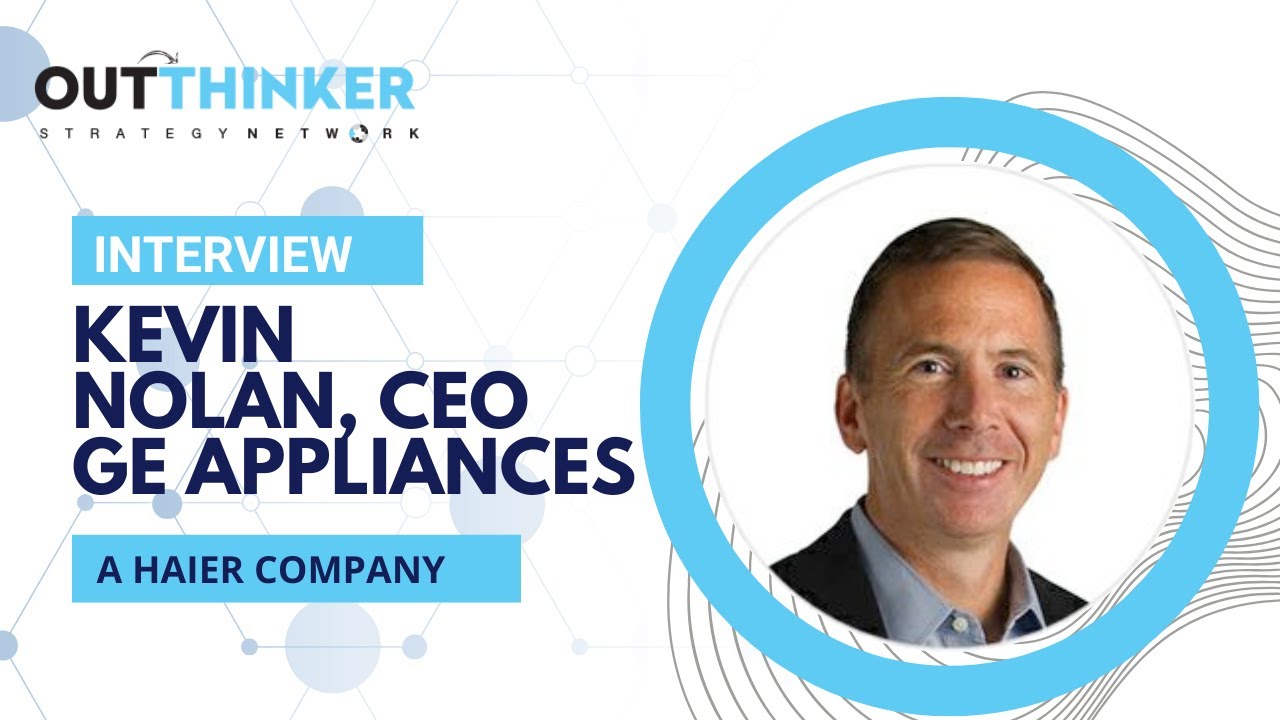
Entrepreneurs everywhere with Kevin Nolan

In this New Human Movement podcast, host Gary Hamel interviews Kevin Nolan, President and CEO of GE Appliances (a Haier company), to explore how Haier’s radical management philosophy—RenDanHui (customer‑first) and the concept of “zero distance” between employees and customers—has been applied to a legacy American appliance business. Nolan outlines the post‑acquisition performance, noting consecutive record years (2018‑2020) and accelerated growth after shedding the bureaucratic GE mindset. He explains RenDanHui as a simple yet demanding principle: the customer drives every decision, and every employee must act as an entrepreneur. This is operationalized by breaking the organization into dozens of “micro‑enterprises” that own profit‑and‑loss responsibility, supported by shared “platform” functions (finance, HR, distribution). Middle management is stripped away; compensation is tied directly to micro‑enterprise results, giving staff “skin in the game.” Nolan shares concrete anecdotes—such as the water‑heater divestiture that highlighted the need for passion and internal contracting—to illustrate the cultural shift. He describes a “zero‑budgeting” mindset that favors rapid, market‑driven reallocation of resources over rigid annual plans. Coordination across micro‑enterprises is achieved through customer‑value litmus tests: only when a shared service adds clear customer benefit does the company retain centralized control. The CEO’s role has morphed from decision‑maker to coach and orchestrator, focusing on nurturing micro‑enterprise growth and ensuring platform services meet their internal customers. Nolan also reflects on the challenges of unlearning entrenched GE processes, the weekly senior‑leadership transformation meetings, and the importance of humility and market pressure to drive adoption of the model. The conversation concludes with advice for other CEOs: listen to employees, embrace continuous learning, and let market forces dictate change rather than waiting for top‑down mandates.
Chapters
Well, hello everyone and welcome to the New Human Movement podcast. We're happy you've joined us today. We have an incredible conversation for you today. We're welcoming Kevin Nolan. Kevin is a long-term veteran of GE. He started at GE in 1989, had a variety of roles. And in 2016, GE's appliance business was sold to Haier, the Chinese-based global appliance leader. Kevin went with that acquisition. Kevin today is the president and CEO of GE Appliance, which is a Haier company. Those of you who've perhaps read or followed the Haier story, you know that this company is one of the most radically managed in the world. And we'll put some links in if you want to go deeper. But in short, it's a company of tens of thousands of employees that's divided itself up into thousands of micro-enterprises, a company that's put a huge emphasis on turning every employee into an entrepreneur, that believes in the idea of zero distance, that there should be zero distance between employees and customers. And it recognizes just a radically different way of thinking about how you organize than the traditional bureaucratic model we find in so many companies. And obviously GE is a storied company. It is one of the inventors of modern management. And so this is a very interesting story of what happened when Haier, with this radically new management model, bought an icon of American industry and a significant company in its own right. How did that merger work? And can you really indeed take a radically new management model and somehow make that work in a more traditional organization. So we're gonna have a bunch of questions for Kevin around that. And Kevin, thanks so much for being part of our conversation today.
No, it's great to be here. Thank you.
So let's start with 2 questions, really quick ones. One is, how's the business doing, right? So the acquisitions in 2016, Just, you know, from pure economics, the financials, how have you been doing over the last few years? Obviously COVID, a big disruption. And kind of secondly, you know, Haier's model, they talk about this as Ren and Hoi, which basically means this tight partnership between customers and consumers. So after talking for a moment about how the business is doing, Kevin, maybe give us your definition of Ren and Hoi. What does that mean to you at GE? What's— and what should our listeners take away as kind of the simple, definition of this new management model? And then we'll get into kind of your journey.
Yeah, so if you look at GE Appliances, it's really been— post-acquisition, it's been nothing but good, nothing but up. I would say it's been almost 5 years since 2016. And first year was really, I would say, one of unplugging from General Electric and plugging into really a new company here in North America. And if you look at post that first year, the growth rate has just been incredible. We've been growing. We've been the fastest-growing appliance company in North America. And this is coming from a place where we were steady for years. I've been in this business, I was in it about 23 years before the acquisition. And if you look back in time, it was really kind of the same revenue-based business. We were a good business. We had good cash flow. But we weren't a growth business at all. And I think that's how GE looked at us. But with HyAir, it's a totally different expectation. And I think it's totally different results. So the financial results, we had our best year ever in 2020. Before that, we had our best year in 2019. And before that, our best year in 2018. So consecutively, we've been able to perform. as a business and grow as a business, I think, under the direction of Haier. And when you say the direction of Haier, it's actually a very interesting thing because you talked about Rondonghe and what that means is Haier is a very interesting company as it begins to globalize, much different than my experience before as acquisitions came and went from GE. Is they really don't tell you what to do. What they do is give you just a philosophy to work by, to lead by, and to grow your company by. And that philosophy of Rondan Hui is really quite simple but very hard to understand. And in utter simplicity, it's about putting the customer first. And I think that's been— people always talk, oh, we put the customer first. But I've never seen a company where that is all you hear, all you think about is the customer. The customer is the center of everything. The customer is who leads us, who runs us, and who directs us. And instilling that into the culture of a company can be amazing if done right. And I think Haier has been able to unpack some methods and ways to really let you live that, you know, saying of customer first. And I think that's what's been so special about Rondon Hui.
So is that— if you were summarizing Rondon Hui, and I know it encompasses a variety of ideas including dividing the organization up into smaller units, of managing some of the internal collaboration through internal contracting rather than through layers of management. It's mostly a model that has very few, if any, middle managers. But if you summarize the essence of it, is that really it? It's like saying, What would my company look like if we built the entire company from the customer backwards?
Yeah, and there's a saying and a concept that we have is called zero distance. And zero distance is a way I think they think about, you know, what does this mean about customer first? And zero distance is, can we get zero distance between us and our customer? Can you have an intimate relationship where there's no space? And to achieve that drives a lot of different things in the company. Middle management, barriers between you and the customer. Now that can be within Hyatt internal customers, but it is very much focused on customers are at the center and you want to get zero distance. And I think that's part of what makes Hyatt— it evolves. So you might study Hyatt today and 2 months from now, it's different. Because if you think, you know, zero distance is somewhat like infinity. It's impossible to ever get there, but you've got to keep working to get closer and closer and keep adjusting and keep learning to drive and try to achieve that ultimately a goal, you know, you never actually achieve.
So, you know, when, when McKaylee and I wrote an article about Rendon High, we went to Qingdao. We spent a lot of time with, with higher It was a very challenging thing to decipher and understand exactly how these different systems worked, how the internal contracting worked, how they set these very ambitious goals, how they held teams accountable. And often, if you're in a more traditionally managed company and you look at a model that's like that different, which obviously evolved over a decade, how you'd been on that journey, it's very hard to know like, well, where do I start? What do I change first? So talk to us a little bit about, you know, what was the sequence of things you changed in GEA? What were the things that were perhaps most difficult to change? Where did you have to challenge some, you know, existing mindsets? But kind of what did you change first? What impact did it make?
Yeah, so maybe I'll roll it back a little farther from even that because first I had to know What was this? To try to understand. So, you know, I talked about that first year of integration. That first year of integration, I went to high air. I basically lived over in Qingdao and I did not understand what I was seeing. And I think, you know, a lot of it came with the lens of GE, right? Of I was looking for things that are familiar. And I think that had me going down a lot of avenues. And many days—
Give us an example of something you were looking for familiar that you couldn't find.
Org charts, right? Processes. Just, it was just very fluid. So the things that I've always looked at, you know, day one things you want to understand, I couldn't find them. And I tell you, it was hard for me to see how does— because they're a very successful company in China, very high growth. I could not understand how work got done because it was just radically different than the way I was used to doing work. So I was puzzled and I think really puzzled at first. And I think it's simpler than what I was trying to find. And there was one day where everything clicked and it was probably 7, 8 months into this one year of— Me scratching my head and trying to figure things out. And it was a very simple concept with Mr. Liang, who runs the appliance business, was we were— for some reason, we had decided at GE Appliances to get out of the water heater business. And I had worked hard as an engineer. We had developed really leading products. We were doing well with those new leading products. But we decided to sell the business. And I was angry. I was upset. Didn't understand why we would have done that because Haier has a good water heater business. So I'm like, we're part of a company now that actually has a business. Why would we sell this? So I was in a discussion with Mr. Liang on another subject, and he could see I was frustrated. And he says, you know, what's, what's bothering you? And I said, I'm really upset. I said, why did you let them sell that business? You know, we should not have done it. And he says, it's not up to me. It's up to the team. That was their decision. I says, yeah, but you own us. You could tell us we shouldn't do that. Strategically, it made no sense to me. And he said, the reason why this happened is not because of Jair or anyone else. It's because you have not adopted rondón. And I just— I actually started laughing. I said, is all you guys say here rondón? I mean, I'm talking about a water heater business and I'm talking about a sale that made no sense. Why can't we address that subject? And then he said the thing that made everything make sense. He says, the people that are running that business have no passion for that business. He said, if you have passion for a business, you'll find any way to make it successful. And then when you adopt Rondon Ha'i, you'll establish that passion and you'll find a way to make things successful. That's great. And that to me all of a sudden clarified everything. And it made it something that naturally I said, this is something that is amazing, that it's the secret. It's the secret. It's a simple secret. It's what startups, it's what entrepreneurs, they all know, but we lose when we get into a company and you surround yourself with the bureaucracy, the processes. You lose that spark of passion. So really the changes I made when I became CEO were simple because I always had a feeling that we had great people in this business. A lot of times people say the performance of the business, your people can't be that good, you're not that high performing. And I always felt the people around me were amazing. So what's the problem? And the people were passionate about different things. So we just made a simple org change where we had really one person that was a middle manager of all the different product lines and removed that. And we made all these product lines basically relabeled as microenterprises and put the responsibility of that business with them and said, you grow your business, you have a leading goal, and you're compensated. You're going to learn with that business. You're going to grow. You're going to be compensated with the health of your business. And just really unleash the passion and the power of the people within the organization. And we had to realign. Before, we were very functionally based, right? And it was driven like efficiency. So you think, oh, I'm going to have these functions that are efficient. So we changed the name of functions to platforms. You know, we still need to have distribution. You still need to have finance, legal. But we said, as a platform, you're not the most important thing. As a CEO, I'm even less important than a platform. The most important thing is the customer, and the customer needs to be served by the microenterprises, which are led by these businesses, and they're supported by the platform. So as a platform, your customer is a microenterprise. And that's a fundamental philosophy that Hyer has, is customers first, microenterprises serve the customer, And the platforms have to serve the microenterprises. If they're not competitive, the microenterprises can go somewhere else. I mean, it's as radical in Qingdao that HR has to get all their budgets approved by the different microenterprises. So HR has to justify their reason. Are they adding value? What are they doing? And everyone has to show, am I adding value? Does my customer value what I'm offering them? And is it serving the customer? So, it's very simple, but it's kind of tipping a corporation on its head.
Let's just go back and unpack that one degree more because you said, okay, you have this business that has kind of lost its mojo and you took some middle management out. And I'd like you to just reflect for a moment, like, how was middle management getting in the way of people doing the right thing? So, you took some middle management out. You then said to people, run this like your business. There's a financial upside. And they responded in some way. You unleashed kind of a reservoir of passion or energy. So, maybe just talk to us just the next level of detail, Kevin, if you would, through that change. Why was it so, you know, why did you need to move somebody out? And, you know, what surprised you about the fact that apparently people raised their hands like, yeah, let's go. Let's go. You know, I'll take on this responsibility and I really would like to run this as my thing. So, Maybe just give us the next, you know, one more bit of granularity around that.
Yeah, I think, you know, if you look at a lot of those positions within a company, you know, what's their value and what are they doing? You know, are they a filter for the customer? Are they getting between? Are they helping make decisions? Because what it really instills is bureaucracy. So before, to get something approved, a new product or some kind of initiative, they would have to go through and justify. That's why PowerPoint is probably the most successful corporate entity because everyone does everything through PowerPoint. And taking that away, that's not how a good business runs. You have to say, hey, this is good for me and there's consequences if it's not. But you're going to go there and you're going to take the risk, the chance. And people fundamentally, I do believe, They like that. They like feeling— because you can have all kinds of internal management awards. That really doesn't mean anything. What means something is you're out there, you're winning. You're winning in the hearts and minds of your customers. You can feel the financial gains that you're getting out of that. That's what I think is so rewarding that just drives people. So you see things happening naturally now. There's many things that have started. So we started with 4 microenterprises. I don't know how many we have, about 15 right now. Actually, we have something new that someone came up with. It's a new way of organizing. They called it puzzle management. I don't know where it came from, but it was a bunch of individuals passionate about a space that said, we're going to do something even different than microenterprises. And so my role and the role of management is much different. So I'm not there to judge, is puzzle management good or bad? Right. I'm there to give them the opportunity to face the market and see what the market thinks of what they're doing.
So, Kevin, a skeptic might say, well, what you did is wonderful, but there are lots of other examples of companies that, you know, have gone from functional organization to business units that are focused on particular customer segments or product lines. And so what you're seeing here is, you know, the advantages of a reorg. And I know it's much— what you did is much deeper than that. And, and you kind of alluded to it because already by saying that you started with, you know, a handful of micro-enterprises, now you have over 15. So can you kind of contrast what you're doing and what you're driving, uh, together with everyone at the GEA to a traditional kind of reorg of that nature?
Yeah, so I think, you know, reorgs is again And we've done that in the past. We had P&L organizations, and then we had matrix organizations, functional organizations. So if there's an org model, I've seen it. We've been through them all. And they all kind of give you the same results, was my experience. I never saw something change from a business standpoint. So this isn't really about organization. I think this is about stripping away what a company does. A company puts bureaucracy on top of things. All kinds of different approvals, all kinds, you know, so the judge is typically the CEO or the judge is the finance manager. So we've taken that away. And I think that's not a reorg, that's a culture change. That's a mindset change that we had to make. So this org, what we're calling it, is an organic organization. So to us, we want something that's natural. Like these other ones aren't natural, they're constructs of You know, how are we going to get efficiency or how are we going to— you know, they're constructs of how a company is going to run. They're not constructs of how are we going to satisfy a customer. And that's why I'm starting to see this thing even evolve beyond what I'm thinking of microenterprises. We're starting to see things come up. But there's a freedom for people to do that that they don't have to get my approval. I mean, we just today went out and we're getting into the mobile living business. In the past, if a company did that, you would have had a presentation. You would have had to say, here's what my returns are going to be. But this was different. What we had was about 5 individuals who were passionate about that space that said, hey, we think there's an opportunity. No budget, X budget. They just went out and started doing things. And it's very much like you see a startup. A startup doesn't come— they don't all of a sudden someone give them $100 million to go start a business. You know, it usually starts in a garage or somewhere and then it grows. And I think what we have now with this is the ability for that to happen. So when I say there's, you know, I don't even exactly know how many microenterprises because we're seeing some microenterprises create microenterprises. I don't make that happen as the CEO. This is naturally starting to happen where employees are seeing, hey, here's an opportunity I can go jump at. You know, we had another one where there was a market opportunity that was a cleaning product. And the cleaning team didn't want to do it. They thought it wasn't a good idea. We had another microenterprise that actually is in the cooking area that says, hey, I think that is actually a good idea. We'll go sell it. So there's also this kind of thing of competition of let the market decide if a product's good. The org shouldn't decide. I shouldn't decide.
Right. Well, so Kevin, you're so right to focus on, you know, getting, uh, entrepreneur action to be quite scrappy at the beginning. So you don't need a lot of permissions and you could just go and try it out. And if it sticks, then you can kind of try to scale it. At some point though, you know, these ventures typically die in large companies because they hit a wall, you know, the wall, you know, the wall of like, uh, you know, top-down resource allocation and planning. You know, we don't have money for it or it doesn't fit the strategy. So how does GE support, you know, this kind of distributed entrepreneurship that you're describing? What is it that you're doing to kind of nurture and eventually, you know, give support so that these businesses can have a meaningful scale?
Yeah, you know, I think one of the beauties with the company is, and that's Jair's theory, we have a platform. So if you're a startup, you don't have a great distribution, you don't have all the financial We have all that, and we have a brand. So it's almost cheating. I mean, we have startups that have all these things already done for them that they can just plug into. So that's part of that is this stuff, it's easier for things to scale because we already are scale. We know how to do that. And then a lot of my time is spent just trying to work with folks of, There's ways you've got to experiment. You've got to have kind of this agile methodology to your whole company, and you've got to be able to apply that and learn, right? So this whole thing is about learning and then changing and being able to move quickly. So a lot of time is spent kind of rewiring our heads on, you know, annual budgets, things like that don't really make sense, right? Because the market doesn't Consumers don't wake up one year and want something different than the year before. This is a fluid thing that changes along the time. So we have to change a lot of our internal thinking of budgeting, of how we think and how we work so we can react at the speed of the market. And that's another thing too is these startups, they can scale, but how do you scale them quick and how do you get people's methodology and mindset of when we see an opportunity to scale as quick as the opportunity will let it? And the capital somewhat self-regulates because if you're really responsible for your microenterprise, you know, before I felt with GE it was kind of like a horse. If you give a horse food, it's going to eat as much as is on the ground. And that's kind of like, you know, once you got it from management, if you could get $20 million, $40 million was better. If you're a microenterprise, be careful what you ask for because you take the burden of that Depreciation. You know, so it's also getting people to really think like, this is my business and I need to make decisions that are going to allow my business to grow because one bad capital decision will kill you, right? And the microenterprise have to feel that.
So maybe you can unpack that a little bit more, Kevin. Like, what— how are microenterprises— how do they have skin in the game? And the second question, because, you know, some people said it might be boring, after they heard you saying that you don't have a budgeting process. In a capital-intensive business like yours, you know, they might think that that's kind of a recipe for disaster. So how are you— so if you could answer those 2 questions, you know, skin in the game for the microenterprises, and how do you, how do you, you know, manage resources without budgets?
Yeah, so skin in the game, um, you know, maybe let me start with managing the, uh, without a budget. We do have budgets, but we try to move to a zero-budgeting allocation. So, you know, you still need planning mechanisms, but those plans are just plans, right? Because like, look at what happened in 2020 with COVID You know, anyone that kept operating to their own budget was insane, right? So, you know, these budgets, and we don't spend as much time to them because The world is more dynamic than ever. I think the management models that we've been built on were from very stable times. I mean, that's not what we live in today. This thing is changing weekly, daily. And so you need to have budgets. You need to have a company that can move at the pace of the market. And I don't think most management models are built around that. That's what is, I think, special about Rondon Hui. It allows you to do that. And then the other part of your question, Mike? Mr. McKelly was—
Oh, sorry. It was, you know, how do micro-enterprises have real skin in the game so they have to live with the consequences of their choices?
Yeah, so the skin in the game we tied basically is compensation. So we've tried to roll down before. We were kind of the way GE worked. You were really rewarded as a business, your total business performance. So now the microenterprises have their own comp. So you have your salary, but then you have a variable aspect to that. We've pushed that variable aspect all the way down to everybody that is a salary person, and we're trying to do some things with our hourly workforce also. So it's really how do you get alignment around the success of that business. Now there was a lot of angst on that, and I'd say it's not a perfect world because what you can have is you can have one microenterprise outperform performing and another one not. And so they might have a great compensation year and the other one doesn't. So then there's a thing, well, employees are all going to want to go to the good one, right? And they're going to want to leave the bad one. And so that— but I said, ultimately, that's nature. That's how the world should work, right? If something doesn't perform, why do you want to be on that team? So that puts pressure too. If you want to attract talent, it's like a sports team. I mean, who wants to play on someone that has no chance of ever winning the Stanley Cup or the Super Bowl? You want to be on a winning team, so you all work on that. So you feel the dynamics that are going in there once you tie it to the comp. And there are things we've done, like on a platform, we still have some parts that we feel, hey, we need to go on the total business because they need to serve all the different microenterprises. But we're trying to more and more tie it to microenterprise. And how do we get that line of sight? Because it drives so many good behaviors when you're feeling the market, really feeling it. You need to feel it in your pocketbook. Listen, we come to work to make money. This isn't like what we do for vacation. So we try to tie that compensation to the success of that business.
I hope you're enjoying the conversation. I wanted to take just a quick moment to thank Haier for supporting the work of the New Human Movement. Haier is the world's leading appliance maker with subsidiaries around the world. Over the last decade, it's been leading a revolution in management. At Haier, every employee reports to customers, not to managers, and the company has worked hard to make entrepreneurship Everyone's job. Now, back to our conversation. So, let me toss in another question as well, Kevin. So, what has happened to your ranks of middle managers? I mean, I don't know how many layers there were in GE. But I'm guessing 6, 7, 8 in a large business. So, has the pyramid flattened out? And so, what have been some of the challenges and difficulties in kind of reassigning roles and kind of Flattening the organization.
Yeah, so I would say on that, Gary, we flatten the organization from breaking the business up into smaller and smaller segments. So what we continue to try to do is if we've got a big microenterprise, is that really how the market sees it, or can we break it smaller? So I think the more we can keep breaking it down naturally flattens things, right, because there's just smaller teams, more focused teams, and focused on the true market. We still have work to do. What we did is right before Haier acquired us, we added a bunch of layers. Jack Welch, when I first started with GE, he delayered the company and he did some amazing things back then of really taking it. And I think we went down to 5 layers initially. Layers come back, right? I don't know why human beings, we have some, we just, I don't know, we feed on bureaucracy, I think. So we still have work to do, and that's why I'm saying we are not done yet with our transformation. So I'd say we've done it by breaking the business down, but we still have bad habits we've got to keep flushing out of what we have as an organization.
You know, there are 2 logics for a lot of the control systems and a lot of the hierarchy you see in organizations. You know, one is little control. You know, how do we make sure that people are coloring within the lines, not taking risks, doing what we ask them, you know, to do? So, again, it's kind of a double-barreled question. Where does the control come from? You know, you have a very large business you're running. You know, you're saying, I'm empowering these people. We're— I could say splintering the organization, dividing into smaller pieces. So, your ability to really know exactly what's going on, have optics into all of that, jumping in, you know, if you see a variance. Sounds like, you know, you've given up some, you know, some potential control there. So where does control come from? And I'd say the second question is around coordination. Because obviously I know Haier as a company, they're making, you know, big moves into Internet of Things and smart appliances. And that implies a certain coordination across all these micro-enterprises to go after bigger opportunities or to co-invest in new capabilities. So Tell us, and of course, you know, that was the logic of bureaucracy. It's control, it's coordination. So talk to us a little bit about how you sleep at night. You know, where does the control come from, the discipline come from? And then where does the— how does the connection across these micro-enterprises work when you need to do something that's, you know, beyond the scope of a single micro-enterprise?
Yeah, that's a great one. I think that's some of the trick on how to apply this properly because Listen, I'm an engineer by nature, so I like structure, I like order, and I like to have predictability. So one of the things we've done is there's certain areas where you get benefits. Like let's take software architecture. There's no reason to have a different architecture on a refrigerator than a dishwasher. So you've got to really look at where does that kind of use of something the same add value and benefit? And where does the customer see value and benefit for it? So the customers, they like the fact that things, when they get one appliance, the other one will behave, will act the same way, will talk on the same systems. They can run things as a— so there's a customer benefit to controlling that somewhat centrally. So we've been very careful to look at, is there a customer reason why we want to do that, that there's a benefit, then we should control it. And then we should have it— like brands are another one. So we don't tell the microenterprise, you know, you need to use GE, Cafe, Monogram. So the microenterprise chooses what brands they want to use. But once they say, I want to use that brand, like if you say you're going to put GE on your mark, you need to use GE white or you need to use the color. You need to have the brand guidance. So you need to have that kind of balance of what's fixed, what's flexible. And the more that is flexible, the better. And what we use as a litmus test, let's just say, is there a customer value? I think too many companies look at synergies, internal reasons why they want to do it that really aren't facing what the customer would like. Right. Just like when we get on the roads, You need to run on the right side of the road. You don't have a choice. But you have a choice of where you go. So what do you want to fix and what do you want to let variable up to the microenterprise? And that takes a lot of thought. And the other thing is my role— because people look at HR, I drive them crazy because I have more direct reports than I think any CEO has ever had in our business. And the other thing, I think that's actually healthy. Because if I want to sit there and review what all my direct reports are doing, I can't do it. I don't have enough time in the day. And so if you think, and it's somewhat you have to humble yourself, do you really add value? So if you look at a lot of our microenterprise, we have very seasoned people. People that have more experience than I have. What right do I have to sit there and judge what they're doing, how they're doing it day in, day out? They don't need that. So they'll come to me for certain things when they think I can help, when I can add value. The time I spend Is actually the small ones, you know, the ones that are just starting out, that are sitting there trying to grow. So I think it typically would be the opposite, is spend your time where the money's made, right? You know, this is our golden goose, we got to protect it, we got to spend time. I spend less time there. That's where you need experience. That's where you need someone that drives and knows that business. They— I don't add value to those individuals. And if you have an individual in one of those that doesn't know what they're doing, Get one that does. It's a mistake. And spend your time nurturing and helping where you can actually add the value.
So, Kevin, let me take you back into GE a little bit and your career there. So, you know, there's this belief, I think it's a fairly widespread belief, that large companies really can't be very entrepreneurial. It's just not like— you either learn how to do things at scale and, you know, you exploit all the size and you're efficient. but you can't really be innovative or vice versa. So what a lot of large organizations have tried to change that, right? They said maybe there's a way we can get the both/and. And GE had some of these programs. I think they had a program called Fast Works, which was aimed at accelerating things. I know they did some experimentation with Lean Startup. So what's different about what you've done at GE Appliances under Haier versus some of what you saw in GE as is trying to be a little leaner, a little faster, a little more entrepreneurial?
Yeah, so that's a great one. FastWorks, I think, was a great program. We did a lot with Lean Startup. And I learned a lot from that, to tell you the truth, a lot of techniques of how to drive and how startups think. I spent a lot of time out learning from startups. We started something while we were still part of GE called FirstBuild. which was really like an accelerator. And it's been hugely successful, where we used all these Lean Startup tools to the extreme. But what I've always found is the problem was that the upper management at GE really didn't like Lean Startup because it does take power away. I mean, it puts the power in the market. So there are antibodies in companies that will try to reject that thinking. And so I think what happened was you might put this thinking in, but you never change the process of approval. And they tried to have internal boards and all kinds of— that doesn't work. The only board you should have if an idea is good or not is truly the market. I don't think we could ever really adopt that.
Yeah. I mean, in a way, what you're saying is you get a choice. Are you going to let customers run your company, or are you going to let managers run your company? It's not quite that stark, but philosophically it's kind of that stark.
Yeah, and I think you've got to, as a manager, I think a lot of people, it's— and listen, I never thought of I wanted to be a CEO. I think that maybe is an advantage I have because CEO was not in my path of what I really wanted to do. It just kind of happened, okay? Some people, why do they want to be in that seat? What drove them to that seat of CEO? Was it the power? Was it, I want to fly in a corporate jet? What drove that decision? I think that can mean a lot, and that can be if you can really adopt this or not because you've got to be at peace with yourself to say you're not the smartest one in the room. You don't know all the answers, and your role here is really to kind of help orchestrate an organization. not tell people what to do. And, and that's a different thought process that you need.
Yeah, you know, in so many, in so many organizations, you know, we talk about leaders and leadership, but what we really mean is like bureaucrats, right? We talk about leadership development and then we stratify that and, you know, and, and, and it's really preparing people for bigger and bigger administrative jobs. How, how has your definition of who is a leader changed over the last 5 or 6 years?
Yeah, I love that question. You know, we had all these like models that were, you know, if you want to get this role, here's the boxes you need to check off amongst those roles. You know, so let's take an example of that water heater business. Okay. So that water heater business that we got out of that I started the conversation with, I knew some people like myself that were completely passionate about water heaters. I mean, it sounds like the craziest thing you could do.
Really? There are people in the world who are passionate about water heaters?
Yeah, there are some, right?
All right, good. I'm glad for that. We need them.
So I called up one of those individuals and I said, you know, what do you think about getting back into the water heater business? And this was my day 2 of being a CEO. And he says, I, you know, I would think I would love it. I said, what about you want to run the business? And he says, Yeah. Now, that individual would never have been on the path of having all the right checkboxes. The checkbox he had is what I think is what an entrepreneur has, a love for that business. And he's doing extremely well with it. He's driving that thing. And so, you know, that's why I think we try to control and orchestrate and even manage people's career path. You don't know their capabilities. There's no special way. You look at myself. I got in this role with a different background than the person beforehand. You can't sit there. It's not high school. You can't say you need to get these courses to pass the grade. What do you need more? You need people that are focused and driven in the area that they work, and they come to work excited every day. You always hear entrepreneurs never have weekends. Right. They love what they're doing. And why can't work be that way?
It's, yeah, it's, it's, you know, this widespread conceit that basically the, the world needs to be understand— made understandable at— for the people at the top so that they can move the chess pieces on the board. But as you said earlier, the world is becoming increasingly incomprehensible. There's not someone who's smart enough, has all the bandwidth, the knowledge in the world, right, to make the right decisions at the center. And so what you're saying is You know, it's, it's about changing fundamentally the role, you know, of, of, of the person at the top. And that person is more of an architect than an operator, right? They're more helping create the environment for other people to find their opportunities rather than to identify the opportunities and drive them, right?
Yeah, that's exactly it, right? And that— because that's how things should work. That's how actually business— because as consumers, who thrives, who doesn't, it's who, who gets you know, in the market can do well, right? It means nothing what the internal people think. Nobody buys an appliance because I'm at the seat. They don't care,
right?
Right. You got to focus on what they care about.
Kevin, when you think about this model and you think about, you know, how you think about how it could propagate and, and, and perhaps how it should propagate, you know, it's— I find a certain irony in this because over the last few decades in the US, in Europe, obviously a lot of good jobs, a lot of manufacturing jobs moved to China. And now you have a Chinese company coming back with a management model and says, here's a way of unleashing a lot of capacity in your workforce, uh, and, and, and, and building a much more competitive enterprise. So if we, if we just stick for manufacturing for a moment, which, which, you know, in the past that was a source of a lot of good jobs, you know, if, if every, if every manufacturing company in the United States or in, in Europe, if You know, if they were doing what you guys are doing, do you think that changes the competitiveness of the United States or European companies in terms of, you know, their ability to compete globally?
I totally do, Gary. I think, you know, the biggest issue we have in America right now is we're not humble. We don't have humility. We've forgotten that we can learn from anywhere, right? We're closing our borders down to lessons and learnings from all over. So, you know, what Rondón Hui has, you know, we say at first in the company the name is— I don't even pronounce it right, I'm sure. Okay. But why can't we learn from it? Right. Why can't we look at that and see now, could we take exactly the way it's applied in China to the U.S.? No. And it would make no sense to because the market's different. But why can't we open our minds? And the same with manufacturing. You know, if you look at the plants we have in the U.S., if you go to Asia, if you go to Korea and other places, there are so many things we can learn. I am convinced that our manufacturing plants that I'm running here at GE Appliances are going to be the most competitive plants in the world. You know, I'll put our stuff against anything. And you have to be. Now we have issues. You know, you could say labor and this. But you've got to learn to deal with your reality of your locality. and be competitive. And I embrace that competition. I embrace it because we're determined to— because if you're zero distance, you're going to be more competitive if you're making things where your customers are. And that's one of the fundamental theories of HyAir also. So I have to make things where my customers are, and my customers need things competitive. So I have to figure this out. Right. And I think the only way you're going to figure this out is learning. You've got to continue to learn and adapt. Right, and have the goals there for that. You know, I think too many people just give up. Oh, it's unfair, we can't compete. Nothing's unfair. Nothing's unfair. Just compete, right, and learn and see what's going on, what's the issues. Because I think we took our foot off the gas with manufacturing in the U.S., right? And why?
But you can't compete if you're not using 100% of that human capacity, 100% of that entrepreneurial energy, 100% of that passion. It was very interesting. We started out, Kevin, this conversation talking about passion and that, you know, that's what you had to turn back on. And, you know, I think if you look at the way we manage people on the front lines, what CEOs are asking, how do I turn on the passion of every employee? They're not. They're saying, you know, how do I get the right people in the job, make sure they're doing the right thing, you know, don't ask too many questions. And then you see this reflected in the data that, you know, only 15% of people around the world, 1-5%, are truly engaged in their work. So You know, the other thing that you said that really struck me, you know, you said Haier wasn't trying to impose some kind of detailed operational model. And I assume that when GE acquired a company, that was exactly what happened. There was the GE way and it was, you know, it was every process, everything. And, you know, one of the things— and this is just my little bit of editorializing— but one of the things we've seen often is when people look at a company like Haier or indeed what you've done in GE Appliances and they want to come study that, it's interesting, it's an outlier, it's producing extraordinary results. What they want to come in and look at is what you're doing. So, Kevin, how exactly did you structure the microenterprise? What exactly is that reward structure? What exactly are the roles of these platforms? And then, they try to like cherry-pick some of these tactical things and take them back. And what they don't see is the things you're doing tactically started with a new principle, a new idea, a new way of your responsibility to customers and the potential passion of your people. And so, They look at companies like yours and say, what are you doing? When what they should be asking is, how do they think? And so it's partly a question of humility for sure, but it's partly a question of, no, no, at some point you've got to go back to philosophy. You've got to go back to first principles because if you simply try to cherry-pick a set of tactics, you're never going to— is that a fair—
Yeah, and Gary, that's what that— I mean, look, I was the one at GE, I was a process guy. I'd go impose process whether you liked it or not. That was my job. That was my role. And that's what I— when I went to Haier, that's what I was looking for, right? And it was so simple. It was staring me in the face, but I couldn't see it. And I think, you know, the thing is very simple and everything we do, the tactics of microenterprises, the tactics of, you know, how we're doing platforms, they're just tactics that are trying to get us zero distance. So those are going to change because they're not the best. Right. 100% guarantee they're not the best. That's why I was excited to see this team come up with puzzle management. I mean, it's like, I don't know what it is. I don't know if it's good or it's bad, but the fact that it's changing and evolving means that we're focused on a goal and not focused on these internal processes and these ways we work. So that's the thing with Haier. It changes all the time, and it should. Because we're going somewhere, right? We're not staying still.
Yeah.
And so nothing—
One of the things you said that was a little bit scary, actually, Kevin, but it illustrates one of the challenges here. So, you said, I'm 7 months and higher. Like, I am there. I'm immersed in this. There's no place to go. I'm learning and I'm eager to learn. And yet, it took that kind of immersion and then quite a bit of time To unlearn, right? A set of things that have been familiar to you. And that kind of does say about kind of just the power of that old model. It's so familiar. We've seen it so many times. Whatever organization you go into, you'd find more or less the same. So, talk for just a moment. What did you do to help the unlearning of your team, the people around you? You know, you had this firsthand experience. It took you a while, understandably so. It took us a while when we went and tried to understand it. So how did you help kind of fast forward the learning of the people back in GE about what have I seen, why does this work, and why should we give it a try?
You know what's interesting? The microenterprise, we didn't have to do much there because if you tell someone, hey, you can have this and run with it, they go. So what we do, we do have a transformation team. So every week we have a meeting and there's 6 or 7. It's really the senior managers. Where we get together every week and talk about the transformation. What are we learning? So we're the ones that need to be retrained, right? And we're still doing it. We still meet every week. We don't really have an agenda. And we just get together and talk about what are we seeing, what's the issues, you know? And it's unstructured, but it's kind of an acknowledgment that we've got to keep learning and changing. And so, and we're the ones that really need the retraining because I think If you look at, you know, the training is kind of the inverted triangle. The most training needs to be me as a CEO. The least is the people that are doing the work. So that's where we've been spending our time, on that senior management, on us, just what are we doing and is it really getting us where we need to go?
So Kevin, if you have— we will probably have a couple more questions because I know we're running out of time. Uh, and I'll maybe ask the next one, which is I'd be curious to get your perspective on, you know, what you would tell a CEO who comes to you and says, I want to get me some of that. I'm what I want to do. I want to get the entrepreneurial energy that you, you've been able to unleash, uh, Kevin, at your company. But I, I'm like you, I, you know, like GA before, mine is a very traditional company. What do I do? How do I get started? How do I make sure this isn't just like You know, the flavor of the month in terms of programs and other things that we're doing. I don't want this to be an incubator that fizzles after 6 months the way it has, or the Shark Tank program or whatever hell I've tried before.
So if they came asking those questions, I would feel very confident that they're going to be able to accomplish great things. Because most people don't come with those questions. They kind of hear about, oh, what's going on? And you can see right in their eyes, you know, they're just, they're not gonna change. So change starts with yourself. So change starts with you. And if you're coming saying, hey, I want it, there's gotta be a better way. Like, that's what my basic theme is, there's a better way. And if you believe there's a better way, you'll go and search for it and you'll go seek it out. If you think, like, that's our problem when I was back at GE. We were the best way. That's what we thought. So why would I go learn a better way? We're already the best.
Yeah.
So until you change that thinking, you'll never learn.
And how do you change that thinking? Sorry, sorry, Kevin. I just want to follow up on that. How do you get more CEOs or executives to be woke about this? Like, how do we open their eyes?
I think the easiest way is the market. Those CEOs are going to die. Their companies are going to die. They won't be successful. To compete in today, I mean, if you want to keep up with our company, you better be adapting and moving fast. I love our competitors. I don't think they're changing. So we'll see what happens. So if you don't change, the market will teach you. So what do you want to— do you want to teach yourself or do you want the market to teach you? Because the market gives really tough lessons.
Right. But I would imagine— and I'm sorry, I'm asking a lot of follow-ups, but this is so interesting, Kevin. But I would imagine that there's something in the ecosystem that can be done to program people, you know, not program people's mind, but make them aware that there are alternatives, that there are better ways of, of managing, you know, so that, you know, whether it's business schools or, you know, CEOs networking with each other where, you know, there's a consensus, you know, we just need a better model. And, you know, the, the fear that I have is that you know, higher. And, and what you guys are doing at GA is, is amazing, but it will be seen as almost like, uh, an exotic, you know, a kind of exception to the norm. Oh yeah, it's, it's interesting how, how quaint, you know. It's like going to the zoo and seeing, uh, platypus or something, right? Oh, you know, uh, kind of, um, and like, how do we— because I would imagine that, you know, society in general, based on what you were saying earlier, that, you know, we could be— make manufacturing more vibrant and create better jobs through this kind of model, it's in our interest to have this propagate and we may not want to wait the 20, 30 years it takes for the market to bring its discipline to bear in an entire industry.
I would say the simple thing is your employees. If you're a CEO, your employees know the model they want. They already do. They know they want to take this bureaucracy— You can just listen to your employees. They'll tell you. Like, I don't think any employee comes to work every day, please tell me what to do. You know, who likes working for a bureaucrat? I haven't met anyone that says my bureaucratic boss is the best thing that's ever happened to me. It doesn't happen. So if you listen to your employees, they'll give you the reason why you should change.
Kevin, that's, you know, it's just amazing insight. And it's like so hopeful because you have a company you know, that's more than 100 years old, uh, a, a business that in GE's term was kind of a mature business that they had lost interest in, uh, and, and, and yet, you know, you, you can innovate radically in how you manage and lead in that sort of organization. And, you know, the thing I took away, and maybe we end here and you have a final comment on this, is how your role has changed as a CEO. Because you said You know, you really are no longer the way you've described it. You don't see yourself as decision maker-in-chief, strategist-in-chief, you know, the captain of the ship. So if, if those are not the ways you would describe your role now, how would you describe, uh, your role as a CEO? What is, what is a new model of what, what a CEO needs to be?
Yeah, so I, I'd say I have like 2 key things that I need to do. One is I need to be a coach. So can I help these microenterprises grow and flourish? Can I do that? And then also for the platforms, can I help them feel the market? So we have a concept too of these microcontracts. Like if you're a platform, you need to serve that microenterprise. So I'm also a filter. When that microenterprise doesn't feel they're getting the best service, I need to get involved, right? And I need to get involved and work with that platform and give them basically— I don't give performance appraisals, right? And I think that's another thing. HR loves these, and there's all kinds of software and systems for performance appraisals. That's not what you need. The performance appraisal for the platforms is the microenterprises. They give the performance. The performance appraisal for the microenterprise is the market. So the microenterprise, I don't really have to get involved much. Their performance is, you know, you as consumers, they do it for me. But the platforms, I do need to get involved to be able to make sure that that feedback is getting back there so that they know where to improve, what to do. So kind of a coach and then kind of an orchestrator of those platforms, making sure they're truly serving the microenterprises and not serving themselves.
Kevin, like, thank you 100% for sharing like an amazing transformation story, which is like deeply inspiring. I think is a role model in so many ways. And, uh, uh, you know, we'll, we'll ask you maybe for some links and things that we can put up. And if people want to know more about GEA and what you've been doing, but, uh, thanks a ton for being our guest today.
No, thank you. Great talking.
Thank you. Thank you.