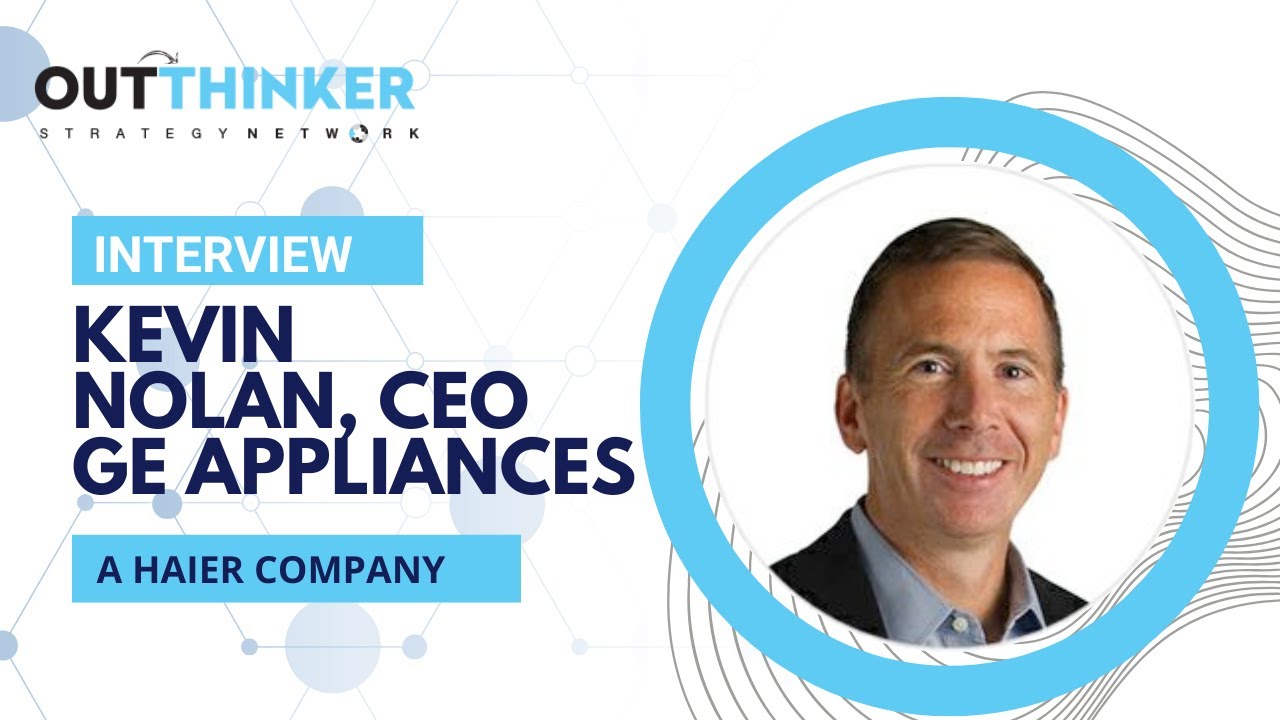
Kevin Nolan, President & CEO of GE Appliances | CEOs You Should Know

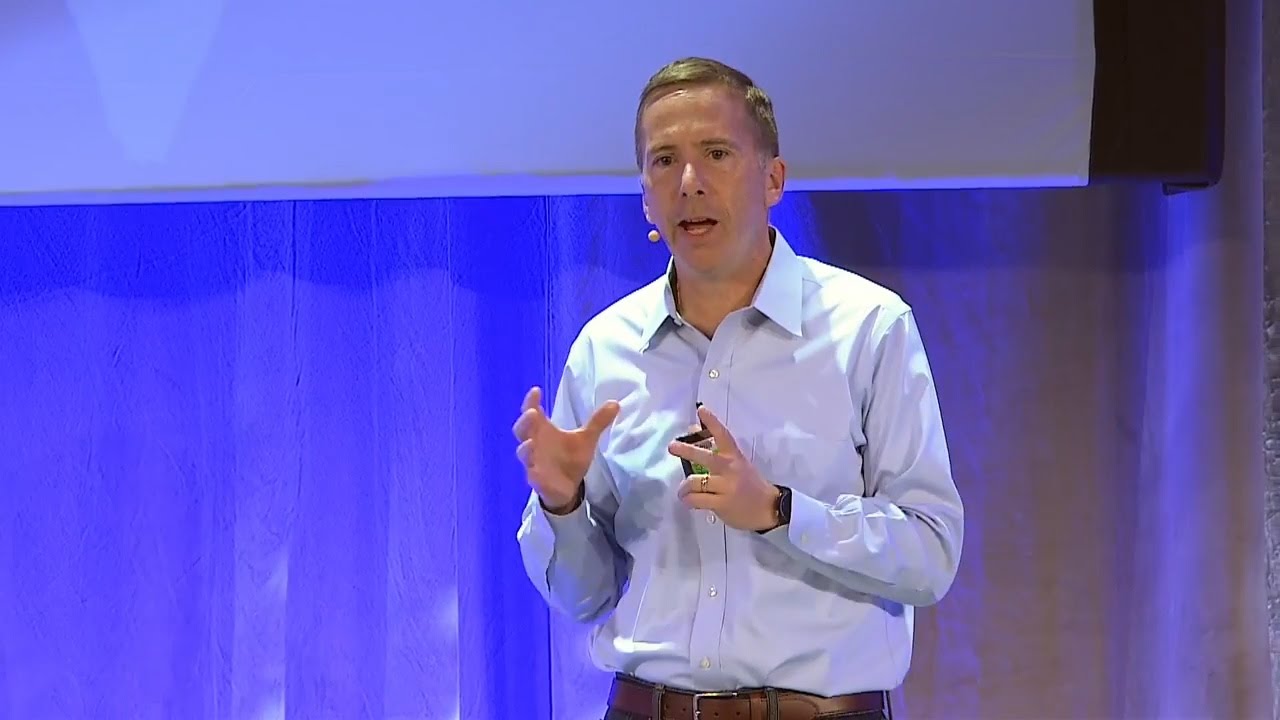
In this interview, Kevin Nolan, President and CEO of GE Appliances, shares his personal journey from a math‑loving student in Connecticut to a 35‑year career at GE, highlighting his engineering roots and progression to CEO. He explains GE Appliances' consumer‑centric mission—"making good things for life"—and how the company has reshored manufacturing, investing $2 billion to modernize U.S. factories, upskill workers, and adopt advanced technologies. Nolan describes the company’s micro‑enterprise structure that decentralizes decision‑making, enabling rapid response to consumer needs. He outlines recent product innovations such as an energy‑efficient combo washer‑dryer and hybrid water heaters, and stresses an open ecosystem approach that partners with other brands. The conversation delves into the FirstBuild co‑creation platform, which invites consumers to help design new products. Nolan discusses industry challenges like cyclical housing market demand and the need for nimble manufacturing. He offers leadership advice—stay humble, curious, serve consumers, and empower teams—and urges more people to pursue engineering careers, noting a national talent shortage. Finally, he points listeners to GE Appliances’ social channels and the FirstBuild YouTube channel for updates.
Chapters
Welcome everyone to this week's edition of CEOs You Should Know. I am joined by Kevin Nolan, the CEO of GE Appliances. Kevin, thanks for coming in today.
No, it's great to be here.
We're excited to have you. Let's start with your journey. What initially really drew you to the engineering and technology field?
Well, I think, you know, being a younger person at the time, there was a lot of things I wasn't that great at, but I love making things. And I saw a couple of things. I didn't see many factories. I grew up, you know, right nearby Stamford, Connecticut.
Nice.
I
went to UConn. It's a big family thing.
I went to UConn too, so we've got that in common. But, you know, I had all my parents, they were teachers. Everyone we knew was teachers, and that didn't excite me, and I knew I wouldn't be a great teacher. But all of a sudden I met someone that knew about engineering and math. I like math. And once I got into it, I started to love it.
That's awesome. And what ultimately had you end up at GE Appliances?
Well, I started out of UConn. I got a scholarship from GE at the time, and there was a business up in Plainville, Connecticut for circuit breakers. Kind of the right place to build circuit breakers, I guess, was in Plainville. But I was up there, and then I love manufacturing. And from there, we had a plant in North Carolina, and I went there and we were making electrical equipment. And soon a lot of that had been transferred away. And that's what happened also in Connecticut. Some of that manufacturing went away. And I went— GE Appliances out in Kentucky, I knew still had a ton of manufacturing. So I said, I want to be near that and moved over to that business.
Nice. So tell us a little bit about GE Appliances and what's the core mission of it. I know the vision of the company is making good things for life and really driving your operations, right?
Well, that's it. You said it. We're so focused on what do we do to help consumers out? What do consumers want? And that's what's fun. I mean, everybody knows about appliances. Mm-hmm. And, you know, it's fun to see what we work on, being in homes, getting feedback on the things we make. And when you make circuit breakers, there wasn't much feedback. You know, those, you never want to actually know about 'em. And it's fun being somewhere where we're in everyday life. You know, we're in your homes, we're in there helping folks.
That's awesome. Well, it's awesome to see that you found your passion, right? And you're living, breathing proof to follow that passion and have a successful career. And I know your career at GE Appliances spans over 35 years, right? Can you share what's been some of the evolution throughout those 35 years?
Yeah, you know, I love engineering and I love manufacturing. So I've had all kinds of different roles, but most of my roles have always been in engineering. I was the CTO before this job. And I would say every role was very similar. It was about bringing new products, trying to bring innovation out. And so even though I've had different roles, I feel like I really haven't. Maybe I've grown in scope of what I do, but I still consider myself an engineer, even in my current role, focused on how do we just bring great products. At the end of the day, that's what the company needs to be about.
100%. Best quality products possible. Throughout the span, is there any most memorable moments or milestones that you're most proud of?
I think when I look back, it's really about how do you sit there and make exciting products, make innovation, but also the most rewarding thing is the teams we work with. I mean, out at GE Appliances, great group of people that have a focus that is all about how do we make sure good quality, good products, and also how do we manufacturing. So for me, the proudest thing is seeing manufacturing come back. When I went to Appliance Park, everything was going away. And being able now to say, hey, manufacturing's back, we're bringing this stuff back into the States, makes me real proud.
That's awesome. That's very cool. And especially bringing back to the States, right? Remarkable growth you guys have been experiencing, doubling your business since 2016. What do you contribute to that success?
Well, when I got into this role, it was all about how do we focus more on the consumers? You know, when we left GE and became part of Haier, I think it was time to rethink a lot and rethink a lot of what we do, what's our mission, and what are we about. And ultimately, it's about bringing out good products. And that to me has been one of the most exciting journeys we've been on. And to do that, we've really focused on how do you take power away from the top and decentralize it and put it down to the people that are closer to the consumer. So We have a theory of what we call micro-enterprises, and we kind of broke the company up into these micro-enterprises so they're much more focused and can react much quicker to true consumer demands.
That's awesome.
So a lot of it is about giving power up from a CEO. So I'd say a lot of success we've had is because I've had not everything to do with it, right? It's been more about a team that's focused on bringing things to consumers.
That's awesome. Empowering the people and their strengths, right? So I know your products are in more than half of all US homes. And how have you been part of the product development? I know you said that sometimes engineering's at the core of everything you do. How do you feel like that presence has helped you really expand with the consumer base?
Yeah, I'd say I probably don't do my role as many CEOs would because I still like to get my hands into engineering.
Best CEO.
I still like to be involved in products coming out. And so what I see is we've really upped our game on innovation, on NPIs, on new products coming out into the market. So if you look at the rate of what we've been able to do since being in this role, I do think we've made an impact. I do think you're seeing more innovation come out, more new products, more manufacturing coming back. And that's, that's what's so important to me.
That's awesome. Well, the growth, growth is proof of it. Speaking of investments, right, you guys invested about $2 billion into US operations. I know we talked about manufacturing more here in the US. What are some of the specific projects or initiatives that are coming out of that investment?
You know, a lot of it is how do we really modernize our manufacturing? Because, you know, in the US we do have a problem. Things were outsourced for so many years. So how do you bring things back and do it efficiently and make sure you're doing it at the quality and the productivity levels we need? So it involves a lot of technology. So, you know, before I was always involved in technology on the product, but you really see what's most important is technology in the manufacturing sector. And that's been a problem. It's not that easy to all of a sudden take a 2, 3-decade hiatus from manufacturing in the US to all of a sudden get really back into it. So there's a lot of focus now on how do we upskill? How do we start really modernizing these factories so they're the most productive places in the world?
That's awesome. Well, quality of the product, I'm sure, is super important to the consumer. And then also a lot of people really care about it being manufactured here in the US. So I think it's a win-win situation. What are some of the new products or technologies that we should expect to be developed over the next few years?
Well, if you look at what we're seeing now is a big focus on energy. We've got a product came out that we call our Combo, where wash and dry in one unit. I think people love the convenience, but what they don't realize is how energy efficient that is. It is really groundbreaking on—
That's awesome.
On its efficiency. But you're going to see we've got Hot water heaters doesn't sound very sexy, but they use a lot of energy. And we were the first to bring a hybrid unit into the US. We got new ones coming out. So I think it's how do you get customers great products, but at the same time, how do we save energy? How do we bring more convenience?
Well, you guys are the number one, you're aiming to become the number one ecosystem company in America. So that vision aligns with that. What's next within that space?
If you look at, we have a real feeling that we need openness, right? Sure. The consumers, they don't want to just have one thing in their home. They want to have whatever they want. And we don't want to dictate, here's how you have to use things or what it is. So we're very open. And being open means we got to work with others. We got to work with partners. So you look at products, they're connected, but why do we want connected products? And I think what we really focus on, what are the consumers looking for? And if you have all kinds of different brands, different things in your home that are smart, we just want to be part of that in the way that you want. So that's what we mean on ecosystem of how are we part of your home the way you want us to be part of it? And we don't want to dictate that for you.
That's awesome. Well, it's following technology, but it's also following what the consumer wants, which is ultimately probably one of the most important things. So a lot of positivity, right? A lot of great work in the manufacturing space, a lot of growth. What are some of the challenges you guys are currently facing during this time?
Well, appliances is a cyclical industry. So if you see the economy go up and down, you see the housing market, it's difficult at times. And you look back 2008, for example, in the appliance industry, big housing crisis, those things affect us. But at different times, consumers want different things. So it's how do you react quick enough if you start seeing— right now, it's a big replacement. Going on. So you don't see a lot of total kitchen rebuilds, et cetera. So how do you make sure you got the right products at the right time for what the country, the economy is going through? And that's a challenge because things change quickly. And how quickly manufacturing can react, product development can react, it's a tough thing because we are a short-cycle business.
Yeah. To your point, right, with the housing market, probably a lot of people are doing remodeling. So appliances are probably very top of mind for a lot of consumers.
Yeah, weather, it's funny, different cycles, different things. If there is a housing shortage in the US, I'm just seeing today that interest rates are starting to go down on mortgages. That's a good thing for us.
Yeah.
So these things affect our business and affect, you know, what we're gonna start seeing in the next 3, 4 months, 6 months ahead.
That's awesome. What advice would you give to emerging leaders, especially in the technology and manufacturing space?
I think if you look at, you know, from a technology standpoint, is you gotta realize that all the ideas are not inside your company, they're outside. We have a fundamental belief in co-creation. And I think the way a lot of companies innovate, you know, they're very closed door, they're secretive. We've turned that on their head. We have a thing called FirstBuild. It's a business we started that really takes innovation to a whole different path of innovating with your consumers. Mm-hmm. And stop having secrets, stop working on things that you don't know whether consumers are like or not. And I think that means you've got to give up some power. And I think most CEOs, if you're more humble and if you're more focused on being serving people instead of trying to keep all the power at the top, you'll have success. And I think that's the main thing that's driven our business. And, you know, you talked about the results. It's trusting your people and trusting your people to be in touch with the consumers.
You talked about your people a lot throughout the interview, right? Like trusting in them, making sure that they're passionate and have the experience there. For other CEOs that are trying to build good culture within their organization, what's some advice you would give them?
I think it's, why do you want to be a CEO? What's your real objective? It's something I never, truthfully, I never wanted to be. I want to
be an engineer.
But I think there's a lesson in that of what's driving you. Is the position driving you because of the seat you're sitting on or how you can have an impact into the company? and how you can impact into whoever you're serving. And I think if you can keep focused on what's really important, that's the advice I would give is keep humble, keep curious, and focus on what the mission of the company's really about.
That's awesome. That's a great mindset and advice for anyone that's tuning in, right? What are some of your personal and professional goals? What's next for the next few years?
You know, to me it's how do we keep innovating? How do we keep making products that excite our consumers? And it's a challenge, right? It's, it's one where we're— we have large factories, mass manufacturing, but to me it's how do you make mass manufacturing nimble? And how do you make it so it can change quickly with preferences and desires of consumers? So as I see, as we modernize that manufacturing, I think our ability to do that is going to get better and better. And that's what I hope the future is. And that's what I'm pushing for.
That's awesome. Well, it's awesome to hear that you found your passion, right? And you've been able to continue to do so and do such great work for the organization and for your team and really for consumers out there. We covered a lot about GE Appliances. Do you feel like there's anything we might've missed that you want to let our listeners know?
You know, I think it's, it's about where things are going and, you know, how we think and how we, how we work is if you look at this country, you know, it's important. Manufacturing is important. And I think One thing we focus on a lot is education. And as an engineer, I'd say a big shortage we have in this country is engineers right now. So anyone out there that's got children, or, you know, if you're listening and you're thinking what I want to do, take a look at engineering because I think it's a great career. The future for that is going to be bright. You look at AI and all the things that are going— having ability to use tech, to understand tech, I think is going to be more and more important going into the future. So encourage people, encourage people to get into that line of work.
It's awesome. It's a great industry. So how can our listeners stay up to date to everything that's going on in the developments with GE Appliances?
Well, I think, you know, we have social out there. There's a lot of things that we post. One fun thing is if you want to see the cutting edge of what's going on is FirstBuild. So FirstBuild's got a YouTube channel and you can see what we're thinking about, what people are thinking about, and also get involved in our product development. So if you want to have some fun, tune into that channel, and it's pretty cool to see what they're doing down there.
That's awesome. We got to tune in. We'll put the link in the video so everybody could click over right over there. Well, Kevin, it was great having you on. Thank you so much for taking us through your journey, telling us a little bit more about GE Appliances, and really sharing all the advice with our listeners today.
No, it's a pleasure to be here, and thanks for the time.
Yeah, it was a pleasure having you. Thank you guys for tuning in. Tune in for next week's edition of CEOs You Should Know.