Interview with Kevin Nolan, President & CEO of GE Appliances, a Haier Company
In a live interview at the Beyond Hierarchy Summit, Kevin Nolan, President & CEO of GE Appliances (a Haier company), explains how the business was turned around after its 2016 acquisition by Haier. He describes a shift from a bureaucratic, top‑down organization to a customer‑obsessed, entrepreneurial model built around four fundamentals: a bold leading goal (becoming number one in North America), a culture of entrepreneurship and zero‑distance to the customer, a micro‑enterprise structure that gives product‑line leaders decision‑making authority and budget control, and a reward system that ties compensation to market performance. Nolan details how the micro‑enterprise model grew from four to about fourteen units, how the CEO’s role changed to a supporter rather than a commander, and how performance appraisal is being re‑imagined to let market feedback replace traditional reviews. He highlights the FirstBuild innovation lab, a co‑creation platform that hands product development over to customers and external makers, producing breakthrough products such as the Opal Nugget Ice maker and a high‑temperature hearth oven. The conversation also covers metrics (revenue, cash flow, EBIT for micro‑enterprises; passion, speed‑to‑market, and customer engagement for FirstBuild), the challenges of relinquishing control, internal resistance, and the need to guard against reverting to old habits. Nolan discusses diversity, bias reduction, and community engagement as natural outcomes of giving people a voice, and reflects on sustainability and the broader social impact. He ends with personal wishes (more time for a CNC lathe project and a stable global environment) and a call for continuous learning and abandoning conventional wisdom.
Chapters
Okay, so, uh, thank you, Kaihan. Uh, I hope you all have enjoyed. For those joining right now, welcome to the, uh, Beyond Hierarchy Summit. So, uh, now, I mean, we saw this model that Kaihan showed about how a higher approach, like the situation of being more adaptable, uh, to this, uh, war that you're seeing right now, But we will have now, I mean, the pleasure to see how that is in reality, in action, with the president and CEO of GE Appliances, Kevin Nolan, that will be here with us in a second. So he will, of course, show to us in more details and have a conversation with us about how he implemented this model, how he was successful implementing this completely different model that we are seeing in most of the organizations that still have like a hierarchical model, a more traditional model. So, and to talk to him, we also have Kalina Nikolova here that is one of our members of the Strategic Outthinkers Network. But her main role is as Vice President of Business Operations and Strategy at Yahoo. So I welcome both of them. Thank you. We initially will hear more about Kevin. and we will have this conversation with Kalina. Of course, and if you have any questions, please comment in the chat wherever you are. If you're on YouTube or if you're on LinkedIn, please just comment and we will try to use as many as possible. Thank you.
Wonderful. Thank you so much, Claudio. And Kevin, good morning. Welcome.
Thank you. Thank you very much.
Wonderful. Super excited and very humbled to talk to you today. I do want to say a very special thank you from, from me personally and of course from everybody. As Claudio said, I'm one of the probably first members of Outthinker, and it has been a critical part for all of us who are part of that network because we continue recognizing that we have to think and update ourselves with the latest thinking. And it's truly thanks to business leaders and thought leaders like you who come to share their experiences and their wonderful practices with us that we are able to do that. So thanks again. And I think we would love to kind of pause and step back and just give you a few minutes to tell us about the model. Kaihan kind of set it up a little bit as a larger theory, some amazing research results, but let's spend a few minutes listening to you. How, how did you come up with the model, implement the model? What has it meant to your education?
Okay, excellent. Everyone, you can hear me okay?
Yes, we can hear you. Thank you.
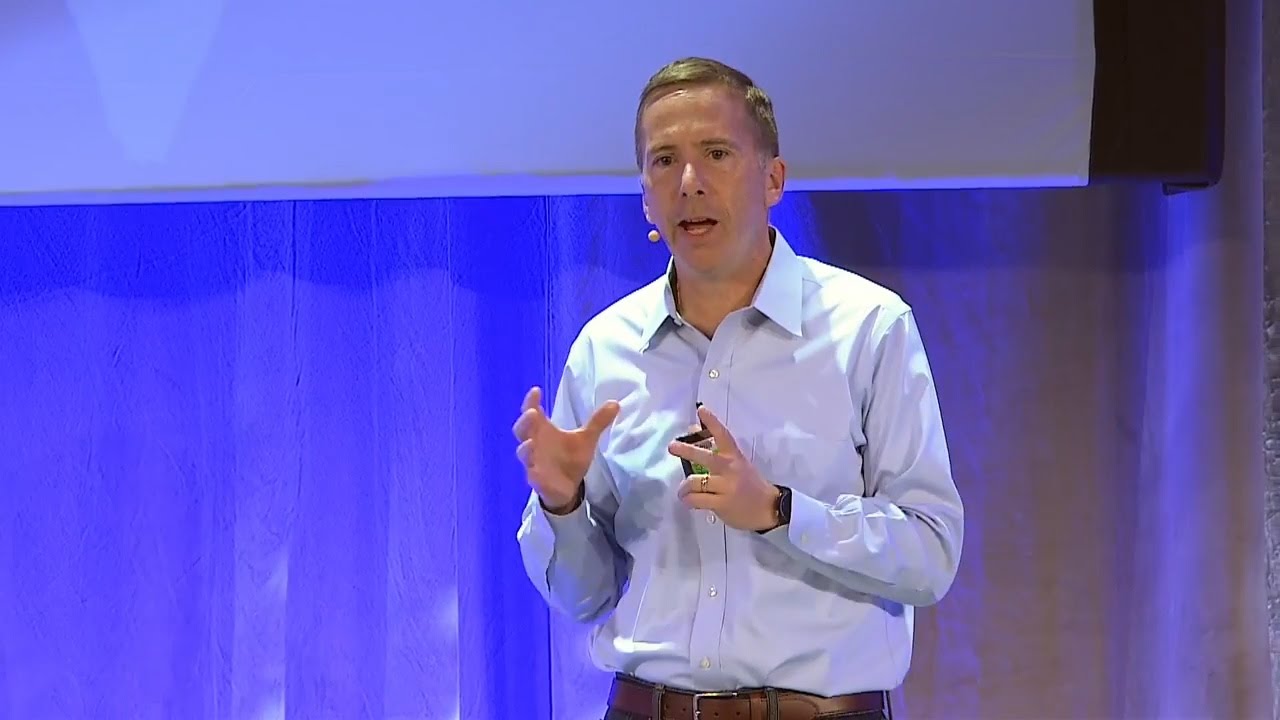
Okay, so what— I had a presentation, but due to some technical difficulties, you're probably lucky you— or unlucky— you'll see me, not the slides, but I'll talk through it quick. Quickly to give a high level of what our transformation has been like, and I guess what are the key elements of it. I guess first, full disclosure, the numbers were a little off as far as what our transformation has delivered. When we were sold to Hyatt, we were around a $5.5 billion business around 6 years ago, and this year we'll end around $11 billion, you know, organically grown. So I think the numbers were a little different, but the story is the same of really a good turnaround for our company. So GE Appliances, and you can tell from the name, was part of GE, and we were part of the original GE. So if you go all the way back to Thomas Edison, you know, our company brought residential refrigerators into the market. It's kind of innovations that has really changed the lifestyle of folks around the world. And so we have this history, we have this American iconic company that people know of. When you really think about GE, you would think light bulbs and appliances and really the electrification of America. And we've always been very proud of that history, proud of who we were. But I think that pride sometimes got in the way of us moving forward, us transforming, us changing. And we're relying on our past, our history, And not really looking forward into the future of what can we be, who can we be as a company. You know, I've been here a long time. I came right out of university into the General Electric company, been in appliances from the '90s. But we, all the time before Haier, we were a company that really didn't have any significant growth. We were flatlined really for 25 years or so around the same size. We had, I would say, incremental innovation coming at us, but we didn't realize we had really become a bureaucratic company, very top-down driven. It wasn't nimble, we weren't market-focused, and I think it was showing because we weren't growing. So then Haier came into the picture, and Haier to us was a very foreign company, and not foreign because Chinese, because we've been dealing with a lot of different Chinese companies for years. And my background, I'm an engineer, so I spent a lot of time over there developing products, doing different things. But Haier never really did OEM business, so we never had business with Haier. We knew about them as a company, but they were kind of a closed-door company from our viewpoint because they were one that was very brand proud. They didn't feel like they needed to ever go into markets through others. They would want to go through themselves. They had not been successful in America. They had tried to come into America. And so our view of them was a company that was really not that progressive, not that well-performing, but they were now our owners. So in 2016, we had a lot of soul-searching. What, what's going to be the future? We left this iconic company to this company we didn't know. So I spent really the first year of that acquisition, 2016, Over in Qingdao, where our headquarters are, and really just trying to see who is this company, what are they about, and is this a place personally I want to work for, and do I think this is going to be a good future? Because I would say initially our view was fairly negative when you looked at just employees in our company. And when I was over there, at first it was almost what I expected— kind of a crazy company that wasn't very organized and a lot of different things going on. But then I started hearing things, Radakhli, a different way of doing business. I didn't understand what they were saying, and I didn't know how to see them. When I went there, you know, I asked first thing from a GE standpoint, you ask for an org chart. You know, where do I stand? And they don't have org charts. So it was a very hard company to really dissect, understand who and what these folks are. So I kept spending time there and trying to understand how is work done. And as an engineer, I finally start with the ground level, and then how does work done, how does that work serve the customer? And it got to, I would say, a revelation of this company that was really just purely customer-focused, when I was one that I would say was very focused on what did management want. And the void of what I was used to made it very hard for me to understand. And it wasn't the fact that it was a different language they were speaking, a different country I was living in. It was really a different approach to running a business that I had never been exposed to and didn't really understand. But I'd say what we did through this is I started to dissect what's really the essence of what was going on here, because I knew what they did wouldn't work in America. And I think that was an important thing for me too, to say, hey, our markets are mature. You look at China, there's still a lack of penetration of some major types of appliances. So they were in a stage of growth that the US company maybe was going through in the 1950s. So I said, that might have worked, and it was probably what our company was like back then, but it doesn't work now. It doesn't work with our customers. It won't work with our consumers. And so initially I kind of wrote it off of, this doesn't apply, it's not going to help us. But then I started really trying to think through, you know, is there something here? Because I also had to look at reality. We weren't really that successful of a company. You know, why did we get sold? And so there was a lot of soul searching going on, and I'd say I came up with kind of what was the essence, the essence of Ronald Donald Hoodie. And there was a couple things. It was one is we needed to have a goal, and what Iger talks about is a leading goal. So we need a leading goal. We need a culture, a culture that focuses on entrepreneurship and a culture that focuses on the customer. We need a structure, a structure of organization that encourages that culture, and then we need to reward people who exhibit the behaviors that we think are truly customer-focused and driving towards our leading goal. So those, I'd say, are the 4 fundamentals behind Rodda-Fully, what I had to rethink of what do we need to do to put those in place. So the first thing, the goal. What— when I became CEO, we said, okay, we need a leading goal. And the leading goal that I wanted, I felt it was one that our employees wanted, is we want to win. We want to be number one. And that was nothing that was ever talked about before. We were number 4 or 5, and we were kind of slowly going down the pecking order of appliance companies in North America. So the bold thing was we're going to be number one. We want to be number one in 5 years. And that— I believe that we had a chance because I believed in our people. But I think when I started saying that, they're like, what's this crazy technology guy talking about being number one? That's not who we are, who we are ever expected to be. The next is culture. I said we got to change our culture to be customer-focused, to stop being upwardly looking at management. So we had to change things there, and the way we changed that was through structure. And we were a very functionally led organization, and we quickly pivoted to change the power structure of the company. And we came up with our own version of micro-enterprises. And what I initially did was very simple. I took our 4 major product lines and said, you're now micro-enterprises, and that the platforms, which were called functions, serve the micro-enterprises, not vice versa. So the micro-enterprises are the ones that make the decisions. They were going to be the ones that understand what the consumer wants and make sure they've got their own leading goal in place that rolls up to what we want to be number one, and that they would drive their businesses to that end goal. And then we changed the reward structure. Before, we all won or lost together as a company. We thought that was a good thing because it, it had a lot of camaraderie and it kept us together. And there was always talk about, oh gee, Appliance is special because we stick together through tough times and good times. Now, it was mostly tough times we were sticking together through, but we felt that was important. And when I said, no, what's more important is winning, and if we win, we're all going to be happier. And let's see if we can take that away and give individual targets to individual microenterprises and start things moving. Right away, we started to see a change. We started to see decisions being made quick, decisions being made at market speed. And we had to change the role of people like myself, the CEO. I could not tell a microenterprise what to do. I could only be there to support a microenterprise. So we tried to re— re-put who's in charge, right? The CEO's job in this structure is not to be the boss. It's to support the microenterprises. The functions— manufacturing, distribution, sales— their job is to support the microenterprise. So we had to put the microenterprise in charge of budgets, in charge of decision-making, and then measure them on their performance so they were accountable. So we also had to put accountability down into the organization. And year one, I'd say we started with those 4 microenterprises, but then we saw something special starting, is employees starting to see opportunities, market space, and saying, hey, I think we can achieve this, much to the extent that we see happen in Haier and Qingdao. Is we started to grow new micro-enterprises. And those micro-enterprises weren't given out— given from a strategy department. They weren't centrally driven. They were driven by employees seeing opportunities and putting people in charge that had passion. Before, we had talent reviews and all kinds of career pathing, different things. And in many ways, we threw that away and said, well, we want to err on the side of passion. We want leaders, and that's what I see in entrepreneurs. You never meet an entrepreneur that isn't passionate about what they're driving and what they can achieve. They might not have all the experience, but the passion seems to overwhelm. And so our view is if we can put passion in front and then we can support it through experience on platforms that we have, and we can help those grow in a way that other entrepreneurs don't have— we have brands, we have structure, we have processes, but those processes are there to serve the microenterprises. They're not there to serve themselves is what I think happened. And so now we have about 14 microenterprises. These things still evolve. I still think we need more. I'd say we're at the beginning of our transformation, you know. So after 5 years, we did become number one. We hit our goal that people thought was totally unachievable. So we're now the largest appliance company in North America. And we felt quickly we have to change that leading goal because your leading goal always has to push you somewhere new. So we're sitting now around an $11 billion, $12 billion company. We've got our sights the next 5 years. How do we grow to $24, $25 billion? And to do that, we know the, we know the path, we know the way. It has to be continuing to embrace these learnings, continuing to keep dissecting the company. So as the company gets gets bigger, we have to keep making it smaller. I think that's the problem most companies run into is you grow, bureaucracy creeps in, and you slow down, and then these small competitors, they can come up and they can in the end outpace like they did with us. So this is all about being a big company, but when our customers see it, we need to be the smallest company out there. And we're finding that through COVID, through the kind of crisis we've had, and even right now with the economic crisis. We're a team that reacts quicker. We react at market speed. So the bigger we get, the faster we're getting. I think that's kind of the secret behind what Jair was able to put together with this theory of Rondan Bui. Now, that word— I'm not Chinese, and I apologize to anyone in the audience that is because I know I'm butchering it. And so what we like to use is zero distance. So the goal of our company, fundamentally overarching strategy that guides everything we do, is we need to be zero distance with the customer. That's bringing us into very exciting, interesting spaces because now when we talk about innovation, we talk about how are we going to bring value, we need to work with our customers. So the, the term of co-creation is really central to what we do now. So our innovation, our changes are driven through co-creation, and co-creation means us and the consumer become one and we work on solutions that they value, that they They want, and we believe that's how we're going to drive profitability and continue profitability for our company. So in short, I would say that's a brief synopsis of our journey, what we've been through, and kind of where we're going.
Thank you so much, Kevin. That, that was amazing. I was taking a lot of notes. I have a few t-shirt slogans ready from what you said. Um, let me follow up on a couple of things, and, um, For all the strategists and leaders here that are thinking in their heads, okay, is this right for me? Should I start now? Should I start later? You mentioned a couple of times it was a time of soul searching. It was a time when the company wasn't growing, was getting bought, et cetera. Should we all wait for a big crisis moment to do something like this? Or how should we think about it even in the good times?
Yeah, and I think that's a question I've asked myself a lot. Why didn't we do— why did it take us being sold to do this? me, it's very, it's very basic and employees love it. So this is something that employees will embrace. But I think the trick is leadership needs to give up their power, and that's a very difficult thing. So how many companies have a CEO— like, one of the main advantages I have is I didn't want to be in this position. I wasn't giving anything up, okay? It wasn't power that I was set my career on achieving. So I think for companies to transform, it's a leadership decision. And leadership to transform in this manner has to give up a lot of the fruits of their labor. You know, you've got to give up this fancy office where you can order people to. You know, we gave up all kinds of things— company jets, all the trappings of hierarchy. Symbolically, I said we have to destroy them. I have to be just— I'm another employee trying to serve customers. And I think that's what's critical to the transformation. And what does it take leaders to have that kind of leap of faith that if I give up power, I actually achieve more? And I think that's the crux of the problem, is most leaders don't want to give up what they've achieved.
Great, great point. And I'm thinking in my head, 3 questions. Which one do I want to go with first? You said the 4 things that you think define the model, kind of the leading goal, the culture, the structure that supports the culture, rewarding the zero distance or the behaviors that are zero distance to customer. Let me, let me talk about culture because you just talked about the mindset has to change. We have to give up certain things, certain beliefs. I like to say, I mean, I don't say that culture eats strategy for lunch for sure. I like to say operations also eats strategy for lunch as well. If you don't set it up properly to actually execute. So, so let's talk about some of what happened when you started thinking about this. What were some of the first things that you had to kind of sell through, quote unquote, through the organization to get even started? I mean, often in the Outthinker Network, we have this conversation, oh, this is great in theory. Where do I even start? What is like a step one that gets me, gets me on the right path? On the right path towards changing that mindset, on the right path towards starting those new operational principles. Where do we start?
I think some is a fundamental belief in your people, you know, because you see a lot of times you come in and a business isn't performing, you're hiring consultants, and there's a lot of evaluation of, oh, we need new management team, right? And you need new people. And one of the things I wanted to prove The issues with our performance was not the people, it was the system, it was the environment we were working in. And I think the thing that helped was a fundamental belief in people and the people we have. And I think with that, if you have the belief in people, then you'll have the belief that I can give them the power, I can give them the authority, and they're going to act in a responsible way and achieve things. So I think you have to do that, and I think doing little experiments on the peripheral They might be interesting, but they don't prove it because you need the whole enterprise to get behind this. Because, you know, you can have a microenterprise, but a microenterprise needs to be supported by the company, supported by your brand, supported by your distribution, your manufacturing, different— because you still need expertise. So I'd say the secret we're trying to do is have an entrepreneurial-based company that's driven by entrepreneurs but is supported by professionals that know their trade very well. And I think that's the beauty of what Haier did is, as a microenterprise leader, if you think distribution is not performing, you have the right to go do something different. So there needs to be a lot of internal pressures because internally companies all have monopolies. Your HR department is one of the best monopolies, right? You have no choice. But monopolies aren't a good thing, okay? Anyone in business knows, do you want to run a company through monopoly thinking? No. It never grows. You're the power company. And most of us, if you really analyze it, you're running a company as with these monopoly fiefdoms in there and expecting entrepreneurial growth and results. So you have to change that. You have to change that power system so you don't have monopolies within your company.
So, so let's get a little bit into, into that. Like, what are some of the cornerstones of making that change? Certainly breaking down the org charts and creating, as you called it, you started with like 4 micro-enterprises, you're at 14 right now. Certainly creating those fundamental structures is critical. But I want to hear a little bit more about, you said belief in the people, give them the authority. Let's, let's talk about some of the other structural things, literally things like performance reviews. Like, what are you expecting people to do? What is, what is a good performance? How do you redefine that? Things like budget allocations, like who gets all those experts and resources and how do you evaluate regularly, you know, which ones are working well, which ones aren't. So let's get into some of those, maybe 2 or 3 cornerstones of that new structure.
Yeah, so I'd say performance appraisal is an interesting one. We're not maybe as far as I would like to be because we still do, do them, but I think they're not right. Because ultimately the performance needs to be driven by the market. So the market gives us our performance appraisal. And I think the more we break our company down, the more there's market feedback into individuals, you know, and it's a microenterprise and it never gets to an individual level. So I think if you truly achieve zero distance, you no longer need performance appraisals, right? Because you're getting them— just think if you own a small restaurant, I guarantee a small restaurant owner isn't given a big performance performance appraisal, you know, they know their performance because they look every night and see are the tables full or not. Our company needs to be more like that, where you're looking at your, your own restaurant and do you have new customers coming in or are you losing the ones that you, that you have. And so I think this thing of every company has to have this big talent process, this big career path, why can't we let the market determine that? And I think too many times companies are trying to be in control of something that they fundamentally are not. And let people— let the market decide. And that's what our reward structure is all around, is your performance should be driven by market. I think what it's led us to do too is put people— if you really want to drive diversity inclusion, it helps because it helps you strip away your biases. It helps you let your— you know, because your biases are there, but it needs to be more based on performance, not on the way someone appears and presents and talks. So a lot of it is how do you get your company more blind to biases? And that if you really want to see the talent you have, get rid of your biases, because you've got talent that's amazing that isn't bringing their whole self to work. And I think that I like the market to decide what that is and let people feel that challenge. So we're still evolving on that, but I think that's part of the essence of this is is stop managers thinking that they can control everything because they can't, and start seeing what's the hidden value in our employees that can in the end bring more value to the company.
I love that you mentioned the diversity and bias. I want to come back to that in a second. Before I go to that topic, definitely want to spend a few minutes there. You said something earlier about co-creating with customers. It's, of course, it's like everybody's like, yeah, of course you have to listen to your customers, but actually doing it is a very interesting concept. So this notion of not only listening to the customers, but also co-creating with customers, does that connect with some of the things that you have initiated? I mean, you're a technology leader before CEO, you're a maker yourself, you've, you know, created the Maker. space at GE Appliances. Do you invite customers to those? Like, how— tell us a little bit more about that.
Yeah, so what you're talking about is an entity we created really before Haier, and it was kind of out of frustration of bureaucracy. We're trying to break away from it, but it's called FirstBuild. It's located off campus on the University of Louisville campus, and it keeps evolving. But what it is, it's a way to rethink how does a company do innovation. 'Cause most companies have an innovation pipeline and, you know, everyone does, 'cause without it, you know, you can't keep bringing value. But after running that for years, it doesn't work. And I think if anyone really looks at the value that their innovation process or look at the value of your innovative new products, are they really that great? Are they really changing things? We didn't feel they were. So we said there's got to be a better way and we started FirstBuild. And I'd say FirstBuild is really starting to get into its stride now. And what FirstBuild is, is it is no management control. So what FirstBuild works on is only what customers want. So the whole innovation process here is driven by— and not even customers, outside people. So they test all kinds of ideas, and if no one cares about them, they're not allowed to work on them. And I can't kill a project here. No one can. Only customers can. So it's really an experiment with what happens when you put the company's direction, strategy, everything in the hands of outside people, not inside. And what we see now is a, a ton of innovation coming out of there, and I would say meaningful innovation, more than we've ever seen before coming into our company. And it's driven by passionate areas and sometimes things that are on the fringe. You know, we've done things for the sight impaired. You know, we've innovated with them. We found people in our community. We didn't know the House of Braille here, where all the Braille books in America are written, is in Louisville, Kentucky. Well, they know the problems they have being served properly, and they're not happy with it. So we get together, what do you need to serve? Now we know how to do things, but we don't know what people want. So we've kind of put it to And there's theory behind this of user innovation and producer. We're a producer, but producers are the ones that always try to innovate, but the real innovation comes out of the users. So we're trying to let the users do the innovation, and we bring our expertise on how to do the engineering, but we don't try to tell them what they want or what they should want. And you think most companies hide behind the wall, develop something, and then launch it and tell everyone, this is what you need. We don't start that way. We say, what do you want? Let's create it together. And we've come out with a host of new things. The first big hit out of there was the nugget ice maker, Opal Nugget Ice, and it's probably one of our biggest sellers, our most profitable— it is our most profitable product right now. But that was just the start of us starting to bring out new kind of things the industry had never seen before. We have an indoor, what we call hearth oven, They can cook pizza, Neapolitan pizza, in a minute and 40 seconds. Gets up to 1,400 degrees in your house. Never been able to be done before. But it was co-created with people that were crazy about making pizza. We didn't know that you really need to get that hot, you need to do those things. We worked with the Jewish community, helping the Jewish community, you know, how do they adhere to their religion in a better way than is possible with the kind of appliances they have. Kitchen. So time and time again, we're into areas that we don't know what the payback is, we don't know what the value is, but we know the customers want it. So we have faith if we deliver it, there's going to be value created. And so it's not started with financial foreblocks and all the kind of hurdles for the company. It's just started with, this looks cool, let's go do it. Now they're constrained because one of the rules at FirstBuild is they have to at least be break-even. So they know that. And then we also say you got to develop at least 12 new things a year. So we put a lot of pressure on that entity to— but we also are very careful with how it's operated. And it works. Like, during these tough times, I think a lot of companies, first things you cut is your marketing and your innovation budgets. Like I tell you, one thing at GE Appliances we didn't cut was our innovation budget, because why would you? It makes money for us. So we actually have innovation as a profit center where most people look at innovation as a cost center. And I think that's the beauty when you can really drive this, and I think that's the extreme of what Haier is pushing towards. Now we've done it in an entity. Now can we do it at scale? Now that's really what our next chapter is about, is co-creating at scale with a company, which I don't think has really been done before.
You certainly have the foundation. And I want to talk about metrics a little bit because you're giving me a good segue. You just said like we're putting pressure on these units, you know, to, to be performing well, to fund themselves, to be profitable. Tell us about the metrics. What are, what are the success metrics? You're saying, well, the market is your success metric, but what are some examples specifically what you're looking at? And And what happens when something is not working? Like, how quickly do you kill it? I'm curious also.
Yeah, so I'd say if you look at our micro-enterprises at GE Appliances, the metrics are pretty simple, similar to what everyone has. You know, we're looking at revenue, cash flow, and EBIT, right? Those are the basics of are you running a healthy business. You look at FirstBuild, it gets a little bit different. And I think that's what we're trying to learn on new products, new innovation, because most of your investments Hopefully are either capacity because you've got a hit and you need more of it, or it's innovation and you feel there's huge opportunity. And that's what you should be using your capital for. So if you look at FirstBuild, their metrics become much different. It's not about what's the available market. We don't look at any of those traditional things. We look at, is there a passionate group of consumers out there that care about this? And are they willing to care enough to actually get involved with us to create it? And then once we do that, we start working on it and we start getting it out there and we start selling things very quick because our time to market, we said, has to be extreme. So we try to get to market in months, 3 months, 4 months of actually get a product in someone's hands and sell it and then get feedback and start this feedback loop with the customer. So we're able to now, and I did through a bunch of, you know, Flexible manufacturing. A lot of the new things we have today is you can put high-fidelity units out in the customer's hands much quicker than you could in the past. I'd say that's our secret at FirstBuild. So our metric is start selling right away. You can see what your price elasticity is, and then we'll sell things that don't work well, which sounds just crazy. I mean, they literally— we've sold things that don't work. And we're upfront with the customer, hey, please help us. We think this is cool, but it's not working right. And we'll put it in their hands and we'll start engineering together and designing and fixing and working. So the metrics there are much different of do we see increased— like we'll put it on YouTube, social media— do we see an increase in followers or a decrease? And I'd say first build kills more things than we learn. They kill things automatically because typically engineers, we're in love with our ideas. So we have a lot down there that says that cannot happen. We only need consumers to be in love with the ideas. We don't care what we feel. We only care what they feel.
And that is such a fundamental, wonderful way to put it, because I was going to ask the next question. You're almost like answering it with this. I want to talk about obstacles. Let's talk about the negative, the dark side of this, the obstacles, the resistance, you know, people just kind of either not understanding or being afraid. What, what were some of the examples you encountered and, and how, and how did you deal with them?
I'd say, I mean, we're still encountering them. I would say if you look at how our micro-enterprises work, a lot of the micro-enterprises leaders fundamentally, they still want to control, right? So, okay, maybe it's not me controlling, but I've just pushed the control levers down in the company. And so there's a lot of fear of the first-build model. Because first, Bill, like, there's a product they were working on, this indoor smoker. So how do you smoke, you know, ribs and everything in your kitchen inside? I thought it was the dumbest idea ever. I tried to kill it as the engineer in me. I said it's a bad idea. People loved it. They kept working. I wasn't allowed to do that. And that's getting launched. I mean, it's getting launched out into the marketplace now. And I realized I don't like smoked meat, so of course I'm not going to support that program. And I think that fact of really losing your control as a microenterprise leader— so I'm still seeing microenterprise leaders go through many of the traditional— now traditional marketing and customer research, it works in very mature categories. So if we're going to develop a new top-mount refrigerator, which is the low-end refrigerator sold here, we know those customers. We've been serving those customers for 100 years. And so we kind of— the traditional marketing methods, they work for incremental innovation. But if you want innovation that's really going to drive profitability, drive growth in your company, I would say those traditional ones don't work because everybody has them. So your competitors are going to be as good at doing it as you are. You have no advantage. So a lot of this too is— I would say this theory is you've got to know your competitors. Right? And you've got to attack the market in a different way than they're willing. And I think what I like about co-creation, zero distance, most companies won't follow it because it takes the things, it takes leadership change. That there's— so there's a two-edged sword. Most companies aren't going to transform because the leaders won't let it. But the good thing is that those that do transform, you can rest assured your competitors probably won't.
Another, another t-shirt slogan I have here. Thank you. Really, really interesting conversation and how, how, I mean, I'm literally having a pit in my stomach just thinking about some of these things. Like, that's not how we do things. And yet it sounds logical. It sounds amazing to kind of get to that place at zero distance with the customer. So would love to, for the last maybe 1 or 2 questions, they're kind of related topics in my head, would love to maybe expand kind of outside of the walls of GE Appliances. You mentioned diversity, you mentioned getting involved with different communities. I want to connect the dots on that and just maybe talk about the larger notion of sustainability and social enterprise. I would imagine with everything you said, there's a shortened distance to that as well with this new culture and with this new way of thinking. Tell us more about that. How do you feel like more engaged as an enterprise, as employees in the topics of diversity, removing bias, sustainability more broadly, community engagement? Would love to hear a little bit more about that.
Yeah, I think every company is going to talk about diversity inclusion. You don't get a CEO that says they're against it. Every company is going to talk about sustainability. You will never find a CEO that says, I don't care about the— well, you might find some, but in general, they're never going to say, I don't care about the environment in the world, right, and the future. So to me, if that was true, they all cared, then we wouldn't be living the way we're living. So to me, it's all lip service, right? So don't believe what CEOs say. Believe in what they do. Believe in their actions. And that's all you can look at. And that's what I tell employees about me. Just don't listen to my rhetoric. Listen, just look at the actions of the company. I think what happens is the more you can get into this model, you start seeing down the organization, you start giving people a voice. And the extreme voice is down at FirstBuild. So I usually am down there on the weekends. I mean, there's always people down there doing something. And what I learned first is that we underestimate our capability time and time again. I've become a much better engineer in the last 8 years because I'm down there getting taught by students, by kids. I mean, literally science fair kids. So you start realizing you don't know all the answers and a lot of people do. And once you see that, you'll listen more. And then you start seeing where do they want to drive? What are the kind of projects they want? What do they want to work on? And if you give them that opportunity, I think it all starts to be a virtuous circle, right? You start appreciating diversity more because you see the value it's going to bring into your company. The diversity starts feeling more empowered as they start having a voice. And at the same time, the kind of programs you're working on— if people have a voice, they'll stand up, and it kind of self-regulates. Hey, should we really be doing that? Is that the right area to get into? So I think really listen to people. And if you look at the youth, we should have a lot of optimism of the future because the youth is sending us in a good direction. They need counseling, they need coaching, but we need to listen to them. And I think if you listen to them, it's going to be a better place.
Really, really love that, you know, reminder for all of us to continue giving back our thoughts. to community and learning, being humble to learn from students, as you said. That's absolutely amazing. I want to start kind of going to closure. I'm curious, X many years later now, you have learned a lot about, you know, yourself, your organization, your leaders. You guys have changed a lot and continue to change and transform. Do you think Haier has learned something from you?
You know, I, I hope so. I think the good thing about High Air is it is kind of a learning culture. But at the same time, you know, we've had a lot of success, we've moved forward, but the tendency to move backwards is greater than the tendency to move forwards. And I feel that when the road gets a little rocky, it gets bumpy, everyone wants to go back to their traditions, go back to what they've known from before to get them through those tough times. And they want to forget the new path we're going on. So I'd say if anything, I— what I worry about myself, have we learned enough? Have we learned from ourselves? And are we going to revert back to the old ways, you know? And is this truly sustainable? And have we learned this is a better path? And I said that takes a ton of effort because there's a tendency to again go back to the way things are done. I mean, you bring consultants, you bring people in, All the conventional wisdom tells you what we're doing isn't right. You know, and if I go amongst peers, a lot of peers say, you know, you're crazy. That's not the way you run a business. That's not the way you allocate capital. That's not— so if you listen to the wisdom out there, you start doubting yourself and you'll go back to the old traits. And you have to have a lot of self-confidence and will that this is a better path. And I'd say that's what I worry about more than I worry is Hyer learning something. I worry, are we learning something? You know, and are we really going on this path in the future?
That sounds amazing. A lot of, a lot of great leadership thinking here. Really, really appreciate it. I do want to start maybe, maybe get to a slightly more personal quote-unquote question. I want to take it kind of to the holidays and say, what's What's on Kevin's holiday wish list? It could be something personal, something from work, anything. Would love to know, like, I don't know, the top 2, 3 things on your wish list.
So I'd say personal wish list, I've got a new project I'm working on. I'm trying to make a CNC lathe, so I'm like figuring all that out. So my personal thing I'm looking forward to is some days off so I can actually get time to work on that project because I've been doing too much real work and not enough of the work I want to do. So I'd say that's my personal thing. Can I achieve that over the holiday? And then I think when I look into next year, um, you know, how do we— because it's, it's been tough times. We can see things turning. And how do we get, you know, the continued growth and things and, and work through next year? Because I, I just wish— we've had 3 very difficult years. The whole world has. And, you know, we've been through a pandemic. We're right now through, you know, recession. Global economic crisis, war in Europe, and what we wish in the world, can we get a year where we can just go back and work? And I think these last 3 have been tough, so I wish that we can get— it's always going to be tough, but I think we've been dealing with extreme measures.
So, so true. Thank you for saying that. Any, any final takeaways you want to leave us with? Uh, for today's
session? No, I just think, you know, I appreciate— I think all of us, the more we can have things like this and learn from each other, because that's what it takes. None of us know the right path, the right answer. But how do you get rid of conventional wisdom and start really working amongst others of what's really working today and in the future? And I think what you're doing here is super important, and I appreciate it.
We appreciate you joining us today. Thank you so much, Kevin. I have personally learned a lot. Again, always humbled and ready to, to listen and learn more. And I am sure all of our listeners today the same. Appreciate your time. And thank you for joining us today.
No, thank you very much.