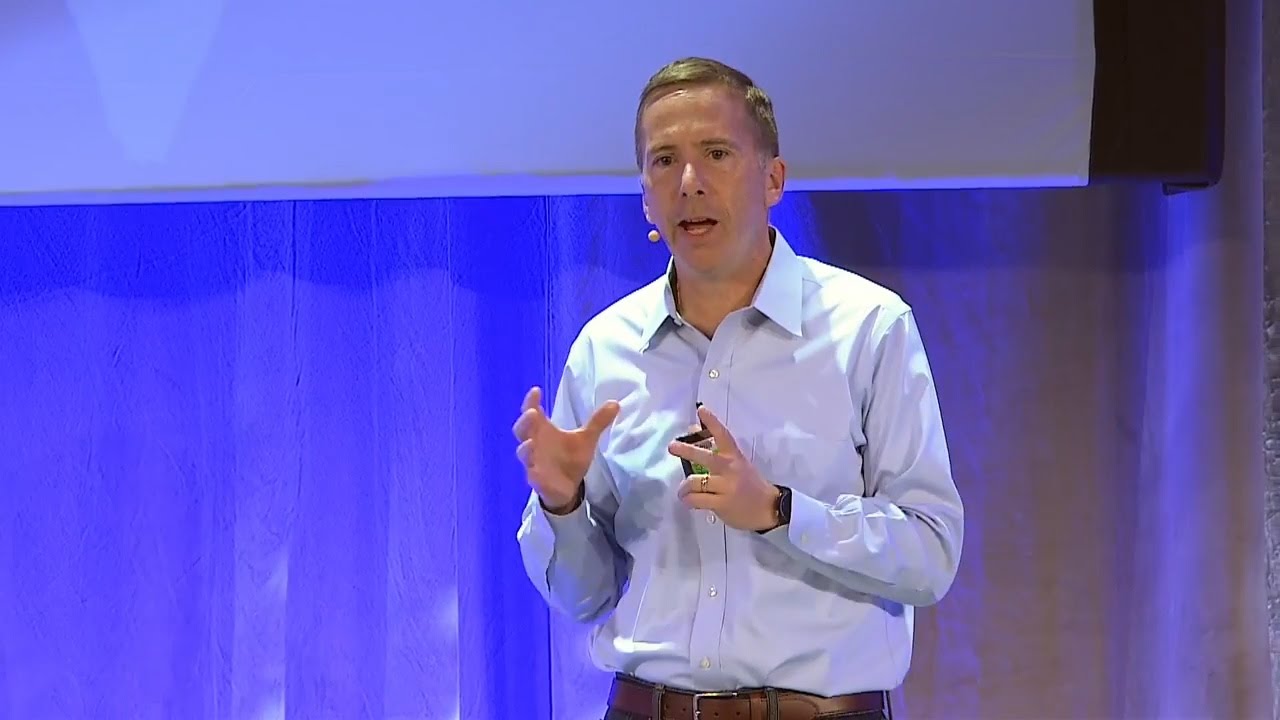
Rotary Meeting May 28, 2026 Featuring Kevin Nolan, GE Appliances
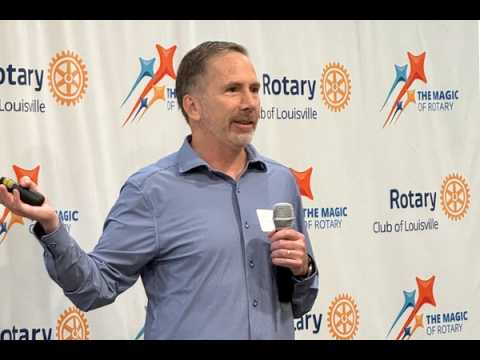
The video records a Rotary Club of Louisville meeting on May 28, 2026. After the usual opening (invocation, pledge of allegiance, Paul Harris Fellow recognitions, member reinstatements, and announcements), the club’s guest speaker, Kevin Nolan, President & CEO of GE Appliances, delivers a keynote. Nolan outlines GE Appliances’ post‑acquisition transformation under Haier, emphasizing a shift from shareholder‑centric to user‑value‑centric philosophy (Rondan Wei). He describes massive U.S. manufacturing reinvestment ($3 billion already, another $3.5 billion planned), the FirstBuild makerspace/co‑creation model, and how user‑driven innovation (inspired by Eric von Hippel) fuels product development, citing the “Sourdough Sidekick” as a recent success. He critiques traditional corporate R&D, argues for “zero‑distance” innovation, and shares GE’s AI strategy—making AI a utility for frontline workers, building internal AI labs, and addressing security, legal, and cultural challenges. Nolan also answers audience questions about patents, AI anxiety, and future product ideas (e.g., a clothes‑folding machine). The talk ends with a light‑hearted exchange and a reminder of upcoming Rotary events.
Chapters
Good afternoon, everyone.
Welcome. Great to see everybody. Great to see the sun. We've got lots of people in the house today. Must be a good speaker. All right, our invocation. Carl Thomas, Executive Director of the Vivi Cook Foundation, a member of the Paul Harris Society, the 1912 Society and a Paul Harris Fellow, plus 7.
Wow.
Thank you, Ken.
Let us pray.
Heavenly Father, we are grateful for this day and for the fellowship and friendships that we enjoy. We are thankful for the opportunities to serve our community and to provide assistance and guidance to those less fortunate than ourselves. Please guide us to use our time and talents wisely and to honor Rotary's ideals of service above self. May our efforts today make a meaningful difference in the lives of others.
Amen.
Thank you.
Awesome.
Sandra Dodge is going to pledge for us and give us the 4-way test.
Please join me in the Pledge of Allegiance.
I pledge allegiance to the flag of the United States of America and to the Republic for which it stands, one nation under God, indivisible, with liberty and justice for all.
And now for the things that we think, say, and do as Rotarians. And I always have to read this even though I've been saying it for, what, 9 years now? First, is it the truth?
Is it fair to all concerned? Will it build goodwill and better friendships? Will it be beneficial to all concerned?
Thank you. Thank you, John. Terrians, if we have a guest today, please introduce them, and when you are introduced, guests, please stand. Mr. President, Vernon Foster, the College of Business, University of Louisville. Let me introduce my guest, Clayton Neville. He is the Sales Manager for Controls with ATS Integrated.
Please welcome.
Hello, I'm Victor Rice, Executive Director for DYM/BHSO. My guest here is Donna Richards. She is our licensed clinician, our Program Director at DYM/BHSO. We have Darren Lee Jr., he is our CEO. And we have Miss Bella Otis, which is our trauma-informed care director. And we have Miss Jasmine Oates, who is our family advocate.
President Ken, fellow Rotarians, my name is Nick Garner, software developer with the MITRE Corporation. Today I am so pleased to have 2 guests with me. The first is a dear friend, actor, director, writer, and professor here at UofL.
Nick Halstein is with me.
I'm also extremely pleased to have with me today the Director of Programs and Research at Ed Lee's nonprofit, the Lee Initiative, and also the manager of the Old Global Farmers Market. This is Jen Watkins.
Hello, President Kim and fellow Rotarians.
My name is Chelsea Ellis-Hogan, and my guest today is Christopher Ellis Watkins.
He is an entrepreneur, a venue owner, and a community-minded business leader based here in Louisville. He owns Stellis Venues as well as Drift Louisville Boat Rental. Hello, Ken, President, and fellow Rotarians.
I'm a new member, Karen Lamberton, and Sandra Dodge and I are sharing a visitor today, Diane Seitz Thurman. She's a retired licensed caseworker with Fraser, but her real forte is dance. She's drama, dance, choreography, and just an all-around great gal. So we're bringing her to expose her to the beauty and goodness of Rotary.
President Kim, fellow Rotarians, Jeremy Vokerka here. My guest today is a good friend, coworker, and all-around good person. She's a director of business development at Miranda Construction. Christy Engman.
My name is Carl Koslow, a retired business owner.
I'd like to introduce a friend of mine, Ken Zagreif.
He's a retired GE executive, knows our speaker, I guess, for 13 years, and the most important thing is He survived Jack Welch's tenure.
President Kim, I'm Jean West, past president of the Rotary Club of Louisville. I have 2 guests today. One is Kristen Forrest, who is president and CEO of Riverfields, and Dr. Alan Mauser, medical director of Louisville Podiatry. Hi, I'm Michelle Black White with the Brightside Foundation, and my guest tonight—
or today—
is my son Jackson White, who is a current Speed School student in software engineering and has been co-opping at General Electric in the cookware division.
Hi, I'm Jackson White. Yes, if you'd love to learn more about Rotary, and we welcome you all here and hope you come back and join us. Back where Deline is, uh, is the What Is Rotary table, and Jay Mallory will tell you all about us right after the meeting. Real short and sweet. Please join us. Committee leaders, remember that this Sunday is the deadline to submit your impact reports or carryover requests for this year's service projects. If you haven't already, please RSVP for a couple of big events next weekend. Saturday is the Repair Affair, Sunday is Craig Sherman's Summer Social. You can check DACDB or LouisvilleRotary.org for information about other upcoming events and service projects. If you haven't already, follow us online— Facebook, LinkedIn, X, Instagram, and YouTube. Love for you to post photos from our meetings and events and tag us. I'd like to invite to the podium President-elect— won't be long now— Barbara Sexton-Smith, Executive in Residence, Lowell Metro Government, Vice Chair of the Rotary Fund Board, and a major donor. You're going to initiate a new member—
a returning member.
All right, fellow Rotarians and distinguished and honored guests, now is the time in the meeting when we reinstate or reinduct New members or returning members. So at this time, would Victor Rice please join me as someone who's going to be reinstated? And Dave Christopher, I'd like for you to join me up here also, Dave, because Dave Christopher, longtime fellow Rotarian, and I are the co-sponsors to reinstate Victor. So Victor, come over here. You get to stand closest to me. And then Dave, you know how this rolls, buddy.
Right?
Okay, because we all went to in-person training this week for 2 hours to learn how to do Kevin's the next 2 minutes. Y'all ready for this? Okay, so Victor, welcome back. It is so great, and it's such a privilege and an honor to get to reinstate you as a fellow Rotarian. I know you personally. I know the great work that you have done and the hundreds, if not thousands, of lives that you have impacted in a multigenerational way. I'll let you all hear Victor tell more about his story. Now, Victor, as you may recall, you are being reinstated into the Rotary Club of Louisville, which is one of more than 45,000 clubs across the globe. Everybody, ooh, ahh.
Ooh, ahh.
And yes, there really are that many clubs. I felt like I met, Jeanne, almost all of them at the International Convention where 30,000 And Rotarians gathered to spend a week to talk about projects and service above self. So Victor, as you remember, we are all about service above self, and I'm hoping that upon your reinstatement you will jump in here, come to these Thursday noon meetings, as many of them as you possibly can. We have world-renowned speakers like Kevin, whom we're going to hear from today, who, by the way, Jackson, Kevin looked over there to get a good look at you as he said, and looked at me, you shouldn't say things to me, and said, he's supposed to be at work.
And Melissa Marvel whispers across the table, come on, Kevin, talk to his professor.
So I think you're all right. Okay, so Victor, just not only attend the meetings, but join one of the committees or rejoin one that you were a member of before. And get involved in the service projects, attend the events. You guys, we have so many fun social events. And gosh, Craig Sherman's annual social, you want to sign up for this one. It's June 7th at his house. It's crazy good, crazy good food, drink, and fun. So with that, Dave, I'm going to hand you a pin that President Kim is supposed to be putting in my hand. Where did President Kim go? He's in the back.
Okay, buddy.
Oh, I gave Ken one job this week. It was to have the pen. Okay, Ann, please have a seat right there. You're right there. Everybody say hi, Ann. Ann is the official First Lady currently of Rotary, as— yes, you are.
That's right.
He, he hadn't even noticed yet, Ann.
He's been so busy.
All right.
So, Dave, you are going to—
see, I knew it.
See what happens if you manage a podium long enough? You can have a pin arrive in 30 seconds.
Thank you so much.
I'm going to have to actually put this on. Okay, round of applause for Delyne for saving the day. All right, so Dave, if you will, just— you will hand the pin for the official pin presentation. We have too many wardrobe malfunctions if we actually pin it. And now, Victor, this microphone is all yours for about 2 minutes to tell us anything you want to say, and then we're all gonna two-step around to the front of the podium along with the president and get your official photo. You ready? All right, welcome Victor Rice.
Good afternoon, fellow Rotarians. I'm excited today to be inducted back in and join such selfless people, and I definitely want to impact our community together and definitely get back involved with Mr. Walt and the work he does with our JCS schools. And I want to thank Dave Christopher Sr. and Barbara Sexton-Smith for just believing in me and supporting me and sponsoring me for my return. I'm an executive director of 2 locations. We have DYM/BHSO, which is a behavioral health organization. It's Kentucky's first dual-licensed childcare center and behavioral health service. So it's something we're pioneering and starting out in the state. And then also, my DIM is a nonprofit, and we work with the continuum of care of our kids 6 to 12. So we work with them 6 to 5 weeks— 6 weeks to 5 years, then 5 years old to 12 years old. So that's great work we do, and I'm looking to do more work here with You fellow Rotarians, thank you again for this opportunity.
You get to stand next to the president.
Thank you. Love it.
All right.
Thank you, Barbara.
All right, we have had a lot of new members this year, and if you're one of them, joined us in the past year or rejoined us in the past year, please stand.
Mr. Gifford, you're not the only one.
There's about half a dozen plus. If you're sitting next to one, please engage with them and make them feel welcome. We want them to be here for several years like Steve has. Steve Leonard is our Executive VP at JLL, member of the 1912 Society, a benefactor of Paul Harris Fellow Plus 2, an all-around great guy. And as we do each week, we share a veteran Rotarian with The new Rotarians, so they get to figure out who we all are.
Good afternoon, fellow Rotarians. Our speaker today is the CEO and President of General Electric Appliances. It is an irony that President Ken selected me to I'm honored to speak because shortly before I was born on August 13th, 1951, my grandfather John F. Lanter sold one of the family dairy farms consisting of 192 acres on Fagan Bush Lane to General Electric Company. My mother brought me home from the old St. Anthony Hospital, and while we were there, the GE bulldozers were demolishing the barns and Fences to build Appliance Park. My parents divorced at 5 years old, and, uh, I lived in a single-parent Newberg family. Consequently, I had to go to work. I started driving tractors on the farm at 8 years old and 6-shift trucks at 10. It was owned by my grandmother and, uh, is located at Shepherdsville Road and Fern Valley Road, which which is now the Clearwater Farm Apartments and a large warehouse. The Archbishop kept building new parishes, so I attended 3 grade schools and never moved, including St. Rita's School in Okolona, St. Athanasius School in Highview, and St. Ignatius School in Newburgh. I graduated from St. Xavier High School, where I was senior year captain of the cross-country team and finished 18th out of 75 in the 1968 AAA State Championship. I then enrolled at the University of Kentucky where my freshman roommate was Bob Sexton, the brother of Barbara Sexton Smith. And the brother-in-law of the Natalie-attired Lacey Smith sitting in the back of the room. Upon graduation, my parents, who were divorced for 17 years, remarried without telling anyone, and I had asked where I was living when I graduated. Never underestimate the power of the Lord. After graduating from the University of Louisville Law School in 2 and a half years, I established the first fast food restaurant in Henry County, located in Eminence. It was a Burger Queen and later a Druthers. Selling that in 1987, I joined Harry K. Moore Company, now JLL, where I've been an industrial real estate broker for the past 39 years, selling and leasing factories and warehouses. During that time, I married in 1993 Mary Rose Lanard. Unfortunately, she passed in 1998, leaving me with a 2-year-old daughter while I was working 12 hours a day, and I raised her for 6 years by myself. During that time, Henry Heiser Jr. invited me to join the Rotary Club of Louisville. I will always be grateful to Henry for sponsoring me for membership in this organization. For those Of us acquainted with Henry, he is an outstanding civic leader, an outstanding Rotarian, and an even better friend. For those of you who do not know Henry, you need to introduce yourself to him. My daughter Barbara is now 30 years old. She graduated from Global Collegiate School and Wake Forest University. She is a successful account executive with DoorDash in Manhattan and recently bought a co-op in Gramercy.
Yeah.
In 2004, I married Linda Long. She's known to some of you as Linda Lambert of the Lambert and Lindsey Show on 102.3 The Max, and is the media spokesperson for AAA East Central. I, like you, have been a member of a lot of organizations. I was chairman and a board member of the Landmarks Commission of Jefferson County in The 1980s, I've been on the board of directors of Blackacre Foundation, Historic Loaves and Scrolls, St. Xavier High School, and the Catholic Charities. I was also a member of the Hearstburn Corridor Task Force, the Rural District of Tyler Tucker Station on Taylorsville Road, Goals for Greater Louisville, and the Cornerstone 2020 Comprehensive Land Use Plan.
Thank you, Kevin.
I'm currently a member of the Planning Commission, and during the last 2 years, we have approved hundreds of industrial, residential, multifamily, and retail projects. Let me leave you with one thought. The time for indecision in Louisville is over. Louisville has to grow to compete in an international society.
Thank you.
It is our job as members of the Rotary Club to keep the Rotary Club of Louisville the number one civic organization and public forum in the city to contribute to our service above self platform by which we think, say, or do. I will tell you, the city of Louisville is growing based upon the projects that I would say in closing that the volunteer work, optimism, and enthusiasm of the members of the Rotary Club of Louisville, in conjunction with the civic leadership of this city and the administration of Mayor Craig Greenberg, will help the city of Louisville become one of the best cities in the United States of America. Thank you and have a good afternoon.
Thank you, Steve. Appreciate it.
Henry had a milestone birthday, Henry Heiser, this week. He corrected me when I said happy 50th, so I won't tell you. We won't sing to him, but he's You know, in our hearts, so you can give him a big hug after the meeting. I'd like to invite to the podium Amy Luttrell. She's the President and CEO of Goodwill Industries of Kentucky. She's Chair of the Rotary Foundation Committee and a major donor, level 2, for Paul Harris Fellow recognitions.
All right. Thank you, President Cann. Good afternoon, everybody.
How are you?
So today we get to recognize 6 of our fellow club members for a level of Paul Harris Fellow recognition. And for those of you who are newer Rotarians, Paul Harris Fellowship is the recognition that Rotary gives to anybody who gives $1,000 to the Rotary Foundation, and that's Rotary International's philanthropic And that $1,000, I always want you to know, does not have to be given all at once. If you don't have $1,000, you can still do this over time. That's what it takes. If you are a Palm Harris Fellow, would you please stand and let us thank you for your generosity? Okay, so many of you know Because we've talked about this before, we have two goals for foundation giving, and those are based on the size of our club. So today I have good news and I have bad news. So the good news is that we have met both of our goals for the year for the annual fund and for Polio Plus. So yay! Our annual fund is. Our goal for PolioPlus is $50,000 for this club year, and so we are now at $54,000. And our goal for PolioPlus is $10,000, and we are now at $10,700. Okay, so thank you very much for that. So the bad news is that last year we were higher than that, and we never really want to go in that direction, do we?
No.
$72,000 to the annual fund versus the $54,000 that we've given so far this club year. We've got a month to go, right? And for Promio, we gave $14,000, so we're at $10,700. So we got that month to go, and let's see what we can do. And we look forward to welcoming more of our club members up here to the podium to get recognized for their gifts. But this, you know, this is not just about bowls. is that goals are helpful in helping us do the right things in life. But this is really about joining together with 1.2 million Rotarians across the globe to do big things that we could never do together. We could never do on our own. But together, we can do those things. And, you know, my favorite example is PolioPlus. So over the years, Rotarians have given almost $3 billion to help eradicate polio. And because— and Carl and I were just talking at the table, you know, when you've been around for a while and you've been a Rotarian for a while, these things kind of add up. When I first started giving to PolioPlus, you know, there were 62 countries where polio was endemic. Who knows how many countries polio is endemic to today? Two, two.
What are they?
Afghanistan. Start with P. Pakistan. Pakistan. Some tough nuts to crack, but every day there are Rotarians and others that are over in those countries working to get that last little bit so that we can think about it. On planet Earth.
And you—
this is, this is history-making, and you can be part of it. So today, let's recognize our 6 fellow Rotarians who have attained Paul Harris Fellowship or a level of that. So first, I'll ask Melissa Marvell to come up. And Melissa is a new Paul Harris Fellow, so give her a hand.
Thank you.
Just go ahead and do them all. All right, thanks. Just need our instructions here. Okay, so hang tight, Melissa. And second, we will invite up Deline Taylor, who is a— okay, give her a hand anyway. She's a podcast fella too. And then next Guess who we have? President Ken. Great. And we also have coming up Jean West, partner of Powell Harris. Coming up and at this table, Kevin Lynch of Powell Harris. I want to make sure you hear this. Plus six, and then finally we have Carl Thomas, a Paul Harris Fellow plus seven. I think pretty soon we're going to be recognizing Paul as a major donor, right?
Robert, you want to take the picture?
Robert's going to take our picture right here.
Go.
Okay, you ready? 1, 2, 3. 1, 2, 3.
There you go.
Congratulations, everybody, and thank you for your giving.
Thank you, Amy. We appreciate you. All right, now I'd like to invite to the podium Steve Runworth, the GE retiree.
I'm glad I didn't have to follow Barbara up here. Kevin, we're pleased to welcome you to our Rotary meeting today. I enjoyed catching up with you after all these years. It was about 20 years ago that I had the privilege of meeting Kevin Nolan in his role as a senior engineering executive with GE's lighting and appliance businesses, or in lieu of the appliances and lighting businesses. He brought with him the focused approach that helped the lighting business that I was a part of tremendously. Over the succeeding several years, I learned firsthand what an effective leader he is, and in the process learned more than a thing or two from him. Today, Kevin is the president and chief executive officer at GE Appliances, a Haier company headquartered here at Appliance Park. I'm sure, as I'm sure he'll elaborate on, today GE Appliances is the fastest-growing appliance company in the United States. Kevin is a seasoned engineer and passionate maker with 29 patent awards and a 30-year career at GE. Including 10 years as GE Appliances Chief Technology Officer. He took innovation to a new level when he conceived and co-founded FirstBuild, the first corporate makerspace in the world and a global co-creation community that harnesses the power of the maker movement to change the way home appliances are conceived, designed, and manufactured. Originally from Connecticut, Kevin is an active voice here in Louisville, working directly through several organizations to attract new investments to the area, promoting STEAM programs— that is science, technology, engineering, arts, and math— in schools and community centers, mobilizing resources to close the digital and educational gap in our city, and personally participating in several community development organizations. including Metro United Way. Currently as CEO of GE Appliances, Kevin is successfully leading the company's transformation, redefining structures, promoting a new culture, and shaping the future of an organization that was founded more than 100 years ago. Kevin, we're looking forward to the latest from you.
Thank you, So is this mic— are we working?
Can you hear me?
Yeah.
All right, I'm going to stand somewhere where I'm not in the way of the slides, but I can see the slides. So we'll go through things pretty quick. One is, uh, thank you, Steve, for the intro. And as you can see, I think GE has a big history and a big part of what we do here in Louisville, Kentucky. So it's a pleasure to be here and talk about our story. You know, it's been, I would say, an interesting time. We're just at—
You're good.
We're good? We're just at the 10-year mark. I think, Antonio, we've got our 10-year celebration in 2 weeks, 3 weeks?
Next week.
So 10 years now outside of GE working for hire, and it's been, I would say, a very interesting development. 10 years ago, there was a lot of nervousness in Louisville, Kentucky. When we got bought by a Chinese firm, you know, who is the biggest appliance company in the world. So it was like, what's going to happen? What's going to happen to us? And we'll go through that story, but I'd say it's been good. I mean, we have learned a lot from Haier, which you don't hear a lot of people talking about learning from China, which I think is a theme we should wake up a little bit to. Is they have a philosophy called Rondan Wei. Chinese words. Any Chinese speakers in here?
No.
So maybe Antonio and I are the best right now. So what it means, it means connecting employee value to user value. And how do we focus and really drive the company on making sure we're value creating for our users, for our customers? It's a different concept than I think what we got brought up under the times. You know, Ken talked about surviving Jack Welch. But it was different. Where a lot of the US companies are shareholder value, what Haier focuses on is user value. And if you have user value, you're going to gain shareholder value. You know, what's happened? It's been literally fantastic for, I think, for GE Appliances, also for Blue Apron. We've grown. Again, we— when we got bought by Haier, we were like number 4 or 5. Now we're the number 1 appliance business in the country. We're the most profitable, we're the biggest, and we're able to do that with basically the same team that left GE. And as Steve and Ken knows, I don't think the lighting guys really like working with me too much.
You—
it's a little— people didn't like the appliance people. It's too hot. I think this mic's got to get— We gotta turn that one off. Is it all right?
Yes.
So we've been able to invest. We'll talk about that. We've poured more money into this business the last 10 years than— it's not a 30-year career, I think I'm on 37 or so with GE, but we put more money in the last 10 years, especially into Louisville, than ever in, in my career with GE. And again, we became number one. Who are we? I don't need to go through it. I mean, we're a pretty big company. I think in Louisville we've got, what, 6,000, 7,000 employees?
Yeah.
7,000 employees. So everyone, I think, knows our facility up there. Yes, it was a beautiful farm that we destroyed, but we've done good work with that land, I think. So we have a footprint around. So, you know, everyone thinks of Louisville, but We've got manufacturing facilities in the southern states. You know, you look at Georgia, South Carolina, Tennessee, Alabama, but then we have distribution nationwide. So a big presence across the company. It's a big company. We're around $11 billion, but I'd say it feels very small. I mean, anyone that works out at the park, I don't know your experience, you know, coming, working with us, but It doesn't feel like a big place. I think it's a pretty down-to-earth, approachable people working here. So what have we done? We've poured $3 billion into U.S. manufacturing over the life of my tenure. I've been in this role for 9 years. $3 billion we put into reinvigorating American manufacturing. This is before it was popular.
Mm-hmm.
Before all this stuff that says, hey, bring manufacturing back, we knew it was the right thing to do. And it gets to the philosophy of we got to build where our people are and by our people. We know the market, we know our customers, we want to build locally in our markets. We've committed to another $3.5 billion that we're pouring into. We got some major construction things going out at the park. So pretty much every factory is going to be redone once we get done. Once we get Building 2, for those that know it out there, there's going to be a new front-load washer because we're reshoring there. So just a lot of work. You know, not many companies have done this. And a lot of companies are signing up to big numbers. And what's different about us is we've already proven that we're doing this. It's not just talk. You know, this isn't— this isn't if the political climate changes, because it seems to change daily. It's not going to change our long-term plan. Where do we think is the right place to manufacture? There's 2 people that are, I'd say, a big influence in me and I think into our companies. 2 individuals, Kirk Carlson and Eric von Hippel. You heard a little bit about FirstBuild. It's literally walking distance from here. It's on University of Louisville campus. It really is a testament to these 2 people. Kirk Carlson, he worked with Jack Welch and others, and he said the worst thing in the world is corporate innovation. It never works. It's a waste of money. And it's— he says no corporates know how to innovate, only startups and small people. Eric von Hippel, who is a professor at MIT in the Sloan School, he's the one— if people have heard of co-creation, user innovation, von Hippel is the father of that. He's, you know, this is a very innovative smart man. His view is no innovation happens inside a company, it happens with users. You know, people find solutions and then companies scale those solutions typically. So he views companies as bad. All we do is steal your ideas and then we say they're ours, we get patents like he doesn't like, and then we exploit that and bring it to the masses. But there's a lot of knowledge in these 2 people because they all focus on user needs, user benefits, what people want. And it's really driven, I think, a lot of our success into this company. You know, you look at innovation, how many people know Bell Labs? I mean, Bell Labs is a storied place where amazing things happened. But GE, we had a corporate— and I think, I'm sure Steve and Ken have been there— up in Schenectady, we had a beautiful campus where we did corporate innovation. What happened to it?
It's gone.
They're all gone. Bell Labs closed down, GE— we were probably the last that had it— United Technology. Everyone's gotten rid of these centers. And for a while I was upset about it, sad about it, but when you really think, they didn't work. That's why corporations closed these things down. They were a money pit.
We're going to switch you out. The base is sensitive, so if you don't want to stand at the podium, you'll need to hold it tight up close.
It keeps cutting out.
I'm not sure what's going on.
Sorry about that.
It's good?
Can you hear this? I don't think it's sensitive, it's flimsy is the right technical term. Yeah, okay, I got it. So this thing, we all did it, it's broken. It doesn't work. So we kind of blew this model up at GE Appliances Probably 11 years ago is when we started FirstBuild. And you can see these 3 things. How many people know about the Chelsea Hotel? Okay, everyone needs to look at the Chelsea Hotel. It's the most amazing place, I think, in the world. As a kid, I used to stand outside that and dream of what was going on inside that hotel. There was a lot of bad things that were happening in the '70s. Bell Labs we talked about. And then look at Bell Labs, it kind of looked like that. You know, it was scary, right? Closed off and scary. Chelsea Hotel, they just redid it. Anyone that goes to Manhattan, I encourage stay at the Chelsea Hotel. It is the most beautiful hotel and you can really see some history of what happened there. And then this right here, mountain bike. And this is what von Hippel kind of uses his story of innovation. What do these have in common? So Chelsea Hotel, I'll argue it is the most innovative space in all America, in all America. What came out of that hotel is, if you look at American culture and art, it came out of this place. You know, you go back, I think I got— yeah, Mark Twain. So Mark Twain was there. You got Sid Vicious. I think some bad things happened there. Andy Warhol, Madonna, you got— you name it. I mean, this This is just a small section, you know, Leonard Cohen. I mean, these are just amazing people that were all intermingling at this place. What shocked me is you go there and it just seemed random. It wasn't random. That place was architected to mix people from different walks of life all to be together, and it was based upon a philosopher, Fourier, that believed if we got different kind of people together, amazing things could happen.
Yeah.
So they built this thing, and sure enough, look what happened. And it was never sold as an innovation center or anything else, it just worked. And so this brought the whole idea, and what we tried to do with FirstBuild is, can we learn more from this than we can from Bell Labs? You know, what can a corporation learn from the Chelsea Hotel? What they did is this, is the hotel manager, you only get accepted there if you're interested. So if you're a boring person, go stay somewhere else. Okay, so it had a pre-selection of just interesting characters, right? Diversity was its core. We want rich people, poor people, and it's architected— if you go there— so you had the mix. There's a famous stairwell where you're gonna meet the people coming into that place. Workers and creators, you know, artists— they had to bring in all different kind of people. And there was continuous feedback, and I think If you were there and you weren't interesting, you kind of got self-selected out of that community because it was cheap rent, etc. So what have we tried to do is just this. Our business model is really focused on entrepreneurial spirit, give people a voice, right? This corporate can't be in charge of entrepreneurship. It needs to happen where the action is with the workers. We need decision-making empowerment, zero distance This comes from— we've Americanized Rondan Hui to say it's really about zero distance. How many people in here have GE appliances in your home? Okay, so you know, and what von Hippel talks about is you have systems of use. Is that appliance used for doing dinner, doing your laundry, different things? But the way everyone in here uses those appliances is different fundamentally, right?
Mm-hmm.
The way we cook, the way we So understanding that and understanding the real usage needs of people will allow us to create better products. That's the theory. If we can really get zero distance. And to the point of FirstBuild is we want you to come in and work with us and help us design what you want. So there's a philosophy too. Can you have one-by-one production? Can your appliance meet your needs that are different than everyone else's needs? So this is von Hippel. There's 2 key things to him, and I think anybody that's in products or entrepreneurship, study von Hippel. It's an amazing thing, and I think it's such an untapped innovation resource in America because there's innovation going on all around us. You guys are all innovators. You just don't realize it because you're solving problems in your everyday life, and people closest to the problem invent solutions. Before companies can see it. Time and time again, and von Hippel argued that all innovation actually comes this way. It's never really done inside just 4 walls of corporate. And the system of use is what makes it so, is innovation isn't about the product. Like, we like to think we had a washing machine, but you don't just use a washing machine. You need detergent, you need a laundry basket, you know, all kinds of systems of use to go around how you do your laundry? You know, do you sort laundry? Everyone has a different thing that they've determined. So we like to think that corporations need to focus on this instead of focus on what a CEO likes to say you should work on. You know, von Hippel talked about the bicycle. But people think about Schwinn and all these other— But no innovations happened in bicycle production facilities. It always happened on people. that are out using the bikes that made modifications to it, then the bike companies catch on, and then it goes to scale. And I think not many people want to admit this in corporations, because it's hard to say that we're really useless on innovating. But without innovation, you're never going to be able to keep the kind of factories and the investments. Because it's a daunting thing to be putting billions of dollars into factories where we know in 4 or 5 years, the product we're making there you probably won't want anymore. And we're going to have to reinvent. So if we don't have a good innovation cycle, there's no way we should bring manufacturing back to the U.S. So these things I think it's an untold story that's going on in America right now. Everyone's saying let's bring manufacturing back. Well, be careful if you bring it back before you know how to innovate. And I'd say right now China, if you look at what's happening And like, how many people have seen any of the electric cars in China? So if you've seen them, they are much better than any cars we have here. I don't care if you're driving a Mercedes, a BMW, these things are beautiful vehicles that are innovating at a pace that we, we've never seen. So we've got to up our game in America on how do we have our heritage, because I will say we're the best innovators in the world.
Yes.
Because we make things. Right, as individuals. But how do we harness that before we start bringing manufacturing back? So we put this as key to our whole, like, basis of why we're doing so well is being able to innovate to make products that, that you want. That's all we're about. You know, I think too many corporate CEO offices, they're disjointed from what's going on and they forget what they really do.
Yeah.
You know, we've got our main competitor up in Michigan. How many people have heard it starts with a W? So we don't like them too much. But I will say they have corporate headquarters that are far removed from any of their manufacturing facilities. You know, they like to brag about making more in America, which we've proven is not true. But also they like to fly around in corporate jets. I mean, they're very removed people. People from what's happening where the action is, what's happening in your homes, what's happening on showroom floors. And we try to stay very grounded at GE Appliances to pay attention to what we really do. We make products for you. I mean, that's it. So we're much of a servant organization. It's not— we're not a bunch of big shots sitting up here in Louisville, Kentucky. We need to stay humble and work on what we're doing. We're providing good jobs for people. And provide good products for the nation. That's what we do. So this is right up the road, FirstBuild. If anyone likes woodworking or metalworking or electronics or anything, it's open. It's open 5 to 9 at night. You can go there tonight if you want. It's open on Saturdays. You can usually find me in there on Saturday. And just people get together to make stuff. And we get together and have fun. During the day, They get together to make new innovative products. They just launched— how many people like sourdough?
Mm-hmm.
Okay, so there's a new product. How many people know about King Arthur? Typical sourdough makers know King Arthur. So they're selling our product right now that first book came out. It's called the Sourdough Sidekick. So what it'll do is if you say, I want to make sourdough next week, you know, what's today? Thursday. So I want to make it next Thursday. You put a little bit of your starter, you tell them how much starter you want for Thursday, and Thursday it's there. It's all made for you, no discard, etc. All came out of First Bowl. It's doing extremely well. Just got launched out of Antonio 4 or 5 weeks ago. But the only reason we knew how to do that— I think it got started by a co-op or an intern who was into sourdough. And so she's like, saw a problem, saw a need, and just started working on it. So the thing that's cool about FirstBuild is I don't have any control over FirstBuild, what they work on. I can't cancel a program. I can't start a program. So no one in corporate can. They can only work on what you— they need to find a community that cares. If the community cares, then they work on it. If the community doesn't care, they kill the idea. They've killed many, many more ideas than they've ever launched. So you're not the boss of FirstBuild? But what's good about them is like they'll find out there's a passionate community around something. They go and look, are there any unmet needs? Are there any things that people are looking for? And then they start inventing with the people that use the product. So there's a lot of people that were involved in this sourdough starter project that know— because we don't know sourdough. Now we have some really good sourdough makers now. But like a King Arthur, you know, they know bacon. So we try to work with people that really know what the user needs are. We want users to participate. So that sourdough starter, I don't know how long ago we started doing the project. Let's say a year and a half. Day one, we tell everyone, hey, we're thinking about this idea.
What do you think?
Most corporations, day one, they hide because they want IP. They want to— lock up this innovation. We do the opposite. We open it up to everyone and we want your input. Do you think this is stupid? Do you think we should— do you like it, not like it? Everything's on. You can go to YouTube and you can get on FirstBuild, you know, subscribe to it, and you'll see everything they're working on way up front. And you'll be able to influence, because if the YouTube community, Instagram, if they don't respond, then it dies. So that's the people that vote whether we should do something and not corporate. So we kind of tried to twist this thing totally upside down. And, you know, this is what inside looks like right up the road. In the back we've got woodworking, etc., metalworking, and here is where community can come, where FirstBuild employees are. So again, it's an innovation center that's totally open to the public. People don't do that typically. But I will tell you, in all my career, this has been the most successful thing I've ever done from an innovation standpoint. Like, we have the metrics on that thing is it's got to at least break even. Because how many— we have a bunch of people that run companies here, right? How many people have a product company? No product companies? Come on, we're at Google. Well, you guys got to recruit some product folks in here. But if you look at— Yeah, we need that. That's good for our country here. But if you look at this innovation ecosystem, our main metric up there is to break even. Most R&D, it's always a percent of revenue. Like you'll hear, oh, our R&D is 3% of revenue. That means it's a cost center. And what's the first thing— I guarantee we have some of you in here. How many finance people in here? Yeah.
Yeah.
So finance people are typically the problem Innovation. What's the first thing they want to cut? Like when times get tough, let's cut that innovation budget because that thing's not going to, you know, we won't see the benefits for 3 years, for 5 years. So the idea we had, well, if the thing breaks even, the finance guys can't get to us or gals, okay? So because we're making money off our innovation process. And like right now, it's a very tough year in the appliance industry. But it's not a year where we're talking about cutting FirstBuild. Because FirstBuild's able to make their own revenue, make their own profits, and keep themselves very, very sustainable. You know, on some of the innovation they've had, they're good for 20 or 30 years if the finance people give us credit. But of course, it's what have you done for me lately is the famous finance term.
Yeah.
But what this is, is this is all around that innovation, user-led model that we call zero distance. And it comes from that theory of Yvonne Hippel and others that I really think has been a lot of success that's driven us and given us the confidence. Because part of what we're doing is we have to have confidence to invest, you know, another $3.5 billion. I mean, and it is a tough business. So how do we have the confidence to get these kind of, you know, that these investments are going to get returns? It's by having that model. Oh, here's the sourdough Sidekick. So you can go to King Arthur. I think it's, what, $150 or something?
$175.
Okay, it got more expensive. So buy it now because it's going— its price is only going up. But people are just loving this device. Right, and it's one that really seems like it's hitting its stride. Yeah, it's about the size of a coffee maker. This, anyone knows King Arthur, that's the standard crock that they've sold for years and years for their starter. So it's, again, if people are into this, a lot of them already have some of the parts. So the other thing, let's switch to AI. So AI to me is a lot about user innovation. This same model I think is going to apply. So how many people in here are using AI? Yeah, if you're not, please use it and stop being afraid of it and stop saying it's bad. Just please use it. Everyone needs to get on board with where this is going. But the issue is I think a lot of people are doing it wrong.
Hmm.
And so what we're trying to do is if you see IT, typically in your company IT owns the AI. We don't like that. We want IT to basically be a utility. Give me clean, safe, secure data. Then we have this platform that is really connecting to what we call AI Lab, okay? And AI Lab is where we train people, upskill people. So it's a very small group. This thing here allows the people that are building agents, et cetera, to safely use our data. So I actually got 3 different teams working on it. But this is what it's all about. It's about our employees. So you've been there for how long at GE Appliances?
My first rotation ended this past spring.
I'm coming back in the fall. Okay. Did you do any AI?
I did.
So hopefully you see that we want— that's where the innovation is going to come from, the people that are doing the jobs on the front line. And those are the ones that should build the agents. So if we had Salesforce and they want to build you agents, They want you to pay for this. But who knows the work better than us? And now we finally got a tool that can help us do the work in a better way. And to me, if we can unleash AI with all our employees instead of threatening for productivity— we have no productivity metric with AI, nothing. It's just how can we accelerate this company and what we do, and how can we make— not we, you make your job better. And how do we give you the tools to do it? And so our whole thing is now about supporting users. So these are all frontline workers or any of us that have work. How do you use AI to make your work better? Our logistics team is, I would say, probably doing the best at this right now. Marsha Bray, who went to University of Louisville here, she's now our new AI spokesperson. And what she's done is really thought about her organization. Of how it should be. And she's got her team making agents, you know, so it's not coming out of IT anymore. And it brings a lot of risks with it. So we're putting this stuff in employees' hands, so there's a big security risk, right, because your data can leak out, you know. So we've got to put tons of controls around it. You know, legal is not used to it. How many lawyers in the room? I mean, it's tough, right? What do we do with this? So there's a lot of questions. If managers regulate it, we'll never get the use out of it. HR, you know, it's every function is getting affected by this thing right now. Everybody. And you're seeing a skill change. Like, I'm actually very positive on AI for young folks coming out of school. But I think the issue is corporations haven't learned that the best people with AI typically are the people in universities. University right now because they're all cheating every day. They're working through AI, but they've embraced AI, right? I don't think anyone in school is keeping up if they're not using AI in some manner or some form. So they're going to be the best ones to come in our company and build these agents and really get us moving forward. But I think companies aren't seeing— they're looking at it as productivity. Oh, we don't need software coders anymore. We kind of do. You need them everywhere now. Whether— whatever function, we need people that are literate on computers and are literate in this new technology that's coming up. So again, this is a lot— I think companies— we all need to think about this because you're going to get companies that come in and want to— I get daily, every day, I've already had 2 meetings today of people wanting to sell you some kind of new AI use them. And it's dangerous because people are going to come out and extract a lot of value— consultants, etc. But you got to think about the thing in a company now that's the most important thing you have is your data and understanding what your data is and what value you can create with that data. Because before you couldn't do much with all the data, but now it's like you have a tool that allows you to mine data in an incredibly way, an incredible way. And I don't care what business you're in, if you really think about it, your foundation is data, right, that you're getting, whatever you're doing, whether you're in marketing, sales, etc. This thing is going to allow you to do amazing things with it, but it's going to require a different way of thinking, a different way of thinking, new technologies we know. And, you know, I'm an engineer, I'm dyslexic, so I'm terrible at the English language, which is Bad for AI. The best thing is like all of a sudden I think a humanities degree, because the language— English is the language of programming. I have a very limited vocabulary. You have someone with a rich vocabulary, to me they're going to be able to program and extract more value out of these tools. So it also should change the way we think about different degrees, different things we do, different things that are important. So what are our lessons? One is innovation, AI. If you have a bureaucratic organization, it's not going to work well. It's not going to, because I think any kind of central innovation, central kind of distribution of AI and these new technologies, it needs to be distributed to everyone, right? And we need to give it to everyone to help them make their lives better. And we need to help distribute it to our users so that you have power into the company. It can't be held by the CEO seat. Zero distance is really how you get meaningful innovation, and to me this is the whole thing, is your team. You know, at GE they thought we were the worst team in appliances. I mean, excuse me, the appliance team was the worst in GE, right? You lighting guys used to like—
We were in a race.
Yeah, you guys were a little above us in the pecking order, but what we were able to prove is we weren't the problem. You know, we're now the number one company in North America with basically all the same people, all the same people that were working with a struggling, failing company. The issue wasn't us; it was the system that we were stuck into. And once we liberated the people from that system and let everybody have a voice, and not everyone coming to me of what does the CEO want, all of a sudden things get liberated, things work, and it's. It's been an amazing turnaround for our company. That's, that's the end.
Awesome presentation. He welcomes questions, so come on up. I'm going to ask the first. 29 patents. Can you give us maybe your top 3 favorites of the 29?
All right, so I've only got one favorite because this is one I actually used in my name, not under GE. So I'm an amateur clockmaker, and I put a patent on a new escapement that was interesting. I did it to challenge the Patent Office because when the first previous invention was made, there was no USA. So it's 300-year-old technology I was able to make an improvement upon. So it was interesting. It's totally valueless. There's no— But I got a clock patent And it was reference 300-year-old technology, so it was an interesting one.
I'm Nick Garner. I'm a lead software developer in the AI and Human-Computer Interaction Department for the MITRE Corporation. You talked about AI a fair amount. So sometimes I get up and I ask a question, and afterwards people are like, oh, that was a really good question. Sometimes I get some hissing. I think I might be risking some hissing here.
That's good.
Because what I want to ask you about is, you had mentioned difficulty with AI adoption, and you had also mentioned hesitancy around AI. So I was hoping that you could address some of the AI adoption anxiety that you are seeing From the general public, specifically because— so as Rotarians, as we all know, the question we constantly have to be asking ourselves is, will this be of benefit to all? Will this be beneficial to all concerned? And I think a lot of the AI anxiety that you see from the general public is a real strong feeling that it will not be of benefit to all concerned. If AI truly could mean that we would all get to work Boy, I'd love that. But I, I was— I'm curious what— how your company is, is tackling that head-on to make sure that it really is a tide that raises all boats.
So I, I think both are true. I mean, you look at when, you know, we split the atom, there was this, this, this view of it could give free power for all of us, right? It could revolutionize energy. Well, then we built a bottle, right? Both are true, right? Is what we do with it. I think AI is the same kind of is the same kind of thing. I think it's one where there's a lot of companies. You look at Silicon Valley. I had a kid working out there. It's bad what those people are doing, and it's a threat, and people there should just be worried. And because I think a lot of corporations are going to use it for bad things. You say they want their view out there is if I have a corporation where it's just me and I'm making billions of dollars, then it's great, I don't need all you people. If you look at it as a way that we can democratize power, we can democratize, you know, like anyone with disabilities, I mean, it's incredible what this thing can do. And I think it becomes down to leadership and what do we do with the tool, how do we use the tool, because for the most part I'd say it's a threat. But I say for people that are worried about it, The best thing to do is dive into it and understand it. Otherwise, it is going to be a threat to you. So I think we've got to understand this thing, and we need more leaders thinking in a better way about it and not just as a productivity engine. That could have really bad outcomes. Thank you for your presentation this afternoon.
That was a great question.
Mine is a little more Playful but still serious.
So Clayton Rogers, Central Bank and Trust.
On behalf of all the finance guys in the room, apologies.
But what I also am is a husband and a father, and I am a user in need of innovation. I love my GE washer, love my dryer, hate folding the clothes.
Where are we on the clothes folding machine?
Yeah, thanks. We need you to come over to FirstBuild and help us invent one.
Yes.
I'll say so far that's a long way off. That to me should give us— there's still good things about humans that machines can't do yet. So maybe let's look at it that way.
Kevin, that was really awesome.
We appreciate you.
We certainly appreciate GE. Our community is better for it. This is a memento. Our 4-way test is on the back. It's a rotary medallion of your time with us today, and hope you enjoyed it as we certainly did. It was awesome. Barbara, he's coming up next week.
All right, so Kevin, thank you so much. And President Ken refers to your takeaway gift as a medallion. I like to refer to that takeaway gift that you just placed in your pocket as a challenge coin. Yes, I do. So I have your first challenge, okay? You called us out in a beautiful, fun way. Do we really not have any product-oriented businesses in this room? It's a no. So Kevin, this is my invitation.
Why?
So, Kevin, there's a lot of pressure across the globe to Rotary president-elects and presidents because to be able to top the president that came before you— you see, I take over the presidency on July 1st. You have got to help me, buddy. You got to help me. You got to fill out an application and I can announce to this robust body and to the globe because we're all going to Taipei. Well, No, one member, Renee Brown, is going to go to Taipei in a couple of weeks, and we need to report that we have at least one on the hook.
Just one.
All right, never mind, Kevin. That's what happens. I hope you'll come back and join us, seriously. All right, fellow Rotarians, if we're trying to figure out how I'm going to bridge this pathway from today's speaker to next week's speaker, all I can say is I don't know where today's speaker was 41 years ago, but I had gotten summoned at 7 in the morning to show up on the shop floor at General Appliance Park to give a United Way speech to 300 employees that did not want to hear that speech. But when we got finished at the end, something you didn't talk about was the civic partnership of General Electric and all of the thousands of people That have worked there, retired from there, and are there now, and what they give back in terms of their own money and volunteering throughout this community. So your organization is a true leader in that very concept. And all I can say, President Kim, I don't know if I did a good job that morning speaking because they sent me to a class to learn how to speak publicly.
They did.
And told me what the parameters were. At the end of it, I got called to the corporate suite or whatever it was, and they announced they were setting up a stage literally in the parking lot. Kent Euler, you might remember this, and they paid for and brought in the Temptations 41 years ago in your parking lot to thank the employees. All right, here we go. Next week's speaker. If you thought you needed to be a university president, all you got to do go to dental school first, because the president of the University of Kentucky and the president of the University of Louisville are both dentists first. Next week, Rotarians and guests, please use the QR code or let Deline or Tracy know you're going to be with us at noon here at the club, because the University of Louisville president, Dr. Jerry Bradley, is going to talk about the state of the university. And all of our guests, please jump over here to the What Is Rotary table for a 5 or 8 minute explanation of what Rotary is and how you can fill out an application. President Ken, it's all yours.
Thank you, Barbara. Kevin, I certainly echo Barbara's comments. I worked many years with the United Way, and GE and UPS in our community always led the way, and it really made a difference every So thank you all for coming. It's great to see y'all. Come on back next week. We'll learn a little bit about the state of affairs at UofL. Have a great weekend.
We'll return.