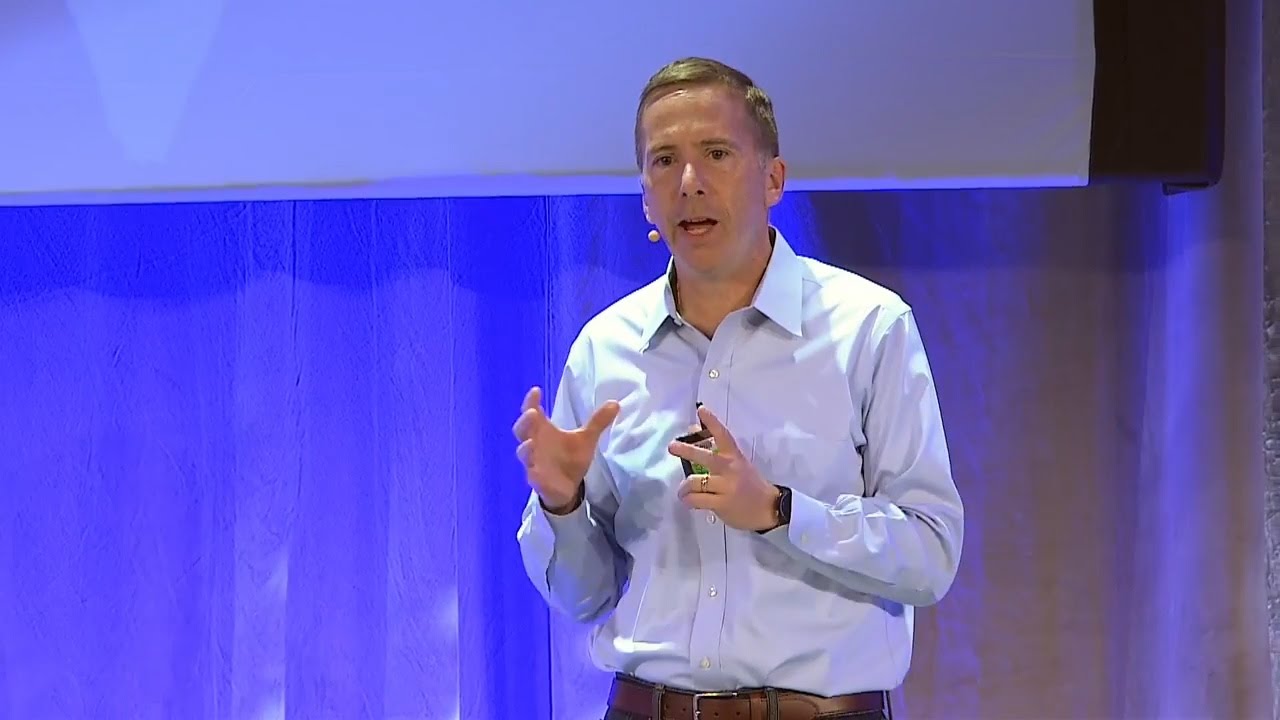
Episode 19: Kevin Nolan, President & CEO of GE Appliances
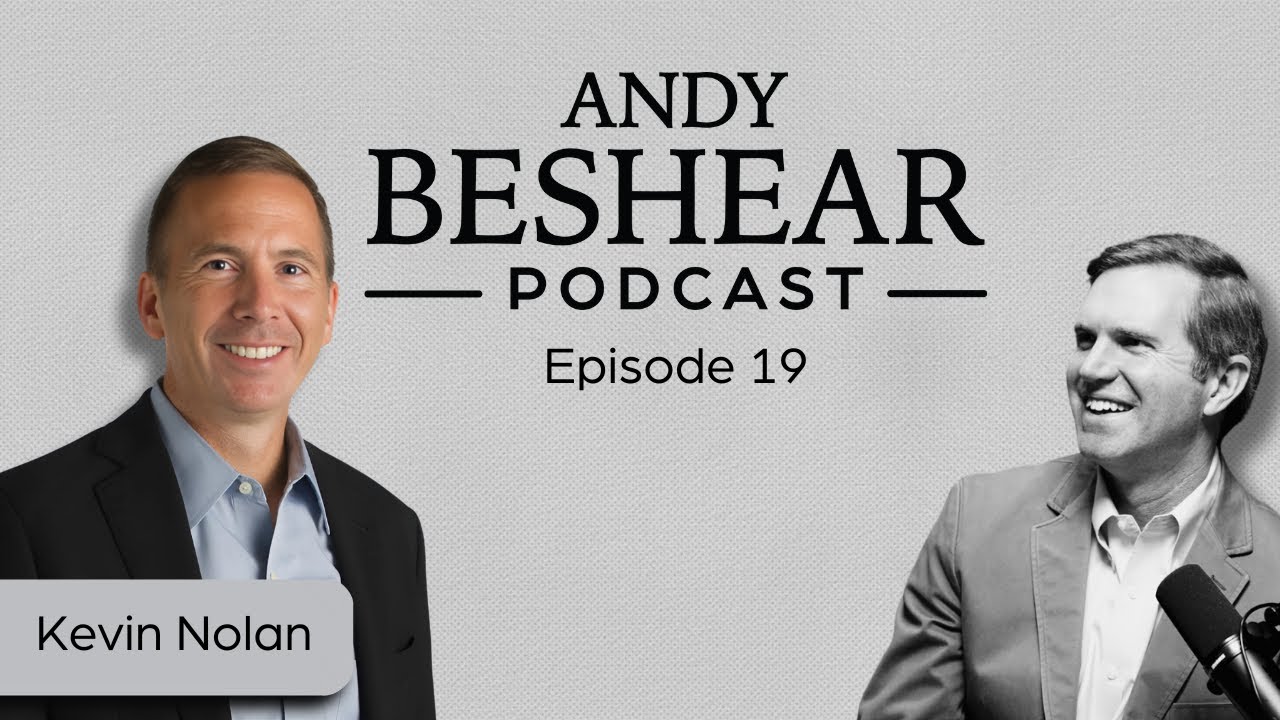
In this 90‑minute episode of the Andy Beshear Podcast, host Andy Beshear interviews Kevin Nolan, President and CEO of GE Appliances, and then hosts a political roundtable with Commonwealth Attorney Jarina Weathers and commentator John McConnell. The interview covers GE Appliances’ aggressive reshoring strategy (the "Zero Distance" model), recent multibillion‑dollar plant modernizations, new product lines such as a washer‑dryer combo, and the company’s innovation ecosystem (FirstBuild labs, open‑innovation partnerships). Nolan shares his personal career trajectory from a circuit‑breaker engineer to CEO, emphasizing culture, decentralized decision‑making, and the importance of community‑focused sourcing (e.g., local steel suppliers). He also discusses workforce development, high‑school and trade‑school pipelines, and his own dyslexia‑informed perspective on engineering careers. The conversation then shifts to broader policy topics: the upcoming Trump‑Putin summit in Alaska, Texas redistricting controversies, federal workforce reductions and rehiring, and the ethics of using public resources for private recreation (the J.D. Vance kayaking incident). The episode closes with Beshear’s “In My Kentucky Accent” monologue, where he reflects on his faith‑driven “why,” the Good Samaritan ethic, and the moral imperative to serve the community. Throughout, the tone remains conversational, optimistic about American manufacturing, and earnest about civic responsibility.
Chapters
Welcome to episode 19 of the Andy Beshear Podcast. That's right, 19 episodes in. Remember, you can download us on all major platforms, but please subscribe to our YouTube channel at Andy Beshear Podcast. Today's episode is a great one. We have the CEO of GE Appliances, Kevin Nolan. He's going to talk to you about reshoring, about making things in the United States that people said would never be made here before. He's also going to talk a little bit about the American dream, about how as an engineering student he started at GE and rose through the ranks to be their CEO. He's going to talk a little bit about their new product, which is a combined washer and dryer, which will hopefully Help us all do laundry just a little bit better. And then we have our conversation with the Johns, except for John Rabinowitz, we have Jerina Weathers returning, offering her perspectives on everything from the summit with Russia in Alaska to the Army Corps of Engineers raising the level of a river for J.D. Vance's kayaking excursion on his birthday. You'll hear in my Kentucky accent So it's going to be a great episode. But just to remind you, this podcast is intended to be different. It's intended to help you process all this world is throwing at you. I mean, the news hits us over and over right now, multiple times a day, and it can just feel so heavy. So our tone, our approach is supposed to be about a conversation with friends. That we go through all those heavy topics, but that by the time you finish the podcast, because you should go all the way through, you feel just a little bit lighter and you're ready for the week ahead. One of the ways we do that are our CAST rules. Our CAST rules help us to make sure that this is the best experience that we can and that you enjoy it. CAST rule 1 is be authentic. We want everybody who's on to be their their true self. Like I said in episode 1, you be you, boo. Number 2 is talk like a real human being. We want to get past all the sterile advocacy speak. We want our words to mean something. We want real emotion in these conversations. Rule 3, no debating reality. This isn't a podcast where we have spin. We want to talk about facts and solutions. Number 4, tell your why. We want to get to not just what you want to do, but why you want to do it. Today, we're going to ask Kevin Nolan why he got into engineering, how he ended up becoming a CEO, what he likes to do in his spare time. That's about getting to someone's why. And finally, have fun. We've been enjoying this podcast. This episode's going to be a good one, and stay tuned. We have not just big, but huge, gigantic, enormous news coming up for the Andy Beshear Podcast. So with that, let's get to it. You're listening to the Andy Beshear Podcast. As promised, our guest this week is the CEO of GE Appliances, Kevin Nolan. Kevin is going to talk about living the American dream, starting as an engineer with a company that he eventually becomes the CEO of. We're going to talk about manufacturing in the United States and talk a little bit about what he sees as his vision for the company for the future and maybe manufacturing as a whole. Kevin, welcome to the podcast.
Great to be here.
So first, you had some big news this week that I got to participate in just yesterday, making a huge announcement.
Yes, we talked about a big investment. You know, we talked a few weeks ago about bringing a washer back that was going to be, you know, hundreds of millions of dollars. But we're talking billions now when we look at all the different announcements that we're making across all of our plants, because we're more than just Louisville. We've got plants Tennessee, Georgia, South Carolina, even one up in Connecticut. So we're doing investments to modernize these plants all over the country.
Tell our listeners who, who should be familiar A little bit about your product line at GE Appliances.
Well, we do all the major appliances, you know, and most of those are built right here in Louisville, Kentucky, so it's just a great story. But we also recently got into what we call air and water, so water heaters, we're making those down in South Carolina. We also are doing air conditioning and, you know, getting into the kind of HVAC that you would see on small commercial, residential, and then we got back into the small appliance business. You know, GE was one of the originators of small appliances, got out of it a long time ago, and we thought, you know, it'd be great to get back in.
So if we rewind to a couple of years ago, since I know this, this announcement is about washer dryer this week, you made a huge refrigerator announcement. And I remember at the time people were saying that refrigerators will never be manufactured in the United States again. Tell us how you were doing this before anyone else, how you made manufacturing work in the United States.
Well, I think we've always known that the best place to make things is here in America. It's not the easiest, but we know really fundamentally it's the best. We have this strategy we call zero distance. You know, how can we be close to our customers? And if you really want to be close, that doesn't mean, you know, executives sitting here. It means where do we manufacture, where do we design, build, and make these products? And so we knew it was possible because we know it's the right thing. Now you look at certain factors, the math comes in. Transportation, it's not cheap to ship a refrigerator halfway around the world. So with big products, it started to be obvious pretty early on that there's a lot of benefits to make that closer. Less inventory, quicker cycle time, more responsive to customers, and it's proven out to be true.
Now I want to talk a little bit about your story and then the growth that we've seen at GE Appliances, because you've done an incredible job at reinvigorating this company. But you've been with GE or GE Appliances your entire career. That's become really rare.
It is. I don't know if that's a good thing or I couldn't get a job anywhere else, but it's been fantastic. You know, I've had— I'm an engineer by trade, so it's just been a great career. And it was a company at the time All kinds of different divisions, different branches, but even at GE Appliances. I mean, it's a big company, so there's a lot of opportunities we have inside it.
So you went to UConn, and I hope the UK fans that are watching can forgive you for that, but then you take that engineering degree and join GE, though not in the appliance division.
Yeah, I joined doing something I never thought I wanted to do, was circuit breakers. I mean, how fun could that be? And the funny thing is I fell in love with it. It was, you know, not the kind of cool job I wanted to do. And I think that's— a lot of people in school, they always think, I want to do the cool things.
Right.
And sometimes it's the company culture, it's the people you work with and the things you do. And I think that I've always just loved working in this company.
One thing I love about your story is you were planning ahead what you wanted to do, knew that you wanted to make things. And were looking inside the company about where things are made and made that decision to move to Louisville.
Yeah, some is it was made for me and some is somewhat of a sad story. In Connecticut, what I loved is we had what we called the North Plant. It's right across a bridge that we would go to and I would go in there and work in the factory. Well, that got shut down and it got moved out of the States. Then I moved to North Carolina, another factory where they outsourced more work out of that. And I love manufacturing, and Louisville I knew was still making things. And I came out to Louisville quite a few years ago, but we were doing a lot of outsourcing. And I looked at what's the real future, where does things go? And early on I said, boy, can we make a change. Why can't we bring manufacturing? Why can't we do that back here in this country and stop all this outsourcing?
And I think that mirrors what had happened at Appliance Park, where GE Appliances is based, gone from, what, about 12,000 employees down to about 4 at one point?
Yeah, it got pretty low.
But, you know, you come in, you work your way up, and then when you become CEO, things start taking off, or did over time, growing that workforce, you know, year after year. Tell us, what was it that you saw that you knew you could have this level of success?
So I'd say probably the reason it grew so fast is I got out of people's way. I think, you know, I always knew we had a great team. And that's why I think the real reason I stayed working with the company so long is we have such good people. And part of what we do with zero distance is the people that are closer to the customer are more important. They know what's going on. They can make quicker decisions and better decisions. And we've really liberated the workforce of saying, hey, how do you come in here and how do we make the quickest decisions? So we tried to take the bureaucracy out. We tried to take the CEOs not involved in every decision. And you know what? We found a lot of those are better decisions than I probably would have made. And that, I think, was really the secret sauce of how do you take power and distribute it in an organization and let the people close to the work make the right calls?
So last week with Coach Kelsey and Louisville's AD Josh Heard, we talked a lot about culture. And it just hit me that if you're going to push that decision-making down, having the right culture is incredibly important to getting the best decisions.
Yeah, I think that's— if you look at companies, the most important thing. And I always tell people, when you're looking to go somewhere, check out the culture. You know, it's not only the products. It gets back to the circuit breakers. What did I love? Not the circuit breakers, the culture in that company. So I think that's what everyone should look for. And if you find the right one and it's a special one, it can be great.
So as you became the CEO or worked through your first couple years, what was it that you wanted to do within GE Appliances? What type of culture did you want to build?
Well, one is I'm pretty competitive.
That's a good thing when you're selling something.
I wanted to be on a winning team. And I think we got complacent with, you know what, we're never going to be number one. And my whole thing was, why not? Why can't we be number one? You know, give me some reasons. And then a lot of people, well, you make things here. I said, that's— we could be number one. And that's what we set out to do. And lo and behold, we did it.
One of your expansions, you even teamed with some other companies. in Kentucky, North American Stainless for one, to provide stainless steel for some of your appliances. That created extra jobs in or around the community you're from. Are you all intentional on how you try to source some of those, some of those needs?
If you look at the special thing about manufacturing is you see a plant, but the real story is everything that goes into that plant. And the economic impact of manufacturing, it's huge. You get that. I mean, that's what I love about Kentucky. You get why manufacturing is so good for economy, so good for the country. So you bring these investments in, it brings suppliers with them. You know, you look at the steel. I love the story of our steel. You know, it gets poured up in Pennsylvania, thrown on the Ohio River, and it comes right by where we're sitting right now. And we load that off a barge and bring it into the plants and make products. That's a great feeling when you know these things are coming. And what I hope is with all this talk about bringing manufacturing back to the States, even our competitors, everyone, start doing it. And then you're going to see more and more suppliers come and you get this virtuous circle of things being closer to the customer. And that's better for all of us.
This is the Andy Beshear Podcast. We're talking to Kevin Nolan, CEO of GE Appliances, and talking about manufacturing things in the United States. So we both led during the pandemic and really grateful for your leadership and, and how you protected your employees. But I think that, that reinforces your point that making what we need for America in America is critical to our, to our national security. I think on the federal level, there's, there's some differences in approach between the carrot and the stick and which ones work. But, but the importance of, of manufacturing in the United States, I think, has, has never been more pronounced.
No, and it's good to see people understanding it. And people have different ideas on the how, but I think the what is right on. I think anyone that argues that manufacturing isn't good for America, I really question their judgment on things.
So what do you see coming in the future for GE Appliances and for manufacturing in the United States?
I think, you know, you feel it changing. You know, we've been on this for a while, and I think everyone was like, why are you doing that? You know, others aren't. It's good one to have company and to think, well, maybe we do have it right. Maybe this is the right place to be doing things. And what I think you're going to see is you are going to see these sub-tiers and more and more things being built here. Because right now, quite frankly, there's certain things you can't get in America. They're not here. And I think it takes a critical mass for those people to invest into the country and know that the work's going to be here. the production's gonna be here, and this is a good place to do it. So I see a bright future. I really think manufacturing, it's been coming back, but it's coming back quick now.
Tell me the importance of innovation, of R&D, of trying to stay ahead in your industry.
That to me is what everyone should worry the most about. I mean, the thing that scared me as we started investing in these, you know, these are hundreds of million dollars you're putting into plant. And products might only be relevant for 5 years. What's the next thing going to be? And the only way you can keep a manufacturing facility full is to have innovative, cost-effective products. And so to me, if you have or are building plants and you don't have a good innovation engine, watch out. You're going to run yourself into trouble. So what we did years back, and actually working with University of Louisville, city and state government, we built FirstBuild right here at the— Yes. down the road, which is our innovation center. We've actually built another one now up in Connecticut, and it has been fantastic. And we've done the same thing of open innovation up to everybody. Come and see what we're working on, what we're doing. And we have a nice steady stream of good winning products that have come out of that.
I've seen how you invest in your people, but I've also seen how you invest in your future workforce. You work directly with some of the high schools here in Louisville, trying to train that next generation, knowing that not everybody's path is going to be the same, and some people are going to be ready right when they leave high school to enter into the workforce and to have a good job. Talk about workforce and knowing that there are all different levels of skill that are needed.
Yeah, I think when I was in school, I'm dyslexic. I've got issues. I was terrible at writing in English. I'm like, what am I going to do? My father was a teacher. He told me, you're not going to be a good teacher. So I stumbled upon engineering. I didn't even know because I said, oh, this is more math. And I was okay at doing math. Right. People shouldn't have to stumble upon things. You know, it'd be good to have more examples of these are great jobs. These are whether you want to go to college or you want to go right into work, you want to go to a trade school, you want to be an engineer. Because quite frankly, the thing that worries me the most is we don't have enough engineers to do everything the country's talking about.
Right.
So I feel it's our responsibility too to work with high school, to work even younger, to get kids to show that this stuff can be fun. I think a lot of people think engineering, oh, it's terrible. Well, it is fun, but I think they got to get the right exposure. Just like factories. I think people have this image of what a factory looks like. It's not. Ours are air-conditioned. I mean, it's a good environment, well-lit. You know, they're, they're cool jobs and getting people to learn that is an important thing.
We're talking with GE Appliance CEO Kevin Nolan on the Andy Beshear Podcast. I think part of what you're talking about is, is, is the dignity of any path of work. And what we're seeing right now when, when we invest right in CTE, career and technical education, is we see nursing students and robotics and welding all working side by side and cheering each other on and needing to make sure we get back to everybody having a skill and everybody ultimately being validated in chasing that path.
You know, I think one thing Kentucky— why do we like Kentucky so much? A lot is workforce development. I mean, the state does a good job, I think, looking at all different paths and how do we support people to be ready for the kind of jobs that are going to be there in the future.
So you moved from Connecticut to North Carolina. What were your thoughts upon moving to Kentucky?
I'd never been to Kentucky. It felt like a strange place. I had heard about Kentucky Derby and— And our chicken. When I got here— and the chicken.
But when you got here, you discovered bourbon, and so it all went fine.
That's true. I'm a beer drinker more than a bourbon drinker, but—
Well, we'll edit that one out.
But we fell in love with the place. I mean, it is a nice place to live. The folks around here are great. And, you know, it's a commute. Back home, you commute an hour. Here, 10 minutes. I mean, it's, it's a convenient place and a great place to work.
Well, on, on the podcast, we like to ask some fun questions for people to get to know you. So favorite type of food?
Favorite type of food? Maybe fish and chips.
Okay. We always ask—
There's beer that goes with it.
That can't— what is your secret superpower? The thing that Maybe, maybe no one else knows that you do well?
I would say the thing I do well that people don't— I make clocks. So that's— I don't know if it's a superpower. Probably though, I'm curious, which causes a lot of trouble because I'll be curious about everything, so it's easy to get distracted.
About how things work?
How things work.
So, so I meant to ask you about that. You know, you not only make clocks, you have 40 patents?
Yeah, something around that.
I have zero.
It's not hard, trust
me. It might be hard for me. So tell us a little bit about— you still love kind of getting your hands in on what that next product or innovation might be.
Yeah, my passion's engineering. I can't say it's CEO. I mean, the CEO, it's a fun job. I love the people I work with, but I still love product. I still love doing engineering. So I I just can't get away from it.
If you could go back in time and warn yourself not to follow one fashion trend, what would it be?
Bell-bottoms.
Ooh, that's a pretty good one. We had a governor on who said he actually wore his jeans backwards when crisscross was very popular, and that one I want to see the pictures of. What's your favorite thing to do when you've got a night off?
It actually sounds odd, but machining.
Okay. Do you do it? Do you have that in your garage?
Yeah, I do. I do.
Oh, that's neat. What does your family think when you go out to do machining?
I think they like it.
Like, they like you moving outside a little bit. Some of the products that are coming out now, I think this most recent announcement is a washer-dryer combo.
Yeah. Yeah.
And I'm still trying to figure out how that works, but I'm really excited about it.
It's a, it's a great product.
So, so half a billion dollars invested in this line, uh, 800?
Yeah, 800.
800 new jobs, which is, which is incredible. Um, does it mean that we are less likely to mess it up in terms of colors and the rest?
Yeah, well, that's the thing. They're all getting smart now. I mean, these products today, it's getting so easy to use them, and I think that's what people want. People don't want 1,000 things to think about. They just want simple. And that product makes it even simpler. Like, when do I take it from the washer and put it in the dryer? You don't have to worry about it, right? It does it for you.
So hypothetically, if one of the Johns that are always on this show for our discussion turned their son's blankets, bedding pink, would it be less likely with this new product?
Maybe not.
Okay.
Probably had crayons or something involved.
So that's more of an issue with him than it was. Yeah.
Yeah. Yeah, yep, I think so. What you put in there matters.
So what do you think is the next kind of major breakthrough in appliances that people are going to be looking for?
Well, I think, you know, everyone's talking AI, and the question is going to be, how does that help us? You know, and I think you are going to get these things are going to get more and more intelligent to make less and less thinking to go along with them. So that's what I think in the future. It's going to be software. It's going to be electronics. You know, these machines have gotten complex, but how do they stay simple? Because no one wants to deal with complexity when you're doing chores.
So it's, it's when I was buying the first car for my kids, I was looking between 2, and there was an older version that did not have the panel in the middle. And I admit I found that attractive because it would be less distracting for them, and hopefully they would drive better.
Yeah, no big screens.
We're still working on that. But I do wonder if people are going to be looking for a more intelligent device, but one that is still a little bit simpler to use.
And that's what we try to do with different brands because there are different user types out there. So how do we have— you know, it gets back to zero distance. How do we have the product that you want? Our dream is to make one for everybody, you know, the product exactly how you want it. And we keep working to get better and better at that.
So you and GE Appliances also give back. You helped us when we were rebuilding homes after natural disasters. How important is that to you and the company?
I think we always look at, you got to give back. You know, we live in these communities no matter where we have our facilities, our employees, and it just feels good. I mean, we do a lot giving back and it makes us feel more grounded in where we work and the communities we are. And it means a lot to us. It means a lot because this is where my kids grew up. This is where We enjoy, so let's make sure we give back to the community. You know, we've been blessed with these great jobs, and how do we, how do we help others?
Tell me what you think makes for good public policy for manufacturing.
I think you could write a book on it. I mean, you guys in Kentucky have just been fantastic.
This is the best episode we filmed.
You know, it means do you have the right resources, right? You know, the cost of power, the water, and then Do you have the public-private partnership? And I think, you know, I've done business in a lot of states and I can say Kentucky is the easiest place to do business and it's probably the most pro-manufacturing state that we're in.
That's what we like to hear. So what do you think is the next appliance or type, and if this is getting into the secrets, then we don't want to do that, that we may see actually moved back to the United States Whether it's y'all or someone else?
Well, I mean, we've got a lot coming. I mean, we're talking, you know, one type of water heater we're bringing in, a heat pump water heater. We're talking, you know, the washer, the dryer, the combo unit. So I think you're going to continue to see more and more coming in here. Still, you're seeing some small appliances, but even that, we're building mixers up in Stamford, Connecticut. You know, who would ever believe that? So I think it takes ingenuity, it takes creativity, and You should be able to do anything here. But one thing is we're pacing ourselves. Back to engineers.
Yes.
We need more engineers, right? We need more folks that know how to do this.
So give your pitch to the listeners out there, some of our younger listeners that may still be thinking about what type of career they want, that they should consider engineering.
Well, I think anything in math and science, the beauty with it is you can kind of do anything. It's very hard for those that don't have math and science to get into those fields. It's easy, as I'm proving, to get out of engineering and go into business. So it's just a great degree. I think it opens so many doors. Why not? Why not start early with the most options out there? And I think anything that's in math and science gives you those kind of options.
So if you could be governor for a day—
Oh boy, you don't want that.
You don't want
that? You don't want that.
Oh well, what do you think you'd do?
I don't know. I think, you know, if you look at what you guys do in the complexity I mean, we focus on appliances. You've got a whole state to manage and to run with all the different issues. And I know politics aren't, aren't where I should end up. Stick to business.
That's probably smart. But I'd say if you could be governor for a day, just choose Derby Day and it will take care of itself. So what's your, what's your favorite part now that you're here outside of the commute about, about living in Kentucky?
You know, I'd say in Louisville, one of the things I love the most, our park system. You know, I'm a runner. I love running, and I don't know many better places to run. And, you know, that's little things like that I think just make it a great place.
You do it mornings, evenings, whenever you can?
Whenever the heat's not here. Like, it's been hot lately. Typically, I like mornings, but when I get the time.
Mine's the morning. It's just on the treadmill so that I can see what's going on on TV, maybe read a little bit, hopefully not fall off.
Yeah, be careful.
One of my number one goals there is safety on that product. Thankfully you all don't make, so no liability there. So as you look 10 years into the future, where would you like to see GE Appliances?
I think to me the thing is growth. Just keep growing. I mean, we for a long time didn't grow as a business. That's not a healthy state. Just keep going forward, you know, keep inventing new products, keep bringing more jobs in here, and keep doing good things. And I think we really do good things.
Now you've made your pitch to engineers. What about that younger person that's out there thinking one day I want to be a CEO of a company?
I don't know. Maybe be a governor. I don't think it's a—
Do you think that's possible after this? That sounds good.
Yeah, I think CEO, it's go where your passions are. I mean, if you're really, whatever you love, try to do that. I think that's the most important thing.
And I'd just say the ability to to communicate with folks and to have good leaders around you. You know, in the state we've got about 30,000 employees and we just do so many different things. Yeah. Maybe it's like adding the water heater line, but, you know, you've got transportation and on another side you've got Medicaid. And I'm not sure you could be any different than roads and Medicaid, but trying to find those good leaders around you.
No, and we appreciate what you do because it is not easy.
You know, we got good things going on in Kentucky, and you all are a big part of it. So Kevin, thanks for being on the podcast.
Thank you, Kevin.
You're listening to the Andy Beshear Podcast. After a politics-free discussion of business and manufacturing with Kevin Nolan, we are now Back to the politics. This is our discussion with the Johns, except today we're going to get some different perspective. So yes, we have John McConnell, but we're bringing back Jarina Weathers, who is the Commonwealth Attorney, the DA here in the largest county in the Commonwealth. Jarina, welcome back.
Okay, well, thank you for having me back.
So we're going to start today with a big summit coming up. So President Trump is set to meet with Vladimir Putin in Alaska to try to talk about some path towards peace in this war in Ukraine. John, we'll start with your thoughts.
I should tell Drena, thank you for being here. It's great to have a co-host to help me who I feel is up to the caliber of the show. It's just great.
Wow, take that, John Rabinowitz.
I wasn't gonna give him a pass. So when we look at the summit that's been talked about, I think upcoming this Friday, since we're recording now today on Monday, and then you look at the context of it, of course I find the irony on the backside of this that we're actually going to be meeting with Russia's president in a state that the United States actually purchased from Russia for, I think it was right around $7 million in 1867. Hmm. They're going to have a meeting in a place where they're actually trying to convince the president to help them take land from another country. So what are your thoughts on kind of how this looks?
Well, I can share with you on this side, at least in metro government and what we do here. You know, we've got a lot of people that are now settled here from Ukraine. I think that everyone wants that whole area of peace. We actually still have a flag Ukrainian flag that's right there in the center of Metro Hall. The quicker that we can try to figure out how to help people and to keep that the main thing, the better off we're going to be. I'm not quite sure where this is going, but I'm going to try to stay as positive as possible because we've just got people that are hurting all over. But we do have some of our brothers and sisters here.
I think we all want peace and a resolution. How it's being set up raises questions about whether we can get there. There's no question here that Russia is the aggressor, trying to take lands from Ukraine, occupying parts of Ukraine, inflicting heavy losses on the Ukrainian people. And right now, it's unclear whether the Ukrainian President Zelensky is even invited. And so how If you're President Trump, do you negotiate a peace between 2 countries if maybe only one's invited?
Well, and this was the same conflict that was going to be resolved within 24 hours after he was elected. So here we are months later still talking and having summits not inviting one of the other leaders.
In Alaska.
In Alaska, giving land away.
What did someone tell me one time? One of my mentors said it, you know, doesn't— you're not going to help anybody if you're not invited to the table. And that seems like that this has been a common theme for a while now, which is beyond, you know, concerning.
It has been, I guess interesting is the best word I can find, to watch the relationship between Trump and Putin that appeared in the past to be pretty close, to be frayed, to become very difficult, and then suddenly it's like it's okay again, even though there hasn't That's a big
part of it.
It is. Well, another topic we can go hop onto right now is there seems to be something still happening in Texas. A meeting got missed on Friday. I don't know.
Well, this is the attempt to redistrict in Texas. Redistricting, which is, which is how you draw your maps, especially, well, for the US House of Representatives. It normally happens every 10 years after the census.
That's right.
The census is what gives you that legal basis for redrawing the maps. This one is the most overtly political redistricting I've ever heard of. This is President Trump saying, oh, we're going to lose in the next midterms. I need you to redraw your maps so, quote, I or we, the Republican Party, get 5 more seats.
You know, the bigger— and the other part of this is one, that it's legal to walk out. The way they did to just cease this, to even start redistricting.
The Democrats in the statehouse.
The Democrats in the statehouse, right. But the other part of this is what in the world, right before an election? We can do this in 2030 because I think that's when we have another census. That's when we need to wait to do this.
It's definitely changing the rules in the middle of the game because you think you're going to lose and then openly telling people you're going to do it. And to me, this is the floodgates. This is the next Citizens United, because if Texas does this, then everyone's going to do this. Democratically led states, Republican-led states. And this idea that the media is saying, oh, how could you respond to this? I mean, I remember after Citizens United, there was a period of time where certain Democratic candidates Wouldn't play by the same rules, thought that maybe they— they didn't like the rules, and guess what happened? They lost. And I don't think you're going to see that again. If Texas does this, this is going to be the new way that politics and elections happen.
And it is very, very concerning when we start looking at— history does repeat itself, and it's nothing like we've ever seen this. But when you start taking out people, groups of people, culture, folk from different backgrounds, folk from different areas, and literally start erasing them—
Yes.
From what we know is us, is our culture, is what we do. And it just hits home. I mean, it's just one of the most concerning things. And the other part of this, though, is that we've got to figure out what we're doing. As the Democratic Party, I'll just be honest with you. No longer is the time where we just kind of sit around and wait and figure out, let's see what's going to happen. We know we got a great governor here in this, in this Commonwealth, but we still have 4 or 5 years ahead of us of what does this look like and what does this look like for people. I say it all the time that our responsibility as servants is that we speak for people who cannot. speak for themselves, or even those who have voted against their best interests. We still have a responsibility. But that's why everyone is not a leader. I mean, there— it's not a hierarchy of sorts, but as a leader comes a lot of responsibility. And this is something that I've not in my lifetime that I've ever seen.
You raise a good point that in addition to this being Cheating, changing the rules. It's also pushing back against some policies and practices that have led to more people being represented.
That's right.
In the U.S. House. It seems it's an attempt to undraw and undo some majority-minority districts.
That's right. That's exactly right. And again, just to start erasing people as if they don't exist.
And reaching out and bringing in the conversations around the FBI. To come in and help round up people who left their state.
Which, by the way, we have fewer FBI agents that are out there chasing child predators. That's, that's how we worked with them when I was attorney general because of DOJ and all of the buyouts. And now instead of catching criminals, they're going to use them to locate the state Texas House members that I think have already told you that they're in a hotel in Illinois. Yeah.
Yeah. And the bigger part is that we work with all of our federal partners. I mean, and things are still happening all over the country that needs to— that warrants some type of highlighting and for things that we have to take care of our children, our seniors, and, you know, just population in general. And when we start tearing apart just our wonderful— we might talk about it later, but our, you know, just state and federal employees and doing the best, doing what they are supposed to be doing and things that you never see. that are taken care of because there's somebody back there doing it.
Let's talk about that. When, when President Trump came in, he brought in Elon Musk and his Doge initiative. And we saw, because we understand government, you were also personnel cabinet secretary, ran an office in an attorney general's office, that they just took a hatchet to the federal government. In many ways, they didn't care who was leaving because they didn't spend enough time to figure out what people did. They, they just pushed for as many people to retire early, to fire as many people as possible, and then they figured out, wait, we lost everybody who actually knows how to do a job.
That's right. And that is an ongoing argument, I guess you could say, about the bloating of state and federal government workers. I'm not quite sure what people think is happening when there's so much between Social Security and things that come over that takes place in the Commonwealth. There are people behind the scenes actually doing these things. People who, you know, people who need these services and you call them and no one's there. But, and this is, this is not anything new, but it's on such a bigger level. And of course you wouldn't be asked to come back unless they actually needed you in the first place.
Which is what's happening now.
Right.
What you see is an attempt to hire back the very people that you fired and they told them when they fired them it was because of poor performance. And so one of the first areas we're seeing this is the National Weather Service, which, thank God, we need those meteorologists back. Mm-hmm. But if you're one of those former federal workers and they threatened that they were gonna fire you forever, brought all this pressure, you checked your email 3 times a day, you worked for FEMA and you're in a different state and you don't know at any time if you're gonna get fired with no way Home. What do you think? Are you going back?
It's a tough choice.
I would not be. I mean, you know, that's a lot of things to think about when you've been there 10, 15, 20, 30 years. And they are the institutional knowledge. So when that foundation is shaking like that, these are real people that we're talking about. And they have to take care of the family. They're not sure if this will happen again. What we're
seeing is the difference between fixing something and breaking something.
Right.
And I know there's this idea in the tech world of disruption, and I kind of like how they've turned a term that used to be negative into something positive. But this idea that something that may work in the private sector or a subset of the private sector could automatically work in government, where if you break it, even accidentally, People don't get their Social Security checks. Hospitals don't get the payments made. I mean, they thought at one point they could freeze every dollar from the federal government for a period of time and it not disrupt the entire economy. And I think that's what you're seeing now. A bad tariff policy disrupts the entire economy.
Yes, when you see, not that that's old, but a 74-year-old that's not working because he or she is not sure what their— where their next Paycheck is going to be. They thought that they did know that, and they've already paid their services to, to, to this country, and then this happens.
Yeah, their life certainly isn't better than it was 6 months ago. I think the final topic, because we, we like to end on something that's a little lighter, but I don't know if this is a little bit lighter, is the recent vacation of fake Kentuckian J.D. Vance. This is where the Secret Service, and I don't know if it was the Vice President, asked for the level of water on an Ohio— was it lake or river?
I believe it was on a river.
To be raised for his kayaking trip. And at a time when they are firing National Park Service workers, where some of the parks aren't even open, do you think it's okay for the Vice President to have that water level raised.
I'll hit on that because it was for his birthday that they were going to do this trip down the river. So when you think about—
Oh, well, that changes all
of it. Yeah, I mean, but when you think about the level he's going to to enjoy his birthday and you think about the number of people in the Park Service who've been let go, who can't afford—
Or how about with the increased prices out there? Yes, people are struggling to say, what do we do? For our relative's birthday.
Well, I sure am hoping that he's enjoyed his vacation, and he's— I'm also hoping that he understands the seriousness of why we need our precious reservoirs and the environment and how other people, you know, everyone would like to enjoy that as well. So that's why it's so important to protect it. And was it the Army Corps of Engineers that had to assist with that?
I think it was. And the impact of tourism Yes. On places, right? If some of the national park offerings aren't open, those are fewer dollars going into those communities, the local coffee shop, the local pizza shop. You look at Red River Gorge and Miguel's Pizza there, one of the most popular places to go. If they don't have— and by the way, I guess that was one free plug. Miguel will have to ultimately pay for a sponsorship to be mentioned again. But you look at the impact that it can have when certain areas shut down.
Yeah.
That's right.
So no kayaking next time on your birthday?
I'm just gonna kayak on the lower level of the river. I would never think to ask for something like that just because you want to make sure that yes, while there are certain things that you get to do in these jobs that others might not, they come with great tickets. You still want to make sure you're doing it right or as right as you can. Well, John, I think we've had a pretty great co-host today.
I think so too.
Well, I appreciate you all having me today.
And we'd love to have you back. I mean, the different perspectives and the discussion, really grateful to have you.
Well, thank you. Thank you for having me.
You're listening to the Andy Beshear Podcast. This segment is called In My Kentucky Accent. It's what's on my heart and mind this week. So this week I want to talk a little bit about my why. What drives me? My why is my faith. I try to live every day through the Golden Rule that I love my neighbor as myself and the parable of the Good Samaritan that says everyone is my neighbor. It tells me that we should always choose love over hate, unity over division, that we should always choose acceptance over judgment, that that's the example that's set in the Bible. And passage by passage, there are so many lessons. You know, I think about the, the cuts to Medicaid that are going to close up to 45 Kentucky hospitals and the idea that Jesus sent doctors for the sick, but now So many people who are sick aren't going to be able to see a doctor. But my faith also tells me that there's always more to do, that my job, whether it's through politics or anybody else's job in life, is to try to make this a better world and a better world for everyone. So it struck me this last week in church when my minister said the following. I even wrote it down. He said, as people of faith, None of us can walk through the world thinking we've done enough. You know, I think that's just such a powerful statement that, that there are so many challenges out there in the world that we should address. And to get to my why, about why I get up every day willing to run into a brick wall over and over and over again because one day it might fall, is that there are folks out there, the lost, the lonely, the left behind, that maybe with just that next little bit of help can be, can be found, can be successful, can ultimately be that example for their kids and their grandkids that make intragenerational change. If we start from a place where we believe that people are good and that they deserve opportunity, and we work to provide the help that can, that can help people reach that, just think about the positive change we can make in this world. If you think about it from a business standpoint, think about the productivity our workforce can have or the number of people that we get into the workforce. If you think about it from a health perspective, think about the number of people that we can get through and past addiction, the number of preventative screenings we can do so people can live long, healthy lives. And think about the extra moments that we'll have with the people we hold dear. I even think about my faith when it comes to things like infrastructure. What does building that next road mean that saves you 45 minutes in each direction? What it means is an hour and a half of memories with the people that you love the most. So I hope that we will all use faith in a productive way, not to tear somebody down, but to lift them up. And to think about the fact that in the, in the parable of the Good Samaritan, That person's laying on the side of the road and so many people walk by judging that individual, looking down on them, but the hero of the story is the person who stops, is willing to even get themselves a little bit dirty to lean down and to lift that individual up. And the last thing about that parable is it's not just a story we're supposed to follow, it's an instruction because the last part is when Jesus looks back at the person who originally asked him the question that led to the story and says, go and do likewise. So I think that's our job, to take our why, to take our values, to take our faith, and just to do a little bit of good in this world. And remember, after you do a little bit of good, you can't stop. As a person of faith, you gotta keep going, knowing that next thing you do might be the most important thing that somebody has happened in their life. might be that thing that lifts them up and gets them on that road again. We're coming to the end of episode 19 of the Andy Beshear Podcast. John McConnell, we held it down, I think, pretty well without John Rabinowitz.
I think we did just fine without John. And there was no one here that was going to pitch any company they work for, any small businesses that they own. So we got to move that part out just a little bit.
He has gotten a lot of free advertising.
Every opportunity he gets. Remember,
You can download us on all major platforms or subscribe to our YouTube channel at Andy Beshear Podcast. Your downloads and your subscriptions are what keep us going and keeps this conversation going. So make sure you're a part of it and let's do this together.