Alan P. Hill: Lost Everything at 25. Built Millions. Here's How.
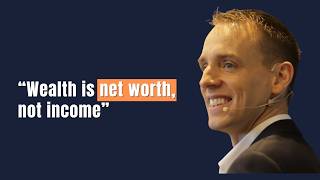
Alan P. Hill lost everything at 25 when a house fire killed his mother and destroyed his home. He rebuilt a multimillion-pound property portfolio and several companies by adopting a proactive mindset and making deliberate decisions. He defines wealth as net worth but warns against being asset-rich and cash-poor, emphasizing cash flow as the real lifeblood.
Chapters
Hi, today I am speaking with Alan Hill. Alan is an after-international speaker, entrepreneur, investor, and most important, he's a coach. He has taught and inspired across countries and continents, and he shared his stage with people like Tony Robbins, Robert Kiyosaki, Brian Tracy, and more. And even he wrote the book, he is co-author with Brian Tracy. But what makes really his story powerful and unique? At 25, he lost everything. And he rebuilt himself and rebuilt the wealth for him and for his family. He became the property investor. He has a huge property portfolio. And he built multimillion-dollar companies from scratch. So today we want to understand something much deeper. How does a person rebuild from nothing, create wealth, teach a lot of entrepreneurs and people on leadership and growing, and still keeps growing? So subscribe, Like, and we are beginning. Welcome, Alan. Thank you for coming to my podcast.
Thank you so much indeed, Dr. Leon. Great to be with you here. I'm very honored to be chosen to be here with you today and look forward to our conversation.
Yeah, great, great to have you, really. So, Alan, my first question: who is Alan Hill?
Thank you. Great question. Well, it's interesting you ask that because who is Alan Hill? It's me and my father. We're both Allan Hill. So one of the reasons I always go about the Allan P. Hill with my name everywhere like that is as a young kid, it was always Allan Senior or Allan Junior. So I put that in there just to distinguish us. But that's a personal note. Who am I really? Well, I grew up in the UK. As most of you who are listening can probably tell, I've got a British accent from the Southeast. I've got a Brazilian wife. And I currently live in the Algarve in southern Portugal. So that's on my personal side. I have two kids, a 7-year-old and about to turn 5-year-old, two young boys. My oldest is Jenson and my youngest is Lando. So those of you who are eagle-eyed, interested in motorsport, you'll notice that I have a keen interest in Formula 1 as well. So that's my personal side. And on the business side, for the last 22 or so years, I've been mostly focused in the area of business and entrepreneurship with a specific focus in the area of finance. So finance for entrepreneurs, myself included, as well as property and property investing, which again is focused on numbers and data, which all sounds very boring for people that aren't interested in numbers and data. But the thing I like to share with people is when you get a bit of discipline and strategy around the area, it gives you freedom. To do the things that makes your heart glad and that serves you and your family in the real world, that allows you to pursue your passions and your dreams as well. So on that note, in terms of passions and dreams, I also am a stage speaker. Typically 10 to 12 times a year I speak internationally. I've done so in 25 countries around the world and typically in Asia, Middle East, and Europe at the moment where I'm focused, helping guide people in the area of their moving towards their goals and their dreams. Not only in the area of their financial life, but in other areas too, as a business coach and as a focus on finance and personal finance too. So that brings it, ties it all together nicely with my business and my personal life. Of course, there's many facets to me, as I'm sure there is to every one of our listeners. So I hope to be able to connect with you guys today who are listening, and I thank you for being here and taking the time to listen as we serve you guys and hope to give you as much value as we can from the stories that we're willing to share today. So hopefully that gives you a bit of an intro, Leon.
Could you, uh, that's amazing. So very interesting story. And could you define what is it wealth? So a little bit more about what you teach people, what you teach entrepreneurs, and how wealth connected to leadership today.
Yeah, absolutely. Well, for me, I mean, I've, for over 25 years, money as a general topic has fascinated me. We didn't get taught a lot in our schools, right? I don't know about you, but we didn't have anything in our curriculum.
I didn't have as well. I learned by my mistakes.
Right, exactly. Exactly. So for me, I studied everything I could get my hands on about money, about wealth, about investing. I learned from coaches, from mentors, from authors. And this is, we're talking 20 years ago before really YouTube was really a big thing and all of this sort of stuff. So there's a lot of audiobooks and books and studying and meeting people in person as well. So when it comes to wealth, I mean, a lot of people have different definitions and it depends on which approach that you take. For me, I like to focus on cash flow. So usually for people that are talking about money, they talk about, they're so used to having a job or a business where they're paying themselves on a regular basis, or it might be lumpy income, but they're getting cash flow in to pay for their life. That's usually what most people are most interested in. But for me, wealth is actually something that I define as your net worth. So your wealth is everything that you own, your assets minus everything that you owe, your liabilities, and the difference between the two. So the best simple layman's perspective that I would use to define wealth is if you died today, dark though it may sound, if you died today and all your debts were paid off with all of the money and the value that you had, houses, cars, whatever it is that you have, what's left to give to your family, that is your net worth before tax, let's say. And so your wealth, for me, it's about two things. It's about increasing your wealth, but also your cash flow, because cash flow is the thing that makes a difference to your life. So you can have a huge net worth. You've probably heard people sort of say you're asset rich and cash poor. And we don't— most people don't want to be asset rich and cash poor. Most people would prefer to be cash rich and asset poor. And often that's why we see so many people just trying to focus on making more money in their job or in their business without thinking about the long term. So for me, when I talk to people, often it's about that balance between their balance sheet, if you want to call it your net worth, the amount of value that you are growing and building over time versus the money that you're able to have at your disposal to spend on the things that you need to live. So the cash flow side, which is usually in business is profit and loss, and also the timing of money, which is cash flow versus the balance sheet side, which in a personal perspective is your net worth. In the business perspective is in your balance sheet. And so I make those distinctions between business and personal because in the work that I do, although you've introduced me as a coach and I do a lot of mindset stuff from the things that I've learned from people like Tony Robbins and Brian Tracy and Blair Singer and T. Harv Eker and Stephen Covey and all of this stuff. It's actually really interesting. What interests me is helping business owners to grow their profit and the amount of money that they have available to them as well as their wealth. And so getting a distinction between cash flow, profit and loss, and balance sheet, the three areas of business, but also the personal equivalent, you know, the money that you have to spend in a day-to-day life and your net worth. That is what you're going to hand on to your children or what you have access to use should you need it in the times of difficulty. So those are kind of the ways that I distinguish it on a personal and on a business perspective.
So, uh, that's very interesting because I know you lost everything. Yes. And you wrote it in your book. The question, how, what inspired you to grow again? Is it discipline? Is it, I don't know, what really was behind your intention to do it and actual apuration to do?
Thank you, I appreciate the question. Um, I think so, I'll answer this question in a way that I believe will be as useful as possible to your audience, to anyone who's listening to this. Um, and I'll give you that personal story, um, which I think you're aware of. Um, but 20, just over 20 years ago, I was living at home after I'd finished university. I'd gone back to live with my my mum and my dad and my brothers and sisters. And there was a tragedy that happened, uh, as I was living at home. I'd gotten a job, I was teaching English and very low responsibility, everything was good and I, I was happy. But suddenly this tragedy happened and there was a house fire and that house fire destroyed the home that we lived in, just completely burnt it down to the ground. Everything that we have, our personal possessions, our family heirlooms, things that have been handed down from generation to generation, photographs, videos from our childhood, all those things which tell you about who you are or so we believe. You know, I felt like I'd lost my identity. But the real tragedy was that my dear mum, who really was the cornerstone of our family, she held it all together. She, unfortunately, she didn't make it out. And so in that—
Sorry.
Thank you. Thank you. In that experience, I lost everything I had. I lost my mum, I lost my home, I lost everything I had. I literally just, you know, it sounds like one of those stories you hear that I literally just had the clothes on my back and that was the situation I was in. Fortunately being, I mean, I lived in the UK at the time and, you know, we were well taken care of. We got put into a hotel. So we had a place to sleep. We weren't on the streets. Friends let us sleep in their houses on sofas and couches for a few weeks at a time here and there too. The church looked after us. We generously got given clothes and, you know, we had to go sorting through to find things that would fit us, but people were kind. But it was a tough time. You know, I had to rebuild everything I had from scratch. I didn't even have a home at the time. And in fact, 3 months after the fire, I also lost my job. So, and a few months after that, I also lost my, at that time, long-term girlfriend. And so I was suddenly single, suddenly without a job, suddenly without a home. And it was really a time of rock bottom. So I share all of that with you just to give everyone here a context of what it means for me to rebuild. And for me, it was genuinely starting from the worst day of my life at that time. And it was a tough time and it probably took me, I would say honestly, a couple of years couple of years of just struggle and dark days before I really felt like I could look back and say, I feel like I'm back to a kind of a sense of normality. I was never back, didn't feel like I was back to normal. I felt I was in a new normal, but within a couple of years, I felt like I was starting to get back to myself. So your question was, how did I do that and what decision was it about? And one of the inspirations for me, I had two inspirations actually. One was a book that I read by a gentleman I'm sure you're familiar with, Dr. Stephen Covey. He wrote the Seven Habits of Highly Effective People amongst a number of other great books. And one of the things he talked about was in his principles of the Seven Habits, he talked about being proactive. Now a lot of people use that term these days just to say, you know, I don't muck about, I get things done. You know, if someone's got to organize the family reunion, I'm the one that does it. And that's what they mean when they say proactive. But what I learned from Dr. Stephen Covey was that his terminology was like this: animals have a stimulus and a response. There's no gap between the stimulus and a response. You can train them. Pavlovian conditioning, right? You ring a bell when you feed them food, and every time you ring a bell, their mouth will salivate. So they don't have that control. You can do that with humans as well, right? But the difference is that humans have a space between stimulus and response, which is the power of making a decision. And that's what he means about being proactive rather than being reactive. Like someone cut you up in the traffic and suddenly you get angry at them and now you're angry all day. And he said, we have that human capacity to say, here's the stimulus. Now a decision happens before our response. And so I decided I wanted to turn this terrible situation into proof that I could be proactive and to a way of showing myself in the world that I wasn't going to let this experience form me and drive me into spiral down and say, well, poor me, I'm in victim mode. The world happened to me. It's not fair. It's not right. And all of that would've been true and would've felt right. Some people can relate to that and say, yes, the world happens to you sometimes, right? But I wanted to have a different meaning, particularly because my mum had died. I wanted there to be a deeper meaning to her death. I didn't want it just to be something that I was like, oh, well, that sucked. Now I've picked myself up, dusted myself off, and on I go with my life. I wanted that horrible experience to have some deeper meaning that allowed me to make new decisions and actually live a better life than I would've done if that had never happened to me. And so I made a decision and I said, I'm going to use this as an excuse. You. So I'm going to say from now on, I will— because here's the example. And for those of you that are, um, uh, watching, you'll see in the video, like, I'm using my finger to draw a line like a stock market. And imagine that my life of life energy was like, you know, we're going along, we're going along, good days, bad days, and suddenly rock bottom like a stock market crash. And so the 2 or 3 years it took me to kind of recover back up to that line of normality, even to get back to that trend line, It was a real significant struggle, but I taught myself something. I realized that I could go from this minus 100 points, whatever you want to call it, back to normal, back to the baseline within a couple of years. And so I thought, well, what? Hold on, I've just gone from there to there. What if I carry on going on that trajectory? Not the old normal life trajectory I had before. And I can use that terrible experience as an excuse to say, how could the new Alan who's learned how to fight back and going a sharper upwards trajectory, how could new Alan make a decision that's different to what old Alan would've done? I'll give you one concrete example and then I'll pass it back over to you for your thoughts or questions. So I decided to start a business with a friend and I mean, that was a big step for me. I already was in fear about that. It was something that old Alan might not have done because I was in fear and let's be sensible and all of this.
Yeah.
But not only that, compounded on that, within the first year or so of doing business, in fact, it's 20 years ago this year, I decided to follow my dream and become a pilot and went to Long Beach, California, just outside of Los Angeles. And to follow that dream and say, and the reason I did that was not a sensible Alan decision. This was new Alan saying, I know I don't want a career as a pilot. I do want though to feel what it feels like to be one of those people are up there. Like in my mind, pilots were up there on another level and could I be there? I didn't know. Could I get to that level? I didn't know. But if I gave myself the chance to follow my dreams, I used this tool that I often use now and I said, I'm going to imagine, have an imaginary conversation with the Alan P. Hill on his deathbed, the old Alan. Hopefully I become an old man and live a long life. And I had an imaginary conversation, said, Alan, I'm going to spend this money. I'm not going to get an ROI, won't get a return on my investment. I'm not looking for a job. But do you, old Alan on your deathbed, think that you'll ever regret this decision? And the answer was immediately a no, I'll never regret this. Go for it. Life is short. Your mum died at 54. Life is short. Go and live your life to the fullest. So I made the decision to become a pilot. To start our business, to begin investing in property, to do things that were beyond the realms of normal, things that would've scared me, things that would've seemed like not very sensible. And so all of that came from using that negative experience as an excuse to make a new decision. And so the point I'm making here when I share this with you, and what I hope the message I want to share with the audience is you don't need to wait for a life challenge like I had to come along. It was a decision that I made that changed my life. Sure, I had this tragedy that caused me to rethink things, but you don't need to wait for a tragedy to happen to you to make a decision for your life to go on a new trajectory. It's a simple decision to say, I'm living my life on new terms. Life is short. I could be dead tomorrow, but I'm going to be sensible and plan for the future, but I'm also going to have a balance and make sure that I live for the now as well. So it's all about having a balance rather than living in fear and living for the future that may never come. You're saying, I will plan for the future, but I'll also make sure that the now becomes more important. So that's the decision that I made off the back of that, how to bounce back, as you asked me, to move forward in my life and not just to get back to normal, but to say, how can this make this experience turn into a positive? And the last part I'll share about that is it's not just about living my life on new terms. I love the fact that you've kindly invited me to share this story here because part of my new decision is sharing the story, not just becoming a pilot, not just becoming a multimillion pound property portfolio owner in the UK, not just creating several multimillion pound businesses and serving other business owners as their fractional CFO or or part-time finance director to help them grow. I actually also want to share this story in the hope that it'll inspire somebody to say, maybe I could follow my goals. Maybe I could realize that life is short. I don't have to wait for my mum to die or a house fire to happen or some tragedy. Or maybe I do have a tragedy, but now I can reframe it and give it a new meaning and say, what does that tragedy look like if I were gonna use it to cause me to take positive actions that that would cause me to look back and almost say thank you or have gratitude for the situation. Although you may not have gratitude for the situation, you can have gratitude for the decision that you made in your head as a result of that. And you used that pain and turned it into something very positive for yourself and others. And that's why I love to share it with you just now. It's not just about what I've done in my life. That's not what's important to me. What's important is that the question you've asked me allowed me to share the story in the hope that your listeners can make a decision and take their step forward in their life, whatever it means to them, if they're ready and if that's what they want.
My friend, it's a great story of not just growing, it's a story of transformation. It is. And I know you not just grow by yourself and you don't just working on yourself.
That's right.
You help other entrepreneurs. Not only to grow, because you cannot grow without real transformation. I help founders to overcome their fears and raise capital. That's very difficult because, you know, it's a different story how to do it. But every founder should start from transformation, some inner transformation, and inner discipline, because there are two types of discipline. Yeah, discipline that you obey, obey of some orders, or inner discipline. So how, what's your strategy to help entrepreneurs? I see, for success, Winning Strategies for Success. I like the, uh, title of your book.
Thank you, thank you. So it's really interesting, you mentioned a couple of very important points there, and we're very aligned on a lot of things. I love I've researched you, done a bit of background research. We've spoken before and I saw that you love to help entrepreneurs using AI tools to help them get access to different thinking methodologies as well as for your own coaching as well. Now for me, um, I think discipline that you mentioned is very key. Um, that doesn't mean that you have to be perfect. This is really important. A lot of people think discipline is perfectly getting up at 6 AM every day or 5 AM, whatever it is, and doing the same thing every single day, no matter what. In fact, for me, discipline is a bit different than that. And for people that understand what I'm about to say, I think that this will resonate. So I've been training for 32 years this year in martial arts. As we talked about before, I've been training in Goju Ryu. Just last week, I had some guests in my house and Taekwondo 9th Dan Grandmaster, a good friend of mine. I'm not a Taekwondo practitioner, but I do practice Goju-Ryu, and currently I'm training in a Shito-Ryu club, both from Okinawa.
And for me— I hope you didn't fight.
No, no, no, no, I just took him around, we had a good time. Actually, he's a very wise, very wise gentleman. But for me, I think discipline is about returning back and never giving up. And this might sound, oh, you know, never give up, everyone says that. But what I mean is this, People say discipline. It's not about being perfect. It's about noticing when you're going off track and just adjusting back to being on track. So have I perfectly trained 5 or 6 times a week since I started in 1994? And the answer is no. There were weeks where I was doing 6 times a week. Um, right now I've got 2 small children and I train in martial arts twice a week. I do 4 classes, but it's 2 days a week, a kids class and an adults class. Back to back, and then another one. And, you know, I've got kids and sometimes things come up, and if it's their birthday, we might take them out. We won't train that day. It's about having a balance, but it's about always returning. So yes, I had a gap, um, when I went to university where I wasn't training that much, and I used to come home and train in the holidays and things like that. I went traveling for 2 and a half years, and I was in different countries all around the world. Um, was it 20? Um, I think it was 23 countries in 27 months. And so obviously I wasn't training properly then. And then I immigrated to Portugal. It took me a while to find a club. So there's been gaps in my training, but in my mindset, my character, my identity is built around, I am a karate student. I am a lifelong learner, even though I've taught my own classes as well back in the UK. Right now I'm not. I've got kids to look after. I've got enough responsibility, but I'm continuing that identity. As a lifelong learner and as a karate student. In Japanese, it's called karateka. I'm a karateka. So I'm following in the way.
Karateki is karateki.
Yeah. Right, right.
Exactly.
So I'm following in the way and the way doesn't mean that you're perfect. You know, if you have a faith, you understand that sometimes your faith is tested and you go off track and then you have to come back. So for me, the key thing for entrepreneurs is Yes, you need discipline, but you don't need to be perfect. You just need to notice when you're going off track and have the ability to say, I see you. I see myself going off track. I look in the mirror, I have a check with myself and I say, I'm off track here. What do I need to do to get back on track? So for me, discipline isn't about perfection. It's about staying on track or returning to track when you inevitably veer because the life towards a goal is not a straight line.. It's like I'm going this way, I adjust, it's that way, I adjust, it's this way. And it's not a straight line to success. It's a constant adjustment. Just like when you're using a map and a compass and you're going through the woods. And I do this all the time. I love getting into the mountains and getting out away from mobile phone signal, away from the internet. It's just me in the wilderness in the middle of the mountains. Um, I love that. I try to do that twice, once or twice a year. Get out somewhere there's no human beings. I see No mobile phone signal, no nothing. I take an emergency beacon that goes on GPS and I use a map and a compass. And clearly I'm not walking in a straight line. I'm just getting, getting there. And I love that. So my analogy for entrepreneurs is don't worry about perfection, but do focus on realigning when you notice that you're off track. Um, so that's the key thing I would say about discipline. I don't know if that answered your question actually, uh, there. So, um, I'm back over to you, Leon, see what you're thinking.
Yeah, about strategy. So this is one strategy. Do you have something else too?
Yeah, I think, um, so not, not only discipline. I think discipline is key, but it's not about being perfect. That's the first thing. Um, I think the other thing, uh, for me, this worked, uh, really well throughout my life is having that— I mentioned it about karate, but it comes also into our business mindset, which is to say my identity, focusing on my identity. And you, you talk about the work that you do, business owners and similar to what I do when I'm working with business owners on their finances. We also touch on identity as well. So we have an overlap there. So it's about understanding how you keep your identity front and center because you're focused on your identity. Like I'm a lifelong learner. How can you possibly fail to grow in expanding your business if your identity is as a lifelong learner? And as you said, most entrepreneurs, they want to be more, they want to do more, they want to have more. That be, do, and have. And actually entrepreneurship is, I find, closely related to personal development. And that's why mindset is such a key part of it. And I've had such struggles where my mindset has been tested, and I think that gives a lot of validity. So when I share with people my struggles, it creates a degree of trust. It also creates authenticity through my willingness to be vulnerable and share my challenges, which is why I'm not always showing off about the greatest things I've got. I love to share with people my challenges and my vulnerabilities because I believe that's where the real lessons in life are. And so I've spent a lot of time around Robert Kiyosaki. I've been on stage with him in 5 or 6 different countries in 3 different continents, South America, South Africa, actually more than that, 4 continents. So South America, Africa, USA, Europe, and Asia, as well as the UK, all over the world. Spent a lot of time with him. Discussions with him. And one of the things that he says is that entrepreneurship, he believes, is a spiritual game. And what he means by that, entrepreneurship is a spiritual game, is that usually when you're going into the world of entrepreneurship or investing, you're doing it because you want to be, do, or have more in your life. And that kind of a person usually has a spiritual or a personal development aspect. And this is fulfilled through the path of entrepreneurship. They want to grow, to Be More, Do More, and Have More. And so what he says is that a lot of people, they think that they're going for wealth, but actually sometimes that's just the path that leads them towards beingness, being a bigger person, growing and doing what they're meant to do on this planet. And often that's serving the world and helping many people. And often entrepreneurship does help people. It's not a cynical money-grabbing situation. If you are living your mission on this earth, to try to serve. My personal mission is to serve the greatest number of people in the greatest possible way. And so with that in mind, if I do so and I'm receiving an appropriate remuneration for helping as many people as possible in the most significant and powerful way as possible, then I'm gonna get paid for that. And the more that I do, the more money that I'll get, and those people are receiving great value. You know, and people will say, well, is that really true? If you're taking money from people, are you really, adding value. But if I was to do something that cost me, let's say, £10,000 or like 3 years' worth of work, but I give it to somebody for €50 a month as a subscription to my AI tools, for example, that saves them so much money. And I'm making a little bit of money and they're saving €10,000 or €20,000 or dollars or whatever it is. And they're only paying a small amount of money and I'm being fairly compensated for what I'm giving to them. So I believe that entrepreneurship is a give and take that gives exchange of true value. And when you can reach a large number of people and they pay you a relatively small amount of money for a subscription service, you can make a significant difference in their life. But also a lot of people forget that some entrepreneurs are extremely successful, and I help some very, very successful high net worth individuals invest in property. And when I do that, I do charge them a fair fee for that. That, but I always do it in such a way that they save more than I charge them because I believe in that. And that's what I feel builds trust. And even though I teach entrepreneurs exactly what I do and how the data and the geeky tech stuff works under the hood and all the formula and the data and the numbers that I use to lead my decisions, I teach that to them so they're transparently understanding what I'm doing and they don't need me any longer. The fact they don't need me causes them to come back and use me again because they know I've given them Everything they've seen under the hood, they could do it themselves. They understand how it works, but now they trust me. They've got transparency and they're too busy, or they think, well, I'd rather pay you to do that. So it's really good for business. So this is where a lot of entrepreneurs or people that wanna be entrepreneurs think you have to screw people over and take money off them. Actually, no, you don't. By being very, very trustworthy and having a good reputation and doing whatever it takes to give them maximum value, people will come back to you again and again. And that is my M.O.
I agree. Just this happens in the middle of the journey because if you take most famous entrepreneurs, Bill Gates, I don't know, Jeff Bezos, and even me, I started without anything, anything about mission, vision, and all this stuff.
Stuff.
All, I think, famous entrepreneurs who built billion-dollar companies, they start just from idea of making money. And vision happens or came in a later stage when you get inside, when you see whole the picture and you understand that what you do is something gold and really can And you have money already, so you don't have to work for money anymore.
That's right.
Transformation happens. And this transformation happens exactly toward what you shared now. But in the beginning, it's only about money in 99% of cases. Absolutely. So I can tell you, when founders and early-stage founders started to pitch me with all this bullshit about vision and mission, I stop them immediately because I see they are not there for this. They are there to make the company and sell it. But at some, not early stages, round B, round C, the picture is totally different.
Yes, that's right. That's right. And my experience is very similar in my work. As I mentioned earlier, I work for companies and business owners on a fractional basis. That means part-time. So if someone needs me a day a month, I will help their business by looking at their profit and loss and their balance sheet and understanding it. But from the perspective as an entrepreneur, not somebody who went and did an MBA or got an accounting degree, as a person who's got the visceral experience of knowing what it's like to suddenly have to find the money to make payday because you miscalculated, or figuring out how you're going to invest all this money that you suddenly came into because you did a lot of business and you've never had that kind of money. And how do you feel about that? And what are you going to do with it? And how do you reconcile all of that? So from my perspective, I couple looking at people's actual business numbers and how they want to invest their money or how they want to manage their business with their mindset as well. And that's where when they start to make money, that's when the other stuff starts to come along. They want to put their money into investments. So they can have that stability, that security, and begin to think bigger and think more about their reason for being here and their mission.
Yeah, exactly. So what do you think, how you choose whom to help? How you choose that entrepreneur is ready for transformation?
Great question. Well, I'll always just meet with people or hop on a discovery call and get to know one another. And I always say to my clients, this is a two-way street, right? It's not a done deal that we'll work together. I don't want to waste my time, and I'm sure that you don't want to waste yours. So let's first of all find out if we're a fit. Now, some people might be listening and thinking, oh, it's a load of BS. You'll just take whoever is going to pay you the money. And if you have that mindset, that's something that mode is what you were talking about earlier, where all they're thinking about in the early days is the money. When you're in a situation like I am, where everything that I do No one thing I do is necessary for my income. I have my property portfolio that provides passive income. I have it professionally managed. So all I've got to do is make occasional decisions once a month about, you know, I want to replace the dishwasher because it's broken, or the washing machine, which one do I choose? Or do I, am I happy with this tenant or that one? So it becomes very supportive to me fulfilling my mission, which is how I was able to spend 2.5 years traveling the world just to sort of explore. So how I connect with people is I will ask them questions about where they're at in their life, where they're at financially, but also what their goals are and where they want to go. And if I think that I can add value to them, then I will tell them. But equally, if I think that I can't add value, I will say to them, look, I don't think this is the right time for you, or I don't think I'm the right person for you at this time. You need someone perhaps at an earlier stage or perhaps at a lower cost point or or something like this, because I tend to work best with people who are in the £1 to £2 to £3 million revenue mark. To me, and they're only making £150,000 or £200,000 a year, then ultimately I would say they might need to focus on growing their business to a point before they're gonna spend any money with me. I mean, I can work on doing more affordable things now with AI and give people a subscription to a package which helps them out. But in terms of giving my actual time, Then I'm a lot more careful these days about who I work with.
So, uh, you meet a lot of talented people, ambitious people who really get stuck. So what you suggest them to start from?
When they get stuck?
Yeah, get stuck in something, in the business or somewhere, so cannot move with their dreams. So the stains stuck. So what you would ask them to do first?
Great question. So, I mean, one of the things that I do, so for the last 2 or 3 years I've been spending, we've connected a bit, a bit about AI, and I've spent the last 3 years extensively exploring and playing with AI, and I've been using it to help entrepreneurs to reduce their blind spots in their strategy and their thinking. Now, what I don't think AI should be used for is a ask and then a question. That's just like an advanced Google search. What should I do in this situation is not gonna give you a very nuanced answer. Well, what I help entrepreneurs do is ask questions the right way to identify those blind spots. I use AI to help support this, but of course in my, you know, 20 years experience in business, over 20 years experience in business and, uh, as a coach and a finance, uh, director, I ask good questions to people. It's all about starting with a good question, an empowering question, something that's an open question, not a closed question. So I'll give you some examples. So the open questions are usually what we call in English the WH questions. It's the where, what, why, who, how, when, and all of this stuff. Now, when I use AI, I use it to help me identify blind spots. That is to see what I don't see. But as a coach, you and myself, that is our role. As well, together with AI, which we can use to superpower what we're doing, is a person in the loop or a human in the loop approach where we're using AI just as a bolt-on to support what we do. It helps us to say, look, what is it that you're missing that you might not be seeing? So that's the first thing is identifying blind spots. What is it you might not be seeing? Where are your cognitive biases coming into play? That's the first part. Yeah. Did you have a thought that you had there, Leon?
Yeah, that's interesting.
Yeah, just no blind spots.
I'm covering them, right? Yeah, I'm looking for my blind spots every time and find a lot. Yes, yes. Yeah, that's one of the, one of the, how to say, one of the tasks I'm doing almost every day. What is my, what is my mail? Uh, what is my, uh, schedule? What is my blind spot for today?
Yes, right. Well, I use it when it comes to strategizing particularly. So recently I helped my wife sell her business. I've exited businesses as well and helped other people go through processes of exiting. And so in that process, usually it's not something you do every day. And to be honest with you, business brokers are not always that helpful. They're good at making an introduction saying, here's someone who wants to buy, you're someone who wants to sell, and that's it. So what I help people do is to navigate preparing to sell.. And so with that, you may have blind spots like, what would a buyer like to see in terms of if I can cut some costs over the next year so that my profit is stronger, so I can get a higher multiplier on my EBITDA, on my profit? How can I, what areas should I cut and what areas should I preserve? Because you don't want to drastically cut because a savvy business owner looking to buy your business will see that you've slashed your marketing to make your profit look higher. And actually now you're not growing the business anymore. So he knows that he's gonna have to put the marketing budget back in play when he buys it. Yeah. So it's about choosing wisely what you become more efficient and looking for efficiencies. So whenever I work with business owners, I look to help them find ways to save costs as well as grow their bottom line. And that also obviously pays for my fees. So it's a win-win for everybody. But the blind spot analysis is one part of it. The other part of it, which is slightly different to a blind spot analysis, is doing a red team review. And that we use that in, in tech all the time. And, uh, in terms of like, you get a big IT business and they get a team to act as a group of hackers and try to break in and test the security by actually actively trying to hack it. But they're within the business, so they're called a red team. Okay. And that's, uh, something that I do, but not with a hacking perspective or an IT perspective. But a strategic perspective. So if you are looking at going forwards with a business plan, then I will say, how might this go wrong? And what might some people who completely disagree with you say? Not one person, but a team of people that disagree for different reasons from different perspectives. And by bringing those thinking, those thought processes of what might go wrong and how, and challenging the entrepreneur and his thinking until he can resolve how to mitigate those things or how to accept those weaknesses, that gives greater clarity going forward in preparation to sell a business or just in preparation to increase the profitability or make some cost savings. That's the second thing that I often do with entrepreneurs as well.
That's amazing. And to summarize, it looks like today we can build some operational operating system to get to the well. To become well. And what you share, it is a huge part of this operating system. Yes, it should be somehow put in a, like, a software. So, ah, so just check yourself in all this stuff you share it today. So do I have discipline? By the way, I missed gym today in the morning. I just didn't want to, to go. So my discipline is not so, so good. And but Having such operational system, operating system, really could help, uh, people and entrepreneurs to grow and to build wealth and to understand their, uh, their limitations and blind spots. That's amazing.
Yes, thank you. That's exactly what I've been building for the last year or so, is these AI systems that will help entrepreneurs to see those blind spots. And so for anyone that wants to work with me and connect with me, whether it's, you know, through LinkedIn or whatever, I'm I'm always open to those connections and to have that initial conversation, see if there's a way that either I can help or the tools that I've created can help you shortcut those if you're in a space where you need to watch out for your budget and keep things cost effective.
So what's your valuable advice to entrepreneurs and specifically to founders, startup founders in today's In today, 2026, world is totally different. And what is your advice?
Thank you. Well, I think it's all about if you're an entrepreneur, uh, then you want to move away. I'm sure many of the listeners are, and many of you are already moving in this direction, but it's very important to realize the distinction between having a job and having a business. Uh, because actually having a business where you're basically selling your time and not make business your job. Right. Exactly.
That's a big problem. People, when people raise a lot of money, they just transform their business into their job. And that's a big problem for founders.
That's it. Exactly. So a lot of people think, I don't want a job, I want to have my own business. And they end up with a job that they own. They own their job, but it's still a job because they're charging by the day or by the hour. And it's still a job and they're still limited by the number of hours there are in a day. So the key thing that I say is, Whatever you do, rigorously focus on leverage and scalability. If you are in a business where you are the bottleneck and you are the one providing the service, then you are guaranteed to be limited by the ability that you have to serve your customers with the hours that you have in a day. If you want to build a business that grows beyond being a job, it might be a well-paid job. I mean, if you have a job and someone else is paying you versus having a business, where you do all the services, probably you'll earn some more money, you'll probably have more bumpy income as well. So the difference is, is saying, I'm not going to exchange my time for my money. I'm not doing a one-to-one relationship between time and money anymore. I'm looking at how I can scale and rigorously asking that question every week, every month. Am I running a scalable business or how can I grow my business in a way that is scalable? That doesn't rely on me, that removes me as a bottleneck. And a lot of business owners aren't doing that and they're leaving money on the table because they are being the one that is the primary value driver instead of saying the system I've created or the people I'm providing opportunities for, or the products that I'm— I don't even need to create my own product this day and age. You can sell other people's product, other people's services, other people's digital products. Why would you go to the trouble of building your own when you can often make more money not even thinking about the product and just focus on marketing? So the bottom line is scalability and leverage and marketing. If you do not know how to communicate the value that you have to the world, people don't know. You can have a perfect system, the perfect product, the perfect service, and it can be better than everyone else's. But if no one knows that you exist, what good is that? It's like you, you know, what is it, the old thing they say in the Bible, don't put your lamp under a shade, put it on the light on the window for everyone to see, right? It's about letting people know what you're good at because the more that you do that, you can have a mediocre product, you'll make more money if you're doing good marketing than having all of your time focused on polishing that product and then no one knowing about it. So the last piece of advice I would say is this, is perfectionists Be aware. I use AI to help also avoid perfectionism in terms of the Pareto or Pareto principle, the 80/20 principle and saying, what can I do today that will give me 80% of the value from 20% of my effort? So that, and marketing is one of those areas I believe is the marketing is if you spend your budget or some of your time and effort in marketing, then your business will grow. And then as you're acquiring customers and you're getting money and you're getting profit, You can use that profit to invest in continually improving your product rather than waiting till something is perfect, right? And then selling it. You start with a basic, um, minimum viable product, something you get your first 100 users and then you iterate, iterate, iterate. And you might lose some of those first 100 users as you evolve, but you'll get new ones. And those are the ones that are coming in that are paying you to continue evolving. And you're basically being paid to grow your business and to grow your product and to evolve as you go.
Thank you very much, Alan. It was so impactful conversation. I can talk to you for, for hours, but now we have to wrap up.
Yes.
So thank you. And, uh, we had an amazing after entrepreneur, international speaker and entrepreneur coach Alan Hill. And thank you, Alan, for coming to my podcast.
You are very welcome, Leon. Thank you so much for having me.
More from Leon

Claire Hayek: Neuroscience of Decisions Under Fire or Why Smart Leaders Break Under Pressure.

5 Fundraising and Startup Lessons from David Klein, Founder of Click Therapeutics.
I raised millions because I didn't pitch potential. #fundraising #startups #founders