JD Meier: 25 Years at Microsoft — Leadership Lessons That Held Up
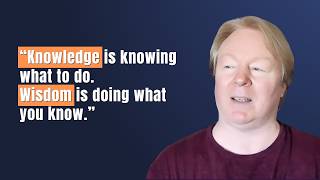
JD Meier spent 25 years at Microsoft leading innovation and now coaches executives. He separates core business from experimental "baby blue oceans," uses weekly Friday Reflections to surface obstacles, and runs quarterly "hit-refresh" routines to align vision and strategy. He warns of an "AI leadership gap" requiring directors who focus on outcomes and continuous value creation.
Chapters
Hello, today we meet with my good friend JD Meyer. JD was with Microsoft for 25 years, like a Director of Innovation. Also, he was Satya Nadella's Innovation Team former Head of Innovation Coach. And he wrote a book that became bestseller, Getting Results the Agile Way. Hello, JD. Thank you for coming to my podcast. And I'm sure it will be a very interesting conversation, taking into account your experience, your knowledge, and your amazing view on our world. So, but first, please tell me, more about yourself and actually JD, who are you?
Good question. So first of all, thanks for having me. Whenever I think about who I am and what I do, it goes back to my inner core. So I was lucky to learn my golden circle early on, and at the core of me is advancing human potential. At Microsoft, I turned that into empowering every leader to be able to become their best in work and life, and I learned to help leaders change the world. Like it's in me. When I wake up, I ask myself, how do I want to change the world today? And I've learned that if you use frameworks, if you empower people, if you give them the right ideas, it's not just skills, it's not just tactics, it's not just tools, but you give them the mindset, you know, the mindset, the idea that anything is possible and that we can explore and expand what we're capable of, and we can always dream big and start small. When you work from that stage and you meet amazing people and go on great adventures, You know, that's really to me what life is about. I think of it as a portfolio of adventures with great people doing great things. And my philosophy on work is this: I think work is the ultimate form of self-expression. And I always used Microsoft as the ultimate dojo of personal growth and greatness. There was always somebody better than me at anything I could find. So there was always somebody to learn from, which also taught me, don't compete with other people, compete with myself. And so I've chosen to be a lifelong learner. I've chosen always to be curious and I'm always fascinated by interesting challenges and interesting people.
Wow, amazing. So I learned a lot even from the first 2 minutes of our conversation. And let's focus on what you said, anything is possible.
Yeah.
So how this mantra or How this approach helps in your life?
Okay. Yeah, because it's very easy in our life. The biggest thing we have to fight is learned helplessness. We make things permanent, personal, pervasive. We remember the things that went wrong and it can drag us down. On the flip side, if we hold onto the idea that anything is possible, if we fill our lives and fill our heads and fill our hearts with the stories of amazing things that people have done, that's really what empowers us to be able to think better about the future. There's this other idea too. If you live in the past, if you think about the past, a lot of people, they're not actually living today. They're just doing yesterday or doing yesteryear or even doing their childhood. But if your today is guided by the futures that you want, if you explore the futures that you want, if you explore possibility, then you get both pulled by the future and you get to pull the future into today. So you can imagine there I was, you know, coaching innovation teams in every industry, automotive, banking, education, health, manufacturing, retail, media, telco, future cities, future sports, even Department of Defense. I got to see what people were capable of. I got to explore and push the boundaries. And especially in the arena of technology, people can go so far, but when you have technology that amplifies what you're capable of, it's phenomenal. And I was lucky that in growing up, my dad being a martial artist, even training under somebody who was trained under Bruce Lee, I got to see the crazy physical kinds of things that people could do. So as I grew up, I got faster. Fascinated with like Shaolin monks. I got fascinated with, uh, people that could do physically amazing feats, but then translating that back into the world of business, you know, business is an incredible arena. And I like to think that leadership is world creation. And when people ask me, what does that mean? I think about it where fiction authors are really good about creating their worlds. You could think of Harry Potter, you could think of Hobbits, you could think of Star Wars. Business leaders create worlds too, but they don't always think of it as world creation. But think about the world of Disney, the world the world of Microsoft, they're all very different. And as a leader, when you show up, you get to create your world. So if you pull from the future, if you explore possibility, if you hit pause on the inner critic, and there's a phrase I use, a phrase that I use a lot, it's imagine if. I use the imagine if phrase because it means, you know, let's not think about what we already do or already have done, but imagine if the right jobs came to you. Imagine if the right, you know, food found you. Imagine if the right, But it's playing with that imagine-if possibility that starts to kind of break off of any cage that we put ourselves in. Usually put ourselves in our own cage. Knowledge can be a curse. We only know what we already know. And the irony is that the future is the unknown. But when we free that up and use our imagination, now we get to explore and now we get to play with possibility. And now we get to learn those amazing stories of very real things around the world, you know? And that's, that's really what inspires me. I love it when people bring me the stories and I love when I can also help create those stories. Yes.
So that's interesting because I'm thinking about what stops people, average people, common people, to become such infinite in their possibilities.
Yeah. So that's a really good place to start and place to look. At the end of the day, it's our beliefs that control or determine our potential. The problem is we don't usually put our beliefs on the table, but we can have those beliefs like, I'm not good enough. I'm not smart enough. That's not me. I'm not an artist. And we start to change it when we start to challenge it, when we start to really look at it, cuz we make a lot of those beliefs when we're young and we get locked into that belief and that belief becomes a shortcut. So we stop trying things. We stop thinking about possibility and what we could do. But when you put the beliefs on the table and you can examine them Sometimes the answer is, well, I'm not an artist yet. So yet is a powerful word. We start to change our language. We go from inner critic to inner coach, but I'm also exploring how to change beliefs faster. And I realized maybe changing beliefs isn't the right thing that unlocks people. Maybe it's about turning, acknowledging a belief that's limiting us in some way, shape, or form and turning it into an un— a testable assumption, a testable useful assumption. You know, maybe I could be a great musician if I practiced each day. Let me test that. By, by breaking a belief, we crack open a door just a little bit. And then if we can peek through that door and come up with our testable assumptions, from beliefs to testable assumptions, now we can build new evidence because you can't fool yourself for long. If you don't have any evidence that something can be true, you're not going to keep believing it. But if you can open it enough to start to create the evidence through your testable assumption, I think that's the breakthrough. That's something I've been exploring as I help leaders find their next. They got to get past the limiting beliefs.
From other side, it's very stressful to do it, to get out of the comfort zone to— for example, I can share my experience. What I found that all the time I'm afraid something, I don't want to do something, something out of my comfort zone. Finally, this is exactly what I have to do.
Yeah.
I need this. I have to, without this I cannot move anymore. I cannot put it aside and move towards my direction just. So it somehow stand on my way. And until I will crack this, I cannot move forward.
Yeah. If you let things pile up like that, sometimes it's good from a prioritization standpoint, because you can't solve all of your problems. You can't pre-solve everything, but there's also a philosophy that you can adopt that will lighten your load for the rest of your life. The philosophy is this, it comes down to, and it's based on You know, neuroscience, Dr. Huberman made it kind of famous, but you have to do something that sucks, that's safe. Do something that sucks, that's safe. Like if, you know, there was a friend of mine and he knew he had to clean his garage, but he put it off forever. Finally cleaned his garage and his life was better. But I actually call it worst things first. So if I can knock off the worst thing that I have looming over me in the week, if I can knock it off on a Monday, great. I just lightened my load. If I have something looming over me in the day, but I knock it off early in the morning, great. It's gone. So I call it worst things first, but Huberman would say, you know, do something that sucks that's safe. And the more that we get in the habit of that, the more that you embrace it, knowing how good it is for you. Why is it good for you? Because reset your motivation. You reset your motivation. You take that extra stress out and you basically unlock better energy. So who doesn't want that? But you have to know the philosophy. Once you know the philosophy, you embrace it and you practice it.
It requires a lot of consciousness, how to get awareness about it. That's the problem. Without consciousness, you cannot regulate and make any self-control.
Yep. That's where I think reflection comes in. So I'm a big fan of Friday Reflection. It was my greatest move at Microsoft for my greatest breakthroughs, but just making the appointment with yourself on a Friday to check in and go, you know, 3 things going well, 3 things to improve. What do I want to change next week? When you feel the weight and you check in and look at like over the week, what was looming over you, you, you know, but it's almost like the shadow. You have to start to catch the shadows, the shadow feelings, the shadow thoughts. As you catch them and you put a little bit of light on them, suddenly now it's not the monster under the bed. You shine the flashlight, you see it, you can deal with it. But if you don't catch it and don't bring it out in the open, it's hard to fight. So reflection, I think, is one of the most powerful tools for Bringing to surface the things that hide in shadows, cuz the things that hide in shadows can be the worst things that hold us back.
It requires a huge courage because we, we like to cheat ourselves.
Absolutely. Yeah. And so the beauty is, is that courage becomes a skill. You start to realize that when you, I think Stephen Covey put it this way. He said that light is the ultimate disinfectant in nature. When you shine the light on things and look at it from perspective, and when you get it out of your head and onto paper. When you have it look back at you and you reflect on it from multiple perspectives and you start to look at it from a more objective view, you whittle it down, you know, and I think a key skill that goes hand in hand is chunking things down. Sometimes things are too big. Sometimes things are too much. We chunk down a piece that we can tackle and it's the tackling of it that reminds us of our, you know, personal agency, our self-efficacy. And as we build that muscle and start to control, we focus on what we control. We let the rest go. We expand our bubble of what we're capable of. We expand our world of possibility.
Wow. Amazing. Amazing. I have to learn from you a lot. So it's okay.
Well, I read a lot and I hear a lot.
Yeah. So let's talk about some kind of leadership and innovation combination because one doesn't work without another. So how you, what is your perspective? On this combination of leadership and innovation?
Yeah, you know, it's funny because you could be a great innovator but not be a great leader. You'd be a great leader, not a great innovator. So how do you bring those worlds together? This is one of those cases where you need the mental models and you need the consciousness of it. So what happens is a lot of leaders end up into a typical path where they learn that business is about wrapping your business around a customer's problem. It's about wrapping your business around your top customer's challenges, solving those problems, solving those the ones that they pay the most for. And that actually creates the innovator's dilemma. On the other side, as an innovator and you want to change things because things aren't working, you have your ideas, you have to connect it back into a system. If it's just you as the innovator, that's not how you make impact. That's leadership as the lever. So you gotta get it back into the system. The problem is that every business grows up around its primary business model. What that means is The whole future of that business is really based on the past, pushing the past into the future. So it's better, faster, cheaper. Yeah, that's sustaining innovation. It's building moats. It's moat building, but it's not new value creation. So leaders end up locked in the past, whether they realize it or not, trying to do the right thing by doing better, faster, cheaper optimization and trying to reinforce the moat. Well, the challenge here now is you need a mental model shift. You need to think in parallel. That's why I call it, I call it two-track transformation for a reason. I also call it bimodal business, but two-track is important because of the metaphor. It's an easy cartoon. You can picture your one primary track and that's your current business. It's your current customers, it's your current channels, it's your current offers, it's your current KPIs, it's your current talent. And that track is 10%, you know, 10% growth. The And the classic track, every business leader knows that track well. The problem is when people try to solve innovation, innovation is a future of things. So they put innovation out in the future's big bubbles, you know, McKinsey 3 Horizons. They just pushed all the opportunity out into the future that doesn't exist and doesn't exist today. The trick is to break those big bubbles down because what they, what those bubbles really represent, if you do, you know, 3 Horizons and you read the original Alchemy of Growth, the original book about it. That third horizon is based on risk, which is also reward. It's based on risk and reward. It means shifts in values. It means that customers are going to change what they care about. Well, you de-risk and you accelerate your value by pulling those big bubbles into today as small business experiments. So picture this other track. I used to do it below, but I do it above now. And picture this track as the best way to think about it is it is your blue ocean new value creation, but sometimes blue ocean is too big for people. I say baby blue oceans, thinking baby blue oceans. But what this track means is it's your future business. But today, today you're validating small with small business experiments. You're exploring and experimenting new customer segments, and you're experimenting with low-end offers to create new value. That means that this track has to have different KPIs. It may mean different talent. You don't stick it in the core. You know, all the classic mistakes, people break innovation, they try to stick it in the core. They're trying to do the future with the now of the past. It breaks. When you have this very clear distinction, this is the unlock. Some people might go, oh, well, that's explore and exploit. You should know that idea. You should know that concept. Oh, that's ambidextrous org. You should know that idea too. But how do you really do this in the real world? So I ended up interviewing about 48 seasoned senior leaders to get to the bottom of it. And what I learned was this: you have to be very clear about the distinction of those two tracks, and each track has its own operating system. What that means is for each track, you're gonna have a portfolio, you're gonna manage initiatives, you're gonna drive them through your funnel from idea to done. But they're very different in nature because the first one is you run the business, it's supporting how you're making money today, and you're riding it as long as you can. But if you're not creating your new value, if you're not experimenting your new value, you don't really have the future. And then that's where fear comes in because fear is, is our moat big enough? Are we gonna be able to optimize well enough? But when you have this model, what you're basing your confidence and clarity in is that you will adapt and you will figure out how to create new value based on what the market is asking for. If you find yourself waking up and wondering, you know, can you actually get this into the market and you're pushing into the market, if you're pushing the market, it's like you're pushing rocks uphill. I always want the strategy in the scenario where I'm pushing snowballs downhill, down the slope. I want the snowball to have its own sense of gravity, its own momentum. So when you feed what the market is asking future you, and future business for, that's when you're doing innovation right.
Wow. That's a full playbook. How can you become successful in a business? And I know you apply this playbook to your clients, right? Tell me more about, uh, what are you doing? How you, how are you working with clients? And actually, what is your, uh, key, uh, occupation today? After you again. With Microsoft.
Yep. So, um, dominantly I'm an executive and leadership coach. I'm also a strategist and advisor. I end up coaching a lot of startups, but I also end up coaching leaders that have big jobs that do big things. And, um, at the end of the day, because I grew up in Microsoft, I'm a platform kind of a guy and I'm a big fan of changing the world through books and through frameworks and through courses. So I'll be creating courses. I've been trying to figure out, you know, what to, what to start with. And I think I landed, you know, where my focus is, but it's really next generation leadership. There's, we have this beautiful old world of wisdom of all these great practices that we've learned. Some have been forgotten. Some are like a lot, a long lost art. But when you, when you pull those all together, it's a fresh chance to look at how does AI change the game today? And when people ask me like, what's the biggest change? I think there's kind of these three forces that come together. I call it the AI leadership gap, but I call it out because there's three, a convergence of three forces. You've got AI disrupting everything. You've got an unknown future of work as people are figuring out what do they do? What do agents do? What does AI do? How do you, you know, drive in this world? And then the third one is the cycles of change. Value used to be this nice long wave you can ride. Now value creation destruction is a little bit more like this. So when you put those all together, you have to figure out, well, how do you make sense in this world? And I tell people now is a great time to think in terms of being the director. If you're in the work and you're in work that would be displaced, you're not at the right level. As a director, you work backwards from great outcomes and great experiences. You can look to almost anything and dive into it and go, do we have great outcomes? Do we have great experiences? There's always this opportunity. And when you're operating there and directing humans and AI in that direction, now you're doing the job well because it's outcome-focused, it's end in mind, and it's journey too. You can't ignore the journey. We want great journeys and experiences. You've got that. But there's this other idea that I think the market is outpacing a lot of leaders and companies because they can't adapt or pivot enough. You know, they'll complain that, you know, our strategy, we do that once a year. It lives in slides or lives in a binder somewhere, or we outsourced it and consultants did it. But strategy is what makes or breaks every company. They may not realize it, but when you get exposed, it comes back to why did you choose to do that? Why did you choose not to do that? Strategy is what makes or breaks you. But the challenge is we don't have those muscles anymore. And, uh, Or we don't have those muscles at the way that we need it in a shared way. So the strategy that I've used to help more leaders like win now or win 2026 is I flash back to what Satya Nadella did. So Satya Nadella hit refresh, you know, like a decade back. And the idea was to come up with that compelling vision, mission, values, how the world would be different, you know, with a renewed Microsoft. And I want to borrow that idea. And build muscle around 3 key things. So I call it quarterly refresh or hit refresh, but you're hitting refresh every quarter. What are you doing each quarter? You're gonna review, you don't have to change, we gotta review your vision for the quarter. What does the wins look like? You're gonna review your strategy. You have your vision to bound and guide your strategy, but your strategy also is gonna inform your vision. And then you have your business model. And each of these things has very, you know, very good tools with it. Like if you try to do vision well, there's narrative memos, there's, you know, vision on a page, there's, you know, mock press release. When you do strategy, you can turn it into a team sport if you build a strategy diamond. And with business model, there's business model canvas, business model navigator, but there's tools for this. If you get good at this, if you get really good at winning your quarter, 'cause you don't get to lose a lot, you don't get to lose a lot of quarters in screen business. If you get really good at winning your quarters by practicing and building this muscle, it completely changes the level that you're operating from, and it more closely aligns with how the market is changing and evolving. And suddenly now, instead of feeling behind, you're actually on top or ahead of the game. And then these 3 muscles are your incredible advantage. They're your AI advantage, actually, and your accelerator of business value. And because you're playing this game and people ask me, well, how do I do my strategy each quarter? It— you already try to figure out your OKRs and everything, but they have no context. Imagine if you work backwards from 3 wins for this quarter. 3 wins sounds simple, sounds easy, but you know, I've battle-tested over a couple decades. When you focus on 3 wins for the quarter, you give context to everything. Now you can television, you can actually tell 3 outcome stories. You can now put your OKRs in context. Your world suddenly makes sense. You can inspire people, you can tell the narrative. That's how you build momentum. That's how you learn. That's how you adapt, and that's how you build the muscles that let you really focus on continuous value creation. We're now in the world of continuous value creation. A lot of people playing the cost-cutting game. That's not a winning game for the long run.
And, uh, the basis of this, uh, people should think by pattern. By multidimensional, uh, space. And this allows to combine all these together and find some result and best way how to realize themselves in their companies as well.
Oh, okay. That, yeah. Yeah. There's a few pieces to that, but, um, so first of all, yes to the pattern matching. I'm the, I'm the patterns guy. I grew up in the patterns and practices group at Microsoft, but there's, uh, Not patterns.
Patterns, yeah.
Patterns. Patterns, yep. And, but there's an idea that we need to keep in mind and we want to always be very human. We need to be more human in an AI-accelerated world and we want the machine to do what it does best. So having that holographic view, some people are capable of it, but a lot of people aren't. The people that are capable should create better ontologies for others, better information models for others to play and pivot. But what I found is that the machine can be really good at analyzing way more factors than we can possibly even absorb or consume as a human inner. But what we can do is as a human, as a leader, we can shift from fact-based management to pattern-driven leadership or pattern-based leadership. So for example, if you might've heard of the Cynefin framework, the Cynefin framework, the beauty of it. Is that it acknowledged that in a chaotic environment, you can't get facts fast enough and you can't think your way through it. You can't always figure out root cause, but you can pattern match your way through it. So you have to be really good at sharing stories and learning from stories, cuz there's patterns inside. So you learn from the patterns. So that's the human side. The other piece to this as a human is you need to be really good at exploring more than a single perspective. And I'll just share a little story cuz like with a friend of mine, it was a big deal. He was a very good critic. In fact, I'm pretty sure that he's like, he's a really good critic and it holds him back and he wasn't, wasn't sure how, but it holds him back himself, his kid, uh, you know, his wife when it comes to creativity. And, uh, I told him, I said, you know, the challenge that you have is that you only have one mode of thinking. He's like, what do you mean? I'm like, uh, picture a bar chart. He's like, okay. Cause he loves charts. Like picture a bar chart. Your critical bar is, let's put it like up here, like, right? Yeah. He's like, yeah. How's your creative bar? He's like, what? Let's put a creative bar, you know, on this chart. How high is that? He's like, uh, maybe negative. I'm like, yeah. Okay. So that's, how's your positive bar? He's like, positive? He's like, oh yeah, we don't do that. I was like, all right. So we got critical, we got creative, we got positive, and I said, um, you know, imagine in your life the different pieces that you can pull in. Imagine that your thinking modes, you know, these different bars. Now you can see in your mind, like, yeah, you're not investing enough in the creative piece, and that's your innovation. That's your new value. That's your new growth. That's your possibility. And then this other chart of positivity, you're not going to do anything if you don't have that positive mindset. In fact, you're going to discourage not just yourself, but others, and that's not the future that you want. And It wasn't until that day that I think that I put it in the bar chart model that he couldn't quite see it like that. But I think for a lot of us, we have a default mode. You know, some people live in the mode of everything is positive. Some people live in the mode, everything is negative. Some people live in the, you know, we have to these different modes, but if we can become aware of them and explore perspectives and explore them with empathy, that's our power. In fact, One of the most helpful tools that people can really learn, and there's two pieces to it, but it's, um, Edward de Bono's Six Thinking Hats. You know, he's got different perspectives and what he learned over his lifetime of research and practice was that if you can switch perspective, anybody can think better. I added the piece that, you know, switch perspective with empathy. If you don't have empathy and you're just listening to it, you know, through the logic lens, you miss a lot. But if you really try to feel your way through that perspective and really embrace it, it opens up little tiny distinctions and it's distinctions that build our profound knowledge. And if there's ever been a time to improve our profound knowledge, it's now because the, the data and information is at our fingertips. Our challenge is to turn it into insight and then to turn it into action so that we can turn it into wisdom. So knowledge is knowing what to do. Wisdom is doing what you know, but it's a way of taking more of that information and actually doing it. So you become a wealth of your own wisdom and an inspiration for others.
Wow. That's amazing. Could you repeat it? Knowledge is—
Knowledge is knowing what to do. Wisdom is doing what you know.
Wow. Knowing what you do and wisdom. Is, yeah, doing what you know. Wow. You know, it's, it's my new mantra. Good. Thank you.
There's a, there's another, there's another piece to this, which is really important, which is about, um, because people see I have a lot of books. They're like, well, you can't learn from books. I'm like, look, I replaced a clutch in my car and I'm not a mechanic using a book. It depends on, it's information, it's knowledge, it's how you apply it. Plus there was a time when people would write books after they spent a lifetime time of learning. So it was genuinely wisdom. But what I found is that when you apply information or knowledge, you go through these basically, you know, these different levels. You first learn it intellectually. Like you can regurgitate facts. You can report back the information. It's kind of the AI level. Like you report it back. The second level, and this is an important distinction, is you learn something emotionally. It means something to you. Like maybe it's Christmas means something to you. Maybe it's, uh, Mustang means something to you, but now it means something to you. You even feel something about it, but you have an emotional reaction. What's important is that we've learned that you can't prioritize without empathy. Interesting, right? Cuz the mind and the brain can rationalize anything, but it's empathy that tells you what's important. But now there's a third level. So we got this intellectual, we've got this emotional level. The third level is body. It's in your muscle memory. It's in your basal ganglia. This is why somebody like Tony Robbins says you don't know something until it's in your body. I still wonder what the hell does that mean? Like, what does he want me to do? Yeah, but he wants you to put knowledge in your body to the point where it's, it's part of you. You just do it and you just use it. Kind of like the way a great martial artist would practice until it's a reflex. They would practice until your body just knows what to do. We can do the same kind of things with our mind as well.
So yeah, it's one single system. So body has his own brain as well. So everything is connected. That's interesting. So yeah, so could you remember some interesting or funny story with startup CEO you just experienced?
Unfortunately, they're not funny for the people that were in it.
So, uh, Yeah, something like you, you're working with CEO, but CEO just very tough guy. He doesn't understand what— more like tell him and doesn't do it because— and first, he's not conscious. He's not conscious enough.
Yeah.
So this, Michael, often does it happen?
It happens a lot. And it's, uh, it's interesting because Normally we can say that startups fail because they don't solve a migraine problem. They solve a headache or a, a itch that someone cares about. They don't solve a migraine, so, so they fail. But what's behind the fail is very often the founder or the CEO. And I remember talking with a friend of mine, he was a seasoned senior, you know, HR person back at Microsoft, and he said that he could always tell when a startup would fail just by meeting the founder for a few minutes. And he didn't have words for it at the time. And I later realized what it was. It, it goes back to Edgar Schein's work, but it's, um, humble inquiry. When you have a leader that drives from ego and isn't know-it-all, that's a fail pattern. Like, and you can find it pretty fast when it's always about them, when they're the only one that can final approve, so they're the bottleneck for everything. You know, it's a fail scenario, but you can look for it By looking through the, you know, one lens is Hubble inquiry, but the way to see it even deeper, this is the deeper part, is what makes people the kind of leader that they become. And if you look inside, it comes down to the values hierarchy. And according to Tony Robbins, the majority of the world is really driven by two values, a values hierarchy of two things: safety and significance. What does that mean? Safety means fear. They're driven by fear. So what does that mean? They're insecure. What does that mean? It means that maybe if you don't look like me, maybe if you don't talk like me, maybe if you don't think like me, you're a threat, you're a problem. So all these fear behaviors, very, very terrible. Then there's the significance, which is the ego. It becomes the command and control. It becomes the, you know, there is no empowerment. It's, you know, all about me. That double whammy, you know, that combined creates terrible leadership behaviors. I always like to think like, it's not the person, it's the behaviors. They just, you know, they're wired differently. It's an operating system. But if you, so what does Tony Robbins do? He has 119 businesses. He can't go micromanage. What does he do? He shifts the values from safety and significance to growth, contribution, and love. It's bigger than the individual. It's bigger than the self. When they do that, now you don't have— we call it mafia management. You have the mafia management angle. You have, uh, people have your back, you have each other's back, and you're working on bigger things. You're not doing petty things. So that I think is a really key, really key insight because now you can very quickly tell someone's behaviors. You can understand, you can predict what they'll do. Uh, you can understand the threats and the risks because it's very clear when you don't have that lens and you don't look for it, 'cause we're just looking for very obvious conscious things. If you miss that, you can make a lot of missteps. But the beauty now is you could basically look at any founder, any CEO. You can understand that. You can understand if you happen to know the, the why that drives 'em, like their golden circle. Between that, the short set of values and whether they have a, a learn-it-all mindset or a know-it-all mindset. And again, it's language. If everything that they say, they say it like as a fact. The problem with that is that's assertions. And those assertions are assumptions, but if we don't call them out as assumptions, untested assumptions become false facts. That's the problem. And to, to make it very real, imagine if I said, customers want X, then we do it and turns out customers don't want X. If I would've said, and who's gonna take the fall now? But if I would've said, I have a hypothesis customers want X, I have an assumption customers want X. Great. Now we can test it. Now we can experiment. It's okay to be wrong. And we want scenarios where it's okay to be wrong because we're wrong a lot. To be right a lot, you have to be— to be right a lot, you have to be wrong a lot. And so if you have this learn-it-all mindset, you know, that is the unlock and enabler of, you know, high-performing teams. When you, when you combine a leader who can operate at the level of clarity where it's humble inquiry, It's a learn-it-all culture. I would say we have to stretch it to an entrepreneurial culture. Curiosity isn't enough. Experimentation's not enough, but entrepreneurial culture. And that if the focus is about bringing the best in each person with a strengths-first mindset, that is how you create a world of unstoppable teams. You can change the world with small teams that could do very big things. Dream big and start small.
Okay, it's very interesting. So what you've shared today, it's possible to write thousands of articles about this. So just what you've shared with us in 25 minutes. Yes. And then books, by the way. That's amazing. What is your key message to, to leaders?
You know, there's a lot of places I could go, but to me, the most important one is my little mantra, but my little mantra is this. Inner world, outer results. It's very easy to get locked up in a belief system that we're victims of the environment, we're victims of the world. But when you adopt a philosophy of inner world, outer results, and you do what you can to realize your potential, when you create clarity around your firm foundation, your vision, your mission, your values, when you know yourself well, That's what compounds and scales your ability. I'm a big fan of telling people: inward, upward, outward. The people that try to scale, but they never did the inner work, they never did the inner engineering, and their inner world is fragile, that's just accidents waiting to happen. That's just a fragile place to be in. So really, it's inner world, outer results.
That's the goal. Wow, thank you. So, uh, how people can find you?
Easiest way is either, uh, LinkedIn or jdmeier.com. On LinkedIn, the challenge is I think it's the dots. It's like J dot D dot. Yeah. E-I-E-R. A lot of people can't find me cuz they're like, I can't find it because you gotta put the dots in. But, um, so jdmeier.com may be easier. It's just J-D-M-E-I-E-R dot com. Yeah.
Yeah. I, I really appreciate what you're sharing. And I, I invite all, uh, my audience, uh, to get to your website and LinkedIn and learn more because, you know, it's a gold wisdom, really gold wisdom. Not every day I talk to and listen such an amazing, amazing worldview.
Thank you, uh, School of Hard Knocks.
Yeah, thank you. It's some kind of coaching session, how to become better and succeed. So thank you, JD. And today we had a great experience with JD Mayer, who is a former Satya Nadella innovation team had a coach and after all the book, and I invite everybody to read this book, it's amazing book, Getting Results the Agile Way. And we were talking about agile way today, how to build a company step by step and become successful and what kind of pattern and mindset we have to uh, to, to, to, to have. So thank you very much, JD. Subscribe, like, and meet you in a week. Thank you.
Thank you. We covered a lot.
More from Leon

Claire Hayek: Neuroscience of Decisions Under Fire or Why Smart Leaders Break Under Pressure.

5 Fundraising and Startup Lessons from David Klein, Founder of Click Therapeutics.
I raised millions because I didn't pitch potential. #fundraising #startups #founders