3 Simple Money Habits to Build Financial Freedom with Mel Abraham
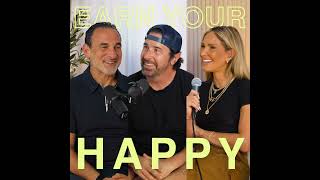
Mel Abraham shares three money habits for building financial freedom: treat savings as a non-negotiable line item, invest in simple index funds or ETFs, and focus on creating passive income. He learned that money buys choice and time after facing cancer and single parenthood.
Questions this video answers
moneymachinelive.com
$85,000
Approximately $150,000 to $250,000 household income
The first $100,000 in net worth
Chapters
Big thank you to this episode. Sponsors OpenPhone, the number one business phone system that streamlines and scales your customer communications. Get 20% off of your first six months at openphone.com Earn Shopify the e commerce platform that I.com happy constant contact Constant Contact's award winning marketing platform is here to make marketing way easier and way more effective. Get a free 30 day trial when you go to constant contact. Com.
The Financial Services industry would love us all to think that financial literacy is really complicated and maybe back in the day it was because we didn't have access to investments. Today it's not.
You don't even get to figure out if he is threatened by the fact that they don't feel knowledgeable about and.
The Chris Harder show. We are tag teaming it with one of our good friends right now.
We have.
I realized that I need to teach this to other people as well because it was his financial situation that helped him get through the battle with cancer. He is a financial genius. He is the author of Build you'd Money Machine, one of the most popular financial books out there. And at the end of the day, he's just one of the kindest people that rolls up his sleeves. Thing that I like the most about his teaching is that he doesn't speak too highly to take you to the next level in your finances.
Let's get into the show at the same time. I mean listen, so fun.
We, you know, outside the mic, we're.
Such close friends, dogs and, and, and Shea Doodles.
As a matter of fact, maybe we should title this podcast how to earn enough money and save enough money so you can go shopping with Lori and Stephanie.
Our dogs are half brothers too, I think.
All right, so let's jump right in. I know we just went from joking and fun light hearted, but I want to start somewhere serious so that the audience can really understand the importance of money. And that is this. Five years ago, luckily you won a tough battle with cancer. Came out of nowhere and I know it had a profound effect on how you see money. It shifted a couple of ways that you see money. Would you mind unpacking that for us and really explaining like what did you learn about money in that moment?
Here's, here's the reality is I learned that money isn't the right currency. That time is the currency. The moments of our life are the currency. And the reason we want the money is so we can control the moments. And that's where all of a sudden. So one of the challenges I think is that too often we See money as the painting, but money is really the paintbrush to paint the masterpiece called Our Life. And that's the thing that kind of came out of it, was that, wait a second, I need the money so I can control the moments and control the time. Now, I was. I was blessed in one sense during that cancer battle, is that, you know, I had to fight it spiritually, physically, mentally, you know, energetically, medically, all of it. But I didn't have to fight it financially. And I can't imagine, for me, knowing the treatments I went through and everything that I went through for the years that I went through it, to have to work for a living during the day and then fight for my life at night. And I just. I don't know that. That I would have kind of done it as. As gracefully. And so that's where I started to realize the reason we want the money is because the true currency is the moments of our life.
That really hits because I have a good friend who had a stroke recently, and unfortunately, they're battling all those fronts, and it adds so much stress to, you know, to a moment where you're supposed to be doing nothing but recovering, and it forces you to worry about finances and how are you going to keep a roof over your head? What are you gonna do about your employees, what you can do about all this stuff. And you didn't have to fight that fight. And that allowed you, I'm guessing, to divert all your energy towards truly healing faster.
Yeah. Reality is, I shut everything down. I had. I had what I call the money machine built in a way that allowed me to shut the businesses down, all my active involvement, down, down. Not 100%, but down to maybe 10 or 15% just to keep me engaged. But the rest of it was being paid for by the money machine, the investments and the things that we had in place. So it allowed me a few things. One, agency over my time. Two, choice of doctors and treatments that I. That I wanted to take. And three, I could dedicate days, all hours, going from treatment to treatment, because I hit the cancer. And my surgeon said, I've never seen anyone attack it the way you did. But I said I didn't have a choice. I mean, to me, I was young and I had so much. The cancer didn't scare me. What scared me was the fact that I wasn't. I wasn't. I wasn't done living. There was so much life in me. And so. So I would go to acupuncturist, qigong, chiropractic. I Mean, I hit it from every possible angle I could, from western, eastern, holistic far, you know, all. All of the things that I could do, because I said I just. I wanted to beat this demon.
Lori, I know you want to jump in, but I just want to say one last thing. You said the word choice, and I firmly believe that the best thing money can buy is choice. And other people would say, no, it's not its health. No, it's not. It's time. No, no, no. Take one more step and peel that back. It's the choice to have time. It's the choice to buy healthier things. It's the choice to go do all the treatments. The best thing money can buy is choice. Hands down, period.
I agree.
I'm just thinking about the emotional part of that for anybody listening who maybe doesn't have what you had set up. And I know we're gonna talk about how to do that, but what are some things that you would say to somebody to shift them out of that, like, emotional, scared place where they feel like everything is crumbling? Are there some things, like, immediately you would tell them so that they can start to even absorb what we're about to say?
Yeah, I think, for me, look, it sounds like I'd handled it gracefully. I found out on a Thursday. I saw my final surgeon on a Friday, and Stephanie and I literally laid in bed and cried all day Saturday, because all of a sudden, what we knew about life got changed.
Everything flipped.
It just. Just got flipped. And what are we going? What does this look like? And. And it was about halfway through Sunday where I kind of woke up. And they'll come a point in this tipping point in our life, whatever it is, whether it's a cancer or something else, where you say, okay, this is the hand I've been dealt with. These are the cards I have to play. What's the best way to play them? And that's kind of what I. What I looked at. And I. And I, you know, I looked at Stephanie and, you know, I'm blessed to have an amazing partner in life. I said, all right, these. These are the cards. This is how I want to play this. And I. I need your support. I did the same thing with my son. And they said, whatever it takes. And. And they were with me the whole way. But there's this tipping point, I think, that we all get to, where we say, these are the circumstances that I've been dealt. And we can lament, we can focus on. We can even turn around and. And start to blame ourselves, because I made choices that got me here and everything, but. But none of that helps. The only thing that helps is to start looking forward and saying, how do I take what I have? Who do I need around me? What do I need in an environment? What kind of support? And start asking, because there's. Stephanie laughs because she says, you're kind of the person that people go to. You're the fixer for him. This was one thing I couldn't fix. This is one thing I had to surrender to and I had to say, I need help from other people because I can't do it on my own. I have no way to fix this.
Okay, so you really leaned on your people. And I know for you because you. You were the rock. You are the rock. But how was that especially, I think especially as a man in the way that you were raised to feel like you're supposed to have it all under control. And I know so many people, men or women, if they're the bread winner, like, it can feel crazy. How did you. Did you, you know, like, call people and say, I really need help, I really need support? Like, did you really recruit them?
Yes. So I. I did a couple things. One. One thing that I did is every day I went down on the beach, because we live on the beach, and I recorded myself. I videoed what I was thinking, what I was feeling, what was going on. So I had this video journal I haven't gone back through. I've gone through, what, one or two of them, but it was a way for me to get it out of my system. And then I would jump in the water for 20 minutes. At about 5 o' clock in the evening, I would jump in the water for 20 minutes. And one of the people I reached out to gave me a visualization on health optimization. And so once I came out of the water, I would sit on the rocks and I'd go through a 30 minute visualization. Then I would walk back up to the house. Stephanie was there. She would have dinner for us. I would then get in an infrared blanket for 45 minutes. Then I'd wash off. I'd go to sleep. But my mind was clear at that point. So that's the first thing I did. How could I control the environment and what was coming in? The second was to reach out to people. Fortunately, in the business that we're in, there's one degree off of folks. And one of our dear friends, Brendan Burchard, when I told him, he says, you need to get a hold of J.J. virgin. I called J.J. virgin. And she says, I've got a holistic oncologist. She connected us. Within 20 minutes, we were on a zoom call. And she's the one that set all the protocols, all the nutrition, all the diet that I still follow today. And so there was that. And then periodically throughout I would just call and leave a message for. For you. Where I was, you know, for Chris, when, When I was. I was going through it or this and that I would. David Bach just. There was a handful of people, maybe four or five people that I. I could lean on, not for any kind of advice, but just. Just to let them know how I was doing or I was there. And. And I just. You can't do you. When your. Things are going tough in your life, the tendency, I think, is to get myopic.
Yeah.
Tendencies to withdraw. It's not the time to withdraw. You can't fight the battle alone.
So I love hearing about your story is because I think that it takes a lot of strength to be able to like, share and reach out. And I, I believe that. I mean, we know it, we see it, that that is what's going to help you process in everything, not only with cancer, but this topic that we are talking about. And I think there's so much shame around money that the more that people can open up about it and realize that so many people are dealing with the same exact issues or not knowing about everything. I love that you bring the educational piece. So why does it seem so expensive to live these days? And why does it feel like it's impossible to the average person to even earn an average income anymore?
God, this is a. This is a loaded question. Here's. Here's the thing. Whether it's expensive to live or not, the question first that I will usually ask someone is, are you living your life? See, in the sense of. A lot of times we get caught up in the social zeitgeist, the social media, the expectations of our degrees, our. Our siblings, our. Our family media, and we start to create a life that we find isn't ours. And so the first thing I think that we all need to be doing is taking. Taking a real hard look at what brings us joy. What is the life we want? What's the lane we should be in? And then say, is that affordable versus is my current life affordable? Because if I'm living a life that you go, this is not really what I want to do, and it's not affordable, then why am I doing it in the first place? So I think the first thing when it comes to anytime we talk about money, in fact, even my book starts this way, is to sit back and say, what's the vision you have for your life? Remember, the money's the paintbrush. So it's not about the money, it's about the life that we're trying to create. And we say, how do I create that life and how do I use the money to do that? Now we can start to have a conversation of affordability because that becomes a conversation of affordability, value, values and priorities. Now we can start to build something that creates the life that you actually want versus just a bank account that you think you're supposed to have.
I want to kind of stay on this topic that Lori brought up. You know, it feels so difficult these days for the average person to even get by financially. Like, you know, both people in the household have full time jobs, professional jobs, and they're still struggling to get by, pay for everything, for the kids, etc. What do you think? And I'm putting you on the spot here, so feel free to dance around a little bit. What do you think the income is today that's needed to fight the two fronts? Because people don't realize they're fighting a two front battle. You have to fight the front of paying for your day to day living and you have to be saving for your retirement. Even if retirement isn't the goal, you have to be saving for that moment where you're working because you choose to, not because you have to as you get older. So these are two very difficult fronts to fight. What kind of income is needed these days to fight those two wars?
So interesting enough, a new study just came out that said middle class, California middle class, 85,000. I think it's way too low.
Yeah, realistic.
It's, it's way too, I think it's about, it's about half of where it needs to be. Yeah, I think that if, if you're not starting to look at, at five figures a month, how, especially if you have a family, if you have children, you know, mortgage rates, where they are at, I don't think that you can create a life that, that gives you that breathing room. You just can't. And so that's partly a question of spending and lifestyle, but the other thing is I think it's a, partly a question of, of figuring out how you can raise your value in the marketplace to make you indispensable, to make you invaluable to get paid when we are able to solve bigger problems, solve more complex problems. Become invaluable. Now we, we can get that, that compensation up. Because too often a lot of people out there talking about personal finance, they're focused on cut, cut, cut, cut, cut. I mean, you could only eat ramen. So much deprivation is not the path to fulfillment. Okay? No. And so, so we need to look at the other side of the equation. And we tend to look at it through the eyes of income. And I think we should be looking at it through the eyes of value, because we're in a value exchange economy. Say, how can I become more valuable to get paid more?
This is so important. I want people to really receive this because they might be listening up to now and say, you don't get it. I'm working full time, I'm working hard, I'm working a second job. My husband or my wife is also working full time and we can't get by. And I understand that is real, that is real for the bulk majority of America right now. I, I like to say America's gotten too expensive. And the unfortunate truth is what you just shared, and that is you have an obligation to find a way to become more valuable to more people in order to change your income challenge that you have, you have no other choice. You're going to continue to tread water or go backwards and say, I don't like this, this isn't fair, but it doesn't change the facts. Or you can spend that same amount of energy asking a better question, and that is, how do I become more valuable to more people in order to create more value?
And I know some people are like, not loving this answer because I remember when I did not graduate high school and I was working random jobs, and I literally remember Chris saying things to me like, you know, you gotta figure it out, and if you don't like your job, you gotta, you know, do something about it, get educated. And I, like, I was sticking to my story, Mel. I was like, I'm not smart enough. I can't get educated. I don't know what to do. Like, it was this moment of, oh my God, like just the face off with yourself, realizing I had to do something. So for anybody who's like, you know, they don't get it. They don't understand. I, I mean, I understand partially. I do, because I had a face off with myself thinking that I would never be able to do anything like this. And I certainly didn't have the credential essentials to do it. And I think there's so many ways that we can by looking at what we could solve. And I mean I started really basic, like, well, I know how to help people work out sort of. And you know, I didn't have any sort of certificate yet, but I was like, who can I help? How could I get started?
And so you didn't have a high school diploma?
No. Yeah. I did not graduate high school.
And you said, well, I'm going to.
Learn anyways because I got to the.
Rock bottom point when necessity kicks in.
Yep.
We start to find other ways. So even me. Okay. I, I got educated. Now I'm.
Yeah.
I didn't come from money. My dad would. Came here, is an immigrant at 17 years old. Yeah. He became an engineer. We didn't have money. We lived in the same house all our lives. So I had to create it. But there was a time I was a single full time dad. You know, Jeremy came and started live with me at five and a half years old. I just bought a house. I was over $300,000 in debt. I was a partner in a CPA firm at that time. And my partners came to me and kicked me out. They said, we don't want to, we don't want to be partners with you. You're going a different direction. So I had no cash flow, I had no, no clients, I had no client backlog. And I had to create something. And I've got this five and a half year old.
Wow.
That I'm trying to take care of. And necessity kicked in. And this is where you sit back and go, it's this, that cliche of, you know, it's not about resources, about resourcefulness. It's like the worst thing I could have thought about was that how I could fail as a father. It wasn't about the money. I said, how do I do this? And like you did, it was like, okay, how do I get my first client? How do I do something to get known and start to build something? I didn't know if it would work right. But you just started doing things you have to.
I just really want to be compassionate. People don't have to like the situation they're in and people don't have to like our answers. But they're coming from a place of not only love, but they're coming from a place of people who have actually been there and had to face those same questions. How do I want to add more value this time so I don't end up in this situation again? And so if anything, if you're frustrated, if you're pissed off, if you don't like what you're hearing, please borrow our faith that we had to one spiral from somebody else to change our situation, because it can happen for you.
Mm.
So how much income do you think you need in order to get to a point where you feel somewhat wealthy and able to retire, even if the goal is not retirement?
I think once you start. And I'm thinking folks on the coast.
Yeah.
Because the coasts are the most expensive.
Yeah, for sure.
When you start to go middle America, it's a whole different game. But folks on the coasts, you're probably staring at north of 150, somewhere between 150 and 225. 250,000, if you're using it correctly, to start building it. That means that we have to be disciplined.
And this is household income.
It's household income. And. And the reality is that wealth creation and money management is a behavioral issue, not a financial issue, as hard as it seems, is a behavioral issue. You know, spending income, all those choices lead up to something. And we happen to be living. You know, we're all in California. We're in expensive areas, so our cost of living is high and. And everything. But I think that on the coast, you're probably sitting at 150 minimum to start doing something, but you're probably closer north 200 to 250,000. Then you get to middle America, and you probably can. Can do that for. For almost half of it.
Yeah.
Wow.
And if you're making those numbers and things feel tight, don't be embarrassed. Understand, like we're saying, this is where the economy's gotten to, so you shouldn't have shame. And, you know, we're going to give you some things that you can do to get you situated. So let's start shifting in that direction a little bit. And I want to specifically talk to entrepreneurs for a minute. Yeah. I feel like, as an entrepreneur, it's so hard to systemically, in a very organized fashion, be able to hit your savings goals, because your income and your revenue and your expenses are all over the place. You're like, sure, I want to do the right things, Mel. Sure, I want to have the right behaviors, Mel. Sure, I want to do the, you know, put aside money for marriage. But this month, this expense showed up, or this month, income dropped in half. It's all over the place for entrepreneurs. How can an entrepreneur, systemically, in an organized way, save for the future?
The only way to do it really is one, make sure that it's a line item in your P and L.
What does that mean?
Meaning this is that if you're looking at I'm trying to make sales, I know that I've got certain expenses. Maybe it's rent, maybe it's Facebook ads, maybe it's social media. Everything one line item in there needs to be your financial future. In other words, we don't use it as an afterthought, but we use it as one of the line items. And what we, what I would tell you to do, especially at this, at the starting out, where you've got such a volatility, is just take a percentage. It might only be 3%, it might only be 5%, but take a percentage for a couple reasons. One is it gets you in the game. We can't win the wealth game sitting on the sidelines or on the stands. We have to be on the field. And if it's a behavior, Even if it's 3%, 1%, 2%, you're developing the behaviors like going to the gym. The first time you go to the gym, you don't slap a bunch of 45 pound plates on the bar and think you're not going to get hurt. So we go to the, the smaller chrome weights and we start the behavior.
The part of the gym I find you in all the time.
All the time. The pink weight section. And they. So I think that is, is we make it a line item, we make it a priority. But we too often think that if it's not an, if it's not a lot, then I'm not going to do it at all. No, no, I mean that literally. If you can only put $5 away, let's just create the habit automatically. $5 or 1%, 2%. And if there's a dip, life happens. I got, I wiped out one third of my net worth. Then I got caught in a Ponzi scheme. Okay, Life happens. So it's never going to be a straight line. And so if there's a dip and you got to regroup, then you regroup. But it's a temporary regroup. And we, we keep moving forward. And if you need support in it, you get support in it. We grew up in a society where money's taboo. We're not supposed to talk about it yet. That there's very few things in our life that isn't touched by money. And it's one of the biggest stressors in relationships. Biggest stressor in life. They say it's the second leading cause of divorce. Why are we not talking about it?
If you follow my social media, you guys know that I have been talking about the Importance of growing a list and owning your audience and converting all your people from social because there is so much unpredictability in the world that we really need to be able to control what we can control. And and that's why Constant Contacts award winning marketing platform is here. To make marketing way easier and way more effective for small businesses like yours and like mine. And the best part, you don't need to know anything about marketing. So your struggle with expensive, slow and unmeasurable marketing is over. Because with their all in one platform, you can create and manage attention grabbing campaigns in just a few clicks. Email, text, social media, events, landing pages, you name it, it's all in one place. No more juggling dozens of different Because Constant Contacts AI Content Generator helps you turn a rough idea into a ready to go message faster than ever. And with hundreds of customizable templates, it's easy to make something that looks and reads like your brand. So pricing is transparent and based on your contact list. So if you're only paying for what you need, there's no surprises. And with a 97% email deliverability rate, your messages land far from spam, which is huge. So that you have control over that audience. You guys. That's why over half a million small businesses trust Constant Contact to stay connected, top of mind and ahead of the competition. Constant Contact is helping the small businesses stand tall. You guys. Constant Contact is something that so many of the people that I work with in our masterminds use and are obsessed with. So I'm so glad that we found Constant Contact. So get a free 30 day trial when you go to Constant contact. Com. Try Constant contact. Free for 30 days@constant contact.com. that's constant contact. If you're running a business, you know that every time you miss a call or communication with a customer that you are leaving money on the table. Except it's not sustainable to be available 24 7. That's why you need Open Phone. Open Phone is the number one business phone system that streamlines and scales your customer communications. It works through an app on your phone or computer, so no more carrying two phones or using a landline. With OpenPhone your team can share one number and collaborate on customer calls and texts like a shared inbox. That way any teammate can pick up right where the last one left off, keeping response times faster than ever and making this feel incredible for your customer. Plus, say goodbye to voicemail. Their AI agent can be set up in minutes to handle calls after hours, answer questions and capture leads so that you never miss a customer. So whether you're a one person operation drowning in calls and texts or have a large team that needs better collaboration tools, Openphone is a no brainer. Cy over 60,000 businesses trust Openphone. Openphone is offering my listeners 20% off your first six months at openphone.com earn that's open phone.com earn o p e n p h o n e.com/earn and if you have existing numbers with another service, Open Phone will port them over at no extra charge. Open Phone no missed calls, no missed customers I get asked all the time what it was like to pivot from digital products, books, events into a physical product, a consumer package product. And I will say it was one of the biggest learning curves of my entire life. Not to mention hiring a team who has a background in this and just everything that I have to learn about getting a physical product out into the world and how to acquire customers with it. But let me tell you one thing that was super easy and that was my e commerce platform in choosing it because I had heard so many amazing things about Shopify, it just made my choice so much easier. Because Shopify is the e commerce platform behind millions of businesses around the world and 10% of all e commerce in the US from household names like Mattel and Gymshark to brands that are just getting started, including Glossy. So get started with your own design studio. With hundreds of ready to use templates, Shopify helps you build a beautiful online store to match your brand style, which if you go look at mine, you'll see it's totally on brand. With Glossy, accelerate your content creation. Shopify is packed with helpful AI tools that write product descriptions, page headlines and even enhance your product photography. You can get the word out like you have a marketing team behind you. You can easily create email and social media campaigns wherever your customers are scrolling or strolling. And best yet, Shopify is your commerce expert with world class expertise in everything from managing inventory to international shipping to processing returns and beyond. So if you're ready to sell, you're ready for Shopify. Turn your big business idea too. With Shopify on your side, sign up for your $1 per month trial and start selling today at shopify.com happy go to shopify.com happy shopify.com happy and so.
If you're having struggles, then have the conversations. Go someplace where you feel safe to have the conversations with someone that can start to guide you. Shed some light. Because too often we're caught in the minutiae of it and we can't See ourselves past it. And so the first thing I think is you just make it a line item, whatever percentage you can afford. Second, because there's ebbs and flows in the business, sometimes you have windfall months as much as you have troughs in a windfall month. What I tell people to do is, I said I want you to do what's called leapfrog funding. So here's what this is, is that first I want you to celebrate. I don't want you to delay gratificate GRA. Gratification forever. That means that you set your targets. If you hit your targets, you already know what the reward is before you hit the targets. And you're going to take a slice of whatever that windfall is to go celebrate. Celebrate the success. We don't celebrate the progress. The second piece is that you're going to take a portion of that, put it away for taxes. The third piece is you're going to take a portion of that and say, I'm going to put it away for the time period I might need it to pay for the skinny months. For the skinny months. And then whatever's left, I'm going to fund directly into my, into my financial futures. That's what I did because I was. When I started to build my practice, after I got pushed out, I would get a project that would pay me like 20 grand and then 40 grand, and then there'd be a month where I got three grand. And so I, I had to figure out and, and ballast it. And that's the way I did it is I, I would, I would carve it out and, and make it work so I could, I could even out the, the peaks and valleys.
You said something I hope that people catch on to, especially if they're in kind of a dry streak right now where they're not having a lot of good months. The same way that bad months can surprise you or be a streak, great months can surprise you and be a streak. And so you have to build the habit now, because if you don't save 1 or 2% when things are going bad, guess what? You don't suddenly have the habit of saving a certain percent when things are good. So now, even when times are tight, is when you build the habit. There's that old Tony Robbins saying where he says, he's talking about charitable giving. He says if you don't give a dollar out of a hundred, you're not going to give 10,000 out of a million. Right? And he's right. It doesn't suddenly start Happening when you make a lot of money, it starts happening before you do. So that when you do, the habit is already there.
The hardest threshold for someone on their path to wealth to cross is the first hundred thousand in net worth. And the reason for it is one, you've never done it before. Two is because you have to become someone different to get there. And it sets you up for the million and that journey. You have to change your identity, you have to learn new behaviors, you got to learn new skills, you got to learn a new language. It feels like a lot, but it can be simplified to make it happen. But once you get past that, it accelerates. We just got to get you past that. And that's the habits, that's the, the, the little things you do when you're making of a hundred dollars that you start to expand when you're making the thousand and ten thousand.
I just keep thinking about the person you become when you have these habits and even the person you become when you just start to have a bit of a savings. Like where you're like, okay, I don't have nothing, right? Like nothing to fall back on. Like maybe I can stay off my parents couch another month or two months. And it becomes a self fulfilling prophecy if you have a savings. Because I always think of like the decisions you make when you're desperate and you make desperate decisions which lead to more desperate decisions which lead to deeper desperate decisions. And it's how I've watched so many of the kids that I grew up with just in the worst situations, if not the most dire situations. Because when you don't have a savings, you literally make decision, you make different decisions when you do have a savings, without a doubt.
And it goes back to even the prior conversation around the value when you come to the marketplace with a desperate feeling. Yeah, people feel it.
People feel it. They feel it when you're applying for a job. They feel it when they're around you. Yeah, it's an energy, you know, when you feel like you're doing the right thing and you feel abundant even if you're not yet. Like people can. Absolutely. They'll gravitate towards you more than. If not.
And it's okay to feel that. Just go talk to like, it's like if I was feeling something like that, I, I'd call, I called you guys because you would talk me off the ledge and go, all right, now get out there and do it the right way. And we need that. We can't do this siloed.
Yeah, no, I mean, Chris And I always have to kick each other back.
In the game all the time.
It does not matter where you are in life, you literally always have another level or there's things that you're putting on the line or you're putting more risk out there. And like we have to talk each other off the ledge all the time.
I can't imagine two founders in the same house.
Oh my God, it's real at the same time.
Careful what you ask for.
So real. Like we really have to do the work that you teach. Like beyond what I can, what I can tell you. Tell me about the earnings treadmill that.
You talk about in your book.
Yeah, this is a dangerous one.
This is, this is a big one. And it was taught to me by a six year old. Okay. I've. Like I said earlier, I was a, I was a single full time dad. I didn't know what to do because I didn't have any business, I didn't have any clients. I had to do it. So I got on the earnings treadmill, I did what all accountants do, you go chasing the clients. And I started, and I was selling time. It's the worst business model in the world. And, and I started to get clients, I started to get cash flow. I looked at Jeremy, I said, we're going to be okay. We're going to do fine. And one day he comes running, he says, daddy, daddy, Daddy, I, I drew a picture of you at school today. And I kneel down and he hands me this picture. And there I am in blue felt tip pen in front of two computer screens with a phone in each ear and one on the desk ringing.
Wow. Here's dad with two phones in two ears. Yeah.
And, and a six year old put a mirror into my soul that said, you're screwing it up.
Wow.
And this was, this was a moment for me because I had so many people saying, you need work, life, balance and all that stuff. And it's in, it's not balance we need, it's harmony we need. And harmony comes from where I realized it comes from living intentionally. And I could have looked at him and said, hey kid, we need the prophets. Because it's the prophets that pay for the roof and it's the prophets that led us to Disneyland. It's the prophets that let us do this and that. And he would have looked at me if a six year old understood. He says, dad, I don't need your profits, I just need your presence. And that's the thing that hit me and that was the, the whole idea of the money machine. And the realization was this. Until I was able to separate my earnings from the efforts to earn it, I would always be imprisoned by the earnings treadmill. I would always be running. And this is why we see people that make millions and millions and millions of dollars, but they have no freedom, they have no riches in life. They have wonderfully large bank accounts, but horribly bankrupt life accounts. So at the hands of a six year old, I started exploring and obsessing about this idea of how do I, how do I have choice in my life to be able to step off the treadmill or step on the treadmill by choice. Not by the demands, not by the bills, not by what I gotta pay, but because I want to be able to do it by choice. And that's where this all came from. Because otherwise we're just earning, earning, earning. And the problem is, is that we have been trained and indoctrinated into earnings. Get a good job, get a good career, get a good degree, go build a good business. Earn, earn, earn, earn, earn. As if it's the solution. But see, earning more doesn't make you free. The money machine does. And that doesn't start with the next raise. It doesn't start with the next paycheck. It starts the moment you get your money to start working harder for you than you did for it.
People want to know how to build their money machine. You literally wrote the book called building your money machine. Right. And you know, we're not here to talk about the book today necessarily, but I really suggest that people go out and get experimental to me. Like this is the book that made it make sense. This is the book that made it easy for me. Right. It's a non intimidating, simple way to be like, oh, I get it. Building my money machine. And it's kind of what teaches the difference between earned income and investment income.
Exactly.
You know, and people just got to get off that earned income hamster wheel or you'll be trapped forever.
Yeah. And you're welcome to stay on it, but just make sure you're on it by choice.
Yeah.
Yeah.
That's a really good call.
Yeah.
I'm curious. You told the story about, you know, your son and we've talked about your cancer and all this other stuff. At this point, with your wealth of knowledge, I'm not making an age joke, mouth.
Now.
How do you define wealth?
Oh, gosh, I, I do think that one of the words is, is choice. You know, I was speaking at an event and I'm sitting in the back before I spoke and they were doing a visioning exercise. And I sat to do this visioning exercise, figured I was just going to do it with them. And I had a hard time. I had a hard time because I realized it wasn't about bigger homes, bigger, bigger, you know, cars and this, that. And I realized my whole vision was now about moments, about missions, about movements, about meaning, about relationships. So my whole vision was built on this. And the gift of having choice allowed me to not sit back and dream about stuff, but to caress the moments in life.
I just got back from speaking at a friend's event in Canada. And while we were there, it was the perfect time to catch up with friends and also meet a bunch of new friends that we haven't gotten to spend any time with yet. So we got to have some amazing experiences. Like you guys, listen to this. We got to drive supercars all through the country. And Chris got to drive his own, his ultimate dream car. And if you don't know, I'm a huge wake surfer. So we got to do that, which is one of my favorite activities and also my other favorite activity, which is catching up over dinners at our friends homes. And the conversations were so incredible. When you meet like minded people, I think that was my favorite part. But when Chris and I are traveling like this for work and making memories, we love the idea of someone else getting to enjoy our properties, to catch up with friends and make their own special memories like the ones that we, we had while we make a little extra cash. And now Airbnb has a co host network that can help with hosting details for you. With the co host network, you can hire quality local co hosts to support you with everything from creating your listing to managing reservations, messaging guests, and more. Find a co host@airbnb.com host so what do you say to the person who's listening to this conversation? And they're excited, but it feels really big, really daunting. Where do I start? They don't have anyone to talk to.
Yeah.
What's step one?
So let's talk tactically. Step, step one. But let's also talk where they can go. Okay. One of the reasons. So post cancer I decided I was going to come back and do something. The full circle cancer journey was I went through the treatments, I was okay. And then literally six months later it came back. So I had a reoccurrence. And that time of, of trying to figure out why I got the cancer just, just put me in a dark, dark place. And I was talking to a dear friend and he said, you're still trying to figure out why you got the cancer. I said, I'm not a smoker, not a drinker. I, I, I, I live a healthy life. I don't. No one in my family ever had cancer.
Why me?
Why me? What did I do?
Yeah.
And he says to me, he says, you keep thinking that it was something you did. What if it was something you were meant to do? What's the message?
Wow. That is impactful.
And that, that's why I ended up, when I came back, I said the message was I didn't have to fight it financially. Wow. That's what gave rise to the book. But what it allowed me to do is take the cancer and say, it was a gift to me to fight this battle. It was a gift to me and it gave it value. And so now you start to look at it and say, there are places to go. It's why I create content that you can go and listen and just take one little step. Don't try to take on the whole thing. If you're in debt, then the first thing is we get you out of debt. This just one step. We can get you out of debt. We just put you on a process to do it. If you have, if you got your debt under control, then let's get liquidity under you. There's something that I teach called the wealth priority ladder, where we say, all right, right. Let's put some, some cash here. Because we need to create an unshakable foundation. Because when life happens, and it will, you don't get shaken to the core. Yeah. And so the first thing is to, to start doing those kind of tactics. But before you get there, you have to acknowledge and be okay with the fact that, hey, I don't know any everything. And to just start with one little thing, whether it's once a week to listen to a blog, a podcast, watch a, watch a video, read a book, have a conversation around financial literacy. Because when you start there, I'm an accountant, I'm a cpa. They didn't train me about money. I didn't know it.
That's wild.
I, I thought. No, I, I knew business. I knew account. And you.
Taxes.
I did taxes. Yeah, I knew that.
There's a difference. People think it's, it's the same thing. It's not understanding tax preparation is not understanding wealth building.
No, it's a totally different language. I had to learn it. And I was given the necessity by being a single dad and trying to figure it out. And then I got obsessed with it, but I had to go the same journey, even though I had the degree in accounting, the same journey that everyone else has to go through. And, and it's. The financial services industry would love to us all to think that it's really complicated. And maybe back in the day it was because we didn't have access to investments. Today it's not today we have access to investments. Today we have access to low cost things. Today we can do it very simply. But the first thing is let's get the foundation on you. Let's get, let's get liquidity in place, let's get your debt under control and now let's start building wealth. And that looks like very simple ETFs, index funds. That's it. Don't get sold into complex. If there's complexity then it's wrong. It shouldn't be an adrenaline rush, it shouldn't be complex and it should be really understandable. I used to go towards the complexity because it was sexy, I thought. But complexity brings risk because it brings friction. And so we just start with one little thing. Just find that one little thing you need to do. Whether it's debt or liquidity, those are the first places to start. If you already have that under control, then are we investing? I had a conversation with someone just recently, said I'm sitting on $500,000 just in a banking hand because I don't know what to do with it. Wow, great. Let's put a plan in place and let's just slowly start to invest in you. Don't take 500,000 and dump it in the market. The data shows if you do that, that you actually turn out better. But psychologically, Murphy's Law, you put the 500,000 in, the market drops and you freak out. So, so we said no, let's just take it and we'll put, we'll put 50,000 in. Don't put another 50,000, don't put another 50,000. One step at a time. We are not going to take and try to put everything and solve everything at one time. Let's just find that one priority and let's go after that.
That I love that you have created a resource for people coming up and I just want to stress something for a minute. If they listen to your story, you're not someone who became wealthy. And for the record guys, Mel is an independently awesomely wealthy individual. You're not someone who became wealthy by teaching people how to get wealthy. You're somebody who went out and became wealthy using the Right. Wealth building fundamentals in your everyday life, then had the cancer and realized, wait, maybe this is something I'm supposed to share. And so now you selflessly teach this for people when you don't have to. Like, you could be, you should be enjoying that beautiful beach house in Laguna where we love visiting and kicking your feet up and playing with the dogs, but you don't. You actually really put yourself out there. And you teach and you teach and you teach and you get free resources after free resource. And you're the guy who should be teaching it, not somebody who's just becoming wealthy by teaching how to become wealthy. You know what I mean?
Yeah.
So I wanted to get that out there. You built a resource for people. What is that resource?
I'm doing a three day deep dive training on the money machine. The process, the, the, the numbers, the, the calculations, the steps in it. And so it's, it's a three part series that is totally free. Okay. You get a workbook and everything. I want to take, take everyone through it.
Like a physical workbook.
A physical work.
That's awesome.
Yeah. So it's called, you go to moneymachinelive. You can register. Like I said, it's totally free and it's a deep dive with me. I'll answer questions. It's one step at a time, just three different components. There's some fun things that I'm going to do, giveaways and stuff. I want. Money needs to be fun.
Yeah.
Okay. It's. If, if it's a paintbrush for, for our life, then let's, let's make that life fun and let's demystify it. Let's have the real conversations. I'm going to give you the frameworks, I'm going to give you the worksheets. I'm going to give you some, some tools to make it easy so you can get it in your life. Because here's the thing, we can talk about it, but I want you to live it. And if I get you to live it, your life will change. Because I've watched it happen to me. I've watched it happen to my son and all the clients that I've had the blessing to work with.
As our good mutual friend Dean says, it's totally free. Not kind of free.
It is totally free.
Says that it's totally free. No strings, you know, no bait and switch or anything like that. Just three days of really good learning. And it is moneymachinelive.com yes. Moneymachinelive.com literally hit pause right now. Go register free. As Dean would say, totally free. Not kind of free@moneymachinelive.com and it's in.
The show notes, so we have it connected below. Well, thank you so much for coming on and also just for doing this because I feel like this has been one of the biggest, most important topics in my life because you don't even get to figure out who you are. You don't even get to have any peace in your life. You don't get to go after the things you want, have the relationships you want until you feel safe. And a lot of people's safety is threatened by the fact that they don't feel knowledgeable about money. And so everything I feel like even more than people want to think, is hinging upon understanding money.
Totally, totally agree. And, and I have this deep seated core belief that financial freedoms are birthright and we just have to go claim it. And if other people don't want to have the conversations that I am, financial.
Freedom is a birthright as long as we stop sabotaging it.
Yeah.
Yeah, I love that. Thanks for being on, buddy. It means the absolute world.
Oh my God. Thanks for having me. It means a ton to me too.
So I know you do what you do, not because you have to, because you want to. And those are the guys to learn from. All right, guys, that's a wrap right now. Head over to Money Machine Live for a free three day training. That's easy for me to say. Free three day training@moneymachinelive.com thank you guys.
So much and we will see you next week.
Bye, everyone.










