Amberly Lago shares her story of resilience and recovery on thERINpy with Erin Washington
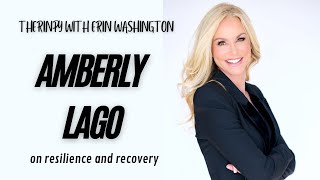
This is a transcript of a YouTube podcast episode (thERINpy) featuring Erin Washington interviewing Amberly Lago. Amberly shares her life story: childhood sexual abuse and family divorce, a catastrophic motorcycle accident that nearly led to leg amputation and 34 surgeries, a CRPS (complex regional pain syndrome) diagnosis, subsequent alcohol dependency and recovery, and how these experiences shaped her work as a speaker, author (True Grit and Grace), and founder of the Unstoppable Life Mastermind. The conversation closes with practical recovery/community recommendations and event promotion (Unstoppable Success Summit).
Chapters
Motivational Speaker, TEDx Speaker, Peak Performance coach on resilience and transformation. It's Amberly Lago. She's a best selling author of True Grit and Grace. She has a top 1% podcast and she's the founder of the Unstoppable Life Mastermind. She has a PhD in suck it up. Wait until you hear this story. I've been following her for a while. She is here today and, and I cannot wait to share her with you. Here is my episode with Amberly Lago. I am geeking out as a podcaster. I have you here today, host of a top 1% podcast. Maybe at the end you can give me a little tip on how to get mine up there a little bit more. But thank you. Thank you. I know you've had some health concerns recently and you're here today and that is not lost on me.
Thank you. Well, I have been looking forward to this and I just appreciate you having me on your amazing show and you are just so kind. Like when I had to cancel because of health stuff, like you reached out and checked up on me. That is not lost on me. That meant a lot. So thank you. Thank you.
Absolutely. Let's get into it. I was going to start with your accident because so much has happened after that, but I've learned so much about your childhood and I want to start there. Let's start with Amberly. Growing up. I know your parents divorced kind of early on.
Yeah, they divorced when I was 8, which was really, I remember being so hard because we never saw my parents fight or argue or anything. So we didn't know that anything was wrong. And actually my dad came in and sat us down. And my older brother, he's two years older. When my dad said, I'm, you know, your mom and I are getting a divorce, my, my brother laughed. He thought he was joking. Yeah. And we're like, he goes, no, we really are. And I remember just being devastated. And my grandmother, who is still like, she's my rock. She's amazing. She's 97 years old. She is the one who I remember going, she took me on a walk and really talked me through it. And she's still someone in my life that I confide in. I ask for advice. She, I wrote, I write about her in my book. Just because, man, she keeps it real. She's, she's been that person for me who I also confided in as I got older because my, my mom got remarried pretty quick and the man that she married ended up sexually abusing me. And as a kid, there is so much shame around that, you know, from thinking, how could this happen? This is my fault. Like, And I was told not to tell anybody. Like, my stepdad said, don't. If you tell anyone, I'll kill your mom. And I believed him. But I did eventually confide in my grandmother because I was worried about my little sister and my brothers, my little brothers. I did confide in my dad at the time, too, and it took a lot of courage to go and tell him. And I told my dad. I said, dad, you can't tell anybody, but this is what's happened. And my dad didn't tell anyone, and he didn't do anything. And in that moment, it made me feel, at first unworthy of or, you know, not even important enough to be protected or loved. But then from that, it taught me something else. It taught me that if I was gonna do anything about this, it was up to me, and I needed to protect myself. And the next time my stepdad came into my bedroom, I kicked him, I punched him, I pulled his hair, I fought him off, and he looked so surprised. And you know what? He never touched me again after that moment. The psychological stuff still went on. The things that he would say, and he would do things and say awful things to get me to cry. And when I would cry, he would. He would laugh at me and say, see, I knew I could get you. I knew I could make you cry. So after that, my defense was to get stronger. My defense was to never cry again, which was not healthy. I stuffed everything down. I ran from all the pain and the shame. I became this person in track that the coach would have me sit in the front seat with her and say that it's up to you to get us to district. You have to get first place. And I did. I ended up setting a record for running the fastest mile in Texas. And so there were some good things that came out of it. I started excelling in school because I did things to make me feel better, but I didn't have the tools to deal with all these feelings that I had been stuffing down, and they were rising to the surface. And that was really the hardest thing, is starting to. To just process all the feelings. And, you know, we heal what we reveal. And, boy, it can kick your butt first. It is freedom when you can finally deal with the feelings instead of running from them.
Oh, I can't tell you how much I relate to that. I had a lot of shame as well. Different situation. I struggled with bulimia, depression, anorexia not really having any self worth for about 20 years, from like 16 to 36, I just had. I didn't see my value. It was all wrapped up in the physical. And I abused my body for so long and then stopped, but I was still carrying the shame of it. I wasn't doing the behaviors anymore. But I say this all the time. If anybody's listening to this, what's that thing that you're still carrying? And it may not be happening anymore. It may be like you, Amberly, something happened to you. Even if it's not happening anymore, if you have not put it out into the universe, you don't have to write a book, but tell someone you're still carrying the shame of it. And until you release that shame, it's like the rest of my life opened up. When I wrote my first book and just said it out loud again, it wasn't happening, but I was still carrying the shame of it. And for you, like, carrying that shame, that had to, like, boil over to relationships with men. Like, how did you.
I had a broken picker for men in my life, right? And I tell you, I could, like, go in a room and spot the alcoholic and be like, ooh, that's the one. For me, he's trouble. Because I grew up with a lot of addiction in my family, I always thought, I am so different from that. I am. I am going to do something with my life. And by the time I was in high school, I had four jobs. And so I saved up enough money to pack up my little Suzuki Samurai and go to la. Despite so many people saying, you're never going to make it as a professional dancer, you'll be back in two weeks. The last thing that my stepmom had said to me is, I think you're making a big mistake. And the men that I chose in my life were emotionally unavailable. And I think when I really started to deal with a lot of the feelings was I actually went to therapy because I was in a relationship with this guy who was an alcoholic. I didn't know it when we first started dating, and I didn't know. And I wasn't an alcoholic yet at this point, right. And I went to therapy to, like, you know, complain about him and say how awful it was and how he was treating me. And the therapist did a couple of things. She said, you know, we teach people how to treat us, so stop complaining and start teaching and start being with someone who is going, you teach them how to treat you. And then I wasn't going to therapy for the sexual abuse as a kid. And we're in the middle of the session, and she's like, were you sexually abused as a kid? And I'm like, how did you know? Like, yeah, yeah, but that's not why I'm here. And I've dealt with that. Like, I don't need. I've. I've dealt with that. I don't need to talk about that anymore. She goes, you have not dealt with it. She gave me a book to read called Codependent no More. I started going to therapy sessions to really process the feelings. Um, and that really helped. I've been married three times, and I used to be embarrassed to say that, like, I have been married. This is my third marriage. And I guess the third time's a charm because I finally have a man after reading a lot of books, listening to a lot of podcasts, going to a lot of therapy, doing a lot of writing and journaling. So when we read, we learn about other people, other things, other processes and systems. When we write, we learn about ourselves. And so. So it wasn't just, you know, a mental or emotional transformation. It's mind, body, spirit. I got connected to God more. And that really started. That really started to help when I could turn it over and say, you know what? There's got to be something bigger than me to help me through this. I can't do this by myself. And so to this day, you know, I think that building the right relationships with yourself, listening to your gut, that took a long time for me to listen and trust my gut. Because when you're little and you have somebody that is. You're supposed to be able to trust and. And look up to. For. For guidance. And I remember telling my stepdad, this isn't right. And he goes, no, this is right. This is how fathers teach their daughters. So I learned to not trust my gut. Now I trust myself. And you know what? Your head may say something, your heart must tell you something, but your gut never lies. So listening to your gut and, you know, like I said, I have a good man in my life. We've been Married for over 17 years. He is the most incredible father. I remember the first time, you know, he was just loving on our. Our daughter. We have a daughter named Group. She's a miracle baby. We didn't think we could have a kid, and we were able to have her. And I remember the first time when she was a baby, and he was, like, kissing her and loving on her, and I was like, wow, that was kind of weird for me to see that because I didn't have that as a kid. I didn't have a. I mean, you know, my dad and I have worked on a lot, and he. Our relationship has. We have really healed our relationship. We text each other almost every day, but he had not done any work. He came from a lot of dysfunction. And I think it's up to us to be the one in the family to break that cycle, to break, you know, that. That shame and talk about it and talk about. And that wasn't easy for me to even write about in my book. I didn't want to hurt anybody. I didn't want to hurt my mom. But I always think about, well, what can you do? What can you learn? I feel like we learn from. From everything. And, you know, every hard thing that I've gone through has actually been a blessing in my life. I would never wish that on someone else. I really don't. But now, because of that, I can help others walk forward without holding on to the shame. I can help others. There's something very powerful when you can connect with somebody, whether it's alcoholism or bulimia or anorexia or you have been sexually abused, that you can talk to somebody and connect on a deeper level and you can say, oh, me too, and this is how you can get through it.
You're doing it right now. I don't know if you realize I didn't know that wasn't your first marriage. I'm in the middle of a divorce, and I have not talked about it a ton. We've been together for 18 years. My daughter is eight. So it hit me right in the heart when you said you were eight. I was like, oh, I have to say, like, it's going. We're co parenting like champions. Like, I did not. I probably stayed a year or two too long just trying to keep the family together because I didn't want to devastate my kids. They're 8 and 5. But it's like so much of what you just said, I know in my gut, like, I moved down here to the south for him, and I kind of uprooted, but it's so weird. I found my way back to the church here. Very strange. Too long of a story to get into. But, like, I went to the wrong church. I thought I was going to one church, but then when I got there, I was like, something's telling me to go in. And now that is my church. And I know that it is not the right thing anymore. And I am Single. And I find myself single the first time at 42. We've been together since I was 24. And I am just in a very. I rescued a dog recently. Like, if you would have told me three years ago, you're going to move to Brooks, Georgia. You're going to be single, and you're going to have a dog. Like, none of that was in the cards. And yet here is where I find myself. So you just saying that you met this wonderful man and you knew the other situations weren't right? Like, I'm right in it.
It's. It's. It's hard going through a divorce. I. I think that my divorce. My second divorce, where we. We had a young. She was only one year old when we divorced. We were only married long enough. Seriously. We were married a year. Long enough for me to get my beautiful daughter. Yeah, it was. It was one of the hardest things. Well, the good thing that came out of it is he ended up getting sober, and so that was good. Right. But I was in a place where I tried. I tried to. To work it out. I was like, really wanting to. For the sake of our daughter.
Yeah.
And it was when some abuse happened. Cops came. I was like, oh, no, no, no, no. I will not raise my daughter thinking that this is how you treat a man treats a woman. And I was. I thought, I'm never going to get married again. I'm good. I've got my daughter. I built my career from the ground up.
Yeah.
Built my savings back up because he had really damaged a lot. He had. Anyway, I won't get into it too much, but I was like, oh, I'm never going to get married. I don't need a man. I just. I've got my daughter and I've got my career and had a friend that kept saying, I want to introduce you to this man, Amberly. He's a good man. He's very respected in the community, and he's got a good job. And this was like, none of the things I ever had before. I found myself always supporting a man and taking care of them and being the breadwinner. And finally one day, she kept on me. And finally one day she goes, amberly, he really wants to meet you. He sees you come in the restaurant all the time. I said, okay, Jackie. Okay, I'll meet him. Literally, like, I don't. He. She called him, and like five minutes later, he was walking in the restaurant. And this is at a time where I was running every. Everywhere. So I had a baseball cap on, like, I have now, no makeup, sweaty, sitting there having some tacos. And this guy, I'm like, oh, my God. I think this is the guy. And he sits at the table and he starts going on about, well, yeah, yeah, you know, I'm a cop and. But I think I might move. And I'm sergeant now and I'm promoting to lieutenant commander. And like, just spilling his. Everything to me, like, telling me all this. And I was just sitting there and, can I call you sometimes? Let's. Let's go to lunch. And he walked away. I gave him my number. He walked away. And the people, the couple next to me said it was an older couple. They said, is that how it's done nowadays? I'm like, I don't know. And he called me like three times within the first hour. Okay, you've got my number. Just want to make sure you got my number. We're going to lunch tomorrow, right? And I was like, oh, this guy's intense. A month later, we. We like started dating. A month later, he asked me to go on this trip. He had jet skis, and we went to the river to go ride jet skis. And I was so nervous about going away for a couple of days with him, and we didn't. I remember the moment him looking back and he had his shirt off and he was wiping off jet skis. And I looked and I was like, oh, my gosh, a man who can take care of himself, take care of stuff. Like, oh, my gosh, I don't have to take care of him and take care of himself. I was like, he is the one. And so I. He came, he was at the house one day, and he had his uniform on and he was hot. Let me tell you, it still is. Still is, but in that uniform. Yeah. And you know, my ex husband had been arrested more than once. And I will never forget, he walked in to pick up our daughter and he used to just walk in the house. Like he. And I was like, always bugged me. And he walked in and Johnny, my husband now stood up and said, well, hi there. And my. The first thing that my ex husband said was like, he goes, oh.
Like.
Yes, Finally I got somebody in my corner. Finally I got a good man.
You know, let's get into it. You're 38, you're thriving as a trainer. You're doing Body by Jake infomercials, you're sponsored by Nike. You're riding home from work one day on your motorcycle. What happened?
I remember I was like, I'm going to take A little bit longer ride home. Because there's nothing like being on your motorcycle. You know, I'm on my Harley. It's a gorgeous bike. A beautiful, sunny California day. I can feel the wind blowing through my hair. And you're just like, in the moment. You have to be. It's not like when you're in a car and you can change the radio. You're distracted, you're talking. You might even be eating in the car, putting on makeup. Like when you're on a motorcycle, you are, like, looking around, making sure that people see you so you don't go down. Well, I saw this suv and I thought we made eye contact, but I think maybe he saw through me or maybe he thought he could beat me. So he punched it out, made a left. And I remember seeing it come and going. Oh, my gosh, it's. It's too late. It was too late. I got T boned. I am flying through the air. I was thrown 30ft and sliding across the asphalt, just hoping in that moment thinking, please don't let another car hit me, because we were on Ventura. I was on Ventura Boulevard. And when I came to a stop, my leg. I only looked down at it once, and my leg was completely just crumbled into pieces. I had leggings on. God. Just finished training clients and there was blood everywhere. I didn't know at the time my femoral artery was actually severed. Thank goodness. I had a guy come over right away and he ripped off his belt and he made a tourniquet on my leg, and I am screaming in the middle of the road. I didn't want to add a backpack on. Thank goodness that saved me because the backpack was completely. Just from the being sliding across the asphalt. That would have been. Instead of the backpack being completely demolished, it would have been my back.
Yeah.
And so one of the first thoughts that I had was, oh, my gosh, this can't be good. I might have to train clients on crutches for a while. I didn't realize I had just been on survival mode for so long. Got to keep a roof over my head. Gotta, you know, rebuild the successful business. I gotta keep the trainers that I employ keep and go. Like that was the first thing that I was thinking. I had no idea how it was going to change my life like this. And people. I knew it was bad, but I didn't know how bad it was until I started, like, looking at the people that had stopped. And they weren't running over to me. They were walking slowly, terrified. And thankfully, there was a nurse that came over and she walked over and she grabbed my hands and she's like, I need you to breathe with me. And I was screaming out cuss words. And then I was like, oh, man, my Methodist mama wouldn't be proud of me right now, screaming out these cuss words. Like those were the thoughts that I was having. I'd scream and she'd be like, I need you to breathe. And I had been shouting out for people to call 911 and call my husband and shouting out his number. And he was at home and he said his phone just was blowing up and he didn't recognize the number, so he wasn't answering the phone. Finally, when it was just ringing non stop, he decided to pick up the phone and they said, your wife's been in an accident. And I was only about two miles from home. So he got to the scene very fast. And it's different when, you know, he's used to rolling up on scenes, being a cop, but when you see your loved one down like that. Yeah, I mean, he. When we got to the er, he was hysterical, like, crying. I. I'd never seen him cry.
Yeah.
And at that moment, I thought, oh, my God, I might be dying. This might be it. I think I'm dying. And I yelled across the er, honey, I need you to get over here and be strong for me. Because in that moment, I thought, if I'm not going to make it, I need to know that he's going to be able to pull it together. That was the last thing I rem remembered before this beautiful nurse that I'm still friends with this. This day. Shaniqua, she leaned over me and she said, we're going to give you something to make you feel all better now. And they put me in induced coma because I'd lost so much blood. My vitals were my, you know, all my organs were starting to shut down and they could not control my pain. So I was in a coma for a little over a week. And when I was in a coma, the doctors were going to amputate my leg. And he said, nope, I want that to be her decision. I want her to wake from a coma with both of her legs. And when I woke up out of a coma, they said, well, I'm sorry, this is like a war wound. Your leg is so damaged, you've got a 1% chance of saving it. We're going to. We're need to amputate. And I was like, well, 1%. We got to find a doctor to save My leg. And my husband is the one who got on. He started googling limb salvage because he knew that terminology from arriving to the scene and seeing so many people a lot, especially motorcyclists, like, on the road.
Yeah.
And so he knew how to Google that. And because he was in a powerful position, he was able to make phone calls. We had a friend that was a doctor that knew that was friends with the trauma doctor that said, okay, I will be willing to take that 1% chance and we'll try to save her leg. And so my husband and I, he. We joke. He jokes around. He's like, hey, you don't forget that you have both of your legs because of me. And I'm like, okay, honey. Okay. You are the superstar, man. It has just taken. That's where the grit and the grace comes from. Because it has taken so much grit to get through surgery after surgery, 34 in total. And by the grace of God, I had no infection in the hospital. I found the route doctor and the team of doctors that were willing to try to save it. And about three and a half months later, I got to go home from the hospital. But the real journey began. And this is what I still deal with, is not just all the scars, but the pain. Because as an athlete, I knew how to push through pain. But being diagnosed with an incurable disease is what I've really learned so much from.
Let's just take a second, first of all, to just everything that you just said. 34 surgeries, 1% chance of saving your leg. They save your leg. If that had not been enough, then, as you mentioned, you're diagnosed with an incurable disease, complex regional pain syndrome. So you get hit again, you're told you'll never walk again. And I'm thinking, like, as a trainer, as a dancer, like, your body is your business card. That's your identity. That's your purpose.
You get that?
I get it on a very. Like, I don't want you to think that I am comparing this at all. It is absolutely not the same. But I was a Division 1 soccer player in college. Soccer was my identity since I was 4 years old. I play soccer that we were back to back state champions. I was a captain. Soccer was my identity in college. When I lost soccer, it was like, if I'm not a soccer player, that was all I ever identified any value or worth with. So that is when depression, bulimia, obviously not on the same scale as you, but I can understand when you're a trainer and a dancer and your body Is, like, affected.
And now I'm all scarred up, and I'm looking down at my leg and, yeah, Aaron, I remember. So I had a. Nurses would come every day to change my bandages when I got home. And I had this one nurse, she came to do an assessment to give me an idea of, like, how much it was going to cost if I kept my leg, how much it was going to cost if I need a. Needed a prosthetic. And I didn't know she was going to be doing that. I was like, I saved it. And so she walks in and she says, well, let me look at your leg. And at the time, I was wearing three compression socks to try to keep the swelling down because my leg would just be like a balloon. And I'm rolling these compression socks down and looks raw, looks sad. It looks like they need to go ahead and cut it off. And so I see now where she's coming from. But she looked down at my leg, and she just very casually said, so, are you gonna keep it? And I was like, what do you mean, am I gonna keep it? I did keep it. It's my leg. I'm keeping it. And like, you, I totally relate to. If you're not a soccer player, what are you? What is your identity? Because being this fitness girl, being in infomercials and an athlete and a dancer, my whole life, my nickname at the gym from all the bodybuilders was legs, because I had some strong legs. And I l. With the. The male bodybuilders.
Yeah.
And now my nickname of being legs. I'm scarred. I've been told I will never walk again. I need to stay in my wheelchair. That is when I was trying everything for pain. So I was on 73 homeopathic pills, 11 prescription medications. I was trying very invasive treatments like spinal radio frequency, which actually can cause paralysis because they burn the nerve. Spinal blocks, spinal stimulator, where I went in and they implant a box in your glute and nerve leads up your spine. And I remember telling the doctor, you mean. I was like, I already, like, have a deformed leg. Now I'm going to have a box implanted in my glute. Like, because again, body image. I was like, you know, maybe I can now people are going to see this box. And he said, if this gets you out of pain, you wouldn't care if I implanted it on your forehead. I didn't know how hard it was going to be. I was offended by that, by the way, when he said that, I didn't like that doctor much, but nothing was working for the pain.
Didn't you say the pain got so bad at one point, you're like, just take it off. And they're like, we can't. Like, we're past that point. Like, that's how bad it was.
They're like, it could make it spread. Yeah. I went into the doctor and said, look, doc, I appreciate all you've done to help me save my leg, but we need to amputate it. It's just giving me too much pain. I. I need to get a prosthetic and just. I know I'll be able to get back to what I was doing if you just give me a prosthetic. Yeah. And I realized that there was no going back. And that was a moment that was so hard, but really changed everything because it was the moment that I really got in acceptance for. Okay, well, these are the cards I've been dealt. It's up to me to play the hell out of these cards. And I didn't want to accept that nerve disease, though. And that's when I started drinking every day. And I remember thinking, well, drinking wine every day and the healthiest thing to do, but if it's what I have to do to get through the pain, then I guess that's what I'll do. And that worked until it didn't. And I would say within a year, a little over a year, I had become a full blown alcoholic. And it was like, how did a good girl like me end up here? I always said I would never be like the other people in my family. I would never be like my ex boyfriend who was an alcoholic, never be like my ex husband who was an alcoholic and addict. Like, never, never, never. And now here I am drinking every day.
How bad did it get?
Bad. It was like I was trying so hard to get out of pain and I would do what I needed to do, like get my daughter to train my clients, pick her up. And then I'm like, okay, I'm home from the day I gotta knock a drink back because I've got to get out of this pain. It was like I wanted to scream uncle or mercy or just like, give me something quick to get me out of this pain. I was so desperate and started drinking wine. Then I thought, you know what? Vodka would probably be faster. So I started drinking vodka and I was drinking vodka like every day. Also, I've heard you can't smell vodka on somebody's breath. That's a myth. You can. Things started getting so bad and I got to the point where I remember just going, my daughters deserve a better mom. My husband can find a better wife. This just didn't work for me. I was. I was like, I didn't want to live anymore, but I was too afraid to die. And it was thinking about my daughters in that moment and thinking, I. I don't want to be an example of this for my daughters. I want to be an example of resilience and just getting on my knees and praying. And I think it was one morning, and I'm just sick and in bed, and I heard my daughter, she was two years old at the time, say, mama called my name from upstairs. And I remember thinking, oh, my gosh, I am just in this pity party drinking every day. And there's got to be more to life. There's got to be more. This can't be the rest of my life. And it was in that moment that I decided to change things, and I accepted that. Man, I got a problem. And I think that, you know, it's hard, but you have to take a good, hard look at your life, and, you know, if something's working for you. And a good question to ask yourself is, well, how's that working for you? Is it hurting you or is it helping you? Being, like, brutally honest with yourself? And I remember it took so much courage. But I actually had a client of mine that I knew she was in recovery. I knew she was sober. And I reached out to her and I said, I think I got a problem. She goes, well, you know what? I'm going to help you. I'm going to take you to a meeting. And a week went by, and I never heard from her. And I was like, I think I'm going to. I really think I'm going to die. I don't think I'm going to make it. Like, I need help now. And I started. I googled 12 step programs, and I found a meeting that I could go to when my daughter was in school and my husband was at work. Because I had told my husband that I think I have a problem. He said, no, you don't have a problem. Anybody would be drinking as much as you if they had to deal with as much pain as much as you. You're going through. Anybody be drinking. But I knew that it was a problem. I knew that it was a problem. And so I found a meeting. And I swear it was scarier than almost anything. Any surgery that I've gone through is walking into that room, and I saw all these ladies walking. I'M like, this must be the place. And I had so much shame about going from this athlete to now I'm an alcoholic. Like, what?
And it's like asking for help is like weakness. Like you going in and like kind of like relinquishing it. Just be like, I need to get help. Like, that had to be so hard.
Like, oh, I never wanted to ask for help. That was, I did not want to ask for help because you're right, that meant you were weak. And I was like, I'm not going to be weak. I'm even like, I'm not going to let anybody see me cry. Yeah, I used to go in the swimming pool and cry in the swimming pool because I knew no one would be able to see my tears. And walking into that room changed my life. I walked, I sat in the corner and I had to sit on my hands because by this time I was physically dependent on alcohol and I had tremors and my hands were shaken. I sat in the back of the room, no joke between a nun and a cowgirl. And I thought, well, my gosh, if a nun can be an alcoholic, then so can I. And I just started hearing people share and I started seeing like the joy that they had and they were laughing and they were happy and I saw, I heard God speak through these women and I just kept going back. And still to this day, I'm a secretary of one of the meetings. I have an amazing sponsor I meet with every week. And, you know, you talked about community and finding a church. I knew that when I moved from LA to Dallas, I was like, the first thing I have to do is I have to find my meetings. I have to find a horse, a barn for my daughter because she's a horse girl and she needs to be around her horse crazy girls. And I got to find a church. So I had a church set up before I even moved, I already had a time. I found a church and I had a girlfriend that, and she's in my mastermind. She just moved to Dallas. I brought her to church so she would have her people in community. I think that's powerful. And just knowing that, man, when you shine a light on that shame and you know, when I have admitted, yeah, I, I, I can't handle alcohol, I can't, I got a problem with alcohol. I'm, I'm in recovery. And when you shine a light on that and you admit that and you talk about it and you share from a scar, not an open wound, but you're shared from a place where You've done a lot of healing around it and then you can share. Then nobody can use it against you.
Yes. You're just being raw and vulnerable. Amberly, I didn't even know all the stuff that we have in common. I obviously knew you were sober and I'm sure, like, coming on squats and margaritas, you're like, oh, this drinking lady. But I will tell you, as of what's today, the 26th, as we're recording this, I'm 26 days alcohol free. Never done that before.
That's amazing.
I stand by squats and margaritas. Growing up in the restriction deprivation mindset for me, I can't say I'm sober. Putting it off limits makes it more enticing. It puts it on a pedestal. I want it more. So I stand by my lifestyle of balance in squats and margaritas, changing everything for me. Found my best physical body. I started inspiring other women. It changed my life. However, when the pandemic hit, like you said, you know, when it's a problem, I would just see myself pouring drinks not only every day, but, like earlier in the day. And I was perpetuating the drunk mom on TikTok, like, this is what we do. I had a two and a four year old at home. The schools are closed, the gyms are closed. We drink. And now I look back at it now and I'm just like, it was so gross. But I lost the balance and I was drinking every day. And I interviewed Gabby Bernstein on this show and I was like, my brand is squats and margaritas because she's sober. And I was like, but I. It's getting. I lost the balance. Like, I'm drinking every day. And I was like, it's totally going to ruin my brand. And pardon my language. She said it. She was like, fuck your brand. This elevates your brand. You realizing I am getting away from the balance. And now this is an issue. And I don't want to say, like, when you said you were physical, physically dependent on it. It was never like that. It was more just like a habit. Like, I was drinking every day and I couldn't not have a couple drinks every single day. And I didn't want to live like that anymore. So I started talking about it and I was like, I'm squats and margaritas. But I'm really looking at it. And any other mom that's kind of like, like there's just a stigma. If you're looking at it, then maybe you have a problem. Like you. If you're you come almost don't want to look at it, want to be like, it's fine, it's not an issue. Because if you're looking at it, it looks like you should stop. And so I finally just was like, I'm going to do this. It's very raw. It's only been 26 days. It was very hard.
That's amazing. But. But don't you feel so much better?
I feel incredible. But I'm just gonna be completely honest. Like, I'm committed to doing January. This is where I would like it to be, where if I go to an event or not that I'm gonna do it now, but I'm, I'm. If I start dating, like go and have a cocktail somewhere or I'm at a wedding, have a glass of champagne and it's not a thing. It became a thing of every day. And now I have broken that habit that I'm not going to drink every day. I don't want alcohol in the house because it's not going to be something. It's going to be something that's like a once in a while thing. That's where I think I'll be the sobriety. And like the, the label of it was almost too much. I remember calling my sister on like the 8th. I'd done a week and I was like, I just want to have a beer. So it's over. Like, so the pressure, it's just like, ah, it was too much to like, stick to because I just wanted like, I had a beer. So I'm not held to this 30 days anymore. But then like last night I like crossed off 25 and I'm like, I can do this. Like, it's fine. So I don't know. I don't know what's going to happen. I am going to do a solo episode on like, how it went, what I struggled with, what I learned, and then just kind of see where it goes. But I'm not going to be a daily drinker anymore. Like, and again, I wasn't, wasn't drinking to excess, but I was drinking every day and I've been able to stop that pattern. And I don't know, I'm sharing that journey. I know that my brand has margaritas in it, but like you said, you know, it became an issue and I didn't want to drink every day and that's what I was doing.
Yeah. Yeah. And you know what? I remember getting sober and thinking, how am I going to get, get through one day without having a drink with all this pain, like, I didn't know because the pain that I experience, it's ranked highest on the pain scale.
The suicide disease, what it's called, and.
The reason it's called that is because people either slowly kill themselves with drugs, alcohol to try to numb it out, or they commit suicide because the pain is that much. And I mean, I'm still doing treatments and stuff. I just got back from Costa Rica doing a treatment, but I remember thinking, how am I going to get through each day with so much pain? You know what? There's. I will. I'm a testament that you, you can get through it. I just had to change my mind. My connection with God and, you know, the first three months that I got sober, I mean, I was doing it one day at a time. The first three months that I was sober, I. I had found a sponsor. The second meeting I went to that, who's still my sponsor today, this is back in 2016. And she said, I need you to find a time every day that you can call and connect and check in with me. So every day for three months at 2 o', clock, I knew that's when I'd be going to pick my daughter up from school. Every day at 2 o', clock, I would check in with her. To this day, every day I have a spiritual practice. Like, I get up in the morning, I read out of my Daily Reflections or some sort of other book. But I read something and I have a gratitude practice. I haven't done my gratitude list today, but there's an app, it's called My Spirit. You might like this app. I'm not affiliated with it or anything, but it's called My Spiritual toolkit. Yeah. And I love it because, I mean, you don't have to be sober to use it, but it will count down your days for you. But what I love is it about it. And I use every day there's prayers you can read and it keeps me. Because my sober community is mostly still in California. I found some meetings here, but, like, I still go to some zoom meetings for recovery. And it keeps me connected. And I tried to quit by myself and it didn't work. I would promise myself, okay, today's the day I am not going to have a drink. And then, you know, used to be five o' clock would roll around, then four o', clock, then three o', clock, then, okay, it's two. I did everything. I'm. I just need one. And then I'm like, well, I have another, then another. And it got for me where I felt like I couldn't stop and I couldn't until I got in a community with people and held myself accountable and have that spiritual connection. It is really, I think when I was drinking, I was. That it cut off my spiritual connection. Just. It numbs out everything.
I was literally gonna say it numbs everything. Yes, everything. Through your pain, your connections to people. What I found in any mom that's listening. With young kids, you can never count on getting a good night's sleep. So for me, like just recently, my son woke up throwing up at like one o' clock in the morning the other night. And my first thought is, can you imagine if I had like a couple glasses of wine and just fell asleep and was trying to like manage this? Like, being completely sober has been such a gift. And there is no better feeling than waking up every morning the last 25 days. A hundred percent. Not that I was waking up hungover, but I mean to just feel 100% all the time, like, it's not worth. I never binged. Right. Well, I can't say that ever. I feel awful and I will never binge drink again. But I never understood that, like making my body. I mean, it's poison. You're poisoning your body and you feel awful.
And it's an inflammatory and so it causes brain fog. And what it was doing to me was it became this vicious cycle. So I was drinking to try to numb out the pain.
Yeah.
And then it would wear off. And because it's an inflammatory and the disease that I was diagnosed with is an inflammatory disease, it would make it worse. And so it became this cycle where it's like, well, I gotta have a drink to numb out the pain. But then it made the pain worse. It was, it was terrible, terrible. And I'm lucky I didn't overdose or something because I. The medication I'm on called Lyrica, you're not supposed to even drink with that medication. Of course I would. There were times I would. And so, yeah, to wake up clear minded with your eyes clear. And it also causes depression. And I remember when I first got sober, I started having people at the gym go, oh my gosh, man, you're getting really ripped up. Like, are you going to do a fitness competition or something? And it was because I got rid of all the bloat from.
Yeah. The reason I haven't seen like, I have. My sister's doing it too. Every time we FaceTime, I'm like, you look so great. Like, your face looks so thin. And I didn't have that because I found non alcoholic IPAs and so I'm still getting the calories, but it's what I need because I felt like when I had tacos or wings, I wanted a beer, I wanted IPA. So I found one that tastes just like IPAs. It obviously doesn't have alcohol. So I am still getting the calories because it's what I need to do to get through what I've at least committed to the rest of this month. So I just feel like I'm deprived if I don't have like a pairing and I feel like it's because of my experience. Eating disorder pass. Like food was just, it was off limits, it was to punish myself or it was like the blandest, grossest thing. And now that I am healed from that, meals are an experience. I have a glass of wine with it and if I don't, I feel like I'm back in deprivation. Probably should talk to someone about my eating disorder. Noise. I think that's why I don't want to feel deprived again.
Well, you know what, we always have triggers, no matter what and we think we've, I, I've been that way where I'm like, oh, I've healed from that. I've done all the work and, and then something triggers me. But the thing is, I know I can catch it and shift it now. I can catch it quicker. Doesn't mean it doesn't suck or hurt or, you know, I, I, I cause all kinds of emotions from fear to anger to, you know, sad. But we just, there's, there are certain tools where you can fix it. Now for me, when I gave up drinking, I replaced it with tea. So every night I drink tea, I drink hot tea. Even when I travel, I take my own tea with me. And I've even been at a hotel before where they didn't have a coffee maker. And I'm like, there's no coffee maker. Like, how am I going to make my tea? And I paid like $25 for them to bring me a tea kettle. And, and then I have to admit something too. Like when I was in Costa Rica, I had this stem cell treatment that really caused it. It caused me a huge, huge flare up. I mean, it was so bad. It was the worst pain I had been in since I had a major surgery on my ankle. And being in the room, I was all by myself in a foreign country. I'm in so much pain. And I'm laying in bed with my leg propped up and, and I look up and it says mini bar. And I'm like, I had a thought.
Yeah.
I went over and opened the mini bar, and I looked at the little bottles. I was like, man, I could just knock one back. Maybe that would help. Even though they said, you can't drink after this treatment because it'll interfere with the stem cell. I'm like, I'm by myself. I'm in so much pain. And then I thought, oh, my gosh, no. Get out of this room. Go, go. So I went down. I was like, I'm gonna go get something to eat. I ended up going to the restaurant downstairs, ordering a whole pizza. I never ate pizza. I had the pizza out by the pool.
Yeah.
I was like, whatever is gonna work.
Exactly.
Sat out by the pool, ate some pizza, and called my sponsor and prayed, you know? And that got me through that moment because I don't want to go back to where I was. I know that I would not have everything that I have now if I started drinking again. I would ruin the relationships with my daughters. And I mean, you know what? Even yesterday, so I have to admit, I got pulled over by the cops yesterday. I.
How fast.
This is terrible. Terrible. I wasn't. This is worse than going fast. Like, there was a bus, a school bus.
Oh, it's confusing sometimes.
Like, are they stopping? Are they turning? And I'm like, I was right beside them, and I didn't stop. And my first thought was, I think I was supposed to slow down or stop back there or something. Then I hear these sirens. I'm like, oh, wrath. And I. I was coming back from taking my daughter to the dentist, and I had to pull into her school because I pulled over right away. So all of her friends start Snapchatting that. I'm pulled over and messaging her, like, hey, you just. Why'd you get. Why'd your mom get pulled over? I was, like, devastated. But imagine if I had been drinking.
I knew where you were going, because.
In the past, I would have been. I mean, I think, what if there's. Can you imagine? I mean, I've had friends that were like, oh, I've just had a couple of cocktails I can go through and, you know, the line at school and pick my kids up. And I had a friend of mine that rear ended a bus because she was drunk and got taken to jail in front of her kids at school. So I'm like, that scares the crap out of me. I have a healthy fear of ever going back, because for me, I know it's not a solution for me anymore. And I've Been given so many gifts because I stopped. I wouldn't have been able to write my book, or I wouldn't be able to do any of the things, meet all the people, be on the stages that I've got to be on. I wouldn't be able to hold my mastermind group. Can you imagine me trying to lead all these women, like, plastered?
No way.
Wouldn't happen.
Everything was for the. Like, your purpose. Like your accident, your diagnosis, alcoholism, like everything that you came through, you say it didn't knock you down. It thrust you into a higher version of yourself. And do you think you would be doing what you're doing now had you not?
Oh, probably not.
Yeah.
It was all probably not. I mean, thank you. Thank you. I think that everything that happens is happening for us, and it. We. It's up to us. We can. We can let it tear us down, or we can use that to learn from it. Grow. That's what we do. We heal, we grow, and then we go help others. I think that when you are in service to others and their success, that is where real fulfillment is. And I also think that your purpose is really connected to what you loved doing when you were a little girl. Girl or a little boy, you know, like. And what I loved doing when I was little. And it started really young. I remember being. Oh, gosh, maybe five years old. I was little. And after the football games, I don't know why my mom let me do this, but she would let me go hang out at the Dairy Queen. All the people from the band, from the football game were at the Dairy Queen. And they would put music in the jukebox, and I would stand. They'd put me on the biggest round table. They would put me on the. The table, and I would just dance. And I remember how much joy, seeing the joy. Like, people would, you know, be so happy and. And laugh and start dancing along and clap. And I wasn't doing it because I wanted people to clap for me. I was doing it because I could see how it lit up other people. And when I'm on stage, I once had an agent say, amberly, please don't dance on stage. It's not professional. And I'm like, I can't help it. It just happens. Like, I go out on stage and it just. It happens. I don't plan it out, but it just happens. And I think that now my purpose is still connected to the joy that I experienced as a child. I just do it in a little bit different way.
I dance on stage and, like, Sometimes I'll watch things back and I'm like, oh, my God. Or, like, I'll say something. It's almost like you channel, if that makes sense to you. Like, what I'm supposed to say comes out and the way people react afterwards and. Or they'll be saying something like, I don't remember saying that. Like, I don't even.
Oh, my gosh, it makes me so happy.
I don't even know what I say here.
I thank you for saying that because, like, I just interviewed on Ed Mylett's podcast afterwards. He was like, oh, my gosh, do you even know what you said? And I was like, no, I don't. Oh, God.
And then you watch it back and you're like, damn, that was amazing thing.
Oh, my goodness. I'm kind of. You know, I still get a little nervous, but I think if I didn't, you know, I would think, well, what's wrong with me that I'm not nervous? Do you know what I mean? It's not normal.
And you find purpose in what you've been through. Like, you say, figure out what brings you joy. And I. It's the same thing when someone being on a stage or the people that come up after that are like, you, what you said me too. Or like, just a DM where somebody's like, you're the first person that I've ever told that I was bulimic and my husband doesn't know. It's because I. My guard went down. I was vulnerable. And it gives permission for the other person to be vulnerable. And I know that that's what I am supposed to do. I'm supposed to do this show to share stories like yours of overcoming and inspire other women to feel seen and not alone. And I went through all that to find this, and had I not, I get imposter syndrome. It's like, where are your letters? Like, what are you? And I'm like, I'm just a woman sharing what I've been through and all of it and hoping that my story will bring the next woman out of it. I don't have any letters. And in my first book, the eating disorder community came for me and was like, this woman. First of all, they're like, she's not healed, and they might have been onto something. They're like, my language was fat phobic. But they're like, she's not a professional. And if you're not a professional, you shouldn't be speaking on recovery. And I'm like, I am not claiming to be A professional. I'm sharing my story because I feel like I went through it to be able to share it. And I did come out on the other side, and here's how I did it. And I'm going to continue to share that whether they come for me or not, and whether it's the professional way that they see recovery or not. Like, this is what I'm supposed to do. And the messages that I get confirm that, and I'm going to continue doing it.
Yeah. And Aaron, you know what? Thank you for sharing that. I mean, I would rather learn from somebody who has been through it and come out the other side than learn from somebody who just has some letters after their name. But I will tell you something that really helped me because I felt major imposter syndrome. When I did my TED Talk, you know, the website came up and scrolling through, and I was like, oh, my gosh, I'm the only person that that is doesn't have a PhD. Like, I didn't even go to college. Like, oh, my gosh. And my husband pointed it out, too, and I'm like, yeah, thanks, honey. I noticed that. Yeah. So I got on the phone, yeah, thanks. Thanks a lot. Making me feel good. Then I got on the phone with one of the TEDx curators, and it was going to be a big TEDx. It was at Berkeley. It was on one of the most prestigious stages. They're like 3,000 people there. First big, big talk. And I got on the phone, and she could tell I was feeling like a little bit of imposter syndrome. She goes, hey, are you. Are you concerned that you don't have letters after your name? That you don't have a PhD? I said, well, yeah, you know, and my husband pointed it out and yeah. And she said, you know what? You have a PhD in heart, and that's why we want to have you on our stage. And I'm like, you know what? We can all have a PhD in heart and just share our heart, share our experience. And that, like, flipped the switch for me and thinking, oh, this is my experience that I can share. And so, yeah, Aaron, women need to know that they're not alone on this journey and they can let go of the shame. And they know that, hey, we all have struggles. Nobody has it all figured out. We're all doing the best we can. And, you know, I always talk about being unstoppable, and being unstoppable doesn't mean that you do things perfectly or you don't hit roadblocks. It doesn't mean that you fall flat on your face. I mean, a couple of weeks ago, I did fall flat on my face, hit the coffee, literally had eight stitches, two black eyes. But it just means you get back up and you know that change is coming. But it's. It's being resilient and working around those changes and working through them and adapting and moving forward one day at a time, sometimes one moment at a time.
Let's wrap it with. If someone is listening that's struggling with depression or a situation, alcoholism, they're ashamed. They're not sure what to do. Like, what would you tell that person.
That you are not alone, to reach out for help, and that changes everything. I think that just knowing you're not alone, for me, that changed everything. And when I say that, look, I'm a coach, and I have a coach. I'm a mentor, and I mentor someone. I have for the last. Whether I was in the fitness industry and I coached people and taught them how to get certified and run their fitness businesses, I just do that a little bit different now. I'm not in that fitness world. I'm in with entrepreneurs. I have a mastermind called Unstoppable Life Mastermind, and I get to help other women, teach them how to share their story, get on stages, start their podcast, write their book. I would just say that you're never alone. And when you shine a light on that, like, get radically, radically honest with yourself. And. And when you do that, that allows you to take action steps to move forward, to make the best decisions for your life and really reach your highest potential. Yes.
And really quickly. The Unstoppable Success summit is coming up.
Oh, I hope you can come. Yeah, I would love to come.
I manifest sharing a stage with you at some point in my life or maybe getting on your pod. Whatever I have to do to do that. But share if people want to come. Dallas.
Okay. Yeah. I am getting so excited about it. It's April 19th and 20th in Dallas, and let me tell you, I believe in manifestation, but also, we got to take action steps. You know, my grandfather used to always say, you've got a shovel in your hand. You can lean on it and pray for a hole, or you can start digging. So this is your time to start digging. Get in the room. I've got John Gordon, Rudy Rickstein, Ben Newman, Rachel Luna, Henry Amar that are speaking on stage. Like, these are freaking amazing, amazing speakers that are going to be there. It's a very intimate group. There's only 100 people that are going to Be there. And I did that on purpose so you can really build relationships. And, and so yeah, get in the room. We're going to talk about mindset. We're going to talk about how to have unstoppable success and give you clarity and boost your confidence so you can walk away with not just some rah rah motivation, but you actually have not only gotten some steps, you filled your cup and you've connected with the right people. Success is built on relationships. And so if you're really wanting to up level your life, move the needle on your business, especially if you want to get on stages, if you want to, you know, start a podcast or write a book, I have a panel with a TEDx, someone who specializes in teaching you how to get a TedX. I've got a panel also with a book publisher and PR and also a branding strategist. So you're going to get real strategy strategies and my, some of my unstoppable life Mastermind members are taking the stage and some of them, it's the first time they've ever been on stage and they get that platform where they can say they shared the stage with legends like, like freaking John Gordon, you know, and Amberly Lago. A. Thank you.
You keep like thinking that you're not like, that's who, you're the draw for me. And you had me at TEDx because I wanted TED Talk so freaking bad. I know you have to run. If people want more from you, where can they find you?
Come to the Summit Unstoppable Success Summit.com True Grit and Grace.com or you, you can find all this info@amberly Lago.com and I do most of my hanging out on Instagram and where I share a lot of the behind the scenes shenanigans at Amberly Lago Motivation. There's also a link for the event and for the Mastermind and all other kinds of good stuff there on Instagram. And then you can text me 818-214-7378 and that you can really text me. That's me. I've had people go, is this really you? I'm like, yeah, it's really me. That's why it took me two days to get back to you. But I will get back. I like reading every single one of those messages and if there's something that I can help with, please reach out. Say you heard, you know, the podcast. Aaron, you're amazing. I love the community that you have created. I know we're going to be friends for life. I hope to hug your neck in person soon.
Yeah. Yes, you are goals. I cannot tell you how much this means to get this much of your time. Let me know however I can support you. And I can't wait to see what you do next.
Oh, if you're listening, take a screenshot and tag us on Instagram. I love that. I always reshare it when I see that. So show Aaron some love. Let's show her some love. Because I know how much work goes into a podcast.










