Before You Rebrand: Secrets to Successfully Evolve Your Brand, Messaging, & Offers with Rachel Pesso
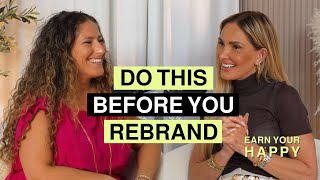
Rachel Pesso explains when to rebrand and how to do it right. Start with clarity about who you serve, then fix messaging and user experience before touching visuals. Only rebrand when your photos, offers, or identity actually changed.
Chapters
When do you rebrand to me? If you're not making sales with your old brand, nothing about a new brand is going to help you make sales.
I've had lots of clients who have gotten caught up in this before where they've come for multiple rebrands and they were losing sight of. This site is supposed to do something. It's supposed to connect with your audience. It's supposed to be a tool. It's not just a pretty store to go into. We want them to take action.
Rachel, welcome to the earn your happy podcast. Thank you so much for coming on.
I'm so happy to be here. This is a dream come true in so many different ways.
Oh, well, it's a dream come true.
For me too, because we have worked.
Together for so many years. We're talking, you guys, circa 2014 or 2015. We couldn't figure out what year it was. And you were really one of my first web designers, kind of like brand designers that I got to work with. And it was such an awesome experience. And I recently just hired you for a ton of stuff again, which was so exciting because I feel like with every evolution of myself and my brand, it makes these times that I get to work with someone like you who really takes what I see and what I feel and what all of you feel. I know you listeners who are like, already seeing the brand that you want in your head, you, Rachel, are able to take that and put it out into the world, forward facing. So I'm so excited to have you on today because we are going to talk all about brand alignment and making sure that your brand really speaks for you. And I'm telling you, that's where the money is going to come in because Rachel and I were actually just talking about this that, I mean, right now I really believe people with the strongest brand are going to be paid the most.
So, Rachel, welcome.
Welcome to the house. You're in person, you guys.
So she lives in Florida and she.
Is in Cali right now. So we're going to hang, we're going to do a podcast, we're going to go to dinner, we're going to do all the things. So. Okay, Rachel, first I want to just kind of talk about what got you into such a creative position. Have you always known that you were a massive creative in your life?
Such a good question. And yes, I, you know, I had a very creative mom. I did so many different art projects as a kid and I ended up going to school, visual arts in New York City.
Okay.
And from there, I Was like, I'm gonna be a creative director at an amazing magazine. And then, you know, life happens. Magazines don't exist anymore. So.
Yep.
Pivot. Yeah.
I mean, I was on fitness covers. I'm like, yep, those are gone.
Exactly. So enter the digital world. I actually had an amazing friend who helped me launch my business, and she was the creative director for Marie Forleo, who I at the time had no idea who she was. And so I just entered this amazing online space, and ever since then, I've just been really being my creative self. And really, I went back to launch my business at a retreat which was filled with 60 women, and I put myself out there. I had $0,0 paying clients, and just, like, went to California, met all these women, and launched my business there.
So you were an attendee?
I was an attendee.
Okay, tell me about this, because this is really important for people to hear, like, what makes people actually take action.
Yeah. So my friend, who was kind of my mentor at the time, so the.
Woman who worked for Marie Forleo as a ranger, which, by the way, I believe that's part of why I worked with you.
Right.
I'm remembering back.
Yeah, yeah. And basically she was like, you have to go to this retreat and meet all these. It's going to be the launch of your business. And I was like, what? Like, I don't even know. Like, it was back in the day when there was, like, no retreats. I was like, so freaked out.
And, yeah, this wasn't a thing, you guys. Now they're a dime a dozen. This was not a thing.
This was 2013 into 2014. And I went to, like, it was called Live Free. Sarah Jenks and Nisha Moodley launched it, and it was like, so many OGs were there, like Amber Ray, Jada Sellner. Like, I didn't know who any of these women were, but it was so awesome. And I went there, having only my website designed, and. And I'm like, hey, here's my business. Put myself out there, and really, it was a personal retreat. I. I really feel like I actually, like, it was a big growth moment for me. But that being said, I ended up making amazing connections with women who would then trust me to build their brands after. So full circle. Here we are.
That's crazy.
Yeah.
So what. What kind of conversations were you having that you were able to, like, launch the business? Did you just go in and you're like, yolo, I'm gonna put myself out. Out there pretty much and be like, yeah, this is what I do. Like, I was so imposter syndrome. When you were like, this is what I do.
I was, I felt like the biggest fraud, honestly, on the plane. I was having a meltdown because I was like, there's no way that anyone's gonna hire me. I've only designed my own.
Because you had done your website. I only made myself fit. Why would you hire me? Yeah, to make you fit.
To make it make sense. But it didn't really make sense. Yeah. And, but I went with it. And I just, I actually promised myself that I was going to go up to as many people as I could and introduce myself and tell people what I did. And I just think that everyone in that room is in a really similar place. I think, again, like that time period, all the women, no matter what they were building, were in a very, like, vulnerable place and also looking for help and support. And they just created such an amazing container. And so it just blossomed from there. And the kicker is I honestly ended up like, over time, it wasn't right away. I ended up working with 12 women from that event. Wow. Which is insane. Roi.
No. This makes so much sense. And for anybody listening who hasn't invested in rooms like this, here's the thing. One of the main reasons I also wanted to invest in you and why I know those women did without even asking them is because you understood their world. And so I have hired other web designers who have not understood the world that I come from. And so the layout doesn't feel right, the wording doesn't feel right. They don't really get it. A, it takes a lot longer and a lot bigger lift to really describe what it is that you do. And so I tend to always work with people who understand this world and understand what I'm doing and it makes everything go so much faster. And even the belief in the product that you're both working together on feel the project feels so different when people are like, I see you, I believe in you. This is great, let's do it. So that's like a hot tip from this is get in the rooms where.
Your clients are 100%. And honestly, that's been my strategy for my business. It's been referral based almost since day one. I've probably done like a round of ads once in my business life and I still just go back to referrals always. Like, I'm always going to events that you're at and rooms that I know are going to up level my mindset and, and just push me as, as a founder as a creative and. And whatnot. So.
Mm, I think it's. It's literally the smartest thing you can either. When you look at the grand sch marketing, you're always going to have to invest in marketing. Now, marketing can look different. Marketing for you looks like instead of ads, you're buying a ticket to an event where it might look like it's for you or for yourself personally, but it's also business. And when you talk to these women, you genuine, genuinely are like, here's what I do. And then it's natural for them to be like, I need that. It's such a hack. I think of this all the time when people are in our memberships, and I'm like, oh, this social media strategist is fucking crushing it in here. Because all of these people need her. Like, it's the smartest, smartest way to get in there. Let them get to know you and let them know that you understand them and you know their struggles. And I think that's where the instant, like, click happens for you whenever you're in those rooms is you, like, understand the struggles that they're in.
It really does. And honestly, for me, it starts with immersing myself in people's brands. So I think that, you know, in general, for any projects that we do, it is really important for me to kind of actually go to events, get into their content, really put myself into what they're creating. So that way we're making sure everything's in alignment. And so I just think, like, it kind of all starts even, like, with myself and how I step into different rooms and put myself out there.
I love it. It's so smart. Okay, so you and I have worked together on multiple rebrands. Is this normal for growing businesses? Or are people just like, okay, you should have invested your one and done, like, what does that look like? Typically totally normal.
I think that, honestly, most people don't realize how much your brand evolves. It actually evolves even faster than we can keep up because we're changing and evolving so much. The world is changing and evolving, and then, like, the things that we're, you know, offering are changing pretty often. And so all of that is extremely normal. And I always say, like, your brand is an evolution. It's. You're actually supposed to start building not where you are today, but where you're actually headed. So I love leaning into that because it feels really aligned to help people actually focus in on the fact that the brand we're creating right now, it's not like this forever thing that you put in a box and you look back and you're like, my brand. It's perfect. It's going to stay just like this. So brand evolution is just kind of the biggest piece of that. And once you go into it and you know that you're able to just kind of evolve at a quicker pace.
Okay, so this is such, like, we're going to unload this topic because some people don't know when to really deeply invest in their brand, when to deeply invest in a rebrand. And also, I do believe you change so much so fast, especially if you're really on this trajectory of personal growth. And there is kind of this idea now that especially if people are looking to you for a leader to be a teacher, that they. They want to see the brand that they want in their lives. So it's like, if your brand does not look good to them, they're probably going to go with someone whose brand looks better. If that's important to them, if that's important to them. And I think it's becoming more and more important to people. And unfortunately, even if your content is better, even if your teachings are better, if your brand does not look good, I will tend to skip over it, like, sometimes. Even if I get a. Not sometimes, all the time. If I get a pitch that just looks outdated and doesn't, like, look like they put work into it, like, I'm skipping over it so fast. Because in the sea of hundreds and hundreds of people that I look at, you have to catch attention. Because we're in such an attention war, you have to catch attention immediately. And I do think that that is branding, and I don't think this is a giant, giant investment for everyone. So let's talk about that, like, levels of branding. Where can we start? If we just want to start having some cohesive branding? And we're at the very beginning.
Okay, so if you're at the very beginning, brand clarity and brand alignment is everything, because you really can't create anything unless you know what you're creating and who you're creating it for. And I think, you know, a lot of the times we get caught up in the I want my brand to.
Look and feel like this.
And it's like, well, why? And if you can't answer why, then you have more work to do. And I think if you dive right into, you know, just branding, like doing your logo colors and fonts, that is the place to start. But you have to do the clarity piece first or else you will have to go redo that again. And everyone knows that because like, every seasoned entrepreneur knows that because mostly it happens to everybody because you're all excited and you're like, I'm going to go create the most amazing brand ever. You set out to do it and you're like, this is not it. This is not aligned with my core values. It's not speaking to my ideal audience. This is not the right message messaging. And then, you know, you kind of have to take a step backwards. So if you're just getting started, I always say, like, you know, start with brand alignment. I have an amazing brand alignment quiz that you can take a few things you can do if you're just like listening to this and like, where should I start? Ask yourself how you want people to feel when they interact with your brand. It's such an amazing question because if you can answer that, you can start to understand, like, what are the things that I need to create to help somebody feel that?
Okay, so I love this. So number one, we're going to send everyone to the quiz which is in the show notes. You can go and check that out. You'll see where it says the quiz below. But you just mentioned a couple things that they can do to start even asking those clarity questions. What are some other questions that you think they should be asking themselves even around clarity? Clarity at all around, like their social content that they're putting out, like, who they are in the world. Like, what are some things that you would tell someone when they're getting started outside of those that you just mentioned?
So you could do things like figure out what type of aesthetic you like. So is it, you know, powerful? Is it soft? Is it empowering? Is it, you know, you want it to feel like, I'm your best friend. If you can kind of lean into some of that, that's a great place to start. And then also creating a cohesive aesthetic that people can start to recognize or connect with you on. So that could be like finding colors or social media templates that help, like, really start to communicate just a little bit of what your brand could or couldn't be.
And I feel like this is confusing for people because it's already like, social media is hard enough. But does this look like, I know creating some things in Canva, like how can we do a basic something for ourselves where we can start to look, quote, unquote, like cohesive on social.
So Canva has now with. With AI and how everything is. You can literally go to Canva and create any amazing looking template you don't need something incredibly custom from that perspective, if you're just getting started. Because, to be honest, your goal getting started is just to start connecting to your ideal audience and really start to work on your positioning and messaging. And yes, your esthetic is important, but it's actually not as important as the other parts, because the truth is, like, yes, you can have the most beautiful brand, but if it's not saying the right things or speaking to the right people, then it's not really going to go anywhere. So it is like a little bit of a dance. So I think, like, figuring out your strategy and your messaging and making sure that all that's in alignment before you actually create, that's going to be awesome. And then, you know, you can look on Etsy and other other creative, Creative Marketplace and other things. They have amazing templates, typefaces, whatnot.
Yeah, that's so good. And honestly, I hope you guys all listening through this whole conversation know this is such a dance. You. You never feel like it's nailed because as soon as your stuff is done, you've already grown into somebody else. So I think that there is some wiggle room where you're going to feel 75 to 85% in alignment, and that's going to feel good. I feel like that's really the sweet spot.
Right.
And then you're always going to have content that you're, like, interested in putting out right away or something. You don't want to wait to brand. Or if you're a fast start like me or most creatives are like, they want to fast start, they want to put stuff out. I think you have to decide how much of that percentage of, like, flawlessness you want to create. Some people can be a hundred percent. I will never hit that. And I'm okay with it. Like, I've decided that that 75% cohesiveness is enough because I just have this fast start in me that wants to put out a thought. I don't want to wait for my team to help me with the branding or I don't want to sit and go into Canva and do it. But I do try to stick to that, like, 75 to 85% rule. But I'm always figuring it out, and I'm always getting people like you to help me stay on track because it very much will go off track. Like, as much as I'm an aesthetic girly, I really struggle with how to make it look that way in. In my brand. Like, I will deck you out all day long in Your clothing. But, like, in my brand, I really struggle. So.
Yeah.
That's why I'm so grateful for people like you who are like, are we. Can we just come back to what we're trying to do here?
Yeah.
And this is an on brand.
I'll say that, like, everyone struggles with this at any level. Like, whether you're a celebrity or you're a, you know, just starting out how you want your brand to be perceived is incredibly vulnerable. It's also really something that, like I said, keeps evolving. So, you know, you have to really decide, and I can't answer that, and no one really can answer it, like, how worth it is it for you to invest that time? Because the truth is, some of it, Some of it doesn't pay off.
Yeah.
I decided a long time ago, like, social media matters for my brand. Like, I use it as a visibility tool. It's great. Like, I need to show that I'm active, open for business, that we're doing work. But, like, to show up there every day does nothing for my brand. It really doesn't. Like, I am not making sales every day on there, so it's just a waste of time. I much rather spend my time, like, building relationships, focusing on, like, what happens after they go to, you know, from social to your website, which is a huge thing that a lot of people forget about. And so, you know, it's. It's. It is a dance.
I think it's figuring out. Because listening to you, I'm like, you don't even. You probably do realize, but I don't think you realize how much relationships. You're better at relationships than social. So you have to decide, yes, like, this is where I'm going to invest my energy. Because someone could be in the same field as you, but not great at relationships. So they do need more time under their social, for sure. Because it's like, where are you good at attracting the dollars?
Yeah.
Where are you good at that? And I think that's important for the listener to ask right now is, like, for you, you've realized you actually don't have to spend a ton of time on social because you invest so heavily.
Yeah.
Into groups and getting into all of these different events and getting into different relationships with people and really nurturing those. So, you know, for me, same thing. Like, there's places I do so much better at. Like, I have a podcast, so for years, I didn't have to show up as big on social. But podcasts are really tough at being discoverable. They're tough. So I've got a great audience there, but growing, it has been a challenge. So now I have to start getting good at social. Where years passed, I could kind of be a hodgepodge of a shit show. And now I feel like I have to step up my game. And it has been changing. Yeah, it has been attracting a lot more people, so it's just interesting. It will again, this whole conversation is going to be a dance. So ask yourself these questions as we talk about them with you. So, okay, let's talk about how a founder, a business person, a business knows that it's time to rebrand versus wanting something shiny and new.
Yeah, I. I absolutely love this one because I feel like the truth is there. It's almost a trap a lot of the times, and I'm sure you can speak to it, but it's a trap because we think a lot of the times the solution to our problems is to rebrand. Like, oh, I'm not getting sales. I should rebrand. Oh, I mean, this is not aligning. I should rebrand. So I like to break it down because I think that there's true signs that really means you should rebrand. So, number one, if your photos don't represent who you are anymore, then you should definitely do a new photoshoot. And you might need to rebrand, because if someone goes to your website or social and, like, all the photos are unaligned, that creates doubt and mistrust and. And also it affects your own confidence. So that's number one. Number two, I would say, is if your messaging has changed and you like offering something new and it doesn't show up, like, in your social media, on your website, that's a really big reason to kind of go into brand alignment and start to rebrand, because obviously, if no one knows about the thing that you're creating or working on, then how could they hire you? And so we need to make sure that that's showing up all over your brand. The third one would be to make sure that whatever you're creating is really in alignment with who you are now. So we're. We talked a lot about evolution, and if your brand has evolved to the point where you're like, I'm a totally different person, then you should most likely look into rebranding.
Oh, my God. Okay. So I love this topic so much because I have been caught in the trap. I have been in a place where it's really helped me. I've been in a place where it's been a shiny object, and I've allowed it to distract me. So when we're talking about, you know, when do you rebrand? This is interesting because to me, if you're not making sales with your old brand, nothing about a new brand is going to help you make sales. Like, you guys, I made the most money in my career when my stuff looked so not great, like, it was okay, but I had grown and evolved so much and hadn't given it much. I think it was one of your originals, but didn't give it much attention through the years. And then, like, you know, we have Nick, who's like our most amazing integrator on our team, but he's not a designer. So, you guys, what. What happens in teams is, like, if I don't have a designer constantly updating my site and I. I have an integrator who's very, like, bare bones, like, let's just get this up. It starts to look very hodgepodged. So I had a very hodgepodge site page. Everything that was crushing it. Now, could it have crushed it more with a better, like, even more cohesive branding? I absolutely believe, yes. But what I want to get across is not to get caught up in thinking that you need this very shiny brand in order to make sales. So if someone comes to you and they're like, oh, nothing's working, like, I'm not making money. I know this might go back to the original question, but where should they be looking?
Yeah, I mean, that. That's the biggest part. If. If you're not connecting with your audience, don't know who your ideal audience is, your positioning has changed, or you're unclear about your messaging. I think that's a really big sign to just pause and not jump right into design and write into, let me fix this by creating a new website or creating a whole new social media. And I think, you know, I've had lots of clients who have gotten caught up in this before where they've come for multiple rebrands, and some of it's like they're evolving. And I'm like, okay, this is great. You're an evolution, and you're. You're growing at a rapid rate. Like, great. But other people, I'm realizing that it was that they were just, like, not obsessive, but it was like they were so hyper focused on making this brand, like, almost like in quotes, perfect, that they were losing sight of that. This. This site is supposed to do something. It's supposed to connect with your audience. It's supposed to be a tool. It's not just a pretty. You Know, store to go into. We want them to take action. So there's a whole other layer of things that you can analyze when you're, you know, figuring out if that's an issue. Um, but I would say that's. That's really what I would tell people to focus on, is, like, go back to clarity and strategy.
Okay, all right. So if someone is listening this, thinking, that's me, my brand is feeling off. Like, it's feeling behind. It's not feeling great. What should they do first?
So I feel like I'm gonna sound like a broken record, but you have to step into brand alignment, because if you don't, again, you're gonna be just creating and creating over and over again. And the truth is, like, the only way that we're gonna get people to really connect with what we're doing emotionally. And, like, that is the key. Like, our brands are meant to make people feel things, and on top of that, like I said, to make them take action. So if you're listening to this right now and you're like, ugh, my brand, like, really doesn't feel like me, I don't know what to do. I would say, like, let's try to get you in alignment. Like, ask yourself the questions. How do you want people to feel when they interact with your brand? What is off? It could be messaging or positioning. That could be off as well, which is super important. It's just as important as visuals. And I think those are really good places to start.
So when we go through your quiz. But I also know that you have, like, an entire brand alignment deep dive that I want to talk a bit about, because I think some people don't even know when they're like, okay, my messaging's off. How do I even start to figure out what. What my messaging is? And I know for me, in the beginning, because I'm so multifaceted and I'll never change. Like, remember, do you remember back in the day? It was like, niche, niche, niche. I've never felt more like, oh, my God, I'm never going to be successful because I could not niche down to save my life. I'm like, no, I'm fitness and I'm a podcaster, and I want to write the books and I want to do the events, and I want to do the courses. And they're like, but what exactly are you niching in? And so that was a huge challenge for me, and I feel like now I am a lot more clear on what I am, but I still feel like I'm evolving in that area. But walk me through a bit of what does that start to look like when you work with somebody who's just unclear about their messaging or wants to tighten it back up?
Yeah, it's a great question. So I have something called the brand alignment method, which is really, like, we start with clarity, and we go deep into the questions that are going to help us get clear on how to align your brand. And so some core things that we do is we take a look at where your brand is now, and we're trying to fill this. I call it, like, the gap. The gap between where you are now to where you want to be. And the issue is when you're in that gap, you start to create almost like, this mistrust. This, like, the credibility starts to kind of, like, drip out, because I think underlying, you're not really feeling confident in your brand. So, you know, quick story. Like, I have a client that came to me and she was at an event, and she was sitting next to, like, one of her top mentors. And they were like, I really love what you do, but I looked at your website and it really did not, like, actually seem to match the depth of your work. And she was mortified. And she told me this story and she came to me and she was like, I need to fix this. Like, I've been feeling it internally and just, like, thinking that if I hire another designer, like, I could just fix this, do a little refresh, and it would. It would work. But the truth is she was just completely out of alignment. She wasn't operating at the level that she was actually operating at. And meaning, like, her brand was behind where she actually is delivering the depth of her work. And so I think, like, really what we do is we go into that, like, and we start to analyze it from the perspective of, like, which messaging is off, which visuals are off, like, which parts of your brand aren't telling the right story. And then we start to close that gap. So we start to figure out, like, if it's your messaging. Okay, like, what is the messaging that your user or your ideal client needs? And what are the photos that help tell the story and what are the, you know, what are the things that support that? And that's kind of why I created the brand alignment quiz, the brand alignment intensive, and my entire method, because I started realizing so many people are just jumping into creating these brands and they don't have all those pieces. And without all the pieces, you're kind of, like, missing, you know, you're missing the Legs that you stand on.
Yeah. When we were doing my latest site, every single page that was being built, I was like, we were asking the question, how is this going to convert?
Like, what.
What is this message saying? And where are they going?
Like, yes.
What is the goal of this message? Is it just to be, you know, like, in the past it was, like, cute and clever and sound original and, you know, have all these great taglines, and now that's great. But where are they heading? Like, how can you help them? Is this speaking to them? Is this like, oh, my God, that is me. And where do I go now? Like, how do I work with this person? What do I do? What podcast do I listen to? So every page is like, okay, what's the journey? What is the journey that we're about to take this person on? And I think that that's a totally different, like, way to go into your brand thinking about your customer rather than thinking about how good you look.
Yeah. And I think it's. It's a huge mess by, like, many agencies in itself, because they're very focused in on, like, let me make this beautiful. Let me make this the brand that you want visually. But we need to focus on user experience. Without user experience, you basically have just a static, beautiful site.
Yeah.
And that is something that we do in the brand alignment sessions. We go kind of like, if you have a website or you, you know, you have even your social media, like, we'll actually audit it and look at, like, where there could be disconnects in your messaging, in how the users like, going through your website. It's actually one of my most favorite things to do because you just don't know what you don't know. And most of the time, we're just not looking at our brands with those eyes because we're all in. You know, we're all like, I don't like this picture. You know, I don't like the way this copy sounds. And like, you know, there's. People get stuck on both of those things, and then no one's thinking about what actions do we want people to take when they land on your website or when they go to your social media.
So I want to talk a little bit about the ways to work with you because one of my, like, both times that I've worked with you have been my favorite experience of working with someone because it's been very collaborative now. Collaborative in a sense where I didn't feel like it was a giant lift for me, but I wanted to be obviously a part of it because I want my voice involved. I want to like, definitely feel like we're headed in the right direction. And that's what I've really loved about working with you is the exploration of being able to figure out what I want this to look like and how I want this to feel and how I want the customer to feel. So the very consistent touch bases, getting to see updates of what we've done the week before, see if it's flowing, see how it feels. So I have loved that journey of putting it all together. So can you tell me like the different ways that you work with people?
Yeah, so there's basically two ways to work with me. It's either transformational projects, which is like visual identity, website design, you know, even like launch graphics, sales pages, all those pieces, I call them, like they're not one offs. I'd love to continue working with the founders, but really that's, you know, the one and then the other one is creative partnerships. So that's really for growing and scaling founders and for people that are looking for me to be their true creative partner. I am being their creative partner on the one off projects as well. But this is just done in a different format because a lot of the people in these in, in this package is really like they have multiple brands and businesses. They're trying to create alignment across the board, which is very challenging when you're in your own business as you. So one of the things that we really like to do is actually look at it like from a high level perspective and start to ask the questions of like, okay, what are the strong parts of each brand and how do we connect them? And then what does the user need to kind of know that, you know, this brand does this, but they're still connected. And so having my, you know, my expertise and my like overseeing that entire process really helps you be able to stay in the zone that you need to stay in when it comes to being a founder. And I think a lot of the times, depending on your roles and the different types of teams people have, there's a lot of founders that get like very wrapped up in their creative and like they don't. They're doing more than they need to. And so part of the process that I love to do is actually being connected directly to the founder. I mean, I'm happy to work with their teams, but I found it to be so much more successful because I can actually say like, does this feel in alignment for you? Like, is this doing the things that you want people to do when they're on your website, like, what's missing here? And to be able to work with you and collaborate with you on that. I could create a site on my own without you, but I'll never have that. Those pieces of the information, like, I can gather it, but there's something different of, like, us both looking at it and, you know, like, when we're in that process, we come up with things that I don't think we could either come up with, like, on our own.
Right? Totally. No, something magical happens in collaboration. And so what you did with my recent, like, rebrand website, all the things is we had a lot of moving parts in what we were doing. We had the elite entrepreneur mastermind that I joined with Chris now this last year. So what happened is my Lori harder branding or the what we were creating, whenever I would post about elite Mastermind, elite entrepreneur, it felt like it clashed. I'm like, that's like, very much like Chris's branding. And then also now that we have mentor collective Mastermind, we were like, we need branding that feels cohesive for both brands. And so what was so fun was trying to find this through line and you showing me the three brands together once we kind of landed on something and how they all looked like sisters, like, not twins. So, like, your eyebrows, guys, like, literally, that was one of the coolest things to go. Oh, I finally feel like all of these things that we have going on are a lot more cohesive, which feels really good when you're talking about it and sending it out through email, which feels good when I'm putting it out on my social media. It just feels better when I know people are landing on those pages and it's not like, oh, Lori's advertising this. But all of a sudden I land on something that's so masculine because it's very Chris, you know, or it's just thrown together like a. It's just a quick sales page, but done without much branding because we aren't working with a designer, but we are working with a great sales copy person, which, like I said, still can make money, but feeling a little off. Feeling a little off. Especially when you have people coming in who this is important to. They're like, wait, like, yeah, I love the message and I love what they're teaching. But why does this feel off if they're teaching this? So, yeah, and we kind of talked about this because it's like the builder's home, you know, I grew up with. Literally, my dad was a in construction and builder kitchens and bathrooms and Our home was always the one that was neglected. I get it. That does happen. Absolutely. Because you're always in the business. But I do think it's important to find somebody to help you clean that all up.
Yeah. And I mean, it goes back to what I said before, like matching the depth of your work. And so it's like if you're asking people to invest at high levels and you have premium packages, it's like you don't want them to feel like they're walking into Walmart. You know, you want them to feel like they're walking into, you know, a very high level experience. And so branding does feel that way and people that pay attention to it or care about it, like that could turn them off and they could, they can say no, you know, so is it a make or break? It could be if you care about it. So if you start to feel like, just like you were explaining before, like, I don't know, like this feels off for me, this post looks bad and I don't like it or I don't want to share this sales page as much. Like that drips into the energy that you're putting out there in some capacity and, you know, we're never going to get it perfect. And also like, I get like, people have to output, you know, at a quick pace. Like, you can't make everything perfectly designed. No. You know, you just can't. It's, and it's, and it's okay. It doesn't like, if you don't do it, it doesn't mean like your brand goes downhill. It's just as long as those things are in alignment and you can keep those four brands, like you have the core, core base now. You can literally create anything from there and it will still feel more cohesive than it did before because there was no through line.
Okay. So when I was creating like this next evolution and for anybody listening who's like, okay, you said I want to create the brand for like where I'm going, there were some interesting things that came up because, you know, I take all of these like, brands that I aspire to be like, and some of them are curated so perfectly. But there was a bit of like this realization, and this is permission for anybody, that I'm not going to be curated every day. So I was like, okay, Lori, I know that you want this super aspirational, up leveled brand, which I believe that I still accomplished, but I wanted to add in pieces of my personality that I knew, like, at the end of the day I'm Going to be mixing stuff into social. That's very casual.
Yeah.
Sometimes I'm gonna go on without makeup on. I'm gonna try to keep the branding, but like, is this gonna be so abrupt for how I know I create? And I think that it is important to ask yourself, yes, you might want that very aspirational brand, but how are you creating every day? Are you gonna be able to keep up with that? Or can you create a brand that's aspirational, that also works in, you know, your personality? So taking so much of that into account, are there things that you always like to take into account when people are thinking of what they wanna do? Because I think it's very easy. Rachel, I know you see this. People come to you with, I want this brand. Like I want my brand to look exactly like this.
Yeah.
How do you make brands their own or kind of stand out apart from all of the cookie cutters that are out there?
It's interesting because I feel like no matter what, even when someone comes to me is like, I want a brand. I, I can't even tell you how many people have said to me even in this past, like few months, like, I want a brand like Lori's. And I'm like, cool, we can do that for you.
We did great.
We're gonna, we're gonna do that for you, but we're gonna make it you. And I think like the trick truth is like, I'm not doing cookie cutter designs. Like so they, they're never going to get like your brand but they're going to get the same feeling and that's really what they're connecting to. They're connecting to the feeling of your brand and they're wanting that. And so I help them understand that and I help them see that, you know, these are the things that you have to do to have this type of brand. And like, you know, it's like the photos and it's, you know, spending the time on how to align your messaging and you know, what goes into it. But I think going back to what you said before about like adding in your personality and really I think the way like marketing is going these days is people want to see the, the realness they want us. They don't want to just see the pretty picture because guess what, that's out there non stop now. And I think people need reality checks that like, we're all human, we're all going through the struggles. And you know, I mentioned this to you before, but like, even me, I just redid my own website before I came on this podcast because I knew that I was going to be having some people come to it. And also I was feeling out of alignment and I was like, I need to get my stuff together. And also, trust me, it makes me feel better. And I think, like, that is what I kind of keep trying to get across here. It's like the brand alignment is for other people, but it's really for you. It's the business owner. It's for the person who just wants to be proud of the brand that they have and have something that they can stand behind and feel confident. And I knew that if I didn't do that and I, like, just kept my website the way that it was, I was going to come on this and feel like, oh, like I. I'm missing that piece. And like, now that I have it, like, I feel so confident. I know that, like, everyone that is going to go to the website will be able to know, like, it, like it's in alignment for me.
Oh, my God. I can't tell you before this last rebrand because life just gets so busy for us and Chris and I love to overwhelm ourselves. It's just both of our personality traits. And the last thing for me a lot of times is my, like, how my brand looks because I'm just like, okay, I'm consistent with content. I'm consistent on the podcast. Like, one thing I am is consistent, but my brand may not look consistent. So that has been an Achilles heel for both Chris and I our entire careers. And I think now that we are just in a place where we have some really, really high priced aspirational products and experiences that we do. And also just for how we feel and where we are in life and where we're going in life. And I, our brands, like, especially mine, because he had kind of redone his a little bit before I did. Mine just felt so out of it. Just I couldn't even relate to it. Like, I'd go on my site and be like, I don't even say that anymore. Like, yeah, I don't even wear those boho hats anymore. Like, who is this girl in these gypsy outf. Like, I legitimately, like, could not even recognize myself. And I love that version of me, but that version of me is so far from what I felt. So I was finding myself sending people more to my Instagram than to my site. And the thing is, I'm. I'm booking myself on stages, I'm booking myself on shows, and people were going to my site and Regurgitating things that were from my site. You don't realize how many people actually do go to your site. If you're getting done stages and shows and they're going to read your. But you're. They're going to read your old stuff from your site. They're going to say it and ask you questions based off of it on the podcast. They're going to pull pictures from your site that you're like, why does everything feel so off? And that's what kept happening. I was like, that's it?
Yeah.
Like, and everyone kind of has a.
Breaking point with that.
Yeah. And I.
And. And I'll say, like, if you're listening to this, like, you might not resonate with that. Like, it might. It might not feel the same for you, because I think everyone will have their different breaking point. You know, whether it's the confidence thing or it's like the unaligned images or, you know, like, for me, it was like, I really, like, could not deal with the fact that, like, my packages weren't in alignment. Like, I was so stressed about that.
Yeah.
You know, like, and it just depends because everyone's kind of different of what matters to them and what they care about. But, like, in the grand scheme, I think that's like, one of the messages that I love to get across is like, everyone is going through this on their own level. And so you just have to keep making micro changes towards the alignment that you're trying to create in your brand so you can keep having the connection with your audience and feeling good about it energetically.
It really is for you. Because when I did this last one, I feel totally different. I'm like, oh, my God. My shit's, like, taken care of. It's tight.
Like, it's good.
I can send people there. I can know that I'm getting searched. And it's like, great when people are going to have me as a guest or whatever. Tell me about some of your other. I know you've got so many great, like, client stories, and one of them is one of my very good friends. So we're not going to say your name, but if you could share.
Yeah.
Some of that story.
Yeah. So again, people come to me at all different, like, stages and places. So this woman came and she had said that everybody knows me as so and so's girlfriend. And she said, like, it's great, but I. I'm obviously my own person. I want to be a badass speaker and. And I really want people. I really want a brand behind Me, that. That feels like me and is me. And so that was her main reason for creating a brand. Like, she didn't really even need it. And I know that, like, from a sales perspective, she could have done all the things she needed to do, but having that piece, having that confidence behind her was everything she needed to step into it. And I think that's so important to recognize, like, if that, if you're listening and that's you and you're like, you're kind of like playing small behind the scenes because you are feeling like your brand doesn't represent you and it's crippling you. Like, you should do something about it because there's so many options out there right now, like, to actually create a brand. And I think, like, you know, depending on whatever level you're at, just, just make the change. Because, like, hiding and dealing with that and feeling all those things for, like, people can keep it going for a long time. So, you know, there's your gentle push to take action and start to build a brand that really is connected to you.
It really does feel, like, so freeing and so clarity is everything for momentum. When you're not clear, it's really hard to catch momentum because you don't know what you're doing every day. You don't have, like, a strategy or a clear thing that's pulling you forward. And I think that was another thing that I loved about going through this process, is really realizing what is center stage for us. Like, okay, you have all of these things because I know there's so many people on here now. You really do. Even if you're not, even if you do niche down, you're niching down. But you have social, you have email, you have, you know, text marketing. You have all these different places. And I think one of the great things was being like, what is most important? Like, what do you want to push the most? What's center stage? Like, what do we want when you land on the website or when you're on your social, which I'm seeing still really working on. Like, I couldn't tell you on my social right now, like, what most important thing is? And we're working on it, but it's, it's that, like, constant question of, okay, well, what's center stage now? Like, what's most important? And I think that's really been helpful.
Definitely. I, I'm kind of. I know this is, like, controversial, but, like, I'm not a niche down gal. I, I think it's because I'm a creative like, you can't tell me, like, I'm going to do the same thing for the rest of my life or I'll, like, run out the door.
Same.
So something about niching down just, like, doesn't sit well with me because I just feel like. I just feel like I can't commit to that. So I never really push that for other people. I do, obviously, from a marketing perspective, understand the value of niching down. I know another woman who has a very similar business to me, and she only does fitness. It's basically like fitness professionals. And that has done so well for her business. Like, she. She mastered it. She got really niched into it. And so I could see the benefit. But for someone like you and a lot of my other clients who are visionary founders who are going to keep evolving and changing, I think niching down can honestly hold you back sometimes because you could be doing all the things that you're doing and not be exploring what your next thing could be. And so I just. I'm not a big fan of, like, forcing people into niching down, and it's hard.
I think that's why I love. I love kind of the assessment is because it is, okay, here's all the things, but what's most, you know, what's most important? Like, what is. What is the main thing? So where do you see people really going wrong? Like, when they are, you know, rebranding or anything with their brands that you think is costing them a lot of money?
Yeah. And I mean, that's. I was gonna say that a lot of these things are. Are like, do cost people money. And that's the thing when you're not clear and you dive right into design. That's, to me, is always the biggest mistake, because we're excited. We want to create something. And I mean, I've had people invest a lot of money with me on websites before, and I've had to ask them, like, are you sure this is, like, the right move for you? Because I feel like sometimes it seems like it is. It seems like I really want this piece, but I feel like a lot of the times they need to work more on strategy and clarity and answer those questions that we were just talking about. Because if you don't know what's most important to you, the brand that you're going to build is also not going to show what's most important to you. And it's hard. It's hard on my end because I really need those pieces aligned in order to really create an amazing brand.
Now I Want to talk about something for you personally that I even just in your evolution, my evolution as, you know, wanting to show up as a good client and also you wanting to find good clients. Because I know you and I have known each other for so many years, and we've had these conversations about, like, oh, my God, this is not the person I want to work with. This is the type of person I want to work with. You've gotten really clear that you want someone who wants to be really clear. And I know throughout your process, like, we had some pretty good deadlines, like, yes, maybe some wiggle room. But in a project like yours, like, you have to stay on track and you have to stay on target. And I think when you're working with a lot of creatives and founders, sometimes they can just keep pushing things off. They can get very confused. They can be all muddied. And how do you decide who that person is that you want to work with? And how do you keep creatives on track when you're on these projects? Is it contracts? Is it. What does that look like? Because I actually think that that is such a favor to the creative, because I think we can bulldoze through people, and then you don't get the project you want. You feel like you end up blaming the other person. Tell me a little bit about how you keep everything on track.
Yeah, I mean, I will say, like, it's been a journey. I have, you know, underpriced. I went totally over scope. Like, there's. It's not a science. Because, honestly, each person is different. So that is something that I've had to really learn. Like, each project that I work with, although there's similarities, there's different things that people bring in, like via their brand or even their emotional side. So a lot of what I do is also helping keep people feeling good because it's a vulnerable experience. Like, when people are spending lots of money, they're putting themselves out there. A lot of the times they need handholding, they need validation, they need approval. And so the way that we kind of keep it all on track is by just having an agreement, figuring out what they need. So, for example, with you, I know that you're very much like, you love to talk about it, you love to see it type of person. And so, like, I would never just, like, send you a page and be like, hey, what do you think? I could do that. But I know that if I hopped on a call with you, I'd get a much more clearer, better response, and we'd Be able to like not waste all this time trying to figure out like what are the changes or what do you need? So I like to meet my clients, like where they're at and what they need so we can keep that process like aligned and also feeling good for everyone involved. And I'll say like, I have another client, like she's, she spirals a lot like in, in decision making. And so right now, like I'm honestly struggling figuring out like, all right, what is she need in order to make the decision and move forward. So depending on the client, I like to check in on what they need. So for example, the client I'm working with right now, she's like, I need specific things that you need for me. I also want heads up on like what we're going to talk about on each call, which was a little something new for me. But again I was like, this is what she needs in order to move forward. And so that is, you know, a lot of the times I'm adjusting basing on the type of client that I have. And I think that's really like the high level touch that you get when you're doing collaboration. I don't have like this like cookie cutter process. I mean, I do from the perspective.
You'Re working with creatives. Yeah, creatives. With a creative. Visionary.
Visionary, exactly. Visionary.
You're working with visionary. Creative brain for sure. Have you ever had to break up with a client?
I have, I have. I had to break up with a few clients and honestly some of it was after the fact. Sometimes, you know, like, you just feel like whether you don't align with the person's team or, you know, it just isn't feeling energetically right. It hasn't been a lot, but there's times where I'm just like, this is just not right for me. And especially now I'm really at a place in my business where I only want to be in alignment. And you know, it takes a lot of energy to do all this work. So you have to be really in collaboration. And one thing that someone said to me recently is like, you have to really love not just what you do, but like who you do it with. And I was like, that's so good because I think I love what I do. And then sometimes if I get into partnership with someone who I don't love doing it with, I'm like, not as happy.
Oh my God. I feel that way all the time. Even, even team members, you know, you have to really check who you're working with and does A team member. Throw off the energy.
Yeah.
So, you know, you work with a lot of different team. What's your process for through the years? Finding people you really love to work with as well.
Yeah, and that's been a. It's been a big journey for me. I think that finding people that really understand the process. I made a lot of mistakes in the beginning, like hiring people who didn't actually work on agencies or like didn't work with agencies. And I, I found that it was really difficult because I had to like explain everything.
Oh yeah.
You know, and I was like, why did I. That was so silly. Like, why not just work with people who have already worked with agencies, like in work that I do. So now I have an amazing team that I just love. They're actually international. So I have like a designer in Portugal who I love. And you know, honestly, we don't do a lot of calls. We do a lot of work via Slack and just talking and doing looms and that works really well for my creative team. So it's been not as hands on and I think that works.
So yeah, I think there's just so many new ways that we can work with people, especially if they are international. Like looms, you can watch at any time, less meetings, just record whenever you need to. That's been really powerful for us with GLOSI as well, with just a different, you know, because we have team all over the place and it is really crazy what you can get done now via not having to sit on meetings and all of the things. So, okay, so what are some messages that you want to leave with our listeners?
I want to leave people with this message of if you have a brand and you're feeling misaligned, to really ask yourself, like, what you're leaving on the table if you stay, if you stay there and what is it costing you? And I like to say that not to be like, you know, like, you should do something about it, but I feel like even, you know, I would wish that somebody would say that to me because there's really nothing more important than your brand. These days with AI and everything going on in the world, people are dying to connect with you. Like, they're looking for your programs, they're looking for your solutions. And so I just say, like, you have to do it and put yourself out there.
I love that message. I think it's just huge. Like putting yourself out there, your. Your brand and how you show up is a really, you know, one of my messages right now is being audacious and having audacity to show up boldly. And I really feel like you can do that through your brand. And especially if you're doing, like, doing what you talk about all the time and creating a brand for where you're going, nothing makes you up level faster than looking at what you have out there and going, that's who I am. That finally feels, like, in alignment with who I am and who I'm becoming. And it does make you show up more that way. Like, in my life, I'm dressing up all the time now because I did a brand photo shoot that is now, you know, I started using that's all over, and I'm like, I want to be that in my daily life. So how do I uplevel myself to match that? Because that's what I wanted. So I love that. I do think it's like a beautiful benchmark to create from and go. Once. Once you guys see it, you'll understand. Once it's put all together and you're like, oh, my God. For the first time in my life, I see myself visually in the brand as I feel how, you know, this next level feels.
For me, that's so huge. And I think that's a huge part of branding in itself, is that a lot of the times people. I don't love the phrase, like, fake it till you make it, but with your brand, a lot of the times, we're positioning you as someone that you're not exactly there yet, and that's okay. And I think not only is it okay, it's actually, like, not a vision board, but it's like the vision that you're trying to step into. It's like you're stepping into this new person. You're, you know, whether it's your outfits, your brand, you know, how you want to be perceived. Like, that's all part of your brand. And so I think that if we can all, like, lean a little bit into, like, who. Who do you want to be next? Or where does your brand, like, where is your brand going next? And, like, really, like, leaning and grounding into that. I think it will reveal lots of amazing things. When you ask yourself that.
I just want to add one more thing because I love that so much.
This is.
This is so important for you guys to really get. Like, I'm doing a glossy sh. Shoot on Friday, and when we were looking at, you know, locations, models, and talking about the shoot, we're like, okay, here's the budget of, you know, what we think we should be at. Like, what feels Very like good and conservative. And the realization of if you're investing anyway for like a few thousand more dollars, you could look so much more up leveled. If you're already investing the time, you're already investing the money. These shoots can be a year to two. Two years. Like, it's, it's so important to think, like, I'm not saying blow the budget, but look at where, like when I look at other brands, I'm attracted to them because I'm like, oh my God, that. Look at this aesthetic. Look at those outfits. Look at that. Like the house that they're shooting in. It's a feeling and it gives people. People want to aspire to be that way. So they're going to reach for your product because it's a feeling that you're giving them. So when you're thinking about that when you're creating, it's like, don't just rebrand because it's, you know, it's like, oh, maybe I should do this. Wait until you can actually make it a little bit more aspirational than maybe you. Yeah, like, or, or spend a little bit more or put a little more effort into. It may not even be money that you're having to spend, but like, make sure that you can put the effort in if you're going to do it anyway. Because this is a big. It's a big effort. It's a big lift to rebrand brand. It really is. It's very time consuming. Make sure that you can give it some love because your outcome will be drastically different than if it's something that just feels rushed or that you're like, oh, I should do this, but I think it's worth the investment. I think it's going to change your life. I think it's going to change you. I think it's going to change your brand. So whenever you can do it, like, plan ahead and really plan for what you want.
Yeah, I could not agree more. And honestly, like, when it comes to investing in your brand, I do believe, like, it's always worth the investment and it's also always worth, like getting the clarity before you do that. Like, I can't with photoshoot specifically. There can be so many things that we miss when we do a photo shoot that we're not thinking of without, like doing that. Clarity first and understanding, like, what are the parts? And so really diving into that is. Is always going to give you better results.
Yes. I love that. Okay, so send us to your brand quiz. Tell us one more time about your deep dive. Brand assessment that we can work with you on. Um, yeah. Where can we go?
So if you want to take the quiz, go to rachelpesso.comquiz and if you want to learn more about the brand alignment intensives, those are 90 minute sessions and you can get those on my website as well. Rachelpasso.com brand-alignment and we're really gonna just like audit your brand, see where you're misaligned, and then we can dive into get it aligned.
Yeah, I love it. And thank you so much just for all that you've done through the years for us, for my brand, my website. You guys can go and check that out right now because that was all of her work on this most recent one and also with mentor collective Mastermind and just really getting all of those brands aligned and looking cohesive. I know that was a really big lift and I'm so grateful for you. And this was so much fun that you came all the way from Florida to California. And now we're gonna go eat a delicious dinner at one of my favorite spots and we're gonna talk all about branding even more, I'm sure, and all the things and life and all the, all the good stuff that we should probably continue recording at the dinner table. But I'm grateful for you and thank you so much for being such a great partner through the years. And you've been a really awesome experience. Experience to work with. And what you said is so true. It's like you can love what you do, but you have to love who.
You do it with.
So I've really, like, I looked forward to every one of our appointments that we had when we work together. So I'm grateful for you.
A thank you make me cry. Oh, good.
That's the point. I'm just kidding.
Thank you so much for having me.
Oh, yes, absolutely. And you guys go check out the show notes. We've put everything down there. You can go and check her out. And until next time, earn your happy. Bye, everyone.










