Climbing Everest, Raising 7 Kids, and Turning Rejections Into Results with Jenn Drummond
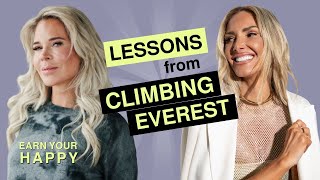
Lori Harder interviews Jenn Drummond about Jenn's journey from Midwest childhood and early sales work to building businesses, surviving a car accident, and becoming an extreme mountaineer and mother of seven. Jenn describes learning resilience from cold-calling (turning rejection into a numbers game), scaling a business to be present for her children, then reclaiming agency after a car crash leading to climbing as a purpose-driven pursuit. She accepted a coach's suggestion to attempt the "seven second summits" (seven continents, seven mountains, seven children) and progressed through diverse climbs (first climb in Nepal—Ama Dablam—followed by a volcano, Mount Logan in North America, and Everest). Training included daily angle-treadmill walks with weighted vest, stair/no-elevator rule, and 4–5 hours walking on big days; climbs required acclimatization (climb to Camp 1 then return), teamwork, logistics, and risk management. Key lessons: reframe rejection (lie-to-self tactics and data-driven persistence), build momentum with micro-milestones, write your own story (assume positive intent), involve/enroll family, prepare toolkits ahead of crises ("offense is the best defense"), and recruit strong teams ("who, not how"). Jenn’s website and social presence: jenndrummond.com / Instagram (Jenn Drummond).
Questions this video answers
April 9, 2025
Seven
Nepal (Ama Dablam)
Mount Logan (second-highest point in North America)
~29,000 ft (Everest ~29,000 ft mentioned in transcript)
Chapters
Whatever you need to do to lie to yourself, to give yourself permission to keep doing, you just keep doing it. I would take all the people that said no, and I called those people and pretended I was my manager. And so then these people would tell me all this information and then I would sign them. And, like, you jerk, I was the.
Same person, you know? And some people listening might be like, but you're lying to yourself. We're literally lying to ourselves every day, whether we say we can or we can't. Like, none of it's real. You chose that. This is what the truth was going to be for you. Jen, welcome to the earn your happy podcast. I'm so excited to be chatting with you.
Hey, thanks for having me here today.
So I got to be on your podcast recently, which was so much fun. And I know that we are both Michigan girls, so shout out. Shout out to the Midwest. And you have seven children, so born and raised, Holland, Michigan. Seven children is a tree of 65 cousins.
I do first cousins on my dad's side only. Is that not the craziest thing ever? My dad is one of 13.
Do you still get together with them?
No, because I don't think it would work. We do every once in a while. We'll do, like, get together at a park and see people. But, yeah, what a fun childhood that I had no idea I was so blessed with until I realized it wasn't normal. Yeah.
I think I had, like, 15 cousins, and that was so much fun. Like, and that's so hilarious. Like, we're immediately speaking like, Michigan, Midwest talk because we would get together at a park and have it.
Yeah, yeah, yeah. You would have Easter egg hunts and it was all your family and all your uncles would, like, put bets on the nieces and nephews on who would find the golden egg and blah, blah, blah, blah, blah. And I just remember having kids and then we went to a country club for an Easter egg hunt, and I was like, oh, this is different. We didn't do this growing up.
First one, turtles way older. But we were in Santa Barbara. We spent an Easter there. And, like, there was like, everyone was dressed up, having their mimosas and Easter egg. There was a real live bunny human there. And I was like, this. So different. And I love it, but very different how I was raised.
Yes, totally, Totally. Oh, my gosh.
Okay. So I love to start there whenever. I love to really learn about where people are from because I believe it's shaped so much of you, whether it was a challenging story or whether it Was an amazing story. But what are some of the things that you can remember from that? Eight to 12 years old, typically, like, something that happened within that time that you can look back and go, that really shaped me.
You know, I was in sports that entire time. And if I did sports, I did not have to do chores. Interesting, right? So that was an easy trade off for me. Soccer practice or empty the dishwasher. But, yeah, no, I was always athletic. In the summer, it went from one camp to the next camp to the next camp. And very grateful for that childhood that you went inside when it was dark out.
Totally pure freedom.
Pure freedom. No. No one knew where we were. They weren't worried about us either. So life was good?
No, not at all. So you. You did sports. Did you also sports coach your siblings?
I did. I did coach my siblings.
Why did you start doing that?
I have a sister that's nine years younger than me. And so it was just. That's what you did. I don't. I don't even know if I was ever asked. It was like, your sister's playing soccer. They need a coach. You're it. I'm like, okay, here we go. So, yeah, what did you learn from that?
And by the way, I have a brother who's 14 years younger than me, so I get that gap. It's like you're. You're kind of like a sibling parent.
You are a sibling parent. Yes, definitely. It was fun, right? Because we grew up in the Midwest. Like, life was simple. You just played sports, you hung out, you did things with each other. My sister and I are still really close to this day, and so I'm grateful I have that memory with her and with her friends.
You're such a. You're such a leader in so many of the things that you do.
Now.
Do you feel like your leadership skills started at a young age, or were you just forced into leadership? Like, is that something that you do with your kids? Are you. Like, this is going to make you be a leader? What does that look like?
So I grew up on that babysitter club book series, and so I started a babysitter club in my neighborhood, right? And so then I collected everybody's phone number. And so if somebody needed a babysitter, they would call me, and then I would help them find their babysitter in the neighborhood. Like, that was just naturally who I was. And I think that's carried into everything I've done. I like to organize. I like to be in control. I like to make money. So those things all end up.
Is that how your parents were? Like, when did you see that?
Yeah, my parents were entrepreneurs, so they never did the 9 to 5. Michigan, even in Michigan, isn't that interesting? Yeah. So my mom was an interior designer, and my dad was a furniture sales rep. And so it was. That was the way of life. And in the summer, we held garage sales and made money doing lemonade stands and things like that.
How many siblings do you have?
I have a brother and a sister, and I'm the oldest.
Okay, you're the oldest. All right. So as you got older, did you kind of. Were you one of those kids who knew what you wanted to be when you got older, or what did that look like?
Yeah, no, I went to school to be a doctor because I wanted to make money, because I think the only thing I saw my parents fight about growing up was money. And so my thought was, well, if I make money, then I won't ever fight, and life will be perfect and things will go on. And so the only fields that I knew that made money at the time were being a doctor or an attorney. And I. I liked my doctor, so I thought I wanted to be a doctor, so I went to school to be a doctor. And then my chemistry teacher pulled me aside and said, I don't think you're meant to be a doctor. And I remember thinking, well, who are you to tell me what I am and not supposed to be? And at first, I was a little miffed about it, but then I went to my business law teacher, and my business law teacher's like, jen, I think you're good in business. Like, I don't think that's a bad thing. Like, lean into business and see if that's something you want to do. And so grateful all of that played out the way that it did, because I'm way more successful as a business owner than I would have been as a doctor.
That's such an important message for people to hear. And again, I'm just. The Midwest enos of all of this is cracking me up. Because it's like. Exactly. Yeah, it's the thing, too. We only knew of doctors or lawyers who had money. We thought, like, if there was a big house anywhere in our neighborhood, we'd be like, they have to be a doctor or lawyer. Had no idea that maybe someone could create something or invent something or, like, that wasn't on anyone's radar. We're like, it's a doctor or lawyer. Okay, so what was your first venture into entrepreneurship like? Were you scared or Was this just normal then?
Yeah. No. So I took a job in finance when I graduated from college, and I graduated from college a year early to take this job in finance. I did zero interviewing in my interview. I was like, I want this job. I have no clue what I'm doing. I didn't even know you're supposed to ask questions in interviews to find out what you were doing. And so the company, of course, hired me. I remember showing up for the job for the first day, and this lady gave me a tour around the office, and then she stopped at the call center room. I'm like, oh, no, no, I'm not call center. You hired me to be a financial advisor. And she goes, oh, sweetheart, how do you think you build your book of business? I was like, what? And so all of a sudden, I became a cold caller because this is back in the day where you had a phone book that would, like, ranked neighborhoods by wealth, and then you just smiled and dialed for five to eight hours a day to build your book of business. And I wanted to quit. I left every day crying. I actually called my college to see if I could go back to college and said I didn't want to graduate because when I took this job, my parents said, if you take this job, you're staying there no matter what for a year. And at first I was like, oh, no big deal. Why wouldn't I stay there for a year? I took this job, and then two weeks in, I'm like, oh, no, I'm not staying. But I couldn't quit because they would have beat me to a pulp. So I had to stay. And because I had to stay, my body wasn't using energy to get out of it. My body was using energy to, how do I, like, make it fun? How do I survive? How do I make it work? And in sales, it's a numbers game. So if you just keep doing the thing, eventually you'll have success.
Okay, so I. I literally just did a post about this, talking about, like, how important rejection therapy is, meaning these times in our life where we are forced to kind of stay somewhere, get rejected over and over again, and also realizing that rejection, no matter what form it is, is literally just a numbers game. Whether it's, if you're looking for friends, you need to get rejected 10 times before one says yes. I don't know if that's the accurate number, but there is an actual science to it.
There has to be.
Yeah, definitely. How did that start? Like, what did that foundation teach you? And thank God your parents Made you stay there. Like, what did that job teach you for now?
Oh, my gosh. It was the biggest blessing I can look back on that I never want to repeat. Does that make sense? Like, I'm so glad I did my time and got the badge of honor. And what I did was I realized, okay, I'm going to dial a hundred dials. I'm going to have three people be nice to me. I'm going to have one person show up. And then on that one person shows up, I'm going to make $3,000. And so I had it all math. And so then I realized every dial I made, I was getting paid $20. Every person, like. Like, I just did all the math to just make it a game so that I was always making money and building momentum, even in the nose.
Oh, my God. That is the smartest way to look at it. And in the beginning, you don't have that data yet. So interim, where you're just like, hey, I have to stick it out. What. What made you kind of start doing the math problems? Do you remember?
I just knew that I needed to make money, and so I just baloneyed myself, and I just lied and I said, okay, listen, it's $20. Every person that says no to me, I'm being paid $20. And then when I landed a couple clients, it kind of came close to that. Whatever you need to do to lie to yourself to give yourself permission to keep doing, you just keep doing it. And, like, I lied to myself all the time about it. Like, so, for example, on Saturdays, I would take all the people that said no, and I called those people and pretended I was my manager, and I would call them back and be like, hey, you talked to one of our advisors this week. It didn't go well. We're just trying to follow up to see how we can help her be better. And so then these people would tell me all this information, and then I would sign them. I'm like, you jerk. I was the same person.
Look at you learning. This is, like, next. This podcast could end right now. This is next level learning. This is where so many people give up. And you're like, let me get the data. Let me get the numbers. Let me baloney my way there. Like, honestly, that is. You know, and some people listening might be like, okay, well, but you're lying to yourself. No, you're not. You. We're literally lying to ourselves every day, whether we say we can or we can't. Like, none of it's real. What's Real is like what we decide. And you chose that this is what the truth was going to be for you. And look at how much you learned. Like, that is a masterclass that I think every adult listening should have to go back to for a year in order to like, really understand how powerful that is.
Yes, yes. And so then I would learn like where their hangups were and different things. And then I would be better at calling during the week. And then I would learn, okay, the best time to call is between 5:30 and 7:30. And so no matter what, I made sure I was on the phone from 5:30 to 7:30. And if somebody wanted to meet with me, they always wanted that time and I wouldn't give it to them because it would take me eight hours to make up those two hours of results. So it's just always paying attention to the data, taking the emotion out of it and understanding that this is what's going to pay my bills and get me to where I want to be.
I love that so much. So you have turned into a woman who, you know, when I first got, when I first got to meet you, I was like, I'm meeting this beautiful woman and she's amazing. She's so kind and lovely. And then I learned that you are climbing all of these mountains, doing near death things that people do die all of the time. And I'm like, woman is an animal. Like, what is even fueling this? I didn't, I didn't fully get to know the story until after and really learn about you and dig in.
Yeah.
Oh, I think I would love to know how you go from cold caller who wants to learn, who's learning so much about entrepreneurship, who is just all about the lessons. And you've learned so much in leadership from just sports and your childhood. Where does that turn into who you are now? I know that you've had, you know, some dramatic things happen in life, but what's the turn into the woman who wants to climb multiple seven seven summits?
I know, I know. Yeah. Here's what happens. I think our pain becomes our purpose on so many levels. So I figure out how to get out of the cold calling because I don't like it. Then I build this business and I figure out how not to run the company. Not because I had this vision of scaling a company and not needing to run it, but it was because I had a little baby at home that I wanted to be home with. So I was like, I have to figure out how to scale this company and exit. So, so That I can be home with my child. So all of a sudden I do that. I'm home with the kids. The kids go to school full time. And growing up in the Midwest, like, the dream is to be a stay at home mom, right? All of a sudden, I'm that dream. And it feels like a nightmare. And I don't know where to place that because there's nowhere in my world that that's okay. I should be grateful. And, oh, I'm so lucky. And how could I, you know all those stories that you tell yourself? Well, luckily for me, this car accident happens. And I say luckily for me because I'm alive, right? If I wasn't alive, it'd be a different story. But this car accident happens, and I realize I don't get to choose when I die, but I sure get to choose how I live. And the life I'm living right now is based on the choices that I'm making. So if I want it to look different, I'm allowed to make different choices. And all of a sudden, that, like, line in the sand allowed me to say, like, what am I even interested in anymore? I don't need to wait till the kids go to college. Like, I'm alive. Let's. Let's do something more and help women globally rewrite the narrative of what it means to be female. And so I, like, survived this car wreck. I start getting curious about who I am again. For some reason, I decided be cool to climb a mountain. And then that mountain gets turned into Mount Everest based on a bet with my son. And then I hire a coach because to climb Everest, it was out of my league. I needed a coach. And then this coach says, I think you should set a world record. And I'm like, I've never slept in a tent, but are you sure?
Okay.
And it was one of those things because, you know, like, you just get these moments in our lives, right? Where it's a whole body. Yes. And so on this phone call with this coach, he's like, listen, you could set a world record as being the first woman to climb the seven second summits. Which I had no clue what they were, but he goes, seven continents, seven mountains, seven children. It's a jackpot. Wow. And. And you, when you get those whole body yeses, I've learned, like, we don't get those very often, so you better lean in and say yes.
Yeah.
And I said yes.
Okay. So you say yes.
Say yes.
You've never slept in a tent.
I know.
I'm surprised you have it but like that is even just sleeping in a tent in your backyard is a different experience than sleeping in your cozy, warm temperature reg soft bed. Not fearing that if you fall asleep you're going to freeze to death and die or that you, you know, your body's not regulating and all of the things. So let's talk about what you start learning about with the training and what the training looks like.
Yeah. So I say yes to this thing. I start identifying all the things I don't know. And it's an opportunity to grow and to try them and to lean in. And then I go to Nepal to climb my first mountain, which was the mountain I was climbing for my birthday. And I am introduced to a world where there is no opportunity for women like zero. And so for me, we are so blessed in the United States with opportunity and hustle. And it's not perfect, but there's a system that, that we can work to our advantage where in other parts of the world there's not even an a door or a window or anything. And so for me it was like I have to climb these mountains because this is a metaphor for us globally. And it's so important to lean into these things that don't exist for me because they only become into an existence when we take that step.
Wow. Okay, so you're having this moment you haven't even climbed yet, right? I know like looking at you're already having these profound like life altering like thoughts and moments of look at the life that I get to live. I got to fly over here to come and climb a mountain where here they're born into what they're doing. They need to eat that day, they need to do the laundry, take care of the children. They need to survive. And that is what's going to happen for the day where you and me, we get to choose. We're going to live this life. We're going to have these families, we're going to have this business, we're going to climb these summits. So I want to start getting into your brain of even before you climb the mountain, you're having these like profound moments that are giving you strength. I'm sure that just like pumped you up and gave you so much strength for why you had to climb. But tell me about, you know, when you start the climb, do you feel mentally prepared? Do you feel like your training has like really helped you or where are you at?
Yeah, no, I am an over preparer so for me I feel confident when I know I've over trained and so that's one thing I can control. I can't control the weather, I can't control the environment, I can't control whatever, but I can control my training. So if I know I did all the things I was supposed to do, I'm going to rest in that confidence and take the next step. When things go bad, you're gonna fall to your training. Your training better be at this point where it gets you to the top of the mountain.
Totally. And. And at this point, what had you all done for training that made you feel prepared?
Yeah. I mean, everything. So, I mean, I'm the silly lady that, like, I had a rule, no elevators. Right. And so. And then when I would stay at a hotel, I'd want the top floor and I would carry my suitcase up the, like up the hallway shafts of all those steps, because that was training. Right. Every single time I left my house, I would run up a flight of stairs and out before I left the door. Every single time there was a staircase, I'd be like, mom's going to go take that staircase real quick. And it literally is like these teeny, tiny little moments that add steps that build confidence, that gets you to the top.
Did your, did your diet have to change? Like, how much every day were you working out or climbing and how did you, you know, adapt? Because I know isn't there a lot of stuff with your lungs you have to strengthen your lungs for?
Yeah, I mean, lungs are going to be strengthened on the mountain. There's not a ton you can do ahead of time. I have a treadmill that is at an angle. So if I'm on a zoom call, I am on a treadmill with a weighted vest on, walking at an angle and taking that zoom call with AI helping take notes. Right.
So like day or two hours a day or.
Yeah, like a couple hours a day for sure.
Did that seem like a lot to you or were you already really athletic?
Oh, no, that was a lot. I mean, before I was like, I'm going to pilates class for 45 minutes. Life's good. And now all of a sudden I'm like. And I am making sure I'm walking four to five hours a day. And how do I get that in? And what does that look like? And that looks like a soccer game that your kid's playing in, and you're the mom who's doing laps around the field, or you're the mom that brings a 12 inch step. So that when the soccer game's an hour and a half, I'm Doing little step ups for that entire hour and a half. So I was just squeezing it in wherever I could and multitasking more than I had before.
And did you feel stupid doing that or did you?
It was so embarrassing. I like, my. And my son was embarrassed. He's like, mom, can't you be the mom that just sits and watches the game? Like, why do you have to be that moment? But luckily for me, like, there were moms that knew what I was doing and they're like, we're gonna use this at workout time too. So then they would help them work out with me, which was such a gift.
Yeah, totally. So what does your son say now?
Like, he thought I was cool for five minutes and now he's over it.
Sounds accurate.
Yeah.
So we're at the base of the mountain. And what was the first place, the first mountain?
The first one I went to was in Nepal.
In Nepal.
And that is Ama de blomma. De blomm.
Okay.
Yeah. My son called it I'm a dumb blonde. And so that's what it's known for in my family. Yes.
Honestly, the best. Yeah.
Awesome.
Horse mountain. This is amazing. Okay, you don't know. Her and I are both blonde, so we're happy over here. Okay. You're at the bottom of the mountain. How many days is it going to take to get up?
Oh, that one took us. I think it was a three or four day climb. But you climb mountains a couple of times when they're big because you have to get your lungs ready. So you're gonna go up to Camp one, you're gonna sleep, you're gonna come back down to base camp, and over the next few days, your body physiologically changes so that it produces more red blood cells. So when you climb higher, you're able to go up the mountain higher. And so mountains can take, depending on how big they are, anywhere from like, my quickest climb was one day and my longest climb was three weeks. Wow.
Okay. I had no idea that you climb back down to get acclimated.
Yes, it's terrible. Just to let you know, it's so frustrating. Like, I remember on Everest, we climbed to Camp 1. It took us 10 hours to get there. You felt like garbage when you were there because there was no oxygen. You had a drink of hot tea and then you went all the way back down to base camp the same day. No.
This is giving me so many chills because this is obviously such an example of how life works.
And how life works. Yeah, exactly. It's a. We Call it acclimatizing. So if you're running into struggles with your business or your relationship or you're like, climbing, pursuit, take a break wherever you are, head back to the boardroom, to the kitchen, to base camp. Give yourself a few days to acclimate. Take in all the things that you learned so that when you go climb the mountain again, it's actually easier to get higher.
People have no idea that this is, I mean, who have not gotten to, do, you know, business for a long time or been an entrepreneur or climbed a mountain like this and got gotten to really understand and integrate this lesson into their life. But these are the things that I really want to pull from you because I can only imagine all of the things that you learned from climbing the mountain. So your first mountain, you obviously go up, you know, you start climbing up the hill, you get to where you want to go, you have that realization that it really sinks in that you really are going back down the mountain and that you really, like, you're like, whoa, am I going to continue to just feel like crap through all of us? Climb back down just to go back up? So tell me about that first, you know, climb that realization and the accomplishment on the other side of the very first one.
Yeah. So I just remember we're sitting there and they're like, okay, we're gonna go down. I'm like, no, no. Like, can we sit here for a little bit of time? I mean, do we. Is now the time we go down? It was just in. It's every single step. Your body is telling you you're going the wrong direction.
Wow.
Right. And it's every single step, and you just have to remind yourself that, no, actually this is part of the process. This is part of the process and it's a conversation you're having with yourself the entire time. And it really doesn't resonate until a few days later when you climb up to that same spot again and it's easier and you're like, oh, okay. And if anybody's training for a marathon or anything, right, that first eight mile runs hard, and then all of a sudden it doesn't become that hard. And now you can do a 12 mile run and then a 15 mile run, and we don't. It just takes time for our bodies to build up this endurance and the ability to handle the lack of oxygen.
Okay, so you get, you get to the top. How are we feeling?
Yeah, when you get to the top of a mountain, it is the most amazing feeling you'll ever have. Like, I It's the word awe, right? You're amazed at what humans are able to. To create, to do, to put together. And you look out over the world, you can see views forever. And it's almost as if you take your soul out of your body and you throw it out into the universe and you say, I can't wait to find you again when you start hiking down. Because we're not made to live at the top of the mountain. And in fact, most of the mountains, you're only at the top for about 10 minutes, and then you have to head back down and you realize we want the climb we do because that's what gives us meaning and purpose and pursuit and power and understanding and allows us to refine our edges.
And why can't we stay at the top?
Like, actually, physically, there's not enough oxygen. It's the death zone, right? So, like, nothing lives at the top of a mountain. Everything lives on the side of the mountain. And when we get to the top of a mountain, it's so we can see and then climb another mountain.
God, this is way too life. The life parallels are out of control. And I'm obsessed with it. And isn't that the truth? Like, I can tell you the different times that I've been at the top, it's like the 10 minutes are fun. And it really might actually be 10 minutes, Jen. And I know you know this. It's like if the, you know, you win the award or you get the medal or you, you know, you sell the company, like, honestly, it's like, oh, God, why didn't I enjoy the journey more? Because this isn't it.
It's not. No, it's not. And the beauty is, is once you've made it to the top of the mountain once, it changes how you climb the rest of them.
Amen. Yes. Okay, so we're climbing back down. How was the climb back down once you. Once you reach the top?
What.
What was that climb like down? Was it exciting? Was it like, were you already thinking of the next one?
Were you thinking, you know, it's reflective, it's exciting. You know, the fun thing about climbing a mountain is typically you're going down the same path you came up. So it allows you to be like, oh, I remember when I was here and this was the thought that I had, and now I'm here, and here's the thought that I have. And I think all of us, naturally, when we're climbing down the mountain, we have so much energy and so much excitement of how we Want to help somebody else climb theirs. Right. I mean, we're just naturally connective and collaborative like that. And so it's just so fun to be like, here's my experience. How could I help you with yours? This is what I learned.
Do you remember the first main message you came back with, that you were like, I have to share this. This message with everyone? On the first one.
Yeah. So here was a huge lesson for me. On the first one, I didn't speak Nepalese, right? So here I am, I'm helping out in the kitchen one day, and they're all talking. And for some reason, the story that I wrote that they were talking is that I was in the way. I was, like, annoying. They were trying to figure out what to do with me so that, like, whatever. And it was this, like, terrible story. Well, then it came time for dinner, and we had cake that night. And we had cake that night because I was able to help in another area in the kitchen. So it freed up somebody to make a dessert. But the story that I had written is that they were trying to keep me busy, to keep me out of somebody else's way or be annoying. And I think it was such an aha moment of, we are always writing a story, and we are always allowed to make ourselves in the way, but we're always allowed to make ourselves the hero. And it's up to us. And, like, every single time now that I'm not the hero of my own story, that is my fault. On me. Time to pivot and rewrite.
Oh, my God, I love this so much. It's so funny how things happen at the. Like, just this topic is even here right now. I had the ex. I had. The exact same thing actually happened to me today. It's important for women especially to hear this, because let me tell you, we are. We're wild. We'll take a story, and it'll. We'll make ourselves be the worst people ever, and someone hates us. And it's like, no. Was. No one was thinking of you. In fact, maybe there was something great being said about you. And I know.
I know. Like, literally, they've got to make dessert because I showed up, right? And here I'm writing the complete opposite. Or like, yeah, it's bananas. It's bananas.
And we do it all the time. I've gotten much better at it. But recently I had this girlfriend, like, last year, that I thought that we were, like, getting fairly close, and she has a business that is, like, on a massive trajectory. Like, it just. It was Already taking off in this last year. It just exploded. And I had, you know, like, asked her to speak at a couple things and be on the podcast and whatnot. And I, like, the last that I had heard from her via text, I had asked her to, like, speak at some stuff. And I had asked, like, multiple times. So I made up a story that I'm like, oh, my gosh, now that she's big. Like, you know, what was I thinking? Like, I'm just this little person and there's no time for me. And maybe I asked way too much, and now she looks at me as, like, a leech. And maybe I'm like, oh, my God, now she's avoiding me because she thinks all I'm going to do is ask her for things. I was spiraling, Jen. Spiraling, like, out of control. Like, embarrassed. You know what I mean? And then I get this amazing text today that just made me cry. Like, I'm so sorry. This has been such a season for me. You have no idea. The last thing I want to do is not get back to you. Like, let's connect. And so it's. It was such a reminder. And anyone listening, I think women are. We do this to the extreme. Because when I tell my husband about it, he's like, you're actually crazy, Lori. Like, well, we do.
We do it to ourselves all the time. And, like, here's the thing. We respect each other enough to be like, hey, listen, if it's gonna bother you, like, I care about you enough as a human that we're gonna just put a boundary up and talk about it, not, like, pretend it doesn't exist.
Exactly. And I just had this moment today because I. I've gotten really good at it, like, not telling myself a story anymore, but for some reason, I had this one. It was, like, always assume positive intent.
Like, always.
Just always assume positive intent. Because even if it is negative, the energy that you're gonna, like, come at it with, even if it is like, your intention was pure, like, I really believe that that that says something, does something, and is like, you know, I just think it's an energy you put out into the universe or God or whatever, you believe that it will get taken care of eventually and it will all turn out fine. Even if it isn't for a little while, it will turn out okay. So I'm so. I am so glad that you shared that about your trip. Okay, so those are the first learnings from your second mountain. Were you still excited or the first mountain. Sorry. Were you still excited about your second mountain, like, how did you feel after coming home? Were you like, yeah, I'm ready for the next one? Or did it seem like, why no.
So my first mountain was this gorgeous mountain in a mountain range, right? So, like, think of going to Jackson Hole or Park City, and you're seeing, like, all these pretty mountains, and you're in the mountains, and you're seeing mountains and whatever else. My second climb was a volcano. Okay. A volcano is like a pimple in a desert. You're on the feature. So when you're climbing on it, everything else is nothing. And a volcano is, like, this rock that you take a step forward and you slide half a step back.
Oh.
For the entire climb. And I just. And it's windy because there's nothing holding the weather in and the sun comes out. And, like, it was the worst experience I've ever had that I was like, do we have any more volcanoes on this list? Because we might be changing this pursuit. Luckily, we didn't. But it was just so interesting that it was such a contrast to my original experience. And I'm glad I had the original first, because I could pull back on that and pretend the other one was an oddball, not my first experience being the oddball. Mm.
Okay. So I feel like with the second one, especially having such a contrast, like, right down to your foot sliding back, like, what are you learning with this climb?
Oh, momentum. Right. Like, you have to build momentum in for yourself. When you're climbing a volcano and there's nothing visually to give you guidance that you're making progress, it is really easy to fall into a slump and go negative. And so for me, I was like, I know I've been climbing for an hour. I know nothing looks different, but I have to have been making progress because I've been moving for an hour. And so when you're building a business or you're working on a relationship or whatever, like, that middle is messy because you're not at the base, you're not at the top, and it's hard to have these milestones that give you momentum, and that's on you to create.
How did you start thinking of that? Like, I mean, how do you start creating it for yourself while you're in the mountain? Like, you're placing me there. So you're looking up, you're looking. You can't even tell how far there is to go. You look down. You don't know how far you went because it all looks the exact same. You don't have any markers, any trees. That you're like, I'm going to climb to that tree quickly and then slow down for you're not. You can't play any games. Like, there's no game. There's no.
There's no games. There's no games. Right. So you're 100%. I am all of a sudden then focused on people outside of me. Because if you focus on yourself, you're going to get in your own way. And So I have seven kids, thankfully. So every kid, I spent 25 minutes recalling memories that I liked about them, thinking about things I wanted to do with them, experiences I wanted to have with them. Then my alarm would go off and I would go to the next kid, and then I would go to the next kid, and then I go to my mom, and then I go to my dad, and I would go to, like, a charity that I'm like, how can we make this, make more impact? And just different things outside of yourself that give you these little milestones. And, you know, because you're like, oh, I've been now on topic number eight. And so if I'm on topic number eight, I've been hiking for four hours. And if four hours means I'm getting this further. And yeah. So I really feel that second climb taught me that I get to build momentum and I get to decide what the milestones are that give me the energy to continue.
Well, I'm just thinking about how, like, what you probably learned about your brain and how you think and the life lessons. But, you know, I'm thinking about the think time that you had. Like, what. What started coming up for you that surprised you about yourself in those spaces? Like, when you give yourself that type of space, what started to surprise you?
How many thoughts we really can have? I mean, it's amazing. Like, if you meditate. I mean, I try to meditate. I'm not the best meditator, but you can have the most random things come into your head all the time. And so if you don't control the narrative, there is a million narratives that will keep trying to grab your attention and pull you away from whatever you're doing. So for me, I realized I need to program what's going in because otherwise what could show up isn't going to help me.
Oh, my gosh. So when you would just. When you started noticing that and your brain was running wild, was it just like, negative stuff? Did you notice how much negative was coming in? Or sometimes it would be negative.
Right? Because, like, you're like, you would pick things to be Negative. Does that make sense? Like, your foot slid back. You're like, oh, I slid back extra on that one. And then you'd start going negative. So I'd have to be like, oh, I didn't slide back as much on that stuff. That's a win. Like, you have to find, like, the teeniest, tiniest little thing that gives you momentum to have wins, because it's easy to have momentum that takes you the other direction. And so understanding that hard makes it better. And it's my decision on what I get to think about.
I love this. I. I could literally go through every mountain. We're not every mountain, as some people probably make you, because now I'm just in it. I literally want to know the third, fourth, fifth, sixth, seventh. But I want to know at this point, we're on the second mountain. It's probably getting kind of old to your family. Like, Mom's training, Mom's doing this. Like, we want mom to be Mom. Or maybe not. I'd love to know where they're at and how you kept them in support of your goal.
Yeah. So the nice thing is I have seven kids. There's seven mountains. So every child took a mountain. And then we made it about that mountain. Right. So when I was climbing in Africa, what did we learn about Africa as a family? What is. What's going on in that country? What's going on and that continent? And so we made it interesting, and you made it interesting, and each kid kind of took a mountain that they were responsible for, which is accountability at a whole new level. Because you can't climb five kids mountains and not two kids mountains. You know, just things like that.
So, yeah, mom doesn't love you.
Yeah, mom doesn't like you. I'm sorry, sweetheart. So.
Yes, exactly. Okay. That's amazing. So you and I love this because we used to always use this in network marketing, because a big thing that would happen to women is that it would be really tough on the families in the beginning. Because when you start, if you want to start momentum, like you talked about, it's going to take all you got in the beginning. Right. It's just like, your lungs aren't strong yet. I mean, you're not strong enough yet. Like, all the things that are coming at you. And we would always talk about enrolling the family, like, making sure people are excited. Like, somehow you have to get them enrolled, even if it's like, okay, you know, mom wants to set this goal, and if we reach it, what should the. What should the goal be? Is it a family vacation? Like, help mom reach it? We're going to have to remember this, you know, every. Every two weeks when you want mom to be doing this on a Wednesday, I'm going to be building this because we're going to go on this vacation. And so the enrollment is huge. I love, love, love that you enrolled each person and gave them a responsibility. When your kids talk about this, do they. Do you feel like they got lessons out of it, too?
Oh, a hundred percent. 100%. The cool thing about you achieving a goal as a parent is that your kids are watching, and when they see you do it, they know they can do it. And so for me, like, when I came back from Everest and my daughter had some of her little friends over, and her friends are like, oh, your mom's the mom that climbed to Everest? And I could, you know, I'm listening in. And my daughter's like, yeah. And they're like, are you going to climb Everest someday? And my daughter goes, my mom will take any one of us up Everest if we want to, so you just let us know.
Oh, my God, that must have made you feel so good.
Is that not the cutest thing ever? And I think that's why it's so important that you share your goals and you talk about them and you have these big goals because it all of a sudden makes their goals possible.
Like, it wasn't even a thing.
She was, yeah, no, totally.
God, I couldn't do that. Or I watched a movie on it and people die. She was like, oh, if you want to go, we're taking you.
Yeah, my mom's got us. We're good.
I mean, imagine what she compares that to. That makes so many things seem small. You know, climbing you climbing a mountain like that makes so many things that are big to other kids seem small. Like small challenges, you know? Yeah.
Yeah.
That is the coolest thing ever. Okay, so we're on our second mountain. You already feel committed to the seven, because you can't not love a child. You're like, in this. What was the hardest mountain that you climbed?
The hardest mountain I climbed was our one in North America. So the second highest point in North America is called Mount Logan. And it was challenging because you couldn't have help like you could. Like, in Nepal. You can have Sherpas that help carry gear and do all that kind of stuff. That's not allowed on Mount Logan. So we had to carry all of our gear. There wasn't routes set for us. There wasn't somebody making food for us, there wasn't somebody putting up tents for us. We had to do all the teeny, tiny details. And when you have to do every detail, it just takes that much longer to get to the top. Right. The beauty of climbing Mount Everest, it is so organized and it is such a machine that I have to show up and walk. Somebody's handling the oxygen, somebody's handling the weather. Somebody's handling the tent, somebody's handling the food.
Wow.
And so you have just so much more bandwidth to do things because you only have to do one thing, and that's so applicable to business. Right. Like, if we have to do every aspect of everything, we don't have the bandwidth to get to the top. And so when I had to do these climbs where we were managing every aspect of it, it just made you realize the mental and physical load that took.
Why were you not allowed to have them on that particular climb?
I don't know. It's the park rules.
Oh, it's park rules. Okay.
Yeah. Makes sense.
Which is crazy. Interesting. They're like, no, if you have. If you want to actually say you climb this, you're going to really do it.
You're doing it. So have fun.
Yeah. That's so interesting. So did you even know how to do those things before? Like, did you have to learn them and practice them before you went? Were you like, okay, kids, we have to pitch a tent tonight in the backyard?
Well, yeah, no, you're pr. I mean, @ that point, it's far enough in the journey that I've practiced enough to do the different things. But again, you're practicing in your backyard. Not in 40 mile an hour winds. Not in, like, all the different conditions. Right. There's so many variables that you have to be so good at the basics that when they add the variables in, it doesn't knock you off your game. So, yeah, Mount Legend was just challenging. And it's one of those climbs you get dropped off on the glacier with an airplane, and then the airplane flies away. There's no human in sight, so you feel very exposed. You build a tent. Then you have to build an igloo because you don't want the tent to rip in the wind. So the igloo protects the tent. And then the ground hasn't been tested. So every step you take, you have to put a pole into the ground to make sure that it gets bounced back so that you're not on, like a snow bridge that you could fall through into crevasse. And then you have to mark it, and then you like, get to a certain spot, you bury your gear, you go back down to your tent, you sleep, you pack the tent up, you go past the gear you buried, you set up the tent again, you build another igloo, you eat dinner, you go to bed, you wake up the next day, you go down to get your gear, you bring it up to the tent. I mean, you just inchworm up this mountain for days thinking, I paid to do.
This. So, okay, I have so many thoughts on this. Like, I'm already like, full body. No, for this.
One.
Yes. What, what were. Because it's also dangerous. Like, did this one feel dangerous to.
You? Yeah, I mean, we were, we were on a glacier. So it is dangerous, right? You can fall in a crevasse and d. A windstorm can come in. We were stuck in a storm for a week in a tent unbearing every night with snow because we didn't want to suffocate from being buried in. I mean, that's how much snow happens. So one of my friends got frostbite and so we had to wait two days to get him off the mountain. They had a long line him, which means they can't even land the helicopter to rescue you. They have to drop a rope and then you put them in a screamer suit and attach them to the rope. Because if the helicopter landed, there's not enough oxygen for it to take off again. Like, there's just so many things that you don't think about. But you become so self reliant and so confident and so good at making decisions in high pressure environments that when you come back to the regular world and you have these simulated high pressure environments, you're like, well, the only thing I do is burn up a company. I don't die. We're good, right? Like, it just changes perspective on.
Everything. Wow, that is, that is so powerful. There should be every, every founder as a company should have to do something like that because otherwise you can ruin your life. Like, true. You know, you can literally never sleep again. You can destroy your relationships all over things that actually, if you zoomed out, if you went and climbed a mountain and literally zoomed out and got a 30,000 foot view or however many feet it is, it's not that. But if you got that, what is it? 13,000, 15.
17,000. Yeah, I mean all of them right there. I mean, Everest is 29,000ft and some of the mountains are as low as 17,000. So it's just all perspective. And I think that's the gift of being in Nature, it allows us to have that ability to zoom in, zoom out, and get real with, does this matter? Is it worth my.
Energy? Do you think we can do that without climbing a mountain? Like, what would you tell people right now who are just in it with their companies and super stressed out about losing it or money or what are people going to think of me or wherever they're.
At? Yeah. You know, I do love taking people, even just for hikes in Park City. And we'll. We'll take executive teams or CEOs and just get them out of that environment where they feel so big and allow them to feel small again and allow them to just look at that problem from a different perspective and it helps them. It really does.
That. That is so true. I think that's. Honestly, it's part of why I love snowboarding trips, is because I'm like, things seem so different on this mountain. Like, nothing feels as stressful. It's also why I really, really, like. I think I'll probably always live by a big body of water. There's something about it that when I go take my walk in the evening, no matter how bad the day was, I'm like, oh, this is life. Like, it still goes on. Like, the sun still sets right here. Like, people are still out enjoying. People are.
Still.
Like. It's just. It puts everything in perspective. Not quite like a climb, because that definitely, definitely does. But I want to know if there are a couple big. I know there are but a couple big lessons left that you can share before we wrap.
Up. Yeah. I believe offense is the best defense. Right. So, you know, if you're building a company or if you're in relationship, there's going to be hard times. You just don't know when those hard times are going to hit. Having a toolkit ahead of time. So when that hard time hits, you're like, okay, I'm going to pull this out and we're going to try this. I'm going to pull that out. We're going to try this and understand that having that ahead of time allows it when it shows up, easier to navigate it. Not saying you're not going to break. We're saying, like, in that break now, you have tools that you've already practiced or used or no. And that's been a huge takeaway from the mountains. Another big takeaway from the mountains is big mountains take big teams. Okay. So if you're going to climb Everest and you think you're going to do that alone, that is an entirely different experience than if you have a whole bunch of people around you, supporting you, cheering you on, helping, carrying that oxygen and making decisions with you. And so I think a lot of us set these huge Everest, like, goals and then think we're going to do them without a Sherpa. So if you're running into those problems, like, pause for a second and ask who, not how, I love.
That. Because even thinking of you at the top of Everest, like, how much would that have sucked getting up there alone? Like, I mean, hug and freak out, high five, take photos with at the top.
Right? I mean, the whole point is to be able to do all that with each other and see it in each other. Right? And so I think, yeah, as I've gotten older and I've climbed more and built more businesses or whatever, it is so much about who you're building with as much as what you're.
Building. Did you have a big failure in an entrepreneurship journey that, like, you were able to put into perspective from.
Climbing? So when I first broke out on my own, I spent all this money to have the office look a certain way, and I forgot that the sales is what kept the office lights on. Does that make sense? And I was like, I want this corner office with my name on the building and blah, blah, blah, blah. And the business almost blew up. And it's funny because my business in that arena actually ended up being like a white label company. So it didn't even matter what my name was on the side of the building because we, like private labeled this thing and put it into institutions. And so it's funny because I think a lot of times we get in our own way of whatever we're trying to create instead of like just doing the thing that's working and let it unfold to the way that it naturally wants to organically unfold. And that success will be way bigger than you ever expected. I love.
That. Like, I can't even tell you how many times, thankfully, I learned that lesson just out of sheer not having the money to make it look the way I.
Want. But no, right? But what a blessing that is, right? Because it causes a pivot. I mean, I remember getting a bill for the color copy machine and I like, had an all staff meeting. That's when you, like, printed map quests, right? And everything printed in color. Like, if someone prints one more thing in color, you're.
Fired. I literally, like, remember that. Black and white or nothing. I'm. I'm so grateful for you this. I could talk to you for hours. Like I said, I would have loved to have gone through each and every summit, but I know that you have told the story in so many places. So where can we get more of.
This? Yes. So everybody please check out Jenn drummond.com and you can find me on Instagram.
Hegendrummond. Thank you so much for coming on. I'm so glad that our paths crossed at that party in Laguna. And then I got to talk to you. You were just like the brightest soul, and I was so happy to meet you. I'm like, oh, this feels good. This is a friend. So thank you again for coming on, and I'm just excited to learn from you. And thank you for climbing mountains for us and bringing the wisdom.
Down. Yeah. Thank.
You. All right, you guys go follow Jen. Let her know we always love to hear. Give her a DM what your biggest takeaway was, or screenshot this. Tag her and let her know what your biggest takeaway was from the podcast. And until next time, earn your happy. Bye.










