How Hormones, Gut Health, and Cortisol Control How You Feel with Kristin Kliethermes
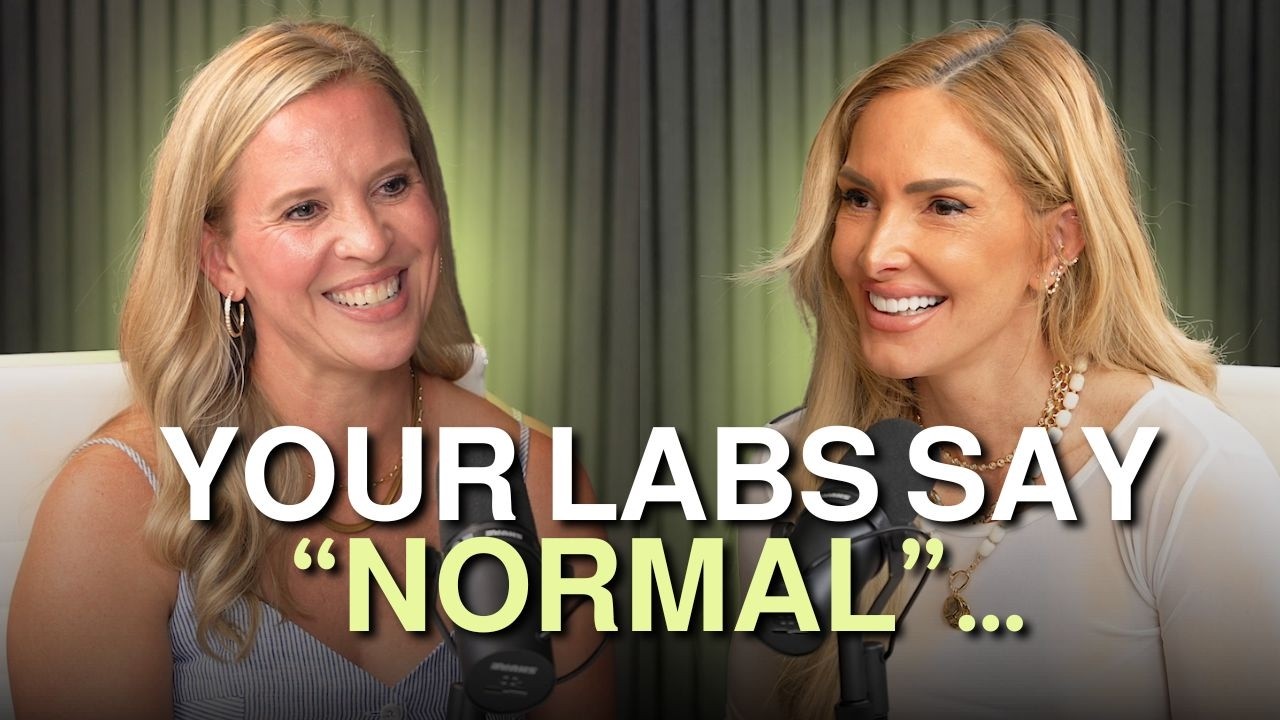
In this episode of the "Earn Your Happy" podcast, host Lori Harder interviews functional‑medicine practitioner Kristin Lee (also known as Kristin Kliethermes) about the hidden drivers of women’s health and how they affect personal and professional performance. The dialogue weaves personal stories—Kristin’s loss of a stillborn daughter, her transition from NICU nursing to functional medicine, and Lori’s own struggles with energy and business—into a broader critique of conventional medicine’s reactive, symptom‑focused approach. Kristin explains why functional medicine looks at the whole person, emphasizing gut health, cortisol rhythms, and hormone balance. She details the spectrum of hormone replacement options (creams, oral dissolvable tablets, pellets, injections) and how to choose among them based on patient comfort and lab data. The conversation dives deep into lab testing philosophy, contrasting "normal" reference ranges with "optimal" ranges, and highlights the DUTCH hormone panel, comprehensive stool testing, and other functional labs. They discuss how gut dysbiosis, estrogen recycling, and cortisol curves manifest as sleep loss, mood swings, brain fog, libido changes, and even career setbacks. Kristin shares her practice model—initial phone consult, virtual care, personalized protocols, nutrition support, and tiered pricing ($3k‑$7k for a six‑month package). The episode also covers self‑advocacy, finding the right provider, and the importance of investing in one’s health to sustain entrepreneurial energy. Interspersed sponsor reads for Monarch (financial planning), Northwest Registered Agent (business formation), Momentous (creatine supplement), and Indeed (hiring platform) are included. The overall message is that women can move beyond "normal" health limits by understanding and optimizing gut, hormone, and stress systems, leading to better life quality and business performance.
Chapters
not feeling good and also the correlation of your business not doing well when you don't feel good. That is so real. I will tell you, when I'm off, I will watch things start to shut off.
When you're not sleeping, when you are irritable, that is also going to come across in everything that you do. And then people aren't going to work with you. They're not going to want to be around you. And when you know that there's a solution, why would you not just do it?
Kristen, welcome back to the podcast.
Thank you so much.
Thank you for coming back on. You've been on before.
Yes.
Yes. And this is like some of your— you're not somebody who loves public speaking.
Not at all.
And necessarily going on podcasts, but you make yourself go.
I do. Yeah. This is actually my third time ever being on a podcast. The second was yours. And honestly, after that one, it was so much fun to talk to you and Chris that I was like, okay, I can do this. And I also just feel like there's so much to be said about the space that I work in that it is just really important for me to get as much correct information out there to the masses.
Mm-hmm. Yeah. You were saying this before about how, you know, she sat down in the chair and she was like, oh God. I'm like, okay, this is gonna be fun. And that's like the worst thing you could say to people. Like, relax, this'll be fun.
No.
Yeah, I totally get it. I actually, before every single podcast, get butterflies too, because in my brain I'm like, okay, where's this going to go? Am I going to keep this on track the way I want? Is this going to come out the way that they want?
Right.
So there's so much going on in your brain that I love sharing this with people who are listening because it makes it possible for them, because they're sitting in their car right now or walking wherever going, oh my God, they make it sound so easy when honestly the first like 5 to 10 minutes of a podcast are kind of rough sometimes.
You're like, okay, yeah, heart's racing. You're kind of like, oh my gosh, am I even here? Am I present? Am I going to say the right words, but I've just started to reframe that energy. And instead of me thinking, oh my gosh, I'm nervous, I'm going to mess up, I just tell myself, no, you're excited. This is excited energy. And I, you know, meditated this morning. I went on a walk. I kind of helped ground myself a little bit just to remind myself of what I'm really hoping to do and how I'm really hoping to help people. And so if I take myself out of the equation and really think about the transformations that not only I've done personally in my own life, but the transformations that I've helped, you know, women do now. If I can do more of that, then I can, I can do hard things for sure.
I mean, like, I have to say that to myself all the time. And, you know, most of the time we start businesses based off of the woman we used to be, the problems we used to have, and knowing that we have gotten through them ourselves. And that we really want to speak to that person. So who did you used to be that you now today feel like you want to talk to? Like, where were you? What were you experiencing? What was going on in your life that made you want to create a transformation for that version of you?
Oh, that's a really, really good question, because honestly, sometimes I don't even think about that time in my life, because, you know, you're just like, this is who I've always been. Um, and so you don't always see the transformation that you're making until you really do sit back and, and look at those things. Um, I would say mine was after becoming a mom. Um, I had my first daughter in 2014 and just everything was about my daughter. I kind of lost myself in her in a way, and not in a bad way, but I didn't really have Kristen's identity anymore. It was Hadley's identity and who I am as a mom, who I was as a nurse, who I was as a wife. And then I lost my daughter Brooklyn in 2016. She was a stillborn at 30 weeks. And that really catapulted me into this, like, life is short, what am I doing? I'm not happy, I'm not living to my full potential. And I really just started to navigate what that even looks like and how— I mean, yes, it was my health, but it was also, you know, my marriage, my activity, how I was showing up as friends. I didn't really hang out with my friends anymore because I was so into my daughter. So I think a lot of that over the last 10 years now, I feel, you know, she's also why I can do this because I'm like, I've done hard things, you know, I had a stillborn. And so this is in comparison, super easy, but it's still nerve wracking. So I think that, that, um, kind of getting out of stepping into the next version of yourself is like you're going to get super kind of grainy and hard. And then on the other side of that is just like this, oh, that was so worth it moment.
Oh, what do you think in those, in those times back there that you felt like you were fighting against? Meaning like, what were some of the norms that you heard growing up or maybe amongst your friends or, you know, the things that you had to work through in order to even start thinking that it was something you needed to do to take care of yourself?
I mean, I think too, I was a maybe older mom. I was 30 when I had Hadley. I think that's more common nowadays. Yeah.
But for where you— you're middle of the country.
Yeah, middle of the country. Southern, you know, I grew up in Arkansas and now live in Texas.
Yeah. Midwest, that was considered older.
Yeah. You're 30.
Are you okay?
Yeah, right, right. And now I'm almost 45 and it's like, What are we doing?
But they're just starting to talk about having kids out here at 45. So you're good.
Yeah. And we're geriatric, right?
Exactly.
So, I mean, I think that it was just the normal, like, you're supposed to be a mom, you're supposed to— everything is about your daughter. You've lived your life, you know, and now that you have a kid, then it doesn't matter if you aren't sleeping well or don't have time to go to the gym or, you know, don't have time for your friends or yourself. And I just don't think that that is beneficial for us, because then it's like, not only do we lose ourselves, well, what do we do when our kids are grown and out of the house and we don't even recognize ourselves anymore? And I see a lot of that in my patients now where they're in their, you know, age of, you know, empty nesting. And they're like, holy cow, do I like myself? Do I like my husband? Do I like, you know, now what? And so we don't have to wait 18 years to figure out how to continually live our life and be happy.
Yeah, I, I really want you right now to normalize the conversation that's happening inside of the walls of when people come to you because, you know, they're coming dealing with things that they feel are either weird, shameful, not right. Something's got to be wrong with me. Am I depressed? Am I broken? Can you like really let us in on some of the conversations of people that are coming to you?
Well, I feel like I have a similar conversation all the time, but a lot of it does stem around lack of sleep. And so then they, you know, aren't sleeping well. So then they're moody the next day. Lack of libido. Is it that my partner's not interested in me? Am I no longer attractive or am I just not interested in them? They would rather sleep in separate beds and never even have any intimacy, which is okay for some people. But when you are ready to want that, or you're silent about it, and then that causes so much tension in the marriage. I mean, I've literally had women come to me and say, you know, you've saved my marriage because now me and my husband, we communicate better. We have, you know, intimacy again. And I joke and I'm like, well, I do like flowers. So your husband can send me flowers.
Exactly.
Also, you know, I've had a woman come and she was scared she was going to lose her job because she could not find the words. And she was in a corporate position where she was running meetings and she's like, I couldn't even run a meeting because I couldn't remember what I was trying to—
oh God—
tell, you know? And she was crying just like, I can't lose my job, you know? Of course. I mean, we have to be able to afford our life. Yeah. And so after we worked together, I mean, it was only like 3 or 4 months the next time I saw her and she was actually promoted in her business because she literally was like, oh my gosh, I can think again. I'm sleeping better. My energy is better. I actually have clear thoughts on what I'm trying to accomplish every day instead of this, you know, brain fog, walking through mud feeling. And I hear that a lot as well. You know, there's another— I would say that people just feel so dismissed by the time they come to me. And it's really frustrating because you go and you think that you're going to a professional and they run, you know, 5 labs and are like, you're fine, or, oh, here's an antidepressant, you're just, you know, depressed. And so women come in and they're literally in tears and crying. I don't know what's wrong with me. I don't know if my job's going to be here. I don't know if my husband's going to be here. I'm snapping at my kids. I don't recognize myself. I am miserable. And they can't figure out are they mental? I mean, is it really like a mental illness or is there something else going on? And by the time that we get done with even that initial conversation, they leave that first, you know, conversation with hope.
And it's like so much relief.
Yeah, so much relief because I'm like, okay, this is common. I hear this all the time, but that doesn't mean it's normal. That doesn't mean you have to continue living like this.
Yeah.
And This is what is happening in your body and these are the steps that we do to fix it.
Oh my God. It's like the amount of relief people experience on the other side of this, even just when people can understand their problem even better than they do. Like, oh, the reason that I feel snappy is that's a part of, you know, this issue that I've been dealing with or something that I had no clue about.
Yeah.
And I think, you know, having these conversations, especially having women like you in my life, has made me so aware of like what we don't have to live with anymore.
Absolutely.
And, you know, a lot of times we just think like, oh, this is it.
No.
And I remember that in my 30s, like, I would hear all these women in their 40s or 50s and being like, oh, sucks once you get here, it sucks once you're this age and that age. And I remember like, like rejecting that. And now I really feel for them because back even, even 5 years ago, like, it was such a kind of like shameful conversation. Like, oh, you're going to— you're going to do like hormone replacement therapy, or you're going to try this or that, or what's wrong with you? What's wrong with you? You're aging. It doesn't have to be that way.
Exactly. It's like, why do we have to feel like we have to push through? Because somebody else did.
Men are not pushing through.
Men are not pushing through.
They're popping a little blue pill and shooting testosterone.
Exactly. And if men had these issues, we would have a lot more support.
Growing up, money wasn't something that we talked about. I was raised in a more religious family, and there was kind of this unspoken rule in my religion that wanting money made you a bad person. So we didn't talk about it much, we didn't plan for it, and we definitely did not have enough of it. And I really carried that tension around money into my adulthood with this weird mix of needing money but feeling really guilty for wanting it. And it's taken me years to rewrite that story, and that's part of why I think I care so much about the tools that help people do that, and Monarch is one of the best that I've ever seen. So instead of just showing you what you already spent, it helps you actually plan accounts, investments, savings, goals, spending all in one place so you can see if you're on track before it's too late to adjust. So imagine finally seeing exactly where that extra 15% of your paycheck is gone. And where it's been going every month and you didn't realize it before that. So the AI Weekly Recap flags spending spikes and net worth shifts before they become a real problem. And you can ask the AI assistant things like, how much should I spend on travel last summer? Or can I afford this without touching my savings? And actually get the answer. It's basically a financial advisor in your pocket. How cool is that? You don't have to be ashamed of wanting money or scared of it. You get to write your own story with it, and Monarch just makes the story a lot easier to write. Write your own money story with Monarch. Use code EYH at monarch.com to get your first year of Monarch Core half off at just $50. That's 50% off your first year at monarch.com with code EYH. When I first started Glossier, I remember thinking the hardest part would be building my product, and it actually wasn't. It was all the stuff that nobody told me about. It was The paperwork, the compliance, figuring out what actually needs to be public and what doesn't. Kind of like if I'm using my home address, or the moment I realized that I didn't legally know in some areas what I was doing at all. And that's exactly why I wish I'd known about Northwest Registered Agent sooner. Northwest has been helping small business owners and entrepreneurs launch and grow for almost 30 years. They're the largest registered agent and LLC service in the country with over 1,500 corporate guides, real people who actually know know your local laws and can walk you through it. When you form your business with Northwest Registered Agent, you are not stuck stitching together a bunch of vendors. You get a full business identity, registered agent service, a business address, an operating agreement, a domain, a website, professional email, a phone number, and built-in privacy so your home address and personal information stay off public record. And it doesn't stop at formation. You get free access to thousands of guides and attorney-drafted documents, bylaws, resolutions, meeting minutes, All the stuff that used to cost me hundreds of dollars with a lawyer. Don't pay hundreds or thousands of dollars for what you can get from Northwest Registered Agent for free. Visit northwestregisteredagent.com/earnfree and start using free resources to build something amazing. Get more with Northwest Registered Agents at northwestregisteredagent.com/earnfree.
It's wild to me The things that women constantly, and even when they come and talk to me, they still feel guilty about putting themselves first. And I also, so it's almost like a mind shift change that you have to realize that you can't show up for whomever, whether that's your, your job, you know, you're trying to run a household, your kids, if you don't take care of yourself first. And why wait until something really happens? You know, let's work on the prevention. Let's get the foundations. And there's so much that can be done. And I don't think that because there is so much information out there now, I think that makes it also a little bit more confusing.
Yeah.
Then you're just like throwing things at yourself thinking, you know, oh, I'll try this, I'll try that.
And then you can be trying things and because you don't have maybe the right help or maybe that thing wasn't for you, you can then— it can then lock in the belief that something didn't work for you even more. Like, oh, well, that worked for them. Now I feel even more disempowered because it didn't work for me. Because you didn't have the right solution for you or the right protocol for yourself.
Exactly.
I have so been there where I'm like, oh, I don't even get to use this magic stuff because I, you know, I, I did it wrong or found out about it wrong or whatever it is. But, um, you know, I remember back in the Midwest when I very first really started, uh, growing my business, one of the first things I did was I got a housekeeper. And I remember not telling anyone because my friends threw so shade on anyone who had a housekeeper. Like, they were like, oh my God, well, she doesn't have to do that herself. Well, she can pay for that, or her husband pays for that. And I was like, looking at the way that we have been programmed, no wonder we have an uphill battle when we feel bad about if someone helps us come take care of our home, because now we're all working. Yeah. And so I love that you're out here just normalizing the conversation. So let's kind of talk about how you got into it, because you left conventional medicine in March of 2024 to build what you now do, which is your functional medicine practice. So what was the moment you knew you couldn't stay?
I think it kind of was over a few years of the constant not being able to help women how I wanted to, to begin with. But so I, I was a NICU nurse and then I went back to school, got my master's, worked in pediatrics for a while. And even in that arena, I could not help those patients. It was always, well, you have to go to this specialist, this specialist. It's going to take 6 months. And so it was frustrating. Left there, got more into the women's health side of things, which I obviously do now with the hormones. And so I was optimizing women the way I was taught their vitamin levels, their thyroid and their hormones. Well, then they kept coming back to me and be like, well, I felt good for 6 weeks and then I didn't. Or, you know, we kept having to change things, which wasn't making a difference. And so I was like, what am I missing? Why are women still coming back to me saying that they aren't feeling good, or it worked for a short amount of time and now it's not? And so I started to dig deeper into my own education, and that's when I started to do functional medicine. And I, at the time, that was what, 2 and a half years ago, I was working at an OB-GYN clinic, and I still women were coming in and it just, it wasn't working. They still, you know, the conversations that I was having from them going to other doctors and being told, oh, well, you have to choose which one you want to deal with. Do you want cancer or do you want vaginal dryness? I mean, they would make it so extreme and I'm like, this is absurd. Why are we not digging deeper and helping women the way that I know that we can? And so really it just was compounded of the constant conversation and being under somebody else's practice, I still couldn't offer the solution. And that's when I finally just said, you know what, I, I can still do the hormones and I can offer the functional medicine side. I can see you as a whole woman instead of, well, I only fix this piece of you because that's not how our systems work. Yeah. And so that was really what finally was just like, okay, I can do this.
I feel like a lot of people know what functional medicine is, but could you explain what that means compared to traditional? And then, um, what made you really decide to niche in this category of really helping women with hormones and just all of the things that you do? So specifically, tell me about that too.
So think conventional medicine. We're trained more to be reactive, so we wait until there's actually something wrong with you, or it is very medicine-driven. You know, I didn't learn about nutrition. I didn't learn about the importance of your detox and sleep and nervous system in nurse practitioner school. And then it's also, we don't look at you as a whole. If I am doing, you know, one system, that's the only thing I'm going to do, and then I'm going to refer you to somebody else, and none of those people are talking together. And so then now you have people trying to tell you how to manage your health, but they don't know what the next person's doing.
And so cheeseburgers, drinking wine, and not sleeping.
Yeah. And then they're just like, oh, well, here, take this medicine. And it's like, no, that's not the answer always. I mean, there's a time and a place for it, but, um, and so functional medicine is more of looking deeper, not only as us as a whole, so all systems together and how they kind of tug and pull at each other, and then not using a Band-Aid approach. Let's use the proper labs to really see what your body is telling us. How is your gut working? How is your immune system? How are you metabolizing your hormones? Are you pushing them down protective pathways instead of, you know, ones that could cause problems? What is your cortisol curve? Because not just one AM cortisol, that gives you no information. Um, so it's really looking at those pieces and then making the foundations of your health, you know, optimized. So when we do give things like hormones or other tools that we have, thankfully your body knows how to process them. You have, you know, better results and long-term. It's the longevity of it is what is really fascinating to me.
Okay, so I'm not on any hormone replacement therapy, but when you were talking at our house, because we did a, you know, like a essentially like a VIP in-person day with you, which was— is so much fun.
It was a lot of fun.
But you were kind of telling us about all the different, you know, treatments that your patients do. And you were talking about like there's creams, there's pellets, there's injections. Can you like open that whole world up for us and tell us why and what and why do certain people use what? What and when.
Yeah, absolutely. So let's just talk first about the different hormones. Testosterone, estrogen, and progesterone are what, you know, I prescribe and what women need. I'll first just want to say about testosterone, because most people when they hear that, they think, oh, that's a man's hormone. Oh, it's going to make me manly or it's going to make me angry. And that's just not the case. Testosterone is the most abundant hormone that we have as well. It starts to decline earlier and earlier now just because of our life environment.
But it is.
Yeah, yeah, yeah. And so testosterone is a calming hormone. It helps with irritability, anxiety, depression. It helps with our libido, our motivation, our sleep, our energy. We're able to build muscle and not in a bulky way, but just a, you know, lean, however a female wants to look. So testosterone. Comes in 3 different forms. Cream for me, um, cream, oral dissolvable tablet, and a pellet. And for my patients, I meet them wherever they are and whatever their comfort level is. If, you know, people are a little intimidated by it, then we always start with something like a cream or a dissolvable tablet, so that way if they don't like it for whatever reason, we can stop it, right?
And it's not like in your system, correct, for long anyway. Correct.
And, and that's a daily thing that you do 1 to 2 times a day. And we adjust the dose accordingly, you know, kind of titrate up until we find your dose, which is another reason why I like it.
And when you say don't like it, is it because they're just like, it's too much or an adverse reaction or—
Some people don't feel the effects of it as much. Some people don't like if they do start to get their libido gets a little bit too strong for, they're liking, that's usually the cause. Some people, if you do have acne, then it can increase your risk of acne. But that's another reason why I like to do the urine Dutch test, because it tells me if you're going to push your testosterone down that pathway and we work on fixing that to prevent that from happening. And then the pellet is also something that I do that is my personal favorite, but not for everyone. And I know that it gets a bad rep. People talk very negatively about it.
Oh, really?
They do. And I don't know if it's just because they're not familiar with it or if they have had bad experiences themselves. But it does matter where you get your pellet made from, compounding pharmacies. And it does matter who is giving your pellet and if they understand how it works. It is not a time-release thing. It's a heartbeat release thing. So as your heart beats, it pulls the pellet testosterone into your bloodstream. And it's the pellets that I use mimic your endocrine system. So it's bioidentical. It's what your body has already been making. So it just knows what to do with it. And it releases— it lasts usually for females 12 to 14 weeks and men like 16 to 18 weeks.
Okay. So how does— all I picture is this big, like, horse pellet. Like, what do we— how do we— what does this look like? How does it go in?
So they come in different doses, so they are different sizes. But just think like rabbit food for testosterone. I mean, it's a tiny, tiny— okay, just, you know, looks like a pill but smaller.
Okay.
And then estrogen is even smaller. I mean, some of them even like dissolve super quick because they are so, so small, but they go into the butt cheek of a female and I numb the area with lidocaine and make a small incision. And push them in with what's called a trocar. I think like a straw. Okay. And it has a plunger.
Yeah. And then it goes and sits into the tissue and it just like doesn't leave a scar. Heals up right away.
Yep.
Fine. That's so interesting.
Yeah. I use Steri-Strips to close it. So you don't even need stitches. Yeah. And then it heals up and it just sits there. You can't feel it from the outside and it dissolves over that 12 to 14 weeks. Weeks. Um, it's made out of yams. It's, um, yeah. So I mean, it's very fast.
And why do you love it? Why do you love that one?
I like it because you don't have to remember to take it. It's convenient. So that's another issue with the others, that if you forget to do it, um, then you're not going to get the benefits of the hormone. So you come to see me 3 to 4 times a year, you get a pellet, and it literally just releases slowly. I think you also get the best absorption. Obviously it is in your bloodstream and you don't have a spike and a crash from it once you find your dose. And we do a little bit more labs when on the pellet just to see kind of what your levels are, how you feel, what you like, what you don't like, what's still resonating. And then we adjust accordingly.
Okay, let's talk about labs because a lot of people will go and get their bloodwork done and they'll have somebody look at it and they'll be like, you're you're normal, you're great, but they still feel awful.
Yes.
Why is that happening?
A couple of things. They're not, one, ordering all of the right labs.
Okay.
So a lot of times you go and they get a CBC, maybe a CMP, they do just your thyroid TSH, and so that doesn't give you a big picture of what you're doing. Also, each lab has their own set of ranges, and those ranges are made up of the quote unquote sick people, the people who are not optimized already coming in. So we're comparing our health and our optimization to people who are not feeling well already. And, and sure, there's some levels that are pretty standardized across the board, but not all of them. You know, a TSH, for example, functional, we really want less than 2. Well, conventional, you can get up to 4, 4.5, and that's considered normal. And that's anything but. So, so that's one of the reasons. And then once you get the full panel, then you can really see what is optimal as opposed to normal.
Okay. So if a woman's listening and she feels like she's doing everything right, maybe she's done the labs, but it's like, oh God, I didn't do all of those labs. What would you say is a great place for her to start? Because I know you've talked a lot about, you know, when we get to go deeper and in our conversations, you're like, people don't understand the importance of— if you're going to do HRT, if you're going to be doing these different things and dabbling in things, that you really need somebody to help you through it, to check in, to shift things around, to like really get this specifically working for you.
Yeah.
So where would you say is a great place for someone to start? Because this is this is like the really overwhelming part. It is. I don't know who to go to. They ask their friend. This isn't like advertised out there, right? When they ask their doctor and they're not going to get the same answer of somebody who like specifically really wants to help them through these sets of problems.
Well, I would say that I made a lab guide that because this is probably one of the most— I hear it every single day.
Yep.
So I did make a lab guide that gives you what optimal ranges are. So you can always see, okay, this is the full panel I need. You can ask your doctor to run it. If they won't, because sometimes they'll be like, well, we don't do anything about that, so I run this level. See if they'll let you pay cash for it and if that makes a difference.
And there's other places too you can go, right? You can go do a bunch of—
yeah, yeah, you can go. And nowadays there's blood work places you can just go in. Okay.
Working out has been such a huge part of my identity, and I work out 3 days a week. I have for years now. Now, but creatine hasn't always been a part of my routine, but in the last year or so it has been because I know how much it does for my strength and recovery. But honestly, one of the things is all the studies that are coming out about your brain health, and I'm telling you, that keeps me so excited about it, along with what I know it's doing for me physically. And that's what got me into Momentous Signature Spec Creatine, is that I'm not just hoping for the best. I want to make sure that I'm getting the best one out there. Creatine is one of the most researched and effective supplements out there right now, but most brands have spent most of their energy on flavors and marketing instead of actually making the creatine better. Momentous did the opposite, and Signature Spec is manufactured in pharmaceutical facilities using reverse osmosis water purification, and it's verified through a 6-stage testing process with 4 independent agencies. That means 10 times fewer impurities, 2 to 5 times tighter heavy metal limits, and it's screened for PFAS and microplastics. It's also an ultra-fine powder, so no grit, no clumping. It just mixes clean. And I put this in my protein shake every day, and I used to hate that gritty feeling, and it has none of it. So that's the Momentous standard, the relentless pursuit of better. And knowing what I know now, especially as a woman who lifts and wants to actually get the full benefit of what I'm taking, this is the one that I love.
Love.
If you wanna try Momentous Signature Spec Creatine, head to livemomentous.com and use code EARN for up to 35% off your entire first order. That's livemomentous.com, promo code EARN for up to 35% off. livemomentous.com, promo code EARN. When I was first scaling my company, I remember realizing I could not just hire somebody who understood marketing. I needed someone who actually understood the beauty and wellness space along with the supplement space, and they also needed to know how to do e-commerce, and they needed to understand our voice and be able to hit the ground running so they could help us scale and not have a huge learning curve of catching up. And people are finding quality hires on Indeed right now. In the minute I've been talking to you, companies like yours made 27 hires on Indeed according to Indeed data worldwide. That's wild to think about. While I'm sitting here, somebody just got the next great hire. So with Indeed Sponsored Jobs, your post gets boosted so it actually gets seen and you get matched with candidates who fit what you're actually looking for, not just whoever happens to stumble across your listing. And you only pay for results. Spend less time searching and more time actually interviewing candidates who check all your boxes. Less stress, less time, more results. When you need the right person to cut through the chaos, this is a job for Indeed Sponsored Jobs. And listeners of this show will get a $75 sponsored job credit to help Get your job the premium status it deserves at indeed.com/podcast. Just go to indeed.com/podcast right now and support our show by saying you heard about Indeed on this podcast. Indeed.com/podcast. Terms and conditions apply. Need to hire? This is a job for Indeed sponsored jobs.
But it shows all of the optimal ranges and the full panel that I run on all of my patients, plus the stool test and the DUTCH test and why those are important and what those measure. So that way you can really get an idea of, you know, why I do those. And in conventional medicine, they don't even really look at these functional labs as necessary. And I think anyone who does do hormone replacement therapy should 100% get a DUTCH because this is telling us, hey, are you pushing your estrogen down pathways that are protective? Are they not protective? You know, this is why you don't feel well, because estrogen— it may not be that you have too much estrogen. It may be that your gut is recycling your estrogen. It may be that your progesterone to estrogen ratio is imbalanced. So estrogen gets a bad rep, but it's not always, you know, the culprit. It could be other causes. Your detox pathways aren't open. And so you're holding on to it.
Is a lot of this showing up? And I know you were really talking about kind of the ways that it's showing up, but is a lot of it— like mood, energy, just can't lose weight, or like what's the specifics? You had, you had said it before, but if you are literally in a place of like— I feel like I hear so many people who are like, I feel like I'm way more anxious, I feel like I'm super moody. It's just, is that mainly why you think people start asking the question about this? Because you just feel off, like totally off?
I mean, I hear all the time, I just don't recognize recognize myself anymore. You know, I look in the mirror and I'm like, who is she? Which is a wild feeling, you know, to have. Anxiety is a big one because when we get into even perimenopause, which, you know, doesn't have to be in our 40s and 50s like that is, and it doesn't have to be once our cycle starts to change. I think people think, oh, well, I'm still having a monthly cycle, I must not be in perimenopause. No, these fluctuations in our estrogen and progesterone happen way before that. Um, so anxiety is a big one that people have, and that can be your cortisol, that could be your progesterone tanking. Once again, that's why testing is so important to see exactly what is causing you this. It's not because something's wrong with you or that you're crazy. The snapping at your kids, that's another thing that, you know, people— women feel so guilty because they're like, oh my gosh, I just I just snapped at my kid for no reason. And it's like I had no control over my body at the moment. And that's a fluctuation in what's happening in your body, and it deserves to be looked at and addressed. You know, you don't have to— it's not something you have to live with. And that is what I think is so frustrating for me as a provider, but also as women in general. They're like, well, this is just it. It's like, no, it's Yeah.
What is it? Because I know at this, at this point, for some people it's like you would pay any price to help this. And so what is a range typically that people pay to kind of— I know it's going to— I know this is going to be such a massive range, but what's kind of the monthly range that you're finding has been able to, with great care, obviously, to really help with the solution that people spend to solve these problems?
So I do my stuff more in packages. Yeah. And so it's more of like, hey, let's bundle these things together to work on foundations from the get-go.
Which I feel gets the best results. I've done it all. Yeah.
And then it can go into like a monthly quote unquote maintenance. But that range is anywhere between like $3,000 to $7,000 for a 6-month bundle package, however you want to, you know, think of it.
Yeah.
But that includes labs, you know, protocols, nutrition support, lifestyle support. I mean, it's literally whatever you need to get you optimized and feeling your best. That is the support that, you know, I give. And it's constant access to me for texting, you know, calls if you need it. I mean, it's just whatever you need.
I think that's the great thing about working with someone like you is the fact that you're not going for normal.
Yeah, not at all.
And I will— I, I like literally in my life cannot settle for normal. I can't do the normal conversation. I can't be around people who are just like striving for normal because I really, really believe, especially with— I know it's not even a belief, it's a, it's a knowing because I'm living it with everything that's out there and all of the access we have to people like you, to different professionals. Um, to the how fast AI is giving us massive knowledge exposure to what is possible. It's like we really actually get to be optimized in our 40s, 50s, 60s, 70s. And this old conversation that was only 5 to 10 years ago of everything being over at 40, essentially, like everything just breaks down and goes downhill. I'm 45, I feel better than 25. Life, like truly. And so I want people to understand that, like, even my 25-year-old self was even thinking of 35 going, oh my God, that's awful, it's over the hill. And now I'm like, I would not want to be 25 again because I, I've never felt so good. I feel so much wiser, so much more empowered, love my body, love how I feel every single day. Like, I love talking to women like you because of— I think a lot of our depression and anxiety also comes from our belief that we're done.
Yeah. When we're such, you know, I feel like high achievers in general, and the majority of the women that I talk to are, it's like in every area of your life. And so it's like, okay, you're going to spend money on, you know, the way you look from the outside, getting your Botox, your jewelry, your bags, your clothes. Is, you know, going on the trips with your kids, which is all fantastic. But then you're like dying on this.
You're dead inside on your trip.
Yeah. You don't even— and I talk to women all the time. They're like, I'm like, how was your trip? And they're like, eh, I would have rather been at home in bed without, you know what I mean? And I'm like, oh my gosh, are you serious? Like, that is wild. So I agree. I think that, you know, there's like, they say, oh, it's like a curve that's going down and you're just, oh, the best years are behind you. Absolutely not. Because now you should feel more comfortable in your skin. You should have a little bit more financial stability and you're, you know, as opposed to when you were 25. So it's like, now why wouldn't you expect the rest of your life to be even better? Mm-hmm.
And, you know, you're an entrepreneur and it's like the conversation around not feeling good and also the correlation of your business not doing well when you don't feel good. That is so real. You are the vessel. In which through the creative ideas and the energy that your clients feel and the energy that people feel on social media, in your marketing channels, in your emails, in all the things— like, you are the most important thing to invest in first, how you feel. Because I will tell you, when I'm off, it's like I, I will watch things start to shut off because it's a, it's an energy, it's a magnetism, it's People buy— this is just the truth— yep, people buy who they want to be, not just what. And sometimes you can be really good and have an insane solution and know how to speak, but a lot of people are starting to want to buy it from the person that they would want to be like, that the energy that they experience, um, how they look. Is this person strong? Is this person somebody that is living a life that they want to live? And so The number one asset is you, the entrepreneur, and, and making sure that you are optimized and dialed in because you're just going to watch things go faster. You're going to watch things happen easier. The, the channel in which you experience the creative thoughts and you think of the ideas and you have the energy to want to put the things out is going to just accelerate. And trust me when I say I know both of us sitting here have been on the other side of that. Oh, and it's pushing a boulder uphill. Like, if you don't feel good as the business owner, it's hard to front about that.
Yeah.
Like, it's really hard to fake it.
It is. It is. And why would you? You know, it's like when you're not sleeping, when you are irritable, that is also going to come across in everything that you do. And then people aren't going to work with you. They're not going to want to be around you. And when you know that there's a solution, why would you not just do it? Yeah, it just is wild to me that people are like, well, it's okay, I'll wait a little bit longer. Wait for what? Like, if you don't do anything, nothing is going to change. And that's also what I don't understand about people. They just assume that they're going to keep doing the same thing and then one day that something's going to change, feel better. It's like, I know. You have to actually take action. And look, it's not always easy, you know, but when you see how well you can feel, it's like you never want to go back.
I think people don't know how good they can feel. I think they put themselves in a box of that's not for me or that's just them. I've tried everything else, but you haven't.
Yeah. So I did that too. You get used to feeling bad. Yeah. And so it's almost like because it's a slow kind of thing that happens over time that you don't even realize that this could be your new norm. You know, it's like you don't have to, I don't know, just continue to feel brain fog and poor sleep and all of the things.
So you talk a lot about the gut, hormones, and cortisol being all connected. Can you kind of help me understand how those systems all talk?
Yeah, absolutely. So once again, everything talks together, right? But our gut is really the foundation of so much. Um, and it's kind of one of those things that once you learn it, you can't unlearn it or un— you know, and it's— who knew I'd be so obsessed with people's gut? But a couple of things with, you know, the gut is bacteria overgrowth, undergrowth, that matters. So yes, we have good bacteria, but when they are not optimized, then they can cause insulin resistance to, you know, have a bigger impact on our life. And then people wonder why they can't lose weight while they were on that GLP-1, and maybe it worked for a little bit, or maybe they plateaued. Well, did you get your gut tested? Did you see what was happening in your gut first? The immune system is in our gut. There's also a bacteria that recycles estrogen, and so if it is elevated, then you know, you're recycling this estrogen in your bloodstream that can cause some more estrogen-dominant symptoms. And, you know, think PMS, fibroids, endometriosis, things of that nature.
On the topic of cortisol, it's so big right now because people are— it's almost like they're calling it bad. But I've learned so much through getting my labs done that cortisol is actually, you know, can— is your friend.
Yes.
So tell me about when it's good, when it's bad, all the things.
Sure. So I'm going to start with just the testing that I do. So the Dutch test looks at your cortisol curve, and that is what's really important because we want in the morning when we get up, we want our cortisol to come up. That kind of helps us get that spark of like, okay, I'm ready to get my day started. And then it kind of goes up a little bit throughout the day and then slowly goes down by, of course, the evening and into the nighttime so we can get sleep. Yep. So cortisol, our stress hormone, is impacted by so much, right? It can be impacted not only from our, you know, workouts, that stresses our body out. And the thing about cortisol too is that our body doesn't know if it's like a good or bad, as in when we have stress, then it is going to— can potentially raise our cortisol. Driving in the freeway can raise our cortisol. Um, and so really looking at what that curve is, also it can be imbalanced. Balanced. So for me, for example, my cortisol was high at night, and so I was that wired and tired picture.
Oh.
And couldn't go to sleep, would literally be exhausted by 7, but then when I would try to go to bed, I would just— it would raise wide awake. So I didn't realize that until I got my, you know, cortisol done.
Yeah.
And so there was things that I needed to do to obviously help myself kind of chill out in the evening.
And it's so powerful to know that though, because if you're like, oh, my cortisol is really high in the evening, now you can start going what are all the ways to lower your cortisol in the evening, you know? And I think that's the empowering thing about what you do is going, oh, look what we actually found outside of what is typically looked at. And the insane amount of things you have to do to advocate for yourself is quite nuts. So let's talk about that. If your provider's kind of pushing back and you're, you're like, hey, listen to this podcast, and you annoy the shit out of your doctor by telling him that, um, how How do you start advocating for yourself? Do you just kind of say, okay, well, maybe I'm just not going to get my answer here, but I'm going to go seek it somewhere? Or what does that look like?
I think yes. I mean, I think that if you're going to a provider and they dismiss you, they don't— you know, they're spending 5 minutes with you. They don't think you need the labs. They don't want to run the labs. They're not going to do anything about them, or they even tell you something negative about what you're trying to do. You know, a lot of people have opinions of course, about hormone replacement therapy. And a lot of doctors don't like it. So I think that if they don't fit what you're trying to do with your health, then 100% find someone else because there are plenty of people out there who will help you. We have to be okay with firing people that no longer align with where we're trying to go in any place in our life. Mm-hmm.
I totally agree. What does it look like for people to work with you?
So, um, typically it is an initial phone call that we kind of chit-chat about everything and just get an idea, kind of meet each other, who I am, who they are. And then, um, once labs are ordered and you do your labs, then we get going. We start working on the foundations of your systems, your detox pathways. I have a nutritionist on my staff as well. Everything is virtual, which is fantastic. Um, and so she helps with that aspect of everything. We don't do diets, we don't do— it's more of let's meet you where you're at. How are we optimizing what you're already doing for your health? Let's make sure that you're eating enough because the majority of us are underfueling. And so when we're not eating enough protein, then of course that just trickles down to so many other issues as well. And then we really work together to fix the foundations of whatever your labs show. Once those get back, then I write a specific protocol that is individualized to each person, which I also think is really important. And that's why it takes me a little bit more time to write my labs, is because I am constantly going back. Okay, this person has these issues, these symptoms, this is what their labs are showing. How do we optimize this best for their current life? And it's not like, hey, I'm going to just throw you a bunch of stuff to start doing because nobody's going to do that. It's more baby steps of little tweaks that are just going to make a difference in what your life is already doing.
Okay, so if a woman's like, oh my God, you just described me to a T, how do they contact you?
My Instagram, Kristen Lee Wellness, is my Instagram. You can DM me and, um, would love to chat. You can drop the word happy, that is to get my lab guide and, um, kind of steps for getting to work together.
Amazing. And we'll put that on the show notes for you guys. Well, I'm so grateful you came on the show. And you always, you always make us aware of all the things that are out there, pellets and all.
So I know. Yes. Yeah.
Thank you so much for coming on.
Appreciate you.
Yes. And you guys, until next time, earn your happy. Bye, everyone.










