How to Build and Manage a Winning Team with HR Expert Jackie Koch
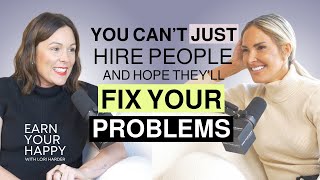
This is a recorded interview on the Earn Your Happy podcast (YouTube) between Lori Harder and HR expert Jackie Koch. Jackie recounts her personal and professional journey—from studying HR and Spanish, working in staffing and as an HR generalist at Polaris, to startup HR roles and founding PeoplePrinciples—then explains a three-part approach to building teams (develop leadership skills, set up people-ops systems, and hire well). The episode includes practical, small-business HR advice, common legal/compliance pitfalls, and details of Jackie’s services (free compliance checklist, HR audit, ongoing support).
Questions this video answers
2010
Bachelor's in HR and Spanish; MBA
Polaris
Managed by Q (acquired by WeWork) and Lumi (purchased by Narvar)
Businesses with about 5 to 40 W-2 employees
Chapters
The time you get into the most trouble is when you haven't been doing something right and you fire someone and treat them like and they go and file a complaint. That's when you get in trouble. So if there's anything to do, it's like, treat people how you want to be treated with respect and kindness and, like, give them the benefit of the doubt is truly the most important thing to do first.
Jackie, welcome to the earn your happy podcast.
Oh, my God.
So excited to have you on.
Thank you. I'm so excited to be here. We're finally sitting down.
We're finally sitting down and recording because you and I sit down. We sit down all of the time, sometimes weekly. If you don't know, Jackie is my sister in law by law.
Actually.
You and my brother in law have now been together for 10 years.
12.
12. You're not married, but we have adopted you and pretty much we've married you.
Yeah. So I've been adopted.
She's in for life also. We definitely have a very close relationship. Like, we spend summers together. We lived. We actually lived together for two months every summer. We have lived together for a year during COVID And your house was under construction.
I know.
So we have. I feel like there's so many dynamics here. Also work together sometimes.
Yep.
Chris and I work with Nick, your husband. Boyfriend. He's gonna listen to this and be like, what is going on here?
That's what I'm gonna start calling him now.
Husband.
Boyfriend.
Husband. Boyfriend. Come here, husband boy. So I feel like we are gonna offer a lot of value, a lot of laughs, a lot of weirdness, because you and I both identify as complete weirdos and professionals.
Yeah, both.
You can be both complete professional weirdos is what I meant.
I mean, that makes you easier to get along with when you're a weirdo.
Really does. We're both Sagittariuses, so there's some deep love there. But something that we're going to chat about today because I'm sure the dynamics of our relationship are going to flow in and out of this. But you are so good with people skills. HR all of the things. We're actually going to break down, what that even means, because I feel like there's a lot of confusion around that. I know for me, I was like. Even when you were like, I would hear you working in the other room when we lived together, and I was like, what is it? What exactly do you all do? Because it seems like you do so many things.
I was gonna say so many things. And Nothing. All at the same time.
It's very complex. And also, I work with you in my company. I've used you for so many incredible things, which we will also get into that I can't actually imagine not having someone like you at my fingertips. Now that I know how important those things are and how streamlined. I feel like so many things have gotten in easier. And also the people that you have brought into my life. So what you do is really game changing for my company and for the company that I run with Chris as well, our personal brands and that team. So people are going to be real excited about this.
I know. Well, it never sounds exciting at first, but trust me, me, trust me, it's exciting.
It gets exciting for you and your team. Okay, so first of all, I want to go back to how we met because it's. It's like one of my favorite stories. Really fun of all time.
It's really fun.
What year was it, first of all? Do you remember?
Probably 2010.
Okay, so we, we're like, we're in the long haul. 14 years or more. Oh, wait, 2010. No. Yeah, no, 2010. Yeah, 2010.
Okay, so how many. Quick math, fast math.
Like, 14 years.
Okay, yes, 14 years. That's why I'm not in finance.
She's people stuff, everyone. It's gonna be great. Okay, so 14 years. How did this happen on your end?
Well, on my end, I was living back in the Midwest in Minneapolis, and I was trying to get in shape and I was going to Gold's Gym and I had connected. I was looking for a personal trainer. So I had met with, you know, when you go to a gym, they like, set you up to meet with a trainer. And I like, I met with this guy and I'm like, he just like, doesn't. It's fine. But I'd rather not work out in the weight room at Gold's Gym, but if I have to, I will. So I was like, I bet that there are female trainers who train people, like, anywhere. Like, I bet I could find one. And so I went onto Craigslist and I searched for personal trainers, and I saw this beautiful ad for this woman who does personal training, and her name was Lori Harder. And I'm like, I'm going to send this girl a message and see, like, if I could come train with her. And so I don't even remember. I probably said, hey, I saw your. Your ad. You know, I'm looking for a personal trainer. Like, would love to learn more is probably what I said. I don't even know. And then you responded. So somehow on my thought, somehow on.
My end, I. I get pinged or Chris comes home. I can't remember. And I think I got pinged maybe in my email. I think it might have been set up under me. And I was like, what is this? Like, Yeah, I didn't know there was an ad there because my husband Chris had set up an ad for me on Craigslist. Now why is this significant at the time the Craigslist killers. Think about it was. There were Craigslist killers. It was like serial killers who were like getting women off of. Or I'm sorry, they would like answer ads and they'd come to your place. So I didn't know. I was like, this could be a Craigslist killer. I don't want ads on this because I was paranoid. They made like a huge story about. So I was like, pull that ad down. I don't want that, but I'm gonna answer this one.
And you also were training not in a regular gym.
Oh, yes. That's so like, I was training in a studio where people would come in alone and it was one on one. And oftentimes I was. I was alone and they would come and I would meet and no one else would be there.
Just wanted to clarify that because you're not a fearful person.
No, I am not. But it was because I would come and meet these people by myself. Okay. So which. That's so weird. I. I'm like, I'm not that person that would be afraid. But at the time, I think they just made it. Anyway, I digress.
So this is before you would call a personal car to your house. Like, there wasn't Uber like this. It was long before all.
It was much more private back in the day.
Yeah, yeah.
So I tell Chris, take that ad down. We don't want any more people. So you were like my one person.
I can't believe that.
Who came by way people not want.
To find a someone like you of.
Craigslist, which is just crazy to me. Like, we had that open for one day and closed it down and you found it and you're in my life now in such a huge way.
So.
Well, I can't imagine if that did not happen. So anyway, we end up meeting you come to the gym. I think immediately we probably said very weird things to each other because that's what I do.
And do a lunge.
Do you remember? Could not do a lunge. And now you're like, I know she's crazy fitness woman. Running marathons and doing.
No marathons.
Triathlons.
Marathons are never happening.
Triathlons, yes. Same thing. To me, that's still crazy. So doing triathlons. Doing all the things. You come down into my creepy little unfinished basement. Creepy, but it was unfinished with wires everywhere and a broken mirror.
It just felt like a Midwest basement.
Well, this is where we were at in life. We were used to working out in Midwest basements with broken stuff. Like, honestly, no walls, nothing. I don't know if you remember that. There was, like, zero walls.
I remember a sheet covering up half of the basement.
Okay, so your memory is.
I remember that.
Okay.
So we're painting the picture and a broken mirror.
Yep. And I only had the resistance bands. Like, I don't think I. Maybe I got weights. By the time you were there, we were poor. We were broke at the time. Okay. Anyway, with that, we end up meeting. We're in each other's lives for a long period of time. And you're my client. Were working out together for years.
I'm still doing HR at this point.
Tell me a little bit about that story. Like that experience of. Of what you got into and then where you're at now.
Yeah. So I went to. I graduated from college with a degree in HR and Spanish, and I started my career recruiting. So I worked for a temporary staffing agency for five years, recruiting for all different types of jobs from manufacturing to very, like, professional accounting jobs and what have you. And it was during 2008, when, you know, there was. The economy wasn't doing great, and I really wanted to get out of temporary staffing. And so I went back to. And I couldn't get a new job. It was really hard for me to get out of it. And I knew if I didn't, it would be very. It's like. It's kind of like you become a lifer sometimes. At least back then, it was, like, really hard to get out once you were in it for too long. And so I went back to school and got my mba during that time when I was in school, I ended up landing a new job as an HR generalist at Polaris, which is a Fortune 500 company that makes snowmobiles and ATVs. And I was driving 50 miles twice a week to see you. P.S. when you moved, that's how much I loved you.
So glad you did.
But during that time, I was going through a lot of personal development changes. Working out with you, like, just getting in shape and starting to take care of myself, helped me to see that I wasn't living life the way that I wanted to be living. And so. And I think that's what happens when you start to take care of yourself.
Totally. I feel like getting physically fit and making that decision. It's like the first kind of. I kind of call it like a spiritual breakthrough, because all of a sudden, your body starts feeling better, your mind starts working, and you're like, wait, I'm thinking these thoughts I don't normally have because I'm feeling good. And you start to tap into who you are.
Right. And then by osmosis, because you and Chris were getting so into isagenics and personal development at that time, I also started to, like, read books and get into personal development. And it was the. That was like, my first. I was getting an mba. I was doing. I have. I had a bachelor's degree and an mba, and I'd never read a personal development book. Isn't that wild?
It is wild. It wasn't the thing back then, though. I literally remember going, no one in my life is reading books or talking about personal development. I didn't that there were personal development events. Chris had told me we were seeking one, and a guy was like, I went to this thing, and he was trying to explain it, and I was like, I don't know what it is, but if he thinks it can help with my anxiety, I'll do it. Like, it was not you guys. It legitimately, in 2010, was not a thing in the Midwest. Nobody was reading personal development or doing it. We had maybe heard of Tony Robbins, but didn't know what he did.
I definitely had never.
Yeah. I don't even know if I think.
I heard of John or Jack Canfield. Only because it's chicken soup for the soul.
And the only reason I knew about was because we would go to Barnes and Noble to get coffee and look at magazines. And, like, his books would be, like, people would talk about them in the Midwest.
Yeah.
Probably because it had chicken soup in it.
Who knows? Who knows? So I was. So. I was, you know, starting to better myself. And so then personal life. I was married. Ended up, you know, leaving my marriage, like, that was really hard. And then in work life, I was going through a time period where I was having to lay off a lot of people at work. They were closing the plant that I worked at.
So this is not a fun period for you?
No. My hesitation comes from. No, but yes. Like, it was just a transformation period.
Yeah.
Like, I never felt like, oh, my life is terrible. I still felt like it. I Actually felt like I felt hopeful while also being like, I got to get through this shit.
So I remember a particular story that I want people to hear, because when you first start your personal development journey, I think not everyone in your life supports you. And I know that you were starting to take a deeper look at everybody in your life because you were growing, and not everyone was growing with you. So I know you have a vision board story that, like, sticks out in my mind. Can you share that?
Yeah. Oh, gosh, this is taking me back. I don't make vision boards much anymore, but I did back then, and it already felt kind of awkward and also, like, you kind of had to have faith, at least back. Like, now I feel like it's talked about a lot more that vision boards work, and I understand how they work, but back then, I was like, you.
Were hokey in the middle.
It was just, like, weird.
Yeah.
Like, I felt weird about it, and it also felt weird to me, but I was still married at the time, and I would make vision boards, and I can't remember if this was my first vision board. I don't even. I couldn't have been, because this was, like, 2012. So it'd been two years since you and I were. Had met and were working out together. So it must have been like, my second one.
Yeah.
And I couldn't even tell you what was on. Actually, you were on my vision.
We manifested this. Everybody. Please don't put me on your vision board. I'm just running out of bandwidth.
I can't help so many. That many people. Like, come on. So, like, you were on the vision board both for, like. Like, fitness, obviously. Like, I was trying to get fit, but also just for, like, going after your dreams and, like. Like expanding and stuff like that. And then I can't even remember everything. I just know it was sparkly. There was. There was a lot. You were on there, and there was, like, traveling. Like, there was a lot of stuff on there. And I knew I needed to leave my marriage, and I had known that for about three years at this point. And I had even. I mean, you and I. You know this, like, how many? At least twice. I left our training session, and I was like, I'm gonna leave today.
Today's the day.
Yeah, today I'm leaving. I'm going home, and I'm leaving. And you. You would text me.
I would text her that night, are you okay?
And I'd be like, I couldn't do it.
Yeah.
And this was after I had packed up my whole car. Pulled out of my driveway, and I was like, I can't do this to him. Pulled back in, unpacked my whole car.
I wouldn't know.
Yeah. And we ended up getting into a big fight, my. My ex husband and I. And I was like, this is it. I'm leaving today. And so I packed up my vision board, and I can't remember exactly what he said anymore, but it was something like, that's never gonna come true. Those people don't care about you. Specifically you. That you're fake and all of these things. And that's kind of irrelevant, but also funny. So I'm being a little snarky.
Fourteen years later, I'm like, and we're pretty conservative.
We're pretty good friends. Grabbed my vision board, and my cousin, who is like, my best friend and my sister lived, like, four blocks away. And so I go to her door and I knock, and her husband. Oh, they weren't married at the time. They were her now husband answered the door, and I have my vision board in my hand, and I go, is Cassie here? And I'm holding my glittery vision board, and he's like, cass, Jackie's here.
Like, I left my marriage, and I have this vision board.
This is gonna come true. I don't know. I doubt I said that, but it's funny now. Looking.
That was the thing you grabbed. You were like, no, I choose this. That was a huge, definitive moment of, wow, I'm leaving. I choose this. This is the hardest thing ever, because you tried to leave multiple times. I mean, we would have, like, pep talks because I knew it's what you wanted. And, like, that was a really challenging time. And I think people don't get to hear this part where the action actually comes to, like, you actually have to go and do it. And it is scary, and it is hard, and you need support, and you need your. You know, you didn't even know if you had people to go to. You're like, okay, I'll go over here.
Well, the thing that's interesting about that time, too, is, like, the vision board. The stuff on the vision board didn't. I don't think it actually came to life, to be honest. But it was more just like the essence of the vision board of, like, your life can be different. You get to choose it, I think, is what I remember so much from that. That moment.
So there you are. You are completely turning your life around, because things actually went pretty quickly. I felt like, after that, in the grand scheme. So you're working with these Other big companies still.
Yep. So I'm still full time working at Polaris. You know, in. In a generalist, I did recruiting and other HR work and laying people off, and we laid off people for two years, and it was just, like, really hard. Yeah, laying people off never gets easier. And. And, you know, in that moment or at during that time period, I just, like, felt like something was missing. Like, I did everything you're supposed to do. I went to school, I got a job, I bought a house, I got married. And, like, I just felt like I wanted to, like, throw it all away a little bit. And that's what I did and started building. I started, like, just chasing a new dream. And so it was actually my first time that I became an entrepreneur. So I decided to quit my job because I was in the middle of filing bankruptcy and foreclosing on my house.
After the. After the divorce?
Yeah, after the divorce. And I was like, okay, I'm. I'm not happy in my job. Why don't I at least just try to do something on my own? Worst case scenario is I have to move in with my parents, which might have to happen anyways. So, like, just try it.
Did being in the company of people who were kind of going off on their own and doing their own thing help that?
Yes.
Okay. So that was an important piece of the puzzle. Go get around people who you see doing what you want to do. Or maybe that thought wouldn't have come in your mind. Right.
It never would.
Okay. For sure.
It was definitely my environment. Okay. It was my environment. And it was also, like, seeing people be, like, make it.
Yeah.
Helped a ton. And so did that. I took over your gym. I got certified as a trainer. Did fitness for, like, a year and a half.
I had moved away and Jackie took over my gym and my clients.
Yeah. Yeah. Really, really loved that. Until I realized I didn't want my hobby to be my job.
Yeah, totally.
It kind of took the fun out. Like, I don't know, it just. It was great for when it was.
Yep.
And then you and Chris moved to la? I was dating Nick at best point, long distance. And I was like, I'm gonna move to LA too. And so ended up moving out there with my friend. And I got out there and I had a network marketing business, and so I had to meet people. So I started working part time at Lululemon. And working there actually, like, was a moment. Their culture is very, very strong in that they play strong personal development into, like, running a business. And when you're. When You're a manager at a Lululemon store. You, you're kind of like running, you're running your own piano. You're like running a little business unit. Obviously you have a lot of support from the brand, but you kind of get a little flavor of what it's like to run a business. And it was great. And I find, and then I just remember thinking, I don't want to do retail forever. I think I want to get back into hr, like now that I know how. How you can blend personal development into like a culture.
Yeah.
I was like, maybe this could be for me. And so that's when I decided, okay, I'm not going back to a regular corporate job. Let me try working in startups. And so that's when I started working in startups in la.
Um, which is no joke.
Yeah.
Can you name drop some of the startups that you've done?
Like. Yeah, I mean all of them. The, the, the, the companies I worked at full time have all been acquired, so they're not around anymore. But the first company required means bought.
Like they were companies that were successful and ended up getting bought by other companies.
So one, the first company I went to, it was called Managed by Q. It was essentially a, a marketplace for figuring out office operations. I'll leave it at that.
Yeah.
But it was acquired by WeWork. And let me tell you, working in startups is no joke because you got to do so much of like the dirty work.
Many jobs. It's many jobs. It's not like defined rules because startups are like how many hats can you wear? Because we're running on a budget.
So I was our HR manager and that locate. So basically what we did was we provided overnight cleaning and janitor support to other startups. So like I've cleaned the office of me undies, of headspace of like I had to go clean offices. Like a lot, you know, startup life. Exactly. It's a startup life. So I was the first company and then I went to Chef, which was a meal kit delivery company. They were acquired. Nobody that you would know actually. They ran out of money and had like a quick little acquisition. But it's still acquired.
Yeah.
And then my last company was Lumi was a packaging supply chain company that was purchased by Narvar, which is an E commerce brand. Um, and then since then I started my own business three years ago and I've supported different, you know, a lot of different companies, a lot of celebrity backed startups. So Outstanding Foods is one, Cali Water, Craig's Vegan. We're working with some other tech companies and stuff now.
Avileen.
Oh, Avileen.
Yeah, Avileen. Sorry. Camera dia. Yeah, no big deal.
I know such.
You're like, I forgot that one. Like, how do you forget? You literally are in these crazy companies. So I wanted you to tell that because you truly have been. You know, you come into these companies, and I feel like you've been able to impact their culture and bring in a different flavor. Meaning when I think of hr, this is where the podcast is going to pivot a little bit. Because when I think of HR or people stuff, before you, I was like, what do they do?
I think it's like, a little from.
The principal's office, like, where people, like, go or get in trouble or talk about health care or. Or, like. Like, I don't even know what it was, to be honest, like, because I did not ever do the really corporate America thing ever.
So simultaneously, to be fair, in corporate America, that is kind of what it is.
Okay, yes, that's probably. I did corporate America for one year, and I was like, I'm scared of the HR person. But now that I know what you do, and now that I'm running this other company, I'm like, oh, my God, this is such an essential, vital role. So can you tell me what it even. What do you even do? What does that mean? What is hr?
So, I mean, I'll save you the boring, actual explanation of it, because honestly, I don't even know that there's a right word for what it is. But ultimately, you are ensuring that you have the right team and the right infrastructure set up to support your business and create and, like, maximize or get a return on your investment. Because hiring people and investing in your team is an investment. It's a cost. And so you want to make sure that you're setting yourself up so that you're getting a return on roi, you're following the laws, and you're creating a great place that people want to work.
Okay, so you come to some of our events. You speak on different podcasts. You have a podcast called oh, shit, I'm the boss now, which is so freaking good. I'm obsessed with that title. Your company is called People Principles, and you really talk about the three different areas of what it means when people say culture in team building. Can you tell me what those areas are?
For sure, Something I've noticed over the last. I mean, for. For a long time. But I go to these events, these entrepreneurship events, and always somewhere, somehow in the course of the day or the events, something about building a team comes up and you'll hear successful entrepreneurs and thought leaders say it's so important you have the right team and you do the like you, you have a strong team and like they hammer home like the fact and scare you to death that you have to do this well otherwise you're going to fail. But nobody ever really tells you what that means.
Do it well. Yeah, yeah.
So you're just like, great, I'm freaked out, but now I don't know what to do and it drives me insane. And so what that means is to me, there's three things as an entrepreneur that you should think about when you're thinking of this. The first is you need to become a good people leader. You need to develop leadership skills. And if you're at these events, you're already working on your leadership skills. And so kudos to you, but that's not enough. There are actual skills that you need to learn how to be a boss. Like people management skills, like learning how to delegate, learning how to make decisions, learning, you know, those types of things you don't really get taught in personal development books. You get taught how to be self aware, how to communicate, but you don't learn like tactical management skills. And so that is definitely, that's one of them, is that you as a, as a leader need to develop those and then make sure other people on your team who are leading others have that as well.
Can you give me some examples of, of management skills or things that you could put into place? Is this like, are we talking about a quarterly check in? Like what are some of the things that you. If I could only do one thing as a leader, what would that be?
Well, yes, but that actually I think ties into one of the three other buckets. Okay, so like that's like developing people leadership skills is the first and I'm going to come back to that question of yours the second one. A second it's not, these are not in order really. A second is setting up the right HR or people operations systems to support your team. So in reference to your question, that would be like doing like a regular one on one meeting with your team members, whether that's quarterly, bi weekly or monthly. And then setting up a really quick, which I know we'll talk about later in the podcast, like framework for how you give do performance reviews with people.
So it's, we're giving that away in the bonus content.
Right.
So you have to go opt in for that. But we'll Tell you at the end of the podcast.
So the two are different. So, like, setting up the right systems for doing those things is different than having people management skills where you're able to set expectations for your team, you're able to set goals and priorities, you're able to delegate work. Like, those are hard skills to develop that obviously are important for, like, systems. And then the third piece of building a strong team is getting good at hiring people. So knowing the jobs you need on your team and knowing how to find the right people. So, like, it's a lot. It's not just hiring. Right. It's a lot of stuff there. And the, the people systems also includes making sure you're following the law. There's compliance stuff to that. So it's like a lot of different things.
So that's something that really freaks people out. And I know you're in the same rooms that I am at some of the entrepreneur events and masterminds, even the masterminds that we have. And there's a lot of people who actually are stunting themselves and not getting started because they're so afraid. And I know that you are someone who. Your style of working with you, whether that's through an online course or whether it's someone hires you personally to work with them. You have taken away so much of the fear around that it's like, yeah, you have to make sure you're doing this, but let's also be reasonable because you need to start a business. And here's the ultimate repercussions, and here's what you don't have to worry about.
Right.
So what are some of the things around that that you can tell someone if they're freaked out right now around getting started, what should they just make sure of to start or where can they go?
Well, first, there's far less rules than you think. Yeah, like, much less rules than you actually think. And there's no, like, there's no higher power watching out to see if you do something right, like, or wrong. The, the way you get in trouble is if there's a complaint or something filed against you. So it's like you want to do everything right. So if in the future date you get investigated, you can prove that you did what you said you were gonna. You were doing. So I know that's not an answer to your question, but hopefully it, like, helps you, like, feel a little bit less scared that, like, there are. There's far less rules than you think, and you can just get started and figure it out as you Go. And I would say the things that are the most critical to do right is just to treat people well with respect, give them feedback. Because the, the, the time you get into the most trouble is when you haven't been doing something right and you fire someone and treat them like shit and they go and file a complaint. That's when you get in trouble. So if there's anything to do, it's like, treat people how you want to be treated with respect and kindness and like, give them the benefit of the doubt is truly the most important thing to do first. But I know that doesn't totally answer your question. I would say making sure that I, I huff because there's so many things depending on your business, but at least getting familiar with the laws where you're employing people. I think the one of the biggest mistakes that people make is they don't realize that you have to follow the laws where your employees are doing their work. They think it's where your business is located. So just getting clear on what the overtime laws are, the, the minimum wage laws are required, paid time off laws are. Get familiar with what those things are.
For, where they are, where the employee is, not where the business is. Okay, that's huge. And you also offer a service to people, correct. Where they could talk to you and ask you questions. Yes, monthly. Okay, so this is, this is huge, you guys. So if you're, if you're feeling overwhelmed at all right now, because there's a lot which we're gonna break it down. There are so many services that you can do where you don't have to hire a full time team member.
Right.
This is one of the reasons I wanted to have you on, because a service where essentially I do this service where I get to ping you and ask you different questions as they come up monthly. Like if I have a question on hiring or if I have to let someone go, can I pass this email by you to make sure that I'm saying it correctly and covering my bases? Like, how good would that feel to know that you have this? Where every step of the way I can ask you a question like, hey, this is coming up. What should I do? I've never encountered this. And every time I ask you, you've encountered it. It doesn't matter what it is because you've worked in so many different landscapes. I'm like, oh my gosh, incredible to have this sense of peace when I'm doing it, that even though the result, this stuff is not typically fun, even though sometimes the result is not super fun. I know that I have an extra set of eyes that says this is how these companies are handling this or this is how you can approach this.
Yeah.
So we're going to talk all about how you can be a part of that. We'll let you know at the end. But that's one of the biggest reasons I wanted to have you on is to tell people who are listening there are resources that are super, they're not expensive that you can tap into in order to feel like you have that extra backing with every step that you take. So why does getting the people stuff matter? Like why does that matter in companies? Companies?
Well, I think the first thing is the energy spent worrying about it. So like if you actually I giggle a little bit because nobody want it. I feel like this stuff is kind of like finance. Like everyone puts finance and hr, the people stuff off because they don't either want to do it. It's not the sexy part of the business because it's not marketing and sales, but it's the stuff that's usually keeping you up at night. You're wondering, do I have enough money? Do I have to fundraise? Am I going to run out of money? Like finance stuff is what's keeping you up at night and so is the people stuff. So I would say most of my clients reach out to me after hours. Like by the time when the dust settles of their day to day grind, 8 o' clock at night, they're worrying about, I don't think this team member is the right fit. Oh, I have to handle this conversation. Oh, I don't know what to do about X, Y, Z. And that's when they're calling me. And that says to me that like this is the stuff that's actually keeping them up at night that they don't have time to deal with in the day to day. But if you do some of the stuff early on before you're too big, it's not as complicated I guess.
Yeah.
So there's first like the energy shift. And so that's why like when people think, oh, HR is boring or finance is boring, I'm like, yeah, but what are you worrying about?
But it's the most important thing.
That's what the fuck you're worrying about. Sorry, can I swear?
Yes. Fuck yes.
Like you go to like you go to these events, these, these entrepreneurship events and they're talking about marketing and digital marketing and all these things. But like, and it's important, without those things you can't grow your business. But they're not the stuff that you're like, oh, I wish I would have said it differently this way, or should I have done that? I don't know. So there's the energy, but then there's also the cost. So there's penalties and fees of doing it wrong. If you do end up waiting too long to get this stuff right, it can cost you money. So if you're not following laws, even unintentionally, you can get fined. And I think I read a study that small businesses pay on app. Like, if they get penalized for some reason, they. They pay an average of $12,000 per, like, per employee is the average cost of some of these findings. There's other things that can happen. Lawsuits and stuff like that, which obviously cost more. So, like, there's the cost of, like, the. Of the penalties and fines of not doing it right. But then there's also the. The ROI that you get when you do it right. So, like, if you do have performance management processes, if you do have. If you are hiring the right people, all of that adds to your revenue, right? So it's like, there's the cost of not doing it right. There's the impact of doing it well, and then there's also just the energy and time that you spend worrying about it that you might as well just start to do it right.
And what I've learned from you is that I don't have to do it all at once and that it can kind of start small in the beginning. And it's like implementing things that you can see are a need. From the beginning. For me, I knew that my. I did. I had a weakness in hiring. I was not great with it. Chris had always hired for our other company, and so for me, I wanted to use you or use someone to help me hire until I felt confident that I was asking the right questions, until I felt good about just even figuring out the whole interview process. What am I even looking for? You've helped me a lot with job descriptions and figuring out how to put that out in the world and attract the right person. So it's kind of like I learned as I went, so you don't have to feel totally overwhelmed in the beginning. It's like, as problems arise, getting the right. Getting the right answers from the right people is huge. Not just guessing right.
I'm glad you bring that up because sometimes people reach out and they're like, can you just like. Like, they often want to do, like a VIP day to set something up, and it's like we can to do some things, but like the HR stuff is going to come and go.
Yeah.
In your business, you're not. I could teach you everything I know, but when something comes up, you're still going to need to talk to me about it, you know, so it's like, it kind of ebbs and flows. But you're right, you don't have to do it. You can't do it all at once because your business changes, your team changes. Like it's just a, it's a practice.
So what do you see most entrepreneurs wrong that you wish you could just change these little things for them?
It's hard for me to say what. There's not like a consistent. They all do this thing wrong. Like this particular thing in their business wrong. I think what I see happen the most is that they put it off until you get bigger. And bigger usually comes in the formula of a lawsuit or a complaint.
So they put a problem off or.
Something that they put off, like making sure that things are set up right. For example, I had a client who knew she needed to like get better at documenting performance conversations and actually having direct conversations with her team member. And she was putting it off for a variety of reasons. And she ended up thinking she could just like get rid of the problem. And so she like laid off a couple people and it came back where the people she laid off filed an age discrimination lawsuit against her. And from talking with her and from like investigating some things, I knew that there were performance issues. It was very obvious. But there was no documentation that she had actually like spoken to them. There was documentation that she spoke to other people on her team about them, but not to them about it. Right?
Yeah.
And so she just was like, I don't want to deal with like having to send them a write up or send them an email confirming it, you know, that kind of thing. That's one example. It's a little bit of a loose example, but it's an example where she's like, I can, I'll, I'll figure it out later.
Yeah. These are things that I did not know before working with you and asking Chris that when I started my own company. You have to understand how to handle these conversations and document them so that you know that you're in the clear.
Or if she had somebody that she could have just said, hey, I'm having this issue, what do you think I should do? What I would have told her is have the conversation and then send a follow up email to this person and say, hey, we Met today. I'm recapping what we talked about today. Blah, blah, blah, blah, blah. You committed that this is going to happen. I committed to do this. We're going to touch base again on this in X, Y, Z. And just having that email directly to that person would have like literally closed the lawsuit probably way quicker than it was.
When do some of these things start getting important? Is this like, let's talk about like, okay, solopreneur, starting to think about hiring. When does this stuff actually get important? Is it like three people, five people?
I think if you are a solopreneur, starting to think about hiring your first charge, I don't know, like order a business. I don't know what word I'm looking for is like starting to develop people leadership skills. That's really what you need. Like you don't really need to worry about if you're following law, like the law. I mean obviously you don't want to discriminate or treat people, harass people. But like if you just have some freelancers and contractors, there's not a ton of laws you have to follow. You don't really have to worry about the performance stuff, but you also want to make sure that you are treating people well so that they're not caught off guard if you stop working with them.
I would totally agree with that because I even with this company, we do a lot of contractors. So with Gloce, we do a lot of contractors. I don't have a lot of in house employees, but I feel like I'm getting such incredible practice of being a leader just by how I show up with working with the contractors and with working with Lauren who works with the contractors. And I will tell you that is, that has been a huge work in progress because it's really easy. And I know you see this all the time. It's easy for me to blame other people if something is not going the way that I want. And the realization that you've helped me with so much is looking back at me going, where could have I been better or been more clear with what I needed and wanted from the very beginning or from the initial contract or from the initial conversation. So I have learned that lesson over and over in the past two years and that's without having a team, but like learning how to, how to lead the team.
Well, if you're constantly backfilling a job and it's always somebody else's fault, like a assistant, like you can never find the right assistant or nobody wants to work or I hear this all the time. That from entrepreneurs or leaders is like, they go through so many people and they don't realize that you're the common denominator.
Right.
Like, do you make bad hiring decisions? Yes. Are. Will some people not be good employees? Yes. But like, if you're constantly recruiting and backfilling jobs, it's time you look in the mirror. And so that's why. And that's one thing that was really frustrating for me in only doing recruiting work because for a long time I led talent acquisition and recruiting teams for startups and I'm good at recruiting. And the most annoying thing is when you're constantly backfilling a job because your people, leaders don't have the skills they need to actually give these people a good place to work. And that's why you have to work on all of these things together, not just get good at recruiting, because otherwise you're just going to be spinning your wheels.
Yeah, this was, this was a huge aha for me because we, in the beginning of when we started our, our personal brands and when we had people working in our home, which I think had a lot to do with the issues that were coming up as well, was I was an okay leader, maybe, but I wasn't a good leader and I certainly wasn't a great leader. And I think the first three assistants that we had, I would like to go back and just apologize to all of them. But at the same time it's like, yes, there was, there was some stuff on their part, but I can see where I went wrong. You know, things like wanting to be their friends, things like wanting to give them a lot of freedom or things like not giving them good direction at all, not giving that, not asking how they work well, not asking about what type of structure they need, what type of support they need. It was kind of like I would hire people. And I know this is going to resonate for people. This might hit a hot button for you. I would hire people and think they should just come on board and fix my problem. And that is where it would always break down. I was like, I don't know, I hired you for social media. You figure it out. And then wondering why I would never get the result back that I wanted. Well, I wasn't sharing what even result that I wanted or how that could look or having meetings with them or touch bases or how could I help you? And this was really big for me to learn from you of just like, how do I show up a better leader? Oh, people need structure. Oh, people need direction. People need these monthly or weekly touch in bases in the beginning or how does this look and really communicating. And I think that's the hardest part from going from solopreneur to an entrepreneur with a team is that you're going to have to do a lot more meetings in the beginning and a lot more touch bases and have someone like you for support if you're growing quickly, have something like you have a program where you can, if you don't know when it's your weakness to have someone on your team who can help them get structured and know what they're supposed to be doing and have these check ins.
I actually have a referral for a great Manager 101 course that I just, I'll share with leaders. It's not mine because I love that you're saying that you've learned so much from me. If I'm being honest, I don't feel like I'm the best at teaching manager skills.
Yeah.
But I have a lot of resources I pull in and learn from and so. And as her name is Ashley Heard actually she is a former HR director and general counsel. So she has the employment law background and this and I met her on Tick Tock of all places where we're.
Meeting everyone I know.
And her handle is Manager Method and she has a Manager 101 course that are like short form videos, kind of like TikTok videos to teach you how to have the conversation if somebody comes to you with a heart thing or how to actually delegate like all of like the actual manager skills she teaches which I think is so critical especially if you're a solopreneur starting to like have people you need to do stuff to like learning some of these skills. Y so it's manager method dot com. It's her manager 101 course and we'll.
Put it in the show notes. Yeah.
And I think if you use Jackie you get like 15 off or something. But it's like that is what you need. You could go read a book on personal development and leadership all you want. But a lot of those books lack the practical manager tips.
Right. Like the things that actually come up. You can learn the ideas but you're not going to learn how to integrate.
Right. They'll teach you the theory. But like she like really breaks it down in a practical way.
So tell me about your HR service and exactly what that does and who it's for.
Yeah. So going back to your original question of like at what, like what's the threshold?
Yeah.
So I would say if you start. If you're about, like, five employees, like W2 employees who are on payroll, there's a. Like, I could go into the difference between a contractor and a W2 employee. I won't, but I have plenty of those on my podcast. But if you have like, five employees between five to 40, we have an HR service for small businesses that could be a really great fit for. For you. And that is where you get, literally, access to us for the full year to just ask questions whenever they come up. And I say us because I convinced a former employee of mine to join my business. So it's me.
And she's awesome.
She's amazing. I literally never want to build a business with anybody else ever. But you get unlimited access via Slack and email to ask us questions. So examples of things that we have helped clients with is one of our clients recently asked us, can we give contractors email addresses? We were told that we couldn't. Can we do that? And we can answer that. The answer is, yes, you can, but you know those types of questions. Or she uses an HR platform that helps with managing payroll, and you'll get notices in the mail like, hey, your state unemployment insurance has gone up in Florida. You need to update this. And she's like, can you help me figure out where to find this? And, like, where I need to update it? And we help her do that. Or she had an. Another client, had an employee that wanted to move to Mexico and wanted to retain an employee, and she's like, can we do that? And so we answer those questions. So it's like those things that come up. Yes, that. And we. We guarantee that we'll answer them within two hours. Because when you have a question, it's usually pretty urgent. There's like, speaking from experience, when I reach out to an employment attorney, if they wait four days to reach out to me, I'm like, panicking, right?
Yeah, totally.
So it's like we answer within two hours. And then we also have a. A way that if you actually need tactical implementation of a handbook or something like that, that you can work with us on a discounted hourly rate as well.
These are all things that when I am building my business, you can get caught up in them. Or they go exactly where you said they go, to my to do list for after work that I look at and I'm too exhausted to deal with it. And then it rolls over and over and keeps me up at night, and I'm like, oh, my gosh, it makes me the big thing that's happening. On teams is that it makes the team member who is asking the question or who needs something feel unimportant because it keeps getting pushed under the rug.
Totally. There's that or the other common mistake. I see small business, and this is like, once you get to like five to ten employees, this is. When I see this happens. You think that this stuff is all just admin stuff that anyone can do. So you task it to your ea or you think your accountant is going to keep you like, compliant. And I can't even tell you how many times I'm not. Be like, accountants are very important, but they're never trained on HR stuff. So, like, I have like one client of mine, I started working with her and I did an HR audit with her, and I real. And she was paying her clients incorrect. Or her employees incorrectly. In California, you have to pay people, at least at the time of this recording, like, $68,000 to consider them on salary.
A year.
A year. And she was way underpaying them and completely out of violation of some wage and hour laws. And so when I told her, I'm like, hey, we either have to increase their salary to this or we have to start paying them an hourly wage, which is probably what they actually should be paid anyways. And she's like, why didn't my accountant catch this? I'm like, because your accountant's not an HR person, right?
Totally. Yeah. And these things are happening all the time that can turn into bigger things later that I'm like, I just don't really have fear around things because I feel pretty clear on getting all of my questions answered a lot.
The risk is always going to be there, right?
Always.
No matter what my job, no matter.
If you have someone or not. And having you doesn't make everyone in the clear.
No. And I also am not a black and white HR person. Like, I'm going to tell you your risk so that you know and can make an educated decision based on that information. Like, sometimes people come to me and I'm like, well, this probably is pretty risky. And they're like, I don't care. I'm going to do it anyways. I'm like, okay, power to you now you know, at least you're not going to be blindsided if what I think could happen happens, right?
Exactly. And that's another thing that I love about you is that you're going to tell me both sides. And you're like, look, some people are doing it, but they can also get caught. And this is what could happen. Or not caught, but find or whatever this could look like. So what are some of the things that you. Is there any last things that you want to share with people before we go?
I would just say I look at this part of the business as like a practice. Like, you just get better at it and you just keep trying. And, like, if you make a hire and it doesn't work out, learn from it and try better and get better. I think sometimes people will make a. They'll. They'll hire someone, it won't be the right fit or they'll make a big mistake and they get so jaded that they don't want to do it again and it stunts their growth. And, like, look at it as a practice and I think you'll feel at more ease with it.
I love that because this is the part of the business that when I started learning about it, I was like, this is not why I got into business. And I actually don't like it. And now I view it as, this is one of my biggest. This is the opportunity for growth in your business. If you can grow here, you will grow the business. If you can grow yourself enough to help grow people and fall a little bit in love with this in a real messed up way, like, fall in love with this part. I have just noticed how much my people will go to bat for the company, for myself, for the team, for the team culture. And it is so worth the time that you invest into it. It's so worth it. That's why I wanted to have this podcast, is because this stuff matters. It's a big deal. It's what will actually scale your company and keep retention. Because there's nothing worse than constantly having a revolving door in your company when you can have a company that really does feel like a family vibe. If that's what you want. It feels really good. So I'm so excited that you came on again. You guys have to go listen to the podcast if there's certain things. She does have it titled really well so that you can get some questions answered within the title on. If you go to oh, I'm the boss now, but you also have a freebie you're giving away to everybody. What is that?
Well, there's two things. So if you're listening to the show and you have, you know, a smaller team, you don't really have a ton of employees and you just want to, like, make sure you're starting to understand what's needed for when you do scale. We do have a free compliance checklist that I'm so proud of. So you can go over to peopleprinciples.com co and right on the homepage you'll see compliance checklist and that'll walk you through a lot of the compliance stuff and some of the best practice stuff that we talked about. But if you are, if you've been listening and you're like, oh shit, I need someone to come in and do a deep dive on this or like feel like I might be doing some of these things wrong or like I'm really ready to get it right. We do offer an HR audit where we will actually come in and audit the compliance side of your business. Make sure you're following the laws, which is the easiest to get right, to be honest. So it's like, why not just do that? Well, and so we'll do that and then we'll look through some of the, the things you're doing in your business and offer the three best next things to implement. So best practices, whether that's a performance review, a handbook, you know, we'll tell you what would be the most important based on your business and help you do that. Um, and so you can actually go get the HR audit at PeoplePrinciples Co forward slash audit. And I'm giving them a Coupon code for 50 off using Lori if they, if they want to. So they'll get it for 175 bucks. They'll get a signature HR audit framework with a 60 minute strategy call with either me or Molly.
Ah, amazing. Oh my gosh. I feel like that is so worth the money to relieve any fear that people are walking around with. And this is the important stuff in business that you do have to keep investing in your business. But it is going to invest in peace of mind and growth. I'm telling you, that is going to scale. Okay, Jackie, I'm so grateful for you. Always so much fun. We actually recorded this one. How fun.
I know.
And we have some bonus content right after this. You held back on everyone. So you guys, she held back one of the best things, which is the simple framework for having a performance conversation. So the simple framework for having a conversation with one of your employees on performance, on getting better, on setting goals, all the fun stuff. So all you have to do is go down to the show notes, hit on the link for bonus content, and we're going to show up in your inbox right away and send you the bonus content. All right, Jackie, where can we find you? Follow you all the things.
Well, on social, I'm on LinkedIn. Such a professional person. Right? So Jackie Coke on LinkedIn, you'll be able to find me. It's. I think it's Jackie M. Koch is my handle on LinkedIn. Otherwise, I am on Instagram at People, Principals, and my podcast. I have three episodes a week. Now. Molly and I are doing a behind the scenes every Friday where we talk about the stuff that we're helping clients with.
Okay.
And so that's oh, shit, I'm the boss now. And that's anywhere you listen to podcasts. Awesome.
I'm so grateful for you. I love you. And this was so much fun. You guys make sure you go follow her. Go opt into those things. And until next time, we'll see you next week on the podcast. On the podcast. Goodbye.










