How to Get Your First Paid Speaking Gig (Step-by-Step) with Jess Ekstrom
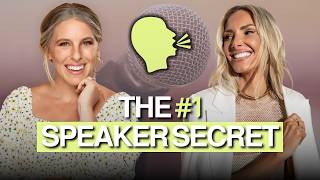
Jess Ekstrom breaks down how to land your first paid speaking gig: make yourself visible on LinkedIn with a speaker statement, build a signature talk with a clear transformation promise, and shift from charging by the hour to charging by impact. Women speakers often underprice and don't apply enough, so she built an AI agent called Carrie Booker to surface opportunities and a community to share referrals.
Chapters
People can't book you to speak if they don't know you're a speaker. Focus on how do I optimize my social platforms. I'm not talking about followers, but just to look like a speaker. If you have a photo of you speaking, can you pin it to the top of your profile?
I got speaking gigs not because they even looked at like, was she a good speaker, what topic was it? It was like, hey, I saw you speak, there's a picture on your social.
I would say don't make it hard for people to give you money. Tell them how they can work with you. Get the visuals there, get the word there, and just optimize yourself for inbound opportunity.
Jess, thank you so much for coming on the podcast.
Thank you for having me. It's been a minute.
I know. We were just chatting. I think we had figured out the last time we had spoke was maybe, or like gotten gotten to see each other was 2019.
Yeah. Wow.
I'm like, have we— might have been in our world or each other's worlds earlier than that though. I'm not sure.
I think so.
Yeah.
Especially with Lindsay, it's a mutual friend and it's, uh, obviously—
and like your headbands. Did we do that Bliss project and headbands?
I think so. I think there's been a lot of things that brought us together and now here's another one that we can put on our friendship resume.
I love it. It's so fun when you're just like, hey, you get to intersect and help each other out in different ways. And also, um, you know, I, I mentioned your name earlier that I had a podcast with you, and some people there, uh, had said, oh, I love her. So you've got just such a great, a great reputation, and I've always known that. So you've just got such a great heart and you have helped so many people.
So same to you. I was excited. I told multiple people I was going on your show and they're like, the Lori Harder? I'm like, yes, go on. Stop. Okay.
Oh my gosh. Well, I'm really excited to chat today because you're, you offer so much value, you guys. If you, this conversation, just get ready. We're gonna be talking books, publishing, public speaking, all of the things, workshops that you can attend. There is gonna be a lot here for you if you are someone who is front-facing at all, because what you do is incredible. You really help people get their message out into the world in different modalities, and I'm so excited for your book as well. And I want to, I want to just start there because, you know, I have a lot of people who write books on the show. That's some of the main things the podcast does, right, is you have a lot of authors on. And I know that we always come on to talk about the book or what's going on, but I also love to talk about the, the journey of the person you become during the book. And so I know that you are going more of an untraditional route of self-publishing, and for someone like you, you could have gotten published like 100%. Like, you could have gotten the publishing deal, you could have gotten the money, and then you could have set up the marketing plan that you then have to fulfill on, run through a wall, exhaust yourself to death doing all of these things that, to be honest, I would say only 10% of the things that I did out of all of them got me lift within my book and left me quite exhausted to the point where I was like, I don't think I can do that again. It was in such a, a, a way that I wasn't able to get it out. So for you, There are a lot of people who don't wanna self-publish because a lot of ego's involved. They wanna do the publishing thing. I know that's what I wanted to do in the beginning, and now I will absolutely go more of the route that you're taking. So can you kind of tell me like what that, what was the choice? What were the conversations in going the route that you did?
Yeah, it was a big question mark for me because I got the, the glamorous, the six-figure publishing deal from HarperCollins for my book. It was just absolutely miserable and not totally because of them, but the, the pressure that that put on myself. Oh my gosh. And, and so it took me, and I think that was when we first spoke, I mean, how, 6 or 7 years ago, I was so scared to write another book cuz I was like, I don't wanna go through that again.
Yep.
And there was so much of my success put in what I felt like was someone else's hands. For traditional publishing, an agent has to pick you, then a publisher has to pick you, then they have to decide what advance is worthy, then they have to decide how much money they're going to put behind your book. And so I felt like I was constantly relinquishing not just my control but my self-worth in the process. And when— and then I, between that time of my last book, I made a career off of helping women become public speakers through Mic Drop Workshop. We can get more into that later, but I was finding that all of these women had books in them. And because when you give a keynote talk or when you're thinking about what you want to speak on, of course you're also going to think about a book. And that's good business and good impact to do that. And these women were not going to get the 6-figure publishing deal from HarperCollins. Maybe some of them would, but it would be a lot to do that. And so I'm like, I don't want to teach them a method of getting published that I wouldn't do again. Because I wouldn't do it again. And then when I did the math of how many books I sold with Chasing the Bright Side through public speaking, not through like the traditional marketing dropdown menu that they had, I was like, oh my gosh, I would have made so much money— more money if I had owned the IP of my original book. And so for my next book that comes out on May 5th, Making It Without Losing It, it's not self-publishing, it's called hybrid publishing, which Um, we created our own imprint, which is basically the middle ground between a traditional publishing deal. You still get all the bells and whistles from there and retail placement and a whole team of people behind it. Um, and then not as like free rein and loose and scrappy as self-publishing might be. And so we've partnered with Macmillan and this like amazing, um, women-run like publishing firm to create this imprint. That I'm publishing my book through. And then my hope is to be able to publish other women in Mic Drop and their books too. But just realizing, like, I don't like feeling like I'm waiting to be picked.
Mm-hmm.
It gives me middle school, like, dodgeball energy, you know? I'm like, I don't want to stay here wondering if I'm good enough. I want to do the thing I want to do.
A million percent. That was like— I feel like the whole beginning of my career was You know, I have a religious background, so the thing in my brain was always like, I feel like I'm waiting to be anointed, like, by people. Like, oh, you're finally good enough, or we finally chose you. And it's like, oh my gosh, that feeling is constantly like you're waiting to get something out that's ready to go already. And so I have this, like, essentially what you did and what you're creating and what I love, and now what social media does as well, is like in having your own platform is cutting out the middleman. I'm like, where are you placing a middleman where one does not need to exist at all? I feel like we do this all the time in our life. Like, there's typically always another way that doesn't require someone in the middle to tell you you're good enough or to help you get it out. Like, there's typically a way that you can figure that out.
Spot on what you said. Like, where are you placing a middleman that could be fired? You don't need— I mean, in speaking, this happens all the time. I see so many women come into Mic Drop and they're like, well, I just need an agent to represent me. I just need a bureau. And I'm like, well, only 20% of speaking deals contracted every year go through a bureau. Most of them are direct. And I'm like, why put all your eggs into trying to get on a bureau where you're going to be speaker 997 on their website and they're focused on pitching like Mark Cuban, when instead you could be putting that time into to creating inbound opportunities through like platform building and showing up on LinkedIn, which is a great place for speakers. I like always say, you know, prove who you are in short form so you earn the opportunity for long form. It's like give them the, the teaser. You can do it right now. We don't need the bureau or the agent, you know, in order to do that. Now I do have people that help me, like an agent now that I'm further along in my career, especially like the backend operation stuff when I just needed help. But it's not what you need to get started.
Mm-hmm. Totally. Okay, so let's get into— I wanna talk about your workshops because I feel like this is like, people can say your name and they essentially say Mic Drop Workshop. So well done on everything.
I love that. I've worked hard for that to be what I'm associated with.
Yeah, exactly. And the rhyming, I'm telling you everything. Works with it, and it's, it's like how people remember you. Um, so number one, how did you get into speaking? And then let's go into what it is that you're doing.
I started my first company, Headbands of Hope, when I was in college and was giving headbands to kids with cancer. And I had no money to get it going. I didn't have— know what marketing was. The only thing I knew I could do was I could tell a story. I could tell about my internship at Make-A-Wish, what the headbands to the kids. So I would just beg college professors, because I was still in school, for like 5 minutes of time to stand up in front of the classroom. And then I learned, oh, if I don't just go up there and give my elevator pitch— which a lot of founders do this, where it's like, let me give my elevator pitch— but instead tell the story of my startup and then what they can learn from it, like what, you know, mistakes I made that I would do differently, or how to start something they believe in, or how to, you know, fill blank space, what's the repeatable process that you can teach to someone, then that's something people get paid to do. And that was mind-blowing to me, Lori. I was like, the first time I remember getting an email was from Marshall University that said, what are your rates to come speak to our students? And I was like, rates for what? What are they even talking about? You mean people pay for me to come speak? And I did what I teach all of my students not to do, and I negotiated against myself and I said, This is just such an honor and I'll do it for free. Just give me, you know, take me to dinner, which they did. So my first, you know, paid engagement was for a slice of pizza. But then, yeah, then a few months later, you know, I was like, well, I'm just gonna start reaching out to universities to try to do this. And then my second gig was for $2,200 at Lander University in South Carolina. And I literally thought I could retire at that point. I was like, I just made $2,200. And, uh, That was how I was able to fund Headbands of Hope. I would raise awareness through speaking, raise funds, and invest it back into the business without getting any kind of outside capital. And then a turning point happened in around 2018 when the company got big enough where I was going to sell it. And I discovered there was not a lot of women out there speaking. And a lot of times, as I'm sure you've seen, Lori, I would even be told, you know, we needed a woman. Like, you're here because we needed to like check the box.
Yeah.
I was like, this is crazy to me. And so that's when kind of this shift happened where I sold Headbands of Hope and then started going down, how do I help women become paid public speakers and get these spots?
Okay. So were you feeling that there was a big need at the time? Like, were you seeing women and going, oh my God, if they could just public speak or they could get, you know, they could market this for themselves. Like, what, what were the main reasons outside of— well, not outside of what you did, but also on top of what you did— that you were seeing a gap of how people could use it?
I'll be totally honest with you. A couple things I was seeing was I was speaking at these events and seeing so many average male speakers getting 20K to speak, and these women who had— who were in the audience who had more compelling ideas and stories that just didn't even apply.
Yeah.
Or did apply and quoted $3K for their fee or something. And then it really came to a head, Lori, when I was, um, what was it? It was, it was some financial company I was speaking at. And after I was done, I was like, that went well. And I get home and I get a email from the event planner. She's like, can you talk? I was like, oh shit. Like, I thought that I did really good, but clearly something happened. And so I get on the phone with her and she said, um, you know, you ranked highest amongst all of our audience reviews. And I said, that's amazing. You know, what's the problem? She goes, I just needed to tell you off the record, woman to woman, we paid you $8,500 to come speak. And we paid our Morning Mail keynote $50,000. Wow. Come speak. 5-0, not 15, 50. Wow. And she was like, you need to raise your rates. And so that was when I was like, you know, the Jim Carrey meme, just like typing away, like, what is going on? And found out less than 30% of these paid spots are going to women. And it's a combination of two things. It's, of course, a lot of these event committees, um, selecting men, which is changing. And then the other side of that was women weren't applying. You know, I went to this— I spoke at this event planning conference one time, and all of the major event planners for like all of the Silicon Valley major, like Facebook and all that stuff, were on the panel. And it was about diversity in the speaking space. And this woman who has a, you know, meeting planner for a huge company said, look, we want to book more women speakers, but they are less than 12% of the applications we get every year. So it's a lot around not necessarily like teaching women, but showing them what they already know and how to, how to apply it, how to turn it into a keynote talk, who's booking speakers, and just remove all the question marks.
Mm-hmm. I just wanna hit it real quick on the raising rates portion because number one, I like, I know you got that vote of confidence, which probably helped you raise your rates, but man, one of the things I hear so often is like, Well, I don't know if I'm good enough yet, and I feel like a higher ticket, which I, I fully— this is me saying this as well, like when I was, you know, whenever I put rates out there, because I do a lot of free speaking because I get to sell off of it. So then, yeah, go to charge, I can get a little bit weird. So I think my first question, um, for people, uh, thinking about like, oh my gosh, raising the rates, and that I have for you in that moment was, even though you got the vote of confidence Did it still make you nervous? Did you jack it way up, or what did that process look like for you? How did you get to a place mentally where you got, uh, to a place where you felt good about your rates?
I think I made one shift, and it was realizing I needed to stop approaching speaking like I was asking for a favor and instead realize I was delivering the favor.
Yeah.
And it wasn't about picking me to speak. It goes back to the pick me thing with publishing. Mm-hmm. It was about finding the right fit, like the right fit in message and partnership. And so the clearer I got on how I help people with my talk, the easier it was to sell myself. 'Cause it wasn't about selling myself, it was about selling the aftermath of myself. Because with speaking, the fee that you charge The, the fee associated with time on stage is so nominal. I charge the same rate whether I'm speaking for 20 minutes, 45 minutes, an hour. The two things that events are paying for is everything you do before you get to the stage, everything you've done, your lived experience, but more importantly, everything they will do after you leave stage.
Starting something new isn't just hard, it's also scary. I remember launching my business and this podcast thinking, What if no one buys? What if I say the wrong thing? But I also knew that if I didn't go for it, I would always wonder, and I couldn't live with that. And so I'm so glad that I bet on myself no matter what happens. And it also helps when you have a partner like Shopify on your side. Shopify is the commerce platform behind millions of businesses around the world and 10% of all e-commerce in the US, from brands like mine, Glossy, to brands just getting started. Get started with your own design studio with hundreds of ready-to-use templates. Shopify helps you build a beautiful online store that matches your brand style. Accelerate your efficiency with AI tools that write product descriptions, page headlines, and even enhance your product photography. And get the word out like you have a full marketing team behind you with email and social campaigns wherever your customers are at. And did I mention that iconic purple Shop Pay button? It's why Shopify has the best converting checkout. On the planet, boosting conversions and reducing abandoned carts. It's time to turn those what-ifs into with Shopify today. Sign up for your $1 per month trial today at shopify.com/happy. Go to shopify.com/happy. That's shopify.com/happy.
That's why it seems ridiculous to charge 20 grand. I charge 35 grand per talk. And it's like, if I charge $35,000 for 20 minutes of time, that's nuts. No, it's about all of the lived experience I've had leading up to that stage time. But more importantly, what everyone is now going to think, do, and feel differently about themselves after I leave stage. So I think if you're struggling with fee, no matter if you're a speaker, an entrepreneur, a coach, instead of thinking about it in a time rate, think about it in a value rate. You know, they're paying for my lived experience, and they're paying for my aftermath. And those have big ticket values.
Mm-hmm. Okay. I wanna dial into on the clearer you got. So explain to me what that means and what is the clarity that you got that you deliver that you do get hired for?
Yeah. So as far as like what I speak about?
Yeah. Because the clearer you got, the more it was easy to hire you for a higher amount.
Here's how I framework my talk and how it kind of goes from not being an elevator pitch, but to being a keynote that people will sell or that people will buy. So I tell the story of like my startups, my personal story, and went through some, you know, pretty big national scandal with my family when I was in high school. I talk about that and I ask myself, well, if I take all of these startups and all of these stories that I have, What's the message? Like, what's the through line that I can pull from this? What's the universal experience? Someone who has never lived in my shoes, someone who will never be an entrepreneur, someone whose family's never had a national scandal, and I hope they never do, what can they learn from that? And for me, it was how to create motivation that lasts, how to stay solid in a world that's ever-changing. And so that's where Making It Without Losing It came from, which is my book and also my keynote that you know, companies pay me to do now. So I would say when you look at all your lived experiences, even just write down your top 5 most pivotal moments in your life and ask like, what's the theme? If I could pick one theme out of these 5 moments, what would it be? Or another question I ask people is, if I gave you— gifted you a billboard on your local highway and you could put one message on it for people that driving past it every day, what would it be? And because I think with being a speaker, something that a lot of speakers get wrong is that you have— they feel like in order to be a high-value speaker that you have to be dynamic, that you have to be able to— a chameleon and mold yourself to all these different audiences. That's not what people are looking for. No one wants to be the guinea pig of a topic. They want your chef's special. They want like what you're good at. Like, this is what Lori Harder does best, this is what Jess does best. It's She's done it before, she can do it again. And so instead of saying, I list, like listing, I see so many speakers list like 10 topics on their website of, I can speak on this, I can speak on that. Instead, don't list a ton of topics. List one signature talk, one thing that you do.
Mm-hmm. Oh, I love that. It's challenging even when I'm thinking of different people that we hire for, cuz we have events and when we're looking for event speakers. When it's somebody who can talk on a million different things, I'm kind of like, it's nice for panels and different things like that, but I really wanna invite people in for a specific need that that room has. And so I really look at, you know, the landscape of who's talking on a very specific thing because man, when you get those people in, they are dialed. Like they are so dialed in. Yeah.
And I call it being a Cheesecake Factory speaker. I'm like, I don't wanna go to a restaurant that serves like Alfredo, sushi, and tacos, you know? So true. Give me the think. Tell me you have 4 menu items and you have like the best burger that I'm ever going to eat. That's what people want.
Exactly. Because, you know, when I think of someone like you who's like so dialed in and talking on a specific topic, like you're, you're in that every day, you know. You have— that is practice, that is in your body. When we go with the Cheesecake Factory, it's like you might order sushi, but nobody's ordered it for months.
Yeah.
And it's—
I know, I'm like, that fish might be fishy.
Yeah, exactly. It's like when people ask me questions, when I don't like kind of control the narrative or send them questions for a podcast, I'm like, holy shit, I haven't talked about this in like 7 years. So yeah, I'm a little out of practice. Forgive me.
Yeah, a little shaky. That's why I also say like, pick something that you're comfortable sticking with for at least like 3 to 5 years.
Totally.
Because you gotta give it time to build momentum, get your name associated with a solution. Like you hear James Clear, you think of habits, you know? Mel Robbins had her 5 Second Rule for many years before she had Let Them. So give people time, you know, to get ramped up. Yeah.
Okay. So we're already kind of into it, but let's just, I want you to break down Mic Drop Workshop, and then I have so many more questions based on public speaking.
So breaking down Mic Drop Workshop, our goal is to help you become seen and valued as a thought leader. That's it. And so again, I'm not teaching you what to teach. I'm showing you what you already know and how to package it, bundle it. Um, but I think there's a, there's a lot of places that could do that. I think the thing that makes us different and unique is that we're only for women and we're huge on community. So our community of what we call Speaker Sisters is literally, I mean, I feel like I'm interrupting. When I come in and I'm like, I started this. Yeah, it is, uh, incredible. I mean, we have meetups all over the country. We have about 5,000 women in there. And I think one of the great parts about community with public speaking is referrals. Most untapped ways to get speaking gigs. The reality is, is you're going to get booked to speak, and then they're going to say, that was great, who else do you know? Or because they're not going to book you to speak again that following year because they just had you at their conference. And so it's not a huge repeat business. Um, and so which means it can be a huge referral business. So every time you speak, ask yourself, are you looking for other speakers? And then we have these like partnerships, and, um, we call them again Speaker Sisters in the group, where they're trained to refer each other and keep passing the mic to women and women in the group. So there's always speaking opportunities. Um, they things like that. One thing that I am really proud of, that I can gloat for a second, that it just got us on like the Inc. 500 female founder list, is we created an AI speaking agent called Carrie Booker. And so you put in your topics, your fee, location, all these things about you, and every Monday it sends you events that you should reach out to, um, well, what you're speaking about. So I like to think we're pretty cutting edge, but, uh, It's been really cool to see. Of course I still do speaking, but it is so much more exciting for me to watch like these women get booked to speak. Okay.
So how does that work? Cuz now I have a million questions, but I do wanna know for anybody who's already interested, it's like you come in, you join the workshop. Is it online? Is there in-person? How much?
Oh yeah, I should probably talk about that. So online, everything is virtual. We do, um, we're having our first in-person conference actually in May in Indianapolis. So we're gonna be doing more in-person, but that's kind of on top and not the model.
Yeah.
So, uh, you can start with our free training, which is on our website, micdropworkshop.com, and that can just kind of validate your idea, what you're thinking, tell you a bit about the market of speaking too. And then if you choose to join us in Mic Drop Workshop, it's a virtual self-paced course that we pace out over 12 weeks just to hold you accountable, but you can stop and start. And then you also get into our community. We have live Q&As if you get stuck. Um, and then we do have a program for women who are already speaking and a little bit more seasoned and looking to scale. And those are small group programs called Mic Drop Academy that we do in the spring and in the fall that we do around, uh, 40 women who are all just— maybe they've already published a book, maybe they have a podcast, maybe they're already getting paid, but they want to either increase in fear frequency. Uh, so those are our two main offerings is the workshop and the academy.
Okay, amazing. So let's say I come into the workshop and, um, what are some of the main things that you see? Who's your ideal customer? What are the main things people are struggling with when they come in?
I'll tell you the main thing I think people are struggling with in speaking in general is the mindset before you step on stage. And I'll give you like a framework that I teach in Mic Drop. It's also what I gave my TED Talk about and there's two different types of speakers. There's spotlight speakers and lighthouse speakers. Spotlight speakers go on stage, spotlight is shining on them. They are concerned with perception. How do I look? How do I sound? Do they like me? Am I impressive? Did I wear the right thing? Why is this person on their phone? This person's not paying attention. They hate me. And it's exhausting. It's also so natural. Because we've been trained to see speaking as spotlight speaking. I mean, even in school you do a spelling bee and like get kicked out if you missed a letter. It's like you had to be perfect. So if a spotlight speaker asks themselves, what does everyone think of me? Then a lighthouse speaker asks themselves, what does everyone need of me? So they go on stage and shift the light from themselves to their audience. Okay, I'm speaking to realtors today. What are realtors going through right now? What's hard for them? What does success look like for them? What do I know that can help them get to where they to go. Speaking to kids, what's it like to be a kid today? What's— what do they need? And so if a spotlight speaker is concerned with perception, then a lighthouse is concerned with guidance. And I think if we can make that shift in the beginning, take our ego out of the equation, which speaking is historically a very like ego-centered industry, and it's gonna help your nerves, it's gonna help you deliver value, and it's just gonna make you a more compelling speaker. So I would ask people, you know, before you go on stage, I literally shift the light from myself to the audience. Like, do a visualization of that.
Mm, that is so good. I mean, honestly, that's gonna just help you write your talk. Yeah.
And that's what we do is like, you start with the aftermath in mind. Um, a lot of people say, ask like, what do I wanna say? And I say, well, what do you want to stay? What do you want to stay in the room after you leave? What do you want them to be feeling, thinking, doing? And then once you have the aftermath, the desired outcome of your talk, then you work backwards from there.
I love that. And it's, you guys, it's such a great question to ask for anything that you're doing. It's funny, when I go on stage, I, I tend to ask that question and think of that. It's not the very first thing sometimes because I do run a little more nervous. Still when I public speak.
But it's funny, do you think those nerves come from— I'm just curious, like, what are you saying to yourself that makes you nervous?
Um, that my body is going to panic. It's about my— it's not trusting my— I don't trust my body.
Yeah, like the physical.
Yeah, it's very physical. It's never— it's literally never about what they'll think of me. It's— it is when all eyeballs are on me, my body reacts and I start to not be able to breathe and I'm gonna pass out. And like that will ruin it for the event. Like, I'll ruin the event.
What has helped you with that, or has something helped you with that?
Um, I've learned— I've actually learned— so I pray like a maniac. That has helped. And I say, you know, God, speak through me, but whatever happens, I'm gonna trust that it's working for them. That's super helpful. But I mean, it— every time I'm on stage, Jess, full adrenaline. Sometimes I get very close to feeling like I'm gonna pass out. Um, so tools have helped me where if that happens, I have a panic button, meaning like I can— I'll, I'll be like, hey, I want you— I'll make them meet their neighbor, right, real quick.
Yes, that's such a good idea.
Yeah, so it takes their attention and the energy off of me. It lets me get grounded and feel my body and my feet again on stage. Yeah, so I tend to deflect. I will throw them through a little meditation. I'll have them close their eyes and, um, breathe slow or meet a neighbor most of the time.
How amazing for the audience to do that. I, I think it probably makes you an even better speaker.
If you are in back-to-back meetings all day like me, you know the struggle. You're nodding along, you're contributing, you're trying to stay present, but in the back of your mind, you can hardly remember anything that was said. And this can make meetings really messy. And Granola fixes that. Granola is an AI-powered notepad built for the way real people actually meet. So here's how it works. You take rough notes like you normally would, and in the background, Granola securely is transcribing the meeting. Then it turns everything into clean, structured, actually useful notes when the meeting ends. And the best part is that Granola works through your device's audio, which means it integrates seamlessly into the video conferencing tools you already use. So no setup and no awkward bots. It's just your normal meeting, but with superpowers. You get to actually listen instead of frantically typing every word and still walk away knowing exactly what was decided, who's going to do what, and what comes next. For me, this has been a game changer between running Glossy, recording podcasts, and being in constant mastermind conversations. My days are stacked with meetings that actually matter. Before, I was either half present typing everything or scrambling after trying to piece together what happened. And that's not an option when you're making really big decisions in your business. So the first time I used Granola, I finished a call and thought, wait, this is literally the best thing ever. It's clean, it's organized action items, it's clear, and I literally know exactly what I need to do without anything falling through the cracks. And the biggest shift, no more rewriting notes, no more chasing people to confirm what was said, no more mental load. I can stay fully present and still have total clarity after. So if meetings are eating up your day, Granola is a no-brainer. You can try it totally free for 3 months. Just head to granola.ai/earn. That's granola.ai/earn. To get your time back, get 3 months free at granola.ai/earn.
One thing that I tell people, because sometimes people have something like, well, what if I forget what I'm going to say? Or what if my body reacts a certain way? Or, you know, what if someone heckles me or something, which, you know, never happens. But it's like, okay, so what if? Let's like put, list out all the bad things that you think could happen and let's pretend like they did. What would you do? You're saying, I would deflect the audience and they would talk to each other. Great. That's, that's survivable. Like, we can come back from that. Okay. I forget what I'm going to say, or I forget what I was saying. Okay. What would you do in that situation? Well, I might admit that I forgot and I would go check my notes or start over from a story or go somewhere else.
Okay.
That's, that's survivable too. And I think when we can even name the fear, like name the thing that we really don't want to happen, then, and then also name how we would react, it takes the power out of it. It's like, oh, that's manageable, I can do that. And some of those things have happened. Like, for me, I've had, you know, fire alarm go off when I'm speaking. I've had like someone bring their dog and their dog won't stop barking the whole time I'm talking. Like, oh no, microphone dies. Yeah, exactly. So many things. And Everything was survivable, you know. I lived to tell about it. And I think if anything, actually, I was speaking at a really huge company a couple weeks ago virtually, and it was on Microsoft Teams, which I loathe. Microsoft Teams.
Same, same.
And it froze in the middle. My Wi-Fi was great, everything was good, but the app itself froze, and I had to like come out and come back in. I was probably gone for like under a minute. And I just felt awful, but I finished my talk. At the end, I called the meeting planner and she's like, "That was so great." I'm like, "Why does she sound so positive right now? That was awful. It froze. I had to leave and come back." And I told her that. I'm like, "I just feel so bad." And she goes, "Oh no, I think that made the talk better because it showed them how to handle it. Like, you came back, you weren't frazzled, you weren't like profusely frantic and apologizing." You fixed it quickly and just came back in. And so I think our mistakes actually bring us closer to the audience sometimes. And if people want perfect, they can go to AI. That's not why they go to speakers.
Yeah, that is, this is all so good because whenever people talk about public speaking to me, man, does it just, it, I mean, next to dying or jumping out of an airplane, it's most people's worst fear. So, oh yeah, women, is that, is that a really big thing in your group? Like, do a lot of people talk about all of the different fears that come up?
Yeah, it is. But I think when people join Mic Drop, they have decided that it's worth it.
Yeah, like, totally, it is worth it. Now we're gonna talk about the solution. Yes. Solution conversations.
Yes.
I, I believe public speaking is one of the things that can quantum leap your career. Like, I have a list of things I did in my life that quantum leaped it, and public speaking is absolutely one of them. And I had to learn how to work through all those things. And I know that in your workshop as well, like this is something that when you, when you make it normal, like you can talk about the things like, yeah, I feel like I'm gonna pass out. I'm not sure. Oh my God, I might, you know, shit my pants. I'm not sure. Like these are all horrible conversations, you guys, that if you're about to go on a stage, you need to, you need to also be able to have open conversations around exactly what we're talking about. What are the fears? What is coming up? So my question for you is, like, the first time you got paid a higher amount, or when people do in your group as well, what are some of the thoughts around— now we've got pressure. Like, where sometimes I find people want to get paid more, but sometimes they keep their rates lower because the pressure increases the higher it goes. Like, oh shit, now I really have to deliver, and now it's just like amped me up. What are some things that you say around that?
Two things I would tell you. Sometimes what feels like an insane amount of money to you is literally a rounding error for a corporation.
Mm-hmm.
I mean, I had an event once, like they paid $15 grand for like these popcorn machines. And so it's like, yeah, they can pay you $10 or $12 or whatever it might be. So know that they're not risking it all on a speaker. I'll tell you that. The other thing that I would say is just remember that this is a value exchange. They're not paying $20 grand for Lori, they're paying $20 grand for what was an agreed-upon topic. And so it's like, I don't want to feel like, am I worth $35,000? It's like, they already agreed that the problem that I come talk about is worth $35,000 to talk about. And so If we had an agreed-upon topic, which is so why it's so important to have a signature talk, because that's what they're paying for. And then you also know, like, this company's not risking it all on a speaker. It doesn't mean that you don't go up there and give it your best, but it's, I mean, just a rounding error in these multimillion-dollar budget, uh, events. I actually had a speaker friend who just spoke at a very big company and they, had to— she had to use their invoicing software, like their PDF or something, for it. The way to enter how much money they owed, the only metric was in millions. That was it. And so she had to do the math, like, what is $15,000 in million? Like, 0.000— like, like, they just didn't even have a line for it, which just shows you, like, The money's there, like, and there is— I said this in the beginning, but there is a lot of men out there not even batting an eye to quote 4 times what some amazing women are quoting.
Yeah, gotta get more women out there, and you are, which is amazing. Let's talk about paid versus free. Was there a time in your career when free was really important? How do you make those decisions? I know that you're, you're really big on obviously getting women paid and paid well, so tell me the Sauterona.
So free is a great way to get reps and exposure, but then you have to learn what's enough and where do I do that? So in Mic Drop, we have something called a gig scorecard, and it's how you can rate opportunities and it gives it a score. Oh, cool. Some of the things that I look for when an event can't meet your budget, when it's free or low paying, is will I get footage and photos from this? Because especially early in your career, actual evidence of you speaking, footage and photos can almost be worth the price. Um, the second thing that's really important that I look at is who's in the room and can they book me to speak. So I just spoke for free a month or two ago because it was an event for event planners. Yeah, I'm like, heck yeah, I'm gonna speak here because I know I'm gonna get booked from it. Everyone in here books speakers. But if you're also selling something, you're an entrepreneur, and it's a chance to speak for free in a room of your ideal clients or customers, then yeah, that's a win.
Yep.
The other things that I look for are, um, uh, testimonials. Like, will they provide a testimonial for me? And then will they provide referrals? So I put that in the contract if they can't meet my rate or if it's for free. I teach my students how to do this, that after the event they have to provide footage and photos, testimonials, and referrals to other places that book speakers. So free can be great. But you can still find non-monetary ways to get compensated from that. So those are the things that I would ask for. Um, and then I also, you know, I pick a cause. Like, my cause is young girls, and I know 5 times a year I'm going to speak for free at young girl organizations that I feel like I can make an impact on. But that means I'm not speaking to everyone. And so I think for not just speaking, but just for your services. When you ask to do pro bono stuff, have something clear that you do pro bono for and have a limit. And so that way you don't have to like weigh everything in, in that sense. Um, and also, is this a place I want to travel to? Is it fun? Like, is it, uh, you know, one of my friends calls it speako tourism. Like, he's very well off and he only speaks in places that he wants to travel to with his wife.
Mm-hmm.
So it's just also a way to travel.
Mm, I love that. Okay, so just hitting on one more question around women not like, I, I feel like so many people are probably wanting to join this, be a part of it, add it to their repertoire. Mm-hmm. But I think that thing of like not being qualified yet to do it, how do we overcome that?
I would say switch from what am I an expert on? To what am I excitedly curious about?
Hmm.
Speaking comes from a knowing. I know something that I want other people to know. Where that knowing is derived from can be from a skill that you have, rooms that you've been in, experiences, research. And it doesn't have to be, oh, I am an expert in this space. It is what am I, what do I know that I wanna know further? That I'm excitedly curious about. We all have lived experience and we all have access to research now, especially with AI. It's like getting access to high-quality research is easier and quicker than ever. And so what is it that you are curious about and how can you further your knowledge each week? But I would argue like, don't ever try to be the expert because then you just stop learning. I mean, I don't think I'm an expert in public speaking. I want to like I'm always trying to figure out what are other people doing. Years ago, like, audience interaction wasn't really big. Now it is. So I'm adjusting my talks to get more of that. But what am I curious about and what am I excited about? What do I think people should know? So kind of get the word expert out of your head.
I love that. Takes some weight off too.
Yeah, for sure.
So you talk about building a signature message. How do we start to create that? If you're a small business, the right hire can be make or break. Hoping the right people see your job posting isn't the best growth strategy. When the pressure's on and you need the right hire, this is a job for Sponsored Jobs. Indeed Sponsored Jobs is a boost whenever you need to find quality talent. Stop struggling to get your job post even seen on other sites. With Sponsored Jobs, your post is boosted in search results so you can reach candidates that actually meet your criteria, like skills, certifications, or location. And I love this— sponsored jobs posted directly on Indeed are 95% more likely to report a hire than non-sponsored jobs. So instead of wasting time sorting through the wrong people, you're getting matched with candidates who can actually drive results. Spend less time searching and more time actually interviewing candidates who check all your boxes. Less stress, less time, more results. When you need the right person to cut through the chaos, this is a job for Indeed sponsored jobs, and listeners of the show will get a $75 sponsored job credit to help get your job the premium status it deserves at indeed.com/podcast. Just go to indeed.com/podcast right now and support our show by saying you heard about Indeed on this podcast. Indeed.com/podcast. Terms and conditions apply.
I would say the first thing that we do in Mic Drop is we call it a transformation promise. And it is, what do you want people to believe and achieve after hearing you speak? So it's a Mad Lib that everyone can do right now. After people hear me speak, they will blank. You know, what is it, the desired outcome? Do you want them to be more productive? Do you want them to have more balance in their life? Do you want them to prioritize their health? Like, what is it that you want them to do? And then the second part is because my speech will blank. What are you gonna walk 'em through? What story are you gonna tell them? What are you gonna teach them? How are you gonna help 'em get there?
Mm-hmm.
So if you start with a transformation promise, after people hear me speak, they will blank because my talk will blank. Then now we have something to work off of. Now we have a north star and we build your talk from there. What are the things that people need to understand in order to achieve that? That's how we fill your talk. Okay.
So also with sharing a, a personal story within, or sharing your personal story within that, I found, I found some of the things that were so challenging when I did my first keynote, and essentially my first real keynote was my, um, TED Talk. Like I had done keynotes, but where I actually had to take it serious and get dialed in and go, whoa, this isn't just for free, you know? And I'm, I speak in front of an audience who already might be warm or be a friend's audience or something. And that really rocked me, trying to figure out what that signature message was, but also how to tell my, like, personal story within there. And I find that still, Jess, I should probably just join your, your, um, workshop. Um, but, but still, I— the biggest thing that I struggle with, and that I know a lot of, uh, personality types like mine who are entrepreneurs, who are more visionaries, like really big picture, It is extremely hard to boil down what pieces are important. Like, how do I continue to know how to tell my personal story over and over and keep that like succinct?
Yes. Yeah. So if I can give you a framework, um, because I love a good framework, we call it moment to meaning. And so what I would suggest that you do is after you have your transformation promise, you ask yourself, okay, what are like the 3 to 5 things people need to understand in order to achieve that transformation promise. And then once you have those, like, takeaways that you want people to have, ask yourself, when was I the student of this lesson? Like, when did I learn this the hard way? And those are stories that you can tell because that's what people want to know, is not when you were perfect at everything, but when you learned it. So framing that into, like, here was a moment for me, here's the meaning for you. And then I put it in like a super punchy quote at the end of it. And so your talks are kind of come together with like 3 to 5 moment, meaning, takeaway, moment, meaning, takeaway. That's how I teach people to structure it, and that's how I structure my talks.
Is this in your book?
You know, the book is more around my relationship to success than it is about speaking specifically, but building Mic Drop. Is in the book. Uh, but I know I'm like, maybe in the future I'll do a book about—
no, I'm already like, okay, so you need to write that book for me. It's gonna be—
I know.
No, I love it.
It's all in— it's all in Mic Drop Workshop. But yeah, the, the book is like—
we can buy your book and we can go to your workshop.
There we go.
Yeah, that's—
that would be a real win for me.
You know, I, I think, um, to really just like toot your horn for you, like, I think the people who are going to make them most money right now are truly people who can help people package their message and how to teach them to be forward-facing. Because social is so about like being able to yap, being able to talk, being able to tell your story in a way that people can follow along, follow along in a fashion that you have a bunch of stories you can pull from. You understand how to be a storyteller. Um, you can get on, uh, the stage at the drop of a hat because You can build community immediately in something, and I really believe that that is gonna be the people who are going to thrive and survive, you know, all of, yeah, AI that is coming our way.
I agree, and I appreciate you for that. I also think just in life, being able to articulate what you wanna say and how you wanna say it, whether you're in line at the grocery store or you're at your kids' PTA meeting, or you're in a debate with your spouse. Like, I'm like, this is just a skill that's totally— that is timeless and is just getting increasingly more important. So I appreciate you pointing that out. And like, whether you want to get paid to speak or not, I think it's just how do you articulate yourself and how to know what you stand for and how to deliver it in a way that people lean into is a skill that, you know, will never grow old.
You create your life with your words. Like, it actually starts with your life and how you communicate. It literally all boils down to what you're able to speak to other people, how they receive you, how they understand what you're saying, and if you can understand how to articulate what you need in a way that it can be received. And so really, really what you teach. So what is the, the, like, the pathway for people then to go from wanting to speak or be in your workshop to then getting paid to be a speaker?
So there's two ways that you get booked. It's outbound and inbound. Either outbound, you reach out to them, or inbound, they reach out to you. Both are important and both are necessary with public speaking. So we teach you how to do both. But if you're looking for something that's like just within your control today, focus on inbound. I would say focus on LinkedIn. Put the word speaker in your bio. You would be amazed the stories that we have from people who just simply added a word and someone was like, oh, we have a, like, you know, Women's History Month coming up. Can you come speak? Or my daughter's school is looking for whatever. And it's like people can't book you to speak if they don't know you're a speaker. So focus on how do I optimize my social platforms? I'm not talking about followers and having a lot of followers, but just to look like a speaker. If you have a photo of you speaking, can you pin it to the top of your profile? Can you put how you help people? We call it a speaker statement. Just leave room for opportunity is where I would start.
Oh my God, that's so good. I know we have a lot of people in our mastermind who are like, how can I make sure people want to book me? I'm like, what does your social look like?
Yeah, what is the first touch point that people have? I always say, don't make it hard for people to give you money. Tell them how they can work with you.
Exactly. I would tell them, I'm like, you guys, I got speaking gigs not because they even looked at like, was she a good speaker? What topic was it? It was like, hey, I saw you speak. There's a picture, there's a picture on your social.
And I was like, we know that people don't read anymore. They skim. So get the visuals there, get the word there, and just Optimize yourself for inbound opportunity.
Oh my God, I could, we could talk about this for another—
I know, I'm like, can we keep going? But I know we're almost at time.
One of my favorite topics. But you guys, um, Jess truly is one of the, um, the names that people go to in the industry for speaking. So I fully, 1 million percent vouch for you. Go check it out. Her workshops are incredible. Go check out the book. We will also link the book. Congratulations. I love that you're fucking doing it. Different. I'm gonna follow that path. Um, and I'm so grateful for you. Is there anything else that you want to leave with everyone?
No, I think this is awesome. I love what you're doing. I would say one way that I really like communicating with people is over text. I send out a quote, a hype text to start your week, just like a food for thought. So you can text me the word hype to 704-228-9495, and, um, you can message me there too. It's me on the other end, so I'd love to hear from you.
Amazing. And you guys just scroll down. That is all in show notes. We have all of her links there as well. But thank you so much for coming on. I loved it.
Thanks, Lori.










