How to Quantum Leap Your Identity and Close More Deals with Holly Carroll
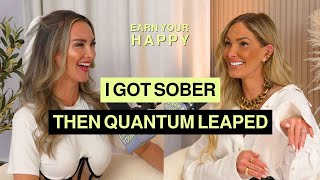
Lori Harder talks with Holly Carroll about identity shifts and personal transformation. Carroll shares her journey through addiction recovery and how she built a real estate career, plus what she learned writing her book.
Chapters
If you want to change identity, you want to quantum leap. It's kind of like getting sober. You're addicted to your old self. You're addicted to your old habits. So what did I do to get sober? I got a sponsor. I did the steps. I went to the meetings and helped others. So what do I do now that I want to quantum leap and shift? I get a sponsor, which is a coach. I do the steps, which is the inner work. I go to the meetings, so I go to masterminds, and then I help others.
I think people forget that whenever we go to set a new goal, you have to follow that plan or it's literally not going to work. Holly, welcome to the earn your happy podcast.
Thank you.
I'm so excited you're here.
Me too.
All the way from Canada.
Yep.
On your California world tour.
Yeah.
It's what we're doing. I love this because you just wrote a book. I'm so excited about it. I have written a book, too. So whenever someone sits in this chair who has written a book, Kaylee, who is my brand coordinator, literally probably knows at this point, I'm gonna ask about the journey of your book, because when you decide to write a book, it's a thing.
It's a thing.
It is like you think you want to write a book, and you really do, but you have to want to write a book. So I want to know what you know. At what point were you like, I have this message. I want it to come out and then tell me a little bit about the book journey.
The message actually has been inside me for a very, very, very long time. And I talked about it a lot, but it was almost like a detachment. So I was like, I'm going to write a book. I even told everybody the name of the book. And I'm like, maybe I shouldn't tell so many people. The name was.
The name. The name.
Yeah.
Has been. Okay, cool.
Yeah.
So you know, it's going to be. You knew it was going to be closing deals and heels.
Right.
For a very long time.
For a very long time. And I was just telling people about it and. And. But I wasn't even writing.
Okay.
And I went through a bit of a tough time about three years ago, and I went to I want to do on vacation. And I. Not really the type person that just wants to go on vacation all the time. I want to go for a purpose.
Yeah.
And there was a woman's writing retreat in Costa Rica, so I thought, okay, Costa Rica, check. Kind of like a healing zone. Writing retreat so I can learn some stuff and then maybe I'll actually put pen to paper and put my thoughts down.
Right.
And the funny thing was, is when I started started the book, I thought it was going to be completely different. It wasn't going to be as vulnerable. It wasn't going to be so much of me. It was going to be like the other books that I have read that, you know, self help and personal development.
So I'm going to help other people. That's for other people. It's not going to help me. Okay, great.
Right. So I wrote the first chapter of this book, which is the juiciest chapter. I go pretty deep at this writing retreat. And she basically was just like, just write it out whatever feels in your heart. And so I just wrote it without really even like thinking about it. And we had to all talk about what we wrote and stand up and read it in front of everybody.
Oh, God. Did you know you were going to have to do that?
No. But I was like, she hasn't, of.
Course, otherwise you wouldn't have written what you wrote.
Exactly right. I may have toned it down a little bit. So I stood up and read it. But it was kind of the first time that I had read it, not just wrote it. And tears were running down my face as I was getting through the chapter. I could barely see. It was on a computer. I could barely see what I was writing. And I was just like, just get through it, just get through it. Just get through it. By the end of the first chapter, everyone had stood up and gave me like, a standing ovation.
Wow.
And I was like, okay, well, I guess I'm keeping that as the first chapter. And so three years later, I decided to write the rest of. Took me that long to a. Be vulnerable enough and brave enough to really tell the rest of the story. And I had to become the version of the person that is actually in the book.
So what happened from writing that and going to this retreat? Did you. You had the intention, though, of writing a book when you went. Or was it like, okay, so from standing up and writing that to becoming the person who could now release it and tell the world about it, what were you feeling then? Like, what were some of the big obstacles and life themes for you then? And what did you go through?
Yeah, I think that I had a lot of shame of what people might think in the book. I. I talk a lot about just sort of my struggles. Some of the things with alcohol, some of the things with the past version of myself is that what the main.
Shame was around just like, yeah, most likely.
And the fact that I was in this relationship, that was very toxic. You know, I didn't necessarily want to talk about that because at the time I was still back and forth with that same person. So it was like I didn't really want to believe or accept what was actually happening.
So were you hiding these writings from him at the time?
Yeah.
You're like, I'm writing about this right now. I know I should leave.
Yeah, yeah, right. And so this winter I decided because I usually go away in the winter because it's very cold where I am very isolating. So I decided that I was not going to go away and I was going to commit to writing. I was going to commit and I was going to have the identity of an author. And sometimes I'd write from like 6am to like midnight and I just let it all pour out. The thing with that is, is that I actually saw all of the Hollies and they all surfaced. Healing surface things that had happened surfaced. And it was quite uncomfortable to the point where it was painful and I had to face it all, which was wonderful. In the end. There's a couple times where I was like, what am I doing? Like, do I even really want to tell the world all these stories? And then I just thought to myself, I kept hearing, you know, my higher power being like, this is not just your chance to heal, it's for the world to heal.
What were some of the main things that you knew that if you got vulnerable around that it would heal a lot of people?
Probably the alcohol portion for sure. Just not necessarily alcohol, but self sabotage. The things that we do when we're about to level up, obviously relationships wise, and they're both correlated, which is funny.
Tell me, tell me how, how for you.
So just to give a little bit of a backstory, I quit drinking January 21, 2021. Okay. Okay. And I quit drinking because it was so bad with my ex boyfriend. Okay. I didn't really think I had a problem. I just was like, something has to be accountable for. I have to at least take accountability for it. And I feel like alcohol and the partying somehow is contributing to this. And the only thing I can do is my side of the street. Right.
Tell me what life looked like at that moment in your relationship and just how you were using partying. Like paint the picture for everyone where you were at.
Of course. So the good thing is, is the picture is painted as well in the first chapter to go a little Bit deeper. But basically we met and we were younger and we were having a lot of fun. And it was fun and it was glamorized until it wasn't. And the, you know, the painful fights, the irritation, the being hungover, the stomach pains, all of those things just kept going on.
And like the anxiety.
Anxiety, depression. Depression, yeah. And it became my norm. Right. And it got to the point where, like, I didn't even know how to live or have fun or be sexual or any of those types of things without alcohol. Because that's what I knew, that's what I was programmed by. Right. The alcohol, the partying, the. The fighting got so bad in Costa Rica, oddly enough, this is the place I went back to to write the first chapter. Yeah. So I. I went home and I thought, okay, I. I need to get some help. I need to just, like, figure this out for me. Can get back together. Okay. So we did that. I got, you know, sober and we got back together and nothing really changed. So I guess that was good to know. But I mean, now. Now I have the occasional drink. It's not the same. I feel like now it's like the decisions that you make directly correlate with how much you love yourself. Right. So I'm not drinking like I was. I'm not partying like I was. I'm also not even thinking like I was.
Yeah, sometimes you have to. I. I've found that in my life. Absolutely. I come from a background fairly similar just with drinking and partying and using that as such a numbing.
Right.
Oh, my God. Like the, the place that you. The thing that's related to joy, that just numbing out. And I found, like, I had to get away from it for a while in order to even figure out, like, how to cope with things as a normal person.
Totally.
It's so easy to, like, lean on different things. And throughout my life, I don't know for you if it's. If it's only been alcohol, but for me, I'd also, like, struggled with food. I've struggled with, you know, like, dating men. Just like the whole experience of what else can you numb out on? So, yeah, it's. It's like, it's one of those experiences that you have to kind of remove yourself. So when you were doing that, because I know that, you know, we had something that you love to talk about is just the transition of becoming the person that you see in your mind.
Right.
First of all, tell me, were you able to, like, access that person in that vision, even throughout this where you're like, oh, my God, I'm so. It was causing so much pain because you were so far out of alignment of who you know you were supposed to be. Tell me about that.
Yeah, so this winter was the main, you know, cocoon to Butterfly. And what was so painful is my old self was trying to. But bring me back. And so I saw the vision. I visualize every day as it is, and I.
Were you visualizing then?
Yeah.
Where did you learn it? Like, where did you pick it up?
I've had many coaches, okay. Dr. Joe Dispenza, whoever. Right. So I've been visualizing for a very long time. So I, I saw my. My identity was her, but my body took a while to catch up. Yeah, it almost made me sick.
Yeah.
A lot of reality. Yeah, my reality. And it made me sick a couple times. And, like, I kept hearing that inner voice still, like, no, you're fine. Like, go. You're fine. He's staying here. And I just knew that if I just push through and push through and push through that eventually I would become her.
So how was it showing up when you were, like, when you say it was making you sick? I know for me, like, I would wake up at. It was like, every night at 1 or 2 in the morning.
Wow.
And I would just have anxiety and I would feel so. I feel, like, so frustrated and frantic and like, the clock was ticking and, like, actually physically in pain. Not to the point where I was like, oh, my God, my body hurts, but, like, so uncomfortable in my life and my choices that it was felt like it was, like, forcing me out of it.
Yeah, I agree with you completely. I mean, there's times where I actually was physically sick. Like, I, I, I hold a lot of my stress in my stomach, and I would just feel ill all the time. But I was like, I just know that this is part of it and not like I feel like I was on a fork of the road. Like, I can literally just go back, which is quote unquote comfortable, which it wasn't comfortable. Yeah, that's the thing. We think the comfort zone is coming.
Out, but it's not the most uncomfortable spot. Totally.
Right. Or I could just power through. I mean, I did a lot of inner work in terms of talking to my higher power, which is basically my intuition and, you know, trusting a lot, surrendering a lot. You know, show me what I'm supposed to be. Show me what I'm supposed to do to, you know, become her fully. I mean, it's still a process but it's definitely a lot easier and I'm showing up as her, even if it doesn't feel fully real.
So what did that look like? You're starting to do these things. Had you broken up with that boyfriend yet or. Because you said it was this winter, what did that breakup look like? Like, what was that? How. Tell me about the experience of getting the confidence up to go and do this. Because clearly this was something really challenging because I want people to hear, whether it's a boyfriend or a friendship, like, what did that look like? Getting yourself ready for that conversation? And then how did you support yourself after?
So we were actually off and on for five years since the first time we broke up back in 2021. So this winter was the very last breakup. So it was actually the hardest breakup for me because I always felt like, oh, I can still go back there, right?
You always left the. Okay, so you always had a crack before this?
I think so, yeah. And even though I knew it wasn't for me, it was still comforting in a way to know that I could always go back. So this winter really was, wow. I am officially, like moving on. And that was heart wrenching for me because of course you have no control and that is no safety. The uncertainty, all of the words that are scary. And there was times where, you know, I couldn't deal with it. And I went on like a three day bender. I went to the liquor store and I drank and I was like, you know, I could just have one. And then it turned to more just a numb out because. But that obviously didn't work. You can see, probably see where that went. But it was the time where I was just like, enough is enough. Like, you've done all this work. It's time, it's time. And I swear it was my higher power telling me that, like, just get up and act like yourself. Act like your highest version and start moving in that direction. We will help you.
And so broke up. Broke up, obviously was not shocking to him though, because you had done this, right? You guys were off and on, right. How did you, like, what did you do to stay committed to that decision? Because obviously you had it before, right? So how did you, like, what were the things that you had to put into your life to make sure you weren't going back or texting or like, right. Falling back into the relationship.
I had to basically mourn the death of that relationship more than the death of me in that relationship. I had to let go of the potential thoughts that it could be. So basically when those thoughts would pop up, I'm like, nope, choose again. But the main thing for me was just trusting, like, the universe and being like, okay, I'm not supposed to be with this guy. Just help me. Just get through the day. Just let me get through the day. Help maybe somebody else, like, whatever I need to do just to let this pain go away, and then we'll think about it tomorrow. And sometimes it was literally minute by minute, hour by hour, day by day, until it wasn't.
So you said. You said something that I used to use all the time. Well, I still use it all the time, but. Choose again.
Choose again.
Like, tell me. Tell somebody who hasn't used that or understood that tool before how to use it.
Well, I find, like, the negative self talk comes in a little louder and.
All the time, so it kind of.
Hits you with a ton of bricks. And sometimes you're not even conscious of it until you're, like, almost in tears. You're like, how long have I even been thinking of that? So when this negative thought comes in, I am aware of it, and I'm like, choose again. Choose something positive, similar to it. But, like, nope. I. Sometimes I even yell it. Not today. Not thinking that one today.
I'll literally say nope out loud. Like, sometimes I'll slap the back of my hand. I'm like, no, like, stop. Stop it. Like, it's the observation. Like, stop sabotaging yourself.
Right, Right.
Oh, my God. Like, we deserve so much better. And it's. It's. It's crazy, though, in the beginning for you. Like, I'd love to hear in the beginning when you first became so aware of that voice. Right. Like, it was so frequent. Sometimes I'd have to do it, like, hundreds of times a day. Yep. Is it a lot less now?
It is a lot less now. It is a lot less now. But I also say a lot more positive.
So, like.
Right. So my brain knows how to access it. It's not like, choose again. And then I'm like, well, what do I choose?
Yeah.
Like, I literally, you know, I have my affirmations. These. These go everywhere with me. I. Every time I go buy a mirror, I'm like, you're fucking a badass. Like, every time, I swear.
Yeah, for sure.
But you still do that. I'm constantly doing that. I'm constantly doing that. If I go to the washroom and I'm around, like, I just did that when I went to the washroom here, I'm like, you're here for a reason. Your voice matters. Like, I say these types of things, so I try to override it before I get it.
Yeah.
But don't get me wrong, this morning I woke up and I'm like, what am I even doing here? Like, is this book tour even what I should be doing? And I'm like, nope, choose again.
So that's what it's saying. Like, I think for everybody, they can, I think they can look at someone like you or someone like me or someone who's out there doing it and they, they literally think, oh, wow, they're cool, confident, have it all under control, that it, it couldn't be further from the truth. There, there's so many. Before I do podcasts with anyone, it literally is just like all of these different things bubble up right from. I don't even even know, like our eight year old selves, but it's all of these tools, which is exactly what your book is. You. We kind of just feel so compelled to write it because I feel like if the shit show of my life has gotten fairly under control, I'm like, these tools to someone else. Because it was right. It was crazy. Like, people wouldn't even understand what a mess it was. It as in me. But I love hearing that. So, like, all of these, all of these, like small, what sounds small but are actually really huge tools. And I know that that had to be one of the loneliest journeys because at the time, what did the people who surrounded you look like? Like your friend groups, were they like super supportive? Were they like, girl, we got you, we're going to get you to the other side? Or what did that transition into, like, I mean, going out of this life that was probably. It sounded like it was somewhat looked glamorous on the outside, but sometimes the more glamorous it looks on the outside, the more trapped you can actually feel there. Because those things can make you feel like you need them or want them.
Right.
They're a part of your identity. So what did that transition look like for you?
Yep.
Was it lonely? Was it.
You know, it was, it was very lonely. It was very lonely because there was a whole identity shift, like you said, a complete identity shift. So I didn't recognize myself. So I didn't recognize my friends or family. Right. And I don't know if anyone is actually like, tried to get sober. It is like everything comes up feelings that you don't really know how to handle. Like, like even being around your family is like, this is my family. And you're a little bit like annoyed. It's like PMS 24 7.
I understand that because that's how it was with me with food.
Right. And that's how it is with changing identities, period. Like, you're not going to recognize the spaces that you were in before. You're not going to recognize the people or it's not going to be the same. Your perspective has completely changed. Right. And it's scary because nobody wants to be in isolation. Right. Isolation is basically prison. Yeah, Right. And then this winter, I went into an even more isolation, like, past the. The sobriety. But this. This winter was a big, big quantum leap and a big identity shift. But because I was in the middle of nowhere. I mean, I live in Muskoka. That was the worst winter ever. I had nobody. Wow. But I loved it at the end because I had me and I had God. Like, I had those two things. And the. The more you face yourself, the more you face the truth and the reality. And, you know, that time with yourself, I feel like the. It was basically like boot camp.
In those moments of, like, wanting to grab a drink or being alone, did you lean to prayer? Did you, like, walk me through some days? Like, walk me through the days, the dark days.
So at the beginning of my sobriety, which was back in January 21st, I had, like, a program, right. I had my brother. And it was actually quite easy at the beginning because I wanted it so bad. I was like. Like, the pain was my motivator.
Got it.
So the. The.
The pain was, like, worse than any joy you could access.
Right? And it was like, this has to happen regardless.
Okay?
So I got into the program, did all this stuff, and I love talking about this because it's actually, I will. I will correlate it with, like, someone that's not trying to get sober.
Okay.
So of course I did. You know, I got a sponsor. I did the steps. I lived with my brother, who was also, like, eight years sober. And I was loving it. I was, like, loving how I felt. And then I kind of. So was a year sober. And then I kind of got back into life. By the way, this was during COVID So, like, nothing was really happening anyways.
Okay, so you were kind of in a little. We were all in some sort of bubble. Kind of were able to make a bubble.
Right. Okay. So then once the bubble lifted, I, you know, wanted to socialize and go out and maybe date. That was extremely hard for me to date because my programs were, you go out for dinner, you have a glass of wine, you feel a little loose, you know, and I'm still honestly struggling with that in terms of. In terms of the opposite sex and. And, you know, connecting, which is crazy because that's not real connection. But I gotta be honest, I'm still dealing with that. But after a year, I was like, okay, I can reintroduce sort of alcohol into my life, and one glass of dinner is not gonna be that bad. It wasn't, but there were a couple times where it was. And so I had to be like, do I. Do I want to just sort of be regular Holly, or do I want to be iconic Holly? And that was what this winter was about.
Wow. How did you keep accessing iconic Holly? Like, how do you do that? Sounds like you're a huge visualizer. So tell me. Huge.
So I visualize every morning and every night and sometimes in the car before I go on the. Earn your happy pocket.
Yes, totally. I. I feel you.
Right. Like, just anytime I need to, I shut my eyes and I just, like. Like, you know, I do a lot of talking to myself. So I say I'm iconic Holly. Even though at first that felt really conceited or, like, weird.
Yeah, you're from Muskoga. Like, people can. Literally, people can look at you and think one thing, but I know where you're from and, like, who. What your heart is. And, like, people don't. You have to. Your body probably rejects it. You know what I mean? Why did you choose that? And tell me the actual practice of, like, what that first starts looking like for people?
Well, Gabby Bernstein does this thing where she picks word. Right. And my coach does it as well. And it just came to me, I thought iconic, and I was like, iconic. And then I write I am iconic almost every single day. Sometimes I'll just write it at the hotel, paperwork, whatever it might be. So I was writing it first. Like, I said, it felt weird, and then I was saying it, and I was writing it and saying it, and then I was believing it. Then I was moving, like her, or how I thought she would move. Right. And then it just became my word, and now people say it back to me. That's when, you know, sounds good to hear.
You're like, this really works. This really works amazing. Okay, so tell me about you. You talk about quantum leaps and jumping timelines. Explain that to somebody that doesn't understand what that means.
Right. So basically, regular Holly to iconic Holly, you know, so regular Holly would be at one timeline, just kind of doing the same stuff that she was doing, feeling the same ways that she was doing, you know, going to the Same places that she was doing. Iconic Holly. Regular iconic. That's a big leap. That's a quantum leap. That's an identity shift.
Totally different things. Different things, people, different habits, different perspectives, clothes, literally everything.
Literally everything right from top to bottom. Anything you could think of. So the process really starts with the identity first. Right. That you have to believe that that's even possible, which is probably the hardest part. And that's when the regular Holly tries to pull the iconic Holly back. And that's the fight. That's the sickness, that's the ill, that's the physical pain. That's all the things. And you swap those away, and then you just keep believing it, regardless if it's showing up or not. And a lot of times, it doesn't show up until all of a sudden you're like, oh, yeah, well, of course it's here now. Like, I knew that.
Okay, so if I wanted to jump a timeline right now, that would look like. You're saying that would look like, okay, I'm doing all of these habits right now. I'm with these people. If I wanted to jump timelines quickly, what would my actual, like, days start looking like? So what did iconic Holly's days start looking like in order to just all of a sudden become that other person?
Right. So I would get clear on what iconic Hollywood does, feels, says.
Okay, so you, like, wrote that out.
Oh, yeah.
Tell me all the things she doesn't says.
Well, iconic Holly gets up and smiles. She thanks God.
Yes, she does.
Yes, she does. She makes beautiful coffee. She takes her time. She flows. You know, she takes that extra mile to love herself. Not every morning looks exactly the same. If iconic Holly needs a little bit more time in the mirror to say I love you, she takes that extra time. Iconic Holly listens to herself. She listens to her guides. Iconic Holly also is kind to other people. Iconic Holly doesn't judge because she doesn't judge herself. You know, the list goes on.
What are her habits look like? Who does she hang out with?
Yep. Her habits are she hangs out with people that are. That have the same things that she wants. Lori, harder.
Take it.
I'll.
I'll hang out with iconic Collie.
She has a coach. So, like. Like I said, with the. The getting sober. So I kind of look at it as, like, if you want to change identity, you want to quantum leap, you want to change timelines. Okay.
Okay.
It's kind of like you're addicted to your old self. You're addicted to your ex, you're addicted to your Old habits. Okay, so what did I do to get sober? I got a sponsor, I did the steps, I went to the meetings, and I helped others. So what do I do now that I want to quantum leap and shift? I get a sponsor, which is a coach or a mentor. I do the steps, which is the inner work. Like anybody that doesn't do aa, right. I go to the meetings. So I go to masterminds. I go to meetings of people that are, you know, thinking the same way, have big dreams, and then I help others do the same thing that I needed when I was there.
Mm.
It's a simple formula, and it's my opinion the only way you could probably get there one day, but it would.
Be a lot slower, and it would.
Certainly be a lot more painful.
Yeah. I love that you're. It's so interesting. I'm. I'm finding just so many parallels. Like your AA journey, which is kind of your first kind of journey.
Right.
Meaning, like, your first, like, oh, someone's helping me. Like, I'm reaching out. I need help, because I don't know how to get myself out of this.
Right.
And that informed everything else and just told you, like, oh, there's a formula to this. Like, I can lay this over anything to figure out how to get to the next place. I felt that same way with, like, the journey to being a fitness competitor or getting to stage was like, oh, I need help. I don't know how to do this. And then, like, the coaching. And here's your step one. You're setting this plan. You need these people around you. You're going to follow these things. When you struggle, you're going to reach out to these people because this is what they taught you and what they tell you. And I think that. I think people forget that whenever we go to set a new goal, you have to follow that plan.
I know.
Or it's literally not going to work. Even I forget.
Oh, yeah, totally.
Because, oh, I'm good. I got here. But I forget to look back and go, how did you get there? Who got you here?
Right.
Because you can start to think it's like, just in you, but the formula never, ever changes. Like, you have to go back to it.
100 at every single level needs another formula.
Yep.
Right.
And new people.
And new people, like, I don't want to say, like, better than people, but people that are, you know, maybe on.
Their next level who've now done that.
Right, Right.
Yeah. It's. It's like, I'm always like, okay, I look around At a friend group, and I'm like, they're freaking amazing, but they just haven't done this journey that I'm going to. So it's like, okay, maybe they. They know Costa Rica really well, but they don't know Europe.
Right.
I need to go with those people for a while. Yeah. Like, they're still so important, but you need to go. You need to go with those people, people. So for you right now, what is something that you're personally. Like, really, what's this. What's this level of journey look like for you? And who do you need?
So I want to make a massive impact because iconic Holly is iconic. So the more I'm able to share my story and make that impact and share my voice, I think that that will help me grow to my even more next level. Obviously, coaches, like, I am. I have a coach in everything. Like, anything that I want to be better at or anything that I want, I'll have a coach in that, like, sexuality, fitness, writing. Like, I have a coach and everything. Okay.
That's awesome.
I'm obsessed.
Okay. And it really. It has really helped you.
Yes.
Like, in all those areas. So you take that time and you're like, I want to be. Do you have them all at once? Or what is. Like, what does everything look like right now?
Right. So typically I ask myself, like, what do I need? What am I. I don't want to say struggling in, but what could I be better at?
Yeah.
And that's when I seek out a coach that might be in that. Okay. I'm definitely sort of. What is the word I want to say? I'm definitely kind of like, at the top of this level. So in order to get to the next level, I definitely need bigger coaches.
Yeah.
Bigger mentors, people to take me there. Your mastermind.
Great. Great. No, really. I mean, that's. That's the story of my life. And. And sometimes that gets really uncomfortable.
I know. I know.
Because sometimes the more that you. I mean, there are levels that no matter what, you get comfortable in that level. And all of a sudden, I personally even find myself in a spot right now where I'm like, but I'm good.
Yeah, fair enough.
But I'm good. I'm so comfortable. I'm so sick of being uncomfortable.
Right. I know, baby. I know, honey.
But I just want to chill for a minute. Holly.
Well, there's nothing wrong with. There's nothing wrong with really loving how far you come.
Totally.
And, you know, I, I, this came to me, like, as I was here. It's like, I want to say this in the podcast, like, don't forget to have fun too. Like, don't always, you know, be working on yourself. Because I did that for a long time and, you know, I was even talking about it all the time. And there's a time and a place and sometimes you can just shut off and have freaking fun, you know, like the journey is still supposed to be fun. Yeah. So know that you want to go to the next level and. And, you know, pick times. Yep. Where you want to do the real work, but then pick some times where you want to have some fun.
Totally. I was just talking about this with. I. I don't. I'm not sure if you know who she is, but she just came on. She. Crystal Williams from almost 30. And we were talking about how, like, sometimes you can get. Go so far down, like this spiritual healing path that both her and I, I think, went so far down it that sometimes you can start to reject it. You're like, I can't read another self help book. Like, I've read them all. I. I literally can't sit and meditate like nothing is happening. It's almost like everything good that used to come to you in visualizations and meditations and like that you used to get so, like, excited and turned on by all of a sudden we'll shut off sometimes. Because I think that that is like God's way of being. Like, could you go, like, experience life? Like, stop learning about it, stop trying to heal, stop trying to figure it out and like, go. You actually need data. Like, you need to go get out in the world and experience it.
Right. And you need research too, like, because then you find out how far along you are or not. Right. Totally. Just, I mean, if you, if it's uncomfortable, you just have fun, then go.
Out and be an observer. Right. You know, I think fun is healing. I think fun is like figuring out how you can have fun again. Especially, I feel like stories like ours where you come from, having your fun related to something that can be so harmful to yourself.
Right.
Because if it's like fun in the extremes, it's like I only found fun in the extremes and then trying to figure out how that translates into real life, like, how do we find that? So what feels fun to you now?
This feels fun. Connecting with people feels fun. Literally, just walking on the beach without my phone feels fun.
Like, did you have a time where you thought that would never feel fun?
Yes. Yeah, absolutely. There was a time where everything involved alcohol. Like, it wasn't necessarily getting wasted every time, but it was like, okay, we're walking to the beach. To the beach bar, right?
Yeah.
That's what we're doing.
Yeah.
And heck, it was glamorized. I mean, I was a model for 17 years. Like, that's what I grew up into.
Yeah.
I didn't have a role model like myself or like you to be like, that's not exactly what you should be doing. It was completely glamorized to me. So that was the point. Do you get all dressed up and you go and you have some drinks, like, so. Yes. What's fun for me now as iconic, Holly, 40 years old is not the same.
Totally.
Right.
So walk, walks on beach, hanging out, traveling, travel, connecting, probably creating.
Yeah.
Yeah. What are you. What are you most excited about with this book? Getting out into the world. Oh.
So I think a lot of people bought the book because they wanted to support me, which I thought was wonderful. Thank you, everyone who bought the book. But what I actually have been receiving is messages from people that read it and how powerful it was for them. And that is just a feeling. That one. I've never felt that powerful before, and just that it was all worth it. So the more I can help people, really, with this book, the better.
So you talk a lot about real estate in the book as well. Tell me a little bit about your real estate journey, too, because I think. I think there's so many people who are interested in it. But also, what has that done for you? Because I feel like you have. You have to learn so much. You have to be super confident. I think there's more involved than people even realize. So tell me about that journey.
Yeah, I'm glad you asked me that, because, you know, real estate is a quite stressful business. I don't want to, like, affirm that.
But we've sold so many homes and, like, gone through it with our real estate agents, and I'm always like, you have the most insane.
Okay, good. Thank you.
Job insane from morning till night and trying to do it all looking graceful. And the things that people put their real estate agents through are next level. It's outrageous.
It's outrageous.
Now go.
I mean, I do. Again, these. These formulas and these. These steps that we have can be applied to anything. But when anybody sells their house, primarily a listing. A listing. So primarily a seller, not a buyer. Got it. Even the most amazing person, like the Dalai Lama, like, will probably go through something during their. So you can't take it personally. Like, they are going to be very Emotional. And you're just gonna have to guide them through it.
Yep.
So that's been a great, you know, tool that I've been able to take with me. For other people, like, yeah, it's their emotions, not mine, you know, so that's a big one. Don't take anything personal, but real estate for me was. Was quite hard at the beginning. I mean, any opening, any business for.
That reason, was it for the people that it was quite hard. Like, just the journey that everybody. Meaning, like, what comes at you from sellers.
That wasn't as hard as just, like, getting actual listings, getting actually buyers, people to take me seriously. And especially from the modeling world. I mean, I had. I held onto this belief myself, but people aren't going to take me seriously. I was a model. I'm a dumb blonde. Like, those things would. Would, you know, repeat in my mind. So of course I'm giving off that energy. So, like, it took me a while to get the plane off the ground for sure. And the shift was another identity shift. So I used to call myself the real estate queen of Muskoka.
I love it.
And I was going out like her. I was. I was going to showings and videotaping me at these showings. I was going to other people's listings, and I'm like, I'm the real estate queen of Muskoka. So again, I was saying it. I was writing it.
So you would literally say that.
Oh, yeah.
Did you feel crazy the first time you said it?
Yep.
And then you just put it out. You're like, this is what's going to work. Yeah.
And I went on a podcast, and it was a friend of mine who had just started a podcast. So I was like, what do I have to lose? Right? And he introduced me as that. So I was like, okay, well, I mean, this is sticking. And now some people still say that.
You guys, that is like, such a takeaway from this is like, anyone who has a title like that created it for themselves.
Right.
Their friend did not start saying that. Like, they said it, and then they were like, repeat after me.
Usually the nicknames you're given aren't that iconic.
There's like a Seinfeld about this where he tried to get a nickname to stay.
Yeah, he did.
T Bone.
Then he.
Which something else. Yeah, but okay, you talk a lot or you talk about needing to stay somewhat delusional in order to become the person that you want to be. So for you, tell me what that means to, like, need to stay somewhat delusional, am I right?
So that kind of goes back just like, how it feels uncomfortable. So regular Holly is, you know, was still there, but iconic Holly was the vision. So, you know, regular Holly still sees, you know, in the 3D world, things that, like her bank account ain't iconic. Let's be real. You know, like, things are things that you see aren't necessarily reflective of the iconic Hollywood. I mean, it's either you're delusional about it, or you're going to be affected by it. And regular Holly is affected by it, but iconic Holly is not affected by it. So the delusion is. Is basically, you know, that visualization of that person. You know, like, I'm walking in as the iconic Holly, even though she may not be the one sitting in this chair. Right. Like, and it's also just that huge piece of faith, like, delusion and faith is the rest of the be.
I fully believe in being delusional and that you actually have to be. And sometimes I forget that I actually have to crank it up sometimes. And what I mean by that is, like, even to have started glossy because it's a CPG company, for some people, they're like, oh, but you were successful. I was successful in a totally different world. And I know, you know, even jumping from, you know, being an amazing model for as many years as you were to then going to real estate. I'm sure some people were like, you're going to crush it in anything. No, real estate is a completely different world, having to deal with completely different people and, like, very high. I think it's one of the most high stress jobs that are out there. So it's like, you have to believe that you're capable of something, even when your brain is like, I don't know what I'm doing. Right. I have no clue how this is going to work. I actually, if you want to know what most of my thoughts were in the beginning, I was like, I'm gonna fail.
Right?
Like, I can't believe I'm doing this, but there was just a higher part of myself. So that delusion, it's like, how do you try to keep feeding the delusion?
Yep. Well, again, the same type of things. Like, I would write it down. I would think about, you know, what that delusional Holly, you know, what that iconic Holly would do.
Do you journal every day?
I journal every day.
So do you journal? Like, does that look like your future life? Is it, like talking to yourself that day? What are some of the drawings?
I mean, there's. There's different things, like, Today I woke up and I put, like, today's gonna be amazing because I'm amazing, and I'm supposed to be here. So it just depends. Like, sometimes it's a little lighter. Sometimes it's like, okay, this is how the past. Holly's thinking, so we're gonna get this down, and then we're gonna get rid of it, and then we're gonna come back and we're gonna think, like, from the real end. Yeah, right. I do. A lot of gratitude. Like, you know, Bob Proctor. Thank you so much. I'm so grateful for this, this, and this. That hasn't happened yet. So I do a lot of that. That feels good. The whole idea of journaling, mirror work, affirmations, all of that stuff. Visualizations, meditation. The whole idea is to get you in that state and that feeling that it is possible or at very least to feel better about that becoming a reality. Does that make sense? So that's the whole idea. So whatever those tools or modalities might be for you, the whole idea of them is to make you feel like it's possible.
Did I read that you like to lead retreats? Like, do you? Yeah. Tell me about where that. Like, tell me about when your first one happened. Like, how did you know you wanted to do it? And then tell me about leading up.
To the first one. Right. So I've never done my own retreat.
Okay.
But I love retreats as it is, so I love going to places for a purpose. Right. And connecting and. And seeing who you really are and seeing what you're made of and just being around other people that want that too. So I was just a guest at most of them.
Okay.
And now I do my guided visualization. Now I do whatever they might need in it. So I do a speech, you know, so now I'm there not just as a guest there. Now I'm there as an instructor, if you will.
Oh, nice. Do you think you ever want to do your own? Like, what is?
What is?
Let's just go three years, because we know that you can jump timelines, go fast. What does three years from now look like?
Three years from now, I will have another book. I will be back on this podcast.
Okay, great. We love this timeline.
Right? Right. It'll be uber iconic. I will be speaking on a lot of stages. I love speaking on stages. That's a big one for me. I do not see myself running a retreat, but I definitely see myself helping somebody elevate it or being, you know, more of a role in it. Yep. And just continuing to grow my real estate business, I want a double digit, which I haven't got yet. In Muskoka, I just got. I just got a $6 million one, unlike Joe Plug, but, you know, just continuing to elevate that. That Holly, that real estate. Holly the speaker, Holly the writer Holly. And just the overall.
Holly, how has that looked, growing your real estate career? Because, you know, you. You start at zero and now you're where you just mentioned, which is phenomenal. It's so exciting. Tell me what that journey looked like. Just how did you start getting those bigger listings?
Yep. Oddly enough, it was social media. Yeah. So where I live is Muskoka, So it's basically the Hamptons of the north. So a lot of people from Toronto or surrounding areas have cottages there, which also gave me the opportunity to be one of the agents or the go to agents for referrals. So I would just post all the time, this. This cottage is worth this. This cottage is worth this. You know, this is what's on the market. So people saw me, and people in.
Your area weren't necessarily doing that.
Right, right. Okay, Right. So I was the first in that kind to do that. Now people are stepping up a little bit more. But yes, I was the first one. So. And because I was from Toronto, people were like, oh, okay, well, I've always loved a cottage. And like, I was, you know, dangling the carrot in people's faces. Right. And then, of course, I would go to all these real estate conventions and I would say, I'm the real estate queen of Muskoka. Like, I'm the one you call. So they would have clients, they would have referrals, other family members. So it just got to the point where it was like, you know, everyone.
Believed me because you would go in with confidence.
Right.
That's what I want people to hear is like, you didn't go to this thing and just sit back and be like, here's my card. Give me a call if you're ever in the market. You were like, call me if you need something. We'll get it done. Like that very specific closing language. Tell me what that closing language, like, looks like.
Yeah, well, before that even just to add. Add to yours. Like, before I went in, I'm like, I am going in there and I'm leaving with three clients.
You set the intention.
I would set the intention.
Which, by the way, guys, she set an intention before this podcast out loud.
It's true.
Yeah.
Which is great.
So you're setting the intention. Okay, Right.
Because that helps you move Differently. And it does.
You make a plan.
Yeah, yeah. So the closing. I'm more of a relationship based. Because the closing looks different every time. Right. So my biggest thing is figure out what their pain is so I can give them the solution. Okay. Right. So that looks different every time.
Okay. So what does that look like when you're in a room, though? I know it's different every time, but.
Right.
Give an example.
Of course. So while the Muskoka solution is, you know, more quality time with your family, you know, a chance to breathe, a chance to feel good, you know, better sleep, more like healthy fun. So those types of buzzwords from a.
So you just know, like, I'm going to figure out what they respond to.
Yeah.
And you walk in with that and you're going to go with your three clients.
Right?
Yeah.
That's.
It's crazy to me how so many people will walk in somewhere without. Without an intention. I get it. I did it, too.
Yeah.
But then sometimes you have to. Right? But then just. At least you're going. Yeah. At least you're going. And sometimes that's the most important thing. So for you, when you're going to. What do you have left on this California trip?
This is actually it.
Okay.
So this is my last podcast. So tonight we're going to the Polo Lounge and I'm just going to celebrate. Mind you, I'm still in my iconic author bestseller mode.
Yeah.
So who knows who I'm going to meet? And I'm actually setting the tension. I wrote this down today. I'm like, I am going to. To meet three extremely famous people that I can give my book to because I have three books left.
Oh, this is perfect.
I wrote this down. I'm also gonna meet my soulmate.
This is gonna happen tonight. This is all happening tonight.
All happening tonight.
If this all happens tonight, I'm documented and it's about to go on air, so.
Well, I will have to say that whenever I say something on a podcast, it actually does come true.
Do you want to say more? We've got.
Yeah. That's a lot.
That's a tall order. Go read your journal. Okay, so three books.
Three books to famous people that would love this book and then pass it on. And I'm also going to get a whole bunch of content because that's just beautiful. And like you said, this is my LA book tour, so. California book tour.
So we got to use it.
I got to use it. Right. And then I think tomorrow before I go home, I'm gonna do, you know, a Hike Runyon and just sort of like, thank you this entire trip and just leave as iconic.
Holly, what do you want to leave everyone with today? What else would you like to add?
Yes, I would love to add to everybody that anything is possible. I realize that that's been said before, but anything is possible. You're not going to know how to do it at first, but if you believe that you're a bestselling author, if you believe that you're the number one podcast host, then you walk like that, you talk like that, and you think like that, and it will happen.
I love that so much. This was such a good reminder. It's the simple, small things that create the biggest change, but just like hammering that home and really making it a part of your life. And I mean, out of all the people that I've interviewed, they have not come in truly with it. She came in with her cards, with her intentions. You, you are a walking, like, intention setting toolkit is with you all of the time. And it's incredible because you're creating it and it's happening and I'm so excited for you. And congratulations on your book. I started reading it. It's so great. And you guys, if you want to go and grab a copy, where can we get it?
Amazon.
Amazon? Yeah, straight to Amazon. We're linking everything up for you guys below. And where can we find you online?
Holly Ann Carol. Instagram.
Amazing. So we're also putting that in the show notes, too. Holly, thank you so much for coming on. It was so much fun.
Thank you.
And you guys, if you have a friend that you want to share this with or who would love this podcast, please share it with them. And until next time, earn your happy. Bye, everyone.










