How To Turn Podcast Guesting Into Profit with Beth Nydick
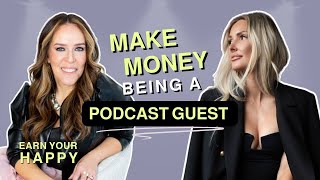
Beth Nydick breaks down her Mike's Method system for turning podcast appearances into revenue. She covers guest targeting, storytelling that converts, and tactical promotion like multi-week resharing and clips. One designer generated $14,000 in contracts from a single targeted outreach sequence.
Questions this video answers
April 2, 2025.
M = Monetization plan; I = Intentional guesting; C = CTA; S = Scale & amplify.
DM Beth on Instagram with the word "10K" to receive the 10K podcast playbook.
$14,000 in contracts (from outreach referencing a specific podcast timestamp).
Chapters
A lot of people think that the media exposure is enough.
Visibility doesn't equal dollar signs, because if you do nothing with it, it never goes anywhere. I did a webinar and no one showed up.
Those are fun. I've had those, too.
Right? We've all done those. And I was like, but I've been on Dr. Oz. And my dad looked at me and he goes, so what? And that's when I really started to figure out, how do I get the audience to actually listen to me? And. Foreign.
Welcome to the earn your happy podcast. Thank you so much for coming on.
I'm so excited to be here.
Okay, so we just had not enough time to catch up before this. You flew in from the East Coast.
I did.
You've been traveling. A traveling woman.
What time is it?
Yes, I know you come. Even just coming from the east coast of California is like going to another country. It feels like.
I'm glad you said that, because California is another country.
It is its own country compared to New Jersey, which I welcome.
I didn't have my passport this time, but they let me in, so we were all good.
Okay, that's good.
But it is. There's sun. Well, not today, but there's sun, there's surf, and people are nice. So I'm happy to be here.
Okay. Is this true? Are they nicer than the East Coast?
They're more talkative.
Okay.
Than being nice people. Let's put it that way.
You know, I did this, like, test when I went to the east coast once. My husband wasn't with me. I was launching my book, and I had, like, all these desk sides, and if you don't know what a desk site is, it's like when you go and you, like, talk to all these different magazines about your book and kind of, like, pitching your book. And I was like, okay, I'm going to do this test where I'm going to try to get New Yorkers to smile back at me and be friendly. It lasted maybe 60 minutes because. And I did it on the street. I did it at, like, a, you know, a Starbucks, a couple other places. I literally got so distraught and, like, drained of energy.
Nobody.
Nobody would smile back at me. And I was like, okay, we're gonna try again. But I. I did it because I was like, I don't believe that they are, like, I. I don't think they're like this because they want to be. I think they're like this because it's exhausting to do it. And I proved my point. Like, it was Exhausting because of the amount, the sheer amount of people. It's a lot that you pass on the street. It's preservation. So that's what I've decided that New Yorkers preserve. They're not mean. They preserve.
We show love in a different way. You know, they yell at you, or they're like, hey, get out of my way. You know, that kind of stuff is protecting you.
True.
It's not really.
Look, I love New Yorkers. I literally love them. They're taught me, we love you guys, and they've taught me so much. We actually, especially as a Midwesterner, it was, like, vital for me to hang around people like you. Like, even with everything we're working on, which we're going to talk about in a minute, like, you've really helped me to be like, okay, well, you should say this, or you should do this, or you should put yourself forward or you should. It's just very bold, which is important. It's important. But that's a big preservation. And to be boldest.
Yeah.
Tell me why.
I get that a lot. I get, how are you so bold? How are you so confident? I'm like, I grew up in North Jersey with entrepreneur parents. Right. Like, it's just about. I think it's that plain. I'm gonna tell you how it is. I'm not gonna sugarcoat it. And, you know, I worked in TV in New York, so it was like me and a camera guy, like, running around the city trying to get people to talk to our camera.
Oh, God.
That was one of my first jobs. That's rejection therapy, was 6th Avenue and 47th Street. And being like, hey, what do you think of. Hey, what do you think of. Hey, what do you think of.
Everyone should have to do that.
It was trial by fire. Yeah. But I just found, like, being an entrepreneur, if you're not gonna say what you mean and you're not gonna be bold with what trying to get across. I don't. Honestly, I don't know how any. How to do it any other way. And to not do it that way just seems to take more time.
Because it does, which is why everybody needs you. You're just gonna, like, accelerate.
Did everyone hear that?
Yes, exactly. We'll rewind it. Because you're an accelerator, because you cut through, like, the quote unquote, maybe niceties or the shyness or whatever, that. That aren't necessary. They've just gotten there because were scared.
It's a lot. And I know that I grew up differently, so my parents were entrepreneurs My parents didn't go to college and they started a business, a car wash in 1966 and had grown it to several car washes. And my dad, he was an electrician company at one time, an alarm company. When I was 13, we had a limo company. So I've watched my dad.
Wait, bonus as a 13 year old.
Oh my bot. Miss, are you kidding me? But I watched my parents build a 8, 9 figure business out of my living room which was sending people to Israel to experience what Israel was. And they started in 86. So it was about. I have an idea. Let's make it happen. And I watched them. The story I tell about my dad is he is about whoever dies with the most toys, wins. So he had the huge cell phone in 1983 in the car, the huge car phone. And. And I remembered listening to him enroll people in his idea of what he wanted to accomplish next. And that's what I learned how to do. Not only enroll in the idea, but enroll them in how. It's a win win for both of us. And then I married a man who I adore. His name was Andrew. And his mom opened up a store when she was in her 40s. His dad graduated law school, took the bar, never was a lawyer, opened up his own, called it the country store. And it was his baby. And it was about what's the idea and how you can make it happen. So I never had that. You can't do that or why should you do that? Or even why you? It was always like, why not me? I could try it and if it doesn't work, I tried the next thing. So I think I come to it from a different point of view than most people do. And then I just, being a middle child can see people. I don't think you're a middle child.
I'm like, I am a middle child. But by like, you know, I was a baby for my brother came when I was 14. So I am, I am.
You are the baby.
I'm the baby.
That's why we love Lori, because she's the baby. But being a middle child, you're like, over here. Like, can you see me over here? I took one of those tests, I don't know if they had that where you were one of those tests in like middle school, high school of like what you should do in the future?
No, only the presidential test. Can you touch your toes?
And to climb a rope? Okay.
Very important.
So in Jersey we took this test. It was like, what's your career gonna be? Can you Guess what my career was supposed to be when was 15?
Like, PR.
PR and TV.
Oh, straight.
Exactly. What?
Exactly? That's amazing. Well, now it's so funny how much our childhood shapes us. Oh, yeah. Like, whether it's from trauma, which I guess you could consider some of that as a child. You're like, oh, my God. Just thrown. You're kind of thrown to the wolves. Frequently.
Like, frequently the biggest one was there was a celebration, and I was in a youth group. I was the vice president, and the president got sick. And literally my dad goes, beth will do it.
Oh, God. Great.
I think there were.
How were you feeling in that moment?
Thinking about it now? I probably was dying, and I was like, but I can do this. Right? That's something I've always done. I've always been like, you can do this. Don't freak out. You can do this. Don't do it.
Would your parents say that to you ever, like, you can do it? No.
They were like, you can do it.
Okay.
So in front of thousands of people, I spoke when I was 16.
Wow. Okay, this is. This is so interesting, too, just because, like, your parents were like, you can do it. I remember my mom saying something to me where she was like, you can't do that. Aren't you nervous? But that's the stuff that sticks with us and that, like, shapes us as we get old. Like, you're just having me get, like, get flashbacks of that. Okay, so we met in a fun. In a fun way, like many people meet, except we were both just, like, bold and knew what we wanted. So we were in the entrepreneur group, and you had put a post in there about monetizing your podcast interviews. And I was like, okay, I've been on a lot of interviews. I haven't really learned how to, like, drive them to a CTA or really monetize those along with even just, like, storytelling. Like, that's been a. A big weakness for me that I've been working on for a long time, but never, like, really focus. Kind of working on it on my own, which you gu. It doesn't really help that much. Cause you need some guidance with it. You need feedback, and you'd put a post in there, and immediately this post popped up. I had never responded to a post in there. Not out of. Really. Not out of, like, being a jerk. But I haven't really been in there. You know, I hadn't been in there a lot, and I decided to go in one day. How random is that that I hadn't been in there?
Well, you know, universe, but that's how it works.
It's so crazy. And so the one day that I'm in there, your post pops up, and I was like, oh, my God, this is so amazing and valuable. And I think I put on there, like, right away, I was like, hey, can I. Could I, like, trade you? Or. I can't remember what I put, but I think it was something like that where I was like, let's trade. Like, let's. I would love to have you on the podcast if this all works out. Like, let's see what this is like, or what this looks like. And here you are. But what were you thinking? When I remember being like, oh, my God, she could be like, who does this think she is? Like, I remember that. I was like, well, I'm saying it nice, Lori. Not at all. So what were you thinking with that?
Well, first I looked at. I was like, I knew exactly who you were. I read your book, and I was like, that's crazy. It was like a really. Like, really, really, really. And I was like, we'll see what happens. Like, maybe she this, that, the other thing. But what I've always thought is, like. And I appreciate about you is that you're the motivator. There's so many of us, like, teach a specific thing, and it's really easy to earn these things. But then I always felt like you stepped in to, like, get us to actually do the thing. So I was super excited to be able to support somebody like you and not only learn from you, but to get to know you is like. And I think that people listening to this pod, that they fall in love with you because not only are you gorgeous on the outside inside, but you're also gorgeous on the outside, meaning you're so generous with your spirit. And it was so nice, but I was like, f. Yeah, can we curse?
Oh, yeah, we can curse on you.
So I was like, fuck yeah. Like, lori Harder wants to work with me. Are you kidding me? And I would love to. I've listened to Earn youn Happy, so I totally want to be on. And it's those experiences, like, we're just talking about. I could have not answered. I could have been scared to answer you because you're this big entrepreneur, and she. Her and Chris have this, and she has these books, and she. The girlfriend experience. And she seems so cool, and she's like, five nine, and I'm five one. Like, who? Whatever. I could have made up the story. I could have made up. Instead, I think I went, yeah, when do you want to talk?
I was like, yes, this is the best. I love when energy is like that, when it's just so synergistic and it's like a Hell yes on both sides.
Totally.
It's so much fun. So going into it, I was already excited because I'm like, oh, she sees value in that. Great. I see value in this. Let's. Let's have some fun. And either way, this will be great. Okay, so you are the person who helps turn media exposure into serious money. So a lot of people think that the media exposure is enough. Tell me. Tell me more. Tell me the details on that.
Like, visibility doesn't equal dollar signs, because if you do nothing with it, it never goes anywhere. And the leverage and amplification opportunities, the social media opportunity, the email marketing opportunity, the audience opportunity. Because, Laura, you know this. Most people, and we had this discussion, even people who come on this couch or on the podcast, and they share it once, they maybe do a post, but they never share it again. And that didn't make sense to me. But I'll tell you the backstory. I had a PR firm.
Yeah.
And we were getting our people great press. And they would say to me, we've loved working with you, Beth, but my business hasn't. Hasn't made money. We haven't moved the needle. Like, I don't understand what's happening. I'm not growing. And then I realized, oh, they're not doing anything with it. So I just shared the stuff that I had been doing organically because I'm a former TV producer and I understand promotion. That's really how my parents built their businesses. And as soon as my clients started using some of the systems, they started growing. And I was like, hell, yeah. And then anyone listening that's owned any sort of agency knows that it could kill you a little bit every day on the inside. And I had started, like, a side project where I was helping just entrepreneurs do this, and they were like, you're a genius. My business grew this much. I just got this opportunity. This is happening. This is happening. So I literally closed the PR firm overnight. My husband was very happy about that, but he also wanted me to live honestly. Lori. I was having, like, heart palpitations.
For sure.
It was. And I'm a Pisces, and I'm a middle child, so I am sensitive. But it was also. I knew I wasn't serving the way that I could because I like to get my hands dirty. I want to get in your business. I want to know what's really going on. I want to see how we can collaborate and connect your story to your framework, to your offer and put it all together. So I started Mike to millions of. And guess what? People started being successful and using their media to earn money. And being an entrepreneur, I think so often people are selling things that continue to build your business as a hobby and not to earn revenue. I'm a Jersey girl. Let's make some money so we can buy some shoes.
Exactly.
And groceries and everything else.
And everything else. And maybe something for the family. We'll see. I'm just kidding. Okay, so this is so true because I used to, you know, when I would get covers for magazines, I understood, like, I understood nothing like what you've taught me, which is so exciting for what I see, like, in my future. So thank you so much. But when I got magazine covers, I remember somebody saying to me, I believe it was the photographer. His name is Paul Busetta. And he was just like, some girls do a lot with it, some girls don't. And I just had this moment of like, oh, my gosh, I'm gonna use this cover till I'm like, 40. Here we are still using it. And I was in, like, my early 30s, and I remember thinking that there were all of these women who had. Had covers who I only saw the COVID and never saw them anywhere else. Never. Never even heard of them. They never did anything with it. You go to their social, all the things. It was not being used. And I remember thinking, I'm gonna use this. I'm gonna use this as leverage. Because Otherwise it's literally 30 days on the stand and you are gone, Completely gone. Like, the next girl's on the stand. Nobody cares anymore. We're done. It's momentary. And so that's when I really took it, and I was like, we're going to use this for speaking. It's going to be, you know, in my slides. I'm going to put it on social. I'm going to email it out over and over again. It's going to be the credibility that builds me. And it really, really did. And it's just such a difference between. Those women truly are doing nothing now, which they could have. Even women who had a ton of coverage, they just didn't use it.
Right. It's, like, so sad. It's such a missed opportunity to think that you're one big move. So I don't care if you're on the COVID of Self Shape. I forget what.
Oxygen.
Oxygen.
Yeah. Some other ones.
Right. So if you're on the COVID and then you do nothing with it, then that opportunity is lost. Let's talk about an entrepreneur space. Yep. Say you charge $500 an hour and then you prep, record and promote once or twice your podcast. Are you making back that money? And if not, what's the ROI on you doing more? So if we can institute a system into your business, and that's what I'm teaching people, is how to not only create stories and understand how to say on the podcast, but the back end system system so you can replicate and amplify what you're doing, then you can start to make the money back for what you're doing.
Okay, let's, let's give some podcasters, we're going to dive into this. But just for right now, podcasters, a little bit of advice. I know I remember when you would tell me, like, when you go on a podcast, you need to share it x amount of times. And a lot of times, like even with me, I've started sharing, you know, multiple, multiple clips of podcasts, which has been huge for me. I've had a couple people who've collaborated multiple times, which I'm just like, no shame. I'm going to ask this really huge influencer three times to collab. And he did. And it, it grew my audience. I was like, this is awesome. So what's something, when someone goes on a podcast, like what are you gonna do on the back end?
So one of the things is to not share it once in your story. Like we said that that's the minimum of what you should be doing. But for example, I'm on this podcast, after it comes out, I'm gonna share it three, six, nine and 12 weeks after. Then I'm take a six week break and do it all over again. So imagine if I do not imagine I'm gonna do that. And I'm also doing three or four other podcasts. So now I'm sharing all of these pod the time. What does my social media look like? What is my audience who reads my emails thinking? What does somebody who's going to look at me for being on a conference or speaking at a summit, what are they going to be? What's the credibility that I'm going to be growing? Oh my God, Beth. Done all these things all the time. I'll tell you a quick story. Last summer I had a medical issue and I was out of my business for about eight weeks when I came back and I started getting on phone calls, you know, coffee chats, connecting back to People. Beth, you were everywhere this summer. I was literally in my bed.
Wow.
Because I kept sharing what I'm doing. I was in Oprah magazine years ago, but when I share it, people think I'm in. And even though it says the year or I don't like tbt, but the year that it was or anything else that I've been in, when I reshare it, it re ups the credibility that I have. It re ups the notion that, oh, Beth is a big league. She's in top podcast, she's on top media, she does top things. And why would I just share that once? It's like having your birthday once a year and then never celebrating yourself for anything else.
I know. It's crazy because if you just keep doing it like you said, people think it's right now. And another thing I picked up, we're just gonna do all lessons from Beth throughout this whole thing.
Ooh, I like that. It's a new podcast. I know.
Okay, so you've been on national tv, you've been on huge podcasts, you've had features all over. Obviously, shout out to Oprah if she's listening. Just kidding.
Could you imagine? I mean, we're gonna send it to her now. That's another. Another lesson. If you mention somebody, I don't care if it's a Dalai Lama or Oprah, then you should be tagging them in everything you post about it.
Well, this is what we're doing.
Why not?
This is why not. What do you have to lose?
Nothing.
But can you take us back to a time when you thought that media was not everything?
Yeah. So I actually was a food blogger for a long time. I have a cookbook that came out, traditionally published, about cocktails. And I was doing the circus. I was doing all the shows in New York. I was on Dr. Oz. I was a Dr. Oz blogger.
That's amazing. That is like the back in the day, you guys, for all of you younger people who are listening. But, like, that was the peak.
It was. It was. And I thought that was going to move the needle in my business, you know, on the screen.
Right.
That's what I've got. Beth Nideck. And the company was called Blue Barn Kitchen. And I thought that that was going to make a difference in my business.
Yep.
And I did have people come on my email list, but what I didn't have was clients, because I wasn't converting listeners to clients. And all it did was give me credibility. But that I didn't create opportunities for myself to leverage that credibility. And amplify it so that I could be on. Which I never got to do. And I would still like to is Good Morning America or I was on the Drew Barrymore Show. Drew Barrymore and I ate bugs together.
Interesting. How was that for you?
Well, I have video of her saying, up next, special guest Beth Nideck. And every once in a while you'll see it. So if I'm pitching a show that I'm developing or I'm pitching to be on a platform, that's the stuff I'm going to share so that you can see the credibility I built for myself. And then I'm creating the opportunities for myself. But when I was back doing food blogging, I didn't understand any of that. So I'm just racking up all of these placements and it was turning into nothing. I remember I did a webinar and no one showed up.
Those are fun. I've had those too.
Right? We've all done those. And I was like, but I've been on Dr. Oz and my dad looked at me and he goes, so what?
We hate you. And you're right, dad.
He's always right, you know? And that's when I really started to figure out, like, how do I get the audience to actually listen to me and be in on what I'm saying and take action? Because it's great to be like, oh my God, you had a great episode. Better is, oh my God, you had a great episode. And I love that download. I love your emails. I've been following you, right. Because I listened to Earn youn're Happy. And I was in on what you were saying and who you were having. That's why I was in your funnels and getting your emails. Like, let's be honest, I want everyone listening to be in my funnels. Yeah, Right. To my offers to see what I'm about to come to my events. So if I'm not converting you from a watcher listener to someone who's in on me, then there's a mission. And I think that's the biggest thing that people don't ever focus on. They focus on getting the media and maybe sharing the media, but certainly not leveraging and amplifying it.
It's actually one of the most frustrating things as someone who's forward facing because there is so much time and energy that goes into being forward facing, having this podcast. Eight years, like, add up how much it costs to have a podcast. Most podcasts that you listen to, which is why we don't like bad Reviews, you are paying money to have one. Even if you have sponsors a lot of time, it's probably not going to cover the five years you did not monetize the podcast. And you were paying anywhere from 2,500 to $6,500 a month for your podcasts. For. Especially if you film and do production.
Totally.
And so, you know, when you think of wanting to monetize, it's like one of the. The most important parts of the business. If you want to obviously have a sustainable business. So everybody wants a podcast, but maybe they aren't putting in the work, the most important part of the work. So as you get better at podcasting or thinking about podcasting or putting yourself out in media, it's like you have to think about the ways that you're going to monetize it. So for you, you created a system that actually turns exposure into real business growth. What was the moment you, oh, this is how you actually make money in media?
Well, it's called the Mike's Method. It's M is for monetizing a monetization plan. I is for intentional guesting. Where are you showing up? Are you on the right platforms? C is for cta. So often, Laura, you know this. So often you're like, well, you can meet me here and then you can find me here. And then it's a different. You're like, ah, yeah, you know, it doesn't make sense. And S is for scale and amplify. How are you going to scale your business? Using the video, using the audio? How are you going to amplify it? And that's the promotional plan. This is how I talk about my business. It's a little bit of media coaching, because everyone needs that with a warm hug of strategy. And then I would say and then a lift up by social media and email marketing as a promotional plan. But I call it the profitable podcast guest system because it is a system that you integrate into your business. Because most people have no strategy and just be like, oh, I'm gonna have a conversation. Lori, when I hear that, I die a little bit on the inside. Because it's such a miss to be like, what do you mean you're just gonna have a conversation? Why? Why just have a conversation? Because if everyone listening, okay, if nobody, if you don't get anything else from this conversation, which is impossible. But listen to this. Podcast guesting is a business tool that you need to be using with strategy. Otherwise it's a vanity metric and it's just performance. So when you start to Use it and actually think about it. Like you think about your email or posting on social media, you're looking at it differently, you're engaging with it differently. And for my clients, you're much more successful booking the shows you want and then converting those audience members into actual clients.
So you know, whether you're speaking on stage, whether this is a podcast, like, it converts all the way.
Yes.
It converts across to everything social media, the reels that you're posting.
Yeah.
I watch so many people, myself included, which now I'm starting the plan. The wheel takes a while to get started, is something that I want to tell people. I've been talking about working with you and I'm working with a couple other people in my life. And the foundation has been about, especially with social media. Social media has been about a four month, kind of like foundational laying of everything. It's been like probably two months with you. It doesn't have to be. My life is just really busy right now. But you'll probably be seeing a lot more of it in like another month to three months. Like, and it's all practice.
Yeah.
It's like putting yourself out there. So what are, what are some of the. The biggest common mistakes that you see with people?
Ones that you just said? They don't think it's practice.
Yeah.
Everything we do we're doing is actually testing. Right. Seeing if it works, seeing if they connect, seeing if they don't. Do we really feel like it is. I think so often we want to create and put it out there and expect it to be blaze, to be blazing. And you're like, well, it's not. But some of the myths that people are out there, one big hit's gonna make a difference. I love you, Lori, but if I don't do something with this podcast, it's not gonna make a difference in my business. Right, Right.
Totally.
You know, if I'm going to show up and just have a conversation, it's not going to do anything for my business. It's having that strategy that really makes a difference in what you're doing. But all of that said, if you are on the wrong platforms again, you're not going to be able to make a difference in your business. So if I'm speaking to marketing assistants, then I want to be on a podcast that talks to marketing assistance. If I'm somebody who sells services to the health and wellness entrepreneurs, then I should go beyond Bobby Brown's podcast. Right. If I'm talking to newbie entrepreneurs, there's certain podcasts for me to be on so often they're like, well, I'm just gonna go on podcast. I'm like, that doesn't help you if you're not targeting the right people. And then there's three different kinds of podcast, because I think. I don't know why people categorize podcasts as podcast. There's an authority podcast, which is this one. Your authority gives me credibility. People trust you, and if you trust me, then they're going to trust me. That's the first kind. The second kind is the niche market, and that's what I was talking about. Very specific service for a very specific person. Like, again, if I do websites for animal groomers that I want to talk to somebody who has a podcast that talks to people who own pets.
Yep.
Right. Totally getting totally specific about it. And then storytelling ones, which are more. I'm not going to say thought leadership, because I don't like that word anymore. I think it's about creating your digital personality or becoming a digital. We've talked about it. A digital celebrity. Those storytelling podcasts that really allow people to see who you are. Those ones that you're listening and you're like, oh, at coffee the next morning, you're like, oh, Lori, did you listen? That was amazing. She said this. There's all different types to get your story across because there's sales ones, there's credibility ones, and then there's awareness and who you are once. So when we can step back and be like, okay, my strategy is three of these. Three of these, and four of these. And these are the platforms I want to be on and not just, oh, my God, Lori has a podcast.
Okay. So one of the big things that you're helping me with is to find the main stories of my life that lead up to an offer and bring people to an offer, but to really help me tell the stories that will lead into the things that I'm offering. Offering right now.
Right. So let's.
Let's talk about how you start with that with people and what do you see wrong first? And then let's talk about what you make right.
What I see wrong is a lot of timeline conversations. This happened and this happened, and then I did this, and then I did this.
So guilty.
She knows. She knows it. She does. So bad. Right. And that's interesting. Yeah. Because I can follow you along, but you're not going to convert me to. To a follower.
No.
Right. Instead, you're telling me about a very specific time in your life. One of the things I always. That People always laugh that I say. I'm like, I want to know the color of the tile in the bathroom at the high school where you hid from the bullies. That's how specific I want you to be. Because a story is great. But if you're not making me feel something and you're not creating the opportunity for me to see what the outcome, the lesson, the outcome was for it, then I'm not gonna get to know you well enough to know that you're my person and that you're the solution to my problem. And within the storytelling, I like to involve your framework. You have it for a reason. It's your key. And when you institute it into the stories you're telling and you can connect it to the offers that you're giving, that's when the real conversions happen. Because people want to know what you're about. And if you can give them the information that the framework works this way, and I work this way. And when you do this, this is what happens. And they can see themselves in that story because they, too, were chased to the bathroom by the bullies. That's when that magic happens. That's when you're going to get the DMs. I need to work with you. When can I get in your calendar? There's nothing better then a podcast coming out. And then I see all these. All the messages in my Instagram or all the emails or all the I was crying or I was doing this or I was doing that. And that comes from them making them feel something and giving them the. The resolution. I call the resolution story, the outcome of it. So they can see themselves in it. Because there's nothing like listening to somebody you admire and feeling so far away from who they are or who they become. And there's no space in the story for me to be like, oh, I can do that, too. I can do that with Laurie's help. I can do that with her framework or her opportunities or her options. Instead of being like, oh, I learned about Lori's life.
How do we. There's a fine line. So how do we tell a story with the details of the bathroom tile color, but not get so wordy that you're killing everyone. You know who I'm talking about. I'm like, I don't need to know these things. Like, it turns from a great story into like, please stop.
Yes, it's a specific moment. It's not the whole story. Give me a moment where you can give me. Because I'm a visual. Since being in tv like, when you tell me that story, I can see you running into the bathroom, and I can see the tile. Or I can see one of your stories. I can see you in the kitchen talking to your family. But it's just that moment. It's not the whole thing. So you can place it where it is, but the way it gets wordy is when you want to tell me your whole life, and you want to go into all the details, but what's that moment that changed something for you? That I can be on that journey so I can understand who you are. Because I just want a solution, and I just want to know if you're the solution to the problem. I have.
I love that. One of the biggest questions podcasters ask when you're on is because they don't really do the research. They just don't. They don't. So they say, okay, so give me your backstory. Like, how did you grow up and how did you get to here? I'm like, you want me to fill in 44 years for you briefly? And this is where I feel like I suck. This is what you're helping me with. But I'm still like, I haven't practiced it remotely enough. I won't even tell her how much zero. But I have. I have practiced it, actually.
We'll do it. We'll do it together. It's okay.
Help everyone who's listening understand how to pick some key stories to get from how did you grow up to what are you doing now?
Which is the worst? Which is, you know, what comes up for me is like, they've said your whole bio, and they're like, so, welcome to the show. Tell us about yourself. And you're like, mf, Are you just.
I just.
I don't understand what I do. So that's. So I teach five different stories, and that's where the origin story comes in. Okay, where did you start? Where did you begin? And this is. This is. I know podcast hosts hate me when I say this. Stop listening to the podcast host just because they say, tell me your whole life story. Be like, oh, that would take too long. But you know what? When I was 27 and I worked in TV and I worked at the Tonight show, and I got to do this. Then there are. People are in on you. Because that first three to five minutes at any podcast interview, you're either in or out. How many times you've been listening to something, you're like, this is boring all the time.
I'm like, I can't do this. I Actually just want to get to the good stuff.
So if the good stuff is up front, because people wait to the end to have the good stuff. Right? So if I'm talking about how I worked with celebrities and national tv, in the first three minutes, you're gonna listen longer because that's interesting to the people who wanna work with me. Right. If you're like, I don't care about Hollywood, then you probably don't wanna work with me because I. I'm in the media. But when you have that origin story of where you came from, how you had a journey through conflict or wherever, you know where, however you got from there to here, and it's not like, well, I was an assistant and then I decided to be a social media manager. It's not, go, tell me the real stuff. Tell me that you wanted to get. I have a client who was like, I just wanted Botox money. And I said to her, start telling people that story.
That's going to resonate with.
I mean, I'm like, I want Botox money.
We'll target Newport Beach. It'll be great, right?
Or North Jersey. Exactly right. But that's what I mean. It's. Pick that one thing that your client's going to understand and that's going to resonate with them and formate the story around that. And that's your origin story. And then people can. And I love when people feed me back my story.
Oh, my God.
What was it like to work at the Tonight Show? I'm like, well, you know, it was awesome, and I'll tell you some stories from it. But that's what's interesting about me. So finding out what's interesting about you and answering those questions with another. With this totally different answer. Because again, podcast hosts, I'm sorry, stop listening to them. Politicians, don't listen to freaking Savannah Guthrie. Why do you need to listen to somebody who. Not Lori? Because, of course, Lori's amazing. But most podcast hosts don't know how to interview.
Honestly, I love. I actually love when guests do this because you can do all the research on someone, but you can't get to their exact zone of genius. Sometimes, like, I even have people send me four to five questions that they would love to be asked to, like, really pinpoint them into their zone of genius. Because it will be a bad podcast if I ask questions they are not interested in answering or if it's a story they don't want dug up. And they do not, not. They're like, oh, God.
I.
Like, I wasn't prepared to go into my trauma that I haven't visited for five years. Thank you so much for bringing that up. And while some people look at that like, oh, I. This is the conversation amongst people who sometimes are like, oh, they weren't expecting me to ask that, like, yay, or I'm getting something different out of them, I don't think that's always a good thing at all. And I want to highlight people for where they're like, really? Of course the personal questions are important, but for what they're really good at, at talking about and promoting that and promoting.
Right. Because it's a much better podcast, right. I can tell you where I was to where I went versus whatever the question you're going to ask me about my life. Like, you don't really care that I was a middle child living in New Jersey, right? You're, you're, you're focused and you're caring on the next gen of my life. So let me tell you that. And that's why having just the conversation doesn't work. Really? Coming into the conversation with, these are the points that I need to hit hit. These are the points that I'm going to get DMS from my clients. And that's where having an actual strategy makes a difference. Because if you have that strategy and you're like, okay, this is the offer I'm trying to sell. And we can go backwards. Here's the offer I'm trying to sell. These are the pain points they have. This is how my offer is the solution for it. And this is how people feel after they work with me. Let's have a conversation about that, about fear. Because it is the trauma. It's about fear. It's about belonging. It's about feeling less than or not worthy. You don't think that I changed my outfit 16 times today, right? And I said to my husband, I'm like, I'm not standing next to Lori. I'm looking like a midget next to me.
She looks amazing, by the way.
I'm only five one. I'm a little person, right? But having that real conversation versus this very powdered, everything's rosy, everything's great conversation. That's what I want in the beginning of the podcast. So I'm in on listening to you. Otherwise I'm bored and I'm out and I can bore easily.
And she's the most unboring person ever. Okay? So, you know, you talk about really owning your story. How do you own the things that are uncomfortable? Like sometimes I'll be talking to someone, I'm like, oh, they were not ready to tell this story yet. Like, this is too early. They're definitely not owning the story. It doesn't actually feel good for me to even listen to it.
I think it comes down to having that structured podcast interview that you're going to do and giving you. This is right in the. In a lot of applications that I filled out is what are you willing to talk about, what are you not willing to talk about? And if we're going to be in this game, you have to be willing to talk about everything. You have to be willing to talk about the dark side and the light side. Because if I came in on here and I was like, I'm always terrific and I always do the best thing. Liar. Right? Let's have those stories. And being uncomfortable. My son, who's in college and he's a cognitive science major, and he talks to me. He has a substack and he talks to me all the time about this stuff. He's like, mom, you need to be comfortable being uncomfortable. And I really took that in because the more uncomfortable we are in our businesses and as we're exploring the media for our business, the better it's going to be. So instead of seeing a being uncomfortable as a bad thing, it's a growth opportunity. It's a lesson. It's a way for people to feel who you are. And you want those DMs from people. Girl, I feel the same way. I recently put out a post about transactional relationships. I unfortunately thought somebody was my friend, and I learned very quickly they weren't. When I couldn't do something they wanted me to do. I got so many DMs from people from that email. I put a post in an email out, so it's still on my feed, I'm sure by this time. And I got the response that I wasn't looking for. I got support. I got me too. And that gave me more than anything. So people saw me, they saw what I was about, and they had that same experience. So you don't think those people might be a little bit more in on what I'm doing? And you don't think I'm now looking at those little. Those people a little bit more? Because that's part of my community build in what I'm doing. Being uncomfortable is a good thing.
You're so good at being scripted while still feeling meaning, like you have your agenda.
Yeah, totally.
Which is important. But you also are able to really drop into the story and get people to feel real. What is that? Because, you know, I interview so many people who have books, and they clearly have an agenda, and I'm great with it. That's why they're on. We want to help them sell their book.
Totally.
But also have a great, real conversation about their book. And I'm sure you've experienced this where I'm like, I. This is the same podcast that they have given everyone else to a T, really, without feeling. They're just saying words. How do you keep the feeling in an agenda, scripted plan?
Because that's. That's the first thing that you want to accomplish. Right? I'm feeling first. Right. Like I said before, I'm a Pisces and a middle child. I got lots of feelings and they're all sensitive. Right. So if you're not going to drop into your feelings, then you're not going to connect with people. I don't care if you're on a podcast or in a room with people. It's. You're not going to connect. So I think what happens with a lot of those people is they're so scripted that they take the feeling out of it. Give me the passion of why you wrote that book. Give me the reason behind the stories in the book. Not, I want to sell the book. And this is why you should read it. It's about how you can connect to somebody else emotionally. I too, felt like that. I too, went through that. I have a very good friend who unfortunately was attacked, sexually attacked, and she does stages and talks about it for her healing, and she's written a book. But can you imagine somebody like that that's had that experience go on a podcast and not talk about it?
Right, Right.
So most people write business books have come from some sort of wronged. So tell me when you were passed over for that big promotion because the. The guy got it instead of the female got it, and how you went into your boss's office and quit and then you went home and died a little bit because you're like. Like, now what the elf am I going to do? Right? Like, that's the story I want to hear, not the story about how you got published. It doesn't. It. For me, it doesn't make sense why you want to not show who you actually are and you want to just talk about what it is that you're actually doing. Because for me, it's not as much fun to have, like a real conversation. And also, Lori, actually, I was. I always wanted to be an actress when I was little. And I Took lots of improv classes. Like, I went to a. How little.
How old were you?
So I went to a camp called French Woods.
Okay.
When I was 10, Sarah Jessica Parker was a counselor.
Stop it.
When I was there.
This is amazing.
I get so. I vaguely remember the story. I was 5:1 when I was 10 years, like, I literally was this size. So I was a giant for the.
First time and then stopped.
I did exactly like I literally. Little. Little child hands. And I remember being in the bunk and these girls who had been there for years, you know, like, I came in late and how they told me that I was different and I wasn't accepted and I wasn't cool and all this stuff. And I've always liked to wear. My mom used to call them costumes. I've always liked to wear, like, clothes that aren't normal, everyday kind of clothes. And I remember walking outside and seeing Sarah. So he wasn't Sarah Jessica Parker back then? Yep.
She's just Sarah.
And she was like, you're gonna be okay. Oh, my God. I've met her. I've seen her since. And I said to her, I was at French woods with you and you helped me. And she was like, are you kidding me? You know, I met her like 25 years ago. But it was like those little experiences. That's how cool that that happened. Right. But also, you were at acting camp and the girls made fun of you because you were bigger than them. I had boobs too, right? Like, yeah, at 11. I think back, I think I was 11 because I didn't have boobs at dead. At 11, I had boobs. But like, anyone who listen, I'm probably get DMs from people. Like, I had boobs at 11. Right. So it's that those spaces in between the scripted stories that you can actually connect with other people. And also. You're gonna kill me. I think it's fun to talk about myself.
Of course.
Right. It's. I think that we get into this very. Like, I need to be professional and I just. I'm not always like that, Lori.
You shouldn't be.
I can't. So I actually had a appointment with somebody today and her assistant messed up the calendar a little bit and she wrote me an email that she apologized for not having excellence. No. Who do you work for? I'll tell you later. But I was like, I don't wanna work with this girl because I am not gonna live up to whatever expectation I am.
I just. Whenever people are like, oh, I've heard so much about you, I'm like, please lower the bar. Cause you're about to get so disappoint.
No, listen to her. You're not going to be disappointed by me.
Fart in the first five minutes.
Well, I love a good F bomb. Great. But like. But that.
What kind of F bomb?
Both. I have boys, remember?
Right, exactly. I have teenage boys.
But that kind of pressure, it turned me off. You know, that's what her standard is. And then I don't think that having conversation with her or having her on my show is going to give me the kind of interview that I want. Because if that's where you are outside of anything, then you're not gonna be my type of person. And I'm not for everybody. Let's just say, like, I'm definitely not for everybody. But my clients work with me and they tell me when we're done with our. When, you know, they're done with the course or they're done with the contract, and they say to me things like, I would never have done X without you. Right. Or, I didn't wanna work with you because I was too scared you were gonna make me do the things that I knew I wanted to do but was too scared to do. Right. Because they listen to me on podcasts or they meet me on stages and I'm telling these stories and I'm being just me. Then they know it's safe to be. Like, I'm not sure about this. Right. You're safe for me to be like, I'm a short little Jewish girl from New Jersey and I don't have legs forever and I want more. Yeah. It's a safe space. And that's why I think that I connect with people. And I think that's why you connect with people. And we've talked about this too. Like. Like, you have, right? You. You're gorgeous, you're tall, you have this great life. But when you actually are live and when you're on stages or when you're talking to people, you're like this goofy mess who's just adorable and we just want to, like, hang out with you.
I did not have her on for this, but I'll take it.
Well, you. But I. You know, but it's not. It's true. Because we put the. We put the people who we see online on a different plane. And when we actually. When they act like that plane, they're untouchable. But when they act like themselves, when they act like. Like they're a real person, that's when people can see themselves in you and can take that leap. Because it's a big leap of trust to work with somebody and to hand over lots of money, no matter if it's five bucks or five thousand bucks to work with you, that's when you can really connect with people. And that's what's missing in podcast guesting. It's these very scripted, I'm going to tell this story and I'm going to do this and I'm going to do that versus open up your heart, do all those things, but open up who you are so that you can connect with people. And it's taken me 52 years to get here. Right. It's taken me lots of therapy and personal development. Because I heard somebody say this recently and I'm sorry, whoever said, I don't remember, she said, entrepreneurship is personal development on crack.
It really is.
And I was like, well, I've been in this game since 2007, so I better have gotten somewhere.
I know. I think of that a lot when people, like, find personal development after business and they're like, oh, my God, I. I found this late. I wish I would have found it earlier. I'm like, you were doing your own version version of personal development in a completely different way. Like in there. They're. They're both important, but entrepreneurship is like, it is like next level, figuring out what you're made of really fast. Where, like, personal development is important, but you do a lot of personal development on your own. When you're an entrepreneur, you do a lot of it in practice with people and team in front of people. It's real life, like, learnings on the spot, where personal development is like learning from a book, reading and going, maybe I'll practice this, maybe I will. One other big thing that I think is really important that we talk about is owning your story on a podcast. Like, how do you go either on a podcast or on a stage and make sure that the conversation beforehand, like, the prep for it, like, can we send people things? Can we send them questions? How can we make sure that we have this go our way?
Okay, so a practical tip. Yeah.
Without offending the podcast host.
A practical tip tip. Open a Google Drive, open a Google Doc, you know, Google folder, and put in your bio, your headshot, your preferred questions, all the things that you want the host to know. Okay. And then send it to the host with a very nice email. I'm so excited, Lori, to be on your podcast. I've compiled this Google Drive to make it easier for you so we can have the Best episode you've ever created. That's kind of ballsy to have a good. Like, that's, like, that was kind of a lot. I take that back. But, you know, like, I want to make this easier for you, so it's not coming at them as the. You're a bad interviewer, and I want to be on your show, but let's make this good work for me. How can we make this the best episode? My goal is every episode that I do is to make this the most downloaded episode. That helps me, that helps you. Let's do this together. Because you don't. You don't have people on to just have them on.
Right.
And we don't talk about it. Right. Like, let's be honest, you're people on to be seen in front of their audience. I want to be on to see in front of your audience. Like, this is a business. This. Yes, we're friends, but it's still a business.
Yeah, absolutely.
When you approach somebody who's you're going to be on their show to make it easier for them, and if they're not open to it, then you should think double. You should think about why you're on that show. Maybe it's not the right show for you.
Right, Absolutely. If. If people aren't with. With guests as well, like, what you taught me, like, if you're not willing to collab, why do you want to come on the show? Like, why. Why would I want you on the show if you're not willing to share it to your audience? Because I'm the one paying for the episode. So it's a really interesting. It's not being a jerk. It's literally going, this is how I make money. Because this is now a job where before it's like, no, I'm just gonna sit here for hours and hours.
No, it's a revenue.
Pay for it. And let's grow your audience and not mine. No, you have to grow yours.
Yeah.
It's so important. All right. What is? Anything that we miss that you want to tell people about this.
I love you. You're so cute. I love hanging out with that. Wasn't it?
Oh, I'll take it.
I want to say, you know, the concept that I really live my life by is you create your own possibility for success. And I've been learning this in the last two years. No OBM or marketing assistant or VA or social media manager is going to save your business. You have to do it.
Yep.
And if you can show up, and I mean, this is One of the things that I do when I teach in my program is, okay, I can do this 1, 2, 3. I can do this 1, 2, 3. And if I can do this one till 3, 2, 3, till 11am and then I'm back in bed for the rest of the day, great, I made it till 11 and then maybe I can make it to 1 and then maybe, like, this is shit is hard, and this shit is all about you showing up and being the best possible you can be all the time. And sometimes I don't want to be that person. Sometimes I want to lay in bed and watch Kate Hudson on Netflix.
Same.
She's freaking hot. And I love it. And talks about basketball, which I love. But I think it's that opportunity to think about yourself differently. Because when I talk to people, especially when I do sales calls, calls, I'm not ready. Why would they want me? I have nothing to talk about. I want everyone to pull up the big girl panties and be like, why not me? Instead of, why me? I have nothing to talk about. You have. If you are of a business, you have something to talk about. People always ask me, they're like, well, who's the right person for your programs? I'm like, you have something to say and you have an offer and you're willing to tell people it on camera. Yep, that's. That's the criteria. Because if you can talk about what you're doing, then you have a hobby. You can't show up on camera. I'm sorry, you're not going to be successful. But the basis of all of it is that you can create those things to make it happen, but only if you're in the mindset of why not me?
I love that because I used to look at other people who were podcasting who, you know, had their many chat funnels set up. Just like, you know, the people that we know are making a lot of money in marketing, and they're, they're, they're dialed in like the top people. And I remember that I used to feel, like jealous of them despite knowing in my head they're more prepared than me. They're doing all of the work that you said today. And even though I'm doing work in other places, I was not doing it around this. I was literally the wing it girl, because I could be. I could still give an okay interview that people liked or maybe they didn't and they just didn't tell me. That's very possible as well. And, you know, I was like, you can't be Upset over the work that you're not doing. And so I just had this realization of you're spending so much time here and you're wasting it. Like, you're. I'm literally wasting it, truly. So it's. It's like I have this side hobby of going on podcasts, and it's being wasted because I'm. I'm. After all of these years, I just am not seeing the ROI because I was the girl who was.
Let's just.
I'm yours, whatever conversation you want. And so I'm talking about things that just are completely not. Nobody knows what my zone of genius is or what I do or what I even have to offer. So an offer at the end of something, even if I was giving one, feels totally not aligned to the conversation because we didn't walk them down this lane of why I'm the expert and why I'm good at it. So this is my frustration coming out for everybody listening because I know that they feel the same way.
Totally.
It's like, how do we make this work for us? And I think that that was. You know, when I found you, I was like, God, just somebody help me, like, please. So here you are. You sent me you. Thank you, God. And I'm so excited about that.
Me too. And I want to mention one more thing. I don't want anyone to listening to think that Lori nor I think this is easy.
This is so freaking hard to me.
This is so hard.
I'm not even close to touching the tip of, like, doing any of the things that I've learned from you. I'm going to.
I listened to your private podcast. You 100% did. I was very, very excited to listen to. To especially number two. But I often hear from people or they say to me, and I think they say that you do. You're so confident.
You're so bold.
You're so. This. Sometimes it's a facade, Sometimes it's a lot of me going, you can do this. You can do this. So as long as people who are listening and I'm talking to the audience, the listeners, if you're listening right now and you have something hard that you're having trouble getting done, just tell yourself you can do it or figure out what that your thing is that makes you get to do those things.
Things.
Because I hit send and go, okay, whatever. Yeah, I'm just gonna hit this. I'm just right. I'm just gonna ask this person, like, totally me to be like, when I texted you the first time on your cell. And I was like, does she actually want to hear from me? You know, like, those kind of things are real. And I don't want people listening. Be like, well, Beth sounds like she can do anything in the world. I often cry in the bathroom. I often think, I don't do this. I often say to my husband, I should go get a job, right? And he laughs at me. And then I'm better an hour later. But it's. It's confronting what we're doing. So as long as you have a system. And I go that. And I'm saying that because that's what works for me. Having this podcast system and having my clients use it and gaining from it. That's why I have the confidence in what I do. And that's why I know when anyone who's listening wants this kind of help, I know I can move the needle for them because I've moved the needle for people who weren't even even podcasting yet. I'll tell you a quick story about my client Heidi, who I will tag in the show now. Just, just, you know, I like to show.
Exactly.
Do what I show.
Share it.
Heidi, she's amazing. She's a website designer. Amazing. An amazing person. We're actually friends as well. And she had just started podcast guesting after we started working together. She had several sales calls that didn't turn into sales. So what we did is we said, okay, Heidi, take these three podcast episodes that you just did. Send it to these people. Hey, Lori, I was thinking about you, and I recorded this podcast. Listen to timestamp 227 to 5. 27. I think you're really, like, really like it. That ended up being $14,000 in contracts. So little things. And that's what I mean by a system and a strategy versus Hi, audience. I was on Lori's show. You should listen. No, Lori and I talked about the hard things, the things that make this difficult, and the reasons that you should give up. Listen till you don't give up. Up.
Right.
Do you hear, like, I hope people. People hear the difference.
Yeah, totally. And on the, the, you know, after working with you, the Rekindle podcast, I just realized the second episode, someone who joined the Mastermind, which is like $40,000, came from that episode too. So thank you so much.
That's amazing.
The go for it formula works exactly so amazing. Okay, so let's do some quick, rapid fire, biggest BS business advice you hear all the time.
Time. I can't do this. That's a big one. When people respond to me, I can't do this. I couldn't possibly do that. And I'm always like, why not?
Yeah, like, why?
I don't understand.
Why don't you do it? Send the email.
I'm not a mindset person.
Yeah.
Like, if you need mindset work, go talk to Lori, get motivated, and you can go back to me. But I'm not that person. And that's what I hear the most. The other thing I just want to mention is those freaking companies. Companies that DM you or send you an email, and if you pay them 800 bucks, you can be in a magazine.
Yep.
Those magazines are owned by the people who are emailing you.
Exactly.
And it's. There's no New York Weekly. There's no LA Daily. I don't know what they're called anymore.
Totally.
But paying for a great platform like a podcast, I totally understand that. But paying for you to be in some disruptor magazine that doesn't go anywhere and nobody that you know reads it. Yeah.
Yep.
It's not possible. Everyone listening knows three podcasters or three people who know somebody who has a podcast that you could be on tomorrow. You just need to go ask them. Yeah.
It's such a racket. There was a giant influencer who was charging people to come to an event, but they would get to be featured in a magazine that was made up that they owned. I was like, oh, that's so interesting. Okay, visibility or sales? What comes first?
Both.
Okay.
Because there's no sales. There's no visibility. Using visibility without sales.
Okay.
It's really. They have to be hand in hand. You have to use them together. Because like we said in the beginning, visibility without sales is a performance and an ego boost. Yeah.
And you're gonna be exhausted after with no payment. So have fun with that.
Right.
You won't keep showing up to perform. All right. What's a phrase you would never say on a podcast?
I don't know. I thought it was the answer like that. No, it's really not. Dead air is the worst. So don't say I'm dumb. Don't say I don't. Don't say I don't know. You'd be like, you know, I'm not really sure about that, but. And give an answer. It's not about being self deprecating, because I'm just as self deprecating as the next person. But positioning yourself as less than that makes me.
So. It's like, I'm not sure on that, but here's what I do know.
Exactly. Yeah.
Okay. Love that.
Isn't Lori so good at this?
Lots of years. Guys, if you could give your past self one piece of advice, what would it be?
You don't need to be skinny.
Oh, dang. Can you go back and give mine me that one as well, please? What's the one thing people should stop apologizing for in business?
Boundaries. Really? And I've learned this from all my millennial friends, is really having strong boundaries. I was not taught to have boundaries. That wasn't a thing. Work your ass off. Work 80 hours a day. You know, that kind of stuff. But having real boundaries. I have a podcast friend who was like, I'm not doing coffee chats right now because I'm saving my energy for other projects that I'm on. And at first I was like, what? And then thinking about it, I was like, oh, that's like. That's a real strong boundary that I did not have in my life. And she's taught me how to put some of those boundaries in place.
So good and so important, especially for entrepreneurs in their first, like one to three years. Man, you. You don't know these things yet. So you're like, why am I so exhausted all the time? I can't scale. Cause I'm so tired. Because you're going to too many coffees and you're giving out too much free advice. Growing other people, people's businesses for free.
It's crazy working. I used to. So my kids were little. I started doing this. My first digital business was 2007. And I literally work like, they went to school at 9, so I'd work from 9 to when I picked them up, and then I'd work from when they went to sleep, which was eight or nine, to like three o' clock in the morning. I burnt out and ended up really sick in year two.
You can't keep up with it. No, you. It's not sustainable, period. Like, you'll figure it out the hard way. So just put some boundaries in. And even though boundaries are. Are super crazy hard at first and horrible actually, and you get a lot of for them from a lot of people, then that stops. It's like the better you get at them. I never hear it anymore. People never, ever. In fact, people hardly ask me to do things now. I think I energetically, like, put off the energy of. I have boundaries. Someone asked me the other day, they're like, how do you do it? I'm like, I don't really get it anymore. It's super rare, actually. I don't even notice because I think I do get it, but I don't mind doing the boundaries laundry.
Well, what's like a big time?
I get a lot of people who are visiting who want to go to coffee, like, a ton.
Oh, like, I'm gonna be in town.
Yeah. And I'm just. I. I can't.
Lori. For coffee.
Well, I would die to go to coffee with you. She literally was like, here. You were here for your sister, right? Yeah, yeah, yeah, yeah. Anyway, we're going to coffee next time they come into town, but I could literally talk to you all day long. I know that people are going to love this conversation and want to know how they can work with you and where we can go to start turning our podcast interviews. I believe this translates into social media. I believe this translates into email. I believe this translates into conversations on the street. So even if we are learning, you know, podcasting and turning media into money, this is everything everywhere. This is what makes a person the difference between someone who is magnetic, that are like, you know who they are. Like, when you meet them, you're eating out of their hand. You're like, how can I be around them? How can I work with them? Where can we work with you on becoming that person?
Oh. So I'm going to direct everyone to one place. A really good, clear CTA. Go see me on Instagram, get into my DM, send me the word 10K, and I'll send you the 10K podcast playbook, where it's literally my checklist of what to do before, during, and after every podcast. So you can make 10k every time you step up to the mic.
Amazing. And, you guys, it's 1 0K. You don't have to spell out 10K. It's 1 0K.
Yeah. Okay.
Amazing. Well, I'm so grateful for you and thank you so much for coming on the show.
Oh, my God, Lori, I could talk to you forever. I appreciate you so much. We'll have a part two and all of those listening. Make sure you're listening to what everything Lori puts out. I've been listening, and I got a chance to listen to so many of your episodes, but the private podcast I died for. So I can't wait for you to put out more of those. And if you're Lori's audience and you're actually listening to her, let her know. Know because she could use some love, too.
See, look at. Look at this. Look. Look at what she does.
I'm a mama bear.
So good. All right, you guys, until next time, earn your happy. Bye, everyone.










