How To Write and Launch A Bestselling Book with 4x Bestselling Author, Jake Kelfer #earnyourhappy
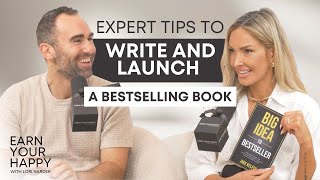
Jake Kelfer, a 4x bestselling author, explains why a book is the most versatile marketing asset for building credibility and opening doors. He wrote his first book at 22 while with the Lakers during Kobe Bryant's final season, and later completed a rough draft in 17 days as part of a 90-day bestseller challenge. The conversation covers outlining, drafting without editing, publishing choices, and 11 ways to monetize beyond book sales.
Chapters
If you have a thought or an inkling that you want to write a book, whether you're firmly established or whether you're just beginning, a book, to me is the most versatile marketing asset you can have in your toolbox.
You know, if people are listening and thinking, well, I'm not an expert. You truly are an expert in your story like no one else has lived it. And you have something so important to.
Say, what do you know and how can you help people? And probably the biggest question that I'd ask is, like, what's the transformation you already went with? Because if you've already experienced the transformation, you've come out on the other side. You have a story to share. So by default, you now have a unique perspective, even if it's in an industry that may be competitive or saturated. And you can combine that with how you want to help people. That's a great starting place to identify and pull out that thought of, do I have something to say? Yes, you do, Jake.
Welcome to earn your happy. Thanks so much for coming on the podcast.
Yeah, happy to be here, Laurie.
I'm so excited. Cause I feel like this is a topic that so many people are wanting to dive into. I just did an event called Girlfriends in Business. And when I asked the room, how many of you are thinking of writing a book or want to write a book, it was 80% of the room. And that really got me clear that you're going to be a really great guest to be able to talk about writing a book. You have your incredible book, big idea to bestseller. And I know that you are on a crazy trajectory right now. You are just so focused on growing your career and getting this message into people's hands. Why are you so passionate about book writing?
That's a great question. So. So I think book writing is. Has nothing to do with actually book writing. I think it has to do with the ability to put a message out there that the power to shape lives, the power to last forever, and the power to also bring yourself and your personality to the forefront. So book writing is ultimately really just a vehicle for creating a potentially legacy, lasting, career, changing life, evolving opportunity. And so for me, I wrote my first book at 22 years old when I was working with the Lakers and Kobe Bryant. And I never set out to do that at 22, but I had a message and that message needed to be shared to the people that needed to hear it. And that was all I needed to know that, okay, a book can do this. And so over time, I've written now Four books. And eventually people just started asking, okay, well, how do I do it? And we built out the most simple process possible to make book writing accessible so stories and messages could be shared, ultimately giving somebody a chance to fulfill a lifelong dream and create a ripple effect long after.
Okay, so we're gonna get back to that part, but I wanna rewind just for a second on something you said. Cause I was talking to Chris last night, and he was telling me about your career with the NBA and what you did with that. So I want to. I want to start there. Like, what was that part of your life that made you realize that you also wanted to write a book about that?
Okay, great. So I'm growing up as a Jewish kid in the suburbs, okay? Now, like most Jewish kids in the suburbs, I want to be in the NBA. The only problem is I'm a Jewish kid from the suburbs, right? Like. Like when you stop growing, you know, at 5 8, and I wasn't even 58 in high school when I started, you know, that dream of playing in the NBA got cut short. So I was like, okay, well, if I can't play in the NBA, let me at least represent the best NBA players in the world. So I went to college to be a sports agent. And I was like, this is amazing. This is the life I want to have. As I get ready to graduate, the agency I'm about to work with, they go on a hiring freeze. And I'm like, oh, shoot, what am I going to do here? I'm graduating from usc. I'm about to be hundreds of thousands of dollars in student loan debt. And now the job that I had given two semesters of interning for, not available. So I'm like, well, let's put into practice everything I had learned. Because I was the kid who went to the interview sessions, I did the resume workshops, I went to the networking events, I was part of organizations. And I use all the skills that I learned in the second semester before I graduate, and I end up getting a job with the Lakers.
That's amazing.
Yeah. Yeah. And shortly after that, what happened is Kobe announces his final NBA season. So now here I am, a kid from LA who wanted to play for the NBA, is now working with the Lakers during Kobe's final season. Talk about a dream come true in, like, an unexpected way. I'm like, this is amazing. So now I'm with the Lakers, and I'm seeing the impact Kobe has on the world, okay? And I'm seeing that people are spending their life savings to come watch Kobe Bryant play one final time.
Wow.
And I was like, this is. This is the power of influence. This is the power of what an impact somebody can have on someone else's life. And I realized, like, look, I can't be Kobe, right? Like. Like, I'm not there yet. I haven't earned it. I haven't done anything. Like. But what I could do is what if I could help one person change their world? And so the thing you have to realize and I had to realize this is like, I'm one year out of college. I don't really know a whole lot. All I know is what I've done up to this point and what people are asking me. And so everyone was asking me, how'd you get your job at the Lakers? How'd you land all these interviews? How did you network with all these people in college? So I said, well, I could change their world. And so I wrote my first book, A Millennial's Guide to Standing out in the Job Market to Help the People that I was one to two steps ahead at. And so then I released that book, Kobe Bryant Retires, I retire, launched my first book, and now here we are, we're both hanging up in the rafters, Right? So that was how I got started in the book writing process. But I always thought you had to be somebody. I thought you had to achieve a certain amount of success, you had to achieve a certain amount of wealth before you could give back and start speaking and writing books. I heard all backwards. All you needed was the message and the desire to make a difference and you could do it.
Mm. Okay. So tell me a little bit about that journey for you, identity wise, while you were doing that, because I know that this also has, like, this is going to be the message to your people as well, and I'm sure it is the message to your people. Tell me who you were when you first started that job and what were the things that you realized you quickly had to become, like, who did you know you had to think, like, in order to maintain that job.
So in that job, it was really interesting because it was one of those opportunities where you. I recognize it. And my family's huge Laker fans. Okay. So, like, we have a room in my parents house. It's called the Lakers room. It's painted purple and gold. I mean, we're like die hard fans. So the chance to do that, when an opportunity like that comes up in your life, it may not be the exact thing you want to do or think that it's the greatest thing ever for your future, but an opportunity that you don't pass out, right? And so for me it was like, how do I make the most of my life? Because my mom was one of my heroes. She always says, live in the moment, enjoy the journey. And as a high achieving person, like, that's not my mo. Like, I'm like, go, go, go. Like, let's do this.
You're like, later, later, I'll do that.
Yeah. I'm like, later. I'm focused. I'm locked in. Mom, come on. And so, but I took that opportunity. And so as I entered that role, I was trying to have as much fun as possible. You know, I gave up living with my friends after college. I moved back in with my parents. So I couldn't, I could take this job because it wasn't going to pay me as much as some of these other jobs that I could find out there. And as I was doing this though, that's when I first started listening to podcasts. That's when I first got introduced because I'm driving in the LA traffic. And I realized that when I started to write this book, the first book, and I've learned so much since then, but when I started to write that book, it was more about really this mentality of, you know what, the person that holds in the knowledge that they have is actually the selfish person. When the person who has the knowledge to help somebody else or the desire to help someone else, you need to express that. And then I decided that, you know what if I could release a book at 23, 1, that'd be pretty cool, right? Like, how many people at 23 could give a book as a business card? But also it became this identity of like, who I became in the process was not just a writer, it was a person that has the ability to share a message to the masses. And that was the shift that happened for me, the first shift where I realized, like, it's bigger than a book. And that's evolved so much since then.
Okay, let's talk about that. The. Well, first of all, the idea that you are, you're going from big idea to bestseller. Let's dive into what bestseller means when people hear that.
Okay? So for a lot of people, bestseller, you know, they think, oh my gosh, I got to hit the charts, right? And then, you know, for most people, they're like, well, what charts do I need to hit?
Right?
There's Amazon, bestseller, there's USA Today, Wall Street Journal, you know, New York Times. And then all of a sudden people are like, well, you know, New York Times isn't guaranteed even if you sell a certain amount of copies.
Totally.
Okay? And then Wall Street Journal doesn't do their bestseller list anymore. One of the most prestigious ones now doesn't even do it. And people are still all the time saying, hey, I want to be a Wall Street Journal. It can't, doesn't exist anymore, right? And then there's Amazon, and there's so many various ways of people describe it. So what I like to do is I like to separate into two things. One, a tactical definition of what it means to be an Amazon bestseller, and two, the identity of what a bestseller actually means. Because that is actually, in my opinion, the more important thing. And so the tactical definition of Amazon bestseller, how we define it, is being number one in a particular category at a given moment in time. Okay, now that doesn't mean number one new release, that's great, but that's not bestseller. It doesn't mean top 10 bestseller in a category. No, it means your number one best selling book in that category. Now, I'll be honest. There is a game to be played, okay?
With everything.
With everything, with everything.
You just need to know the game you're playing, right?
You just need to know the game that you're playing. And look, there are a lot of people that know the game and still can't do it, right? But you can be an Amazon bestseller if you know what to do. You sell a certain amount of copies, you do the right things, right? And there's a whole process to launching the campaign, etc. Etc. But then there's really the, the bestseller and the way that I really like to stress to the people I work with and to all the people out there who want to write a book, yes, bestseller, you can achieve that as a status, but I'd rather achieve bestseller as an identity. And so when we work with people helping them write their books, it's bigger than the result. It's about who you become in that process. And the identity of a bestseller is a person who does the difficult things. It's the person who has a family, runs a business and finds time to get their book complete. It's the person who delegates and knows they can't do it all on their own. It's the person that steps into it and says, I do know my shit, like, I'm actually that expert, rather than letting the imposter syndrome of, oh, maybe I haven't done enough yet, stop me. And that identity is what creates the confidence. And that confidence creates the Conviction. And that conviction creates the opportunity to convert for whatever your end game result is.
I was telling you I wrote a book in 2017. It's facing off with Yourself. It was one of the most expansive, horrible, amazing, awesome journeys of my life. Because you really do become a different person in the process. And, you know, if people are listening and thinking, well, I'm not an expert. You truly are an expert. Expert in your story, like no one else has lived it. And you have something so important to say. And I think it's. It's like, it was like every day wrapping my brain around that, like, believing that I had something to say. And that changed everything for me after that. Because once you do that, because books can take a long time. Some people can take a couple weeks. I took like a year.
Right, right.
And. But facing off with myself every day for a year saying, no, I believe I have something to say, turns you into a totally different person.
Oh, yeah.
So tell me about your journey writing your book. Like, what, what were some of the thoughts that kept on coming in your brain that you had to change?
Yeah. And look, every book is different because every person is different.
Yeah.
And who you are today is different than who you are when you started it. And even who you are in the moment while you're writing the book is different than the person you were when you said yes to accepting the challenge of writing the book. Right. So for me, and I'll walk you through, because I think each of the four books I've done has been a different process because I've evolved, gotten smarter and learned a lot more and gotten older. Right. So I think, like, my maturity, both as a human, as a leader and as a business owner has evolved over the course. So my first book, I had this crazy idea to write a book. I had met with a mentor. He's like, you should write a book on this. I was like, no. Like, what are you talking about? He's like, I'd sell this at 2. All my students at UCLA said, okay, done, I'll write the book. So I write the book. And the process for that was, how do I get this thing done as fast as possible? Because I have no idea what I'm doing.
Yeah.
So I call up my best friend and I, and I. And I ask Mr. And Mrs. Google and I say, hey, you know, like, like, what do I do? How to write a best selling book. Right. That's. That's what I do. And you know, there's a million and one things. So what do I do? I Try every single thing. So every morning I'm driving to the Lakers office. I get there 30 minutes early to avoid L. A traffic, and I sit in my laptop or sit on my computer and I'm just typ. So that process was very unstructured, but it was more about. I had an end game result which was I'm launching this book, I'm going to do it, that's the end of story. And I have to do it by the time Kobe retires because I know that the adventure after that awaits me. Yeah, fast forward. My second book came after I had now built another event in the NBA. So I had ended up building. After my stint with the Lakers, I had ended up building an event to help NBA players sign their first pro basketball contract.
Oh, wow.
And so we had helped 70 players. I had all the top media there, a lot of of MBA executives, and it was awesome. And people were like, how did you meet network with all these people so quickly? And so my second book was about elevate your network. So this book, what I did, the process around that book was okay, I know what I did the first time that worked okay. The second time was how could I combine my best practical tips in the shortest amount of content that would still fill up a book. So I really focused on driving short, punchy chapters at a high volume. So that was a 25 chapter book. Focus on tactical strategies. Okay, fast forward to my third book, the elevated entrepreneur, which you're featured in. This book was an interview based book. So I really wanted to. Now I'm experimenting with the market. I knew that at this time I wanted to change industries. The pandemic was going on and I knew that I like, you know what, I need to get more involved in the online world. Well, what better way to get access to a high level of network than to not just ask someone to be on your podcast, not to just ask someone to be on your blog, but to write a book and feature them in a book.
So smart.
Because people associate books with high status. People associate books with high amounts of labor. So that book, I did an interview series book and that was a way for me to get more communication. And then my fourth book, Big Idea to bestseller. This was a very clear process based book that leads directly into the work that we do at Big Idea 2 bestseller, which is my company now. And so the process of each one had evolved, but it was all about going back to what we said earlier. Number one, it's bigger than the book. And number two, what is the most important message I could share that will have a lasting impact beyond me and the people in my inner circle.
Okay? So when we're thinking somebody's listening right now, and they're like, okay, I feel like I have something to say, how do we start to boil down a topic? Idea?
Okay, this is great. This is great. And first of all, if anyone's saying that to themselves, you do have something to say, right? Like, you do. You don't get the thought, I have something to say, or I might have something say if you don't have it, okay? Like, if you didn't have that. If you didn't have that thought, you wouldn't have something to say. But you do have it, right? And you should be willing to do something with it, right? So if you have that and you're like, okay, well, where do I begin with the idea? I like to boil it down to two simple questions. Okay, what do you know? And how can you help people? Right? And if you look at that and you boil this down into a little bit more specifics, and for anyone that's listening here, you could. You could start jotting these things down, but it's literally okay. What do people already ask you about? What are the most commonly asked questions? What is the framework or methodology you're currently using in your life or your business that other people want to know about? And. And probably the biggest question that I'd ask is, like, what's the transformation you already went with? Because if you've already experienced the transformation, you've come out on the other side. You have a story to share, and nobody can replicate. You said this earlier. Nobody's lived your story better than you. So by default, you now have a unique perspective, even if it's in an industry that may be competitive or saturated. You now have your story, which no one can tell you if it's right or wrong, because it's yours, and you can combine that with how you want to help people. And that's a great starting place to identify and pull out that thought of, do I have something to say? Yes, you do.
Okay, so let's talk about traditional publishing versus this type of publishing and, like, how people are paid and how you can make money on this particular type of writing, this particular type of book. So we'll start there.
All right. This is wonderful. Now, in my book Big Idea Bestseller, there's a chapter on the differences of traditional and self publishing. And I also included in the book 11 different ways you can monetize your book once it's done. Okay. Because this is really, really important. All right, so one of the questions that every person needs to ask themselves before writing a book is, what is my internal reason and what is my external reason of writing this book? Yeah, your internal reason. I promise I'm going to answer the question. The internal reason often has to do with what is that gut feeling. Right. Why are you being pulled in this direction to write a book? Why does it mean so much to you to do it? Is it a legacy thing? Is it an impact thing? Is it a lifelong dream thing? It's that internal, the external intention. The external reason is, oh, you're gonna work this hard, what kind of reward do you want from it? Right. Like, let's be honest, you don't just write a book to write a book. You write a book for a reason. And for some people, it's topping the charts. It's to become famous, it's to generate leads, it's to be a bestseller, it's to speak, it's to get coaching clients, it's to start a business, to transition into your career. So now you ask this question. Okay. When we look at traditional and self publishing industry. The traditional industry, and honestly, you're probably even better equipped to talk about your experience in that world. But the traditional industry, there's a longer time frame. You have an agent proposal, you have to get the publisher, then you have to go through the process. You're likely giving up a percentage of your rights and your royalties depending on the negotiations. Right?
Correct.
And that is great for some people. That process works really well for some people. Okay. But you're basically given an advance. Depending on your audience size, depending on a few factors, you're given an advance and that should fund you while you write the book and complete the project. And then after the fact, you typically don't recoup money until after you've sold what the advance is worth. And then you get the percentage from.
There which most people never ever sell through and get the royalties.
Right.
Majority.
The objective, the sole objective of the publisher is to sell books.
Yeah.
So they want you to focus on book sales as the primary movement. Right. Well, here's what is different with what we're kind of doing and what I recognized as a self published author when I was, you know, writing my first book because I couldn't get a publishing deal, I was a no name, first year assistant at the Lakers trying to write a career development book.
Yeah. People don't talk about how tough that is. And especially if you don't have an audience and that's because that's what they look for.
Yeah. I had no audience, I had no email list. I had nothing. Like I wouldn't have gotten deal, but I knew that the message was greater than the potential deal and I didn't want to wait.
Right.
I had six months to do this.
Yeah.
So what I've, what I've realized now is that there's self publishing and then there's like professional self publishing. Self publishing gets a bad rap a lot of ways, but in today's world, we're starting to see that shift, right? Yeah, we're seeing a lot more people start to do that. But here's, here's what we really focus on is self publishing with like this sexy, professional flair. Meaning you self publish in the sense that you get 100% of your ownership, your rights or realties, but you're published by a professional company like ours. So we're doing all the editing, the designing, the COVID design, the formatting, the proofreading, the publishing services, the launch services, the marketing services. We're doing all that for you, but you're keeping full ownership so that you can use it for whatever that internal and external reason was that you're writing the book. Okay, so now let's break down. Well, what are those reasons? Right? How do we make money? Well, there's obviously book sales, right? But book sales, depending on the volume, can be a lot of money or little money. Personally, I call book sales Borat money. Okay? I call it Borat money because it's very nice. All right? Like, like it's, it's nice to have that money. But a lot of what we see is you take that money, you use it for date nights, you use it for reinvesting into marketing. Use it for a lot of things. Very few authors make an entire living off of, especially business authors. Very few business authors make their entire living off of just the book.
Right?
So now how do we actually monetize a book that can get you an ROI on your time and your investment? Well, there's raising your rates. This is the easiest way because it's leverage. The minute you have a book, whether it's a best selling book or it's a book that you're proud of, your rates should be higher. Why? Because you are a perceived expert. Now, in your topic, if your rates don't match your perceived expertise, there's a disconnect between the person hiring you and what you actually have to do. So number one is raise your rates immediately. You're working the same amount but now you're getting 10, 20, 30%, sometimes even doubling your rates. Speaking engagements, I love this as a way. Okay, if you are wanting to speak, whether it's a TEDx talk, whether it's on stages, whether it's more podcasts, virtual stages, guest coaching, masterminds, if you have a book, you can often at least get an answer from the person. If you don't have a book, sometimes you miss out on those opportunities. So by having a book, you can get in the door. You also now are perceived expert on a niche specific topic. When people are hiring speakers, they're looking for who's the person on this topic that can deliver a great message. So I wrote a book on writing a book. If someone wants a book expert, they call me.
Right?
Right. I'm a niche specific expert. I have the book on it. I am the leading authority in that thing. Okay. Coaching businesses, starting, consulting businesses, using your book to sell more digital and physical products, That's a huge thing. Okay. James Clear Atomic Habits. He writes his book now he sells a $75 pen. He's probably millions of dollars off that based on the size of his readership. But it was a book that lend itself to the physical product. There are so many different ways that you can monetize a book on the back end that will produce exponential returns for what you're looking to do in your business, whether you're starting or whether you're already firmly established.
I'm thinking of your company. Like, people can read this book and then if they want more in depth help, they're like, they don't have to go look for somebody else. You have it. So what, did the book come first or did the company come first?
Okay, so in this case, big idea bestseller. We had the company first and it was like proof of concept. So I was like, okay, I've done it three times already, but I don't have a book on writing a book. So we built the company and we started getting people through it. And I was like, okay, I need the book on writing the book. Right? Like, you can't be the guy that has the book business helping people write books without having the book on writing the book. Right, Right. So let's meta. Right. And, and so I was like, okay, let's do this. But how do, how do I really do this? So it was actually after a conversation with Chris that we created something called Project Bestseller. And I was like, let me, let me see if I can put my money where my mouth is. Because I think like a lot of times people claim to be good at something or they claim to be expert, because right now, there's no barrier to entry in anything. You can just all of a sudden be an expert. A lot of people regurgitate other people. And I was like, no. Like, I want to show people that what I talk about isn't false claims. And I actually do what I say I'm going to do. Yeah. So we built this thing out where I was going to write, publish, and launch my fourth book, aka Big Idea Bestseller. I had 90 days to do it before my 30th birthday. And so what I did was I documented every single day in the challenge. I could not spend more than an hour a day, on average. Wow. To do this. And I had 90 days to write, publish, and launch this book, and I could not spend more than an hour on average per day during the course. Yeah. Right. And so I documented every day. I walked through the process. We had the rough draft done in 17 days. I had the book ready on day, like, 65. In day 87, we officially launched it, and it went to bestseller status. And we sold, you know, hundreds and thousands of copies in that opening month.
Wow.
All right. And so for this book, I really wanted to show people, and I documented exactly what it was. So I think it's like one of those things where you have to want it. Okay. If I didn't want it and I wasn't committed, the book wasn't going to happen. That's the truth. Right. But I did want it. I knew what I was going to talk about because I already had the company. So I was able to take the methodology that we were teaching.
You were, like, living, breathing it every day.
I was able to take the methodology I was already teaching, turn that into the framework of the book, and then I was able to combine that with the personal anecdotes and stories to create the relatability. And when I combined those two things, it created Big idea to best set.
I love that. So I kind of did the same thing with my book. It was. I had an event called the Bliss Project. I had done it, I think, at that point, for maybe six years. And I was like, this content works. Because I taught the same content every year, Right. And we had, like, specific breakouts. They would ask each other specific questions. Like, I knew this structure worked, and so I wanted it to reach a bigger audience. And it was all about breaking through superficial friendships. And so wrote the book, used the content, literally from the Bliss Project, but, like, sprinkled in all of These other anecdotal stories. And what that did was, number one, it got me on other stages. Number two, it also helped get people to all of my events because I was then known for events, which we still do events, you know, so.
And they're great events by the way. I go to a lot of them.
Thank you. So we love having you there. We love it so much. And you serve so many of the people in our community because like I said, majority of them want to write books. So that's enough. Another cool thing is like what you're able to do in communities of people is all of a sudden when you start networking in all these communities, somebody wants to do something that you are thinking. So for you it's write a book. If you guys are at home thinking that you have something, you'll find yourself being able to serve these bigger communities, make more friends, network. It's just this giant ripple effect because you're solving a problem. And a book is a very specific way to do that. Like you said, I love when things are niched down and it just solves that individual problem. So what if we feel like maybe I did where I have essentially like a 8th grade education level and then I was homeschooled and hardly did any of the work. And I remember when I was going to go write a book, I was like just so faced off with, am I smart enough for this? I don't think I can do this. I don't know if I'm the person who can write. What do you have help for that arena?
First of all, those are all very normal questions. I don't think I've ever met an author who doesn't have a question along those lines, especially a first time author. Right? Because again, again, books are these things that only certain people have had access to in the past. Now it's accessible to us. All right? And so when we look at this, it's like, how can we actually help? Right? And so the first thing to recognize one is you gotta start with the mindset piece, right? And it's like, oh, Jake, I wanna write a book. No, no, you don't actually start with writing the book. If you follow this process I'm about to share, I'm gonna give you everyone's couple things to do in the beginning. You can actually set yourself up to optimize the writing process and get your rough draft done in about 30 days. And it all starts with the mindset and really understanding who are you trying to serve. What is the reason you're Writing this book. Okay, when are you going to write this book? We call it book time. And then making sure that you remove all of the doubts and insecurities. And that's easier said than done, right? But it's asking yourself not, am I the greatest expert in the world to teach this? But is what I know valuable to somebody one to two steps behind me? And that realization is a huge shift for a lot of people, because most people think you have to be the world's leading expert to write the world's leading book. But you just have to be really one to two steps ahead of your community, of your existing audience, of the people that you want to serve. And so when you can reframe it like that, it often lends itself to feeling more doable. All right? And so then there's the second thing, which is outlining your book. Don't start writing your book. Because what happens is if you just start writing your book, for most people, okay, most people, they're like, I'm motivated. I'm doing it. I'm committed. Let's do this thing. And they start writing, and they get a chapter or two down, and then they pause because they're out of things to say, and they're like, I don't know what order this should be in. And then they start editing. And then they start editing the book, and you start editing chapter one, and then you're revising it. You start editing chapter two, you're revising it. You go back to chapter one because you don't have any. Anything else to say. And all of a sudden, six months have gone by, and you're two chapters in. You're like, I'm never gonna get this thing done. This is a pointless. This is a waste of time. Like, I'm not making any progress. I'm not making money now. I'm not. Like, I don't see the end. I don't see the light at the end of the tunnel. So instead, what we really want to focus is creating an outline. And there are really three components to doing every outline. And this is ending up with, number one is. We call it your education phase. So what is everything that you can educate somebody on based on your experiences and your knowledge? You just write it all down. Number two is, what is your experience? What are your personal stories? What are the testimonials you have? What is your personal transformation? What are the things that are relatable to this? What are the stories of people that you admire who have done the things you do? What are those Stories, Right. If someone's writing a book on events, they could quote you in your book. And that's a great anecdotal thing that also supports you and also supports them in the process. And then all you do is you take one piece of the education, you combine it with the multiple experiences, Boom, you put it together, and that's a basic chapter outline. Okay? And so we often say quote to start a chapter, story, lesson, message, call to action. And like, if you really boil it down, it can be that easy. And then you go into the writing process. And the biggest tip, don't edit as you go. Write the shitty rough draft.
So true.
Write the shitty rough draft. Like you didn't expect to speak a second language on your first day of learning. Don't expect to write a masterpiece on your first day of writing. Yeah, right. And if you follow those steps, you get your mindset right, you focus on developing a basic outline, and then you focus on some basic writing principles. You can do some really, really effective work with your book. Now, I know I'm simplifying this, okay? A book is hard work. I'm not going to say that it's not. It really is. But with these processes and with the technology available to us in today's age, book writing has never been more accessible to everybody. And it's never been more achievable and completable than it is for the everyday person. And that's the thing that gets me so excited about the future of books and the opportunity for people and to share their message and to become superstars and to evolve into that identity of their own best selling published author.
Let's talk about, like, really marketing the book. Because some people might be like, okay, I got a book where. Why aren't people calling me? What's going on? I'm telling them I have a book. Let's talk about how you set people up to really talk about marketing their book.
You're asking so such good questions because.
I literally lived it and I'm like, these are all the things I needed to know and still, like, I'm always curious about.
Yeah, I love it. I think when it comes to marketing the book, here's the biggest mistake, okay? The biggest mistake, hands down, is the idea. I wrote the book, everyone will go buy it. And then you get excited, you talk about it for lunch, and then you never talk about it again. You're like, my book didn't take off. It didn't get me. All the things that it did for you, Laurie didn't get you all the things, Jake, that you're talking about? Well, yeah. Did you talk about your book? When was the last time you made a post about your book? Not since launch. Well, then how do you expect people to hear about your book? Right? And so there's this perception that I wrote the book, I did the hard work, everyone should then reward me for it. That's not how this works. So we like to think about it in three phases. The pre launch, the launch, the post launch, the pre launch. You want to be talking about your book throughout the entire process so that your audience is warmed up and people start talking about it. Okay. And the way you do that is you share milestone content, AKA what's actually happening in the process. In today's world, we love seeing people's journeys and we love seeing people's mistakes and failures because those are the things that make us seem like we're not perfect on social media. And when you're writing a book, you will have both of those, right? And so you can share, oh my gosh, I'm so nervous right now. But we wrote the first chapter of the book. You're letting people in on the journey, letting people pitch in on their title ideas, cover ideas, etc. That can be a great way of engagement. That's not always a great way to actually make decisions, but it's a great way to get engagement and include people. So pre launch, talk about your progress and then talk about what the book is actually about. So what I love to do is turn your book into all of your content. This has saved me hours and hours and hours. So when your book's coming out, you just spent all this time outlining your book. You just spent all this time writing your best content in a book. You laid out all the stories you have to share. You laid out all the tips and tricks, you laid out all your frameworks. Well, just go chapter by chapter, outline by outline, page by page. And that's a 30 second reel, that's a carousel graphic, that's a quote graphic. And now you have unlimited content to warm people up to what your book's actually going to be about. Then we have the launch. Okay, now the launch. This is where everybody comes out of the woodwork to support you. Not just clients, not just people in the industry. This is where the person you went to high school with 15 years ago, who you didn't even know followed you. This is where they're buying your book and being like, oh my gosh, I'm so proud of you. Like, I followed Your journey like this is amazing. You got to talk about it and you have to be willing to ask. Yes, you have to be willing to ask. And I like to think about it like this is not. Don't ask for yourself. Ask for the people who need what your book is. You spent all this time, energy and effort like, let yourself have the success. Allow yourself to win because you earned it. You did the work. Right. And then there's the post launch. This is where you have to continuously talk about your book and leverage your book for opportunities. Now I'm just talking about content and talking about it right now. I can give some more tactical marketing strategies here in a second. But after the launch, don't stop talking about it. Right. Talk about it regularly. Make a post. Hey, in my latest book, hold it up. In my latest book, I talk about these five steps to xyz. Well, the content is still valuable, but you're also now redirecting people's attention to the book and then have an easy way for them to buy it or get more information about the services or the products that you're selling or offering. And if you can do that, just that alone, you'll separate yourself from many of the authors that write books and don't ever sell copies or have a ton of success or recognition or impact based on it, because now you're talking about it. So those are some like high level, like baseline things that save you time because you wrote a book, which is what we're all trying to do, Right? Make more money by working less. Well, this saves you time on content creation. This saves you time on figuring out what to post, when to post. And this gives you something that is worth talking about.
Yeah.
The more things that you can do that are interesting to other people, the more likely people are going to want to talk about you. Right. And so if you can become interesting by being interested in helping others, people are going to want to come back and help you tenfold. And so that's kind of the first step that I would say is a critical component to marketing your book. So you're no longer the best kept secret and your book actually gets some likes.
I love that a book really gives you just like creative ways to get yourself out there. It just is like almost like a creative excuse. And like you said, with content, I used each chapter as it was kind of like launching on my podcast. I would just talk about it like this is what I'm talking about right now. And it got me really clear on the content too, while writing because I'M like, wait, this is easier than I think. Cause I'm talking about this all the time. So sometimes I would talk it out into the mic and you could then go back and look at what was important. Because some of us are better with talking, some are better with writing. And the other thing with marketing was I actually toured my book for a year. I did two different tours. And so for anybody who likes to do events or even really small events, like it still looks so legit. If you picked three cities and had 10 people at each one, you can make it look big. And people are like, oh my God, this person must be a big deal. Cause they're doing this book tour. Now. You could be throwing little baby dinners and having your book there. But it's creating the perception of around the book is like, I think it's one of the best hacks, whether it's in your city and you keep throwing these little get togethers.
I love that. Because here's the other thing that sometimes we forget, okay? A lot of people write books to grow their business, okay? Now if we take out the vanity and the ego of all this, the book is really the vehicle to getting you the opportunity that you want to close the deals that will help grow the business and serve the people you want to serve.
Yeah, right.
If we take out the ego of how many sales do I have, how many people attend my events? Because the truth is, for most people who are in the coaching world, the consulting world, if you're in a high ticket world, the service based world, you don't need a million customers to make a million dollars.
Right?
If you're selling a $10,000 package, you don't need a million people to make a million dollars. You need a handful of people. And so sometimes we forget that, oh, we have this book. Now this book can get me those 50 customers. This book can. I only need those 50 customers. Right? Because then they're going to become your loyal fans and they're going to continue to share the book with other people, making the book go viral. And then you also have the concept of, well, what if one person at that book event is the partner you've been dreaming of for your whole life? Well, now they've seen what you could do. They've seen and they trust that you are the expert. Because now you have the perception by holding the book, now they want to partner with you and now you have a leg up and now you get the audience you've always wanted. Right? So there's a million and one ways to use the book. Small tour, big tour, multiple city, single city, large events, small events. Giving the book away for free. Selling the book. 99 cent book. Giving chapters away. You turn your book into a vehicle that can be distributed in so many different ways and so many different styles. Ebook, physical, audiobook. Create a course on the back end. You can take one asset that you have spent time, energy, and effort creating and making sure it's your best work. And then you can use it in so many different ways. Mix and match it and play the game. And all of a sudden, now you wrote the book once and now it lasts you a decade and you built an entire entity off of it.
I still talk about my book and I still sell books. I actually am one of like the lucky few people who get royalties. Not lucky. Was very intentional because I still want to sell the book. I'm like, no, I still believe in this work. It's exactly what I still talk about. Like, it's not old. So yes. Do I feel like the same person who wrote it? Absolutely not. But the ideas are still super relevant. And I was just looking back at content the other day because we were talking about books with this group that I was sitting with, and I was trying to figure out how I was promoting it so consistently. And it's something you can give away all the time. So I was doing giveaways probably every other week where I would just say, hey, tag three of your friends. I'll send you all a book. I did that all of the time. And it giveaways work amazing. But you're thinking, some people might be thinking, okay, well, you're giving away books. Except on that post, I had anywhere from 100 to 400 comments of three people being tagged because it was something free. So it's like this constant awareness. She wrote a book, she wrote a book, she wrote a book. And I do get booked for speaking quite a bit. Still off of. Off of that book.
Yeah. And look, we were just at the dinner series that you guys had hosted and your book was on the table. All right, so now, now this is a great. This is a great thing too, of how the book lasts. Right? You wrote this book in 2017 or in 2024. This book is a gift. Great. You gave away a book. Now what did I do? The first thing that I did was I took a picture that the book was there as part of this amazing welcome thing. Great. Then I take that book home with me. That book now travels with me. It has now been put right next to my bedside Table. I've talked about it with my fiance. I'm like, oh, you gotta read Lori's book. Like, this is amazing. And I'm talking about it now, right now we're talking about this example on here. This is now gonna sell more books. So you did it in 2017. Here we are, not a full decade later, but seven years later, approaching that decade mark, and you're still using it. You're giving it away. You're still selling copies and people are still talking about it.
It.
And that's the power of it. Right? One of the things that happens when you write a book is someone gets it. And the average person takes a while to read a book.
Oh, yeah.
So what do they do? They bring them on the vacations that they never actually read them on. Right? We're all guilty of that. We're going on vacation. We're like, you know what? I'm going to read four books. I haven't read one book in the last couple months. But this vacation where I'm going to relax, I'm getting four books. Right, but your book might be one of those books. And then what does it do? It sits on their bedside table. Well, without getting creepy here, this is a really awesome opportunity for marketing in psychology. Right. Well, if somebody is looking at your book, even if they're not reading it, but your books, the last thing they see when they put their phone on top of it and they see your name in your book, and then they wake up and they pick their phone up, what do they see? Your name, your book, your cover. Well, naturally, you're getting that name recognition. And when you can have that name recognition, both in recency and in frequency, you've now opened the door for them to take some form of action. Because they're like, gosh, I didn't even read this book. But I feel like. I feel like I'm connected to Laura. Like, her book is there every night.
Because we sleep together.
Again. And so it's this really fun opportunity where you have the chance to get inside somebody's head in their intimate moments, in their most memorable moments, without being weird, without being salesy, without constantly pitching them or sending them ads. It's just organic. And then they're most likely going to want to take some form of an action, whether it's opening the book or reading it. And there are books on my bookshelf by my bed because I have a stack that I have not touched yet, but I see them and they're constantly top of mind. So when I'm looking for a podcast to listen to. I'm like, gosh, what should I listen to? Oh, let me check out that person's podcast. Oh, let me reach out to them, see if they want to come on my show. A book is just that opportunity to open doors that wouldn't have otherwise been presented to you.
You know, I'm even thinking when your book first showed up at our house, because the title's so niche and it's something that I know my audience needs, it was like, oh cool. A tool for me to recommend. Because I don't. I can share all this information. Like I understand the publishing world and the self publishing world, but I don't have a program for them. I don't want to coach on it. I want to help. I want to point them to someone. But there hasn't been. I can't think of anyone who's specifically writing on this and making it so accessible for people. So I remember when I saw the book, I was like, great, a tool. Thank you. That's literally what is the thought for me. And that's going to happen further. I didn't think, was this published? Was this self published? I didn't think any of those. The title said exactly what it's going to help us do. And I was like, awesome, thank you. And so that's what books do is. It's a, it's a tool for other people as well to suggest. Because anybody listening, I know a lot of the people listening are like entrepreneurs want to be entrepreneurs, coaches, all the things, the more tools that you can have and just be like the best cruise ship director and point them to what they need, the more you are looked at as valuable as well. Like I can't tell you how many times I've suggested books and people have thanked me for like changing their life. I'm like, all I did was does tell you to read a book, but you're welcome.
Yeah. The power of an introduction, whether it be to a person or a tool like, is so underrated. And it also, everybody wants to make good introductions and recommendations because it feels so good. So like when you have a niche specific book like that, it makes it easy and I'm incredibly grateful for it. And you also feel good because you're helping the person that has. So we call it the triple win. Right. You get the win for recommending it. I get the win because I get to perform what I do best. And the person who you made the recommendation to gets a win because now they have access to information or to A tool or to a person that has the potential to make a difference for what they're actually looking to achieve. And when you have a triple win, like we talk about win, win all the time, right? But the triple win, I mean, come on, right? Like, let's have some fun here while we're doing this thing. And I think that's like one of the best parts about business in general is making good recommendations, good introductions, and just everybody can win. Like, there's no shortage. Like, I really believe that I'm in a very niche world, right? Helping people write, publish, and launch and market nonfiction books. That's a pretty niche industry. And there are competitors, right. But we can all win at a very, very high level. And I firmly, firmly believe that for all of us. And so by giving people these tools and access to this information, you're giving them a chance to say yes to themselves and their dreams. And that's freaking beautiful.
I love that. Okay, so what did we leave out? Anything that you want to share with the listener?
I mean, I think we covered a lot.
I know we did so good today.
Yeah. And we got pretty tactical. We got pretty tactical. But here's if I were to sum up everything right, it's if you have a thought or an inkling that you want to write a book, whether you're firmly established or whether you're just beginning, a book to me is the most versatile marketing asset you can have in your toolbox. And I'm going to explain why. Because it'll sum up everything we talked about. Number one is it's the ultimate credibility tool. You write a book, you're a perceived expert author, comes from authority. We get it right. Number two is you can use it as a lead generation tool. There's millions of strategies. You can do free plus shipping, give it away, give a chapter, offer resources in the book, give it to different events, etc. Etc. It is a networking tool. You can get in the door with people you didn't previously have access to. What I do, you send them to people who are typically gatekept. Everybody wants a package. If you give them a physical copy of your book, it's like getting a present. Everybody opens their Amazon packages. Well, your package now is special. They're going to open it. You now have the potential to get in the door when you wouldn't have via email. It's a customer acquisition tool. If two people are competing and one has a book and one doesn't, you're likely going to get the deal because you are going to Be more of a perceived expert. Okay. And it's a freaking awesome accomplishment. Right. And so when we sum everything up together, if you have the thought, no matter where you're beginning, no matter what you already have done or what you're trying to do, a book could be the thing that shares your story with the world. It shares your expertise and experience with the world, and it invites people to come with you on both your journey and their journey to make sure that we lift everybody up in the process. And that is so, so, so special. So that's what I would say to kind of bring us. Bring us home there.
I love that. Okay, so you did something super cool for my audience, and I'm so grateful. Can you tell us what you have for us?
Of course. So we wanted to make sure that along with the theme of this being accessible to everyone is we wanted to make my book accessible to all of you. So we bought a couple hundred copies of my book. Big idea to bestseller. And we want to give them. I want to give them to everyone for free.
So amazing.
All that we ask. And we'll link this up, but all I. All that we ask is, we bought the copies. I want to mail it to you. You get a physical copy for free. All that we ask is that you just cover the shipping and the handling and we'll send anywhere in the world.
That is so awesome. So you guys, all you have to do is go to loriharder.com forward/bestseller, and you're going to be able to get your free copy. And you just have to pay for the shipping, but get your free copy. Grab it for your friend. For your friends, too. It's so good. And I just wanna point out, this is one of those books that you can read really quickly. It's really clear. You can go to the certain chapters that you need. Right now, it's kind of getting your handheld through the entire process, which I have loved. Those books. This is one of the books. It's like launch. I love that book as well. But this is one of those books that's just gonna help you along the entire process. So thank you so much for doing this and for writing this and for coming on the show. And I think you answered a lot of people's prayers and bucket lists. This is, like a really big deal. So. And I also know that you guys are available for even more help for the people who are like, no, I really want to work, you know, one on one with people. So they can also go to your website for that too.
Yeah, that's it's amazing having me here. I'm so grateful to share this with your audience. I know we were talking before how much how many people want this and now it's now it's available and so I'm happy to be here and I can't wait to to connect with everybody in your audience and help them hit the bestseller charts and write the book they were meant to.
Yeah, I can't wait to see all the best sellers that come out of this. So thank you so much. All right, you guys, thank you so much for tuning in and Jake gave us all of that incredible content but he held back on one thing. He is going to give us the Avengers process to outlining your book like the fastest, best way to getting an incredible outline and that is below in the show notes. All you have to do is go and click on the bonus content and you guys were so grateful for you. Until next time, earn your happy. Bye, everyone.










