Overcome Imposter Syndrome and Nourish Your Mind, Body, and Business with Lisa Odenweller
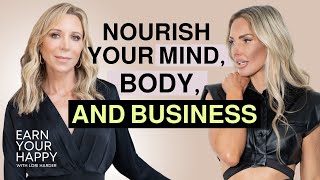
This is a recorded interview (YouTube) of Lori Harder with Lisa Odenweller (founder and CEO) about wellness, entrepreneurship, and overcoming imposter syndrome. Lisa recounts a health-led pivot after her daughter (diagnosed with ADD at age 9) improved off medication after dietary changes; she founded Beaming (healthy cafes) and later Chroma (consumer wellness powders/5-day reset). The talk covers Beaming's rapid local growth (10 locations), operational and fundraising lessons (board and investor fit, legal protections), losing control of Beaming, deep personal development work (Hoffman method, forgiveness, healing childhood insecurities), and the successful fundraising and launch of Chroma with many high-profile and female investors. Practical topics: grassroots marketing, community activation, product design (20 SKUs at launch), and self-care/leadership advice.
Questions this video answers
53
26
About 13 years prior to the interview (she says "I opened my first beaming 13 years ago").
$3,000,000 ("Our first year, we did 3 million.")
$3.5 million ("raised three and a half million dollars to go build it in LA").
Chapters
We're so quick to prescribe and not go to the root of the cause. And so much of our health, we have control over. And it starts with what you eat, drink, and think. My daughter, at the time, at the age of nine, she was diagnosed with add. We went to five doctors. Every doctor said there's no other option but medication. Five doctors. I hated that answer. And I just. My intuition was like, there's got to be another answer. But no doctor gave us another solution. Put her on medication. That medication caused mood disorders. So then they put her on another medication, and. And then my kid was catatonic, and I was like, where's my child? I then understood food. You gotta start with food. The brain is influenced by what we eat. Our whole body's influenced. And if you're eating inflammatory foods, which is gluten, sugar, dairy, processed foods, it's gonna inflame your brain. It's gonna inflame your whole body. And as soon as I removed those from her diet, she was off medication. We have to be the CEO of Our Health.
Lisa, welcome to Earn your Happy. I'm so excited to have you on the show.
Thank you so much, Laurie. I'm so happy to be here.
So I think it's so fun how we met, but also when we met, there were a few surprises for me about you. So you guys, I recently got to go to Female Found, a Female Founder collective event. So good. And it was so good, so good. And I was in my room before I was going to go to, like, the first night dinner, like, the opening cocktail reception. And I was sitting there so nervous because I was like, I'm about to go meet all of these incredible women. And I was having such imposter syndrome because it's like, my first. And I was just feeling like, who am I to be here? And I walked in, like, feeling like I didn't belong. And all of a sudden, I see this beautiful blonde woman, and she's so welcoming. And you came up to me and introduced yourself. And I was like, oh, my God. Like, I've been wanting to meet this woman. She's so amazing. She's the first woman to walk up to me, introduce herself, and just be so incredibly welcoming and friendly. And then I find out that you had started not only Chroma. I knew that you started Chroma, but what I didn't know is that you had started another company called Beaming that was right next door to my house forever that I used to go to, that I used to go to all the time. And so I just had this moment of, wow, this is so incredible and so bizarre also that I have always gone to your local juice place, or what would you call it, Cafe, and to meet you. So it's really incredible to have.
Thank you.
On the show. And you're such an inspiration. And I can't wait to dive into your story because you also have an incredible story and backstory.
Thank you. We all do, don't we?
Oh, don't we all.
And just to acknowledge what you said, it was so fun for me because I had the same thing about you. I have watched you from afar for years and just seen all the amazing things that you've done. And so when I saw you, I like, I think I left a conversation. I was like, that's Lori Harder. Like, I was dying to meet you. So it was so fun and. And it was just an instant friendship. And then I think we had a lunch two weeks later.
Then we had a great lunch. And now we're gonna have to put the next lunch.
We got a lot more things to do. Yes.
Okay, so I wanna start with your, like, the wellness journey. What got you into wanting to help people with their own health and also start the company beaming. Tell me a little bit about that.
So, so the back backstory is I grew up in a really healthy family. My parents never had junk food. They exercised every day. My grandfather was doing a thousand push ups and sit ups a day. Like, it was ingrained in me.
What part of the country were you?
I grew up in Colorado, Colorado Springs. And it just. Health was something that we took, that we made a priority. So I. I came home as a latchkey kid. So come home and hit tennis balls against the garage, play soccer in the backyard. I did jump roping. I became the state jump roping champ in third and fourth grade. If you check out my Instagram, I can still do all the same tricks, which is even funnier. But it was just something that I was always very much mindful about. Exercise and food. Now, interestingly, as a little girl, and I don't know why this is, but I had this fear of what if I go to the doctor and they tell me something bad? And I don't know why I had this, but it was always ingrained in me that I thought I wanted to feel like I could influence my health. Now, fast forward many careers, and my first career actually out of college was with Nestle, selling chili and cheese sauce, country sausage gravy, corned beef hash. The most unhealthy food on the Planet. I was horrified. Yeah. But good company, great benefits, especially coming out of college and that quickly, you know, I lasted for a year, but learned a lot. Went into a tech career at Oracle. Then I had my first child. And at that time, we, my husband and I, at the time, we moved to San Diego. And that's really when my entrepreneurial journey started. I didn't know what I was going to do. I tried a lot of different things. I had a design company. I had a jewelry company. I was very entrepreneurial, I think, my whole life. But it wasn't until I got sort of a couple of the pebbles that come along the way. So I was 38 years old. I'm at the gynecologist, and I, again, I've always been healthy. I've exercised my whole life. I eat healthy. But I was feeling not right. And I had gained a bunch of weight, was losing my hair. My mental clarity was not good. I felt inflamed. Digestion was poor. So go to the gynecologist. I had no sex drive. All the things. And she laughed at me. And she said, oh, honey, welcome to getting older.
Oh, my God. At 38.
At 38.
Oh, my God.
Okay, so that was one of the pebbles and one of the moments of truth that that's an unacceptable answer and there has to be something else. And so that led me onto this journey of understanding food as medicine. Fast forward a little bit more. Then I went to Marie Forleo's event, Rich Hat We Live. I think it was. Okay, that's years ago, right? Kris Carr spoke. I didn't know who she was. She's talking about using food as medicine to heal from cancer. And she had her book, Crazy Sexy Diet. And I. The great thing about what happened in this moment is I'm listening to her, and she's so vibrant. She is so incredible and witty and powerful in her message about, you have more control over your health than you think you do. And it starts with what you eat, drink, and think.
And freeing for you to hear that. After hearing.
Yeah, what you heard, it was just like all of those things kind of stacked. And as she said this, I looked at my best friend who's sitting with me in the room's 200 women or so. And I said, my God, that woman is beaming. And I didn't know what that would lead to. Ended up needing a company after that. Because it's that energy you give out is the energy you want back. Right. It's contagious. Yeah. So I dove all in like Let me understand. Food is medicine. I went to the integrative, integrative nutrition. I got in the kitchen, I just started making things. I started to absorb what I could do, to feel empowered with my health. And. And instantaneously I was able to reset my hormones, reduce the inflammation, improve digestion, all the things. And that was one of the moments of truth that just said I have to share this. I had to let people know that there's so much more we can do and we don't just need to run to prescription medicine. And that's what's wrong with western medicine. Not to go down that rat hole, but we're so quick to prescribe and not go to the root of the cause. And so much of our health is really, we have control over. And it starts with what you eat, drink and think and really taking, being mindful. It's not about being perfect. I love food. It's one of my greatest pleasures. I was just spent a month in New York, right? You had a huge big year, big time in New York. I love New York. I eat very well. I love my tequila. Like I'm not perfect about how I eat, but I'm mindful and it's about finding that balance for you. And I really got into how do I really share this information with others? And there's one more thing I want to add to this because I think it's a really important piece of the story. But my daughter at the time, she's 26 now she works with me, she has since she was 13, but at the age of nine she was diagnosed with ADD. And a lot of kids are. We went to five doctors. Every doctor said there's no other option but medication. Five doctors. I hated that answer. And I just. My intuition was like, is there's gotta be another answer. But no doctor gave us another solution. Now at the time I didn't know what I knew now and what I came to learn, but that we put her on medication. That medication caused mood disorders. So then they put her on another medication. And then my kid was catatonic and I was like, where's my child? And all of these things built on themselves. And that's when. And I then understood food. You got to start with food. The brain is influenced by what we eat. Our whole body's influenced. And if you're eating inflammatory foods, which is gluten, sugar, dairy, processed foods, non organic, all the chemicals, it's going to inflame your brain, it's going to inflame your whole body. And if you're already sensitive. It's going to make it that much worse. And that's what was happening for my daughter. She was eating a ton of gluten. All kids do pasta, pizza, et cetera. Right. Candy from part, you know, parties and cakes and all the things. And as soon as I removed those from her diet, she was off medication. That's when I got mad. That's when I got angry at the system. And I said, I have to tell the world. I have to let people know that we have to be the CEO of our health. And my way of doing it, the best way I could do it, was to create food that you ta that tasted amazing, that all ages wanted, from the kids to the parents to the grandparents, and that was really easy. And help people feel how good you feel when you make simple changes in your diet.
Oh my God, it's life changing. And I'm so glad you're doing it and making it accessible and easy to people. When I used to own a gym, one of the hardest things for me, these women would come and work out and it was in the Midwest. They didn't have as much knowledge at the time, about 15 years ago, totally about food. And I would come and work out and work out and work out sometimes five days a week with me and we wouldn't get the results and they wouldn't feel good because I didn't have an easy way to share with them about food.
Right.
So I love that you're making those. The main thing. The main thing.
Well, it's overwhelming. I mean, I. What I've always said is I create food for me that I need. Yes. And then share it with others.
That's the best stuff.
And so beaming was started from that same thing. It's like I wanted access to this food. I didn't have a place in San Diego to go to get healthy salads and soups and smoothies. Smoothies and gluten free and amazing smoothies and all the things that we did. I'm incredible. I'm very culinary, like inspired. Not that I'm good in the kitchen, but I'm savvy when needed. Yeah. And I'm obsessed with superfoods and adaptogens and I geeked out starting beaming and I just absorbed and became this sort of holistic nutritionist culinary chef to create the best of the best. And, and, and it worked. I mean, we grew that to 10 locations and people became obsessed and the kids wanted to go there and not McDonald's. And you know, it was like changing People's lives, which was a dream.
Beaming was so amazing, and it just felt good in there. And the food was amazing. And I remember especially because I was fairly new to Los Angeles area, I believe, when the first one opened probably a few years in. But everything was still so exciting to me when I would find healthy spots and I was like, my God, I love. It just felt like a candy store. But like, freaking amazing candy store.
It wasn't that long ago.
Yeah, it wasn't that long ago.
I mean, that's the crazy thing. And that's. I guess that's the exciting part of how far we've come. Yes. We have so much further to go. Yeah. But, you know, I opened my first beaming 13 years ago in San Diego. Then we grew up to 10. But when you think where we were, I mean, Erawan, you know, for those of you in LA who know Erawan.
Like, Erewhon has like a famous grocery store. If you don't know what it is.
It'S like the most famous grocery store. Yeah. Ever. It's like three times more expensive. But you can't not go. Yeah. Because it's just that good. And it's. They choose the best of the best. But only one location existed then, so it wasn't until in the last five years or so, five, six years, that that really accelerated. So we were way ahead of the time. And then. And we'll get into this. But then part of the vision for beaming was, how do I take all this good that we're doing? Because you had to go to the cafes to get the food.
Yeah.
We changed cleansing. But people were doing all the juice fast. They're like, this is crazy. Why are we drinking sugar all day? There's no fat, there's no protein, there's no fiber. I know when you were training people that everyone was doing this and I was like, this is madness. My. My friends are partying from Thursday to Sunday and then juice fasting Monday through Wednesday so they could fit in the skinny jeans again. It was total madness. And so that was another thing. I thought, I have to stop this. Like, I don't have to be a doctor to know this cannot be good for you. You. What if I make really delicious soups and salads and smoothies and snacks and high, high, like just, again, culinary forward. But food that you would want and crave all the time so that you can change habits and behavior. And that's what we did. And the people came all the time. The. The bigger vision, though, that I had for beaming was how do I take this and reach more people? Which is what chroma came to be, which is turning all of that amazingness into basically powders that you could, you know, have in the pantry at all times or at the office or on the plane.
Yeah. Okay, so let's talk about that. So beaming was brick and mortar.
Yeah.
And you probably learned so many lessons from that. Do you have that kind of boiled down into, if you could say, what are the top two or three or four lessons that you learned that from beaming that you've taken into this next company?
Well, I'll start with the first, the best one, which was. I mean, I didn't have any of the qualifications to start. I didn't have a nutrition degree. I had never worked in a restaurant. I was not a chef. I did not have an mba. I had no idea how to run a business. I had no idea how to raise money, let alone create a business plan.
Yeah.
And I was a mom with three little kids going through divorce. So I had every obstacle against me. And I think one of the big things that I learned is. But I did it anyway, because my why and my vision, the purpose was so strong, which I shared earlier.
Yeah.
I couldn't not do it. And so for me, a lesson was, we are capable of doing anything as long as we don't get in our own way that we believe and that. That. That we're so palatable that you're gonna just figure it out anyway and not get hung up on all the things you don't have, but the things that you do, which is you.
Did you have people say to you, like, hey, you don't have this or that, and did it get in your head or. No.
I maybe had one person say that I would pull it off.
Oh.
Everyone said I was nuts.
Okay.
So I. And I just. I listened to it, and I was like, okay, thank you for your opinion. Next. Like, I just was very. As much as I was open to, I wanted to surround myself with people who knew a lot more than I did. Yeah. You have to. But I wasn't going to let the naysayers. And that was their own fear. That's their stuff. Yeah. Not mine. Because I knew.
I.
And I didn't know because I hadn't done it before, but I had enough confidence in me there that I can figure this out. And some. And I'll find people who can help me in all the areas that I don't know. And again, the mission, the purpose, the reason, the why was so big. I often Say it was divine. Like, I. I just. It was pulling me. And it wasn't a push, it was literally a pull. And so I just navigated. I mean, and when I think back to, I had no money from my divorce. I had employees living in my house. Wow. Because I could not afford to pay them. Why? We were trying to build the cafe. My. My kids were living in my room. My kids were labeling bottles. I mean, when I think back into what it took, and it's like, those are some of the magical moments too, where it's just the grit and the grind and the heart and the soul and. And then I had to raise money, and I had no idea how to raise money and create a business plan. And how do you even make projections for how much money are we going to make? I don't know. And there's a funny, cute story that goes with that. So for anyone starting a business, you have to, like, how much money are we going to make? How much money do we need? I don't know, like, exactly. Throw a bunch of stuff.
I was like, I don't know.
What are we going to do?
Somebody tell me.
I don't know. I know. And there's not, like, there's data. I mean, yes, I researched that. We got. We have, you know, Google, and we can find a lot of information, but there's so much more we can't. Yes. And you don't know. So a lot of it. I did a beta for a year where we were doing these cleanses. So I got some idea of, like, food costs. Okay. What it would take. So I did do a whole of bunch beta, which I think is a really important part of, like, test marketing. Yeah. And that was a big part that led us to the first store opening. But I literally, as I was trying to figure out, well, okay, how much money are we going to do the first year? Okay, well, how much does Starbucks sell in a year? So I'm like, okay, the average Starbucks does 1.2 million. And. Okay, well then what's the average ticket price? Oh, it's 14. Okay. So I started to do the math on this and I thought, well, how many people have to come through a day? Yeah. And then I worked backwards and I would sit outside Starbucks and I would count how many people were going through. I'd sit outside Jamba Juice. I count how many people were going through per an hour. Yeah. And then mathematically thought, okay, well, how many people could we get? Could we bring, you know, could we do an average ticket price of $20? 2, because you're buying this and that. Like, I started to just work backwards into the math. So I went to my accountant and I said, okay, here's my numbers and I've got like scratch pieces and you know, just Excel spreadsheet. And I said, we're going to do 2 million the first day, the first year. And he looked at me and he's like, no, I'm going to cut that in half and you're going to do a million. I said, that's fine, but we're going to do three. And we did. Our first year, we did 3 million. I'm a very numbers oriented person. So part of that goal, and this is why I'm bringing it up for everyone who's in the business. I understood that in order to get to a million a year, I had to do 3,000 a day to do six. To do 2 million, I had to do 6,000 a day. To do 3,009,000 a day. I had a very clear number. I mean, if you want to call it a vision board. Yeah. I had numbers that I understood we had to do to get to those numbers. Yeah. And it worked. And mind you, this is Del Mar, California, tucked behind McDonald's. Wow. No street traffic became the most successful concept in the country at its time. As a mom with three kids who had no business starting it, that is giving me chills.
Okay. So you had your number marker for every day. If you weren't hitting that or you weren't hitting that in a couple weeks, what were the things that you started to do to make sure you were hitting that was. Is that how you looked at it?
Like one of the things I do, and I do this now.
Okay.
I'm not building a business day to day. I'm building a long term business. Okay. So I didn't get caught up in. This day was low, this day was high. I was. It's the average over time and it was the momentum and understand their seasons too. Yeah. And I think a lot of people panic on like, oh my God, with a terrible day or a terrible week or even terrible month. Yes, that is going to happen. So. But then it's like, it's information too. What's working, what's not. Also understanding there are seasonalities to everything. So making sure you're taking advantage of the high seasons.
Yeah.
And then you're protecting yourself on the low. So that was one of the things that I did. And then of course, you know, all the marketing efforts and the other things that you would do to drive Business. Yeah. And some of it's in our control and some of it's not. And understanding that I think was an important piece of it.
So for you, what were some of the marketing pieces for a brick and mortar? Because I'm curious, because we'll go into talking about what you do now with being online.
Yeah.
You know, a lot of people that we work with have brick and mortars and I feel it's a, it's a completely different game.
Yeah.
But some things can translate really, really well. So what were those marketing plans that you had for beaming and what worked? What worked and what did not work?
Very grassroots. And I will also date myself a little bit that when we opened the first beaming 13 years ago, Instagram barely started.
Yeah.
Which is crazy to say. Yeah. So there wasn't like we were like marketing on Instagram. There really wasn't an Instagram or it was, but like nobody was on it. Yeah, yeah.
We were posting horrible filtered pictures.
We didn't even know.
I remember on our countertop or something.
I know. I remember someone saying to me, you have to be on Instagram. I'm like, I have no idea what that is. Sure. I didn't even look at it for the first year because I was like, I don't even understand what this is. So no, we got in the community. We were in the community and, and we were at every event. We networked with every, every like minded business, whether it was a yoga studio, fitness studio, the fitness trainers, the estheticians, the acupuncturist, anyone who would. Was in sort of the world that we were in. Could be a hairstylist. Yeah. We got to everyone and. Which is exactly what I've done with Chroma too. On and offline.
Yeah.
But the power of connection, supporting the community, being in the community. Like we just were everywhere. And this. And then imagine two years after we opened the first store in Del Mar, we opened three cafes in LA in four months. One in Brentwood in Santa Monica and West Hollywood. I didn't know L. A, I didn't live in la, didn't know anyone in la. And I had to figure out LA really fast, you guys.
I lived in LA and came from a totally different spot. It's a, it's like an animal you have to figure out. It's totally different.
It's a totally different. Oh, and by the way, raised three and a half million dollars to go build it in la. So there's that too. But so just coming into la, I was like, all right, full Immersion, like, and I dove in and networked every fitness studio, who's who, what events were going on. The cool thing about LA is there's always something going on.
Yes, totally.
So the opportunity to connect is every day, all day if you want it. Right. And that's what I did. And I fully immersed myself here. I was going back and forth because my little kids were in San Diego. Yeah. So the weeks that I didn't have them, I'd come up here, get integrated. And what I loved about it is I felt like LA wrapped its arms around me. They really, they really got it.
Yeah.
And I think we, we really brought something special to LA in its time. And all the celebrities came, we were in every magazine, we were at every event. And I think that again, the power of the. In person, it was hard. I mean, it was a hustle, but. And then, you know, of course you see the celebrities and you see the influencers and all those things, which wasn't even what it is today. Yeah. I don't even think the influencer was a word at the time. So again, but now the power of that. And that was really, it was a beautiful time. It was a big hustle.
Yeah, definitely. What I want people to take from this is just the community piece because no matter where they are, I still feel like your initial traction that you're gonna get is with your people and like boots on the ground and in person, that's totally what I want to do with this company. So I'm loving that I'm doing that because that's where it really, it does take hold. So I want to know for you, Lisa, for anybody listening, like, what did that networking look like, when you would just walk in somewhere and just introduce yourself and your product? Like, what would you say?
Did you practice that at first? I mean, it's a, it's cold calling. Yeah, right. Like it's awkward because you're like, hi. You're just like, oh God, someone else. So, but no, but we would bring samples, we would share it. The people would be obsessed. I mean, as beaming became thing. Yeah. And people like, would you tell your story?
Like would you tell your story with.
It or I guess it depended on who I was talking to. Right. But I mean, you bring samples, you bring a delicious gluten free cookie and you're now the person's best friend. I mean, so let's be real hard to forget. It's a lot of gifting, a lot of sharing the product, a lot of supporting events in the community. So the yoga Studio was doing a thing, we would be there sampling. We were always, always sampling. And I have to say we still do that now with Chroma Wellness. I mean, we do so many activations. Even though we're an online brand and we're not bricks and mortar, we're not even retail, we're not in grocery, it's all online. Which is all the more reason why we need to be in the real world too. So we're always at events, we're always activating, we're always supporting events, supporting people in the community. And that's something that's near and dear to my heart, but also something that's been really big about building karma. And it's. Yes, you see the influencers and you do all those things, but it's. There's this wonderful dance that we do when. When we're really supporting one another because that's what it's about.
Yeah.
And people always tell us Chroma's everywhere. And I'm thrilled to hear that because we're trying to be. Yeah, it is.
Whenever I mention, like the name, everybody knows what it is. So that's so great.
I love that.
Okay, so let's talk about the transition from Beaming to Chroma. Because something that I absolutely love about you is you are so into personal development. You are absolutely the woman who is like, if there's something maybe not working in my business or something, you know, going not the way that I want, I look at myself or how I'm leading or what's gone on, and those are footsteps that I want to follow in. So tell me about the transition from Beaming into Chroma and your personal journey throughout that.
So we build this great, great brand. I pour my heart and soul into every dollar that I have. Time that I missed with my kids, all the things to build it into this incredible brand. 10 locations and I made a lot of first time mistakes that ultimately cost me the company. And you know, again, I had never raised money, I'd never had a board. I didn't have a lawyer to protect myself. I didn't even understand that. Plus I didn't have money to pay for it. Yeah, I. People who were on my board bought a seat on the board as opposed to me choosing them. Got it now, by the way, most times you don't need a board. So let me be clear. Like it, I probably didn't need a board now because I raised $4.2 million. I needed some sort of, you know, guidance. I guess so. But I didn't need to have a five person board. And what ended up happening is the people who bought a seat, meaning I'll give you a million dollars but I want to see it on the board. I'll give you $400,000. I want to see the board. I, I didn't have the confidence to say no. I want, I needed the money.
Yeah.
And one of the big lessons there was, I mean who you do business with can make or break the business. Yeah. Who you take money from. And it's not that they were bad people per se. It's just I didn't attract the right people and certainly didn't have the right people on the board who could bring experience, who were in alignment with my values, with the vision of the company. They, they had no concept or understanding of what we were really building. And so from a personal development standpoint, if you imagine, and I think most people listening would, would get this, there's the scarcity mindset and there's abundance mindset. Yeah. And I am a very abundance mindset person. I believe anything is possible. I believe that I can do it. Not that it's going to go smoothly. I believe that, you know, again, beaming. What you put out is what you get back. There's an exchange energy. I knew we were doing good in the world and it would return on itself. And I had a board that was very scarcity fear based and that's a very bad energy to build a business from. And it is an energy. And that heavy. It's heavy and it's pensy it. You, you, you're pinching pennies and you lose track of what you're building because it becomes so fear based of we're not making enough money, we're not making enough money. And then. And so went into pathing because they ended up having more control of the business. They started cutting corners, taking out the organic. I was very adamant about the quality of our ingredients, about using organic ingredients, the quality of our training for our employees. The, the, the experience changed. I couldn't innovate anymore. One of the things we did was so. There's so many things that they squished and kept squeezing the life out of the company.
And that was like your customers, those.
Pieces and the customers felt it. And I as the creator was like screaming and I remember saying this and it was, it was the worst, most painful experience in my life. Because you build something you're so passionate about. You've risked everything to do. Your name's all over it, names all over it. It's Doing good in the world, it's changing people's. All the things you vision that you dreamed of it's doing. And when I was no longer respected or heard, I felt like I had been. That my child had been kidnapped and I had been muzzled in the closet. I was bullied. I was told that my opinion didn't matter and I was pushed on the side out of the way. And they brought in somebody who had zero, zero competence to run the company that ultimately ran it in the ground. And it didn't matter. I was kicking and screaming and there's so much more to it that I won't go into now. But in the end, you know, the things that the mistakes I made were in know, not having that legal representation because it could have probably saved me a lot of the other day. Money is, it can be very greedy. And some really wrong things happened that had I had good legal representation, I probably could have stopped. And it was a, it was an ass kicking. At the same time as I was going through it, I had to do my own interpersonal reflection of what in me caused this, what in me. Because at the end of the day it's you. So yes, these things happened. Right. But I chose the board really like I chose to not know how to stand up for myself. And that was an insecurity in me. And that what I realized within me is as much as I'm this great visionary, I didn't have the self confidence to believe that I deserved it, that I deserved to be successful, that I deserved to win, that I had a voice that was worth listening to.
Yeah.
And so it was easy for the board to kind of quiet me. Right. And because I wasn't assertive, because I didn't believe in myself. But I didn't really understand that because of course, I mean to everyone else I looked like the most confidence, confident person in the world. Yeah. And that's where I thought, wow, there are some things happening in my subconscious that is affecting both my personal life, my love life and in business. I need to get to the root of this and understand because I can't create again until I understand how do I heal whatever this is because it's going to repeat itself. Yeah, it does. And there's nothing like being in a relationship or, or starting a company to really expose who you are.
Bring everything up, bring it all up.
And that's when I went into a deep, dark kind of inner person. And I've always been very introspective. I've always, I mean all my Books are kind of, you know, personal development stuff.
Yeah.
But this was like, oh, we're going deep. And I went to Hoffman. I did every. Everything I could read and learn to understand who this little girl was that needed to be healed and what happened. And there, There's a lot more to that story, but it wasn't something. I think one of the big takeaways is it's not something that you're like, okay, I'm done. Like, that was. I didn't just go to Hoffman and all of a sudden healed. Right. It's. It's an ongoing thing, but it brought forward the. The parts of me that really were getting in my own way that I had to unpack and, and, and, and find. Ultimately I had to find how to, like, truly love myself. Yeah. To create again. But it took a couple years.
What were some of those things? Like, I know I can look back at even certain, like, retreats or, you know, deep, like, inner work experiences. When you went to Hoffman, were there a couple things that just were revealed to you that you were like, oh, my gosh, I can see this thing.
Thing.
And it was from this experience when I was younger, like, that you knew was holding you back.
I think. I mean, what the beauty of Hoffman for those who've been is it's all about forgiveness. And so with. For your caretakers and, you know, most cases, parents. And so when you learn the forgiveness to your parents that they did the best that they could with what they had at the time, it's very powerful. Powerful for me as a parent because I don't always show up perfectly and remembering I did the best that I could. There's a lot of times I miss playing Legos on the floor with my son because work was consuming me. Right. I think being able to find that forgiveness for those caretakers. And there's just so much healing that goes because the. When you find forgiveness for them, you find forgiveness for yourself.
Yes.
And you. And then I understood how the, the pain of that childhood obviously made me who I am. Part of my strength came from that, but also part of that insecurity and not feeling lovable or that I couldn't be successful or the things that was that deeper psyche and understand that was just story and learning how to undo that. And I know that's a lot in these conversations, but I think it's important for us as entrepreneurs, especially as women, for us to understand there's so much more than goes into building a business than just a great idea.
Oh, my gosh. Yeah. It's it's crazy how I'm watching myself build this company and just like, oh, I'm observing how. And just little, little things. Right? Like, oh, I'm observing how much easier it would feel to me to give this power away to someone else.
Or, yeah.
To say, oh, you're right, maybe I should be doing that. Even though I know in my gut.
That'S not what I actually think.
But it's. It's just these things that every single day I will observe myself doing something or about to do something where I'm like, okay, we need to sit and think about this before we take this action. Because it is easy to trust other people or think that they know better than you. That's my base.
Yeah. Well, and you said it, you know, very start of the conversation around the imposter syndrome syndrome. And we all look at you as this incredibly successful woman who just owns it. Right. And you're so meticulous and thoughtful in your word and your teachings and your inspirations and all these things. And yet within. And people say the same sort of in what I've done in building two of the best wellness brands. But behind all of that, we still have that. Am I. Do I have what it takes? Yeah. Can I please pull this off? And. And I think that knowing that we all have that. Yeah. Right. And then. But having the strength to kind of push through. Anyway. I remember when I was raising money for Chroma and. Which is a whole cool story in itself, but as I was getting these incredible investors. Yeah. Very high profile investors. I had the biggest imposter syndrome. Because I'm like, wait, they actually believe in me? Can I pull this off? Like, I mean, am I going to be able to do this? And I remember having so much insecurity around having these really powerful people behind me.
You have to say, some of them are. Because you were telling me the story at lunch and I was just like, I was putting myself in your shoes going, what did that even feel like when you got these emails back?
It was so crazy. So, so, okay. I just to set the stage. It's Covid. It's in early March. We.
So, like, really early.
Really, like the day before COVID actually world shut down. We had just finished my business partner. I had just finished our business plan and we were ready to go tell the world and go raise money. World shuts down. Not the time to raise money when everyone's searching for toilet paper and groceries. Right? So it was like, okay, now What? Empty. My 401k wasn't much in there, but the little bit of money that I had left, I emptied my 401k, go out to raise money. And of course, anyone who's raised money knows that it's a very difficult thing to do. And so we ended up doing a beta program, just like I did with Beaming, created our first five day reset. And I started putting in people's hands and getting people excited about what we were building. And they got to experience it, they fell in love, and that's how I ultimately raised money. Now, it was a lot of no's to get to the yeses. And it was to the point where, I mean, God, I. You know, all the VCs said no. They're like, beautiful idea, Love it. Lisa, we love what you're. How you're envisioning this. Go prove it first. And you're like, well, I need the money to prove it, so wait, I.
Really need your money.
It's not gonna work. And I was raising two and a half at the time. Okay. And so I had to pivot. And so I was like, okay, we're not gonna do that. Well, what would I do? What would I imagine in building and raising money? So the vision board became, what if I could raise money from some of the most influential people in the country who would be really excited about what I'm doing, believe in me, and want to help me tell the world? And what if it could be, like, mostly women? And what if it was everyone from the celebrities to powerful business people to the mom in the community, and they would be our megaphone? And then I start putting names and faces. So I was like, what if it was Gwyneth and, you know, Paltrow, what if it was? And just sort of kind of like popcorning and Candice Nelson from Sprinkles and Greg Renfrew, who had always had, you know, like, idolized from Beauty Counter. And so it was a lot of just like putting names on a board and didn't know any of them. So I. My first yes. So March was when we started. My first yes came November 3, 2020. I did not have a dollar in my bank account. I could not. It was November 3rd. Rent was due November1. I couldn't pay rent.
Oh, my God.
I could not buy food for my kids. Now, I wasn't going to be homeless, but there was no one that's going to rescue me.
Wow.
Everything I had had been risked here. The first check came from Dick Costello, who was the former CEO of Twitter. Did not know him beforehand. That was a big check that was big moment of truth. The hardest, hardest check is the first check. Yeah. Having him believe in me. And it was through friends of friends that got me connected to him and seeing what I was building. He made an introduction to another gentleman, Brian Meehan, who is the CEO of Blue Bottle Coffee. That was the second check. Third check was a man, John Callahan, who was the first check in Peloton. And he said, I see the same in you that I saw in the founder of Peloton.
Wow. I'll take it at that point.
I'll take it. Those are the first three checks. And that gave me the steam to go. And then there was another woman, Jenny Lefcourt, who I had met 20 years prior. An amazing woman, incredible entrepreneur. She gave a small check and she made some of the most influential introductions that led me to waking up to an email from Gwyneth Paltrow in March of 2021.
Let's talk about the woman that you have to be to be able to hold that capacity because. Okay, let's just say all the money comes in. You've raised the money and you raised quite a bit of money, right?
Quite a bit.
Nine.
I've raised nine total. Raised five and a half before we launched in July of 2021.
Okay, so you had a bit of experience before that, right? With beaming.
I had raised money for beaming. Yep. So, and I. A couple of things I would say there. One of the big learnings from Beaming that I made sure I didn't repeat or mistakes was I didn't have an operating partner. And that is such an important thing as an entrepreneur is like, I know where I'm good. I am the brand Prolifera, Proliferator. I'm a visionary. I get people excited. I'm an incredible innovator. I am very creative, brand oriented. That's where I shine. I am not good behind an Excel spreadsheet. I am not good in operations, you know, anything financially minded. I. I want to know about it.
Yeah.
I want the dashboards, but I'm not the one to plug it in or figure it out. Same. So knowing that's important. Right. And I didn't have that operating partner with Beaming, which was also a big, big mistake. It wasn't that I wasn't trying to find it, but it's hard to find that. That person.
Yeah.
And I think that's an important piece of any business to set yourself up for success. So going into Chroma, I ended up finding a business partner who had a VC background. Had been at booth, had gone to Mint hood, worked at McKinsey. He had the pedigree to give me the credibility to investors. Okay. So I had the vision, he had the financial modeling. Like so it, we had both. So I want to make sure that's very clear. And I made sure that before I took it to market, I had that. Because, you know, especially when you're raising that much money, they have to know that you can actually pull it off.
So in the middle of the night, what were the things that were keeping you up after you got the money and you were ready to go? Like, what do you think were keeping you awake at night?
I mean everything from like I, I mean we have a very complex operation because we launched with 20 products.
Wow.
Nobody does that.
So can you imagine, like I have one, you guys just.
Yeah, we launched 20 products. This five day reset. It was, it's very complex. Six co packers, one huge fulfillment center, 150 ingredients from all over the world, blah, blah, blah. Yeah, I created all the products myself with my daughter. Like not an easy thing. So what, what, what's kept me up at night? You know, are we going to be able to pull it off? Are people gonna like the product? Is it gonna show up? Okay, Is anyone gonna buy it? You know, all the things that, you know that you just don't know. Yeah, right. And because I had never had a real DTC business before, that's a whole beast. And understanding. I didn't know how, what email marketing was, paid media like. And what I'm super proud of is a lot of things. But that strategy for raising money from a lot of influential people led me to raising money from 110 people. Wow. 100 of which are women.
That's amazing.
And they became our megaphone. And so all the things that were keeping me up at night, part of what my greatest asset was, besides great product was and a great business partner, is that I had really passionate people who were really connected to help tell the world. So when we launched, not only did they tell the world, but they then we worked in tandem in partnership for them to get us connected to all their friends who had a megaphone. And that allowed us to come out of the gate really strong because that's the scariest thing in launching a company. And like being able to build a brand is so hard in these days. And I know you're, you know, like firsthand right. It's like it takes so much more than a celebrity name it or, or a good product. There are so many Things that have to go right. And for me, I think one of the smartest things that I did was having this. These incredible investors who still are so supportive, but they helped us get it out there into the world so fast. A funny side story, that was one of those moments as an entrepreneur that you scream. So I woke up on our launch day, July 21, 2021. I did not know this was going to happen. And I woke up to an article in Forbes with a picture of me and Gwyneth Paltrow, Amy Schumer and Jessica Seinfeld in a quadrant. My fish are with theirs. And it was a whole article about this new brand Chroma Wellness that had launched and we had the mo, had attracted the most impressive cap table in the history of a pre revenue, pre proof of concept startup.
Wow.
And I Woke up at 6am Screamed, I did not know that article was going to happen. And so that was a moment of here we go, like, game on. But I think what's important about sharing that story is that same woman also couldn't pay rent a year prior.
Wow.
And you know, less than a year prior. And I didn't have any of this, I didn't even know any of these people before then. And so the fact that I was almost in this point of I have to figure this out, I think was part of what allowed me to figure it out.
So you talked about the power of your women sharing, like the women who are obviously behind the product as well behind you, and they believed in you and what you had done previously. What did you, did you do anything to activate those people? For people listening who have something that they, they feel they want to get on the world? What was your ask look? What did your ask look like? Do you remember as you were kind of setting that all up?
I mean, we obviously seeded all the investors with product. We invited them, many of them, to see their friends. Yeah. And influencers.
So what did that look like? Just to get, break it down, like tangibly, when you say you invited them to see their friends and investors, would you write out the copy for them? Would you be like, hey, here's what we can.
I mean, I, I don't know that we did. I mean, I'm very communicative with the investors. Like I would send them updates. I'm communicating. Okay. It's happening. Like, here's what we need. I wasn't afraid to ask.
Okay. I love that.
Right. So there was like. And it could be, you know, looking for, you know, a hire, like a new hire. Okay. Um, I was very communicative of what was happening when it was happening. Any press articles to keep the momentum and excitement. Yeah. Because they want that. They want to feel like they're part of this with you. Right. And there was, like, this. These funny times where I'd have some of them, you know, they'd kind of compete, like, who could generate the most sales. Yeah. And, you know, I'd say, okay, well, Amy generated this much today. Jessica, what do you got? Like, and it was like, it became this very, like, every. We're all in it together. Yeah. And I think that was an important part of the first phase of growth, at least to that first year, is. I don't want to say leaning on it, because I don't. I'm not big at, like, over asking. Yeah. But it was more of, like, we're in this together, and they wanted to tell the world, like, what we're doing is incredible. Yeah. The food is amazing. Makes you feel amazing. It's the, you know, built with the greatest integrity. Like, they wanted people to know about it. Yeah. So it wasn't like I felt. Felt like, I'm like, oh, can you help me?
They were excited.
It was like, let's go. And so. And then a lot of them, you know, and then I'm. I think if I notice something, like, if I see, you know, one of our celebrity clients or investors or somebody that's doing an event, I don't. I'm not afraid to say, oh, like, we want to jump in. Yeah. Like, Lauren and Michael Bostic. Right. They're from Dear Media. They're investors of ours. After I did their podcast, and then I saw that they have a big event coming up, I'll go right to them and say, we want to be there. How can we support. Right. If I know that one of our investors is opening their new location, O2 Aspen is opening in Dallas. Brittany. I'm like, brittany, we're there. Like, how can we support? So I'm always watching what they're doing, too.
Yeah.
Greg Renfrew just got beauty counter back. And so, like, I'm paying attention so that I can also be supportive to them in return. You know, it could just be a nice message.
Right.
And so that's a big part, I think, of being able to create. Keep that engagement.
Who would you explain yourself as now compared to who you were? Like, what are some of the skill sets and traits that, you know, you have now that you didn't have when you were first starting out?
So what I would say More than anything is I believe in myself. And I know that I. I can do this. Doesn't matter. It doesn't make it easy. But I believe in myself. I think for the first time, maybe in my life, I believe I see the power of what I can do. I know that there's a lot that I don't know how to do, so I don't do as much of that. Yeah. Lean into what I'm really good at.
Stop doing that.
And I think that. I think I'm a much better leader. I. I think that I have learned the power of being in your feminine. And that's something that. I think that when I was certainly with beaming, I probably led with more masculine because there was a lot more panic. There was a lot more uncertainty, and just like, like, like, I just didn't have the confidence. And I really am learning the power of leading with the feminine and who we are as women and when we can be in that playful, compassionate, open, curious mindset, we don't have to lead with that. Like, I mean, I'm intense, but there's an intense softness about me that I didn't used to have. And what I'm. What I've seen and I'm just even kind of witnessing, just as I kind of stand outside myself and watch is I. I think people respond to me better. I'm able to interact with people better, and I have a clearer. I mean, more peace, which then allows me to see clearer even when things are intense. And like, oh, God, that didn't go quite as planned. I'm able to sit back and really be a little bit more in that stillness, to sort of invite in the answers. And then as a manager, leader, what have you, you know, with the team, I really. That feminine leadership also allows me to create that playfulness so that we're having fun, because at the end of the day, this has to be fun. It's intense. What we're doing is intense. We hit, you know, 10 million last year in our second year, it's now, like, this next layer of growth and is real. It's a very different growth from 0 to 10 to 10 to 20. And so. But I still have to make sure I'm having fun, and then I am always holding on to the bigger vision of what we're building and keeping everyone else excited and attached to that vision, because that's ultimately what's gonna allow us to be successful.
Mm. So good.
Okay.
I think we did the. I think you were at Female Founder Collective when we did the exercise. Where I had you put your 8 year old self in front of you. I don't know if you remember that.
I do. Yep. In the circle.
I want to know, if you had 8 year old self in front of you right now, what would she say to you about you, who you are today?
She would. It's a couple things. She would say that I knew you could do it. Oh, I love that she would say. She. I knew you could do it and I'm so happy to see you happy. Yeah. That gets me emotional.
Hmm. Do you feel like you've. Is, is the happiness piece recent or have you been able to tap into that frequently?
That one's got me. I'm so happy and I live with so much joy. And because I see me now, you know, that little girl who was eight, was so insecure, didn't believe she was lovable and, and so to be where I am today and to have been through what I've been through, to have built a beautiful company that I lost, that became my greatest teacher, that I used as my teacher to bring me back and to have the courage to come back and build Chroma, to be so supported by so many incredible people, not just my investors, but my friends, the community, my. My team members. I am so grateful every day that I am surrounded by so much support and that I get to do what I get to do and then I get to live in so much joy. So sorry. That's so good.
Are you kidding me? That what that just did for me was to remember that these super hard points and the points that I had gone through earlier, those are gonna be the moments that created this version that I get to look at you right now and say, this is a truly happy, fulfilled, empowered, loves who she is. Like, it's because of all that.
It is because all that. And it's so interesting now because this is an interesting year and, you know, we're being tested as Chroma. You know, people love the product, but now, again, this next phase of growth, and it's scary, right, because I'm gonna have to go raise more money and the expectations are higher. And so for me, I have to stay, stay again, grounded in, like, how am I going to navigate this next phase and also use all these tools that I brought with me and learned along the way and the new ones that are coming.
Yeah.
And I think that, I think it's so important for us to really, you know, all the things that happen to us are happening for us, and we always love that quote, but it Is true. And I think as long as we believe that and we can see it for that, we can actually be open to the lessons that come with it. If I had gotten stuck with beaming in the. They did this to me, and they did that to me, which lots of bad stuff happened. Yeah. But I had to have the accountability that I did this to me. Like, again, wasn't conscience, but, like, I. My subconscious did that. Like, I have to find out what that is. And I think that's true for relationships. And nobody, you know, if. If you're in an abusive relationship, nobody that you allowed that you have to take responsibility for who you are and how you show up or who you attract. And I think there's so much power in that. And then taking the fact that shit happens and not everything's going to go your way, in fact, it's guaranteed that a lot of things won't.
Yeah.
And so how do I take those moments that aren't going my way and actually use them as power? I said to my team, I said, all right, guys, we're being tested. Here's where the magic happens. Here's where we get to go really deep into what are we really building? Yeah. And what can this be? And how do we really understand our customer, make sure that we can show up for them? And that's what we're being asked to do.
So beautiful. Oh, my gosh. I could literally talk to you for. For days. Is there anything that you want to share with the listener before we go?
I want to share that. I really do. And hopefully this came through the conversation. I really. Very passionate about wellness, obviously. And I. It's why I love doing what I do, and I love our company, Chroma, and. And that. And I'm very passionate about entrepreneurship, and I understand how hard it is, and I understand the fear and all the things that go in and the risk and the sacrifice that goes into it. And I don't think it's for everyone, but I know your audience is in that creme de la creme of, like, believes that they can do it. And even within believing it, just. Even this conversation with you and I, we all. We still have our insecurities, you know, and then working through them and doing it anyway.
Yeah.
And getting to that other side, like, oh, my God, I did it. And it's just all those little wins build on themselves and then surrounding yourself with people who can really champion with you and for you.
So good. Okay, so we all want Chroma. So tell us. Well, first of all, the granola. I'm so excited.
It's so. It hasn't. You are going to get the first bag right now. Literally the first bag just about to launch. I am so obsessed with this. In fact, it was funny. My team got to try it for the first time last week when I was in New York, and their response was, this is so chroma. And by that they mean what we do. Because I am so meticulous about ingredients, about flavor, about marrying function and flavor. All of these products I created myself in the kitchen with my daughter. And so finding the best ingredients, the highest quality, and putting them together in curations that not only make you feel good, but that you become obsessed with is, I guess, one of my. What are the things I do really well? It's a better word for it than that, but. And so this granola is amazing. Our beauty Matcha people are obsessed with. It's got 12 grams of collagen, product protein. It's got. I. I cannot start my day without it. It puts me in the best mood for anyone who hates matcha. You will love this one. If you love matcha, you'll love this one even more. It's creamy. It's ginger and turmeric and mushrooms. Our cranberry hydration elixir is so good. Lauren Bostic talks about it all the time. She's obsessed. Our bone broth is a powder. All you need is water. Doesn't get any easier than that. Super delicious. Our cookie butter is freaky good.
Like, people, so good. You guys, it's out of control. It didn't last long in my house.
So we've got a couple for you. It's so good. I mean, it's. It's coconut butter, almond butter, hemp seeds, plant protein, all these cool things.
You make being healthy easy.
It really make it easy and make it like you want to do this. And our five day reset's the same thing. I don't believe in starving yourself. I don't think we should deprive ourselves. I think when we're nourishing ourselves, that's when we can show up in the world. I want you to exercise. I want your brain to be turned on. I don't want you to be crawling in the corner because you had no food and you starved yourself. The program is all about nourishing yourself and giving you those little changes in habits and behavior, like all these products that you can continue and you can keep the good going. Transformation doesn't happen in five days. It happens in the choices we make. Every day.
Every day. Your. Your food is your mood, and your mood is if you do the thing in your life that you want to do. You're not gonna go and do your big dream if you don't feel good about it or if you feel negative about yourself or you don't have the energy.
And so on that note, too, I mean, I'm 53. I'm. You know, I'm a single mom. Thank you. Thank you. If my makeup's probably all smeared from crying.
No, you're actually about what you're using, because. Thank you.
And what I'm using is certain joy, number one. Right. And that gratitude. But the fact that I do. I eat Chroma all day, literally. And then if I go out to these great dinners, if I'm in LA or New York or wherever I am, I don't feel bad about it. Yeah. And I enjoy it. And I find the balance. I move every day. I exercise, I dance. And next time you're in New York, you're coming to dance class with me.
Please.
Best thing in the world.
I'm terrible, but I'll happily do it.
It's the perfect place for all of that. But I just. I make time for me. And I guess that's a. One other thing I would say to entrepreneurs is that's where I think, especially for women, we give up on our. We. We give so much. And whether it's to your partner, to your business, your kids, that we neglect ourselves. And that is something that I will not do. The to do list is always there. I never get through it all, but I always make time for me. I always make time for dance, for some quiet time for me to do the things that light me up, to make sure I'm nourishing myself. Because I don't nourish myself. I cannot nourish the world.
Same.
And that's something I think is so important that we women really have to do and make a process priority.
Well, we all just want to eat, drink, and do what you're doing. So. Chroma Wellness.
Chromowellness.com It's Chroma with a K. Okay. And also on Instagram. And we're always doing cool things. We have so many cool products coming out in the next couple weeks. So besides the cool ones we already have, there's more coming.
Okay, you guys go and check out chromowellness.com. it's in the show notes. And truly, it is what we were talking about. It makes being healthy so easy. And you're gonna feel good right away. I think that's the coolest part about it, is you're gonna consume it. I think it's a matter of a day that just eating better in a.
Day feels so much better. And that's also what we're trying to teach is like, it doesn't have to be so complicated. Yeah. And literally, in a day, you can feel better and then inspired to make changes.
Totally.
Can I offer your listeners a special discount?
Yes, please.
They would love that. We're gonna. We're gonna offer everyone 20 off whatever you want, and it'll be happy 20.
Okay. Happy 20. You guys go and check it out. I'm so grateful for you, truly. I don't think you even understand what a bright light it was when you entered my life.
Thank you.
I'll just keep telling you.
Thank you. Thank you. I'm so glad and thank you for this opportunity.
I'm so grateful.
Okay, you guys are making me cry too.
Anytime, anytime. You guys, we're so grateful for you, for tuning. Tuning in. And until next time, earn your happy. Bye, everyone.










