Overcome Trauma, Share Your Story, and Take Bold Risks in Business with Chelsea Husum
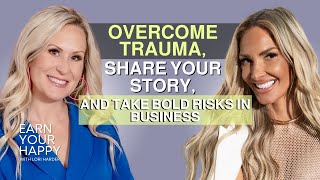
YouTube interview (Lori and Chris Harder) with Chelsea Husum about overcoming trauma, sharing personal stories, and taking risks in business. Chelsea recounts being drugged and raped while studying Spanish in Quito, Ecuador (initially undisclosed for ~20 years), a recent multi-year lawsuit that resurfaced feelings (case ongoing until December 2023), her transition from broadcasting/marketing to 10 years as a Spanish teacher, then into commercial construction (started her company March 2020), and writing a memoir, Real Vibes Only. Discussion emphasizes vulnerability, authenticity, practical recovery steps (therapy, habit changes, stop drinking), public speaking, parenting two sons, and encouraging others to stop making excuses and bet on themselves.
Questions this video answers
March of 2020.
Up until December of 2023.
10 years.
Quito, Ecuador (South America).
Real Vibes Only — Unapologetic Confessions of a Hot Mess Mompreneur.
Chapters
It's ridiculous. Both men and women have. When I say something, they're like, well, actually, this happened to me. You know what I mean? So many people have. Have been traumatized in this way, which is really sad. But those of us who feel comfortable enough to voice it need to give people permission.
Chelsea Hume, how you doing? It's good to have you on.
I am so excited to have you on the show. You are on both of our shows. So you are on the Chris Harder show and earn your happy, and we are thrilled to have you here.
Thank you. I am so excited to be here, guys.
So this is really cool because you're one of the first episodes of this brand new series that we're doing called Just like you, where we want to highlight people from our community that we get to know in our events so that other listeners can hear somebody who is running at the same place at the same pace at the same time as them. And I love the aspirational guests that we have, but I also love when we have people who are just maybe one or two steps behind what they've accomplished so that the listeners can be like, oh, that's my girl. Oh, that's my guy. I understand exactly where they're at and draw inspiration from that. So you're part of a really exciting addition to our shows here.
Thank you. Yeah, that's a really. I'm excited. I think a lot of people really relate to this.
Awesome. So I want to start by taking you back to maybe something that's kind of tough to talk about, but when I think of you, I think of resilience. And when I think of you, I think of somebody who finds optimism and challenges. And I think nothing will ground people more in getting to know you and understanding some of the challenges you've come through than starting here. So would you mind taking us back to when you were a student, Spanish student in Ecuador. I think it was Ecuador, right?
Yep. Yep.
In Ecuador. And kind of share that story of challenge that happened to you.
Yeah. So I. I have a Spanish degree and a broadcast journalism degree. So I, for my Spanish degree had studied in Quito, Ecuador, and South America. And I had gone the first time with a. A university group, with a small group, traveled all over. And then I actually went back by myself for three months the following year, to my mother's dismay. She's like, she's never coming back. But I went back and ended up studying Spanish again. And I ended up actually being drugged and raped and left alone in an abandoned home by my Spanish professor at this academia that I had studied at. And I. Well, I woke up on a dirty mattress on the floor. There was no other furniture in this house. And so apparently this is where they take people. And I was alone. I didn't know where I was. And I tried to get. And they have these, like, kind of steel doors. And I kept getting electrocuted. I was standing there for like a half hour trying to get out.
Wait, they had them charged, like, so.
I don't even know. I don't even know, like, I was getting electrocuted. And I'm standing there crying, like, trying to get out of this. Wherever I'm at, I finally get out and I'm stand there and this is ridiculous. But being a good girl, right? It's now morning time, and it's time for school. So what else am I gonna do? I hailed a taxi and I took the cab back to school. And I walked through the. Through the doors and I saw his face. And I mean, it was. You know, it was probably. And I actually never told anyone for 20 years.
How were you feeling in that moment?
And how did you get through those doors?
I. I don't know. I think it was so, like, so traumatic and like, what just happened to me that I. I don't know. It's so ridiculous that I. That's what I did. It wasn't me protecting myself, right? Or I. I don't even know. I was alone in a foreign country. No, you know, no one there that could help me, really. You know, my family wasn't there. Friends.
And.
Yeah, I walked through the door and I never told anyone. I didn't tell my parents, didn't tell friends. I didn't tell anyone at the school. I just went on like it never happened. I shoved it down so deep, locked it, threw away the key for 20 years. It's. I mean, it's ridiculous. And so I pretended like it didn't happen. But a situation. I was in a lawsuit up until December of 2023, actually. It had gone on for two and a half years. I was being sued for millions of dollars. That actually, that trauma and. And going through that for two and a half years really made. Brought those feelings of powerlessness up in me again. That's when the. The story from Ecuador from 20 years ago started bubbling up inside of me. And I was like, finding myself laying in bed at night, like, what the hell happened? How could you have put yourself in that situation? How could you? I started doing that to myself, and then I'm like, no, no, it was not me. I didn't ask for that. I didn't. It's not my fault. Right. But it, it took like a situation very recently to be like, I actually need to start healing this and tell my family. Because I didn't. They still didn't know. So, yeah, it was pretty crazy.
I know. We had chatted about that briefly, you guys. She is a part of an event that we have called the Dinner series. And you are, you are a VIP in that particular event as well. So we got to spend some extra time together. I got to go to a breakfast with you and get to know you and sit next to you and learn about some of the story in your book. And you know, I think that whether it's a story like this or something similar, I think so many women have a story where they kind of blame themselves for something that happened and shove it down until something comes up in their life later where they realize it might be the start of one of the most powerful things by, number one, talking about it and then forgiving themselves and then sharing how they moved through it. So why was this important for you? Like, why? Because it's not. It's not fun to share this stuff later on. Like, it's actually quite scary. And then you almost feel. You can almost feel like it. Did that even happen? Like, how did I even cope with that back then? So what made you. Why was it so important that you shared this?
I think just the trauma of the lawsuit and me realizing that, you know, something happened 20 years ago. I, I was a young, you know, I was in my early 20s, like, didn't know who I was. Now as a 40 year old woman, I know myself and I know it took the lawsuit of me waking up being like, I am not okay at all and I need help and I have to actually work to dig out of this is when I finally. And then deciding to write a book, I. I really didn't know what it would be about. And I sat down and these stories just poured out of me and it. And it's like, I don't know. I. I'm meant to share this now. I, I know that I have a bigger purpose and I feel now at this point in my life I have stories to share. And for example, and I know people need to hear them. Like, I spoke on these things at Amberly Lago's event in Dallas recently. And I literally. So I had the nervous peas and I'm like, I gotta go pee afterward. And three women in the bathroom, just three women immediately Were like, thank you for sharing. Something similar happened to me and I just, you know, I appreciate you sharing. Like, it's ridiculous how many. And men and women, both men and women have. When I say something, they're like, well, actually, this happened to me. You know what I mean? So many people have been traumatized in this way, which is really sad. But those of us who feel comfortable enough to voice it need to give people permission.
Wow. I want to ask you a follow up question of that. You know, you mentioned Amberly's event. I saw a video of you speaking at that event. And after telling this story, you said there were two things that really kind of helped you recover from this.
Yeah.
Sharing those two things for other people to use.
Yeah. So one was just finally be real and authentic. Like, why are we always feeling the need to be perfect? Right? Like, I mean, Instagram's a perfect thing. When I was in Italy last year for my birthday and we were kind of giggling because we're driving around and we see these, these, these boyfriends or husbands taking pictures of the women were like, my husband's like, oh, my God, here we go again. You know, they're taking like a thousand pictures to get that one perfect picture. And I get like, we want to have beautiful pictures, but us normal women, seeing those pictures makes us feel like crap. And it makes us feel that we can't be vulnerable and say, actually, I'm struggling right now. That is, if you can do that, that's where you find true connection. That is where you find your tribe and you, you celebrate together. But you also could be like, yeah, I'm having a rough week. Here's why, you know, so that's really important. And then for me, with this most recent situation, I, I had to look at, you know, my habits. What am I doing to drain my energy because I'm already fragile right now. If you're in it, it's. It's rough, right? What am I doing that is making me feel like crap and, and wrecking my, my mental health even more? Right. And I can't afford to do that, so get rid of it. And then what, what do I need to do to actually be gentle with myself and take care of myself? Get out in the sunshine, walk my dog, you know, just talk, get a therapist, talk to a friend, you know, but stop drinking. Like, drinking a bottle of wine every night isn't going to help your mental health when you're in it. When you're in it. Like, no, you gotta, you gotta work and dig out of it should I.
Stop drinking a bottle of wine every night?
I mean literally. Although that, that's so. I mean it is delicious here. It's like you have to make that choice when, when I was going through a few tough times, but recently with the whole pivot that I had to do with my company and just feeling like I was in a really, really dark time that I wasn't sharing with people. It's like that moment of like, you need to love yourself enough not to drink this wine because just literally going to cause yourself a panic attack at 2am and you can't function like this. So it's the little things in those moments of like, okay, what needs to stop to just give yourself a little more support. Like I think most people don't realize, like the answer does not come right away. What happens is the self love has to come first.
Like totally.
You don't, you're not going to love yourself overnight. But it's that little moment of you need to, you need to stop this one thing so that you can have a little bit more. She encouraged tomorrow to do something else to dig yourself out. I love that.
I want to fast forward a little bit. You are a woman who owns a construction company. You were a Spanish teacher for 10 years. How in the world does someone go from Spanish teacher to a woman carving out her path in of all things construction?
Yeah, why? So why? And I have to even say, before I was a teacher, I wanted to be the next Barbara Walters. So I thought, okay, I have my broadcasting degree. Great. Then I found out they make 20 grand in work nights and weekends. I'm like, I don't know about that. But then, so I, I took, so I'm from South Dakota. I took, I'm in Denver now. I took a job because my college loans were coming due and I'm like, oh my God, I need money. So I took a job at a temp agency that did like you were a receptionist for different companies in downtown Denver. And may I say, being a South Dakota girl, plopping me in Denver with all these one way streets did not go well. Like it was quite dangerous. And then I'm glad I'm still alive. But so I did that. And then the lady was like, well, you need to meet my sister. She works for an experiential marketing and trade show company. So I ended up actually taking a job there and I worked my way up through there. So I worked there like five or six years in marketing and then I just was like, I don't feel Like, I'm doing anything worthwhile with my life. Like, I'm not making a difference in the world. So it's like, once I know I need to move on, like, I got to move on pretty quickly because there's no coming back mentally for me. So I decided to get my master's in education, and that's when I got. Became a teacher. So totally, you know, big change. And I. I taught for 10 years, you know, had really great colleagues. I still see my students all around town. I just love it. I love it. That was the best part. But that last year was pretty brutal. And one day a kid called me an effing waste of space, and I was like, huh, okay, this is not. And. And I just. It. It was not a good situation, and I didn't love it. So I'm like, I. For their sake and mine, I need to move on. Right? And at this point, I'm like, I literally have no clue what I would go do with my life. Like, nothing. I applied for jobs. No one called me at all. I. You know, and the only job I got offered was with. As an office manager for a different construction company. So that actually got me into commercial construction. Did not get trained well, got thrown in. I cried a lot. It was. It was pretty brutal. Like. And then. So I worked that job, and I started my company In March of 2020, randomly, like, what else is happening? You know? And then I. I worked both jobs until April of 22, until I finally was like, I physically cannot do this anymore. Like, this capacity is insane.
That's crazy. So it's one thing, though, to be like, all right, they're, you know, I'm employed by them and not going so well to saying, screw it. I'm going to start my own. Especially in an industry that you're kind of new to. So there's got to be another precipice or something that pushed you towards having the guts to do that.
Yeah, I mean, I had had some conversations and with a brand, Hilti, They're. They're a national brand of. Of equipment. And had said, you know, if you weren't doing. Working for this company, what would you be doing? And. And they were like, well, I'd be. I do concrete scanning and core. So, you know, we had some conversations and we're like, well, you know, I think a company could easily be started in the Denver market that does this because there. There are some pretty big companies that do it, but they don't maybe do it well and mistake. Pretty. I mean, you can die in this field if you make mistakes, if you're not safe. Right. I mean, so that's obviously a big deal. And then, you know, with all these larger companies, I hear it takes them maybe three weeks to get on a site to do perform the work. So while people are waiting for that, nothing's happening, nothing's moving forward on the site. So for me, it was like, get the right people in here that are good, train that, or, you know, I already really hired people that knew what they're doing, but then get them in here and I can get on site a lot quicker. So really, like, I've over doubled every year because big companies and little all I work with all sizes. They're like, oh, we didn't even know you existed. Like, there's another option. We just all thought these were our only options. Right.
But what made you. Okay, so somebody who's listening right now, who's sitting here going, but, wow, that just feels like a big leap. I want to know what was going on in her head. Like, was there, did the pain of like, maybe that kid saying, you're a waste of space, Was it just like, what am I doing with my life? What made you be willing to take on the massive risk? You know, starting something different and going for something that you weren't super even. I'm guessing you didn't know how this all worked in the beginning.
No.
Okay, so tell me about that.
Yeah, I mean, I think I'm a little crazy, to be honest. Like, I, I just, if someone's like, hey, should we try this? I'm like, yeah, let's do it. And I, I, I guess I proved to myself enough times that I can jump into something brand new and be successful. I work my butt off. I ask questions. I put myself around people that are doing what I'm, what I want to be doing, and they're doing it. Well, the cool thing is I've, you know, you really can start something new. You're never too old or, you know what I mean? And, and I have zero business training. I learned because I asked questions. And I really, a lot of the things from that previous company showed me what not to do, honestly. And I was like, okay, you're still cleaning up your books from five years ago. That's a hot mess. No, you know what I mean? I go through mine every day, and I'm very organized, too. But I've, I've met a few. There's three women that I think of specifically that own their own companies, their own construction Companies, they're doing multi millions a year. They're badass freaking women. And I've become friends with them and I call them if something comes up. I'm like, hey, what would you do in this situation? Because I'm like, I know what I think I would do. But they're like, oh, do that. And I'm like, oh, good, that's what I was thinking. I just want to make sure I'm not like off on a limb here and think it's something crazy. So I, I do want to encourage people. You really can jump into anything and, and be successful, but you gotta, you gotta work at it. It's not gonna happen overnight for sure.
So it sounds like, be willing to ask people for help. Yep, all the time. And then also you're willing to bet on yourself because you know that you'll do what it takes to figure it out. Like, and you're okay. So what's your relationship like with failure then? Like, when you thought of this where you're like, okay, did you go say, okay, if this all fails, I'll be fine? Because what.
Honestly, I'm trying to think if I ever thought that. I don't think I ever thought it would fail. Truly. I just like, you might. And you know this, Lori, going down this path, right? Oh, I'm going to do this. And then major roadblocks. Oh, now I have to pivot, right? You can always pivot. And so maybe you don't end up doing the exact thing you thought, but you can still pivot a little bit and still be successful in that other, different way. So, yeah, I think I'm just scrappy enough. And I, I know, like, well, if this quote unquote fails in this specific instance, well, I'll figure out a way, some other little different way to make it work, you know, because it's on me. I. When, you know, when everything you have is on the line, you got some skin in the game. Like, it's a big deal. It's. It matters to me.
Okay, I want to go back to one more thing that you had mentioned, you had talked about. You were speaking on stage at our friend Amberly Lagos event. And I know that when we had chatted again at dinner, series at breakfast, I got to know you a little bit more. And you were talking about, I believe you were talking about that coming up. About it coming up. Maybe it was in the DMs. And I know that you were nervous, you were nervous to tell that story. Were you nervous to speak in general? I Want to go back to that and how you got through? What did you use to get through to get yourself up on a stage telling a story that is so freaking vulnerable about Ecuador without your par. Like, without your family knowing at all? Because I will tell you, there are people listening right now who want to be speakers, but they don't know how to, like, get through the fear to being on stage. So let's go back to when asked you to be on stage, was it an immediate yes, or were you like, oh, my God, I'm so freaked out, but I know I have to say yes to this.
It was an immediate yes, But I will say, you know, I thought about like, more or less what I wanted or hoped to say, but I'm not good with, like, I'm not a member. I can't memorize word for word. I. But I know, I know the story and I know what I want to say. Right. So the day before I spoke, I was in my hotel room with my hairbrush, pacing around, like, trying to record myself and time myself. And it was horrible. I was like, this is crap. You're gonna black out up there. This is not good. And I was like, I was getting very nervous and I went and practiced with a friend. And, you know, it's like, I know this stuff. It's my life, right? It's not. I just need to calm down and let it flow. So the next day, I woke up really early, like 4am for my hair and makeup. Drank some coffee, you know, and I. I remember standing in the back and just. And you had said this too. And I've heard other people who speakers say this, and I love this. Please, if I can touch one person in this room, that is my goal. Whatever is meant to happen and whatever I'm meant to actually say will come out. And. And if I can change, you know, touch one person, that is the goal. So it kind of brings the pressure down. Like, oh, I'm not talking to all these people. It's just one. Right? And so I went up there and honestly, I kind of like, blacked out. I don't. It was an out of body experience. I truly don't remember. But I have to say so my. I flew my best friend Brandy down there to Dallas with me from Denver, and she was like, helping me with my books and stuff. And I. I said, hey, I'm like, worried I'm gonna black out. I'm gonna forget what I'm doing. Yep. And she. She was like, okay, well, I'm just gonna sit and Video in the front row. And I said, hey, here's three, like, words, three bullet points. If I look at you, like, give you the look like, give me the.
Bail me out.
Because I like for. I forgot. And so I do it. I speak. And then later she's like, we went to dinner that night. And she was like, well, you know, I was holding up the. Your notes for you. Right. And I'm like, you were. I didn't even see you. I didn't even look at you. I didn't see her. She was so sweet, like, holding them up just in case, like, I got you. And I was like, how cool is that? I didn't even need them. I didn't even look. And I was like, yes, I love that. I didn't even look like, you know, your head, you were just looking. And it poured out of me. I. I was very grateful because, yeah, it was nerve wracking. But that day I just went into it, tried to calm down and say, if I can touch one person, that's all.
Well, the key to that, that I want people to hear because you gave so many great points, but the biggest thing is that you supported yourself with what you needed just in case, like, you had your friend there, you had those note cards, and whether you needed them or not, that in your subconscious mind, it was like, I'm good. People have me.
Yeah.
And I think people don't realize how many tricks like that we all do in order to get up there and feel like, okay, if this happens, we've got this to fall back on, or this person's got me, or like, you know, whatever that looks like. So we don't just go into it like, well, I hope this works. It's like, no, had that and make sure that we have those. So I love that you did that for yourself and you crushed it.
I want to use that as a springboard into the book. I see all your beautiful books sitting there behind you.
Yes.
And it's such a good title. Real Vibes only. And even someone has to go, like, look at the book because you've got crossed out on there, Good Vibes, and change it to Real Vibes, which I absolutely love is a great title. So Real Vibes Only. Unapologetic Confessions of a Hot Mess Mompreneur. So my first question is not about the book, actually. It's about you as a parent.
Yeah.
You've got two sons, is that correct?
Yep.
They're watching you. They're watching mom in a mainly masculine industry carve out her Own way. I know you sit on a lot of boards and charities and all these other things as well. What are you hoping they pick up from all of your bravery and from you putting yourself out there in all of this?
I really, ultimately just hope they're proud of me, honestly. And. And I try to talk to them, like, every day after school. We go to my P.O. box and check for checks that have come in, and they'll go get it. And they're like, mom, did we get a. We got three today. Are they big?
No way. Are you serious?
Yes. And they're like, so how much is it? I'm like, well, this one's a thousand, that one's ten thousand. They're like, yeah, that's a pretty good one. We'll take it. So it's like, I literally. That's like our thing every day. Or I'll be like, hey, guys, you know, Mommy helped build the library in town. Isn't that cool? Mommy helped build the hospital in town. Like, I. I want them to go there and be like, my mom helped build this. Like, where we live. She helped build. Right. So it's like talking, you know, I had to let an employee go last weekend. So my. One of the vans is sitting outside my house, and my younger son's like, mom, I need to go look at your stuff. I gotta check this out. Let's, you know, get out there. And I'm like, okay. So they are.
It's.
I try to talk to them, you know, generally about it, so they get excited and they can be like, oh, I. I just want them to be proud of me. That's it.
So much of what my mom. Because I was very close to my mom growing up. All night long, making up business ideas, you name it. And so much of what she did stuck with me and who I am and how I show up as a person. And the fact that you're taking them to the mailbox every day and, like, the adventure of seeing if there's checks in there and celebrating when there is. Yeah. Like, that will stick with them. Inform their money mindset for freaking ever. The fact that you're programming them so that money can show up in the mailbox. Literally. Mailbox money.
Yeah.
And anything's. I just think that's the coolest thing. It just gave me all. All the vibes when I felt that. Who's the book for? Break the book down for us.
So the book is a bunch of short stories of things I've overcome in life. Some are pretty intense. Like, we talked About. Some are lighter. Some are just me being ridiculous. And I'm like, I just want to put it out there, like, you know, so other people can be like, oh, I'm ridiculous, too. I'm a hot mess. It's really just. I want to give people permission to own their stories, be unapologetic, be real and vulnerable, and just stop trying to be perfect. But own your stories, and you really can get rid of shame and guilt and love yourself and be like, this is who I am, you know, and now I'm out sharing this. And, like, not everyone's going to go on a podcast or write a book about things they've been through, right? But it's, at the very least, to hopefully inspire people to not feel alone. Because I've had a lot of messages from this. They're like, you know, friends are like, thanks for just saying what I was feeling, but I'm feeling alone over here. And then you just said this that I needed to hear. You know, that's what I want.
You said not everyone's going to go out and write a book and be on a podcast and all that. But writing a book isn't always just for the reader. A lot of times it's for you. What did you get out of writing it?
Yeah, it. Like, I said, I didn't know what it would be. When I said, I'm gonna now I'm gonna write a book, I sat down and was like, oh, gosh, what am I writing about now?
There must have been a reason that made you make that commitment, right?
I. So I never wanted to write a book ever. It was not on my bucket list at all. I mean, it's truly. And I joined a women's entrepreneur group in Denver, and they were having a brunch, and I love brunch, so. But I will say. I will say I almost didn't go because I was like, oh, well, the keynote speaker is a book publisher. You know her, Samantha Joy. And I go. And in my head, I was like, I really don't know what that's going to do for me, but I'll go for brunch. So I went for brunch. I met Samantha.
She talked.
I'm like, I just really like your energy. So I went up and talked to her after. I'm like, hey, I feel like I could do this. And at this point, no clue what I would even write about. She's like, okay, let's chat. And, yeah, so I signed up. Really? The writing. It. I wrote writing at my laptop, crying, Many times it was healing. It's. It's. It is such a healing thing for you. Because a lot of the stories that I was saying was the first time I put it in words. Like, I never. It's in my head. It's in my soul. Right. But I never said it out loud. You know, there's a story about when I was a teacher.
The.
The story I credit the most was when I was a teacher. One of my students I was really close with, he died tragically. Three boys fall in an ice pond, and. And this boy was in a coma for 10 days and then passed away. And I. I had weird feelings the day before that day, and I knew in my gut it was him. And so when I was writing that story, you know, pretty much every time I cried. Every time I read it, I cried. That was like, the biggest one, where it's just like, you know, these things you're putting out in the world, hopefully they'll change someone's life. But it is. It's for you, too, to own your story, number one, because there's obviously parts I wasn't owning. So now I feel like the most complete, authentic version of myself because I've actually put this stuff out in the world. I can't take it back now. Yeah.
I don't know if you. You maybe you wouldn't have shared that story if you wouldn't have written a book.
I probably wouldn't. It. Yeah.
Like, even the story of what happened in Ecuador and all that. Would you have told your husband and family yet if you didn't write that book?
Probably not. Honestly. Probably not. Which.
How can we feel close in our relationships if they don't know those really personal things that actually made us, at the core, who we are?
Yeah.
Interesting is it just came up for me, the book. You know, how we do make fun of sock puppet therapy. Like, we talk to our dogs, but we always, like, talk about. So you talk through something else. It's easier to say. It's almost like by you pouring it into a book, it was easier for you to fess up, if you will, and get this stuff out there to talk about.
Yeah. And it kind of make. It makes you like, oh, gosh, the book's coming out soon. I got to have some tough conversations, and I was so nervous. Oh, my gosh, I was so nervous. And my family handled it so well, you know, and it went better than I could have ever thought. But, man, I was nervous knowing I had to like, hey, guys. Yeah, it was rough.
Yeah.
Yeah.
You had that moment when you.
Oh, my gosh.
We talked about that.
We bonded over this. I feel like I was like, oh, my gosh. I had a Mexico experience that I didn't share until literally, like, the week before my book came out.
Yes.
I was like, okay, yeah, I guess it's a good time to tell people what happened here, right?
Yeah. I remember reading that in your book and. Yeah. And you told me, you need to tell them. You need to get on that and tell them, like, because that's. It's a big deal. You would never want them to not hear that from you.
Yeah, totally.
We've got one more question for you, but I want everyone to know, where can they get to book?
It's on Amazon. And also there's info on my website, chelseahusom.com too.
All right, so go to Amazon, look up real vibes only book by Chelsea Hewson, and grab it there. Amazon's best spot.
Yep.
All right, awesome. So last question for you. Remember, this series is called Just like you, and we're really just trying to help people find inspirational stories of people who are right there running alongside of them. So what do you think makes you just like our listeners, and what's, like, your best piece of advice for them?
I think what makes me like the listeners? I'm just a normal person. Like, I'm trying my best. I make mistakes, but I own it and try to move forward. Right. What was the second question? I'm sorry?
What is your absolute best piece of advice for them? Knowing that you're a lot like them. What's the advice you could have used that you can now share with them?
I would say, honestly, stop making excuses. Your life is what you make it. You have the power. Like, I. I hear so many people like, well, I'm too old to change careers or I'm to this or that. Like, stop making excuses. If you don't love your life, honestly, that's on you. It really is. You have the power to make changes and. And live your best life. And I, you know, it's tough decisions and sometimes tough conversations, but you can get there and you can live the best. Your best life possible, but you have to just. Just, you have to do it.
Well, I couldn't agree more right there. That was the best 15 seconds of the entire interview, in my opinion, because it's. It's unapologetic. Right? That's your word. And it's straight honesty. Like, this is in their control. Wake up and control it. Yeah, I love that.
Well, I am so grateful for you. I just feel like something about you is just like the title of your book real. When I got to sit with you, I'm like, oh, my God. I. This is just. You're so refreshing because I am also that person who just wants to get to the goods of, like, who are we really? Like, what are we really afraid of? And let's talk about the real stuff. And that's true. You are exactly. That's who you are and how you are. So you guys go get in her world, because I feel like those are the people who can help you make a transformation fast. And go grab her book. We're so grateful for you. Thank you so much on the show.
I'm so grateful to see you, by.
The way, next week either at the dinner series.
I know. I'm so excited.
That's going to be a blast. Awesome. Well, guys, seriously, go grab the book. Real Vibes Only by Chelsea Houston. Thanks for being on. We appreciate you.
Thank you, guys.










