Primal Kitchen & Peluva Founder Mark Sisson: Why Your Workouts Aren’t Working
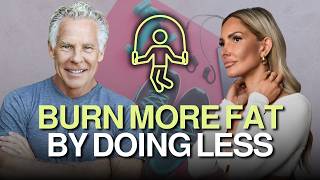
Mark Sisson, founder of Primal Kitchen and Peluva, explains why excessive running fails most people. True fat loss comes from metabolic flexibility, teaching your body to burn stored fat between meals. Walking, light aerobic work, and brief sprints beat chronic cardio.
Chapters
We don't lose fat by running or by walking that much. We lose fat when we teach our body to become metabolically flexible so that when we don't eat, we burn off our own stored body fat. Once you get your diet right, once you've achieved this metabolic flexibility, it doesn't take much to be lean and fit and strong and energetic.
Mark, welcome to the Earn Your Happy podcast. Thank you so much for coming on.
Great to be here, Lori. Good to see you again after so many, too many years, I think.
So good to see you. I think the last time I saw you was in the gym at Equinox in Santa Monica.
That's right.
And, um, Chris and I had gotten, uh, the opportunity to go to dinner with you and your lovely wife. Which was so much fun. We got to go to Soho House in Malibu, which is beautiful, and just be able to chat with you there. But then, um, saying goodbye to you in the Santa Monica gym 'cause you said you were moving to Miami. So you were so excited about it. And I love hearing that you are, you know, Mark and I had a, a tiny little catch-up right before this, that you're thriving in Miami. Yeah.
I mean, look, it's, um, I'm an outdoors kind of person. I like, you know, we're gonna talk about this in the show, but I like walking a lot. Uh, so I love the sun on my face. I like warm air. I love warm water. You know, the water here is 20 degrees warmer than it is in California. The beaches are nicer. Sorry. Uh, you got great restaurants. Um, I've, I've picked up a whole new sport, fat biking, fat tire biking on the sand, which is, uh, incredible workout and a lot of, I guess, fun in quotes. But, uh, you know, great way to work out, but a great way to be outside and breathing in that, uh, fresh salt air and everything. So I, I'm a huge fan of Miami Beach.
So when you transitioned, for so many people, that's, I mean, that's, you went from coast to coast. That's a really big deal. How long were you in California?
Well, you know, I went from coast to coast once before. I was in, uh, I grew up in New England, so, um, I went to school in New England. Uh, I went to college in Western Massachusetts, and then one day I just said, this is not working. This cold weather's not working. So I drew a diagonal line across the country and, you know, moved to California. So I moved to California in '78, and then I, I spent 30 years in Malibu, and that's where we raised our kids, and that's where I sort of settled in. And, you know, I, I grew, um, several of my businesses working out of my house in Malibu. So I have an affinity for that area. But, you know, when the kids— Malibu is a very kid-friendly, uh, community, but you have to get in your car to do everything. So, you know, you drive to soccer practice, you drive to Little League, or you take them, you drive them to school and And, uh, once that phase of your life is over, which it was for us, it's like, okay, you know, what are we gonna, what are we gonna do? We wanna be in a place where we can walk everywhere and, and have immediate access to the gym and to coffee shops and restaurants and things like that. So that was really what prompted to move away from California. That and the taxes.
Exactly.
Right.
Oh, I feel that. Okay. So my question for you, you, uh, you have been, in the health and wellness industry for so long. When, when did that start for you? Tell me about your family life growing up. You know, was your family healthy or how did that get introduced?
Yeah, my, um, I grew up in Maine. I grew up in a fishing village in Maine. My father was a painter, a fine artist, and supported the family, uh, painting pictures and making jewelry and other sort of arts and crafts. He was a track star in high school, and then ironically, he was told he had a heart murmur. And in the '40s, uh, that was sort of like, oh my God, I better stop training, working out hard, I have a heart murmur. They know now that it's, it's, it's usually nothing, and if it's even something, it's fixable. So he kind of backed off, but he had been a, a track athlete, track and field athlete. My mother was very interested in health and was always reading books on, uh, diet and exercise and longevity. There was a famous author in the '50s and '60s named Adele Davis who sort of was the pioneer in that space. And so I would read the books that my mother was reading and really at an early age, kind of nerdy about, about health and fitness, starting from like 13 or 14 years old. So that's, that's kind of what got me started. And then I was, I lived about a mile and a half from school, so I just found it was easier to run to and from school than take the bus. So with, with the running that I was doing just as a means of transportation, uh, went out for the track team and found that I could win the mile and the 2-mile, uh, at every, almost every track meet. So that became my thing, and that was how I found my sort of sweet spot as an athlete. That rolled over into, uh, college where I was captain of the track team and cross country, and then I rode, I, I ran road races. Uh, for years after that. 5Ks, 10Ks, marathons in the early days of the running boom when there were races every weekend all over the place. And then I got injured, and then I— the running was too much. Um, I had a highly inflammatory diet, it turns out, even though I'd read every book there was on fueling for sport. Uh, just— we've learned a lot in the last several decades. And so I was, um, I was, you know, on the outside, I was kind of the picture of health. I was on the COVID of Runner's World magazine 3 times. I was, uh, you know, everybody looked up to me as this fit fit guy that could perform well, but on the inside I was really falling apart. I had irritable bowel syndrome, I had gastro, you know, esophageal reflux, GERD, I had bad skin, I had arthritis in my feet. It was, yeah, it was horrible. And, you know, it turns out a lot of that was, was diet, which kind of pointed me down this avenue that led to a lifetime of exploration of, you know, what are the things that we can do, what are the foods we can eat that decrease inflammation and allow us to build muscle and help us burn off the stored body fat and things like that. And that's really kind of how I got to where I am today, through this— having started seeking health and then chasing performance for a while. And while chasing performance, finding out that my health was being compromised in the name of performance, and then finding that intersection of where they, they meet, where you can be strong and lean and fit and healthy and happy at the same time. And here we are today.
That one took me a while to figure out too. I went, I went through a similar journey of kind of falling apart before I put it back all together, doing my best to stay as fit as possible. So where in that journey did the entrepreneurial portion come from?
I've always been entrepreneurial, and, um, I was pre-med in college. I put myself through college. I had, I've had businesses my whole life. So I mean, I sold You know, I mowed lawns at the age of 12. I had a lawn mowing business, 12, 13, and 14 years old. At 15, I started painting houses in the summer. I made a lot of money painting houses. I put myself through prep school and high and, and college painting houses.
Did your family not have much money or—
No, no, it was— no, we were, you know, we were poor, but we didn't know it kind of thing. Love that. Yeah. So I mean, I remember one year I made more money than my dad. Which wasn't, you know, we still lived reasonably well in a small house in a fishing village in Maine. But that year I made more money than my dad painting houses. So I was a pre-med candidate and I was also running extremely well in the latter part of my college days. So I decided to take 3 years off and train for the Olympics to try and qualify for the Olympic marathon trials, the US marathon trials. In so doing, I sort of had to double down and become the, a contractor. So I was a painting contractor supporting my lifestyle, which by then included traveling around the world doing races. And there was not much money to be made in that sport in those days. It was still an amateur sport. So once I quit training and racing as much and sort of hunkered down, I started a frozen yogurt shop in Palo Alto in 1982, back when frozen yogurt was just beginning to be a thing. Started a restaurant in 1983, uh, started writing books in '81 or '82. Just always— I've never really worked for anybody else, so I've always kind of made my own way and figured out what it is that my, um, you know, my secret sauce is, or what I'm good at that I think people would benefit from, from knowing or from reading or from, or purchasing as a, as a good Yeah, so that's— that led to a supplement company which I started in '96, uh, Primal Nutrition, which, which did very well for decades. And then I, I got sort of a wild idea to start making sauces and dressings and toppings and things that you put on food in 2014, and that quickly morphed into Primal Kitchen, which grew rapidly. And then I was able to sell and, and make a lot of money and be able to kind of maybe take a step back and, and, and think about easing off the, the accelerator for a while. And so, um, I did that. And then as recently as, um, 2020, I'm like, okay, I gotta start something up again. And I'd really been interested in footwear, so I started a new shoe company called Peluva. And, uh, I started that with my son, my co-founder, and we're having a blast and we're doing very well and it's, it's taking off. It's a really unique kind of product. It's a, it's a 5-toed minimalist shoe that is probably the most comfortable shoe you'll ever wear. I guarantee that it will be, and also is good for your feet and encourages you to want to walk. So how's that for a segue into the topic of the day?
It's so good. And we're going to chat about that because he has a new book about walking out, which I'm so excited about. Everyone who listens to this podcast knows I'm, I'm walking obsessed for so many different reasons. But what do you think makes you different than, you know, other people who are maybe fearful of, of starting businesses? What in your brain, what's a belief that you have that you're not afraid to have done all these things and just kind of pave your own way?
I'll tell you what it is. It's what's the worst that could happen?
Mm-hmm.
You know, and if you, if you do that analysis, what's the worst that could happen? Well, I could lose some money or it could fail or, or I could be on the streets. I mean, if you start to go down the rabbit hole, what's the worst that can happen? It, it really doesn't get, you know, too much worse than that. And you can always start from zero. I mean, I, I've, I've, I've made a lot of money and lost a lot of money in my lifetime. So having, having done that and knowing that I have the, the skill to be able to summon the energy and resurrect and, and, and, you know, and, and go at it again with new learnings, with new, um, appreciation for, you know, what it takes to be successful, um, But it, you know, we talked a little bit about this. It, it's not for everybody. It is a rollercoaster being an entrepreneur, and it's almost like being bipolar. And, or, you know, like they're, that the highs are amazing and the lows are pretty devastating sometimes. I mean, I, I tell stories, uh, about, you know, Primal Kitchen where there were, there were weeks at a time where we thought the business was over. It was done. It was gone. It was, we, we'd broken it. We, you know, we'd, We, we'd either run outta money or we'd had a bad, uh, you know, uh, we couldn't make the mayonnaise that we thought we were gonna be able to make. And the whole business was predicated on being able to make this mayonnaise. And you know that, but you know, one, everybody's got these stories, right? Every entrepreneur has these stories. That's why entrepreneurial books are so thick. It's, it's mostly about the mistakes and about the failures and about the learnings and about all of that. But I come back to. This notion that what's the worst that could happen, right? And if I don't do this, I will beat myself up mentally for the rest of my life for not having given it, you know, a good shot. I mean, I, I did a TV show, um, I self-produced a, a health show, a health talk show called Responsible Health. I shot 51 half-hour episodes of it, um, and it aired on Travel Channel. In 2005, and I was at the end of my rope. I'd, I'd had a bad series of events with, uh, with growing my vitamin company up to a certain number, and then that business model stopped working, and I had to kind of, you know, regroup and figure out what I was going to do. And I invested like $1.5 million in, in this show, and, and it failed miserably. And from that, I was able to pivot and start Mark's Daily Apple. Which was a very, a big success story for me. And had I not failed in this attempt at doing a TV show, I probably would not have had the motivation to start the blog, which became one of the top health blogs in the world at the time. And almost more importantly, if I hadn't done that show, I would've kicked myself for the rest of my life for not having tried, because I was, I was good at creating content. I had been, you know, sort of an actor, uh, TV personality, you know, broadcaster type for a while. And so all of those things felt like it was the right thing to do. It, it just didn't work, right? I was buying time on Travel Channel. I was produ— paying to produce these shows, and then I was, I was the sponsor. I was, it was, it was what they call self-liquidating. I was, it was like a health talk show, but it was an infomercial in it for selling vitamins and, and my, my supplements. So Anyway, lots of, lots of failures along the way and lots of, um, you know, sleepless nights. But God, it's worth it. If when you have a— when you hit a home run or even a double, it's, it's— it changes everything in your life when you stick to something and it, and it succeeds and you come through and you go, wow, I did that. And as a result of the success of that my family won't have to worry for the rest of my life.
Mm-hmm. Tell me the formula that you came up with. I, I'm sure it changed multiple times through the years around supporting yourself through like those big stress failure moments. 'Cause they, you know, they happen frequently as you're evolving. You know, how did you support your, your health? Were you walking at that time? Were you already a walker? Like, tell me about what that journey looked like.
So are you that person who follows every travel page on Instagram, Pinterest, and you're the one who's always planning the girls trips, the family trips, the friends trips, and you love it down to every single detail? Imagine if your love of planning vacations could actually become a source of income. With Fora, you get the training, tools, and insider access to turn your passion into real earnings as a travel advisor so you can build a thriving business on your terms, all alongside your job, family responsibilities. And other passions. Fora is a modern travel agency built for people who love to plan travel and help others travel as well. Their tech platform, training, and community give you everything you need to turn a passion for travel planning into a flexible, meaningful stream of income. Every hotel, cruise, or activity you book as a Fora advisor earns you money in the form of a commission or a percentage of the booking cost. Getting started can be easy as booking trips for people you already know. Now that's time to finally turn your passion for travel into a a fulfilling business with Fora. Become a Fora advisor today at foratravel.com/happy. That's foratravel.com/happy. And make sure you tell them we sent you. foratravel.com/happy. Have you ever left a meeting thinking, oh my gosh, that was so productive, and then 10 minutes later you're pinging someone like, wait, what am I supposed to do? Or worse, you've been heads down the entire meeting, furiously typing notes instead of actually listening, and now your camera's off and your brain is fried.
Meetings are a mess.
And you guys, Granola fixes that. Granola is an AI-powered notepad built for the way real people actually meet.
And here's how it works.
You take rough notes like you normally would, and in the background, Granola securely transcribes the meeting. Then it turns everything into clean, structured, actually useful notes when the meeting ends. And the best part is that Granola works through your device's audio, which means it integrates seamlessly into the video conferencing tools you already use. So there's no setup and there's no awkward bots. It's just your normal meeting. Meeting with superpowers. You get to actually listen instead of frantically typing every single word and still walk away knowing exactly what was decided, who's doing what, and what comes next. So no balls are dropped, you guys. I love this because so many times I get off of a ton of meetings all day long and I feel like I didn't do anything because I don't even know what to do next. And I feel so overwhelmed, like I wasted the whole day not really being clear on anything.
It saved so much time.
I can just look back, know exactly what my tasks are, and it helps me feel so good about my day. So if meetings are eating up your day, Granola is a no-brainer. You can try it totally free for 3 months. Just head to granola.ai/earn. That's granola.ai/earn to get your time back. Get 3 months free at granola.ai/earn.
You know, I was always, um, working out, and I'm always— I've always been a fit guy, and I've always felt that fitness is still my number one job. I have to be fit for myself. I have to be fit for my family, fit and healthy for my family. While I was building businesses, I had children who, um, you know, wanted my time, and I was willing to give it. So I wasn't doing 90-hour weeks even when I was in the throes of like stuff wasn't working. There's a point at which it does you no good to just ruminate and worry. And either you fix it right now or you wait until it's time to fix it and you know how to fix it. Or maybe you can't fix it. But in the meantime, I see so many entrepreneurs who, um, you know, forego the evening dinners with their families, uh, because they're, you know, grinding it out. Uh, they're, they're trying to create some internal value for the amount of time that they're spending on something that may or may not be worth that time, and it may be better spent with friends or family or children or whatever, you know, if you have a social circle. So my mental health was always kind of based around spending time with my kids appropriately, you know, weekends and evenings and after school and going to soccer games and coaching Little League and stuff like that. And then with regard to my own health, you know, I learned a long time ago that I don't have to train 4 hours a day to be supremely fit. The irony here is I spent a lifetime doing that, and I didn't get much fitter than I am right now with 45 minutes a day, but well-crafted, um, well-strategized workouts, a lot of which is walking. Two, two weightlifting workouts a week, that's it, full stop, bang zoom. Um, one, um, sprint workout a week, and then I play. I ride a fat bike on the beach, I stand-up paddle with dolphins and turtles and manatees and whatever, and, um, I play Ultimate Frisbee. With my friends. And so I guess that counts as, as exercise, but it's still, you know, it's, it's, it's incorporating all the stuff I do in the gym in a way that is useful because it's— I'm having fun and playing, and I'm, I'm, I'm calling in on all my strength, my endurance, my aerobic capacity, my VO2 max, my agility, my power. All of these things I get to put together in some playful manner once in a while.
Okay, I, I think that that is one of the most important things that we could ever hear, is that it's not serving you just ruminating in— like, it can sometimes feel like you need to be doing it for even like appearances, if you have investors or you have, you know, clients or whatever that looks like. This appearance of like almost struggling or suffering to make something work that may not necessarily be working. But at the same time, it's making me really think about, you know, because especially because you wrote this book all about walking and you're so into health fitness. How much of that, and, and I'm sure you've done a ton of research around it, but how much do you think it actually has helped you with the creativity, coming up with ideas, connecting with higher level people and getting answers? Like how much has that actually helped business to play, to walk, to do those things?
Oh yeah, 100%. I mean, 85, 95% of my, of my great ideas come while I'm walking. Or while I'm on a standup paddleboard. And when I paddle, I typically paddle alone cuz I, I love the quiet time and I love the sort of the metronomic, you know, pat stroke, paddle stroke. So, uh, a lot of, a lot of my great ideas, um, you know, marketing campaigns, uh, I mean, you name it, uh, have come from those moments when I'm not busting my ass running you know, 6-minute miles. But when I'm just, you know, going, breathing through the nose, uh, doing all of the other sort of meditative-like activities and actions that accompany a low-level aerobic procedure like walking or easy cycling or stand-up paddling or something like that. And people, you know, because this book really takes a couple of shots at the running boom of the last 50 years as having been inappropriate for most people. Like, like I would say the only people who should be running are runners. And by that I mean self-selected as ectomorphs, skinny types who have long, long legs, lung capacity, a high pain tolerance. Yeah, okay, if you guys want to run, that's great, but everybody else should probably be walking a lot, lifting weights, sprinting once in a while. And by sprinting, I mean doing some high heart rate activity. It doesn't have to be running, sprinting. And that will generate a strong, lean healthy body that, that, that enhances not just muscle mass, but VO2 max, your immune system, bone density. I mean, all these things that can be achieved with a well-thought-out strategy that you don't achieve if you just run. And, and running, because it looks so valuable, because you're sweating and struggling and suffering and you, and it's so tiring. And most people run at a, at a heart rate that's inappropriate for their goals. So they're, they're running at a heart rate that's too high to be burning fat preferentially. And so they burn a lot of glycogen and they deplete their glycogen in their muscles, which makes them hungry after a run. Or they're not running fast enough that they're improving their performance. They're not increasing their ability to race fast or, or generate a higher VO2 max or aerobic threshold or any of those things. So they, they run this no man's land. Now, where I'm going with this is so many people come back, they, they sort of, they push back and they say, well, Mark, I love to run. It's when I do my best thinking. And you know, I did a lot of my best thinking when I was a runner too. The irony is I do better thinking when I'm a walker because it's the same concept, except now I'm not out of breath and, and, um, creating all these stress hormones. Walking is anabolic. Walking is building. Running. Is always catabolic. Running tears muscle tissue down. Now you could say, well, if I run every day and I'm not, you know, I'm, uh, I, I don't lift weights because I don't have time to lift weights, that's why I'm thin. Well, no, that's catabolic. Running is catabolic. I ran 100 miles a week for 7 years when I was a great runner. I weighed 141 pounds at 5'10". And by the way, I weighed 10 pounds more than I should have to be in the elite class that I was racing because I lift weights. I lifted weights, so I should have weighed 132 or 135. I lifted weights to try and maintain some upper body, so I weighed 141 or 142, but I couldn't keep it on. I weigh 172 now. I weigh 30 pounds more than I did when I was a runner, and I'm, I'm the same body fat. I just have 20 pounds more muscle because I'm not tearing it up, cannibalizing it, running every single day. Because it does no good. I'm walking a lot and that's what burns fat and, and keeps the— much of this is just about the mobility, just about moving your body through different ranges and planes of motion throughout the day. It's not even about burning calories. It's about doing the work that the human genetic recipe expects of us, which is to move around a lot throughout the day. So back to the thinking and the, and the, and the ideation. Walking is such a great way to plan a PowerPoint, to craft a letter to somebody, to— I mean, I, this afternoon I spent 45 minutes on a call just walking and talking on a call. So it's, it's always very productive for me to, to do that, um, which you can't do. You can't take a call while you're running. And the irony here again is that people who are running, running, who are not really runners but who are people in doing it because they heard it was the best thing they could do, or they, they thought They assume that running was the single best thing you could do to get, you know, quote, in shape. They're doing themselves a disservice. And that's really the essence of this book is how do we build, uh, a stronger, uh, more robust, more resilient body with less, much less pain and suffering and sacrifice.
Oh man, I wish I could've heard this like 10 years ago. Um, I, I ran for a really long time, but, and when I started running, I was like, I'm not a runner. And I can tell you, I don't have the body type that should be a runner. Like, I absolutely, I put on muscle right away. Like, I'm not, I feel like one of those people who is not built to run, but I just assumed, okay, well, if I wanna be lean, I should also run. So I would try to lift and run. And I will tell you, I was constantly injured. Like, there probably wasn't a week that went by where I didn't tell you that I felt like something was pulled or torn, or my knee had like a little thing in it, or I had a little hitch in my run. And I just kept running. I'll tell you, I'm paying for it now, but I quit running about 4 years ago. And, you know, I was, I was a walker at that point too, but now I'm just like full walker and just lifting like 2 to 3 times a week, kind of like you and lifting, baby. It's, it's, that's like a teenager. And the thing is, I'm leaner now than I was then consistently because running, I did not even realize it, I was starving all the I just couldn't stop eating.
That's the thing. Running, if you're not— again, if you haven't trained for it to burn fat preferentially, then running at a reasonably high heart rate— and by reasonably high, it's not even— it's like zone 3— you burn this glycogen off in your muscles. And, and it's a, it's a, it's a survival mechanism that the brain has at the end of a run, because our ancestors didn't run every day. That would antithetical to health. That would be stupid to run every day. They were wasting, you know, burning up— they were cannibalizing muscle tissue and burning off all these, all this energy. In fact, the original book called Born to Run was based on this idea that humans are, um, you know, we're persistence hunters and we had this structure, these long legs, these lungs, this cooling system, uh, this nuchal ligament in our, in our neck that allowed us to outrun, outwit, outplay, outlast these animals on the plains. And for 2 hours until they overheated and we run up and jab a spear in them. But even, even those ancestors didn't— they didn't run 7-minute miles for 2 hours and, you know, win the race to the end of the plains chasing a gazelle. This was crouching and hiding and jogging and, and strategizing and, and then jabbing the spear in. So they, they were persistence hunters, not because they were born to run. They were born to be able to run because they walked a lot and they lifted heavy things. They lifted stones and logs and they built, they built shelters and they carried babies and they lugged carcasses back to camp and they climbed trees. Because they walked a lot, they did the, they lifted these heavy things and they sprinted once in a while away from danger. That allowed them to be able to run once in a while to catch a beast. So now we sort of superimpose this on today and we go, well, Well, doesn't it make sense that we should run every day? No, there's no— until, until the running boom came along in the '70s, um, the only people who ran were runners who were self-selected because they were skinny and they were good at it. And it wasn't until these thick cushion running shoes came along that were actually invented for the great runners to be able to put in more miles without hurting the bottoms of their feet. But the thick cushion running shoes and then, and then this mythology about the marathon and how You know, what a great life, uh, what a bucket list item that would be to finish a marathon and not die like the original guy is supposed to have died running the marathon. And the next thing you know, we have this cult, we have this running boom that everybody assumes is doing, doing themselves a favor, when in fact it's quite the opposite. Runners get injured at a rate of, uh, 50% a year. So 50% of all runners get injured every year. And like, like you, you know, they're like, something— it must be something wrong with me because, you know, why am I getting injured all the time? Well, you're getting injured all the time because you're not a runner. I'm sorry. It's— it's— you are great at building muscle and putting on muscle in the gym and walking, which is anabolic. And you will literally— the irony and the sad part about going back and, and, and having a conversation with you from 10 years ago is to tell yourself from 10 years ago, Lori, I hate to say this to you, but you're working too hard. You're putting too much struggle and suffer and effort into this, and life could be so much easier if you just walked a lot and used that walking as a, as an opportunity to, um, to, to meet with friends, to walk with a girlfriend or a boyfriend or whatever it is, uh, to take phone calls, to strategize over a meeting you've got coming up, or to write a paper or whatever it is. Walk a lot, and then all you have to do is find 3 times a week where you go to the gym. It's so easy. And clearly you have to get the diet dialed in, right? I mean, that's one of the things that we, we've talked about, and that's been my specialty for the longest time. We don't lose fat by running or by walking that much. We lose fat when we teach our body to become metabolically flexible so that when we don't eat, we burn off our own stored body fat. When we do, you know, so the metabolic flexibility has been my, that's really been my, my main cause of the last decade and a half. How do we achieve this metabolic flexibility where our bodies are so adept at burning our own stored body fat that as we're sitting around all day, we're burning stored body fat? As we're sleeping at night, we're burning body fat. As we wake up in the morning, we don't need breakfast because we're burning our stored body fat. And we only get hungry when we're hungry, and we only eat what we need to eat to replenish protein and, you know, and some of the fats and some of the carbohydrates. But we don't need to be eating 3,500 calories a day and then going to the gym and trying to burn off a thousand of those, you know, to make some equation balance out. Our bodies— 80% of our body composition happens as a result of how we choose to eat. So you can't, you can't exercise away a bad diet. You have to get your diet right. But once you get your diet right, once you've achieved this metabolic flexibility, it doesn't take much to be lean and fit and strong and energetic. I mean, one of the things that happens with people who work out so much is they're always beat up, they're always There was burned out, or there was, you know, when I was one of the top athletes in the world, I got sick, colds and flu, 5 or 6 times a year.
All the time, same. Yeah. What do you think is the ideal kind of walking for people who are like, okay, if I'm gonna try this, let's say, let's say we're talking to a runner right now who runs 6 miles 2 to 4 times a week, and they're, they're pretty addicted to running. Like, what would you say is a good transition for them, and what do they expect in the transition transition, does it take a while for that appetite to start like not being so intense? Does it take a while to start really seeing like that taper off of where they were at with running?
Yeah, I mean, you can— the irony here is that most, most people who run in the manner that you just described, who are running at a heart rate that's too high, uh, to be burning fat efficiently, would be better off walking briskly at a heart rate, and the heart rate we use is 180 minus your age. It's sort of a plus or minus 5 beats depending on a few other factors, but 180 minus your age. And most people would say, well, Mark, geez, that, that heart rate's too— that's so low, I can only walk. If I start jogging, my heart rate gets above that. And I'm like, okay, that means you suck at burning fat. You're good at burning sugar. And the fact that you tell me that you can run for 45 minutes, uh, at 155 or 165 beats a minute, fine. But that's what I'm talking about. You're beating yourself up. You're, you're not burning fat, you're burning mostly glycogen. You're creating stress hormones, cortisol, which is going to, over years or months or years, increase your belly fat. Ironically, because cortisol is, is, you know, it, it helps promote visceral fat, it suppresses the immune system, and you're gonna negate some of the work you do in the gym. Because when you, when you lift weights, you don't want to be secreting cortisol. Cortisol is a catabolic hormone. It tears muscle tissue down. So if you say you want to be, you know, beach fit and you want a beach body and you want to look, you know, have nice muscles and, and still be, you know, fit but be lean. And, and, you know, I, I hesitate when I say muscular for women, but kind of women with muscles. They're not— unless they're doing steroids, they're not huge. They look fabulous. Are you kidding me? It's the— it's one of the sexiest looks that a woman can have. And, um, so women can't put on, you know, huge amounts of muscle. Um, so if you walk a lot, that's anabolic. And you now say you're that runner and you say, well, but Mark, I still want to run once in a while. I'm like, okay, let's retrain your body to be better at running. Like if, if I told you that by doing this strategy and walking briskly and paying attention to your fat max zone and lifting weights and doing some sprints once a week, that if you only ran once a week for 6 miles, but that 6 miles you ran faster than any time you ever ran it before because you trained for it, does that mean you can't call yourself a runner? Cuz you only run once, once a week, even though you're better than, than you were before. So. I think the, you know, we're missing sort of the, the end goal here, which is to be fit and healthy and, and happy and not beat up and not miserable and not feel like guilty when we are so injured that we have to stop running for 2 months. I mean, that's the other— we talk a lot in the book about, you know, the obligate runner who feels that a day isn't really a day. It's not worth, it's not worth executing the rest of the day if you haven't had your run for that day. I mean, why is that even a thing? But it is, right? It's people are set in these routines in these ways and these assumptions about what's good for them and what isn't.
I've started so many different businesses and I have to tell you that every single time I've started one, I have been terrified. It didn't get easier because each business was so different. You're always wondering, is anyone gonna buy this? Are these events gonna fill? Is anybody even gonna like this product? And now I know that it was absolutely the right thing to believe in myself and launch my businesses, launch my podcast, despite all of the fears and hesitations that I had. It also helps when you have a partner like Shopify on your side, like I did. Shopify is the commerce platform behind millions of businesses around the world and 10% of all e-commerce in the US, from household names like Glossier to brands just getting started. Get started with your own design studio with hundreds of ready-to-use templates Shopify helps you build a beautiful online store and matches your brand style. Accelerate your efficiency whether you're uploading new products or trying to improve existing ones. Shopify is packed with helpful AI tools that write product descriptions, page headlines, and even enhance your product photography. It's time to turn those what-ifs into— with Shopify today. Sign up for your $1 per month trial at shopify.com/happy Go to shopify.com/happy. That's shopify.com/happy. I've been in situations where I have needed a new employee and new help in my business immediately. And the last thing that you wanna do is waste time on people who don't actually understand what you do. I want somebody who can come in and understand the workflow. They can contribute right away. They can help us move forward. They can help us scale, and that's why I'd use Indeed Sponsored Jobs. When you need the right person, not just another CV, this is a job for Sponsored Jobs. When workplace chaos hits and you need the right hire, this is a job for Sponsored Jobs. Indeed Sponsored Jobs gets you quality candidates when you need them most. Stop struggling to get your job post even seen on other sites. Match with quality candidates with Indeed's Sponsored Jobs. Get matched with and hire quality candidates who can drive the the results that you need right now. Spend less time searching and more time actually interviewing candidates who check all your boxes. Less stress, less time, more results. When you need the right person to cut through the chaos, this is a job for Indeed Sponsored Jobs. And listeners of this show will get a $75 sponsored job credit to help get your job the premium status it deserves at indeed.com/podcast. Just go to indeed.com/podcast right now and support our show by saying you heard about Indeed on this this podcast. Indeed.com/podcast. Terms and conditions apply. Hiring, do it the right way with Indeed.
I have, um, a brother-in-law who's actually— he's, he's definitely a runner. He's one of the people you're talking about. But he has run every single day, I think, for the past 6 or 7 years, and he's dealing with some injuries right now that I'm like, how does someone like that who's so committed, right? It's now a part of who he is, like running every single day.
He's a streaker. We talk about in the book, he's a streaker. Okay, not the old kind, but the people who have to maintain their streak. Yep.
Yes. So tell me about that, because now he's in a place where he's pretty injured, but he's still a streaker. How is it, you know, mentally, is there a way to transition, do you think, for those people? Like, what could be a healthier way to start transitioning into something different?
Well, first of all, a healthier way is just to start walking and lifting and, and, you know, cutting back on the running. But for Streakers, it's a, it really is a psychological thing. Like, I've, I'm so invested in this now, I can't back down.
Yeah.
Right. The day I stop running ends the identity that I built for myself for the last 6 years. So that becomes more psychological than physical. And, uh, there's a guy, I could see him every afternoon. Um, he's a very nice guy. He, they call him the Raven. He's run 8 miles a day on the beaches of Miami for 42 years.
Oh my, every day.
Every day. And it is painful to watch. I can't watch him. He is scrunched over, hunched over sideways. Walking with a limp, not running, but he's got to get— he has to maintain the streak. And there's, you know, it's a, it's a point at which I can't, you know, I can't argue with his— if that's how he identifies and that's what he wants to do. And, you know, I'm not here to tell him that's a bad thing. But if you say you want to be healthy and, and you're doing this for health and for other you know, for, for reasons other than winning races, uh, which, you know, most runners are never going to do. Let's take a step back. Let's look at the psychology of this and let's examine, you know, you say you want this end goal and you started out with, with an idea of how to get there, which, which for you meant hard work, hard work, hard work every single day, every single day, routine, strict following of guidelines. Even though it was not a well-thought plan, that's what you think is going to get you there. And then at some point you get injured, you get burned out, you get dissatisfied. You get, I mean, the number of people, for instance, who engage in a running program to lose weight, it's a huge problem. And because people don't lose weight on a running program, especially not, you know, non-runners. The number of people who line up at the LA Marathon or the New York Marathon and they're 10 or 15 or 40 pounds overweight and they signed up up, they paid their $300 to get in the race to engage in a training program that would allow them to finish a marathon. And again, it's an admirable life goal, but as a means of losing weight, it's, it's horrible and it doesn't work. And it's very rare that you see somebody who, you know, lost 50 pounds, uh, running, unless they completely changed their diet and, and became, you know, ketogenic and, uh, and really watched every aspect of what they were doing in addition to being able to overcome hunger after every run. And some people could do that, but again, what's the, you know, there's a point to enjoying your life as well, right? I mean, if, if all this is about some masochistic pursuit of, of an ephemeral goal that's never gonna get here, meanwhile you're bypassing hedonistic pleasure, enjoyable moments right now because you're focused on this end goal. I don't know, it's just, uh, it, it, I think it bears reflection.
Yeah, I think, I think part of my personal addiction was like, it, it worked for me for a while where I was like, whoa, like I kind of feel like I lost some weight right away. And that, you know, I think probably even a lot of it was like water weight after running, but I would for 90 minutes in, you know, some heat. And I think there's a part of your brain that's like, well, that was also good for me, and, you know, I, I've got great ideas during it. And all of a sudden you can create this like addiction cycle. And it's funny how much dopamine you can get from when you first start to think that something works, that you can get so addicted to thinking that has to work again, and you keep going back to it and back to it and back to it. And And I think it also, you know, for me, I think the pain of running started to be way more, and, and it wasn't getting the payoff. So I just, I had to do what you said, and I really had to like rethink, what am I doing with my life? What is this actually causing? And can I get like these hits that I was getting that I thought were so valuable with running in different ways? And come to find out, I could get it through walking. I got it through cycling. I was able to kind of find, for me, it was a little bit about what you talked about on your paddleboard, like there's something about a repetitive pattern for my brain that it just really works for me. So cycle with a little bit higher intensity, walking at a little bit faster pace, like there's a repetitive motion in that just kind of clears other thoughts and, and lets ideas come in. For you with this book, cuz I feel like, you know, in order to write an entire book about walking, you had to do so much research. And just really learn about how people really function, and runners and walkers and the mindset behind all of it. What were like the top 2 most interesting things that you learned?
Well, that's, I mean, a good question because there are a lot of interesting things I learned. So this book started out being an anti-aging book, and, and so much of what I was focusing on in the anti-aging protocol was walking, I'm like, okay, this better— this should be a walking book. And it has to start by dismantling the marketing hype of the last 50 years that has surrounded the running boom. The running boom never should have existed. It was just sort of a perfect storm of misapplied anthropology. Again, these, these persistence hunters, you know, a, uh, uh, an analysis by Dr. Ken Cooper in 1968, uh, looking at cardiovascular health and realizing that people who people who did high heart rate exercise tended to live longer than people who didn't. So the term aerobics was coined, and that's what kind of got people on this, on this notion that running was not only a good thing, but the more you ran, the better it was for you. It turned out that was not true, and he actually recanted that years later. But, and then Jim Fixx writes a book on running because he uses running to get rid of his smoking addiction. Uh, and other people were writing about their, their substance abuse addictions and how running was a better way to do that. And it's kind of skyrocketed, snowballed into this thing where Bill Bowerman, who is the coach of the Oregon Track Club, and Phil Knight, who was starting Nike, decided to create these, these thick cushioned running shoes that their elite runners could put more miles in. And it worked well for them, but then other people started running in them, and next thing you know, these shoes are encouraging runners to run with bad form. They're literally there. The, in the last several decades, you know, the shoes have gotten thicker and thicker and thicker. There's no decrease in running injuries because the shoe doesn't do what it's supposed to do. It's the foot that's supposed to absorb the shock when you run, not the shoe. And if the foot doesn't absorb that impact appropriately, all those forces go up to the joint. They go up the, the kinetic chain past the ankle to the knee to the hip, and people get they get injured. They get either overuse injuries or they get, you know, side-to-side dysfunctions that manifest themselves in tendinosis or tendonitis or pulled muscles or shin splints or plantar fasciitis, Achilles tendonitis. I mean, everybody's got a story about a running injury, and an injury is your body's way of telling you you're doing this wrong. Do you think our ancestors got injured? That, yeah, you think somebody on the plains of Africa chasing down a gazelle or persistence hunting, a gazelle would go, oh shoot, I pulled a hamstring. I gotta— boys, you gotta, you gotta hold up, you know, you gotta send in a replacement here. No, it's just we evolved with this ability to sense the ground underneath us, uh, with bare feet typically, and then to accommodate the change in texture and tilt and temperature of the, of the terrain that we're working on. So the brain knew exactly how much to scrunch the arch, how much to bend the toes, how much to roll the ankle out a little bit, maybe, or bend the knee deeply to absorb a little bit more of that impact, or tilt the hip, rotate the hip a little bit, whatever it was. All of that's wired into our brains, but we bypass it because we wear these thick cushioned shoes. And then we, you know, we feel like, oh my God, I'm walking on a cloud, I'm walking on a pillow, it must be good for me. And it's not.
Hmm. Let me tell you, I was that person who started running with like, you know, the, the thinner shoes and I was like, oh, this is great. And then we got thicker and thicker and thicker cuz I was like, It's got to be better for my knees because my knees are getting worse and worse and worse. And it, it just got to the point where I couldn't anymore. Like my body actually, I was like, I will not be able to walk when I'm 50 if I keep this up. That's how I started to feel like my knees. Yeah. So I'm, I'm so grateful that now I'm a walker and just learning all the things. So tell me about what shoes do too. Like, why did you create this shoe? What does it do?
Yeah. So do you have some? Do you have— okay, we got to get you some. But no, this is— this shoe was designed for walking. And we have, you know, 6 different styles, men's and women's, colors all over the place. It's a, you know, it's a lifestyle shoe now, but it's called Peluva. It's a 5-toe shoe. They look really good. I'm gonna— I didn't even get ready for the show here. I mean, I just, I just, I just took these off. That's, that's when I just walked in just now. I've, you know, and it's— this is a, this is a trail shoe, so it's got a tread on the bottom of it, but it's still only 1 centimeter thick. From heel to the ground. So there's not a lot of cushion. There's no arch because you want your arch to work. We tell people don't run in these because— well, I tell people don't run anyway, but even if you don't run in these, walk in these and, and use these shoes to relax, realign, and strengthen your feet. So every step you take walking in these, you plant the heel, you roll off the big toe just like you're supposed to. And that's because the big toe is splayed out a little bit. Away from the other toes. Most shoes will scrunch your big toe in and raise the heel up, which then shortens the calf muscle, which then puts strain on the Achilles or the, or the plantar fascia area. So modern running shoes, even if you're walking in running shoes, they're not, they're not that great for you. And I would rather have people walk in a minimalist shoe. Minimalist is defined as wide, wide enough that your toes can splay outwardly and do what they're supposed to do. Thin, so you can feel the ground underneath. You wanna feel feel the cobblestones underneath your feet. You want to feel the sticks and stones that you walk on. It should feel good. Uh, flat, so there's zero drop from the heel to the, to the midpoint of the foot. Um, and flexible, so you can, you can, you know, you can rotate. You know, these shoes are very, very scrunchy and, you know, um, because you want that, you want that ability to adapt to whatever surface you're walking on. Now, I walk in Miami a lot, and I'm— it's mostly on, on concrete and pavement here, but I built these shoes so that I can walk 10 miles without getting any sort of bone bruise or anything like that. The old shoes, the old 5-toed shoes, the 5 fingers, which I was a huge fan of, I couldn't walk 2 miles without getting a metatarsal bone bruise in those. So that was the first thing that we corrected. I got a desert boot. This is a great shoe for a dress-up shoe for men and women. We've got, uh, this is the latest, this is the sport mesh, this is a gym shoe. It's called, the company's called Peluva. That's a gym shoe, um, that looks looks, you know, awesome. I've probably got 15 women in my gym wearing these shoes now, and they'll— they will tell me that when they're doing like lunges on, on those leg days, they feel grounded. And they feel, you know, because their toes are splaying outward, they're not— their knees aren't getting wonky from that, that thick running shoe that they're trying to balance on while they're doing their, their dumbbell lunges, right? So these shoes are made for walking. Everything else. I mean, people lift in them, people play pickleball in them, and people are using them for everything now because they love them. But it really gives you a sense of like how, how much we've lost our connection with the earth. Our feet are our connection with the world, with the earth. And to put on thick cushioned, you know, heavy stiff shoes and then think that everything's fine when the body says we must be walking on stilts, we can't feel anything underneath the foot. So we really wanna change the way the world looks at movement and particularly walking with this shoe company.
Hmm. I love that. Well, I'm, I'm such a massive advocate of walking. I, you know, I was telling you before this that Chris and I feel like we have resolved literally every single problem that we have had on a walk. And if there's ever any, sometimes they just get really long, right? Honestly. They're very long.
I know, but I mean, that's some— that's the magic of it, right? We really haven't finished this conversation. Let's keep walking. And you go, oh my God, we've been walking for 2 and a half hours, but we resolved it. Am I right?
And I, you know, I, I even say with girlfriends, like, there's, there's nothing that you can't solve on a long girlfriend's walk. Like, there's— you'll get— yeah, you'll fix it. You'll find it somewhere. Like, it may not be one walk, but put a few together and you're gonna get your answer. It's what we're supposed to do. It's like, you know, there's stories about, um, you know, all of the, the great leaders and presidents who would take people on a walk to solve, solve different problems, world issues. I'm like, there's a reason for it.
It changes everything.
And I can tell you, Chris and I would not be married 20 years now without walking for sure. Hands down. There's no way because we solved everything on a walk. So, oh, I love that you wrote this. Um, I'm very excited about it.
It.
I hope that this gets out there because I think families would be happier, relationships, human beings. I just think that it's— I think it's the answer to most of the problems that we all have. So I'm really grateful that you did it. And now we have the shoes to walk in it too.
Yes.
But I will make sure to link those up because you guys, for all of you listening who couldn't see the video as well, they're, they're good-looking shoes. Like, some of them are an absolute no for me, um, These actually look good. So I'll link that up. I'll link the book up. And I'm so grateful for you.
No, thank you. And will you do me a favor? Will you try them out for a while on your walk? I'll try them out. And do an analysis, good or bad, of that?
I will do an analysis for you. I will let you know because they're going to get about 6 miles a day walking. So I'll tell you.
Perfect. Perfect. We'll get you set up then.
Okay, amazing. Well, I appreciate you. And you guys, thank you so much for tuning in. And go check out those links below. And until next time, earn your happiness. Bye everyone.










