Raising $2 Million & Pivoting an Entire Business with 54 Investors with Natalie Ellis
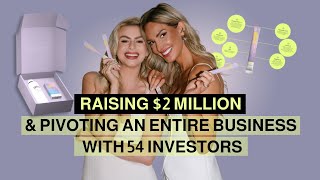
This is a full interview between Natalie Ellis and Lori Harder about Lori's experience founding Light Pink (a lighter alcoholic wine spritz), raising $2 million from 54 female investors beginning in 2020 (build 2021–2022), encountering severe pandemic-era supply-chain and licensing obstacles, and ultimately deciding to shut down/pivot the business after spending approximately $1 million. The episode covers the emotional toll of disappointing investors, pushback from a small number of investors, consideration of bringing co-founders, and the path to a fast pivot into a new consumer wellness product called Glossy — a daily beauty hydrator/hydration stick conceived as a ritual habit for skin and wellness. The conversation emphasizes lessons about women's access to investing, leadership, owning hard conversations, resilience, and how setbacks accelerated Lori's learning and sped up the new product build.
Questions this video answers
$2,000,000 raised from 54 female investors.
She started raising money in 2020; the build phase was 2021–2022.
She said, "I'm a million dollars in," indicating about $1,000,000 spent.
Chapters
I'm a million dollars in, and I'm literally just going to pull the plug on everything. This thing was alive to me, and it was like cutting it completely off and saying goodbye to this dream. And what I feared the most was breaking this news to my investors.
Welcome to the podcast, Lori.
I'm so excited to be here.
I'm gonna dive right in there because you've been on a few times, and I feel like people know your backstory, but there's a story today that I want to get into that you probably haven't told in many places yet. And let's kick it off right there. You raised $2 million from 54 female investors for a company called Light Pink. What was Light Pink? Or what is Light pink?
So Light Pink was a lighter version of an alcoholic wine spritz. And the reason that I wanted to start it is because at the time, I loved to have wine with my girlfriends. And I was also. You know, my story is in the health and fitness industry. I've always been really into health and fitness, really into wellness, really into products that are lighter and you can still indulge and enjoy just different ways to do that. So with the alcohol company, I wanted to create something that was better for you, that was lighter. But also I feel like mainstream women were all connecting over going out for girls nights, or we were going to networking events and we were having wine, but we were leaving all of those places not feeling very fulfilled. And, you know, it was very surface level conversations. So I had this idea that if I made a lighter version of wine that still tasted good, because I don't know about you, but I was just like, I can't do, like, sparkling water mixed with vodka. Like, that's gonna. That's disgusting.
Yeah.
And so when I was thinking of this product, I wanted that better for you version of wine that still tasted good. But I also wanted to put three questions on the back of the can where if women use those questions, they would get an answer or a connection that they needed. So we'd stop leaving these events and social settings and girls nights feeling like, why did I do that? It's like I'm. I feel like we're gossiping. I feel like it's empty. I feel like we're not supporting each other's goals. So that was really the vis. Vision for that company was to celebrate, connect, and collaborate and have a better for you, you know, drink to be able to do that over.
And was it 2021? You came up with it?
I started raising money in 2020. It took me about a year and a half and then, yeah, 2021, 2022 was like the build.
Okay, so let's go back to 2020 because. Okay, I'm being totally honest here. I am in the service based industry where I fulfill on digital products where I don't have to hold the inventory. I that was actually my first ever business was a product based business and I had to hold the inventory. Cash flow for me was an absolute nightmare. It's a whole different strategy. It's very, very different. And I remember with my product based business, I started selling recipe books to bring in some cash so that I could keep funding these orders. And that's when I actually realized the digital space. And I was like that I really want to get into that. That feels really scalable and it feels a bit easier. You've kind of wore many hats as an entrepreneur, but very successfully. You were in the service based industry. What mindset were you in when you made the decision to go from that? Everything you'd known that was really freaking successful to start from scratch in a brand new industry with a product based business.
It's a really good question because it's almost like people get out of products or out of different things to go to the digital space because it is a little bit easier now. It's very hard, but it's a little bit easier. People think. So for me, there was a few things happening in my life. I was actually in a place where, you know, I had had a really successful fitness membership site. I had launched a lot of courses that were doing really well. I had a book, I had events, I had, you know, kind of checked all of these boxes on that particular dream. And what was starting to happen was I wasn't feeling challenged. We ever just like you're doing the same thing and you're, you know, even if it's successful and you're, you're not feeling challenged, it's like, what's next? Yeah, I didn't know that I was going to. If anybody knows my backstory, I should not have accomplished any of those things. I'm from a very small town. I did not graduate high school. I essentially had an eighth grade level of education and it kind of ends there. And so for me to have checked all those boxes and then to not only have done it, but be able to do it successfully, which, long story, it wasn't easy, but you can go to the other podcast and find that, that I didn't plan past that. And so I spent a Solid year after launching my book because that was kind of the peak, right? The pivotal thing. I did everything, but I was like, if I write this book, that's like an oh my God moment for me. And so launched the book, I went on kind of a year long tour of the book. So I did a tour in the beginning of about four to five cities. And then I did that again at the end of the year. And while it felt so good, felt awesome to do that, it still wasn't. I was like, okay, what do I do now? What do I do next? I wasn't feeling super fulfilled because the things that were really hard in the beginning started to feel easier. And I simultaneously was in conversations with women who were all in that kind of digital space. And yes, some of them were, you know, six figures, some were seven figures per year making that. But it was a conversation of like, I don't know if I can keep doing this. I don't know if I can keep relaunching the same thing or showing up. I don't know how to make this bigger. I don't know how to get that money. That feels really impactful to me. And not to say that that is not impactful.
It is.
But once you start hitting those places and you realize the impact that money has, your dreams grow. And so I was having these dreams of making a bigger impact. And at that time, I was starting to go out to dinner with my husband and his friends. He had invited me randomly to dinner one time with him and a friend who had just started like a better for you foods company, a vegan foods company. And I remember sitting at that dinner and there was a bunch of guys there. And one was talking about how he just exited his company for $300 million. Another one was talking about, you know, his company that he was building and what he hopes to exit for. And then they were talking about this thing called deal flow that I was like, what the hel as deal flow? And like, why are you guys like all exchanging things and you're all helping each other out? It was like the craziest, most abundant, most exciting conversation I had been in to date. And I sat there and I was like, my girlfriends are not having this conversation and they don't even know the first thing about it. And in that moment, it was like, I want this conversation to be among all of the women that I know, because what impact could we make with $300 million? What impact could we make if we were all doing these things? If we were like, who could we invest in. If I just exited my company for 300 million and we could invest in all of these other women's businesses because women invest in women's businesses, men don't. Typically it's a very small percentage that do because. And it's not, I don't think it's their fault. I think it's an our thing that we have to take responsibility for. I think it's truly like bringing that conversation to the table because women are interested in women's things, men understand and are interested in men's things. It makes total sense.
Sense.
So that was the time when I was like, I have always, always loved products. I am the largest consumer. I truly have always been someone who's had five beverages on her desk at one time. I am the girl who, I mean I, I was at the top of a network marketing company for years and years because I understand that when something works for me, I understand the power of word of mouth marketing and I can't help but share it with my friends. Like literally, if I have something that I like, Natalie, you're going to be buying it soon because I'm going to want you to have it. So that was really kind of the journey of, I don't know the path to get to that type of impact in money through what I'm doing right now. And so it opened up the world of cpg, consumer packaged goods. And I was like, that is a path. And I also understood how to sell products through network marketing in a very different way. But I understood my role and how I could sell it and I knew that I could hire or figure out the rest.
I love what you said as well about bringing women into this conversation because that's really what you did with light pink. You also brought in a lot of investors. They were all female, but a lot of investors who had never even made investments before. And I think it's interesting because really you didn't need investment. You know how I mean, you've been incredibly successful and having that kind of business. You know how to generate money on demand. And so to even do that I think was incredible. What made you go and raise that round when you did, when you know you didn't necessarily need to.
Yes, I could have bootstrapped. I mean money's always nice because you can go faster when it's a large chunk like that. But I could have bootstrapped. But there were a couple of reasons why. Number one, they say when you are starting a business though, it is smarter to use other people's money because you can then invest your money in other places. So having money always work for you is a really smart thing. So anybody listening? That's a main reason why people do it. In these conversations, I learned about, like, a lot of men won't invest in companies if it's all your own money, because they're like, no. Like, if you're a smart business person, you would be using other people's money. And I'm like, that is such an interesting conversation. Let's flop that to number two. This is my number one. I want women to learn about investing and making money and making their dreams possible. And a lot of women's dreams are our products are things that they want to make better. Our moms who are like, hey, why is this bottle like this? Or why is this carrying thing like this? Like this is not making my life easier. And I think women can improve so much different products that are already out there or create products to make life easier. And they're not going to be able to bring that dream forward without cash, without knowing how to raise money. And so I wanted to bring women into this because the only way to learn is to be a part of it. Like, you're probably not privy to a lot of these conversations, so you need to actually get yourself involved in it. And a big way for I know you and I have always done this to get involved in to learn about things is to actually get involved. If I want to learn how to start a company, then how could I invest in it and be a part of it? Like, how can I really understand this conversation? And so that was a really big reason is when you know how to raise money or you watch another woman start a company and you understand it, it makes it possible for you. And so if someone's listening and this feels like way over your head right now, it will be familiar once you start to let yourself in on these conversations or you have a friend who's done something like this. But until maybe right now, it hasn't felt accessible. I know for me, it did not seem possible. I was like, I could never be a founder. I don't have this skill set. I don't have the knowledge. I don't have the smart. I mean, like, I don't understand most math problems. So everything was off the table for me. And it wasn't until I got into these conversations when they were having these real raw, like, oh, I don't know how to do that. Oh, I hire for that. Oh, this is my. This is my skillset. This is where I stay. But I've just really learned how to hire. I've learned how to do this or that. And so that was another huge reason I wanted to have women involved, is it opens up a world of opportunity once you learn how to do it that you never thought that you had access to. So I think a lot of women listening right now might feel pigeonholed in what they're doing because they just don't know what else is possible for them.
100%. And also, I do think there's a lot of women listening. I know there's a lot of women listening who will willingly invest five, multiple five figures in a mastermind or a program like that, but then would think they don't have the funds to angel invest, and you can get into rounds with that exact same investment. And the way I often see those investments too is I kind of am investing in a mastermind because I'm investing alongside other women that are investing and. Or it opens up my network pool as well. So for everyone listening to, I'm sure you have made a big investment in yourself, in the personal development or business development realm. And so this really is very similar to that. So going into that, you were starting to get light pink off the ground, and you worked on it for two years. Tell me about some of the glimpses you started to have that was showing you that this might not be the business that was gonna take off.
I got like a full frontal review, like Reveal, but I have the type of personality where I'm, I'm a driver. I'm like, I like, tell me that I'm gonna fail, and that just makes me want to run through the wall harder. That's not always good, right? It's not always good. So to anybody who's like, we're gonna make it happen, you know, you can make it with brute force. I've brute forced so many things in my life, and it's been hard, but it does work. But in this particular scenario, you really need to also look at your numbers, look at what's going on in the world, and get really real with yourself. So I think one of the things that I want to share before I even share that is like this whole podcast is about not having such a tight grip on the final outcome of the idea. So with that, you know, I'm in this. I'm in this brute force trying to make things happen. And it's during the pandemic. So if you heard anything about manufacturing and supply chain and how it was hard to get things. I mean, you guys saw even on shelves everywhere, like, things were challenging to get. And so when we went to go start even, you know, getting cans for, to put the beverage in, there was something called the candemic, like aluminum. There was an aluminum shortage. And there was a whole thing about like, hey, we don't even know if we can get cans. And then they found like this few thousands of cans that we could use for the first run, but they weren't sure if they were real cans or somebody had actually printed like the, the bougie label on the outside. But they're the cans that can actually explode. Like, it was a whole thing that I was like, I don't, I can't even believe I'm in this right now. And then minimum order quantities were all going up. So for a startup, you know, you want to look at something where the barrier of entry is low, where you only have to order maybe 500 to 5,000 to 10,000. Like, those are lower order numbers. And one of the things that I was going to use, the minimum order quantity went up to a million. So I was like, okay. Essentially they were kicking the startups out of the game. And there were reasons for that. And I understand it because the startups were going out of business during the pandemic. So it was left. It left them with the bill because they weren't finishing paying their contracts. And it also left them with a lot of product that if, let's say, I had gone through and been able to make this product, I probably would not have been able to sell through it. So it would have been sitting on their warehouse floor taking up space, and then they have to pay to destroy it. So it actually costs them more. So these were a lot of the headwinds that I was dealing with was just a spreadsheet with hundreds, almost thousands of warehouses. You know, different people for supply chain that were all saying no. Like, just door after door after door after door after door was closing because they just did not want to take a startup. And so I'll never forget one of the other big challenges was even to get a, like warehouse and shipping company. Normally if I went to you and I wanted to buy from you or I wanted you to do a service for me, it'd be like, hey, here's my product. Would you do this? You know, I want to pay you for this to ship this product out, you'd say, yes, and here's how it looks. Instead they were like, I don't think we're going to take you, but come back to us. Like, if you come back with a pitch deck telling us how much you think you're going to make and convince us why we should take you, then maybe we'll look at it. So after all the no's, I literally had to create a pitch, go and pitch my literal shipping department on a board of like five people. So I'm doing a pitch of, here's why I think we're going to be successful. Here's the numbers I think we're going to do. Then they said, maybe we'll do it, but we also want a $15,000 down payment. And if you on top of what I was paying them, so just a $15,000 bonus that if I don't sell this minimum by month three, we keep it and you're out. And so it went from, maybe there's a chance to, okay, I could actually do this, but if we don't make that number, we actually don't have a backup plan. So then we're really out. Like, we are out of business, essentially, because I can't not have this person to do this with no backup plan and lose the momentum of launch and all the things. So that was just one of the walls, but there were probably a hundred walls like that that was constantly trying to piece things together and solve. And so during the pandemic, it was a real thing for. For startups, because everything was pointing to not helping startups because startups would leave them kind of with the bag in their hand.
I think it's crazy. I'm listening. I'm like, oh, my God. So logically, I mean, it makes absolute sense why this product was so challenging to get off the ground. Like, and I remember being part of that, listening to updates. It was blocker after blocker after blocker. What I find really interesting when I've talked to you about this story is I can see on paper exactly why this wouldn't be working. Like, I can see it right? But I know for you as the founder, as an entrepreneur, it really got to your mindset and you took it personally. And I'm so curious, what do you think led to that? What do you. And can you tell me a bit about when you did start to feel quite deflated and what that looked like and what you think led to that? Because to most people that are listening, they're like, this was nothing to do with it. This is the economy. But I know for you, it did start to become personal.
I think it's hard not to take it personal. So There's a few things in there. When you're. When you're raising money, you are hardcore selling the dream. Like you are in the story. You're selling the dream. You're selling what this is going to look like. And I think that it feels like you're letting everybody down. You're like, wait, I. I raised this money based off this dream. I didn't have a big network of female founders. In fact, it was very small. It was like one, maybe two people. And those female founders were really busy at the time. So it was. I don't really. I felt bad asking them. Now I don't feel bad because I'm like, no, now we have to use each other. But I wasn't in on the conversation yet that it's normal to pivot, because most people are not sharing this part of the story, which is why I love that we're talking about this, is that I was like, if I pivot, I failed, or they're going to be so upset that this pivoted. Like, how could you even think that was going to work? Or why did you, you know, why did you get us to. To give you this money over the story? Okay, well, I didn't understand that that was totally normal. And neither did some of my investors, because even when I did pivot, some like, wait, no, we can't do this.
Wait, no, tell me about that. You. You got pushback from investors from about.
Three people, which is. They didn't know either.
But how did that feel?
Horrible. But it's okay. If I was in their shoes and I did not know, then I very well could have been that person, too, where I'm like, no, no, I was in on this dream. I'm not in on this dream.
Right?
Like, I'm not really into that. Right. Like, I had a couple people who, honestly, they were just like, I'm not really into it. It's been three years. I haven't seen anything like, we're good.
Okay?
But that's not how it works. And now it was my job. It was actually a really interesting time because I had to. I went and had a conversation with my husband because I was really upset because my worst nightmare had come true.
Right?
Like, some people were like, hey, I want out.
And did that feel like your worst nightmare when you were going through this is letting people down.
I feel like I would rather jump off a cliff without, you know, a parachute than let people who I really, really think a lot of down, Right? Because it wasn't just letting them down. It's you go down the spiral. It's the no one's ever going to invest in another dream. Why would anybody take advice from me? Why would anyone listen to my podcast like, I totally failed, Like, I built this dream and inflated it. You start to feel really foolish and you start to doubt everything about yourself, and then your life starts to reflect that. And I got out of my good habits and I just really spiraled in the worst way.
That's what I want to get into. Because I think for a lot of people who know you, you know, they listen to your podcast, they know your history, they probably would have assumed that you would still have the confidence of, I've done this before, I can do this again. We've weathered so many different storms. But actually being an insider on this, I know how this did affect you. And that's what I really want to get into. And I want to have this conversation because I don't want women thinking they're alone in this. What did it look like when you started to get out of the good habits you were in? What did it look like when you started to go into this spiral? What was the voice in your head saying? And what did that reflect on a day to day basis?
Oh, it's, it's crazy because what you are thinking and what you're fearing the most, what you're consistently focused on, is exactly what will come into your, into your life. But I also have to say you're pulling it in as a lesson. So I did need those lessons because the biggest lesson out of this was to detect detached from people's opinions and that you can't build your dream while caring about what 54 people think. Like, you'll never be able to do it attached to that. So during that time, you know, the voice in my head was saying things like, you have failed all these people or you're going to fail all these people. Like, you are never going to be able to launch anything ever again. I actually had one person in my life. I'll never forget it. We were sitting at a big dinner and I was kind of talking about the struggles that were going on during it. And she said, you know, I was so confused when you launched this alcohol company because you really just should have stayed in your lane, like, you shouldn't be in this. And I think that most of all, sometimes people put those voices to our fears. And it was in front of a lot of people. And I just remember, like this gut punch of, oh my God, she's so right. And while I knew part of it was right, part of it was wrong. I couldn't end up where I ended up now, which is a beautiful place, if I wouldn't have gone through that journey. But it's like those things will be amplified for you and you'll have so many opportunities to keep going down the spiral of, like, fear and anxiety. And the only thing that has pulled me out was other women, was other mentors, was other people getting really honest with where I was at. And I wasn't being honest for a while because I thought that I had to be the strong founder. And I remember even having this conversation with you when I, like, finally asked you guys for help. It was like, I haven't even wanted to tell my close friends because they're all now invested. So the very people that I would go to over needing advice and needing to get pulled out of the dark and needing help, I had created my own prison by being like, no, I have to be strong. I have to tell them this is going great. I have to look like every. Everything is bright and shiny on the outside or people aren't going to want to get involved and they're not going to want to give money and they're not going to. It's a really interesting place to be. And it wasn't until I got really vulnerable and started telling some friends and came to you and said, hey, I am really struggling. This is what this looks like, that you have to put a voice to it in order to get out of it.
And was that it was putting a voice to it, the start of a pivot and transition.
Putting a voice to it was the start of actually even moving things towards that direction. Things got a. A little bit better because we started coming out of the pandemic and a couple things started lining up with supply chain, but then other walls started coming up that, like, sometimes I really believe the universe is like, this is not for you anymore. We're trying to wake you up. So some things with licensing were happening that were running into walls where they wanted the Social Security numbers of all of the investors, which, fine, that's okay. It's not totally normal. But people were really hesitant to giving that to me. So finally when I got that, I was like, okay, I think we're over, like, our final hurdle with this. Then they said, you know what?
We.
We need all the fingerprints too, of all 54 women. And that's when some women were like, no. And if I don't have the buy in from all of them, I actually can't move on. And so that was the day that I knew, on top of also having a really close friend who is an alcohol industry expert, I just showed her everything. I was just like, tell me what I'll have to do to be successful at this. And she's like, well, you might have to just always be raising, always be running in the red, raise $10 million right now. And you still, still probably don't have a big chance at it because it's just a really tough industry to break into. And so I think finally getting that information from someone higher up and being really vulnerable with that person who really understands it on top of these other things, within five minutes I made a decision. Actually, it was more like 20 seconds. And I remember the day that I had to say, oh my God, I'm not doing this anymore. And it was like a full out of body experience for me where I couldn't believe I was saying it and I couldn't believe that I'm a million dollars in and I'm literally just going to pull the plug on everything. The formulation's not going anywhere. All of the branding shoots, a year of social media branding, shoots models, putting things out there, raising money, everything like this thing was alive to me and it was like cutting it completely off and saying goodbye to this dream. And what I feared the most was breaking this news to my investors. Like, what does this look like? Hi, I've just spent one year building this. I know that you just got all excited about what we're doing, but now we're pivoting. And so I had to take a few months to myself. I remember my investor letter was late because I was just like, I gotta gather this really strong pivot because I can't just say, hey, this all failed. I don't know what we're doing. Like, I had to know what we were doing and not just know. I had to get it into my bones to be able to tell that story again. Because as a founder, you need to share a really powerful pivot story of what you're going to do next. And when I had the experience of knowing that I needed to pivot, I had this thing happen that I think we've all had these moments where you like hear this voice or this message come across. I don't know where it came from. Couldn't tell you if it was a male or female voice, but as weird and funny as this sounds, the voice literally said, and it was the middle of the night. It was like, turn the Titanic. Like you're the captain, you see the iceberg. The passengers don't care where the destination is. They just want to be on board and learning and having fun. And it's your responsibility that you spot that and you go and you reroute. You can keep the party going, but it's your job to reroute and keep them on the journey and on the vision. But the vision's going to change. And so that might sound weird to some people, but in my head, it just all came together. I'm like, I see the problems. I see that this is going to be a sinking ship. And it is now my job as the captain of the ship to go and get them excited about a new destination. Nothing is changing. It's the same message. We're still educating, connecting, collaborating with women. We're still showing them these big opportunities. And in fact, now I can stand really powerfully in saying, I think this is going to be the biggest lesson that I could ever teach someone is along your journey to your dream, it is going to get messy. It's gonna get dicey, it's gonna get hard. You're gonna feel like you've disappointed everyone. You're gonna lose yourself, and your relationships and your friendships are gonna bring you back. It's gonna be the only thing that's gonna save you. And so through all of that, that was the most important part of the journey, I think, for everyone that I can show.
And speaking of. And we'll get into the pivot. But speaking of that pivot and thinking about, okay, I'm. I'm gonna say no to this idea. I know that we're done here. I've spent a million dollars. I know we're done here. You didn't necessarily have an idea of where you were gonna go next. It wasn't clear to you. Do you think that you pivoted versus walking away and closing the book because you knew your investors? Do you think if you had raised money from VCs, that you didn't know, like, you know, old, rich, rich, wealthy men, do you think you would have felt the same level of responsibility? No. So it's interesting. Almost like it needed to happen this way.
So it's funny because now I had a number three to, like, why I did the investment thing is because I knew that there was a dream there that had to come out. I didn't know what product it was attached to. Essentially, the dream was, like, get women involved, make it possible for their dreams, and also mine, too. Like, blow the ceiling off of what you think is possible. And I knew that if I got investors, I would not quit, because I knew that if I. If I don't put so much on the line that, like, my higher version of myself is forced to come out, that I will quit on myself. And so I've always known that in order for me to pull through, I've had to really put a lot on the line. And to me, that was the ultimate. Putting things on the line with people that I looked up to, like, you know, the women in this round. It's like, I look up to these women, and also it's my really good friends as well who are in it. And if that would have been something that I couldn't see, feel, and touch, I for sure would have quit. And I think that I would be going back to something that I know is not fulfilling to me. And also, I think that I would be in a place that was like, I'd be in the same spot all over again, going, wait, there's a bigger dream here. How do I do this? And so they have pulled me through to a bigger vision. I think all the women literally gave me the vision collectively, like, tapping into what we actually want.
Want.
It's been the hardest, but best thing I've ever done is to raise money and have that sort of, like, energetic connection to them. It's been both wildly amazing and the hardest experience of my life.
Yeah, that's what I'm seeing as the thread of all of this. And before we move into the pivot and what happened on the other side of it, I know at one point you almost brought in co founders, too, and it's interesting because you. You. You founded this as a solo founder. You almost brought in co founders. Do you think you did that from a place of, can I even do this on my own anymore? Like, what. What do you think spurred that on? Because I know you didn't end up going ahead with that, but I'm curious where your mindset was at at that point.
Yeah, it's interesting. This has been such a lesson for me. I've kind of watched myself do this throughout the years and all of the things that I've done. So this is my default kind of like. Like, I'm not good enough move. And it's powerful, and you need to learn it, and sometimes you do need them, right? You need them to get to the next place. So when I first started Bliss Project, I remember being like, oh, my gosh. Well, I. I don't think I can handle speaking up there that much. I get Too nervous. I'm not smart enough. Like, I'm not the expert. So I brought in so many speakers that I literally had the smallest. I had a three day event, and I probably spoke for three days, for two hours. And I remember ending that event going, it was my event. I wanted to speak more. Like, what did I do to myself? Why did I plan for an entire year to speak for, like, two hours? And so that was my first lesson on, oh, my goodness. I always try to go find people, which can be a power move, right? Like, get people involved, But I can do it to an extent that actually gives my power away to them. So I go find who I think is the expert and bring them in and give them my power, meaning in a way that I will default to what their opinion is and I'll start to get quiet. So I have done this in other things too, and I noticed that when my confidence was lowest, I started to say, I'll never be able to bring a company like this forward ever, if I don't get someone who's done it before or who has, like, the skill set that I think I am lacking. And so I went and found two of the most incredible people who are great at what they do. And I was about to just, like, be like, okay, now that I have them, this is gonna be great. But again, the universe will reveal itself. Like, there were so many things that were falling through in these relationships that it just, like, was not lining up. I was like, why is this not working? And then all of a sudden, I had also that epiphany at the same time that I was like, my belief right now and where this is coming from is that I can't do this by myself. And I'm so grateful that different things fell through and did not work out because I was. I think that I would have sabotaged all of our relationships personally, because I would have. I would have started to say, wait a minute. I literally am doing things that I don't want to do. I started giving away decisions that I felt very, very, like, clear on before I started, you know, thinking that I wanted to pivot into different things because I just gave up all of my decision making. By no means was it them. I truly was. Like, I wanted to be. I think I just wanted to be hands off for a second. And you can't know what you need until you actually go to the place that you. That you don't want to be. And so I took kind of a step into that role of, like, okay, hands off.
I'M just gonna.
You're the expert. Like, please, let's just do what you think is best. And it felt like they were saving me in the moment. And then when you give up that power, all of a sudden you're like, wait, I really want to be using my voice. Maybe that's not the way I want to go. I'm feeling like I do want to make that decision. And so I needed the complete contrast to realize. I needed them to come in to realize that that is very important to me and I do have the skill set to pull it through. But I wouldn't have known that if I didn't get to kind of be in those waters. So, you know, that was another thing that I learned about just even collaborating in contracts. We can always want to jump in so quickly. Start your contracts or your collaborations with people or your partnerships. Let them have like a six month to a year kind of little asterisk on them that says, hey, if this works out after six months or if this works out after a year, then we can enter into this and. Or start having this discussion. But for now, we're both protected. We're going to collaborate. This is what this is going to look like, because you're not confident enough to even know who you are or what you want to do in the beginning if you're making a decision from fear. And I was just so in fear, and I thought that if I did that my investors would be like, okay, we got the girl who now I've lost all confidence in. At least we have some experts in here. Yes, we got some experts we can rally around if you want to know. That's really what was going on in my head, and that is where that decision came from.
And I think it's really important to talk about because I know for myself personally, I have made some of the worst decisions when it comes to hiring, when it comes to partnerships, collaborations. When I have doubted myself or I've been in burnout. Like bringing certain team members in that you think is going to save everything.
Yes.
Because you're so exactly what I was doing. Yeah. You're like, so burned out. You don't want to make any of the decisions anymore. You don't want it to be on your shoulders. And so for me, like, when I brought in certain team members, they negotiate far beyond what I deep down thought that their position was worth or their input was worth. But I said yes anyway because I was in such a place of doubting myself. Yes. And I. It was no reflection on them. Or how good they were or what they were bringing to the table, But I didn't value myself enough. And I also can see it play out sometimes when we hire coaches and mentors when we're not in the best place, and then they give advice, and we just blindly follow their advice because they've had success. And ultimately, I do believe regardless of how much success we have or haven't had, deep down we do know what's best for us and often for our businesses. It was our idea in the first place. But I know also I've defined it to certain coaches because I've dealt with my own voice, and the more I doubt my own voice, the more I build something that I know I'm going to grow to hate.
This is the best conversation because I think getting your power back is first taking responsibility and recognizing that you do that, and that's your default. And that is truly my default. I'm like, where in my life am I trying to have someone else make something easier or get the answers out of or. I've done it multiple times, too, with with coaches and different things like that. And I see it go one of two ways. Like, people can e blame those people and be like, they made me do this and they made me do that. That is the fastest way to make sure you don't get your power back. I think it's really recognizing the way that we sabotage ourself in business and the way that we stop ourselves from the level up. Because if I really am honest with myself, it was this place where, I don't know, maybe you'll understand this feeling, Nelly, where you're falling backwards and there's nothing to grab onto, and you're just like. Like, you want someone to save you, but, you know, no one's coming. And it's the scariest place because you know you're about to face off with parts of yourself that you haven't been able to face.
I have chills as you're saying it. Oh.
It's like, I don't want to do that hard thing. I don't think I'm the person who can become that woman that is really like, I don't know if I can handle that level of hard work. I don't know if I can handle that level of pressure. I don't know if I could handle if all of those investors were mad at me. So, yes, we defer. We defer. We defer because we're so afraid of the pain when really, I've had a lot of the Painful things happen now. It's not that bad. And, you know, we were having our live podcast the other night, and the most painful things that have happened right down to, like, you know, maybe some of the investors don't want to be involved in all or what my worst nightmare is happening. Having to tell people I've lost money or I failed in this area. Those are the things that have introduced me to a part of myself that I feel is so capable and can accomplish just about anything at this point and now can come back from anything. And I love that version of myself. I would never have known this woman. I could never sit here and be this proud of who I am if those things would not have got me there. You don't get. You don't get those from accomplishing anything. You get those from getting through hard things.
I can speak for myself. I feel like you get that respect for yourself when you observe yourself doing the things you thought you could never do.
Yes.
And I'm also curious about some of the tough conversations you've had to have. Whether it was with potential co founders, whether it was with some of your investors, whether it was with people on your team, some tough conversations where you've had to fully take responsibility for, you know what? I shouldn't have let it get this far, but I did. And now we've got a backtrack, and now we've got to change some things up. How have you approached those conversations? I'm going to guess that you've had some pretty tough conversations.
I mean, so many of those. Let me just pick one randomly from this hat over here, this failure hat that also fuels my success. So I think some of the hard ones were even just acknowledging to your team, like, that you have made a bad decision in, you know, I had invested in a particular team, and I trusted them. I did the whole thing again, where it was, you're the expert. I'm gonna trust you, that you're doing what you're saying, that this is gonna follow through and work is getting done. And it's the acknowledgement to your team of, hey, I should have kept a better pulse on that. Here's where this went wrong. I truly felt like they were the experts, so I went really hands off, and I never checked in of what was happening. I probably could have saved a lot of money from this experience if I would have gone and been like, I know that. You keep telling me, yeah, yeah, yeah, this is great. Yeah, okay, we. We know what we're doing. We know best. You just stay in Your zone of genius. Like, all these things sound great, right? Except when things actually aren't going great and you have to kind of push and say, no, but still, show me. Or, no, but I still need to understand. I don't understand what's going on. So those conversations were the hardest of owning. Like, yeah, I took my hands off the wheel and I deferred to someone who was telling me they were the expert when I should have pushed back. And also, you know, I think as women, too, when we're working with men who are saying they know what they're doing and that you're fine and go do your thing and that I really was like, okay, this is. Then you know what you're doing. That's great. We have to know what's going on, and we have to push hard enough to make people show us. Even when your whole life, maybe it's been the opposite, where maybe you're intimidated to go and be that leader, Maybe you're intimidated to be like, no, show me your work. Like, what is going on? Because that feels like the bad guy. And I know that I was raised to be the good girl and to be nice and to have everybody like you. And I want my team to love me and I want to have fun with them. And that's just not how it's always going to be. If you want to make sure that you're being the most responsible for your dream and this vision and for your team, then you have to push or have those hard conversations or sometimes show up in a way that you don't want to show up. And I think that has been the most challenging for me is I just want to. It's like, I want to show up powerfully, but also have people enjoy the process of working with me. And I just don't know if you can 100% be that way.
And how do you show up in that way, though, when perhaps being a good girl and being a people pleaser is so deeply ingrained in you, it's.
The understanding that that is not going to serve you in every area of your work. I think this goes back for me. I think we have to rewind to when you start your company or even right now, if you're hearing this and you're like, oh, no, that's totally who I am and how I show up. Like, you might have to do things like, hey, we're going to have a meeting, and we're really going to talk about our core values. So it's starting from the top of what's the expectation you're setting with your people? What's the conversation like? What are kind of like the rules of engagement that you have in your company? And one of the companies that I was a part of before would always be like, we're family. We're this, we're that. And it was like, we just every. We're just. Everything's so great, and working with each other is incredible, and family this. And so for me, I was like, okay, this is. This is what this is. But then when things get hard, you're not family, and it feels really shitty, and your family doesn't, you know. You know, like, get rid of you or whatever this looks like. So I had this realization that you, yes, we're a team, and we want to work together towards this common goal. But I think from the beginning or from wherever you're at right now, you can always reset it. It has to be this expectation of, hey, I take this really serious, and what's best for the company is what's best for everyone. And sometimes that's going to require really hard conversations. Sometimes I might cry through the conversation because it's hard for me to do that. Like, I have these. This is literally what I say to my team, like. Like, hey, this is a hard thing for me to deliver. I might cry through it. But it's for these reasons that we've already discussed. And so having those really powerful internal, like, core values and expectations for your company allows that to be a lot easier to have so that I can show up and say, this isn't my favorite role to be in, and here's where we're at, and here's what's best, and here's what we're going to do. And so it's almost like you can defer back to those core values instead of making it so personal and have it be like, we're family and it's about us. And, no, it's not about us. It's about the company and what is best for everyone. That's a part of it that's been a really powerful lesson for me is to kind of, you know, set that tone from the beginning so that I can have those conversations and I can make it separate from me. It doesn't have to be me delivering it. It can be, like, the part of me that puts the company first.
Yeah, I can totally see that. It's almost like you're stepping out of Lori and you're stepping into, like, no, I'm CEO of this company that is living and Breathing and needs me to be this person.
It's like Sasha Fierce. Like, you actually do need separate roles for yourself where it's like, today is the day that, you know, I'm the Natalie that can have this hard conversation, and I am the one who's, like, shepherding this company. It's not the Natalie who's at home with her baby and her husband. And it's very different versions. Again, it's different compartments of your brain that you actually have to access. And so I think it's like, yeah, create those almost like, dual personalities that you tap into.
Like, alter ego.
Yeah. There's, like, stage Natalie. I've seen her. She's fucking amazing. Like, and then there's at home, you know, hanging out with Noemi.
Yeah. So taking a pivot. And speaking of pivots, do you remember the moment that you had the new idea?
Well, this is really. This is kind of interesting because I don't know if I've shared this part with you, but as I was looking at Light pink's numbers and going, oh, shit. Like, this is not. This is, like, not going to be a. This is not a profitable company at this point. As everything was going up and I was losing my margins, I was like, okay, well, what could be, you know, coming from digital marketing, I was like, what's my upsell? Okay, what is my upsell at? You know, checkout? And so I have always, always loved hydration. Hydration packets. Everything about hydration because, like, water for me, when I'm in a bad mood, I'm like, you probably need to drink more water. It's a very. It's my first self love step. It just is where I'm like, you're crazy right now. Like, leave your desk. Go get some water. Like, go drink water. You probably just need to drink water. And I have a headache. Go drink water. My skin looks crappy. Go drink water. So it's always been like this, like, really anchoring habit back to myself for me. And so when I was thinking of that upsell, I was like, well, when you drink, you want to be hydrated the next day. So I had started thinking of a hydration packet. One of my friends was like, you should really do something like this. She had also recommended. She knew someone who could maybe get me started down that road. So this hydration stick idea had kind of been implemented in my brain because I was using them because I'm like a toddler. I only want to drink flavored water. So I was like, yes, this could be awesome. I could make this amazing thing, but I could also. This is where the wheel started. My wellness background came in. I was like, like, but why would I just make it a hydration stick that has, like, you know, a lot of these are crappy, so I want to make them better. Like, sugar and salt. I don't want to do that. Like, how could I hydrate them better? But how could I also keep people from having to have so many pills? And, like, I. You don't need another hard pill to swallow. I was, like, thinking all of these things that I could make it really wellness. I love entrepreneurship, but you want to feel good during it. You want to get to your goals, and you need something that kind of anchors you every day. Like, I know you're huge into ritual. I was like, this is a huge ritual thing for me. So I started lighting up. I hadn't been lit up from my company in a long time. I was like, I am just very depressed right now. So I just noticed the energy kind of lifted. I was getting more excited about this idea than even bringing this other idea to life. So I think that even though the pivot felt devastating, I was also like. And asterisk. There's this other little thing that I'm thinking of. So right after that decision, literally the next day, I'm like, okay, we're doing this other thing, like, full stop.
We're just.
We're going forward. This is what we're doing. And that's literally how it happened. And so I didn't know fully what the idea was, but I was really into making wellness easier, and I wanted something better than the hydration sticks that I was drinking, because some of them have. Have, you know, thousands of milligrams of salt, and some aren't great for your skin, and some have a lot of additives. And I was like, I want something to work for me and hydrate and just taste really good and have something without added colors or chemicals or whatever that was. So we went full bore the other direction, literally. I started just, like, figuring out who I needed, how to get started, started formulating, probably. Oh, my gosh, 30 days after that. It went pretty quick.
And we're gonna get into that because I'm. This is, like, the most perfect product for me. I feel like you designed it for me.
I did, really, actually.
But the way I see it, too, is you invested a million dollars in something that you ultimately decided, this isn't gonna work. I'm gonna fully close this chapter and start a new one. It doesn't Feel to me like you lost that million dollars. It feels like you have learned a ton of lessons. And, yeah, you've paid for it. You've paid for that mentorship in so many things in the CPG space. When all of this started happening faster, I am sure it's because you had paid. You had literally paid for that knowledge to just get it faster, to know. And do you feel like that helped you just get this off the ground faster? Like, I wouldn't have. I wouldn't even know where to start to get something manufactured. So the fact that you got this done in 30 days, I'm like, that's where the million went.
It's literally where it went. So me and my chief of staff, who, Lauren Kuhlman, who's been with me like, since the beginning of this, we literally feel like, oh, my gosh, we know so much going into this. We end. Someone can send us a contract. We don't need much time. We have. We now have the team assembled. We know who we can use, who not to use. We understand where to go. We kind of understand, like, we know the vibe of people we want to work with, too. We're like, that's not a fit for us. We know that we're going to need access to someone who's a little bit better with, like, beginner questions or. We know that we fully understand this now. We don't need that. Like, everything has gone so fast and so smooth.
It's.
It feels like you just took weights off my back and I was climbing uphill, and now you just put me in a bobsled and threw me down ice. Like, that's literally how I feel right now. And I know that that's only the case because I just got educated through everything we went through.
Yeah. And it feels like. So when we were told, when we were getting into this conversation, it was like, okay, you have gone from being in a completely different industry to being an absolute beginner starting this brand new company. It feels like like you're stepping into this new company with such a level of power and experience. It almost feels like this was all meant to happen, which I know is easy to look back and say, but you don't feel to me like the same Lori that was pitching light pink. Because when you were pitching that, you were like, I'm really confident that this is going to work and we've got a plan. All those things. Now when I hear you talk about the product, it's like, I'm fucking doing it and you're in or you're out. But I'm doing it. And I know this is meant for, like, it's different. Do you feel that?
I feel like I don't even recognize that girl. I'm so grateful for her that she had the balls to get started.
Wow.
I'm so proud of her. So wherever you're at right now, be so proud of just. You're supposed to be naive. That is what I want everyone to hear. Like, if I would have known what I was about to go through, I wouldn't have done it. And I promise you, I wouldn't have, have. It was way too painful. If you could. Could have glimpsed down this road, I would have been like, hell, no, I'm not signing up for that. But I feel so clear, and I feel like now, instead of like even matching myself with going, yes, this is the right product. This is the right time. Which I really do believe that it's. I am the right person because I now know that I am resilient. I know that I won't give up. And I know that if you don't give up and you just keep on going and like, dead end, dead end, dead end. There's a way through. The only way to build the confidence to know that you're going to be that person is to go through it. And I can confidently stand here and go, I know I'm not going to quit because I just literally got pummeled and I got back up again. And sometimes we're much longer. Sometimes I was under my desk for a lot more hours crying, but I still would get up. And so I just know that now I am the person with the power. Instead of letting the power be external or letting the power be the idea or letting the power be other people, it's like. And you can't. You can't access that power, I think, until you've hit those rock bottom moments where you're the one. You're the only one who can pull yourself out. Takes a team, don't get me wrong, but it's you who has to wake up every day and go back on the battlefield.
And I love talking about it and I love that you're so open about it as well, because I know there are so many women listening that, I mean, even I got emotionally hearing you say that, that are getting emotional right now because they are in it it and they are thinking, should I quit? Am I even cut out for this? There's so many of those voices in their head, and it's just an example of look what is possible. And we're not even talking about business results right now. We're talking look what is possible within yourself and your confidence if you just don't give up.
You know what's. What's interesting is, like, we're having this podcast right now, and I'm about to launch, and it's been really exciting and things are going amazing, but I still don't know if this will be successful yet. This is the first time that I can confidently say I still love me. I still know that I'm going to win again at something I've already. I feel like I've already won. But I also deeply know that I am the person who will make something win as well externally. But if you would have even asked me last year, like, if this fails, will you be okay? I would have not said, yes. No, I would not be okay. And I think that, you know, you're going through what you're going through because you have to be able to answer, yes, I will be okay. And you can't get there until you have gone there. God, universe, whatever you believe is going to give you exactly what you need to answer that question. Will you be okay?
A hundred percent. And. And your story reminds me so much of Jamie Can Lima's story, too. And I know you're gonna have such a similar result at the end of it, too. Like, I just know it and feel it in my book. I'm receiving that.
I'm gonna receive all of that. Okay.
And what I love too, about her story is it was the same thing. She just got hit with so many obstacles and no's. And as you listen to her tell his story, at every single resurgence after the obstacle, she became stronger and stronger and stronger to be the person that needed to be in that room negotiating the deal that she did. Yes, she needed to. She needed to go through that, to be that woman in that room. And I just think, think, yeah, God will give us exactly what we need, but it's really not fun and enjoyable. But if we are willing to just keep saying yes at every roadblock and like you say, have the confidence to step into that, we'll call it like an alter ego when you're not fully ready. But you know, you need to have those conversations. It's powerful. So then tell me, what is this new product?
What's the new business? I'm just like, this is the first time in my life where I've looked at something and I'm like, that is the exact idea and everything I Wished and hoped, but better. And that took an amazing team as well to get that there. Which that's a whole other podcast, but it is called Glossy. It is a skin routine you can drink. It's a daily beauty hydrator. And it's essentially a new habit that, pun intended, you can stick to. And it is about helping you with having like that one habit that's so great for you for the day. But it also really goes after all the things that I feel. I was making it for me and my entrepreneur, go getter, ambitious women, girlfriends. I actually have thought of your community so much as I was building it because that's my ideal client. I want the woman who starts to believe that there's more for her. And I wanted this thing that reflected back not only in the branding, that was like, hey, this is who you are. This is this beautiful branding. This is this beautiful moment for you. You deserve something better for you. You deserve something that actually screams your name. You deserve something that makes you feel a bit elevated but still like a bit of personality behind it.
It.
And you know, a lot of the ingredients are meant to support glowing skin and it does support glowing skin. But it's like as you do that, all of those ingredients also are wellness ingredients. So it's like you're supporting immunity, you're supporting your gut. We have an amazing clinically studied probiotic in there, like all of these different things that help your skin, also help your goals and your productivity and all these other things. So I'm really excited to be able to talk about that. Talk about what the ingredients do. We have a really awesome doctor who's on board so we can chat about all of the fun things. And for me it was like, who do I need to bring into this vision and what does this formula need to be to really support like the women that we want to become? What would our higher self be using? What products is she using? And so that's what I want this to reflect back to you, is that moment during the day, you know, or in the morning, that's like, this is my moment. For me, this is where I'm doing one thing for myself. I'm drinking my water. And we all know how habits work. It's habit stacking. So I wanted it to be the simplest barrier of entry to have this thing that's like, this is like beautiful. It's for you, it's your higher self and it tastes really good. I wanted it to taste really natural. I wanted it to be like spa water esque type of Feeling. So I feel like that's what we've really created for women.
Oh, I literally feel like you have created the perfect product for me and this whole boss babe community. Like, I already can kind of see you all nodding along as you're listening to this. And what I love is the intentionality behind doing something for yourself every single morning. And I just think about the times when I've been in those really dark places, and I've been in a place of really doubting myself and not knowing if I'm good enough and if I'm cut out for this or if I can go have that hard conversation. And for me, this kind of product goes so far beyond even the benefits. It's that intentionality of I'm doing something for myself because I believe I'm worth. Worth doing something. Yes, I'm worth investing in myself. I'm worth doing this for. And I think that in of itself is powerful.
Our habits tell us if we're worthy. And so even when you don't feel it, sometimes just making yourself do those things, it will eventually tell your brain, oh, I am a person who's worth taking care of. And, you know, my story is that it was like, I didn't take care of myself. I didn't know that I could be this person. And through habits, through health, through fitness, through supplements, it was like, okay, you start to do all of these things that a healthy person would do, and then all of a sudden, one day you're like, wait a minute. Am I that?
Am I.
Is this me? I'm that healthy person. And so I've always been a routine person. This one just feels really, really good to me because, you know, when you're at your. When you're at your desk and things get hard, it's like, just stop for a second. Go do something. Go take a walk. Go drink your water. And you can just know that it's beneficial for everything that you're doing.
And how are you feeling now being in it?
I feel insanely amazing, which is shocking. So this is actually the busiest I've ever been in my life. But when you're aligned and when you do the hard stuff and when you select the right team and when you can say no to the wrong team quickly, I've learned how to say no and have hard conversations fast, and that is the A superpower. And what happens is you free up bandwidth in your brain. There's so much space that has come to me right now because I'm like, if it's tough, man, I'm getting it out because I know that that takes a big chunk of my energy through the day. So I've had more energy throughout this than I've ever had in my entire life because I'm finally having hard conversations fast, and I'm finally saying no quickly, and I'm finally pivoting quick when we need to. I'm just not getting stuck.
Stuck.
I'm not getting stuck. Because you don't need to get stuck. You don't need to overthink. You can actually trust yourself and know that the failures are okay. And I think that when you get to that place, you can move faster. And moving fast is important in business.
Yeah, definitely. So if you can think back to one of the darker days that you had in this whole journey, since you had the idea, since 2020, like, one of those days where you really were just like, I don't know.
Oh. Yep.
What would you tell yourself?
Well, it was about at 3am, multiple nights in a row for a solid month or two, and it was in the middle of the night. I think I would say, like, this is all a part of it. This is actually what's going to help you meet, like, that version of you that you dream about that you know is possible and just not to get so stuck there. And I would say, go get around friends faster.
Go.
Go find those people. Go have those conversations. Go support yourself with more friends. Go be vulnerable and tell them what's going on now. Because when you're in your darkest hour is it's like when you want to be quietest, and it's when you need to go and tell people where you're at, like, it's the most important thing.
And I'm sure, too, during that time, you really saw the people that showed up for you. I'm sure it's deepened so many friendships.
That is what has made some of my deepest relationships, actually, is those. Those moments.
So I'm.
I. I would never wish it away, ever. I wouldn't wish it away. You know, they say, like, you wouldn't want your best friend to go through it. I want my best friend to go through it.
Amazing. I'm gonna put all the links in the show notes as well. If you are listening to this while you're driving, Lori, I'm so proud of you. I'm so excited for you. I know you're coming back on when this product is launched, and you are telling me that this far exceeded anything you ever dreamed of. And I can't wait to. To sit across from you when you're saying those words.
This has been a dream. I've actually dreamt of this very moment on this podcast with you, talking about this product that you're an investor in. Like, this is such a celebratory moment. Every piece of it was worth it just to sit in these chairs with you.
I'm so excited.
Thank you.










