Redefining Love, Friendship, and Life After Divorce with Krista Williams
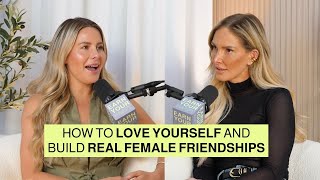
This is a YouTube interview (Earn Your Happy podcast) featuring Lori Harder and Krista Williams. They discuss self-love and boundaries (e.g., not chasing friends/partners), experiences of aging and appearance, and Krista's process writing a book — including the contrast between the joy of writing and the mental challenges of marketing, receiving help, and a self-critical "pre-disappointment" mindset. The conversation also begins exploring ideas about purpose and how it evolves over time.
Chapters
I'm in a place in my life right now where I'm not going to chase a friend or a girlfriend. And if I don't like who I am around you, I'm like, I actually can't do it anymore because I have to like me. Like, I have to like who I am.
And that's an act of self love. You know, thinking about in our lives, just small moments of self love. Self love is saying no.
Krista, welcome to the earn your happy podcast. Thank you so much for coming back on.
Yes, right.
Was it years ago?
It was like, I think 20. 20. 2020 or 2021? 2019. 2019.
It had to be because I feel like it was at my house.
It was. It was at your house. And then you came on ours. Yeah, at that time. And then I think for Tribe Called Bliss.
Oh my gosh, we're so much more mature and wow, just grown women now.
I feel like I just care so much less. I feel like the way that I cared during that time was on a. Just a 10 and now I'm just like, whatever, man.
That's the best.
The best. Getting older is the best.
It's the mo. It's literally the most freeing. That's why. And it's really cool because now that I'm in my 40s, I've actually lost track of even, like, I, I can't tell how old people are anymore. Which is also weird because I'll like meet a 30 year old and be like, do you want to hang out? And they're like, you're old. And I'm like, wait, what is going on?
My friends laugh because everywhere we go we'll be out. And I'm like, how old do you think we are? Like, I'll talk to you. Like, so if you, if you just met us, like, how old do you think we are? Like 20, 30, 40? Like, that's my like favorite question also too, because I don't know if you're experiencing this, but I'll see people in the range of what people look like and how old they are. Like, some people will be 30 and they look 45.
Totally.
Some people be 45 and they look 25. So there's just this weird thing happening where time is being bent or something. But no one looks like their age.
We also live in California and completely. Yeah, because when I go back to the Midwest, I'm like, oh, yeah, got it.
Yeah, no, same. I know. I like, I see my, I see my people. When I'm back home in Ohio, I'M like, yeah, that's what that age looks like. I remember I was in Mexico recently, or I know I was somewhere recently on a trip and I was like, wow, this is what no plastic surgery world is like.
I was like, whoa, you just get desensitized 100%.
You.
Yeah, you just think everybody has really full lips and long blonde noses here. And I'm like, wow, okay, gotcha. It's not like, it's not like that everywhere. Okay. You have been writing a book.
Writing a book.
You have been on the book journey. And the book journey is no joke. Like, when people tell me they want to write a book, I'm like, do you, do you really want to write a book? Because, like, you're number one. You're not even going to make it to the end if you don't want to write a book because you have to really want it for so many reasons.
Yeah, I think it's a lot like, maybe I don't know this, maybe I will know this. But like motherhood, where you're like, yeah, I wanna have kids. And then you have kids and you're like, I didn't even understand what was going on. And writing a book is a whole process. And I remember people like you would tell us, you know, it's a thing, are you guys ready? And, you know, we felt ready. I feel happy about it. But I think what's applicable to the audience is just whenever you have a big project or something that you've really dreamed of, that you're going for in life, how many things can come up in that process? And I think for us, I'm so proud of the book. It's better than I could have ever imagined. I'm so hard on myself and I just absolutely adore it. And whenever you're doing something where you're putting yourself out there, where you're being visible, you're being seen, you're using your voice, so much will come up for you, especially if you're a woman. So much fear, so much mindset stuff, so many of the voices and narratives. So I've been really struggling to be honest mentally with kind of the conversations in my head and that inner critic and that perfectionist part of me that's really been very loud during this time when I know I'm expanding and growing. And so the louder for me the fear is, or the bigger the fear is, the bigger the up level opportunity. I know that this is such an up level opportunity. I know this is such a space for me to really step Into. But when we're at that point, the voices are gonna be the loudest.
Okay, so what are some of the things? Cause I know for me, like, there would be some days I would write, I had the stance of where I would write. So it was like, oh, this coffee shop is working for me. Thank God. Because, you know, sometimes I'd write at home. It wouldn't work at all. Like, you just, like, hit walls. You can't think of things. So I remember these different points where I was going every day to this coffee shop, and I heard this habit, like, just make your chair hit the back, you know, at like, it's a habit, like, at 1pm and then don't get up until like, 4 or 5pm And I'm like, great. And it sort of worked for me. It sort of didn't. But with that said, I remember some days coming home and being like, oh, my God, I'm a genius. I'm the best writer ever. Which was so rare, by the way. But then other days, coming home and being like, I have nothing good to say. I'm a total, total loser. Like, I'm a fraud and I suck. Like, I have no good stories. Like, it just feels like you have no good stories.
I think that was something I'm really learning about in this process, I think, because I work with speakers, too.
Yeah.
And it's like, we have so much gold inside of us, but we haven't taken the time to sit and mine and excavate. So for me, I was like, I just. I. I don't think I have any interesting stories. I don't think there's anything interesting about my perspective. So so much of my process was like, what are the defining moments of my life? What are the stories that seem mundane but are relatable? Oftentimes, speakers share stories that are very mundane, but they're very relatable. You know, it's like the simplest things. Brene Brown is an example. Like, many of her stories are very simple about family, very simple about the home, but they're just very relatable, and they hit on the point. And so I had to give myself so much permission in the process of, like, allowing myself to be okay with simple stories and being okay with simple things that really drive the point home, but are my truth. But in the process of writing, you know, it's funny, and I don't know how. I'm curious of how your promotion process was. The writing process for me was a joy. I had the best time sitting at home in my pajamas. Being a little slob, you know, just not being bothered. No one's bothering them.
A little book slob.
I'm just snacking. I'm hanging out. And I didn't force myself to write every day. I was the procrastinator. Our editor was like, yo. Like, I would be like, all right, you have like, 5,000 words. I'm like, cool, Give me a day. And I'd have to wait, and I would just let it all come out and then move through it. So I never forced myself to do it. That's just not how I work. But what's been challenging for me, where the mindset stuff has come up, is on the marketing, promotion. And I think you're so good at that. Like, you're so good at networking relationships. Like, that's such a beautiful skill of yours. For me, I can go internally. I think I'm a genius again. I'm like, oh, yeah. But then when I have to go and ask for help or receive or. Or, you know, put myself out there, that's where I get really stuck. And that's where I found the biggest challenge.
So, like, what's going on in your head when you do that?
Here's a.
You did. You got to be the book slob. You crushed it. Now you're like, in the marketing portion. What is actually happening in your brain?
So in my brain, and I don't know if people can relate. I have this pre disappointment syndrome where I'm disappointed before it already happens.
Interesting.
I have this part of me that is just already. It already isn't working. It's already not going to. You know, we knew it wasn't going to work. Kind of pre disappointment. So that's one of them. And then it's also receiving. So many women have struggle with receiving, struggle with first asking for help and then second receiving that help. And I think in the process of a book, it's fully about cashing in on the chips, on the relationships that you have, on the people that you've developed connections with. And you really, really, truly have to ask people for help. You have to be clear. You have to be upfront. And so being able to take time to do that has been really hard for me because normally I'm someone that's tries to give as much as I can or support other people or I just am not usually in the phase of receiving. So receiving has been challenging. And then I think, third, I have such big expectations for myself in my life, and I think the people that I compare myself to are people that have been doing this for twice as long, you know, have twice as many sources. I know you're. We. We probably compared to the same people, to be honest. But it's like, you know, you're just comparing yourself to people. Yeah, literally. I'm like. Everyone knows. I'm like. It's just people that are way ahead of me, and that's okay that they're ahead of me. It's. It's fine. But I just find myself seeing that and just getting really disheartened with it.
Where do you think the expectation of already being disappointed, like, or not working, where do you think that came from? Have you sat with that?
Yeah, of course. Yeah. I mean, that's the thing with me. I'm gonna sit with it all. But, yeah, that part of me, it's a protective part. So I practice something called internal family systems. It's a psychotherapy technique, which I love. So I really work in part. So whenever I'm talking about a feeling, I often pull it as a part. So there's a part of me that believes that to keep myself safe, I have to say that I'm disappointed already. Instead of having that expectation and being let down.
Got it.
So it perceives that it's easier to say, hey, it's not going to happen. Don't worry about it. We should just move on. It never happens. Instead of having the hope.
Is it because it feels embarrassing in front of people if you don't hit it?
Yeah, of course. Yeah. I would say embarrassing. I would say that there have been many moments in my life where I have hoped and it hasn't happened. And then I also think that it validates the belief that I'm not successful. So I think a lot of people have beliefs that they have that are limiting beliefs that are these, you know, neural pathways that exist in their mind that they had from a young age. One of mine is that I'm not successful. I have this belief that I'm not successful. And so to validate and confirm that belief in my reality, I will be disappointed in advance. And so oftentimes with these beliefs, we want to validate it in our reality. The belief is so strong that instead of the conscious mind being like, I want to be successful, we truly want to validate that. So I think I just believe I'm not successful.
Hmm.
To be. To be honest, did you.
Was there something growing up that it wasn't good to be successful or that.
It was really good to be successful? It was really good, and it was never successful enough.
Oh, yeah. Interesting. Coming from, like, parents or all around you?
Parents and all around me. That's how success was money, success was safety. Success was being seen. And also on the other side of it, you know, there is a really soulful, spiritual part of me that came here for a mission. Like, I'm here to do good. I'm here for God. I'm here for goodness and God. So there's also that part of me that desperately really wants to make my life meaningful and live a life of purpose and do big things and share whatever I'm being called to share by God. So that is the truth, and that is the beauty of it. But then on the other side of it, the shadow side of it is that, you know, I desperately want to be successful for that thing. So there's kind of this, like, you know, there's this kind of paradigm thing that can happen with people where they're like, I don't believe I'm successful, but I know I want to do good and I want to do big things.
Okay, so this. So this makes me think about how you feel about purpose.
Yeah.
Because purpose can be so, like, purpose can feel so connected.
How do you.
Success. How do I see purpose?
Yeah.
Oh, my God. Let's go there.
Yeah.
Purpose. To me now, I think you create it all the time. I think you have to keep creating it till the day you die or you're gonna die of not having a purpose. Like, I just think. Think that we have to wake up every day and create our purpose, because I, you know, I had an interesting trajectory of, like, growing up with nothing and then getting the wild ride of network marketing and exploding with network marketing, going to. Having everything to, like, such an excess at a certain point in our life that we just. At that point, if we would have been crazy smart with our money, we would have never had to work again. So that the reason I'm sharing that is because I got to a place where we could wake up and do whatever we wanted. And we did that for maybe, oh, my gosh, we still didn't do it because we were still helping people. Like, we didn't do whatever we wanted. But even just having a little bit to do every day was not enough to feel fulfilled. And I remember struggling in that period of my life that was, like, mid-30s and going, Whoa, there is, like, there is so much more to life than this. And yet feeling like I couldn't be the vessel yet to, like, say that because I was in my mid-30s. But then having to un. Unpack and unravel all of what that meant. Because purpose is like, you truly have to come here and figure out how, like, what your gifts are and how to use them every single day in a way that makes you feel fulfillment no matter what is coming in. Because it's really bizarre that you also, like, then you can get to a place in your life where maybe then you need money again or whatever that looks like. You have to find the driver of why you're gonna fulfill these big purposes that I believe we have. Then you have to figure out the drivers in your life without getting so attached to the, the meaning behind them, which is the whole thing is up and amazing and beautiful. But I think that you're gonna have, you know, depending on who you are, I feel like we're gonna have five, 10, 20, 30 different purposes. I think there's, like.










