The 6 Types of Genius That Will Change How You Work, Lead, and Live with Patrick Lencioni
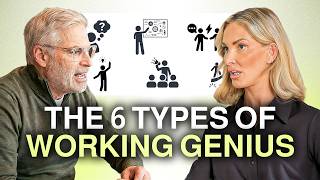
Pat Lencioni breaks down six types of work genius: Wonder, Invention, Discernment, Galvanizing, Enablement, and Tenacity. Most people love some kinds of work and find others draining. Knowing your own genius and your team's prevents burnout, cuts guilt, and helps you hire and delegate better.
Chapters
The first five years of entrepreneurship, I was like, am I cut out for this? Like, I am so bad over here. Why do I have so much resistance here? Like, what is my problem?
I think the most powerful thing about knowing your working genius and knowing the working genius of the people around you and your family and in your teams at work is you avoid guilt that you direct to yourself for what you're not good at and judgment to others. Because I thought I was lazy, because I didn't like details and finishing things.
Oh, my God, that's me.
But when you start a business, you think, well, I'm supposed to be good at all of it, and nobody is. We tend to focus on the things we're not good at and think we have to get better at those. And that's not how life is supposed to be.
Pat, welcome to the podcast. Thank you so much for coming on.
It's great to be here, Lori. It's going to be fun.
Oh, my gosh. This is going to be such a fun conversation because it's something that I feel like not only I'm into, but I think this is a great way to start off 2026 for yourself and for your team. I think there's so many things that we chat about in the world around trying to get more energy and trying to get our energy back. And so often we can think that it's about the food that we're eating or what, you know, the people were around, things like that. And some of the things that I. You know, the quiz that I took was so enlightening for me, and so I'm very excited to dive into our topic today. But first, I'd love to chat about. You have been. You've been in leadership for how long now?
Well, I've had my company for 28 years.
Wow.
Little over 28 years, which sounds crazy because when we started, we didn't know how long it would go, so I've had the table group for that long, and then I worked before that for nine years in corporate America. Yeah.
Okay, so tell me how that got started. I would love to know the story of what you were doing in corporate America and then what made you go, nope, this is absolutely where I want to go.
So I. My folks didn't go to college. When I got out of college, I got the best job in America. The year I graduated college, it was literally the number one job on every list. And in the book they wrote, people wanted this job, and somehow I got it. And I thought, oh, I've made It. I've arrived. It pays well. It's. I was a management consulting consultant for this big firm and I, I thought it would have something to do with managing people and consulting, but it was really data analysis and, And I was miserable, but I didn't know why. And so then I got another job after two years. You do two years there. And then I got a job at a big company that was not that big at the time, called Oracle. And I was there for two and a half years and it was. It was a pretty crazy culture. And it was. And I was like, I really like the human side of business. And then I went to a software company after that, a competitor, and became an executive there. And just as things were settling and I had a stable job and my dad was happy that I had benefits and everything, I decided I really want to work with other companies. So me and four colleagues started the Table Group. I had no books, no speaking. We were just like, wanted to go out and help CEOs make their companies healthier so people would get more done and be more fulfilled. And so we did that, wrote a book by accident, started giving talks. Things started to grow. 28 years later, here we are.
So was that based on, like, were you having those, like, feelings of, like, wait, I keep getting these great things, but I'm miserable, I have no energy. Like, what was starting to give you those signs of. I really want to make sure that people are in the right positions and starting to dig into that?
Well, for the first 23 years, we did not have working genius. This is new. But, but we knew that, that, that you needed to get people in the right chairs and do all these things, but we didn't really understand why Myers Briggs for things I like, I love all the tests, I love all the assessments, and it's all interesting, but there was never really an assessment that was like, what kind of work does a person love to do? Like, what kind of tasks fill them up and which kind drain them? And I didn't realize, when I look back at my life, the jobs that I was good at and the jobs that made me happy, it wasn't about the industry or even the title. It was about the nature of the work. And I had so much guilt and shame growing up in my career about the things I wasn't good at, thinking, what's wrong with me? Why am I not good? Why does that guy or that gal find this easy? And I'm grinding on it and I don't even like it. And it literally was 30 years later that we stumbled upon this model and said, oh, now we finally understand it. And so all these other assessments are great, but this one actually gets down to the tasks. The kind of day to day work, whether it's at home running your household, whether it's at work, whether it's volunteering at your church or your school or any part of in, in retirement, what kind of work feeds us. And that's kind of, I think, why it's taken off, because people in you, you fill out the survey and in 12 minutes you, you have a report and you're like, oh, no wonder. I understood why I was. I felt guilty as a kid for not liking mowing the lawn of my dad. I know why my first job, I wasn't very successful and I thought it was because I was just an imposter. So anyway, so that's kind of how the, how it came about five years ago. I was just trying to solve a problem for myself. I didn't know why. I was getting kind of frustrated in my own job, at my own company, with the people I loved. And somebody said, why are you like that? And I said, I don't know, but I want to figure it out. And by the grace of God, that day we came up with these six things just to explain me not to come up with a new model. And then it grew from there.
Okay, this is so powerful. And we'll go through, you know, this is called the six types of working genius. We're going to go through them. But it's so powerful because I reflected back after taking the quiz. I reflected back on all of the things that I've done that I felt bad about too. I was like, oh my gosh, I was bad at that. Or I get so frustrated with myself to the point of thinking. This was towards the beginning of my career, probably the first five years of entrepreneurship, I was like, am I cut out for this? Like, I am so bad over here to the point where I, I had almost talked myself out of doing things that are like a massive dream so many times. I am glad I did not. But I wish I would have had this years ago to be able to fill in the gaps so much faster and let go of all the. It's, you know, Pat, it's heavy to carry that. It's heavy to carry. Like, am I, am I dumb in this area? Why am I such, why do I have so much resistance here? Like, what is my problem? Am I lazy? Am I, it's like, oh, you're hitting
all the things you're hitting all those things. And, you know, and that's the thing. We. We assign value judgments to things. And I think the most powerful thing about knowing your working genius and knowing the working genius of the people around you and your family and in your teams at work is you avoid guilt that you direct to yourself for what you're not good at. We're not meant to feel that way. And judgment to others because I thought I was lazy because I didn't like details and finishing things.
Oh, my God, that's me.
And it's like, well, and then other people think that they're stupid because they can't come up with a new idea out of thin air. And I don't have a problem with that. And one man's trash is another man's treasure. And now I can look at somebody else and go, you have gifts that I don't have, and I love that in you. And they say, well, you have gifts that I don't have. And we work together. God made us to need one another. But when you start a business, you think, well, I'm supposed to be good at all of it, and nobody is. And we. We. We tend to focus on the things we're not good at and think we have to get better at those. And that's not how life is supposed to be.
Oh, my gosh. Okay. Another reason why I love this so much is because of exactly what you just said. I think about in the world, if we were just solo, like, we knew everything we could function on, we'd be hermits, which, as. As a human being, we need each other. And I feel like God puts every little missing piece of what we need in people and forces us to discover them because we're missing it, you know, and we just have it. We have to find them. And once you do what we're about to talk about and once you figure this out and once you finally have a team where you feel like every skill set is being covered, you will understand how beautiful it is to work with people and appreciate them they're good at, and let go of what they're not good at and let release the expectation around that. It's like. It's one of the most freeing things. And I want to touch on towards the end here how this works in family, because we did a little something like this with our family, and I. It's been life changing because I actually have stopped, like, resenting certain people for different things. So we'll go into that, and my family is here for the holidays. Maybe we'll. Maybe we'll take this all together. I haven't, I haven't made them do it, but maybe we will. Okay.
You see each other in new ways. I can't wait to talk about it. We'll get there. This is great.
We'll dive into that too, because it's, it is, it is game changing. Okay, so let's talk about. I want to talk about the six types. Should we start there?
Sure, sure.
Okay.
So there. And the premise here is every kind of work. Whether you're running your business, whether you're running your home, whether you're building a new home, planning a vacation, launching a product, coming up with a new idea. Every kind of project in the world involves six different geniuses tasks. And they're all necessary. And I'm going to go through them all. But here's the thing. Everybody has two of these six. That is what's called their working genius. Two of them are your genius. That's where you get joy and energy. That's the pouring coffee into a yeti mug, screwing a lid on it'll hold the energy all day long. You're shocked. You're like, how can this still be hot? It's like because, because it feeds you. It's, it's. It generates energy. There's two others that are in the middle, which we call your working competency. Like, you can do it. It's not terrible. It doesn't crush you. That's pouring coffee in a cup and putting a lid on it, and it's going to be okay. Your, your last two are your working frustrations. This is pouring coffee into a cup that has a hole in the bottom of it and just drip, drips out. And this is where we get drained of our energy. So these six things, everybody has two that they love and that feed them. Two that are okay, two that drain them. Here's the six. The first one, we're going to start with the. We're kind of go in the order that they occur, and we're going to go from highest to lowest in terms of altitude. The first one is called the genius of wonder. This happens at like 40,000ft up in the clouds. The genius of wonder is when people have. They love to ponder things. They love to sit and think about things. Half of their sentences are like, I wonder if there's a better way to do this. I wonder why things are like the way they are. They look at the environment and they just ask awesome questions, big picture questions. The problem with this genius is most people have never been recognized as having a genius. They've been told when they're little kids, in school and even in jobs, hey, why are you asking questions? Why don't you just get it done? Life does not reward wanderers. My wife has the genius of wonder. And most of her life she was told, you're airy, you're not focused, you're. And yet, Lori, every new project, every new thing worth doing comes with somebody asking the question, why this. This very thing we're talking about, say, came a colleague of mine, turned to me one day at work and said, why are you the way? Why are you the way you are? I said, what do you mean? She goes, you get so happy during some meetings, and you're so frustrated than other projects. And I said, I don't know, but I want to figure it out. She asked, she didn't know the answer. She just said, why are you like that?
I wonder.
And so this is the very first and necessary genius, and it gets overlooked. And most people that have it, when they take the assessment and they read it, they're like, oh, my gosh, this is me. So this is not a fault, it's a feature. So the first genius is the genius of wonder. The next genius, and they go, in order, is the genius of invention. And that's the person who. Somebody asked the question, I wonder if there's a better way to do this. Why does it have to be this way? And they go, let me. Let me come up with a new way. This is one of my geniuses. I cannot help it. I wake up every morning wanting to come up with a new way to do things. I do it even when it's not necessary, which is annoying to my wife and to others at work. But that's what makes it a genius. It's something that feeds me and that I naturally gravitate toward, which means generally, we're really good at it because we love doing it. Doesn't mean it's always appropriate, but it means we love doing it. So the first two geniuses are wonder up 50,000ft and then invention down to 35,000ft. The next genius, and this is one of yours, and we'll talk about it, is the genius of discernment. This is such an important one, it's hard to notice. Discernment is people that have really good instinct and gut feel, and they look at, like, multivariables and they have pattern recognition, and they look at a situation and they can just go, my gut is telling me that that's the answer. And they're usually so close. God made some of us to actually have this way of looking at things and seeing the answer not in a linear, technical fact only way, but actually looking at lots of variables and being able to arrive at the right decision. And I. And for those people that might not have this and think this sounds like magic, a woman in my office named Tracy has this. We asked Tracy every time we make a decision. I don't care if it's about what I'm going to wear to dinner or whether I should refinance my house, or whether we should launch a product or whether one of the books I'm writing makes sense. We always say, ask Tracy. Tracy will look at something and just go, this doesn't seem right to me. And she's right. We know we trust her gut. She is one of the co founders of our company and she has ensured that we didn't drive off any cliffs because her gut is so right on. And you know what Tracy said when she was a little girl? Her friends would say, ask Tracy what we should do. She always, it's just one of those gifts that people have, discernment and judgment. So that's the third genius. The next one is called galvanizing. Galvanizing is the genius of there are people that wake up every day and they love to push people, inspire people, rally the troops, get people going, even interrupt people, get them to do things that they don't want to do because they know what's good for them. And you're one of these.
Yes.
And the.
The crazy annoying point, but yes.
And that's thing. All of us have it to an annoying point. That's the beauty of it. That's how you know it's real. Because we tend to do it reflexively. But the funny thing is, as I'm explaining this, I said before, one man's trash is another man's treasure. There are people listening to this, Laurie, that are going like, you like to do that? And they're like, I hate doing. I hate pushing people. I hate having to make people do things they don't want to do. I hate rallying people if they don't want to do it. I don't want to be the one to make them. It's amazing to think that what one person loves doing, another person is like, oh, please don't make me do that ever.
I think of that all the time with details. I'm like, I have. I have people on my team who love details. And I'm like, I always thank them for loving details. Because I'm like, I'm just reminding you how much I hate details and how much I love you because you love
details and that's beautiful. And that's humility. Humility is knowing what you're good at and accepting it because it's a gift from God. You don't deny the giver, but it's also celebrating what you're not good at and being able to celebrate others and go. Part of the working genius is actually knowing what you suck at and being able to celebrate that and go, I don't have talent in that area and you do. And I'm going to celebrate you as opposed to going like, yeah, I can do that too. It's like, no, just admit it, you're not good at that. That doesn't mean sometimes you don't have to power through and try. Yeah, but it's not your gift and you shouldn't put yourself in life in a position to constantly have to do things that you're not gifted in.
It's really horrible. When I very first started in, when we first started in entrepreneurship, like my husband and I started together, and it actually caused a lot of fun because I, I'm just going to be totally honest here. I wanted to have credit in some of the things that he was getting a lot of credit for, but I was bad at.
So that's natural. That's our natural insecurities.
I was like, wait, he's doing like all this detailed stuff in coaching and I'm terrible at like one on one coaching. And I was like. But I noticed he gets all the love from these people. So I tried it for a while and I just, I tanked. I hated it. It was horrible. But that made me realize, I was like, oh, you know what, you're amazing. You deserve all this credit. I'm going to let go and go in my zone of genius, which is going out, rallying the troops, getting more like top of funnel eyeballs, getting them excited, and then I'm going to send them right down to you.
And he's getting fed by that.
Yeah, he is.
You get burned out by it.
Yeah.
So why should we do that? So the first four were wonder, invention, discernment, galvanizing. Then come the last two, which are the implementation ones. The next one is called enablement, which is a good thing. And not enabling somebody to do something bad, enabling others to be successful by coming alongside them. And when, like when you galvanize somebody and you go, hey, let's do it, there are people who have the genius and it's a given, God given genius that say, yes, I want to help, let me know what you need me. They are the consummate glue in an organization. They're the volunteers, the people that come alongside. And there are CEOs with this genius. When somebody says we need your help on this, they're like, yes, tell me what you need me to do and I'll do it. It's a beautiful thing, it's a gift. I'm a Christian man who loves to help people, but I don't have this as a gift. When somebody says I need your help, I go, is it what I like to do and I'm good at or is it when my wife says I need your help this weekend, I cringe. And if she says I need you to help me create a new idea or evaluate something, I'm like oh good. If she says I need you just to do what I tell you to do, I'm like, oh no, I'm terrible at that. And I have friends that are like I love to help. Whatever helps you and makes you feel better, I will do it. Enablement is a gift and when we overlook that in others, our, our organizations and our families suffer. They often get overlooked. The last genius, the final genius is the genius of tenacity. And I have none of this. And that is like the last details finishing. It's like these are people, believe it or not, they wake up in the morning and they say I want tasks to complete. I want to know that it got done to spec and I want to feel the satisfaction of finishing it and getting it across that line. LORI I've written 15, 14 or 15 books. I would have written none of them if there weren't people around me that had tenacity because I get bored halfway through and I want to move on to the next thing.
This is so me.
And I thought that was like what's wrong with me? And it's like, oh, I'm God just wired me this way and I'm going to stop feeling guilty about it. I'm going to start putting it out there and surrounding myself with people who actually like the parts of work that I don't. And I'll do the parts of work that they don't like. And one plus one is five. And so what we find is that teams, when they take this small companies leadership teams, they, they look at the results after 10 minutes they, they get their results back and they look at it and they go, well no wonder we, we failed at that or no wonder I I get grumpy when I do that. Or no wonder We've we're great at this part of it. We all work together really well. The the low hanging fruit Lori when people see their results is ridiculous. And the the and I can't wait to talk about how it works in families because my wife's low hanging fruit was crazy.
When you're growing a company, you know that you need good people around you in order to get to the next level. And right now there's a talented person out there who could take your company to the place that you want. But the question is, do you want to just hope that they see your job posts before your competitors or do you want to match with them using Indeed Sponsored Jobs if I had to hire someone for the show tomorrow, I wouldn't mess around with candidates who look decent on paper but don't even get what I do. I'd want somebody who already has worked in podcasting and editing and software and understands workflow flow and can jump in and not only do the job well, but help take us to where we want to go. That's why I use Indeed Sponsored Jobs. They help you find people who actually fit what you're looking for. Stop struggling to get your job post even seen on other sites with Sponsored Jobs, your post is boosted to reach quality candidates, the kind of people who can help your business thrive and drive the results that you need. And the best part is you only pay for results. In fact, Sponsored Jobs posted directly on indeed are 95% more likely to report a higher than non sponsored jobs. So if you're hiring, Indeed is all you need. And I like those stats. So spend less time searching and more time actually interviewing candidates who check all your boxes. Less stress, less time, more results. Now with Indeed Sponsored Jobs and listeners of this show will get a $75 sponsored job credit to help get your job the premium status it deserves@ Indeed.com podcast just go to Indeed.com podcast right now and support our show by saying you heard about Indeed. This podcast. Indeed.com podcast terms and conditions apply. Hiring do it the Right Way with Indeed. If you're just starting your business or you're looking for a really good foundation in your business, start with Northwest Registered Agent and get access to thousands of free guides, tools and legal forms to help you launch and protect your business all in one place. Build your complete business identity with Northwest Today. Northwest Registered Agent has been helping small business owners and entrepreneurs launch and grow business for nearly 30 years. They're the largest registered agent and LLC service in the US with over 1500 corporate guides. Real people who know your local laws and can help you and your business every step of the way. Build your business identity fast with Northwest Registered Agent and get access to thousands of free resources, forms and step by step guides without even creating an account. Sign up for a free account to begin managing your business hub with lawyer, drafted operating agreements, bylaws, resolutions, membership certificates, bills of sale and more. All at no cost. Don't wait, protect your privacy, build your brand and get your complete business identity in just 10 clicks and 10 minutes. Visit www.northwestregisteredagent.com earnfree and start building something amazing. Get more with Northwest registered agent@www.northwestregisteredagent.com earn free I mean, this is huge because for entre, there's so many solopreneurs who listen to this podcast as well. And I think that you can. I don't think I know you can get so discouraged so quickly because there are a lot of. I tracked a lot of visionaries and creatives and we typically are not great at follow through and finishing.
Yes, and that's exactly true. And here's the thing, there's two ways to look at that. There's the normal way, the bad way that people do. And that's like I have to work at what I'm bad at and make myself do it more and get good at it. That's not healthy. The other way to do it is to recognize what you're good at and do everything you can. And you can't get rid of all of it, but outsource whatever you can. And so when you're a solopreneur, you have vendors and partners. Don't pick people that love what you do. We're kind of drawn to those people. And then nobody wants to do the stuff. Find people based on their genius and say, I'm bad at these things. Do you love doing those things and do that? Now, I don't think you should marry people based on that. But when you partner with somebody in a business and you both like to do the same things, nobody's going to want to do the other parts. And it can be very stressful. So if you're a solopreneur, please give yourself permission to partner with others and outsource things. The other funny thing is you'll go to people and they'll say, yeah, I'll do that for you. Would you do this for me? And you're gonna be like, yeah, if that's my genius. That's a party for me.
Exactly, exactly. I think of this in terms of I work with my brother in law, I have now for almost 15 years. And when we first started working together, probably the first three years, I'd get so mad at him because he. I'd come with a hundred ideas and I'd already be starting them. They'd be already started on social or I'd be like, we're sending this email out and he is an integrator now. I'm excited for him to take this test so I can really know. And he's also a. I'm going off of a little astrology though, but he's also a Virgo, which is very like detail, like very detail oriented, but also wants to like poke at things like why won't this work?
Right.
It's just his. I had to learn that the why won't this work? He actually has to work that way to go, no, I need to poke through everything first to see why this could fail. And so I would be so excited coming into these meetings like hot and heavy with this idea and we're going to do this thing. And he's like, well, let me tell you why this could fail though. And I was like, ah, like we just. But we butt heads. And I had to learn that. I didn't understand that that's just how he operates and we actually need people like that on our team in order to make sure it won't fail because he understands the logistics side and I don't. So even just understanding little things like this, I mean it was to the point where I was like, I don't know if I can work with him. And then once I understood that I actually, the deep appreciation was completely, you know, opposite.
It's crazy. We can actually get annoyed by somebody who's doing the very thing we need. We had a, we had a guy contact us right after Working Genius came out a number of years ago, a few years ago. And he said before I took Working genius, I thought my wife hated me. And we're like, why? And he goes, no. And I know that sounds crazy, but I kind of did. Because every time he'd propose a new idea and he'd be very excited to get it started, she would always go, but, but this, but this is going to be a problem and it won't. And he goes, I thought that she was against me and wanted to reign on my parade. They did. The Working genius figured out he had invention and galvanizing, which means let's go. She was wonder and discernment, which means her whole thing was like. She said, no, this is how I love you. When you're about to drive that car, I'm like, but, honey, I don't want it to run into a wall or off a cliff. So the way I love you is to give you thoughts, feedback, so that you can be successful. He thought she was actually against him. And when they read it, they did it on their anniversary. He goes, for our anniversary, we took it and. And he was like, we realized this is actually how we love each other. And what was a frustration went from actually something that drew them together. And people at work do this all the time. Like, why do you question my ideas? They're like, because I'm good at it. I have a son who works with me. He helped us develop this. And I have invention. He has discernment. And I will be in a meeting, and in the early days, I would be like, well, I think we should do this. He goes, no, this is why that will fail. Yes. I would go. And I would go, well, what do you. What's. What? Do you have a better idea? And he would go, no, I don't have invention. My. I'm just telling you that one is not going to work. Don't ask me for a better idea. And you know something? I was like, you know, you're right. That's your job. Thank you for doing your job.
Yes, it turns.
Yeah.
That is the gold.
Yes.
Oh, my gosh. Are there certain. Are there certain of these geniuses that you're finding continue to be in certain positions, like in a. In a leadership role, in a CEO role, in a founder role? What do you. Are there things that you continue to find? Or can some of these be all different?
I think until you said founder. Yeah, I was going to say they can be all different because I think all we have CEOs with every type. We have marketing people, because some people are a marketing person, but it's a creative marketing person. Other people get leads and generate leads. It's like, so when people go, I need to hire a person in marketing. You used to be in marketing. It's like, no. What kind of marketing person do you need? What kind of CEO? What kind of business is it? What kind of role do you need? But founders tend to be comfortable with. Usually there's some galvanizing and invention and discernment, because they're kind of like, I want to start this. I want to get this going. Even that is not always the case. But most people that start a business are not the enablement and tenacity, the detail ones, because it's a little too conceptual, and they tend toward roles that are more defined. Laurie, you can relate to this. I hired a guy here in our office, Joe. He has enablement and tenacity. The last two, which are the ones that combination is called the loyal finisher. When they say they're going to do something, they mean it. They follow through and you know it's going to get done. They're never going to flake on it.
Yeah.
Because that's what they. They're.
They.
They love that. When I hired him, I said, hey, Joe, here's your job. You come up with your own job title. You tell me what you think you should do, tell me what success looks like. You. You figure it all out and come back and let me know. And he was like, no. And I said, what do you mean? He goes, that's stressful and miserable. And I said, what? That's my ideal job. When people come to me and say, you figure it out. I love that. He goes, no, I want to know what success is. I want to know what your expectations are. I want to know what deliverables are supposed to look like. And I didn't understand. His ideal way of working is totally different than mine. And I have to manage him and work with him in a way that works for him. Instead of going, what's your problem? Why can't you come up with your own job description? Yeah, just like he could say to me, what's your problem? How come you can't stick to something for more than 20 minutes?
Yeah, yeah, I feel you. So I was watching one of the videos and I had this epiphany for one of the people that I work with who's like just one of those amazing team members that were, you know, I'm in startup mode and she's in my startup, and it's a products company. And she is really good at a lot of things. And so what happens a lot is she will get offloaded a lot of different things because she can figure them out. And it's funny because I'll watch her in certain tasks, like design, you know, brainstorming on design, how should this look, how should this feel? And she thrives. Then I'll give her something that, you know, maybe is maybe a little bit more detail oriented. It doesn't have, like, a specific way of doing it yet. And I kind of just watch the energy plummet and I'm like, oh, Gosh, I know exactly what's happening here. And she's such an asset that I'm like, okay, I need to figure out how to make sure that. I think this is my question for you. It's kind of the figuring out for those startup people who have the smaller teams, how do we, like, not bog those people down so much with the stuff that they, hey, you know, how can we start to be a little discerning on that?
I think the first thing you say, you just got to know who they are.
Yeah.
And you've got to make it safe for people to say, I love this. I can do this. This stuff is really hard for me. Because if we don't make that safe, then they're going to try to be what you want that they think you want them to be. And either they're going to fail or they're going to burn out because you're going to be. Even if they want to please you so badly, they're going to really be doing so much of what they don't want to do. So it starts with that. The other thing is we do this thing called a team map. When people take the assessment, you can do a team map, and it'll print out for you, the whole team, like, where you have strengths and where you have frustrations. And you'll see areas, like massive gaps, and you'll say, hey, we have nobody on the team that likes to do that. How are we going to solve that problem? Or everybody wants to do that. Let's figure out how to do this. So it really just is awareness. Most people are like, I just never had a language to put around these things. Now that I do. I'm not criticizing you. I'm just saying we need somebody to fill this gap. How are we going to do that?
Yeah. Okay, so let's chat about that for one second, because obviously now we're going to use this for hiring because.
Oh, huge.
Unlike if you need to fill a gap. Like, if we find out nobody on the team likes this. Okay. But somebody has to. To take it for now until we can fill that gap. When you're going to hire someone, it's like, do you work with some of the languaging in the. In the geniuses.
Yep.
In order to hire. So what does that look like if I'm. In fact, you should be, like, looking for that.
And I love what you said, too. Sometimes people have to do something temporarily. It's like. And. But it's. Think about the difference, Lori, between going to somebody and saying hey, we need you to take one for the team. And for the next two months, there's going to be a lot of work in this area. But we know it's not your genius. We're going to hire somebody to do it, but here's why it matters. We appreciate that. We're going to be there with you. You can complain about it sometimes because we know it's not your thing. The ability, the willingness to do that is so much higher than if people are like, this is your job, and we don't want to hear you complain. And we expect you to be perfect.
Oh, yeah. Totally different feeling. Yep.
So that's huge. Now, the hiring thing is you should never hire anyone or design any job without asking yourself, what geniuses do you want? So I just hired, eight months ago, a new administrative. An executive assistant. And I just moved. We moved to Tennessee, and we're re establishing our headquarters out here. And in the past, you know, you'd interview people and say, do you like them? Are they a cultural fit? That's very important. But I said, you know something? I need somebody with discernment, because I'm not good at giving them specifics. I need them to look at my world and figure out, like, you know, what he needs is this. By the time I figure out what I need, I'm probably on the floor. And then I need somebody with tenacity that likes to finish things. And we actually found somebody who is a D and a T. We call that the judicious accomplisher. She has changed my life. I tell her, oh, Tara, I'm really. I need this done. And she's like, yes, you do, but you also need this and this and this. She doesn't ask me. She goes and gets it done. I come to work, and she's like, yeah, I did this, but I also did this. And I'm like, oh, thank you. As opposed to just like, I did the one thing you told me to do. I don't really understand what this is all about. The combination. I needed that. I never had language for that before. And so. And. And. And. And then some people will say, well, then do you have the people that are applying for the job take the working genius? Sometimes I think you should. There's. There's. There's discussion around whether that's. And I don't mean illegally. Like, can you make people take an assessment? In this case, all you're doing is saying, hey, listen, I want you to like your work. This is the kind of work we want. I want to help you be successful. Do you think you're going to like this work? Maybe you can go off and take that and figure that out. But the last thing I want to do is hire somebody who's not going to like what I'm asking them to do.
That's so true. And that is actually. That is sometimes hard to find out because people really want to please you. They want to.
Yes. You know what we say to people that say this? We call it scare them with sincerity. When you hire them at the end of the interview process, go, okay, you'd seem like a great fit. I want to hire you. But let's be really clear. We're going to need you to write heard on all the details. We're going to need you to really go detail and, you know, some. I'm going to interrupt you all the time. I'm going to need you just to be okay with that. If you like those things, you're going to be. You're going to love your job and you're going to be so happy. But if you don't, two months from now, you're going to be really sad. We're going to be sad. We're probably going to be helping you find a different job. So let's make sure that this is going to be. Because too many people go to a job interview and think, my job is to talk my way into getting a yes. It's like dating. Don't talk somebody into someone into going out with you that you're not going to want to spend time with because then you're miserable. Yeah, I won her over. Now I have to actually spend time with her or him. Don't talk your way into a job you're not going to like. And so scare them with the sincerity of saying so. Now, if you take this job, this is what we're going to look for. Somebody who loves creativity and coming up with their own ideas. If that sounds fun to you, welcome aboard. But if that's scary, this would be the right time for you to go. Maybe this isn't the right fit for me. But if you don't have that language and you haven't clarified that, it's really hard.
So, Pat, are we always going to have, like, on our team when we're thinking of, like, getting people into their genius, Are they always gonna have tasks, though, within their competencies and frustrations? Okay. Yeah. Okay. So they're always gonna have that. How do we speak to them around that? I know you kind of put some language to it.
Yeah.
How do we, like, speak to them around that and rally them around that.
So somebody finally asked me, they said, what percentage? And I'm not a percentage. Like, you know, it's like. But I think that if you're not getting to spend close to 50% of your time doing something related to your geniuses, that's probably not a lot. That's not good.
Okay. But I think that feels right. I think that feels good. Yeah.
If you can spend. And if you're spending more than 15% of your time in your working frustration, that's not good. Everybody's got frustrating work. And this is the thing. Maybe this will be a good translation into the personal life. Think about being a parent. We don't get to choose when our kids need their diaper changer. They get to. They have to be driven somewhere or they need counseling or they need help with their math. Parents have to do most of all of that. Some of that we love, Some of that we don't. One person loves part of that and not the other thing. None. None of us get to avoid the things we don't like. But don't sign up to. Don't major in the things that you should be at best minoring in.
Yeah.
So just know that when you have to do the thing you're not good at, but it's necessary, just go. Okay. I don't love this. I know it's part of this job, but, like, so my wife, when she. And she was in. She helped in putting this together. She's fantastic. I mean, I know you're. That's perfunctory to say that, but she is. I love Laura. And when we came up with this model, when the book finally came out, she read it and she turned to me, we're on an airplane. I said, what do you think? And she had tears in her eyes. She says, I really loved it, and I'm so, so mad. And I said, why? And she goes, because I spent the last 20 years working outside of my area of genius.
Oh, how heartbreaking.
And. And the thing that was particularly heartbreaking was now, we didn't have the language, But I remember 20 years ago, more her saying, ah, man, it's crushing me. All the driving, all the bills. I'm. I'm so bad at the. Keeping the house on top of the house. And she was doing Bible study and doing other things too, but she was at the home person with four boys, getting them to practices and everything else. And I was involved in that too, but she was really the anchor of all that. And it's not her genius. She's a wi. She's the creative dreamer. And I remember even early in our marriage and in our family saying, laura, why don't you outsource some of that? Hire somebody to do the bills, bring somebody in to do this. And you know what she said, Laurie? She goes, no, no, no, no, no. I have friends that love doing this, and they're good at it, so I should be good at it, too. If I'm a mom and I don't like that, I, I. That would mean I'm a failure.
Yeah. Oh, wow.
Because you tend to compare. And so now she realizes I didn't have to be good at every aspect of being a mom. Just like some moms aren't good at counseling their kids. Some aren't good at putting on Christmas feasts. And everybody looks at each other and they read the Christmas cards and they think every other mom or dad is perfect, and I'm not. And it's like, no, everybody has their. Their geniuses. Everybody has their frustrations. Let's stop trying to pretend we're good at all of it, and let's celebrate the fact that, yeah, when people come to our house, it's going to be kind of messy, because my wife and I are. Neither of us are like, detailed maintenance people. And we say to people now, you know, our house is kind of messy sometimes. And they're like, we don't care. And now we stop stressing about it.
I love that Laura had that epiphany. I wish it could have come earlier for her. But I. I think there's so many stereotypes and norms, like, societal norms for women and for men that make us feel so trapped. Like, oh, yeah, for years I felt so bad because I'm not, like, a super nurturer. Like, I'm not this super nurturing woman. But I will. If you tell me you want to start something, I will be by your side, though, if you tell me a goal you have, I won't leave you alone. I'll make sure that you're getting it. Like, I will rally so hard. But I was like, oh, is there something wrong with me that, like, I don't. I'm just gonna. Like, for Thanksgiving, I'm gonna order all the food. It's gonna be amazing. It's gonna be perfect. I'm gonna make sure your wine glass is full, but I'm absolutely not gonna do all of those other things, and I'm not gonna care.
Like, it's so interesting. And not to. Not to double down on this too much. But. So my wife is a wi. The creative dreamer. She hates the day to day of clean. Like she's like, oh, by the time I finished making dinner, it's eaten in 15 minutes and I have 20 minutes of dishes. And this seems so crazy but. But when it comes to a holiday, she's like, we're having 15 people this year. We had two Thanksgivings back to back, two days in a row. The whole thing. She did twice.
Wow. She.
She loves that because it's like, it's like ideal and it's a project. Now I have to be gone when she's doing it because she's so creative and not structural that it's, it's like watching the, watching the sausage being made is painful for me. So she's in the kitchen for three days. It's crazy. It's a mess. It always bar comes together at the last moment and it's wonderful. And that's who she is. And I love that. But before we understood that it would be like, why aren't you bet. Why don't you make dinner every night at a certain hour? And now I'm like, we don't have to do that. We can make do on our, on our own. And she. Guilt. Let go of that guilt and let go of the judgment. Another person isn't like me. So in our marriage and our family, we look back at our working geniuses and most of the arguments we had were because we didn't understand our geniuses.
That's what I was just going to ask about. The more about like, are there certain types of geniuses as well that like clash more than others?
No, I don't think that it's about, it's about when you don't understand them. They do. And in my case, like my wife and I are very similar. She's a wi. The first two, 50,000ft and 35,000ft. Wonder invention. She. We invented a game. We wrote a book. She, she wrote a musical about moms and you know, she loves doing stuff like that. I'm an id. Which are the next two? Which is invention. We both are both inventive and discerning. We have no G or T. Galvanizing enablement or tenacity. Doing things, staying on top of things is miserable to both of us. We once had the power turned off on our house because Laura, God bless her, didn't pay the bill. And they, they, they reminded her three times and she lost the bill, that reminder. And we laugh about it now, but at the Time. I was like, how can you do that? You know, we have to do this. We didn't realize, oh, I'm really terrible at that. And she was taking one for the team. So now we can realize, hey, we're going to make some mistakes because our nature and we're just gonna go, you know something. That's who we are, and that's okay. And, you know, we can even say to our kids, and so that when you talk about the nurturing thing, we can say, you know, here's how I'm wired. I love you. And we're trying our best to do this, but you know that we're not good at this part. So if we. If we struggle with that, we're sorry. We're trying our best. And they can go, yeah, you're who you are when you feel like you have to be perfect. And our kids, we have a student assessment, so teenage kids can do this. And when you realize that your son or daughter is not the way you are, you parent them a little differently.
Oh, for sure.
You're like, that would be huge. I have a son who's a wg ent are not his thing. Schoolwork is a challenge for him now. He works really hard. He gets A's and B's. But when I think about off the chart academics, I thought, I'm banging my head on a wall and his head on a wall. I'm going to accept that the way he does things is not necessarily the way that academia wants them done, and I'm going to stop trying to make him something he's not. It doesn't mean I'm going to have low standards for him, but every one of my kids has a different genius, and I need to parent them for their geniuses rather than try to work on the things they're not good at, which we do. And we end up making our kids feel like they're less than.
Oh, my goodness. I feel like the conversation is so much more open now. But I. I started this podcast almost 10 years ago, and I remember so many of the interviews that I would do with people who have gone off, like, on the entrepreneurship route or who were more visionary creatives, because that's, like I said, what I attract. They would always talk about, like, how guilty they felt because their parents were like, no, you need to be this, and you're going to college for this. And they were like, I was dead inside. Like, I had zero energy all of the time. It's like, and when you're young, you can kind of Muscle through that a little bit. But as soon as you start life starts lifing and you get a little older, it's like you just don't have the energy for it.
So I'll tell you my story because it goes with that. And I love the fact that I'm just thinking about all the people listening to this and I hope there's some sort of. I grew up and my parents, for a variety of reasons, I won't get detail, but ent my working frustrations, which is enablement, which is do whatever you're told and finish it and do it perfectly. I was rewarded for that. And I thought that's how I was going to get love. So I did everything my parents, my teachers, my coaches, my. My bosses ever told me to do, and I did. I was literally doing it against my grain. I went to college not very far from where you live, and I went to every class and I got straight A's. It was not my nature. I did it because I needed to earn approval and love. I got to to the age 23 and was. If people that knew me thought I was a perfectionist and I was a. It was the opposite of who I really was. I was grinding against my grain.
Mm.
And it was. I was exhausted. I was faking it. I felt like an imposter. And I was miserable. And I thought, I'm never going to like my job. I'm never going to be successful. I'm never going to have peace.
Yeah.
And I finally figured out, not in this way, but that that's not who I was meant to be. The earlier you can understand your genius and the more you can align with that and stop feeling guilty for what you're not, the faster peace comes. I was 55 years old when I finally realized working genius and who I was and the wounds that came from trying to be something I wasn't. I want people when they're a lot younger, to figure that out.
For anyone that doesn't know me, I have started a lot of businesses, and I will tell you that every single one came with so many worries and so many fears. It can be really terrifying because there are so many questions that you don't have the answer to. What if no one listens to my podcast? What if nobody buys my products? And I am so grateful that I have started all of them, especially glossy, and that I believed in the launch of my products. Because despite all the fears and hesitations, it also helps when you have a partner like Shopify on your side and Shopify is what I use for glossy so you can get started with your own design studio. With hundreds of ready to use templates, Shopify helps you build a beautiful online store that matches your brand style. Accelerate your efficiency. Whether you're uploading new products or trying to improve existing ones, Shopify is packed with helpful AI tools that write product descriptions, page headlines, and even enhance your product photography. And what if I get stuck? Shopify is always around to share advice with their award winning 24. 7 customer service. It's time to turn those what ifs into with Shopify today. Sign up for your $1 per month trial today at shopify.com happy go to shopify.com happy happy that's shopify.com happy I talk about the importance of sleep and reaching your goals all the time on this podcast, but I also know that you're probably wound pretty tight like I am and you might have trouble transitioning from your daytime to your nighttime. So I added something that I absolutely love. Because, you know, skincare is a big thing for me in 2026 and I love OCA's Dream Collection. It's really helped change that for me. Ocia's Dream Night Serum and Dream Night Cream are clinically tested formulas powered by bioretinol and designed to reduce the visible effects of stre on your skin while you sleep. You guys know that I am all about making the things you're already doing work for you, so why not make this work for you in your sleep? So I love this because it really helps me wind down. Not only because of this beautiful scent and how it feels on my skin, but I'm really loving that. It's something that supports my nighttime ritual while I sleep and it helps me settle in for the night because my skin feels so good. And again, it's got that nice, nice lavender scent that I always associate to nighttime sleep. Because skincare truly is self care, you guys. So OCA's newest product in the Dream Collection is the Dream Bio Retinol Body Serum. And let me tell you, skincare for me this year is not just about my face, it's about my whole body. So you should make this a key part of your personal body care routine, just like I am. And I think you're going to fall in love with it. So it's a full body restorative treatment that visibly de stresses the skin with a holistic blend of bioretinol, red seaweed, magnesium and lavender. I think the second that you put it on, you're going to feel the difference Just like I did. And you're going to see the difference. I mean, talk about looking like glass skin. I literally put it on and actually feel like I want to go somewhere because my skin looks so plump and hydrated and youthful. So, you guys, give your skin a rest with clean, clinically tested skin care from ocm. And right now we have a special discount just for our listeners. Get 10 off your First Order site wide with code earn@oseamalibu.com and trust me, you're gonna love this so much, you're gonna want to buy one for your friends. Oh, my God. The. The freedom that you had, like, just. I'm so. I. I'm just thinking of the freedom you would have had, like, just in what would you have done? And obviously, I believe, like, you know, there's so many beautiful lessons and all,
and God brings out good things out of hard situations. No doubt.
Sure. Blah, blah, blah. I'm just kidding. I totally agree, and I don't regret any of it.
And.
And, like, imagine if that would have been cultivated and nurtured in you when you were young. Like, wow. Like, so you get the opportunity to do that with your kids and everybody else.
You know, when I was a kid, I loved inventing things and discerning things. I didn't know. I didn't have the language for it. That was not valued in my family. It's not valued in early education. So I had gifts that I was sitting on that. That when I did kind of try to exercise, people go, that's stupid. Why are you doing that?
Yeah.
And it's like. And that's one of the questions people ask is, when do you. When do you. When does your working genius get set? You're born with it. It's a gift. Everybody I talked to goes, no, I was like that when I was a kid.
Yeah.
The question is, were you invited to use it and recognized for it and encouraged in it?
Yeah. I'm so grateful for all of these things now because it's. It gives so much more opportunity. I do wonder, like, if the world continues on with being able to learn more about these things, use these things. I feel like we'll probably have a lot more balanced world in a lot of different places, you know?
Yes. And you know something? I'm glad you just said that balance. Because one of the things people talk about is burnout. And everybody thinks burnout is because you're working too much.
Yeah.
In fact, burnout is because you're doing work that. That drains you when you're doing work that feeds you. Work is actually generative. I can come home from work after a 10 hour day, 10 hours straight, and Laura will be like, you have a lot of energy. What's going on? I had a whole day of invention and discernment. It was so much fun. I was a bank teller when I was in college. Three hours into it, I was ready to die.
Yes.
I would literally look at the clock on the wall and go, I think it just moved backward. I think it's going backward. And so again, one person's trash is another person's treasure. If we can do the kind of things that feed us, we don't get burned out. And so when people go, I think I'm burning out in my work. And people go, you need to take more time off. They're like, so I can go home and ponder the fact that I'm gonna have to come back to work and do stuff that burns me out. Or maybe I need to go to my boss or my colleagues and say, hey, look at my working geniuses. Do you think there's a way I could tap into my geniuses more? And usually the answer is, yeah. Gosh, I didn't even know you were good at this. You like this?
I'm so glad you're saying this because I was just gonna say, what do we do if someone wakes up and they're like, my job is in all of this crap that I don't like.
And it's not about leaving your job. Sometimes it is like, I've been in a career, but usually it's not. Usually it's about going to your team and going, this is who I am. And without changing your job title or your org structure, you can go, hey, why don't we just give you more of these responsibilities? Why doesn't so and so take these from you? And people go, like, I just doubled the joy that I'm going to experience in my job without leaving the company without having to argue for a different job title. One guy, though, one guy actually we talked to, had a performance review, and he had a bad year and it was going to be a bad review. And so the night before, he took Working genius and he got his report back and he brought it with him to his performance review and he gave it to his boss and his boss's boss and said, hey, before we get into my performance review, can you guys look at this? And they literally looked at the one page thing and they said, well, no wonder you had a terrible year. You're in the Wrong job. This is a horrible job for you. He's like, I know. And they're like, we have another job over there. You'd be awesome at that. He said, I got a raise and. And moved into a job. Not because. Just because I showed them who I was. Most managers want to use you and your skills well, but if they don't have language for it, they don't know how to do it. And he said, I just showed it to him and said, this is who I them. And they were like, yeah, you should be in this job. Changed his life, changed his career trajectory. It was all because he just looked at who he really was and shared it.
Oh, it's so good. And he probably got hired because they liked him and he was a fit. You know, he was a fit for the team. And so that's the hardest part is I've had people who were a fit. And I'm like, I'm looking back at this. I'm like, oh, God, I wish I would have been able to put them through this, because I probably could have figured out what they were. Well, I would have figured out what they were good at.
Lori. So many companies let go of people that are cultural fits, but they're just in there. We like to say, like, do they belong on the bus? Do they? Do they. Are they a culture fit? But then, are they in the right seat on the bus? And you should never take somebody off the bus who's just not in the right seat. Just find them a different seat. And I've talked to CEOs who said after doing work in Genius, they almost let go of some of their best employees because they just couldn't do one part of the job. And then they realized, oh, well, if you just get help from this person over here, they can help you do that. And they're like, I almost fired her. And now I realize she just. Nobody can do all aspects of a job well. So it's so important. I love what you just said. If they're a fit, find the right seat for them. Now, sometimes in a small organization, like, I love you, but I just don't have a seat at all. But then you can at least say to them, I love you. You're a great fit. I want to find another place for you. I just don't have a place for you here. As opposed to saying, you failed and I'm rejecting you.
Yeah, that's a much. It's much more empowering and feels better for the person who has to let that person go because that sucks. You don't want to, especially when you really like the person. But it's also so empowering for that person to not build a story in their head around like, you know, they can actually say, yeah, that's not work that I love. And it'll inform them on what they need to go look for, which is huge.
You know what's funny? When I, my first job out of college, Lori, I, I was there for two years and, and I survived. Some people didn't survive even the two years, but I, it wasn't successful for me. I, I, I was bad. It was data analysis. That's not me. Meg Whitman, who was the, went on to become the CEO of Gosh. Of ebay and Nike. And then Hewlett Packard is, it was no. Was she Nike? No, I think it was just ebay. And then he, Packard. She actually pulled me aside one day and said, Pat, you're not good at this job. She said, but you'd be a really good partner one day. Because I got this part up here, but this part down here was just like crushing me. And it was really interesting that she said that because now I look back and I realized, yeah, I had the working geniuses of a partner, not of an analyst. But they were hiring people to be analysts without understanding what their skills were. They were just like, did you get good grades? Can you do a good interview? Great. Well, I was never going to be successful in that job. It was exactly set up for failure, man. I've met college kids who said, I have a job lined up after I get go to college. I mean, what's your working genius? And this one guy said, I'm a, I'm a wanderer and an enabler. I said, what's your job going to be? And they go cold call sales. And I'm like, oh son, I'm afraid you're going to hate that job. And he, and he was like, I already hate it. And I have even started. And I said, I know it, it really doesn't fit for you. And it's like, why put yourself through two years of self flagellation? Fine. There's no such thing as a good job. It's a good job for you based on how you're wired.
That is the flip of the last 20 years.
Yes.
It just, I remember when I was younger, it was like, okay, what are the good jobs now? Pick from those. You know, that was it. What are the good jobs? No, pick from those. It's like, you don't. Lori, none of those were Good for me.
As people are getting laid off and I hate what's going on with AI, some AI is necessary, some of it's terrible. But as people are getting laid off, one of the things they need to do is realize you are not a computer programmer. You are a person with gifts. Know what your working geniuses are and don't think, oh, no, I studied computer programming and AI is doing all of that. Say, no, what are my gifts and how can I use those in any field? But when people think I'm. I'm stuck in what I majored in or the field that I think even I'm a lawyer, I have to be a lawyer now, there's lots of different kinds, but if you know what your gifts are, use those in any field. But if you define yourself by your. By your function or your field or your degree, you're going to feel stuck and victimized by stuff that goes on around you. So figure out your genius and live toward those, not toward your degree.
Oh, my God, this is so empowering. I. So I never graduated high school. I literally only finished eighth grade, but then all of a sudden.
That is crazy.
Yeah. But now I'm like, so obsessed with. I've, you know, I've started multiple amazing businesses and I thought I was so dumb. I just. All of school, everything, I was like, I don't understand. All I wanted to do is do ideas and create things and like, big, like, huge dreamer. My parents were like, oh, God, you're screwed.
Oh, man. You know, when people say I didn't go to college, I'm like, oh, that's awesome. And you said height. You just, you just were more awesome. Because education is about the hunger to learn. And, and, and I have a. My last son is in college. They've all gone to college, but it's a boondoggle. And, and now I like the college they go to. They go, my son, the last one, he's at Auburn, and we really like the college. But college today versus what it used to be, it's so different. The biggest reason to go to college is so you don't feel bad about not having gone to college because you really didn't miss. Because people that didn't go to college are just as successful, often more so hungrier. You can learn more by reading books. That's what I did. Only disadvantage you have is that you might wonder, what did I miss out on? And the answer is nothing.
Yeah, I think I felt that way for a little while. And then I was like, oh, I was, you know, I was out there getting life experience for sure, but now it's just, I always think of that because I'm like, when people talk about their kids needing to go to college, I'm like, it's just if you can figure out this, this is so powerful. If you can figure out what your genius is, then you can read all the books on that, you can find all the people of what they've done, you can figure out who you need around you. And it's, it's insane how now figuring this out for me because you can, you can imagine like the absolute guilt and shame and I just thought I was the biggest loser for so many years. I was like, I'm not going to amount to anything. I'm a loser. I'm broke. All the things. And then figuring this out and getting the right people around me, I just, just, I specifically learn now in the things that light me up. And I understand this because I could go eight hours learning something and loving it where I couldn't sit still in school for a second, you know, praise God.
What a wonderful thing to realize that. And for all the people out there listening, I don't have a lot of money or, or I did go to college, but I'm not using my major or I didn't go to college or who cares? And that's. And if, if you did send your kids to college or you went to college, I did fine. But that is not what it's about. Finding what you're meant to be and what you meant to do and doing that. And even though, like as my kids get out of college, I just want them to find that thing.
Yeah, totally.
And if their thing is to start a coffee store, that's great. If their thing is to be a doctor. Now you do have to go to education, do that. I don't want people to fly a plane or do operation on me without having, getting the education. But most things in life don't require college.
Yeah, yeah, totally. I remember I was like, well, I love working out and I love helping people work out. And I was like, let's start here. So that's interesting because there's a lot of different things that you can start in that. You know, I started growing that and I was like, okay, I don't think this is like a long term thing or the thing that's going to make a ton of money, but how could I take this and turn it into something that could. It's just, it's so, I, I'm so obsessed with the Fact that this is available to everybody. I just want to hear a couple more. Maybe just tell me like what's been some of the most shocking things that you've learned or something that you really love that has applied to business and then one for family. Could be stories, could be anything.
Okay. Last thing I want to say about the college thing is. Yeah, what's necessary is humility, curiosity and learning. If you get that through college, then college works for you. But you don't need college to do that. So I just, it's not like anti college, but it's like it's all about learning and curiosity and humility. So what did I learn? I remember a pastor and this kind of gets. Who wrote to us right after the working genius came out and said he had been a pastor for 20 years and he felt like a, like a fake. And we were like, why? And he said, because I can't write a homily or a sermon. My friends who are pastors can go out, walk in the woods and come up with a three part series. And I just grind and I. It's not easy for me and I don't know why I can't come up with a message for, for Sunday. And I just thought, if this is so hard for me, maybe I shouldn't have been a pastor. Maybe I'm just faking it. And then he looked at his working genius type and it's like, would you like to counsel people and help people that are in that are suffering and do one on ones? And he's like, oh yeah, I love that part. I said, yeah, see, that's part of being a pastor too. And you know, that pastor that loves to give that sermon or that homily, he doesn't like doing that probably. And I know I've met Catholic priests who go, I don't really like counseling people, but I'd love, you know. And it's like, you are not. And he goes, I'm not a pastor, I'm not a fraud. I'm just, I don't look like them. And I love the fact that people will stop feeling like they're fraudulent because they're not good at everything, but realize they're unique. And not one pastor is not another pastor. When a teacher is not a teacher, is not a teacher, a CEO is not a parent, is not a parent, is not a parent. So that's my favorite thing. And that kind of goes around both.
Yeah.
And in the family thing, I just think that my wife and I, I now delight in things in her and I think her and me too, that we used to get frustrated about. I see the features that we thought were flaws in one another. And now we like, we're like, I love that about you.
Yeah, we can actually use them now. We're like, wait, that would be good for that. Let me tap into that.
And I don't want her to be great at the things she. She's not great at. That's not who I married. I can't, I can't be like, oh, well, how come you can't be great? It's like, like, would you like this other stuff about me? Yeah, well, it doesn't go with that, so let's figure out a way to do that.
Yeah, then let's focus on that. Okay, one last question that just popped up for me that I'm like, that's really made me think, okay, so for the people, because I don't have the detail portion, and you said, is that you who doesn't have the details or is that your yes or is it no?
Neither of us do.
Okay, okay.
No, that's right. We had the power turned off.
Okay. Do you guys have trouble, like, remembering, like, dates and telling stories? Like, is it hard to tell? So I'm also like, I love to speak, though, in podcast. And I'm like, I don't know, Maybe it was 2008, maybe it was 2014, but it makes me feel like I'm crazy.
Like, no, it's not. That's. That's different. People have different recall on those things. I can miss things by almost a decade.
That's how I feel. And I'm like, it's really bad for a podcaster who says a date one time in their podcast another.
And I've worked with thousands of, you know, with hundreds and, and maybe and thousands of teams over the years. I was with a team yesterday, working with, doing, doing consulting. And people will say, tell me a story about this. And I'm like. And people around me will go, well, Pat, what about that? What about that? What about that? I go, how did I forget that? Of course, now that I'm getting older, I'm thinking, oh, no, is it because I'm getting older? But my 19 year old said to me just this morning, we were walking to get coffee, he goes, dad, I'm forgetting everything. I was like, yeah, because you're staying up too late. He goes, yeah, that's what it is. So I can call. I'm getting old. He stays up too late. Some people have a mind for detailed memories. And dates.
Yeah.
Some people don't. I'm terrible at that. It's just we're wired differently.
Yeah. That's making me feel so much better because I'm like, do I have a. I've been that way my whole life. It's like, I can be. Yeah, you just. If you're not detailed, of course you're not going to remember the details of exact stories and dates and things like that. That's actually quite freeing.
And what about that person who you go, hey, here's a challenge. We need to come up with a solution. They're like. And you go, we'll just do this. And they go, how come I can't do that? That. It's like, is there something wrong with my brain? It's like, no. A guy that works with me, we have the same Myers Briggs type, but I have invention in working genius, and he doesn't. He is your type. He's discernment and galvanizing. So he's creative, but he's not like the same kind of creative as I am. Like, I, like, write stories and come up with stuff. And he's like. He used to say, what's wrong with me? Hadn't I have a similar personality? And I can't do that. And he did working. He goes, oh, okay. He has a different genius than I do. Similarly, he has g. Like you do galvanizing. I don't. And I'm like, how come I get so burned out when I have to remind people of things? Because I don't have galvanizing.
Yeah. It's so powerful. Well, I am so grateful for you in this conversation and I'm really excited that everybody is going to get the chance to go through this, whether it's something they just want to do for their families, which is huge, or if it's something you want to do for both. And I think business this is. Is absolutely life changing for anybody that runs a team. So you guys can take the assessment@workinggenius.com I will put this all in the show notes so you can go to workinggenius.com and you can use code earn E, a, r, n for 20 off. Again, I'm gonna put literally gonna put all of these directions and the links with the coupon code down below in the show notes. But thank you so much. Thank you so much for doing this, for taking the time to find people who can do the details to make sure this comes out in the world.
That's great. It's a pleasure. It really is. It's been so much fun. In fact, I have no idea how long we've been on here. So that's part of the thing, too.
That's how I know it's. My genius is I looked up. I'm like, oh, Lord, we've been on a while. Okay, this is great. So thank you so much for coming on, Pat. And you guys definitely go and check that out. It's going to be a game changer. It's going to save you a lot of time and a lot of money. And until next time, everyone, earn your happy. Bye. Bye.










