The 70% Rule to Make FASTER & Smarter Decisions (+ Find Your Tribe) with Kim Perell
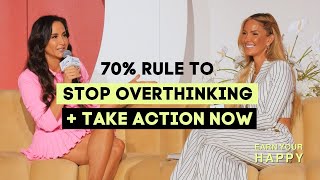
Transcript of a live conversation between Lori Harder and Kim Perell focused on entrepreneurship, decision-making (the “70% rule”), mentorship, building supportive networks, learning from failures, and balancing family with business. Kim shares personal origin stories (grandma’s $10,000 loan, dot-com experience), concrete lessons (hire/partner mistakes, life audit), and asks the audience to find their tribe.
Questions this video answers
$10,000
Over 150 startups
Nine companies
$235 million
Four children (two sets of twins)
Chapters
When I rise, we all rise. Like, when I'm able to do great things, when you're able to do. When every single one of you pushes past something, it is a game changer for the next generation of women. We need to be the ones to lift each other up. We need to be the ones to give a hand. I want us to be successful together. That's why we need each other. It's like, this is the moment. We need to also show the next generation what support looks like. Hi, guys.
I'm so excited to do this. Okay. I want to bring to the stage a woman who truly is the epitome of not just a total boss, you know what I'm saying? Like, the type of woman that you can. We can feel like we can only dream to be like. But she makes everything feel like it's so possible. She is the ultimate girl's girl. Like, when I got to meet Kim, this is so much fun. So she had written a first book that I was in Barnes and Noble, and I was scanning, and I'm like, yep, this book. I need this book. Let me read this book by. I just saw Kim Perel, and I was like, okay, it's a woman. It's an entrepreneur. It said something about her selling her company for, like, north of $200 million or something. I'm like, I need that energy. You know what I'm saying? I'm like, I need whatever audacity is in that book.
Give it to.
So I grab the book, I bring it home, I read it in two days. This girl doesn't read books in two days. And it was just so beautiful of how she wrote this book and made things feel so possible that I felt like, why not DM her Just cold, right? Hey, I just read your book. It was so amazing. I think I asked her to be on the podcast, like, immediately. I don't know if I recommend that, but at the same time, why not yolo? So she responded so quickly, and it was a yes. And she literally came to my house, and the second she walked in, it was like, I have known her my entire life, and I felt like I had the biggest cheerleader on my side from that moment on. And I think that was the moment for me that, you know, when someone models for you, I want to be like that to other women. That's what Kim did for me. And it's just. It's been how I want to show up in the world. So without further ado, can I please bring Kim Perel to the stage?
Oh, My gosh.
Okay, first of all, this book is so good, Kim, it's so good. Are you having so much fun on your tour?
Oh my gosh. I'm having so much fun.
So much fun, so impactful. It's freaking amazing. You guys all have to get this book. But Kim, could you share just for people who don't know, just a little bit about yourself?
Oh my gosh. Let's see. I grew up in Portland, Oregon. Yes. For anyone who loves Portland, I have two very entrepreneurial parents. So growing up with them was like a never ending roller coaster ride of uncertainty. Yes. If anyone can relate to that. I swore to myself I would not become an entrepreneur and I would get a real job, a stable job that had no uncertainty in it. So I tried to do that. So I went and I got a great job for an Internet company right as the dot com was on its heyday and that company raised $100 million in funding. It was like being on a rocket ship. It was amazing. And I felt like I had won the job lottery. So I called all of my friends because I was like, if I'm going to become a dot com millionaire, so should you. Right? What any normal person would do. Success is great. Shared. It was amazing until it wasn't until the dot com bubble burst and then I had to lay off all of my friends who I told were going to make millions. And then honestly, I was like depressed. I didn't know what I was going to do. I didn't have any money. And this Internet, everyone said it was a fad. The Internet, that thing's not going anywhere, you know, that's like a dead end. But I had this dream and the vision, like many of you here, which I know you had a vision to create something. And everyone told me I was crazy, I wasn't experienced, I obviously had no idea how to run a company. And I tried to ask for money and no one would give me money because I didn't have an experience. And so I called the one person who I thought would make a bet on me and that was my 82 year old grandma. Yeah. And so I called her and I said, nanny, I've got a great investment opportunity in the Internet. And my nanny said, what is the Internet? She didn't know, it didn't really matter. But she gave me a $10,000 loan and that was the catalyst that changed my life. And so with her $10,000 I bought a computer, a domain and a one way ticket to Hawaii. I know, right? Because if you're going to start an Internet company, why not start it in Hawaii? No, actually it wasn't, it was because I could live rent free with my boyfriend at that point. So no, I just needed free rent to be honest. And so honestly I sat at that kitchen table for three years with this very big dream and that company turned into a hundred million dollar company. So I truly believe with the right people you can build great things. And you know, that was 20 years ago. So since then I've invest in over 150 different startups, paying it forward and trying to make the bet on other people that my grandma made on me. I've co founded nine companies. My last company I sold for 235 million. Yeah.
And yes, please clap that all the.
Way from kitchen table. Right. And I love, I love female and female entrepreneurs. Like, and I love you Lori. Like, you are amazing watching your journey as you've been building your company. So I'm just thrilled to be here with all of you guys today. And that's just a short part of, I mean again, I wrote a book because I made so many mistakes along the way. I mean so many, right? Like every mistake that you ever thought. And in the book I talk about the 10 mistakes and again, I made hundreds of mistakes. But the 10 mistakes that I think were the biggest mistakes that I possibly could make and hope that others can have a road map of how to navigate them if they encounter one of these 10 mistakes. And I guarantee these mistakes will resonate with all of you because we're all making them.
Well, I've made all of them, so it's really helpful to read about it. One of my favorite things though in your book is you have a picture of you and your nanny in the Ferrari in Italy. And what did she say?
Oh my gosh.
When you.
Oh my gosh. Okay, so I, yes, I went to my nanny's house. I told her, you know, I sold the company. So that was many years later and I finally showed up at doorstep. I'm like, oh my gosh, can you believe it? And she's like her $10,000 loan had been exponentially paid back. And she literally, it was just like one of those moments where you couldn't, you know, she couldn't even fathom. And then I ended up taking her on all these incredible trips to. We went to China, we went to Australia, we went to Italy and we drove Ferraris. Like this is me and my nanny. And like what a gift, right? Because to be able to pay back and not just Monetarily but in time and in experiences that were just life changing. And I think that's, you know, that's the biggest gift you could ever give. So the picture, I'm so glad because I don't even think there's iPhones at that point. Most of the pictures I have, there was no iPhones. Like, I'm rummaging through old photos trying to find a picture of me sitting at a kitchen table. I know.
Yeah, it was one of my favorites. Just because I think so many of you in here, you have those visions just like that of picturing, you know, whether it's buying a house for your parents or taking your grandma on trips. Like, those are really the moments because things are so hard in business, they can be that gripping onto those visions are so important to really hold that thought of what you really want. And I think you paint such a great picture of being able to do that in here. So as far as making mistakes, you're somebody who I think that conversation is so important because how many of you this weekend already, by hearing the failures, have learned more than hearing the wins. Like, it's freed you up and maybe did you feel held hostage a little bit by mistakes that you're thinking could happen in your head, but you feel a little free now. You feel more free by hearing those mistakes. Kim, literally in this book, has shared so many of the big, big money losses, too. Massive money losses that we're not prepared for at all. Could you share one of, like, one of those stories around losing money and how you felt and how you got through that?
I think one that you guys all can relate to that cost me millions is hiring the wrong people or picking the wrong partner. Right? Like, either one of those is like the same. So in the mistake is mistake is picking the wrong people. And that, I mean, who raise your hand if you've ever been in a partnership or someone in your company and it's just the wrong toxic person and you don't know what to do. So I've made that mistake too. You know, there's their spravato and they look perfect on paper. I call this a pop. You know, they look literally perfect on paper. And then you get them in and you're like, this is the worst person ever. Like, I don't even know how they got their resume through the system. Right? Because it looks so good. Perfect school, perfect track record, perfect everything. They look perfect, too. Perfect, right? You're like, I should have known. That should have been my clue. But I think that costs from A business point of view costs so much money to founders and to CEOs and to managers, because, you know, for me, I held on too long. You know, I didn't want to admit to my team that I'd made a wrong hiring mistake. That was a mistake. I mean, I just make mistake after mistake, to be honest. But now, looking back, hoping and knowing that if I make that mistake again, I will react differently and I will make different choices and I will react faster. And I know it's going to be okay because now I have confidence. So that was probably. And I talk about a terrible hire I made, and it just was so bad. And really, it's my fault, because I should have made change sooner, and I didn't, and I regret that. And so now I hope that when you read these stories, you can see yourself in my story saying, oh, I've been there. You know, like, oh, I've had that person, or, you know, that person in my business person come to me, the partner that you're like, I got to get out of this partnership. Right. I've been there, too. It's terrible. So I just. I would think that was probably one of the. Then it cost you so much money, because then you have to pay to get out of the partnership. There's a lot of other monetary. Not, you know, not just. Not just money, but also time and emotional exhaustion from dealing with someone like that. I mean, I'm sure you can relate.
So everyone in here is. Maybe they're not at the beginning, but they're at the beginning of something. Right. We're always trying to start something new or go to the next level or, you know, we're trying to take that big leap into something, and I think that we get stuck there. And we know, especially for you. One thing that I really love about you is the speed in which you make decisions. You have so many decisions that you make every single day, and you talk a lot about the 70% rule, and I think that'll be so important. If you could speak into that. So people know that getting stuck is actually worse than taking a calculated risk that sometimes fails.
Yes. Early on, I'm a perfectionist, and I didn't want to go through the emotional anguish of having to fire a team or all these things that I had gone through. So I would hesitate to make decisions, and so I'd get stuck in analysis, paralysis, just overthinking, overthinking my pitch deck, overthinking my product, overthinking basically everything. And in one night, I heard on tv, this Marine Corps general, and he was talking about something that he called the 70% rule rule. And the 70% rule is what Marines use in battle. They'll never have enough information to move forward. So if they're 70% ready, they are supposed to take action. And this rule early on helped me find the balance between analysis and action. And I was like, listen, if the Marine Corps is using this, I can use it too, right? I mean, like, this is great. I started using the 70% rule in basically everything I did, and I still use it today. Like, if I'm 70% ready, I go. Because think of everything. After 70%, you're just making excuses why you're not doing it. Like, you're just perfecting it. And until you get to market, you don't know anyway, you have to take that first step. And so now, you know, get to 70% and go.
Do you outsource a lot of your. You're getting your data, like, do you for the people who are in the audience? Sometimes I find that we can maybe ask too many people, get too many opinions involved. How do you make sure that you're always going back to yourself and what you know is right for the company as well?
I love to ask everyone their opinion. I do. I can't help it. I'm like, oh, what do you think? What do you think? So I'll ask people all day, what do you think? It's like, my mom's like, please stop. But I do want. I want. I want feedback, because feedback's a gift. So I'm really just trying to understand. It doesn't mean I'm going to take the feedback. At the end of the day, our job as leaders is to be able to make decisions with the information we have. And so using that rule has helped me incredibly. But also just trusting my gut and believing that if it doesn't work out, I can pivot along the way. And so I think just having more confidence regardless of outcome, that I will be able to figure it out. And in the book I watch, I talk about so many companies that I've invested in and that I've co founded that have so many problems, right? Like, so many and how we navigate them along the way. And it gives me the courage to say, okay, I know I can get through this regardless of circumstance.
Okay, so now that we're making decisions faster, right? Are we going to follow that? Okay, great. Now we have to talk about failure, because the faster you make those decisions, the faster you can fail. But the faster you can win as well. And I love in your book, you talk about your, you know, in order to do what you do, you have to have a pretty good relationship with failure. And I love how you talk about your dad at the table. Would always ask you guys every night, where did you, like, where did you fail today? So can you tell me how your relationship with failure started with that? And maybe how can they set their families up in that same way?
Yeah. So my dad, again, the, the, the. The entrepreneur that was close to bankruptcy my whole life, so, you know, and he can't even help right now. Literally. Text him this morning. He's 76 and starting something new. I'm like, dad, right? I'm like, dad, time to go golfing. You know, like normal dads or normal old people. Right? Like, and he just can. He's like, not in his DNA. So now I know where I get it from. But I think growing up, because, honestly, I think it was therapy for my dad. We'd sit around the table at night, and instead of talking about school or sports, we talk about his businesses and the challenges is that he faced in his businesses every day. And so this is me, you know, over Mac and cheese, learning about business resilience. I'm like, does anyone care about my math? You know, like, no. But I think he normalized failure for me at a very young age. And if you're not prepared to fail, you will never be a millionaire. Like, without a doubt. So now, I mean, I have four kids. I, I, I don't.
Two sets of twins.
Two sets of twins. Two sets of twins, everyone. Oh, my gosh.
And she's a twin.
I know. And my sister has twins. There's a lot. I mean, it might. I mean, there's so many.
If you, if you want twins, just come up and touch her. It's great. Yeah, she's fine.
Yes. They're so, so sweet. But now, listen, I, I changed it a little bit differently. So with my kids, it's not so aggressive. We do something called, how'd you fail today? Yeah, how'd you fail? I mean, we do something called pow. Wow. Bow. And I learned this from a consulting coach named Abby Zeve many years ago, which is pow. What is the worst thing that happened to you today? Right? And they can tell me, and we talk about it. Wow. What's the best thing that happened to you? And then, Bow, what are you grateful for? So it's a spin on my dad's, you know, growing up and his lesson, but it's such a Great way to understand what your kids are struggling with, what they feel good about, and, like, just grounding them in gratitude. And I feel like it's been a. It's been a. It's been a change. So definitely not my father's table talk, but. But I think just normalizing failure makes you much easier, more okay with taking risk. And I think I take a lot of risk. Not. It's very calculated risk, so I'm not taking just random risk, but I feel safe in a. In that area. Because regardless, again, regardless if I fail, I will learn, I will grow, I'll get stronger, I'll get better. And seeing it as that and not being care. You're not caring what anyone else thinks, like, that's hard, right?
Like, how do you do that? Do tell.
Yeah. First of all, cut out all the critics. I do this thing every year called the Life Audit, where basically I list out 10 people closest to me. I've been doing it for, like, 20 years. And I put a plus if they motivate, inspire me to live up to my greatest potential. And I put a minus if they're dream killers or naysayers. And just. You know those people that. You know when someone calls your phone and you look at your phone, you're like, oh, I don't want to pick up that person. Yeah, everyone has that person. I know that. You know, it's either employee or friend or definitely. And then I just cut them all out.
But you have to tell us about that because. Yeah, do it. Yes.
And then we just cut them all out. Okay. What does that. What does that look like.
Look like, though? Because we actually. I know they're gonna go home, and they already had. They've already created a list of people they have to cut off.
Cut them out.
We'll see if it happens.
But.
But tell us, because even if it is harsh, we need to know, like, what that looks like, because it's. So you would not be able to do what you do, Kim, with any of those people draining your energy.
No, no. And I'm. I. Same for all of you. Right? I think that's so important to protect your energy. Like, it's gold. And if you have someone constantly just draining it with. With, you know. You know those people that call and they just complain. They just unload on you, and you're like, oh, my gosh. And they're. It's not even anything, you know, it's. They're mad at, like, the Starbucks guy that gave their wrong drink. Like, who cares? Like, let's get over it. Right. I think it's honestly. And, you know, like, my world of who I surround myself with is really important to me. I mean, and my children and I think be having the courage to remove yourself from toxic relationships and. Right, yes. Remove yourself. And I talk about toxic relationships, and I was in one and how I got out of that in the book. And that is a game changer. Like, a game changer. So then people usually ask, well, what about my family? Right. You're like, I can't remove my family. I'm with you. Who thinks you can remove your family. Yeah. Yes, you can remove your family. It's not about, like, ejecting them out, but. But it is about balance. Right. And so let's just say you have an interaction with a negative person. Well, you can counterbalance that with five positive people. Right. And being really intentional. If you know you're going to end a situation on Thanksgiving with someone that is just so harsh, you can say, okay, I'm going to do this. I know this for this amount of time. And you can also put boundaries up. I'm not going to talk about what I do because you don't believe in it anyway, so screw you. Like, right. Let's talk about something else.
Yeah, I think that's such an important thing. I feel like I get that question all the time. And I'm like, there are parts of my. There are some parts of our family that we just. We do not talk to at all anymore because it takes so much of your energy and takes away from the people that you want to be pouring into and moving forward with that. It's. It's not even if you really believe in your dream and if you're really committed to being the best version of yourself for your family, for your kids. And I know you so are. You're gonna do the tough things. You're gonna do the tough stuff. So I love that about you. You're kind of my muse in many departments. So I love getting to talk to you up here on the powerhouse stage. It's like a dream come true. Thank you, Lindsay. But you are a mom of two sets of twins. There are lots of moms in the house. How many people have families in here?
I.
Okay. So, you know, I think that when we start adding family and children into the mix, sometimes that risk can feel a lot more heavy. It can be like, especially there's a lot of women in the audience who. They're the breadwinners, and it feels like if they, you know, take these risks or can't make a launch happen or what that looks like it feels so big to them that it can stop them. What would you kind of say around how to calculate risk around that? Does it change at all for you?
Yeah, definitely. I mean when I'm sitting at my kitchen table and I have no, I already hit rock bottom, it's very easy to like take a big risk. Right. Because couldn't pay the rent anyway.
Right.
But when you have a family and you have people that you need to, you know, you need to look after, it definitely changes it. So what I, I mean first of all, I dream really big, like as big as you can possibly think. And everyone in this room should do too. And then I start really, really, really small. Right. Like, and I think that's really important. And I usually advise a one year plan, like where do I want to be in one year from today? And I'm doing that all the time. Right. I'm constantly thinking where am I going to be in one year? Where am I going to be? Like if I'm in the same place I have failed myself. I'm constantly, I'm a student of life. I want to learn, I want to grow, I want to get better and I want to surround myself with ambitious people that are also in the same place. Which is amazing to be in this room because think of all the ambitious, just amazing individuals that you guys can be with that are going to light your fire and hold you accountable. So I think just looking back at how to balance that, I think it's about having a clear line of what you will like you're going to invest, right. And my father was always betting the farm, right. So I'm not going to do that. But you have to know how much you're willing to lose. And even when I invest in like the 150 startups, I invest knowing I could lose. So if a founder calls me and said Kim, I went under, I say, you know, like that's, it's okay, you have to fail. Entrepreneurs that fail once are twice as likely more to be successful. Great, you are actually on the road to success. But I think as business owners we also have to say take the same thing, which is I may, this may not work out, am I okay with it? And that's hard.
That's literally how I have to make all decisions. I'm like, what is worst case scenario? And am I okay with worst case scenario? Like can I come back? Can I go sleep on my parents couch again? Okay, if I can do that we're going to be okay. All right. Okay. So with your kids, I know a lot of people, a theme has been. I've heard mom guilt in the audience. Even just, you know, coming to this event, it can feel like, am I supposed to be doing all of the things? And something that I've watched you do so beautifully is invest such incredible time with your family on these incredible trips or experiences. You spend so much time on the boat in Italy with your family and taking them on all these different. To different places, and it's like, I'm so inspired by it. And I equally know that you are also on the road for Juni, on the road for your book, on the road for different things that you're. People you're serving and things you're doing in your different businesses. Interviews, all of the things. Kim, how. How do you manage the seasons? What does that look like?
I mean, life's a team sport, so I enlist a lot of help. Like, my husband is, you know, that guy that I had to go live on his couch and sit at his kitchen table. I married him, so it paid off for him.
He's the best, by the way.
It paid off in the long run. But honestly, my husband's an amazing support system. So if you have a great husband leaning on them and being like, these are our goals. It's not my goal. Like, this is, like, I'm only as good in my relationship as we're. We are. So number one is I lean on him for support. So that's been an amazing. And knowing that when I'm not there, he's just as good as me, I think that's really important. Like, he loves my. Like, our children just as much as me. He might do it differently. Trust me. Like, they do it so wrong. And I'm like, mike, right? I just bite my tongue and just, like, let it go. And I think that's a key to successful marriage. It's like, do I want to be right, or do I want us to be happy here? It's like, oh, so not, you know, being clear that you're in charge when I'm not there. And however you do it, if you're feeding them God knows what for school, I'm just going to let that go. Like, you can't control it. All right? And I think that that helps. But also, you know, I talk a lot about people, pillars, and really having that support system, whether it's your family and friends. I have amazing mentors and just. And I have, like, a great team and peers like, peer groups like this. I'm in a. I'm in a peer group like this, which makes a huge difference. And so leaning on other people is critical to finding that balance. And also prioritizing. I'm ruthless in my prioritization, so my family comes first. I love, like, creating, and I love, like this, and I love inspiring, like, and knowing what's, you know, I don't spend a lot of time surfing the Internet, watching tv, idly talking about something that's not important. Like, I also audit all. It's a time audit. Right. And so really being intentional with my time has been a huge. Just as you'd audit the people, audit your own. Like, what are you actually doing? Right.
Yeah, I love that. Okay, so that takes us to asking for help. Because obviously, if you're going to do all of that, you have to ask for help. You have to ask for help quickly. And you talk a lot about asking for help in your book. You even write some scripts on how to ask for help, which is huge because I think sometimes we can reach out to somebody who maybe is way ahead of us and ask for help, and we haven't built a relationship or we don't know what to ask, or sometimes I'm so guilty. Like, in the past, if I went back 10 years and read some messages, I'll ask for, like 15 things in one paragraph. So don't do that ever. But could you tell me about how important asking for help is and then how should we be asking for help again?
I think just surrounding yourself with right people. So important. 93% of millionaires have a mentor. Like, think of Bill Gates. You think of Mark Zuckerberg, you think of Luke Skywalker and Obi Wan Kenobi. Right? Like, every one of them had a mentor. And even if you're not an entrepreneur, like, if you have a mentor, you're five times more likely to be promoted than those who don't. It's so easy, and it's been the biggest difference in my life. So then the question is, how do I get one right? You're like, okay, I'm in. I'll take a mentor. Because if you leave here and you only do one thing, get a mentor, I think that's the biggest, like, the biggest win, you know, like, the hack to success is mentorship. And so now you have to find the mentor, and finding someone's really important, but it doesn't have to be someone that's 20 years ahead of you. Right. Usually think a mentor. It's like this old Person that's so wise. It's like, that nice. Could be nice. But that's actually, you just need someone one year ahead of you, you know, And I think that's really important. I mean, I have a beverage brand, as you know, I. A guy that's like one year ahead of me. I'm called all the time. What do you think of this? What do you think of this? What do you think of this? And just having someone that I'm not paying. So I think important mentorship is not a paid engagement. It's actually someone that cares about you and wants you to be successful. It's someone that will give their time freely because they want you to be you to be successful. And the easiest way that I have found to find a mentor, and you can have different mentors in different times of life. I think that's also important too. And you could have different mentors for different parts of your life. Health and wellness, entrepreneurship, family. Right? Relationships. And the biggest way the hack on that is three words. Let's have coffee. So easy, right? No. Simple coffee can change your life. And it's so easy because I mentor a lot of amazing people. It's so easy for me to say yes because it's 15 minutes, right? You're not asking me to, like, review your business plan at this point. Like, we're just trying to like, get in the door, right? You're not. Because if you call me and said 15 questions, I'd be like, I can't, I can't. I don't have the time, right? So you just gotta get in the door and see if there's like a natural chemistry or connection. And I've used this for years. It's so good. You could do it over zoom. Ideally, you do it in person. And that simple sets the stage for the next time. Okay, they're going to give you advice. I come back, I say, I implemented your advice. Now what do I do? And they're like, oh, I love when people like, actually, someone called me yesterday and I was like, this is what you got to do. Take all the resumes, run them through chat, GPT and tell you what the best candidate. You know what they did? They sent me the output. I was like, you're my favorite mentee ever. Because you do exactly what I say, you know, and just having someone that's listening, I don't want to mentor someone that doesn't want to take my advice. I'm probably not the right mentor, but having someone as a mentor is amazing. So I would Highly encourage. If you don't have one, get one and don't. They don't have to be so far ahead. Just like a one year. Right. Because usually people are closer to the one year. They actually know what you're going through. Like, we can relate on the same topics, right? Like, oh, I know what you're going through.
Yes, totally. Is there anything that you would say to avoid when we are maybe reaching out to mentors or looking for a mentor?
I used to triple tap, which is like, after three times. If they don't reply, they don't. They don't. It's not remembering. It's not you. Sometimes I just like, I'm on a book tour. I don't have the ability to, like, take on more. And so sometimes when we reach out and we get rejected or someone's like, no, I don't want to meet, or, okay, but someone will. So then having the tenacity to continue to ask. So just. If I say no, that doesn't mean someone else is gonna say no. There's so many amazing people out there that want to give their knowledge and their time. So if you get rejected, like, rejection's your best friend. I mean, I get rejected all the time. Literally all the time. I'm either raising money, people are telling me no. I'm like, this is the best deal ever. And I. Nope, it's. Right. It's hard, but it doesn't stop me from continuing to do it. So if you get rejected, keep asking.
So if you get rejected all the time, that must mean you're doing this really frequently. And I am. I am in a place right now where I need a lot of help. Like, I have so many questions, and I'm finding myself going like, oh, my God. I feel like I'm asking this person questions all the time or just asking all of these different questions. So how do you kind of manage your own experience around asking in the beginning, especially when it's not like a, you know, a muscle that you really.
Have yet I think taking nothing. I don't, like, don't take it personally. Right. So if you text me and I don't text back for 24 hours, I'm fine. If you actually say, hey, did you get this? And also following up, usually we, like, send it into ether. And you hope someone's going to reply back. It's like, no one's replying back. Right. Just not because we don't want to, but because it, like, somehow got lost in the thousands of things that we had to do. Not taking things personally is so key, which is hard, right? So because you take. We take everything personally. So it's like me telling you not to take things personally is very difficult. But the more you can say, this isn't about me, it's about your ability, your time, whatever it is will makes me feel better. So I just say it's not about me. And I just keep going.
How do you decide when? Cause you invest in a lot of different companies too, and the different people that you mentor, how do you kind of decide who that's gonna be for you? For people out there who want to make those decisions as well?
Mine's usually chemistry. It's a lot like life. I really like you and I want to help you. I mean, I want someone that's really align from a values perspective. Like, if I tell you what to do, you're going to do it and we're going to, we're going to move quickly, right?
So.
And you. I think the other thing is being proactive in communication. Like, hey, just want to let you know, this worked. This didn't work. And not expecting some things back, I think just the communication is really important. So sometimes we think, oh, we're not, we're bothering someone, right? Like, oh, I don't want to bother them.
Right.
Or I'm burdening them for asking for help. Or I. I'm afraid they're gonna say there's all these reasons about why we don't ask for help. And the reality is, I think we're just trying to protect ourselves. We're making excuses. And at this point, in order to be successful, you have to be willing to put yourself out there, which is scary.
Okay, so I wanna talk about the four P's of an action. And so. But first I wanna take a pulse. I wanna see what everybody is first. Okay, so four P's? I wrote them down. So don't answer yet, but we're going to see in here. So perfectionism, procrastination, paralysis and pessimism. So out of those four, whatever one you are the most. I want you to raise your hand when I say it. Okay, so perfectionism, procrastination, paralysis, pessimism. All right, where are perfectionists? Raise your hand. Okay, how about our procrastinators? Okay, how many can we raise our hand for again? Just kidding. Just try one. Just try one. Paralysis and pessimism.
What?
Okay, I saw one. I'm not going to call you out. I saw two.
Okay, great.
I love that. Thank you for being so honest. Okay, so you came up with the four P's. What do you think are the ways that have really helped you overcome those? What advice would you give knowing that everyone in your struggles with all of them?
Yeah. No, and I. I think the reality is I struggle with them, too.
Like, I.
You know, you. You don't actually get over some of these fears. You know, I struggle with paralysis. Like, I just get lost in overthinking and perfectionism where I want everything to be right. I. I have the same fears that everyone else does. I think for me, it's being able to identify those fears and then have the fear and do it anyway. Like, take action despite the fear.
Do you have a good support system around that?
Yeah. I mean, half the time, like, oh, my husband's amazing. Like, I feel very blessed. But if I'm tired, like, he'll be like, you got this, babe. I'm like, do I really? Do you?
Say it.
Are you. Please tell me more. He's like, you know, but he. He knows, right? Like, if I'm like, I don't know. He's like, I really better lean in. Because if she's.
If he says, I don't know, you're like, oh, God.
Yeah, we all know we're really in trouble. But he'll be like, yeah. So I think having a great support system is a huge. You know, it's a huge win for when you're trying to do great things. Because even if you don't believe in yourself, someone else will. So finding that in. It could be your mom. Like, my mom will do it too. Right. Or my dad or whoever it is that I can it.
Call.
Call. That will give me the support. My friends, you know, and I call different people, different on this, depending on the support I need. Right. So knowing what they're. What they're.
Yeah. Know your people.
Yeah.
Know you need to call. She's not going to take the risk. Question to her dad, you know, like, go all in.
I'm like, oh, no, not again.
Exactly. Okay.
Kim.
This is powerhouse women. And Lindsay builds community, literally, like nobody else. And it truly is. Is, you know, the place where you're gonna come and feel like you can take that big leap because you're gonna leave with a girlfriend. You kind of are building a safety net because you have these friendships where if we do fail, it does feel like you have people that you can lean on and help, you know, scrape you up off the floor, even if it's with a chisel, but you'll get there. You have so many Girlfriends like you. Literally, people adore you. Whenever I say your name in rooms, it's like, I love, love Kim. Oh, my God, she did this for me. Or she's always willing to do this. Or it's like unreal when your name is spoken in. In rooms what people say about you. And so I want to know, what role do girlfriends play in your life and how do you keep those relationships up with the ones that you really want to be invested in?
The first is I have a core. You know, I know what my core values are personally, and one of them is to be generous on every occasion. It doesn't matter where I am, what I'm doing. It's very core to my being. And I made this list a very long time ago. And having amazing girlfriends has that which is there for you is so instrumental because honestly, most of the rooms I walk into are all dudes. Like, this is amazing. I feel so happy right now. I could spend all day here just hanging out, right? Because I'm a tech entrepreneur. It was basically me and a bunch of guys, and they would ask me, like, hey, can you get coffee? I'm like, sure, I'll get you coffee. But like, I'm the CEO. But anyway, you know, like. But again, I don't take it personally. Like, I don't take it personally. If you want me to get coffee, I will get you coffee. And then you're gonna fund my idea. But anyway, like, happy too, right? Like, just don't take it personally. And I think having a great support system of women make gives you this confidence, right? This amazing confidence that you can do anything. And when I rise, we all rise. Like, when I'm able to do great things. When you're able to do. When every single one of you pushes past something, it is a game changer for the next generation of women. And honestly, actually, I was in New York at the New York Stock Stock Exchange last week on Friday.
That's so cool.
Thank you. Yeah. But you know what? Women weren't even allowed in the New York stock exchange until 1967. What is wrong with. I mean, that is the. The pinnacle of where fortunes are made. And we couldn't even get in the room. This is terrible. So we need to be the ones to lift each other up. We need to be the ones to give a hand. Like, if you call me, I'm going to pick up, because I want, like, I want us to be successful together. And I think that's why we need each other. It's like, this is the moment and we need to also show I have a daughter, like the next generation, what support looks like. Yes.
Yes and truly, you guys, I was it. Two weeks ago. I had a really big, not fun challenge, and you were, like, the first person I texted. I was like, please help me, please. And she did, immediately.
And you know what?
It gave me so much confidence. It was so affirming to know this stuff happens probably to her all of the time. And so it was the moment of going from just sheer feeling alone and, like, not really knowing how to handle this situation to going, going, oh, we're gonna be just fine. Like, if I want to go where I'm gonna go, this needs to be. I need to make this problem small. And I think the way to make it small is with your girlfriends.
Yeah, 100%. I remember you text. I was in Europe. It's like 11pm I knew she was.
In Europe too, and I still text her.
No, but you know what? I think it's really important when you're making big decisions. I was like, give me, like, 20. Like, I need time to think about what I. You know, you need to be in a space where you can really give great advice. So if people don't respond immediately, it's not always because they don't wanna respond. They might be trying to really understand where you're coming from and trying to help you with the best path forward. Yeah.
And that was the best. You're like, let me think on this for a moment.
I was like, okay. She's thinking. It was a big challenge, right? Challenge.
It was a very big challenge. So I'm grateful for you. That was just the type of person that she is. So thank you for that.
I want to know what you're most.
Excited about right now. Oh, my gosh.
Honestly, I'm. Well, I'm excited about the book. It's been so much fun. My kids all came to New York for the first time. They're like, can we see the Eiffel Tower? We're in the wrong country, but.
Film a picture.
Yeah, here it is. Maybe the Statue of Liberty. I'm like. But anyway, so being able to share something so exciting with my family, I think is number one. Just because now they're at an age where they kinda. Kinda. I would say kinda, because I don't know where just what city they're in, but where they kind of get it. So just watching them become more aware is really exciting for me and watching them grow. And then number two is this amazing beverage brand I have, which, you know, about with Jay Shetty and his wife Roddy. It's been so much.
Delicious.
It's delicious. Oh, my gosh.
We drink all of our cases.
So now I'm going to send you more. We got new flavors coming, and it's been fun for me. I love so. So when I'm investing, I look for three things. Usually I look for the team as number one, because without a great team, you will not be able to achieve success. I look for tam, which is the total addressable market. Is there a big opportunity for me as an investor to win? And then usually I look for the tech. Like, what's the. I'm a tech founder, so what's the technology? I'm investing. However, these three T's. My new company's a tea company, so I still have three T's. I got a team, I got a tam, and I got a tea. So I figure it's fun to disrupt new categories. It's not your grandma's tea. It's a new type of tea with adaptogens. And it's very good for you. And I feel really good about it because I love health and wellness like you do. So I'm very excited to bring that to life. And it's been so much fun. Again, the team Jane Roddy are amazing individuals. So to just being able to create something with people you love, I think also two things I look at when I'm creating. You guys should use this when you're creating, which is do I love the problem I'm solving and do I love the people I'm solving it with? And if you can't say yes to both of those questions, you need to change something. They're so simple, but yet so profound. So I'm very excited about my new tea company because it's fun and right. I mean, right now, there's something called SproutsCon. Who knows what sprouts is? Sprouts, yes. So SproutsCon's happening. It's all their employees and Jay's keynoting, which I'm not there. But it's so much fun to just be in a new industry and learn new things and talk about just things. I literally would never thought I'd talk about Costco. I mean, I love Costco Going to. But I was never so excited to get into Costco. Costco. So, I mean, just they still do samples. I love in the samples. I love the demo. Right. Oh, I could eat my way through Costco, but I'd love. Yeah. So just learning new industries and I think it's really important because a lot of people, I think right now, including myself, I've been doing tech for 20 years. I want to do something new. I want to learn something new. And it's never too late. You're never too old to start something new. And so I like that I'm in a new category, doing something new.
Oh, I love that so much. All right, so on behalf of a Lindsay ask. This is what she always does, and I hope y' all learn this, because it's the way to be generous, too. She would say, what is a big ask that you would love to ask this beautiful audience for?
Well, I would love to ask all of you to find your tribe, your people, that when you leave here today, like, you have their information, and when something becomes hard or you make a mistake, you fail, you hit a setback, you hit something, you have someone like Lori that you can call, and that will help you through it. And you doesn't need to be one person. I mean, you could get five, but, like, I'm on probably 10 WhatsApp groups with different women, like, cheering each other on, sharing things. And that's fun, right? Because you're constantly energized by, oh, my gosh, this is what happened, or, oh, my gosh, this is what happened. Right. So I. My. My hope is that you guys leave today with those types of relationships as, like, the foundation for what is going to become incredible friendships and lifelong relationships.
So good. Okay, so now my ask to all of you is to share her book. Tag her. Share her book. Read the book. Actually, that's the most important thing. Read the book, because it is so good. And like I said, your first book was, like, such a big leap for me. That is how we met, and it really changed my life. And the second book will also change your life.
It did.
It's so incredibly good because you are so good with storytelling. And it, like, made me realize that even though, yes, we look at Kim and she feels so far ahead of us, she makes it so tangible. It's so tangible, Kim, because you break down exactly what is happening in real time and what we're all dealing with. Like, we all are dealing with the same problem. So I'm so grateful for you for just being so real in your book and for coming on the Powerhouse Women podcast and sharing with this audience. And we're going to give a massive round of applause to Kim.










