The Prescription for More Joy & Less Perfection with Dr. Tiffany Moon
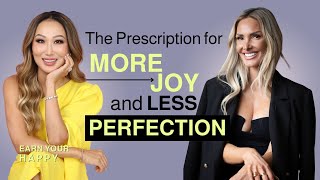
Dr. Tiffany Moon talks about her new book Joy Prescriptions and how she escaped perfectionism rooted in her immigrant family background. She writes about arriving in the US at six, burning out despite medical success, and practical fixes like saying no, dropping toxic friends, and limiting social media to reclaim joy.
Chapters
I had to get rid of the toxic friends.
I love it. Say it louder.
There were just the people who, I don't know how to explain it, but after hanging out with them, I just felt drained.
We don't realize how much that is blocking, like our creativity, our energy. It's blocking us from like really getting to know ourselves and what we're capable of. Tiffany, welcome to the earn your happy podcast. Thank you so much for coming on.
Thank you for having me.
I'm excited to have you here because you are talking about your new book and it's exactly something that's right up my alley, obviously with my podcast title about earning your happy and your new book title that's coming out in May is called Joy Prescriptions, which is so fitting for you. But you know, the first place that I like to start with people who have just written a book, especially if it's their first book, I would love to hear like what that journey was like. Was it what you expected and what was the biggest thing you learned about yourself?
Oh, gosh, it has been a long journey. I first started thinking that I wanted to write a book in 2022 because I was giving a lot of talks, both medical talks, like anesthesia related talks on new drugs that we're using and new anesthetic techniques and then some keynotes at women's conferences and things like that. And people would always come to me after I got off the stage and want to ask a side question, but they didn't want to ask it in front of everyone. And it always had something to do with work, life balance or how did you start your business? Or I want to start on social media like you, but I don't know how you know, it's all those kind of questions. And I would get those same, same questions on social media all the time. And I thought, wouldn't it be wonderful if I could write a book and just tell people about where I'm from and the struggles that I've overcome. And then at the end of each chapter, I could leave the reader with a Joy prescription to take back to their life. So there's like an action step because I'm a doer, I'm a thinker as well, but I'm really a doer. And infrequently problems are presented and I'm always like, what are you going to do about it? So that's where the idea from the book came about. I reached out to my friend who was a successful author and I said, girl, like I have this idea for a book. But how do you go about writing a book? And she was like, okay, here's what you need to do. You need to get a literary agent, and then you're going to write a proposal, which is an outline of the book that you have in mind, but not the whole book. And then that person is going to get you with one of the five top publishing houses, hopefully, if you want to go the traditional publishing route, and then they will give you an advance for the rights to your book and then you write the book. And I was like, oh, I thought you wrote the whole book first and then tried to sell the whole book. I didn't realize you just wrote a proposal, which was still hard, but it was like, Sarah, 60 pages, not 200.
Right.
And then, you know, we had bid day, which is when your literary agent fields phone calls from all the publishing houses who hopefully want to pick up your book. And it was a very nerve wracking day for me. I literally just sat by the phone and was like, oh, my gosh. So we ended up with two people who were interested in kind of, you know, vying for the top spot. And I ended up going with my publisher, Hachette. And they've been wonderful so far to work with.
That's amazing. Yeah, I remember, I think before you write a book, you're just so. You have no idea. I remember I was like, what is a literary agent even do? Like, it's like you will. Someone will find you, help you and hold your hand. And I love that the first thing that you did was you went to your friend who wrote the book already. That's like the life. That is the life shortcut. Like, go and learn from the people who already did it. Which is why also, we're excited about your book. Okay, so tell me about as far back as you can remember where you learned about being a doer. You said that you're just more of a doer. Why do you think that is?
I think probably sometime in medical school when I was going through the different rotations, there's a lot of specialties like emergency medicine or internal medicine, which internal medicine. You basically are doing a lot of thinking, ordering tests, making phone calls, But I wanted to do something with my hands. And I also love immediate gratification because almost every other thing in my life has been delayed gratification. And so when I rotated through anesthesia and I just got to like, do something and immediately there would be an effect in the patient's physiology. And I'm also a control freak. And so I was like, oh, my gosh. I get to control, like, when people go to sleep and when they wake up and their blood pressure. I was like, this specialty is amazing.
That's amazing. I was just thinking that with anesthesia, you being an anesthesiologist, I was like, that is someone who loves control. That's like the world's most perfect job because you have to control the entire.
It literally is. But then outside of the hospital, I'm like, why am I not able to control everything? There's traffic. Why is my nanny late? Like, why is. And I'm just like, oh, wait, it's not my, you know, job to control everything in life. Only in the operating room. So I have to shut off Dr. Tiffany when I go home.
Okay, that's so good. Which is probably also why you wrote this book. Okay, so tell me.
Because.
Because if I've learned one thing from talking to 1300 people, it's literally that we teach what we need the most. So tell me why you wrote this book from your life experience.
Oh, that's so profound. I think you're exactly right. We teach what we need the most. Because about 10 years into being a board certified anesthesiologist, I just felt unfulfilled and burned out. And I would look around my life and I would think, I have everything that I have ever wanted and more. So for me to even want more is selfish. Like, I'm crazy pants. Like, so many people would still have this life that I have. But yet. But yet something deep within me felt missing and I didn't know what it was. So that's around the time that Real Housewives of Dallas came knocking on my door. So I was like, sure, I'll join the real House, because I was in this sort of, like, soul searching. Is this all my life is ever going to be? Moment. And it like, they kind of struck during that opportunity. And so I joined reality TV for a year. That was not the answer.
They're like, we'll take your soul.
Yeah. I was like, no. Yeah. Yeah. I tried stand up comedy because I thought, you know, I. I love to laugh and I love.
This is amazing. Okay. Yeah. Okay. I'm gonna dig in there for a second. You went from housewives to stand up comedy. There's so. I mean, there's so much there that also, like, even to do those things, like, takes so much just strength and courage from a person. Were you, like, freaked out by any of that or did that just.
Oh, I was freaked out by all of it.
Okay.
Literally coping my pants throughout all of it. I don't know if people could tell or if I'm just really good. Like, I have a good. But also, you have to remember I'm an anesthesiologist at a large level one trauma hospital. So I have patients trying to die on me, like, routinely, like yesterday.
Yeah.
So I think I have an ability to keep calm under pressure because I was so nervous before my first comedy set and everybody that I talked to afterwards was like, you did great. We couldn't even tell were nervous. I was like, oh, my God. Well, I had drank two vodka sodas. I had decided that was the optimum level of alcohol to drink before a standup set. Yeah, like, this job isn't so bad. At least, you know, I get to drink on the job.
Unlike your other job?
Unlike my other job. It would be very, very frowned upon. I want to make it very clear.
Very clear. We're making that extremely clear. And with comedy, I think that fits in with that. So for you, what was like when you were going to do the standup comedy routines? Like, what part of you was it? Like, the perspective of. Of the. Like, this was not life and death, do you think? Because I just had the realization from you that the fact that you get to be exposed to things that are a lot bigger deal every day, it might make those other things seem a lot smaller. Was that part of it or not at all?
I was taking the stand up so seriously. I literally went on Amazon, bought a book. Like, I typed in, like, how to do stand up comedy. And whatever the first search thing came was, I was like, buy now. And I was like writing jokes and, and putting so much pressure on myself, and then I'd scratch it and start over and it wasn't fun, you know? And then one day I was like, you know what? There's absolutely nothing writing on this. Whether I do amazing or I bomb or somewhere in the middle. And there's really no consequence for me. It was a fun thing that I was doing kind of as a favor to a friend. I was not deciding to embark on a journey of actually trying to be a stand up comedian, like, do that for a living and, like, be the next Ali Wong and have a Netflix special. No, this was not that. And I was like, why don't I just have fun with it and, like, stop making it such a chore. And this is something that I picked up in myself before. Like, everything that happens in my life, I somehow manage to take all the fun out of it because I turn it into, like, I have to kill it. I don't want to embarrass myself. Like, I need to read and, like, write a thousand jokes and then practice it a hundred times. And not everything in life has to be like that. But because that was sort of my mouth, you know, going to school, getting straight A's, graduating from Cornell at the age of 19, like, that's all I knew to do. And when I figured out that sometimes you can just do things for the sake of doing them and actually enjoying the process versus, like, just reaching for the finish line, that was when my mind was blown. I was like, oh, my gosh, I don't have to kill the fun and everything.
Okay, so first I want to know, where do you think you started applying the pressure to yourself? Was that from something from childhood, or how did that become a thing? Okay, tell me.
Tell me that screen. I mean, talk to any immigrant Asian First Daughter, and she will tell you that there's immense pressure put on us externally from our parents. My parents immigrated to the United States when I was three. Left me with my grandparents, and then I joined them when I was six. And life was hard when we were young. We lived in an apartment. It was not in a good area of town. My dad was technically here on a student visa, so he wasn't supposed to be working, but he found some restaurant that let him wash dishes in the back for $2 cash an hour. And I just saw my parents struggling to make ends meet and fighting about money and all that kind of stuff. And so I just told myself, like, oh, I need to make my parents proud. I need to make their sacrifice worth it. And so, you know, they put a lot of pressure on me externally. And then somewhere within there, I started putting a lot of pressure on myself. And, you know, a lot of the book talks about letting go of the need to be perfect all the time, because when I was growing up, like, the goal was perfection all the time. And that held me back from a lot of experiences and opportunities because I kind of wouldn't put myself out there unless I knew I would be perfect at it. And I would never want to try anything fun or a new hobby or try out for a class play or something, because there was no guarantee that I could be perfect. And therefore, I was just like, I. I'm not going to do that. I'll just stick to studying then, you know, because I know I can nail that. And it. I think it. It held me back a lot, and it. I. It really wasn't until my mid-30s that I really started to deconstruct where this limiting belief came from and in how many ways it was holding me back. And that's sort of when the book unfolds. And, you know, I had all these new experiences that really opened up my eyes to all of what the world has to offer instead of just having blinders on and focused on the finish line.
Okay, so there's. There's so many people who struggle with perfectionism. I don't as much, but my husband did and. Or does. Did. Did a lot more. But he's worked so hard on it through the years. But it is like, it's so hard to watch somebody struggle with it because it stops them from exactly what you said. It, like, really stopped him from living a lot of his life and doing fun things. Like, we couldn't even go to certain places or do certain things. Like, I'll give an example. He'd be fine with it. Like, he's gotten some hair surgeries now, but his, like, hair would bother him so much that. I love surfing, I love snowboarding, I love being outside in certain things. And if certain people were, like, around him in certain ways or he was so self conscious, he wouldn't want to get his hair wet, he wouldn't want to be out on a windy day. I was like, I cannot. I don't. I didn't understand it. So I've actually had to learn how to have a lot of compassion for it. And then, of course, as I learn, I start to talk to so many people who are frozen. Like, so many entrepreneurs are literally frozen before they can post on social media, before they can think of even letting themselves have fun or look stupid or be silly or like anything. Like, it's crippling. Crippling. So you probably get to talk to so many people about that because obviously we can attract those people if that's something that we're dealing with. So tell me kind of some of the things or some of the things that you've heard from people, like, the most common things. And also, where do they start? Like, what do you tell them?
I mean, a lot of people come to me, they're medical professionals, and they're like, hey, I have this idea for a baby product, or I want to make my own skin care line, or I want to open my own flower shop, but I'm afraid what other people will think. And it's. It's always this, I don't know, undercurrent of if you are a professional of some sort and you start a side hustle business that it somehow invalidates your profession or people. People think you don't take your job as seriously or whatever it is. And I'll go ahead and say that it happens more to women than to men. I think women and men are both harder on women than on men for whatever reason. I also think that it's true when it comes to hobbies that, you know, my hobbies are largely going to the spa and I mean, shopping is my cardio, and my husband likes to play golf and, you know, go fishing with his guy friends in Cabo and stuff like that. And. And I think when we talk about our hobbies, unless a woman is doing something that benefits the home or the family, like cooking or decorating or knitting or gardening, which are all very utilitarian hobbies, there's kind of this judgment, like, oh, you shop, like that's your hobby. You spend money. Ha ha. You know, And I'm like, no one questions my husband traveling and going to play golf with for a whole weekend, but when I go to New York Fashion Week, it's a problem, you know, So I think there's that. And as far as your question goes with perfectionism, I mean, this is going to sound trite, but you just have to get over it, and you just have to start. I have a lot of clients that hire me for social media consulting, and they're like, how do you come up with all these ideas for your reels? And you just post them and whatever, and I basically, you know, show them how the sausage is made and I'll kind of show them how film and edit and put the light here and caption it like this, and they're just like, I could never. Like, what if someone from my work sees this? What if my boss sees this? What if my pastor sees this? And I'm like, look like who I am on my social media is me. There are different facets of me. Just like, hopefully, I hope there are different facets of you. And people need to love or like or accept all the different facets of you. And if they don't, those were never your people anyway. But the fear is always that when you start putting yourself out there, that there's going to be negativity. So I say, go ahead. Go ahead and set the expectation that anytime you decide to put yourself out there, whether on social media or you're going to have a leadership position or, you know, do something at your child's school even, there's going to be some negative backlash because it's just impossible that a hundred percent of the people who meet you will like what you're doing. That's simply human nature.
Oh, my gosh. And, you know, talking about social media, because it's such a big part of our culture, our businesses, I mean, literally everything. And I think in order to get good at anything, the. The hard thing about social media for people is it's the public learning. Except we all have to do it. It's like when we got to first ride our bike when we were kids, we didn't have an audience of, you know, 3,000 people, our family, or hundreds of, or whatever it is, you know, and to criticize us. But the thing is, is the person who is willing to deal with the tiny bit of criticism because honestly, yes, it's going to come, but it's not that bad in the beginning. It can affect you for longer. But I always feel like the person who can handle, like, the most criticism is also the person who's going to be paid the most. And so I kind of like play with these little things in my head where I'm like, okay, the person who can handle the most risk is probably going to be the most financially abundant person. The person who can handle the most, you know, pain or those haters, like, they're also going to be super abundant in another way. And so I try to switch it into going, this is just what comes with the territory. And it's like, we're all going through it. We're all going through it. It's just not everybody sees it because we just block and delete right away. So it's great.
Right? Right. And I think you're exactly right. Like, if you can't handle a little troll negativity on social, then you better buckle up for business, baby, because it's going to get rocky. I mean, there are so many days, like, people don't pay their invoices on time. I'm chasing people down. People agreed to something and they don't hold up their end of the deal like it's going to happen. Part of being an entrepreneur and running a business is being ready for the hiccups that will inevitably happen. So social media really just goes right alongside with it.
Okay, so this kind of going hand in hand with that. So you were a housewife for a year, which probably, like, brought on this tidal wave of everything good and bad all at once. Were you prepared for that? And how did that feel? How did you manage what came with that?
I was not prepared. I was already on social Media. Before I was a housewife, I was bigger on TikTok than I was on Instagram. I think maybe I had, like, a hundred thousand TikTok followers and maybe ten thousand Instagram. But when Housewives started airing, I. I mean, every day I would wake up and have, like, thousands of new followers, you know, and it was just crazy. And the thing I didn't realize about going on Housewives is that, like, your entire life is up for discussion. Your marriage, your job, your kids. And the fights that we had on the show were so stupid that I couldn't believe that people on the Internet were, like, taking sides and, like, making it a thing. And the most weird part of it is that by the time it aired, we're now talking and re arguing about something that happened six months ago, which I barely even remember. And I'm not, like, a grudge holder. Like, if we have a disagreement and we talk it out and we hug it out, like, I'm good. I'm not the type to bring it up at an argument six months later and be like, well, remember when you did this? And this and this. Like, once I let it go, I truly let something go. But that is not the way Housewives work. It's like you have to experience it in real life the first time, then again when it shows on tv, and then you have to go to reunion and sit next to Andy Cohen on a stage in full glam and, like, argue it out some more. And I was just like, this is exhausting. Like, I don't know how people do this, because when you're just a viewer, I don't think that all that comes across. You know, as a viewer, you're not thinking, like, oh, this was filmed six months ago, and here they are, like, tweeting about it right now.
Totally. It's. It's kind of like writing a book. Like, I remember. And probably when you wrote about, you know, your childhood and where you came from, like, you have to sit. It was the weirdest experience. I was like, oh, my God. I didn't realize I was going to have to, like, really sit and feel into this trauma and go back to the memory in order to write about it.
It.
And I remember my husband came home because I'd written a certain chapter about something, and I was like, I just had the worst day ever, like, reliving this experience to do that. And so it's like that on Housewives.
I'm gonna.
We need to make you a T shirt that says 2 healed for housewives.
Experience the exact Same thing. So the beginning of the book is about my immigrating to America. Because really, honestly, that's one of the first and core memories I have. I mean, I remember a little bit about like being in China. I remember the layout of my grandparents apartment, I remember going to the market and things like that. But you know, you have a few like core memories that are into your brain. And one of them was coming on the airplane from Beijing to JFK by myself with the flight attendant. And I just, just. The book opens with that scene.
How old were you?
I was six. Wow.
By yourself?
By myself with a flight attendant. And the first few chapters are about my early childhood here in America. And just like you, I had to relive those years, which was, you know, over three decades ago. And I cried and I, I dismissed distinctly remember texting my therapist and asking for extra sessions during the part of the book where I was writing like the first three chapters. Because I had really buried a lot of that childhood trauma. Coming from China, not knowing any English, being called Ching Chong at school and being made fun of with the kids, watching my parents fight about money, having to move schools every one or two years in the middle of the school year and you know, having to make new friends all over, like all of these things. And it just came all pouring out at me. And those first three chapters were probably the most difficult of the book. One, because they were first and I had to get going. And two, because like you said, you really have to transport yourself back to that time in your life so that you can truly write from the heart and write in a way that connects with the reader. And in many ways that was kind of traumatizing for me.
Looking at your life now, it's. It's for so many people. It's kind of unfathomable to think about especially how viscerally I just felt what you, you said for that little girl to be doing what you're doing now. Oh my God, it's gonna make me cry. I know. It's a million little steps. Like it's a million little steps and stories and things along the way. Did you know when you were young that you were destined for something bigger at all?
No, no, no. You know, sometimes you talk to people and they'll be like, ever since I was a little girl, I knew I would be something big and great and something. No, no. Like I am living beyond my wildest dreams as a little girl. I thought that if I became a doctor, like that was the be all, end all. If I Got married and had children. That was it. I never imagined having influence and having people write me emails and DMs saying that they look up to me and I'm inspiring to them. I'm like, what? Like, no, that's the truth. As a little girl, I never could have even dreamed this big, which is why I felt so bad when I was going through that kind of midlife crisis, as my husband likes to call it, and asking myself, like, is this it? Because the answer was like, well, you have so much. Of course this is it. Like, you should be grateful, you know? But something was missing, and the missing link was the connection and the joy. Because going to the hospital five days a week and taking trauma call and raising twin toddlers, I'm telling you, it doesn't leave much room for connection or joy. And what I figured out is that I needed to build my tribe of bliss and be surrounded with other amazing, powerful women who are building businesses and building communities and uplifting other women in the process. And when I started doing that, I was like, oh, this is it. This is. This is what I feel alive doing.
Okay, I. I resonate with you so much. And I think in the beginning, just because of the way that I was raised, just a lot more, you know, always struggling financially, parents went bankrupt. Then when I got married, my husband and I lost everything. So it was like this cycle, this ongoing cycle of just kind of struggle and from a very small town, restrictive religion, like, not allowed to hang out with people outside of the religion that I was in. So that created, like, just a very small bubble to me. And so when I was, you know, 18 to 20, it was like I started to learn probably a lot like you from what I'm picking up. Like, you just start to adapt to trying to survive, and you start to do things because you don't want to go back to what you were or because you want to. A big factor for me, which I'm curious for you, was like, I want to pay for my parents. I want to help my parents. Like, I don't want them to be in this position anymore. But then what ended up happening is it. It turned me into such a driven person who never enjoyed anything. It's like all of a sudden, I woke up in my late 30s and I told my husband, I go, I don't know if I have enjoyed one day of any of this success. It's like, I couldn't even be present for it.
Like.
Like I wasn't even ever there. And I was always just, like, finding like, saying why it was hard or why it was challenging or why it felt draining or whatever that was. And for me, it was the same exact thing. It was connection that, like, brought me back to that Joy place. And because I also could not operate that way anymore, I was like, what is this? Looked around at my life like, was this worth it? Everything I built, like, what was it even for? So that's what really brought me back to that Joy place. And so I'm curious. I want to know about, like, what were those. What were those first. First joy things that you even started to do? Because it can feel. People can be like, does that part of my brain even work? Like, I honestly wondered that. I was like, am I even, like, a happy person? Is there something wrong with me? So can you kind of tell me, like, about the first things that you start doing? What's the time frame that that kind of started to take you?
I would say one of the first things was learning to say no to things that I actually didn't want to do. Yes. Because I would say yes to anything. You know, I was, like, planning birthday parties for people that I wasn't even close with because somebody asked me to. And, you know, there are so many private schools around here, and they always ask for, like, donations and things like that. I was just saying yes to everything without, like, there being a purpose and intention to it. So now I pick, like, three main charities, and those are my three main ones for that year. Another one. And this is gonna, I don't know, rub people the wrong way. I had to get rid of the toxic friends.
I love it. Say it louder.
Some of them were new friends that I think just wanted to be next to me because of housewives or. I'm always a very generous person, and every time we go to happy hour, I just end up paying because it's, like, not a big deal to me. Whatever, you know? And. And some of the toxic friends, and these were harder, were people that I had known for, like, a decade. And when I thought about it, I'm like, like, how come this person only calls me when they need something? Like, they never text to, like, you know, say, hi, how are you? I'm thinking of you. I saw this funny thing, and it made me laugh, so I thought of you. How are your kids? You know, let's get together. It was only, like, when they needed something medical or they needed business advice or they wanted to know who developed my website, which. All of these things I am more than happy. Happy to share, but it. It it became very apparent to me that they had like a very one sided conversation or one sided relationship. And then there were just the people who. I don't know how to explain it, but after hanging out with them, I just felt drained. There was the chronic complainer, which, you know, we'd have dinner together and be having wine and she would just about everything under the sun. And look, we all vent. I sit down and vent to my clothes, girlfriends, plenty. But I'm telling you, this was a different level of complaining. That was like she had nothing nice to say.
I'm familiar.
And I'm like, why am I friends with this person? And one day my husband's like, oh, what are you doing? You know, my husband and I have a planning session Sunday afternoon for 30 minutes and we look at our calendars for the rest of the week and talk it out and do all that stuff. It's not sexy at all, but it is probably one of the key foundations of our marriage.
Totally.
And he said, what do you got going on this week? And I said, well, Thursday I have to have dinner with so and so. And he goes, I thought you didn't like her. And I was like, I don't. Why are you having dinner with her then? And he said, because she asked me to. And he was like, you know, there's this word called no, right? And I'm like, yeah, I mean, I can pretend I'm busy, but then she'll just ask next week or whatever. So I kind of had to like have a come to Jesus with with myself first and then with her and be like, I don't think we're like, moving in the right place in our friendship. I think, you know, maybe we need some space apart. I had to, like, break up with her.
Did you have that talk? Okay, Because I had to, like, break.
Up with her because she was like, oh, not this Thursday. How about next Thursday? And I'm like, I'm busy next Thursday. In fact, I'm always busy because I don't like you.
So how did you start that? Like, did you. Because here's what I always get asked, okay, but how do I have the conversation? Because it's like one of the hardest conversations for people. But I'm like, it's harder to keep seeing that name on your calendar and give someone like a full freaking half day of your life all the time.
Yeah, okay, this is like not BS at all. I totally did that. It's not you, it's me.
Okay?
Which is partially true. I said, you know, I'm working on myself. This was the time that I hired an executive coach. I was seeing not one, but two therapists for different reasons and still working a lot and running clinical trials and stuff. And I literally said to her, I'm just in a season of my life where I'm really focusing on my work, myself and my family. And unfortunately, there's just not time in the day to be having dinners with girlfriends and happy hours. And you're not the only one that I'm saying no to.
To.
There are other people. And all of this was true. So I kind of blow and. And everything I said was true. You know, I was in a season where I was working on myself and. And af. She took it fine and. And then went and, you know, found another group of friends and everything was fine. So it wasn't a bad breakup at all.
Yeah, I think. I think that is literally my answer for everything is like, you. You kind of have to do what you have to do in those situations because some people are not prepared to hear, like, well, let me tell you why, you know what I mean? Like, they're not gonna. It's not gonna be useful to tell her. You're really negative. You only talk shit about everybody. Like, that's actually not gonna be use because you know, she's not gonna change from that. It's only gonna make it worse. It's gonna make her feel bad, and then it's gonna make her talk about you. So that's like, it's not the best use of that conversation. So I do think, like, trying to figure out how to dance around it in a nice way that is going to let you both off of the hook is just. And once you. Once you figure those things out, I'm like, ooh, rinse, repeat.
Let's.
Let's use this.
Who else can I use?
Who else can I tell this to? Okay, I love that. So how did you feel when that stuff started happening? Like, what did you start noticing about your life from taking these, like, not easy to do things. Like, after the first few times you did it, like after that first hard conversation, after telling people no or you weren't going to donate to these places, like, what did that start feeling like?
I mean, it felt tough, but then afterwards I was kind of relieved and. And I had to remind myself, like, I don't owe anyone anything. You know, why do I walk around the world, like, feeling small and like, I owe something to everyone? Like, I don't own anyone anything. I should hold my head up high and that Kind of gave me the space to help people in other ways that I didn't before because I was so busy doing all these little things. It's so hard to explain. And after, I let go of the need to be perfect all the time, and I sort of was just like, eff it, like, whatever, you know, I opened a candle business. I started posting more on social media, because before I had a social media, but I never posted myself. I just would watch other people's things because I was always afraid, like, what if somebody sees this? What if they think I'm unprofessional? You know, all those things that go through. And then when I was just, like, fed up and I was like, I'm just gonna do whatever I want, it was so freeing to just finally just be myself and not have to hide different parts of myself because I was afraid of what other people might think. It was very freeing. And that's also when I started doing, like, silly TikTok dances and challenges and those sorts of things. Things. And my kids and I would just be, like, rolling on the floor laughing because we were having such a good time. And it just felt like this huge weight had been lifted off of me.
I swear. I mean, and that's so inspiring. It motivates me to say no even more because I'm in such a season of that. Like, last year and this year for sure. You know how, like, I don't know, it's like I hit my 40s, and all of a sudden I'm like, what am I getting rid of? Like, let's get it out of my life. Like, your tolerance is much lower for things, and I don't know why that is, but it's. It's just, like, flipped for me. But what I've noticed is that as I've said no, I actually feel like I'm getting parts of myself back or parts that I've never met. Kind of like how you said, like, oh, I was, like, funny and creative. And, like, these parts come, like, rushing back in because they're no longer energetically, like, wasted or tied to someone that you're giving. Like, when you think of your friend you didn't want to go to dinner with, I guarantee you saw that on your calendar, and it affected you every single day. And every single time you would see it, like, it's just like a. Oh, I can't believe I said yes to this. I, like, betray myself every time I say yes to this woman because she drives me bananas. And we don't realize how much that is blocking, like, our creativity, our energy, all of the things in our life. It's blocking us from, like, really getting to know ourselves and what doing we're capable of.
Yes, I agree completely. I just told my assistant yesterday because some. Something fell through that we were trying to do, and I was like, you know what? I don't have any F's left to give. And she. She goes, me neither. And I said, you know, this is what happened in my 20s. I cared so much. I cared so much what other people thought, and I dressed perfectly, and I would, like, not even go outside my door unless I had a full face of makeup on, because, you know, I just cared so much. And then in my 30s, I started caring a little bit less when I started figuring it out. And now in my 40s, I'm like, this is me. I don't give a shit. I'm a good person. I would like to be your friend. Do you feel the same circle? Yes or no? You just. You know what I mean? Like, I think there's just no pretenses and no games. And I, like, this is me, who I am. And if you don't like it, like. Like, that's okay.
Amen. So connection is such a huge part of your book, and I know that it's like, what kind of has, like, flipped things for you? Tell me what connection means to you now. Like, what role do you believe that it plays in our lives and in our happiness?
I mean, there was a study not too long ago that the surgeon general put out saying that our nation has a loneliness epidemic, and that loneliness is as dangerous, physiologically speaking, as smoking cigarettes. And I read that again, and I said, that's insane. So you're telling me that in a world where I can pick up my phone and call and text and DM and post to everyone and everywhere that we're disconnected? Like, where did we go wrong? It's the fake connection. It's the. I have this many followers on Instagram and TikTok and YouTube. That's not real connection. The real connection is. Is sitting with someone and having a glass of wine, or me and my husband having our Sunday chat, or me with my kids, just watching a movie. I used to run a movie for my kids and work on my laptop. Laptop. Because my thinking was, while they're watching the movie, they're getting the screen time. Who cares what mommy's doing? And I'd be working. I'd be sending emails, you know, doing things on Canva, whatever. And then my kids were always like, mommy watch, Mommy watch. And I'm like, you know what? If we're gonna have movie night tonight, I need to quit deluding myself into movie night. Is me getting to catch up on two hours extra hours of work while my kids watch a movie. When I watch it with them, it actually is an activity that we do together. And we can talk about the movie because I actually saw it, or we play a game or we go outside for a walk. The point I'm trying to make is we need to strive for this true connection and stop trying to do this fake connection over the phone, because that's not it.
I totally agree. It's, it's, it's, it's like changed my life, it's made my life, it's probably saved my life. I. All of the above. And one of the things that I really started doing, I'll start with this. I was just actually this morning reading Mel Robbins new book, Let them. Yes. So me too. Oh, my gosh. So have you gotten to the part yet where she talks about like a good friend is about like, if you've, you have to spend like 72 full hours with them, like, of like, you know, whether that, that's how many times. If you go to wine with them, that's you're logging like two hours at a time, two hours here, two hours there. That's going to take a really long time to become really close friends with someone. And she said like 200 hours. The study shows, like, you start to become really good friends. And I was thinking about this because the last, I think it's been almost two or maybe three years that I've been doing this where if it's women that I really want to get to know, I will get us together for a weekend. Even if I don't know you, it might be a weird ask, but I'll be like, hey, I'm getting five women together. We're going to stay at this hotel. We're going to mastermind a little, but we're also going to go to the spa, we're going to eat dinner together. We're going to do all these things. And so there's one group in particular that this is now, I think the, the fourth or fifth time that we've been together. And I was like adding up the hours and I was like, oh, my God, this is so true that we are now hitting this place where the conversations that come out on our 120 of being together because you're putting in 10 hours a day every single Time, you know, when you. When you do those weekends together that we're at a place where we would have never. It like, accelerated the relationship, the relate between all of us. You just. You don't share things right away. It takes time. When you think about, you know, the. The friends that you were friends with, it was because they were in your dorm room. Like, you got to talk to them every single day. Like, things started coming up because you started to feel comfortable, or it was late at night, or it was early in the morning, you were having coffee together. And so I'm trying to create those experiences where you can kind of accelerate these adult friendships. Because I'm like, I can't wait till I'm 60 for us to be close because, like, I need to make some more girlfriends. It's like, connection has truly been the thing where I feel. I used to think that I was really anxious and maybe fairly depressed. Like. Like, I wouldn't. It wouldn't be all the time, but I would go through bouts. Like, it'd probably be, you know, once a quarter, I'd be like, oh, I'm really struggling. Like, really struggling energetically, emotionally. I go through that thing where you're like, do I really have friends who would I call right now? And I was like, I don't ever want to be this way again. How do I combat this? And truly, it was like doing these things where I make sure I see people and see them frequently and take the time to invest into those friendships. And I can honestly tell you now, I don't have that happen anymore. Like, I don't feel. My anxiety's gone way down. I don't feel lonely. I feel super on purpose. I feel extremely energized. It's like my whole life is different.
No, I love that I've been telling people that you have to have joy as a prevention for loneliness and depression and burnout. It can't be an after thought. So these retreats that you go on with your girlfriends, like, that's your joy. That's you investing in your friendships and your connection. And I'm sure there's lots of laughter in there that feeds your soul, which then gives you a little bit of leeway when you go back into your normal life and life starts happening again, that you don't want to just crawl under a blanket and cry yourself to sleep, because you now have a little bit of buffer in your resilience for life, really, because life is so hard, you know, like, it didn't used to be this hard. And I Love technology and I love AI and we're able to do incredible things like have this podcast even though we're in two separate cities. But also all this connection and technology has really kept us, us away from being close with one another. Like, I'm just as guilty. Sometimes we'll be at the dinner table and like, every single person at the dinner table is on their phone, and I'm like, why the hell are we having dinner together and we're all just on our phones? Put your phone down. Talk to me. Talk to my face.
Yes, exactly.
So, yeah, I think, you know, building connection and filling your joy bucket gives you more resilience for going out there. This is what I tell my husband so that I can have, like, a girls trip every, you know, three to four months. Babe, you got to stay home this weekend. I'm going to go away to Cabo with the girls because I need to work on my joy and resilience. And when I return, I will be a much happier and not as snappy and, you know, and that's the, you know, how I sell this girl script to him.
It's so. It is so true. Tell me about what you think, like, your girls trips and having girlfriends and having that, you know, filling your cup time does for your marriage.
Oh, I mean, it's absolutely essential. I mean, my husband is truly my best friend. I adore him, but, like, I just. I don't want to be around him 24 7. I know that. I think you and your husband, you know, used to or still work together. Like, I could never. I.
Sometimes I feel that way.
They say absence makes the heart grow fonder. And I'm like, babe, I can't miss you if you're never gone. I am an introvert, and I like a lot of me time. I love to meditate and journal and read and listen to podcasts and light my candles and play with skincare things, and that rejuvenates me. And he always wants to. To talk. And I'm like, quit talking. Like, I'm having my quiet. He's like, how was your day? How was this? How was your dinner? How's your business going? And I'm just like, I don't want to talk right now. Like, I'm having quiet time.
You're like, it's not during our meeting.
Okay. Yeah, yeah. So we. We have a date night. Every night. Every night. Once a week, we have a date night. It's usually Thursday because that's the day that nanny stays late. And then Sunday, we have our Powwow. Looking at our calendars, thinking them. Any trips that are coming up and I don't know, we just celebrated our 13 year wedding anniversary. Wow.
Congratulations.
No love expert, but I think, you know, as far as marriages go, there's give and take, and you either grow together or you grow apart. And. And so we intentionally, intentionally do things so that we grow together.
What are some things that you guys like to do to grow together?
Well, we love to travel, we love to eat. I love going to comedy shows because I just love a good laugh, you know, like laughing so hard you're gonna pee yourself. Like that's a good laugh. Like that's all the dopamine, all the endorphins. And we like to just be physical and, and try a new workout class. Like, we'll go to Barry's, we'll go to hot yoga. I got him to go to Pilates. And he was like, that was much harder than I thought. And I was like, you know, like on the Reformer with the springs and stuff, he thought I'd just like go over there and like, bounce around for an hour. And he was like, that was hard.
My husband did a bar class once and he was like, oh, my God.
What?
Just like he was staying at a resort, you know, and it was like the only class that morning. Yeah, yeah, we're gonna go to the ballet bar and do this. And he literally was like, dying. Dying. He's giving us so much credit to people who do it.
He's like, I. I think I used muscles. I don't even know what those are, you know, existed. They go to the gym, they're doing like, the big, like, things look good, but then when you do, like, little kicks or whatever, and he's like, oh, I didn't even know I had obliques. Jesus.
Oh, my God, it's the best. Okay, so tell me about some of the prescriptions in the book that are your favorite.
Oh, gosh. This is like choosing your favorite children. One is, comparison is the thief of joy. And. And it's easy. And you hear it and you're like, duh, that's not that revelational. But how many times do you catch yourself comparing yourself to something else? Someone else is farther in their business. They make more money than you. I don't care what it is, but stop comparing yourself to other people because it's a zero sum game. And I always say, quit looking at how big someone else's slice of cake is and just enjoy your own damn cake.
Oh, God, that's so good. Especially since the things that we are so tied to and addicted to, you know, with social media. I had heard this once before and it was just like so simple but so eye opening. To me it's like the algorithm is actually created to make you judge every post but judge it against you. So do I like it? Do I not like it? Is this person better than me? Are they not better than me? Do they have more followers? How many likes does this post have in comparison to like where I'm at? And I thought, holy crap. Like we literally get on there and your brain can't help but compare it to where you're at and who you are. And so every morning we wake up and we're like, are we better than? Are we less than?
Are we better than?
Are we less than? And both are not good for the psyche. It's like robbing us of joy for you. For someone who, I mean, like we have to be on social media for our jobs. How do you create like a boundary and are you able to keep it joyful at all?
Yeah, I mean, I asked myself, you know, I usually set a timer for like 15 or 30 minutes and that's my break for social media as. So when the timer goes off, like I'm done scrolling and it's just like at the end of your 15 or 30 minutes when your timer goes off, like, how do you feel? Do you get some laughs? Did you make a connection? Did you find out some news? Like, one of my friends is coming out with a book and she's posting content about her book launch and I'm so excited for her, you know, is it giving you information? Are you being entertained? Or when your 15 minute timer goes up, you're like, man, I suck. Everyone out there is like winning awards and building their businesses and, and having anniversaries and birthdays and I'm over here sitting in my pajamas, you know, eating Cheerios for lunch. Like, it's just, how are you using social media? Because at the end of the day, social media, like anything else in life, is a tool and you get to choose how you use that tool. Do you use it for your benefit? To market your business, make connections, be entertained, learn new things? Or is social media controlling you and you're, you know, a slave to the phone and checking how many likes every time you post and how many followers someone has, like, who cares? What an exhausting way to live. And as soon as you change your mindset around, that is when it's going to change. Like it's never going to change until you change your mindset. Mm.
What do you want people to know about your book? What do you want them to. To get from it?
I want people to get joy from the book. I want people to read it and see where I came from and the lessons that I learned. But most of all, I want them to take that lesson back to their own life and infuse more connection and gratitude and laughter into their own life. Because I think our nation is at a lack of joy. We, we had so much, but yet the rates of, you know, depression and loneliness and self harm at an all time high. So I think there is a critical need for us to inject more joy into our lives.
I love that. It's so, it's so incredibly important. And I can tell you that I've never sat with a good book and regretted it because it's such a beautiful way to connect with yourself, connect with the author. Remember, like, there's something about reading a book, you really remember how we're supposed to be. Especially a great personal development book. So I'm so excited for you. I'm excited for this book. I think it's going to be freaking amazing and the cover's awesome, you guys, so go and check it out. Joy prescriptions. And it's how I learned to stop chasing perfection and embrace connection, which is just like literally my whole life. Life's motto is to connect with people. So I'm really grateful for you. Thank you so much for coming on the show.
Thank you so much for having me, Laurie.
And we will link up below this where you can grab the book anywhere books are sold, I'm sure Amazon all of the things and we'll put a link right below for you guys so you can go grab that book. Go and get it. Truly, it's a beautiful book. It's a beautiful story. And again, thank you for coming on and you guys were so grateful for you. And until next time, earn your happy. Bye everyone.










