Unsexy Secrets to Building Profitable, Purpose Driven Business with Kayleigh Christina of CLEARSTEM
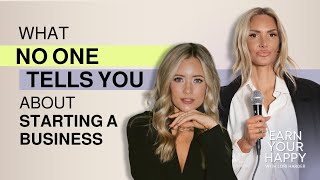
Kayleigh Christina built CLEARSTEM from her own acne struggles into an $8M business by bootstrapping lean and focusing on retention before growth. She and co-founder Danielle, a chemist, hit $1M in year three, then $20M this year. Her unsexy wins: hire fractional help early, nail email and SMS before chasing PR, and lock co-founder alignment in writing.
Chapters
Freelancers are so important, especially the first few years, to, like, sign all these contracts to bring someone in full time, it's a lot of risk. Think about. Even in relationships, you can't even really figure out who someone is or if you'll be compatible for, I mean, sometimes like a year. It's the same with employees. Like, you can't really feel if you're fully, fully a match until you begin working together.
Bring them in lower first and then let it play out. Like, give it some time. Being new. I fully understand feeling a bit desperate and like, you need these people and, oh, my gosh, they're going to be the person to change everything. No, you have to let that go.
No one's going to come in and completely transform your business like that. Just. It doesn't happen. It's synergistic. Like, everyone has to flow and get along and the culture, like, it's not one person's going to change everything.
Kayleigh, thank you for coming on the earn your happy podcast. I'm so excited you're here.
Thank you so much. Also, this setup, I feel like I'm on a talk show and I feel really special. So you are.
You are today and you star. It's amazing. And I am so truly, truly, this is. I was just telling you, this is, like, the most selfish day for me because I learn so much from you. Whenever I get to hear you either on a podcast or you spoke at Girlfriends in Business, which blew everyone's mind. Truly, you were such a topic of conversation afterward because you were an expander for so many people. And for everybody who is watching, who is listening, I promise you, stick around for this entire podcast. We're going to talk about skin. We're going to talk about wellness. We're going to talk about business. And if you have a dream or you have a company that you are trying to scale right now, I'm telling you, everything that I learned from you at Girlfriends in Business was gold. It actually affirmed so much of how I was feeling and how I want to run my company. So you are like goals. You are ultimate goals.
So you and Girlfriends in Business was incredible. I think one of your superpowers is just curating an incredible group of women that drive so much value, but from all different viewpoints and specialties. I learned so much at Girlfriends in Business. I'm, like, following everyone, like, watching what they're doing. They are all just such inspiring people, and I was grateful to come speak. One of my favorite things is just lifting the veil on what Building a company really looks like. I feel like I had horse blinders on the whole time building Clear stem. And when I talk to other people, I start to learn how many more just false information exists out there that ends up spinning people up in anxiety and maybe not feeling worthy or feeling really bogged down by building a business. And I just really like to lift the veil on all of the bullshit and be like, this is what it's really like when people are saying this outwardly. This is usually what's actually going on on the back and just helping people feel more confident in what they're building.
So what made you start to realize that what was going on out in the world wasn't really how you build a business? Like, what were some of the things that you started looking at that you're like, oh my God, this is so frustrating. If people actually knew what was going on behind the scenes, they would feel so much more empowered about their business.
Yes, that's a great question. Because we didn't fundraise for Clear Stem, so we built everything very lean. We reinvested, invested every single dollar. We watched so carefully and didn't really spend anything on marketing, performance marketing, influencers, anything like that. So what I didn't realize about building businesses, I didn't realize that so many other people fundraised an insane amount of money. And it was a lot of times, it was a lot of times people that were just like, I feel like starting a company, they didn't have a really strong why to it, so just felt like starting a company. They raised a bunch of money and then dumped it into performance marketing. And then like we were talking about before this, get all these headlines of like fast growing company. This is what they did in their first year, when in reality it was just dumping money into performance marketing. But there was no repurchasing, there was no real community. So that company crashed and burned within the first few years, and they're treated as these darling companies. And we're left feeling almost insecure about how we're growing when we're not understanding. They raised $100 million, dumped it all in marketing, burned it all, and had no community to stand for it.
You know, it's crazy because I actually see that also in kind of the influencer world, where if people look, there's a game to obviously growing your following and all of the things, but if people just like dump money into buying followers and trying to look like they're on this elevated platform and there's no community to back it up, like, everybody can start to see that. It starts to show its cracks, just like these bigger companies. So before we dive in, I really want you to tell the Clear Stem story and exactly what it is. Because when I heard you on the Skinny Confidential podcast, I was like, this is the best story, and it's so rooted in your why and it's helping so many women. So tell me about Clear Stem and why you started it.
My whole life, I always knew I'd make an impact in some way.
Like, at what age? How did you know that?
Oh, my gosh. Like, okay, so when I was little, my parents are divorced, but at my dad's house, I grew up in a really close neighborhood. We lived on a dead end street. And I would put on. I was literally like 7 years old. I'd pull out all the games I had in the house, like yard games, and I'd set up carnivals and like, sell. Sell tickets for like 50 cents or a dollar to the neighborhood kids. And then all the prizes would be all the toys and stuffed animals I wanted to get rid of. This is amazing.
So you were like an entrepreneur? Looked like the hero.
Yeah. I started a cleaning business when I was like 10 or 11 years old that I made fl on like word with all the, like, crazy cheesy fonts that we had. I put them up all over the neighborhood and I clean people's houses. I babysat a lot. And I would create. I would make these like full blown luxury craft kits that I would bring over when I would babysit. And I was literally babysitting at like 12 years old and I would bring these over and so I'd have all these like, fun games for the kids.
I must have loved you.
I took it so seriously. So I always, I always loved creating things and taking things that already existed, but putting a new spin on it, working harder under promising, over delivering, like, over delivering. And even the simplest of tasks, like cleaning houses, all different things, I would just put my own spin on it that was so much different than the way everyone else was doing it. My dad always reminds me that I set up a lemonade stand when I was like 6 years old. And I was like, we can't just have lemonade. So I was like pulling all these other beverages. And then I was on the corner of a really busy street selling beer because I was like, I was like, oh, adults, like, love alcohol. Like, why does no one, you're not wrong. Why does no one sell beer at the lemonade? Which.
Genius. Yes, by the way, Great money, please the children please the parents. We got a good business.
Like, these parents don't want lemonade. They want beer.
I mean, if you want to do a beer and lemonade stand with me sometime, I think that would be super fun.
We can make a great one clear.
Stem there as well. Yeah, that's fine.
But that was always me. Is like. Is like putting a spin on it. So I knew that my big purpose, my big mission in life, it was going to come to me one day, and it would be improving something, bringing more value to people in some way. But I was willing to be patient. I went to school. I was a sports management major. I worked in professional sports for a while. I then worked as a recruiter. And I was always doing things on the side, though. I was like, oh, work has its place. And then I have all my passion projects on the side. Started a podcast. I had a blog. I was doing recipe consulting for different. For different brands. But I was willing to be patient until the grand idea came to me. And it was really fate how everything. What everything went down. So I was 24 years old. I went off birth control, and my whole body just went haywire. There's a lot of things you can. You can read out there about the pill masking a lot of internal symptoms or autoimmune conditions that are going on. So it'll kind of put a band aid over symptoms, and then when you get off, all those symptoms are released and your body's been fine. Yeah, yeah, yeah, exactly. I know. So I had, you know, developed an autoimmune condition. But again, it's. It's masking the symptoms. So I get off birth control, my whole body just freaks out. A lot of things were going on. I was drastically losing weight and having no idea what was happening. Like, I was eating the same, working out the same, and I lost over 30 pounds.
Oh, my God.
Two months. Like, I couldn't keep clothes on me. It wasn't. It wasn't weight I wanted to lose. I was like, I was very sunken in. I was going to the doctors. I'm like, something's wrong with me. They were accusing me of having an eating disorder. I'm like, I don't. I don't want to lose as much. This is not what I want. I was very into to fitness and health and nutrition. And then one of the big symptoms was I broke out with bright red inflamed cystic acne on all. Both sides of my cheek and down my neck. And for anyone that wants to see how aggressive it Is my before and after is pinned to the top of our Clear stem Instagram. So clear some skin care at the very top. Our Instagram is my before and after. It's angry acne. It's like pustules. It's so aggressive. So I was going to every single doctor, dermatologist, esthetician, and I was just being handed prescription left and right. Go back, you have to go back on birth control. You have to go to antibiotics, you have to go on Accutane, you have to go on Spironolactone. And at this time, I'd gone back to school, like, as one of my side projects in my corporate job. Like, I was always doing the things on the side. I went back to school for holistic nutrition. So I was really diving deep into internal root causes and how they can manifest on the outside of our body. And so I was trying every protocol. And I didn't want to take any prescriptions because, again, I knew the prescriptions would only mask the symptom. They didn't get to the root cause. And I wanted to understand what was wrong with me. My body was screaming for help. So after, like, eight months of dealing with this, I was about to go on Accutane because I was like, this is eight months of I don't want to leave the house. I'm packing on makeup, like, thick, thick clay theater makeup before I leave the house. It's painful to sleep. My face was starting to look so disfigured because of it. I was starting to look in the mirror and not see myself. And I'd never been so low before. Like, in. In my confidence, in my own body image. I didn't feel me. And so I was about to go into Accutanex. I was like, I tried everything. I bought every skincare possible that had anything to do with acne. I've done every protocol, diet elimination, you name it. And so one last Google search before I went on Accutane, I found San Diego Acne Clinic. And that's the clinic that my co founder, Clear Stem, Danielle owns. And she cleared my skin in a matter of two months. Completely clear, no scar damage. And really all it was is there's so many acne nuances that no one talks about. No one talks about when you go to your doctor, dermatologist, not Eastern medicine or Western medicine. And I'll give you a couple of these examples because I think they're really helpful for anyone else listening, struggling with acne, need to know. The first one for me was poor clogging ingredients. I had no idea what non comedogenic meant. Non pore clogging meant. There's a new term out there now called acne genic. It's all the same thing. And poor clogging ingredients in skin care will clog your pores. And then when your skin grows over top, because our skin grows protein on our skin grows, it closes up and causes a clogged pore, causes acne. And so especially someone who's acne prone has to be very, very careful that none of their products, skin care, makeup or hair conditioner, that's a big one. If someone's really heavily breaking out on their sleep side, they need to check all of their products for this. And you used to have to do it by hand and like find all these lists. Now we have a pore clogging ingredients checker on our website.
Amazing.
Yeah. To make it really easy. But even people who aren't acne prone, people who are just feel like their skin looks really dull and dry. Patches and text texture, that's all clogged pores. So a lot of times you're using products that have that. And then the really specific nuances that I think are so important to share because I was deep in the wellness space, I was taking all the supplements and excess amounts. And again, the key word here is excess. Excess amounts of vitamin D, zinc, B12, all stimulate testosterone. So you can actually cause hormonal acne by taking too much vitamin D, zinc and B12. The last supplement is biotin. Biotin is a huge, huge acne trigger because it's the hair, skin and nail growth supplement. And skin grows faster when you take biotin, which means your pores close over faster and clog faster. So that's a big one. And then eggs. So I was making egg bowls every single day for breakfast, thinking like, of course, great source of protein. I still love eggs. But egg whites have something in it called albumin protein, which is really hard for our lymphatic system to break down. So a lot of people will break out around their jawline and down their neck. So if you're, if you're someone who's eating eggs every single day for breakfast and you notice you have more acne around your jawline and slightly underneath, a lot of times that's the egg whites that are causing that. So I eliminated, I had about 12 acne triggers going on, eliminated all of them, got on a proper skincare routine. Just four products which have now inspired our Clear kit on our website. Four core products Learning how to correctly exfoliate and how great really target exfoliation can be for the skin. My skin was clear, no scar damage. Two months.
Wow. How did you feel when it started to clear up? Like, because you just went through. Was that affecting your social life? Was that affecting. What was that. What was happening at the time?
Hanging out with friends. I wouldn't go out to dinners. I didn't go to any, like, networking events, holiday parties, anything. I was just. Just in the house. I was so. I was so. I felt embarrassed. And that's the sad thing is, you know, it. It shouldn't make someone feel crazy embarrassed. But anyone who's. Who has struggled with acne knows what it feels like.
Yeah, it's a thing. It's a thing I recently had before I found your lotion. You actually gifted it at Girlfriends in business, which is amazing because it doesn't make me break out. But I was looking for a more natural lotion and I was trying a ton of them and I was just, just. I haven't broken out in years and I was broken out for like three months. And I was like, this is truly, like. It made me really feel for people because I was bothered by it and it wasn't even that bad.
And I was like, this is like, what the heck? What's going on?
Totally.
Yeah. And there's. There's so many people in our community that have dealt with acne for decades and they're like, really, really aggressively and just to. What you. What you said, you were like, you before. Before the one you were using of ours, you were like, you found a clean lotion. Yes, that's something. I just want to make a point that everyone, so everyone understand, clean inorganic does not mean acne safe. There is a ton of poor clogging ingredients in clean skin care, like shea butter, coconut oil, all different form of algae extracts are really poor clogging. So if you're. If you're like, I don't know why I'm breaking out. I'm using all clean skin care. Clean doesn't equal free or poor two.
In my mind right now. And I will not say it, but yes. They were supposed to be these incredible clean organic products. And I was like, I have completely broken out in. This is awful.
It's so hard. Yeah. Because it come.
They felt great. Yeah. But they were definitely. When I was putting on, like, this feels greasy. Like, I don't know how this is gonna actually turn out. It didn't turn out well, everyone. So I'm. I'm Glad I found yours because I need something super moisturizing, but also that doesn't make me break out. That also make. It smells amazing. It feels really light. So that's incredible. I love it.
Thank you.
All right, so tell me about. You have this idea?
Yeah.
It's like, okay, I think we could do something here. What was that conversation like and how did it get started?
So Danielle and I were meeting every other week because I was seeing her for extractions, because, again, the acne was so bad. I was doing all the things to not have new acne, but I still had to, like, get some of that out.
It was real bad.
So seeing her every other week, I'd lay on her table and we would just geek out on all the things. Like, because at this time, I had a podcast, I had a blog. I was deep in the wellness space, and she had a. All this insane acne knowledge that I was like, no one knows about this.
I was like, I've been looking everywhere.
I was like, no one in the wellness space is talking about this. And so she was very, very successful in her clinic. She was getting so many people clear, people would fly in to see her. And her biggest issue was she'd get people clear. But because she had a lot of ethnic clients that had more melon in their skin, people who have more melon in their skin scar really easily. So she gets them clear, but you're still left over with scar damage. And people who have more melon can't do traditional aggressive peels. They can't do lasers. They can't do all those traditional scar reversing treatments that people with really, really fair skin and less melon can do. So she wanted to create a scar serum for all of her ethnic clients that was a serum that would help reverse scars without further destroying their skin and causing more scar damage, like peels and lasers do. They can cause a lot of the. If you're. If you're someone that's listening, that has more melanin in your skin, you know what I'm talking about. Like, you do a traditional scar treatment or a laser that other people can do, and you end up getting hypopigmentation, like the white spots on your face, which is causing additional scarring. So she was starting to create this serum. She found a chemist that really believed in her mission because the chemist's son also aggressively struggled with acne. And so they really connected on the mission. She was starting to create this serum, and she would have me test it. And at the time, she Just wanted something that worked really, really well. But she wasn't deep in the clean and non toxic space like I was. So I was like, this is never going to work at scale if it's, if it's not clean. Like that's. And again, this was like 2016, 17. But I was like, this is the way the world is going to start moving towards. People are waking up to what's in their products. And so I was consulting just on the side with her with, you know, what are more like, how can you get alternatives for these? This is what people are looking for. And we were just to chat as she was creating the serum. So she was selling the serum in her clinic. And I had her on the blog, I had her on the podcast a few times and people. And I was talking about all this acne information on my page and people were loving it. And so I, I sat down with Danielle one day and I was like, I think this serum is bigger than being sold at your clinic for your clients. I was like, I think this serum is not just a serum. There's a mission to my brain, your brain, and how we can bring all of this acne education and all these things that people don't know. I think we can bring it to scale to help people. And so I started an Instagram page. We built, we built a little makeshift website. We started selling on Amazon and on the website and we were just, we were just kind of playing with it, but a big thing. We had the one serum, but everything we were doing was just education, free education. And then one day I realized I was working way more on Clear STEM than my job, that I had way more. And I sat Danielle down, I asked her if, I asked if I could take her out to lunch. And I was like, listen, this has become my passion. Like, I feel every bone inside of me, like this is what I meant to do. Do you want to go in business together and build a company around this? And she said yes. And we hired a lawyer and we signed a bunch of paperwork and we were like, let's do this. We really had no idea what we were doing. We had one serum, we had a website, and we were just educating about acne. And that's. That was the starting point.
Oh my God. Okay, so what made you say, I think it's bigger than this? I think we should start a company because I know that there's people listening, going, okay, well what, what made her be able to do that? And what, you know, they have all these different things in their Head that's stopping them from thinking they could do it. Was it because you weren't afraid to start small? Was it because there wasn't a large investment at first? Was it because you're more used to risks? Like what, what was that that you think made you jump in?
I think I follow what brings me joy in life. I think that's always been the case. You know, it's. It's funny, I was, I was thinking about this on, when I was driving here. I mentioned my parents are divorced when I grew up, and I was on a contract from essentially when they divorced, I was two years old till I was 18. And I was told exactly where to be. When I. The one time I tried to break the contract and I was like 15, because I didn't want to go over my dad's house, I got the police called on me and the police were like, like, you have to go over. Like, you're contractually obligated by the courts to like, be at this parent's house at this time. And I felt no control over my life. So as soon as I left for college, I remember was the first time I felt like I could live life on my own terms. And now it's almost this voice in the back of my head that just wants to chase freedom and chase what makes me happy. And I will always be creating a life that makes me happy. And if something's not happy, I'll change the situation in some way. Like, you know, whether it's building relationship, refining something, leaving a relationship that I'm unhappy in. And I think that was it. I saw something where I just, I found my why, I found my purpose. I. I was bringing so much joy in other people too, by helping them clear their skin. And I was like, this is it. Like, this feels like this is what I'm meant to do. This brings me so much joy.
So I love this story because it wasn't necessarily your skill set, obviously, to go create serums or to do this thing, but you found somebody who had that opposite skill set. And so you guys together. What did that look like? You said that you just. For everybody who's thinking of partnering. Yeah. Tell me a little bit about just how you feel about co founders partnering in the things that you need to make sure that you're doing if you do it.
Yeah. I would say first thing is, is don't just jump into a co founder relationship with someone because you're best friends. That's not a good enough reason.
Totally, totally.
I think what makes really really strong co founders is opposite skill sets, but same vision. So for example, Danielle and I have the same vision and the same goals and we're constantly having conversations to also make sure we're on the same page with how we want to grow. So very consistent conversations around that. But we get to conclusions in two very different ways because of our brain. So that one cause conflict if it's not done in a healthy way. But since it's done in a healthy way, we can point out each other's blind spots. We're both people who are really good with receiving constructive feedback, with blind spots, with admitting when we're wrong. And we have done a lot of executive coaching together. So we have an executive coach. Yeah, because it worked so well for so long just from the nature of our personalities. But then when the company started getting bigger, I moved up to la. She's still in San Diego. It was like a long distance relationship. Communication got harder. So we hired an executive coach to help learn how to better communicate with each other. But I think someone who's going to be open to strengthening communication, strengthening their relationship, opening to understand you're not going to agree on everything. But having the same goal and vision. If you have one co founder that just wants to raise a bunch of money and sell in two years versus the co founder that wants to bootstrap it and have it for 10 years, that's not very aligned. So you have to be aligned on the way that you're growing, even if you come to different ideas and conclusions in two different ways. And I think it's so important to invest in coaching, like an executive therapist coach, whatever it is, to help strengthen and be a third party in communication.
Okay, I love that. And then you mentioned just you signed a bunch of paperwork. Was that like, you know, where could things go wrong? How do we protect ourselves? What were some of those hard conversations?
Yeah, I, I highly suggest you hire a lawyer and, and do all of this paperwork in the beginning. Because the great thing about starting a business is when you hire a really good lawyer for it, they talk through every worst case scenario and it's uncomfortable. I remember like Danielle and I, we, you know, we were new into our co founder relationship and we're talking through like if one of us goes rogue, if one of us like totally we're talking and it was, it's so uncomfortable like, like, like painfully uncomfortable, at least for me, like to talk about these things because you have to talk through every single worst case scenario. But all of those are in the contract. Like if this person steals the money and goes this way, what, like, how, how is that person can't. Like, how can that person not do that? Because of what's in the contract, different things. And it's really important to have that all done because then it can create more trust in the relationship because you're like, okay, things can't go crazy, crazy wrong. Because the con, like contractually obligated in this area. So it can relieve a lot of stress when you know, paperwork is signed in a certain way to make sure it keeps the company healthier or to protect yourself too.
I think that's so important for people to hear, even who don't have a co founder. Like I think in the beginning of your business, or at least like looking out every year of what are all the things that could go wrong and actually putting yourself in worst case scenario. Yeah.
Yes.
That has been one of the most powerful things I've done for myself. Because if you can, if you have a plan for worst case scenario and you can survive it, and you know, you can survive it, even if it means losing everything or, you know, your partner stealing or whatever that looks like, then you're actually taking away this big story in the back of your head that's actually consuming so much energy that you guys don't realize. And it's like, okay, we got it all out on the table, now we can just move forward because we know this is what we're doing. So you shared just something that really impacted me at Girlfriends in Business. You were telling me a bit about what your first year looked like within your numbers, your second year and then to now. And I think maybe before we get into that, if we could just talk about the beginning, like where did the customers come from? Did you have a following? Like where. How were you selling?
So I had maybe 10,000 followers at the time. So it was enough that. Because this was 2017. So it was enough that like at the time I had a bit of a following, a bit of community, but it was nothing crazy.
Right?
Right. And I just built that through my podcast, my blog and I just, yeah, I just, I enjoyed sharing a lot of recipes, wellness, different things on Instagram at the time. So the first two and a half years I had a label maker plugged into my corporate laptop for my full time job.
Thank you, Corpor.
My job did not have their separate laptop, had it plugged in and we got literally off of Uline packaging online. I ordered the blue cobalt bottles with the little droppers, ordered a roll of sticker Labels and I self applied every label. We had the chemist send the product in big gallon jugs that we then pour into like little fillers and like.
Were you doing this in your kitchen?
Yeah. Yes, literally. So I had like the, the self renew serum in these huge jugs. Yeah. Would like sterilize the area, clean everything, have like the gloves on and I would, I would usually like put a movie on because it would take so long and I put a movie on or like put on a binge TV show and I would just fill and fill and fill. And especially for, because we were selling on Amazon. We were for about six months we were right place, right time on Amazon. Yeah, because you know, six, seven years ago big name brands weren't allowed to sell on Amazon. A lot of big retailers threatened them. So it was a lot of sketchy skincare brands. Okay. On, on Amazon we stood out because we were like the only more legit looking one on Amazon. We got like really good keywords and, and again it was like newer to the space. So for six months Amazon, I would like fill like 300, 400 bottles at a time, ship them to Amazon prime warehouses so they could ship them out. And we made a lot of money that way in order to just reinvest back in the company. So that allowed us to, to build a website. It allowed us to order more bottles, to place larger orders. And by larger orders I mean from like 500 serums to like 1500 serums. Yeah, like still like a small amount, but it was huge at the time.
Right.
I remember the very first time we could order the bottle, we finally ordered the like minimum moq of bottles to have the labels already applied which is like, which was 2500 bottles and I didn't have to like carefully stick on all the labels. That was like the greatest day to have the label, the bottle sent to me with the labels coming on up, still filling them up, but the labels were on and it was awesome. So we did that and for the first year we made around 30,000. But all of that was just reinvested because that was just, you know, paying for bottles again, paying for more raw materials, keeping our website alive, the fees that go to Amazon, all those different things. So yeah, so for two, the first year was around 30,000. The second year was maybe around 70. But again we weren't taking home any of this.
Yeah, you're still working at your other job.
Yeah, so I still had my full time job for two and a half years. Danielle was still like seven days in the clinic like working so hard in the clinic. So your question of how people found out about it though? I would go to every single event I possibly could in San Diego and la, like any wellness event could possibly find. I would fill up my like little cute backpack with all the bottles and I would just gift people and I would just say, here, try this. Like, let me know what you think. I would gift them to my friends. I, I had a couple girlfriends in LA and we're still so close to this day. Their sisters, Hannah and Miley. And they were, they were both in college and friends with so many people up in LA that I would send them like 20 bottles and be like, if you ever have a friend that you feel like is a good person to gift this to, just gift it to them. So I really in the product worked and I think that that's like, from the beginning it was just getting the product in hands of people because once they got it in their hands, it worked and they wanted to know more and they were sharing it with other people. So as long as I could get someone to try it, I knew I had their attention.
So thinking back to those times when you were like, you took the money and you reinvested it back into the business, how did you know how to even run the business that you were running? Like, what were you reading certain things at the time? Were you working with, like, were you listening to something? What was even having you understand how to run that business?
I'm so, again, I'm so grateful for Danielle, my co founder, through all of this because again, opposite skill sets, but really coming together. So my brain is the marketing and understanding, like whose hands it needs to get into, where we need to be, how we need to put the information out there, what podcasts we need to get on, how our social needs to look, education on our website, how we reach people, email marketing. And Danielle, this was her second business because she had built San Diego Acne clinic and so she understood more of the finance, financial, keeping our books really clean and not overspending money. And I am so grateful that she had this mindset of building really lean and understanding where the money is going and keeping us profitable. We were profitable from day one and she kept us that way the entire time. And that is one of her. Not only is formulation one of her strong skill sets because she formulates all of our products with our chemistry, so knowing what to create, how to formulate it, but also the business side of the financial books. So I highly suggest if you are going into business with Someone that one of you has this skill set of the financial side because that, that needs to be really clean when you're running a business.
And if you don't and you don't have a co founder, I have an amazing fractional CFO right now which is like life changing, life changing.
And we finally have a CFO now. It's like, oh my gosh, it feels so good. Oh my God.
And it's, it's so amazing when you can because you can. I know you were saying this also at Girlfriends in Business and this really hit me. It's like ask for what you want and what you need from that position. So for me to have a cfo, I also need them to help educate me in everything. Like I really want to walk through and understand why I don't want someone just to fill that role. And so that's what I have with this team. And is I was like, I don't want to just hire someone. I actually need you to meet with me frequently. So I can really understand this. So I can feel empowered around it. Because numbers, I've felt previously very disempowered and so like to hold strong. And you had said this before too, like hold strong to wait for exactly what you need in the business if you know that's what you need. Like I think you had mentioned a story about somebody wanting full time but you only were going to do fractional people. Can you tell me a little bit about that?
Yes. I'm so glad you brought up fractional because I was, I was at a dinner a few weeks ago and I was sitting next to this woman who has a company and she was just telling me how she just constantly hires for these full time positions and she shared where she was at in her revenue. And I don't like to overstep unless someone asks for my advice. So I'm just listening. But the whole time I'm like, oh my gosh. Because she wants to hire a full. She hired a full time cfo, a full time C. Oh like all the C suite positions and just gifted these to people. People, which by the way we also don't do. Like people need to work their way up and if you are hiring senior level, starting them off as director and like in having next steps for them to be able to take ownership of and grow within that. But fractional and freelancers are so important, especially the first few years under a certain revenue mark, under a certain revenue number, you don't need it. You don't need a full time cfo. Even where we are in our business, we still don't need a full time CFO like you don't need, I think they say you don't need a full time CFO until you're closer to like 50 million, which is because there's not enough for them to do every single day. Yeah. And the great thing about fractional CFOs is they're seeing other people's numbers and where people are making mistakes and so they're learning because they're, they're working on different companies the way different companies are run. So fractional is so important. Our CEO now, he was fractional for almost a year. We finally brought him on full time because he's been so truly, truly life changing for our company. But it gives someone, gives people a little skin in the game. It gives them something to work for as well instead of just handing them these major C suite positions. But also a lot of times in the beginning you don't even have enough work for them to even be working full time. So they're sucking all your money and they're not even, they can't even deliver an enough hours because there's just not enough for them to do yet. So.
And then they don't feel happy either.
Exactly.
So you lose people fast that way.
So so many of our hires were freelancers first. We had them part time so we could build trust and make sure there was a really strong compatibility. I mean think about even in relationships, like if someone's in their like 20s, 30s and they're dating someone, you can't even really figure out who someone is or if you'll be compatible for, I mean sometimes like a year plus.
Yeah.
You know, it's the honeymoon phase. It's all the things and then it settles in. So it's the same with employees. Like you can't really feel like if you're fully, fully a match until you begin working together. But to like sign all these contracts to bring someone in full time, it's a lot of risk.
Okay, love that. That's such great advice for people. Anybody hiring, like bring them in lower first and then let it play out. Like give it some time. I know it can come from, you know, being new. I fully the feeling of, of feeling a bit desperate and like you need these people and oh my gosh, they're going to be the person to change everything. No, you have to let that go.
Yeah.
And like back up for a second and allow the relationship to form.
No one's going to come in and Completely transform your business. Like that just. It, it doesn't happen. It's so synergistic. Like everyone has to flow and get along and the culture, like it's not one person's going to change everything.
Yes, yes. That actually relieves a lot of pressure knowing that. Okay, so let's, let's land that plane with your numbers because I want to go somewhere right after you did 25,000 first year 70ish. The second year, what did the rest look like then?
We were, I think we were creeping up on. I think we were in the twos. And then I remember, I think it was before. Okay, we are right. I remember because I applied for Forbes 30 under 30 and I wanted it so bad and I didn't get it. But it's crazy is when like we were talking about before the podcast, so many people who are on the Forbes 30 under 30 list, like 80% of those companies don't exist anymore. And I remember kind of watching the science of the Forbes 30 under 30 list of like who gets on it, who does it? And it was always this like 2 million mark. So they either did 2 million in their first year or they raised 2 million. But again, that doesn't. And that's just. You're like the first year proves nothing. Again, a lot of those companies don't even exist anymore. So I remember I was applying for forbes under your 30 and in 2019. And we were a hair, we're a hair under a million. I think we were like nine something. But we were hovering around it. And so that was like three years. So I think at our, around our third year of like going in is between three and four, we hit close to a million.
Okay.
And then that's when it jumped. Or the next year we did our 1.88 and then the next year we went from 1.8 to 8.
Wow.
Yeah.
Okay.
And then, then we. So that was last year. Oh my gosh. Time is so crazy. Implies that was last. Yeah, we, we finished last year around 8. And then this year we will wrap up north of 20 million.
Literally insane. I, I've already celebrated this number for her. Like, or I would be freaking out right now, but I'm like this, this is so mind blowing and so important for people to see that those first few years are so foundational. Yeah. And also just you were so in it the first few years. You're not even. Yes, I'm sure you were thinking about growth, but you were just in it and with those customers.
And so I remember not Even caring like the revenue, we finished out the year like true in the beginning years because I was just.
It's a great spot to be.
Yeah, I was just building like, you know, I saw my full time job job, so I had the security of that paycheck to the point where I didn't like, I just wanted to make an impact and I just wanted to grow and reach more people. But the revenue number, as long as we could keep doing and keep building and keep reinvesting, that's all I cared about.
So one of the reasons I love you as an entrepreneur, you and your co founder, is because you talk a lot about doing the unsexy things in order to do the sexy things. So first of all, all. What does that mean? Tell me a little bit about like your back end and use this awesome analogy about like making it rain.
Yes. Oh my gosh. This. So we hired a media coach in I think it was. Oh yeah, it was during COVID Yeah, so it was 2020. We wanted to find more ways to educate in our form of education, especially when we're like, when we're getting deep into what causes accident. Acne Podcast is really the best style for us because we can explain things and we wanted to learn how to tell our story together without like going rogue and giving too many details and losing the audience. So we hired this media coach. Her name was Abby. She was a good friend and she's done TED talks and so she's like really understood and she was telling us that when you do things like you go on a huge podcast, you know, like the Skinny Confidential, where it's like an insane community. If a huge, huge influencer, the massive community posts about you. If you dump a lot into performance marketing, if you're doing all of these things to quote, make it rain to like getting in front of a bunch of people, like the money's gonna come if you don't set up the buckets to capture the rain in, it's just gonna go down the drain. So for example, you go on a huge podcast, you have like massive influencers are posting about you. You got featured in Forbes, you got like just all these things. Things. If you aren't capturing any of those customers by retargeting email flows, SMS flows. There's a whole bunch of tech stacks on Shopify, things like rebuy and retention.com. and just literally I could, I should like look at our back end of Shopify. There's so many plugins now, but ways to capture audiences retarget, get their information, so then you can continue to essentially sell to them, educate to them in all different ways. If you don't have that, all of that hard work goes right down the drain. So she told us, she was like, I'm gonna train you guys how to do this, but I want to make sure that you don't go on any, like, crazy big podcast until you have this stuff set up on the back end. And that's when we really went over like, all right, we need to hire some, someone to build out all of our email flows because we just had the most basic, basic version I built out, but I'm certainly not the technical email marketing specialist. So someone that can really go hard and build out flows, SMS flows, because that's so big now, all the way, all the email captures all the free education things you get in exchange for emails. Retargeting setup. I remember this one consultant told us one time, they're like, if you're not going to spend money on retargeting people that come to your website, then there's no point in spending money again on the big advertisement or the placement in Forbes or the big podcast, you know, so to like, you don't want to spend money on all those really sexy things unless you've spent money on the unsexy things. Ready to capture everything. And that's where we spent all of our money. We didn't spend any of our money on, on the glitz and glamour marketing. We spent it all cleaning everything up to make sure we could capture every single person that landed to our page and was able to get their information and retarget them. So those are all the unsexy things. And usually your first hires, like our first hires were like, it was customer service. We did hire someone for social very early on because we knew that's where our audience lived and we had to be really consistent. But then it was hiring. Yeah, it was hiring someone for email marketing, hiring someone for SEO and making sure we were building all of our product pages in a really smart way to rank on Google and it wouldn't get lost. So again, doing all those behind the scene things that they're not the fun, outward things, it's not the Forbes feature, it's not the big podcast feature, but that's what converts and gets you money, is all the stuff on the back end.
Okay, so for people listening right now, what would you say if they could only focus on one thing? Would it be email? Would it be text? And I know a lot of listeners, we, we definitely have product Based, but we still have a lot of digital. Yeah. Courses and coaches and speakers and authors and people all selling things like that. So what would you say before they go out and spend all the money on, or get on these big stages or get on the podcasts, what do they absolutely need to have set up?
I think getting consumers information is the most important thing because we don't own anything on social media. If social media shuts down tomorrow or changes literally anything. I mean we've know, we've seen when all hell breaks loose, when like Instagram shuts down for a day and everyone like freaks out.
Yes.
If you don't own your consumer data, then you don't own anything. So owning the email addresses and the phone numbers, that's what you actually own and that's how you can talk to your consumer. That's why it's so important. You get to control the narrative. You get to reach that. You know, someone seeing your story doesn't always happen, but someone's always going to. At least you, at least you know they got the email, they got the sms, whether they choose to open it or not, you know, it's sitting there. So having being able to talk to your customers and own that is most important thing because repurchase rate and keeping people engaged in your community and either continually to rebuy, to upgrading what they buy is the most important thing. So just keeping people in your funnel, keeping them happy. So I do think also customer service really early on is a very important thing because you just want to keep your customers happy, want to keep them feeling a part of the community. You want to keep them coming back, want to keep them spreading the word about you, even verbally.
Tell me about the importance of, you know, you're talking about keeping your customers happy and I know that you said so many people always go out and they try to get new customers all the time, but you hold a lot of value in really nurturing the eyes that you have. Tell me a little bit about that.
Well, nowadays getting new customers is very, very expensive. So focusing on who you currently have and pouring into them and over delivering in them is actually going to end up getting you more people because then it's just going to be word of mouth. They're going to be out with a girlfriend at dinner talking about your business, your company, your product, your course, whatever it is. But that's free. You know, you're not paying performance marketing to get all these new cold people into your funnel, which then it's like taking so many more touch points than it used to, that still is important. But focusing on your lower funnel first to get profitable before you pour into the really expensive cold traffic. So again, just pouring, pouring into your customer, making them happy, be over delivering on what you say, getting testimonials from them, just keeping them engaged in the community. And your community will grow if you keep your current people happy.
Oh, I love that. Okay, so, you know, people are listening to this right now, and they're like, you sound like you literally have it all under control and that you know everything. Like, you're, you're so educated, you're. You're so standing strongly in. In just the position with this company in how you feel about your products. Were there times where you really doubted yourself and where you felt like, oh, my gosh, how am I gonna learn this all? And felt really insecure in your position.
How am I gonna learn this all? Yeah, because I don't think I've ever doubted myself, and not in an egotistical way. But, you know, I grew up an athlete, and I grew up like, you train and you learn and you work hard and good things will come.
So I truly believe had that foundation.
Yeah. So if I'm gonna. If I work really hard and I pay attention, I meet people and I listen, like, no matter what, I'm gonna figure it out. It might not be the perfect way of figuring out, but I'm going to. So I don't doubt myself in that way. But there have been so many times that I've even listened to a podcast or hurts when speak on stage, and I'm like, oh, my God, my brain does not work that way. And then it's. I'm like, I'm so overwhelmed because I'm like, how am I going to do that? Like, I physically don't know how to do that. And then you realize, like, we're not supposed to do everything in the beginning stages of companies. Yes. You're wearing a lot of hats. You're also really naive and ignorant, which is a good thing. It's such a good thing to be so ignorant in the beginning and, like, actually not know because then you just try everything and it's almost like this child, like, wonder about it versus is letting everything bog you down. Like, sometimes almost knowing too much can. Can make you risk adverse.
Yeah, totally.
So it's actually, I feel like it's good to just dive in at first and figure it out and build as you're going. So I do think that part is amazing. But again, to touch on the. Oh, I can't relate to that. Oh, my brain doesn't work that way. How am I ever going to do that? I'm not doing all of these things. Know that. That's the point. And that's why companies have employees, because you hire people that can fill those gaps. Our head of E Comm. Whenever I'm in a meeting with her and she's talking to me about everything she's doing on the technical side of the back end of all of our product pages and she's so data oriented with like this number and this is performing and a B testing things. It is all going over my head. And like, I still have have times where I feel a little insecure that I don't talk like that. Like, I don't talk super, super, super heavy data numbers. Like, I don't get on podcasts and stages and just go into the nitty gritty of numbers. But that's not my brain and that's not my superpower within Clear stem. And that's okay because it's someone else's superpower within Clear stem. So I think it's finding good people that you can work alongside with culture wise that do have that brain and skill set and you bring them on to do that because we're not meant to do do everything in a company. We all have our own superpowers. And just knowing what yours is, excelling in that and filling the gaps of where your superpowers aren't, is the best.
Way to grow business a million percent. I think that's been one of the most, and hopefully for everybody listening, one of the most freeing things to be like, where is my skill set best used? And if you're in something right now where perhaps your best skill set does not come out at all, that is a huge, huge red flag on it might be time to pivot or change or get somebody into your company who can take something over so you can get back to that zone of genius. So what would you say to anybody listening right now who would love to be in your position in five years? Like, what is some advice if they're feeling, you know, unsure or not sure where to focus or put their time.
Back to learning your superpower and finding confidence in what you're not good at. So instead of looking at all the things you're not good at and letting that completely destroy your confidence, you can outwardly say, that's not me, that's not what I'm good at. It's not my skill set. This is what I'm good at. So I need to find someone that does. Like, you can find confidence in what you're not good at by being so confident in what you are good at. And people will feel that in you and they'll want to come along for your journey. But I think with building a company, I think having horse blinders on is so important. You can scroll through stories and Instagram, listen to podcasts all day, and you can either let it bring you down of what you don't have, or you can choose to let it inspire you. But also, the grass is not always greener. And I know that's like, that's so cheesy to say, but. But it's true. How someone's company looks on it on the outside is not always what you necessarily want, right? And it's not going to look how you build it. So I think one day at a time, one step at a time, building to be profitable, building to make a difference in people's lives, like, knowing your why, like, what problem are you solving for people and sticking to that and not letting all of the glitz and glamour and the speaking on stages get the. Like the. Not let that get the best of you. What, like, who are you building this for? Why are you helping people? Who are you helping? Poor? Like, be of service to people in the community and the money and the growth that will come if you continually stick to that.
That's so good. How do you remind yourself to remember that? Is there something that you do? Do you do something every week? Do you guys have, you know, mission statements that you talk about or how does that work?
We. We actually do. We have. So once a week, we have what's called an L10 meeting. We love the book Traction. Our executive coach is. Is trained on Traction. We've read the book and Danielle and I heard over and over again, it's just an amazing world, a way to build a business. So back to the. The unsexy things. I highly suggest everyone get the book Traction. Read it. There's a model you can follow that helps with hiring, that helps with growth, and it can keep you very, very structured in the ways that might be hard to structure. So it's just very, very helpful. And so on our L10 meeting, we kind of kick it off with reading our core values. So everyone, it's. It's our executive team that meets. Everyone picks a core value and how it was, how they implemented it that week, how it showed up for them that week, I love that. And so it keeps us really connected to the core values of ClearSim and how we are living and breathing that just for example, one of them is communicating with love and respect. We all deal with people, suppliers, vendors, customers, you name it.
That.
That can trigger us in different ways and reminding us. Even. Even employees. You might be disagreeing with reminding to communicate with love and respect. Because that's who Clear STEM is as an ethos. That's how we're building our company is through that. And no matter how triggered, frustrated, annoying, someone is sticking to that. So I know even sometimes where I have tough weeks, I'm like, I communicate with love and respect, right? So it's coming back to those core values. Values, but reminding myself. I love reading through testimonials when I'm feeling really bogged down and just remembering the difference we make in people's lives, that keeps me really connected and happy and positive. Like when there's days I'm on six hours of calls and I have over 100 texts and 200 emails, and I'm like, why does everyone need everything for me? And I'm like, just feeling so frustrated, frustrated, so down. Like, I just want to hide under a blanket and like, watch a movie and turn off all forms of communication. And I'm feeling so overwhelmed. I'll just take some deep breaths. I'll get outside, I'll read through some testimonials, and I'll just remind myself of the community we've built and the hope and confidence we're giving people. And that keeps me connected.
I love that. Well, this has been amazing. I could talk to you for five hours for sure. This needs to be longer. And maybe I'll do like a really long form job. Joe Rogan with you sometime.
Done. Like, we're like five hours and we're just like, still.
They ordered pizza during it. They went and shot arrows into a Tesla. I was like, we need to.
That would be style.
This would be amazing. Okay. I'm so grateful for you, like, for your time for speaking at Girlfriends in Business. And you are such a champion of women. And you're making. You're one of the women out there who are truly speaking the truth about.
What this looks like.
And I think that's the most empowering thing that you can do. So where can we go get your products? Because now everybody. You, even if you don't deal with acne, like, the. The moisturizer and the other products you have are amazing.
Thank you.
And I didn't even realize I was dealing with some acne. I just thought that's how My skin was until I changed my product. Yeah.
Some people don't even realize they're like the texture on their skin is closed comedones and acne. Until you switch to products that have no pore quality ingredients, you're like, oh, wait, this is what we should look like. I didn't know my skin could look like this. Like example, large pores are really just poor quality ingredients getting stuck in. And keep keeping your pores large. Crazy quote. Want to shrink your pores? You can't technically shrink your pores, but you can shrink the appearance of them by using products that don't have pore cloggers in them.
Okay, we're all buying.
So where do we buy? Go to clearsym skincare.com the first place I think everyone should start. Take the free quiz. It gives you a lot of aha moments if you're struggling with your skin in any way. That quiz is loaded with value, so it'll direct you to products, but it also just gives you so much educational value to take home. Check out the pore clogging ingredients checker to go through all your products as well so you can eliminate external triggers. But clearsimskincare.com and then clear some skin care on all social channels. And then my Instagram. Kaylee.christina.
Amazing.
Oh, wait, let's do a. Let's do a discount.
Oh, let's do a discount.
15 off. What would you like it to be?
How about Lori?
Okay, let's do Lori for 15 off off our website.
You're amazing. Thank you so much for that.
Thank you.
You guys definitely go grab that. And one of the biggest things that we can also do is to let Kayleigh know what your biggest takeaway was from the podcast. So what's your Instagram handle as well, Kayleigh?
Christina, I love dms. I love all the things. I mean, as you can see with what we built with Clear Sam, community is like, brings me so much joy. So please reach out with any questions.
Okay? You're amazing. Thank you. And guys, until next time, earn your help.
Happy. Bye, everyone.










