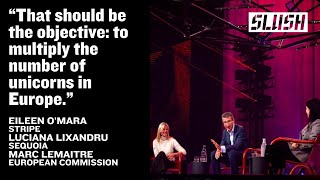
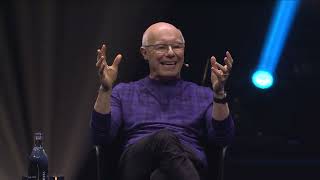
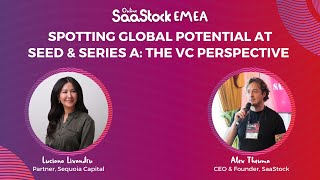
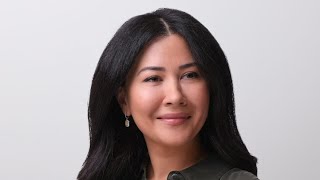
In a stage interview at Slush 2023, Forbes Europe editor Ian Martin talks with Sequoia partner Luciana Lixandru, a veteran of the European Midas List. Luciana reflects on the shift from the 2020‑2021 funding boom to a quieter 2023, noting that while overall activity has slowed, a subset of AI‑focused startups still raise strong valuations. She predicts a re‑balancing in 2024 as founders who extended runway return to the market. Luciana describes how Europe’s ecosystem has evolved: repeat founders, talent flowing out of large scale‑ups (UiPath, Spotify, Revolut), and a fragmented geography where promising companies arise beyond traditional hubs like London, Berlin and Paris (e.g., Munich, Bucharest). She outlines Sequoia’s investment lens—founder‑market fit, speed of execution, and speed of learning (the “slope” vs. “intercept” metaphor)—and emphasizes a team‑centric, perspective‑diverse decision process. Finally, she offers practical advice for founders navigating a tough capital environment: double‑down on fundamentals, delight customers, prioritize product and unit economics, and maintain resilience, noting that Sequoia remains open to investing across Europe and the U.S.
Chapters
Sam.
Great. Thank you for joining us here today. My name is Ian Martin. I'm the Europe News editor for Forbes. Earlier today, we launched the seventh annual Minders List Europe, which profiles the 25 best European venture investors in Europe, Israel and the Middle East. Today we're joined by one of those top investors, Luciana, who's been a list veteran. So we're going to learn a little bit more about the state of Europe in tech and also what it takes to become one of Europe's top venture investors. So this has been a tough year for tech in Europe. Luciano, like few exits, few large rounds. Where are we now after the kind of excess, maybe exuberance of 21 and 22.
Firstly, thank you so much, Ian, for being on stage with me today and for inviting me. And thank you to everyone at Slush. It's really my favorite conference and I try to come every single year. So it's a pleasure to be back. It's been an interesting year. Ian, I think the word that you use for call it 2020, 2021 is probably the right one. Exuberance. There was a lot happening. There were a lot of companies getting started. There were a lot of funding rounds. Things were happening quite quickly. And I would say in the last 12 to 18 months, things are more quiet. There's still great founders who are mission driven, who, who start great companies because they don't think about interest rates and they don't think about can I raise a series A or Series B. They just want to go and solve a problem. So we're still seeing that and there's still investments happening. But I would say a small percentage of companies are raising right now, many of them with an AI angle. The companies that are raising are still getting pretty healthy valuations, even comparable to 2020, 2021. But many founders are just not even testing the markets because they realize that things would change. They extended Runway and many companies are just not thinking about raising right now.
Very good. So what does next year hold for us in terms of like, if you.
Ask me, I think we went from a lot of activity to too little activity. And I really hope that the truth and the right balance is somewhere in the middle. So I think in 2024, we should see more of these great founders raising more great rounds. Why? Because again, many of them extended their Runway so they will come back to market, to fundraise, and because there are many people like us who are open for business. I mean, that's why we want to invest through cycles. Whether you call, whether it's up or whether it's down. We're here to partner with founders for the next decade and beyond. So it doesn't really matter what's happening around us. We're open for business. So I really hope that the right balance is not 2020, 2021, but also not 2023, where in my opinion, too little has happened. So I really hope that the balance will will happen at some point in 2024, and a lot of these great founders will raise great investment rounds.
Has Europe's tech ecosystem changed since you started investing here? Like, are we seeing sort of this waterfall of experienced operators emerging and also more capital being deployed in Europe?
Well, thank you firstly for not dating me and not saying when I started in the European ecosystem. It's been a while. I'll just say it's been over a decade.
I tried to be diplomatic.
Thank you, you were very kind. I think a lot has changed and funnily enough, some things are exactly the same. What has changed? We're seeing repeat founders, we're seeing teams that started a company that maybe worked out to some extent and they sold it or maybe didn't even work out, and they're coming back for more with a bigger scale of ambition and with more experience. And having experienced a lot of the mistakes in the first company and now taking all those learnings to the new company. We have a few in our portfolio. The team at Penny Lane in France is a great example. They sold the company to booking a few years after college and now they're reinventing SME and financial software. And then the other founder Persona that we just didn't have in Europe a decade ago and we have today is people who are leaving scale ups. So they've seen what it takes to build a great company and they're leaving UiPath or Spotify or Revolut or some of these great companies that built large platform businesses and they're taking those learnings and they're applying them to their own startup. And again, if I look at many of our seed investments, the founders have these profiles. So. So the great team at Dust in France, for example, came from Stripe and OpenAI or we invested in a company called Tola. The founder came from Plio and we're very excited about both these founder profiles. But some things are the same. And what's that? We still see really ambitious first time founders that start in unusual locations. And that's the thing that I think is the magic and the challenge of Europe. It's not as concentrated in one or two areas. There's not one Silicon Valley in Europe. There are many ecosystems and great companies really start everywhere. So of course the obvious hubs are still London, Berlin, Paris. But just to give you an example, our last two series investments were actually in Munich. So yes, it's a large city, but it wasn't until recently at least the most obvious ecosystem. And we see that growing UiPaths started in Bucharest, Romania. You know, I have a bias, I'm Romanian, but I would not have thought so maybe seven or eight years ago. I would not have predicted that. So that's, I think that's the magic of Europe and I don't think that will change. It will continue to be fragmented and we will continue to have these wonderful local ecosystems and first time founders starting in these wonderful ecosystems.
That's great to hear. I know you've talked before about looking for outlier mindsets in the best founders.
Yes.
What's the mindset of a Sequoia investor? What are your practices in order to find the best new founders?
Okay, that's a tough question. I'll start by saying that at Sequoia we're very team focused and we work together a lot, but we also focus on everyone's individual perspective on companies, on founders, and everyone's individual outlook for the future. So, you know, if I'm here or if my partner Matt or my partner Alfred, if they're here, they might give you different answers. And I think that's a good thing because hopefully we make each other better by having different perspectives. But there are a few things that we do talk about and we prioritize when we look at founders. Firstly, we really like to see founders who have good founder market fit. What does that mean? Some people want to start companies and some people want to solve problems. And we get really, really excited when we meet these founders that are obsessed with solving a problem. Oftentimes this comes from having experienced the problem themselves, not having just witnessed it, but having really experienced it. So that's something we get really excited about when there is that sort of mission driven approach to solving whatever it is that they're going after. So that's one thing. And there are two other things that we think about a lot. In my opinion. If there's one indicator for a company's future success, it's speed of execution. Just getting stuff done, getting it done and getting it done quickly. And you will make mistakes and that's absolutely okay. But if you do it quickly and iterate, you learn so much faster on the way. And this doesn't mean that I wouldn't equate speed of execution with speed of growth. I don't think these are the same. These two things are the same. It can be in the very early days, how fast you're building product, how fast you're hiring, how fast, how fast you're learning. So speed of execution, really important. Last but not least, I would say speed of learning. At Sequoia, we talk a lot about slope, not intercept. You don't have to know everything when you start a company, but if you learn really fast along the way, I mean, just think about how much better you can become over a decade, because that's how long it takes to even see if this company can become a large chunk generational business. So I would say we all think about the world differently, but we do have values that unite us and these are some of the things that we have in common when we look at businesses and we, when we try to identify an outlier mindset.
That's great. I think we still have maybe a tough few months or maybe a year ahead for founders. Do you have any sort of top tips for founders about sort of how to navigate this kind of challenging environment?
We're all going back to basics and it sounds easy, but it's not. And I think that the faster founders realize this, I think the better companies they will build. Just focus on fundamentals. And again, it sounds really simple, but I think in practice it's really not. Focus on delighting your customer. Focus on building the best product you can build if you don't have that much capital to invest. My $0.02 over, invest in product and technology. Not necessarily in. Go to market in the second and just build the best product you can build. Focus on your unit economics. I think it's as simple as that. And honestly, stay strong. There are periods of ups and periods of downs and I don't know one company that became really, really large that didn't have some ups and some downs as well. And I think that it takes that extra level of resilience. And in my opinion, things are actually already starting to look better, both from a macro perspective and from an investing appetite perspective. Again, we're certainly open for business, we're certainly speaking with founders every single day and want to partner with those great founders both in Europe and the U.S. that's great.
Luciana, thank you for sharing your insights.
Thank you so much for having me. Again, I love Slash. Thanks for having me here and thank you, Ian, for the great questions. Thank you.