Spotting Global Potential at Seed & Series A: The VC Perspective | SaaStock EMEA Online 2021
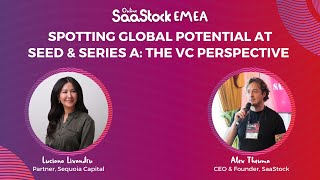
In this SaaStock EMEA online session, host Alex interviews Luciana Lixandru, Sequoia’s first partner in Europe, about why European startups are now as likely as U.S. companies to become global winners. Luciana attributes the shift to a maturing ecosystem: abundant engineering talent across the continent, a growing pool of experienced operators who have learned from earlier scale‑ups (UiPath, Deliveroo, Revolut, Spotify), and an increasing number of founders from diverse backgrounds who see the world differently and are highly ambitious. She outlines the founder traits Sequoia looks for—strategic thinking, analytical ability, sales talent, and, most importantly, a unique vision and ambition—while warning against judging opportunities solely by current market size, instead focusing on potential market creation (e.g., RPA, SaaS for SMEs). Luciana discusses how the SaaS landscape has evolved, highlighting the rapid growth of SME‑focused platforms in Europe and citing Sequoia’s investment in Penny Lane. She explains Sequoia’s hands‑on support model: leveraging operational DNA from partners with engineering and go‑to‑market backgrounds, providing talent recruiting assistance, customer introductions, and a multi‑week “company design program” that distills five decades of tribal knowledge. The conversation then turns to UiPath’s journey, emphasizing Daniel Dines’s early clarity of ambition, the pivotal decision to relocate to New York to build a U.S. commercial engine, and the platform‑first approach that defined the RPA category. Finally, Luciana advises founders on selecting investors, stressing the importance of alignment in ambition, sector expertise, and personal chemistry. The interview offers a roadmap for early‑stage founders seeking seed or Series A funding and illustrates how Sequoia partners with founders to scale globally.
Chapters
Okay, here we are. We're now going to be talking about spotting global potential at Seed and Series A. And I'm delighted to be joined by Sequoia's first partner in Europe. Luciana is Lick Sandru. Welcome Luciana. How you doing?
Hi, Alex. I am delighted to be here. Thank you so much for having me for a fun conversation about European winners.
Yeah, great to have you at a SaaS conference for the first time. It's virtual. We'll hopefully do it in person, but definitely carrying on the virtual stuff. And just a quick intro to Luciana. As I mentioned, first partner for Sequoia in Europe. Luciana has invested in some numerous unicorns that you may have heard of. UiPath being one Europe's first decacorn who IPO'd earlier this year. Miro Tessian. Hop in the platform we're using today and Deliveroo. I'm sure many of you have used that service. There's some great names there. I'm really excited to dive into this conversation and let's do it. Let's start talking about the European ecosystem overall. Recently we've seen an increase in the number of companies founded in Europe that have gone on to be global winners and some of them I think, well, I've just mentioned a whole string of them just there. But what do you think has changed or fallen into place that has meant European companies are now just as likely to achieve that sort of success as their US counterparts.
In some cases even more so. You know, it's honestly, it's been an incredible couple of years for European technology. I've been in European venture for over a decade now and the pace of change and the growth and the maturity of the ecosystem and has just accelerated meaningfully, I would say. Yeah, for the past two or three years and we definitely feel an inflection point. There are more and more wonderful founding teams who decide to go into technology and, you know, take that that risk and give it their all to. To start a company. And I think it's a few things. Firstly, I start. I'll start by saying that from an engineering perspective, Europe is, is very, very fortunate to have many great engineers. They are not all in one hub, they're spread throughout the continent. I mean they're great universities from Oxford, Cambridge to eth Zurich to Polytechnic in Paris and the list goes on. So that call it infrastructure to build on of engineering talent has already been there, which is one of the most important things in order to build a successful ecosystem. The other couple of evolutions are just a natural maturity of the ecosystem. Firstly, you have teams that have seen the journey with other companies, companies like UiPath, like Deliveroo, like a Revolut, like a Spotify, they've seen the journey from 0 to 1 and they have the commercial experience as well. So the technical talent was there and now we have more and more experienced operators and more and more experienced people on the go to market side who join the next way of startups and help these startups. And then last but not least, as I mentioned, we have just more and more wonderful founding teams from all paths of life. Some of them have seen the journey in some, some of these European scale ups, some of them are straight out of university because you know, 10 years ago the smartest, most ambitious kids might have joined banking or consulting and those are still, you know, great industries, nothing wrong with that. But today many of those smartest graduates become founders themselves or join startups. And so I would say lots of engineering talent, the experience from some of the European scale ups and then to some extent success breeds success. We all need role models in life. I know I had role models growing up in venture. So I think you see a Daniel from you my path, starting a wonderful company that was listed in the US and that has defined a category. And Daniel started also in an unusual location in Romania, in Eastern Europe. And that's really inspirational because the next founder will think, hey, I can do it as well. Even if I start in Amsterdam or Stockholm or London or Bucharest, Romania, I can travel the same journey, I can define a category, I can become the global winner, not just the European winner. And just to specify when I said earlier, let's talk about European winners, I invent companies that start in Europe and can actually win on a global scale. So a lot of things have come together and it's just a wonderful time for the European ecosystem.
No, definitely, it's great to see. And your last point links into the fact that you've backed such great companies like UiPath, hop in, Deliveroo at the early stage that have gone on to be unicorns and even decacorns. But the characteristics or qualities that these founders have in the businesses that they run, you know, what are these characteristics and qualities that Daniel and Johnny, you know, had and in the early days that, you know, made you think that these had founders had enormous potential.
I will, I'll share a couple of things that we look for and a couple of things we don't look for. Firstly with founders, you know, again, they come from different paths of life, they all are outliers. In some form. Some of them are wonderful strategic thinkers. Some of them are incredibly analytical. Some of them are the best salespeople and can convince, you know, the best talent out there, even before getting off the ground, can convince the best talent to join. What they all have in common is the level of ambition and the fact that they see the world in a different way from people around them. I would say everything else, we're all people, everyone is different. And again, they're definitely outliers, but it's really seeing the world through their own lenses, which oftentimes are different from the lenses of everyone around and just the level of ambition to change the status quo. I would say if I had to pick something that many successful founders have in common is that. And then I mentioned there are also things not to look for. Don't look at market size. It sounds really silly. Think about what the market might become, not what the market is today. When you think about RPA, for example, at the Series A, the RPA market size was something like $160 million. That is not a big market size. I mean, UiPath's revenue is a multiple of that today. So ask yourself, what could this market become if it works? Can this product change the way that consumers live their lives or the way that enterprises run their business? Even with Deliveroo, you know, today, if I say this out loud, people might smile, but actually, market size was a question in the early days because you asked yourself, how many people are there out there who are willing to spend the 22 pound 50 for a delivery as opposed to walking out for 10, 15, 20 minutes to pick up their food? It turns out there are a lot of people. In fact, most people feel that way because they'd rather spend the 10, 20 minutes with their family or finishing work or just for, you know, doing something for themselves as opposed to, as opposed to going and picking up the food delivery. So my tip on that, on the market point is a lot of successful businesses create their own market. It's okay if the market size today doesn't look big. The question is, what's the potential? What might this market become? And how is this product adding value to consumers and to enterprises?
How has the SaaS market evolved over the past few years? Are you still looking at the same factors or signals today? Or have things changed? And what is it that you're currently looking for when a company pitches you that will get you and Sequoia excited.
With SaaS businesses? I would definitely say there are a few areas that, to be candid, I hadn't realized a few years ago how large these areas could become. And I'll give you a very concrete example. One is SaaS tools and platforms for SMEs in Europe. I think that the expectation five or seven years ago might have been that it would have been hard for some of these SaaS tools to grow from one market to another, to go from Germany to the UK to France, and that it might be hard to acquire SMEs online and that your UN economics would be difficult and your return would be high, et cetera, et cetera. So, but it turns out that, that actually this is an area that's really flourishing and especially in Europe. I would say Europe is probably slightly behind compared to the US. I mean, there's no into it worth $150 billion in Europe yet. Yet, I think is the operative word. But we're seeing more and more platforms for SMEs on the SaaS side. And SMEs at the end of the day are the backbone of most European economies. So that's an area where probably five, seven years ago I would not have expected to flourish like it has. But it's an area where we're spending a lot of time. We made a few investments in this space. In fact, one of them we're super excited about is called Penny Lane out of France. And they're building the SaaS platform for SMEs from the accounting perspective and just from a financial perspective in general. So that's one area that we think is a lot more interesting than it used to be. Other than that, what do we look for? We look for what I mentioned before. We look for founders who want to challenge the status quo. We look for founders who see solutions, not problems, and founders who have the same long term ambition that we do and the same level of drive to really disrupt a certain category or create a certain category. Those are the opportunities that get us really excited.
Obviously securing those early funding rounds is crucial, but it's only, you know, the start of a very long road. How do you typically work with your founders as they navigate that journey from the early stage to scale up?
You know, when people ask me what's. What's my favorite part of, of venture capital and being a venture capitalist? That's my favorite part. It's working with founders. And we. We talk a lot about something called we. We have a term called crucible moments, which means, you know, it's, it's those really important decisions and the moment you realize they're really important. Sometimes in the moment you don't even realize that they might really change the course of your business and the course of your life. But being there for those decisions and being a sounding board is, is really, really important. And there is no more important period than in the early days after your seed round and after series A. You know, I like to say of course they're building company is never easy. Even when a company is really large, things are still hard, but in the early days problems are existential. And then in the, in the later days they, they, they're still difficult, but they might not be quite existential. So going back to your question, we, we really like to think of ourselves as company builders. Not only investors, we have wonderful operational DNA on our team. My partners, Bill was the VP Engineering of Google and had a team of thousands and thousands of engineers and my partner Carl Eschenbach, who ran go to market for VMware for a long time from a small scale to a very large scale. And so we have a lot of that operational DNA within our investor team and we very much work as a team. So if you have one of us, you, that's your window into Sequoia, of course, but then you have access to the entire partnership. We have wonderful specialist teams that work with our founders on the talent side. So talent and recruiting is probably always going to be one of the key areas because every, I mean especially right now where when the war for talent is everywhere and especially in Europe, it's, it's tougher than ever. So recruiting and talent, that's a really big area. And then we have wonderful specialist teams that help with customer relationships, the right introductions to the right potential buyers, et cetera, et cetera. And last but not least, we talk a little bit about this publicly. We built something called our company design program. And the spirit behind our company design program is to really distill the tribal knowledge that we built over the past five decades and try to share that knowledge in a consumable format to our founders. It's a multi week program and the content is taught by some of our partners, by some of our specialty teams and our founders. It really resonates with our founders. So that's another and it's also very nice from a community building and just to get to know your cohort. As a new Sequoia founder, we find that our community of founders responds really well to that. So those are some ways to really be there and help and work with our companies. And at the end of the day it's a people business and it's about that call at 11:00pm oh, this is not working. What can we do? And hopefully we'll have the answer, but if we don't, certainly someone, one of our other founders will have the answer and we can make that connection. So at the end of the day it's an organic people relationship.
Yeah, it's got to be this added bonus, right? With all these great companies that Sequoia have invested in, if one of your founders comes, like who can help me? Maybe Johnny from Hop in or Daniel may have experienced this kind of problem or many of the other companies and being able to connect them together. So a great added bonus beyond the strength of the Sequoia team itself. Last year we actually we had Daniel speaking at SAS Doc Amir, which was great, and Carl Eschenbach as well. And sorry, Daniel Dines from UiPath. Just for those listening, they obviously had an incredible year. I mean UiPath had an incredible few few years and it keeps going and went public this year. Really fantastic to kind of see that having been involved with the company, you know, since I think it was series A. Right. What were some of the key moments or milestones in the UiPath journey? And I'm sure there's many, but that you could share and especially for like maybe the, the kind of earliest stage sort of listeners and watchers, you know, of this talk.
You know, Daniel had this clarity of thought in terms of his ambition very early on and then it was very clear to him that this RPA could be a real category in enterprise software and a large category in enterprise software. And it was also very clear to him that he wanted to position UiPath as the clear leader in the space. So every decision that Daniel and the team at UiPath made was really informed by this very clear ambition from day one, or at least since the first time I met him, which was at the end of 2016. And then if you know where you want to be a decade out, then it's easier to make the short term decisions to go in that direction. I would say in terms of crucible moments, it was definitely Daniel packed up and moved his family and himself to New York, for example. That's a really big decision where it's a big decision on a personal basis, it's a big decision on a professional basis. And I think that making that move and building out part of the executive team there and building out the commercial go to market muscle in the US was, was a really important one. At the end of the day, when it comes to enterprise software, if you want to Be the global leader. You have to win in the US as well. It's just, it's a bigger market. Enterprises are used to working with startups, sales cycles tend to be shorter, etc. Etc. A lot of the commercial DNA for enterprise companies at the time in particular, a lot of that DNA used to BE in the U.S. i think Europe, as I mentioned, has evolved a lot and there's a lot more of that DNA here today. But this was back in 2017, you know, hiring in the US was made a lot more sense for an enterprise business like UiPath. So I would say making that move was, was a very important part. The other thing again, if, when you think that you want to create a new category, Daniel thought in terms of building a platform. From day one, he wanted to build a broad platform for automation where enterprises can take care of a lot of their automation needs. It wasn't just about automating one particular process in the finance organization. It was really about having this broad platform approach. So again, I don't know that that's a point in time where he switched his mentality, but having, having this vision definitely informed a lot of the decisions they made since the early days. And it was again, it was just this, this vision and the sense it always felt like, like Daniel thought there was this incredible opportunity and he just wanted to, to, for UiPath to take advantage of it. And it was a wonderful journey to, to be a small part of and, and they've done really, really well. And again, what, what I love is that now in the next phase, many times I meet founders who say, well, Daniel did it, UiPath did it. We can do it as well. Regardless of where we, we have our roots. Whether it's again in Eastern Europe or Northern Europe or Southern Europe, it's. They've created this aspiration and this, it's an inspirational story.
No, definitely great to see. And finally, in the time that we, we've got left to turn it around, when a founder is raising those early rounds, what characteristics should they look for in an investor?
At the end of the day, you're choosing a firm that you want to be in business with and you're choosing the people that are part of that firm. It's also about people relationships. So think about what can this, you know, does this firm have experience in my space? What can they offer from a company building perspective? How do they think about the world? Is our level of ambition aligned? And then do I have personal chemistry with that team? Is this someone that, you know, I want to, to be with in the trenches, because that's kind of what it is for the following 10 years or, or whatever. Wherever the journey might take you. Those are some of the things that, that I would focus on. Look at the firm and look at the people and, and figure out if this is the right partner for you.
Amazing. Well, I think we're bang on time there. Thanks so much, Luciana Licksandrew, for coming to your first SAS.conference and sharing with our audience. It's been fascinating speaking to you. Thank you so much.
Thank you for having me. It was wonderful. Thanks for the questions. Bye.
More from Luciana
Getting Europe into the Fast Lane | Eileen O'Mara, Luciana Lixandru & Marc Lemaître
Luciana Lixandru: Who Are The Daring People Who Will Build The Next Legendary European Companies?
Unpacking the European VC playbook with Frederic Court and Luciana Lixandru | StrictlyVC London

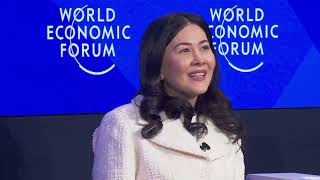
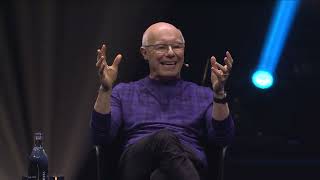
Lessons From a Lifetime in Venture - (Sequoia) Doug Leone & (Sequoia) Luciana Lixandru | Slush 2022



Fireside: Matthew Miller & Luciana Lixandru, Partners at Sequoia Capital - Sequoia in Europe