Unpacking the European VC playbook with Frederic Court and Luciana Lixandru | StrictlyVC London
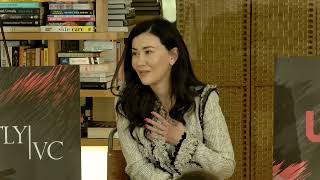
In this StrictlyVC London panel, moderator Mike interviews Sequoia’s European lead Luciana Lixandru and Felix Capital founder Frederic Court. Luciana explains Sequoia’s early and deep roots in Europe, the decision to open a physical office, and the firm’s focus on partnering with mission‑driven founders regardless of country. She stresses the high quality of European founders, the growing trend of AI talent staying in Europe, and cites examples such as Dast, Stripe, Airbnb, and Klarna. Frederic describes Felix’s evolution from a small £110 m fund to a focused £60 m vehicle, its emphasis on consumer‑oriented tech, media, and fashion, and the challenges of hardware and robotics investments, referencing VanMoof’s failure and the robotics startup Robco. Both discuss talent mobility post‑Brexit, the importance of European “role models” (e.g., UiPath, Adyen, Spotify) for founder ambition, and the need for a European dynamism that can rival the US. They touch on public‑market exits, noting Farfetch’s IPO struggles and the broader difficulty of scaling European companies publicly. Macro factors such as interest‑rate cycles, Brexit, and defense spending are mentioned, but both stress focusing on fundamentals and long‑term partnership over macro speculation. The conversation ends with audience questions about founder ambition, AI’s future, and the impact of macro policy on exit strategies.
Chapters
Thank you very much. Thank you very much for coming to strictly VC with TechCrunch. And let's get straight into it. Luciana, you, obviously, you are a bit of a veteran of the VC scene in Europe. You made your move from Accel a few years ago to build out the Sequoia team here in Europe. And of course, we've seen a bit of a flood of US VCs come into Europe over the last few years. But you were kind of quite early off the bat, weren't you? I was kind of wondering what was it like introducing Sequoia to Europe and. And sort of, you know, getting used to sort of cultural differences and. And also the ecosystem.
Well, firstly, thank you so much, Mike, and TechCrunch and local Globe for having us here on this beautiful and rainy evening in London. I don't know if being a veteran was a compliment, Mike, I will date you. I will date myself, and I will tell you that I've been in venture capital since the end of 2011, so a really long time, and it's been a fun journey to see how the ecosystem has evolved since when it comes to Sequoia, to be candid, Sequoia has been investing in Europe for a really long time. Sequoia invested in Clara over a decade ago and Unity over a Decade ago and UiPath, which is actually how I got to know some of the partners at Sequoia, because I was on the board. So Sequoia was very familiar with the continent and the quality of the founders, which is why, as a firm, we decided to open up an office because we want to partner with founders as early as possible. And what better way than actually being here physically and having a presence? Of course, because Europe is so fragmented and founders are based everywhere from Paris to Munich to Stockholm, and the list goes on. I think what we now have with a presence locally is also a bit of the human touch. You know, Sequoia as a brand, it's a privilege to be on the Sequoia platform because it resonates with founders and founders usually know Sequoia, but it's. Yeah, it's nice to add that human touch by meeting founders in person and being here locally, being able to help from a network perspective locally with hiring, et cetera.
Absolutely. But did you. Do you think that some of that early enthusiasm have subsided or do you feel as enthusiastic as ever before?
Absolutely not. I mean, as I mentioned, I've been in venture capital for over a decade. Venture capital itself has ups and downs and has cycles, but I'M always amazed at the quality of founders, regardless of the cycle. And in fact, what we see is that mission driven founders don't think about the environment. They don't ask themselves, oh, is it hard to raise money? Is it easy to raise money? They're obsessed with a problem and they want to go and solve that problem. And we see those founders in good parts of the cycle and less good parts of the cycle. So we're very excited. We think of the US and Europe as one market almost when it comes to technology, in many areas there will be one winner. Not all of them, but in many of them there will be one winner. Historically, many of those winners started in the us. Now I'm delighted to say that more and more are starting in Europe and we want to be able to look at this geography and just partner the team that we're most excited about, regardless of country and put the entire weight of Sequoia behind that particular team.
I'm going to ask you a little bit more about what you're investing in right now. But Fred, to turn to you, you were at Advent Capital, which was a late stage vc, and then you started Felix Capital a few years ago. You were doing sort of Enterprise and B2B and then all of a sudden at Felix Capital, you were hanging out with Gwyneth Paltrow, investing in goop. So how is Gwynedd and was that a cultural shift for you?
Actually, no, because I was using the GOOP guide early on when I was traveling to the us. It was a very good way to connect to the brand and it's a very, very curated way of discovering a city. In that case, la, which GOOP is all about curation, which is a core investment theme for us.
Did she give you any of your candles?
I've got one in my office.
Marvelous. Great.
But I had to pay for it.
There's method to my madness, which is you, you've actually, you sort of, you know, you've done something quite different over the last few years. You, I noticed you, you've invested in Carstora, leading premium performance sportswear brand. You, you're listed in the business of fashion, Felix Capital, you invested in Lassie Insurance, Tech, Travel Perk. So you kind of sort of quite varied, isn't it?
We believe in media and journalists, thank God. So it's good there is some capital going there.
I'll call you tomorrow.
Our job is to call you, actually. So maybe we rewind a bit the decision to start Felix, which was something that was just maturing in My mind when I was at Invent Ventures at the time we were doing venture and growth, but with much smaller funds. So I started NVC a long time ago, just over 20 years ago. The funds were much smaller than the last fund we managed was £110 million. In that fund we were doing both tech and life sciences, which seems just incredible, you think about it today. So we are just investing a £60 million fund. And so that at least forced ourselves to be. To be disciplined and to be focused. And typically the investment pace was more around investment a year. And not being a technologist by background, I was in more of a tech kind of platform. But I ended up focusing on what I could understand and where I was interested in and could be relevant. And that ended up being essentially consumer applications and software. So basically what we are doing today at Felix, and when I was doing this with Advent, it was not the most obvious platform to do this. And I saw that there was an opportunity to connect to entrepreneurs that had.
More of a.
Creative space and also building on the strength of Europe. Now we talked about the strength of Europe earlier. Decarbonization, data, confidentiality of data, also AI. But we have amazing talents when it comes to creating experiences, products, brands that have an amazing impact at the global level.
To riff off something that Saul raised on the earlier panel about Brexit and the opportunity to. Most of Brexit's shit for me anyway as a remainder, but that's. I'll declare my flag, but moving on, it's obviously an opportunity for things like AI regulation, but do you think that talent has been an issue? You know that there's clearly, if you look at some of the graphs and the surveys, you know, Paris is very white hot right now for AI. London is doing pretty well. Saul's got a very good point about, you know, the cluster here around this area, but do you think there's been a talent issue in the UK specifically?
So two examples I think. One is I always refer to minimi. You know, I came here in the mid, late 90s, slept on the couch of friends. I got my first job, I was in investment banking in the City. It was easy and I was very lucky to be able to do this. And London has been an amazing platform for me. Mini Me today can't come to the UK as easily and it's very difficult to filter for talents really early on. Many of the people who built companies that have had a big impact from London, if you look at the point when they entered the uk, not easy to say, oh, okay, you will give you a visa. I won't. Because that talent, that creative talent is very, sometimes a few years to mature. So that's really an issue. And we see an attrition of talent coming from continental Europe in particular. The counter example, I think when you talk about Paris, not a counter example, but a continuation of this. Yes, you see Paris emerging as an amazing platform for AI. In fact, today as we speak, there's a big event at the Elysee palace with Macron organizing a kind of being a sort of festival around AI. Where is many people, entrepreneurs, also large companies. But there is also another pool of talent in Europe around the creative class. We often talk about where is Silicon Valley in Europe where the Google and Microsoft. If you look at Paris, in particular continental Europe in France, the Microsoft and Google that we have are LVMH and l'. Oreal. And we've seen amazing talent coming, creative talent, but also management talent coming from those huge platforms. Learn greatness and then have the ambition and also then have access to the capital to take risk and to start consumer brands. So that LDMH is a huge magnet for talent for the creative class. When you see the challenges here of Farfetch, which is really sad, matches fashion, but also recently Burberry, creative talent is.
Also moving away from Luciano on the talent point. Just very quickly, I know that you guys actually have some sort of talent matching platform for Silico for your founders, don't you? What. What sort of trends are you seeing across Europe in engineering and talent?
I want to double click on this as well because I think it's a really, really important point. If we look at some of the really successful AI companies in the Valley, many of those founders are actually European or many of those leaders are actually European. In fact, OpenAI CTO is from Albania, for example. So what I'm hoping to see more of, and I think what we're starting to see more of is these teams, either founders or leaders, staying in Europe and building out of Europe. And I think it's still early on this trend, but I'm very hopeful because I think we have a great universities and we have the infrastructure and the talent is there. We need to create the right environment for these founders to build here. I'll give you an example. We invested in a company in Paris, of course, called Dast and you know, it's an excellent AI founding team. One of the founders started a company and sold it to Stripe, the other one and spent a bunch of time there. The other one worked on at OpenAI and you know, they're the kind of people who could go to the valley and recruit anyone they would like, but they chose to stay in France and start the company in France and build out of Europe. So we see some early signs like that that are exciting and I'm really hoping that we'll see more of that.
And I'm glad that you mentioned Farfetch because Farfetch hasn't been quite the stellar performing IPO since its IPO. And obviously you also invested in VanMoof which actually went bankrupt unfortunately last year. The E bike.
You don't always get it right.
You don't always get it right.
Although on Farfet, I mean just to touch on Farfet, it was amazing success. It was a very, very, very successful ipo. It was, it's. Look the post, I think it's a committee that failed at being a public company.
Right.
So it's, it's.
Did you think that was foreseen?
I was still a shareholder. I was still personally a shareholder. So I was not expecting this outcome.
You weren't expecting it?
Our funds exited a while ago because I was on the board from 2010 to 2019. So that when invested 10 people company out of mostly Portugal, a bit London. We take Jose as an example. When he came to London, he was running a store in London. You know, why would you let someone come in and spend time here and then he ended up coming. You know, creating community that has had a shot at. Could have been.
You must have had high hopes for Van Move as well.
Obviously Van moves very different. It's hardware. I think we just realized it's hard to invest in hardware. Economies of scale are challenging. The other thing that was difficult is supply chain during COVID it was very difficult. There was, I mean people love the product, the community. We are product and community driven. Brand driven. There was so much customer love for it. I had one of the people who stopped me in the street. But then you have to be able to deliver the product at scale. They didn't manage the growth.
Man back a couple of things. Firstly, I'm a far fetched customer and a very happy one. So I just want to say that. And I still shop there. Great. Very nice to see. I do want to touch upon hardware a little bit because I completely agree it's really, really hard. But I also think there is a very interesting opportunity in particular in robotics. I, you know, after a decade of investing in software, about a year and a half ago I was lucky enough to partner with a company out of Germany called robco and it is a hardware plus software company. And when we looked at this opportunity, we are quite active robotics investors. But when we looked at this opportunity there were a few things that really stood out. Truly European. The Technical University in Munich is one of the best robotics universities globally. And the three co founders met there. Also truly European because they're automating manufacturing and where else to start rather than Germany, where the Mittels stunt is such a big part of the economy. So you know, if you have three people studying robotics in the us, I'm not sure they would understand this problem that manufacturers have because they hear manufacturers are their doorsteps. So there are so many nice things coming, coming together. But I completely agree with you. I think it's so hard to scale. And what we looked for was a team that we thought was absolutely incredible and not only special on the robotics side, but also on the commercial side and on the execution side. So we're actually, I didn't think I would say this three or four years ago, but we're actually quite excited about robotics and I do think that there is a really interesting angle in Europe as well to hopefully start building here, recruit the best talent here. Because there is, as I mentioned, in Munich, in Zurich, ETH Zurich, it's a very good university for robotics as well. And then scale over to the US.
As well, staying as opposed to thinking the only place they could go is Silicon Valley.
And presumably, I think actually to riff off that, there's a sort of quite an interesting early sign, isn't there, in the idea that Wave just raised a billion dollars with the autonomous self driving technology which actually has basically been copied by Tesla now. And yes, I can say that I'm a journalist and honestly held opinion malad. And also the idea that generative AI is going to enliven this whole new world of robotics and autonomous driving. But I was a bit cheeky with you, Fred, about Farfetch and Vanmouth. But Luciano, what do you think has been your less exciting moments investing in startups?
You know, we, we have no favorite children, Mike, and we cannot have a favorite children. And these journeys are really, really long. We invested in Stripe 13, 14 years ago, with Seed, we invested in Airbnb goodness over a decade ago. And for all those companies of course are also businesses that don't become these generational businesses that are going to be around for our children to use. I think that's very much the nature of our business. But when we partner with a founder, we have to be able to dream and stay optimistic and, and believe that if the stars align, something special can happen. And yeah, it takes a really, really long time.
Yes, absolutely. And also we're all waiting for Klarna's IPO eventually, aren't we? What do you think was the sort of teachable moment with the recent Matt Miller and Mike Moritz incident in terms of the board reshuffle?
Klarna is an amazing company. It's doing really well. My partner Andrew Reed is on the board boards. My partner Andrew had, has been working with Michael for a very long time. We're delighted shareholders. The company is performing really well and in fact speaking about AI, they're one of the companies that have adopted AI on a massive scale and the efficiencies are really impressive. I think we can really look into the future if we look at what they did with AI.
So do you think that Cloud is going to be one of those companies that will be able to unplug the blockage in Europe around exits?
Obviously I can comment on timing. What we care about is are we investing in really high quality businesses that are going to compound for a really long time? And absolutely the answer is yes with Klarna.
But I think it's important that it succeeds because we need more success stories and it's been challenging for a number of private companies in the public markets. Technology delivery journey here in the UK for instance. And we, we need to crack the public market. You take going back on Farfetch was a very successful private company, it was not successful public company. So you need to create that education as well, have the talent of own CFOs, you can match public companies having the right boards, having that kind of thing. So that's what the committee didn't crack at some point. So we need very, we need more ad ins, more Spotify.
There's been a really.
That's well said. Sorry, Mike.
No, no, absolutely. And there's been a very interesting debate that's ignited recently online on social media, around founders, around so called European accelerationism, sort of all sorts of discords and websites floating around and perhaps riffing off this. You know, I always get this wrong. A16Z. Talk about American dynamism, you know. So how do you feel that we can create sort of European dynamism in the same sense? Or are we still going to always going to be so fractionalized across countries, across borders?
I think we have European dynamism.
Not.
In a same concentrated way. So we have pools, different pools of talent. When our LPs asked me what's the impact of Brexit? My first answer was we're going to travel more. So I think that's what we're doing now. We see people in very different parts of Europe and people stay in Munich, stay in Romania, stay in Paris and stay in Barcelona.
I think American dynamism also refers to investing in defense. Is that where you were going with the question or.
I think it does include that, yeah. But I think, I suppose it's sort of harking back to sort of a 1950s era of building dams and, you know, Ford Motor cars as well as. And I think obviously defense is clearly part of that. It's sort of more of a nationalistic approach to investing. Is that something that chimes with you?
I think when it comes to defense, unfortunately for us as a society, the why now is very strong. European governments have underinvested in defense since the end of the Cold War. And of course, a lot of governments have been public, like the UK recently, Germany as well, have been public about wanting to invest more in defense, which I think is the right thing. And in fact I think is the right thing for peace. That's. That's the end goal. And I do think that there will be some interesting companies coming out of this trend and coming out of these extra budgets and extra euros and pounds that will be invested. I will say I think building a defense company in general is incredibly difficult. When we look at the space and we're spending a little bit of time and when we look at the space, there are many things that we look for. I don't think that two ambitious MIT graduates are just going to be able to go and break into defense. I think, or I should say polytechnic graduates. I think we need a real founder market fit and founders that can speak to these buyers in the same language and have gravitas with these buyers. So, sorry, just to wrap it up, I do think there is an opportunity, I do think there will be, I don't know, 1, 2 European defence primes created in the next decade. I think the founder market fit is always very important to us when we look at investments. But in this particular case it's extra important because as we talked about, hardware building and defense is quite difficult.
Do you think it's a strong conversation, you know, with Russia potentially at the borders in Europe, that a strong conversation that you'll have to have with your LPs? Fred?
I don't think our LPs necessarily expect us to invest in this space. We are thinking about it, but a bit Differently because everything we do at Felix starts from human needs. And you look at the pyramid of needs of human needs, safety is pretty high up. So I think people today don't feel necessarily safe at home in big cities, at home with issue with data and piracy and kind of things. I think corporations definitely don't feel safe. You know, there are all kinds of issues of wrong data at the corporate level and then there's the same issue at the state level. So that's a major theme. There are a lot of ways to play it and I've got no doubt many entrepreneurs are going after that.
It would be remiss of me not to ask both of you about AI. Of course this part of London seems to have been definitely totally concur with Saul that you know, you've got Intel AI, you've got Microsoft, you got matters AI staff here, you've got DeepMind. It's the graphs are pretty good. You know, London is pretty much a center of AI in Europe. What are your thoughts? I know I noticed that you've invested in Penny Lane FinTech AI, $40 million from Sequoia, sorry euros from Sequoia and DST Global Koana, you did a pre seed round helm guided energy. What are your thoughts? Is it still white hot in AI and how are you getting into those deals?
We've been investing in AIR for a long time. So the short answer is yes, we are absolutely investing in AI. In the last year I want to say it's about 60% of our investments that are AI native companies. So you mentioned some great companies there. We I mentioned DUST before for even robotics. The why now is AI to some extent in terms of unlocking autonomy and use cases and many others. V then in browser video editing with AI the list goes on. There is a talent and there is opportunity in Europe as well and in the UK as well. I will say we're seeing more opportunities in the US but I also think that this is slowly changing and they're more and more high quality founders. So yes, we're investing. I just want to make one note. We're talking about sectors and sectors are incredibly important. We're talking about AI, robotics, defense. the end of the day we invest in founders, we try to invest really early on and partner with founders for the long term. So yes, if the sector resonates, that makes our job a little bit easier. But sometimes founders dig and zag and sometimes founders come to us with an idea that seems totally crazy, like sleeping in people's houses, which apparently was a Huge debate that since the Quest partnership way back when when we invested in Airbnb. And at the end of the day that's the exciting part of our job and sectors matter, but people matter more.
By the way. I'm going to ask you all to come up with a question in a second. But my last question to you, Fred, with just, just in the last 24 hours, Open OpenAI has been exposed for what? Potentially ripping off Scarlett Johansson's voice for their sky voice. Do you think that the foundational models are going to start to not look so shiny and new in the near future?
It's hard to answer that question. It's still a startup. They will make mistakes and then they'll pre act on it quickly, which looks like what they did. She has a great voice. I guess it was tempting, but she does.
I agree with you.
But having said that, I was last week with a company we're working with which is using voice as a way to connect with consumers and the voice they'll be using. Actually we have the demo at the board meeting is going to be the various type of influencers and sort of celebrity type voices. So you'll be able to order products while talking to your favorite famous person, which is really interesting. And so the last, I think the last launch that we saw from OpenAI with GPT4O, the ability to not use hardware but just use voice and interact with technology. Let's go back to our shopping experience. It's still really clunky. We use that mouse, the keyboard or the mobile, we can't see anything, etc. Now you'll be able to talk to an inventory and to a friend that will be in the middle which will be a technology enabled friend. But that friend will know everything about you and we know everything about the inventory and we'll be able to do that matching. So personalization curation, AI assisted is going to be amazing, just like planification is going to be a chance. So we are very excited by the consumer applications to come using AI. And then the beauty of it, that AI will be invisible.
Well, it's certainly, I mean it really is just such an incredibly pivotal moment. I feel that we're living in with that story. Ladies and gentlemen, we've got time for a couple of quick questions before we move to our next panel.
Easy ones.
Panels, Easy ones. Go ahead sir, do you want to stand up? We'll try and get a microphone to you and then you can. Everyone can hear you. Go for it.
Thank you. Hey, I'm Gary, co founder And CEO of Tangent. We are an employee referral platform.
Fantastic. Great.
Love that.
What's your question?
It's coming. It's coming. Mike. One time you can buy video technology, AI and a dynamic marketplace to make referrals accessible to everyone and not just a privileged fruit with the best networks. We just announced our pre seed round backed by Google Zync vc.
I'm in. That's the question.
And a squad of super angels including Catherine Lenson from Fluent Sports and Andrew Robb who is the former CEO of Farfetch. My question is around. You just mentioned Luciana, around. You invest in founders primarily, right? My question is around ambition. There's oftentimes a discourse between the ambition between European and US founders. I'm curious to see what are some of those differences, if there are any. Frederick, what are the. Is that changing anyway? And who's a founder that you met recently from Europe that you thought had really good ambition that you'd like to share?
Thank you.
You know, I think I'll jump in and please let me know what you think. We get asked this question so often and I just, I don't see it. I meet founders every day and I'm lucky enough to work with founders who want to build really large companies and take over the world. So I know this used to be a topic a decade ago and some founders might have been. Or that was the perception that might have been tempted to sell early. I don't see it.
I think what we have now, which is great, is role models. So it's much easier to project yourself with someone to illustrate the level of success. And that's what we've been missing. And so you're able to get also time and money from someone like Andrew Rob, who is really exceptional. So there was no Andrew Robb 15 years ago. So that's a big difference.
That's a great point. We have large public Companies now, from UiPath to Adyen to Spotify and the list goes on. And I think that helps a lot. You're absolutely right.
And those people have seen that it's possible to go big and have made it happen. So that's what Silicon Valley, only Silicon Valley had before. Now we've got this.
That's a good point.
Okay, quick last question. Go ahead.
Hi, I'm Rob. And a macro question which is we're all kind of waiting for base rates cuts and what's the playbook when we start to see central banks cutting rates, is it a rush for those kind of later stage tech companies to head to equity markets? Is it waiting for a strategic exit or with the regulation risk mentioned earlier? Or is it perhaps trying to raise new capital and funding them a bit longer in the journey? Interesting question.
I'll be very honest. You know how often interest rates come up in our partnership discussions? Not very often. We try to focus on the company, the fundamentals. When is the company ready to go public and really focus on what matters in driving that particular business as opposed to interest rates which are just not in our control, first of all. Second of all, we are very long term shareholders. We tend to hold our positions long after companies go public. And yes, sometimes there will be up, sometimes there will be down. But. But we were fortunate enough to invest in Apple 47 years ago and we wish we were still on the board there. So that's how we think about the world.
I think the past few years has been a good reminder that macro matters. We've got zero influence on it. So we focus on what we can control, not what we can control. But I think there was a huge issue with people who thought it was easy, that venture capital was easy and kind of the making money part of it when there was just so much money, lost sense of valuation, when things were worth it was not that. We were certainly a super smart investor that was just macro driven. So it matters in that sense. But yeah, we don't spend any time thinking about it.
We were all very smart.
Always focus on the founder, I think, apparently. Ladies and gentlemen, please give it up for Fred and Luciana. Thank you so much.
More from Luciana
Getting Europe into the Fast Lane | Eileen O'Mara, Luciana Lixandru & Marc Lemaître
Luciana Lixandru: Who Are The Daring People Who Will Build The Next Legendary European Companies?

Lessons From a Lifetime in Venture - (Sequoia) Doug Leone & (Sequoia) Luciana Lixandru | Slush 2022


Spotting Global Potential at Seed & Series A: The VC Perspective | SaaStock EMEA Online 2021

Fireside: Matthew Miller & Luciana Lixandru, Partners at Sequoia Capital - Sequoia in Europe