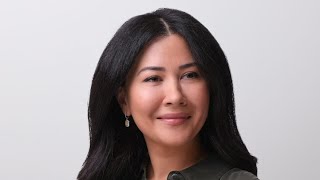
Luciana Lixandru: Who Are The Daring People Who Will Build The Next Legendary European Companies?
In this fireside chat, Sequoia Capital partner Luciana Lixandru discusses her personal journey from a small Romanian town to becoming a leading European venture investor, the role of luck and hard work in shaping her career, and the decision‑making framework she uses when evaluating startups. She recounts how she first encountered UiPath, emphasizing the founder’s ambition and the pivotal role of computer‑vision technology in unlocking automation. Luciana explains her two‑stage "fast and slow" thinking process for investment conviction, and how her focus shifted over time from market‑centric analysis to prioritizing the quality of founding teams. She highlights sectors she finds most promising—robotics and embodied AI, computer vision, and fintech—while also noting the value of backing non‑sexy, contrarian businesses such as accounting platforms. Throughout, she offers practical advice for entrepreneurs, stressing speed of execution, the importance of grit, talent‑nurturing, careful co‑founder selection, and deep obsession with the problem being solved. Luciana also shares how she cuts through hype and FOMO by prioritizing focus, saying no to meetings, and carving out uninterrupted thinking time. The conversation concludes with quick‑fire insights on the best and worst entrepreneurial traits and a final piece of advice for founders ready to take the leap.
Chapters
Foreign. Next up, very excited and honored to introduce a brilliant investor, Luciana, who's partner at Sequoia Capital. Luciana focuses on enterprise consumer tech companies across Europe and co leads Sequoia's early stage investment business. She's a director of Pennylane, Robco, Stripe, Tacto and VEED. Our chat today will be about who are the daring people who will build the next legendary European companies. Luciano, thank you very much for joining us today.
Hello. Hi Evan and everyone, thank you for having me. It's my pleasure and my honor to be here today. I hope you can hear me.
Well, we can hear you perfectly and I know you've got a tight schedule, but we're going to fit it perfectly in.
It's all good.
Fantastic. Well, it's good to see you. I in person is always more enjoyable. Virtual is. It benefits hundreds of people in the audience that are listening. So we're going to break up today into like a little bit of past and present and future and interactive as you want, Luciana. And. And we'll just kind of take it away. So you grew up in Romania and one of the things I love in your Sequoia bio, and I know it was even before there, before, you know, you agreed to join us, is that you're inspired to go to the US from an image from reading and sitcoms. And an image obviously relates to our visual tech thesis at LDV and what we're all talking about today. So tell us a little bit about that and you know what, how did that inspire you to move to the US and then we'll take on the next steps.
Okay, thank you. Thank you so much. Thank you for asking. And honestly, it's now so long ago, but why do I say that, you know, the image of the United States inspired me because I had never actually been to the United States. When I decided that I wanted to build my career there, that's what I thought at the time. And now I'm in London and I'll tell you the story. But so I grew up in a pretty small town in Romania, like 100,000 people. So I go, you know, small city, let's say in Romania, not particularly tech forward to say the least. And I hadn't traveled much to Western Europe and I had never been to the US but, but the US had and has this image of the land of opportunity and meritocracy and the place where you go to work really hard to make special things happen. And I thought I was 16 at the time. I guess it was my way of being rebellious. And I thought that that is for me, I want to give it a shot. I want to go and work hard and change things and, and build an interesting life for myself. And it was indeed really life changing. I was lucky enough to get a scholarship. And at Sequoia we talk often about crucible moments, these moments that really change the path forward. And if I have to pick one, this is probably the crucible moment for me. Having a chance to study in the US and it was really eye opening and one thing led to another and that's how I got into venture capital.
From there, it's amazing story and I'm curious, what was the sitcom Luciana, do you remember? Like which one you love the most or if there was one? I don't know. Just curious because this is going to be very embarrassing.
Okay, So I was 14, 15 at the time. It's actually really embarrassing. It was a lot. But the one that I remember was, do you remember Beverly Hills?
Sure, of course.
As a, you know, teenager I was like, wow, that looks, that looks really fun. Anyway I, and, and many others, but that's one that, that I remember.
Yeah, I love it. I appreciate you sharing that with us. So then you went on to Georgetown and worked at Morgan Stanley. But then why venture? So I mean, tell us a little bit about kind of how you made decisions. One of the things we love, everybody takes different paths and there's many people in the audience that are trying to figure out where to go and how to choose their paths. And you know, I look, you know, as I was, my career evolved, I had ideas of what I wanted to do. But if I look back, it makes a lot of sense, but each different choice. I never thought I'd become a venture capitalist and I would actually tell people I'd never going to do that. And here we are.
And I will say, I think for me at least, you know, everyone, everyone I guess has their own way of making decisions. But I definitely think that I also got lucky along the way. And needless to say, you have to, you know, do your best and make an effort and work hard to put yourself in opportunities where you may get lucky. Because I know a lot of people think that venture capital is just about luck. It's not quite like that, but. But I definitely feel, you know, that, that I got lucky with a lot of the decisions that I made along the way. One of them was getting into venture capital. You know, I grew up in communist and post communist Romania. Technology wasn't a thing. But my dad was A small entrepreneur. So when communism fell, he tried a lot of things. He had a shoe store at some point, he had a car dealership at some point, he had a bakery at some point. So, you know, never big businesses, always small businesses, but that's how we, that's how we supported our family. And I guess I always had, yeah, just a soft spot and appreciation for just how hard it is to, to make it every single day. And you know, you're responsible for your family, but you're responsible for employees and you know, to keep it going. So I always had a soft spot for entrepreneurship growing up with my small business dad. And then I got more into technology. Of course, when I went to the US and honestly it wasn't a difficult decision at all. I had such a strong instinct about it and I would say that I really, I was at Summit Partners for a couple of years, but I really started understanding technology and investing in technology when I joined Excel, which was at the end of 2011. And that was a really great journey. I was there for over eight years and it was an interesting time and adventure in Europe in particular. I'm based in London, as I mentioned. If you ask me, that's when the technology ecosystem really got started in Europe. We're a bit younger here from a maturity perspective and it was a formative 8 years for European tech and I got to work with some of the founders that I think really did define technology in Europe and that was really fun. But to go back to your decision making point, I don't know, it was very obvious to me and then, since then, it's very obvious to me. Every single morning when I wake up, I want to do this job. People sometimes ask me if I want to start a company at some point or if it ever crossed my mind. And honestly, I just love what I do so much and I'm such an investor at heart that I never doubted my path since. So I would say it was a natural decision then and it's just been a very natural decision every single day since.
I think, I think that's fantastic. I mean, I think natural decisions are the most important ones when they're forced usually, not all the time, but they don't always happen the way people want them to happen. I think it's got to be a genuine path as you are Excel, so you've invested in some exciting, valuable companies. UiPath deliverable before Sequoia. And we'll get to the present and future in a minute. But talk to us a little bit about UiPath obviously a company near and dear to our heart. We haven't invested but the early days and continues to leverage Computer Vision. And so, you know, tell us a little bit how you met that, you know, that team and how you initially got your conviction.
No, it doesn't. Maybe just one sentence on UiPath and computer vision. I think that's really what unlocked the growth of the company. And the thesis there is that there are so many different systems, especially legacy systems in large corporates that don't really talk to each other. And thanks to UiPath and thanks to the Computer vision technology that they developed, it's kind of like a glue between all these different solutions that now can talk to each other and that's how you automate these back office processes. So Computer Vision was really the unlock there. It's a Romanian company and. And what are the odds? You know, I.
It's great. Obviously I wasn't going to bring it up. I was going to let you bring it up.
Yeah. I never thought I would invest in a Romanian company, to be honest. It's a very, very small tech ecosystem. We do have great engineers and great math people. We have. That school is very strong. But I met, you know, like I said before, I think in venture, it's a lot about serendipity, but you have to be out there and make sure that you get yourself in those situations where serendipity makes may come together. And here I met the seed investor of UiPath. I was actually visiting family and I thought I would just take a Friday to see what's happening in the ecosystem. And I met some interesting seed investors in Europe and one of them said, hey, there is this company I invested in, it was Early Bird, that's a seed fund. And I remember thinking, process automation, this makes a lot of sense. People do a lot of boring, repetitive tasks all day long. Wow. If there's a product that can take some of this away from humans, wouldn't that be exciting? So I immediately thought it was very interesting and then I got in touch with Daniel and I would say the rest is history.
History, yeah. Did you meet Jem at Early Bird? Is that who you met when you were over there?
I know him, but this was a.
Good friend of ours.
Oh, he's wonderful. Yes. I've known him in vecosystem for a long time. So this was his partner at the time, Dan Lupo. And I remember with Daniel, because I'm sure you want to chat a bit about founders because at the end of the day we're in a People, business, as we always say.
That's right.
I think what really impressed me, we talk a lot about scale of ambition. And I think when you sit in the Valley or when you sit in London, it's much easier to think, I want to build a really big company because there are a lot of people around you who've done it before. But when you're in a small ecosystem where no one has actually been successful before, to have the scale of ambition that Daniel had at the time really, really stood out to me. So after that meeting, of course we did our homework and our due diligence, but I would say it became pretty obvious it could be a large company and.
Sure. And it's interesting. I know. What percent of the time do you think you have a good idea that it's likely an investment opportunity in that first meeting or the first hour or obviously you have to do all the due diligence, double check. But do you frequently feel like, or ever feel that it's a high probability in those first seconds or minutes, or does it take time to get to the conviction?
I'm going through various opportunities in my head right now. Okay. So for me, two things need to happen to really get, get excited about an opportunity. So certainly that first meeting is usually exciting when, when you end up investing and you have a great impression and you think, wow, I want to be in business with these founders and I like the market behind this company, those things definitely need to happen. But typically that's the. The thinking fast. Right. And then the thinking slow. Usually, you know, my best decisions are when the thinking slow and thinking fast get you to the same conclusion. So then I also like to go back and take my time and do my homework and do my due diligence. And if the excitement is still there, typically that means it might be a good decision. And it's venture capital and you never know. Of course you're wrong as often as you're right, but usually, as I would say, the thinking fast and thinking slowly to get you to the right conclusion to really, in my experience, to. To make a good decision. The other thing I'll mention, and my partner rule of. Actually talks about this often, usually if you have a good first meeting, if the next meetings feel better and better and you learn more and more, that's a really good sign because sometimes there's a great first impression, but when you start digging deeper and deeper, you lose elevation. Obviously that's not good. You want to just gain elevation in every meeting and every due diligence calls.
Yeah. That makes sense because internally in our team, I mean much smaller team than yours, but we have a rating system 0 to 10 and, and if the ratings go down over time, well, that's not a negative, it's a negative signal. That's not a right fit for conviction for us because we're only investing in four to six teams a year. But I think it's always got to kind of continue to get more, increase, increase and check the boxes to be more positive. One thing before we go to the present, couple questions we have. I want to go to the kind of early days of UiPath just to understand as an investor that took quite a while before. I mean obviously the success of UiPath today public company is phenomenal. But in the early days it took several years. Tell us a little bit about like the challenging indoor. When did you see the tipping point or when did as an investor what give us a little bit of the challenges and insights there? Because not everybody knows in the early days there was challenges.
We did this exercise and we looked at many companies that were successful. Sorry, and I'll get to your question, but it's relevant.
No, no, I want to hear the backstory. Great.
Many companies that were successful, different companies take different times to product market fit. So I mean Wiz is a great example given, you know, you might have seen the news. I mean, Wiz from, from getting started to getting to a million and run rate, it was very fast. I don't remember the exact period of time, but it was very fast. Figma on the other hand, took its time to really build the product for quite some time over years. And then when it reached a million dollars in ARR, it started growing really, really fast. Why do I use a million dollars? Directionally, some people can think of that as product market fit. Now I don't want to get into whether that's right or not or wrong. Now what most successful companies do have in common however, is that once they get to product market fit, they get from 1 million to 10 million and run rate in like 18 months or less. So we looked a lot of, at a lot of data and you want to see that when things are working, they're really, really working. But it could take a while to get things to work because sometimes you're just investing in product and you're building a product, you're solving a hard problem and you're building a product that takes a while to build. Sometimes you're zigging and zagging or pivoting. Right. So I think what matters most Is when you start selling, is it working? And do customers want your product? Not as much. How long it takes from, from zero to product market fit now UiPath is an outlier. To be honest, it was nine years. I think it's the longest. But, but I will say they were doing a few different things before and then, and then pivoted into RPA later on.
And what was the tipping point? Do you remember that? You said, okay, we got it. Like, okay, you guys got it, you found it. Do you remember what that tipping point was? Or maybe it was a couple.
The one thing that really stood out was the reference calls. I remember speaking to customers and they were so hungry for automation. I mean, we see it with everything that's happening in AI, Right, Right. People are really, really hungry for automation. And those were just very, very enthusiastic customer calls.
Fantastic. So one thing before, in the last question before we move on, there is this interesting, this kind of topic of many people wonder whether or not is it more important to invest in the founder? Is it more about the people or is it more about the business model and market? And you mentioned, I think in your bio, like in the early days, as you transitioned into venture, your priority was more about the business model market versus now more the people. What was that tipping point? And how'd you, how'd you switch from the one to the other?
I mean, to be honest, I think I, I, I probably lack the maturity to really understand people, to be honest.
I have a, I think that's very modest. I think you, I think you get it very quickly.
But no, at the time, at the time when I got started, so I have a math background, I come from a numbers background. It was just much more natural to me to look at some of the data. We're trying to understand the market structure and, and make decisions that way. That said, in the past 15 years, working with people, the one thing that successful companies have in common is the quality of the founding team. That is the one and only. You can be going after totally different markets, totally different products, technologies, market timing, you name it. The one common denominator is, is the strength of the founding team. And I learned that over time. And I still like a good market. Don't get me wrong. Sure, of course, I don't think that's important. But you know, we say this all the time and it sounds a bit cliche, but it's true. It's all about people. At the end of the day, it is.
We 200% agree. We obviously invest pre Inc and Pre Revenue Pre product and, and it's all about the people. You can't even look at data then.
And then you don't even know the data. Exactly, exactly.
People run businesses, people hire people, people fire people, people make revenue. It's not that the company. So you've mentioned, you know that you still are excited about some sectors. Let's talk about different sectors that you're in. I mean UiPath delivery, Penny Lane, Miro and others. Which sectors excite you the most these days, in the coming days? I know it's all about the people, but let's put that aside for a second. Are there certain sectors that excite you more than others that you want to share?
For sure. I will say that I think about the world more bottom up than top down. So I meet an interesting person with an interesting idea and then I'm really excited to do my homework, even if I may not have a thesis on the space yet. That said, of course, directionally there are areas that are more interesting than others. I will not talk about application AI companies because everyone is talking about application AI companies. Great space to invest. So you know. But I think robotics is quite interesting and we've been investing in robotics for some years. Even before again people talked about embodied AI or robotics or however you want to call it. But I do think that the next frontier for, for AI is robots performing more and more unstructured use cases and taking on more and more of this repetitive human labor. I also think labor shortage is actually quite an issue today in the manufacturing world, in factories. It's not even that these companies are looking for ROIs sometimes that they just cannot find the people to fill these jobs. So I definitely think that robotics and embodied AI, both from a need perspective and obviously from a technology perspective today we can do more and more and wow, what the next five years will bring to robotics. I'm so excited to see. And of course we're talking about computer vision. This is a core component because a robot needs to understand its environment in order to go and act on the process that needs to be performed. So I think that's really quite interesting. I think fintech is, you know, quite considered a bit unsexy today. But I think there are really interesting things happening in fintech. I'm also a bit biased because Europe actually has a tradition of, of great fintech companies and I think we hold our own with the US when it comes to fintech. We have as many successful companies. So I, I think fintech is interesting as well. Those are a couple of sectors that come to mind. But again, we meet a great founder building in some. Something totally new that's, you know, we'll go and do our homework.
Sure, that makes sense. I mean, obviously you're on the board of Stripe and, and, and there's others like Transferwise now wise. There's lots of great successful companies.
Yeah, many Penny Lane Mono. Many companies out of, out of Europe.
Exactly. You mentioned Roloff earlier, who's a friend. I've known him forever and one of the things I love that he says we talked to last year on our Fireside Chat is it's all about being contrarian and. Right, right, exactly. So what contrarian. I mean, okay, are there, is there anything that, you know, sectors out there that, you know, you think today is, you know, people would think is crazy, but it really intrigues you. You might not be, it might not be something that you, you're looking to invest today, but. Or is there anything out there. What would be the most contrarian kind of a sector or something in your mind for us, I mean, we're doing a lot of synthetic biology. Some thinks it's contrarian something. It's not contrarian. I mean, obviously there's a perspective that can change.
I don't know that I have a great example for contrarian today, but I'll give you some examples of companies that were contrarian at the time.
Sure.
Great work. Contrary, let's say non, non sexy. You know, because in venture there are areas that are of interest everyone and then there are areas that are.
I love boring businesses, make a lot of money that we, we love that. So go with that.
Yeah, exactly. So I will say when we invested in Penny Lane, it wasn't, you know, it's, it's an accounting company who cares about accounting for SMEs. Obviously QuickBooks in the US and Intuit is, you know, that's a great, that's a great business. But it was like, you know, you have to go country by country and we can invest in like sexy AI stuff or we can invest in accounting. You know, it wasn't, you know, I would say it was not on the, on the sexy side at all. And I think that's the nice thing about, about being at Sequoia that we are super, super excited to dig into spaces that might not be on top of everyone's mind. I mean, I will say, and just to give credit to some of my partners, we invested in SpaceX years ago when, when I really don't think it was obvious. And then, you know, in A bunch of our companies like Airbnb. Early on I wasn't there, but I'm told the conversation was, who's going to sleep in other people's houses? And today it feels so obvious. So I do feel lucky to be in a partnership that is really open minded to crazy ideas, boring ideas, but yes, also ideas that are obvious.
Right, that makes sense. Okay, let's jump to the next question. So another one, kind of a quote that I saw, it might have been an article or that you, you were talking about is that every single company can die in a thousand different ways and succeed in just a couple. And so, I mean, you know, one of the challenges that I have after being an entrepreneur for 18 years with success and failures is there's many things to give to potentially empower and, and, and coach and help entrepreneurs. But you know, there's so many things at a given time. How do you choose when and how to kind of, you know, empower entrepreneurs to succeed in your own style and, you know, to avoid some of those ways that they could fail and help them succeed?
Yeah. So I mean, it's really hard building a successful company, you know, over a decade plus. I don't know any examples that were always up and to the right. It's just, it's not possible. So I think if there's one indicator of success, I don't know if I can help there. I don't think I can. But I'll share. If there's one indicator of success in my experience in the early days is speed of execution and just getting stuff done quickly. What does it mean? It means that you might not make the right decision, but if you try quickly, you iterate, you pick yourself up and try again very quickly. If that wasn't the right decision. So if the companies that just get a lot done quickly, those are the companies that typically in the long term surprise for the upside. So I don't know if it's advice. And again, every company is unique, every founding team is unique. But I think speed of execution is the biggest indicator of future success in the early days. And then as much as you can scale that because of course it dilutes as teams get bigger and bigger. Right. It's much harder to really fast with hundreds of people, thousands of people versus 20 people. And yeah, I think the more you can ingrain that in your culture and your processes at scale, like just the better it is long term.
That makes sense. And I think in relation to that, something I'll add, but, and you might agree is Kind of helping, you know, making decisions that help the focus. And so I might not know the answers of the decisions that a team would have to make, but helping in discussions about how to, you know, empower them to choose the right focus is then what help them potentially scale. And it's one of those things. We talked earlier actually with Victor from Synthesia was on a fireside chat earlier and he said one of the biggest challenges is the world's so noisy. Every customer wants so many different things. Being able to focus and execute on. On the most important things is the most valuable but sometimes the hardest.
That's a great answer from Victor and I'm not surprised. He's building a great company.
Yeah, he's doing great. So, next question. So LDV has been investing in Europe for about 12 years since we started and one of our early ones is actually with Sequoia, with Mapillary that sold to Facebook. Can you give us an example of 1 or 2 of the portfolio companies either yours or across the. That's leveraging visual. Take that you know that, that you know, it could be Rob Ko Vid or other. What, what, what example or use case of visual tech powering a business intrigues you the most or obviously you love all your companies but just give the audience.
Yeah, I'm sorry, I dropped that. You haven't. That's okay. I think rope was a good example and it, it's really the thesis that I mentioned before around embodied AI. They, they decided to take one step, take it one step further and, and vertically integrate when it comes to, to vision as opposed to off the they feel that that makes their robot just. It performs much better. And when you're in industrial settings, stability and reliability is really important. You can't get it 95% right. You have to get it 100% right. So there just the number of use cases that adding vision to the robot unlocks, that's just incredible. They can perform so much more for their customers. So I think that's actually a really good example.
That's great. One of the things that are very important, obviously we were talking about earlier about the people that we invest in and I sometimes like these questions that are overly simplified. So in like a one word answer, what's the best personality trait of an entrepreneur and the least best personality trait of an entrepreneur?
You're putting me on the spot, Evan.
I do with everybody, Luciana. It's not just here. Everybody gets the same question.
These are good questions with, with entrepreneurs I definitely think grit. Yeah, it's just you have to have it. You can't have thin skin. You have to be able to get up when you fall down because you definitely will fall down more than once while building a company. You know, you is grit for sure. And then the, the second question, remind.
Me, least favorite personality trait.
Oh, do I have to answer this?
Yeah, I'll answer it first and then you can think of it. So I think you know, almost like self centered or selfish and like it's all about them. Usually it's, it's about, you know, that means that it's not about a team effort and about a team building a business. It's all about one individual person. So you know, it doesn't have to be negative on people. Everybody could be positive, you know.
Yeah, I don't know the one word, but I'll tell you the trait. I think you have to like to bring up talent and identify talent and mentor people. I think there are a lot of people who are incredibly smart, high intellectual horsepower, super driven, intense, but just like to work on their own and like to do their own thing and don't have that much patience for mistakes and people around them, maybe for them not to be perfect. And I think then being a founder and CEO of a company, I think that's hard. I think having, yeah. Wanting to bring up talent, wanting the people around you to succeed. I think, I don't know what the one word is, but I think you have to have that.
I think you're right. What, who inspires you every single day?
I work with many people at Sequoia who inspire me every single day for sure. I mean I, the reason why I decided to join a bit over four years ago was that, you know, I think, I think some of the people I work with shaped venture capital and it's just, you know, it's amazing to see them in action every day. My husband inspires me to. He's.
That's great.
He's. I'm biased, obviously. I married him, but he inspired me both, you know, just in kindness, kindness, a humanity. But also he's an entrepreneur himself. And I mean the dedication and seeing him, you know, do what he does day in, day out, it definitely inspires me.
And so the next question is, what's the most difficult part of your job? For me, it's saying no a thousand million times a year, which I can't stand. I don't know if you, it's the same for you or if there's anything else.
You stole my answer, to be honest. I always want. Whenever I get asked that question, that's, that's it. It's because, you know, you're saying no to someone's baby. It's almost like saying your baby's ugly. And you know, this person gave up something to build a company and you know it's hard. And you know, so to this day, saying no, especially once I spent a bunch of time with the founder and built a rapport with the founder. I like to say not now. And it's true. Oftentimes it's not now. We oftentimes get it wrong and then may invest later on. But that's my answer as well.
No, I agree. I mean, I think that, I think they're in, in business and entrepreneurialism, there really is a no. The answer, the no doesn't exist. It always means not now. And there's always new progress. A new customer developer, new new hires or new progress that, that could always inspire people in the future. And I think that's, that's the. It goes back to your statement of grit, I believe. What one. Let's end it up. We got a couple of minutes left. I would say one of the challenge, I think two questions. One, one first is one of the challenge I hear a lot is with all the noise of hype cycles, how do you see the signal to the noise in your, in your mind? Or how do you. How do you. Is there any advice for other investors or other entrepreneurs? Sometimes it gets so noisy out there and it drives me crazy sometimes. And I. And try to, try to kind of clear the head and take a walk or do something. What do you do? Or is there any tricks that you have to deal with the. Than finding a signal to the noise?
Honestly, it's one of the things about this job that is difficult. Also in our industry, FOMO is quite strong as well. Which noise combined with FOMO is not good. I really try to focus and be deliberate and just, you know, tell myself just, just focus on the company you're working with, focus on the company you're looking at. It's so easy to get distracted. I think that being able to prioritize actually is one of the most important things in this job. And just, you know, take whatever I'm taking this week and I'm just looking at one company or I'm taking whatever a period, a couple of days and I'm just focused on this one portfolio company that, that has this big question in front of them and it's a strategic decision and they have to get to the right decision and, and I don't want to just shoot from the hip when I give them advice. I want to do my homework. So I would say, yeah, I say no a lot to meetings. And I've learned this later in life, honestly, I promise you. There are probably at least, I don't know, probably at least 10% of the meetings you take you could actually skip. So I try, I've learned to say no to meetings just for the sake of doing meetings. And I'm not perfect at it, but I, I say no a lot more than, than I used to and try to free up that time and allocate it in like, chunks. You know, someone told me a very successful CEO, he used to start there 4am, start working at 6 and then until 10 it was just thinking time, not meeting time. Thinking time. That's four hours of, you know, clearing your head and making decisions. I don't do that, but I, maybe I should. I just, I just heard this. So I think cutting out noise from your calendar is the first step. And then having chunks of time, not half an hour meeting half an hour, like, then you can't really go deep in your thoughts. Having chunks of time when you can really think about problems, whether it's for portfolio companies or new investments. I think that's important.
I think, I think that's great advice. I try to do that as far as different chunks and then, and then other things get filled in. I was supposed to be working on.
Meetings up here in your calendar, right?
Yeah, I was supposed to be working on today's presentation, my keynote last week, five different times. And then it ended up having to be done on Sunday because all they, they all get booked. So it's a balancing act. The last question, just before you go, what's one sentence or two of advice for entrepreneurs that are, that want to start a business but are, are kind of stuck making the jump into the business? What's your advice to them?
I don't know that I have advice that's, you know, one, one size fits all. I would say choose wisely when it comes to co founders.
Right.
It's, you know, if ideally you've worked with this person before, or at least you've known them for, for socially for quite some time. It's probably the most important decision you make, actually, or one of the people.
It ties back to what you're saying earlier. Lucian. It's all about the people, right?
And then some. That would be the first one. The second one, there has to be some level of obsession with the problem you're trying to solve.
Right.
If it's theoretically interesting, at some point when it gets hard, you're not going to want to do it anymore. If it's a problem that really burns, if you don't solve it because you've experienced it before, because your friends have experienced it before, whatever it might be, I think that that's important.
I love it. Fantastic advice. Luciano. This has been really enjoyable. We could like many of the sessions today, we could talk for hours. It's the end of our session and I'm sure the audience has loved all your advice. Thank you again for joining us and hope to see you in person soon.
Thank you. It was such a pleasure. I really appreciate it.
More from Luciana
Getting Europe into the Fast Lane | Eileen O'Mara, Luciana Lixandru & Marc Lemaître
Unpacking the European VC playbook with Frederic Court and Luciana Lixandru | StrictlyVC London

Lessons From a Lifetime in Venture - (Sequoia) Doug Leone & (Sequoia) Luciana Lixandru | Slush 2022
Spotting Global Potential at Seed & Series A: The VC Perspective | SaaStock EMEA Online 2021

Fireside: Matthew Miller & Luciana Lixandru, Partners at Sequoia Capital - Sequoia in Europe