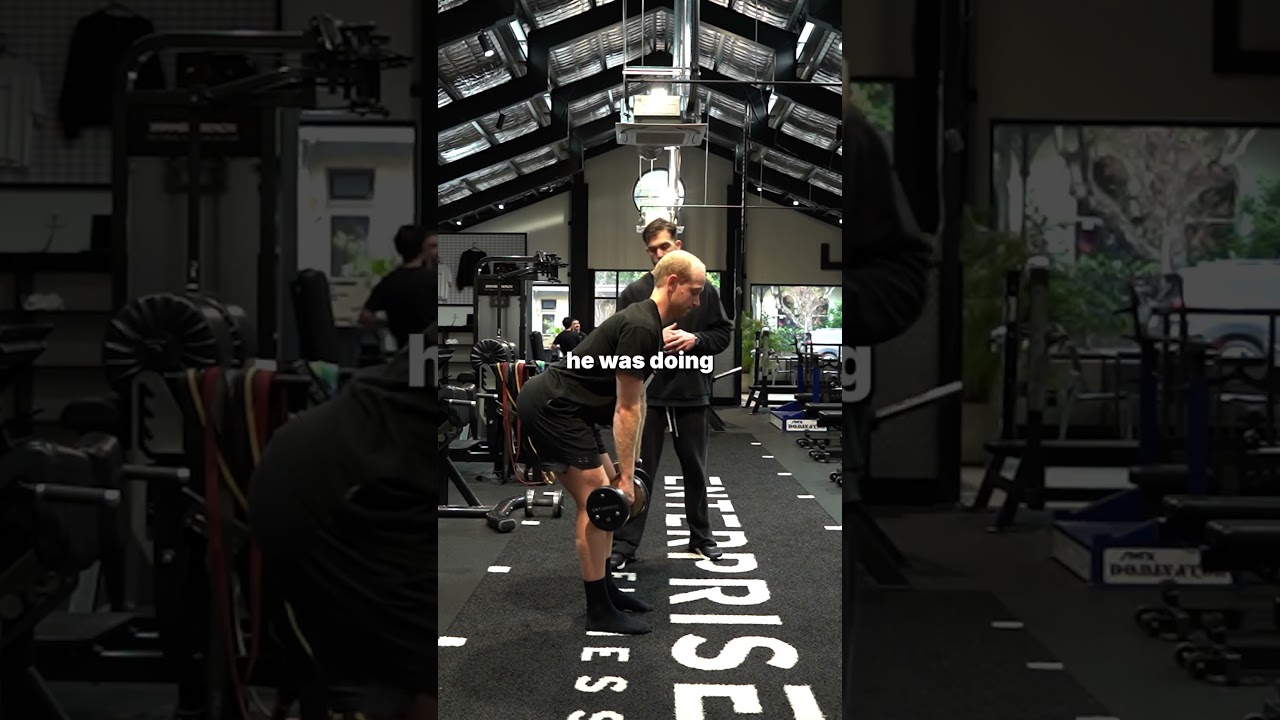
Mark Ottobre demonstrates Romanian deadlift form with live coaching feedback. The trainer addresses two specific issues: foot tripod stability and footwear, plus the hip-hinge movement pattern needed to keep tension in the hamstrings and glutes.
I don't actually want you to drive all your weight in your heels when you're doing your RDLs.
I can feel it, I'm doing that.
Yeah, you actually want to have 50/50. When you're on your heels, like you're doing this, you're working hard. Yeah, I can feel the difference. One more thing to make this way better, okay? Do that again. Don't let your hands disconnect from your thighs. Just leave those there and let your knuckles run down your legs to about here.
Okay.
That's way better.
Oh yeah, I can feel the difference.
And now you've actually got the technique good enough, I want you to go lower to get your back flat. Awesome, that's so much better.
There's 2 things I want to address in this video. The first is about footwear. He is wearing similar footwear to what she was wearing in the video, basically the equivalent of cushions. When we do this and we have footwear, and the cue that he gave was to not pull so far back on the heel, when we do that in the footwear that he's wearing, there's a lot of unstable forces that are created. Let's take off that shoe. So when we're looking at our feet, yes, we don't want to push too far back on our heels, we want a tripod position. Which means our big toe, our little toe, and our heel. That's where we want to be distributing forces. Think of it as a triangle. And you can see when he does that, he is already a lot more stable and he's able to get that position a lot better than what he was doing before. So not just onto the heel, but pushing down his big toe and his little toe at the same time. The second thing I wanted to address in this video is that when we look at the relationship of the knee to the hip, we want to be conscious. The way she was doing it, there is a lot of knee bend. When Duncan does this, with his knee bent, we're taking tension away from the hamstring, which we want tension in the hamstrings and in the glutes. So what we need to do instead is his knee is here, push your hip away from your knee, push your hip away from your knee. This is about a hinge position so that the hip needs to come away from the knee. Follow those tips. If you want my advanced version of how to do RDLs, make sure you comment RDL.