3 Diet Strategies Compared — Which One Fits You?
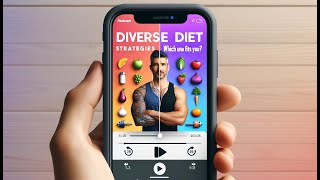
Three nutrition approaches for different clients: Enterprise Nutrition Principles using behavioral rules and routine; Flexible Food-System Meal Planning with protein, fat, vegetable, and carb choices; and Macro-Counting using Harris-Benedict or Katch-McArdle formulas with protein targets of 1.6-3 g/kg. Pick based on your client's needs and goals.
Chapters
This presentation is called Putting Your Plan Together. This is where we're going to tie it all together and talk about how do we do things. There are really 3 ways practically, tactically, strategically to work with clients in terms of the diet nutrition, right? So the first way is principles. I'm going to talk about the Enterprise Nutrition principles, which are actually all behavioral changes. There's, if you read them, there's very few of these that I'm actually telling you what to eat. I did that on purpose. The next one is implementing a food system slash meal plan. And the third one is counting macros, right? They're really the three ways that you're going to work with a client. So the enterprise nutrition principles. So the first principle is don't force feed. So don't force feed. Most people in fitness nutrition, they think I have to eat six meals a day. I have to eat five. No, you don't. They eat until they're uncomfortably full. They eat chicken and they feel sick, or they eat so much broccoli, the first thing is don't force feed, because force feeding is, it's just not positive in any, any situation. It's not a positive thing, so never force feed. Number 2, don't eat anything or in any amounts that make you feel uncomfortable. Now that goes doubly, like, I know I joke about vegetarians and vegans, but I don't want to make a vegan feel— I don't want to force meat onto a vegan if they really feel uncomfortable. I'm like, no, you have to eat meat. That, that's not healthy. Uh, if you don't like, say, raw meat— I love steak that's, you know, medium rare, more on the rare side— but if you're not comfortable eating rare steak, then don't eat rare steak. If you're not comfortable eating eggs, like, don't come from the frame that you have to eat and makes you feel physically uncomfortable to the point of vomiting, because that's not healthy and that's just going to further exacerbate a bad relationship with food. That is the opposite of what we're aiming for. Plan and set your meal times, right? Regardless of what you eat, plan and set your meal times. When are you going to eat? Create that structure. We said before in the flexible structure, that's a very easy win. Regardless of whether it's, you know, 4 meals a day, 2 meals a day, 5 meals a day, 1 meal a day, let's, let's create some routine. Let's create some structure. Develop a food routine, right? A food— the fewer choices that you make, the easier things become. So you've probably seen like, uh, Steve Jobs, He wore the same outfit every presentation. Donald Trump was known to eat at the same restaurant for lunch every single time he was in New York and order the same meal that when he'd walk in, they knew what time he'd walk in and when he'd sit down, they'd give him his meal. A lot of very, very— Mark Zuckerberg, I think, does the same thing with his clothes. But the fewer— everyone thinks about willpower, everyone thinks about decisions as this like, oh, we have infinite power. To make decisions. Well, it's not true, right? The more decisions that you have to make, it eats up your decision-making points. So think of willpower. Everyone starts their willpower with, say, 100 points. And if before you leave the house you've used 25 points just to decide what you're going to wear, well, now you have only 75 points of critical decision-making left. So for me, the thing I love about, like, being so regimented and routine with my food is I really don't have to think about my food. When I go to a restaurant, I look at the menu and I know what I'm looking for. I'm looking for protein, I'm looking for a carb, I'm looking for some vegetables. So I ask for the gluten-free menu because that usually narrows my options even further, but I don't get lost in, oh, so much choice, and what am I going to eat and what am I going to do? It's actually really simple. It's actually really easy. And actually what's found in like happiness psychology is that people are happier actually when they have less options, not when they have more options. So if you can put constraints on choices, it's actually a good thing. So set your, set your meal times and then develop a food routine, right? A routine of what foods you eat, what foods you keep in the house, what are your staples. It will help you with adherence, will help your clients with adherence to the plan. Don't snack, eat proper meals. So, and I say this because what the word snacking implies when most people do it is they just eat random. Snacking usually isn't calorie controlled. It's not something you thought about. It's, I'm on the run, I'm going to have a snack. And it usually doesn't fit in the constitute. It's a random event that just kind of happened. And again, it's the antithesis of health being a routine. So it's not to say like, you know, people call that snack foods. It's not that demonizing any food. It's the behavior of, I'll just grab something without the forethought. So don't snack, eat proper meals. And it also means that, you know, I'll grab a snack while I'm in my car. No, don't eat when you're in your car. Don't even— you can make that a rule. Don't eat in your car at all. Why? Because you're not mindful when you're driving. You're not mindful when you're watching TV. You want to be mindful with your food. So the snacking behavior, what I'm trying to eliminate with this one, is any situation or behavior that you're not going to be mindful or doing something else. When someone eats, I want them to sit down, think about the food, be mindful with their food, digest their food, rather than eating on the run because they think, quote unquote, they have to. No, you don't have to. You can do the thing that's really, really important. Then later you can sit down, get into the parasympathetic mode, rest and digest, and consume your food nice and slowly and chew and enjoy it rather than have to scuff it down. So snacking when distracted, watching TV, driving, eating on the go, affects on feelings of fullness, and it has a big effect on feelings of fullness. People will consume a lot more calories eating distracted than otherwise if they're eating mindful. Remember the 4 choices. Number 6 is remember the 4 choices. So what are the 4 choices? The 4 choices are— you can write this down because it's not there— the 4 choices are this one, that one, both, or neither, right? This one, that one, both, or neither. They are always your 4 choices. So people think, oh, I had to eat this. Well, no, you didn't. You chose to eat that, right? Because you could have said, I won't eat anything. So the story I tell is like, I went to LA at the LA airport and I couldn't find anything that remotely resembled food at LA airport, so I chose to fast. I chose not to eat because my choices were burgers, pizzas, that was it, or something out of the vending machine. And I didn't like my choices, so I just decided I'm not going to eat. You have that choice, right? I mean, yeah, this one, that one, both, or neither. You have those choices. And that's in all situations, lots of nutrition, by the way, right? And people forget that a lot. They think there's only one choice. Cook with fats. The most stable fat is coconut oil, followed by ghee, followed by butter. Coconut oil is going to be your most stable fat. So if you're cooking like steak, you need high, high heat, coconut oil. Olive oil is a good fat, but it does have a lower heat threshold in terms of oxidizing. So it's a, it's a better oil to add to salads as like a cold press rather than heating with it. I'm not sure about that. I'm pretty sure it's coconut oil because coconut oil is like all saturated fat. So that would be my go-to. Olive, avocado oil, I'm pretty sure is better as a cold press as well, but I have to double check that. I'm not sure on that one. Avocado oil. Cool. Hey, you should be pooing. You should be pooping, right? I mean, I put it in there because it's like people, they think, oh, nutrition, just tell me what to eat, and they do this plan and then they're backed up and they can't go to the toilet and they're constipated and they're really bloated. And you should be pooping, right? What goes in has to come out. Number 9: eat foods that are hunted, fished, gathered, plucked, or farmed. Because obviously, like, most chickens and cows and beef and that, they're farmed these days. They're not hunted. So, you know, if in doubt, choose from the 5 major food groups. You know, the triangle that the nutrition board, like, you know, the wheat, but no, just 5 food groups. Hunted, fish, plucked, gathered, or farmed. They're your 5 food groups, right? Pick from those. And number 10 is act like the healthiest version of you. So I feel like if you, if a client, let's say, took on these 10 principles and just took on these principles. It definitely points them in the right direction overall of what they need to be doing, right? And really the only one that's telling them, there's only really two here that tell people what to eat or generally point them in the direction, and that's eat things that are hunted, fished, gathered, plucked, and farmed. And you can make up diets a thousand different ways using those five foods, right? And cook with fats is the other one. But act like the healthiest version of you. What that also means is that people stress out and like, you know, I'm going to my friends, my friend came from Europe, I haven't seen him in 5 years and we're gonna have pizza and, you know, can I have— like, man, fuck, just have the pizza, man. Like, it's not a big deal. Like, sometimes the healthiest thing to do is to have the pizza because it's what you've been looking forward to for the last 5 years since you haven't seen this person. Like, it's fine, not a big deal, right? Again, small wins over time. So the healthiest version of you, or the healthiest version of you mentally, emotionally, spiritually, physically, the healthiest version of you in all of these areas, not healthiest version of you, body composition, full stop, right? Healthiest version of you. Digestion. We noted this before, but your digestion is obviously parasympathetic, not your sympathetic. So you want to slow down. The behavioral context changes. Slow down and be mindful when you eat or don't is my simple rule. Be mindful when you eat or don't. It's fine. You're not mindful. You're on the run. You're stressed. You don't have to eat. Calm down. You're really angry. Go for a walk. Eat later. It's okay. You don't have to eat if you're stressed. So that's principle. The second one is food system slash flexible meal plan. So there's a food system, flexible. So if I was to summarize this, the simplest way to do this with clients is I give clients a shopping list, which is in here. And I say, step 1, pick a protein. Step 2, pick a fat. Step 3, pick a vegetable. Step 4, let's manage your carb intake. So you pick a carb at some of the meals. Like, 4 steps. Hey, make any meal, right? Simplest way to implement it with a client. So the way we would do it is, step 1, pick a protein. Here's your shopping list. Pick any of these proteins. And I define it. So whole chicken, chicken breast, thigh, skin, off or on. Not rotisserie chicken, not chicken nuggets, not Chicken Kiev, not crumb chicken. I remember I had a client, so, okay, yep, pick a protein. Oh, I found this awesome chicken. Like, oh yeah, what is it? Oh, you know, it has like crumbs on it. I'm like, yeah, and like you cut it open and it has butter. You're talking about Chicken Kiev? Yeah, yeah, and there's bacon inside. I'm like, you're talking about Chicken Kiev? No, no, no, no, no, it's, it's really good. It's like chicken. I have been having it. Like, you're talking about Chicken Kiev? No, no, no, I'm like, fucking Chicken Kiev, that's not what I'm talking about, right? So you do have to define what you mean by chicken, uh, you know, what you mean. Because again, clients, um, especially your single males living out of home for the first time, they will shop in the freezer section of their supermarket and think that like nuggets and chicken Kiev is, um, is what you mean by chicken, when it's, it's really not, right? It's really not. So, um, and avoid most marinades because a lot of the time if you're buying marinades at like a Coles— I mean, some butchers have some good marinades where it's like gluten-free and they, you know, not, not super high caloric dense, but a lot of the marinades, like if you buy like stir-fries and stuff, will be very, very high in calories. So I simply instruct, uh, clients, you know, just buy chicken thigh, chicken breast. Fish, pretty much— I mean, look, the bigger the fish, generally the more toxicity it may have. So like tuna, for example, with high levels of mercury, whereas like, um, sardines, for example, have much lower levels. I would avoid any fish from Asia, particularly bassa fillets. Bassa fillets are sold, uh, they're basically catfish, and they're also sold under the name Pacific dory because it sounds more fancy and ritzy, but it's actually bassa. Now, the reason why I say avoid bassa fillets is because most of the farming of bassa fillets is in Vietnam, in the Mekong River. The Mekong River is one of the most polluted rivers in the world, the most polluted. So they've got like 85 million people living across like that river, and they don't exactly have the best indoor plumbing. and they don't have laws around, really any good laws around like, um, environmental waste. So a lot of that pollutants goes into that Mekong River. It's a very, very polluted river, but so they farm a lot of the, the basa fillets. So, um, yeah, I wouldn't buy fish, I wouldn't buy Pacific dory, wouldn't eat. And that's why it's so cheap. That's why it's like $7 a kilo, $8 a kilo, $11, you know, like you can get it very, very cheap. And so I would watch for that. Most fish from Australia, but again, tuna, shark, Tuna and shark, uh, or, uh, flake, uh, they're going to have much higher mercury because they're bigger fish. So I'm not a big fish eater personally, um, and like obviously with salmon, wild salmon is better than just, you know, farm salmon, this kind of things. Uh, red meat, you know, grass-fed, organic is preferable. Uh, in this country, kangaroo is a pest, right? We have lots of kangaroos, so eat one, right? They're delicious. And they're high in protein. So do your country a favor and eat our coat of arms. I feel like that should be a slogan with a photo of me with a thumbs up. No, but in all seriousness, like, people complain about the price of organic food. Kangaroo is, is cheap, and it's cheap and it's organic. It's game. So game meat obviously generally won't have much fat on it, so there is an art to cooking kangaroo. The art to cooking any steak and kangaroo is one, get a cast iron pan. Two, make the cast iron pan very, very hot before you put anything on it. Then you can do the water test. So you put water on the pan, and if the water dances, it's hot enough. If it just sits there, it's not hot enough. Then use coconut oil, and then it's mathematics. You've got to time the steak. So it's like 2 minutes one side, 2 minutes the other side, depending on the thickness of the steak. Well, this is a podcast, so I was talking about like cast iron pans at like iron? Yeah, that can happen. Yeah, for sure. Yeah, well, I actually don't absorb iron well, so for me it's fine. But yes, it's true, if you have cast iron pans, it can, it can actually increase the amount of iron that you get. So, um, which is very true. So white meat, turkey, chicken, fish, eggs, free range preferable. Uh, pork, I always go free range with pork because pigs don't sweat, so a lot of the toxicity remains in the flesh. That's why Pigs roll in mud to cool themselves down. And vegan, vegan options, really, like, look, you can, you can get your body composition results as a vegan or vegetarian. Biggest thing is you're going to be severely limited in the protein choices that you have. So when we're talking about protein, generally speaking, the range of protein goal is going to be anywhere from 1.6 up to as high as 3 grams of protein per kilo of body weight, which means that if you weigh, let's say, 80 kilos, you're looking at around 160 grams of protein for the day. You divide that by how many meals you eat. Let's say it's— I don't know, let's just say it's 50 grams of— just easy numbers— let's say it's 50 grams of protein per meal. For a vegan, that vegan sources only, it's hard to get in 200 grams, or it's hard to get 160 grams of protein. Like, it's— that's the challenge. So if people want to kind of navigate that as a vegan, like I said, the currier options. And for them, generally we're recommending macro approach so they can use things and they're going to need to use like protein supplements and stuff just to hit that number. So I don't say it's impossible, it's not. It does require an awful amount more work. Like, it is easier to eat chicken and beef and kangaroo to get that protein because, you know, also the other thing is like vegan sources is that you do have to contend with the excess carbohydrates and the fats, which then may throw you out of, uh, calorie balance as well. So they, they are generally much harder plans to put together. Something that is super high in protein is lupin flakes. They don't taste the nicest, but they are high in protein. So if someone does want to go down that route, right, where they absolutely can, they're just, it's just going to be limited on options. That's at the end of the day, you're more limited on options, right? But again, it's workable, but I'd recommend a macro plan for those people. So calculating protein intake again, 1.6 to 1.9 generally, if someone is in a calorie surplus is what you calculate protein because they're going to have more carbohydrates. And your carbohydrates are going to be protein sparing. 2 to 2.5 is generally where I like to sit with like maintenance, aperture for your fat loss. 2 to 2.6, 2, 2.6 to 3 generally is when you're in a very aggressive calorie deficit. Um, the more severe, the higher you go to preserve muscle mass. So say for example someone's at like 8% body fat, you probably wouldn't go that high. Again, this is more like once we get over like the 2.5, we're generally approaching comp prep territory. Where they're already very lean and we're having that amount of protein. So generally speaking, I like to sit around 2.2 for most of the time for gen prop maintenance. So around 2, usually around 2. But you definitely get— and in Elite Results Bootcamp, the guys will give some case studies of how they've manipulated that, like Tyron, Amy, Jacka, how they— how they manipulate that with different clients in different phases of bringing protein up, bringing protein down. So we'll talk about that in December. So protein for a food system— so if you're going to use a food system, the way I like to do it is I just simply say, for male, I say have 150 to 200 grams of a protein food weighed raw. That's not macrograms of protein. That's like have 150 grams of chicken, have 150 grams of mince, have 150 grams of fish, for example, or to 200 grams, depending on how hungry you are. If it's female, generally 75 to 125. I always get people to start on the more conservative end because some people are like, oh, I feel really full because they're not used to eating protein. Most people, it's like, had, uh, you know, I ate, I ate 125 grams of protein, um, and I tried to do that, now I'm force-feeding. No, like, just eat 75 grams until your appetite starts to develop. So you don't, you certainly don't have to start at the high end. You can start, and most of the time I start people at the low end and then bring them up over time. So technically, if you do it in this approach, a lot of the time what you'll find is you naturally put people in a calorie deficit. But what they find is that because the food volume is so high, they can't actually eat the food volume to consume their calories, if that makes sense, because you've changed their food. So this is where you've achieved a calorie deficit, not by like even meaning to, but just because simply the amount of food volume that the foods that they're having are nutritious, nutritious dense. but calorie void, like vegetables, for example, and meat. So that's the thing, is often when you switch people's food and get them to hit a protein goal, they may be so full that that might default them into a calorie deficit, if that makes sense. Does that make sense? Yeah. So example, the 60-kilo client, 60 times 2.2, 132 grams of protein per day. Then you divide 132 by how many meals they want to eat. So in this case, let's say it's 5. So it's 26.4 grams of protein per meal. As a food goal, it's approximately 100 grams of protein per— as a source. Then I have a quick reference sheet. So this is a quick reference sheet that I, that I give. It's in our user manual. So it's like chicken breasts, if you want to get 25 grams of protein, eat 81 grams. If you want to get, uh, sorry, in this case, if you want to get 30 grams of protein from salmon, it's 145 grams. If you want to get 30 grams of protein from lupin flakes, it's 75 grams. Et cetera. So there's a quick reference guide that you can give clients as like, if this is your protein target, here are the foods that are going to hit that protein target. So that's one way to do it. Questions? Yes. Oh, you got it. All right, where is the one? We divide that number by 3. You divide 132 by 3, then it's going to be more than 100. Yep, yep. Well, um, as in, I think it's there. Well, yeah, you'd give them probably, you'd fortify their meals with like protein shakes. So like in this case, so you're saying the question is if they, if their goal of maintenance, let's say in this case is 132 grams of protein per day and they're saying they want to eat 3 times a day. Well, are you going to do only over 3 servings? Well, if it's, if they only want to do 3 servings, then I mean, that's how much protein they're going to like. If, if their goal, if they're looking for body composition, then you divide that by 3. Now, might not feasibly be able to fit that amount. So that's where protein supplementation comes into play. So you might say, okay, well, let's actually divide your protein requirement by 4. So then you wouldn't divide it by 3, you divide by 4, and then it's whatever it is. And then their meals are going to be bigger to hit that protein requirement. Or you, you, you simply start them off with a lower number. So you don't base it off 2.2, you base it off 1.6. But 1.6, you generally think their carbs are going to be higher. Makes sense. But generally protein is the first thing I set, and I generally base protein at 2, and I divide it by how many meals a day they eat. And look, I'm coming this from the lens of body composition because protein comes from the word prime importance, like proteus, which is prime importance. And that's the first thing I said. So someone's going to under-eat— look, someone's like, I absolutely can't eat that amount. Like, it's not like they have to in, in terms of like it's dogmatic, but generally as we work over time, that will increase their protein. But yeah, look, it's, it's the first thing because most people under— does that answer your question? Does that answer your question? Yeah. So yeah, you could divide it by 4 if you'd add in— so they might do 3 meals and a shake and then divide it by 4. Yeah. Any question? Um, so if someone's significantly overweight, so say I have a client, 35, and he's about 105 kilos, she's about 5 foot, and she needs ideal weight, working 67 kilos. Yeah, you said 2.2, 104 kilos first. So about 200, they're 140 grams of protein. Would you use that value or do you lower it and use a value closer to ideal weight? So I'd use probably around like 2.4. Overweight clients, what's been found is like research actually supports 3, but not their, their more their ideal. You still put them in a calorie deficit. So that's the thing you need to, you need to attribute the calorie deficit. So if you do the protein numbers like this first for overweight clients, yes, it's way over. So the way I like to do it is you first look at— like, the way I like to do overweight clients is look at the calories that you want to put them in, then decide what their caloric split is going to be. Like, let's say you do isochloric, so 33, 33, 33. So then you go, 33% of this is going to be— like, I find that a better method for working with overweight clients than figuring out what I've just showed you. Where I have this method, I like to use this for like more people who are looking at body, like, body composition, who are not super overweight, because the numbers and variables do get affected. Um, so yeah, that's how I like to do it with overweight clients, is start with calories and then attribute percentages. But I will attribute a high percentage of protein to overweight clients. Makes sense? Yeah. Answer your question? Yeah. What if you've got someone on the opposite end of the scale, like Josh said before, His metabolism works fine. I just keep feeding him. And then if he can't eat the amount of food, if his appetite's done, then I add maple syrup to everything. Yeah, like, like Cristiano, I'd still keep his protein about— no, I wouldn't put it at 3. I'd put his protein still at about 2.4, 2.8. Well, I doubt he has to eat 8,000 calories a day, first of all, so— but I, I would He likes, he likes 7,500. Yeah, I, I, I, I would want to see him eat 7,000 calories because it's unbelievable. Yeah, well, I said he should be like when he dies, like his body should be given to us. It's not even food inside, so you'd probably stare. Yeah, well, I don't know. Look, I don't know. Like, for me, I, I'm dubious in terms of how he tracks. Like, and he may, may put on a good show in front of you guys, and I don't know what he does the rest of the time. But I mean, certainly, like, if you look at some of our team who've gotten up to like 4,000 calories, like Cristiano, um, he was super lean at 4,000. And we, we eat people up. Like, most of the time people think they have this impression that to get in really great shape, they're gonna have to really diet down, where it's never the case. And I'll show you in a sec about the calorie mountain. Is the goal is always to push people's calories up as high as possible. So like Cristiano, he didn't have the appetite for the amount of food that he needed to eat. So he was going through lots and lots of maple syrup, and he was adding it to every meal, as well as because, you know, when he was getting super lean, just get the carbs in, he was eating tubs of sorbet ice cream, right, to just get calories in. So yes, you do have people like that who you are using foods that are higher caloric dense and very, very easy to eat. I haven't personally seen anyone who's gotten up to 5,000 calories though. Like, the upper limit really is like 4,500 is what I've seen, but Sure, is it possible? But I wouldn't— to answer the question about protein, I wouldn't boost his protein up to 3. I would keep it probably around 2.5, but I'd be tracking every week with his body composition, skinfolds, and see what's happening. And also just observing how he trains. And but again, using food items that are just easy to eat, so he's not— and using like supplementation as well, like protein shakes, and then fortifying the protein shakes, and then looking at what he's doing intra-workout. So, you know, probably around his intra-workout, that's where I'd probably be giving a heap of his carbs. So pre-workout, he might have 80 grams of carbs. Intra-workout, another 80 grams of carbs. Post-workout, another 80 grams of carbs, or 100 grams of carbs. But the carbs that he's having pre, post, and intra wouldn't be drinkable carbs, like especially the intra-workout carbs. Like I'd give him amino acids as well during his workout with carbohydrate, and it'd be a fair, it'd be a fair slog. It'd be pretty high if he's that way inclined where we really got to get carbs into him. Then he's going to be having a lot of carbs around that and I'm going to be optimizing that because that's where he's going to be burning pretty, pretty intently. And that's where, yeah, that like in post-workout for sure he's going to be having maple syrup with rice, like 250 grams of rice and, you know, like 60 grams of like depending on how much you can tolerate, right? And this is where we're working with a client, we're doing the body fat every week. So we don't just give a change, we give a change, assess. Give a change, assess. Give a change, assess. Did you get fatter? Well, if you— we don't want you to get fatter. We want you to get bigger and leaner. But it's also completely acceptable for you to stay the same. So if you're— it's better to have a client who's eating 4,000 calories at 15% body fat than a client who's eating 2,000 calories at 15% body fat. I'd rather the client is eating 4,000 calories at 15% body fat. Why? Because then when I go to diet them down, I have 4,000 calories to diet them down from. Rather than 2,000 calories a day. So the goal is always more calories because it makes my job easier to diet the person down because I've got more wiggle room. Yeah, so this— that's fat. Let's move into fat. So fat sources: organic butter. Culturally, if you look at Western A Price, culturally butter has been like— it's one of those like every culture has had some form of clarified milk, like whether it be ghee or butter. So Butter has been a celebrated food and a food in most cultures. Butter is high in vitamin A, D, K, and E, fat-soluble vitamins. So difference between water-soluble vitamins, fat-soluble vitamins, who knows the difference? You've got water-soluble vitamins, uh, pass through water, they excrete. So like say B vitamin, vitamin C, they're not stored in the body, which means you need— like if you're taking B vitamins, you don't want to take a big prop dose, or like vitamin C, because then you can have diarrhea, right? Uh, or in B vitamins case, you might not feel very good. But these things are going to be transient, right? Whereas vitamin D is stored. Vitamin A is like stored in your fat cells. So it's the difference between hydrophilic and hydrophobic. So hydrophobic is your fat side and hydrophilic, they have an affinity for water, is your vitamin C. But they do work in correspondence. So like with detoxification, vitamin, vitamin, vitamin D will pass toxins to vitamin C for vitamin C to be excreted. So it binds. So like your vitamin A, vitamin D binds. then vitamin C picks it up so it can be excreted. So yeah, vitamin— your fat-soluble vitamins, a lot of them function more like hormones than they do like vitamins. So very, very, very important. Um, yeah, very, very important. So organic butter, ghee, coconut oil, avocado, olive oil, nuts. I don't like— people talk about nuts as a fat source. I don't like nuts. Nuts are a fat source, yes, but I don't— I'm very hesitant to recommend them in people's plans. And the reason is, is because most people snack on nuts, and nuts are high in calories, and you can easily blow out your calorie— like, if you're on a calorie deficit and it's acute, let's say it's 200 calorie deficit, like, if you have 40 grams of almonds, you're at like 380 grams, uh, 380 calories. So I don't like nuts for people to use in their diet unless we are absolutely exact on measurements and how much they're going to have. So for example, 30 grams of almonds at this meal rather than have a handful of nuts, because most people overdo it, especially like as a snacking food, the worst. Because for sure, people— again, nuts, there's nothing wrong with them. I mean, I have nuts every day. Like, I put them in a protein shake. I put 30 grams of almonds at my— or a tablespoon of nut butter in my protein shake every day. So my serving size is very controlled. Clients, the take-home message is what a lot of clients do is they buy a bag of almonds and they put it in their drawer at work, and when they get hungry, they eat their almonds, right? Like, yeah, there's, there's no calorie controlling. So, um, it's something to watch for, for sure. Fatty cuts of meat and fish, so generally are not something that I strictly avoid, although if people's— yeah, Hemming's smiling right now, he's laughing because I only eat fatty cuts of meat unless it's kangaroo. Kangaroo is the only super lean meat that I eat. I don't eat chicken breasts because why would I when I can eat chicken thigh? And yeah, all the steaks that I eat are like Scotch fillet or like, you know, with fat chicken. I'm having it with the skin on. Yeah, I don't eat lean meat. The guys laugh at me here because it's just— I train hard. That's it. Yeah, that's true. That's, that's the key, right? That's the key. Train hard. Yeah, so look, I really like— for the most part, fats do take care like they will. It's not the thing that I focus on in the beginning unless people are overeating nuts because of the calories. But like, if fats are in foods, like, I, I generally— if it's a general meal plan, I don't— I'm not OCD about it. I'm like, just have it, right? It's not a big deal. And cook with fats. Benefits of fat: cellular function, mental cognition, hormone production, flavor, uh, fat soluble vitamins A, D, K, and E, and appetite and sex— uh, appetite control. And satisfaction. How much from a macro perspective? Well, the general recommendation from a macro perspective is anywhere from 0.8 to 1.3 of fat per kilo of body weight. So if you did the numbers on 0.8, it's roughly 20% of maintenance calories. Anything below 15% is classified as a low-fat diet— I'm sorry, below 20% is classified as a low-fat diet, and that can have negative implications on health. So below 15% has shown to have a negative effect on androgens, as in hormones. So, uh, 0.08 to 1.3 is an approx, and if you do the numbers on that, it can be anywhere from 20% to 45% of someone's daily calories depending on how you make up the rest. So fat example, you have a 60-kilo client, so let's just do 1 times 60 equals 60, the macro target. So you convert that into, uh, to calories So, uh, so the macro target, uh, with 60, but the calories of that would be 540 calories would be coming from fat. So if we divided that by 5 meals, it'd be 12 grams of fat per meal, right? So again, just dividing it by how many meals, that's your target. This is again if you want to do macros. So macro grams of fat, and look, there are apps you can do that does this. We have a, we have a very, very good spreadsheet that that man over there put together that does it all for us. But grams of fat, macro grams, so 10 grams. If you wanted 10 grams of fat from butter, it's 8.2 grams. Olive oil, 9 grams. Coconut is exactly 10 grams. Avocado, 30, 47 grams, or small avocado is about 110 grams. Eggs, it's 10 grams of fat, you're having 2 eggs. 15 grams of fat is 3 eggs. So again, a lot of the, unless you're having a pure source of fat, a lot of the fat like eggs, fish, it's going to include fat in it, right? But again, I don't— if I'm working with a client, a new client, I don't attribute fat. I just focus more so on the protein, as in, here's your protein goal, let the fat take care of itself. That makes sense? Yeah. So really, all I'm managing for a client, if it's a meal plan, is eat a protein every meal, cook with fat, have fat in the meat if you taste, and let's manage your carbohydrates. Keep it super, super simple. And again, you can— if you want to do macros and a full plan and make sure it's all to the lead, you can definitely do that. Not a problem. So fat food system, males, as a food system, 15 to 20 grams of fat per source. Females, 10 to 15 grams per source. Simpler still, uh, 2 teaspoons of fat or a tablespoon of fat at each meal, right, uh, is, is a simple way to give it as well. All right, carbohydrates. So here's a— by no stretch of the imagination is this an exhaustive list. This is a common list. This is an easy go-to list for clients to give them, to start thinking about carbohydrates that I suppose, uh, better selections and options that are going to have a high food volume and may fill them up more. Again, like, I can give you lollies, but you're not going to be full from having lollies, and there's no fiber and no nutrients, right? So do carbs make you fat? No, carbs do not make you fat, first of all. So clients will say, oh, you know, carbs make you— no, they do not make you fat. What is found is that if you have a high-carb diet you will burn more carbs. If you have a high-fat diet, you will burn more energy from fat. So that is true. This is what people— oh, fat will make me fat. No, if you have a high-fat diet, you're going to burn more fat. If you have— as in, but it's still based on the laws of thermodynamics in terms of the rate at which you lose. So you can make up your diet with higher fat, or you can make up your diet with higher carbs. It's going to be the same outcome anyway. Applications of a keto diet. Who knows the applications of a keto diet? Keto diet is where it's like Traditional keto has like 80, 90% of your calories coming from fat, right? So applications of a keto diet is if you have epilepsy. There is a lot of research around epilepsy and a keto diet in terms of controlling seizures. So epileptics, and still being studied to this day, have a problem metabolizing glucose in their brain. So that can often induce seizures. So actually, fair dinkum, that's a very Australian word, fair dinkum. A fair income way to apply a keto diet— wow, I'm bringing my ochre out— is a keto diet for epilepsy. Other application of keto diet, if people do have severe gut issues, uh, usually like dysbiosis, gut overgrowth, SIBO, you need to somewhat restrict carbohydrates because the carbohydrates can be the breeding fuel for bacteria, or bad bacteria particularly. So this is where you would go on a very low carb diet if there are gastrointestinal issues and bacterial issues inside the gut. That's another application of the keto diet. But most of the people who, like, I love the bodybuilders who are like, oh yeah, I want keto and I have 150 grams pre-training of carbs. What, what was that last part? I have 150 grams of carbs pre-training. Why do you have 150 grams of carbs? Oh, because you, you suffer performance if you don't have carbs pre-training, right? Like, people don't hear— it's like the Bulletproof Coffee guy, right? The Bulletproof Coffee. Oh, you know, fasting is amazing. I fast at 12 every day. So yeah, and what, so what do you do? Tell me your routine. Yeah, so I start the day with a, with a Bulletproof coffee. Okay, what's in Bulletproof coffee? You know, put 40 grams of butter, 30 grams of amino acids, coconut oil, MCT oil, and the list goes on. Like, mate, how the fuck is that fasting? That's not fasting. You're having coffee with butter and amino acids and MCT oil and collagen That's not fasting. That's you selling products. Fucking slimy snake salesman. But yet people don't. Yes, I kind of heard it like that. Keto for like high-level endurance. Yeah, yeah, that's actually another application as well. Um, high-level endurance athletes, you definitely keto. Um, so yes, that's a good point. So you— what you'll find is for anything that's anaerobic based, Keto is not very good. So anything from like, you know, the 5 to 20, 30 seconds where you need, need energy, glycogen is going to be preferred fuel source. But things where like endurance running, definitely because you're using fat as energy, it actually makes a lot of sense. There's a lot of science and a lot of endurance athletes do. So yes, thank you for reminding me, that would be another application of the keto diet, endurance athletes. But that's, that's one of those things where it's preference. So some endurance athletes will prefer a keto approach. Some endurance athletes will prefer carbs. I mean, it's— I'm not an expert in training endurance athletes by any stretch of the imagination, but there is certainly a very good evidence that shows that is a good approach. What about diabetics? Been done? Diabetics, not really. As in, there's many paths that a diabetic could take. Probably the biggest thing is calorie control. Like, at the end of the day, like, how you— I probably wouldn't go overly— look, yes, it would be low carbohydrate-ish and not doing refined carbohydrates for sure. But do we need to avoid pumpkin and potato and rice completely? It depends how diabetic they are, if that makes sense, right? Um, but often like carbs are going to be used to control their blood glucose as well. Um, and certainly that's what Diabetic Australia would, would be promoting, is they, they wouldn't be— it's generally not a keto approach. Like keto is pretty, pretty rough. Like it's, it's really low carbs, like no carb really. So, um, yeah, I'd go more of a balanced approach with a, with a diabetic personally. But high carb, you're going to burn more carbs. High fat, you're going to burn more fat, right? So most manipulated macro body composition is carbohydrate. Why? Because there is no such thing as essential carbohydrate, right? And this is where like the low carb zealots will get really like, you know, there's no such thing as essential carbohydrate, but there is essential proteins, there's essential fatty acids. That's true. Versus the, the frame that preferred energy source of the, uh, of your preferred energy source is carbohydrate, right? So one molecule of glucose will equal 32 to 36 molecules of ATP. So it's optimal— carbohydrate is certainly optimal for your anaerobic and glycolytic energy system. And this is why for performance, by having and timing your carbs pre-workout and post-workout— oh, not post-workout so much, a pre-workout for sure— is very beneficial for your performance. Right? Because you— that's what I'm saying. Like, bodybuilders who say, oh, I'm keto, but then they have all their carbs pre-training. Well, again, the reason why they're having the carbs pre-training is because they need the carbs. It's more preferred, and they probably notice they don't get a pump, they're not able to perform as well. So performance is the goal, and from an anaerobic and glycolytic energy system point of view, carbohydrates are going to be— and again, you make a good point because marathon running isn't anaerobic-based, it's aerobic-based. So absolutely, fatty acids do it. The science does make sense. I mean, practically it makes sense. People have gotten good results flipping to keto. And you can also consume a lot more calories from fat because 1 gram of fat is 9 grams of calories. So carbs, a general guide: the higher the body fat, the lower the intake. The leaner you are, the higher the intake. So you said young fella who was here before, Josh, pretty lean guy. So yep, he'd be high intake for sure. Calculating carb intake, general guidelines: Uh, food system, meal plan, macros. So let's lay this out. Calculating. So general guidelines for if I'm working with an overweight client, but general, I'm limiting options that are going to be high volume and low calorie. So what is the poster child of a carb that is high volume? You can eat high volume of it and it's low calorie. Yes, I had a picture there, giveaway, pumpkin. So like 100 grams of pumpkin is like 9 grams of carbs. So, you know, people like, oh, I'm gonna eat pumpkin for all my carbs. Are you really? It's like 3 kilos of pumpkin a day. You sure you want to do that? Um, so if someone wants to eat, like, they, they really— you want to make a client feel really full, pumpkin's a great choice. So like, even if I've got a client who's morbidly obese, I've got pumpkins. Or people, oh, you can't include— 100% pumpkin. Pretty much gets a pass in everyone's diet if they want it, because you can have a super high food volume. You have to eat a lot of pumpkin to make a dent in terms of your calorie count. You're shaking your head, yes, yes. So high food volume, low calorie. And obviously like all your fibrous vegetables, anything that's green, include those obviously as well. So calculating carb intake for a food system, it's always dependent upon the client. Examples, limit food options. So it could look like you know, just simply saying choose from pumpkin or sweet potato, or allocate the number of meals with carbs. So for example, you could say 3 out of the 5 meals you're going to have carbs. Allocate a serving size, so the serving size might be, say, 150 per serve. Or you could do a combination of these things. But take-home point is, is you give some clear rules or instructions of this is what you're going to have. Calculating carbs from a macro approach, you need to know the total calories. So you doing this, they have far more flexibility in their choices. But the downside of this, as we said in the earlier presentation, is they have to track everything, or you have to track everything. So 50 grams of carbs— for 50 grams of carbs, you can have 329 grams of sweet potato, or you can have 66 grams of gummy worms, right? Um, obviously the 329 grams of sweet potato is going to be a lot more filling than the 66 grams of gummy worms. So, but yeah, so, uh, yeah. It would be— where did I get this from? That would have been raw. Pretty sure that would be raw. Yeah, for sure. So grams of macro carbohydrate, here's a cheat sheet. I really like this cheat sheet for me. Like, I use it a bit in terms of just interchanging. So if I want to hit 50 grams of macro carb, I know it's 140 grams of rice, for example. If I, if I don't want to feel like rice, let's say I want to save my 50 grams of carbs and, you know, I'm going to the movies and I want to have lollies, I'll save my, you know, rice and I'll change it for 66 grams of gummy worms, which I do sometimes. So like, it's easy to interchange your carbs if you want to. Like, this is where like flexible dieting has its merits, is you can interchange things. And again, I don't recommend that approach for a new client though, again, because you have to weigh, track everything. But for someone who's been doing it a long time, it's, it's easy enough to do, right? Here's a reference size for your fruits. Um, most of the time for clients, again, again, what approach are you going to take? If it's general, include your fruit, don't necessarily have to count it. But, you know, if it's more— how do you say— you want to be more exact in calorie count, well, you're going to include the fruits as part of the overall calories and of the overall carbs. So it depends on how you want to play. So calculating carb intake, we do have to take a slight detour because we need to talk about calculating calories first before we calculate carbs. So calculating calories and macros, the two most common methods are the Harris-Benedict formula and Katch-McArdle formula. The third is the metabolic equivalent task, or the MET formula. I'm not going to go into detail about these here, but basically there's the formula: 370 plus lean body mass times 21.6 equals your— basically your where you need to be. So Katch-McArdle example, if you weigh 60 kilos and your body fat is 22% body fat, your lean body mass is, say, 46.2. You run it through the formula, then you add a multiplication factor. So generally the multiplication factor is going to range from anywhere from 1.3 up to 2.2 depending on your activity levels. Then you can split into training and non-training days. So you can say, well, this is my calories for training days, this is my calories for non-training days. So look again in the Elite Results, you'll see a few examples of how we do this. And then you apply the calorie deficit. So the calorie deficit could be 20% to 40%. Depending on the client. So if you're more overweight clients, you're going to be applying a more aggressive calorie deficit. So training, let's say it's 170— 1,750 calories in the calorie deficit. In non-training day, it's 100 and, uh, 1,245, which is a 30% deficit. So yeah, you get those numbers based off— again, you can use apps for this, um, or spreadsheets. You've seen our spreadsheets. You've seen our spreadsheet. Uh, yeah, so setting protein first, use percentages based on caloric intake. So you have 175— 1,750 calories. You set the protein first. So you set the protein based off 2.2, so it's 132 micrograms of protein. We had the fat at 60 grams of macro protein, so what's left is carbs. So the way you figure it out is you convert the protein into calories So in this case, you times it obviously by 4, which is 528 calories. And then the calories from fat is 540, because you times 60 by 9. And then you minus it, and then you have 682 calories left from carbs. And then you divide that by 4, because there's 1 calorie, 1 gram of, um, 1 calorie equals 1 gram of carb, or 4 grams carbs. And then you have 170 micrograms of carbs left. Is how you'd figure out that using that, that formula, right? Alternatively, and somewhat easier, is you can simply ascribe percentages. So using— figure out what someone's calories is, and then, you know, 40% protein, 30% fat, 30% carb, which gives you around 175 micrograms of their protein, 131 micrograms of fat, and 59, uh, micrograms of carbs if you do it that way. So per meal, again, whatever approach you take is you can take these numbers and you're just simply dividing it by how many meals the day the client's going to eat. And again, for protein, you may have had a shake, so you may divide— you may divide all the other numbers by, let's say in Manami's case, she said, oh, what if they only eat 3 meals? So you might divide all like fat and carbs by 4 sorry, by 3, but divide protein by 4 because you can have a protein shake, for example. So you just got to figure out, uh, what you want to do there. So the caveat for chronic undereaters: this may be an overestimate. What I find with formulas— this is why I like relative change. I like— rather than— I, I— when I was coaching, I very rarely figured out people's calories. I very rarely used any formulas. But what I would do is look at people's plan and then just make relative changes based off behaviors. So Yeah, I could count on one hand how many people actually figured out their calories for when I was— I coached for, I don't know, 18 years, maybe 16 years, hardcore. So it wasn't that many people. It was always relative, looking at, observing what people do and then making changes off that. So remember to make your changes relative. But yeah, one of the biggest questions we get is about macros and how to set that out. So I thought I'd outlay everything, but again, you don't, you don't have to be like— this is just a guide. At the end of the day, you can get like— this person's supposed to eat 1,750 calories and you can make a perfect quote-unquote plan and it'd be too much food for them, right? That's, that's the reality. People are not Excel spreadsheets. Or maybe Al is, but everyone else is not an Excel spreadsheet. Where's Al? It's not fun if he's not here and I make fun of him. Um, let's get his headphones in. We make fun of each other a lot. Fun. Anyway, Calorie mountain. This is a concept, a concept that I use to demonstrate the process of what I'm taking a client through, right? So a lot of time clients will start at, say, 1,400 calories, like they're under eating. Again, the goal is I want to bring them back up to their peak. Now, where's their peak? Like, I've got the example here is, say, I bring them up to 2,000 calories, they're at 15% body fat— sorry, they're at 2,000 calories at 17% body fat. A week later, they're at 15% body fat. They get to 14% body fat and they seem to plateau. At 2,400 calories at 14% body fat. So that's where I start to drop them. I'll drop them down once I've hit their peak and their body composition starts to plateau. But I want to bring them— I want to get them as big as possible, as lean as possible, rather, as much muscle as possible, eating as much as possible before I diet someone, because then they're in a better stead to diet, right? And don't want to be dieting someone from 15,000 calories. So importance of measuring, tracking. So in between these two photos, this was Vince. He's synced 59 in these photos. It was 2 kilos difference from photo 1 to photo 2. 2 kilos. Amazing. James trained him. Early morning body weight. So if you are going to rely on body weight, you do it the same time, same, same time every day. Photos, same time of day, always against the white wall. Measure— if you're going to rely on measurements, waist, chest, thigh, arm circumference. And look, skinfolds are really— that's the gold standard. We train all of our guys up into skinfold. I do the assessment personally, make sure everyone is 100% accurate. And I'm very, very strict on it. My mentor and coach, actually it's his anniversary when he died yesterday, Charles Poliquin. Yeah, he was very strict on me. So I passed forward. All right, so we have a spread— that's one of our Wolfpackers, Mike. He's got a whole team. He started with me as a solo trainer and yeah, he's been part of the program for some time. So he's a great guy. He's got a full team. So macro calculator, spreadsheets and apps. Yeah, we've got— we've developed our own spreadsheet, but yeah, you definitely can use spreadsheets. You definitely can use apps to do this. Yeah, and we just put in our percentages and it chucks out the weight, all that. And yeah, definitely formulas there. You can do that, makes it very, very easy. So when should I eat carbs? There's a few different approaches you can take, which are broken down here. So the steady approach to carbs, the example here is you just simply take the amount of carbs that you're going to eat and divide it across all the meals. That's one approach you could take. So if it's 5 meals, you divide it across 5 meals. If it's 4 meals, you divide it across 4 meals. Non-training days, you, you know, you'd make— you'd change it based on what the calories were, because in the example I gave, the lower calories on the non-training days. So you could do it as a timed approach. Here's 4 different ways. You could give it pre and post. You could give it, uh, pre-pro— pre-intro and post. You could give it pre-post, uh, you give it pre-intro post but none of the other meals. You could give it pre and pre and at two other meals. Like, there's a whole bunch of different ways you could do it, right? Generally though, in this example, what I want you to get is that, you know, if I am prioritizing training and carbs, I'm going to give it pre and post. Um, yeah, vegetables. When Vegeta reaches his final form— there's only one person who gets this joke, but I love Dragon Ball Z and Super and Dragon Ball. Anyway, fibrous carbs. The way I define fibrous carbs is it's anything that's green. So any vegetable doesn't contain starch. It's easier to say what it's not. It's not pumpkin, potato, corn. They fall into the category of carbohydrate. It includes but not limited to salad, green leafy vegetables, carrot, alfalfa, asparagus, zucchini, you know, capsicum. Well, but capsicum has a little bit of sugar in it. Fine, like how much capsicum are you eating? Carrots have a little bit of— look, the reason why I have a rule with it, which is 80/20. So have about 80% of the plate green and 20% of the plate color. The only reason I say that is because clients will sometimes take the piss and eat only carrots. So it's just a way to mitigate clients only going for what's convenient, and the most convenient vegetable for clients to eat is carrot. So yeah, mitigate that. So frozen or fresh, I don't really mind for clients as long as they eat their vegetables. My favorite way to say it is eat enough Have 80/20 green versus colored and eat with your eye, as in don't need to measure, just eat until you're content. Obviously condiments, herbs, and spices, include them. Um, again, very, very short list, but anything from, you know, cinnamon, apple cider vinegar, sea salt, garlic, thyme, rosemary, whatever, sage. Liquids: water, coffee we've spoken about, I do have a formula for water there. I always just say drink, drink more than you think you need to. Tea, obviously no calories in your tea. Raw cacao, raw cacao is a great one, especially helps with appetite control. So actually is an appetite suppressant as well. So you can buy raw cacao, put a teaspoon in a mug and add hot water. That can be a simple go-to for clients, something to have at night. It will help with appetite control as well. Kombucha, some of your clients might have that. There is no research on the kombucha that they sell in stores. Kombucha is a tea. It's not a carbonated drink. There is no evidence that a carbonated drink will affect your gut microbiome in a positive way. In actual fact, too much kombucha will increase acetylation, which is the opposite of methylation, which may make you an undermethylator. So I don't— yeah, people ask me about kombucha. I've got actually a detailed answer in my book that I wrote, but I generally— there is a lot of research on kombucha tea. But not kombucha carbonated drink. So do they interact the same? Probably not. Probably not. Alcohol— look, simply put, alcohol is not going to be conducive to your body composition goals. Can you calorie equate to alcohol? Yes. Does it interrupt the metabolic process? Yes. Would I recommend it if you're trying to get— if you're serious and hardcore about your body composition goals? I wouldn't. I'd say abstain, or at least go into like boot camp type of approach or sprints. So do 4 weeks really hard and then have a drink 1 week, go 4 weeks really hard— or when I say really hard, like without a drink to get progress— and then have a kind of like refeed week, so to speak, where you may, uh, but if you're doing it every night multiple times, multiple drinks, you know, you can rack up quite a lot of calories in 1 night of drinking. He's very, very easily, so Um, for clients who are looking to lose weight, I don't recommend it. I might disappoint a lot of clients, but you know, sometimes it is a little bit of the hard truth and what clients need to hear as well. And generally, look, when clients are drunk or they get drunk or they drink, do they make good food choices? No, no, they don't make good food choices. So that's a big thing to consider. It's not even the alcohol. It's the inhibition of making bad choices that affects people even more so than the alcohol. So it's definitely something that, yeah, I'm pretty, I'm pretty straight up about with clients. Yeah. So foods to avoid, eliminate, and reduce: gluten, partially hydrogenated oils, trans fats, commercial dairy, homogenized oils, margarine, soy, canola oil, soft drinks. I won't talk about those because we'll be here for another day. Extra meal rules. So notice I said cheat rules. I cross out cheat meals. I don't like, again, our language casts spell. Our language, it's important. Language is important. In no case does the word cheat imply something positive, right? I mean, cheat sheet maybe, but if we say we cheat on our diet, we cheat on our partner, or, you know, we cheated on the test, or we cheated in the sport, it's not a positive thing, right? So when we say cheat day, it's not positive. It's like not planned. It's off— it's not what we're like— implies negativity. So instead I say it's an extra meal. An extra meal means that something that we've planned. So here are some hard and fast guidelines for an extra meal. So there's no such thing as a cheat day or meal. You pay for indulgence either with planning or with guilt, but you need to choose. Eat bad food in good company. Easy. If you're going to, you know, go off plan, instead of eating it like by yourself as a loner, you know, eat with your partner, eat with your friend, eat with your neighbor. Before dessert, eat a proper meal. That way you're less likely to overeat. Extra meals are the last meal of the day. Now you probably know why they're the last meal of the day because when we spoke the before, we spoke about flat tire syndrome. If you start the day with ice cream, you'll probably finish the day with ice cream or cookies. So do it the last meal of the day. That way, when it's over, you go to sleep, tomorrow's a new day, less likely and less room to eat worse. The one sitting rule— the one sitting rule is when your bum leaves the seat, the meal is over. What a lot of people do, especially if they're not disciplined around their food, is they have their dessert, then they go home and they look at what's in the, in the fridge or in the cupboards, and they start eating cookies and all this other kind of crap. Once your bum leaves the seat, the meal is over, right? So if you want to have the cookies and the ice cream and the lollies, put it on the table and plan to eat those things. As long as they don't eat those things— again, one of the big things you probably take away from this is it is about being conscious, and these are just really rules and guidelines to force clients to be more conscious about what they're eating rather than keeping all these things random. And don't skip meals as a substitute for an extra. I say this more as a beginner, but as a— like, for beginners because beginners will do that. They'll skip meals and they just overindulge and they eat way more calories than they would normally eat. But look, if you are following an efficient meal plan, then you definitely can work in the calories into that dessert. So then you can substitute, but that requires a little bit more skill and a bit more planning. So for a general client, I don't recommend that approach. I just recommend them to go steady in terms of just eat as you would, because they're less likely to overeat that way. But if you do want to swap out their calories, you can do that approach too. Don't go into extra meal starving. Develop the habit and behavior. It's much more beneficial.










