Becoming a Personal Trainer — What to Actually Expect
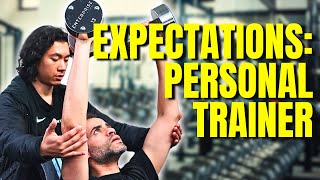
An experienced trainer explains what it takes to succeed: work six days a week with early morning and late evening slots, treat clients like they're the center of your world, and set clear policies from day one. Arrive 5-10 minutes early, stay off your phone, respond fast to messages, and look slightly better than your clients.
Chapters
Alrighty, so now I'm going to talk about expectations on you as a trainer or as a fitness instructor, or these go like hand in hand with being a business owner. So expectations, I can tell you now from experience, from my own experience and also working with hundreds if not thousands of PTs at this point, the more available you are, the more money you're going to make, right? So if you're precious with your time or you're not going to work at this certain hour or you don't want to get up early, you don't want to go to bed late, you are reducing your income. So the analogy I like to share with, with new trainers is that for a very long time in civilization, before we understood how the world worked, people used to think that the sun revolved around the earth. And sometimes this is how trainers relate to their clients, is they think that their clients revolve around them. Well, I'm here to tell you, just like science is here to tell you that the Earth revolves around the sun, trainers revolve around their clients. So in this analogy, the client is the sun, we are the Earth, the trainer, we revolve around them. So if you want to make money as a PT, be available, work with your clients. Yes, you want to have boundaries. I understand that. You may have kids. I've got kids. You want to have a life outside of your business 100%. But if you reduce your hours to a point where you can't work with, you know, a whole lot of clients, you're going to say no to a whole lot of income. And the truth is, when beginning out, you might be coming to the gym for that one client and you might be having to drive an hour and just do that one client. Well, when you go to the gym and you do that one client, what you need to do is you need to stay at the gym, you need to do your own training, you need to work at the gym, you know, walk the floor, you need to start giving those introductory sessions, getting to know people, offering your services. So that in the future, the next week or 2 weeks, however long it takes, when you go to the gym, you're never going to the gym for 1 client. You're going to the gym for at least 3 or 4 or 5 clients and you're able to get that routine. So in terms of expectation of a client, I'm gonna say it very simply. Whatever you charge, you need to offer at least 3 times the value of what the client receives. So what that means is if you charge $100 per session, you need to approach that session like the client is paying you $300. If you charge $350 a session, you need to approach the session like the client's giving you $1,000 for that hour. So what does that look like? Well, be early. On time is not on time, right? You need to be 5 to 10 minutes early for your client. These are simple things, but I can guarantee you, right, if you've given the client— and I, I want to go over them now because this can be the make and break if a client signs up with you and also continues with you for the lifetime of your training, right? So if you're late, the client might not say, hey, you were late, but the fact that you were 1 minute, 2 minutes, it could be very small, could be 1 minute late, right? The client looks at that and says, you are not organized. Why do I want to train with someone who's not organized, right? That one little thing that kind of eats at them. Or if you finish the session 5 minutes early because you have an appointment, you have to go somewhere. That's not the way to do business, right? You need to honor the time that the client pays. If you speak overly, communicate and speak to the client about non-related stuff, So I, you know, being a trainer, I've had for many years, over a decade now, I've formed a lot of really close friendships where my clients would come in and they would want to talk to me. And I had one guy particularly who I very much enjoy talking to him. So I changed our sessions from 1 hour to 90 minutes, and I knew that for 30 minutes we were going to talk nothing related about his training. But then I'd always look at my watch and say, all right, we're going to start now. This is professional time. You're paying me. I'm going to shut you up. And I would live by my watch. So expectations are huge. Be on time. Keep your conversations relevant and on task to what the client wants to achieve. And if you find yourself wanting to talk to that client, they shouldn't be paying for that. They're paying for you to train them. If they're a nice person and you find yourself wanting to talk to them, go for a coffee with them. Talk to them outside. Obviously, you want to be Friendly with your clients, but don't be too friendly because it can impede business as well in terms of if you develop very close relationships, then it becomes awkward to charge for. So you do want to have those boundaries as well. Your availability. And I can tell you one thing, right? Clients sometimes have no sense of time. So you might get messages at 10:00 at night, really early in the morning, whenever it is. I would say you want to get back to those messages, number one, as fast as you can within reason. If a client's messaging you at 10:00 PM at night, you don't have to get back to it, but the next morning you get back to it promptly. The more available you are, the better. Again, for me, I was charging when I stopped PTing $350 an hour, right? So if a client messaged me at 10 PM at night, I would answer it because they're paying for it. So this is where the expectations come in, right? So it really depends on where you want to play. If you want to be charging high amounts, that's the white glove service, right? White glove service is you're going to be more available. And you might say, well, there needs to be some boundaries. In that. And yes, I get that. But understand, if you are going to be charging a premium, people expect a premium. And especially when you get above $100, around that $120, $150 mark, you need to go to another level of service. So if you want to be a low-level trainer, and I don't recommend it, charging $50 an hour, people are going to expect less, but they're also going to put in less. And you don't want those clients because you're not going to build reputation with those clients because they're not paying for it. The clients that I see really want to get results, otherwise they wouldn't pay the my amounts and they get results and they do everything that I say. Same thing here at Enterprise. We charge a premium. People put in the premium. And that's what I would be advising you to do is don't look at that. You know, you want to get to the higher levels because you're going to get a lot more from your client. Now, in terms of expectations, right, you want to outlay them with your clients as I'm outlaying them on you right now. So when you have a client, you tell them what to expect from your services from day one, right? Have a 24-hour cancellation policy. If they cancel on you with less than 24 hours notice, this session still gets charged at full price. And also, it works both ways. If I cancel on you for whatever reason— family emergency not excluded— I will give you a makeup session free of charge, right? So our cancellation, my cancellation policy when I was a trainer and here at Enterprise Fitness, it works both ways. We outline that expectation. The power of the written word here is crucial. Other things, cancellation policy. Tell them to come early, right? Get into the gym 10, 15 minutes early. Show them the warm-up routine. Get them in good habits. Tell them that if you haven't finished the whole workout because you've been teaching them, they're welcome to stay at the gym and do that. So you want to lay this out from the beginning and also keep in mind the Pygmalion effect when it comes to coaching and expectations. The more you expect from someone, the more they'll actually give you, right? The Pygmalion effect basically is what it states is that your ability, your belief in someone, if you think someone is no good, they end up playing out to being no good. But if you look at that person as they're going to achieve their goals, they're more likely, the way you interact with them, they're more likely to achieve their goals. Another way to say this is casting, right? So if you cast your client as a loser who's wasting your time, they're probably going to play out that and waste your time and be a loser. But if you cast that person as a client who's going to be a business card client for you, get these amazing results and tell you they're much more likely to play out that. So that's the Pygmalion effect. Expectations. The client has expectations on you. Understand what those expectations are from day one. A question you might ask as well is, what do you value in the context of personal training? And actually ask each client that you see and find out what they're really after, and then live up to that. Really deliver that, because that's, that's what they want. That's what they're after. And don't ever think that you talking to a client is about having a general conversation is what the client is paying for, right? A client, I tell you this in terms of expectations, you could have the most loveliest conversation with a client and you think that was great and they have a smile. But if they walk out the gym without a sweat, that's a waste of money. Yeah, nice person, but waste of money. Why am I paying for this? They just talk to me, right? So it's up to you to make sure that person to deliver service to control the conversations, to be a leader, what I advise is to have a stopwatch on at all times where you can time your client's rest. And when their rest is approaching, you say, time's up, off you go. You'll get a lot more out of your clients, they will pay you more, and you'll get better results. All right, so on your expectations, to just put a full summary on it and to get really, really clear, the expectations you want to place on your client, because I spoke about number one, your expectations on the client, but you having expectations on the client themselves, is do put a 24-hour cancellation policy. So that's one. And also state that rescheduling requires 24 hours notice, otherwise the session is charged at full fee. Another expectation you want to put in, again, put these in writing, is all weekly payments must be set up on direct debit. And the reason for that is you do not want to be collecting cash every session from the client. It's very, very messy. Either they pay upfront, or if they're going to pay by the session, you want to get that set up on a direct debit. Any upfront payments for packages need to be made in advance. All sessions are 1 hour. That's something else I'd recommend for all of your expectations. It's as hard to sell half an hour and 45 minutes as training as it is to sell 1 hour. I would recommend that everyone watching this video only does 1-hour personal training, you'll be more profitable. Your average dollar session will go up. And also the client doesn't have to think about, am I going to do half an hour or 45? The other thing with half hours and 45s is clients, sometimes they're late, sometimes they need to learn early. It all eats into the time that you're training someone. So you might as well charge for your time, charge for the full hour. It does make your life a lot simpler, especially if you're looking to grow your business and hire staff. Do tell your clients to get to your session 10 minutes before they start and do the warm-up and activation on their own. You can tell the client, in terms of your expectations, is you take calls between 9 AM and 7 PM. If I don't answer, I am in a session. That way the client knows that, because sometimes, you know, you might be PTing all day, the client's trying to call you, you can't get back to them because you're in session. Don't look at your phone. And tell them that when I'm in a session, I don't look at my phone, it's on do not disturb, because I want to give 100% of my attention to you and all of my clients. And that's why I don't answer my phone. And also another thing on that is never answer— well, obviously within reason of your family emergency, but do not ever text or message or be on your phone during a session. It's very unprofessional and should cost you a client as far as I'm concerned. Tell your clients that you reply to all emails within 24 hours, and if you have a question, please email it to you. Another thing I always would say to my clients as well is they're welcome to ask as many questions as they like on email, but make their emails concise so that because you get so many emails per day and you're happy to answer those questions, you want to make sure that your emails are very concise so you can get back to them promptly without much jargon or things to wade through because of the amount of emails. So they're your expectations. They're the main expectations that I would say put in writing in your Ts and Cs with your client when you give them. They're very straightforward. 2 more points on expectation. So if you're thinking you're going to work 9 to 5 as a PT, it's not going to happen, right? Clients want to train at 5 AM, 6 AM, 7 AM, maybe 8 AM, and then you're probably going to do your training at that time. Maybe you have some clients at 11 AM, 12, uh, 12 PM, and then you might go home and have that middle of the day break and then come back, right? Especially when you're— and that's where your availability and your hours, they're going to be your golden hours. It's going to be your early AMs, your late PMs, and that's where you're going to be available. Now, yes, you can burn the candle at both ends by doing very early mornings and very late at night. So you're probably going to pick which one you're going to specialize in. I know for me, I like to start my first session at 7 a.m. when I was doing hardcore PT and my later sessions would be like 8, 9 p.m. That would be fine. So I'd finish at 9 p.m. So you do need to pick, but understand that fundamentally you can definitely have some clients during the day. We have a lot of clients here during the day at Enterprise Fitness. We're rocking pretty much every hour. But that's, that's something you're gonna work towards, right? Starting out, you're not gonna get every client who is able to train. Usually I'd recommend working 6 days a week, having Sunday off, but still available by phone if people are inquiring. Because the thing about PT is if someone has made a decision to buy and do PT, they're in a very fragile state. So they wanna do it and they wanna do it now. So if you don't get back to them straight away, they're gonna find someone else. So make sure in terms of expectations and your shifts that you are available, you're getting back to appointments. Someone's calling your number and wanting to train with you, get back to them straight away with expectations as well. This industry, people do make judgments on the way you look. So there's no politically correct way I can say this. Both you need the audio of what you say to a client. I'm not saying you need to be 6% body fat and amazingly in shape. But you need to be into your fitness, right? You need to be training. You need to be walking the talk. The audio must match the visual. You don't need to be breaking world records or competing in bodybuilding and bikini comps, but at the very least, you need to be into your fitness and into training. It will go a long way in terms of your career. Likewise, one thing I do find with a lot of people, guys and girls who train, is they don't shower straight after their training and they smell. So, and I say this on video very frankly because I've seen it too many times with PTs, but your appearance, your smell, your odor when you're with a client, you can be training someone all day, especially like the, you know, the spandex kind of polos. They can get quite sweaty. So be conscious of that. Have a cologne, have a work cologne that you anchor in that smell that is only for work. So you smell it, okay, I'm in work mode, and have a different cologne or perfume for when you go out. Make sure you, you know, take care of your hygiene. In terms of appearance, I always recommend looking better than what your clients will look, right? So if I'm doing a business course, you know, usually I wear a suit or a three-piece suit. I like to dress one more step than what my client or students are going to dress. If I'm training a client, I have really nice tracksuit pants, I have a really nice polo. I'd recommend the same for you. For guys, I recommend Public Rec. They make— they're online. I've got no affiliation with them, unfortunately, but they make really great tracksuit pants and really great— the all-day, everyday pant is as well is fantastic, which are quite a strong material, a stretchy material, but look very, very smart. Likewise, the top brands like Adidas, Nike, you want to be getting a nice pair of tracksuit pants, no rips, holes, or anything like that. And a nice pair of shoes. You don't want your shoes all in tads. And I have seen this from trainers. That's why I address it. For the ladies, get some good fitness gear. I think Lululemon is one of the popular brands, Loro Jane, these kind of brands, 2XU as well. I mean, ladies generally have a bit more knowledge around these things than males do, But with that said, male or female, you want to look the part. You want to look smart. You want to dress one step higher than what your client would dress and look smart. You know, it's not about getting out your ass, tits, biceps, and that. You want to look smart. Don't— I really discourage wearing singlets and scantily clad items because that makes you less of a professional, right? You want to be a professional. Obviously, when you're training, wear what you want, right? You can show some skin if that's your thing, but when you're with a client, Dress for success. Dress as a professional. You are a fitness professional. Be there for the client. Be attentive. Be assertive. And all the best. And make sure you, yeah, dress for success.










