Chatting with Mark Ottobre of Enterprise Fitness on the BUSINESS of Personal Training
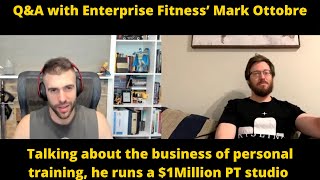
In this interview, host Tony talks with Mark Ottobre, founder of Enterprise Fitness in Melbourne, about his two‑decade journey as a personal trainer, the evolution from coaching individual competitors to building a high‑end private training studio. Mark explains how he founded Enterprise in 2013 to bring elite strength, nutrition, and supplementation programming to everyday clients, emphasizing excellence over expansion. He details his hiring philosophy—prioritising attitude and capacity for growth over existing skill sets—and offers advice for clients on selecting trainers, stressing proven results, professionalism, and staying within a trainer’s scope of practice. The conversation covers operational tactics that enable 350‑plus sessions per week in a 192 m² space, such as flexible programming, trainer autonomy, and efficient equipment layout. Mark discusses the impact of COVID‑19 lockdowns on Australian gyms, the cumulative 370 days of closures, and how the business adapted. Equipment selection is explored, with Mark describing his pragmatic, client‑centric approach to brands like Life Fitness, Atlantis, Prime, and custom pieces, and how functionality drives purchases. The interview also delves into Mark’s Wolfpack Mastermind, a mentorship and staff‑training program that evolved from intensive seminars to community‑focused retreats, offering both in‑person and online content, and supporting trainers’ personal and business development. Finally, Mark shares his marketing channels—enterprisefitnessacademy.com, Instagram, podcasts, and YouTube—and mentions his upcoming nutrition book, positioning himself as a thought leader aiming to raise industry standards.
Chapters
All right, so today I'm joined by none other than Mr. Mark Ottobre of Enterprise Fitness in the land down under, Melbourne, Australia. So a little bit about Mark is he owns a solo personal training business in Melbourne. He's been at this for— he's been at personal training for over a decade now. He's learned from some of the best in the world. He's traveled the world to learn from the best, and now he also helps trainers improve the product that they give to their clients, not just from a training point of view but also focusing as well on the business with his Wolfpack Mastermind group that he does. So Malcolm, so tell the world a little bit more about who Mr. Ottobre is.
Well, firstly, Tony, thank you for having me on this podcast. Pleasure to speak to you. Yeah, so I've been a PT since 2006, actually, so it's going on 2 decades. So yeah, 2006 was when I, when I started, I donned on the PT polo and started down this journey. I made a pretty quick break into— and I never meant to go down this road, truth be told, but in, in training figure competitors. And my first real figure— well, I trained a bunch of bodybuilders before, like teenage group, and, you know, guys, my friends who would compete that look great, obviously. And there was this lady at my gym, um, and, you know, she was doing an exercise poorly, and I came over, I corrected her, and, uh, we started training together. And, uh, that was Janet Kane, and that was in 2006. And she liked what I had to say, and she's, you know, she's went on— I coached her for over, over 10 years. She went on to win, you know, 4 Australian titles, the Arnold Classic 3 times, a bunch of other international shows as well. And that's how it started, you know. And she got my name from, from winning a lot of comps. She, you know, people would see that she'd win and people would ask her, you know, who's your coach? And she'd refer to me. And one thing led to another. I started training a whole heap of competitors. And, you know, it was quite regular that I'd have clients fly in from all over Australia to, to do consults and training and online training. You know, this is back in 2010 and 2009, uh, when, you know, Facebook and Instagram— well, Instagram wasn't even a thing— and I was doing online training. So my first online training program was the Alpha Body. I started that in 2017, uh, had an ebook, you know, uh, did all that stuff, um, so back before, you know, social media. So, you know, that was a, I'd say, a lucky break in my career. And Jen and I, you know, kind of lifelong friends now, and she did sensationally well, but she really helped me as an athlete, um, put me on the map as a coach, and I had to level up as a coach. And she forced me to level up because her attitude around, you know, competing, wanting that next level— she never let me get complacent because she was never complacent in the goals that she wanted to. So she would come straight after a show, I got to improve this, I got to improve this. And I was kind of, oh, you know, holy shit, how am I going to do this? And started looking for answers of outside, you know, how can I get better? And That led me to Charles. It led me to other coaches locally. It led me to so many different avenues to level up for my clients and get better. And, you know, it was just getting good at my craft. And from that, you know, eventually trainers. So for me, when I was a solo trainer and I didn't have enterprise, my two real markets personally, I had, you know, it was like 33% of my clientele were competitors, 33% of my clientele were personal trainers, and the other, you know, maybe 33% were general pop, uh, people who just wanted to get in shape. But they've always been quite, for me, who who's, who's come to me. So it was natural progression for me to start mentoring trainers because I had so many trainers coming to me saying, like, how do you do the comp prep? How are you getting these athletes ready? So that was a lucky break. And, you know, then I remember Charles— I wanted my PIC Level 5, and I said, um, hey Charles, I've trained, you know, this client Janet. She's won the Australian title 4 times, blah blah blah. You know, she won the FITX. He said to me, oh, physique athletes are bumfuck athletes. Train a real athlete. And, uh, God bless Charles, you know, um, he pushed me to another level. Maybe he saw something that, you know, I could have gone to another level. So I started training boxers, and that's where I started training Andrew Maloney, um, and he won Commonwealth Games gold. So they got me the PIC Level 5. So, uh, and all in the while, so I suppose my, my most of my— when I was PTing was, uh, a lot people knew me as like the figure guy. Um, I do a lot of figure comp and comp prep. I've since, you know, the last client I trained was in 2018. Um, who was a bikini competitor, Anna McManamee. Um, and then when my second child was born, I, I even, you know, gave her away, gave all my clients away to my staff and my team and said, like, I, I'm not going to PT anymore. Um, so yeah, focus on the business, focus on education. Um, so yeah, I suppose that's, that's a kind of summary of, of where I've been. I mean, I've trained a lot of the 10,000-hour principle, but still heavily involved in, in, in the operations and day-to-day running of Enterprise Education. I'm constantly running education for my team for the Wolfpack, um, you know, training, nutrition, business. It's, it's all-encompassing in terms of what I do. I mean, I live it, right? Training— my training has never stopped. It's just, it's what I do. Yeah.
Yeah. So let's, so let's talk a little bit about what made you start Enterprise Fitness and what exactly is Enterprise itself.
Yeah, so, um, for me it was a natural progression of PT. So I started a big box gym back in 2006. And from 2006, things grew. I started the online businesses, uh, and then worked up, worked up, worked up, and wanted my own facility. That was always the goal. And I remember in 2011 or '10, I was at a Doldies in Melbourne, which is the mecca of bodybuilding here in probably Australia. And things are really good, right? Things are really good, um, things are working really well, and it was quite a nice place to work. But I still felt like I wanted to open up my own facility, so I opened up Enterprise 2013. And, um, what is it? It's, it's a private personal training. It's, it's bringing high-end strength and nutrition training, uh, all the stuff that is usually exclusively in the realm for athletes, and bringing that to the general person. So one of the things is when clients come in and, and they see us— and this was, this was a common thing that happened to me as a coach— was that clients would come in and they'd kind of have this goal that they wanted to compete but they didn't know they could. And then I'd start training them, doing their nutrition, and they realized how easy it was or how it actually was possible, and then they'd end up competing. So they didn't necessarily come in to compete, but because they got great results, they realized they could compete, and then they ended up competing and doing really well. And, and that kind of was, uh, yeah, it still is today something that happens, um, you know, fairly regularly. So, uh, what it, what it is, it's bringing proper training, nutrition supplementation to the everyday person, but obviously then teaching that with trainers. And just really, it's— what is it about? It's about excellence. It's really about excellence. We're not— I'm not looking to franchise and populate the earth with our brand and, you know, have an enterprise in every country, every state. I'm really happy just with, with one location and doing what we do and people seeking us out and traveling and making it that experience. So it's just delivering excellence and being excellent. Yeah, sorry, my mailman is just signaling me. He's tapping on my window telling me he's going to leave some stuff for me. So yeah, that's, that's that.
You have a mailman that's that nice? Just mailman here, you're lucky if your stuff arrives in one piece some days.
I bribe them with coffee and Jocko goes.
Okay, there we go. That's interesting on how you got enterprise started. So from the, from a gym owner point of view, because I'm sure there will be gym owners watch this, regular personal trainers watch this, and just regular fitness nerds like we all started out as who will end up watching this. Uh, so what is it that you as a gym owner and someone who's employed, somebody who's employing trainers, what do you look for in first a staff member So as a PT, and second, what do you want your clients, or what would you, what would you, uh, endorse for a client to look out for for a trainer?
Cool, these are big questions. Um, so I'll go with the first one and then you can remind me of the second one. So the first one, um, about what do I look for in a trainer, it's, it's I hire on basically two things, it's attitude and capacity. That, that's it. I don't care about your skills, your skill sets, talents, what you think you know, what you don't know. You could be fresh out of the, you know, the PT school, just got your certification. It doesn't matter so much because I know we're gonna, we're gonna be able to teach you everything that you need to know. So in terms of skills, that's as important for me in terms of initial hire because we're going to teach you everything anyway. But one thing we can't teach is your attitude and your capacity for growth. So They're two different things. So you need to have a great attitude. Like if you're negative all the time and, you know, the kind of the barbecue test, would you have this person at your house? Would you have this person at a barbecue? If you wouldn't, then that's probably a problem because that's going to create problems in terms of your team culture. You know, when I hire someone in enterprise, one of the questions I'm asking is, will this person fit in with our team? It's not just about, do I like this person? I could like the person, but they could come in and I'm the only one who gets along with them. That's not going to work either. The person has to be dynamic in terms of their personality and be able able to get along with, with different people. So that's one. Attitude is absolutely key. Then capacity for growth. Capacity for growth is huge. So is this person set in their ways? Are they going to be able to take on information? Are they going to be able to evolve as this role grows? Are they— do they want to go from enterprise trainer to senior trainer to master trainer to be able to present today? Do they have a capacity to do more inside of the business? That's another question because If you're just stacking shelves, then you don't need any capacity for growth. You probably don't even need that great of an attitude because you're just stacking shelves. The reality is that PT, strength coaching, nutrition, all those kind of things, it's an open game. There's so many different ways you can play. So capacity for growth, um, as both a person and as a professional, I think is huge. How do you look for that? It's like, well, where do you want to be in the next 12 weeks, 12 months, 12 years? Where do you see yourself? Um, highly ambitious people, they're hard to keep. They're hard to keep as a business owner. And this is where the trade-off is, right? You can hire someone with a bad attitude and wants to stay the same. Well, your staff aren't going to prosper that, you know, they're not going to— you're not going to have that great of an environment, right? But if you're hiring absolute warriors and people who want to grow, like I gave the example before about Janet, they force you to grow. You know, there's staff members that certainly, you know, I had a staff member who said he wasn't happy with his pay. He was the reason why I created another level of pay, senior trainer. And then I had another staff member who wasn't happy with his pay, and he was a senior trainer. And, you know, people have copied my model. People now call their trainers, you know, their level of trainer: developing, senior, master. Well, they learned it from me, but it came in some— like, the reason why it came out is because I had to find ways to incentivize these people to stay because they, they were, they were great, they were great coaches. So as a business, it— you— that there, for me, it's hard. Like, no matter what way you cut up a PT business. It's not a great business model because there's an X factor in terms of all business, in terms of the PT, and it's people. People change. People have different personal— people have different needs and wants. They have different values. So you got to be obsessed about understanding people, I think, first and foremost. When you understand how those people tick and their values and what they're seeking, I think you can maneuver yourself either according to align or let them go. Um, because the values don't, don't simply align. So that's, that's what I look for, um, first. But it's definitely not skill sets and talents or what they may have done or haven't done. It's, it's really attitude and capacity.
Okay, so from that, now what would you suggest clients look for in a trainer or in a coach when they're after specifically body composition changes, which is one of the big things that enterprises known for in Melbourne, Australia, and what you've become known for more widely?
Yeah, I think two things is one for me is evidence that the person's been able to do that or that company, that system's been able to produce that. So testimonials and stuff and actual reviews and results, they are helpful. The other element of that and the unfortunate downside of just having results is that people can get crash results. And you've seen this certainly in the industry, people put them on a 28-day plan and they do 1,000 calories a day, or— and we get a lot of those clients because it's unsustainable and they end up crashing and putting all the weight back on. So it's not just about having great results or great reviews. That's, that's part of it. Certainly if you're looking for a result, I think as well clients need to look out for professionalism, I think is a big thing. So you can have a great coach, and I've seen this many times, and me, if I was a customer, this is what I would expect. I just do all the things that I would expect as a customer. I'm a pretty picky customer when I shop somewhere. When I shop somewhere, I want things done. So that's what I do for our clients because I know I'm a picky customer. I would be delighted if I insert that, if that makes sense. Like I answered my own question. I would be delighted as a customer if answer that question. All the things that we do at Enterprise. So professionalism, like getting back to emails within 24 hours, returning text messages, you know, being early for a point, The way they dress, the, you know, the groom, smell, all those little things I think add up, you know, context versus content. I think the context of how you conduct yourself as a professional is super important. And if someone's late, you know, on the first consult as a trainer, I think, you know, that's indicative of how they normally act. That's not a one-off because, I mean, look, sometimes it does happen, but by and large, habits, you know, start to see. So As a customer, I personally would advise— if there's customers listening to this, I would advise a pretty, you know, red flags from trainers if they're late to sessions, not getting programs back on time, all these little things that you would expect. Because I know, you know, a bunch of trainers who— those things are given, right? You should be doing those things. So I'd be wary of that, you know. And also over-promising and under-delivering, I think, is a big thing. And probably the biggest thing that we face in our industry, I think, Um, is the influence of functional— and this might sound kind of weird and random, but I think it's the influence of functional medicine that it's having on personal trainers. I think too many personal trainers are trying to be functional medicine practitioners and not personal trainers. If your personal trainer is sitting down with you and primarily the first conversation is, um, you know, let's talk about your hormones, I think that's the wrong conversation to be having. I think the first primarily conversation— and not to say there are plenty of trainers who do great work in this area, But really, let's be real, the first conversation is let's look at your screening, let's look at your moving, let's look at your nutrition. Are there some supplements that can support basic things like magnesium for sleep or, um, you know, fish oil or electrolytes? Yes, there's basic things that you can do, but if your trainer, um, is, is skewing down the path of let's, you know, run full bloods, I think really that's reserved for, um, the guys and girls who've earned the right and have the qualifications to do that. As personal trainers, That's— we're generalists, not specialists. So I think that is another red flag for me that I would say for consumers, if that's what the trainer is focusing on, I would say save your money, go to a qualified naturopath, call up Dan Gardner, you know, get your lab results. My wife from alexia.com, you know, who does those things for a living, and their level of interpretation for labs is— it's like my wife looks at labs and, you know, I'm like It's trying— like, I look at the labs, it's like Chinese to me, right? And I know about— I've done the courses with Mark Schaus and, you know, Jim Lavelle and all that kind of stuff, and, and, um, I understand that stuff really well, but I still don't touch labs. Um, I don't touch them. I, I refer labs on to, to my wife, um, who's a naturopath and, um, you know, does such, such a, like, more in-depth— it's, it's very nuanced. If that's what you want to do, go do that. Don't be a trainer, um, because training is diet, it's exercise. Absolutely, supplementation can help, but we're limited in how much help we can give and interpretation. And there is, you know, you can't necessarily— like, people aren't paying you for absolutely everything, um, although it'd be nice to give. You've got to kind of define your scope of service and practice at some point.
Yeah, I like, I like how you actually finish that up with defining the scope of practice. And that's something that I fully agree with what you went off on there of how right now we see trainers trying to become like therapist, trainer, strength coach, psychiatrist, functional medicine doctor, and then, oh, you also are a life coach at the same time. I was like, let's dial back. Let's take our scope of practice instead of thinking that it's all this. Let's bring our scope of practice into something nice and narrow so that we become really fucking good at this. Before we try to start adding in all these other things. Because the age-old saying is you can only sit on— you can't sit on two horses with one ass.
Yeah, yep, it gets a little hard.
It's a little hard. So I like how you actually touched right on the scope of practice and having clients focus on what, what kind of questions that trainer should be asking and what they should focus on.
So I, I say this as someone who's done that mistake himself, like you know, I learned muscle testing from Bob Gill, and he came— I had Bob Gill out multiple times a year, and I was his guy, like, in Australia. He would refer clients to me, and I probably learned more from Bob than probably anyone in the world, like, because I had him out the most and mentored with him the most. And I know Bob's, you know, 52 muscle testing points, and I was really effing good at muscle testing, and I get great results. And I remember one day, um, I was muscle testing a client, and The phone was ringing, someone wanted sales, one of my trainers wanted something, and my mind was everywhere else but where it should be. And I realized at that point, like, this isn't what I should be doing. I end up refunding the client, and like, my focus wasn't with the client, and I had to define and step back and go, what am I actually trying to achieve? And now, and in other cases, you know, when clients open up to you and they tell you stuff about whether it's bad experiences, trauma in the past, now my approach when a client starts talking to me about emotional experience that may be handling back. My honest, like, I don't want to know, to be frank. Like, that stuff is such a heavy burden to carry as a coach, and someone opening up to you and trusting you with that, I don't want to know because it's not that I don't have the empathy. It's like, if you trust me with that, you also are trusting me to help you, and I don't know if I have the skill set to help you. And that's a very heavy burden. So I would rather say to that person, hey, look, you know, I've got a great hypnotherapist friend of mine, Forrest, who I did, you know, who I know I've sent heaps of clients to. And she's— that's what she does for a living. That's what she does for a living. And I know whatever you tell her, she's going to be able to help you with way better than I'm ever going to be able to help you with. And just go see her. Don't see me. Don't give me this burden because I'm not sure if I'm the guy who can help you, but I know for sure she can. And, you know, that's I think when you're young as a trainer, you, you overestimate your capacities. And when you get a bit older and wiser, you realize, like, actually, no, my skill set is actually finite. And even though I'm really good and I can be really good at everything, it doesn't mean I should do everything. It dilutes what I actually am really fucking good at, if that makes sense. So let's just focus on this, this what I'm really fucking good at, and, and actually help other people build their businesses and, you know push, push towards that. And since doing that, man, it's been like amazing for the clients as well as amazing for us because our clients get better results.
So Mark's saying this being quite possibly the number, at least in probably Melbourne and most parts of the world even, he's probably the highest revenue per square foot. Like, how large is Enterprise Fitness?
So I'll give you some numbers and probably, um, to put to this. I remember Chael said to me that I had to hit 300 sessions, right? So we're at 192 square meters, to be exact. 192 square meters, I think, in square— like, square meters is different. So 192 square meters is Australian standard. Yeah, I think it's about that. Yeah, yeah. So, so it's not— yeah, it's not huge, it's not small, it's kind of like a medium size. Um, we hit consistently— this was even like during COVID— 350 sessions a week consistently. We had a record to break. I think our record was 370, 375, thereabouts. And we were gearing up to break 400 sessions for a week. This is a weekly target. We're gearing up to break 400 sessions. The week we're going to do 400 sessions, we did almost that multiple times. We got hit with lockdowns in the middle of that week when we were going to do 400 sessions. So I fully believe we would have got to 400 sessions the week we had planned. I think it'd probably be like 401, 402, but we never got to that. So yeah, we, on average, you know, we're looking around that 3, 350 sessions a week. Obviously COVID has— in Melbourne right now we've had 6 lockdowns, and at the moment what we're going through is every— everyone is getting COVID. I think it's like 1 in 4 people have COVID in Melbourne right now. I'm— I haven't got COVID, I've stayed clear, just supplementing with glutathione, vitamin D, and a heap of vitamin C, and that's keeping me, keeping me running, keeping me good, me and my wife, which is great. But a lot of people are getting it. So it's, it's, it's had an effect, certainly in Melbourne. It's been what now, almost, it's gone on 3 years that we've been affected by COVID, often on lockdown. So we are the most locked down city in the world. We've had 6 lockdowns. Gyms have been closed over that 2-year period. Gyms have been closed, closed over, I think it's 370 days that we've— so businesses has certainly been massively interrupted. You know, we've team members, we've lost clients, we've had to, to adjust. But 100%, we will be back. I've got a bigger location on the cards for this year that we're going to be moving into, and I've got some exciting stuff that we're going to be doing. So really looking forward to that and blowing people away with what's next.
So although Australia has been hit hard with the lockdowns, they've had snap lockdowns throughout this. And Mark just said, how many days did you say been closed cumulatively?
It's about, it's about 370. 370. Gyms. So, so yeah, gyms have— because we— Melbourne hasn't been locked down, but they locked down gyms because we were— gyms and personal training studios were hit probably the hardest. The only other industry that was hit as hard as us were nightclubs. Um, but gyms, uh, were like, no, you guys are high risk, everyone has to shut, you can't do this, you can't do that. Yeah, so we got hit super hard.
Yeah, so as bad as, uh, you guys have had it Toronto is at 413 days of cumulative gym closures since the beginning of the pandemic, and the first lockdowns that have hap— that happened here were after the first lockdowns in Australia.
Wow.
Ours was like mid-late, uh, March 2020. I think you guys had your first one in February of 2020, just got you guys a bit before.
Something, something like that.
Yeah, so it's like And right now, right now in Ontario— so in Canada we have provinces, kind of like you guys have states. So Ontario, Quebec, um, British Columbia just opened back up, uh, Newfoundland, Nova Scotia, and I believe New Brunswick as well. Us gyms have to be closed.
Wow.
So our 400— so Toronto's at 413, Ottawa's at about 370 days. Cumulative closures as well. So it's like our industry has been kicked in the balls over and over again, like it's Groundhog Day. But it's like, that's amazing that you've been like in a 2,000 square foot, 197 square meter facility, you're getting 350+ sessions a week. So how are you actually able to do that in a space that size? Because a space that size That requires some efficiency of use of space as well as efficiency of scheduling, not just with clients but with PTs, as well as scheduling like PTs scheduling the programming. Because I assume you don't have like 15 racks to be used in a space that size.
No, we don't.
Curls.
So, so this is, this is the thing, like, um, at Enterprise and the way we've already structured it is that the trainer takes absolute control of of the session. So I used to try and do the model where I'd write all the programs and, uh, you know, essentially give it to the trainers and they, they followed the programs. And I found that very quickly didn't work, um, in terms of scheduling and also based on what the client needs. I'm not there at every session to see how the client's adapting. So this is hence why we spend so much time developing our staff. Like, there's, you know, if you look at over the years, we've had— and people will comment— like, we've had some unbelievable staff work for us. But keep in mind, they weren't unbelievable when they started. They became unbelievable because of the systems, education, and processes that I've put in place over the years, and time and dedication. So I'm super confident when a trainer comes in, they'll come in at a, you know, a beginner level. You know, at the end of 2, 3, 4, 5 years, they're going to be industry-leading in what they know, and they'll, they'll be able to go out and do their own thing if they so choose. And, and, you know, consistently of running Enterprise for now almost 9 years That's, that's been the evidence is there. Like, we've had trainers leave who fundamentally, like, they are industry, like, industry-leading standard. They're fantastic because they get exposed to so much, uh, great content and information. Um, so, and it's also like all the courses and Wolfpack and, you know, guest educators that we bring in as well. Um, and me constantly upskilling as well. So we're able to do that. So in terms of scheduling, um, we, we really let our trainers run their own you know, scheduled in that sense. We do have some idea of when clients, you know, we use Google Sheets, Google Docs rather, no, Google Calendar. So we're seeing when people are too busy. So, uh, we have, we have, when we're doing the 300, I've got 10 trainers now. We had 12 trainers, so we're 2 behind at the moment, uh, when we're at that 3, 350. Um, so basically the way we do it is, is, you know, the trainers will instruct an alternative if the, you know, if everyone's on a leg extension, they'll come up with another exercise, right? They'll modify the program to make it work. Is it an issue? Probably at peak times it did become a bit of an issue, but we managed to work around it in a good way. And that's obviously why we want a bigger facility and bigger space so that those peak times— but the interesting thing about Enterprise is that we have a lot of clients who train throughout the day. I'd say probably we're the only really, like, I've seen personal training studio that is busy at like 12 o'clock 2 o'clock, 3 o'clock. So we'll have clients, a consistent flow of clients throughout the day. So yeah, it comes down to teaching the guys how to manage their diaries, but also our type of clientele. They, they have flexible schedules. We have different people wanting to train at different times. Yeah, and it just works, to be honest. It's not, I suppose, a bit of luck and a little bit of just rolling with the punches and teaching people to roll with the flow is probably more so. It's kind of like controlled chaos. Like, you come to an enterprise and just be like, you know, I remember this one guy we had, um, it was— he came in at 7 o'clock and the gym was pretty quiet, and then it hit 8 o'clock, and at 8 o'clock it's like 20 people just arrived.
Are you talking AM or PM?
Uh, AM.
AM.
Okay. Yeah, AM. So 20, and he was like, whoa, where did all the— I go, that's, that's the nature of what, what we do is like it can, it can be super busy for an hour and then get a little bit quiet and then all of a sudden super busy again and then be a little bit quiet. And it's just the nature of personal personal training. So instead of trying to control like all these elements, I think it's, it's somewhat— the only way you can control is have more room, have more equipment. But I think the real way to control is to teach your staff how to adapt to, okay, the squat rack's being used, what do I do? Okay, split squats. Like, you can always do a split squat, right? Um, leg extension is being used, what do I do? I'm going to teach my client how to, uh, correctly do a hip hinge and teach them a stiff-legged deadlift, or use the trap bar instead of squat. So it's having that flexibility inside of the program, using the same structure but having some flexibility with exercise execution, um, that keeps the client on track with their goals. So it, it certainly works, and it's a great environment to train in, um, and to produce that outcome. So, and, and look, at the same time, like, if there's 2 guys benching and there's 2 trainers, 2 guys will bench together, you know. It's, it's not, it's not a big deal. It's not a big deal at all. And you'll see, like, you know, we've got 3 benches near our dumbbell set You'll see like the guys would just use the benches together and it's this constant. And what it does is it just creates this vibe where everyone's working out because it's like that, that client, you know, let's say James and his client have just gone and then, uh, Tyrone's waiting. So Tyrone will jump straight on and with his client and Amy will move out and then Jacka will move in and it's just this changeover of people. But it's, it's our clients understand that and it's not a big deal and the trainers understand that as well. Like this isn't your bench, you're working there. So when you're— when you get off that bench, someone's probably going to jump on and do a set, and then they're going to jump off and you're going to jump on. So that's where our, our culture is, is, you know, if you did it at a big box gym, you'd probably get into a fight, um, because you took someone's bench. At ours, it's, you know, we'll help you change it over, it's, it's not a big deal. So, um, it just works.
Yeah, so that definitely increases the efficiency of space and time right there. Just, okay, you got 3 people going back to back on the bench, okay, that bar basically doesn't stop moving other than the time it takes for it to be racked, weight stripped, thrown on, client gets on in there and starts pressing. I like that. I actually really like that idea, uh, like me being a new gym owner, so it's, it's always interesting to see certain ways people do it because like down the road I'll eventually staff, but right now it's like, okay, interesting way to do it. So how you guys do it, enterprise, as far as I know, has always been one-to-one personal training. You guys also offer your clients or your trainers to do groups? That way you can get 20 people— well, pre-corona days, post-corona days, get 20 people in the door, have promotional days like that? Or have you always just stuck to that singular model?
People always ask me, like, where did I come up with the model for PT? I came up with the model because I was obsessed with my client. I got sick of clients coming up to me and saying, how much do I charge a session? Because I knew that the client wouldn't get results charged if I just gave them a session. Because what happens in PT, you go, how much is it a session? $150, $200, whatever it is, right? Um, they do a session with you and then they, they, they decide not the next week that they're going to take a week off, or they're not going to commit. So I just, you know, I don't charge by the session, I charge by the outcome, I charge by the program and the package. So I would tell clients, this is what you need. And the way I preferred to work with clients was one-on-one. I was never a group guy. I actually did run spin classes at, when I was at my big box gym in Genesis, but I wasn't, you know, I never did groups and that wasn't my skill set. It was always one-on-one. So for me, we do training parties and it like internships, I'll write, like if you come to an internship, you'll see the way like every square meter at an internship is used. Like at the next internship, I've got like 22, 23 people coming in March. That, that you, you come in on a program like that and you'll see every square meter is used and everything is being worked and everyone's having a great workout and everything just flows because of the program. So they're always fun to run and you see the history and people do comment. But the magic with Enterprise is the way I laid it out. Um, I laid it out in a way that made sense to me when I, when I moved in, that no one would get in each other's way. So I put all the machines on one side, the free weights on one side, put a track in the middle And it does allow flow that people don't get in each other's way. So yeah, I think we've never done groups. We've done training parties and kind of like strongman group sessions of that nature where there's rotation. So we'll do that occasionally, but that's not our core business model. They're just stuff that we do every now and then as fundraisers, really, whether it's Good Friday or Bushfire Appeal or whatever it is. We'll run those things, but our specialty is one-on-one. Um, because fundamentally I think that's more of a reflection of me, um, how I like to work with trainers, what I wanted as a trainer. I made Enterprise Fitness like, what do I need to get the best results for my client? That's how I started. Everything else then was, was an extension of that. So like, from a training philosophy point of view, it's, it's my training philosophy, right? It's not, um, like, teach people how to move, then teach people how to lift. Then train them hard. So this is where a focus on, on mobility, focus on strength, focus on full range of motion, um, aesthetics, good nutrition, good supplementation— all those things are of high value to me. And I suppose a reflection— and also the thing is, like, I came from a bodybuilding background, uh, really. Like, I competed 6 times in bodybuilding, then I competed in strongman, but then I started doing weightlifting, and I've done powerlifting. And, you know, I've never done any CrossFit, but I probably could do CrossFit. It's like I would classify myself as a, as a bit of a hybrid of training methods and obviously spend a lot of time with Charles as a strength coach, um, but really as a hybrid. And, and don't necessarily— I, I appreciate all of them, but I don't really identify as any of them, um, to be honest. I'm just a lover of physical culture at the end of the day, um, and I appreciate all those modalities.
Yeah, yeah, I like that. And like, since how we mentioned just how it's facility setup which will include your, uh, like your Enterprise Fitness as well as your Instagram handles. If you notice over beside, uh, Mark right now, he's got a couple Batman, uh, things. You'll see he's got a set of Watson Pro dumbbells from Watson Gym Equipment in the UK, and he's got a special logo on the end of them, which is the, the hybrid of the Batman logo and the Superman logo hybrid into each other. I think like I've always liked that. When I first saw your setup, the Watson dumbbells, I was like, that's, that's fucking pretty cool. Uh, and it was like, that was when in my head I'm like, one day I want my own. Like, seeing yours and a few others, I was like, one day I want my own where it could do that. Like, Simon's great to talk to, great to converse with, and he's always looking for feedback on his stuff. So it's like, how do you choose what to outfit your equipment? How do you choose what to— how do you choose what to equip your facility with?
Yeah, good question. Um, I suppose it really comes back down to what do I like as, as a trainer, as a coach. Um, back onto training methods as well, um, how, how I train. So for me, I started Enterprise with, with pretty, pretty bare bones in terms of equipment, but it was everything that I needed to deliver a great session for my client. Yeah. Um, so I didn't— I still don't have a leg press. Will I get a leg press at our new facility? Yeah, I will. Um, I really like, like, Life Fitness. I think they're great. They make some really durable stuff. Um, uh, you know, obviously in Canada you have Atlantis, which is kind of the Canadian, I suppose, equivalent of Life. So, you know, I remember, I remember the decision came to me where I was picking between Atlantis and Life, and I went, I went with Life. Um, I remember going to Montreal and I went to the, the Atlantis gym and I looked at a lot of their equipment and like it's, it's very similar to life, um, in terms of like they— every equipment, every company, they have their piece. I think like, I think for Atlantis, their, um, what's the Pendulum Squat is, is probably the best on the market. There's, I, I think the best, the best that I've used and seen. I think that their Pendulum is certainly, um, I, I really like Watson Racks Um, I really like Life for a bunch of things, like their leg extend. I think there's, there's some items that are kind of a much of a muchness, like leg extension, leg curl. It's like Atlantis, uh, Life Fitness. Who do you go with? I think Prime are unbelievable. Um, they're, they're sensational at some of the stuff that they've done now, really innovative with the strength curve, and look forward to getting some of their pieces because I think you can't really find an alternative to some of the Prime stuff. Like, there's just no alternative. Um, they, they own the market at least for now, in terms of, um, you know, changing and manipulating strength curves. So, you know, I like bars, so Eleiko, but I also like, um, I like some of the Rogue Fitness bars. I like the, uh, Pendley bars as well. I've got a couple of Pendley bars. I like the Texas Deadlift Bar, like the Bamboo Bar. So I just buy them, I kind of accumulate them over time. I love the Watson bars, all the variations there. So, um, yeah, I mean, it comes back down to what I like, would my client like it. Look, a good example would be the Watson's leg press. Um, I personally wouldn't buy it as, as a— as me, I like it, but it's super heavy. It's super heavy, like with, with no load on it, I think it's like 80 kilos. So for me to put that in my studio, probably 60% of our clients couldn't use it because it's too heavy. Could I ask Simon to modify it? Yeah, sure, absolutely. At the same time, I also really like the Life Fitness leg press. So for a leg press, I'll probably go with Life Fitness because It's more catered to, to, to our clientele. So I suppose there is a bit of give and take. I'm not, um, you know, uh, I'm not— I don't have brand loyalty, I suppose, when it comes to equipment to anyone. Um, like, I, I love the, again, Faster Bars that Koglov, um, you know, I think endorsed for a while. They've got some great bars. I hit a, uh, power clean— no, a clean, full clean PR on a, um, you know, uh again, faster bar. I love the way their bars feel, and they've got the double, uh, nil center point too. So, um, you know, the Eleiko bars, obviously you can't go wrong with an Eleiko powerlifting bar or weightlifting bar. Like, you just can't. They're just— there's some of the best. So, um, yeah, I've got an AMFX, which is kind of a custom-built bench press for powerlifting. It's kind of a collector's item because all the comps use AMFX, but they don't make them anymore. So I got that one. I bought it at an auction. Um, so yeah, I don't know if that answers the question, but I, I love equipment. I'll, I'll drive out 2 hours. I'll go to— I can go to Sydney next month, um, just to test out all the Prime stuff and check out some other gyms and just see what new equipment and what I like. And if I don't like something, then I won't buy it. But if I think, wow, this is really great, um, then I'll— and we're at a point now at our current location that there's just no more room. We don't have any more room for any stuff. So if we did get anything else Um, but the other way I look at it is like we have a reverse hyper. So why did I pick a reverse hyper over something else? Was because you can't mimic the reverse hyper movement on anything else. So I'm looking at more than just this equipment does this, like leg extension, knee flexion, whatever. It's like, well, can we mimic that with something else? Well, not as isolated. So leg extension has a place, but you know, a preacher curl, well, you could make an argument like if funds and space that a preacher curl is not a primary piece of equipment because you could use an arm blaster, or you could, you could position the arms supported, uh, do single dumbbell raise on it on a bench. So you could make adjustments to using a preacher curl. So I kind of think about equipment from a functional— like a leg press, for me, it's not a, it's not a must-have because I'm going to teach the client how to squat. I'm going to teach the client how to front squat. So I don't have to have a leg press because I, I can teach, I can teach a client how to squat properly, and I can take them through those progressions, and I have that knowledge. I'll leave the leg press for the commercial gyms where you get, um, nuff-nuffs who don't know how to squat and, and they have to use a leg press. My client doesn't have to use a leg press because they got me, and that's why they're paying me.
See, I like, I like that. Like, you recently— like, I've had them for almost a year now, all the Prime handles, and like, I've also got their Prodigy rack. And honestly, like, their stuff is insane. Like, those handles— every client, as soon as they've used the handles, they're like, wow, this is amazing. Like, no grip issues, everything feels good, they're pulling right. Like, they just— there's certain things they nailed. Those handles is the only way to describe it. And they're like— I have the Prodigy Rack that's plate loaded, and so you can, uh, it's got the twin pulley built right into it. How they've made a rack that's got a smooth pulley system in it, I don't know. Like, fortunately it's a short, uh, trek for them to ship stuff to me, so it's not so bad. Whereas you've got to ship it across the continent and then onto a boat, put on a boat and ship it across the ocean. So when you go to Sydney and you try out some of their stuff, uh, like their SmartCam technology is— which is what it was for changing the strength curve So for people just watching this, what that is, is they've got 3 to 5 different— no, they've got 3 different spots on various machines where you can load plates. And depending on where it's loaded will determine whether the beginning of the range of motion is hardest, the middle, or the end. And you can also go, okay, so you put 2 and 1, 2 plates on the middle one and 1 plate on the end one. So you can move it a little bit to different points and you can change where the hardest point in the movement is. So if you're specifically weak, say, at the start of the range, but you're really freaking strong at the end range, well, you can load it up so that at the end range you're actually working the hardest where you're the strongest. Or flip it the other way around, if you're really strong at the start and weak at the end, you can make so the start is really hard. So that's something that they've nailed with that SmartCam technology.
Do you prefer the pin-loaded with Prime, or do you prefer the, the plates?
I haven't used the plate, but the next piece that I'm getting for my gym is the, uh, Prodigy Selectorized, uh, single stack. I'm gonna get the plate, uh, I'm gonna get this— like, it has the plates already on it, the weight plates on it, uh, just simply for like ease of space. And like, I, like, I got it in the beginning for efficiency of space because where I'm sitting right now was where my Prodigy rack was over the summer. So it was in my living room in a condo, and I had to figure out, okay, from a budgeting point of view and from a, uh, versatility point of view of equipment, okay, if I get one set of plates, I can use it both for loading the bar and the rack. Like, having it in the gym now is great because the other thing that it has is it can go 2:1 and 4:1 ratio. On the plate-loaded, whereas when it's the selectorized, you only get— you can choose out of 2 or 4:1 ratio on the pulley.
So you like the loading of the plates one better?
You don't, you don't like the pin for, for what I was doing at the time? Yes. But like, if I were to have unlimited space, the, the pin would probably be better for unlimited space. Unless you're trying to do stuff that's a little more ballistic movement, just because it doesn't have that option to go 4:1 ratio. If it had that option for 4:1 ratio, I would say, uh, the pin loader would be best regardless, just because you don't have to lug around plates and you— and have to switch out plates every so often. You can just go clink and you've picked the weight.
But the machines look really nice as well. They're nice looking, the way they've designed them. Some, some pieces are you know, some brands, they don't pay as much attention to the way it looks and feels, uh, whereas I felt like Prime, looking at their pieces, it's actually— they're quite compact, um, and then I'm like, whoa, what's this? You know, they're— they look good as well.
When you're getting— when you're looking at a leg press, they actually have a leg press as well now with the SmartCam tech.
Yeah, I saw that. I, I've got to try it because I saw it and I was like, is this good? Is this bad? I'm like, I don't know. I I feel like the Life Fitness is tried and true. I know, I know what I'm getting with Life. I know it's a great product, um, and it works for probably 90% of people.
Yeah, so for people who don't know, if you're used to in your commercial gym using Hammer Strength, Hammer Strength is Life Fitness.
They're—
yes, yes, both the same umbrella company at the end of the day, and they're just two different lines, but they're the same at the same time. As weird as that might seem. They're the exact same company, they just have two different brand names for their equipment.
Yeah, I always— I, I do, I do use them interchangeably. Um, so yeah, I do mean Hammer. I, I do that a lot because like when you get the invoice it just says Life Fitness on it, so I always refer to it as Life.
Yeah, yeah, it's like when you get the invoice for Prime, it's like Specialty Fitness, uh, something. Uh, nope, that's my Atlantis invoice down there. Yeah, but like, this is where we go off the rails talking about equipment because we're nerds.
Yeah, that's the one.
Let's shift gears and like, let's, let you talk briefly and focus on your, your, uh, I call it Mark's baby, his Wolfpack, because I know a couple people have been in it who have presented or taught as part of it, and it's something that you're immensely proud of is the only way to really put it. You're immensely proud of the work you do with that.
Yeah, well, Wolfpack's been a— how do I say it— it's, um, it's been a lot of ups and downs with Wolfpack, I tell you that. It hasn't been a, a, um, a straightforward road at all. But I started Wolfpack in 2016, was, was the first Wolfpack I ran, and I had 20 students from all around Australia. It was a year of, a year of me, basically. And in that, we filmed everything. I presented 25 days of content on a variety of different issues, brought in a whole bunch of different presenters from André Benoit to Bob Gil to specialists in sales, marketing, you name it, everything. And it was wild. And then I did it again in 2017, brought in other presenters. Again in 2018, 2019, we had great, we had you know, great, great success with it. Uh, trainers from all around the country had a few internationals as well join us at different events. You know, obviously François Preece from Montreal, he's joined us 3 times now. He's made the flight 3 times to, to Melbourne, which is I think very special. And he wants to come out a 4th time. We had guys from Singapore, US, Germany. Uh, shout out to Yannick from Germany who made the travel and opened up his studio after joining us. So, you know, we've had definitely a global impact. Then obviously COVID happened and rail-rated the whole business. I'm not gonna lie. It really, like, I was gearing up for the biggest year ever. I had booked different venues, like 5-class venues, and like it was gonna be fucking incredible. And then COVID happened. And so that put a real, I suppose, halt on things and made me reassess and look at the way we were doing Wolfpack. And yeah, through it all, I kind of came out on a different side. I decided that I actually didn't want to open up any more enterprises as I once thought I was going to open up more. I decided, no, I actually want to focus on the one location. And I really love the teaching aspect of it. So what I've done this year is I've rejigged how I do Wolfpack. I will eventually, like, I'm working on a book at the moment. called Eat Your Way to Abs, and I'm at about 85,000 words, hundreds of references in it. It's going to be a book on nutrition. So I really want to finish that before I really work more heavily on Wolfpack. So Wolfpack at the moment really is just by folks who know me, contact me, say, hey, I want mentoring with you, they come in. But I, I've essentially— and there will be two, two different offerings with Wolfpack. Um, the first offering is— I actually have changed now to— I train your staff as well. Because I was looking at the problem with a lot of the guys in Wolfpack have been with me for 3, 4 years plus, and I've mentored them for a long time and they've grown, I've grown, and they've grown their businesses quite substantially in that time as well. They've got staff and their next problem they run into is I need to train my staff. So I looked at it and thought, well, actually, I'm— they were already sending me their staff to the internship. So I've come up with a package for Wolfpack where Essentially folks send me their staff multiple times a year. I train up their staff. They get access to all of our stuff that we do for enterprise, all the stuff that we put our enterprise staff through. So we do a really good job training their staff and then they get masterminding days every quarter with me. One is an activity day and the other one is we talk about business as a mastermind. So kind of the model of Wolfpack that I originally started with was me in front of the room, teaching for 5 days at a time and, you know, leveling up every 5 days what I knew and coming up with innovative ways to teach content. Now, 2022, the model of Wolfpack is it's almost a complete reverse. I don't stand up in front of the room. It's we have a day where we just hang out. Like at the next one, I've booked out the spa in Crown and like the guys are going to come in, they're going to get a massage, we're going to have aca retreat, we're going to talk shit. We're gonna have fruit, we're gonna have juice, we're gonna go have a— go to a coffee roastery, we're gonna have nice coffee, play Monopoly, play chess, you know, eat some really good food. That's day one, it's hanging out, right? Day two is we mastermind, we talk about business and it's not business of me presenting general information. It's like, tell me, like, what are your problems? What are you facing? And it's not just me giving input, it's the room giving input on on what you're going through and how to level up. And everyone who comes in, everyone says— the commonality in Wolfpack, everyone who comes in says— I've had a lot of different people at different levels, people who've, you know, been starting in the industry to people who've been in industry for 5 years and are looking at opening up— already opened up a gym and leveling it up past 7 figures. The commonality is everyone gets what they need, right? Wherever you're at, you're going to get what you need. So that's always the kind of magic of Wolfpack, is everyone gets what they need because there's so much in the program. And that's how I've adjusted the business. So that's That's my, I suppose, now core offering of Wolfpack or the highest level offering of Wolfpack. The other offering that I'm going to be releasing probably in the next couple of months is basically an online version where folks can get involved and, you know, because we filmed, we've spent 5, 6 years filming content. It's sitting there on my membership site, right? So, and it's not just my content, it's content from the guests that we've had. We've had, I don't know, this, I calculated there's probably around $75,000 worth of content on our members site. Like, if you were to do the courses individually, you know, $2 grand a course, $3 grand a course, whatever it is, or $1,000 a course, there's about $75,000 worth of course content. And we add to that all the time as well. So by joining Wolfpack, you get— and that's the thing, it's not just training, it's, it's not just rehab, it's not just functional medicine, it's not just marketing, it's not just sales, it's business, it's philosophy, it's, uh, personality typing. It's like, you name a topic, everything is there. It's legal documents that we use at Enterprise. There's everything is covered. So that's why, that's where like people in, I think they're going to do a year, they end up doing 3 or 4 years. One guy said to me, I've got a video of him saying this actually, Jeremy, he said, you know, Wolfpack's like a trilogy. You don't just watch the first movie, you got to watch all 3. And that's how he related to Wolfpack. And he, you know, he was part of it for 3 or 4 years and really helped him with his business. So it's personal development as well. And I think that's another aspect that people, they come in and they don't expect, but a lot of what I do, I think, in business is personal development. So it coincides. And for you to level yourself up in business, you have to develop yourself personally. Otherwise, you're going to make the same mistakes. You're not going to learn the lessons. So they're integrated. It's not, you know, you can't really remove the two. So it's all-encompassing. And the best part of it is you get to hang out with people who are exactly like you, who are nerds and love training and want to grow their business and are going places. And that's where, for me, it's the kind of program that I really, I think, I created for myself and each time I run it, I create it like, what do I need? Where am I at in business? And this was the program that I wanted to do. And yeah, and I'm really excited about running it because it's something that I look, I genuinely look forward to. Like the old version of Wolfpack, I kind of, I'm a little bit, I'm not going to say done, but you know, standing out in front of the room just presenting information, it's like, well, kind of done that. What's next? Like, these guys are at a different level now. I've got to come up, I've got to refigure the formula. It still has a place and I'll still run those seminars. But right now where I'm at is, you know, in that space of building a community network and helping each other and just being more about than just education, quote unquote. Obviously education's still a huge part of it, but having the community and supportive community to help you grow and foster that growth in business.
So this is where you can put my discount code. I'm just kidding about that.
Tony, Tony R10. Tony R10 for the, uh, 40% off.
For 10% off. Yeah, no, that's, that's really, that's really awesome because like at the end of the day you're also trying to help, like you're talking about helping people with the business and whatnot. But to me, what that's saying at the end of the day is you're trying to level up the fucking industry, the game. Not just— you're not just trying to level up, okay, just you and like be head and shoulders above just the people in your immediate area. You're trying to make it so that everybody ups their game so that the overall quality in our industry— which gets, let's be honest, our industry gets shit on for very valid reasons. And some not valid reasons. You're trying to get rid of those valid reasons that people shit on our industry. 100%.
Well, high tide raises all boats. Yeah, high tide raises all boats. So, um, you know, it's, it's— I love personal training. I love personal training. Like, I, uh, that's what I love. And, um, yeah, I think I'm, I'm really obsessed about personal training, uh, more so than, than probably, you know, like, uh, the other elements of that. And, and if I can share that, whether it's with a trainer, and I I personally feel there's a lot more impact sharing it with trainers, um, because that has more of an impact on the industry at large and people at large rather than, you know, just a session here, session there. So I've had a lot of success as a PT, um, you know, I was charging $350 an hour for my PT and people were paying me, you know, 6 weeks, 12 weeks in advance. So I've been at that high level and, um, now, you know, it's about evolving. I think you've got to evolve You know, you've got different needs, wants, and desires as you go along in life. And I'm a different person now to when I started the journey. I'm a different person than when I was 5 years ago. And I think that is always— if you put money aside, it's not about the money. It's about, you know, what do you want to do and where do you want to be and how do you want to live your life, I think. And that's— they're the philosophies that I suppose guide me in terms of the decision-making is like, how am I going to spend my day? If it's exciting, then, you know, that, that's a good day. If it's not something I'm going to work towards, if I'm not going to take the pain towards that goal, then it's probably not a good goal, right? Yeah, I could go and say I'm going to open up 2 studios or 3 studios or, you know, franchise, but I'm just, I'm just not excited about those things. They don't excite me. Whereas teaching, educating, developing cool experiences, getting to network, getting to bring people together, those things legitimately excite me. Building the industry and being kind of a voice for that, they're the things that I, I get excited by.
See, I like that. So as we bring this all full circle, let's get you to— this is where I'm pimping you out. Tell everyone where they can reach out, follow you, see what you're doing, your business, personally. How can people get to know a little bit more about Mark Ottobre and Enterprise Fitness?
Um, yeah, I'd suppose say the first and probably most obvious place is, um is Instagram. Or actually, no, the first and most obvious place is probably the enterprisefitnessacademy.com. If you're a trainer, enterprisefitnessacademy.com. If you're a client, it's Melbourne Personal Trainers. So we've got two websites, but if you're, if you're a trainer, enterprisefitnessacademy.com, you can leave your details on that site. What you'll get is three free ebooks and a course that I put together on screening and assessment. Um, so that'd probably be the first place. The next place I would say is iTunes. Type in Enterprise Fitness on iTunes and have a listen to the podcasts. I've been podcasting since 2011, 2010 I think was my first podcast that I ran, and some original OG. The only thing, I haven't been as, you know, that consistent with it, but I did reamp it in, I think it was 2018, and we did a whole bunch of YouTube podcasts as well. So definitely the YouTube, and the other one, the obvious one, is Instagram. And it's just Mark Ottobre at Instagram. I'm getting better at Instagram, but I'm still not where I want to be. I want to do a lot more regular stuff, but with the book that I've been writing and all the other changes with COVID I've been— just really want to finish my book at the moment before I go into producing more content and that kind of stuff.
Yeah. All right. So personally, I'd like to thank Mark for taking time out of his day right now so people get an idea of the coordination to get this going up. He's in Melbourne, Australia. It's currently 2:00 PM on Thursday, January 20th there. For me, it is 10:00 PM on Wednesday, January 19th. So we've got a 16-hour time difference that's caused a couple little hiccups in getting this organized.
Thanks for your patience on that one too, Tony.
Oh, I think, I think it was more your patience with me because I was like, oh, you would say, oh, this time we're kind of like I've got appointments at that time. So I was like, oh, okay, okay, we'll try it that day. And then I had something pop up, uh, because of the blizzard that we had on Monday here. We got, uh, this week 60 centimeters of snow. So yeah, welcome to Canada, we get 60 centimeters of snow and then we go to -30. Yeah, we make no sense. Yeah, but it's like, personally, thank you, Mark, for taking the Time Out, and you can follow Mark on all his social channels to reach out to him. He's fairly personable with all that stuff, and he just likes to connect with more and more people.










