Every Fitness Business Model Explained (Which One Fits You?)
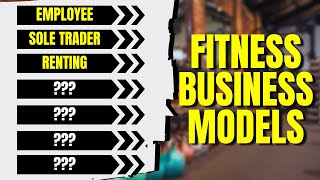
In this module, Mark Ottobre walks viewers through the major fitness business models, outlining their structures, advantages, disadvantages, and practical considerations so trainers and studio owners can choose the model that best aligns with their goals. He begins by noting the unregulated nature of personal training in Australia, contrasting it with regulated health professions, and explains how this flexibility creates both opportunity and responsibility. He then examines each model in depth: 1. Employee model – Trainers are hired by a studio, receive a wage or hourly rate, and benefit from employer‑provided client flow and support, but may face limited earnings and varying contract types (direct employment vs. subcontracting). Mark stresses the importance of fair employee agreements and the two‑way symbiotic relationship between trainer and studio. 2. Sole‑trader/contractor model – Trainers obtain an ABN, rent space in big‑box or local gyms, and handle all marketing, sales, admin, and client service themselves. He compares big‑box gyms (higher rent, larger client pools, franchise constraints) with local gyms (lower rent, more negotiation flexibility) and highlights the need for lead‑generation skills. 3. Group training – Delivering classes to 10+ participants, usually paid per session or via unlimited memberships. Mark notes the challenge of building sufficient class size, the logistics of COVID‑era social distancing, and the potential of group classes as a marketing funnel for one‑on‑one work. 4. Semi‑private training – Hybrid of one‑on‑one and group (4‑6 clients). While price points are attractive (~$50 per person per week), logistical issues (equipment access, gym management) often make it impractical in shared facilities, leading his own studio to focus solely on one‑on‑one. 5. Fitness instructing – Freelance instructors run pre‑designed classes (e.g., Les Mills, cycling) for big‑box gyms. It offers exposure but is physically demanding and may need to be supplemented with other models. 6. Online training – Mark’s least‑favoured model. He explains the allure (scale, flexibility) versus reality: low client retention (≈8 weeks), intense competition with established brands, lower average dollar sales, and the need for sophisticated marketing infrastructure. He shares personal experience of earning $12k/year online versus higher face‑to‑face income, emphasizing the trade‑off between reach and meaningful client connection. Throughout, Mark stresses the importance of packaging services (e.g., 12‑week programs) rather than selling per session, and he repeatedly ties each model to the trainer’s personal goals, desired lifestyle, and capacity for business tasks such as sales, marketing, and client retention. The module ends by prompting viewers to reflect on which model aligns with who they want to be as a fitness professional.
Chapters
Alright, Module 3. This module we're going to be talking about fitness business models. So there are a number of different models in the fitness industry and all have their pros and cons, right? So we're going to be examining each and every single one, and that way you can decide which one would be appropriate for for you. So the first one is the employee, right? So it's where you put together your resume, you submit it to a studio, and you get a job, right? Now this is going to be varied on where you actually get the job. So let's say, for example, here at Enterprise Fitness, we do employ all of our staff and our trainers. Now our employee model and our employee agreements probably look totally different to what else is outside in the industry. What you should know is that personal training is an unregulated— the fitness industry is an unregulated industry in that we have an acting governing body. Fitness Australia is an acting governing body. There are other acting governing bodies, but what they say is not necessarily official. So if you look at, let's say for example, naturopathy or chiropractors or osteopaths, they have APRA. APRA is the governing body. So if you do something not in line with APRA, APRA will shut you down. They'll shut your service down. Personal trainers do not have a governing body like APRA, so we are unregulated, which is a good thing, I think, because it allows us a lot of freedom, right? When you start putting regulations on, for example, chiros, they can't sell in packages. You know, you can't buy a 50-pack of chiro sessions, and that's because of APRA. So I think people talk about regulations and stuff that don't necessarily really know what they're talking about. Yes, there are a lot of crap in the fitness industry, but in all in all, it allows a lot of flexibility for us as fitness professionals. And if you're smart, you find the best way to do it for you and also for your client and what works for everyone. Because obviously if you're gonna grow a business, you need to look after your people, right? Because then otherwise they're not gonna wanna stay. So I look after my people, employee agreements. You might have people paying you minimum wage kind of thing and the minimum agreements, which is around $28, I think off memory for personal training is a minimum fee that you can be paid. So it really just depends on the actual employee agreement. So it's going to be quite different where you go. And what I've seen in the past, the way employee agreements are done, often they're not actually employee agreements. What they do is they get you to subcontract or they get you to be a sole trader again who contracts as basically independent to that gym and you pay those clients. Now that, I mean, look, Speak to your accountant, speak to your lawyer. There are different ways to do it. I don't recommend, if you're watching this as a studio owner, I don't recommend it that way. I recommend to employ your staff. I think it's better for you and better for them, mainly better for them, which in result ends up being better for you because they're being looked after, they're going to want to stay and work harder for you as well. So it's always a two-way street. I have a joke with my staff and that with employee and employer agreements. It's that like a symbiote/parasite agreement, right? The parasite needs the symbiote or the host, rather, and the host needs the parasite. So if you kill one, the other one dies, basically. So I say it with tongue in cheek, but you do. Fundamentally, what I'm saying is you do want to look after your employees. So this one really depends, right? What type of the agreement is— what's a good agreement? What's a bad agreement? I think what you need to realise with employee agreements is what you're going to be earning annually. So sometimes that amount may look like less because often what PTs do is they just look at, you know, the hour. What am I earning per hour? Because that's what their brains have been kind of triggered into. It's like, this is what I charge per session, right? But let's say, for example, someone could, you know, be paying you, let's say, $50 an hour as a PT, as an employee, and, you know, you're used to charging $100. But then the year that if that, you know, PT studio, if they're finding you all the clients and you make $100,000 that year compared to you trying to do it on your own and you only make, let's say, $60,000, well, obviously you're going to be better off making $100,000 a year working for someone else, right? So it really does depend. And not to get too caught up on just that hourly rate. And that's where a lot of mistakes go, because the truth is, for a lot of people, they're obviously— you're not one of them because you're watching this course, but they're not business-minded in a sense. And they haven't been able to do the sales, they don't enjoy the sales, they don't understand the marketing, they're not able to turn on that tap of leads that continually comes to them so they have clients that they can service. So employment agreements, they vary. It's not going to be at the same rate at which you'd say necessarily go out and charge yourself. Or maybe it is, maybe it's a little more depending on the employer. Right? So that's that one. Sole trader. So sole trader is where you go out and you get yourself, well, in Australia, an ABN, which is an Australian business number around the world, whether it's US or England. You know, you've obviously got your own versions of that, but essentially it's saying the same thing, right? It's, it's being a contractor, setting yourself up as a freelancer. Now, as a freelancer, the most popular options would be then to rent, rent a facility of some sort. So you might go into a big box facility or you might go into a local gym. Now, pros and cons, right? So as a sole trader, it is on you to do all of your marketing. It is on you to do all of your sales. Frankly, you're not going to have the support. So this is where business groups, business courses like this one is going to help you out a lot. I know I get a lot of sole traders who come into my courses who need help and get that support. Obviously, my trainers are employed by me. They get it as part of their employment. We have a whole support system here at Enterprise Fitness. These guys, if you're a sole trader, you're not going to have it right. It's on you to do the sales, do the marketing, do the admin, service the client. You've got to do it all right, which is, you know, it's quite time consuming. So most of the time people are going to apply their craft by renting You know, they need a gym to be able to be a great trainer. So they might go to a big box gym. Big box gyms come with franchise agreements, uniforms, all this kind of like red tape stuff. So what you're looking at is the accessibility of the client. So at a big box gym, the benefits of a big box gym is, well, firstly, the con is you're going to be paying higher price points. So say like at a fitness first or someone like this in the city, it could be as much as $400 plus per week, right? But at the same time, if they've got 5,000, 6,000 clients, $400 a week, if you have the ability to charge, let's say $100, $150, even $200 an hour at that place and you've got lots of clients coming in, it is actually somewhat reasonable, right? You've got to look at the deal of service. If you were to pay $1,000 a week but get access to billionaires and millionaires, well, $1,000 a week really to get access to that level of wealth, it's not that much money because you know, you could charge a billionaire, you know, $10,000 for whatever, right? They're not going to really blink at that. So it's going to be relative. But this is where your skills as a trainer, if you have the confidence and the ability more so and the competence to be able to sell those higher packages, it's going to be merited for you, right? So and look, the big box gyms, they've been doing it a while. So they do have it set up in a way where, you know, the first month essentially is going to be rent-free, but you're going to be doing X amount of hours to pay for that and you get half price and then you're on your own kind of thing, right? So they've been doing it a while. Other things you consider at the big box gyms is what are the agreements like? What is the manager like? What are the people like? What are the clients like? What is the demographic like? Can you sell to those people, right? Because, you know, sometimes it is a lot better to go to a more expensive area. So let's say, for example, the difference of, say, $200 a week, you could go to, you know, a suburb that's low socioeconomic or you could save $200 or you go to a high socioeconomic suburb and pay an extra $200, you're better off going to the high socioeconomic because the people in the high socioeconomic are going to have the money and the means to spend in personal training. But often what people see sometimes is only that they're spending more money. And this is where the confidence and understanding in business and the competence really comes in. So renting at a big box gym, I think for a lot of trainers is a very good way to go. A lot of people speak negatively about big box gyms. I think that's honestly is the fact that they don't understand business. They don't understand a mistake. You are paying the big box gym to have access to their clients. Don't get caught up on what type of leg press they have. The first questions you should be asking is how much can I be charging these clients? How many clients do they have? If the answer is they've only got 100 clients, it's probably not a very good gym, right? Or it could be equipped amazingly, it could be amazing gym, but if they've only got 100 clients, unless you've got your own ability to generate leads, it's not a good idea, right? If you've got the ability to generate your own leads, yeah, go to, go to that gym with the best equipment, right? For me, I've worked at numerous gyms and numerous different styles. One thing that I built early on was the ability to generate my own leads so I could work anywhere. And I worked at local gyms and paid less rent, but it was because of that reason I could generate my own leads. I didn't need to go to a big box gym. So if you're not in a position to generate your own leads, then again, big box gyms are going to be very, very good, right? Because that's what you're paying for, not the leg press, right? So the other option is your local gyms. As I touched on, these agreements for renting are going to be very different. So I've gone from, you know, places in local gyms where I was, you know, I was getting charged $200 a week, which I'd pay upfront in 12-week blocks because that's how I charged my clients and still charge my clients. So the gym owner was very happy with me when I did that. And also I've done it where local gyms have charged me by the session. So, you know, if I did 10 sessions that week, they'll charge me $25 per session. Right. So that one's going to be different. And look, the truth is on these local gyms, you may be— there may be room to negotiate, right? There may be room to negotiate. What I would say with all negotiations is it has to be win-win, right? You don't go in trying to get the best deal and, you know, take away from that gym owner. I know, like, because you got to understand the gym owner, they've got expenses, right? They've got expenses. They're offering you a service, they're offering you value, they're letting you use the equipment, they're bringing you in. So you want to speak to them obviously with respect and understand that something has to be in it for them. Otherwise there's no point for them to do it. So don't, you know, try and get something for nothing. Don't try and give something for nothing. But with these local gyms, there may be wiggle room. So next one is group training in the fitness business model. So group training can be done a few different ways, and there are many different providers out there from, you know, you've got even CrossFit can be considered group training. It is really group training. F45, BodyFit, your boot camps, you know, there's examples of group training, right? So what it is usually is, you know, a group of let's say 10 or more people with one instructor, and they're usually going to be paying either by the session or as an unlimited rate. Now depending on like you're watching this, I'm assuming that maybe you're just starting your journey. The biggest challenge, and I said this before in the previous module is the biggest challenge with group training is actually having the numbers to begin with and allocating your time and the logistics of it, right? So making— ensuring that you've got, you know, like 10 people in each class, that can take a little, little while to build. And you want to obviously build that as quickly as possible. But what you may do, and this is why I've seen it worked quite well, is if your goal is group training, you might do a mixture of group training and say one-on-one training to begin with. But the group training can then serve as a marketing vehicle, which then helps people get into your one-on-one or vice versa, right? So you run group training events and the group training events essentially bring a friend for free. So let's say you got 10 people in there, 10 people know another 10 people. So 10 people bring 10 people and it can be— it can grow quite quickly, but it does ultimately need to be something that is referral-based and be sticky, something that people actually want to, want to do. And obviously the quality, your energy, your personality in the group training world is gonna go a long way. So group training as a business model can, it can be profitable obviously because businesses, there wouldn't be businesses like F45 and BodyFit existing if it wasn't. Now in the new world of COVID I will say group training has fallen out of favor quite considerably and these places are doing it quite tough. So it may not be the one that you wanna go forward with you know, in the immediate future, maybe when things settle down, it can be good. It can be certainly a place of community, but there are challenges with it. And again, starting out, the biggest challenge for group training is going to be logistics. And then also when we look at all that social distancing stuff now that's been implemented and it's kind of become somewhat of the new norm for years to come. So that's group training. The next fitness business model is semi-private. Now, what is semi-private? Semi-private is kind of like the hybrid of one-on-one meets group training. So usually the numbers of semi-private are 4 to 6 people. They're given programs. Everyone kind of, you know, there's like, you know, training 4 days a week. It's kind of that mid-tier. So they might be charged like $50 a week for 4 people. And it's a group usually of guys or girls, maybe mixed sometimes that are at a similar fitness level that they train together with one coach. And usually in a semi-private, the way I would make it work if we were doing semi-private is they have done some prior one-on-one with our coaches. So they're not just going into semi-private. It's just, it's less attention to detail, if that makes sense. Now, semi-private, if you're trying to implement a semi-private model into a big box gym, it can be, or even a local gym, it can be very challenging. And the reason why it's very challenging is because the logistics of having the equipment available to you. Now, big box gyms and local gyms, you're gonna have other members. So if you're a PT and you've got 4 to 6 people in the gym, and you want everyone to do a leg workout, well, you're going to be taking up, you know, if there's 2 or 3 squat racks, you're going to be taking up all the squat racks with your crew and the members are going to get upset and probably management's going to get upset with you as well. So semi-private at someone else's studio or facilities is hard to do. And this is where, like for us at Enterprise Fitness, we had to make a choice, right? Were we going to offer semi-private or are we going to specialize in one-on-one? We decided early on that we were going to specialize only on one-on-one. The semi-private was simply just not it was too hard. It was too hard. There was never any quiet times to run a group session. So we forgo doing any semi-private and really just went on with the one-on-one model of PT. So that semi-private price points can vary greatly. What I've seen generally is around that's $50 per person per week. Again, with all of these models, I'm going to recommend that you package them. And again, we're going to talk about that. I'm going to talk about even more in later certificates and certificate 2, but yet you want to package them up as, as, as a package, right? So for 12 weeks rather than just looking at what they're paying per session. Okay. And again, if you look at the most successful group training companies is you're usually paying like CrossFit, for example, you're paying like $70 a week, but you get access to all classes. That's a, that's a better model than just paying simply for class because the average dollar sale is going to be much higher, right? and we spoke about that earlier modules in goal setting. So then we have fitness instructing. Spoke about fitness instructing. Essentially fitness instructing as a fitness business model is you as a freelancer going out to big box gyms and freelancing and running their classes, whether it's Les Mills or a cycle class. Basically you're offering your services as the group fitness instructor. You know, you can, you can do well, you can meet a lot of people. It can be a lot of fun. It is hard on the body because you're going to have to be working out and full of energy all the time. So you're probably going to want to supplement that with either a group training business or some one-on-one. And finally, in our fitness business models, we have online. Now, this is my least favorite, online, and I'll tell you why. Online is one of those ones that trainers go to because I honestly, I think they think they can make a lot of money, they can reach more people. That's often what I hear. I can have more impact and I can do it from anywhere in the world. Well, the truth is those things are kind of mutually exclusive, right? So the thing you got to realize with online and the big online businesses, whether it's Kaylee Itsines or Ashlee Bynes or whoever else who has quite a substantial online business— Michelle Bridges is another one. These are Australian examples. I'm sure there's heaps more US examples. Is they have full marketing teams. And also what you're looking at is you're competing with them as well and those budgets. So with online, what we know for sure about online training is that the retention is less. So gold standard of online, gold standard, best in class, is you will retain a client for 8 weeks. That's 2 months. And what that basically means is that every 8 weeks you will need to find a new list of clients. Where I have seen online, online work and work well is in very niche fitness endeavors where you're going to really have— it's going to take a long time to build. So what I mean by that, one of the most successful online guys I know doesn't have an online website, but he trains everyone online. Right. And the reason is, is because he'd been training competitors for so long. So now he just trains competitors. And look, he does, he does well. But you wouldn't say like if you look at it in the business world, he hasn't built a business that runs without him, right? The business is completely dependent upon him and his efforts. Now, for some people, that is the ideal. But I'm telling you, if from a business perspective, even that business, right, it doesn't have the regular clients like it's seasonal when people compete, it does go up and down. But you are going to have to work at a point where you develop that reputation if that's what you want. You need to, you need to put in the hours. It's not an overnight thing and it doesn't matter how many, you know, online business courses that you do, it's not going to help. The reason why that guy gets the amount of attention that he does is because ultimately the results and the amount of clients that he works with and the many years he's been doing it with. The other place I've seen it work really well is with high-level powerlifters. I had an online coach for some time. He was, you know, he's a very high-level powerlifter and I would send him videos and he was able to look at my lifts. And I'm high level myself as an athlete, so he was able to look at my lifts, he was able to tweak things, program, and it worked very well. Where it falls down is if you're looking for an online business that goes out to general public, the truth is the general public are unmotivated. They're not going to train, right? They need to be handheld. And this is where you see, as I said, best in class. There is a much higher turnover rate of more online clients than there is from face-to-face. So these are things to consider. The other thing that you also want to consider about online is that if you are going to have a solely online business and really push that, and even if you have it online and do one-on-one, often what online does, if you've got online and one-on-one, it incentivizes people who are doing one-on-one with you to decrease their average dollar spend. So what that means basically is You know, you might be charging, that client might be spending training 4 times a week with you, 3 times a week. Let's say they train 3 times a week with you at $100 a session. You're making $300 a week from that client, right? And income's good. They love results. But then you offer online and they're like, oh well, I can get the same service from you by going online, right? And online, let's say, is $50 a week or $75 a week. So what you've just done is you've gone from $300 a week with that client who was happy and getting great results to now $75 a week. And it's not the same experience, right? Because you're not seeing them 3 times a week. They get unmotivated and then in 8 weeks they're like, oh, it was good, but now I'm not going to be your client anymore. And I've seen that happen many times. I've, I've done online in 2017, 2007. I was one of the very first trainers to go online in 2007. I had a program called the Alpha Body and I would spend day and night on this website, right? Day and night. I've taken it down since. And the most I earned in a year being an online trainer was $12,000. And I looked at my face-to-face income And it was significantly more. And I realized then and there, the numbers basically showed me that it was a very hard, it's a very hard business model because ultimately what I was turning into to really grow my online business was an online marketer, was someone who was just going to test headlines, test marketing headlines, you know, 6 ways to burn body fat and write copy and test pictures and redo the website. And I made a decision. I looked at that model and I thought, no, this is not who I want to be. And this goes back to what I said in module 1 around who do you want to be, what do you want to do, what do you want to have? And I knew at that moment I did not want to every day work on website and redo marketing. I wanted to be in the gym training people, getting high fives, helping people do PRs, tweaking form and sharing, sharing one-on-one and being impactful and having a real meaningful connection because you can have numerous connections with lots of people. But for me, I'm speaking personally, I wanted to have meaningful connections. And online, yes, you can reach more people, but you lose some of the meaning in that. And that's just, I mean, you know, it's the same thing if you come to one of my face-to-face seminars and you learn from me in person and we spend 4 days together versus this course that's online, even though great value, there is a difference there. So your online training, people sell it in this industry as a Hail Mary. They say sell it as the way to go, that everyone loves it, you reach more people. Just look at the business numbers. If you just look at the numbers alone, the average dollar sale of an online is around $50. Some do it cheaper, some do a little more. You can even say as much as $75 a week. Being a great trainer, you know, you can push— if you're training people 2, 3 times a week, you can get $300 a week, $200 a week from that one client. So if you look at those numbers and also what we know with personal training is a lot of clients stay and they stay for a very long time. We're talking years. So the lifetime value of a client is always going to be significantly more in a face-to-face setting, whether it's group or one-to-one versus online. Online, the biggest limitation with online is that you are going to need to find a lot of clients and you're going to need a machine that continues to deliver those clients to you that are willing to pay for it. And if you're willing to, to build that infrastructure, which is going to take you knowledge around marketing, online sales, and obviously Facebook, Google, and ad spend, which I am going to cover those things in Certificate 3, of the fitness business certificate that, you know, you can definitely do it, but it's, it's not personal training. It's not being a coach. It's, it's growing an online business. So there are our fitness business models overview. And yeah, which one are you?










