From Weights to Wisdom: The Entrepreneurial Journey of Mark Ottobre
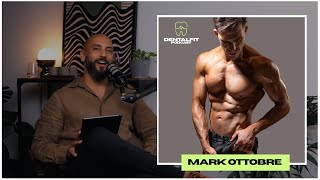
Mark Ottobre, a fitness entrepreneur, won a comeback competition at 39 after years of unstructured training. He built Enterprise Fitness around five modalities plus mindset, interviewed experts like Eddie Coan and Charles Poliquin, and shifted from solo warrior to leading a 15-coach team. His book The Enterprise Diet uses a lifestyle wheel and the DILTS model to reframe nutrition and mindset.
Chapters
Hey everyone, welcome back to the Dental Fit Podcast where we explore the connection between peak performance, health, and the often overlooked role of oral health. I'm Mark, and today's guest is a legend in the Australian fitness industry. He's the founder of Enterprise Fitness, host of multiple podcasts, author of The Enterprise Diet, and recently won a bodybuilding competition at the age of 40. He's coached Olympians, Commonwealth Games gold medalists, and even a former prime minister. Mark Ottobre. Did I pronounce that right?
Ottobre.
Ottobre.
It's okay.
Mark Ottobre.
There we go. There we go. Thanks for having me.
Welcome, welcome. Thank you.
Thank you.
Um, yeah, uh, great name, by the way. I can, uh, thank my dad for that one.
It's October in Italian.
And, um, you're, uh, uh, You're a PT, he's been in, in the game for like 20 years, and you've trained some pretty high-level athletes, um, but the Prime Minister?
Yeah, that's an interesting one, eh?
Can we name drop or no? We can't.
I don't think he minds. I got a photo with him on my website, so. Oh yeah, yeah, Tony Abbott, he's a great guy.
Oh yeah, he's lean as—
yeah, yeah, he's 65, and I tell you what, his work ethic is, is amazing inside the gym. He trains with one of my guys now there. I, I don't train anyone really anymore, but, um, he with all my trainers, and, you know, he, he goes, he, he legit goes, and he's a fit guy. And you can really tell, you know, when you train someone, you can tell if they've got it, and he most certainly has it on a very high level. So I would never have picked it, just, uh, he's got grunt, he's, he's legit. Like, he was telling me stories about when he was playing rugby and stuff, and yeah, I could see, like, you wouldn't want to be against him. Uh, he's definitely got the mindset and the grit.
Yeah. Um, And you've, um, I mean, Tony Abbott, he looks pretty lean. Um, you're pretty lean. I'm sitting just above, like, just at 11%, I reckon. So, um, I was going to do this show topless, like I was going to suggest that we do it, but I guess, you know, we're going to just stay away from that. Um, uh, you've returned to the competition floor, um, and you've won a bodybuilding comp at 40. Uh, congrats.
I'm not quite 40 yet, I'm 39.
You're 39, you're turning 40. Um, so this— and you said you had a, had a goal of, of getting this before your, your, your 40th birthday, and you've achieved that. What was it like standing on the stage and winning?
Yeah, so backstory is my first bodybuilding comp was in 2004, and not 14, 2004. So obviously dates me, uh, when I was 20, 19, 20, and I came last. And that really crushed me, as you put so much effort and time and energy and focus into this one singular day in this competition that meant absolutely everything to me at the time. There was no plan B. It was all about competing. And I looked terrible, frankly. But that was a real instigator event that led me on a path that I decided then and there when I came last that I would be the expert. So actually, thanks to coming last, it really prompted a whole bunch of things in my career, which was to learn, travel, train, be better, be smarter, get mentoring. And that really just set a fire under me and competed a bunch of times prior— after that and had 3 second place trophies. And it was quite frustrating. In 2007, I competed at 3 shows, and at each show the same guy would beat me. And it was always close, it was always by a point, it was always, oh, you know, you won the posing award but you didn't quite win.
Oh, that's frustrating.
It was very frustrating. So I parked it for a while did a strongman comp, came second at the strongman comp, and then finally won the strongman comp.
Sweet.
Just got that monkey off my back. And then, you know, I was like, oh, I think I'm not done, but I also don't want to compete. And then at the start of this year, kind of started dieting, and then one of my guys, uh, was like, you know, you should do a show. He pushed me over the line and we did a show. And what was it like standing on stage? I mean, it was, it was— I remember going backstage to one of the divisions, and each of my divisions, it definitely wasn't a paper win. They're like, my divisions were stacked. They were very, very highly competitive. And I think it was the, the Rising Star division, which I remember going backstage and I saw probably like 12 guys, and I thought, okay, there's 5 guys here that could win. Wow. Like, if I get a place today, I'm, I'm— You're up against lucky comp, and I won. And I was like, wow, okay, this, this actually, this victory means something. And then the guy who beat me in the overall, I beat him in— so there's different divisions, there's Classic and there's Physique. So he beat me in Classic, then I beat him in Physique, which was— again, it was because, I mean, he won the Open, uh, he won the Open in Classic, and then I beat him in Physique. So again, I went against someone who is— and he competes year after year after year, show after show, and I beat someone who was— he's very high caliber.
Yeah.
Um, so it, it meant something. And, uh, yeah, it was, it was, it was good. It was good to get the monkey off my back. Do I want to do it again? No, I don't, I don't necessarily enjoy dieting. I like being strong, I like being vital. And when you are dieting into those, you know, single-digit body fat percentages, you're not as strong, you're not as energetic, you're in a deficit. You look great, sure, but you're not as, I suppose, amped about life in general, I would say, because, you know, by definition you're in a calorie deficit, you're trying to conserve calories, you're trying to conserve energy, you're trying to get leaner. It's a means to an end. It is what it is.
There's a, there's a, there's a limit at which you can like, like push yourself in those, those areas. But yeah, the sacrifice is the, uh, is the, the muscle, uh, the— not the muscle, these— the strength.
And so you do sacrifice strength, um, as much as people will say, oh, you know, you can, you know, me sitting at— difference between sitting at say 4% body fat and sitting at 11.5% body fat, there's a big difference in strength, how my body feels, how I'm able to fuel myself, how my workouts feel. I mean, I don't feel like working out at 4% body fat.
Yeah.
11.5%, but we're good to go, right? We're not, you know, you stay relatively lean, but it's— we're good to go. But single body fat percentages, your body really is fighting against the tide to try and get leaner. So you have to, you have to push it.
So why did you do it at this stage in your life? Like, why YouTube?
Why else does anyone do anything these days? Content. That's a fair, fair answer. And once you make some YouTube content, that's—
YouTube makes people do some crazy things.
Yeah.
Um, how did your training change from 2004 till to this comp?
2004 to this comp, wow. Um, how did it change? I mean, it's a lot well thought out. In 2004, I'd rock out to the gym and do a program of some sort which really had no structure, and, you know, go by feel and gut and, you know, intuitive training to a degree, and spend probably way too long in the gym. Whereas, you know, now I've got my team at Enterprise. I trust my coaches, trust my coaches with my training. They put out my training and, you know, away I go. I follow the plan and just a lot more well thought out. Work with my team, my master coaches, and, you know, every— everything is just much more thought out, much more practical. Know when to pull back. I mean, back then it was one gear, go. Whereas now is, okay, your heart rate variability score is indicating this and this and this. Okay, today's not the day to go for a max. Yeah, I understand the limitations and understand having the I suppose the experience of taking something to failure and then dealing with the consequences that come with joint pain and these things that take you further back, and knowing when to pick your battles, basically. I think that comes with wisdom. I think when in my 20s, every day was let's go. Yeah, but you get caught, and you get caught enough times, you learn about these consequences, and you learn, okay, I'll pick my battles when on the, on the right days.
What, uh, mindset, uh, shifts, I guess, did you— do you have, um, prepping for a comp leading into your 40s, like heading towards 40 versus when you're in your 20s?
Took it more seriously, actually. So, and it was actually my posing coach who said to me, the problem with you and I competing is the second we step up on stage if we're not on, we might as well not even show up, and we might as well just— So as soon as she said that to me, she said to me like the first week of working together, I thought to myself, I'm either going to be on or there is no in-between. I'm going on to win, and I'm going on to look where this guy is on. And maybe I don't win, right? Like maybe the judges, there is some guy who's better, and, you know, fine. But you need to, you need to be on. If people— if you're going to come on stage and people like, ah, he was a bit fat, he didn't really look that good, I missed the Enterprise, you know, it was all right. No, this is the place that's trained over 350 winners, so I've got to represent. So, uh, pressure is a privilege, right? So I took that pressure and I used it and stuck to my diet. Uh, my, my cheat— I joke about cheating on my diet, so I cheated. My cheat for the whole 10-week prep was extra YoPro and 10 grams of chocolate.
Nice.
Wait, so that was, that was my cheat. That's, you know, I didn't cheat on my diet at all. And, and I felt that, okay, I, I need, I must be on because you were so—
well, you were told by coach to—
well, I know she was doing it right. She's 100% right. He's like, a minute I get up on stage, people are doing this half to judge me. They're going to say this is Mr. Enterprise, like, is— he's not on. He came in fat, he came in smooth, he came in— he didn't look that good. Ah, you know, what's he doing? Um, I had to come in on.
And people heading, you know, at this stage in their life, later 30s heading to their 40s, um, thinking that it's too late, um, do you have any advice for this? The other reason why I did it Do you have any advice for these people?
Yeah, you're full of shit. I'm asking for a friend. Yeah, like, it's like, it's just all full of shit, right? It's like, it's all, it's all excuses that we make. It's all mental games. It's all decisions that we have to make, right? It's like, I kind of have that internal dialogue in my head. It's like, you know, I've got two kids, I've got this going on, I've got, you know, business, I've got a team, I've got things I've got to manage. It's all true. It's all true. And it's all about focus, right? The only, the only thing you can manage— people, I don't have enough time. No, it's not time, it's focus. You know, it's what are you focusing on? What is your priority? Because, you know, I stepped off on stage and, you know, getting ready for a show, I was super busy. But then I get off stage and the week after, somehow I'm busier than when I was before. But was I busier or was it just what I chose to focus on at the time? So I think people fundamentally, I live my life by most people overestimate what they can achieve in a year and underestimate what they can achieve in a lifetime. And I think if you start thinking about your bucket list of things that are meaningful to you that you want to achieve, they're going to take time and sacrifice by definition. Of course they are. So you just need to plan it out in a way that makes sense. And if people are sitting there going, I can't make time, you know, for my health, well, it just— you just haven't made it a focus yet. And, and, and there's only two motives that we have, right? Pain or pleasure. So you're either moving away from something or you're moving towards something. It's really it. So things either have to get painful enough for you in your life that you decide to focus on your health, or you're painted and sold the big great dream of having a six-pack and you move towards having a six-pack. Otherwise, like, I come back to this thing I talk about a lot in my book, which is choose your hard, right? It's hard to be in shape, but it's also hard to be overweight and unhealthy. The different—
hard to choose your heart.
You got to choose your heart. And I'd always rather choose the the short-term hard. And the short-term hard is getting up earlier, preparing your food. Yeah, saying no to the, the piece of cake. That's the short-term hard. The, the long-term hard is, you know, okay, so yes, the, the cake. I don't get up, I sleep in, and out of my routine. And now I'm out of shape, and now things are a little bit comfortable. I don't want to be comfortable.
Why do you think people choose one hard versus the other?
I suppose it's how we're wired, right? Ease, positive reinforcement. Yeah, I think as entrepreneurs, we, we probably have a lot more degree of being able to handle risk than the average person, and also have to develop a lag time in the work that we do and the payoff that we get. And it then becomes inbuilt of And for me, it's just like everything that I do is like, well, I'm not going to get rewarded today for it, right? So there's— I expect there to be a lag time. But I suppose if you don't come from that mindset, you expect to be rewarded straight away. I do something, why am I rewarded yet? You know, I posted something on Instagram, why don't I have a million followers yet, right? Well, it just doesn't work that way, right? Nothing works that way. Nothing worth doing works that way.
Yeah, it's a sign of the times and I get worried sometimes about instant gratification. And, um, you're right about the mindset. Some people just, you know, know that the hard work will pay off, but some people don't. And yeah, it's, it's very interesting that the choose your heart— I've never thought of it that way. And, um, but while you've been dominating on stage Um, you've also been building a business, um, that's helped thousands of transformations. Um, uh, now you founded Enterprise Fitness in 2013.
So I started as a trainer, I did my certs 2005, started work officially as a trainer 2006.
Yep.
Went under the name Hard Knocks Training, then Maximus Mark, and then—
great.
Yeah, just as my own little thing. And then, uh, I, I think I made the name Enterprise Fitness like officially in 2010. I can't actually remember the exact— it was 2009, 2000, around that. It was like Enterprise Fitness. So I've been a trainer, you know, I did my certs 2005, so say 20 years.
What was your vision for Enterprise back then?
Oh, just wanted to be a gym bro, you know. Like, I went to Doherty's Gym and loved Doherty's Gym and was like, I want a gym. And I just loved spending time in the gym. There was nothing I would rather do than be at the gym. And people like, oh, did you go to bars in your 20s? Like bars and clubs? I'm like, if you call gyms bars and clubs, like, I suppose, like, yeah, we were dancing, just training, and that's it. So that was how I spent my 20s, was training and working, right? And like, legit, like, I trained twice a day, uh, and it was all about training. So What, what did I see it as? I didn't really have a vision other than it's big and it's bright and somewhere out there and let's move towards and find our way. And I want to have a gym, I think. And I don't— it wasn't like I want to have a personal training studio. It's I want to have a gym. Now let's learn business.
That's like, just, just get thrown in the deep end.
Yeah, pretty much. I mean, that's how I started in business. It was baptism by fire for sure. Yeah. You know, I, I was working at Genesis in Ringwood, uh, they were paying me like $16.75 an hour back in 2005 or 2006, and I was like an employee. It was like $22 for a PT session and then gym floor sessions like $16. And then they brought in this independent owner contract where you paid rent to the, to the floor, and you know, I was paying $1,100 a month. I was like, whoa, $1,100 a month, so much money. More money than I've ever seen. And I was like freaking out. I'm like, and the manager sold me on the idea. He's like, oh, you're gonna kill it, you're great, blah blah blah. And I was like, uh, okay Scott, I'll do what you say. And then I did a business seminar and off to the races I went. That's how I started. I never went into like this. People think, oh, you had this business background and thought about this. No, I was a gym bro. Yeah, that's my story is I love the gym. And then the manager sold me on renting the floor and I was like, holy fuck, I need to learn this. Stuff and the way I went, where you went.
And, um, and where is Enterprise now? Like, what does it look like today?
It's just down the road. It's a black building with a blue trim and very nice on the inside. Um, so where are we today? Uh, we've got a team of, it's like 15 coaches. We've got some virtual team members. We have sales, marketing, admin, contractors. Like, it's a full, it's a full operation, right? It's a full team. Managers involved. Like, there's, there's lots of moving parts, and we do probably anywhere from like 300 to 350+ personal training sessions every week. We've got clients from all over, inquiries every day. You know, there's, there's so many moving parts to it. So, uh, you know, it's been a lot to, I suppose, manage and just build incrementally, one step at a time.
Well, some of the, uh I guess, core training philosophies that you have there with your core training philosophies?
Um, do shit that works. Um, really, I mean, that's where it comes back down to, like, where is the evidence for this to work? I think probably if I was to explain my programming— so I suppose my backstory of how I came to be the trainer that I am was I recognized pretty early in my career that there's only really 5 modalities that make up personal training, or training in a sense, and that is powerlifting, bodybuilding, gymnastics, uh, Olympic lifting, nutrition. I suppose if you want to add strongman, or if you want to add— which kind of strongman's in that powerlifting, bodybuilding, gymnastics frame as well, but you could add that separately. And then obviously nutrition, functional medicine, and then motivation and mindset as well. Not being able to communicate, but from a practical point of view is understanding. If we just talk about training for a second, zoom into that, you know, I wanted to learn from the best in the field of each of those modalities because what I recognized what was— to a person with a hammer, everything looks like a nail. So if you're a bodybuilder trainer, how do you see every client? You see every client as a bodybuilder. If you're a powerlifter, how do you see every client? You see them as a powerlifter. If you're a weightlifter, you see them as a weightlifter, right? If you're a CrossFitter, you see them as a CrossFitter. So I felt that was doing my clients a disservice. So I actively sought out the best in the world at powerlifting, the best in the world of bodybuilding, the best in the world at Olympic lifting, the best of the world at gymnastics and movement-based training, and then also the best in the world at rehabilitation. And then learned from all of them and went deep with all of them. Wasn't just like, I'll read their book, whatever. It's met them, spent time with them, did podcasts with them, got to know them personally. How do they come to those conclusions? And then started to realize there's an overlap here. And these tools do actually relate to this. So that's where like people come and train with us and it's like, oh, you, you're like an exercise physiologist/physio/trainer/you do so many things and you do so many things well. It's because there is so much overlap, and the background of how I got to that conclusion wasn't from doing one course. My record for doing courses was 17 in one year, and I'd do that like in my 20s and 30s. I'm still in my 30s, but early in my career, for the probably at least the first decade of my career, there was definitely every year there were courses that I was either organizing courses and bringing in guest speakers. So I was taking them to dinner and learning from them directly, or I was traveling, getting on a plane and doing those courses. So I can't, I can't emphasize like the origins of what we do. We borrow from so many things, but again, it's always about the outcome. And I think from a programming perspective, the way I look at things is first, Understanding your goal clearly. A problem well stated is a problem half solved. Your goal is a problem that we just haven't solved yet. That's how I approach it. So if you say I want to be, you know, 90 kilos at 10% body fat, okay, well, how much do you weigh now? So we need to assess, okay, this is where we want to be, this is where we're at now. What— and then looking at the most important, what are the constraints? And then from that, what's our timeline? So when I'm looking at something, so someone says to me, I want to be able to do a full clean Okay, well, the first thing I want to start with is with an assessment. What's your bodyweight squat like? If you can't bodyweight squat, well, then you're not going to be able to clean. So let's start with getting you to be able to do a full bodyweight squat. Then let's move into building unilateral strength in our legs. Then let's move into a high bar squat. Then let's move into a front squat. And then I know the predictive, uh, lifts of a front squat. If we want our, let's say, our clean to be 100 kilos, well, then realistically you should be able to do a front squat at 2 reps for 100 kilos to be able to clean that much. So I've got markers along the way of movements that you need to check off to make sure we ensure we hit your goal. So it's actually very systematic and pragmatic when it comes down to it. You—
this overlap that you've talked about, is that something that, uh, sets Enterprise apart? Because I know I feel like there's many groups out there. I mean, I'm, I'm biased to sort of the CrossFit world, but, um, but I understand that many people have— I guess many groups have tried to find this overlap, um, that they are calling overlap. Um, what do you think is, is, is setting Enterprise apart in terms of, uh, looking at this overlap that you mentioned between all these modalities?
Well, I think it's a few things. It's one, we do everything at a high level in the sense that it's not a, oh yeah, we do it at a high level, blah, blah, blah. We have the results, we have the systems, we've proven it time and time again, and we map out the whole journey. And I know what it takes to get the results. So we're always able to meet clients at their ex— explain what the expectation is. If you say to me, for example, I want to be able to I want to get to 10% body fat and you're not willing to follow a diet.
Well, I don't know, 1% to go, I'm all right.
You know, it's going to be hard to get you there, right? If you're just going to eat whatever you want, there has to be some type of tracking and management. What gets measured gets managed, right? Yeah. Rather, what's get— what gets measured gets managed correctly, and what gets managed gets results. So we have to have some, um, feedback in terms of how our plan is. So yes, I do think it is, is one of the differences that make a difference, and it's the attention to detail, it's the standard. I've trained with the best coaches in the world. The commonality with all of them is they do not drop their standards. I do not drop my standards for anyone. New trainer comes in, they're like, oh, but I do it like this. I'm like, and this is the end. It is the Enterprise way, otherwise don't be here. Like, it's, it's, I don't, I'm not unapologetic for that, is I know what I've built works and why would I change it? If you show me a better way, sure, I'm open to learning. Yeah, but show me a better way. Don't show me, you know, BS that you thought of and wrote on a piece of paper that sounds as cool.
So speaking of things that that work. I mean, let's talk about The Enterprise Diet and, um, how does that fit into the picture, um, of what you're trying to build with what you have built with Enterprise Fitness? Where does The Enterprise Diet book, uh, come into that?
Yeah, so The Enterprise Diet book was— I wrote it over COVID, and I had a book called Eat Your Way to Abs, which was this free downloadable And over COVID, I started going, I need to update this and, you know, keep yourself busy. And then I wrote 30,000 words. It started very— after that, I realized pretty quickly I'm not rewriting a book, I'm writing a book book. Like, and I say book book, this is not an ebook, this is a book book. And, you know, I think I got to 100,000 words and then I realized I actually had written too much. And, you know, published like— I self-published as well. I'm like, uh, you know, calling the printers like, yeah, you need to shave back a few words there. So we had to shave back a whole bunch of sections and stuff like that to just make it more precise. So it's available on Audible now. Where does it fit? It really fits as the philosophy of what we do nutritionally, and it's, it's a tool that I use for clients. It's a tool that I use for our trainers in terms of, you know, getting you up to speed with the things that are going to move the needle with your physique goals. So I start with mindset. The first chapter is all about you don't need a better diet. And it's talking about— it addresses the most common misconceptions and problems that I see people go through with their nutrition, all the pains. And it explains the whole journey that you need to go on to get your goal. So starting with mindset, this is the mindset that you need to adapt if you're going to win. Adapt a process mindset. I talk about the DILTS model in psychology, uh, which is just real quick, you know, you've got at the base level your environment, then your behaviors, then your skills and skill sets, then your beliefs and values, then your identity, then connecting to a purpose. So So if you make change from the top, it will change the other areas down. So for example, if you believe that you're a fat person, then you're going to make choices as an identity that are congruent with that identity. Whereas if you believe that I'm super healthy and I look— you're going to look for things and your behaviors are going to change. So looking at an identity level and create an identity shift first and understand— helping people understand that it's not just about the behaviors. Because always give the example of, say, The Biggest Loser. You get a bunch of people who are in this environment who identify as being overweight and unhealthy, and you take them out of their, their environment which enforces that identity with whatever they've got in the fridge and, you know, inactivity and their friends, whatever. And then you put them into an environment that's designed for rapid change. And of course, every single person on The Biggest Loser loses weight. The issue is when they get out of that environment, what do they do when they go back into their environment? Have— has that identity stuck? and there's multiple cases where the identity doesn't stick. They— that environment, they go back to being the person who they were. So I explained this in the first chapter, and then I just moved through, um, each, each— one of my favorite chapters in the book is actually chapter 3, where I really get to talk about hormones and calories.
Okay.
And it was something that I wrestled with for years. These were the thoughts in my head: is it— do people lose weight because of hormones, or do people lose weight because of calories in versus calories out? And, you know, on one side you had Gary Taubes with his book Good Calories, Bad Calories. And then on the other side, you know, you've got the— it's all about calories in versus calories out. And what was it, um, in 2016, the study that proved— you know, they ran a meta— uh, was it Metabolic Ward study? And they essentially equated for all factors, was actually funded by Gary Taubes, and it, it really disproved the insulin theory to weight loss and proved that, you know, calories are, you know, the reason. But it's not to say that hormones aren't involved. So I discussed this in quite a lot of depth because for a long time I was definitely more on the side of Gary Taubes, he had a very convincing argument, but when it got disproved scientifically, it's like, well, how do you not look at that? How do you not consider that research? Because obviously it's, it's obvious now, like, it's, it's proven. So putting that into a usable model for clients, instead of it just being about calories, I present what I call the Enterprise Holistic Lifestyle Wheel, which puts everything as a circle, talking about sleep, digestion, calories, food quality, exercise, piecing these things together and rating yourself out of 10. So giving clients and people a usable means of something rather than just eat less, because eat less isn't good advice because most people know that, but they don't do it.
They don't do it.
So you need to look at it holistically.
Do you think there's a place for glucose monitors?
Yes. Yes, I do.
Does that, does that help? It just I just saw a, um, we had a, we had a guest on the show and, um, she's got type 1 diabetes and, um, she's talking about glucose monitors that she uses. I also saw, saw a post on Instagram today about someone who doesn't have diabetes but, um, as a, a bodybuilder, they're using that to, to monitor, um, and navigate their way through their diet to see what, what happens when they fast. What happens? Um, what are your thoughts on, on people wearing— or they don't need to go to, to that level to whack on like a glucose monitor and monitor their, their levels?
So people say things like they don't need, right? But I'm always a fan of the thing that bridges the gap for people. So for some people, they go on a keto diet and, you know, they've been struggling with their weight all their life, and they go on a keto diet and it helps them lose weight. I'm a big fan of that for them, right? Like Or some people have been struggling with weight all their life and they go paleo, or some people Weight Watchers. Or like, I'm a big fan of whatever works for the person. And people ask me all the time, like, how do you do nutrition and enterprise? And I say it's all of the above. It's all of the above. Because I used to be like, it has to be this way. And then I very quickly learned, actually, through my trainers, the way they would coach wasn't the way I would coach. And then they would get results with people who I wouldn't get results with. My approach didn't work. So then I started to become a lot more flexible and malleable to the fact that Okay, there is much more than one way, and personality has to be considered. It's— our psychology is the ultimate. So if someone is able to bring consciousness to the things they put into their body by putting a blood glucose monitor on, well, more power to you, right? Um, using it at a high level— so for example, if I was to use it and look at it, I mean, it's data. People always like, what do you think of— or what do you think of this? I'm like, at the end of that, it's data.
Right.
So it's how you use the data. It's like getting a blood test. You can get your blood test done and, and the GP says, you know, you're perfectly healthy, go away. Yeah. Well, how is the doctor interpreting those bloods? The doctor's interpreting those bloods as absence of disease. If I was to look at the bloods, I go, okay, your vitamin D is 51. So that's bare-ass minimum vitamin D. Let's shoot you through to like 120. Like, let's get to like optimal nutrition.
But the doctor says it's okay.
Yeah, well, because it's the definition of of low vitamin D is if you're below 50. That, that is the clinical definition of low vitamin D, but that's not the optimal version of vitamin D. It's like, uh, total thyroid stimulating hormone, uh, TSH, on a blood panel, the mean is anywhere from 0.5 to 5. Well, the real reference range is 1 to 2. If you're out of that, you, you're either too low or too high. And there's other things obviously in thyroid that are going on. So the point being is Data is data. How does one interpret that data? And anytime you can collect more data on something, whether it be your sleep, your blood glucose, your sugar, your calories, energy, sex, food, all these kind of things, hormones, it's how I'm going to use that data for that person towards their goal. So I just look at it as— I don't look at it as good or bad, I'm just— I just look at it as data.
So Just want to— I think that's— it's, it's cool. You got, uh, a lot of, uh, I guess experts that, that you've, you've drawn on to create this book. Um, that sort of takes me into the next part, which is, um, getting into the, the podcasts that you've done and the, the multitude of guests you've probably had, had on there. And, um, so You've hosted— well, there's a bit of a journey I learned for, for, for your podcasting journey. Why don't you tell us a bit about the podcasting journey and then we'll get into some of that.
So the way my podcasting journey started was I read a book called Muscle, Smoke and Mirrors by Randy Roach. This would have been maybe 2009, 2010, and I was so inspired by that book that I made a YouTube video, which I think you can still find, it's very embarrassing, of me reviewing the book online. And I just love the book. And I sent it to him. I was so inspired because he was— he's blind. Randy Roach is blind, and he wrote 3 volumes. Each volume's like 700 pages. So like, he wrote the book blind, right? And I went through it, like read everything in Braille, wrote the book, and was just talking about this process. I heard him on a few different podcasts, and I was like, man, this is incredible what this guy's done. And so I said, look, I don't want anything. I just I thought your book was amazing and it really inspired me, and I just wanted to make you a review and sent it to you. So I sent it to him and he goes, well, if you need anything, let me know. And I said, well, actually, can I interview you? I'd love to like interview you. And so that was my— and it's still on my show. Yeah, it was, it was, it was like, it's on YouTube, you can listen to it, uh, you know, the trip over the intro, and there was no like proper thing, but he was my first guest. We had an amazing conversation and I remember thinking at the end of that, wow, I need to share this with everyone I know. How do I do that? So I spoke to my friend who's in internet marketing and he's like, okay, I'll make a podcast for you. And he made me a podcast. And then I'm like, okay, I can't waste this now. I need to get more guests. So I literally just made a dream list and contacted them one by one and they all said yes. And I was like, wow, okay, you know, I get to interview Johnny Bowden. Wow, that's awesome. Like he's written 23 bestsellers and you know, Sally Fallon from the Western Enterprise. Anyway, everyone I interviewed, and like my hero Charles Poliquin and all these different people. So it was, it was really— and that's, that was the start of my podcast, and that was 2010. And yeah, I mean, I met the guy who did the foreword for my book, Dan Gardner. I didn't know this, but he wasn't in— he told me after— he wasn't even in the fitness industry at the time, but he was listening. He put my podcasts on, uh, like a CD and would listen to him back and forth at his job, and he just listened to my podcast. And then like, he told me a story like years later, and now he's like a big name now. He trains like UFC fighter, he trains everyone. He's, he's unreal. And, um, yeah, like, that, that's like the quality of podcast, because it was just all about learning and sharing information. It was just, it was where before podcasts were cool, right?
Who would some of your most memorable guests, memorable guests be?
So the first one is Jonny Bowden, because Jonny Bowden for me is like the Michael Jordan of nutrition. And like, now I think he's in his 70s, and just remember, like, I just grew up watching his stuff, and I read every single blog post he did. I read all of his books. Like, I'm a Jonny Bowden fanboy. And like, you know, now he's not on social media or anything like that. He's, he's older, right? Um, you know, so that was to have him. And then, you know, he was so encouraging of me. And I did another podcast with him more recently, I think when his other book came out, The Great Cholesterol Myth, uh, which— fantastic book which he did with a cardiologist. Um, to have him and have his endorsement, have his encouragement— like, he really encouraged me at the time to just keep going, and that just meant the world to me. So that was amazing. Mark Schaus is still a very good friend of mine. More recently, when I interviewed— when Dan Gardner, when he came to Australia, I had him in and we did a podcast Face to Face. I had Eddie Coan, who's the greatest powerlifter of all time, interviewed him. That was, that was really amazing. So there's been a lot of really— I just, I suppose everyone, like Charles, I want to interview Charles Poliquin. That was, that was amazing because he's, you know, I learned so much from Charles. So having him on my show as well and talk about his, uh, stories, one of the legends. Yeah, so there's been, there's been a lot, but I'd say, um, yeah, Johnny is probably one of the big highlights because that would happen very— it was like my third podcast. It was Johnny.
How, how do I get these guests on my show?
Today's day and age, you know, I, I couldn't tell you. It's, it's really just about, um, like, I just, I just ask. Don't ask, don't get. Yeah, exactly right. So I just reach out, this is what I'm doing, I hope you like it, and can you come on?
What are some of the biggest, uh, takeaways that you've, you've got from sitting across some of these people? Or sitting next to some of these people?
Biggest takeaways? Well, I always treat them like kind of like my own personal brain-picking consults, and I always felt like it's probably why that people connected with them. And when I just started interviewing people just to do a podcast, I didn't really feel the same about it, right? So like, it was— there's— I found the best ones were the ones I really connected to and wanted to, like, desperately wanted to know their information. So what did I get? Just I suppose depending on the person, how they operated, there was always like 100 questions in my head about like what I want to learn from this person and where their journey would went and how it took them and all this kind of stuff. So yeah, I suppose for a lack of a better word, probably the biggest thing for all of them, inspiration.
You can't really get that unless you're surrounded by it. Like, it just comes. Um, The— in 2018, I think you were named a finalist for Entrepreneur of the Year. So I'm not sure how much of your podcasting sort of, uh, like, it— your guests sort of bled through. And then, um, how did you end up in that position?
Was that in a business group or like— I don't know, one— I think you're talking about the one in the Collective. Yeah, yeah, yeah. So that was a business group that I'm part of. And, um, yeah, he he's helped me with my business and he put me— said like he was really happy with my progress and gave me an award. I was like, oh, finalist for— I was like, great.
Did that mean anything to you or did—
Well, at the same time actually, so yes it did because he was someone I've known for like 20 years. He helped me with my very first website. And at the very same time I had another person who I look up to tremendously, Dale Beaumont in business, and he contacted me almost at the exactly same time and said— and it was funny because I was going through this kind of like identity crisis of I don't really consider myself an entrepreneur. And then both of them in the space of a month, like, one of them awarded me the finalist in their business group of finalists of entrepreneurship. And then Dale's like, hey, do you want to be an entrepreneur? What was it, the book, um, Secrets Exposed for Entrepreneurs? And I was like, yes, yes, Dale, I'll be in your book. Um, so yeah, like, that, that, because they both happen at the same time, that it meant a lot because I, you know, Greg and Dale, I respect their businesses immensely of what they've both done. And, um, yeah, to have their kind of thumbs up, tick of approval that I'm on the right path, yeah, it meant a lot.
We talked about like mindset shifts for like, uh, training, but what about some of the mindset shifts that, um, you would have to adopt for successful business to get to this stage?
Patience is probably the first thing that comes to mind. Things won't happen the way you think they will. Uh, it's kind of this— I think in business you almost walk this fine line of attachment but not being attached. And it's, this is the goal, this is where I want to be, but also detaching from it actually meaning anything. If it's kind of this weird, weird place that you have to be 100% focused, but if you're too focused, then it kind of leads you off the path and you miss things as well. Because, you know, let's say for example, you, you want to grow a team to 100, so you hire 100 people, but they all hate you. You know, like, you're attached to the wrong goal. So why, why in the first place do you want 100 people? Like, you've got to dig into those things. That's what I mean by It's understanding and getting linked to, I suppose, the initial purpose and then bringing and engaging people along the way. So mindset shifts, I think business is the ultimate personal development tool because every insecurity, every shortcoming, everything that you need, things you didn't even know about yourself is going to get exposed. Whether it's a situation that you have with a team member or a client or someone asking for a refund, all the wins, like like, am I deserving of these wins? Why, why am I in this position of leadership? How did I get here? I don't understand. Like, why do people want to buy stuff from— like, that's what I mean by you can, you can look at all the bad stuff, but also equally there's all the good stuff that around worthiness and giving back to people and that, and then holding that responsibility in that frame of leadership. So I think business in general, to grow a business, you do, do need to become a person who's able to, I suppose, gather and, and provide value to the extended community that is beyond yourself. And you really do, I think at the core of it, have to get— if you're going to sustain a business, you just have to get beyond yourself and it has to be about everyone else. They say that the first part of your business, you learn a set of skills, but to get to the second part, you have to completely unlearn those skills and learn a new set of skills and forget those skills even existed to run a team. And I think it's true, to be successful initially, I was a hothead and I was the one-man army that just did everything and bulldozed his way through to the goal. Now, when you have a team, bulldozer doesn't work because people get offended and you burn them out, and then they want to leave, and then they create other problems. So you need to learn to be a lot more compassionate and wise. And it's kind of this— I suppose if you look at it as like a story arc, it's going from like warrior to kind of that kingly energy of— or queenly energy of being able to actually run a kingdom, so to speak, rather than just go out and hunt the deer and bring it home just to feed yourself.
And going back to the, the Enterprise Diet and, um, some of your other platforms like on YouTube, um, what's your strategy there as, as a business owner? How does that tie into, um, what you're doing, I guess, with enterprise and, and just, I guess, the overall vision?
So, I mean, look, the strategies on socials are kind of dispersed. I, I look at things in a way of seasons. So right now we have a season of YouTube and that's what I'm focusing on. So, you know, prior was a season of Instagram and prior to that it was a season of podcasting. So I, I try and look at these things because, you know, whatever platform I'm really going after, I'm going to try and do it and learn as much about that platform as possible. And it is— when one of the best takeaways I read in a book a little while ago is that like we are always contending with resources, even if you're Apple. And what I mean by that was a business owner, he's like, oh, Apple, he was consulting for Apple. And he's like, oh, they don't have budget problems or time problems. They're Apple. Of course they can just—
They don't have any problems in the world.
And then they're at their table. He's sitting in on a marketing meeting and they're talking about limited resources. And he's like, wait a minute, you guys are Apple.
You've got all the resources in the world.
Yeah. And you're a trillion-dollar company. And then it dawned on him is that they were talking about their limitations of market and like their problem's just different. But I think in business you're always dealing with a constraint of some sort. And, you know, one of the constraints as a small business is like, where do I put my focus and energy? Where do I put my marketing dollars? Am I going to go all out into YouTube? And trying to spread yourself too thin, I think, is— it's hard. So I want to focus on one area, master it, and then maintain. Focus one area, master it, maintain. Focus on one area, master it, maintain. And hopefully along the way building systems to maintain those systems as we maintain those platforms as go.
And you've been— I guess if we peel that back a bit, if you're, um, if you've been doing this for a long time and this is now the structure, sounds like over the years consistency has been key for you. Um, what drives that consistency?
I've got nothing else to do.
Boredom.
What drives the consistency? I don't It just— I love what I do and I try and evolve it. I love training. There's really nothing else that I'd be wanting to do, you know, training. Like, I wanted to be a personal trainer. I wanted to share health and fitness with people. I like— like, I look at enterprise as a party and I'm the host, so I'm blessed to be able to do it. Why?
There's got to be like a deeper—
I was a fat kid at school, right? Like, you know, talk about childhood trauma. I was bullied.
Okay.
I was the dumb kid. I wasn't smart enough. A teacher said to me, I was a, you know, at a scale of 1 to 10 in useless lumps, I was an 11. I was the kid who was told he wasn't going to really do much. So I think from that, you know, your voids dictate your values in life, and from your values, you dictate your judgments. So for me, it was not to prove people wrong, but, uh, like, okay, I'm— I have this opportunity to make something of myself, and I'm going to give it everything I've got. And if I fail, I fail. On my sword. Like, I remember opening up Enterprise, the studio, in 2000, signing the lease in 2012 and opening up in 2013. And I had $80,000 saved in my bank account, and I put it all on the house. And I remember thinking, because the bank won't lend me money for equipment, you know, I had to fund everything myself. And I remember thinking, this is either going to be wildly successful or I'm going to live at my— I'm going to live at home with my mum. And try again. That's it. They're my options, right? So there was a kind of like, you know, people talk about burn the boats, but in my head it wasn't burn the boats. It's just like, this is what I'm doing.
You have to choose your hard.
Yeah, 100%. Like, I couldn't, I couldn't die with the not knowing, right? Like, for me, it's okay to fail, but I can't not know. Like, I want to know that I failed.
And how are you going to maintain this this drive going forward? Like, what's the, uh, you know, we talk about sustainability. Like, how do you, how do you maintain that going?
I don't really think about it. No, you know, it's not, it's not something like, you know, how do I maintain my drive? It's not something I wake up and be like, I gotta maintain my drive today. I just look at— I don't know, I suppose there's a, there's a compulsion for me to look at plugs to fill, or holes to fill in the bucket, so to speak. And there is a little bit of an obsession around optimization and how do I make this better. And I suppose we're all driven by a key question that we ask ourselves each day. And I think my key question is, how do I make this better? And I think I ask that in every area of how do I make this better. And it can— there's like a downside to that because, hey man, this is pretty good, you don't need to like redo everything, this is fine, it's working. But I think it is like an entrepreneurial curse in a lot of ways. And you know, you've got a, you've got a landing page or website that's working, like, I need to make this better. So you don't need to do anything, you just let the website run. Um, but you know, that's, that's a tendency of being creative and wanting to do things.
That's where you were talking about patience, like the patience comes in, in there a bit. But, um, uh, that's great that, um, I want to get into like a little, a few little questions. Like, I want to know, um, basically like about your gym, gym stuff. It's like a Um, just like some short questions here. You can call it a quick fire round, but like, uh, your go-to meal prep dish?
Go-to? Wow. Chicken, chicken thigh on the Weber, which I usually make in batch, so I'll make a kilo at a time. Chicken thigh on the Weber with, depending if I've prepped salad or beans and then I'll add a carb. So like in my fridge, I'll have a, I have a container of chicken, a container of rice, and a container of vegetables or salad.
Yeah.
And it's just get another container and put one of those in it. Easy. So my go-to dinner is always steak.
And what's your gym pet peeve?
Putting water bottles on my upholstery. Do you know how much the upholstery, those equipment cost?
Why do they do that?
Everyone does it at commercial gyms, right? But I just hate it because like the leather is— it's important. Like it's nice. Like you wouldn't put— yeah, you wouldn't just put water bottles on a leather couch, would you? It's the same. No, but people don't realize because like, oh, it's a gym. But the upholstery is— that's why upholstery always looks good.
What's one of the fitness myths that you wish would just die?
Oh, fitness myth that wish would die. Um, you can train for fat loss.
You can train for fat loss? Yeah. Can you? No.
Well, it's kind of a misnomer. You diet for fat loss, but you can't train.
Like, are you talking about like when people like spot train?
No, like people saying, okay, I'm gonna, I'm gonna do this workout for fat loss. Fat loss is not— oh, that wasn't an adaptation. Yeah, right. It's— fat loss is a byproduct.
Byproduct of that.
So adaptation is you build your endurance, you build your cardiovascular health, You build muscle or you build strength. You build muscle through central nervous system or muscular adaptation. Fat loss is not an adaptation. Fat loss is a byproduct of your diet. It's not— you're not training for fat loss. You diet because you can train. We can do it. We can both do a fat loss workout. But if you're on a calorie surplus, are you going to lose weight? No, you're not. So how do you train for fat loss? You don't train for fat loss.
So when you're on the machines, when you select like fat loss option, like, that's my pet peeve.
This is the misnomer. Soul to the public is facts.
And what's, what's the weirdest thing you've seen either at the gym or at your gym?
There's nothing weird at my gym, as in like at other gyms. There's just, you just don't see it because every session is instructed by a, you know, world-class trainer. So there ain't no weird stuff going on at Enterprise. But what I've seen at commercial gyms, I haven't been to a commercial gym in a little while, but I don't know, I remember being like, probably like guys on like the cable machine and they do some version of, you know, cable pushdown where they're just moving. Um, I remember one guy tried to do like cable crossovers and he just put the whole stack and just— seated row was another one where the guys would like line up and they'd just put the whole stack and just kind of like rep it out and move it. Um, you know, using knee wraps on a leg press, like really? Like, why?
So that support, it's, it's, they're probably just going too heavy, not doing the full range.
Yeah, save knee wraps. I mean, save your knee wraps for— they're doing competition squatting, they're doing calf raises, that's why. Yeah, that's— yeah.
Um, so where's the, uh, well, actually, I just want to talk a bit about— get back to the Enterprise Diet. I mean, it's the, it's the book that you've got out. And I wanted to talk a bit about where you might think dental health fits into that. And so do you believe that there's a, a need for dental health in the world, in the, the world of the enterprise diet, in that sort of, to achieve that?
Well, I mean, it's an interesting question, right? And what we were saying before was, if you're familiar with the work of Weston A. Price— Weston A. Price was a dentist/researcher in the 1920s, and he went around to 14 different cultures. That in the 1920s is an interesting time because the 1920s was— what you had was the uprising of industrialized food. So things like Costco— uh, Costco— Crisco oil, rather. So vegetable hydrogenated oils was formulated in around 1911, was when they really became commercially available to the masses. So you started to see this advent of productization of food in around the 19— but also around the 1920s, you had a lot of people eating a very native diet, to, you know, more of like a hunter-gatherer. So it's an interesting time for him to be a researcher because it was really quite a crossover. And studying the 14 different cultures, he also was very, um, fascinated by the chiropractic approach, which was a healthy spine, uh, basically indicates health, overall health. And then he came across other research which showed that the same cells that make your spine also actually at birth make your teeth. They divide, and you— part of those cells make your spine, the other part make your teeth. And he thought, well, hang on, if someone has a healthy spine, teeth must be an indicator of health as well. So what he essentially did in his work was he photographed— and his book's amazing, it's called Nutrition and Physical Degeneration— and that's what the Weston A. Price Foundation— and there's two Weston A.'s, it's a bit confusing, but there's two Weston A. Price Foundations. There's the, I think it's the Weston Potter Foundation, the Weston A. Price Foundation, and they're slightly different in their beliefs, and there's been like a rift between them. But anyway, it's another story. Uh, but his work is phenomenal if you look at it. And he took photos of, uh, say for example, people who were eating their native diet and then the same genotype eating a Western diet and found like the people eating their native diet, despite, you know, not brushing their teeth and, you know, having poor dental health, were, were actually— they didn't have any cavities, they had much larger gums and healthy teeth, whereas people eating Western diet had the cavities and had all these problems. And with their teeth. So as an indicator of health, I think— and it's not something that I've gone super deep in, but as an indicator of health, I do see like teeth is definitely something that people do want to be aware of, especially, you know, if you've got like amalgam fillings and stuff like this, which I know you guys don't use anymore. But, um, you know, if you are from that previous school where, you know, you're getting injected with mercury in your mouth and, you know, all that kind of stuff, then it is going to have— so I think certainly like teeth. But in terms of other questions, like how does it relate to— I think there's like links to like atherosclerosis in plaque building up and essentially effects on the heart. It's definitely another thing that people need to, to consider in their overall health plan.
And where is— I just want to finish up with, for you, after having gone through everything we've discussed today, where's the ceiling? Like, you know, for all this, where's the, the endpoint? Like, what's the—
I don't really think about it, to be honest. Yeah. Um, yeah, I don't, I don't really think about it. So there's projects that I sit with, it's like, do I want to do that? And I think the thing of being a little bit more wiser and mature in business now is you realize how much work something will take. And if someone else has done it, great, I don't have to do it. You know, like, great. Uh, I just go buy your thing. And it's just easy. So people ask me about software. I don't want to build software. I couldn't think anything worse. So I'll build a big audience, give my name to a software developer. Great. But I don't want to build it, right? It's a pain. This would be hard and I don't want to just do that. So I don't enjoy it. I'm not a coder. So there's things in terms of ceiling, I don't know. I'm just more focused on the things that bring meaning. And, and meaning isn't necessarily happiness. It's what's gonna, you know, what's something that I can do that feels good, but I'm also willing to take on the challenge of it because it's not going to be easy.
Mark, thanks for being on the show.
Thank you for having me.
This was gold. If people want to find you or learn more, um, I know you've got the book, like like just, uh, probably say, where's everything?
Yeah, just 3 easiest places would be my name, Mark Ottobre. Uh, you can check me on Instagram, YouTube, and if you want my book and want me to read it to you, I've also done the Audible. That's me reading it, so I can read you nutrition late at night. I can't think of anything better.
And, and I know I can just walk down the street and, and get a workout That's it. Um, thank you and catch you next time on the DentalFit podcast. Cool.
Thank you.










