How My Best Friend Overcame Drug Addiction
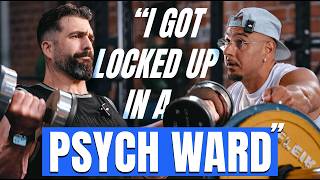
In this YouTube interview‑style gym session, host Mark and guest Luke (Luke’s brother) discuss Luke’s transformation from a teenage drug addict to a sober, compassionate trainer who runs a recovery‑focused fitness business (Moudcare). The conversation weaves between intense workout cues and deep personal storytelling: Luke recounts his early substance use, multiple rehab stints (first in 2013, decisive program in June 2016), a life‑threatening Jeep crash, seizures during detox, and the death of his mother’s child due to a birth‑defect. He explains how disciplined training helped him survive and rebuild, and how his brother’s support and shared values of empathy shaped their business model. They explore coaching philosophy—distinguishing empathy (understanding a client’s struggle from a distance) from sympathy (joining the client’s emotional boat)—and stress the importance of authority and personal responsibility. The duo critiques modern “victim culture,” argues that identity should not be reduced to “I am a recovering addict,” and highlights the power of resilience and choice. Mark shares his own OCEAN personality test results to illustrate how traits influence coaching style. They also touch on their low‑budget, word‑of‑mouth marketing, social‑media as a photo album, charitable fundraising for the Royal Children’s Hospital, and personal health challenges (collarbone injury, family esophageal birth defect). The session ends with mutual gratitude, a call to action for viewers to contact Moudcare, and a teaser for future episodes.
Chapters
First time I entered rehab, I entered because I was driving and I kind of had a blackout. I had a Jeep Wrangler, I flipped it twice, my dog got thrown out of the car, I got pinned under the steering wheel. I knew the police were coming. I got locked up at Austin Hospital for 13 days and then a psychiatric ward.
Well, for me it's so sensitive talking about, but your mum was murdered.
Drive, drive.
And we used to have crazy workouts, strongman workouts.
To give you an idea, there was blood on the ceiling from where a strongman would do the log. It knocked his jaw and it splatter on the ceiling. So you just had a line of blood, man.
This was a so hectic, proper hardcore gym.
Come on, come on.
You grow up as a kid who has an alcoholic mother.
Well, there was more there. We had suicide. Grandma killed herself, auntie killed herself, and then my sensei that my mum connected me into karate ended up hanging himself. I actually felt as a child that anyone that I loved was like a curse on them. So you can choose to be a victim, or you can choose to utilize those experiences and learn to be like a superpower.
Flex it, flex it, flex it, flex it. Good night, Chuck.
That's why I say like everyone is powerful beyond measure. People are amazing. Human beings are incredible like that.
You work with autistic people?
Yeah.
Am I autistic?
Cut, cut, cut.
What are we doing today, Mark? Uh, we are doing a workout with Luke. We're going to do a close grip bench. It's probably not gonna lie, it's probably going to get a little bit competitive between us. We're going to reverse curl, then we're going to go into supported bicep curl. So probably get pretty heavy on the bicep curl, be lots of fun. Woke up with a throbbing headache this morning though, so just did a blood test and— oh shit, my iron is a bit low, which is surprising. So I'm going to start recooking with my cast iron pan. Low iron for me is a genetic thing, don't absorb iron well. But, um, yeah, that's nuts because you do eat a lot of meat. Yeah, so much meat. All right, cool.
Keen for this one. He's the man. What's up, man? Good to see you. Nice and quiet today.
Yeah, it's just you and I. Um, we should probably turn the music off.
Hey bro, how are you? Good to see you. Did you have clients today?
Oh, I just pretty much got—
I just need time to absorb it all. What's that? Is that the beta-alanine?
No, this is electrolytes. Um, I'll get you—
when was the last time I was here?
Come around to this side, I'll chuck a few things at you.
Bro, it's looking incredible.
Yeah, I'll show you.
Wow.
Oh, I do.
Is this mine? So good.
Yeah, we're definitely having that today.
But I don't want a stim because I've had a coffee.
Oh, these are stim.
How far am I?
It's okay.
Yeah, that should be fine. Does that give a pump?
Uh, yeah, it does.
Can you just get me one, please?
So when you do this Put your rib cage— see how you flared your rib cage?
Yep.
Yeah, correct. So pull it down. So you might even need to go wider there. We'll pull this down, pull this down. More, more. Yeah, now as best you can, all the way over.
Yeah, cool.
Keep your abs on, keep your abs on, keep your abs on. Flex your quads. Flex, flex.
No, I am.
Lock your knees, lock your knees. There you go. Lock your ass. Yeah, there you go.
So if you look here Jeez, I've definitely got tightness on my right side.
So this is a good warm-up for our shoulders, our biceps. So we're doing arms today.
You know, there was one exercise you taught me about— how long ago? 15, 16 years ago— that we used to utilize this wooden bar with a couple 2.5 kilo plates. Do you remember that?
That's exactly what we're doing to do the trap 3. Oh yeah, yeah, yeah, which is just incredible. Put a little weight on if you want to go straight to 2.5, if you want to go 1.5, and we want 6 good ones. So like this as a warm-up from upper body day, and you want to do this nice and slow. So imagine my analogy that I always use when doing this type of exercise is you don't want to pre-ejaculate with these exercises, as in you don't want to go too fast. You want to make sure you Go nice and slow and really feel the sticking points. Like here for me. So you want to be like Gumbercules? Half Gumby, but fucking no one remembers Gumby.
Do you remember Gumby? And his orange horse.
Yeah, I don't know the orange horse's name.
Pinocchio.
It's not, it's not a problem. Bit Gumby and then part Hercules.
I'm pretty much full Hercules.
How long have we known each other?
Well, I'm 39 now, probably 22 or 23 when I was 22 or 23, so quite a while now.
It's like 20, almost 20 years.
Yeah, coming up.
And we met at Definition. Yeah. Oh, uh, shoulder extension. So do this until I am— this will fuck you up.
You're doing weighted?
Yeah, yeah, do weighted. So put it behind your body, then put your hands supinated the other way. That's it. You might need to go wider. Let me just watch you do it. Watch me do it for a sec. Yeah, so when you do it, see how my rib cage is on, my quads are flexed, because we always do shoulder flexion, right? So this is shoulder extension. We come out and keep everything tucked.
Oh, that is—
and you should feel it. So you want to come up and hold. Yeah, it's just to really switch on our shoulders. Oh, at the— when you start, do a little shrug. So you bring up into your traps, yeah, your upper back. Keep your arms locked and pull out. Keep that rib cage on top. You want to hold that. It's nice, get you a stretch in the bicep but also work your shoulders. Shout out to former US Olympic gymnastics coach Christopher Summers for showing me this one. I was in one of his classes years ago and he gave me this test I was on the floor and I did a stretch with my arms and he was like, whoa, you're basically God in this class because the amount of muscle mass and flexibility.
It's actually very brutal.
This is the best compliment I've ever had from any— like, couldn't get a better compliment. I was really happy with that. I still brag about it today, as you can see.
Yeah, I can see that.
Well, you know, you get a US Olympic coach calling you God in his classroom. No, you know, you've got to be doing something right. You know who has the best biceps in the world? Gymnasts. Yeah, and they don't do any curls. It's this type of work.
Amazing physique.
Because the tension point, everything goes through into the center point. So basically, the reason why gymnasts have the best biceps in the world is because the biceps are functioned to prevent the elbow from snapping. Because like an iron cross, you can't— the biceps, they're completely functional in that position. If your arms are locked like this, the bicep has to prevent the elbow from snapping. That's why they're such gigantic biceps, because they have to.
Yeah.
So including some of this work is going to help with bicep development as well, indirectly. Most people wouldn't think of it like that, but because it's forcing that position where you have to stay stable and the function of that bicep in this position is preventing that elbow from snapping. Yeah, like a straight arm pull work on the rope.
There's that other PT that had an amazing physique and he's very popular and he moved all from that bodybuilding kind of mentality to all mobility stuff. Now he's an Asian guy. He's got a really cool YouTube channel. What's his name? Eugene.
Oh, Eugene. Eugene. I did a podcast with Eugene. Oh wow. I know Eugene. Eugene and I are friends. He's a good guy. He also taught for my Wolfpack. And, um, taught what? Taught for my Wolfpack. But then, yeah, like, he brought out John Meadows.
He did your Wolfpack?
No, no, he came. He was one of my, like, 2017, I brought him in as one of the teachers.
Yeah. Oh cool.
Yeah, yeah.
So yeah, cool.
Um, and then that was actually when he presented, my father passed away like the day before. Yeah, oh no, it was that day. The day he presented was the day my father passed away, so I didn't— like, when he was there, it was a bit of a blur because I wasn't really there. I wasn't there when he presented.
Yeah.
Um, and then he, yeah, he did the muscle mechanics stuff for a while, and then he brought out Tom Platz. Do you remember Tom Platz? Yeah, he brought out him, and then we went to lunch as well with Tom Platz. It was him, me, Tom Platz at lunch. Oh, you met Tom Platz? Yeah, yeah. And then he's— Tom Platz, this is Great guy.
Amazing, huh? Like, he's mass, the mobility. He looks—
oh, he's like 60-odd when I met him, and then he looked short. Yeah, but he just looked full of life. And then, you know, his like girlfriend or something was there as well, and every time Tom would get excited about something, she'd be like, you've got to settle down. And I'll get so excited. That's really interesting because me and Eugene were like talking to him, and then he'd be like hit the table and be like, you've got to train hard. And then his wife, or whoever it was, like, no, just, just relax. You're going to get your heart pressure too high. You need to keep your heart down. That is so cool though. Yeah, yeah. Legs.
Yeah, it's a mania.
Yeah, we're going to do, um, close grip press.
Yeah, cool.
Do you want to start?
Yeah.
Okay, so I might have to take my out of here.
So I won't tweak the first couple warm-ups, but as we go along, if anything needs tweaking, we will tweak. Um, And your feet position are interesting because one is turned out completely and the other one is somewhat neutral. Do you feel that? And your hip, your hip is very uneven. It's very interesting. Have you like done something to your hip?
Maybe.
Yeah, I don't know if you can see that, but when you're on the bench— hop up, so I'll do my warm-up— when you're on the bench, this, this foot is like this.
Yeah, the right side.
Yeah. And this is like dead neutral. Yeah, you're locked up.
Yeah, I feel it a bit.
So we're going to go close grip press, slow tempo down to about 4 seconds and, um, 6 reps. So warm up in 6s. And then we're going to move to here, which is reverse curl. So I'll just show you this. So we're like this, Luke.
Yeah, and I gotta feel that because I had a little injury on my forearm.
We can go— yeah, feel it. You go first, because if this is no good, we'll change exercise. How is it? Bad.
Just a little bit.
Yeah, let's get the—
yeah, probably stay away from it.
I'm just popping in the hole there. Tell me if this is any better. Reverse? Yeah, because this is— that was fat. The skinny grip might not. And if that still hurts, we can do neutral. Yeah, it's still bad. If you chuck it into, uh, put it back on the Preacher. Like, you got so many bars, that means we're going to be able to go heavy as fuck on this. Try this one, cuz this is a nice Dr. Tom Barr.
Yeah, that's fine.
Yeah, yeah, that's what I thought. I thought it'd be fine.
Good, good.
Thank you. So tell me about—
what do you want on here?
Uh, let's put tens. Yeah, to begin. Tell me about— obviously, people first time watching, maybe hearing your story. But tell me about, like, when we met in 2009, what were you doing? Where were you at?
Wow, 2009. So I think I was, um, I was in real estate. I was doing a cadetship at Barry Plant, um, wanting to be a real estate agent in the Manningham area. Um, you're up first. And then we met, I think, at Definition.
Yep.
I'll do this.
6. Just warm up. So a bit slower.
Oh yeah, good.
No problem.
Not all good. Yeah, and so I was, uh, focused on, on work, focused on training, wanting to get as big as I could, um, and the rest of the things you're doing at a young 22, 23-year-old— chasing girls, partying, going out, enjoying life.
When did you go to rehab?
Rehab? Wow, which one?
First time.
First time. First time at rehab was 2013.
Drive.
You hold the brace the whole way through and breath.
Yeah, I try to.
Yeah, yeah.
Intra-abdominal pressure and keeps that stability by holding the breath.
Yeah.
First, how many times have you been to rehab?
Twice.
Twice.
First rehab was 2013.
Yep.
It was an amazing place to meet some contacts, um, a bit of networking and that kind of thing.
What do you mean networking for?
Yeah, well, you've got to be careful. Those places, they have some amazing outcomes, um, but then they also have— you're surrounded by a lot of kind of bad people as well that are on the other side of the law and So the contacts that you met there weren't good? No. Well, to me then, if you asked me, they were good. Um, but when I look back now, no, not really. Um, so look, I, I, I did get sober for a period of time, probably a couple months. Um, but it wasn't really the, um, it wasn't the thing that kind of turned it around for me. The second rehab in 2016 was the one where I was able to kind of meet all my dark demons and work through a lot of the trauma and shit.
So you struggled— would it be fair to say you struggled with this for what? Well, just that when, when the— I suppose the drugs start—
the drugs started, uh, probably in my late teens. Um, yeah, I was never really into drugs at an early age, but when I went Got out of school. I was in a very kind of Australian school. Is it my turn?
It's your turn. Weakest always goes first.
Yeah, that's right.
Sure. This is still warm. 1, 2, bring more control. 3, there you go. 4, try and straighten the elbows at the end. 5. 6. You got 8 here. This is still warm up. Good. One more, one more, one more. Just do 8. We're not going to count that as a working set.
Um, what was your question? When did I get into that?
Yeah, when did the drugs start for you?
Probably when I was about 18, 19. So I was— grew up in an Aussie school. I was very kind of Um, I suppose introverted, very passionate about nature and wildlife and animals. At a young age, I wanted to be a herpetologist, which is a study of reptiles and amphibians.
That makes so much fucking sense now. I didn't know that.
Um, so I was out, and we grew up as well in North Warrandyte, which is bush everywhere. So I was out running amok in nature. Um, and then When I turned 18, got out of school, I wanted to follow my dreams. I got into biological science, but then I met a lot more people that were more culturally similar to me, and so I started going out a lot more into the club, into the nightlife.
When you say culturally similar to you, what do you mean?
Well, I was in an Australian school, and I was raised— my dad is Serbian and my mother was Dutch. So it was very like, you know, I was hanging out with Aussie kids, I had lots of friends, but culturally it was very different as well. So when I got into La Trobe University in Bandura, there were wogs, Arabs, everything there. And culturally, I think it felt a lot warmer, connected. I felt like I had a family that maybe I didn't feel like I had growing up as much, so, so to speak. Um, and so I really connected with a lot of people there, but then I started going out and exploring the nightlife and women and that kind of thing. And that's where I started dabbling in drugs.
6 reps. This should still be— this should probably be our last warm-up. Yep. 1, 2, 3, 4, 5, 6. No pain?
Nah, feels good.
Good. So yeah, so from that, like, then that you got exposed to drugs, but like, was that circle like drug dealers? Were they not really at that stage heavily, or was it just like the gateway of—
look, I suppose it was a progression. It just started enjoying the nightlife and then networking and meeting others, and then before you know it, I was a promoter, um, working at clubs. And then I was a host, having my own board of promoters at some of the biggest clubs in Melbourne back in the day. And then I suppose you start connecting with other people around drugs and that kind of thing. And, um, yeah, using, selling, whatever it may be.
I have to move a lot slower than you because my elbows just won't take a faster pace.
Do you feel it now?
Yeah, I felt that. That's why I just got to go slow into it until I'm really warmed up and lubed up. Um, how was that weight for you?
It was okay.
You want 5s on?
Yeah, I could probably go heavier.
Yeah, 5s or 10s?
5s. For me.
Yeah, and we'll probably make this set 1. I'll put clips on. Yeah, let's get some clips on. So I got 1. Um, did you ever— was there any point where you're like, shit, I'm in trouble?
Or like, uh, yeah, lots of points. I'll tell you in a second.
1. Don't jerk from the shoulders. Lock the elbows out.
2.
Don't use your body. Just be biceps. Just be biceps. Squeeze. That's better. Call that 4. Squeeze. 5. That's better. No chicken. 6. Don't be chicken with your head. Keep up tall. Squeeze. 8. Good. Squeeze. Good. That's it. That's it.
That's it.
I'm feeling it a little bit in there. What I did was I think I was doing weighted pull-ups, and then I don't know what it was. I think I rotated these forward and I wasn't pulled back here, and I actually think there's a pain in here, but it's to do with somewhere back there connected. And anyway, it's, you know, quite tight in there. What was your question, Mark?
When was the first time that you thought, oh fuck, I might be in trouble? Like, this is— this drugs, this life is becoming an issue.
Bro, to be honest, it doesn't really work that way.
No? Tell me, explain why.
I mean, the moment you kind of realize you have a problem is the moment you really do have a problem. The moment you realize you had a problem, you really had the problem 5 years before that moment. So all through my early 20s, I was just enjoying life, staying present, staying in the moment in the bad kind of way. Um, drinking, drugging, enjoying. Um, the moment I kind of realized that I needed to turn my life around was not far off the moment I got sober and did. So in my early 30s.
Yeah, so it's progressive. It's a loose—
it's, it sneaks up on you. You don't know, you know, you're enjoying, you're having fun, you're also kind of deluding yourself and making reasons why it's okay and how you manage it. And you know, that's standard kind of drug addict behavior. People come up with every reason why they might not be a drug addict, why they might not have a problem.
Why it's not addiction. Why it's—
yeah, you know, there's a lot of accountability you have to have to kind of come around and realize that you have a problem. And there are a lot of signs in those early days in my 20s, you know, being on the wrong side of the law, lots of fights. Lots of, um, issues just with people and different things. Um, but yeah, it was just kind of enjoyment. And now looking back as well, you think you're having fun and a great time, but a lot of it is just kind of masking emotions and feelings.
And since 2013, you end up in rehab. Yeah, like, what are you thinking? What are you feeling? Like, is this a complete shock to you?
Like, because you said it sneaks up on First time I entered rehab, I entered because I was driving down the road and I kind of had a blackout. I had my dog in the back of the window. I hit a, you know, those yellow train stops where it goes up kind of thing when you get to a— Yeah, I hit one of those. I had a Jeep Wrangler. I flipped it twice. My dog got thrown out of the car. I got pinned under the steering wheel. I knew the police were coming. And so I had a choice to panic or to try and control myself. And I was full pinned under the steering wheel. And I just remember focusing on my breath, staying calm to get out of that situation. And then, yeah, a whole bunch of other shit kind of entailed around that, that I had to deal with the ramifications from. But that was where I realized that, yeah, I had a problem here and I need to deal with it. And that was the first time I went into rehab. And there was huge amounts of guilt around my dog. My dog was fine, I found him in the end, but I'm a huge animal lover as well. And so to know that my actions had caused that and could have been really bad for my dog as well really, really affected me.
So that was that the motivator? Jump on. Was that the motivator for you to go, fuck, I need to—
That was the first motivator, but that wasn't the rock bottom that I needed to turn around. There was another rock bottom that happened, and that last rock bottom was almost death.
Right, 60, your best. It's 80. Good. 1, keep that chest up high. 3, 4, 5, 6. Good. 6. Let's keep to our reps.
I thought you said 8.
No, no, 6, 6 to 8 on the biceps. 6 here, 6 here, 6 here. Yeah, we can go, we can go heavier, but I want to, I want to keep to our reps because reps determines our training effect.
Up 90.
90? Yeah.
What is now?
80?
Yeah, sure.
Take the 10s off, yellow's on. Okay, so dog flips The Jeep flips, you have a wake-up call, you're in rehab. Part of it's good, some beautiful facilities, people, etc. Part of it's really bad because you meet others.
During that time I came to visit you, I don't know if you remember that, and you dressed up as a gnome. No, I wasn't.
Fuck.
I remember you came into Enterprise and you came in like a onesie and you had like, it was like a checky onesie, right? Wow. And I'm like, what the fuck are you wearing? And you had a pajama onesie on.
Maybe, actually, I don't know.
And I've got photos because I thought it was like—
honestly, I kind of— yeah, I can—
with you and Kava and—
oh, 9 o'clock at night? No, that wasn't the time. But I remember that as well. Yeah, yeah, that was with the boys and we were—
I think Sim was dressed up and I was like, what are you guys doing?
No, this was another time and I asked you if I could utilize your gym because I was down here in Richmond at Richmond Clinic. He said, yeah, but you've got to get here early. And every morning I came to train here. Yes. And then I came one morning and slipped on the tracks and fucked up my wrist really bad. My hand blew up. So that was the time I was at Richmond.
Um, even my guys were calling me like, oh, Luke's doing this or something. Yeah, I remember my team were like, because I was like, I was putting the music up and stuff. Yeah, yeah. And they were getting annoyed. Yeah, yeah, my team were getting annoyed at you because you were You had the music up?
Yeah, yeah, probably.
Yeah, yeah.
Are we staying? Did we move this way?
We did. Yeah, same way. We've gone up by 5.
No, for me it's all right, I reckon.
Yeah, good.
1, keep pitching up. 2, 3, good. 4, 5, 6. 7, 8. Good. This might aggravate your arm, so only try this one. No, this— if I tell you what I was going to say, you're here with your hips.
Yeah, I need to go here, pull your rib cage on top, stay steady.
That way the elbows will be a little bit forward and move from here. Yeah, yeah, rather than from here, because you're a little bit like when you're doing it, you're Yeah, like chicken dancing it, where you want your body— the only thing that should really be moving is your elbows, right? You don't want— like, you don't need anything else to move on this.
I hear.
So if you watch me here Come on.
Yeah, so that was my first rehab. Funny enough, that was the same rehab that my mum went to many, many years ago. Wow. Because my mum had addiction problems as well. I had a pretty rough childhood, all over the place, not very stable. Childhood.
So you went to the rehab though, it wasn't enough of a wake-up call for you to get clean completely? Like, how long was it before you— you went to rehab 2013, and what, as soon as you get out, were you using again?
No, look, I was somewhat coming back with an idea of being able to manage myself and manage my substance use, so to speak, um, which didn't really last that long. Um, yeah.
So you didn't get out thinking, I'm going to be clean. You got out thinking, I'll just use a little bit.
Um, I got out thinking I was going to be clean for a period of time, but not with a real strict focus on turning my life around, just to kind of give myself a break, so to speak. This is also after the time I had a psychosis. I got locked up.
Was that 2013?
Yeah, that was 2000 and probably 2012 to 2013, somewhere around there. Right. And I got locked up at Austin Hospital for 13 days in the psychiatric ward, which was a very scary time and a scary place. It's actually one of the most scariest things.
Well, I've got a question on that. But get yourself set up here.
Yep.
1, 2, stay tighter, 3, 4, 5, 6. Gotcha.
Very good.
So you said it was one of the most scariest times.
That was scary, yeah.
What—
how, how does one bounce back from psychosis and How does one bounce back from a psychosis?
I'm guessing it was a drug-induced psychosis.
Well, it's funny you should say that. It was considered a drug-induced psychosis, but for that period of time I hadn't had drugs for quite some time. I think it was more induced by sleep deprivation, right? Um, but tomatoes, tomatoes, tomatoes, you know, it's, um, hard to say exactly. The fact is that I went into it and almost didn't come out of it.
Right.
Very scary place. And once you're kind of institutionalized like that and you're fed more, um, it's like antipsychotic drugs and that kind of thing.
Yeah, it is.
It can be really hard to come out of. So I was in there for 13 days.
Yeah.
And then I, um, went back home, stayed at my dad's house for a period of time, and I think it was, yeah, 3, 4 months until I slowly really kind of regained reality, reconnected. You want to lift off?
Um, yes please.
Drive up. Good. Yeah, so that was a really scary time.
Was there something— you're in this deep hole, and that wasn't rock bottom yet. We'll get to rock bottom, but you're in this deep hole. Was there something calling to you on the other side of that deep hole of the psychosis? So you're in this I don't know, are you questioning what's the point of life at that point? Why do I keep going? Was there something on the other side that you got an inkling of, I need to keep going?
There wasn't at any moment in that stage, and I'd been through dark days in the past where moments of contemplating suicide as such, whether how close I was to it or not, I don't know. But not necessarily wanting to be here. And that wasn't really a moment, it was more just trying to kind of, uh, regain reality, I suppose, and get back in touch with what's real. Um, and extreme fear and confusion. It's essentially hearing, seeing, imagining things that aren't there, that they are there, and I don't know, like, even today looking back at that, and I don't necessarily say that everything I experienced was a delusion or not real. I may have also kind of been seeing things that on a frequency we're unable to see on a normal day, and I was getting in access to that. I don't know. But, um, at the end of the day, I'm very happy that I came back from that. It was scary. It wasn't the last time as well. I ended up going through almost another psychosis down the track when I, uh, the last time I, before I got sober.
When, before we move into the next time you went to rehab, what, when you say there's access to things that you can see, yeah, what do you mean by that?
Um, what I mean is that I think the way we interpret our reality right now is only to a level of understanding that we can necessarily comprehend, any normal person out there. And I think there's a lot of different things that might be happening all around us at the same time, and we might just not be on the frequency to pick up those things. Um, and so I think people that may get into that zone where they disconnect from reality and they experience different experiences, um, who are we to say what's real and what's not?
Yeah, I guess when you say different experiences, when you say different experiences, you're talking about different emotional feelings, states, or you're getting information from the world around us that wasn't accessible before? Because obviously we're always editing things, there's so much happening around us.
Probably a mixture of all of it, and even seeing certain things you know, different things which might be there or might not be there. Um, yeah, 8 reps. Good.
Keep that rib cage stacked. 1, 2. Good. Just use your elbows. 4. Good. 5, 6. Good. Come on, 7. And 8.
Very good.
The rib cage was a bit better.
It is a lot better. It's a lot better.
It was a lot better.
So a few— 3 years lapse. 2013, I opened up Enterprise. 2000— we're 3 years in now.
So that was the year you opened up Enterprise?
Yeah, 2013.
Wow.
Yeah, March. Yeah, opened up Enterprise 2013 in March. Yeah, it's just one street. Now we're 3 years on.
Yeah, so for me, before that, the period between the first time I went to rehab and the second, I was, um, somewhat on a steady downward spiral, hanging with the wrong people, living on my own. I was living with my dog and hanging with the wrong crowd, doing the wrong things. And yeah, I just slowly— go, Mark, push. Yeah, I slowly kind of more and more began losing myself to drugs, alcohol, whatever I could get my hands on, becoming kind of paranoid again and distant from everyone, family, friends, and whatever, isolating myself. And then towards the end, I always had my mum in my life. My mum was an alcoholic when I was younger. She was an incredible mother when I was sober, when she was sober. Um, but the times when she would drink, she would turn into another person. And so when I was 17, 18, she got sober. And so in my adult life, she'd been sober for then by that stage maybe 15 years, but she was still in my life with my brother. Um, and that last straw was she kind of kicked me out of her life. She said, I can't do this anymore, you're on your own. And I think that was one of the best things that she did for me And yeah, I just kind of slowly declined after that period. And I turned to my mum, I said, I've had enough of this. I'm ready. I want to get sober. And she said to me, Luke, if you're serious about this, 100% serious, you can come to me, we'll have a chat and we'll start the process. And I went to her that day at her house. I was living by myself with my dog at that moment. I had a chat to her and she told me I could detox at her house. She didn't know what I was detoxing from. Um, I laugh about it now, but back then it was quite crazy. So I started the detox. The first night I was there, I started getting paranoid, almost falling into another psychosis. At night I couldn't sleep, um, and I ended up— I realized something was going on physiologically in my body. So I got up and I went to my brother's room and I just dropped in front of his door. I fell into his door, dropped on the ground, started going into a seizure, and then woke up maybe 12 minutes later to the ambos, yeah, kind of resuscitating me, getting me back kind of thing. I was foaming and everything like that. And I remember waking up and seeing my mum and brother looking down on me. And in that moment, that was it. I knew that was my rock bottom, right? That was my rock bottom. The thing I realize now, which I didn't know then, I was on a whole list of pharmaceuticals. I was on benzodiazepines daily. And if you get off those things like alcohol cold turkey, it can kill you. Your body develops like a, not a resistance, but, and not a tolerance as such, but hormonally it needs dependence. Yeah, and independence. And so if you cut it off cold turkey and you don't have anything to wean off or anything, you can die.
And that's what the reaction was from?
That's what happened, yeah.
Wow.
So then I went into hospital. I was there for a day or two. And then after that, with the help of my mum, we looked for a proper rehab and signed up to— I was very lucky to be able to get into a private private rehab, private hospital rehab. I got into Melbourne Clinic, which is entirely—
this was 2016.
This was 2016, yeah, June. So we're going to Melbourne Clinic, which is entirely substance-free. They don't utilize— only when they need to, to detox for people that have dependence on the things that, you know, like the things that will affect you if you get off cold turkey. But essentially they don't give any drugs to any of their patients. And that was fucking brutal for 30 days. Just, we had constant daily counseling sessions, group sessions. Yeah, that was tough going back to deal with all my past traumas.
Focus here. 6 reps, Luke. I'm here.
Did we go up? No.
Do you want to go up?
No.
Well, maybe soon.
Yep.
3, 4, 5, 6. Were you going to be cheeky and try to do another one?
I could, but I'll just go up a little bit, I think.
Yeah.
Um, so yeah, after that, um, That was the day my sobriety was, June 13th, 2016, and I haven't touched a drink or a drug.
June 13th, 2016.
Yeah, yeah, I haven't touched a drug since, coming up 10 years.
I've got a question about the brutality, but I'll do this first one.
Yeah, when you're ready, big breath. Yep.
Yep. Drive up, up, up, up, up.
Drive.
Oh, go up 95, 100. Take these off.
Uh, you have 5, you don't want to do 100.
Stair, 10-kilo jump. Yeah, we'll go with 95.
100.
There's 10 kilo jump balls.
So what are you doing, the minimum?
Yeah, they're 2.5s. Okay, cool. So that makes this 95.
It's heavy.
You use the word brutal.
Yeah.
What was brutal about it? The mental, the intellectual, the emotional, the physical withdrawal, mixture of all, all of those things?
All of the above. I mean, for me, really, the most brutal point was delving into all my past traumas. And dealing with them and going through that and having love for my inner child that I never really did. And yeah, breaking it all down, peeling back all the layers of the onion.
And you do that daily? Uh-huh. You did that daily?
Every day there, pretty much. We had a mixture of different meetings, NA meetings, Alcoholic Anonymous meetings. We had one-on-one sessions with a psychologist, then we had group sessions, group counseling sessions with drug and alcohol ex-drug and alcohol, um, counselors.
Yeah.
Um, so it was an extremely high-intense program, almost set up like a military schedule where you're up at 6:30, you've got breakfast for half an hour, and you're straight into programs, right? And then it goes all the way to 5 PM, you have dinner. After dinner, you have a choice to go to an NA meeting or an AA meeting at 7:30. NA is Narcotics Anonymous, right? AA is Alcoholics Anonymous. But it was—
would you go to both, or would it be—
yeah, I would explore both. Yeah, right. But it didn't really matter because the message is the same. 12 steps, all of that. Yeah. And really kind of realizing that we've lost their— like, we don't have control over drugs and alcohol and this addiction, and, um, letting go.
And so you said before about like you hit a rock bottom, foaming at the mouth.
Yeah.
Then you have this internal work that you do at this drug rehabilitation place. How much of it do you think was you hitting rock bottom versus getting therapy? Like, did you make a decision?
No, you have to hit rock bottom.
Yeah, I know, but that's what I'm saying. Like, would rock bottom on its own suffice? No, you need the work. Yeah, you need both.
I really believe so. Yeah, because rock bottom would have been a rock bottom, but without the work, I would have ended up back at another rock bottom. Or death. Because at that point, for me, it was either jail or death. There's no real great outcomes at the point that I was at. And then the other option is the one that I picked, and that's why I'm here now.
Well, that's what I say about hell. The definition of hell is the bottomless pit of things can always get worse. So rock bottom today, it could be—
well, that's it.
It just can continue.
And that's—
and that's—
yeah.
And that's it.
Do the work.
Yeah. Um, so look, in the line of work that I'm in now as well, we work with a lot of people that have drug and alcohol addictions. So I'm— I feel really grateful and lucky to be able to have the experience that I've had to enable me to help others if they're ready to be helped. Um, now in the, in the line of work that I'm in, um, let's pause there for a sec.
Let's do this. Yeah, because I've got heaps of questions about that before we transition to another. 1, 2, 3, 4, 5, 6, 7. Good man, good man. That's so much better. 8. Well done.
Drive up, up, up.
Almost light for you. You can do it heavier.
So this bicep brachialis, I'm feeling it a little.
So where are you feeling it?
A little here, a little here.
Same as me.
Yeah, it's a little, it's a little funny.
So where is that from necessarily in here? Uh, because I feel like mine almost stemmed from here. So when I was doing weighted pulls, I wasn't retracted, I'd roll.
I think, yeah, and then you put more pressure into here, right?
And I didn't—
because you're— it's not necessarily coming from this. No, it's because you added pressure into this instead of here.
Yeah, I lost my retraction on the last couple reps or something along those lines. I didn't even feel it happened.
You strained?
Yeah, I didn't feel it at all on the day. I only felt it the day after.
I made two tears in through this muscle here. Yeah, by doing, you know, yoke carries, virtual yoke carries, 140 kilos. I picked it up, and then first way down, great. And the second one, I picked it up and went to this side and I went like this. What it cardiovascular-wise and like overall taxing the body really taxed me. And I got it right. I didn't even feel it when I tore it. I tore through two places because the bar was like thick. And then next day I went to go do military press, grabbed the bar, I'm like, ah, what the hell's going on? Yeah, I'm like, can't do military press, so I can't even hold it. Yeah, got a scan, two tears, one 9mm, the other 8mm.
Is that a large tear, or is that—
yeah, it's reasonable.
Okay.
I mean, it wasn't full tape because obviously I didn't do something like that, but it was the direct pressure of the yoke carry pulling me in and me pulling it back in to finish the walk.
Yeah, high-risk exercise. It's a scary one. Well, it's just so like zurcher squats as well on a thin bar when they're like—
yeah, fucking— well, a thick bar I found was even more uncomfortable.
Oh really?
Yeah. Um, we already have gone up What do you— tell me, what are you doing today? Like you said, this line of work that you do today, what is your line of work?
So I, um, run a company called Mowcare. It's actually named after my mum, with my brother, um, and we're a support company helping people with disabilities, both physical disabilities, psychosocial, so mental health issues. Um, so that's also helping a lot of people that have drug and alcohol addiction issues as well. And we build programs and support them in their daily life to be the best that they can.
So this whole space is very near and dear and close to your heart.
Super.
For multiple reasons.
Ah, yeah, for multiple reasons.
And we'll get into the other reasons soon, but not yet. Yeah, yeah, there's a whole other chapter. We'll wait until we do this and then we'll get into the next chapter.
Lots of different chapters.
So stay tuned because—
You know what though, there's so many times like it's crazy. And I'm so grateful for the life that I've had that if I told— if I put my life on a movie, people would leave the movie early because they wouldn't believe it. It's too unrealistic. All those things wouldn't necessarily happen. It's just a whole bunch of crazy experiences.
All right, 60 best. 95. Good. Drive with the heels down. 2, 3, 4, 5, 6. Good, man. It's getting easier for you. Strong triceps. Yeah, I'm trying to leave that chapter alone until we finish bench pressing.
Yeah. You get into it whenever you want.
Yeah, I'll do this set. Actually, let me roll this back for a sec, and then I'll roll it in when I'm in position.
Drive, drive.
3, 4, come on. One more.
You want to do one more set, don't you, at 100?
Huh?
You want to do one more set at 100?
I'm easy. I'll go with the flow. Whatever you want to do. Doesn't bother me.
Well, we've hit our sets.
So then we'll move on.
But now the viewers at home are like, you fucking little bitches, why don't you do 100?
So we'll fucking do 100 then. Let's go.
What are you— Let's go. You're going to say something to the camera now?
Yeah, you got a problem, Marcus? Do you think we're little bitches?
Yeah, well, for our workout, this is— I wanted to leave it at this point.
Let's leave it and move on. Yeah, so people have to tune in, and the inside story will always be that— the inside story will always be that I got too heavy for Mark and he bailed out.
We can't—
we'll have to sign an NDA before we leave today.
That's it. Could he do it? Could he do it? Could he not? We'll never know.
To be continued.
Maybe next workout you'll find out. Be in the moment and shut up.
All right.
Do you like John Cena?
Fucking everyone loves John Cena.
I am the biggest John Cena fan that you—
I don't know what that is. Last time— is that what he says?
Last time is now. This is the last time is now. He retired last year.
And that's his—
this is— he's Australian.
That's the tea towel he released?
That's the tea towel he released, that's correct. He released many tea towels. I've actually got two of the tea towels he released. This is one, this is the Australian one. The other one is—
You dry some serious dishes with that.
I use this as my gym towel. So you're going to be fortunate enough to be using my John Cena Australian tour. You know, I ordered the Australian t-shirt and got lost in the mail. Yeah, really. So I had to order the New York one. Yeah, um, because yeah, John Cena is my hero. I met him, gave him a hug.
Oh, I've seen him.
Yeah, I gave him a hug. I met him. I said, can I give you a hug?
But it almost looks like a wax model, the photo on your profile.
Me or him?
No, yeah, both of you. Yeah, no, him. Like you're standing next to a wax model for memory.
I don't know. No, no, it's not wax.
It's real. It's real.
Of course it's real.
I'm just checking. You never know.
These tickets were expensive enough.
Huh?
Ticket was expensive enough. Um, So 10 reps. Yeah. Seated.
Yep.
Use this as support.
Yep.
What weight are we starting with that one?
Yeah, uh, yeah, we should be able to do— if you want to do that, they're the 15s. Can you do 15s? I've got the 12s there as well.
Yeah, yeah, yeah, should be all right. How many reps?
10. 10.
Yeah, right, fat grip.
Yep. 1, flex your triceps. 2, flex your triceps on the way down. Flex. And I want you to pull back your wrist like this to really— there you go, there you go. 3, flex your triceps. 4, pull back your wrists. 5, pull back your wrists. 6, good. 7, drive your heels into the floor and push yourself against the bench to get the tension. Good, 2 more, 2 more, 2 more, 2 more. Good, Luke, good, good. That's it, well done.
Thanks for all the cues, it helped.
You want to use that, what do you call it, counterforce. If you push against, you can like Yeah, rather than just— yeah, it helps. Yeah, push yourself against the bench to really like drive into that neural forcing. The other thing is like lock those arms out and pull the wrist back so you're outstretching the forearm flexors and really just hitting the bicep.
Yeah, I might have to try it.
3, 4, 5, 6.
Drive up. Two more.
Up.
One more.
Up.
Tricep.
Yep.
Here.
So what are we talking about?
Well, we were talking about the belt squat, but before that—
before that we were talking about—
before that we're talking about addiction and my work. What do I do? What I do with people? Yeah, and that kind of stuff.
So tell me about your mom.
Like, yeah, my mom, my mom was a, uh, my mom's passed away now. She passed away 5 years ago. She was an incredible human being, an amazing mother. Um, she really helped kind of set my values as a child, connected me to nature. And that kind of thing. She also suffered with addiction, so she was an alcoholic from the ages of probably when I was about 7 till about 17, which was very challenging for the whole family as well. But when she wasn't drinking, she was an amazing, incredible human being. So she connected me with a lot of really special things at a young age, like karate, animals. We always had animals. In and outside of the house, connecting to nature. So a lot of the founding pillars that give me balance, stability, and foundation in my life now, like, you know, my values and nature and animals and all that stuff, even what I bring into the workplace now by helping other people, was really kind of set up by my mum. And that's why our company's named after her as well, Mowcare. Her name was Maud.
Yeah, I mean, look, it's such a sensitive— well, for me it's so sensitive talking about, but your mum was murdered.
Yeah, yeah, yeah. So in 2000, and it's all over the news as well, anyone can search it if, if they want to, but in 2020 there was someone with mental health issues that was going through a psychosis that was running through the streets in West Heidelberg, um, and was trying to get into gutters and people's houses and all sorts of different things and ended up getting into my mum's house around the back door and grabbed a traditional Balinese warrior's mace thing that we had, like a wooden thing on the wall. And I was staying there at the time, I wasn't home then, but he grabbed that traditional ornament on the wall and bludgeoned my mum to death. Yeah, it was very hectic.
Yeah, yeah, it's I mean, you can't even put into words.
Um, I remember who, who, um, told you.
Yeah, was it you who called me?
Maybe, maybe Kevin.
Yeah, yeah, I think Kava called me. Yeah. And I was like, what?
Yeah, that was just, you know, it's one of these things, it's so amazing. And that's why I say to people as well, no one knows truly how powerful and amazing they are until they have to go through something. And if you ask me, like before, a huge part of my sobriety— and before my mum was murdered, she was actually diagnosed with lymphoma, multiple myeloma cancer, which is like a cancer in the blood, which to some is crazy and horrible and all this, but it was actually a blessing to us because for me, before she was murdered, myself and my brother and my mum got to connect on such a more of a deeper level, you know, questioning life and death. And, you know, really, um, she got to a space in her life where she was almost, you know, kind of ready to go. So how crazy the universe works. But after her diagnosis, that triggered us to all— and I was already lucky enough and grateful enough that I had already been sober for you know, 4 years or something like that already to really reconnect and rebuild that relationship again. But after she was diagnosed, you know, Adam and I, we really kind of teamed up with Mum to look at ways to help her through it and all this kind of thing. And multiple myeloma is actually considered an incurable thing.
Um, so you didn't know how long she had left?
No, not exactly. Yeah, and we were just looking at starting all the whatever that they do now, what's it called? Radiation.
Oh, right, right. The chemo.
Chemo and all that kind of thing. And she wasn't really up for it, but her being diagnosed enabled us to have all those tougher conversations about life and death and really connect on a deeper level.
So in some ways she had let go, you had let, not let go as in like, you know, you were there yet, but you had started to make steps in that direction.
Yeah, and also, you know, face and go through those uncomfortabilities that you don't want to talk about, you know. I mean, there's so many things that make us feel uncomfortable, and we're in a society now where it's better just to quickly distract ourselves from the uncomfortabilities than feeling them and going through them. But a situation like that forces you to have to face that and experience kind of and go through that. And it's like these events that happen in the moment, we can look at it and even afterwards we can say it's so fucked up, it's such a bad event. But you never know the outcome of an event regardless of whether it's good or bad. Some of the best events have 2, 3 years down the track the worst outcomes, and some of the worst events can have the best outcomes.
Do you see it as that Russian parable? I don't know if you've heard it, but let's do this. 12 reps. 1, 2, piece of piss. 3, 4, 5, 6, 7, 8, 9, 10, 11, 12. All right, I'm gonna blow your mind with what I'm going to show you to make it get more pumped. Yeah, yeah, yeah, yeah, yeah, yeah. So this, this will, this will blow your mind, right? So when you're doing it, do it like a body. So like press it into your body like that.
Okay.
Then let it come out. So it's almost like a rolling curl, right? So it's 2, 3.
That's actually quite good. It reminds me of a dance move I used to do 10 years ago.
Do I ask?
Just don't.
7.
That beaver, come on.
9. You got to tell everyone what that means, beaver. 11.
Come on. Yeah, 12.
So years ago when Luke and I would train together—
geez, we've got so many training stories.
I think it was at Dougherty's, the Beaver at Dougherty's. Yeah, I remember that specifically. There was a time at Dougherty's where we were training and I was working at Dougherty's in Brunswick, and I don't know what we were doing, but you kept getting out your phone and going, come on, Beaver, come on, Beaver. And I'd make this face.
What he does is when he's pushing hard and he's so focused, something happens with his lips where his two front teeth pop out and he looks like a little beaver about to create a dam. So it kind of stuck.
Yeah.
And I realized as well that you couldn't do your sets every time I reminded you.
So yeah, and then I would do it, and then you'd wait for me to do the face, and then I would really try not to do the face, and you wouldn't get the photo. You're like, yeah, there's no hiding from beaver face today because no, it's gonna— three cameras. No, we're gonna get into one of them.
Um, yeah, so what I was saying is you don't— you never know the outcome of an event.
Yeah, it's like a Russian parable. Have you heard it? It's like, um, so mother, wife— sorry, mother, wife— the wife, husband, son, the family, they have 4 horses. Yeah. And one day one of the horses gets out.
Okay, stop. So, this is a Russian— because I know it as—
Serbian.
No. Yeah.
Everything's Serbian. I know it as Italian.
No, I know it as— Alan, what's the story about the Chinese farmer?
I think you're going to know this one.
Right.
Yeah. So, then the 4 horses run away. Yeah.
Oh, how bad is that?
You lost a horse. It could be good, it could be bad.
Yeah.
Right. And then they come back with an extra 5 horses and, oh, wow, you've got these stallions.
Such a beautiful story.
It could be good, it could be bad. So, then the boy starts to break in the stallions. Falls off, breaks his hip, can't walk on the farm. Neighbor goes, it's really bad that your son broke his hip. Dad says, could be good, could be bad. The military the next day consigning young boys, they come in, the boy's leg's broken. Sorry, you can't come to war.
They don't sign him.
The neighbor says, wow, he's so lucky. Your boy's not going to war. Could be good, could be bad. And the purpose of stories just continues to go on.
I love that story.
Could be good, could be bad, we don't know.
It's such a beautiful story. And that says, you know, right there that you never know the outcome of a situation or something that's happened to you. And some are, in hindsight, you look back, some of the worst things that happen to you have some of the most beautiful meanings.
We can only connect the dots of life looking retrospectively back.
No, yeah.
You can't connect the dots when you're in the moment.
No, but I think it's very important for us to continually to do that and to realize and to look back and reflect. So then we can bring that into the moment and realize, fuck, I'm having a shit day now, but to stay present, stay in the moment, you don't know the outcome of this. Or, God, I didn't get that. I didn't get that business deal that I wanted. But by not getting that business deal that you wanted, it could have just opened you up in one month. There's this whole other deal and you would have never have gotten that deal if you didn't, you know what I mean? So it's—
You can only act with your alignment to best intent of what you think best intent, because you could have the best intent and then also get the judgment wrong. But you can only act with what I think from here. Yeah. You know, that's when you're in your body, you can go, this feels like— for me, it's always like, this doesn't feel right. This feels right. Logically it could be wrong, but it feels right. And they're the decisions that I make. But then when you— I feel every time I've done that, when I look back 2 months, 3 months, 2 years, 12 years, yeah, it didn't feel right, did it? And it actually letting go of those events allowed the what would go, which was much better later. You know, it's happened to me a lot of Yeah, you want to go heavier? No.
Uh, what, what are those?
They're 12s.
What are we doing, 12 here? Now leave it just because of my bicep.
Okay, so push yourself into the bench and show me your wrists like Spider-Man. Good. 1, be like Spider-Man with your wrists. That's 2, 3, lock out those triceps. 4, lock out those triceps. 5. Flex the triceps each one, get that full length. 6.
Good.
7, 8, 9, 10. Yeah, good man.
Is it 10 or 12?
It's 10.
Okay, sorry.
I'm gonna put these ones away. I'm gonna grab myself the 17s.
All right, here we go.
3, drive. 4, up. 5, up.
6, up, up, up. Good. Well done.
Um, thank you. You know, all the experiences that you've had, it's pretty wild because, to give some insight, obviously people watching this, me getting to know you for the first time, I've known you for almost two decades.
The How do I put this?
You grow up as a kid who has an alcoholic mother. You—
well, there was more there. We had suicide. Grandma killed herself. Auntie killed herself. Um, yeah, our dad was working a lot trying to support the family, and he wasn't around that much as well, necessarily. And then my sensei that my mum connected me into karate ended up hanging himself in the horse stables.
So you were around multiple suicides before the age of what, 10, 12?
Oh no, well, the last suicide was about 16 when my sensei killed himself. What it did, it shut me down inside. I actually felt as a child that anyone that I loved was like a curse on them, that they could die.
Right.
And then my mum had suicide attempts too. It was very kind of confronting, a lot of things, you know. Um, yeah, I've stopped her from swallowing a whole bunch of pills once, um, as a child, you know. So I had to constantly look out for my mum as well for drinking herself to death.
You've confronted multiple suicides of other people, not you, you've confronted alcoholism. This is all before the age of you really being a young man.
Oh yeah.
Uh, then you have your own drug addiction, multiple rehabs. Yeah. Then multiple psychosis, multiple psychosis, trouble with the law. Sorry, delivery man makes me, uh, sorry. So these problems— multiple psychosis, problems with the law, drugs, alcohol—
it's also so kind of conflicting because to an outsider and to me, depending on the perception that I place on the reality or whatever, it can be horrible. But my childhood is also beautiful because I was with my dogs running through the national parks in Warrandyte and losing myself in another world. We had so many, yeah, amazing moments through that trauma and drama.
And there's a messiness of life though, right? Everyone thinks it's supposed to be this white picket fence with this, you know, 2.5 children and happy wife, happy husband. But how many people have that? I don't know that. No, like, I don't really know anyone who really— well, probably a handful of people who I know have this perfect picture, perfect desk. And even then, they're not happy people.
No.
Yeah, uh, they're given all those things. It's not to say that everyone who has that isn't happy, but I think the reality of life is that humans are complex. Yeah, we all do our best to dance with our demons in whatever shape, form they come in. You never get rid of them. Well, you've got to learn to dance with them.
Yeah.
What do you think? Well, I think, uh, do you get rid of your demons? Or do you make them smaller?
Maybe smaller. You're constantly working on things. Like, to give you an example as well, like, I'm constantly trying to remind myself and trying to shift my perception on many things. For example, to give you a really simple thing that happens on a daily, you know, I might not be traveling well, some guy cuts me off, and I'll be like, fuck this guy, look at him, who does he think he is, get up his ass. Or I can take a step back, go, hang on, Relax, he could have just lost his job. He could have just lost his brother. I don't know his story. I'm not going to take that on board as well. I'm going to have compassion for him and understand that, you know, and not have that egotistical, what has he done to me reaction. And instead kind of, yeah, shift my perception. But that I think is a constant thing that we all do ongoing, trying to— well, I do always trying to be the the best version of myself that I can be.
Do the body— go body curl. So pull it into your body. So, so on the pull, pull it close to your body. Pull it close to you. Now let it go. 1. Pull it close to your body. Let it go. Put close to your body. Good. That's 3. Close into your body. Pull close into your body and flex your wrist back. There you go. Really close to your body. It's good. Good. Pull it right into your body. Like, let's skim your tummy. Good. Okay, 4 more, 4 more, 4 more. So much harder now. 1, 2, feel that tension in the tricep. 3, good. 1 more, you got it.
8.
Good, good, excellent. Feel it more?
Yeah, that was good.
Changing the lever arm of the tricep, making you putting on much more stress and strain.
That was good, felt good.
3, 4, drive, push, 5, push, 6, push up.
Rolling tricep extension.
I'll be doing that again for sure.
Feels good, huh?
Amazing. Feels really good.
So as I was saying before the milkman, wherever the hell he is, came in to deliver my package, I was saying you had this childhood confronted by suicide, confronted by drug addiction, confronted by alcoholism at a young age. We flash forward that to today. You've built this business that you named after your mom.
Yeah.
And you're doing amazing work in the space of— you work with rehabilitation or is this?
No, well, not directly, but indirectly we do. We work with people with disabilities, and that includes people with psychosocial, uh, mental health disabilities as well. And a lot of the time it's like, what came first, the chicken or the egg? Mental health or drug and alcohol addiction. So a lot of these people that have mental health issues are self-medicating in one way or another with—
Yeah, I kind of look at that though, like, isn't that fascinating that you went through all these things in your life, you experienced it for yourself? And not to say you always have to experience these things to be able to build something around it, but you actually lived this. This was your lived experience.
Oh yeah, yeah.
And then on the other side of that, your mother was brutally murdered by someone, by someone who had mental health, who was in a psychosis. At the same time, your mum was starting her last years of life.
Yeah.
And then she always gave you this gift in a way of, hey, go do something with all of this.
Going back on what I was saying before, yeah, yeah. Well, that's the thing, it's like we were talking about like it was a horrid circumstance that happened, but at the same time, like, yeah, just in a weird way just leveled me. And I feel like mum's with me constantly, and I live in her honor and in her kind of, um, yeah, presence. Um, but what was I gonna say? Um, yeah, the whole, the whole process that happened that was so full-on then is kind of somewhat had such amazing positive kind of outcomes as well, not just for myself, um, but for other people, you know.
Well, yeah, you're, you're doing work that is meaningful, impactful, uh, that will be remembered by those who you work with. Like, you're not—
oh, we're changing lives every day. It's incredible. And from a different level as well. I mean, we started Maud Care just over 2 years ago. We have over 50 employees now. Um, it's—
yeah, it's M-A-U-D-C-A-R-E.
Yeah, yeah, yeah.
If anyone looks it up and they spell it— yeah, yeah.
But I suppose it's just everything that my brother and I have learned through our experience. And, you know, in the world we're in today, adding more of a compassionate, empathetic kind of base core values and support around participants, they really feel it, their families really feel it, you know, and it's grown so much because of that. And so the outcomes we're having with participants and the changes that we're seeing, the positive outcomes are incredible.
From an outlook, a third-person perspective, when I look at your business, it's almost like you've gotten the service, the product so right that your business has gone— Yeah, you haven't done or needed to do, say, the back end of which, like the marketing, the social media. It's really been like, wow, these guys do a good job, their hearts are in the right space, there's an energy to this.
Yeah, so we have a social media presence, but that's essentially like a photo album for us to look at and for families to look at. It's not even as such to market, and we've done zero, zero, uh, investment into marketing whatsoever. It's just by word of mouth from families, from participants.
How can you not love what you're doing? Like, like, I look at it and I'm, I'm so proud of it.
I'm like, it's just amazing what's, uh, I'm very grateful to be able to make and to be able to do, um, and make positive change in people's life the way we are. It's so rewarding.
All right, push it in. 1, 2, 3, 4. Good, push yourself in. 5, 6. Flex those triceps. Come on, come on. 7, 8. You got 2 more there. Come on. 9. One more, one more. And flex it, flex it, flex it, flex it. Good, good. Well done. This is where my competitive side comes comes out.
Yep, release the beaver.
I have a question.
You're doing 20s?
Yeah, I just said it's where my competitive side comes out.
You could have still been competitive with 17.5. You didn't have to take to the next level with the 20.
Got the cameras on, got a Come on, man, you got this.
5, 6, 7.
Don't be shy.
Come on, focus.
No mucking around. Let's go. Push up. Good boy. You know, I always used to be— when you were competing Even here when you had that deadlift competition, I was always the guy in your ear. Yeah, using you from behind and getting you to lift.
Yeah, you know, the last time I did that 22 kilo, you know, the guy counting me, he fucked up my count and that's what fucked up my cadence. In training, I did 15 reps at that 200 kilos, like, so fucking easy. I could have done like 25 that day.
But what did he count? What was it at?
He started going— that would have counted to 10.
So annoying.
He counted to 10, and then when we got to 10, he started counting from 1 again. And when we got to 18, he stopped counting. So I'm going like, how many have I done? Because, you know, when you're doing— because I did basically for Good Friday, the Good Friday challenge was 200 kilo trap bar deadlift, high handles, for as many reps as I could. The first year I did it, I did 20 reps. Yeah. And I wanted to beat 20. I want to get like 25, and I ended up doing 22. Or something, 23, 22. And you gotta, because it's so heavy and you're doing so many reps, you've got to pace your breath. So I knew I could do like 15 pretty fast, but then after 15, it's my cardiovascular that starts to go, and I need to like do 5, wait, do 3, wait, do 2, wait. I did 10 so easy, and then he started counting from 1 again. Then at 18, he stopped counting, and I'm like, yeah, fuck it. Have I done 24? Have I done— I'm like, where the fuck am I? Like, I don't— I couldn't pace myself for the numbers that I wanted. And then when I got to 22, I didn't even know I was at 22. I was just like, I think this is 25. I was so pissed. I was so fucking pissed because, um, like, dude, why did you— why did you count like that? Like, you're never counting for me again.
At the end, you still did better than you—
yeah, I got 2 more because I was guessing where I was, but I would have liked I was sore for 4 days after that. I was cooked, cooked my nervous system.
That was a great day.
Yeah, it was. Raise now for the Royal Children's Hospital. We've raised over the years $50,000.
Geez, that's awesome.
Yeah, and that all happened because my little boy was in hospital. Yeah, yeah, for 4 months. A soft tissue atresia.
Yeah, does that still have any kind of effect on him in any—
Yeah, a little bit, um, because I remember with his food sometimes. Like, this week his food got stuck a little bit, but it's really like touch and go, right? Because his food hasn't been an issue for, for like a while, a long time. He hasn't had any issues. And then just the other day I was eating some chicken, a little bit of chicken got stuck.
Is that an autoimmune condition?
No, no, it's birth defect. Part of his esophagus wasn't fully formed. 2, 3, 4, 5, 6, 7, 8, 9, 10. Good, man. 11. Good push. 12. Good. It's the last one here. We've done 3 here. We've done 3 here, right?
Uh, yep.
And we started here.
Yep. No, we started there.
This is our third.
Yes.
Okay, so one more each.
Last one. Is this last one? One more?
No, because I want to do 4. Okay, cool.
Drive. Feel free to do the beaver now because the camera's not on you, so you should be all right. Yeah, that's good. That's better. Focus, come on.
6, push.
7, 8, 9, 10, 12.
Oh, it actually feels really good doing it that way. I'm going to—
yeah, cuz you just get so much tension through that.
Incredible.
Yeah, the tricep, so much tension.
What are we talking about?
The satisfaction of what you've built. So, you know, you started, you know, you didn't— you had a what most would call and deem as a very rough childhood.
Well, that's it.
But out of that rough childhood came your experiences, which has then built you as a person who can have the transformation on other people's lives. And dare I say, if you didn't have that depth of experience, you wouldn't have— no, be able to You know, smooth seas have never made for a skilled mariner.
No, exactly.
So you want an easy life or do you want hard problems that make you better? And because I believe personally, like, everyone talks about character and all these kind of things, but it's easy to say you're a high character when times are easy. Yeah, that's not when you see character. Yeah, character is like a pressure test.
Well, yeah, what are you doing in the tough times of life? Yeah, let's really see then how do you, how do you handle it? How do you overcome And I think that's where you asked before, like, I think that's where it's— you're never there. You're always bettering and learning and growing and slipping up. And during those tough times, you might revert back to old behavior for a moment, but it's how quickly you can take accountability, realize that, and grow from it. You know what I mean? It's a constant journey of growth.
But I think as well, at the same time, like, things that I can just say from a personal perspective, things that bothered me, things that used to bother me don't, don't register even on the scale.
How cool is that?
Because the scale of what I've had to face, I know, is so much higher than I ever thought it would be.
Yeah.
That I can't even look at these issues the same way. Yeah. Like, I used to lose my shit about this. Now I'm like, yeah, I fucking care. Yeah.
And you don't care now. But then if you look back 5 years before you dealt with the issue and you told yourself about the issue that you're going to have to deal with, then that version of yourself back then would be like, no way will I be able to handle that issue.
Yeah.
Isn't it crazy how it works? And once you go through the flow, you don't realize how much you can handle until, you know, you go through that. Like I was going to say before, but, you know, when my mum was alive, the biggest fear that I would have in my life that would make my heart pump and flutter is if to think and to process if I lost my mum gave me so much anxiety. And so for me to look back at my old self and think how I would have dealt with that, I never would have thought I had the strength in me to ever deal with it. You know, we're all kind of like such, so much more powerful than we care to give ourselves.
Resilience.
Yeah, yeah. You know, and you don't know until you are faced with it and you have to.
Humans are incredibly resilient when they have to be.
And then the next thing is we have a choice, and I'll explain this again. Is this 20?
These are 20s. 2, 3.
Yep, sure is.
3, 4, 5. Good. 6. This is good, Luke. Come on, come on, come on. 7. I hope you— if you need it, I hope if you need it. 7. Come on, come on, come on. Yep, up, up, up, up, up, up. Not gonna do it for you. Control down on that arm. So hold on.
Fuck me.
Not before dinner and drinks.
Okay, yeah, buy me a drink at least. Take me to dinner first. I don't train like how we used to train.
Yeah, yeah.
Do you remember the time when I was doing military?
I know what you're going to say.
I know exactly.
You're going to talk about the log press that you did that you wouldn't leave.
No, it wasn't log, it was military press. 120 or 125.
You wouldn't leave the gym until you did it.
I was in there for an hour.
Yeah, I told you to stop. I'm like, you're gonna hurt yourself, stop.
I did it, I got it done.
The story was I think it was me, you, another two other friends of ours. We always train together at this place called Definition in Doncaster, which is now Pro Raw. And I was doing a workout, I was working out with someone. We had crazy workouts, strongman workouts. We would do the stones.
To give you an idea, there was blood on the ceiling from where a strongman would do the log. It knocked his jaw and it would splatter on the ceiling, so you just had a line of blood.
Do you remember when the guys would kickbox in the back? And they'd like spit on the floor. Oh yeah, it was a, it was a hardcore gym. People go hardcore gym, man, this was a so hectic proper hardcore gym.
Before you grabbed the deadlift bars, you'd be pulling off the skin off the knurling.
And you'd have to wipe the bars down because there'd be blood on the bars as well.
Good times.
That's proper hardcore gym. And one day I was doing some 2-hour workout. Everyone, everyone trained there, did hour-long workouts, like you're there for the whole day. And, uh, you were doing a log, uh, I thought it was like, but a fat bar for strongman fat Uh, yeah, clean and press. And it was what, 110, 120?
No, it was about 125, and it was a PB.
I like how every time you tell the story, the weight goes up as well.
No, it was, it was 132. I'm telling you.
Okay, and, and you were doing it, and I looked at it, I'm like, oh, Luke's going to hurt himself, because you didn't, you didn't, weren't in the zone. And I was like, man, just call it a day and try, try—
doing it straight for over a period of an hour and 15 minutes, just one.
And then I went high.
It was a long time.
Yeah, yeah. Yeah, I thought it was longer than that. And then you eventually— I went home, but I was still there.
It was in my mind that I knew that I couldn't— I just needed to just do it in my mind, and, and that was the only thing kind of holding me back.
And you got it.
Long story short, I got it.
But it took you like 2 hours, 3 hours?
Yeah, no, it took me coming up to 2 hours, but it was so emotional that after I got it, I dropped the bar and I started crying on the ground because I did it. I, I fucking did it.
It was, uh, I remember the first time I deadlifted 200 kilos there. I remember George said to me, um, because I was training with Janet Kane and I went to go deadlift 200 kilos, and he's like, that's why you train with a girl. And I go, fuck you. And then I went to go and I did it.
Yeah, and that was it. We were driven by just primal anger and fucking at everyone, really toxic stuff.
Yeah, yeah, but it worked. It did. Oh, one, drive, two.
3, 4.
Go up, up. Come on, up, up. Nearly there. Drive up. Last one.
Good.
Yeah, they were great times as well.
How are your arms?
They're feeling good. I'm actually happy because obviously with the small injury, but it feels really good. I'm getting the blood moving through the area as well, which I need to. So yeah, feels good.
Where's your last one?
My turn, yeah.
Good. 1, 2, 3, 4.
Good.
Try and lock those arms up. 5, 6, 7, 8, 9, 10. Good. 11 and 12. Good.
1, 3, come on, 4, 5, 6, come on, come on, come on, push, push.
Let's go.
One more, one more.
Yeah, yeah, really strip the arms of—
yeah, so what I was saying before, what was I saying before? All of those things that happen to us, with that we have a choice. Like everything, we can choose to see something this way or we can choose to see something that way, but our choices also have an aftereffect depending on what you choose too. So you can choose to be a victim or you can choose to utilize those experiences and learn to be, you know, like your superpower. You know what I mean? 100%. The people that will help other addicts and have the most highest experience and success rate with guiding people that are ready to change with addiction issues are ex-addicts from what they've been through, from what they've experienced, you know what I mean? And that's like anything that we go through in life.
In coaching, I talk about, I teach other trainers and other coaches, and I think this applies to all coaching, is the two most powerful forces that you have as a coach is empathy and authority. You need to be completely, and I explain empathy, the difference between sympathy and empathy, right? So what I explain is if there's a helicopter and you're the coach, you're in the helicopter, right? You see shit that's going on. And your client's always in the burning boat, right, with their problem. And all they can see is the boat and the water around them, and all they can see is no way out and the problem. If you come over, you need to be empathetic to their situation, but you also need to hold that authority line of, hey, put your hand on the rope ladder, let's get you to safety. The minute you become sympathetic, which is, I feel what you're feeling, let me get in the boat with you, and yeah, life's fucked. You're in the burning boat with a client. You can't help that person. You have to remain empathetic, which is, I see your problem. It is still your problem. I don't have this problem, but I'm also the authority to help you with this problem. So in your best interest, put your hand on the rope ladder and allow me to guide you to safety.
But hasn't our kind of society and world gone in that way now with that more sympathetic kind of response where, oh, I feel for you, this and that. As opposed to, well, hey, yeah, that's shit. Well, let's take accountability for what part we play in it. And if you don't want to have that, whatever it might be, then what are the steps to not have whatever it might be?
Personal responsibility, 100%.
Is this 20s?
20s.
Yeah, I'm not going to be able to.
Let's go for 8. Rip them out. 1. Do the best you can. 2. Maybe just summon beaver. There you go, someone beaver. 3, 4. See, it works. 5. Oh, good, good. I got you. Come on, come on, come on, come on. 6. Control. And up we go, up we go, up we go.
I'm done, bro, man.
Yeah, I mean, look, the problem is today I think victims are celebrated, so people continue to victimize themselves even though that's not gonna— people are rewarded for being the victim. Yeah, it's kind of sad.
It's not— it's also people are rewarded for being victim, but it's easier for others—
rewarded in a social sense, as in social media. Oh, poor you, let me give you some likes. No, yeah, yeah.
But because of their own incapacity to not be a victim themselves. We're in a society where most people generally do want to stay in that victim mindset. Drive.
Good, good.
Come on, come on, come on, come on, come on. Up, up, up, up. Push. I got it. 9.
Push, push. Yes.
See, Mark, the thing, the thing why people stay in that vibration or that frequency is because of their own— not their own insecurities, but, um, the fact that most people are in that state it's more comfortable for others to keep people in that state. You know, if you're living— yeah, yeah, like even what you say about mum, and you said, you know, it's empowered me too, and it has. Me even sharing the story with people can make them feel totally dysregulated, and it's uncomfortable for them to talk about the story just because of their own, uh, maybe inability to process something really tragic from happening anything. And in that avenue or angle, I think that's why our society is kind of like that as well, because, you know, no one takes accountability. And the ones that are keeping people in the victimized states also stay in that victimized state, so it's reaffirming their belief.
Yeah, well, it's easy— it's easier to stay a victim than it is to take responsibility for your problems or do something about it, right?
Well, we're in a society that takes no accountability for anything, because again, people are rewarded for not taking. Yes.
Yeah, if you tell your story, your victim story, so many times, you know, people feel sympathy for you and you get attention.
But not, not only that, you're also attaching an ego to it. You're actually attaching— and that's where I'm mindful to not tell, oh, I came from this drinking and drugging and I'm this many years sober, because that's not me. I am who I am right now. Right now I don't drink, but my whole identity isn't attached to me being 10 years sober. My whole identity isn't, you know what I mean, as well, um, which I think is important.
People want to— I am— have an I am statement where what you're saying, correct me if I'm wrong, but people attach an I am statement like, I am, uh, non-alcoholic, I, I am, I'm sober, and that becomes the full stop.
Yeah.
And then they kind of rest on their laurels and they don't allow for a grander I am statement.
Whatever it might be. And then their ego is attached to that identity themselves, I think. And then they might feel that they're above others that don't, that do the opposite or whatever, because they are holding on to that so much as well. Yeah, I think there's some really interesting people in the world now, like Jim Carrey's philosophies these days, where he's totally detached from—
it's very Buddhist.
Yeah, but he's just entirely attached to the idea out were all the concepts that make him Jim Carrey, like a guy and like this person, and then also attaching that. And it's just—
you think he's attached to these things?
No, he's totally—
he's gone non-attached. Non-attached.
Totally the opposite way now. And he's got really interesting— and he's, uh, studied Eckhart Tolle, whatever his name is, and all these different things as well. Um, but his kind of ideas and the way he expresses it is really, really interesting. And I think we're kind of built here in this Western world to attach so much to our— or to the identity that we build. But in itself, it keeps us in a prison too.
Well, I think it can stop growth too.
And stop—
humans are meaning-making creatures, and we ascribe a meaning to things which inherently have none. So for example, the fact that you're wearing a Nike top says something about you must like tennis, or must like the philosophy of Nike, right? Like, that's why you bought Nike shorts and Nike pants. Like, we make a meaning to what that Nike tick is. Just do it, right? Yeah, but there's a meaning. If you came in with, let's say, a Kmart shirt, you know, there's a meaning to that. If you came in with Prada or Versace, we attach a meaning to that. Where really, these are just t-shirts. We've attached that logo, it's just printed, printed from the same people, but we attach a meaning to that logo and a meaning to this logo. If you come into my shop with you have that logo, that means that you're a hard worker. If you come into my shop with this logo, it means that you like designer stuff and it must therefore have money, that must therefore have status. If you come into my shop with a Kmart logo, that must mean that you don't really care about fashion, you kind of don't have any money. And yeah, but these are all just beliefs that we've associated with branding that control the way we think of these. It's all kind of nonsense at the same time when you take a step back, and this is just associations that we've made. Yeah, strip them back, that's do. I use it as an example for branding, but that's what we do with our identities ourselves. We attach things which inherently we can—
well, because as humans we need to put things in a box. It's uncomfortable for us if we can't find a box for something. It needs to be put into a box, and that's kind of how we do it. We'll make judgments based around not only those physical attributes, but the accent of my voice, the way I might walk, the way I might do my hat, whatever. All these different things for us to help our mind put them and make a judgment and put them in a box.
Yes. We're going to finish off, 2 sets left.
It's safer that way. What are we, what are we doing?
Uh, overhead tricep extension, just 2 sets. We do 15 reps, really stretch it out all the way up, all the way down.
What's this? You want a bit heavier than that? Yeah.
Oh, okay.
What are we doing? How many?
All the way, the stretch here, you want to get that nice stretch and then one all the way up, all the way down. So if you can keep that, it's quite a lot of tension there. Two— the pop doesn't sound nice. Three— it's the things I thought was the elbow. Five, six, seven, eight, nine, ten, yeah, man. 11, 15, 12, 13, 14, 15. Good. I don't got much lighter. Let's go really deep with these and get nice stretch.
5.
Come on, push.
6, 7.
Push, push.
9, 10.
Drive.
12, 13.
Up.
Definitely gonna be heavier.
Uh, that wasn't mine. Wasn't that?
Oh yeah.
Oh, didn't you count it? Like, come on.
I didn't see what you put it. Come on, it was like 28.
I wasn't counting. I reckon it wasn't that. I reckon it was less than that. What are we doing next? Don't worry about it, we'll work it out.
Zombie kill, maybe. Yeah, I'll bring the dumbbells over. Uh, tell me if you stretch your forearm at all.
Tell you what?
Tell me.
Okay, cool.
Yep, if it hurts your forearm.
Sounds good.
So, yeah, yeah.
Oh yeah, cool. But together?
Yeah, yeah.
Okay, cool.
10, 10, 1.
Feeling it, but I should be okay.
Do you want to go lighter? Because this can actually go lighter, go lighter so it doesn't flare anything up, because this can be quite nourishing to get the movement into where it is.
I'll just go slow.
Yeah, go slow. It's 5, 10. You can also go lighter next set. They're skinnier grips, Mark. 7, 8. Good, Luke. 2 more, 2 more, 2 more.
9.
Good. Did you get a close-up of his face? Yes. Yeah, he, he released the beaver. You saw that. He's been taking notes out of my book. Yeah, that, that's the face.
It is.
It's serious.
Beaver. Let's go focus.
Is that a tattoo on your finger?
Finger?
Yeah, love heart.
Yes.
Is that new?
Yeah, it is new.
When'd you get it?
I just came back from Bali, and Adam and I, my brother, we both got a tattoo in the same place, a love heart, just from all the stuff we're talking about, really. So Come on, stop acting like a little bitch. Let's go, focus. Don't laugh, don't fucking laugh.
Oh, it's 10.
Just don't talk either. Good, well done.
I'll go a little heavier next set.
We're going to get our kit off or what?
You want to get your kit off? The lighting, their lighting's not great.
Do it at the end. I know, sure.
Final, uh, are you ready for your last set?
Pose down. Yeah. Do we have a, still a bit of a breather? You can have a breather for 2 seconds.
Sure. Why not? How are your arms feeling?
Feeling good. Feeling pumped.
Yeah.
Yeah.
It feels good.
Smashed with the volume today.
We did.
Yeah. Yeah.
I feel like I need that. I feel like it's funny. I had a, it's another story here, which I won't go into, but a giant break here. My collarbone, titanium through there.
Oh yeah.
And it was almost out of the skin. It was was like popping through. And I saw— I don't know the doctor's name, but he's an AFL doctor, he's on 3AW Weekly. I saw him, the consultation was— it was very expensive, but it was worth it. And he essentially told me that as soon as I can start moving it, I want to be moving it ASAP to the point where it feels discomfort. And that's the point that you know, to then pull back and start utilizing it, moving it, getting blood through the area. And then in the public hospital system, it was just a blanket rule, don't do anything for 4 months. Yeah, kind of thing. And he's telling me that if I did that, I would cause 10 times more kind of long-term problems. So crazy, you know. So doing all this for this now, even though it's a slight kind of niggle, getting the blood through there—
we see it all the time here. How many times clients have come to us and said, I asked, uh, the surgeon recommends I get my back fused, the surgeon recommends—
oh man, how do you deal with it?
Recommends shoulder— I'm like, I'm like, let's just get— start getting you moving and actually give us at least 3 months. And I think after the first 4 weeks, you'll probably notice that you feel a lot better. And always, like, we've got a couple of Google reviews where clients have said, you know, you helped us avoid back surgery, shoulder surgery.
When I hear that, that must be so rewarding for you. Like, you're going— because I've seen people like that as well, and the first thing they go, my brother's got a friend, he's gone and gone in for shoulder surgery, he's got huge problems.
Funny when you say rewarding because for me it's just doing my job.
Yeah.
So is there a reward for it? It just means just— it's so part of what I do that it, it, it, it— to me it's the standard. So in terms of, oh, you helped me do this, yeah, but like, that's what you're paying for.
I get what you're saying. I mean, like, yeah, no, 100%.
The whole point of coming to see me, yeah, is, is to do you know, so there is a reward side of it. It's like, yes, we— but I also feel like I just did my job.
Yeah, but the reward is where you've got somebody there that is confused, lost, unsure, they've got no way out kind of situation, and then you've given them their life back and you see the positive outcome of they're so happy that, you know, they've come to see you and go down this direction instead of the surgery direction. That must be—
take no credit, take no no blame, just keep focused.
And you're right, chief aim. Yeah, you're right.
So whether I give someone— because I can give this— the two people the same tools, one person changes their life, the other person does nothing with it. Yeah. Is that me or is that the person? So that's why I don't— I don't like to attach, uh, oh, it's so rewarding for me. You know, this is what I've chosen to do. I've just also chosen to be the best damn personal trainer that you'll ever meet.
Yeah.
And in that there's a— I expect this result from mine. Like, I— the advice that I give you, if it didn't do this, it'd be a failure, if that makes sense. So the fact that it did this, I don't really feel—
it's not a shock, or it's not—
no, it's not a shock. It's not like, oh wow, this— no, that's why you came to see me for. This is why you came to see me. So for me, it doesn't register as rewarding in that sense, as say, so other people, it's like, that's so rewarding. For me, it's not.
But I see the outcome how the outcome is in line with your expectation of providing a high-quality service. But on that next level of seeing the feeling and the person side of things where they, where they have that, wow, you changed my life.
What's rewarding for me is being able to teach another trainer to do that, and then they do it and they're like, hey, they report back, I got this result for this client.
3, drive, 4, 5, 6, 7, 8, 9, 10, 12.
Wait, I only did 12. No, it was meant to be 15. I just realized I should have done— okay, I'll try to do 15 next time.
It was only 2 sets.
Yeah, I'll do better. I'll do better.
Good. Yeah, that's right. This is right on your arm. We want to get skinny.
No, this is feeling actually quite good. I mean, I'm feeling it a little bit, but in all good ways. I want to feel it a little bit.
You walk— you work with autistic people?
Yeah.
Am I autistic?
Um, Cut, cut, cut. No, well, you want my honest opinion?
Yeah, go, give me your honest.
I feel like you're on the spectrum. You've probably got Asperger's, somewhat of a disconnection to the empathetic side, which makes you an incredible amount of business person as well. But logically, you're also then connected empathetically to understand like tough time. You've been an amazing friend to me. Like, what you've been there for me, bro, there's been some hectic times for me. Like, do you remember when we went to, um, what was that, Olympic Studio?
Yeah, I know exactly.
I was in a low spot there. Thank God for you. You just— yeah. Um, so you're probably the most empathetic Asperger's person I know.
You know what it is? You know, I did the— have you heard of Ocean? Openness to experience, conscientiousness, extroversion, agreeableness, neuroticism.
Yeah, no, I don't.
Right, so there's personality tests.
Yeah.
And the Ocean Test is the most studied in the world. It has the most data cross-culturally. So whether you go to Asia, whether you go to Europe, whether you go to America, it has the most data on it. And basically it was derived from— there was 16 traits of humans and they keep talking.
I'm listening.
5. So the 5 big traits of humans are these traits that I've laid out, which is OCEAN. So then you get a score, and the way it works is it's on a scale of 1 to 100. So you're either like highly— so in a room full of 100 people, if I say conscientiousness, are you the least conscientious person in the room of 100, or you, you the most conscientious person of 100? And conscientiousness is made up of 2 things, for example, orderliness and industrialness. So like neuroticism is made up of two things: volatility and withdrawal. Keep going.
What's happening?
You doing?
8.
2 more. Flex. Good, good, good, good.
Actually, stop counting too. Anyway, continue.
So for me, conscientiousness, I score through the roof. 99.
Yeah.
So, so I'm a very rare combination. Yeah, super, super high conscientiousness, very, very hardworking, but I'm also extremely open. Yeah, like 87, 89 open. But then volatility for me is also super low. So my, uh, what do you— what is it, extroversion, right? My extroversion is— I score very, very high in agreeableness. Sorry, I scored very, very high in compassion. So compassion, I'm actually very, very compassionate, but I score very, very low in politeness. So my politeness score is 1, right? But my compassion score is like 70. So it means that people get— and because my—
I've always loved that about you.
My neuroticism is also very low. Basically what you would classify me as is almost weaponized calm. So if you come to me with a problem—
psychopath.
Yeah, exactly right. You come to me with a problem and it almost can seem cold, because I don't care.
Logically, okay, okay, this is it. Boom, boom, boom, boom, boom.
Correct.
Yeah. And someone's like, yeah, but don't you know, what about, oh, what about then this?
But I, I might— because conscious brain is incredible. The conscious brain goes to, well, how do I just solve this?
Yeah, but that's what you've done here, bro.
You let me, let me solve these things in this order, and if me getting upset about this made this better, then I would get upset about it. But there's no point in me getting upset about it because it's not gonna make anything better, so why get upset about it?
Yeah, yeah.
Yes, I can feel emotional about it, but then my delivery of things is like, well, you should be more upset about this. Yes, but I can be upset, and you've seen me upset in times with things.
Oh yeah.
So it's not that I can't be, but at the same time, well, it doesn't help the situation at all.
And many times, through my experience anyway, if I attach emotion to my decisions, I always make the wrong decision.
So is there a difference between being emotional and coming from the heart? I think if you come from the heart of what's right in here, you always make the right decision.
Oh yeah.
But if you are emotional and there's volatility in that emotion, e.g., staff member did so and so, you're angry, then you send the email.
Wait 5 hours, come back to neutral, then send an email. Have a look at the difference in the two emails.
Yeah, that goes with everything.
Everything.
Yeah.
Push.
5.
Come on, push.
6, 7, 8.
Push, push, push.
Last one, let's go.
10. Good. Arms cooked, or one more set?
No, they're all right. We'll do one more. It actually feels really good. This— I'm gonna do this one again. Not today, but when I'm training.
Yeah, I need to go a little bit lighter on that one. Kind of got my elbows a little bit. Yeah, it's you, your forearms. It's me, my elbows. Yeah, you should do the ocean test. If you go to— what is it— interestingknowmyself.com, it's one Jordan Peterson's tests as well. Um, he's got a version, there's heaps of versions of it around, but, um, it's a good test. You can use it with staff members too. Yeah, and people. I just did it here at Enterprise with a few of the guys and helps explain how interactions between people and how people see the world.
Yeah, and maybe different motivating factors for one person as opposed to another, as in motivating them to do whatever it might be.
Yeah, putting people in the right position, because if you work with someone who's highly conscientious, they're always going to work hard. But if you work with someone who conscientiousness doesn't come naturally, you're going to have to find a lot of systems to keep them Likewise, if you're super agreeable, you're going to say yes to everything.
Motivations.
And super agreeable people, you know, if they don't speak up, they can get overwhelmed very easily because they just keep taking things on. So this is where like the disagreeability is good. So people who are more disagreeable will say, no, I don't want to do that because of these reasons. But if you're super agreeable, you just say yes to everything. 1, 2, 3, 4, 5, 6, 7. Good. 8, 9, 10, 11, 12. Good. 13, 14, 15.
It's gonna be a tiny load.
Also, just reflecting back on the times that you used to, um, invite certain people into our training sessions. Who?
Yeah, I've done so many things.
You, you would invite people who didn't train very hard and who would talk a lot, and you do it on purpose to—
Immortality, the deadlift, and over the bar, and nearly killed himself. We had it all on video.
I remember you'd do it and you'd be like, yeah, Mark wants to train. You would see me go from 0 to 100 in, you know, 2.2 seconds.
2, 3, 4, 5, 6.
Last set, last, last move done.
Yeah. You got any questions?
Have I got any questions?
Any other questions?
Uh, have I got— I've always got questions. Um, so it's been a pretty incredible ride, I think, for you. Yeah, and where you're at now, you know, if we said to you when you were in 2013, you know, at the tail end of your rehabilitation, if we had said to you, hey, let's come with me, we'll show you what 2026 looks like.
Crazy, huh?
What would you have said?
No way.
But better question is, what would this version of you have said to that pre-rehabilitation, like when you're in like 2012 in the drug phase of your life?
Yeah.
What would this version have said to the 12-year-younger version of you?
Anything can happen, really. Like no matter where you come from, no matter what you've been through, no matter what experience what trauma, what abuse, what pain, what suffering, what addiction. Your life is your life, and it can go from one side of the world to the other. Anything is possible, truly.
Would you think he would have listened to that message?
No, he would have gone and done some more drugs.
Would you, would you, would you, as a 20 As you stand here now, would you have tried to reason with yourself? Would you have tried?
No, because the thing is, and this is what, like, with a lot of our— some participants that we have and family that is going through, um, a family member that has drug and alcohol addictions, it's the, the person is not going to reason to any— anything without their own— them themselves coming to that fact. Before you said here that, well, I don't take any compassion— or not compassion, sorry, but it doesn't— like, that's just my level of quality I produce for someone. Some people do it, some don't. And the person that does do it, you know, they can, they can do it.
It's up to them. Same tools to everyone. It's up to the person.
That's the same here. You can't change anyone. If the person is ready to change, they're going to make the change. And then whoever is around them or whatever, you know, it might influence them to do that positive thing kind of thing. Um, so really, anyone in the realm of drug and alcohol addiction, until they're ready, until they've reached their own rock bottom, whatever that might be, they need to experience that to want to have that mental shift and change to say, fuck, my life could be over, I'm going down a dark and slippery slope, um, this isn't working for me anymore. And in that moment, that's when people will change, you know. And it's hard, so you can't really say anything to anyone. It's very, very difficult. It's a really tricky and challenging situation because you're also dealing in times with addiction where you have family members trying to do the right thing. They love their son or daughter so much, so they keep bringing them in, they keep giving money, they keep providing a roof over their head. And through the love that they feel they're actually creating the behavior that they don't want because they're enabling the individual to continue that behavior. It's like for me raising my child, I want him to climb up the tree. His mom might say, "No, no, no, don't, you're gonna hurt yourself." But I'll let him get to a certain point. If he gets above that point, he's gonna break an arm. "No, no, get down from there." But I'll let him get to a certain point. If he falls, that's the lesson he has to learn. That's his experience. If by showing that other side of love, "No, don't do that. No, don't do that." No, come back home with me where it's safe. It's love, I understand, but your actions based around that emotional compass of love is actually debilitating the individual for them to have the experiences that they need to have to get to the next level.
Well, because you want to build resilient children, you want to build resilient people, and how do you build resiliency? It's not by sheltering you from challenges. It's actually to expose you to challenges that you can overcome.
That's it.
And show to yourself, like you have, I actually can overcome this.
And it always comes to the individual. Like you said, well, I don't do anything. It's up to the person. I give them the tools. And it's the same here as well. Like, you know, that person has to get to that level or that point in their life where they're open to hear the message. It doesn't matter how many times you tell me, if I'm not open to hear it, then one day I might be in a different frequency. You say the same thing. You said forever, but boom, light bulb goes off and it clicks. And that's just because of my own level. Yeah, maybe I turned that radio volume to pick up that frequency on that day. I had enough of living my life the way it was going. I realized that there's no kind of direction or hope or it's leading me to death or jail or whatever. And then I'm ready to pick up on a message that I I need to hear. Everybody has— that's why I say like everyone is powerful beyond measure. People are amazing. Human beings are incredible like that. It's up to them, um, you know, and then if they make that decision and choice. Yeah, this is our last.
This is our last. Then you can take your top off. Done. I've been waiting for that.
3, 4.
Good, keep your abs on. 5, just roll your elbows forward just a tiny bit. Elbows forward. There, there, there, there. It's really good. That tension point. 6, keep those elbows forward. Keep those elbows forward. 6, there you go.
7.
You strap your legs a little bit, you don't sound like a duck. Good. 8. Lean back a little, lean back a little so your abs are on.
8, 9.
Good, good, good, good. Leave me alone. You're doing so well, I thought you're gonna keep going.
Oh, fuck. This doesn't affect your elbow at all? No.
11, 12.
Are these mirrors make you look a bit wider?
14. No, it's the workout. 15. No, but I made you bigger in a workout.
Are these So they're just normal mirrors. They're not—
they're just normal mirrors. They're just normal mirrors. Here, here, do we have, um, we have sunlight right here. I don't know, it might wash you out though. You need to get the camera on him because—
oh, that's not too bad.
There we go. Get the rig out. You always stay so lean through the abs. Why? Why?
No, no, no, I was going to say I've got a bit of body fat at the moment.
So I mean, like, people look at you now, right? Oh my God, you just pick up the— yeah, you know what I'm going to say. Um, because like, I'm guessing when you were in your drug phase, you weren't in shape, you were skinny, like in rehab, but you lost all your muscle, you had to come back to it. So I mean, from a physique point of view, I think you also give a lot of inspiration to people. Like if you're facing something now and I mean, you know, you hear the story of what you've been through.
Well, this has all helped me and we've been training for so long, but I suppose the discipline you use in one part of your life, you can replicate that to every part of your life, you know. So I always had this as some form of an anchor even through the tough times, um, which I think helped keep me somewhat more sane in a long moment of darkness.
Yes.
Um, but yeah, it's kind of the discipline that you hold in one field can be mirrored and you can utilize that traits. Yeah, you can utilize that across many different Things.
So when you competing?
No, I don't compete.
I can tell.
Haha. You want to get yours off or not? Next to me?
No, I'm not next to you. I need to— I have nothing to prove, Luke.
No, you—
I won my comp, that's it.
So, you know, you did win your comp. I'm happy that you took the Under 60s first place national. I'm joking. Um, but what were you asking? Because I think I went on a tangent.
Was I asking— am I sitting okay?
We're just going, bro. Stop questioning everything.
What was I asking? Oh, you know, like, I think visually with training sometimes, right? Like, you've, you've had the transformation. We spoke about your transformation, but then there's a visual transformation to what you what you've done as well. Like, you're in shape.
Oh, in regards to— yeah, yeah.
I think a lot of, like, folks who are in, like, a rock bottom, let's say, you know, hearing what you've gone through and seeing you physically the way you are— yeah, like, it's quite inspiring in the sense that I suppose— well, the connotation I have when people go through rehab is they're quite skinny, they lose muscle.
Yeah.
Almost emaciated in some ways. And whether they're skinny or not, then they're not in good shape. And I think when we look at your transformation, both mentally, it's also been— there's a physical aspect, and the training has obviously kept you on track. But when you're going through all that, I think it'd probably be fair to say you didn't look the way you look now.
No, I was always kind of lean, but yeah, there were periods in my kind of darkest moments where, yeah, training was kind of taking a back step. Especially kind of, um, the frequency of training and that regularity wasn't always there.
Yes, that's what I was getting at.
But I think also during those times, the fact that I was still somewhat training—
just grab the other side, just move it back into here—
mostly throughout, I was lucky as well that I had that as an addict compared to not having that. I think in many aspects On many things, the fact that I was still somewhat training frequently on a physiological level, bouncing back from drugs and alcohol, probably helped me as well. But then it probably also kept me there because, you know, I would bounce back faster from things, get back to the gym, and then have that feeling to use again because, you know, so who knows. Yeah. Um, but yeah, it's been a huge part of my life. Stay healthy, balanced, strong.
Luke, I want to really thank you today for being so vulnerable, sharing everything. I mean, hearing your story, it's pretty inspiring, right? Like, it is inspiring. Thank you for going from where you were, rehab, to, you know, being in rehab twice, to the business that you've built, to your mother, all the stuff that happened there, and also sharing it, like, sharing it so openly. And I really hope people watching this can take something from it, inspiration. And, um, yeah, and I hope you enjoyed the workout as well.
Thank you so much. Thank you for having me.
So thanks for enjoying.
Awesome opportunity, and I appreciate that.
And, uh, when people want to reach you, where can they reach you?
Um, well, yeah, where can they reach me? You can reach me at Moudcare. Um, we've got a website, we've got an Instagram if you want to see some of the work that we do with people. Um, yeah, that's it, really.
Cool, man. And, uh, make sure you follow, like, subscribe, all those things. Until the next one, we'll be back with an episode probably on what it's like to be a single dad and modern dating and some controversy.
Yeah, that'll be fun. Let's do that. Controversy is good. Peace out.










