How to Call Out Client Excuses (Without Losing Them)
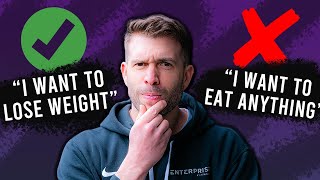
Mark Ottobre teaches coaches how to confront client excuses using empathy, boundaries, and authority. He walks through a script for a client wanting to eat whatever they want while losing weight, then shares how he turned around a hesitant prospect by setting firm boundaries and confidently stating what would and wouldn't work.
Chapters
How to respectfully call people out on their shit. My name is Mark Ottobre. I'm the owner and founder of Enterprise Fitness, creator of Enterprise Fitness Academy, and the author of The Enterprise Diet. I've had the privilege of working with everyone from Olympic athletes, world champions, Commonwealth Games gold medalists, former prime ministers, to the beginner who's never stepped foot in the gym and created head-turning results for tens of thousands of people. And in this video, I'm going to be unpacking how to handle people's shit. So a lot of times people come in and they have, for lack of a better term, shit, and you need to call them up on that, right? And people get in their head about, oh, I don't want to be seen as disrespectful, and this is what I should have said after the conversation. I can't believe that person said that. And what this person wants to do is they're kind of throwing shade your way. And there's really 3 aspects to this in handling it. The first one is empathy, the second one is boundaries, and the third one is being an authority. So if we unpack all these, you need to have— and I think it was Milton Erickson who said, in the presence of rapport, magic is possible. And it's true. So if you have a rapport with your client and person who you're serving whether it's a team member, whoever it is, if you have a tremendous amount of rapport, the message in which you say is going to hit so much more significantly. And I'll give you an example of a story that happened to me not that long ago which really demonstrates this. So you need to understand the client. They need to feel understood. They need to feel unjudged. You need to hear everything that they're saying. Once they've been felt like they've understood, or you've understood their problem, they're going to be much more likely and receptive to hearing how you're going to solve it. The other aspect is your boundaries. So if a client comes in and they say something outrageous— I want to eat whatever I want and still lose weight. Well, that's a boundary, right? And at that point, you can say to that person, hey, I hear what you're saying, but you're not going to get results that way. As the coach, you need to point out this action is not going to equal this result, which you said was important, which you said you wanted to achieve. And you have to continue to come back to that. The way it might look like from a script point of view is, hey Mary, when we started this journey, you said you wanted to lose 20 kilos. I just wanted to check in, is that still important to you? Yes. 'Cool, so what you've just said is that you want to eat whatever you want and still lose the weight. It's not really going to work that way. If we are going to make it work that way, you need to track all your food. You've told me you don't want to track your food, so I want to know, like, what are you willing to change? Because you're only going to change if we change something. And what you're doing, absolutely I can guarantee you, is going to give you the same result that you already have. So I just want to understand, what are you willing to change?' See how I've put the question back on her? I've created boundaries, and I haven't created a false expectation. Because often clients get disappointed by unrealistic expectations, or they should achieve this result, but you haven't mapped out that you're not going to achieve this result. You do this and you be real with them. Sometimes people bitch and moan and they don't like what you have to say, and they go away to someone who's selling them an easy solution. But what ends up happening is they try that easy solution, it doesn't work, it makes them fatter, broke, or sicker, whatever, and they come back to you because they realize you're the one not talking shit. And you increase the amount of respect. And when they come back, they're like, well, now I'm ready to listen to you. Thanks for being honest with me, and I respect you a hell of a lot more. So Boundaries and being able and willingness to let that person go and say, no, it doesn't work that way, it's not going to work that way. In order to produce X result, this is the input that we need. If you're not willing to put this input, simple, let's change your goal. Instead of aiming for 20 kilos, maybe let's aim for 2 kilos or 5 kilos. Now you might not be happy with that, but for this level of input, that's all you're going to get. Third and finally is, we're already alluding to it, it's being the authority. What I just said there was an authority tone. I didn't back down from, I'm also the authority to solve this. So I've put the boundary up but also I'm the authority. This is how to do it. I've done it 10,000 times. I know how to do this. You can question my authority if you like, but I know this is how it's going to work, and I'm not going to drop the frame for you. I'm not going to drop my standard because it's convenient for you. If you don't like what I have to say, sure, go to someone else, but it's up to you to stick to that boundary. See, I've always handled people's bullshit and very honest, very open, but I'm always— and this is the part that most people miss— is I'm always leading with empathy. When you lead with empathy, then you're able to set a boundary, which people usually receive as well. Then you're also able to be the authority, which people don't think you're really being an asshole about because you understand them. So for a lot of people, it's just this point. And a good way to lead with empathy is to ask the client lots and lots of questions first. So the story that I was going to share in the example, a really good example of this, is I had a girl come in a little while ago. You know, she came in to do personal training. She actually already knew the price over the phone, and we went through everything, and she told me how important it was and how she had to lose the 20 kilos and how she's tried for years and years and years and always falls short. She got into heaps of different personal stuff. She also told me that she just bought a $40,000 car and that money wasn't an issue. And at the end of the consult, said, okay, here's the price, how do you want to go ahead? She said, oh, I need to think about it. I said, considering everything that you've told me, my answer is absolutely not. If you're at this point and you still need to think about it, then if you walk out my door today, you're not coming back because you always do this and you've told me that you do this and you do this to everyone, and I'm not going I'll let you do it to me or to yourself today. Very confronting thing to say for a lot of people would say, but she took it because I had empathy, I understood her problem, I had a strong rapport, created a boundary, and she has established that I was definitely the authority to solving her problem beyond a shadow of a doubt. When I said that, she opened up her wallet, pulled out her credit card, and threw it on the table. She said, you're a fucking asshole, but I'm ready to do this and you're right. So it's an example of I put a little bit of heat on the client But it was said with empathy. It had boundaries, and I was the authority, and there was no bullshit. I called her out on her bullshit very respectfully, and it hit. In other situations, if I didn't have the empathy established, I probably would have lost the sale. But that's why it's so important to lead with that empathy. I hope you've enjoyed this video. My name is Mark Ottobre. Make sure you hit subscribe if you want more free content from me. Obviously, I've got more YouTube videos coming out, but go check out Enterprise Fitness Academy, where I teach coaches and trainers how to maximize, get results for their clients, and build profitable businesses along the way, and have loads of fun. Hit subscribe and I'll see you on the next video.










