How to Crush Sales Objections as a Personal Trainer
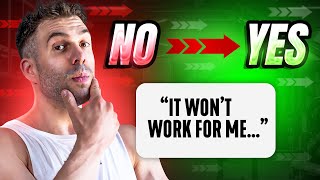
Mark Ottobre breaks down the four objections personal trainers hear most: time, money, trust, and belief in results. He shows how to reframe fitness as a 12-week outcome rather than hourly sessions, use testimonials to build credibility, and uncover what clients really mean when they say they need to think about it.
Chapters
There are 4 major objections to personal training and 2 smokescreens. Hi, my name is Mark Ottobre. I'm the owner and founder of Enterprise Fitness, creator of the Enterprise Fitness Academy, author of The Enterprise Diet. I've worked with Olympians, Commonwealth Games gold medalists, world champions, former prime ministers, and everyone in between. We've trained over 300 first-place winners in physique sports. I run a 7-figure personal training studio and have been doing this for 20 years. So I'm going to be unpacking my methods, philosophies, and what's helped me grow my personal training business, and hopefully you can do the same in sales there are really 4 major objections that you're going to run up to as a personal trainer, and they can really be summarized as value, trust, smokescreen. First 2 are time and money, and they're objections of value. The second 2 is I don't believe you and it won't work for me. They're objections of trust. The other ones, the last 2, are smokescreens, which is I need to ask my partner and I need to think about it. So they're, they're bullshit objections. They're not real. Smokescreens, and I cover them at the end, so make sure you keep watching. Let's focus on the first two, which is objections of value. Time and money— obviously these are limited resources for everyone. How do we approach this? If someone says, I don't have enough time to do it, I don't have enough money to do it, what they're really saying is simply, I don't value what you're offering enough. So it really comes twofold. One is that as the trainer, as the salesperson, you want to establish a value around what you do. So if you go into selling personal training as time for money, or you just buying an hour of your time, then you're commoditizing your service. It's very easy for me to compare an hour of this person's time to an hour of this person's time just based on price. You don't want to play that game. You want to play in the solutions game. You don't want to think about the hour. You want to think about the outcome, which has a lot more value associated with what you're selling. So for example, if someone says to me, how much do I charge per session? My answer is always, well, I don't think about it per the session. Therefore, I don't charge by the session. I charge by the outcome. As a minimum, I'm going to be working with you for 12 weeks because, by the way, what was your outcome again? What are you looking to achieve? That opens up dialogue where the person's now telling me about what they want to achieve, and then I'm able to establish value. And the value is helping that person get the results that they're looking for. They may have had this problem for 2, 3, 5, 10 years, maybe their whole life. What is the value of solving this problem for you? Not just for today, not just for 12 weeks, but for the rest of your life. How much happier are you going to feel? So you can already see From the way I'm positioning this, I'm establishing clear value to the client in terms of what I offer. The other thing you're going to run up against in terms of 'I don't have enough time' is they're going to have competing priorities. So let's say, for example, they've got a family, they've got kids, and they've got this super successful business or career. They're competing priorities to get in shape. Now, personal training and personal trainers, by and large, they can have the all-or-none mentality. So presenting an all-or-none mentality to your client, what ends up happening is that the very thing that you're selling becomes an impediment to the other priorities in their life. So Rather than make an impediment, you want to show how training with you and getting the nutrition intact is going to complement the rest of their life. How is when you feel better, when you have no pain in your joints, when you've lost that 10, 20 kilos, how much better will you feel when you're with your kids at work and more productive? So when you link it to the very thing that may have been the impediment, obviously that breaks down barriers. Let's talk about the next segment, which is trust. I don't believe you and it won't work for me. These two things can be solved often before the client even walks into the door. How you solve them is with social proof. What does social proof look like? It looks like video testimonials. It looks like Google reviews. Looks like written reviews. It looks like places that you've been featured in. That's creating leverage off what other people say about you, which then increases the trust. So for example, if you have a client who you've been training and that client then refers their best friend and says, you have to train with this guy or this girl. That is leveraged way of getting that person in. Their trusted advisor highly recommends that you're the only person in town to train with, then they're probably going to have a lot less issues. They're going to trust you immediately because they trust their friends. This is why you do want to be seen in different media. This is why you do want to have testimonials. People get caught up and they think no one's going to read all the testimonials. No, of course not. But what people are going to do is they're going to find the testimonials and people that remind them of them. They're going to see the person, you know, if they want to lose 40 kilos and you have an example of someone who's lost 40 kilos with you, they're going to look at that and say, well, if that person can do it, I can too. And unconsciously, they're going to trust you more. Now, of course, you want to have a great rapport with your client when they come in. So it's not just a matter of having a heap of social proof. If you don't have rapport, if you don't have emotional intelligence, if you don't have the social skills, you can definitely break rapport with people and trust can vanish in an instant. So you do want to make sure that you're able to have a, I suppose, a good conversation with people You know, you want to have empathy for your clients, but you also want to have authority at the same time for what you do. Having that mix of both is going to help guide the clients where they want. So trust, again, you can help solve that, I suppose, or build on that at least before the client comes in with social proof. Now let's talk about the last two and kind of my favorite two, which people often legitimize as real excuses, and that is, I need to ask my partner and I need to think about it. These are smokescreens. They're not real objections. They're time delays. So if I say I need to ask my partner, I'm pushing my decision-making out I need to think about this. I'll get back to someone else. Or maybe I just don't want to give you a decision right now. If I say I need to think about it, there's things to that which as a salesperson you want to unpack. We do like this kind of little role play now. If someone said to me, I need to think about, there's so many different ways I could handle it, but probably my favorite way to handle it is, just so I've done my job today and I've given you all the information that you need to make a firm decision on this, what exactly do you need to think about? Every single time I get the real objection, which is usually, oh, it's a lot of money, it was more than I expected, I don't know how I'm going to fit this in, I'm going away in 8 weeks, I'm not sure if I can do a 12-week program in 8 weeks. Point doing is I get the real objection, and when I get the real objection, I'm able to help solve it. And then I speak to, well, was it either trust or was it money? Usually it comes back down to money. So let's say in this case it was more money than I thought it was. Okay, great. I know I offered you 12 weeks up front. What if we did this in 6 weeks or a direct debit plan? Would that work for you? Oh, it's still a lot of money. Okay, we were talking about the 3-time-a-week option. Could I recommend something is better than nothing? For sure. You're still going to get the training, the nutrition, the plan. I'm going to point you obviously in the right direction. How about we go to twice a week and we do it twice a week on a 6-week payment plan? And then you write the figure down and you say, would this feel better to you? Yeah, actually it would. And I can handle the objection then and there. Why do I need that person to go home who's ultimately going to make a decision of no? The first time you do this, and if you're new to sales, you're going to feel really like, holy shit, did I just say that? I promise you it's completely normal, but you're doing the client a favor by helping them think through these problems. It's not a big deal to ask someone, hey, just so I know that I've done my job correctly today. And I use a softener. I don't just go straight in like a lot of people teach, what do you need to think about? Because that can come across a little harsh. I put a softener in front of it so people feel like, okay, and it's the truth. Like, I do want to make sure I've done my job today. Get the real objection. Once you've got the real objection, that's when you can solve it. Second one, I need to ask my partner. Now, there are some cases where they really need to ask their partner. The way I like to handle this is, cool, so when will you be seeing your partner? So when you see your partner tonight and you go to them, what do you think they'll say? They'll— and then sometimes the client turns around and says, they'll tell me to fucking do it. And I'll smile and I say, that's awesome, it's so great that you have a supportive partner. So what, what then do you really need to ask them for? And they'll have a bit of a joke about it, and then they'll usually say, look, you're right, I just think I need to ask them, I don't want to rush into this. I'll say, you've probably already had a conversation with them, so you're really rushing into it. Sometimes I get the money straight away, sometimes I say, hey, you know what we should do? 'Let's fill out the forms and then you'll speak to your partner tonight. And like, if your partner, you know, surprisingly changes their mind and really has a problem with it, we can rip up the forms, no problem. But to kind of get us on the track, we can book in everything and then you can speak to your partner tonight. You can send me a text message later today and tell me, yep, go ahead and process the card.' Almost 10 times out of 10, that always works. The other way you can challenge that— I mean, there are cases where you challenge. I usually don't. But there is a school of thought where you definitely can challenge the partner. So when you go to your partner tonight, what do you think they'll say? Are they on board with it? Do they want you to be happy? Cool. So this is going to be something that's going to allow you to be happy. The problem with that approach sometimes is you're digging into issues that are kind of none of your business. So I tend to use the first approach because if the person does say, well, my partner doesn't even know that I'm here, okay, you've unpacked a problem in their relationship and that can be quite deep. And depending on how you 'Perhaps come back to me when, you know, you've solved that stuff,' which is contrary to what a lot of other salespeople teach, but I don't really want to be getting into people's relationship problems. So they're the main things there. They're the— I suppose you master those key objections, you are going to be ready for any, any objection. You're going to be able to handle really any objection that throws your way. So to recap, we have value objections, which are time and money. Get really good at those fundamentally. You have the value objections, which is 'I don't believe you, it won't work for me.' We have the smokescreens. You get really good at handling those areas of objections, and you are on way to making good money, great money in fact, as a personal trainer. If you've enjoyed this video, make sure you subscribe. We have stacks of content that's designed to help you grow your personal training business, as well as check out enterprisefitnessacademy.com for my free trainer checklist on how to grow your business to 6 and 7 figures. Hit subscribe. My name is Mark Ottobre, and hope you've enjoyed.










